
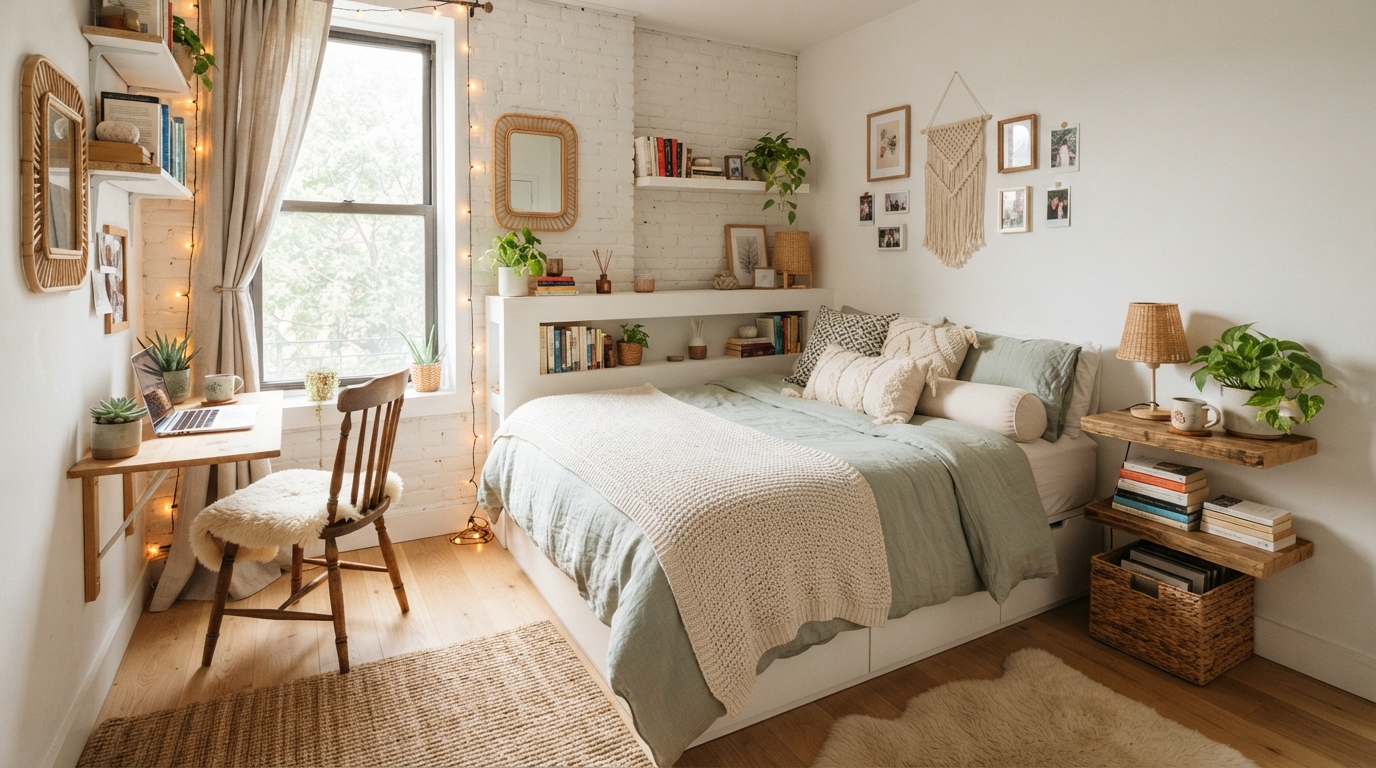
21 Small Bedroom Inspirations
A small bedroom can still feel comfortable, organized, and stylish. I’ve found that the biggest difference usually comes from how I use the walls, choose furniture, control visual clutter, and let light move through the room.
When floor space is limited, I focus on making every piece work harder. A few smart changes—such as raising curtains, using storage under the bed, choosing appropriately sized furniture, and keeping pathways open—can make a noticeable difference without requiring a full renovation.
In this guide, I’m sharing 21 practical small bedroom ideas that I would use to make a compact room feel more open and functional. These include light colors, vertical storage, floating shelves, mirrors, multifunctional furniture, wall-mounted lighting, and clever under-bed storage.
Save this for later
Table of Contents
I’ll also cover layout tricks that help improve the sense of space, including high curtain placement, low-profile furniture, clear walkways, limited color schemes, and sliding doors. Most of these changes can be made without expensive remodeling.
Key Takeaways
- I use light colors and natural light to keep a small bedroom feeling bright.
- I take advantage of walls, the space under the bed, and the area around the bed for storage.
- I choose furniture based on the room’s actual scale rather than buying oversized pieces.
- I prefer furniture that serves more than one purpose whenever possible.
- I keep walking routes open so the bedroom feels easier to use.
- I limit visual clutter and stick with a coordinated color palette.
- I use mirrors, curtains, and vertical details to improve the room’s visual proportions.
Related article: 27 Luxury Bedroom Decor Ideas
Choose Light Colors
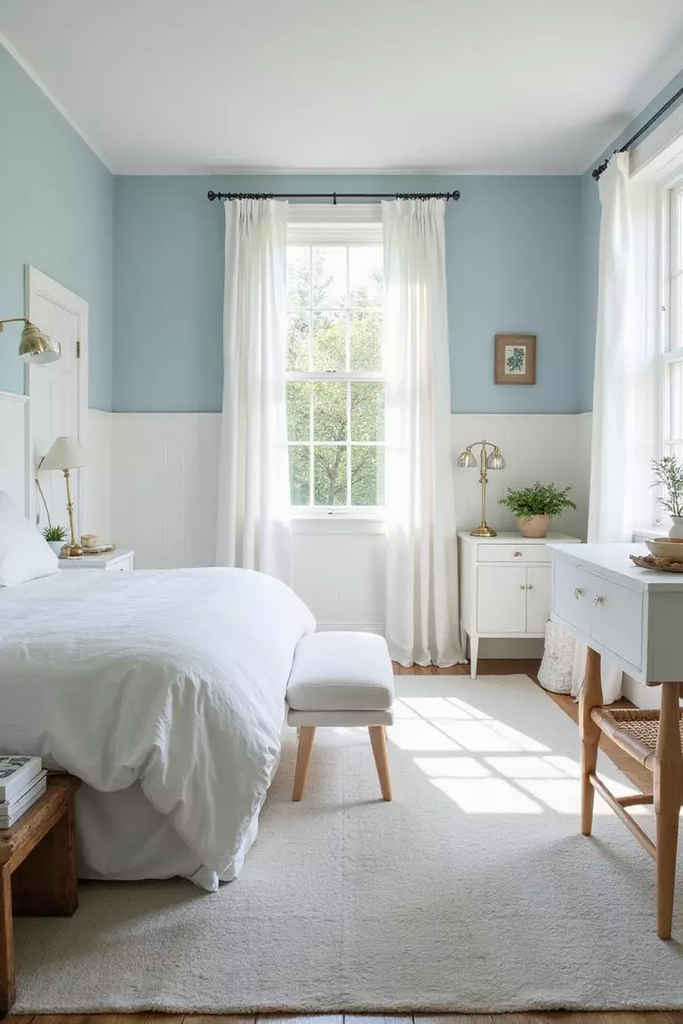
I usually start with the walls because color can change the overall feeling of a small bedroom. White, warm beige, cream, pale gray, and soft pastels can help reflect available light instead of making the room feel visually heavy.
I don’t think a small bedroom has to be completely white, though. I can bring in stronger colors through pillows, artwork, bedding, or a small accent piece while keeping the larger surfaces light.
Pro Tip: If the room receives very little daylight, I’d test paint samples at different times of the day before choosing a final shade. A color can look noticeably different in morning, afternoon, and artificial light.
Maximize Vertical Space
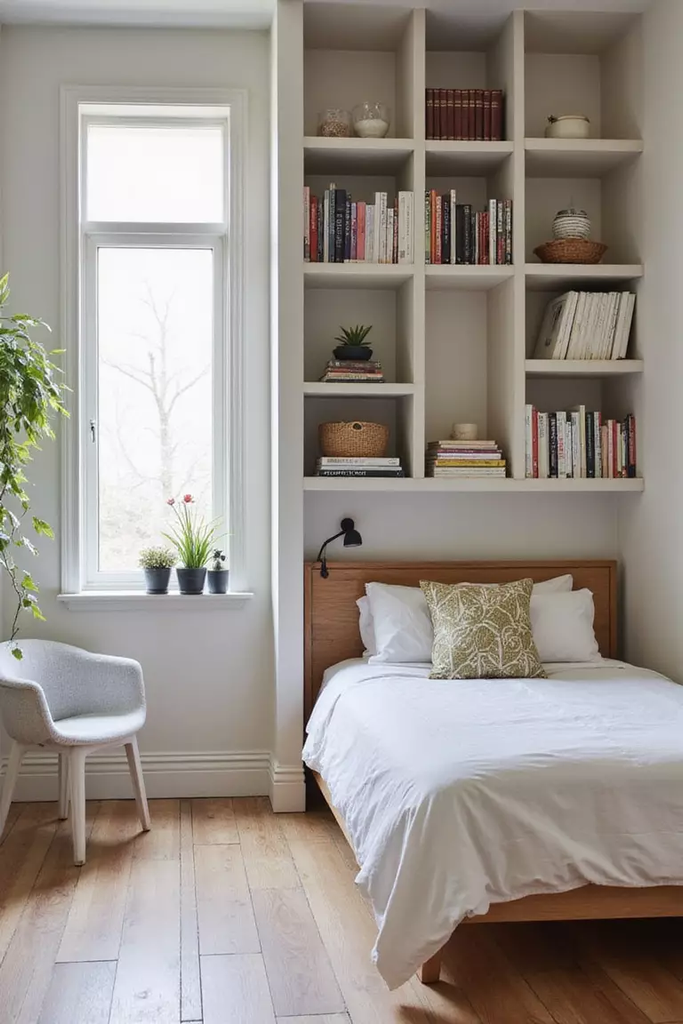
When I run out of floor space, I look at the walls. Tall bookcases, narrow cabinets, wall-mounted organizers, and shelves can give me useful storage while leaving more walking room below.
I also like using the area closer to the ceiling for items I don’t need every day. This keeps frequently used belongings within easy reach while making better use of otherwise empty wall space.
Thinking vertically is especially useful in bedrooms where adding another cabinet would make the floor feel crowded.
Install Floating Shelves
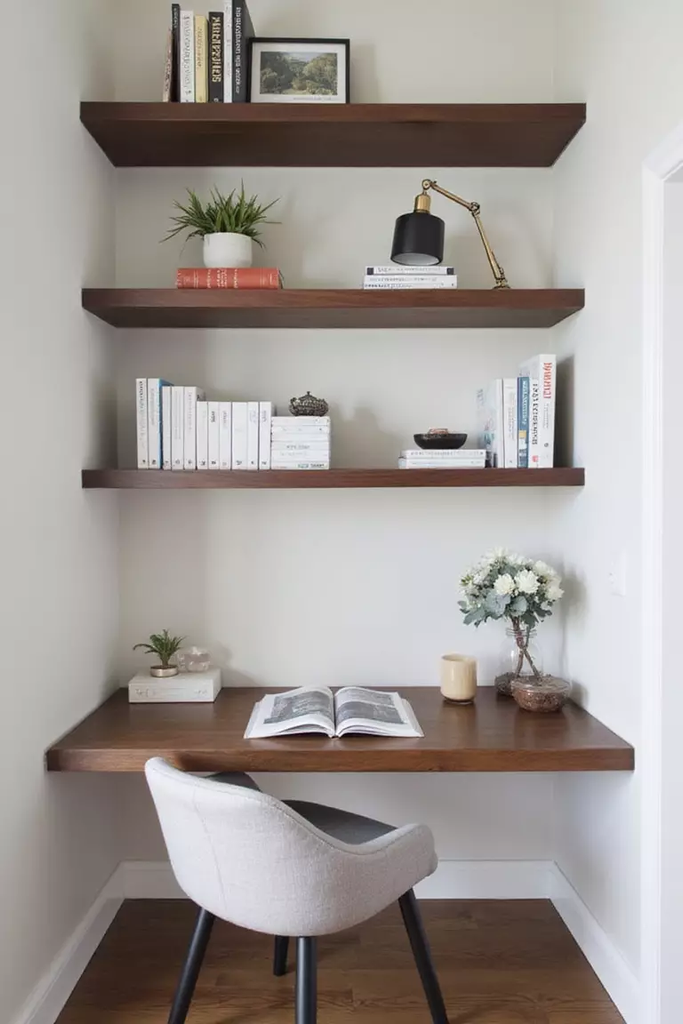
Floating shelves are one of my favorite options when I need storage without adding a bulky piece of furniture. I can use them for books, framed photos, small plants, candles, or everyday essentials.
I like placing them above a desk or beside the bed where they can replace some of the functions of a traditional nightstand.
I’d avoid filling every inch of the shelves. Leaving some open space keeps the arrangement lighter and prevents a small bedroom from looking cluttered.
Use Mirrors Wisely
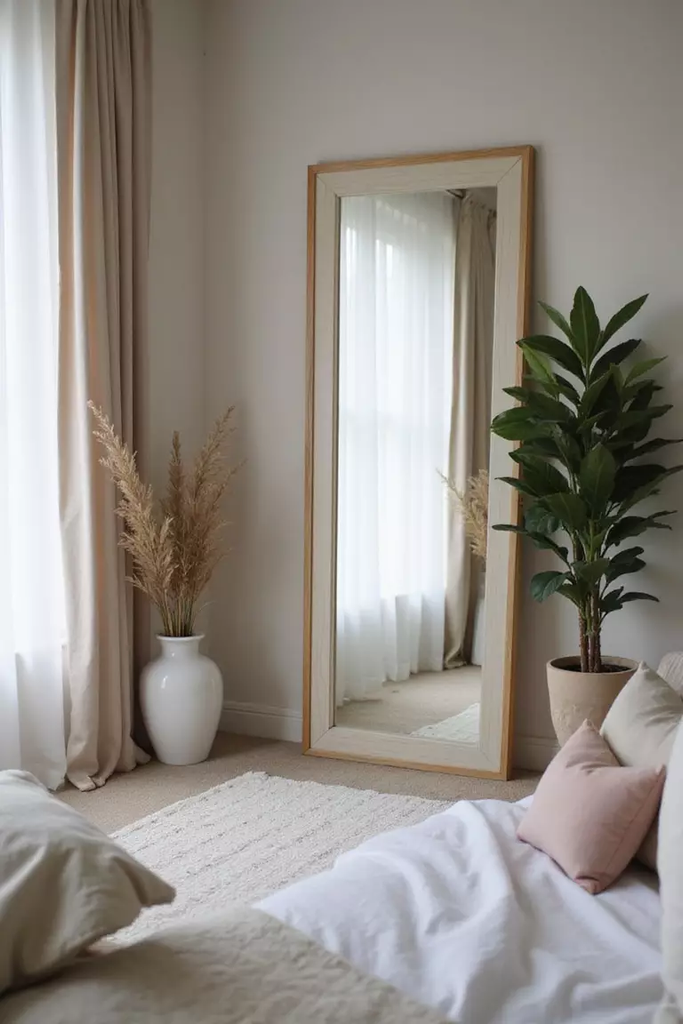
I use mirrors to increase the amount of reflected light and create more visual depth. A larger mirror can be particularly useful when positioned where it reflects a window, light-colored wall, or another attractive part of the room.
A full-length mirror can also serve a practical purpose without requiring another decorative object.
Pro Tip: Before mounting a mirror, stand in different areas of the room and check what it will reflect. I want the mirror to reflect light or a pleasant view—not a pile of laundry or a crowded corner.
Opt For A Murphy Bed
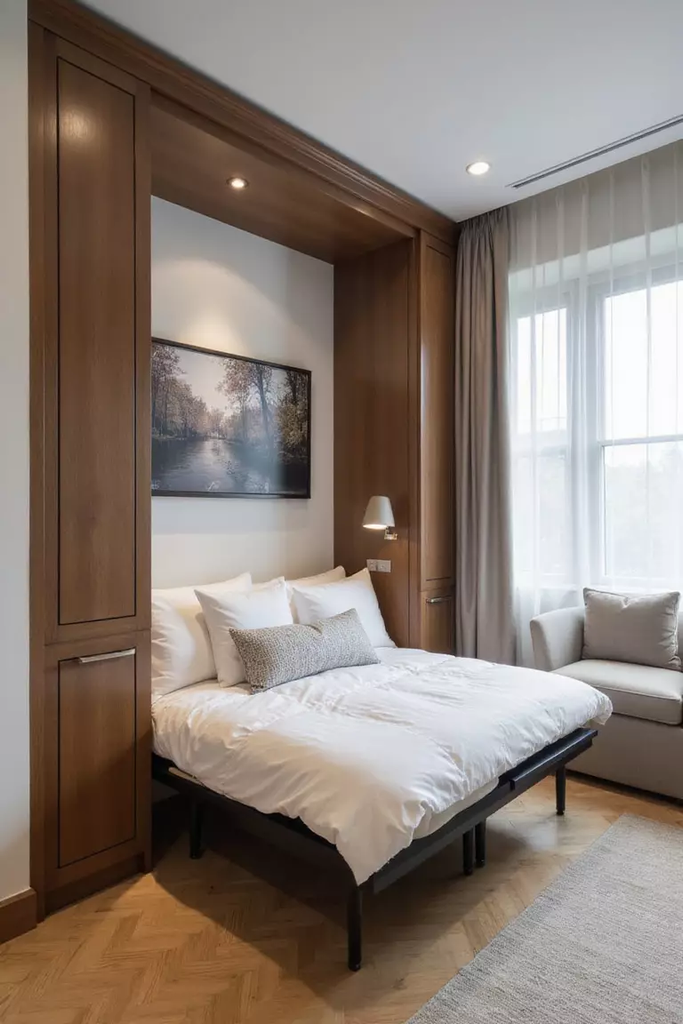
A Murphy bed can completely change how I use a small room because the sleeping surface can be folded away when it isn’t needed.
That extra floor area can become a workspace, workout area, reading corner, or simply open space during the day.
I’d consider this option carefully because installation requirements, wall construction, clearance, and budget can vary. It makes the most sense when gaining daytime floor space is a major priority.
Select Multi-Functional Furniture
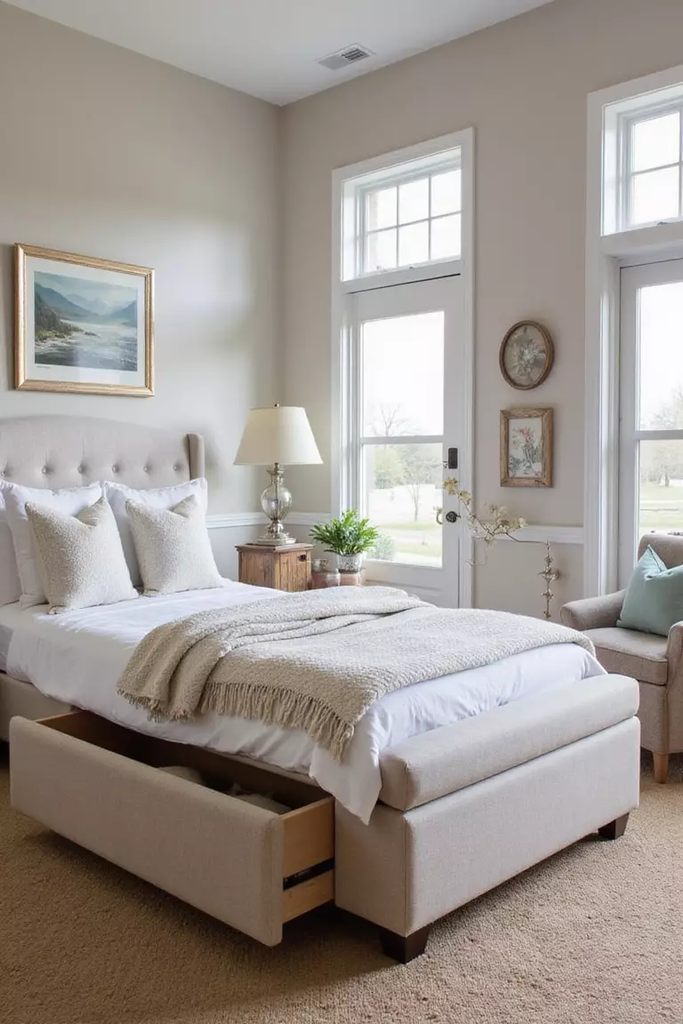
I try to give every major piece of furniture more than one job when space is tight. A storage ottoman can provide seating and hide blankets, while a bed with drawers can replace a separate dresser.
A wall-mounted desk that folds away can also be useful in a bedroom that doubles as a workspace.
The goal isn’t to fill the room with clever products. I focus on choosing fewer pieces that solve several problems at once.
Keep Furniture Low Profile
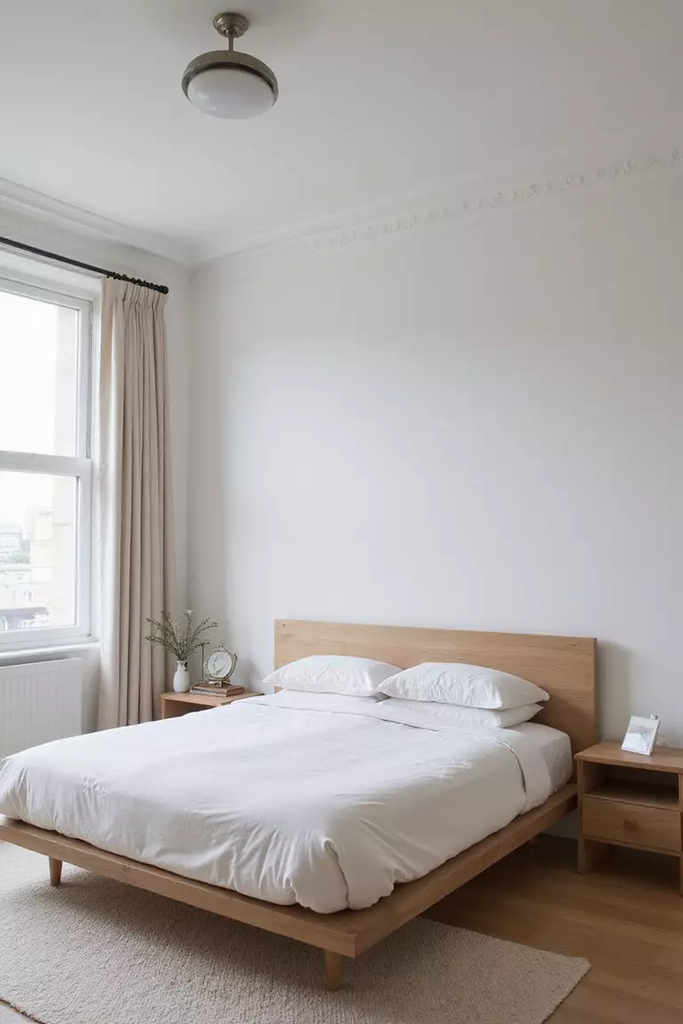
Low-profile furniture can help create more visible wall space above the bed and other furnishings. A simple platform bed and compact nightstands can make the upper part of the room feel more open.
I also find that furniture with clean lines is easier to work with in a compact bedroom because it doesn’t visually interrupt the room as much.
This is a simple layout trick I’d consider before buying anything larger.
Let Natural Light In
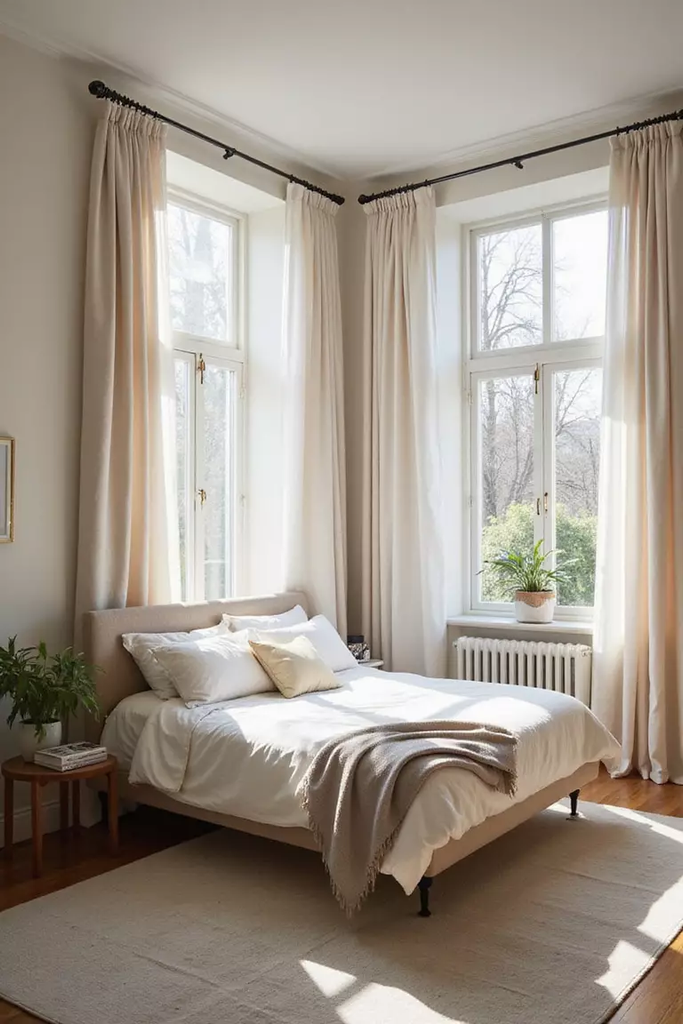
I want as much daylight as possible in a small bedroom. During the day, I keep curtains open and choose lightweight window treatments when privacy allows.
Sheer curtains can soften the light while still allowing daylight into the room. If privacy or strong sunlight is an issue, adjustable blinds can give me more control.
I avoid heavy window coverings when they aren’t necessary because they can visually close off an already compact room.
Mount Your Lighting
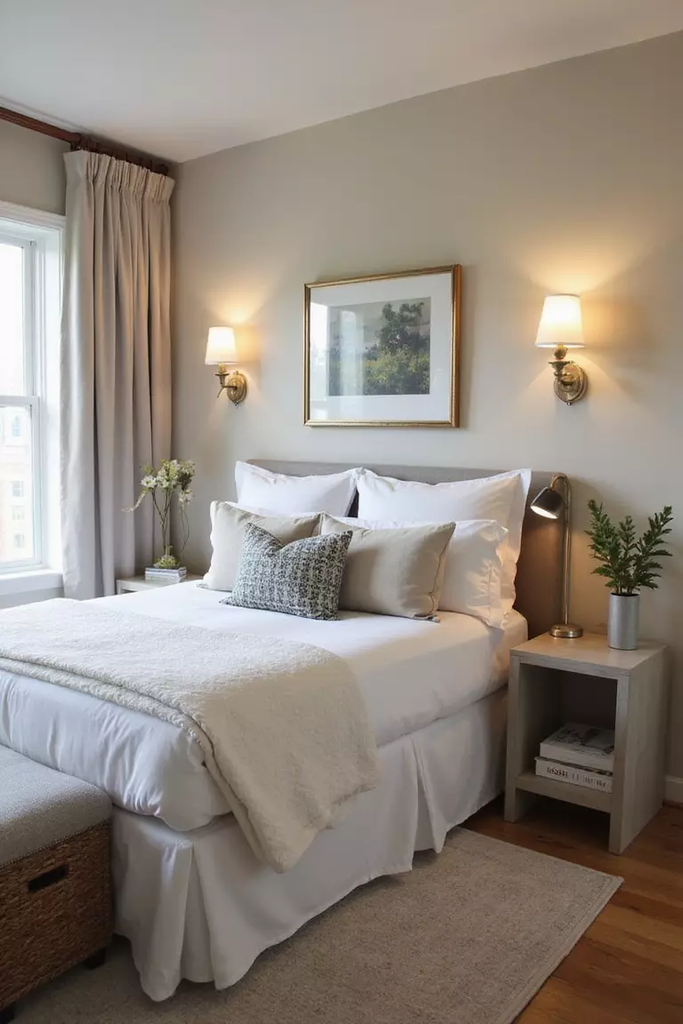
Wall-mounted sconces and pendant lights can save valuable nightstand and floor space. This gives me more room for books, a phone, or other essentials without sacrificing bedside lighting.
I also like using more than one light source. For example, overhead lighting can handle general illumination while a wall light provides focused light for reading.
Pro Tip: For a small bedroom, I’d plan lighting before buying bedside furniture. A wall light may allow me to choose a much narrower nightstand.
Declutter Regularly
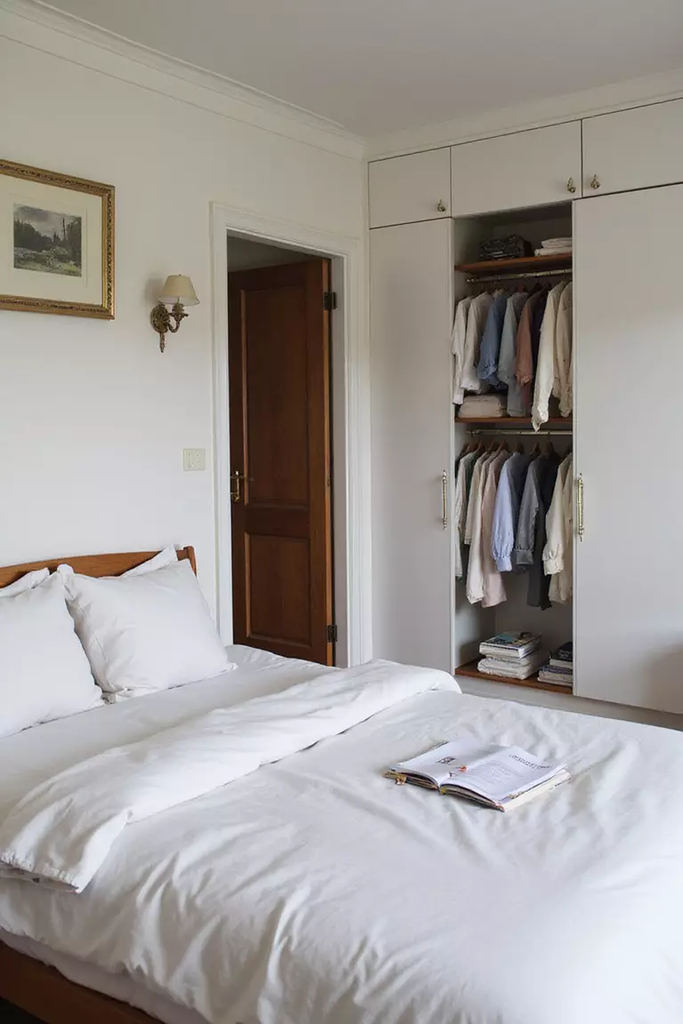
One of the least expensive ways I can make a bedroom feel bigger is by removing things I don’t actually use.
I regularly look at clothing, accessories, paperwork, décor, and items sitting on surfaces. If something has no useful purpose or meaningful place, I consider storing, donating, or removing it.
Clear surfaces also make everyday cleaning easier. In a small bedroom, even a small amount of visible clutter can quickly make the entire space feel crowded.
Use A Headboard With Storage
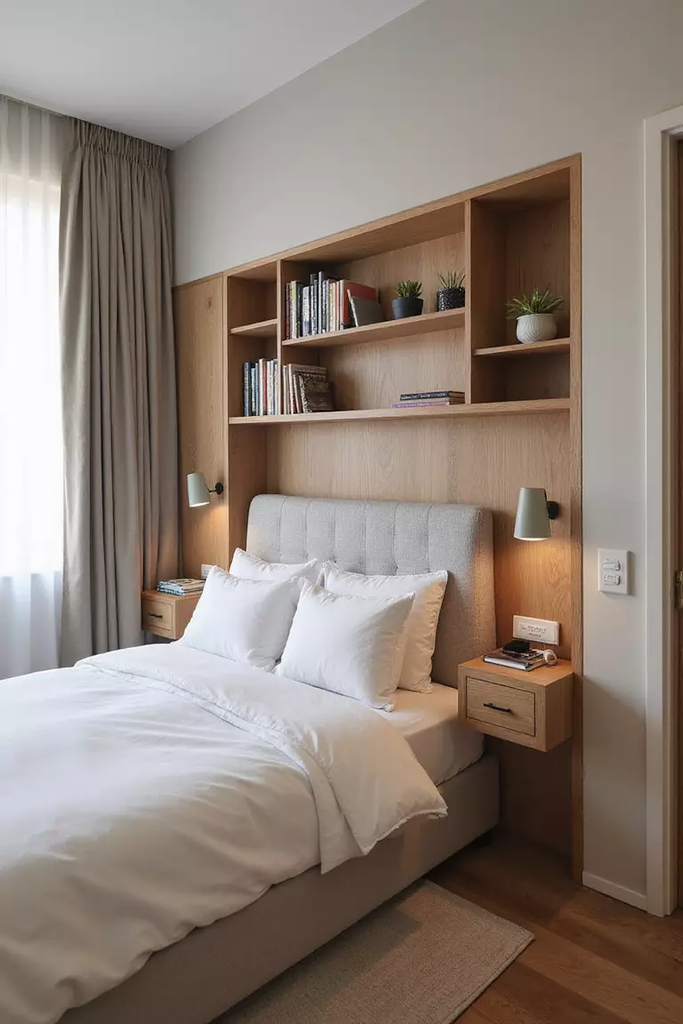
A storage headboard can give me another place for books, small electronics, decorative objects, and bedtime essentials.
It can be particularly useful when there isn’t enough room for conventional nightstands on both sides of the bed.
I’d keep the compartments organized rather than using them as catch-all storage. The idea is to reduce clutter, not simply move it from one surface to another.
Hang Curtains High And Wide
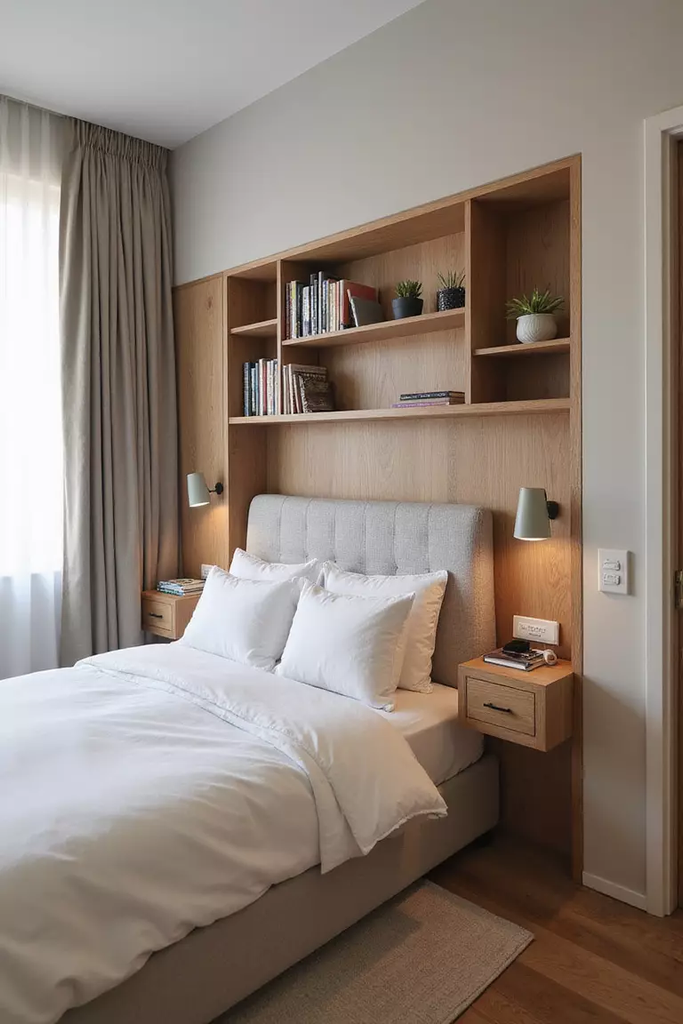
I like mounting curtain hardware higher than the top of the window and extending it beyond the window frame when the wall allows it.
This makes the window treatment feel more substantial and can create a stronger sense of height. It also lets me open the curtains fully so more of the window is visible.
The exact placement depends on the window and ceiling, but I generally avoid installing the rod directly against the window frame if I’m trying to create a taller appearance.
Also read: 15 Hot Pink Bedroom Ideas for A Bold and Fun Look
Incorporate Stripes
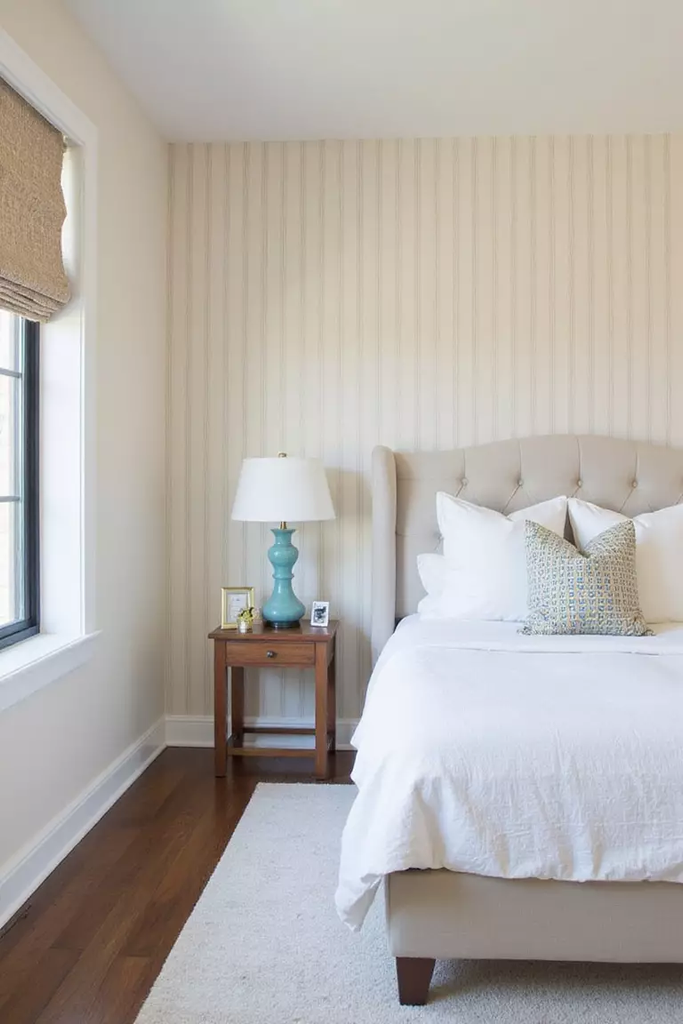
I can use stripes to influence how the proportions of a small bedroom appear. Vertical lines can draw the eye upward, while horizontal patterns can emphasize width.
I don’t need to cover every wall with stripes. A patterned accent wall, rug, throw, or bedding can introduce the effect in a more controlled way.
For a compact room, I prefer subtle patterns that add direction without competing with the rest of the décor.
Build Storage Around The Bed
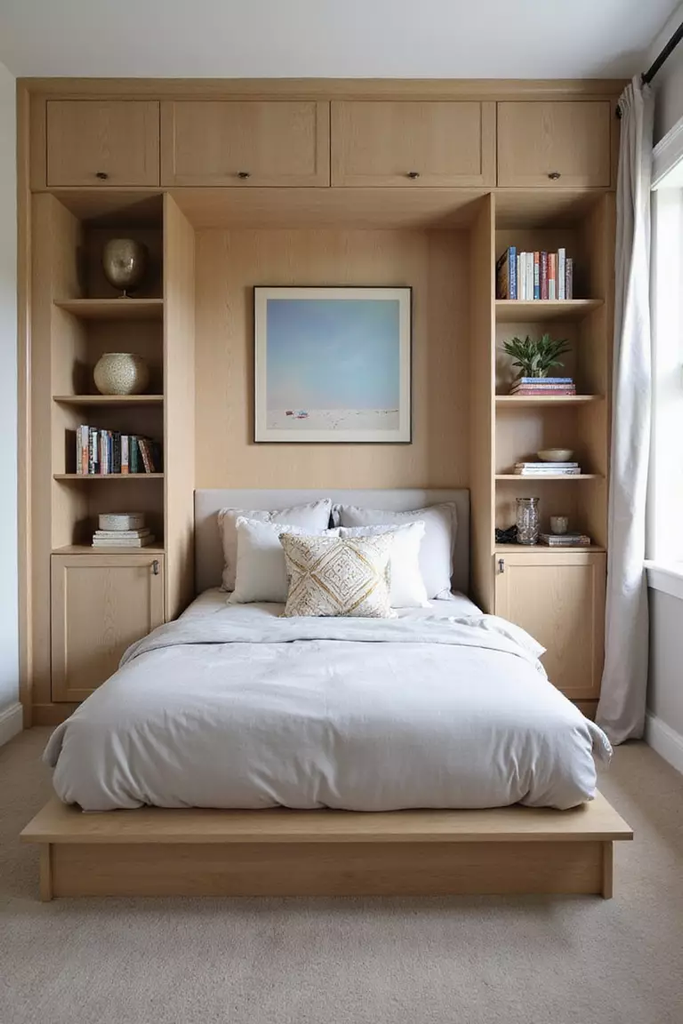
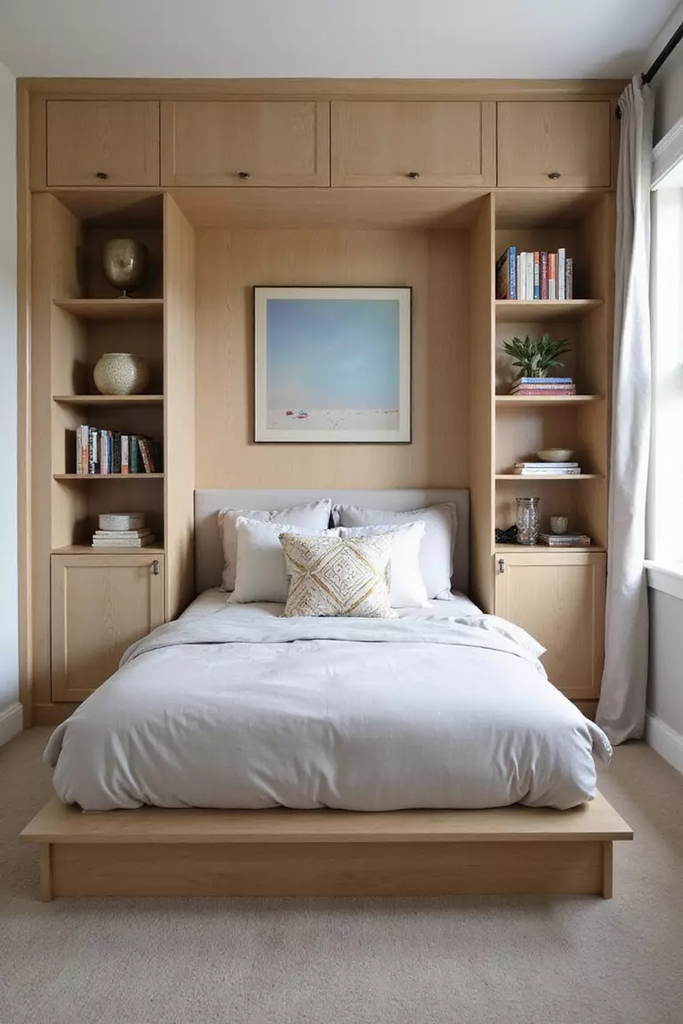
The wall around the bed is valuable storage space that I don’t want to waste. Depending on the room, I can use built-in cabinets, open shelving, wardrobes, or a combination of closed and open storage.
Creating storage around the bed can also make the sleeping area feel intentionally designed instead of simply placing a bed in an empty room.
If custom cabinetry isn’t practical, I can recreate the concept with carefully measured freestanding units.
Use Under-Bed Storage Creatively
The space underneath my bed can hold a surprising amount of useful storage. I can use shallow rolling containers, fabric boxes, baskets, or drawers for things I don’t need every day.
Seasonal clothing, spare linens, shoes, and extra blankets are good candidates for this area.
I prefer containers with lids when storing items for longer periods because they help protect belongings from dust. I also label containers so I don’t have to pull everything out when looking for one item.
Add Greenery Strategically
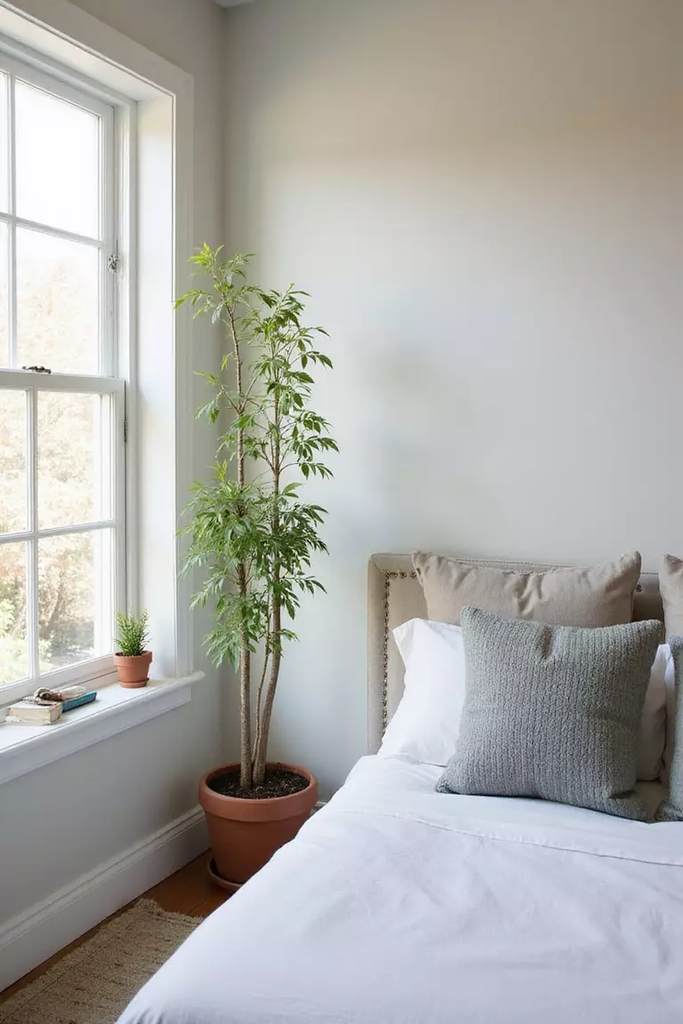
I like adding plants to a bedroom because they introduce texture and a natural element without requiring lots of decoration.
In a small room, I choose plants according to the available light and available space. A narrow floor plant, small windowsill plant, or hanging planter can work better than a large plant that blocks a walkway.
I also make sure the plant’s care requirements match the room’s conditions rather than choosing one based only on appearance.
Choose Scaled Furniture
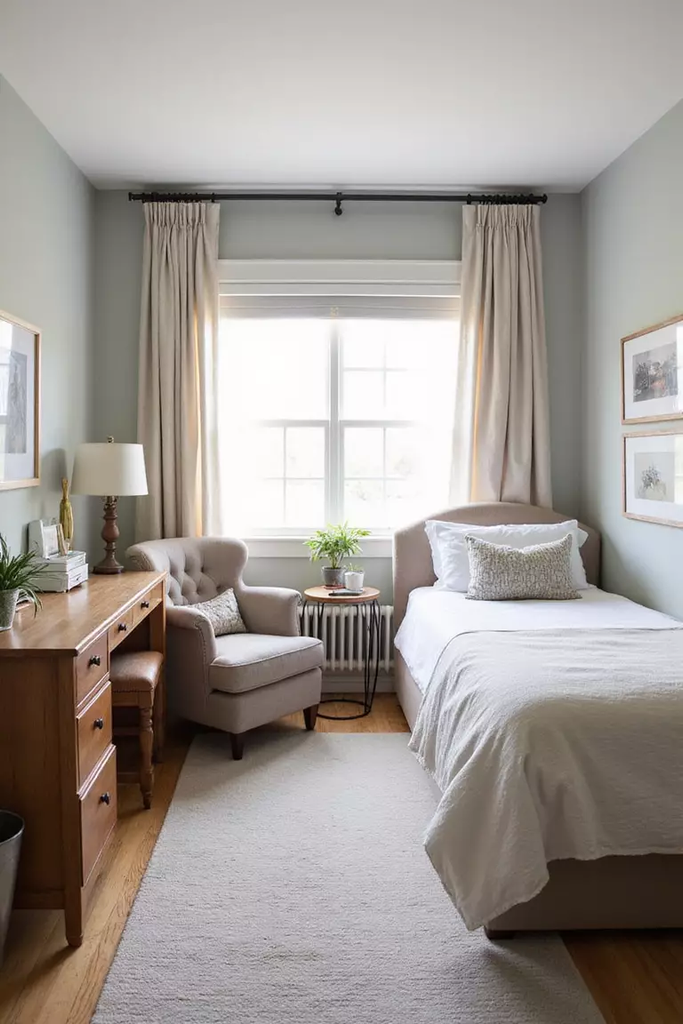
I measure my bedroom before buying furniture because something that looks compact in a showroom can feel enormous once it is inside a small room.
Narrow nightstands, compact desks, slim wardrobes, and appropriately sized beds can leave more space for movement.
I also pay attention to door and drawer clearance. A piece may technically fit against a wall but still make the room difficult to use if its doors or drawers can’t open comfortably.
Keep Pathways Clear
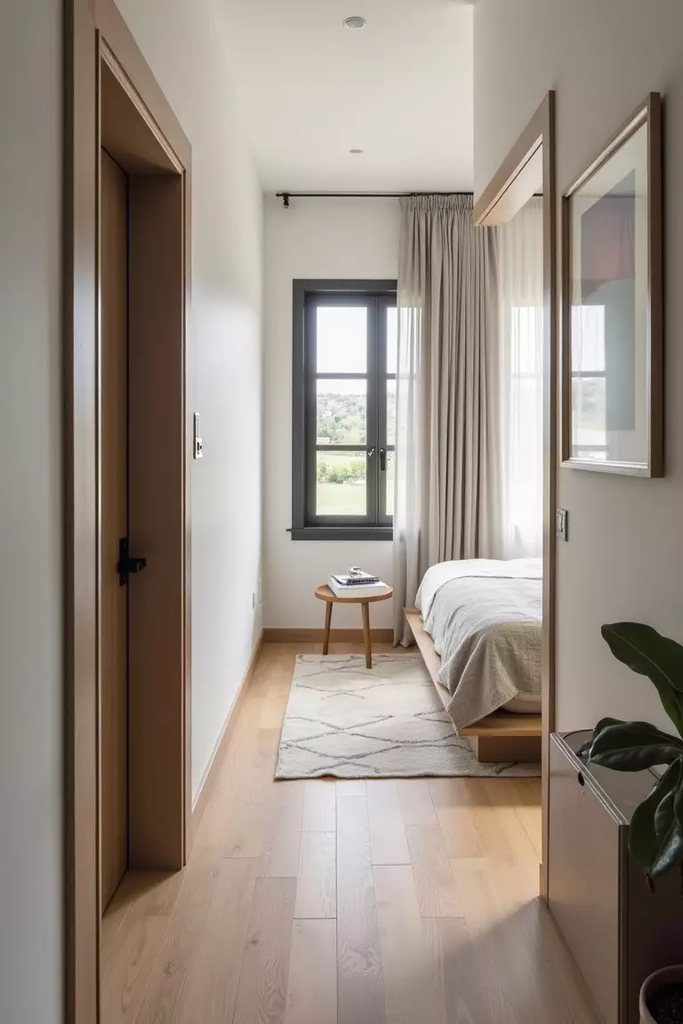
A small bedroom needs a practical layout, not just attractive furniture. I make sure I can comfortably move between the door, bed, closet, and other frequently used areas.
I avoid placing furniture where it creates awkward bottlenecks. Even removing one unnecessary chair or repositioning a nightstand can improve how the entire room functions.
Pro Tip: I like to sketch the room or measure the furniture before moving heavy pieces. Marking approximate furniture footprints on the floor can help me test a layout before committing to it.
Use A Daybed
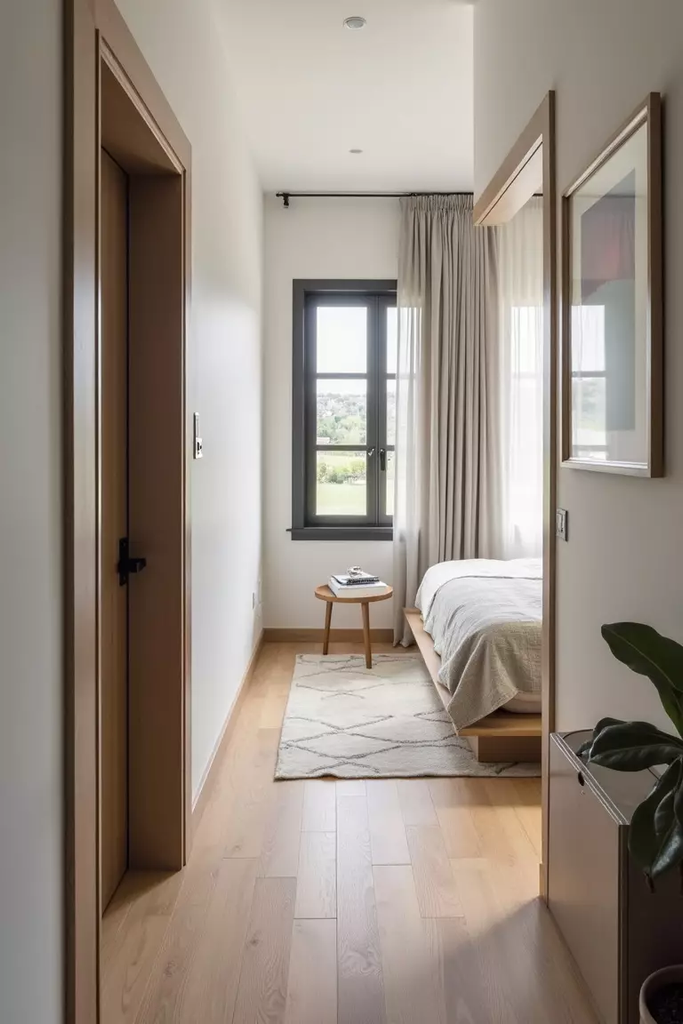
A daybed can be useful when my bedroom needs to perform more than one function. It can provide a place to sleep while also working as seating during the day.
This can be especially helpful in a compact guest room, studio, or room that doubles as a workspace.
I’d choose one with storage underneath if I need another place for bedding, clothing, or other belongings.
Stick To A Limited Color Palette
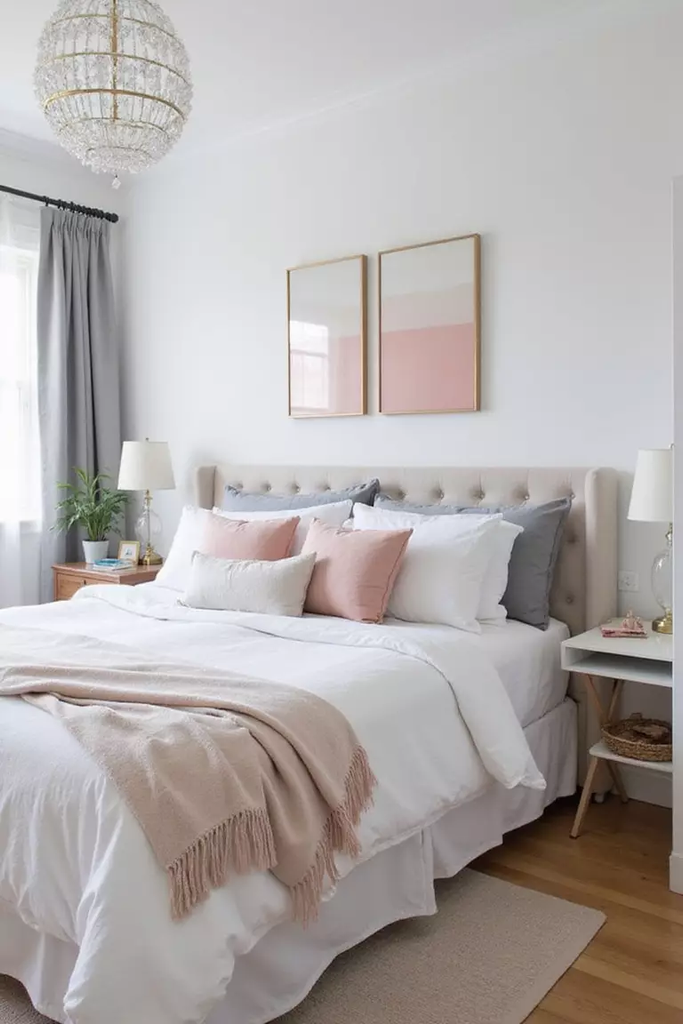
I find that a small bedroom usually looks more organized when the colors work together. Instead of introducing many competing shades, I can choose two or three main colors and repeat them throughout the room.
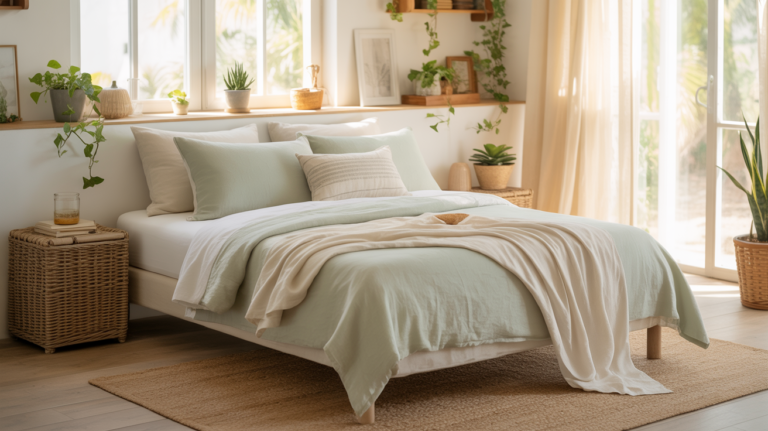
For example, I might combine warm white with beige and muted green, then add a small amount of a stronger accent color.
A consistent palette doesn’t mean everything has to match. Repeating similar tones across bedding, curtains, walls, and accessories simply makes the room feel more connected.
Read this next: 25 Olive Green Bedroom Ideas To Get Inspired
Install A Sliding Barn Door
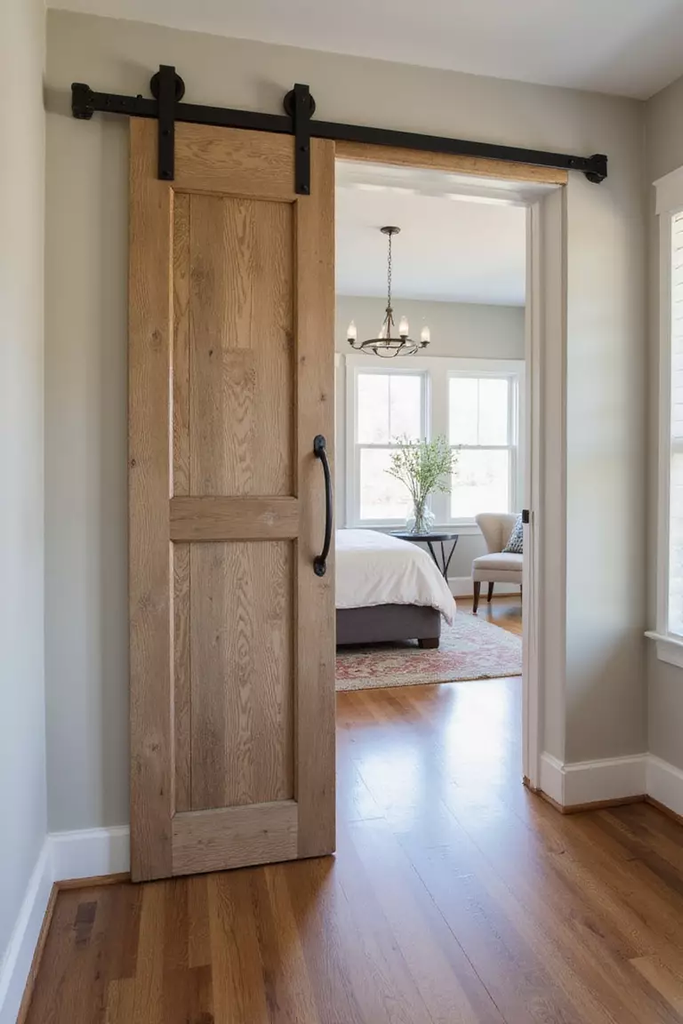
A conventional hinged door needs clearance to swing open and closed. In a tight bedroom or closet area, that floor space can be valuable.
A sliding door moves along the wall instead, which can make the surrounding area easier to use. Barn-style doors can also add a decorative feature to the room.
Before choosing one, I would check the wall space beside the doorway and make sure there is enough room for the door to slide completely open.
FAQ’s
What colors make a small bedroom look bigger?
Light shades such as white, cream, beige, and soft pastels can make a small bedroom feel brighter and more open by reflecting more light.
How can I add storage to a small bedroom?
I recommend using floating shelves, under-bed containers, storage beds, tall cabinets, and the wall space around the bed to increase storage without taking up much floor space.
How can I make a small bedroom feel less cluttered?
I keep furniture proportional to the room, remove items I rarely use, keep pathways clear, and choose multifunctional furniture to reduce unnecessary pieces.
Conclusion
I’ve found that making a small bedroom feel bigger isn’t about squeezing more furniture into the room. It’s about choosing carefully, using overlooked areas, and keeping the layout easy to move through.
Light colors, mirrors, vertical storage, multifunctional furniture, and clear pathways can all make a practical difference. I would start with the changes that cost little or nothing—decluttering, rearranging furniture, opening the curtains, and using existing wall space—before investing in larger upgrades.
A small bedroom can still feel personal and comfortable. With the right layout and a little planning, I can make the space work much harder without making it feel crowded.

2 Comments