
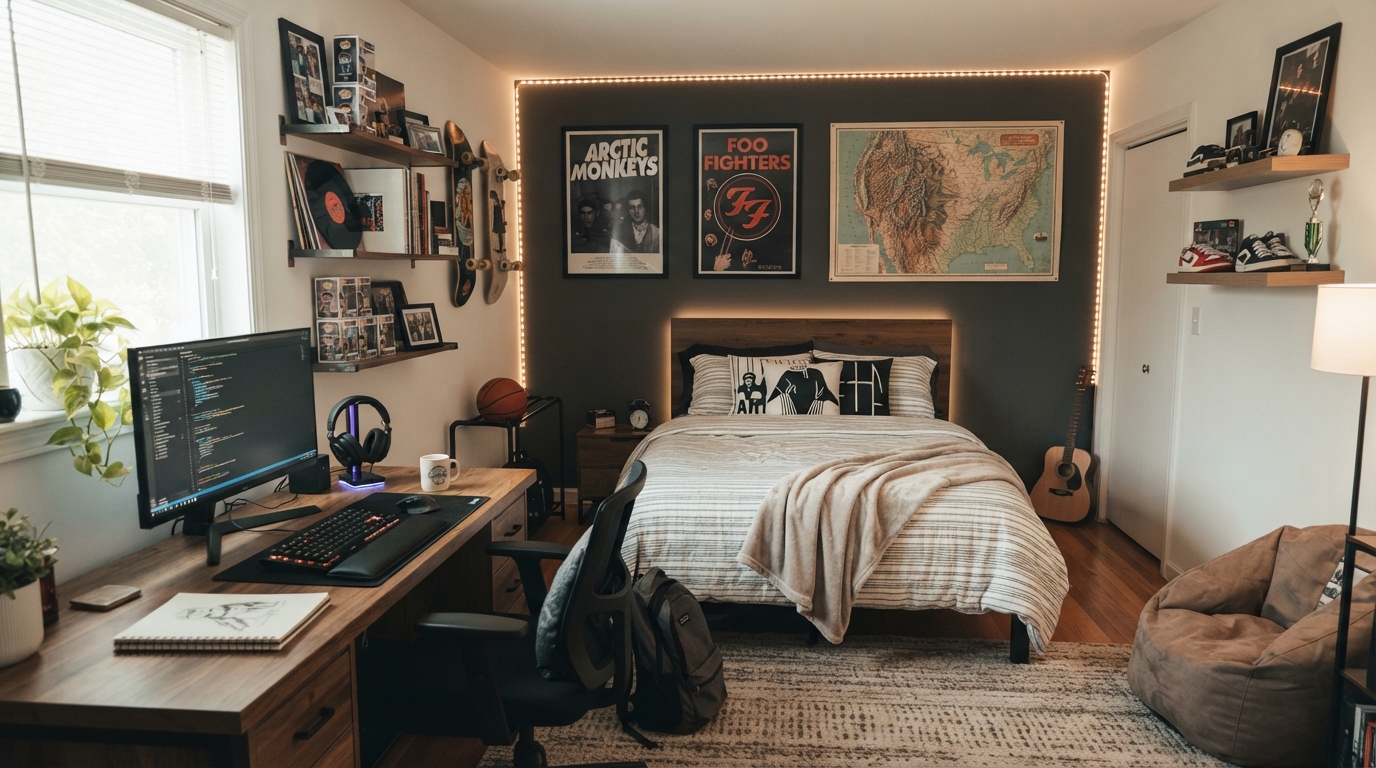
Teen Boy Bedroom Inspiration: 30 Stylish and Practical Ideas
A teen boy’s bedroom needs to work harder than most rooms in the house. It is usually a bedroom, homework space, gaming area, storage zone, and private place to relax all at once.
When I plan a room for a teenager, I start with those everyday needs instead of choosing a theme first. A good-looking room is nice, but it needs to be comfortable at night, functional during the school week, and flexible enough to change as his interests change.
I also think teenagers should have a say in the finished space. Parents can handle the practical side of the design, while the teen gets meaningful choices about colors, artwork, bedding, hobbies, and accessories.
The result should feel like his room, not a showroom designed entirely by someone else.
The most successful teen boy bedrooms combine practical furniture with personality. I start with the essentials: a comfortable bed, enough storage, a useful desk if homework is done in the room, and lighting that works for both relaxing and studying.
Once those pieces are in place, personality can come through sports equipment, gaming gear, music, artwork, collections, favorite colors, or photography. Using changeable accessories makes it much easier to update the room when interests shift.
Room size also matters. In a smaller bedroom, I rely more on vertical storage, multifunctional furniture, and careful measurements. In a larger room, I can create separate zones for sleeping, studying, gaming, or relaxing.
Save this for later
Table of Contents
The ideas below are meant to be adaptable rather than strict decorating formulas. I want the finished room to look good, but more importantly, I want it to work well on an ordinary school morning.
Key Takeaways
- Plan the furniture layout before buying decorative pieces.
- Keep major furniture relatively versatile so the room can grow with the teenager.
- Give schoolwork, gaming, clothing, and hobbies dedicated storage where possible.
- Use task lighting at desks instead of relying only on an overhead fixture.
- Measure small rooms carefully before purchasing furniture.
- Use wall space and under-bed areas when floor space is limited.
- Bring personality into the room through pieces that are easy to change.
- Keep safety in mind when using loft beds, wall-mounted furniture, cables, and heavy displays.
Related article: 35 Teen Boy Bedroom Ideas that Balance Cool and Functional
1. Modern Neutral Teen Bedroom
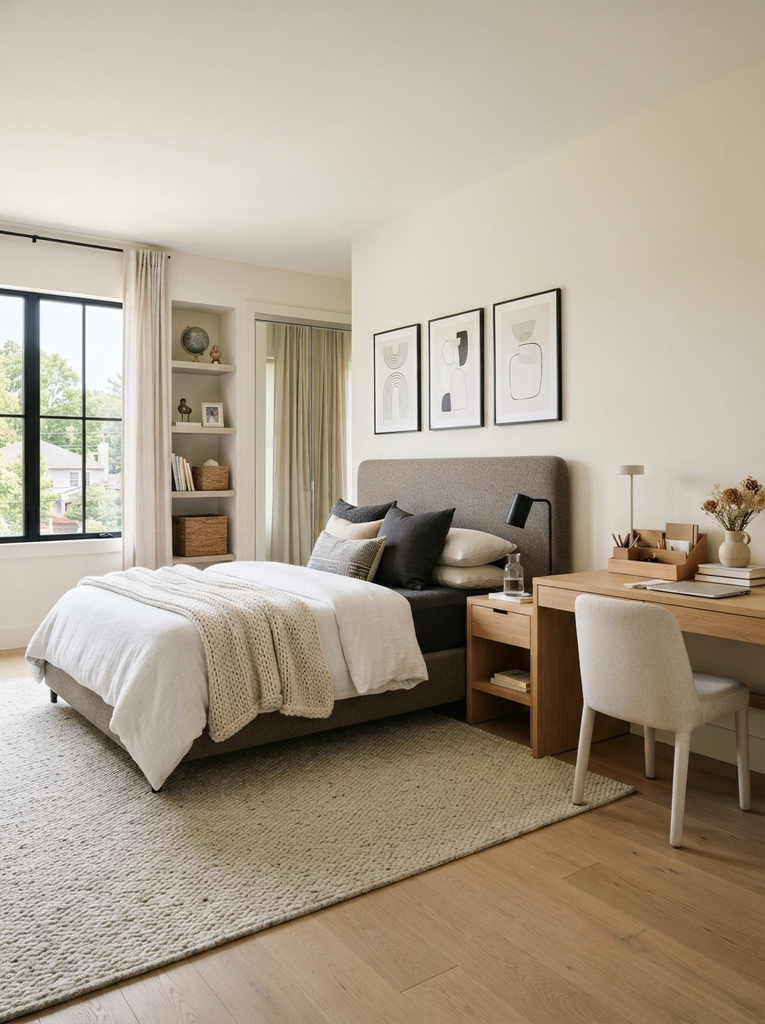
A neutral foundation gives me the most flexibility when decorating a teen bedroom. Gray, cream, white, charcoal, and natural wood can work with almost any hobby or color preference.
The personality can come from bedding, artwork, a desk chair, a rug, or a few favorite objects. Those pieces are much easier to replace than a bed, wardrobe, or large built-in storage unit.
For a teenager who changes interests frequently, this is one of the safest approaches. The room can move from a sports phase to a gaming phase without needing a complete makeover.
Pro Tip: Put the larger part of the budget toward pieces that affect everyday comfort and function, such as the mattress, bed, desk, and storage. Decorative accessories can be changed later.
2. Black and Gray Bedroom
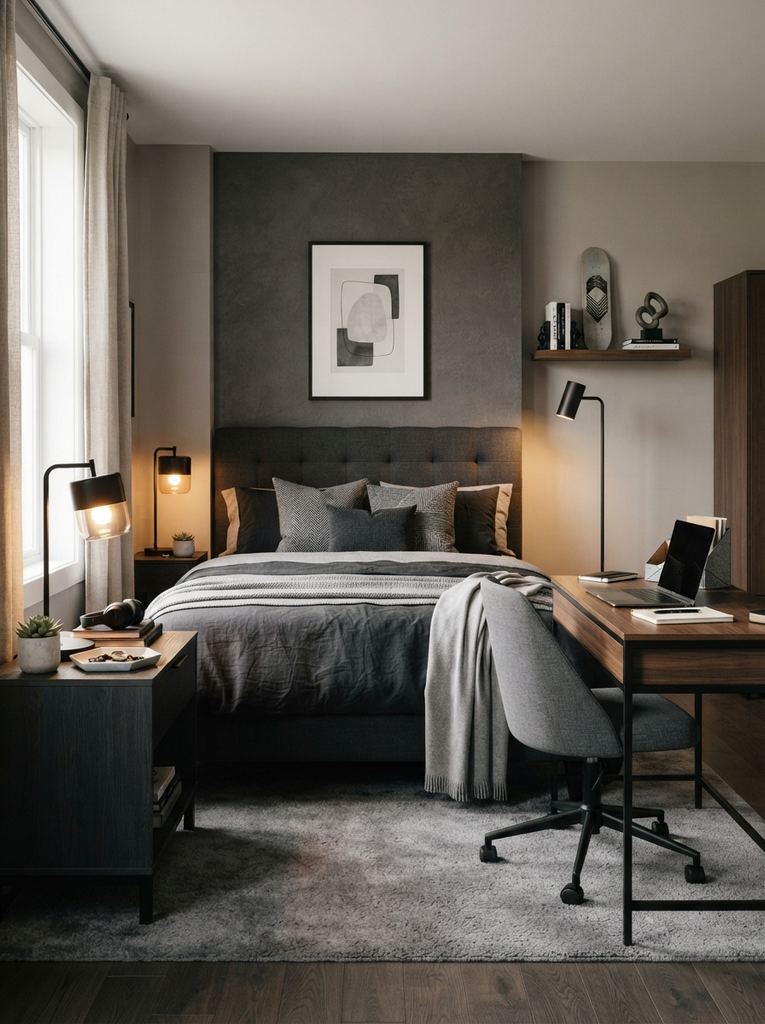
Black and gray create a stronger look without needing a complicated theme. I especially like charcoal when a teenager wants a room that feels a little more mature.
The trick is controlling how much dark color enters the room. A charcoal accent wall or dark furniture can make a statement, while lighter bedding and warm wood keep the space from feeling too heavy.
If the bedroom is small or receives little daylight, I would avoid using very dark colors on every wall. Good artificial lighting becomes especially important in that situation.
3. Blue Teen Boy Bedroom
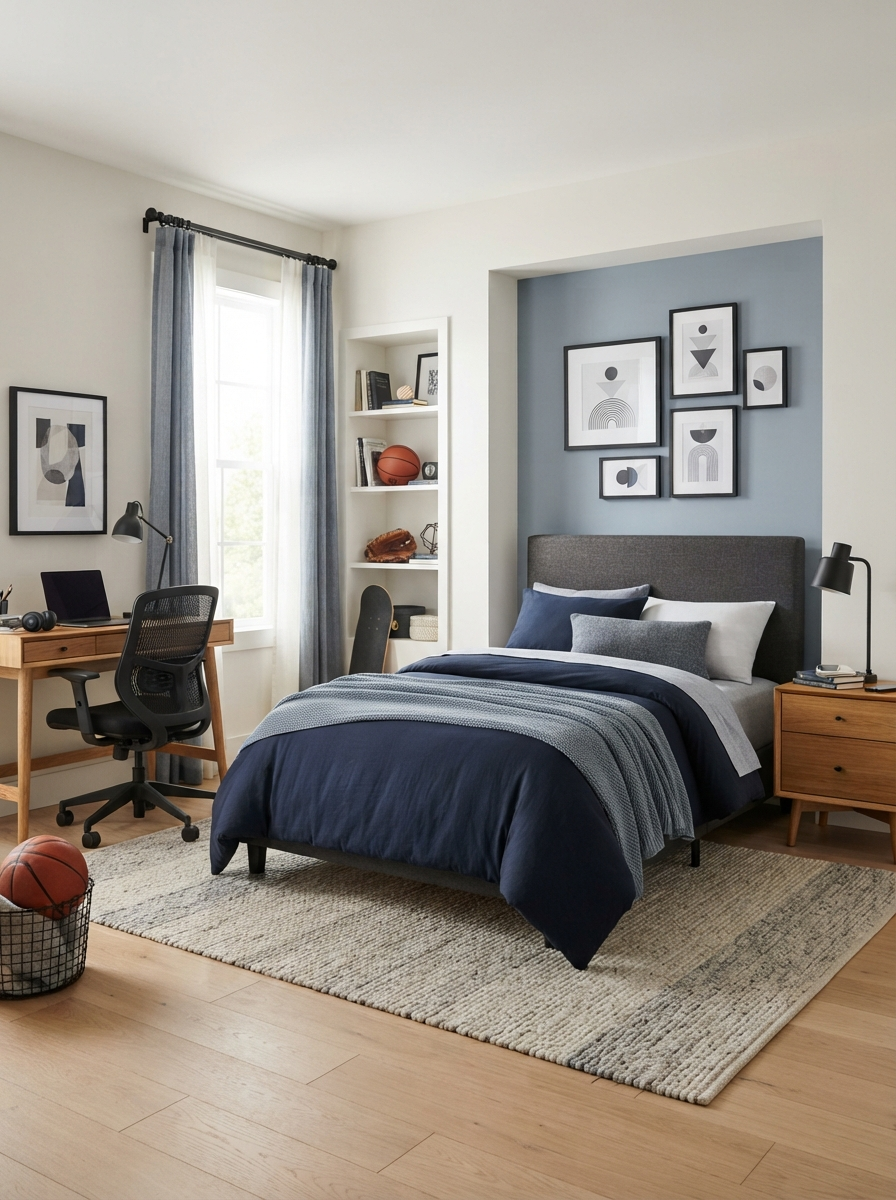
Blue remains an easy starting point because it can feel sporty, calm, modern, or dramatic depending on the shade.
Deep navy works well with white and natural wood, while dusty blue or blue-gray creates a softer look. There is no need to paint the whole room blue. Bedding, curtains, artwork, or one accent wall can provide enough color.
I also like blue because it works well with black, gray, tan, and metallic finishes, giving plenty of room for future changes.
4. Gaming Bedroom Setup
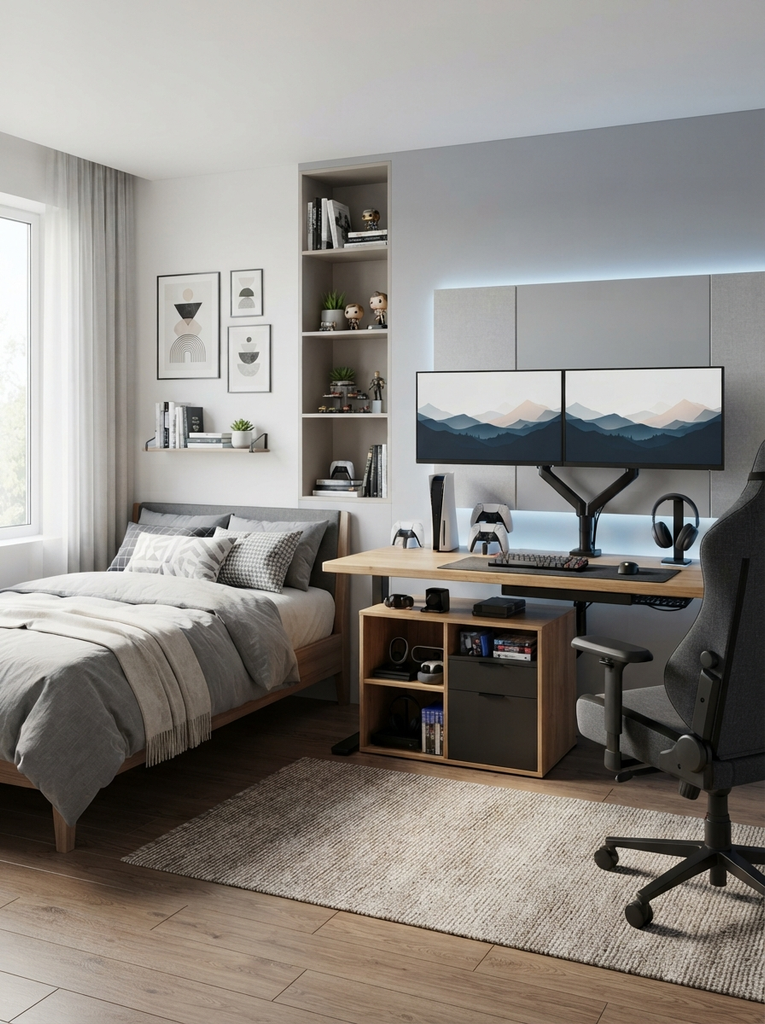
A gaming setup should be planned around comfort and organization rather than just the equipment.
The desk needs enough depth for the monitor or monitors without leaving the keyboard and mouse cramped. A supportive chair, sensible cable management, and accessible storage for controllers and headphones make the setup much easier to use.
I also leave some separation between the gaming area and the sleeping area when the room is large enough. It creates a subtle boundary between work, entertainment, and rest.
Pro Tip: Before mounting monitors or shelves, sit in the chair and check the viewing position. Screens should be positioned comfortably rather than simply placed where they look best on the wall.
5. Sports-Inspired Bedroom
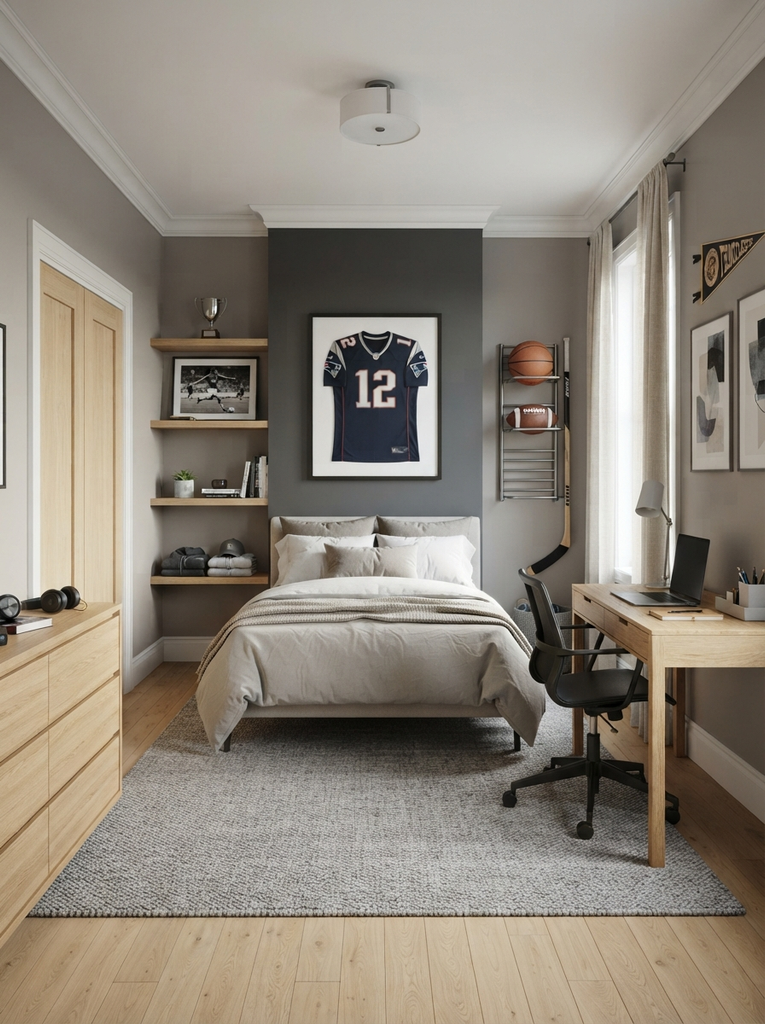
Sports can give a teen bedroom plenty of personality, but I don’t think every wall needs to be covered with team merchandise.
One strong feature can be enough: a framed jersey, favorite player’s photograph, trophy display, sports artwork, or neatly arranged equipment.
This also makes the room easier to update. If his favorite team changes, I can replace a few pieces instead of changing the entire design.
For sports equipment, I would give larger items a specific storage location. Basketballs, footballs, hockey gear, and similar equipment can quickly become floor clutter when there is no obvious place to put them.
6. Industrial Teen Bedroom
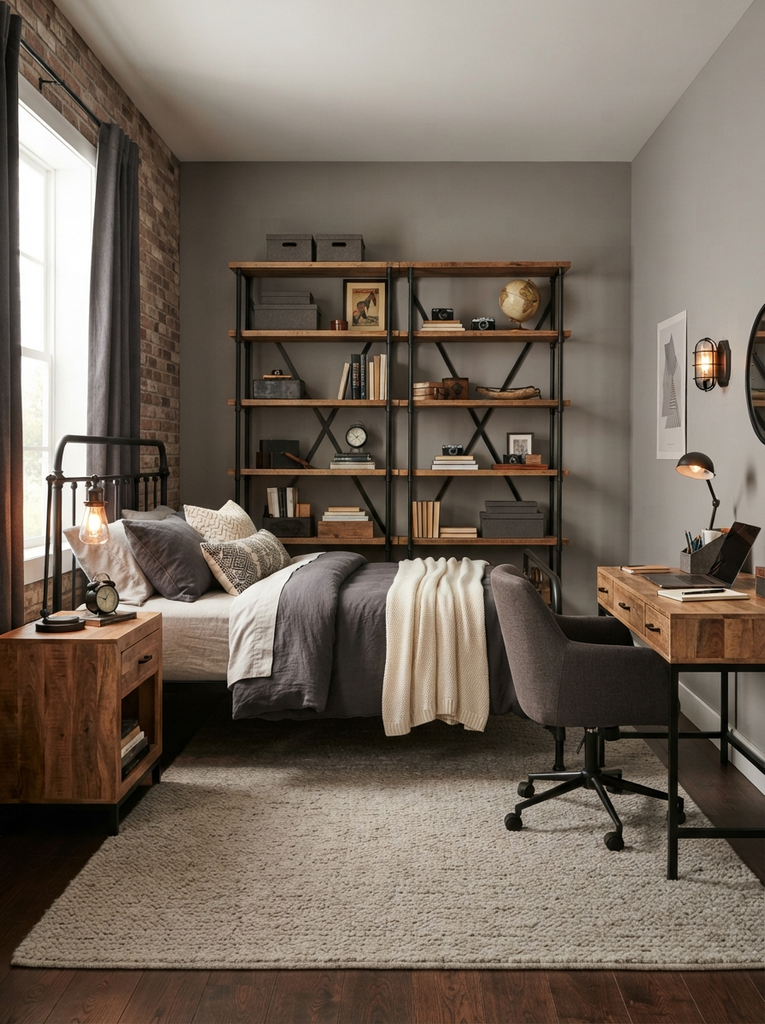
Industrial style can give an older teen’s bedroom a more grown-up appearance. Black metal, warm wood, simple furniture, and darker textiles are enough to establish the look.
I would balance those harder materials with soft bedding, a rug, curtains, and warm lighting. Otherwise, the room can start to feel more like a workshop than a comfortable bedroom.
Simple open shelving works particularly well here because it combines storage with the industrial aesthetic.
7. Small Teen Boy Bedroom
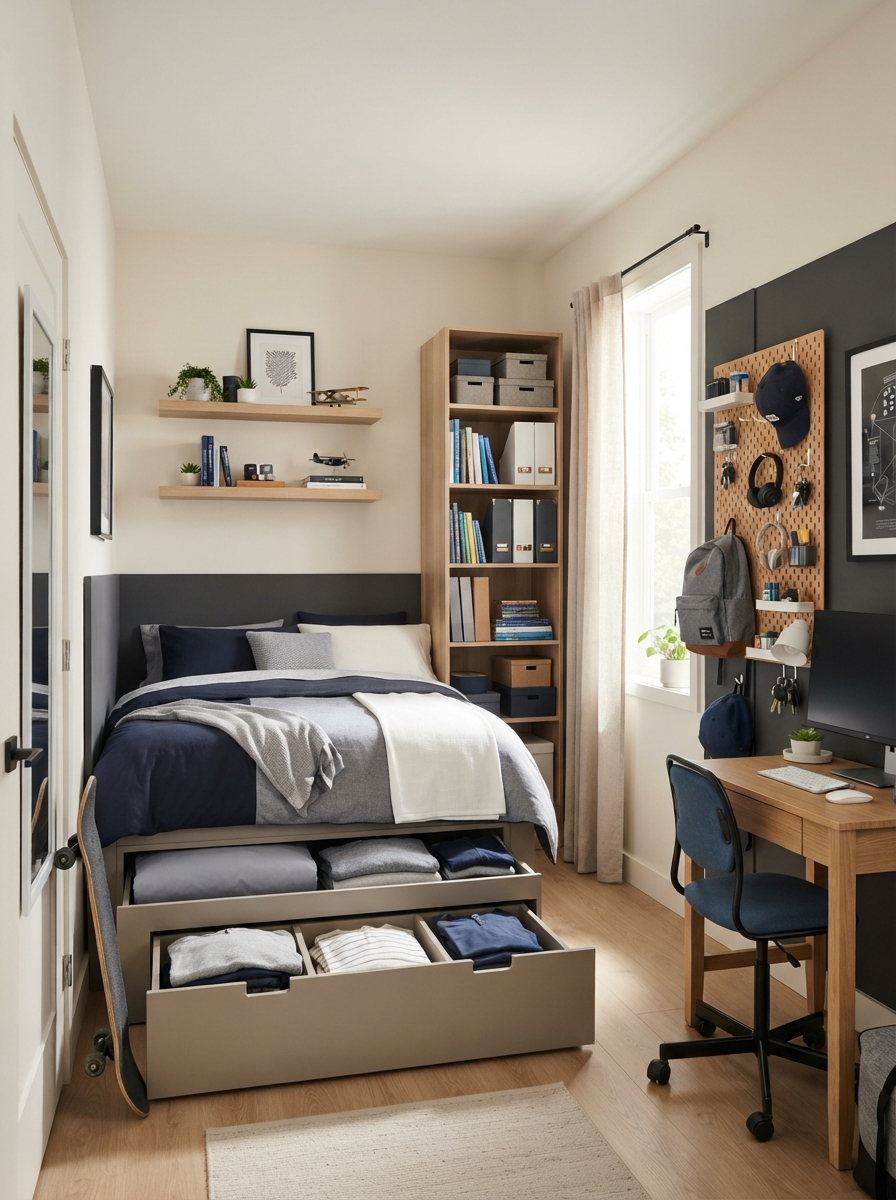
Small bedrooms reward careful planning. Before bringing furniture into the room, I measure the walls, doors, windows, closet opening, and the space needed to walk comfortably around the bed.
Vertical storage becomes especially useful. Tall shelving, floating shelves, wall hooks, pegboards, and under-bed drawers can provide storage without taking valuable floor space.
A bed with drawers underneath can be particularly useful for spare bedding, seasonal clothing, or items that are not needed every day.
Pro Tip: I sometimes mark the dimensions of proposed furniture on the floor with painter’s tape before buying it. That quick test shows whether the remaining walking space will actually feel comfortable.
8. Teen Bedroom With a Study Desk
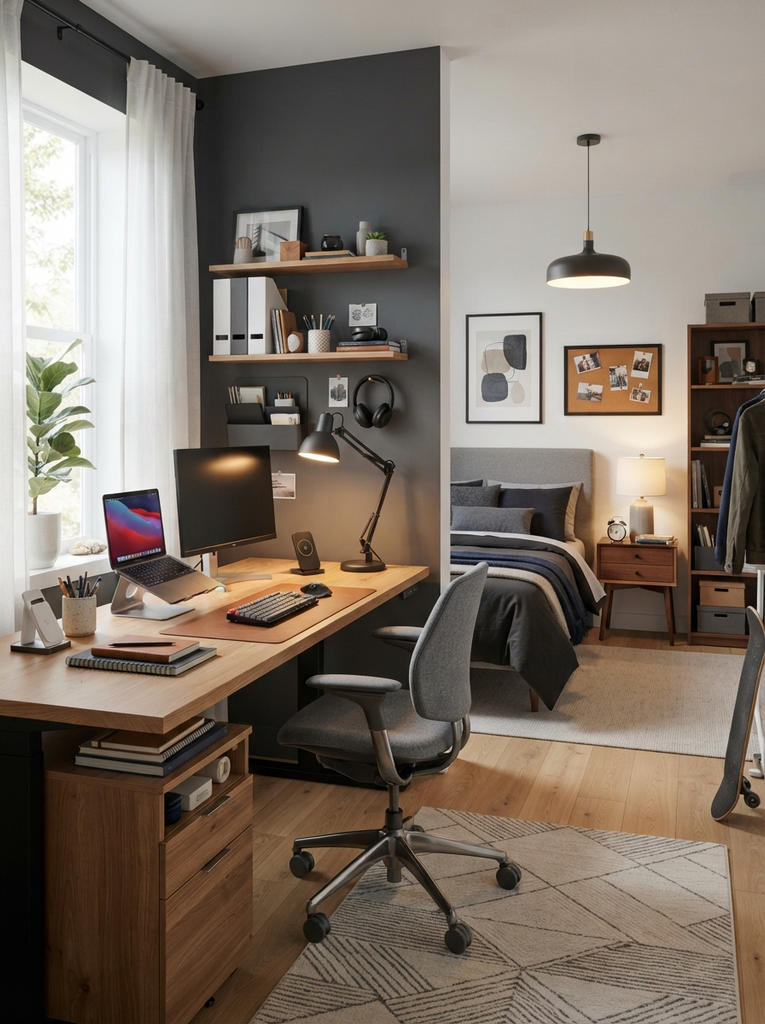
A study desk deserves more attention than simply finding an empty corner.
I look for enough surface area for the equipment the teenager actually uses. A laptop may need less space than a desktop monitor, notebooks, textbooks, and accessories.
Lighting matters too. A desk lamp that illuminates the work surface can be more useful than relying on a bright ceiling light.
Storage should be close enough that school supplies can be put away without turning the desk into a permanent pile of notebooks and chargers.
9. Bedroom With a Gallery Wall
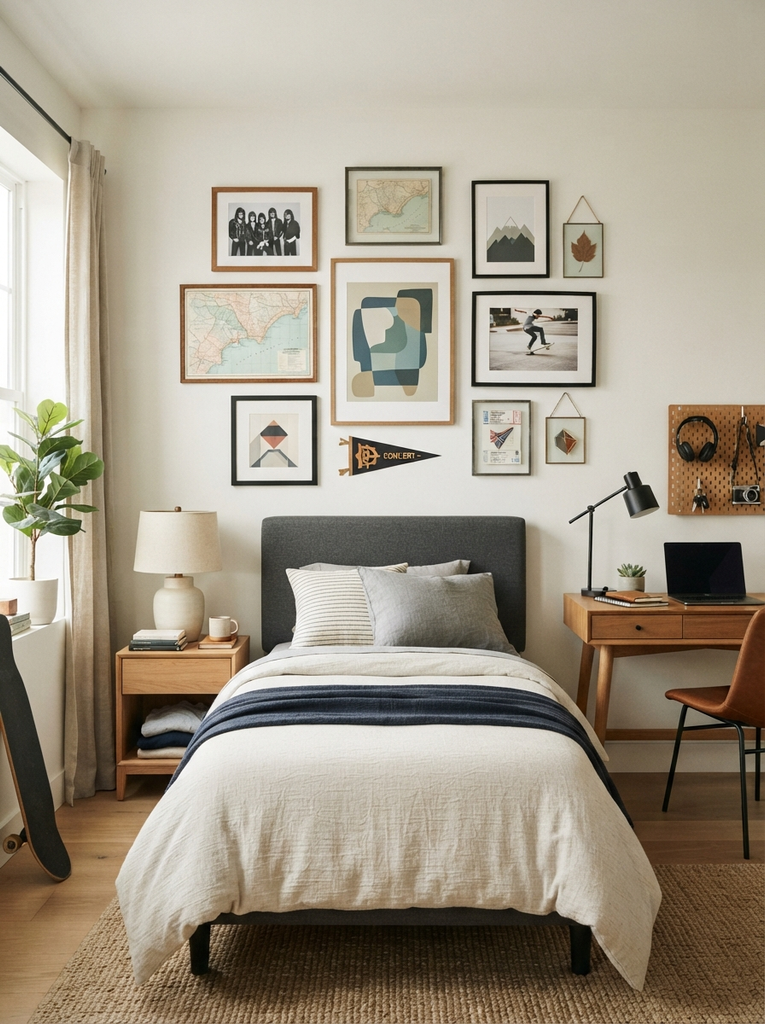
A gallery wall is a simple way to let a teenager personalize the room.
Photographs, posters, artwork, maps, sports images, music prints, and hobby-related pieces can all work together. I would choose a loose color connection rather than trying to make every frame identical.
Before hanging anything, I arrange the pieces on the floor. That makes it much easier to adjust spacing and decide which piece should become the focal point.
For changing displays, removable hanging solutions can be useful when they are appropriate for the wall surface and the weight of the item.
10. Cozy Teen Boy Bedroom
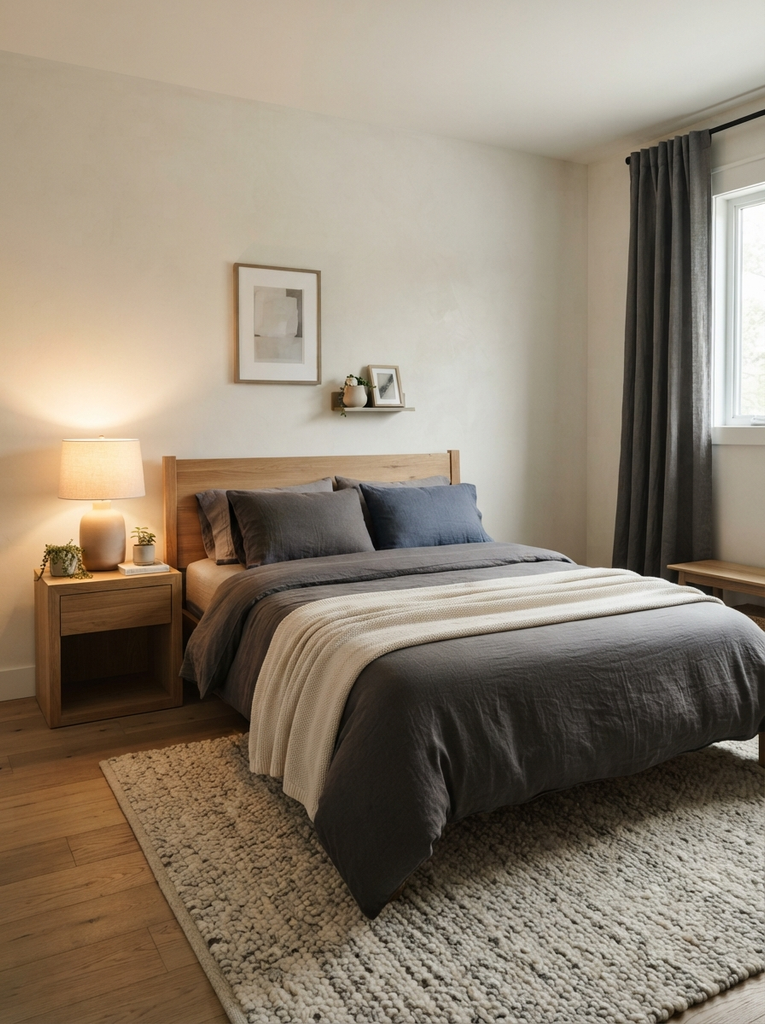
A cozy bedroom comes more from texture and lighting than from having lots of decorations.
Soft bedding, a rug, curtains, cushions, and warm bedside lighting can make a basic room feel much more comfortable.
I also pay attention to the bed because it is usually the largest visual element. Coordinated bedding can instantly make the room look more finished without adding clutter.
The goal is comfort, not an overloaded bed covered with pillows that have to be moved every night.
11. Wood Accent Bedroom
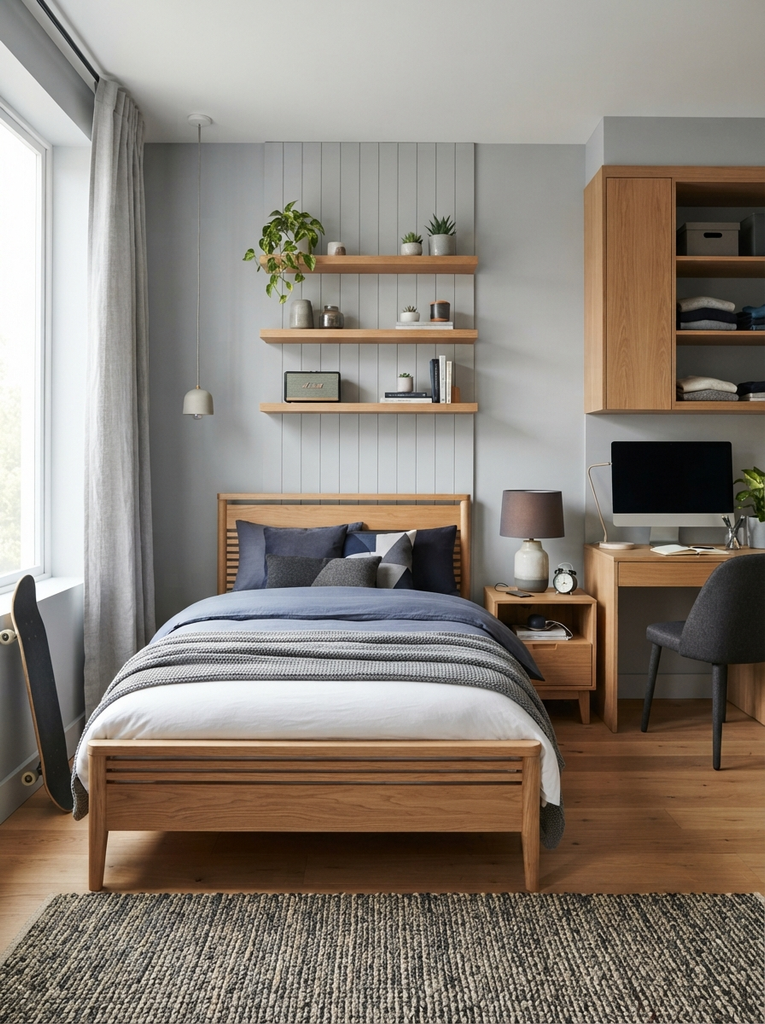
Wood is useful for adding warmth to a room with gray, white, navy, black, or other cooler colors.
It can appear in the bed frame, desk, floating shelves, nightstand, or wall treatment. Even a few natural wood elements can prevent a neutral room from feeling too stark.
I try to keep the wood tones reasonably compatible. Too many unrelated finishes can make a small room look pieced together.
12. Minimalist Teen Bedroom
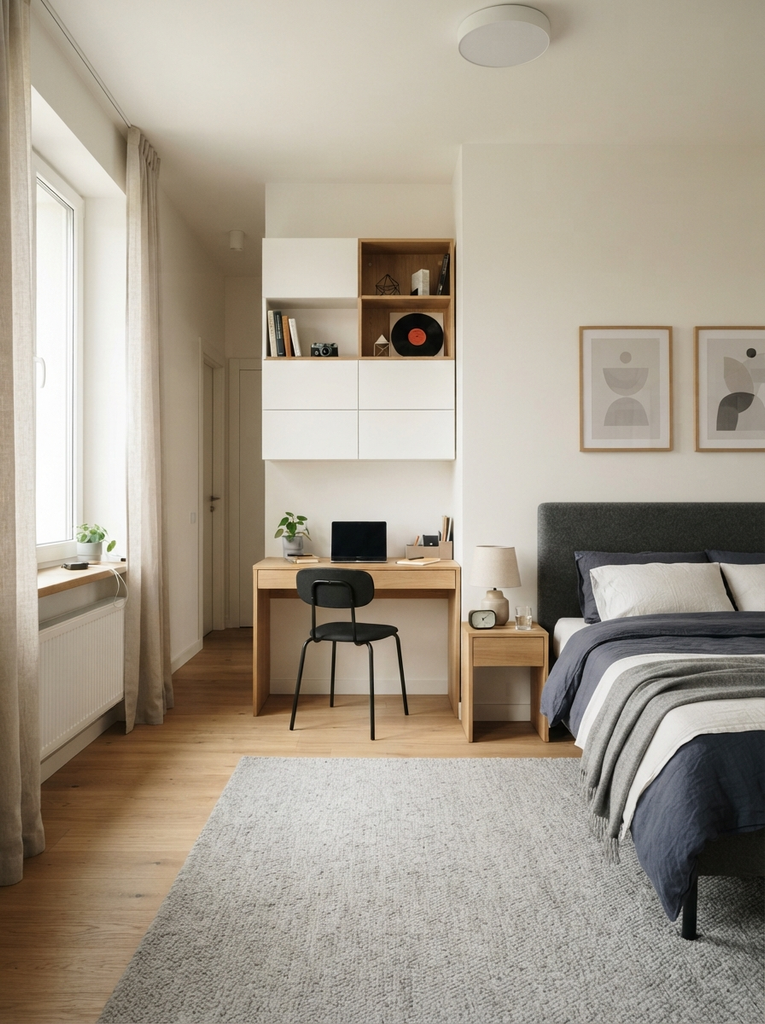
A minimalist bedroom only works when the storage system supports it.
I focus on the furniture that is genuinely needed and avoid filling empty corners simply because there is room for another piece.
Closed drawers and cabinets are useful for items that tend to create visual clutter. Open shelving is better suited to belongings that the teenager actually wants to display.
I also leave some empty floor and wall space. A room doesn’t need to be filled to feel complete.
13. Music-Themed Teen Bedroom
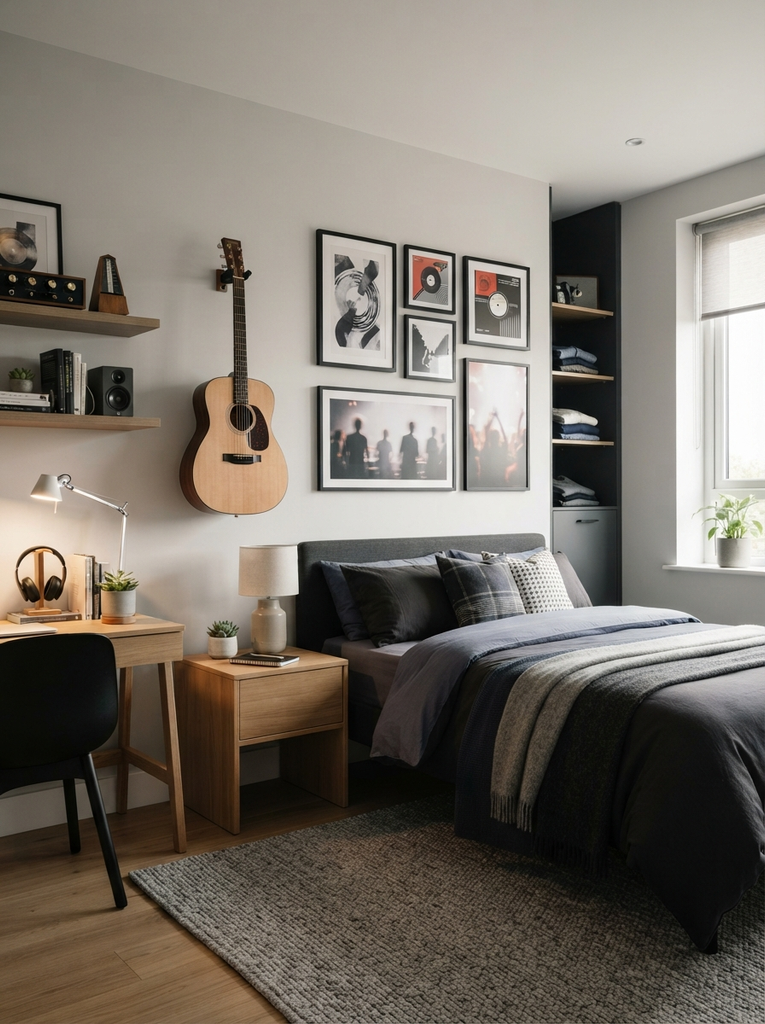
Music can become part of the decor without turning the room into a full theme.
Framed album artwork, concert photographs, posters, a guitar display, or a shelf for music-related objects can communicate the interest without overwhelming the room.
If an instrument is kept in the bedroom, I give it a proper storage or display location. This keeps it accessible while reducing the chance that it becomes another object left on the floor.
For valuable instruments, appropriate supports and secure mounting matter more than appearance.
14. Nature-Inspired Teen Bedroom
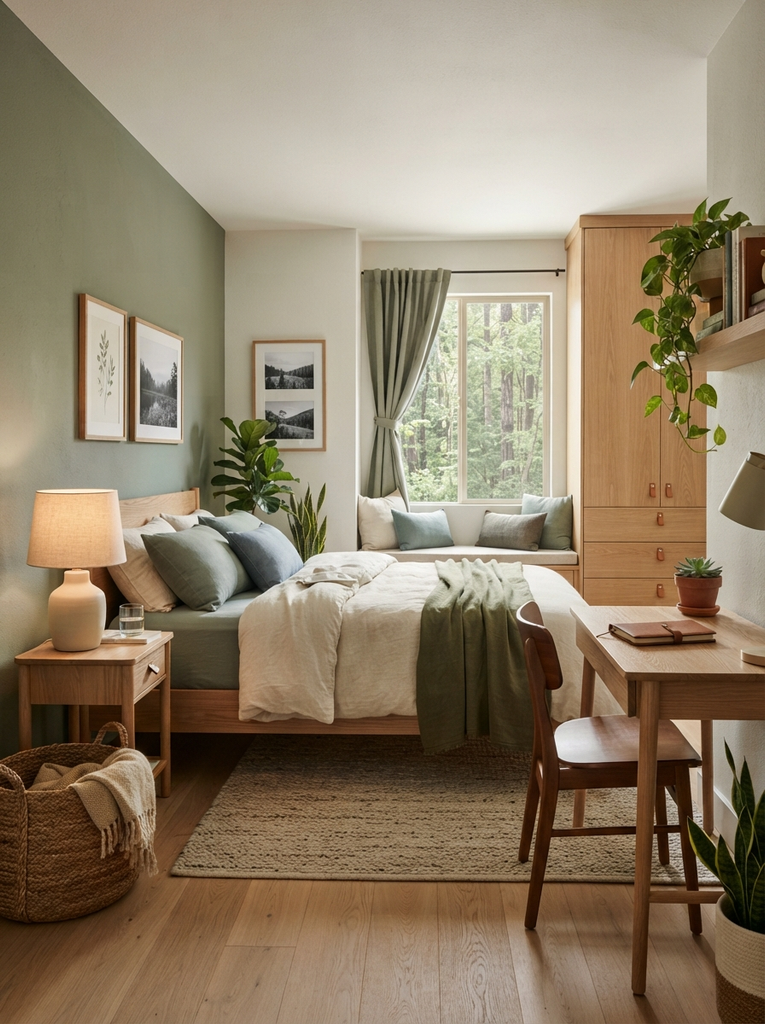
A nature-inspired palette can make a bedroom feel relaxed without looking childish.
Olive, sage, muted blue, warm brown, cream, and natural wood work well together. Landscape photography, simple botanical artwork, woven textures, and a few plants can reinforce the idea.
I would choose plants based on the actual light available in the room and how much care they require. If regular plant care isn’t realistic, quality faux greenery can provide the visual effect without becoming another responsibility.
15. LED Lighting Bedroom
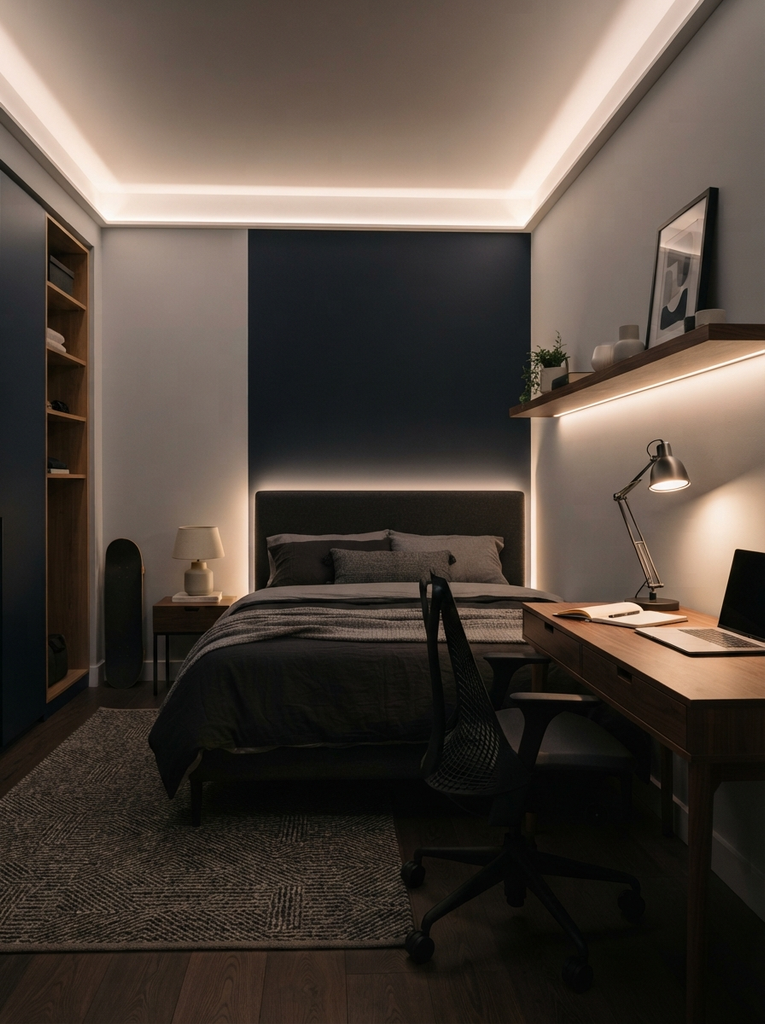
LED lighting is popular in teen bedrooms because it can change the atmosphere without changing the furniture.
I prefer treating it as accent lighting around a desk, shelf, headboard, or entertainment area. The room should still have adequate general lighting for getting dressed, cleaning, and moving around safely.
I also think about where the cables and power connections will go before installing anything. A lighting setup that looks great but leaves cords running across a walkway is not a good long-term solution.
Pro Tip: Hide LED strips behind furniture or along concealed edges when possible. The indirect glow usually looks cleaner than having bright individual diodes visible from every angle.
16. Loft Bed Bedroom
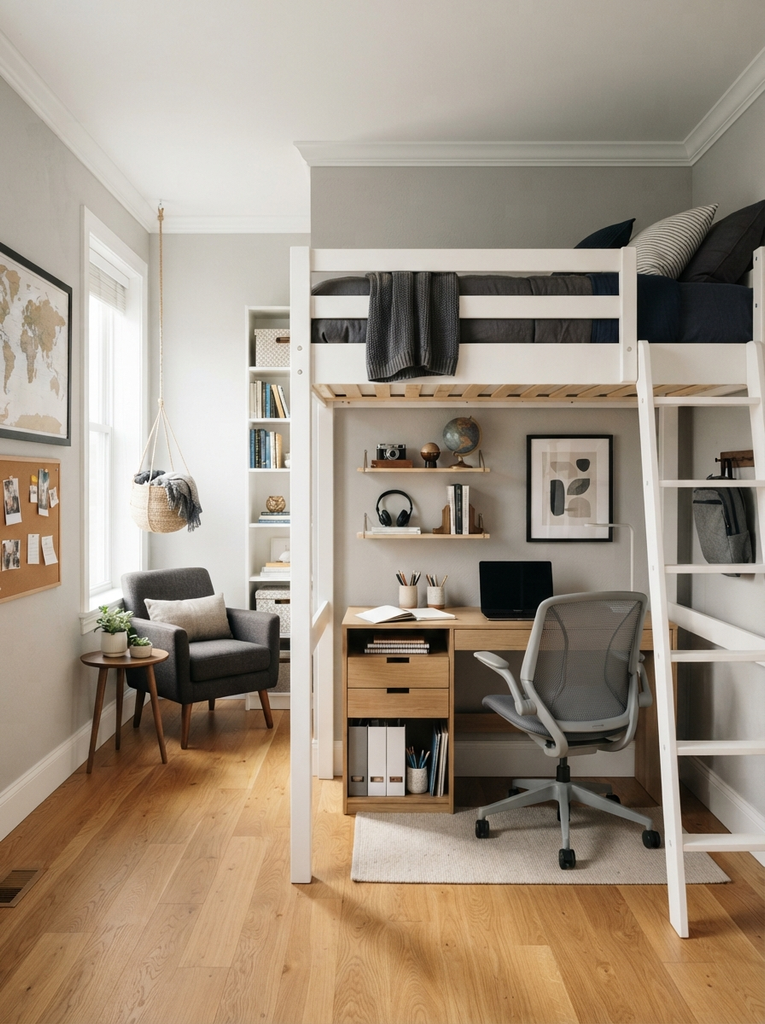
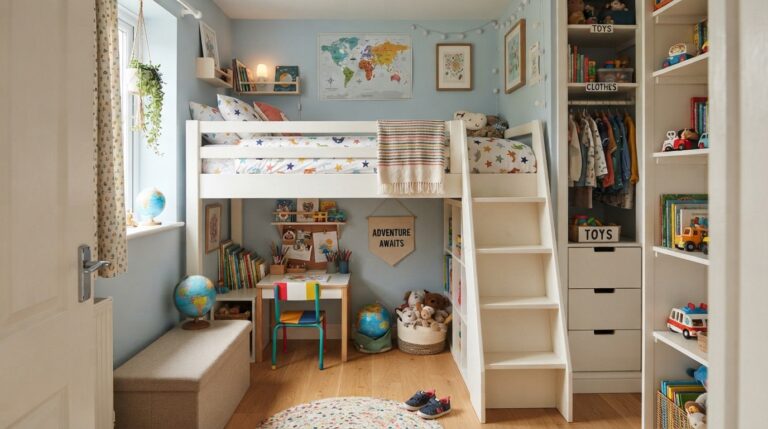
A loft bed can free up valuable floor space in a small bedroom.
The area underneath can become a study zone, reading corner, storage area, or small seating space. This can make a compact room feel much more functional.
Before choosing one, I check the ceiling height, ladder position, mattress requirements, and the manufacturer’s recommended age and safety guidance. The furniture needs to suit the teenager using it, not simply fit the decorating plan.
I also make sure there is enough clearance around the bed and that nearby furniture doesn’t create an awkward path.
17. Teen Bedroom With Built-In Storage
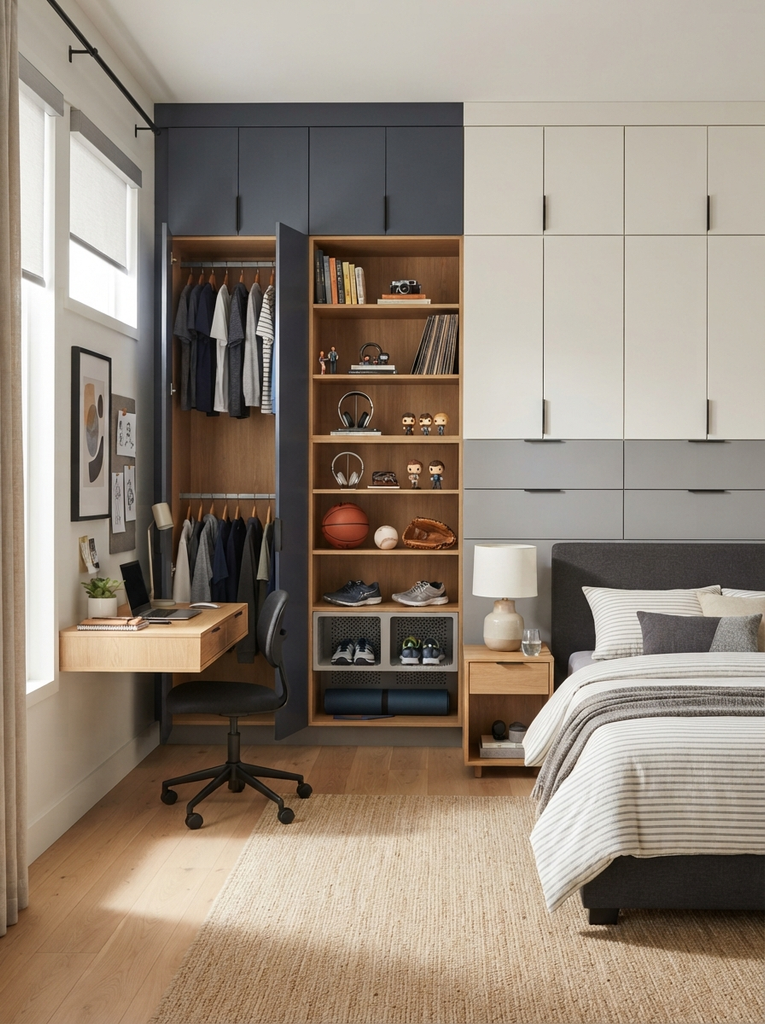
Teenagers can accumulate a surprising mix of clothing, books, school materials, sports equipment, electronics, and personal collections.
Built-in storage can make good use of an entire wall or an awkward corner. A desk can sometimes be incorporated into the same storage system, creating a compact study zone.
If custom cabinetry isn’t practical, modular shelves and cabinets can achieve a similar sense of order. Matching finishes help separate units look like part of one design.
18. Cool Wall Decor for Teen Boys
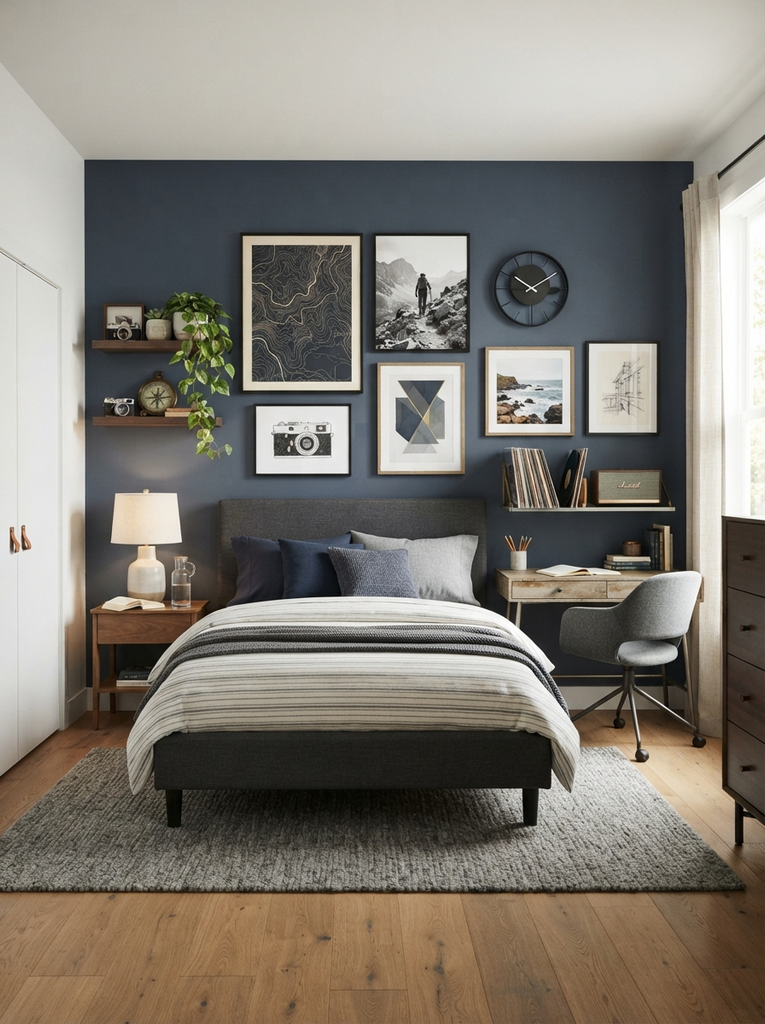
Wall decor is one area where I like giving teenagers plenty of control.
The artwork should reflect his interests rather than simply matching the furniture. Posters, framed prints, photographs, maps, clocks, shelves, and collections can all become part of the room.
I avoid filling every wall. A few well-placed pieces usually have more impact than dozens of small items competing for attention.
Wall-mounted pieces should also be secured appropriately, especially if they are heavy or placed above a bed or desk.
Also read: 21 Small Bedroom Inspirations
19. Two-Tone Teen Bedroom
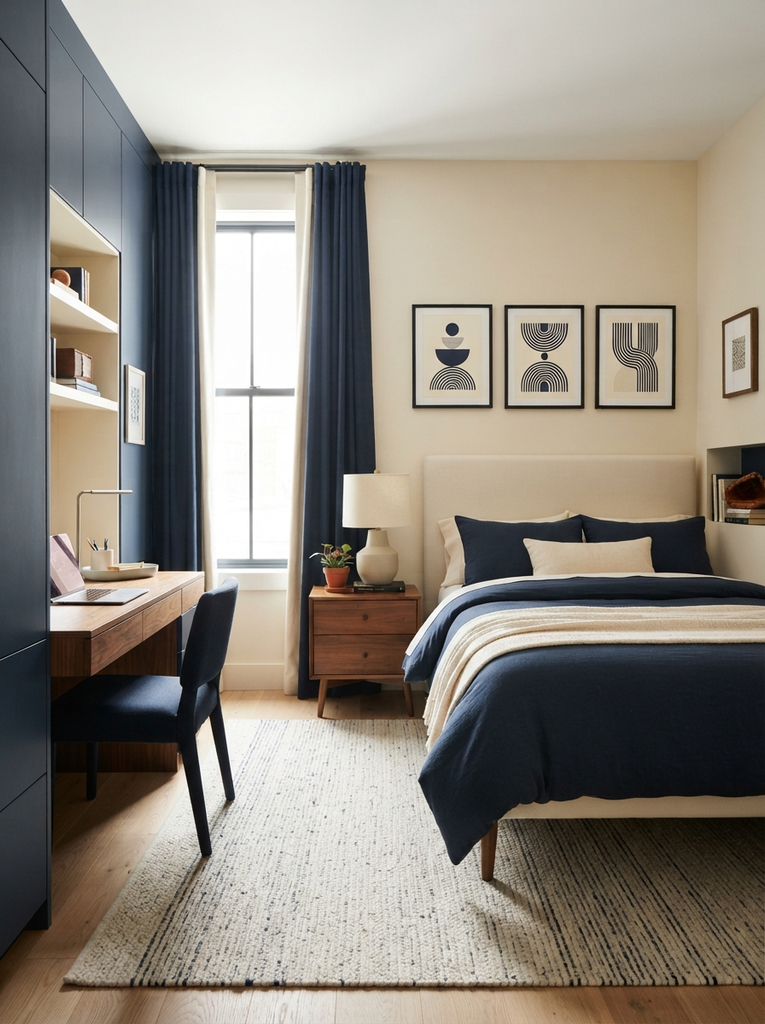
A two-tone palette can give the bedroom direction without making the design complicated.
Navy and cream, charcoal and white, olive and beige, or blue-gray with natural wood are combinations that can be adapted to different styles.
I usually let one color dominate and use the second as an accent. That keeps the room cohesive and makes it easier to introduce furniture and accessories without creating color overload.
20. Teen Bedroom With a Reading Corner
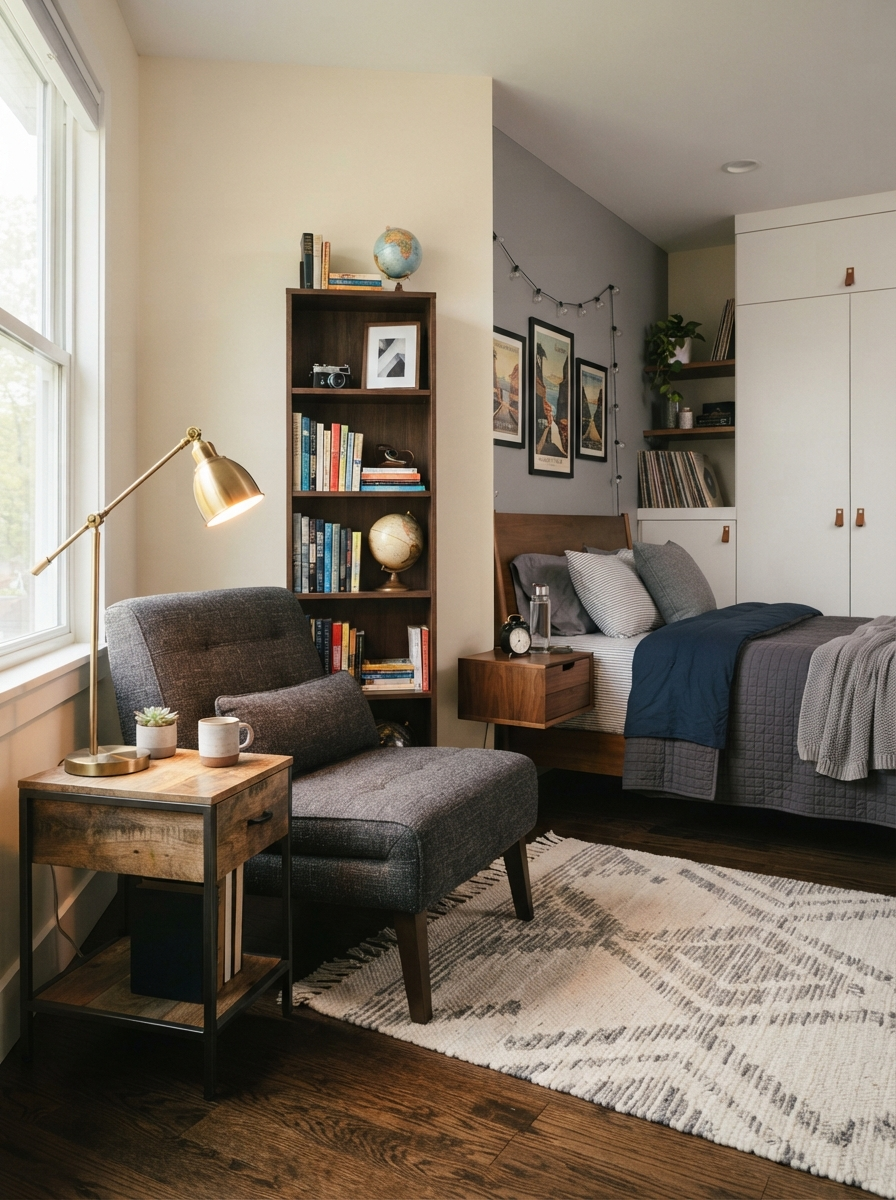
A reading corner can turn an unused section of the bedroom into a useful retreat.
A comfortable chair, compact side table, and reading lamp are usually enough. If space allows, a narrow bookcase nearby keeps favorite books within reach.
Lighting deserves attention here. A dedicated reading lamp should illuminate the book without forcing the entire bedroom to be brightly lit.
If the room is very small, a floor cushion or compact lounge chair may work better than a full-size armchair.
21. Street-Style Teen Bedroom
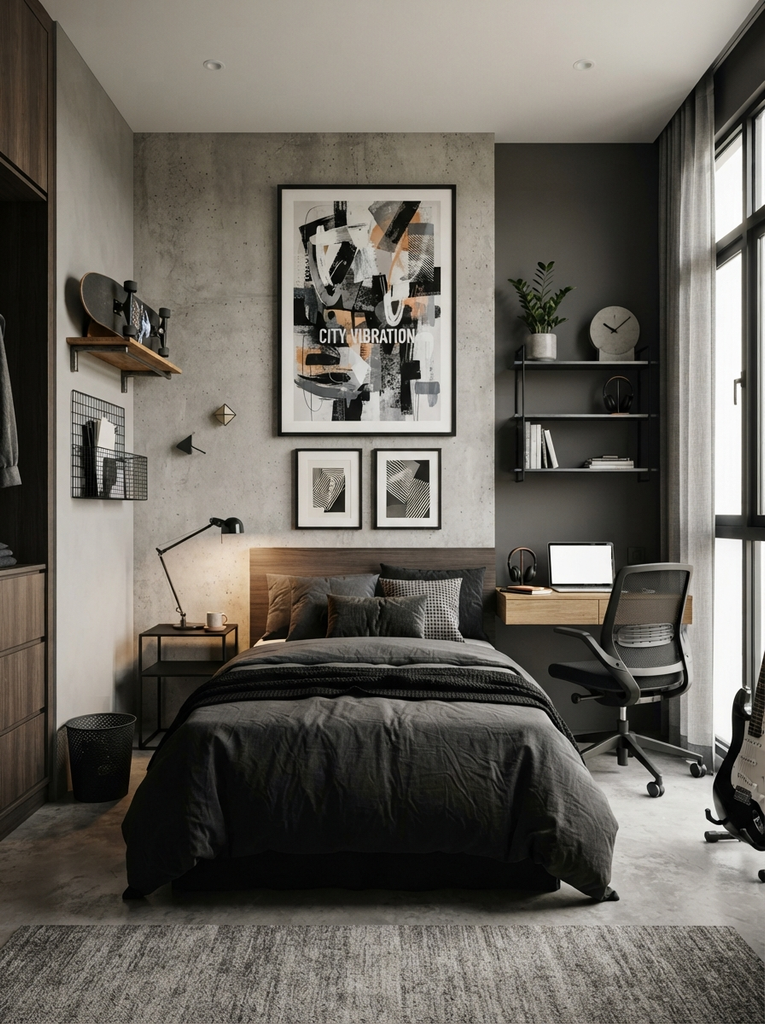
Street-style decor gives me more freedom to use graphic artwork, bold prints, darker colors, and urban-inspired accessories.
I would choose one or two larger statement pieces instead of covering every wall. A large print or mural-style artwork can establish the look immediately.
The rest of the furniture can stay simple. That makes it easier to change the room later without losing its character.
22. Monochrome Teen Bedroom
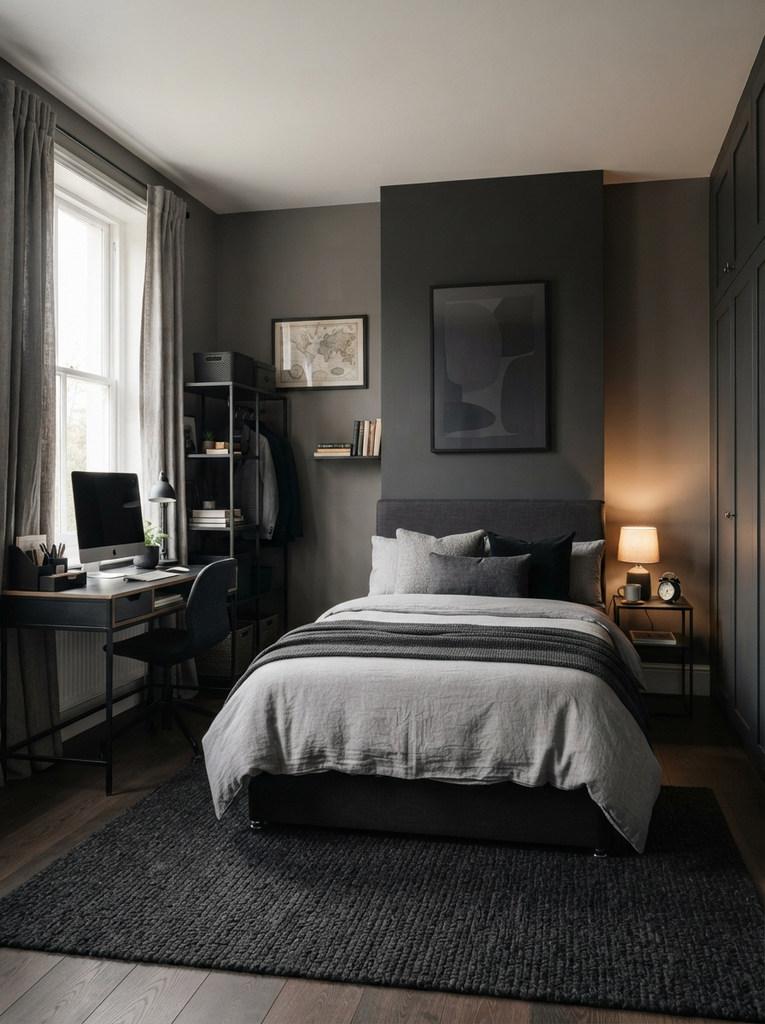
A monochrome room doesn’t have to mean a completely black-and-white bedroom.
I can use several shades of one color and create interest through texture. A charcoal rug, lighter gray bedding, black metal furniture, and textured curtains can all belong to the same palette without looking identical.
This approach works particularly well for teenagers who prefer a clean and understated room.
23. Teen Bedroom With a Feature Wall
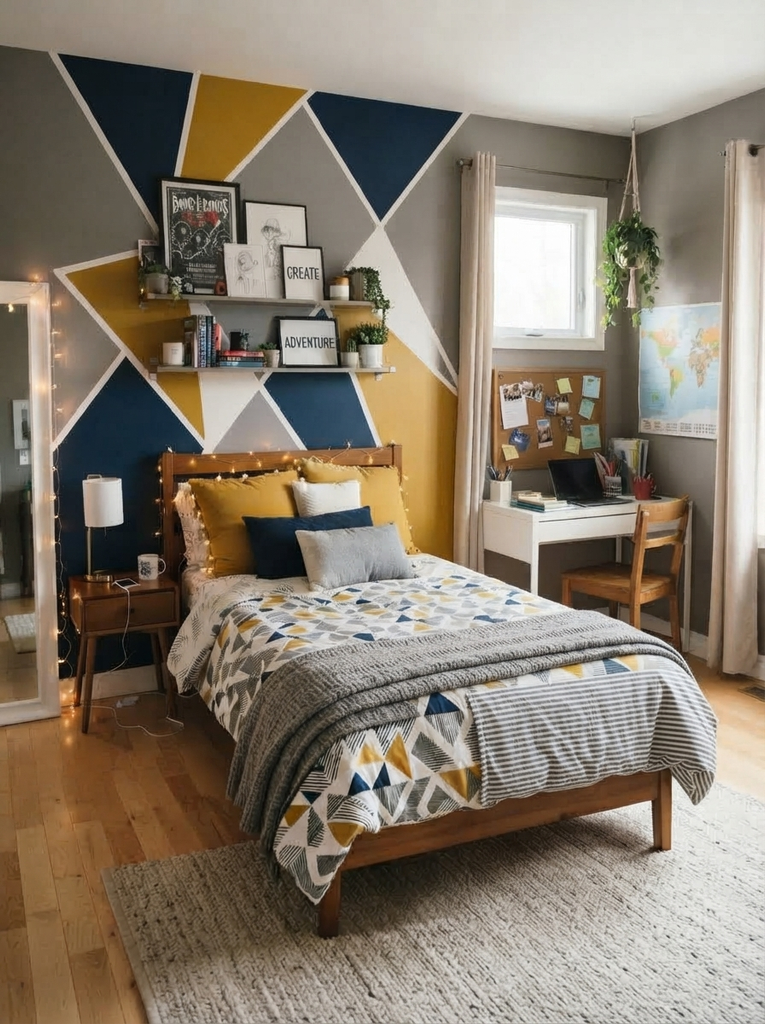
A feature wall gives the room a focal point without requiring a complete redesign.
Paint is the simplest option, but wallpaper, wood slats, geometric patterns, or mural-style artwork can also work.
The wall behind the bed is usually the most natural location because the bed already acts as the room’s anchor.
Before committing to a dramatic color or pattern, I test a sample in the actual room. Natural and artificial light can change how a color looks throughout the day.
24. Organized Teen Bedroom
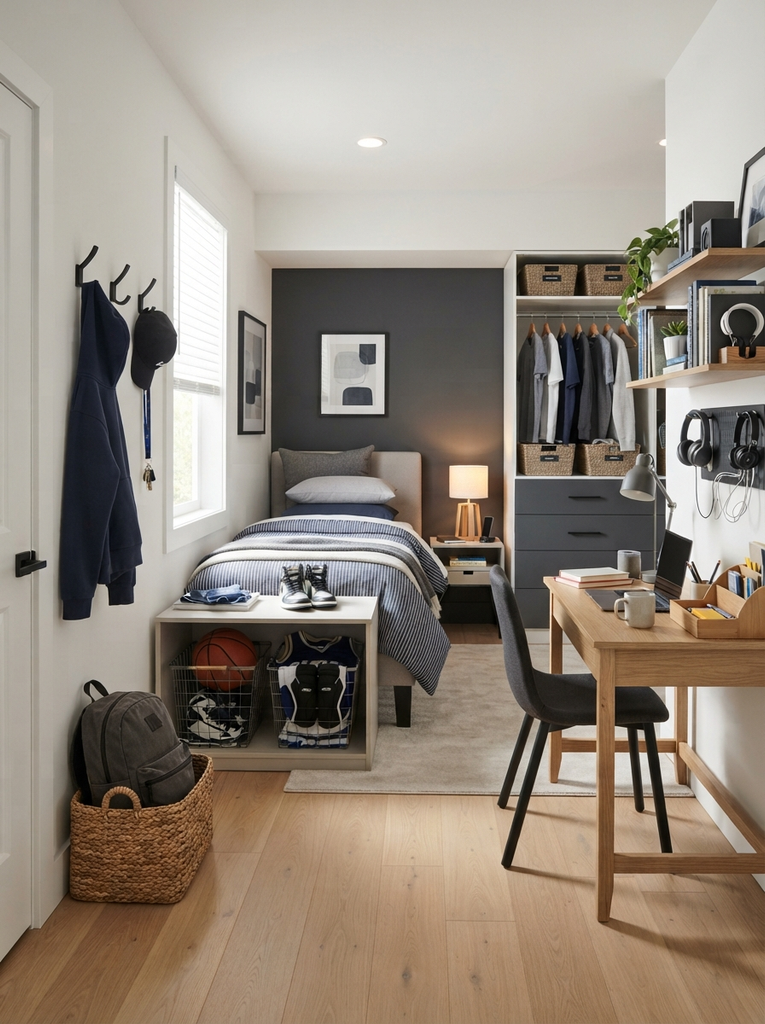
Organization becomes much easier when storage is based on habits rather than wishful thinking.
If backpacks always end up near the door, I add a hook or designated basket there. If sports equipment constantly lands in one corner, that corner probably needs a storage solution.
The same principle works for shoes, chargers, headphones, laundry, and school supplies. The easier something is to put away, the more likely the system will actually be used.
Pro Tip: Create one everyday drop zone for items such as a backpack, headphones, keys, and chargers. A simple shelf with a basket can prevent several small sources of clutter from spreading around the room.
25. Comfortable Teen Bedroom
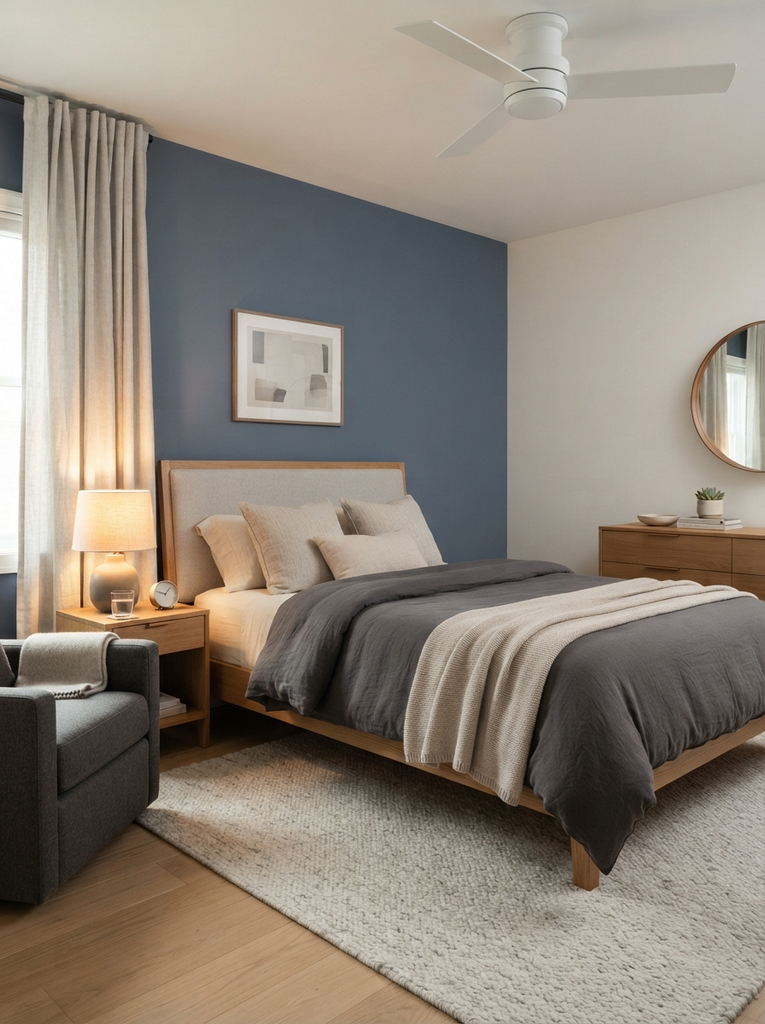
Comfort should guide the room just as much as appearance.
The mattress, pillow, bedding, curtains, temperature, and lighting all affect how the bedroom feels at night. These details aren’t as exciting as choosing wall art, but they have a much greater impact on daily use.
I also consider the position of the bed. It should feel comfortable and leave enough clearance for getting in and out without creating a cramped walkway.
A rug beside the bed can add warmth underfoot if the floor and room layout allow it.
26. Dark Accent Wall Bedroom
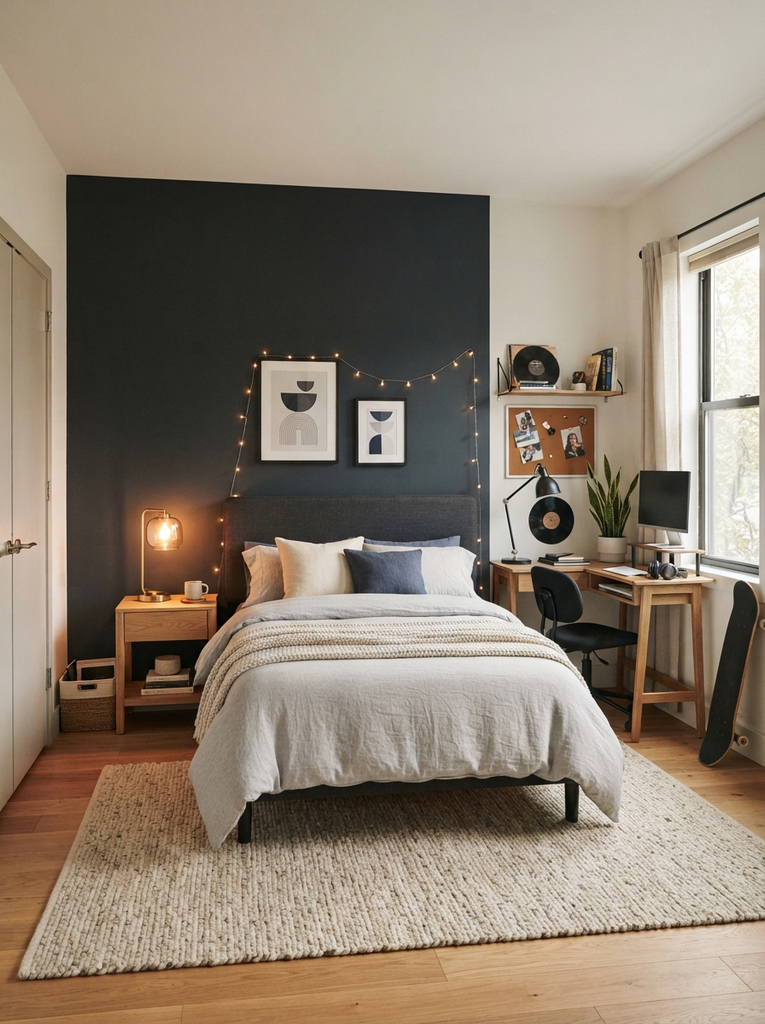
A dark accent wall can make a simple bedroom feel much more dramatic.
Charcoal, deep navy, forest green, and similar colors can work especially well behind the bed. The rest of the room can remain lighter to keep the design balanced.
For rooms with limited daylight, I would test the paint during both daytime and evening. A color that looks rich and comfortable in daylight can feel considerably darker once the room relies on artificial lighting.
27. Modern Teen Bedroom With Floating Shelves
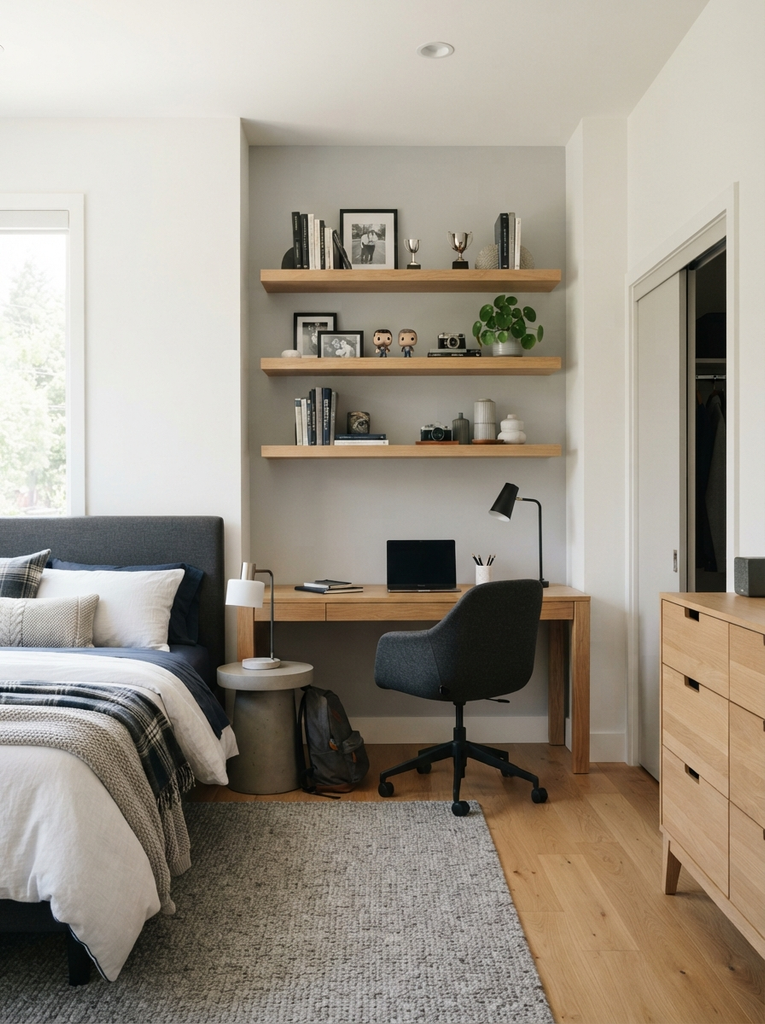
Floating shelves are useful when storage is needed but floor space is limited.
They can hold books, photographs, trophies, collectibles, small plants, or a few decorative pieces. I would make sure the shelves are properly anchored for the wall type and the weight they will carry.
I also resist the temptation to fill every inch. Leaving some empty space keeps the display easier to clean and prevents it from becoming another clutter zone.
28. Teen Bedroom With a Pinboard
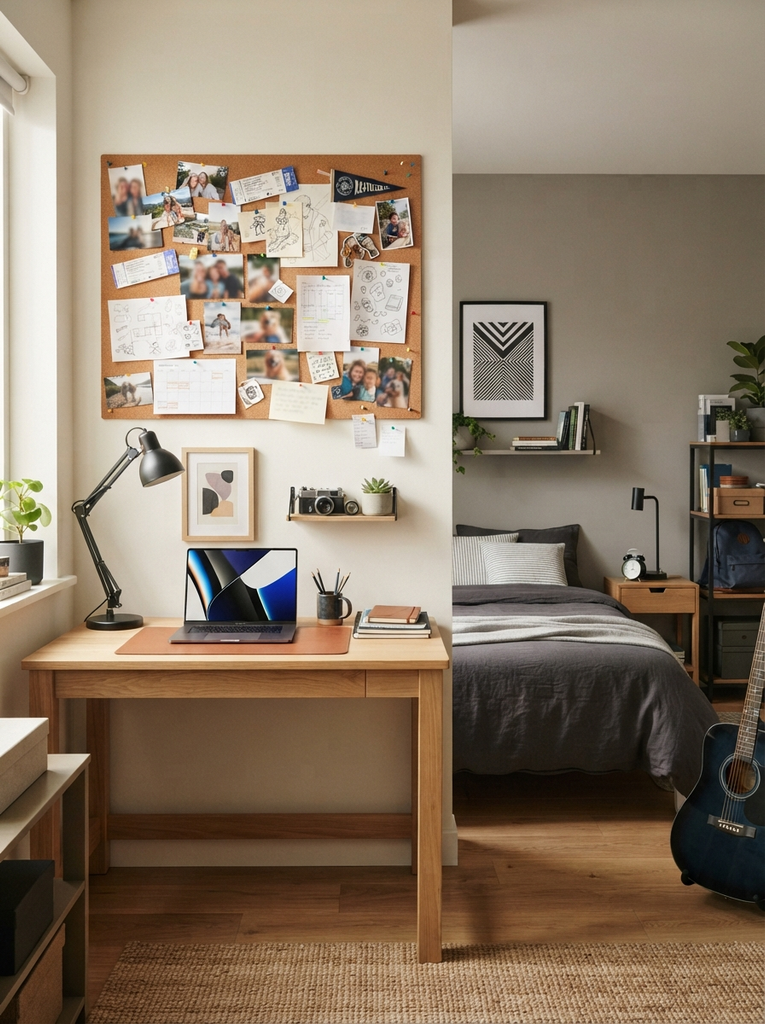
A pinboard gives teenagers a flexible place to display things that change often.
Photos, drawings, school reminders, tickets, notes, schedules, and small memories can all live there without permanently changing the rest of the room.
This is particularly useful for a teenager who enjoys customizing his surroundings. The display can change throughout the school year without requiring new furniture or a repaint.
29. Elevated Teen Bedroom Design
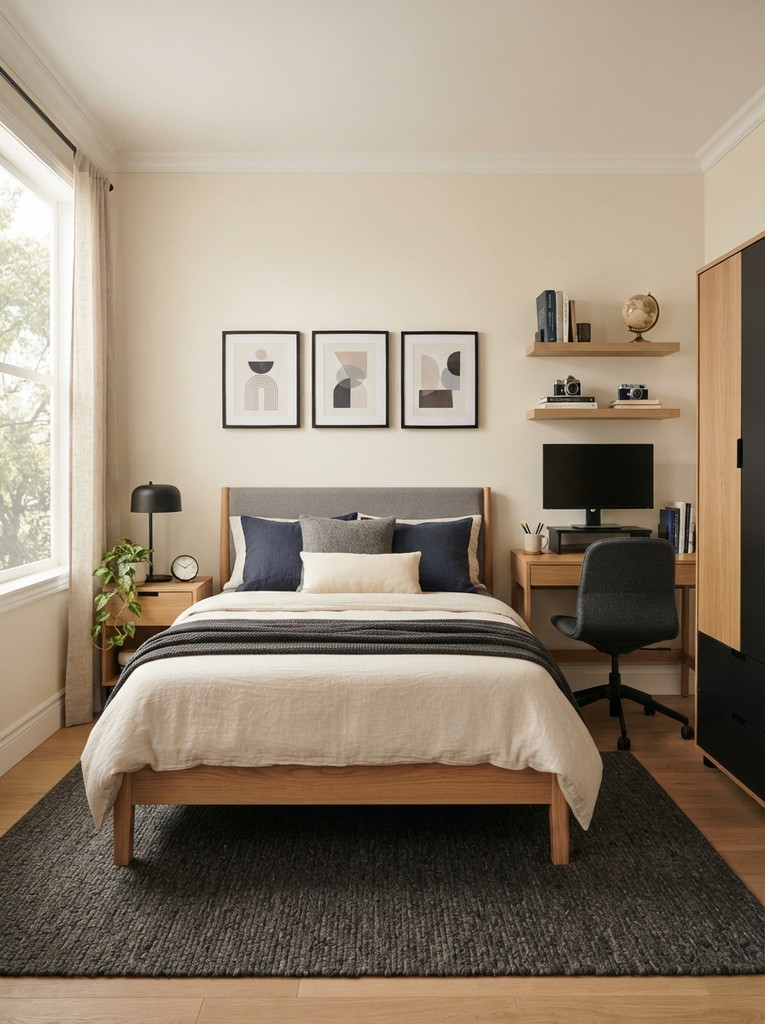
A polished teen bedroom doesn’t require expensive furniture.
The biggest difference often comes from coordination. Similar finishes, properly sized furniture, good bedding, simple artwork, and organized storage can make an ordinary room feel much more intentional.
I also pay attention to scale. A tiny rug under a large bed or a small picture on a huge empty wall can make the room feel unbalanced even when every individual item looks good.
Pro Tip: Before buying a rug or artwork, measure the area where it will go. For a large wall, I would rather use one appropriately sized statement piece than several tiny pieces that disappear visually.
Read this next: 27 Luxury Bedroom Decor Ideas
30. Teen Boy Bedroom With Personality
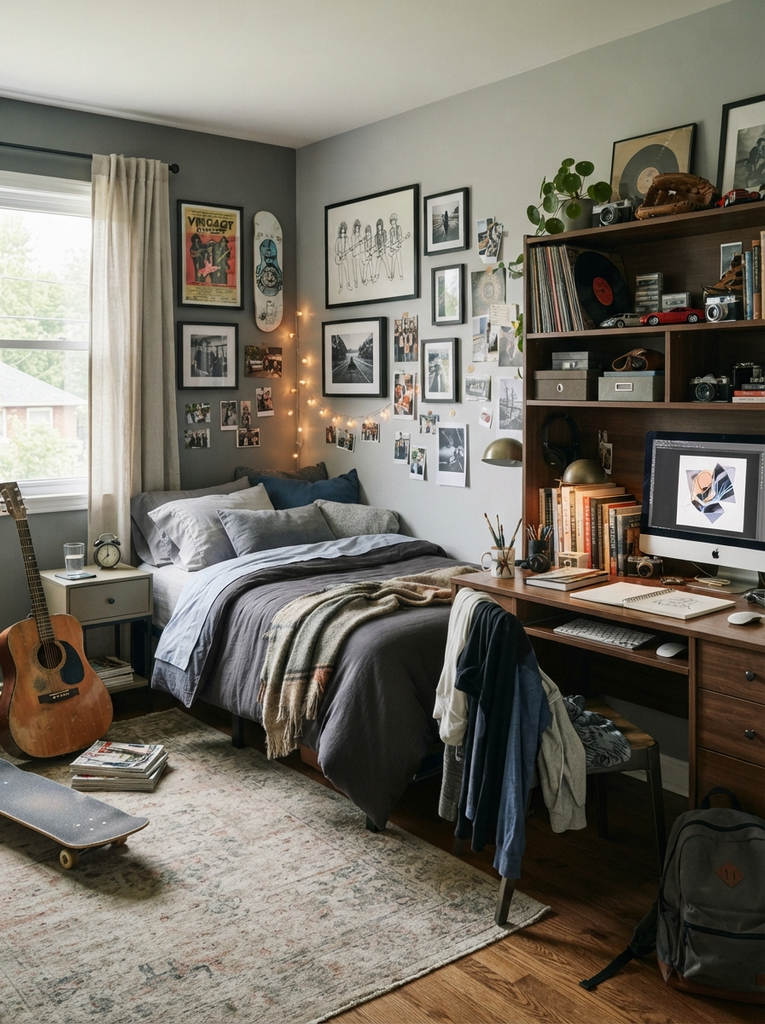
This is where I think the room should stop looking like a design project and start looking like his space.
His interests might show up through a basketball collection, favorite band’s artwork, gaming equipment, model cars, books, photographs, sketches, trophies, or souvenirs from trips.
I don’t try to include every interest at once. A few meaningful items usually tell the story better than filling every shelf.
I also give the teenager some ownership over the final choices. Parents can establish the practical boundaries, but letting him choose between a few paint colors, bedding options, or artwork styles can make the finished room feel much more personal.
The best part is that these personal details can change without replacing the entire room. The bed, desk, storage, and lighting can stay while the personality of the space evolves.
FAQ’s
What should a teen boy’s bedroom include?
A teen boy’s bedroom should include a comfortable bed, practical storage, good lighting, and a desk or study area if space allows. Personal touches like gaming gear, sports items, artwork, or music can make the room feel his own.
What colors work best for a teen boy’s bedroom?
Popular choices include navy blue, charcoal, gray, forest green, black, beige, and white. I recommend choosing a flexible base color and adding personality through bedding, artwork, rugs, and accessories.
How do I make a small teen boy’s bedroom work better?
Use furniture that serves more than one purpose, vertical shelving, under-bed storage, and a compact desk. I also recommend measuring the room, doors, windows, and furniture footprint before buying anything.
How can I make a teen boy’s bedroom feel more personal?
Let him choose a few key elements, such as wall art, bedding, colors, sports displays, gaming accessories, or music decor. Keeping larger furniture neutral makes it easier to update the room as his interests change.
Conclusion
When I plan a teen boy bedroom, I don’t try to create a room that will look exactly the same for years. Teenagers change quickly, and their bedrooms should have enough flexibility to change with them.
A comfortable bed, practical storage, a useful study area, sensible lighting, and a well-planned layout give the room a strong foundation. From there, personality can come through artwork, sports, music, gaming, color, collections, and other interests.
I also think the teenager’s opinion matters. The room works best when it reflects his personality while still meeting the practical needs of everyday family life.
For me, that is the real goal: a bedroom that feels personal, stays reasonably organized, and remains useful long after the latest decorating trend has passed.

3 Comments