
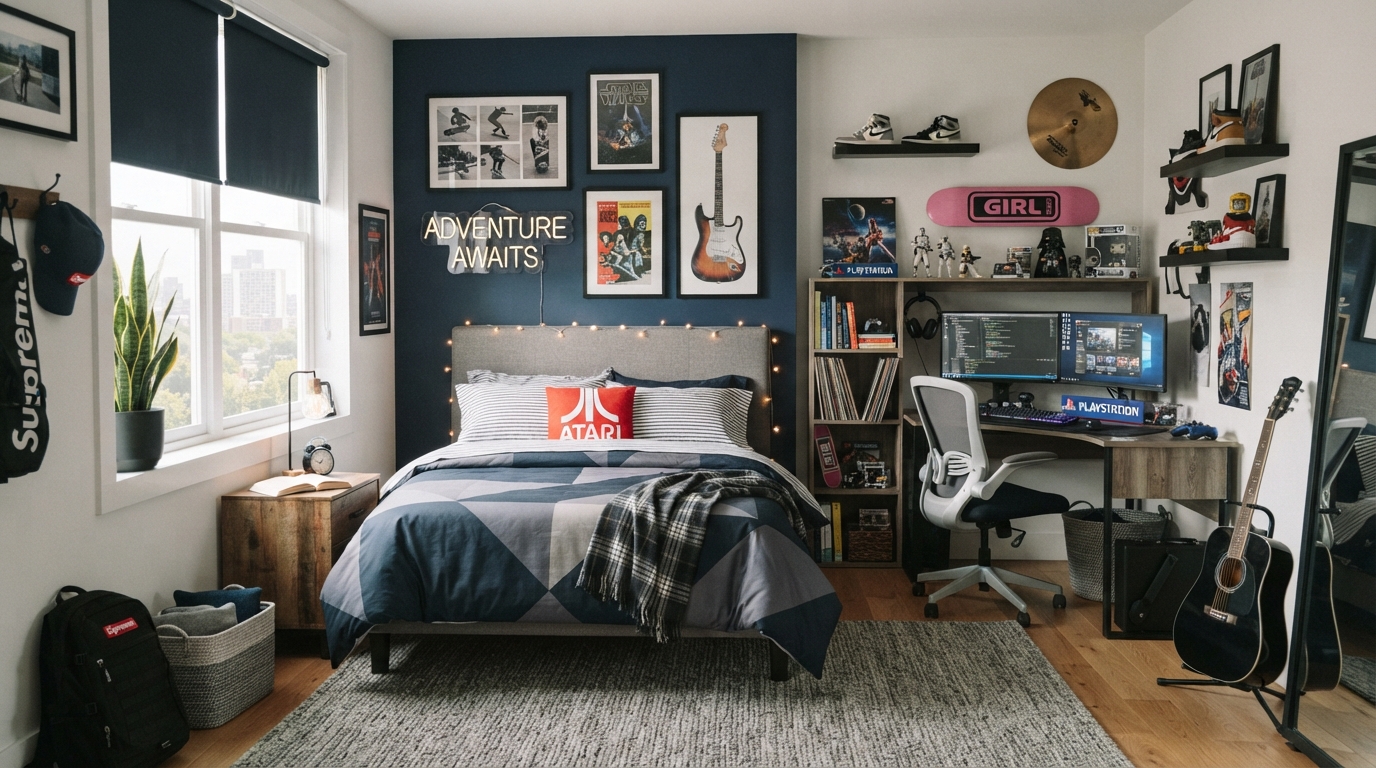
Modern Teen Boy Bedroom Decor: 21 Stylish Ideas That Feel Personal
Decorating a teen boy’s bedroom means balancing several jobs at once. The room needs to be comfortable enough for sleep, practical enough for homework, organized enough for everyday life, and personal enough to feel like his own space.
When I plan a teen bedroom, I start with the way the room will actually be used rather than choosing decor first. A bed, desk, wardrobe, storage, gaming setup, and relaxation area all need to work together without making the room feel crowded.
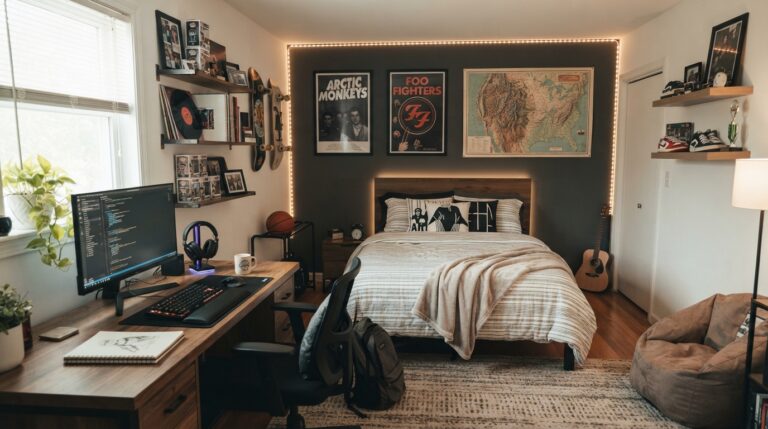
The good news is that a modern bedroom does not require an expensive makeover. A simple color palette, better lighting, properly sized furniture, useful storage, and a few personal details can completely change how the room feels.
Modern teen boy bedroom decor works best when the functional pieces come first. I start with the layout, then choose a simple bed, appropriately sized desk, comfortable lighting, accessible storage, and a color palette that can adapt as his interests change.
For smaller rooms, measurements matter. I leave enough space for doors and drawers to open fully and make sure the main walkway stays clear. Before buying furniture, measuring both the room and the furniture footprint prevents many of the problems that become obvious only after everything arrives.
Save this for later
Table of Contents
I keep the larger pieces fairly timeless and use bedding, artwork, rugs, lighting, sports accessories, gaming details, and hobbies to add personality. That makes the room easier to update without replacing expensive furniture every time his interests change.
Key Takeaways
- Start with the room layout before buying decorative pieces.
- Use neutral or flexible colors for larger surfaces and furniture.
- Choose a desk that leaves comfortable clearance for the chair and walking paths.
- Layer ceiling, task, bedside, and accent lighting according to how the room is used.
- Make storage easy enough that everyday items actually have a place to go.
- Use hobbies, sports, gaming, music, and artwork to personalize the space without overloading it.
- Spend more thoughtfully on durable essentials and use smaller accessories for changing interests.
- Keep electrical cords, walkways, windows, and furniture placement practical and safe.
Related article: Teen Boy Bedroom Inspiration: 30 Stylish and Practical Ideas
1. Start With a Clean Neutral Base
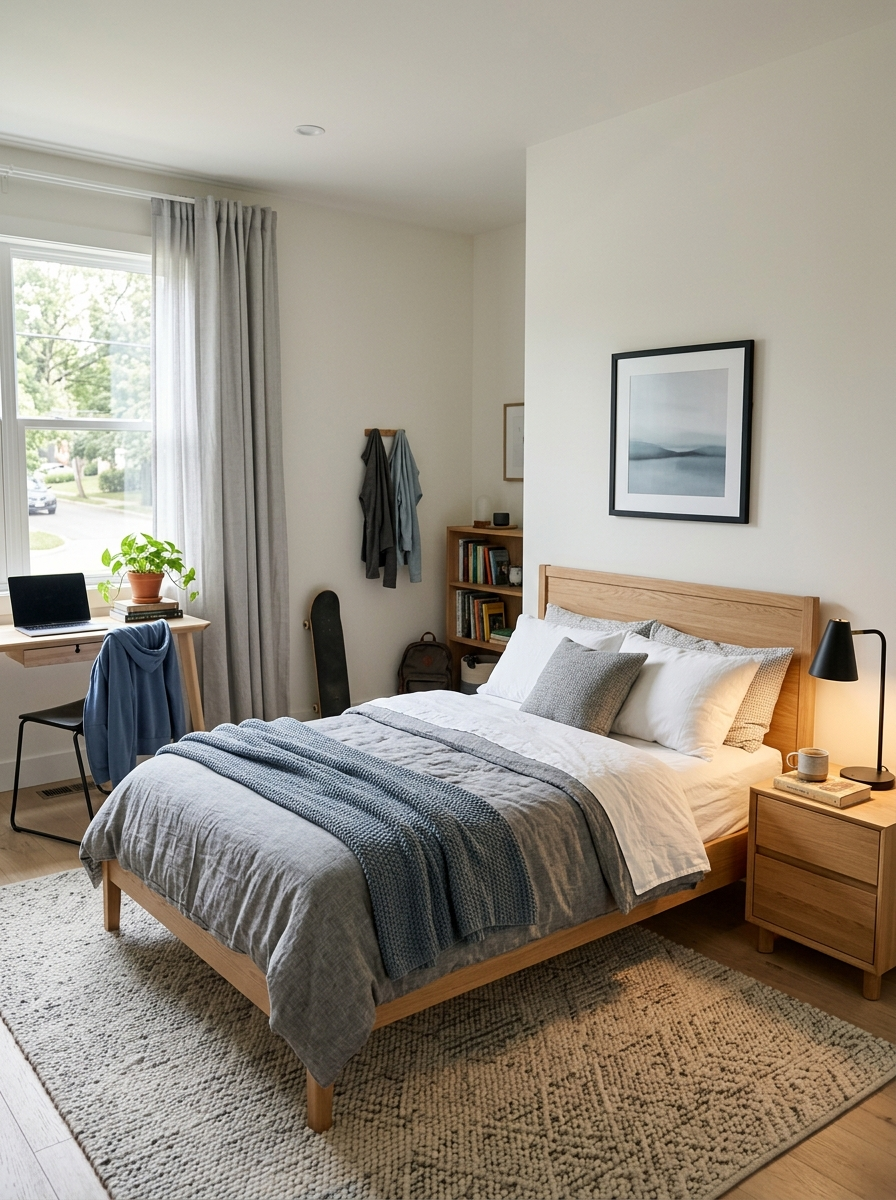
I usually begin with the walls because they cover so much visual space. Warm white, soft gray, beige, taupe, muted blue, and blue-gray can all provide a flexible background for a teenager’s changing style.
A neutral wall does not mean the room has to look plain. It simply gives stronger colors and personal items somewhere to stand out.
For a smaller bedroom, lighter wall colors can help maintain an open feeling, while a darker shade can be used strategically on one wall when a stronger focal point is wanted.
Pro Tip: Test paint samples directly on the bedroom wall before committing. Check them in daylight and in the evening because artificial lighting can change how the color appears.
2. Choose a Simple Modern Bed
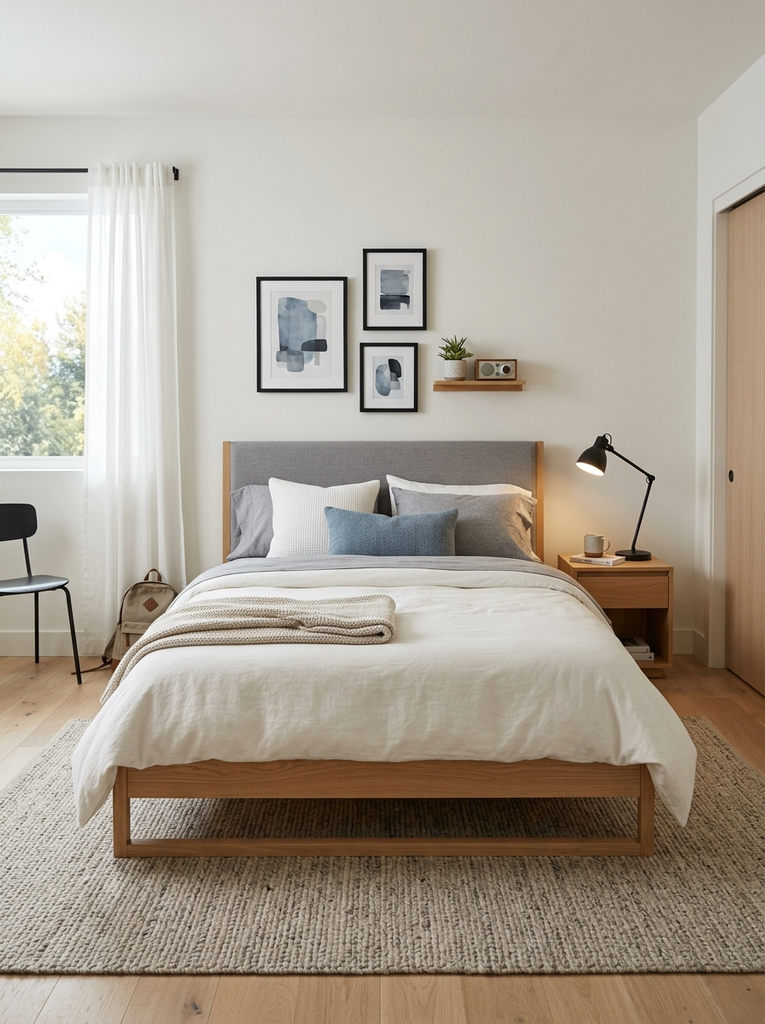
The bed usually occupies more floor and visual space than any other piece, so its shape has a major effect on the room.
A platform bed, simple wood frame, upholstered headboard, or streamlined metal frame can all work. I look for a design that will still make sense a few years from now rather than choosing something based entirely on a current theme.
Bedding provides an easier place to experiment. A solid duvet can be layered with a textured blanket, simple stripes, geometric patterns, or a couple of contrasting pillows.
If the room is tight on space, I measure the bed footprint before purchasing it and check how much room remains for walking around it, opening nearby drawers, and accessing the closet.
3. Create a Practical Study Zone
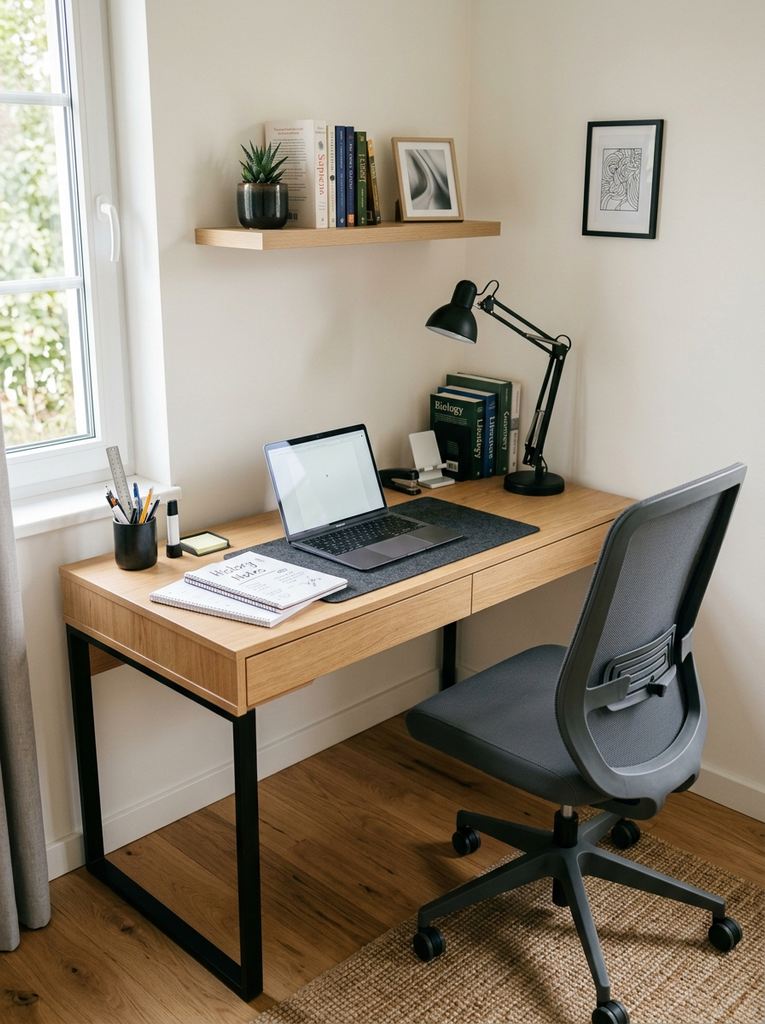
A desk should be planned as part of the room rather than squeezed into whatever space remains.
I first consider what needs to sit on the surface: usually a laptop or monitor, notebooks, school supplies, and a lamp. Then I check the depth and width of the desk against the available wall and floor area.
If the room is compact, a narrow writing desk, wall-mounted desk, or corner arrangement can preserve valuable floor space. Positioning the desk near natural light can make daytime study more pleasant when the room layout allows it.
Pro Tip: Before buying a desk, mark its approximate footprint on the floor with painter’s tape. Add the space needed to pull the chair out and walk behind it. This simple test can reveal whether the desk is too large before you spend money.
4. Add a Modern Desk Chair
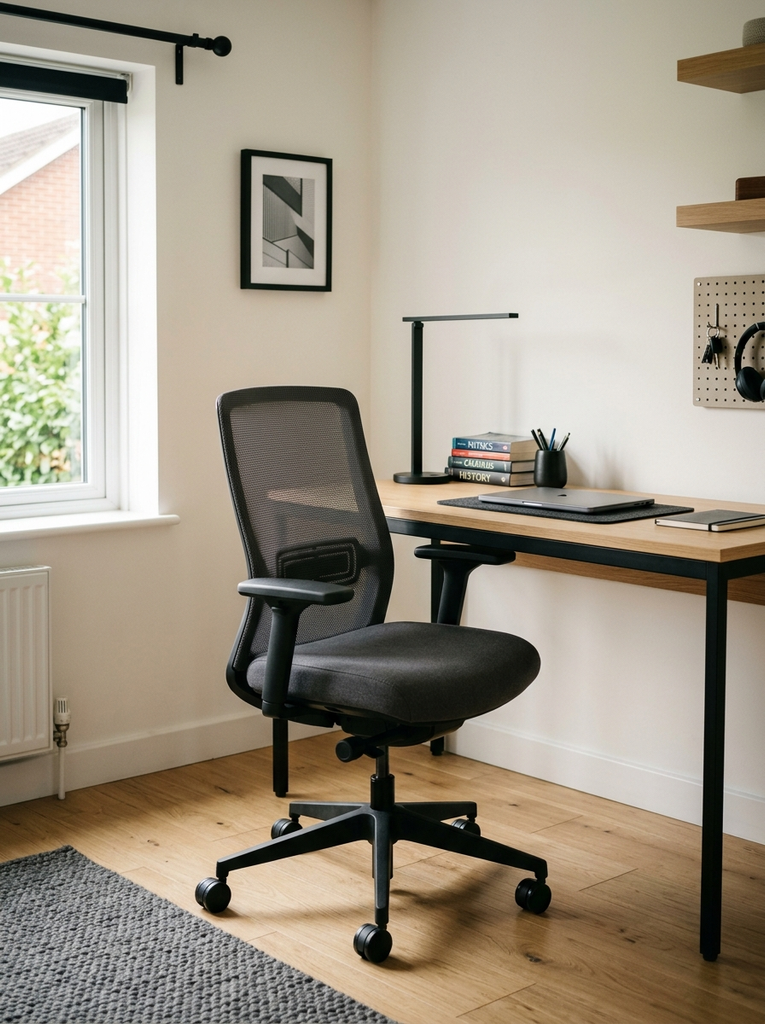
The chair needs to fit the desk as carefully as the desk fits the room.
I check that the seat allows comfortable legroom and that the chair can move without hitting the bed, wall, or another piece of furniture. For a teenager who spends long periods studying or gaming, comfort and support should take priority over a chair that simply looks good in photographs.
A black, gray, tan, or wood-toned chair can keep the workspace visually simple.
5. Use Black Accents for a Contemporary Look
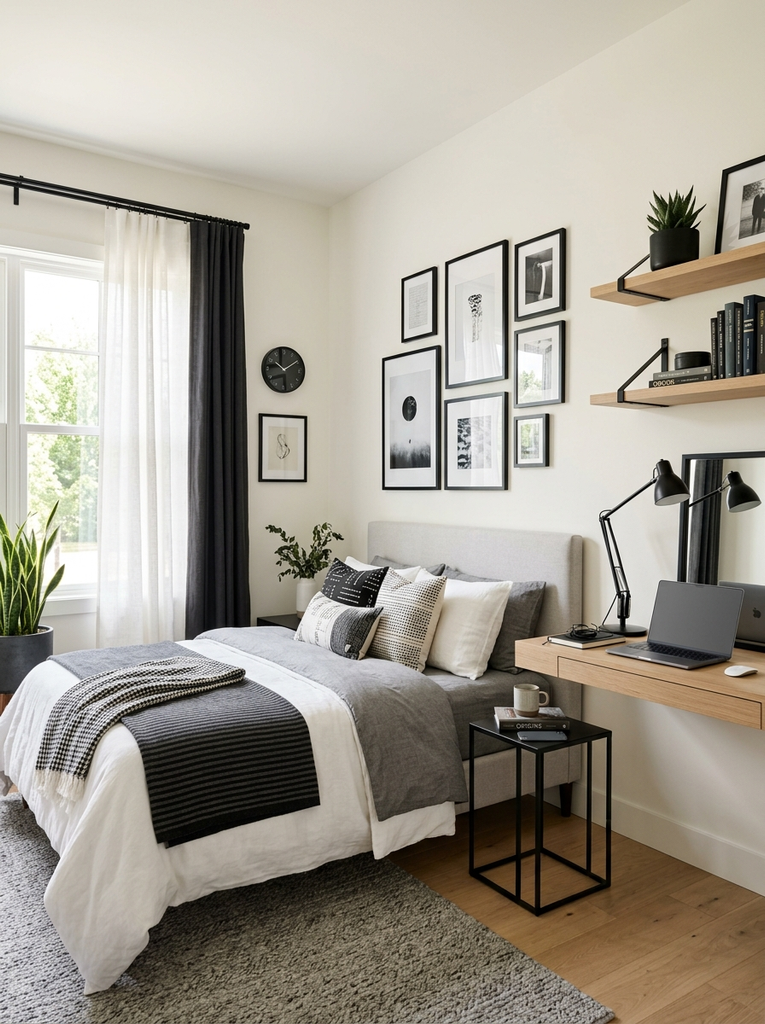
Black works particularly well as a small repeating detail.
A black desk lamp, picture frame, shelf bracket, curtain rod, bedside table, or bed frame can give a light bedroom more definition without making the entire space feel dark.
Rather than introducing several unrelated finishes, I repeat the same black detail in a few locations. That small amount of consistency helps the room feel planned.
6. Bring in Warm Wood Tones
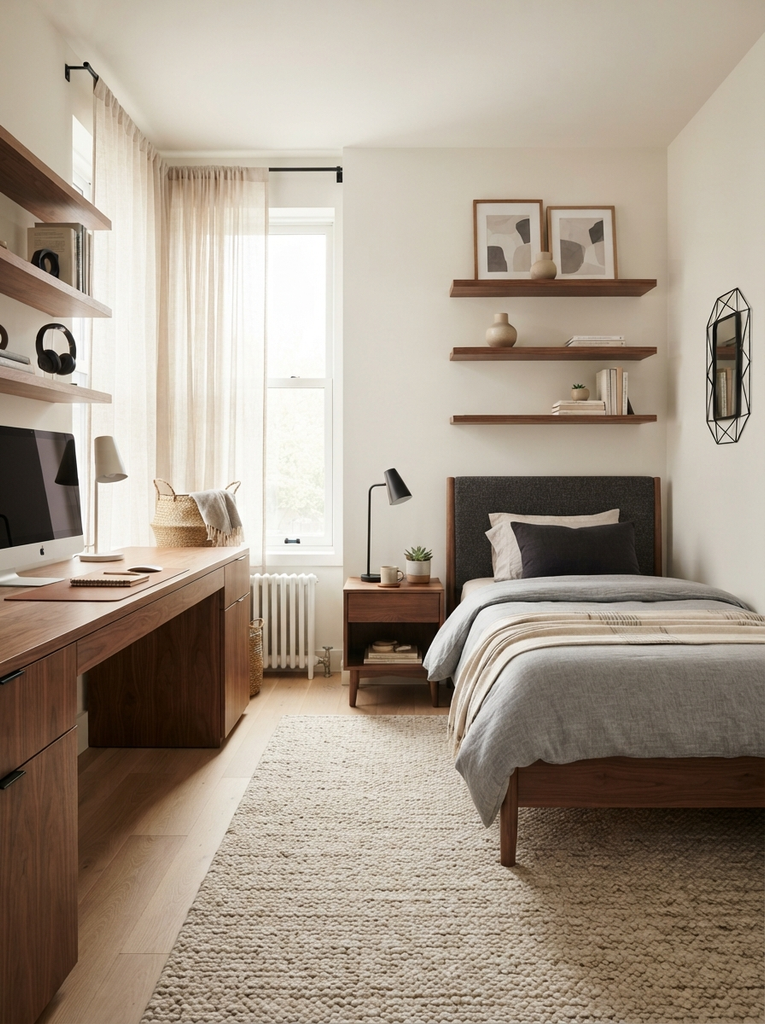
Modern bedrooms can easily become too cool when they rely heavily on white, gray, and metal. Wood helps bring some warmth back into the space.
A wood desk, floating shelf, nightstand, storage cabinet, or picture frame can soften a room filled with darker accents.
I find that wood looks especially natural when paired with simple textiles such as cotton bedding, a woven basket, or a textured rug.
7. Design a Teen Gaming Bedroom Without Making It Look Like a Game Room
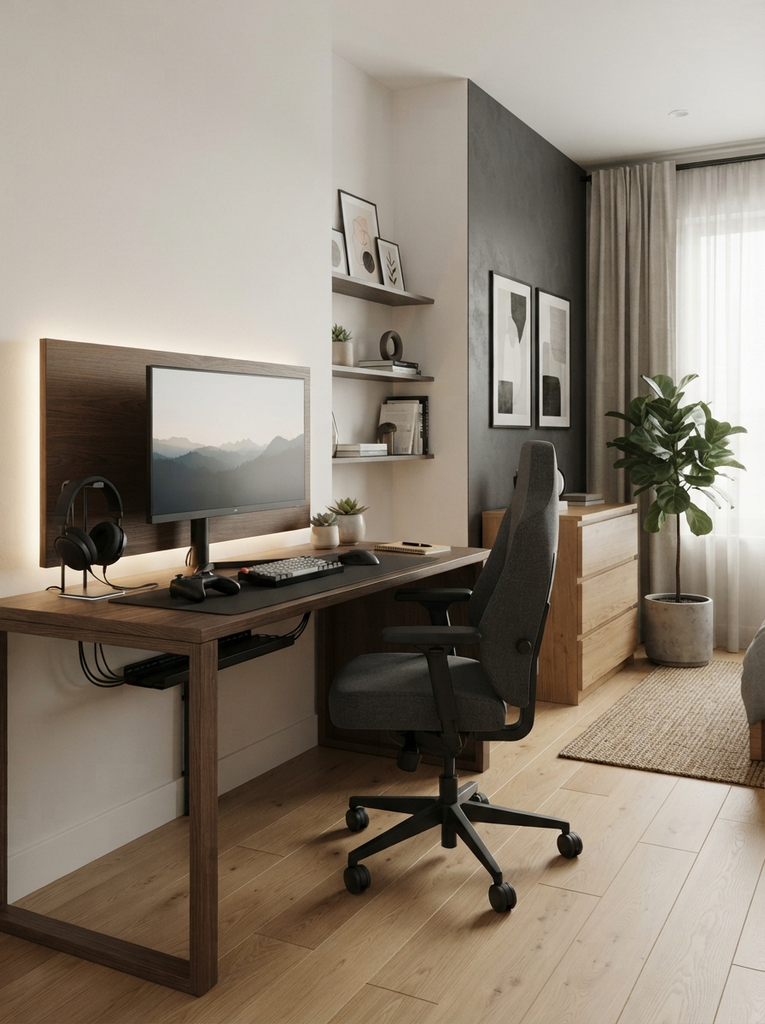
Gaming equipment can become part of the room without taking over the entire design.
I create a defined gaming zone with a sturdy desk, comfortable chair, monitor setup, organized accessories, and controlled lighting. Keeping the equipment concentrated in one area makes the rest of the bedroom feel more like a bedroom.
Cable management makes an especially noticeable difference. A cable tray beneath the desk or simple clips can keep wires away from feet and reduce visual clutter.
Pro Tip: Keep chargers and cables organized in one accessible location rather than letting them spread across the desk and floor. It makes cleaning easier and reduces the chance of cords becoming a trip hazard.
8. Add Sports-Inspired Decor
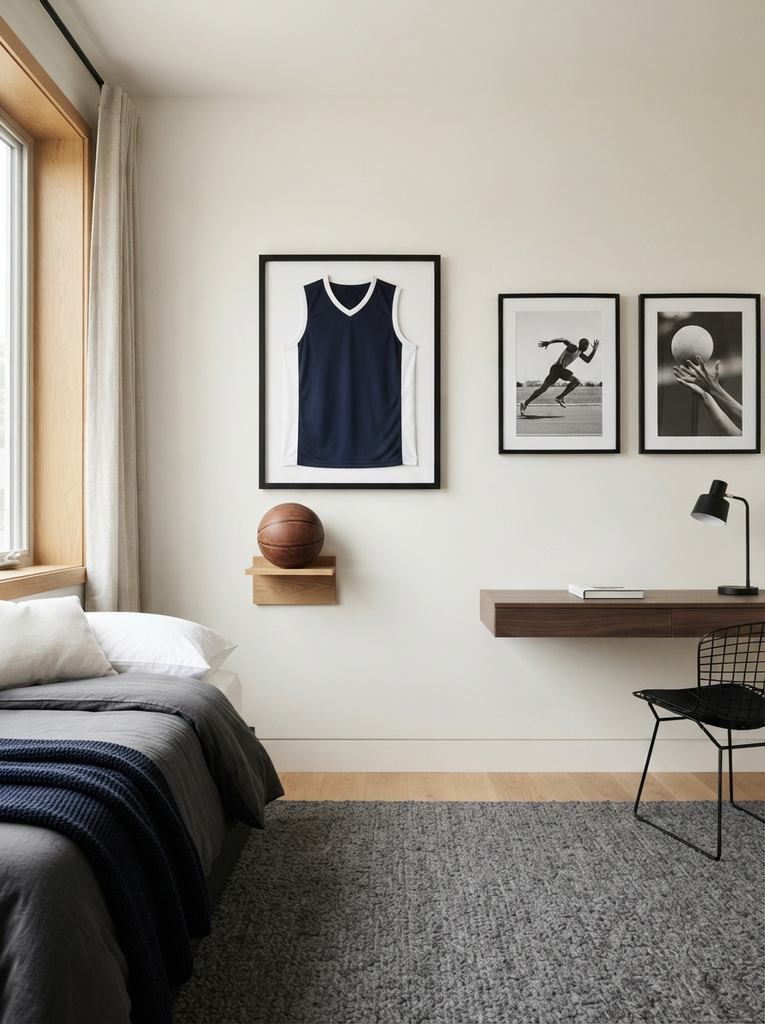
Sports decor works best when it feels collected rather than crowded.
Instead of covering the walls with team merchandise, I might frame a jersey, display a favorite ball, use a few photographs, or choose simple sports-inspired artwork.
If equipment is displayed, I make sure it is securely mounted and positioned where it will not interfere with doors, windows, or walking areas.
This approach keeps the room personal while making future changes easier if his favorite sport or team changes.
9. Create a Feature Wall
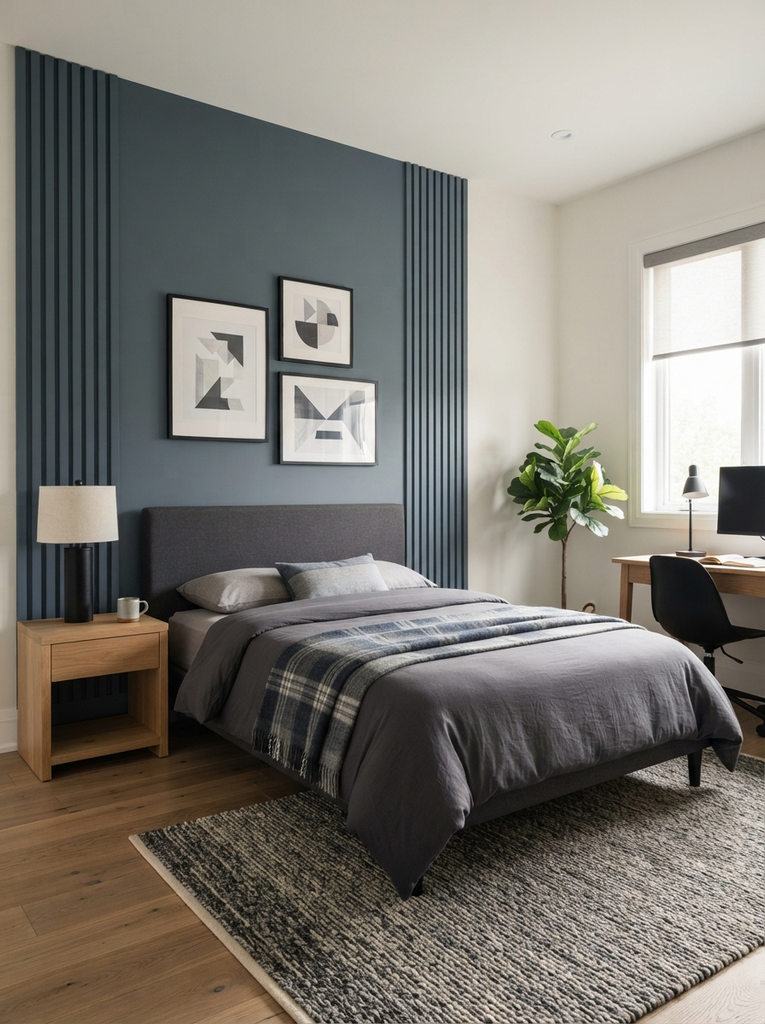
A feature wall can add character without requiring a complete room makeover.
The wall behind the bed is often a natural focal point. Depending on the room, I might use a deeper paint color, subtle geometric wallpaper, vertical wood detailing, or a carefully arranged collection of framed artwork.
I keep the rest of the room quieter when the feature wall has a strong pattern. That balance prevents the bed, rug, artwork, and accessories from competing for attention.
10. Use Floating Shelves
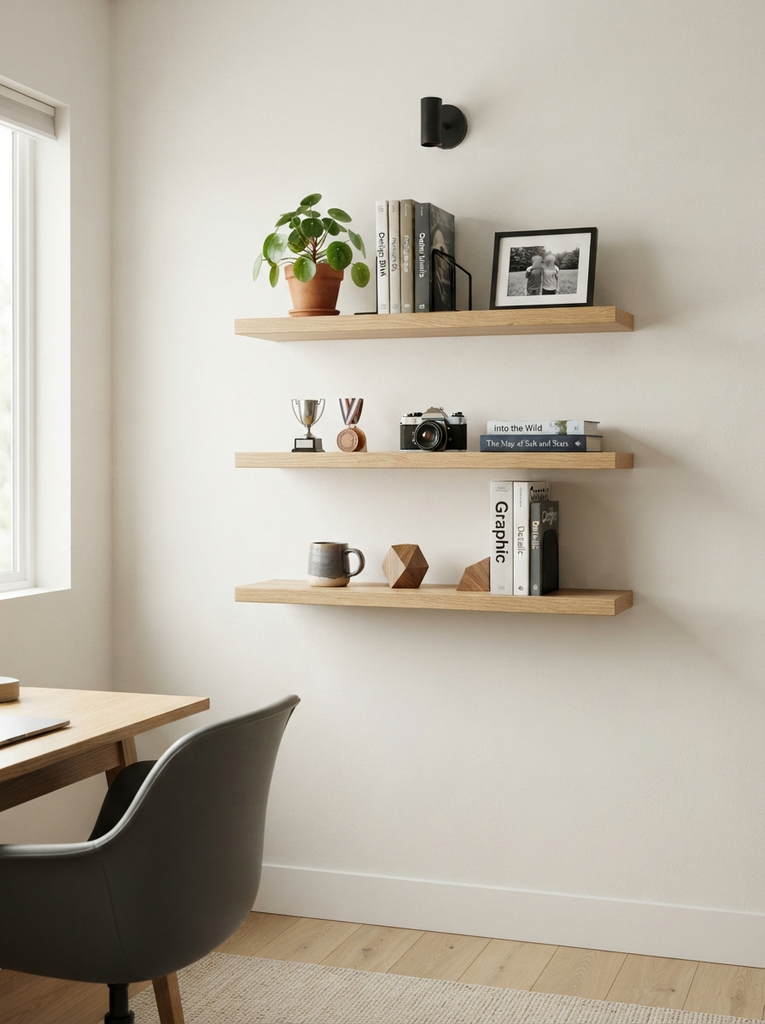
Floating shelves give me vertical storage and display space without using much floor area.
They work well for books, framed photographs, small collections, awards, plants, and a few favorite objects. I avoid filling every inch because empty space makes the display easier to read visually.
For heavier items, I make sure the shelf and wall fixings are appropriate for the load and wall type. A shelf should never be treated as decorative only when it is carrying substantial weight.
11. Add a Comfortable Rug
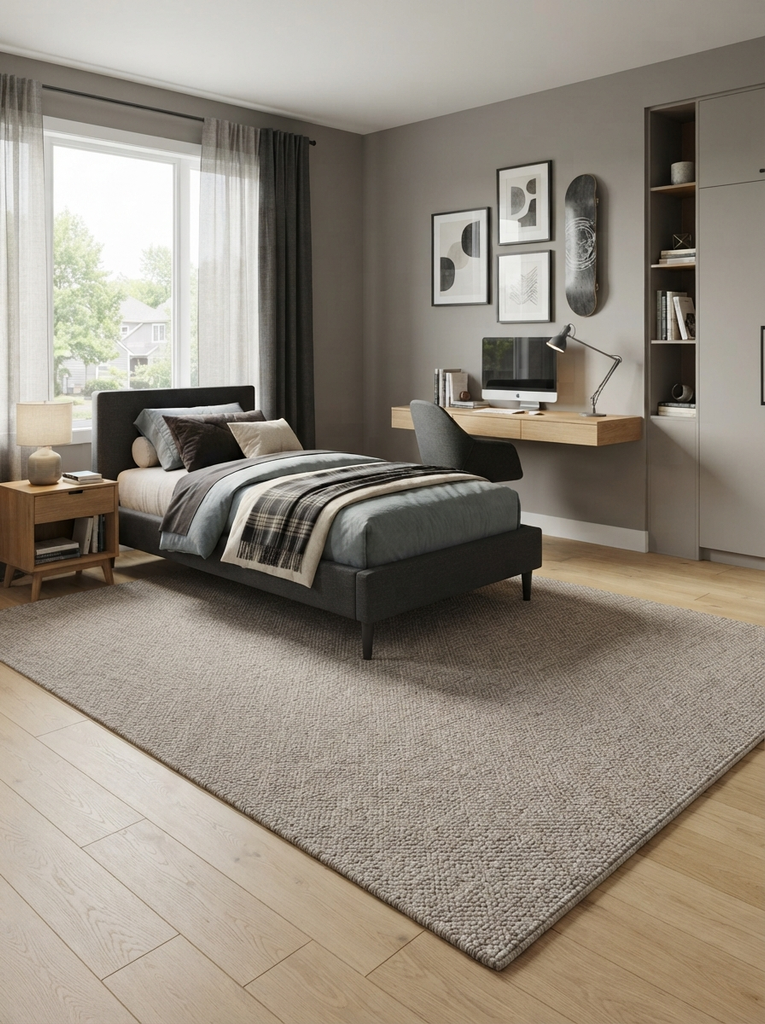
A rug adds softness underfoot and can help visually define different areas of the bedroom.
I usually position it so that it relates directly to the bed rather than leaving a small rug isolated in the center of the room. In a larger bedroom, a bigger rug can help connect the bed, nightstands, and nearby seating area.
Geometric patterns, subtle stripes, solid neutrals, and vintage-inspired designs can all work with modern furniture.
Pro Tip: Measure the area before shopping. I check the bed dimensions, nearby furniture, door swing, and available floor space so the rug does not become an obstacle.
Also read: 21 Small Bedroom Inspirations
12. Layer the Bedroom Lighting
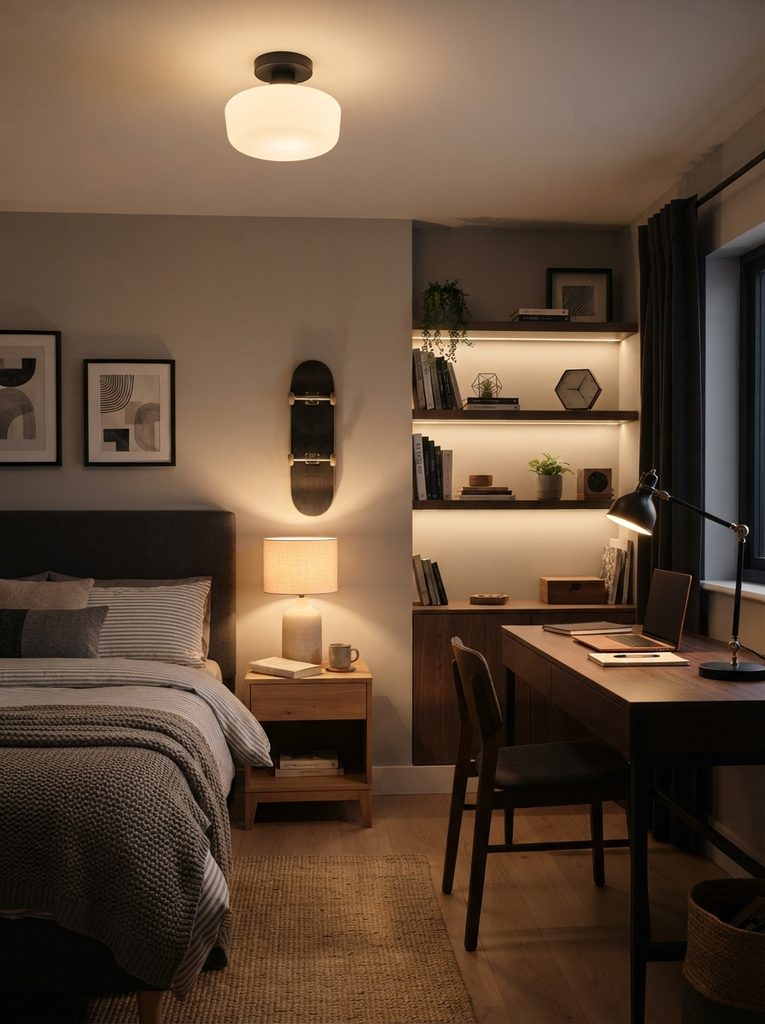
Lighting needs to match the different jobs the room performs.
A ceiling fixture provides general illumination, while a desk lamp gives focused light for homework. A bedside lamp can provide softer light for reading or winding down.
Accent lighting can be useful around a gaming desk or shelving, but it does not need to cover every surface. I keep electrical cords routed safely and away from walking paths.
If the room has several lighting options, it becomes much easier to create the right atmosphere for studying, relaxing, or getting ready for bed.
13. Give Him a Comfortable Reading or Relaxing Spot
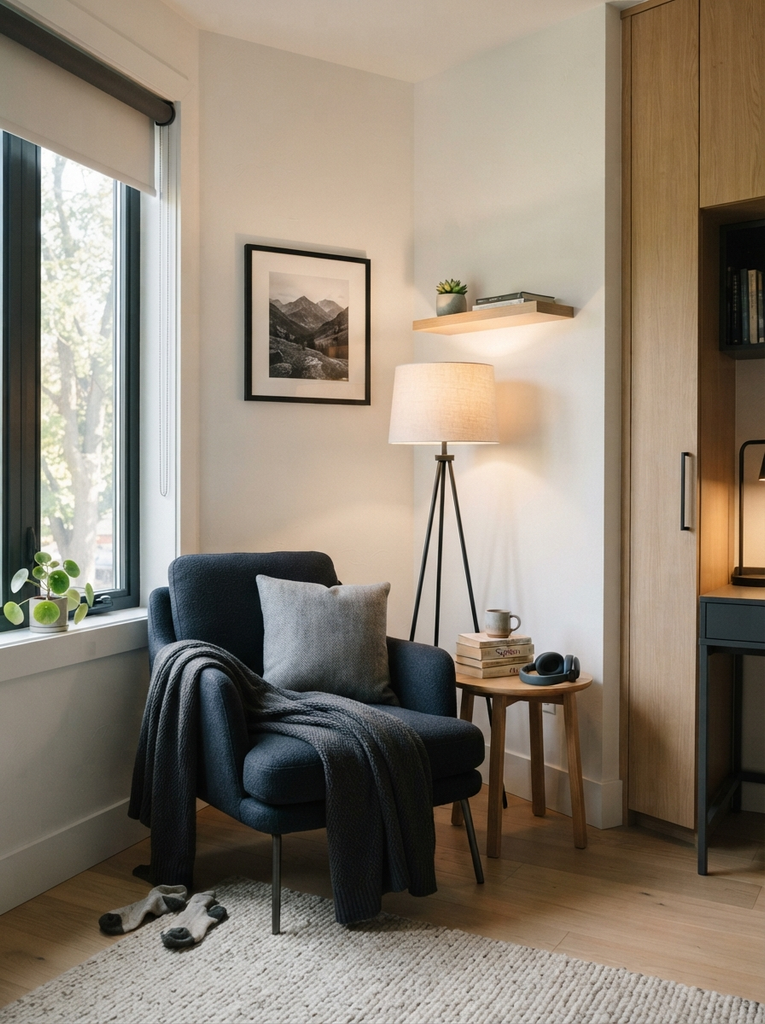
When space allows, a second seating area gives the bedroom another purpose beyond sleeping and studying.
A compact lounge chair, beanbag, floor cushion, or small bench can create a place for reading, listening to music, talking with friends, or taking a break from the desk.
I don’t force this feature into a small room. If adding a chair blocks a walkway or makes the bed difficult to access, the extra seating is not worth sacrificing usable floor space.
14. Make Storage Easy to Use
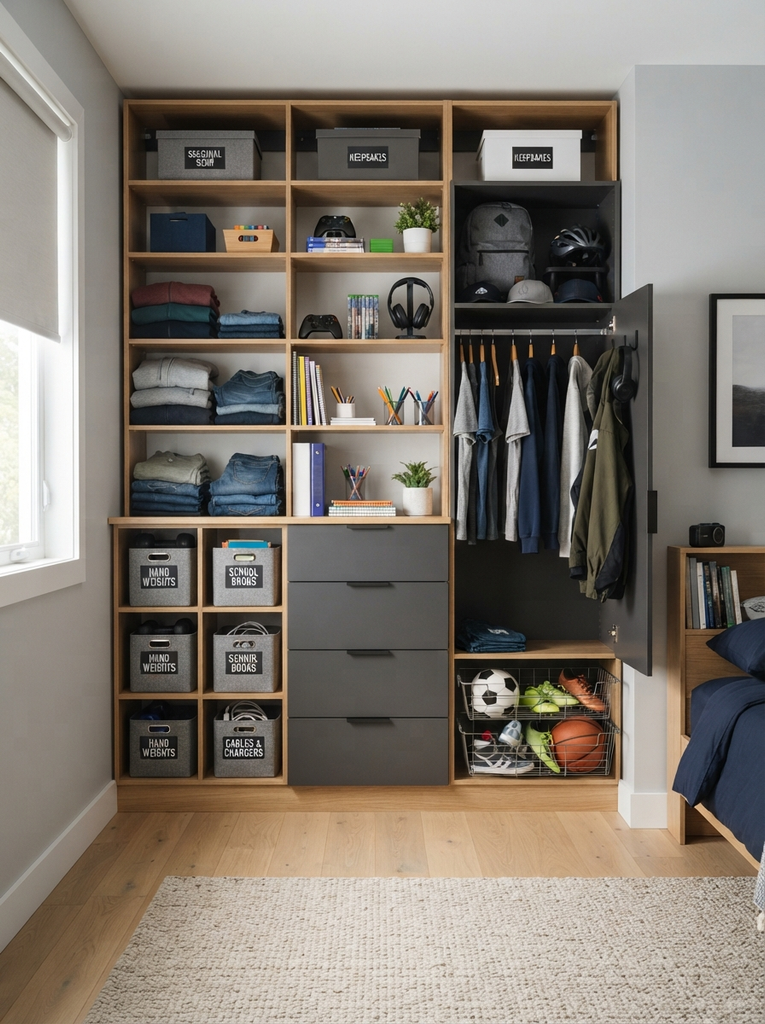
Storage only works when it is convenient enough to use every day.
For frequently used items, I favor accessible drawers, open shelving, baskets, and bins. Less frequently used belongings can go into under-bed storage, higher cabinets, or labeled containers.
I also group storage by activity. Sports equipment, school supplies, gaming accessories, and seasonal items each benefit from having a defined home.
For a small bedroom, using vertical space can be especially helpful because it adds capacity without taking as much floor area.
Pro Tip: Store everyday items at an easy-to-reach height and reserve the highest shelves for things that are used less often. A storage system that requires moving three other things first will quickly become a clutter pile.
15. Add a Pinboard or Message Board
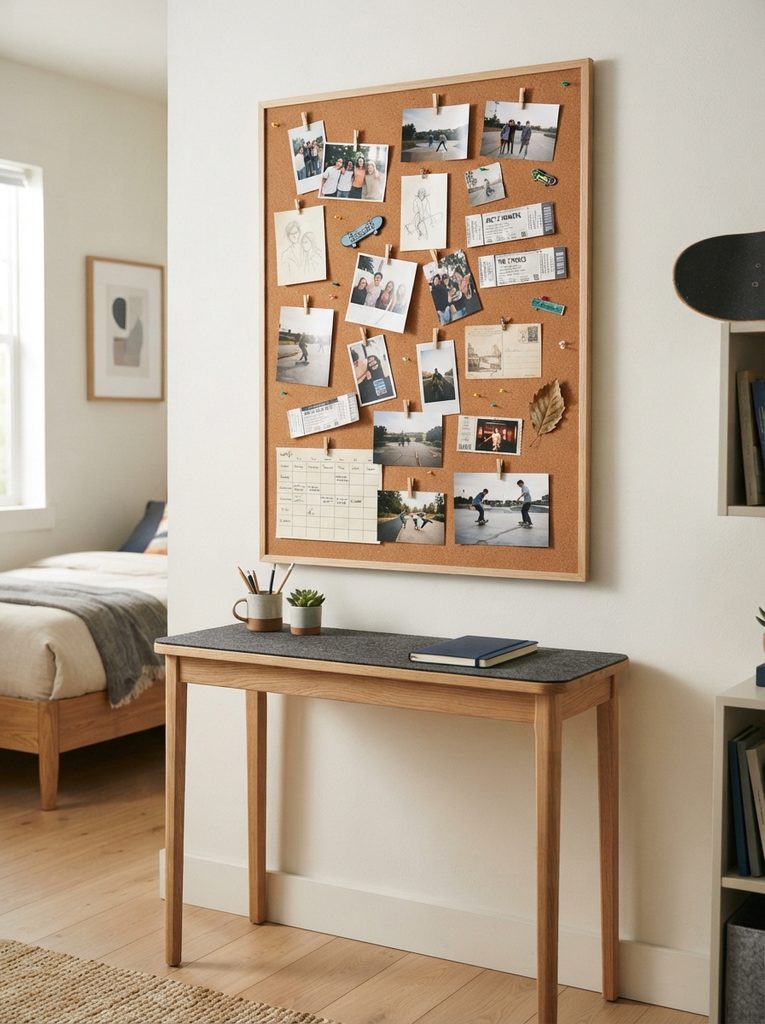
A pinboard gives a teenager somewhere to display photographs, schedules, tickets, notes, artwork, and small memories.
A corkboard, fabric-covered board, framed wire grid, or magnetic board can work depending on the rest of the decor.
I treat it as a changing display rather than permanent wall art. That gives the teenager control over what appears in the room and allows the display to evolve naturally.
16. Display His Hobbies
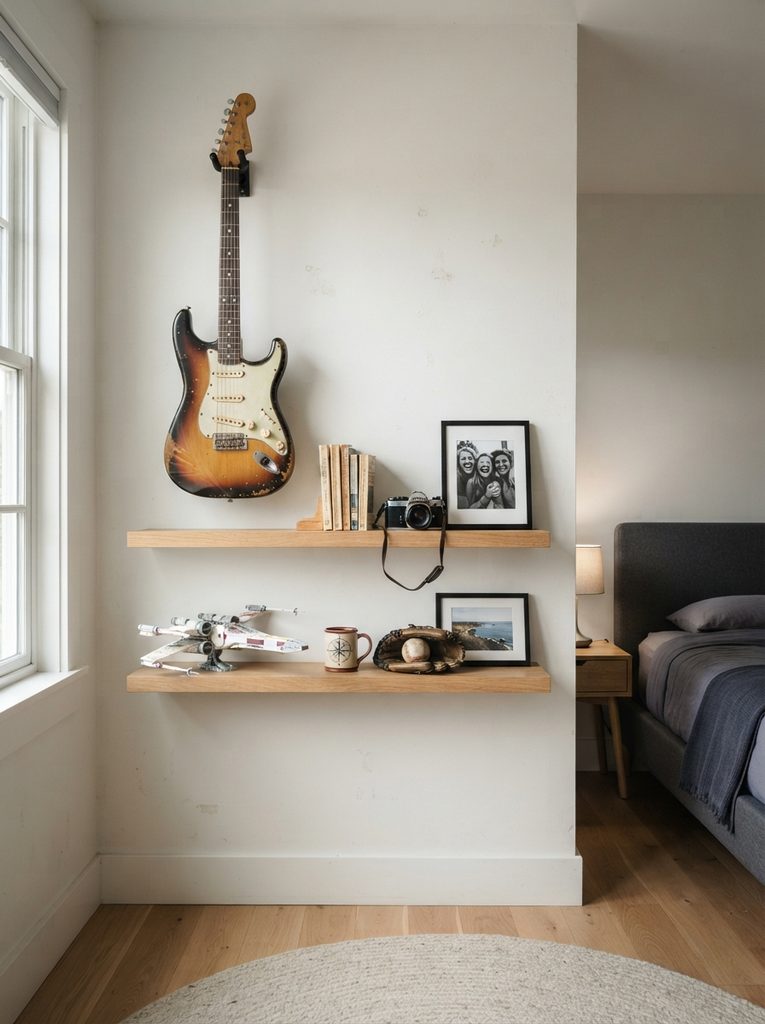
This is where the bedroom should start feeling like his space rather than a generic design project.
Music, art, sports, photography, books, collecting, travel, or another hobby can all become part of the decor. A guitar on a properly installed wall mount, a small collection on a shelf, or a rotating group of artwork can say much more about the person living there than generic decorations.
The key is giving meaningful items enough room to stand out instead of displaying everything at once.
17. Choose Artwork With Personality
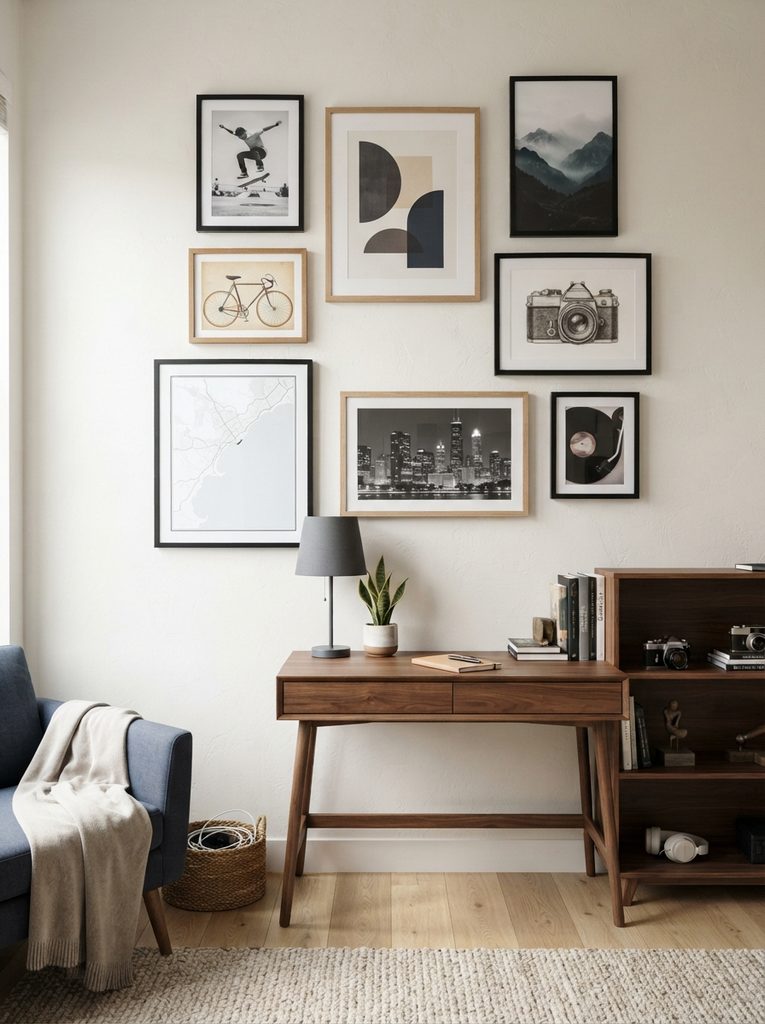
Wall art does not need to match perfectly, but it should have some connection through color, subject, framing, or scale.
Black-and-white photography, abstract prints, landscapes, maps, typography, and hobby-related pieces can all work in a modern teen bedroom.
For a younger teenager, I leave some room for personal choices. When the person living in the room has a say in the artwork, the finished space tends to feel much more personal.
18. Add a Full-Length Mirror
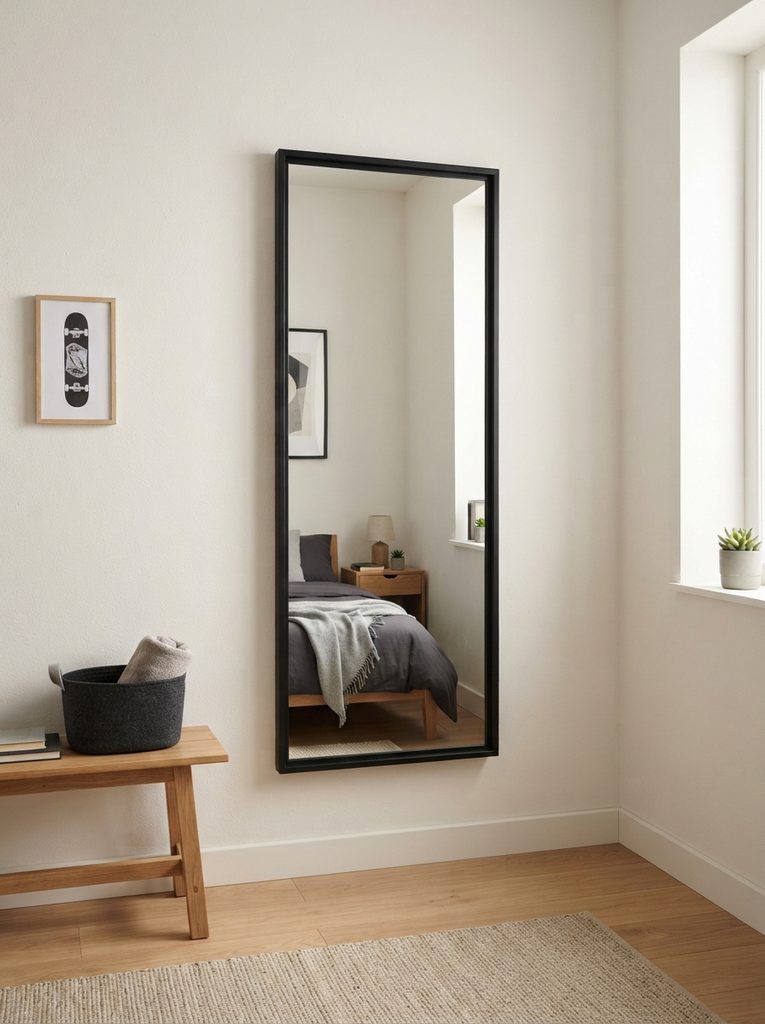
A full-length mirror is useful for getting dressed and can also make a bedroom feel brighter by reflecting available light.
I position it where it does not interfere with the main walkway, closet doors, or bedroom door. A wall-mounted mirror can save floor space in a compact room.
For a modern look, simple black, natural wood, or frameless designs tend to integrate easily with different color schemes.
19. Keep the Color Palette Controlled
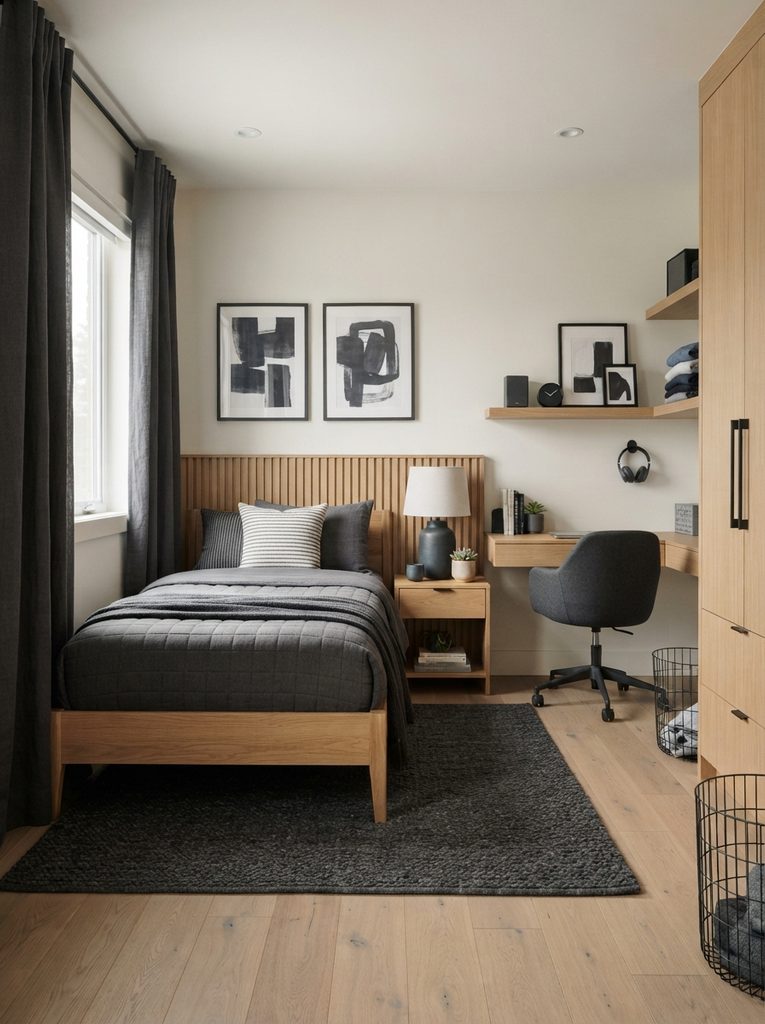
I usually build the room around two or three main colors and then repeat those shades through the bedding, rug, artwork, and smaller accessories.
Charcoal with warm white and natural wood creates one clean combination. Navy, gray, and white can feel a little more energetic without becoming overly themed.
The goal is not to eliminate color. It is to give the room enough visual consistency that different pieces feel as though they belong together.
20. Leave Room for the Bedroom to Grow
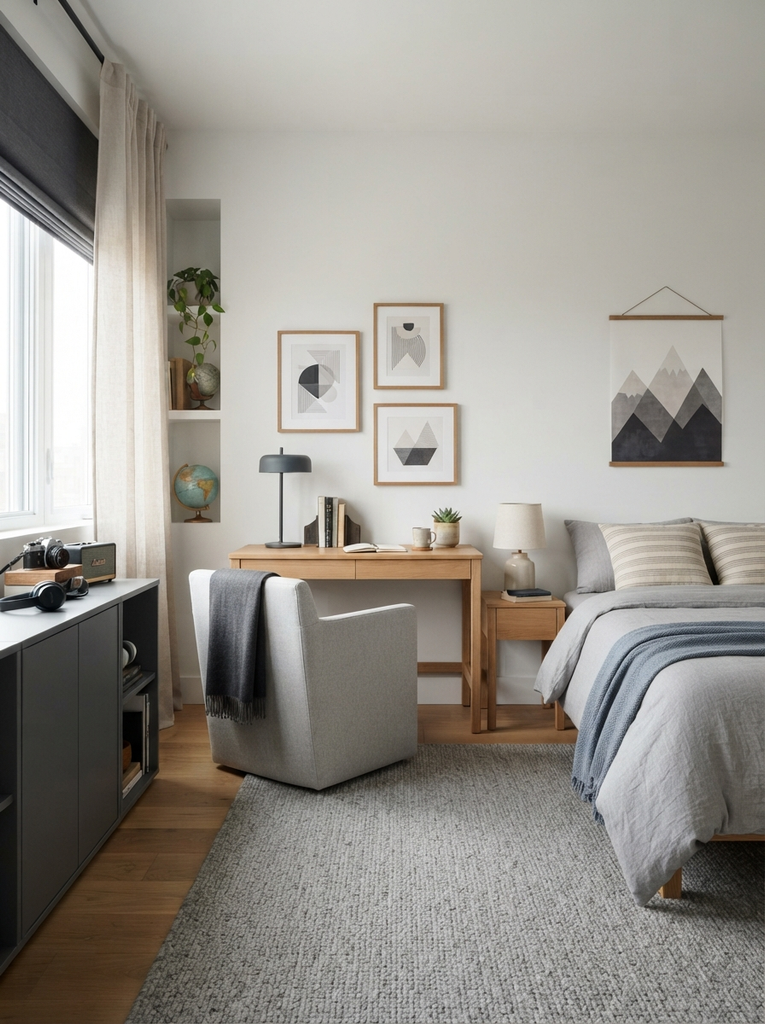
A teenager’s interests can change considerably, so permanent design choices deserve more thought than temporary ones.
I put more of the budget toward durable essentials such as the bed, mattress, desk, wardrobe, and storage. Bedding, posters, pillows, desk accessories, and small decorative pieces can change much more easily.
This approach also makes future updates less expensive. Instead of replacing an entire themed bedroom, I can refresh a handful of smaller elements.
Pro Tip: Before buying an expensive themed piece, ask whether it would still work if his interests changed in two or three years. If not, I put the theme into something inexpensive and easy to replace.
21. Finish With Personal Details
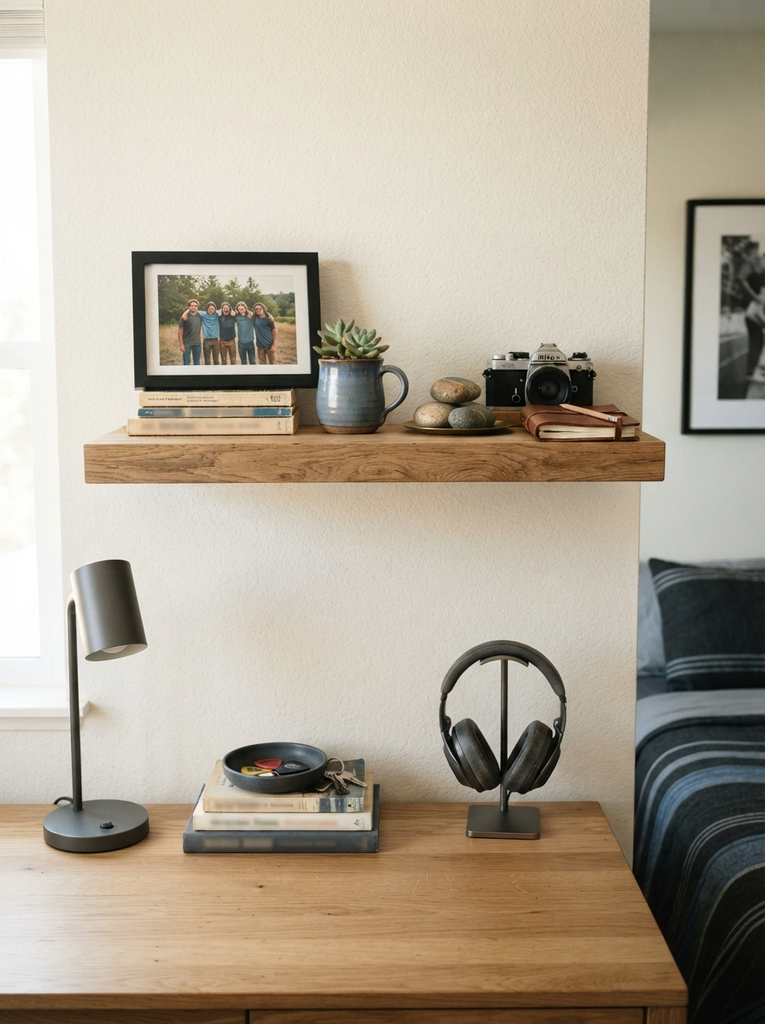
The final layer should tell me something about the teenager who lives there.
Favorite books, photographs, collections, artwork, a meaningful gift, a small plant, or hobby-related pieces can all bring warmth to an otherwise structured design.
I leave some surfaces intentionally open rather than filling every shelf and tabletop. A little breathing room makes the useful pieces easier to notice and makes everyday cleaning much simpler.
Read this next: 15 Hot Pink Bedroom Ideas for A Bold and Fun Look
How I Would Put a Modern Teen Boy Bedroom Together
If I were starting with an empty bedroom, the first step would be measuring the room rather than shopping.
I would record the wall lengths, door and closet locations, window positions, radiator or vent locations if applicable, and the approximate footprint of any furniture that needs to stay. Then I would sketch the main layout and check the walking paths before choosing decorative pieces.
Next, I would place the bed because it is usually the largest fixed item. From there, I would position the desk, wardrobe, and storage while making sure drawers and doors can open without colliding with other furniture.
Once the layout worked on paper, I would choose a simple wall color and two or three supporting finishes. The bed, desk, storage, and lighting would come next, followed by the rug and window treatments.
Only after the functional foundation was complete would I add gaming equipment, sports items, artwork, hobbies, photographs, and smaller accessories.
That order keeps me from spending the decorating budget on items that later have nowhere sensible to go.
Common Mistakes I Avoid
One of the biggest mistakes is buying furniture before measuring the room. A desk may look compact online but feel oversized once a chair, bed, and closet doors are involved. I always measure both the furniture and the space it needs to function.
I also avoid pushing every piece of furniture against the wall simply because that seems like the best way to create floor space. Sometimes shifting a desk, bed, or chair slightly creates a much better circulation path.
Another common problem is designing the room around one short-term interest. A gaming theme, sports collection, or favorite color can be included without making every permanent feature depend on it.
Lighting is another detail I don’t leave until the end. A teen bedroom needs usable light for studying, softer light for relaxing, and enough general illumination for everyday tasks. Planning those locations before furniture is finalized can prevent awkward cords and poorly positioned lamps.
Storage needs the same practical thinking. If laundry, school supplies, sports gear, and electronics have no convenient place to go, the room will struggle to stay organized no matter how attractive it looks.
Finally, I keep safety in the design process. Heavy shelves and furniture should be properly secured where appropriate, electrical cords should stay out of walking paths, and furniture should not block doors, windows, vents, or other necessary access points.
FAQs About Modern Teen Boy Bedroom Decor
What colors work best for a modern teen boy bedroom?
Neutral shades such as warm white, gray, beige, navy, and muted blue work well. Black and natural wood accents can add a more modern feel.
How can I make a small teen bedroom feel bigger?
Use appropriately sized furniture, keep walkways clear, use vertical storage, and choose lighter colors. A wall-mounted desk or full-length mirror can also save space.
How can I personalize a teen boy’s bedroom?
Add artwork, sports items, gaming accessories, books, photographs, music-related pieces, or hobby collections. Keep permanent furniture simple so these details can change over time.
Conclusion
Modern teen boy bedroom decor does not need to look expensive or perfectly styled. The strongest rooms I plan start with practical decisions: a workable layout, comfortable furniture, useful storage, appropriate lighting, and enough open space to move around easily.
Once those basics are right, personality becomes much easier to add. Bedding, artwork, hobbies, sports pieces, gaming details, photographs, and small accessories can make the room feel personal without forcing every permanent feature into one theme.
My goal is always to create a bedroom that works for the teenager today while leaving enough flexibility for his interests and needs to change over time.


3 Comments