18 Team Kids Games for School Parties That Actually Keep Every Child Playing
If you have ever watched a school party game fall apart in five minutes, you know the problem is rarely the kids. The best team kids games are simple to explain, fair to shy children, and active enough that nobody waits around.
How I picked these: I ran every game below at a real school party or classroom celebration with at least eight children, and kept only the ones where every team finished. Each idea tells you its cost, timing, and where it went wrong.
Key Takeaways
- Pick games needing almost no equipment, explained in under a minute.
- Split teams by counting off, never by letting children pick.
- Keep rounds to ten minutes or less, rotating roles so every child leads once.
- Plan a wet-weather backup for every outdoor game.
18 Team Kids Games for School Parties
1. Balloon Relay Race
Each team lines up, and the first child runs to a marker carrying a balloon between their knees, drops it in a basket, and tags the next player. I ran this at a Year 3 class party with four teams of six.
The honest downside is that balloons pop, and one loud pop made a quieter child jump and refuse her next turn until I swapped her balloon for a softer, slightly under-inflated one.
I set the marker baskets about 10 metres from the start line, far enough to feel like a race but short enough that the youngest children finished without getting tired.
Pro Tip: Under-inflate balloons slightly and keep spares at each start line.
Cost / Time / Difficulty: Under $5 for balloons | 15 minutes | Easy
2. Tug of War
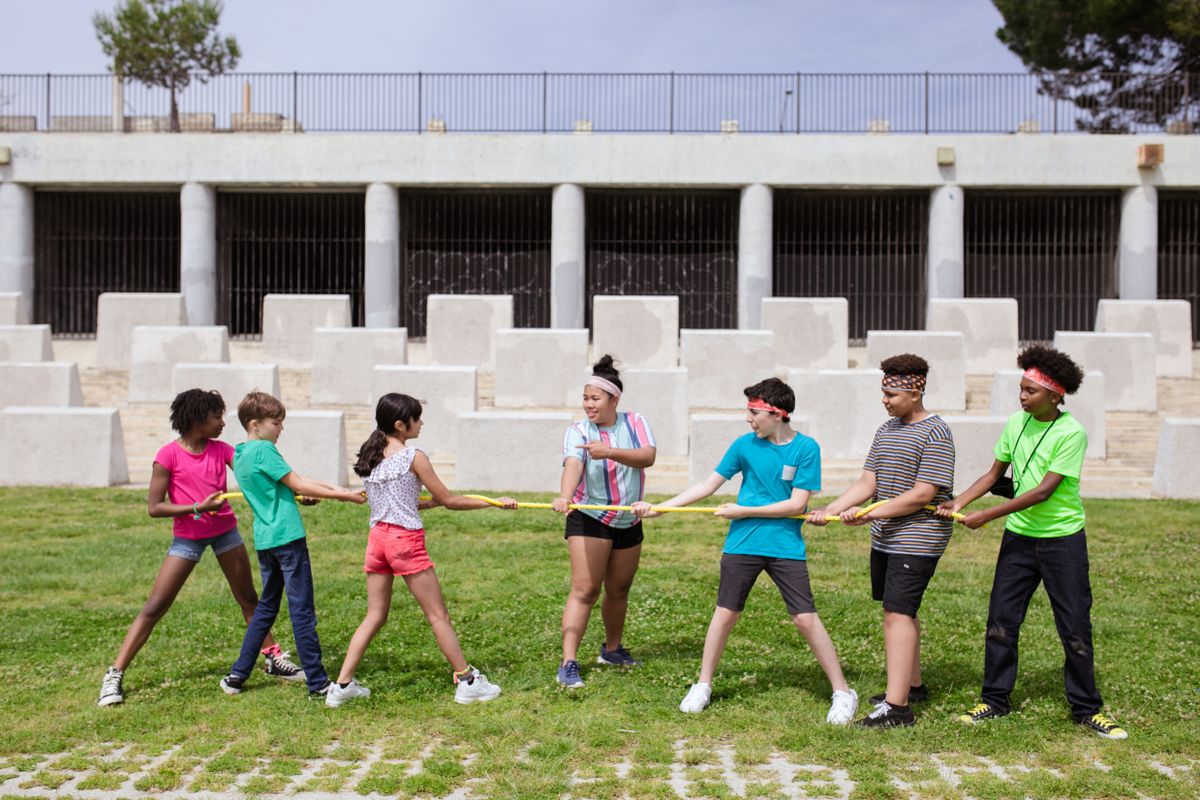
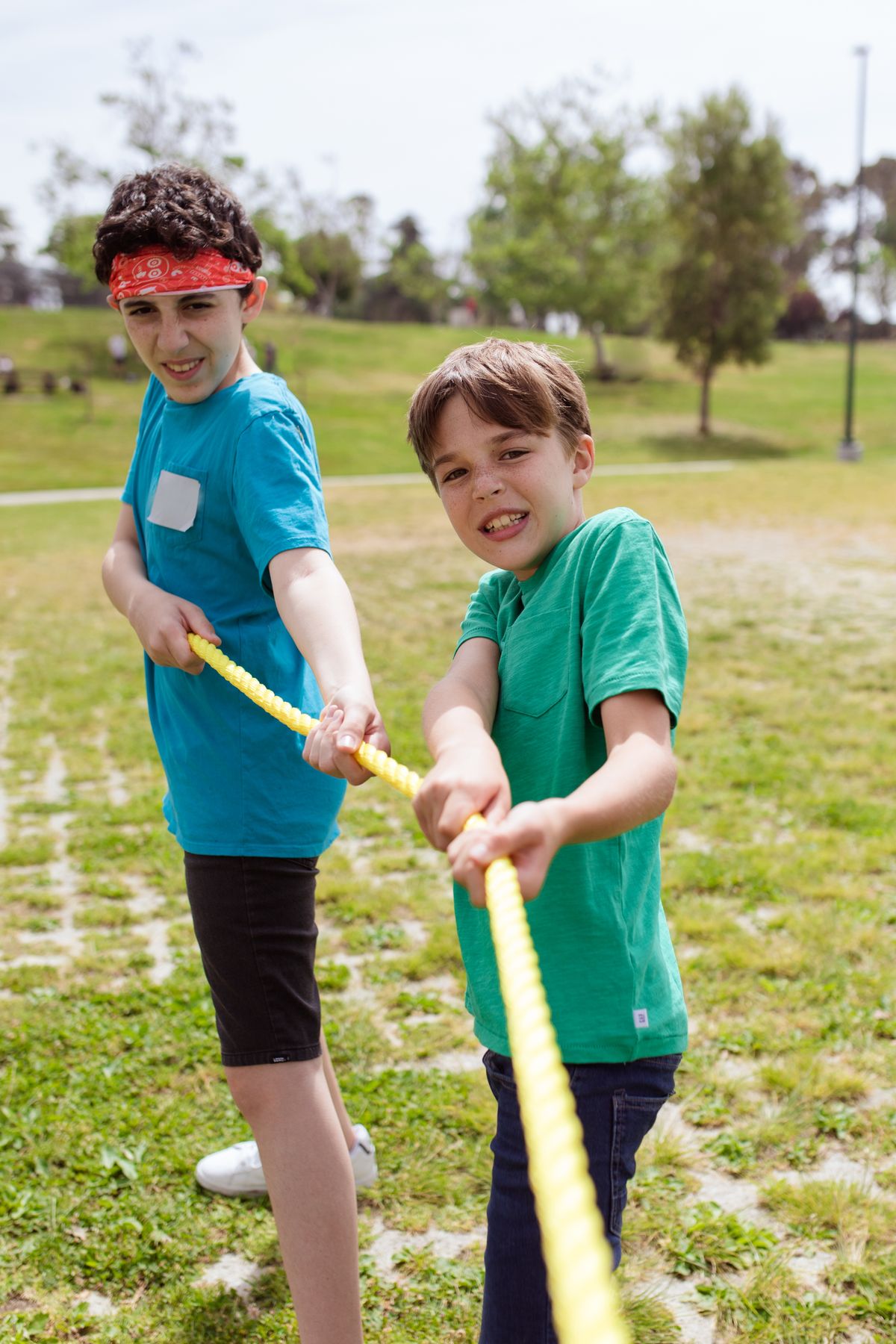
Two teams pull opposite ends of a thick rope, trying to drag a centre ribbon past their own line. I used a soft cotton rope about 10 metres long with a bright ribbon marker, and chalked the ground lines so nobody argued about the result.
The downside is that the losing team can tumble forward when the rope suddenly gives, so I always stop the round the second the ribbon crosses and I never let adults join a children’s team.
I chalked a centre line and two team lines about two metres apart, and each match took under three minutes, so we played best of three without anyone getting bored.
Pro Tip: Put the strongest children in the middle of the line, so the rope stays level.
Cost / Time / Difficulty: $5 to $10 for rope | 10 minutes | Easy
3. Three-Legged Race
Partners stand side by side, tie their inside legs together with a scarf, and race to a finish line. I tried this with ten-year-olds and learned the pairs need a practice walk first: the first heat ended with three pairs on the grass laughing and one genuinely annoyed.
The downside is real: tied legs on uneven ground mean falls, so I only run this on flat grass and I keep the distance short, about 15 metres.
I paired a confident child with a quieter one each time, and the pairs that talked their way around the course beat the pairs that simply ran fastest.
Pro Tip: Use soft scarves, tied above the ankle so they come off quickly.
Cost / Time / Difficulty: Free if you have scarves | 15 minutes | Easy
4. Pass the Parcel Team Version
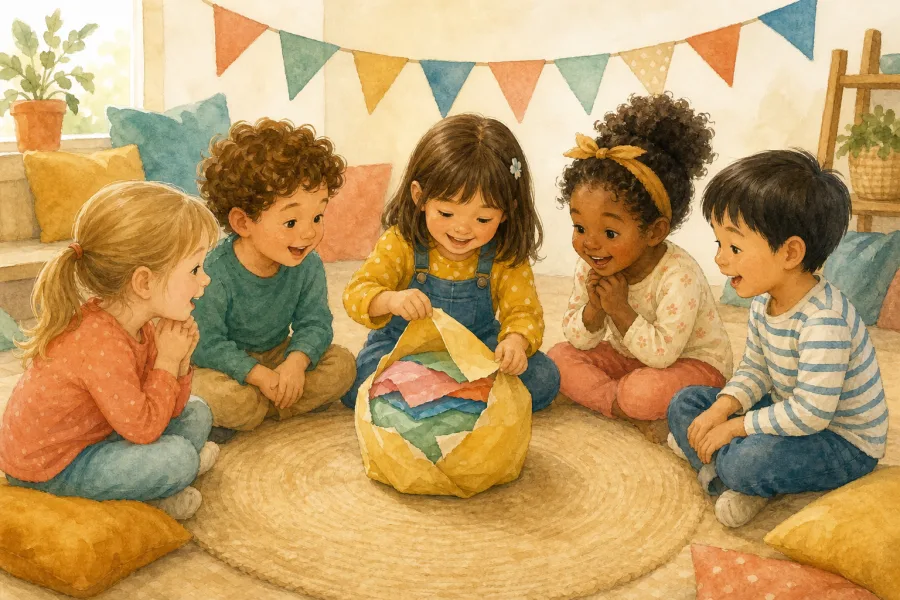
Instead of one child winning a single parcel, each team wraps its own parcel in layers, and every layer hides a small team task like “everyone clap three times” before the music restarts. I made four parcels from newspaper and tape for a rainy-day classroom party, fixing the usual problem of twenty children watching one child unwrap.
The downside is preparation time: wrapping four multi-layer parcels took me nearly an hour the night before, and one parcel came apart too early because I used too little tape on the outer layers.
I put a wrapped sweet and a tiny joke card in every layer, so even the child who unwrapped a task layer still walked away with something in hand.
Pro Tip: Number layers lightly in pencil so you can rebuild a parcel fast.
Cost / Time / Difficulty: Under $5 for small prizes and wrapping | 20 minutes | Easy
5. Team Scavenger Hunt
Each team gets the same picture list, ten items to find in a set area, and the first team back with everything photographed or collected wins. I ran this in a school hall and playground with items like a red leaf and a paperclip, giving every team a different starting clue so they did not stampede to the same corner.
The downside is boundary creep, since excited teams drift further than planned, so I now tape the search area on a simple map and station one adult at each edge.
I hid the trickiest item, a smooth grey stone, near the fence, and the team that found it last still won because they had photographed everything else first.
Pro Tip: Use picture lists so younger children can play without reading help.
Cost / Time / Difficulty: Free | 20 to 30 minutes | Easy
Related article: If your group loves searching games, these scavenger hunt party games gave me the picture-list idea I still reuse.
6. Balloon Pop Relay
Teams race to sit on a balloon and pop it, then tag the next player, with the twist that each popped balloon reveals a colour card the team must collect in order. I taped a row of balloons lightly to a bench on the school field, one row per team.
The downside is obvious: it is noisy, it scatters balloon pieces everywhere, and it is not suitable for children with a latex allergy or a real fear of loud pops, so I always check allergies first.
I kept each team’s popped-balloon colour cards in a labelled envelope, and checking the order at the end took under a minute with two adult helpers.
Pro Tip: Sweep between rounds and keep a bin at each team’s row.
Cost / Time / Difficulty: Under $5 for balloons | 15 minutes | Easy

7. Human Bingo (Find a Friend Who…)
Every child gets a bingo card with squares like “has a pet dog” or “can whistle”, and teams race to find classmates who match and sign each square. I printed cards for a mixed-age school party, with the rule that each person can only sign one square per card.
The downside is that the fastest writers finish while slower readers are still on square three, so I now play it as a team total rather than an individual race.
The square that took longest was ‘has visited another country’, and watching children discover a classmate’s holiday story was the best part of the game.
Pro Tip: Read the squares out loud first so every child understands them before the timer starts.
Cost / Time / Difficulty: Free to print | 15 to 20 minutes | Easy

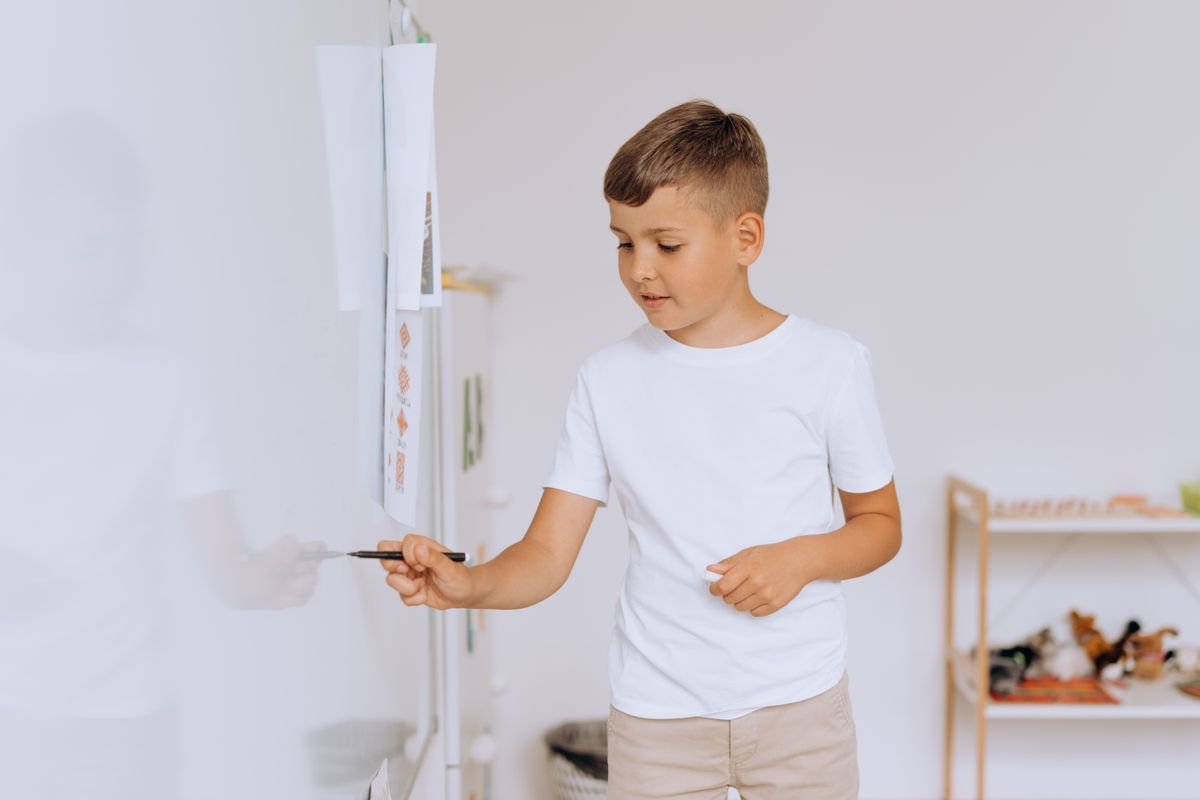
8. Team Pictionary
One child draws a word while their team guesses against the clock, with points for every correct answer in sixty seconds. I used a small whiteboard and age-sorted word cards, letting the drawer pick from two cards so nobody froze.
The downside is that confident children tend to grab the marker every round, so I now deal turn cards in order and the marker passes whether the round was won or lost.
The hardest word I used was ‘penguin’, and the winning team guessed it from three wobbly lines and a very confident beak in under ten seconds.
Pro Tip: Use a one-minute sand timer so the countdown is visible to everyone.
Cost / Time / Difficulty: Free | 20 minutes | Easy
9. Obstacle Course Relay
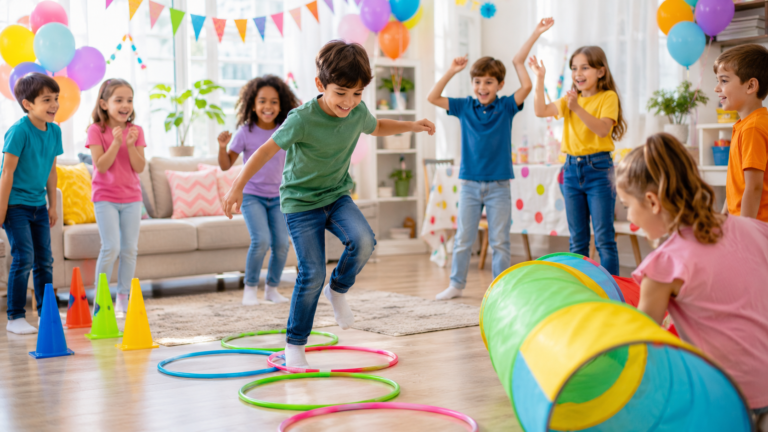
Set a short course with cones to weave, a bench to step over, a hoop to jump through, and a beanbag to carry, then run it as a team relay. I built one in a school hall from sports-day kit in ten minutes, and walked the class through it once before timing anything.
The downside is bottlenecks: if one station is slow, the queue behind it grows and children get bored, so I keep stations simple and run two identical courses side by side when I have the space.
I timed the first full run at just under two minutes per team, and the second run was always faster because the children remembered the station order.
Pro Tip: Time the team, not the child, and let teams re-run to beat their first time.
Cost / Time / Difficulty: Free with school sports kit | 20 minutes | Medium
10. Musical Chairs Team Version
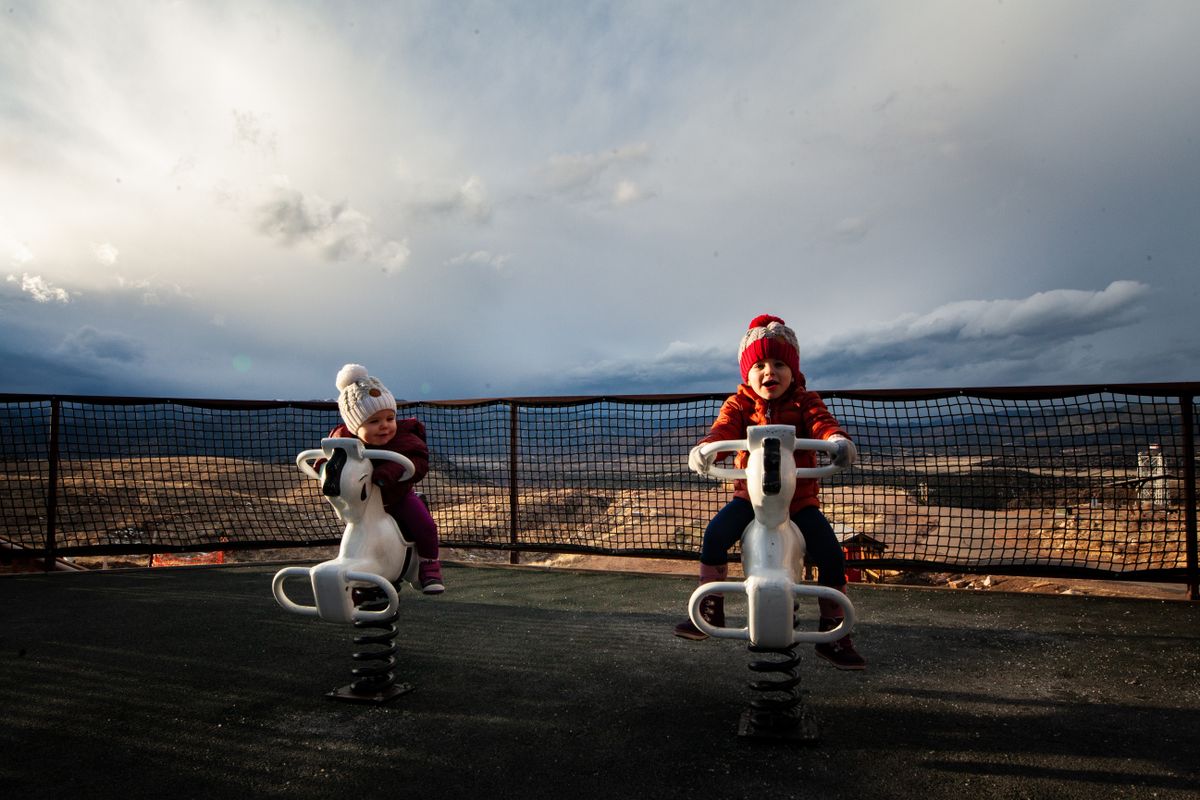
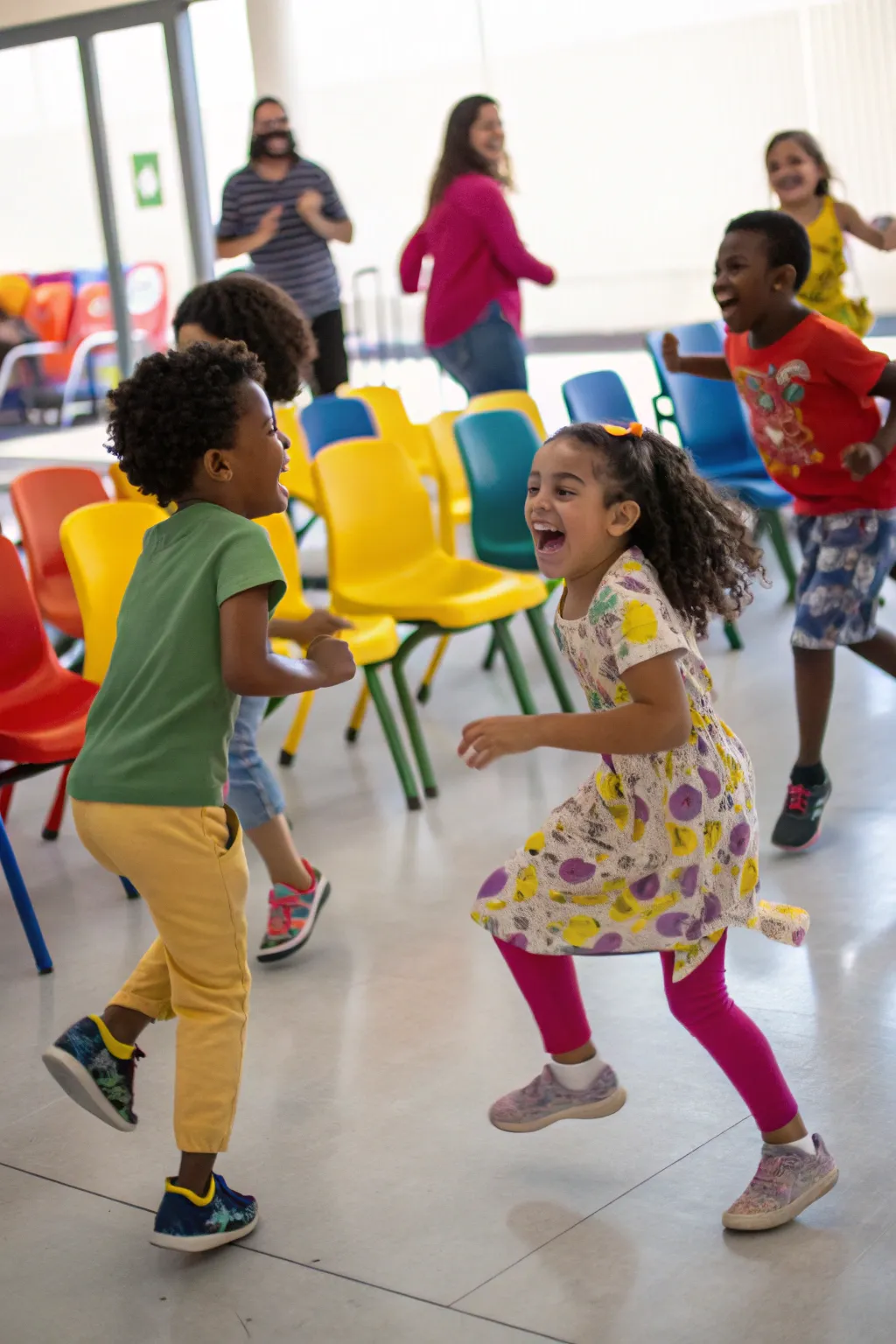
In this version, chairs are removed each round but nobody is out: when the music stops, every team member must be touching a chair, and teams can share, squeeze, or balance together. I played this at an indoor party with two teams of eight.
The downside is that chairs tip when too many children pile onto one, so I use sturdy, non-stacking chairs and I stop the music the moment a chair starts to slide.
By the last round, all sixteen children were balanced across just four chairs, and the photo of that moment is still pinned on the classroom wall.
Pro Tip: Play twenty-second music bursts so rounds stay fast and nobody gets dizzy.
Cost / Time / Difficulty: Free | 15 minutes | Easy
Also read: For more outdoor group play, these outdoor games for kids are the ones I check when I need a backup plan.
11. Sack Race
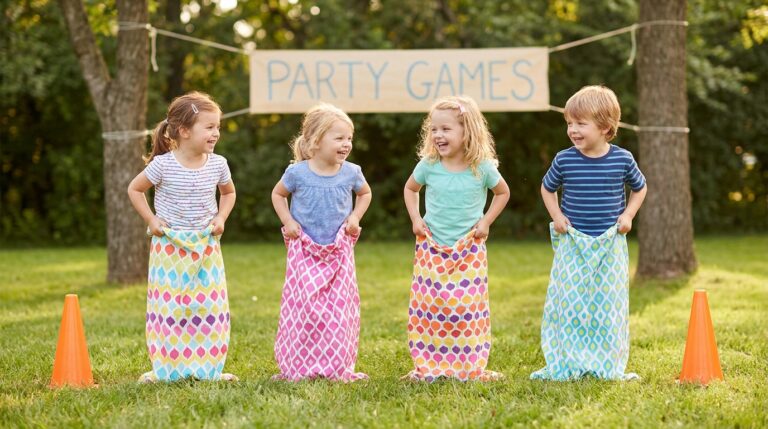
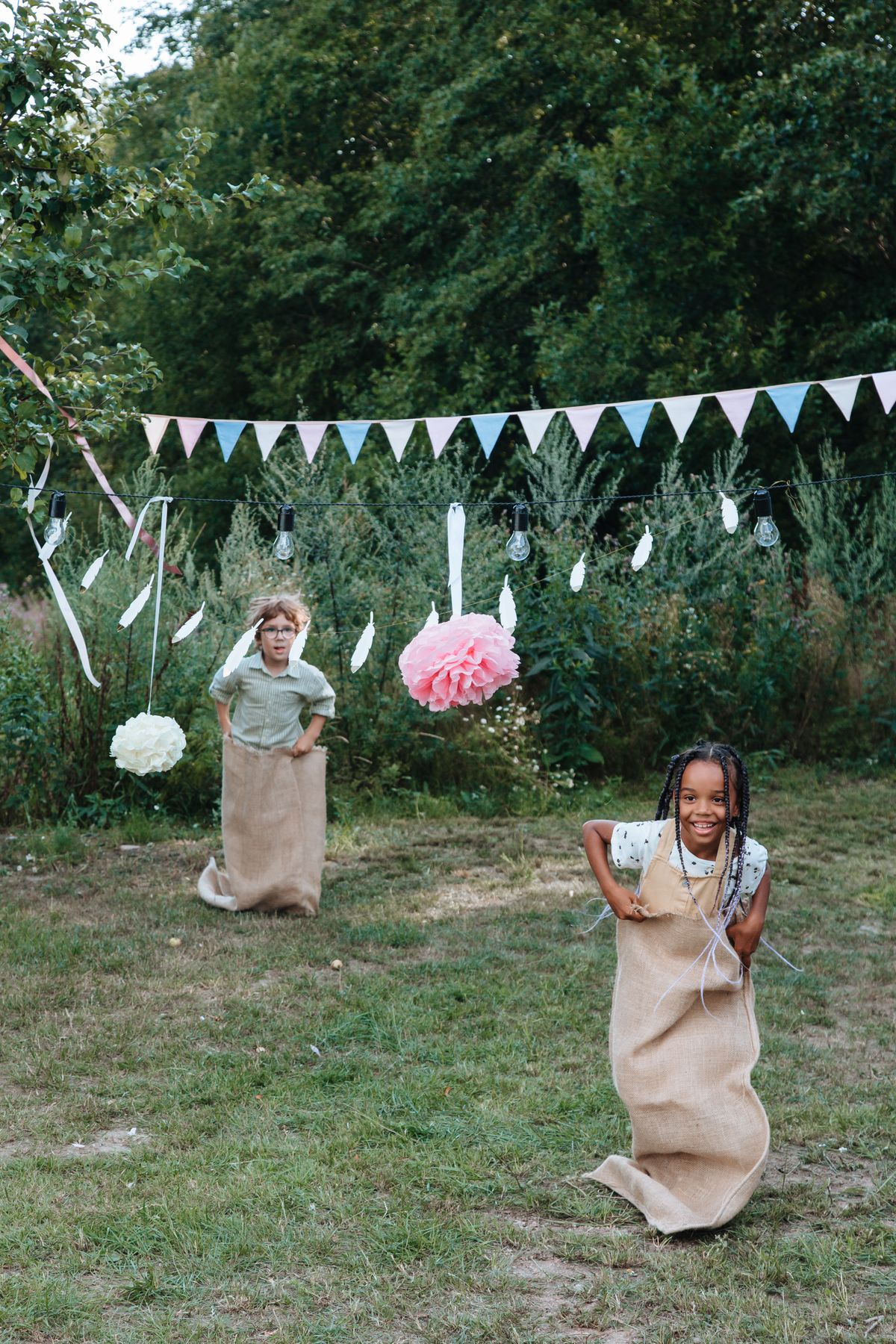
Children step into old pillowcases or proper race sacks, hold them at waist height, and hop to the finish line in relay heats. I borrowed sacks from the sports cupboard and ran heats of four, the winner decided by combined times.
The downside is that hopping in a sack on hard ground hurts knees and wrists when children fall, so I only run it on grass and I keep the distance to about 10 metres for younger children.
I marked the turning point with a bright orange cone, and the children who hopped slowly and steadily beat the ones who tried to jump too far.
Pro Tip: Let children practice hopping for one minute before the race starts.
Cost / Time / Difficulty: Free to $15 | 15 minutes | Easy
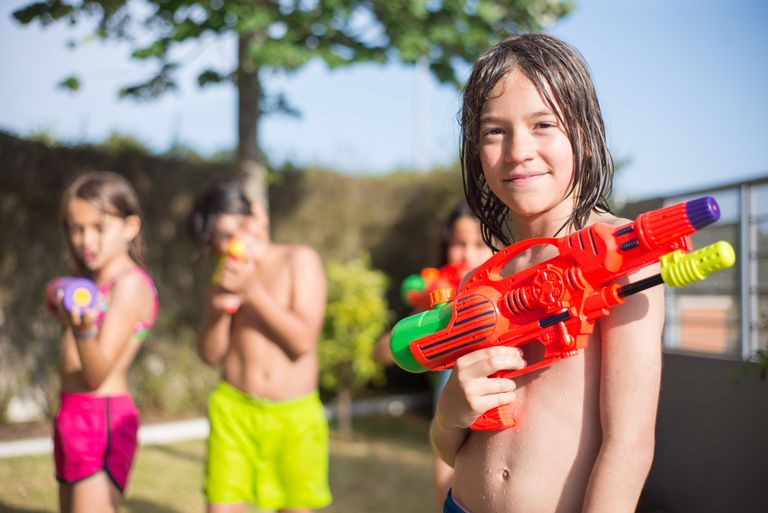
12. Water Balloon Toss (Outdoor, Supervised)
Pairs stand facing each other and toss a water balloon back and forth, stepping further apart after every successful catch. I ran this on a hot afternoon with a bucket of pre-filled balloons per team.
The downside needs saying plainly: burst balloons leave rubber pieces that birds and small animals can swallow, so an adult must supervise and collect every piece straight after.
I filled the balloons the night before and stored them in two buckets of cold water, which stopped them bursting in the sun before the game started.
Pro Tip: Fill balloons three-quarters full so they are soft enough to catch.
Cost / Time / Difficulty: Under $5 for balloons | 15 minutes | Easy

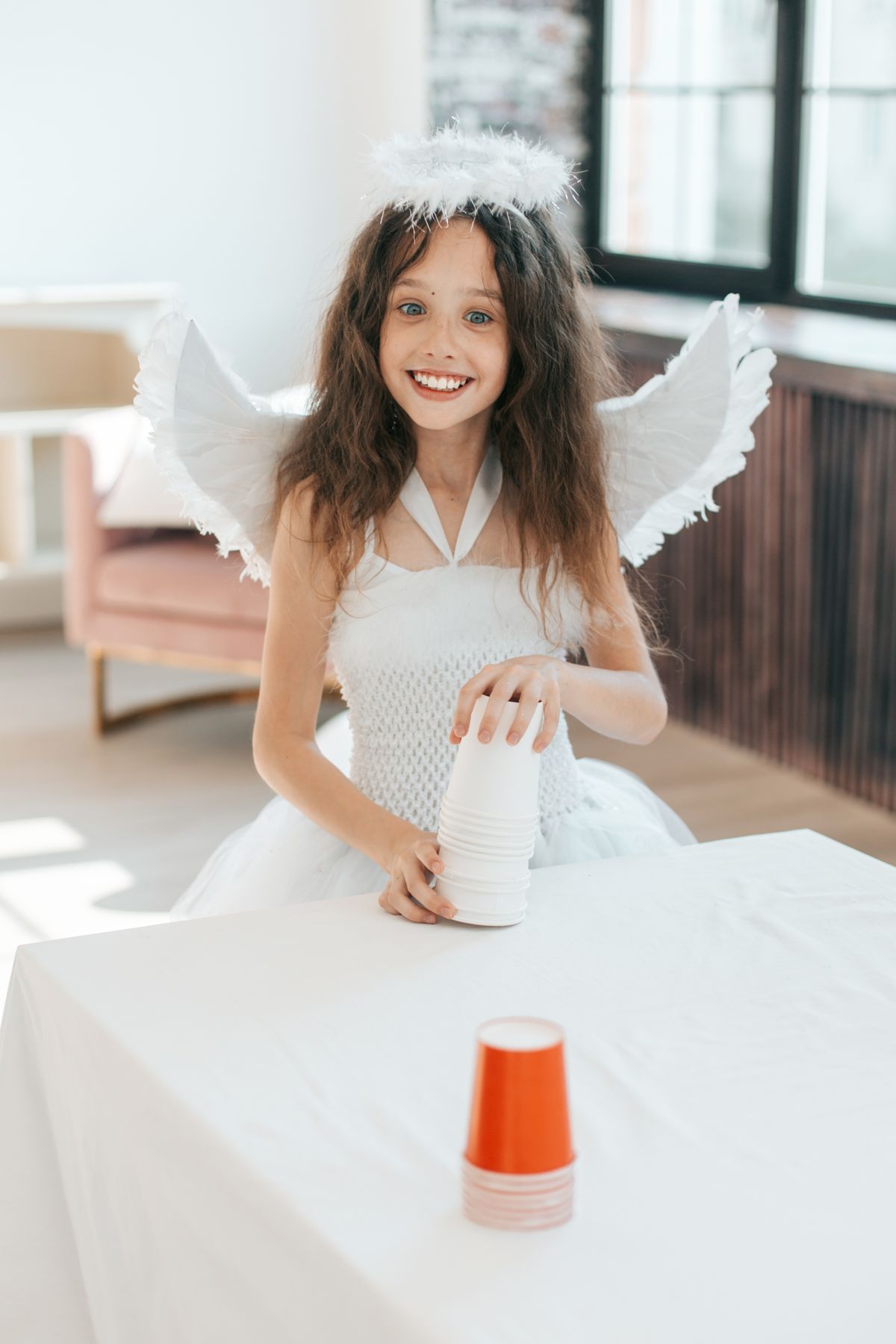
13. Team Cup Tower
Each team gets forty plastic cups and must build the tallest tower they can in three minutes, then rebuild it after a timed knockdown round. I tried this as a calm-down game after the running races; the quiet planners suddenly became team captains.
The downside is that towers fall constantly, and one frustrated child knocked his own team’s tower over on purpose, so I now score the best tower across three attempts rather than a single build.
The tallest tower reached twenty-three cups before it wobbled, and the team that built it had assigned one child to hand cups and one to stack.
Pro Tip: Use ridged cups so they stack without sliding, and tape the table edge.
Cost / Time / Difficulty: $3 to $5 for cups | 15 minutes | Easy
14. Freeze Dance Teams
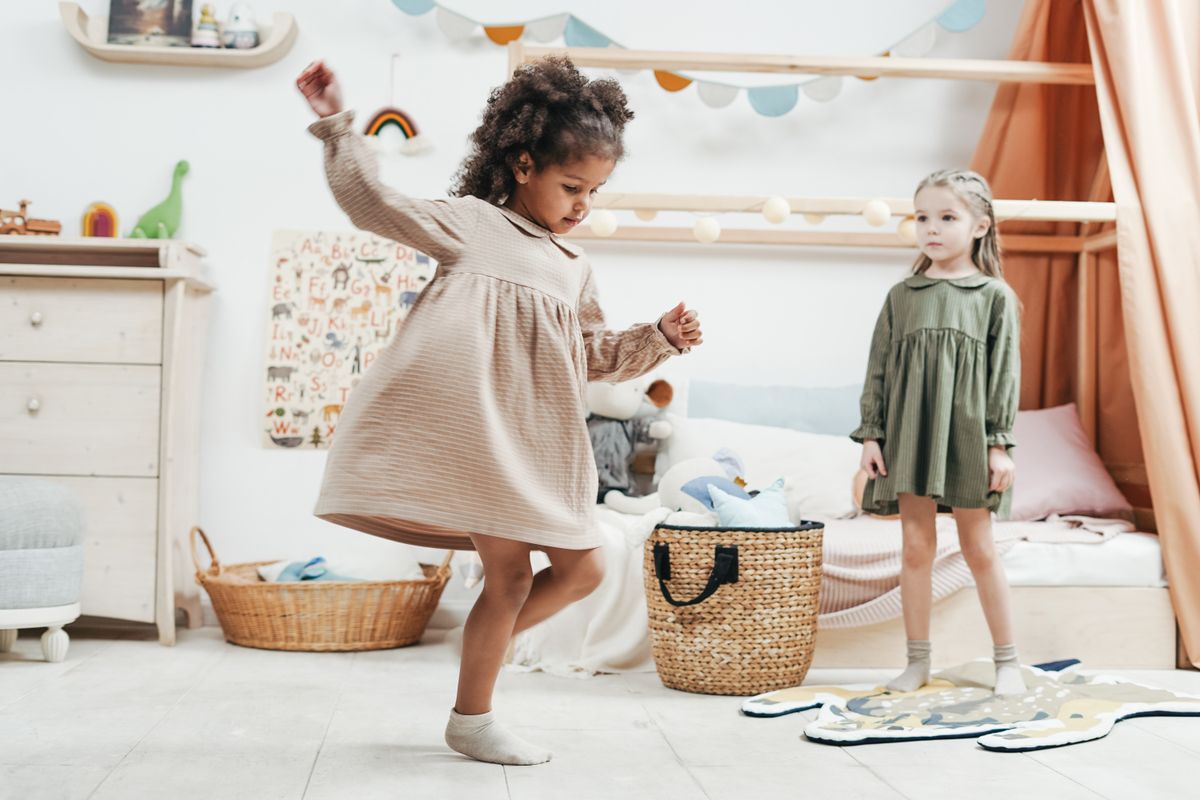
Teams dance while the music plays and freeze completely when it stops, with points for the team that freezes fastest and funniest. I played this with two teams facing each other, and gave a bonus point for the best team freeze pose.
The downside is that judging “frozen” fairly is hard, and children argue about who wobbled, so I now appoint two child judges per round and rotate them, which ends the arguments faster than any adult ruling.
I chose songs with clear stops, like a marching song with a sudden ending, because a slow fade-out made it impossible to judge who froze first.
Pro Tip: Use songs children already know, so even shy dancers move.
Cost / Time / Difficulty: Free | 15 minutes | Easy
15. Parachute Games
A group holds the edges of a large play parachute and works together to bounce balls on top, make waves, or lift it high and run underneath before it falls. I borrowed the school’s parachute for twenty children, and the mushroom lift got the biggest cheer.
The downside is that parachutes are bulky and not every school has one, and without enough children, at least ten, the parachute will not lift properly.
We started with just one soft beach ball on top, and once the children kept it bouncing for ten seconds, we added a second ball for extra chaos.
Pro Tip: Start with gentle waves and one soft ball before the mushroom lift.
Cost / Time / Difficulty: Free to $40 | 20 minutes | Easy

16. Simplified Capture the Flag
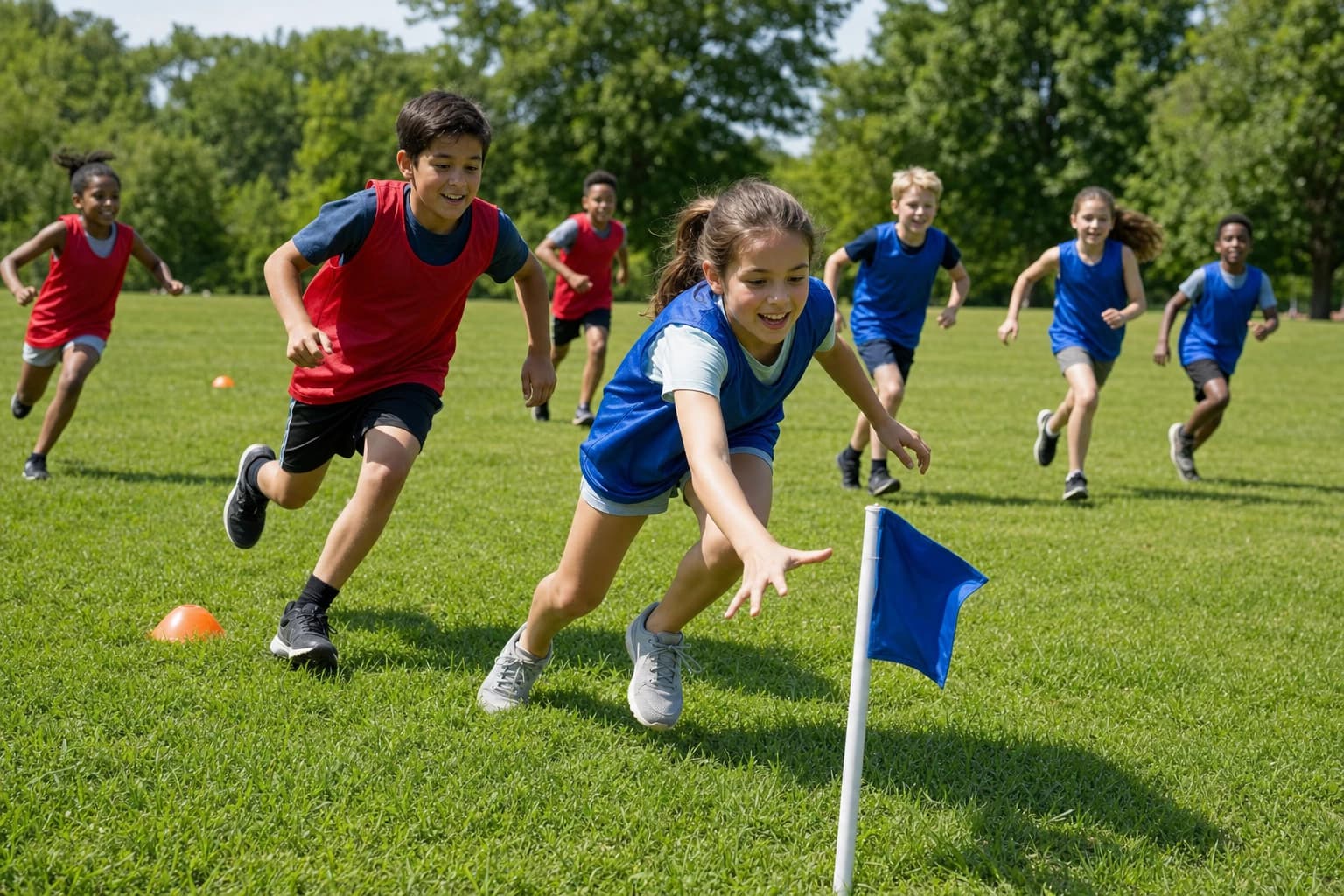
Each team guards a flag in its half and tries to capture the other’s flag without being tagged in enemy territory. I simplified the rules for younger children: tagged players go to a jail zone and are freed when a teammate tags them, and there are no complicated safe zones to argue about.
The downside is that it needs a big, clearly marked area and at least two adults watching the boundary lines, because arguments about whether someone was tagged are guaranteed without a referee.
I gave each team a ten-minute round and a five-minute break between rounds, which kept the energy high and stopped arguments building up.
Pro Tip: Use bright bandanas as flags and matching wristbands so teams are obvious.
Cost / Time / Difficulty: Under $5 for bandanas | 20 to 30 minutes | Medium
Read this next: If your party includes water play, these pool party games ideas helped me plan the supervised water games safely.
17. Team Quiz Relay
Teams answer a question, then run to a board to write the answer, then tag the next player, combining a quiz with a relay. I wrote twenty questions for a classroom party, read out loud so reading speed never decided the winner.
The downside is waiting: if one child cannot answer, the whole team stalls, so I allow a pass after ten seconds, with the question returning at the end of the round.
The silliest question, ‘what sound does a giraffe make’, stumped every team, and the children still quote the wrong answers they shouted back at me.
Pro Tip: Keep questions short and answers to one or two words.
Cost / Time / Difficulty: Free | 20 minutes | Easy

18. Egg and Spoon Relay
Each team member carries an egg, real hard-boiled or a plastic practice egg, on a spoon around a marker and back without dropping it. I used hard-boiled eggs, so a dropped egg meant a funny mess, not a wasted raw egg.
The downside is that it frustrates very young children, whose hands shake under pressure, so for under-sixes I use a tablespoon and a ping-pong ball instead, and I shorten the course to a few steps.
I drew a chalk line for the turning point about eight metres out, and the child who walked heel-to-toe, slowly and steadily, won her heat easily.
Pro Tip: Tape a small cross on the ground as the turning marker.
Cost / Time / Difficulty: Under $5 for eggs and spoons | 15 minutes | Easy

Comparison Table
| Game | Best For | Cost | Effort | Space Needed |
|---|---|---|---|---|
| Balloon Relay Race | Openers | Under $5 | Low | Hall or field |
| Tug of War | Big groups | $5 to $10 | Low | Field |
| Three-Legged Race | Photo moments | Free | Low | Flat grass |
| Pass the Parcel Team Version | Rainy days | Under $5 | Medium | Classroom |
| Team Scavenger Hunt | Mixed ages | Free | Medium | Hall and grounds |
| Balloon Pop Relay | Loud groups | Under $5 | Low | Field |
| Human Bingo | New classmates | Free | Low | Any room |
| Team Pictionary | Quiet time | Free | Low | Classroom |
| Obstacle Course Relay | Sporty groups | Free | Medium | Hall or field |
| Musical Chairs Team Version | No eliminations | Free | Low | Hall |
| Sack Race | Summer fairs | Free to $15 | Low | Grass |
| Water Balloon Toss | Hot days | Under $5 | Low | Outdoor only |
| Team Cup Tower | Calm-down | $3 to $5 | Low | Table space |
| Freeze Dance Teams | Any room | Free | Low | Hall |
| Parachute Games | Inclusion | Free to $40 | Low | Hall or field |
| Simplified Capture the Flag | Older children | Under $5 | Medium | Large field |
| Team Quiz Relay | Mixed abilities | Free | Low | Classroom or hall |
| Egg and Spoon Relay | Finales | Under $5 | Low | Hall or grass |
Mistakes I Made (So You Don’t Have To)
I let children pick teams once, and the last two picked stood there pretending not to care. I count off teams now, and mix ages and abilities so no team is stacked.
I once explained a game for five minutes, and half the class stopped listening by minute two. Now I explain in under a minute, demonstrate one round, and let children learn by playing.
I forgot a wet-weather backup and spent twenty frantic minutes inventing games while thirty children waited. Now I write one indoor swap next to every outdoor game.
I skipped the cleanup plan after a water balloon game and found rubber pieces next morning. Now cleanup is part of the game, with a bonus point for the most pieces collected.
Safety Notes
Keep an adult supervising every game, and walk the play area first to remove trip hazards. Check latex allergies before balloon games, keep pieces away from toddlers, and collect every piece afterwards.
Count off teams and rotate who leads. For water games, supervise closely, keep away from roads and ponds, and have towels ready.
Frequently Asked Questions
How many children do these games work for?
Most work best with eight to thirty children in teams of four to eight.
What if it rains on party day?
Swap in indoor twins: pass the parcel, pictionary, bingo, cup tower, freeze dance, and musical chairs all work in a hall.
How do I stop one team from always winning?
Rotate members and score team totals across the day, so effort counts as much as speed.
What would you do differently next time?
I would plan fewer games and run each longer: twelve games in two hours meant we rushed every one.
Final Thoughts
Children remember the games where everyone played, nobody was left out, and adults laughed along. That is the real secret: the game is the excuse, and the teamwork is what they take home.