Outdoor Games for Kids
Outdoor games for kids are how I survive school holidays without losing my mind, and I picked the games on this list the same way I test everything I share here: I played them with my own kids and their friends in our yard, at the park, and on one memorable camping weekend, and I kept only the ones that worked without fancy equipment or constant adult refereeing. What is left are eighteen games that run themselves once you explain them once.
Two safety basics before you start: check the play area for hazards — broken glass, dog mess, a wasp nest in the fence — and set a clear boundary the kids can see. I also keep sunscreen, hats, and a water jug by the back door, because outdoor games dehydrate kids faster than anyone expects, and I send everyone for a drink every twenty minutes whether they ask or not.
Key Takeaways
- The best outdoor games need almost no equipment — a ball, some chalk, and a rope cover most of this list.
- Explain the game once, demonstrate it once, then step back. Games that need constant refereeing do not survive contact with real kids.
- Mix high-energy games with calm ones so kids do not burn out in the first half hour.
- Sidewalk chalk, water, and shade are the three supplies I never start an outdoor play session without.
- Set visible boundaries and check the ground for hazards before the first game starts.
18 Outdoor Games for Kids That Actually Work
1. Capture the Flag
Two teams, two flags (I use old t-shirts tied to sticks), two territories divided by a visible line — a row of shoes works — and one goal: grab the other team’s flag and bring it home without being tagged. The first time I set it up, I made the territories too big and the game dissolved into wandering, so now I keep each territory about the size of a tennis court. The downside: it needs at least eight players to work, so it is a party game, not a Tuesday-afternoon game.
Pro Tip: Give each team a different colored flag and a matching wristband. It ends every argument about who is on which team.
Cost / Time / Difficulty: Free / 45 minutes / Medium.
2. Sidewalk Chalk Obstacle Course
Draw a course on the driveway or sidewalk: hop on one foot here, spin in a circle there, walk the squiggly line, jump over the stars. At our house, the course usually ends at the hose, where the “winner” gets sprayed — a tradition my kids invented and now defend fiercely. The honest downside: chalk washes away in rain, so this is a dry-day game, and I check that the chalk is washable before letting kids near the car, because one permanent marker incident taught me that lesson forever.
Pro Tip: Let each child add one station to the course. Ownership is what turns a five-minute activity into a forty-minute one.
Cost / Time / Difficulty: A few dollars for chalk / 30 minutes / Easy.
3. Tug of War
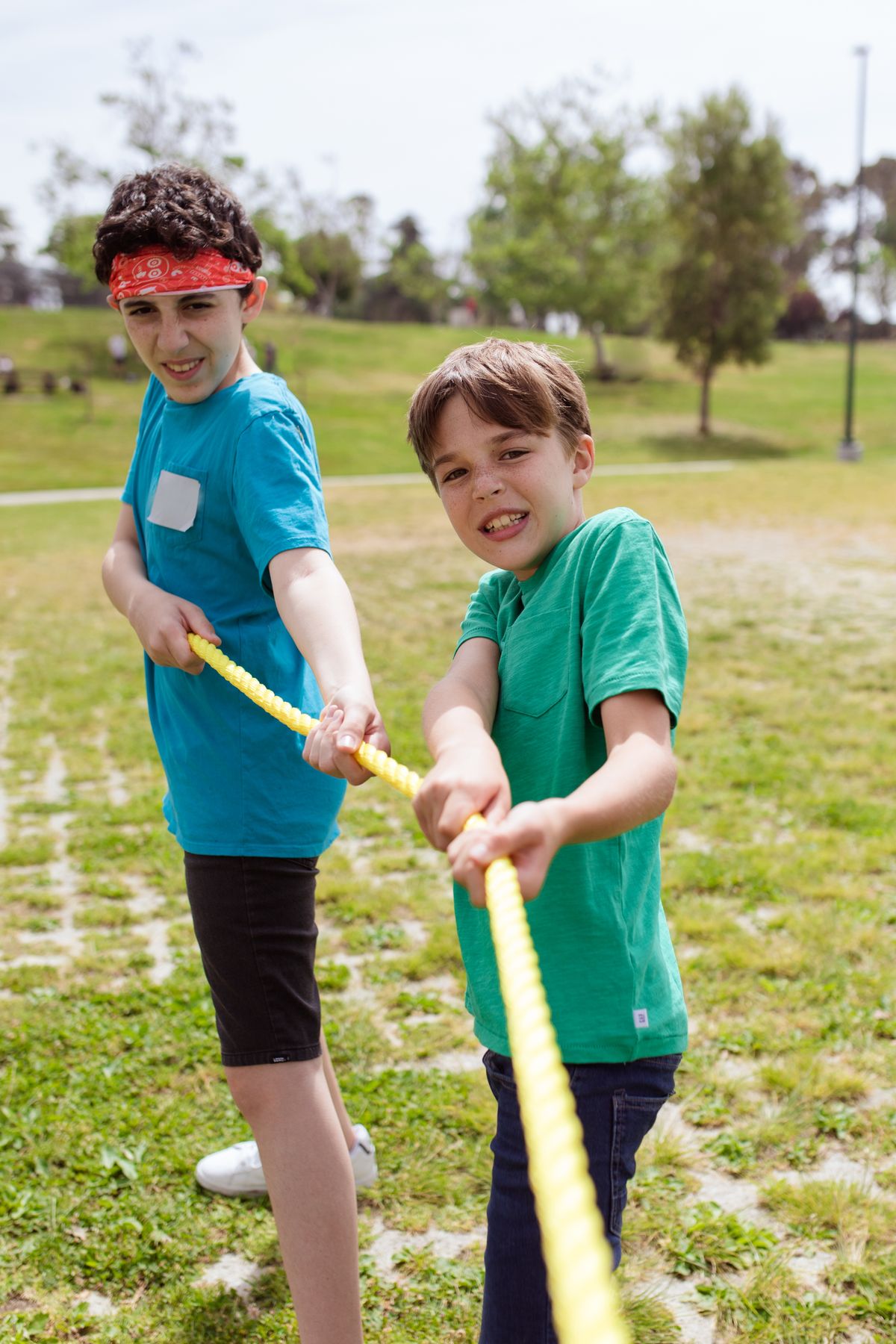
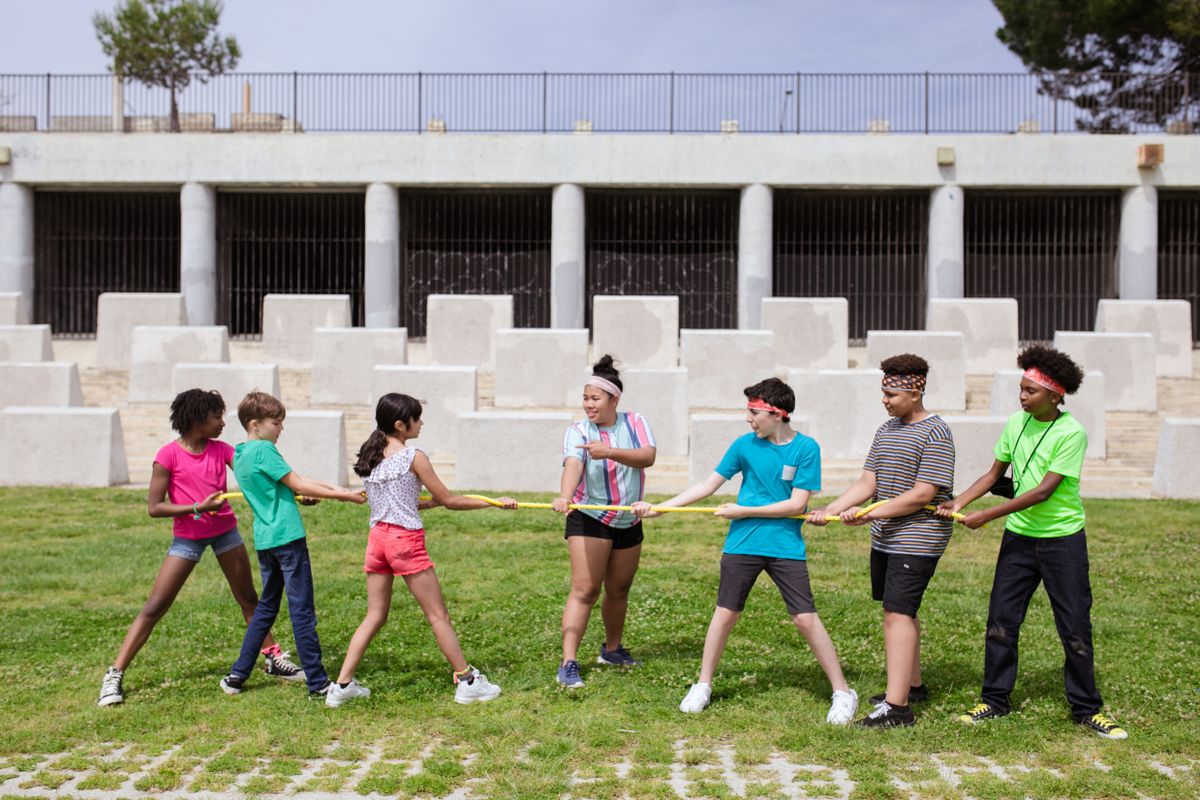
A long rope, a center line drawn in chalk, two teams pulling. It is ancient, it is simple, and it is still the game that gets the loudest cheering at any gathering I host. The key lesson I learned: match teams by size, not by age. Now I mix ages on both teams and the matches last minutes. Safety note: no wrapping the rope around hands or bodies, and I stop the game the second anyone falls — rope burns are no joke, and gloves for younger kids solve most of it.
Pro Tip: Play best of three with a rest between rounds. Tired arms make for short, boring pulls.
Cost / Time / Difficulty: Under $10 for a rope / 15 minutes / Easy.
4. Water Balloon Dodgeball
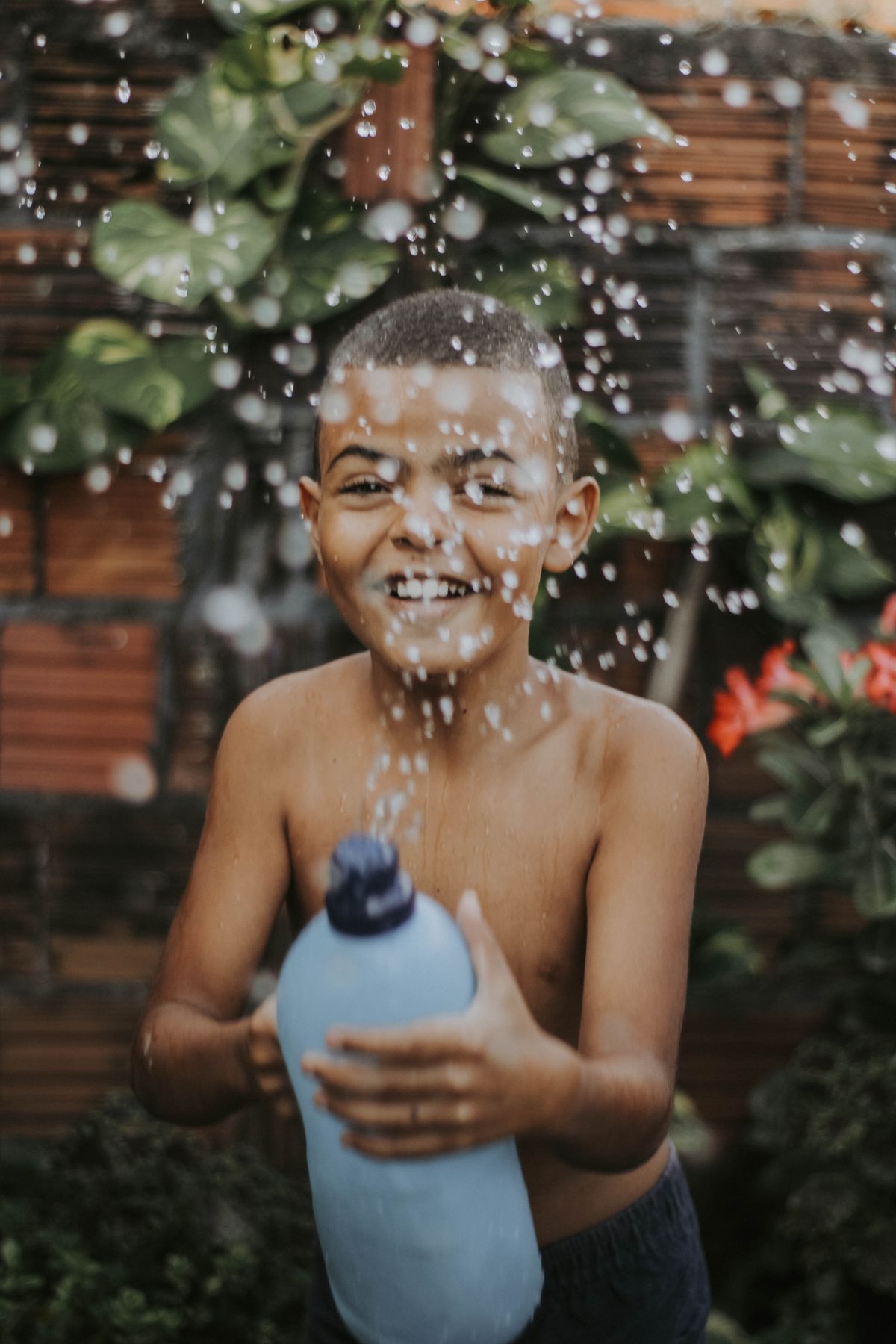
Soft water balloons replace dodgeballs, and getting hit means you are wet, not hurt. I fill about fifty balloons in a bucket of water the morning of the game, split the yard into two halves with a rope on the ground, and let them throw. The first time I ran it, I used fully inflated balloons and they popped on contact with grass, which ended the game in three minutes. Now I underfill them slightly, and they survive a throw and a bounce. Cleanup rule, learned the hard way: balloon pieces everywhere, so the losing team collects pieces for five minutes afterward, and I check for pieces before toddlers use the yard.
Pro Tip: Ban head shots and set a throwing line. Without a line, the game collapses into a close-range soaking contest.
Cost / Time / Difficulty: Under $5 / 20 minutes / Easy.
5. Freeze Tag
One person is “it” and tags others, who freeze in place until another player unfreezes them by crawling between their legs or tagging them. I add one twist for older kids: frozen players must hold a silly pose, and the best pose at the end wins a bonus point. I played this at a park with kids from ages four to eleven, and it worked for all of them because the unfreezing rule gives younger kids a job even when they cannot run fast. The watch-out: set the boundary small, or the fast kids vanish into the next field.
Pro Tip: Rotate “it” every three minutes, even if nobody has been caught. A stuck “it” kills the game.
Cost / Time / Difficulty: Free / 20 minutes / Easy.

6. Bubble Station
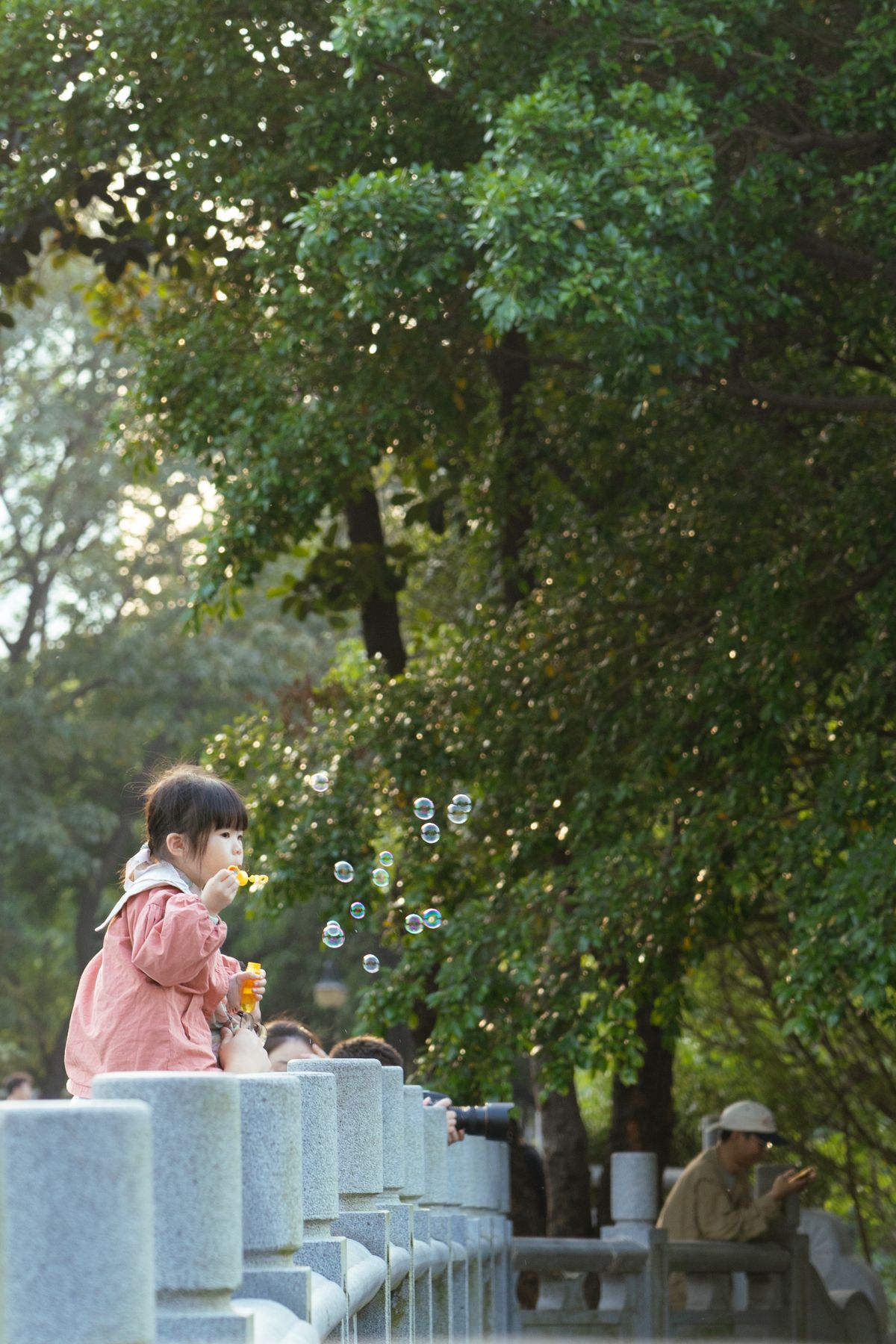
Set out bowls of bubble solution, a few wands, and some homemade wands from pipe cleaners and string, and let kids make the biggest bubbles they can. I mix my own solution — dish soap, water, and a spoonful of glycerin — and it makes bubbles that last noticeably longer than store-bought mix. This is my calm-down game: after a wild round of tag, I send everyone to the bubble station for ten minutes and the whole group’s energy resets. The downside: bubble solution on a deck is slippery, so I put the station on grass and keep towels nearby.
Pro Tip: Add a “bubble snake” station — a sock over a cut bottle, dipped in solution — and kids will blow foam snakes for an hour.
Cost / Time / Difficulty: A few dollars / 30 minutes / Easy.
7. Three-Legged Race
Tie two kids’ adjacent legs together with a scarf or bandana, and race pairs to a finish line. I use soft scarves, never rope, because rope tightens and hurts, and I tie above the ankle, not at the knee, so kids can still bend their legs. The first time I ran it, I paired a tall kid with a tiny kid and they fell over before the start line. Now I pair by height and the races are actually races. Safety note: run it on grass, never concrete, because falls are guaranteed, and I keep the distance short — about fifteen meters — so nobody is exhausted and frustrated by the end.
Pro Tip: Let pairs practice walking for two minutes before racing. The practice round is usually funnier than the race.
Cost / Time / Difficulty: Free / 15 minutes / Easy.

8. Nature Bingo
Like the scavenger hunt’s calmer cousin: I print bingo cards with pictures of things to spot outdoors — a bird, a yellow flower, a pinecone, a butterfly, a cloud shaped like an animal — and kids mark them off during a walk or free play. I laminate the cards and use dry-erase markers so they survive a whole summer of reuse. The downside: on a dull day, the wildlife does not cooperate, so I include a few guaranteed items like “something green” and “a rock” to keep every card moving.
Pro Tip: Play it as a team game with a parent per team for kids under six — they spot more together and argue less.
Cost / Time / Difficulty: Free to print / 30 minutes / Easy.
9. Sack Race
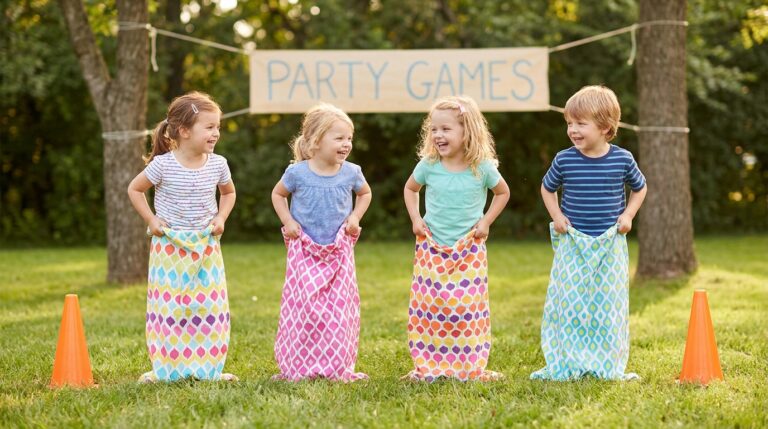
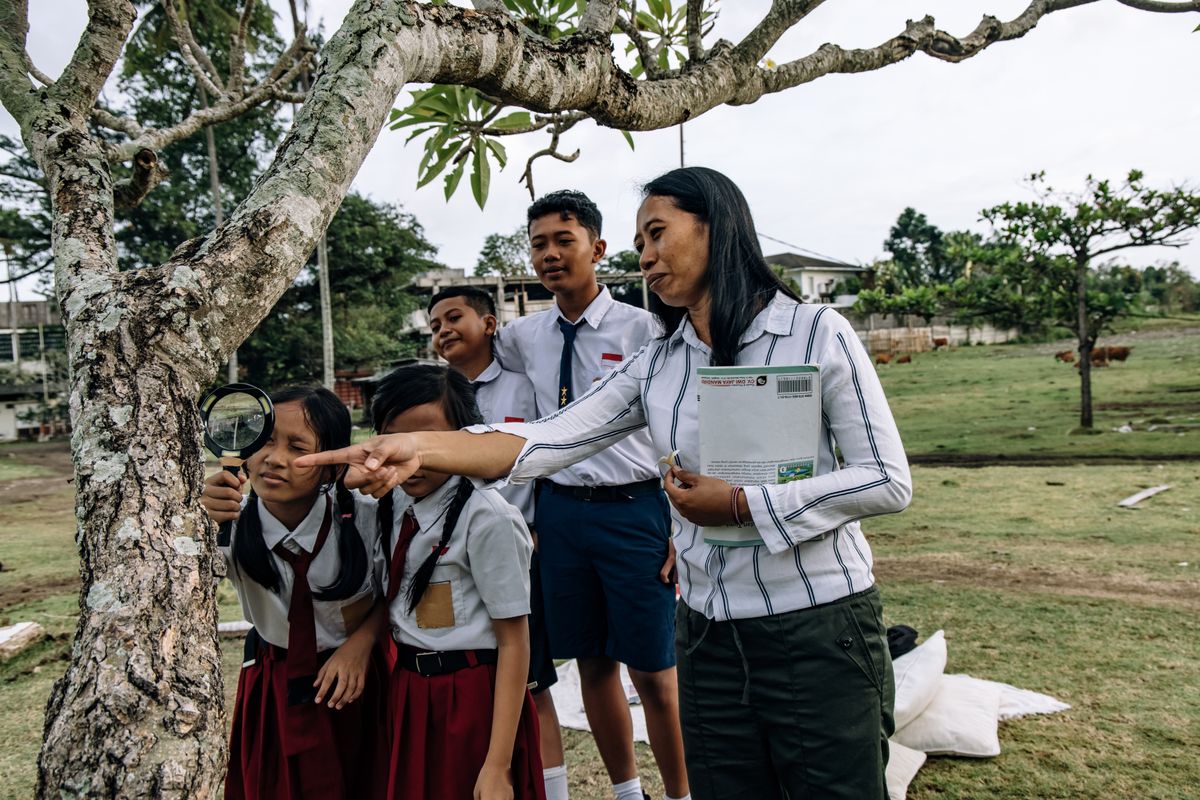
Old pillowcases or burlap sacks, a start line, a finish line, and kids hopping like mad. I use sturdy pillowcases for younger kids because real burlap sacks are huge and trip them, and I run it on grass only — hopping on concrete ends with scraped knees, I promise you. At a family barbecue, the adults ended up racing too, and my brother-in-law’s hop-and-fall is now family legend. One real watch-out: check the sacks for holes before the race. A torn sack mid-hop is funny for everyone except the kid inside it.
Pro Tip: Mark lanes with chalk or rope. Without lanes, sack racers drift into each other and the race becomes a pile-up.
Cost / Time / Difficulty: Free with old pillowcases / 15 minutes / Easy.
10. Backyard Soccer (No Goals Needed)
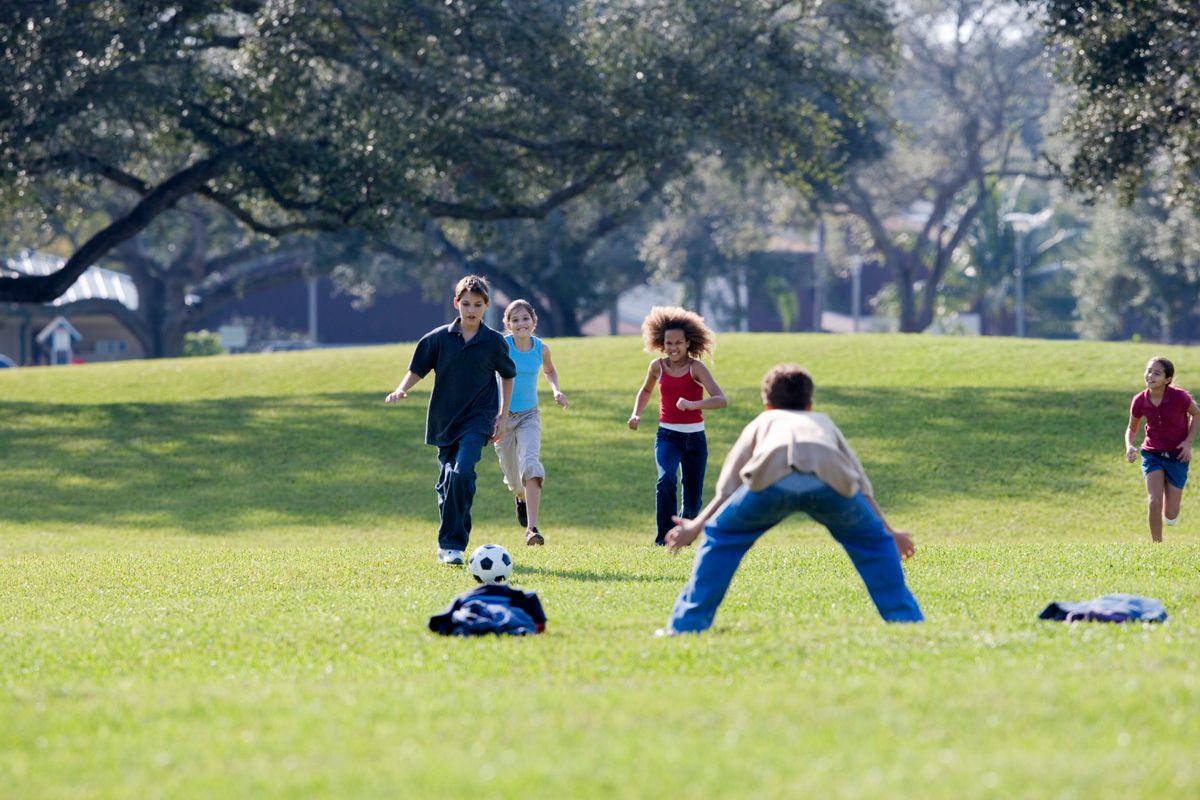
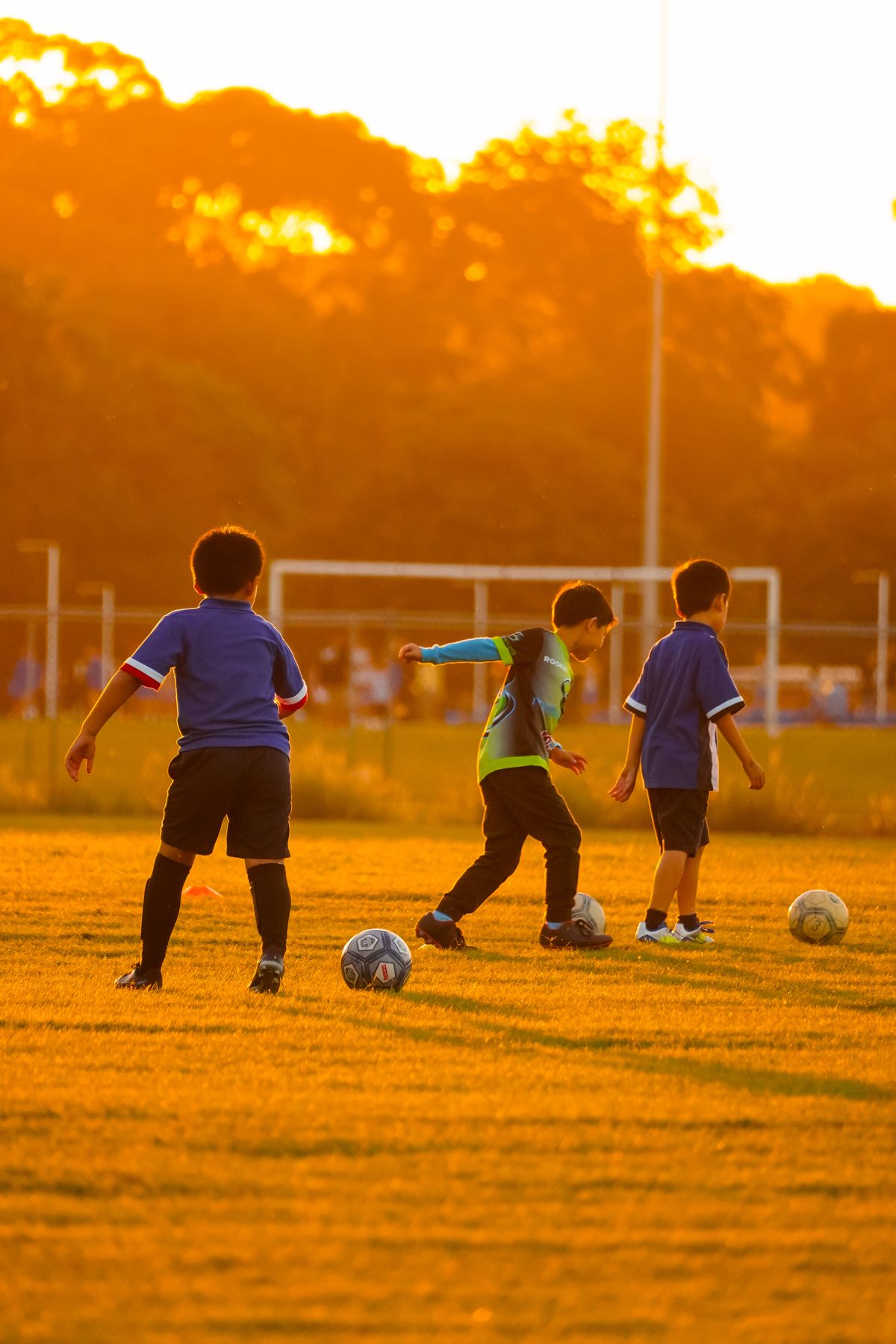
Two piles of shoes as goals, a soft ball, no goalkeeper rules, no offside, first to five wins. I use a foam ball, not a real soccer ball, because a hard ball to the face ends the game for everyone. The game runs itself once it starts, which is the point: I can sit on the step with a drink while they play. I keep a spare ball ready, and I have made peace with the neighbor’s garden.
Pro Tip: Rotate positions every goal so the same confident kid does not dominate the “striker” spot all game.
Cost / Time / Difficulty: Free / 30 minutes / Easy.
11. Parachute Play
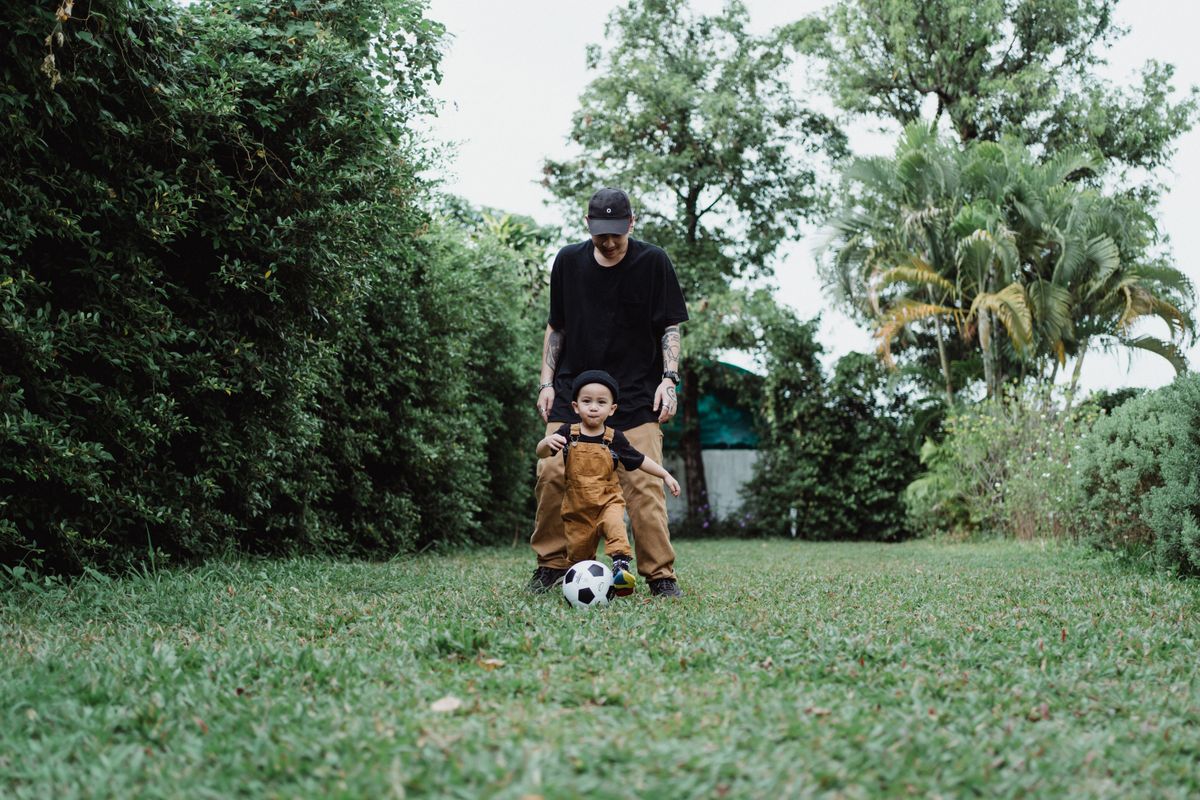
If you have a big bedsheet or a cheap play parachute, you have a game: kids hold the edges, lift it up and down to make waves, run under it on a count, and bounce soft balls on top. I bought a small play parachute years ago and it has been worth every penny, because it works for ages three to ten at once — the little ones just hold and bounce while the older ones invent games on top of it. And keep it away from the barbecue — a sheet and a grill do not mix.
Pro Tip: Put a soft ball in the center and challenge the group to keep it on the parachute for one minute. It teaches teamwork faster than any lecture.
Cost / Time / Difficulty: Under $15 for a play parachute / 20 minutes / Easy.

12. Hide and Seek (Boundary Edition)
The oldest game in the world, with one modern fix: a clearly marked boundary and a base that is visible from everywhere. I walk the boundary with the kids first — “this tree to that fence, no further” — and I set a time limit of five minutes per round so the seeker does not spend forever. I also ban hiding in cars, sheds with tools, and anywhere locked, because I learned the hard way that a child locked in a garden shed is a terrifying five minutes for everyone. With those rules, hide and seek is still, after all these years, the game kids ask for first.
Pro Tip: Count out loud and slowly. A fast counter who peeks ruins the round for the hiders.
Cost / Time / Difficulty: Free / 30 minutes / Easy.
13. Egg and Spoon Race
Balance an egg on a spoon, walk or run to the finish line, drop it and you start over. I use hard-boiled eggs for the first rounds — less mess, same tension — and save raw eggs for a grand finale that the kids beg for. At Easter, I dye the eggs first, which adds a whole second layer of fun. The honest downside: this game excludes nobody, but it frustrates younger kids who cannot balance yet, so for under-fives I let them hold the spoon with both hands, and suddenly they can play too.
Pro Tip: Run it in heats of four. A twelve-kid egg race is chaos; a four-kid heat is a real competition.
Cost / Time / Difficulty: Cost of eggs / 15 minutes / Easy.

14. Jump Rope Challenges
One long rope, two turners, and a series of challenges: jump ten times, jump while singing, jump on one foot, jump with a friend. I keep a long rope in the garage specifically for this, because a short solo rope only entertains one child at a time. The group version entertains ten. I learned to start with the easiest challenge and build up, because starting hard means half the group fails immediately and walks away. Watch-out: jump ropes on concrete are fine, but check the rope length — a rope that drags on the ground trips everyone.
Pro Tip: Let the kids invent a challenge each round. Their challenges are always weirder and better than mine.
Cost / Time / Difficulty: Under $5 for a rope / 20 minutes / Easy.

15. Relay Race Medley
Teams race through a series of legs: run, hop, balance a beanbag on your head, dribble a ball, and tag the next runner. I set this up with cones (or shoes) marking each leg, and I change the legs every time so it never gets stale. I ran this at a school holiday playdate with eight kids and it filled forty-five minutes easily, including the rematches. The downside: it needs space and setup time, about fifteen minutes to lay out, so I set it up before the kids arrive and let them discover it like a surprise.
Pro Tip: Put the silliest leg last. Ending on a laugh means the race ends happy no matter who wins.
Cost / Time / Difficulty: Free / 30 minutes / Medium.
16. Kite Flying Contest
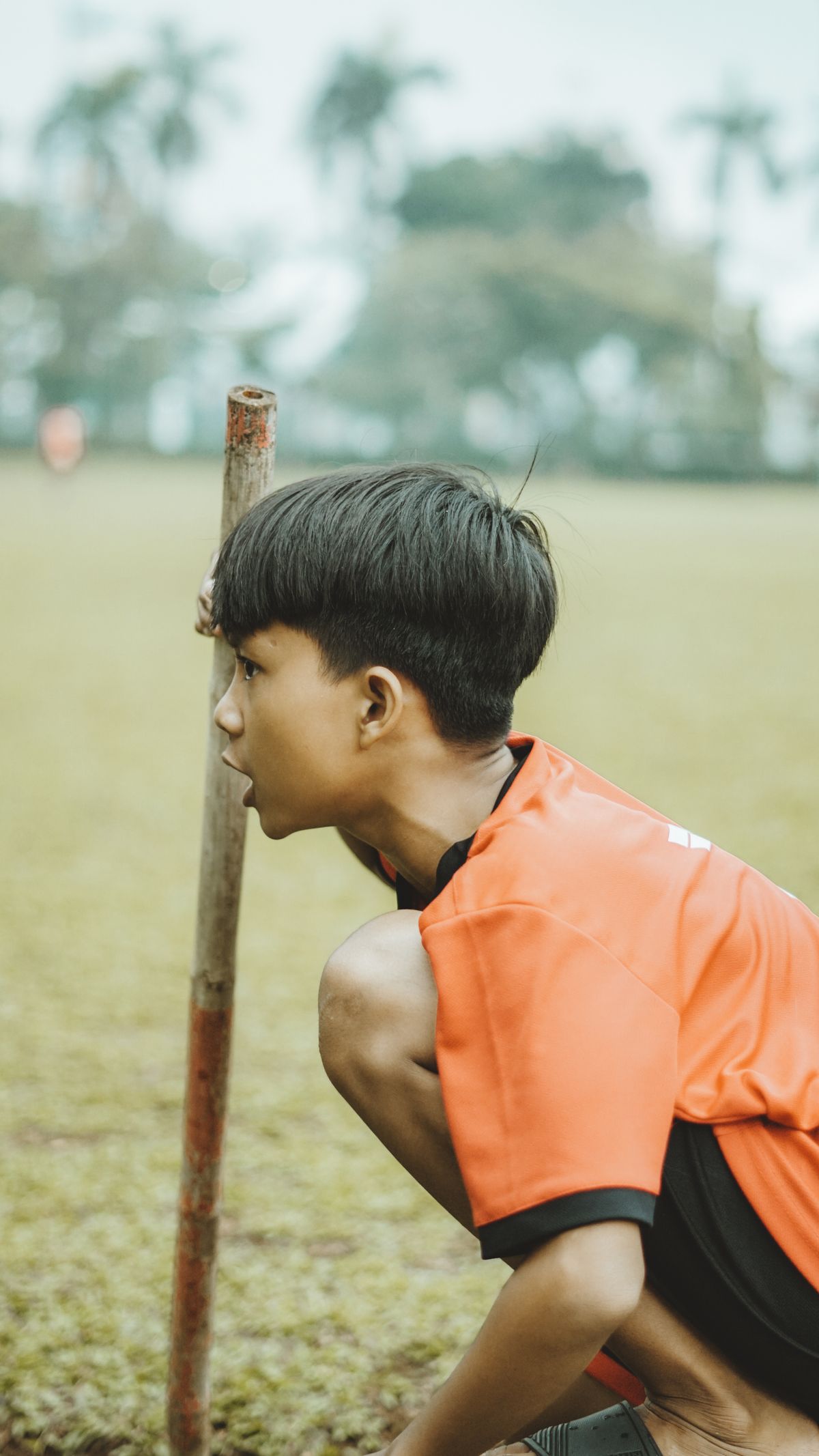
On a windy day, give each child a simple diamond kite and see who can keep theirs up longest, fly it highest, or do the best dive-and-recover. The first time I ran this, there was no wind at all and the kids just ran around dragging kites on the ground, which they actually enjoyed for about ten minutes. Now I check the forecast and only promise kites when the wind is real. Safety note: never fly kites near power lines, and I keep the flying area far from roads because kids chasing kites do not watch traffic.
Pro Tip: Pre-assemble the kites before the kids arrive. Assembly takes twenty minutes and kills the excitement before it starts.
Cost / Time / Difficulty: A few dollars per kite / 30 minutes / Easy.
17. Frisbee Golf
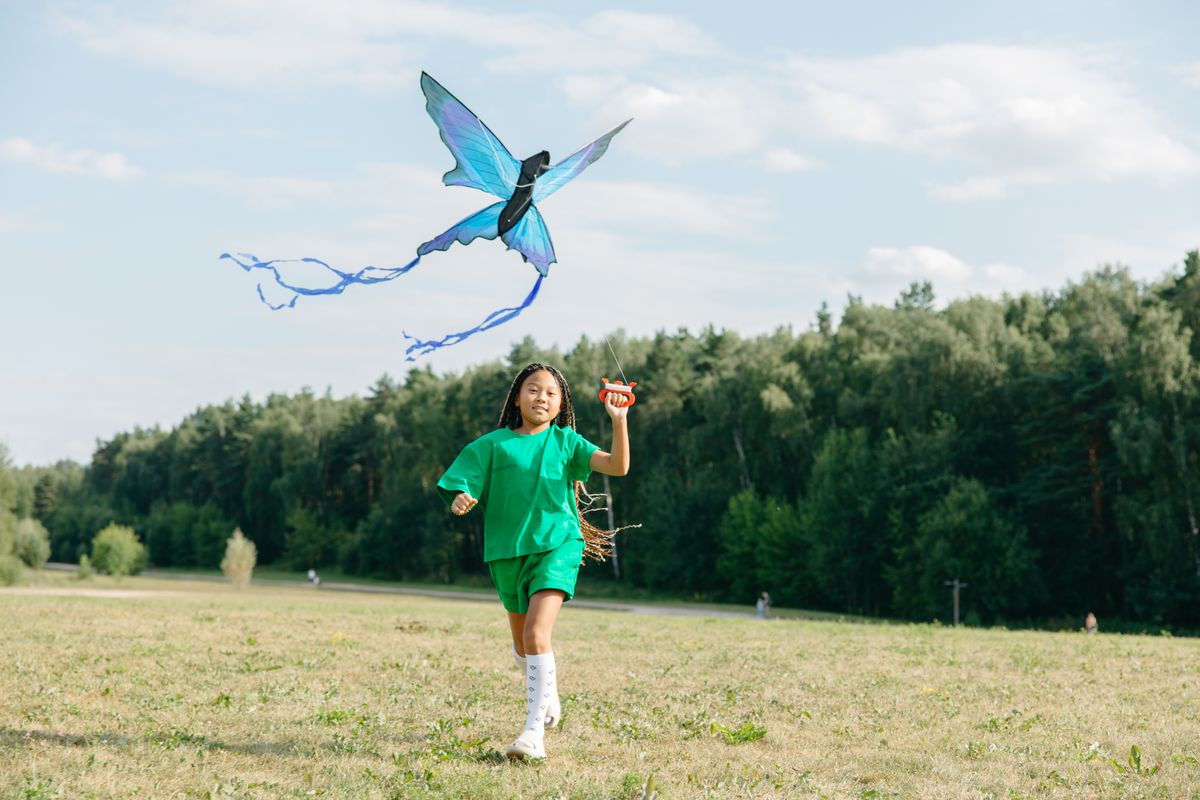
Set up targets around the yard — buckets, hula hoops on the ground, a laundry basket — and kids throw a soft frisbee at each target in order, counting throws like golf. This is my favorite game for older kids, ages 8 to 12, because it rewards skill and patience, and it is calm enough to play while younger siblings nap nearby. The downside: younger kids throw the frisbee straight into the ground, so I give them a closer throwing line and it works fine.
Pro Tip: Let kids design one hole each. A hole that goes around a tree or under a bench is instantly their favorite.
Cost / Time / Difficulty: Under $10 for foam frisbees / 30 minutes / Easy.
18. Campfire Story Circle Game
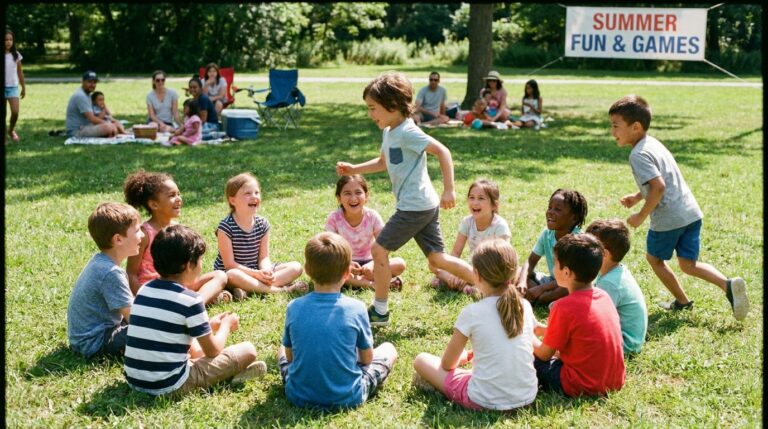
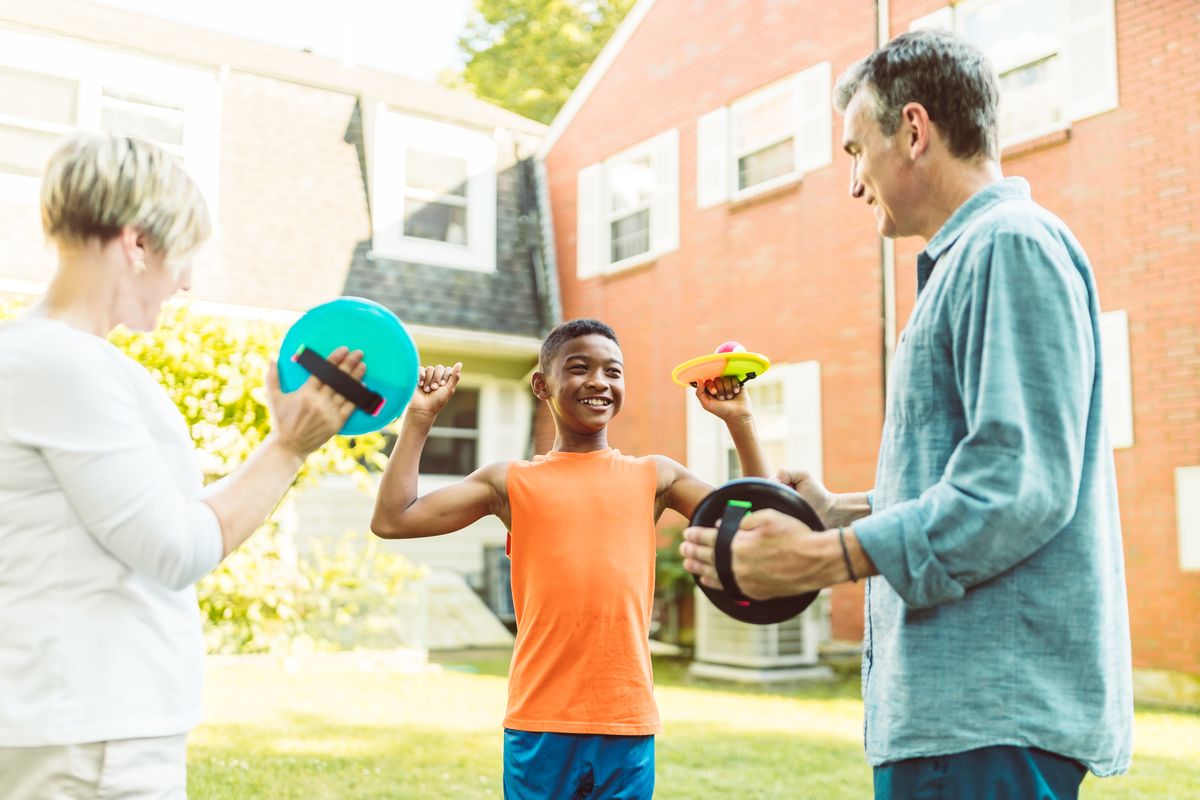
As the sun goes down, kids sit in a circle and build a story one sentence at a time, going around the circle. I keep a jar of prompt words — dragon, lost shoe, thunderstorm, talking cat — for anyone who gets stuck, and I set one rule: no killing off anyone else’s character. This is my wind-down game for camping trips and late backyard evenings, and it works because it needs nothing but a circle and imaginations. The honest downside: shy kids freeze when the turn comes to them, so I let anyone pass once per round, and I always go first with a gloriously silly sentence to set the tone.
Pro Tip: Record the story on your phone and play it back later. Kids are amazed at what they invented together.
Cost / Time / Difficulty: Free / 20 minutes / Easy.


For more team play, also read these simple group games for kids, and if you are planning a park day, check out these outdoor park birthday party ideas. For the full summer plan, read this next: summer outdoor birthday party ideas.
Mistakes I Made (So You Don’t Have To)
- I skipped the hazard check once. A broken bottle in the grass cut a child’s foot five minutes into a game, and the whole afternoon became first aid. Now I walk the play area before anyone arrives, every single time.
- I planned only high-energy games. After an hour of running games, the kids were exhausted and cranky, and I had nothing calm to switch to. Now I alternate fast and slow games, and the bubble station is always ready as a reset.
- I forgot water breaks. Kids do not stop playing to drink, and I had a child get dizzy on a hot day because nobody offered water. Now I call a drink break every twenty minutes, no exceptions.
- I used a hard ball for backyard soccer. One bounce off a small face ended the game and the mood. Foam balls only, forever, for mixed-age play.
Outdoor Games for Kids at a Glance
| Game | Best For | Cost | Effort |
|---|---|---|---|
| Capture the Flag | Big groups, parties | Free | Medium |
| Sidewalk Chalk Course | Driveways, solo or small groups | A few dollars | Low |
| Tug of War | Loud, competitive fun | Under $10 | Low |
| Water Balloon Dodgeball | Hot days | Under $5 | Low |
| Freeze Tag | Any group, no equipment | Free | Low |
| Bubble Station | Calm-down time | A few dollars | Low |
| Backyard Soccer | Mixed ages | Free | Low |
| Parachute Play | Ages 3–10 together | Under $15 | Low |
Frequently Asked Questions
What outdoor games work with no equipment at all?
Freeze Tag, Hide and Seek, Capture the Flag (with t-shirts as flags), and the Story Circle Game need nothing you do not already own. If I had to pick one no-equipment game for a surprise playdate, it would be Freeze Tag — every child knows it, and it works from ages four up.
How long did your outdoor games actually last?
A full afternoon session runs about two to three hours in our house: a high-energy game, a calm game, a drink break, and repeat. Capture the Flag once ran a full hour untouched, while the sack race and egg race are ten-to-fifteen-minute bursts that kids ask to repeat. I plan four to five games for an afternoon and let free play fill the gaps.
What would you do differently next time?
I would set up the relay medley the night before instead of the morning of. Fifteen minutes of setup sounds small, but on a party morning it feels enormous, and a pre-set course means I start the day calm instead of rushed.
Are these outdoor games safe for toddlers?
Several are: the Bubble Station, Parachute Play, Nature Bingo, and the Sidewalk Chalk Course all work for toddlers with an adult nearby. Skip Tug of War, Capture the Flag, and Water Balloon Dodgeball for under-threes — the rope, the running, and the balloon pieces are all hazards at that age. For toddlers, keep games short, on grass, and always within arm’s reach of an adult.
Final Thoughts
The outdoor games that last in our house are not the ones with the best equipment — they are the ones with the simplest rules, a clear boundary, and a mix of wild and calm. The kids will do the rest, and they will sleep very well that night.