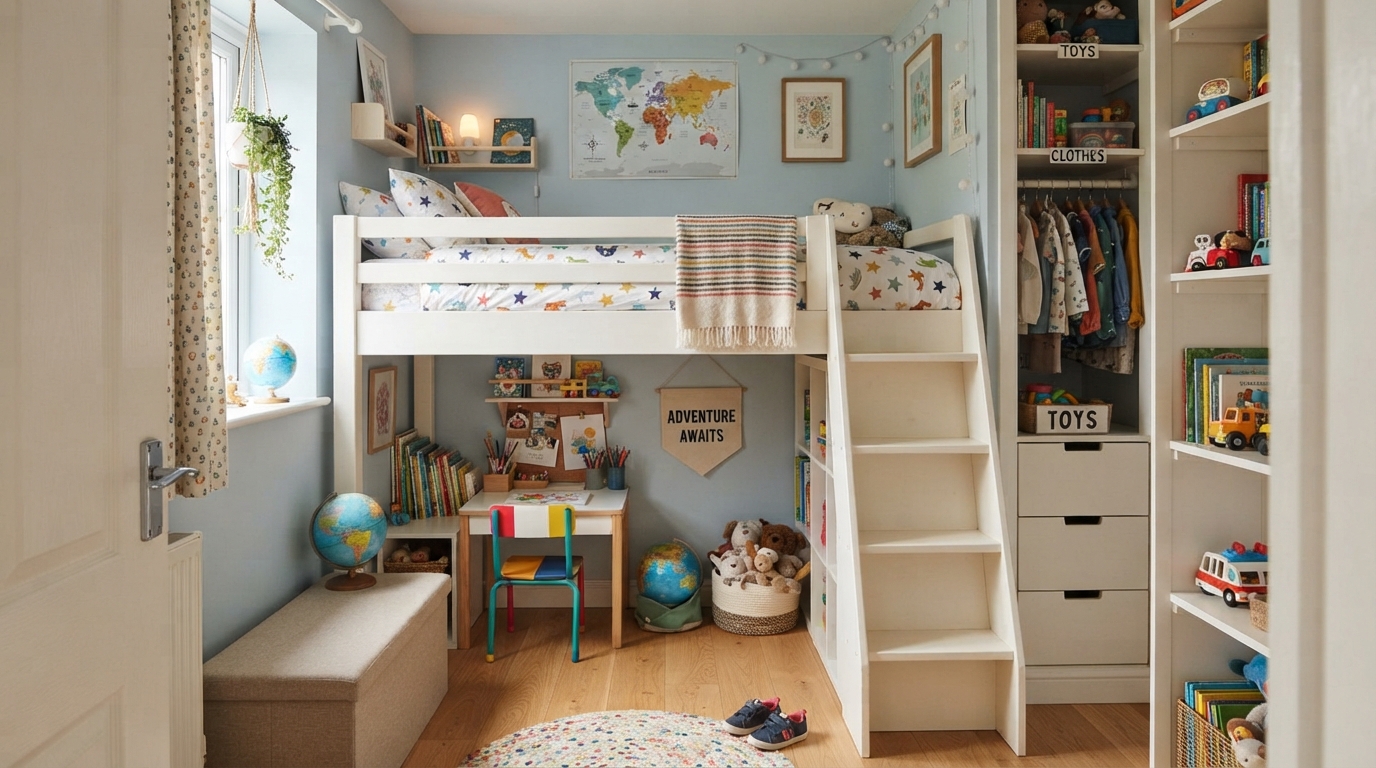
18 Very Small Bedroom Ideas for Kids
A very small bedroom can still be comfortable, playful, and easy for a child to use. I’ve found that the biggest challenge is not the lack of floor space itself, but making every piece of furniture work harder without making the room feel crowded.
For kids’ rooms, I focus on three things first: a clear place to sleep, practical storage, and enough open floor space for everyday play. Simple choices such as vertical shelves, under-bed storage, wall-mounted furniture, and lighter colors can make a noticeable difference.
I’m sharing 18 practical very small bedroom ideas for kids, including bunk beds, loft beds, under-bed storage, wall shelves, compact desks, built-in storage, pegboards, and multi-purpose furniture. These ideas are designed to save floor space while keeping the room functional and inviting.
Save this for later
Table of Contents
When I plan a tiny kids’ bedroom, I measure the room and furniture before buying anything. I also leave enough space around the bed and keep frequently used items within a child’s reach. This helps the room stay organized instead of becoming a storage area with a bed squeezed into the middle.
Key Takeaways
- Use vertical wall space instead of filling the floor with cabinets.
- Choose furniture that serves more than one purpose.
- Use the space under the bed for clothing, toys, or bedding.
- Keep a small amount of open floor space available for play.
- Use wall-mounted storage when floor space is extremely limited.
- Measure doors, windows, furniture, and walking paths before purchasing pieces.
Related article: 21 Very Small Bedroom Ideas
1. Use a Loft Bed
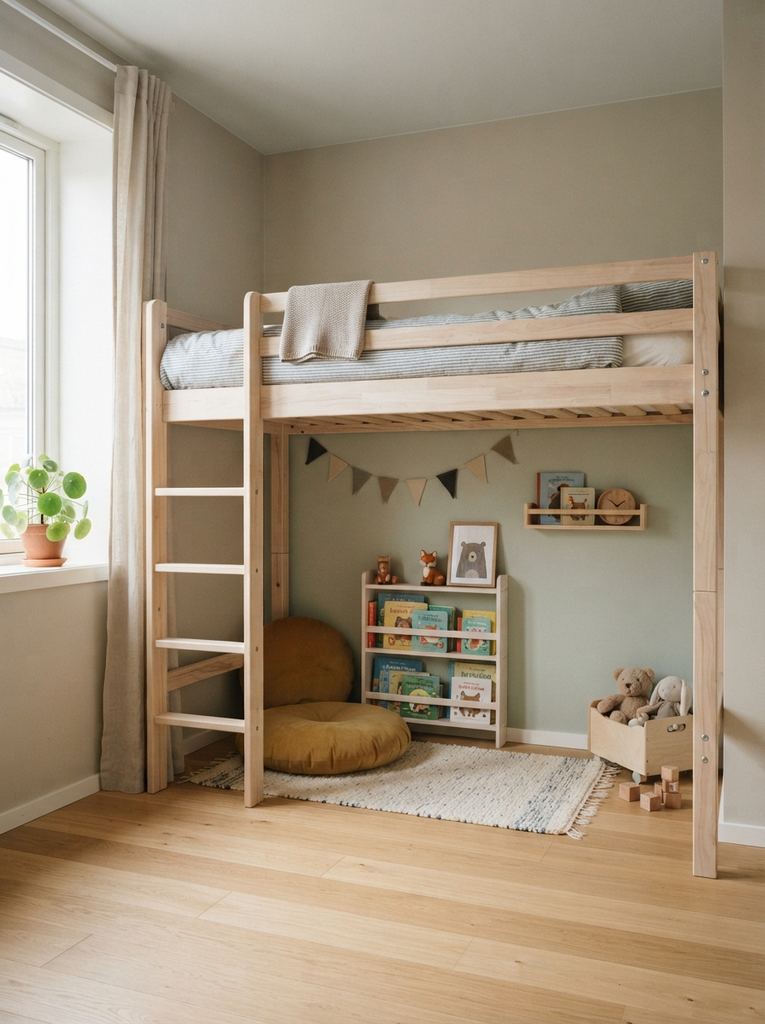
A loft bed is one of my favorite solutions for a very small kids’ bedroom because it separates sleeping space from the area underneath. The lower section can become a reading nook, play corner, or compact study area.
For younger children, I would choose a design with appropriate guardrails and follow the manufacturer’s age and safety recommendations. I also make sure the ladder is secure and that the ceiling provides enough clearance.
Pro Tip: Before buying a loft bed, measure from the mattress surface to the ceiling and check the manufacturer’s required clearance. A space-saving bed is only useful if the child can comfortably use the area underneath.
2. Choose a Bunk Bed
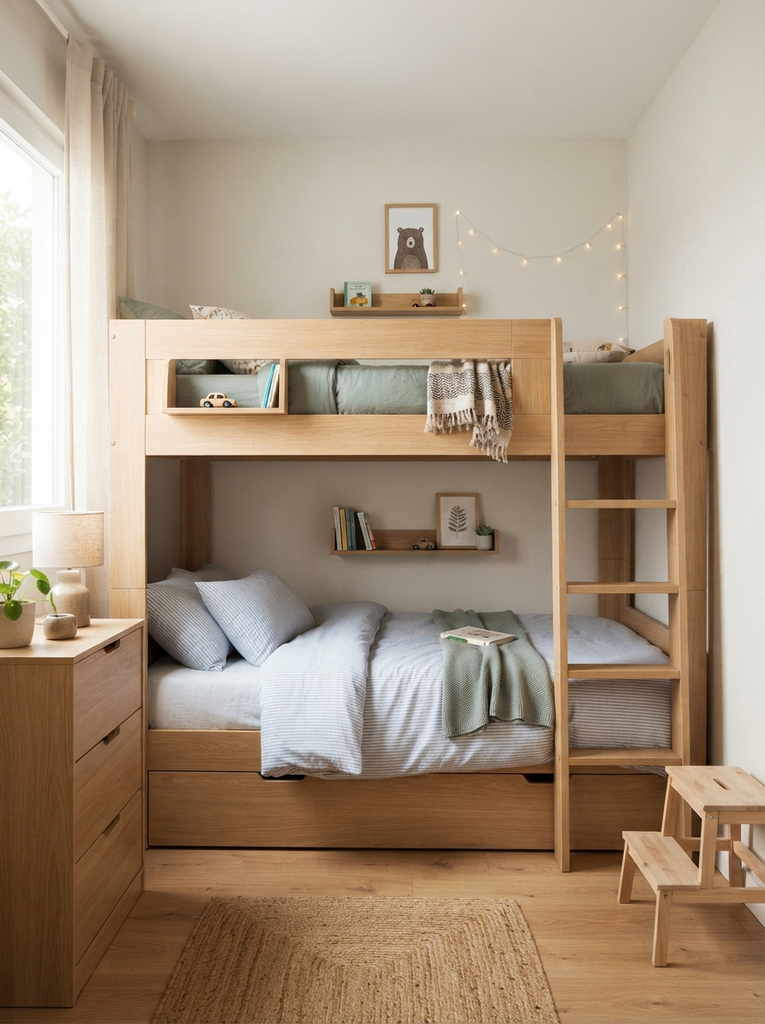
If two children share a tiny room, bunk beds can provide two sleeping spaces without using the floor area required by two separate beds. I like keeping the rest of the furniture compact so the room does not feel overloaded.
A bunk bed can also include drawers, shelves, or a built-in desk, which gives me additional storage without adding separate cabinets.
3. Add Under-Bed Storage
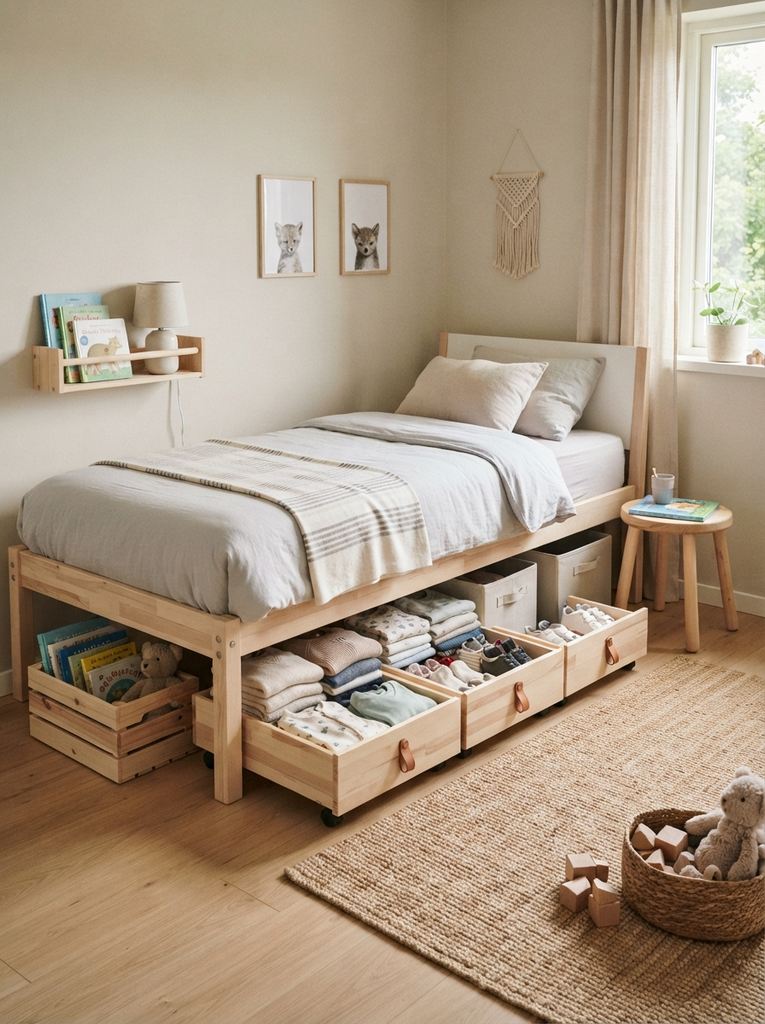
I never ignore the space underneath a child’s bed. Storage boxes, rolling drawers, or purpose-built under-bed containers can hold toys, extra blankets, shoes, or seasonal clothing.
For a small room, this storage can replace a larger dresser. I prefer labeled containers so children can quickly find what they need without pulling everything onto the floor.
4. Install Wall-Mounted Shelves
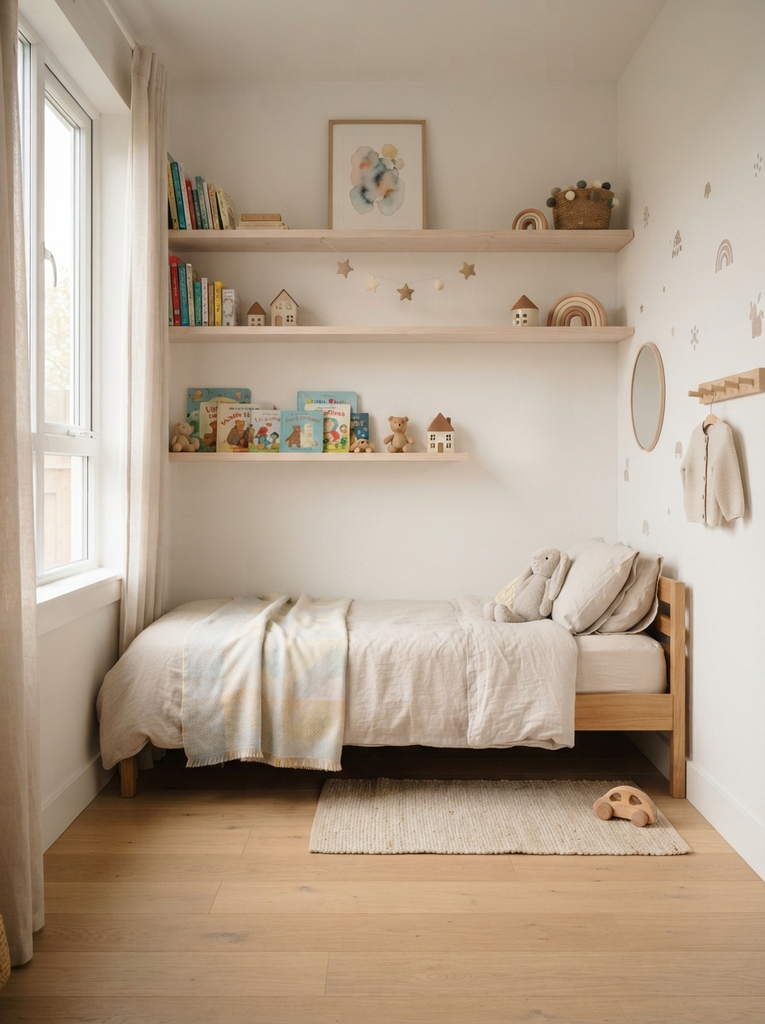
When floor space is scarce, I move storage upward. Wall-mounted shelves can hold books, small toys, framed artwork, and decorative items while leaving the floor open.
I usually place everyday items on lower shelves where the child can reach them safely. Heavier objects should be stored securely, and shelves should be properly anchored according to the wall type and manufacturer’s instructions.
5. Create a Compact Study Area
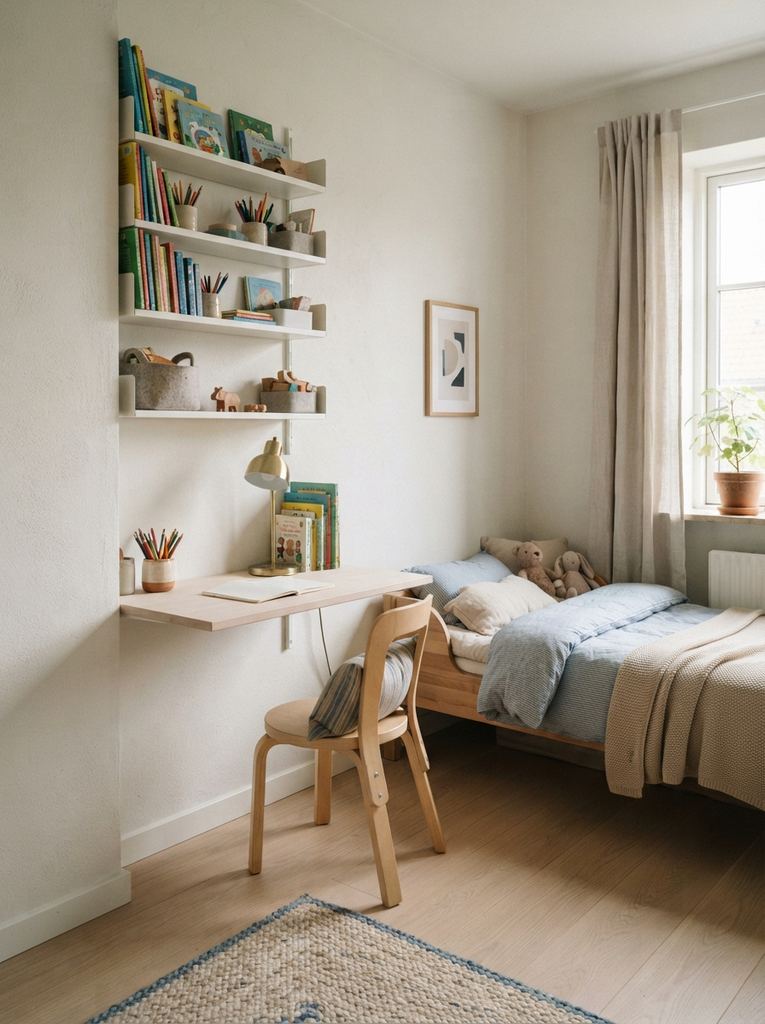
A child does not always need a full-size desk. A narrow wall-mounted desk or compact writing table can provide enough room for homework, drawing, and reading.
I like pairing a small desk with a simple chair and vertical storage above it. This keeps school supplies close without taking up an entire wall.
6. Use a Fold-Down Desk
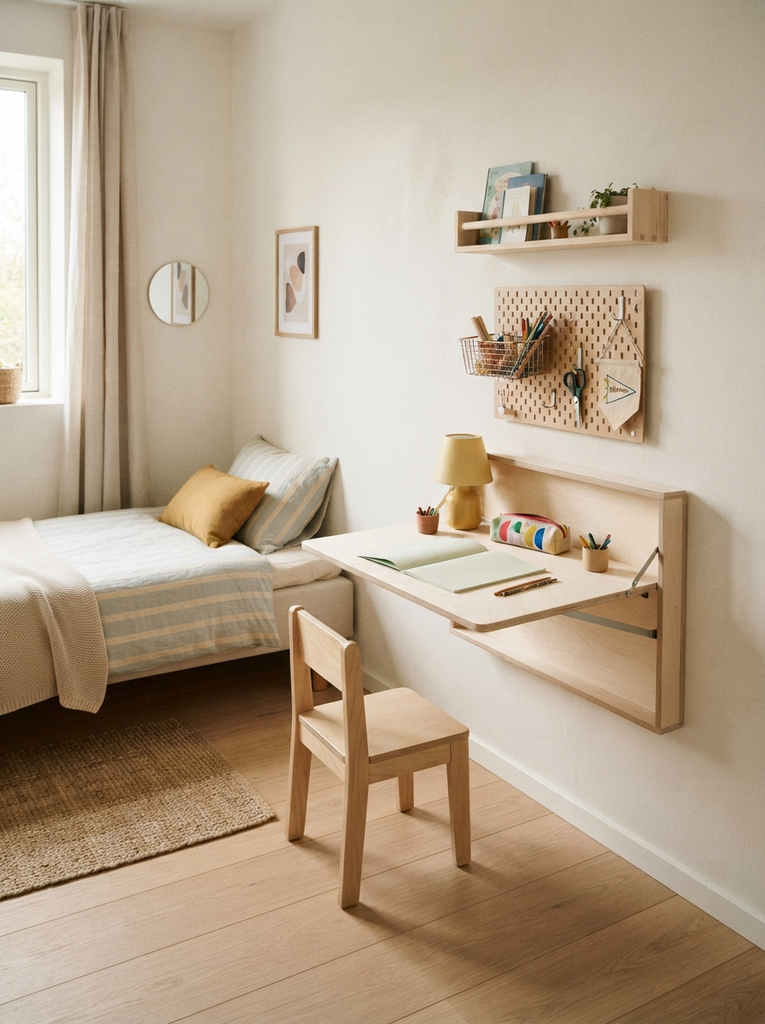
A fold-down desk is especially useful when the bedroom needs to serve several purposes. The desk can be opened for homework and folded against the wall when it is no longer needed.
I would keep the surrounding wall organized with a small shelf, pegboard, or storage pockets. That way, the desk area remains useful without becoming visually cluttered.
7. Make Use of the Corners
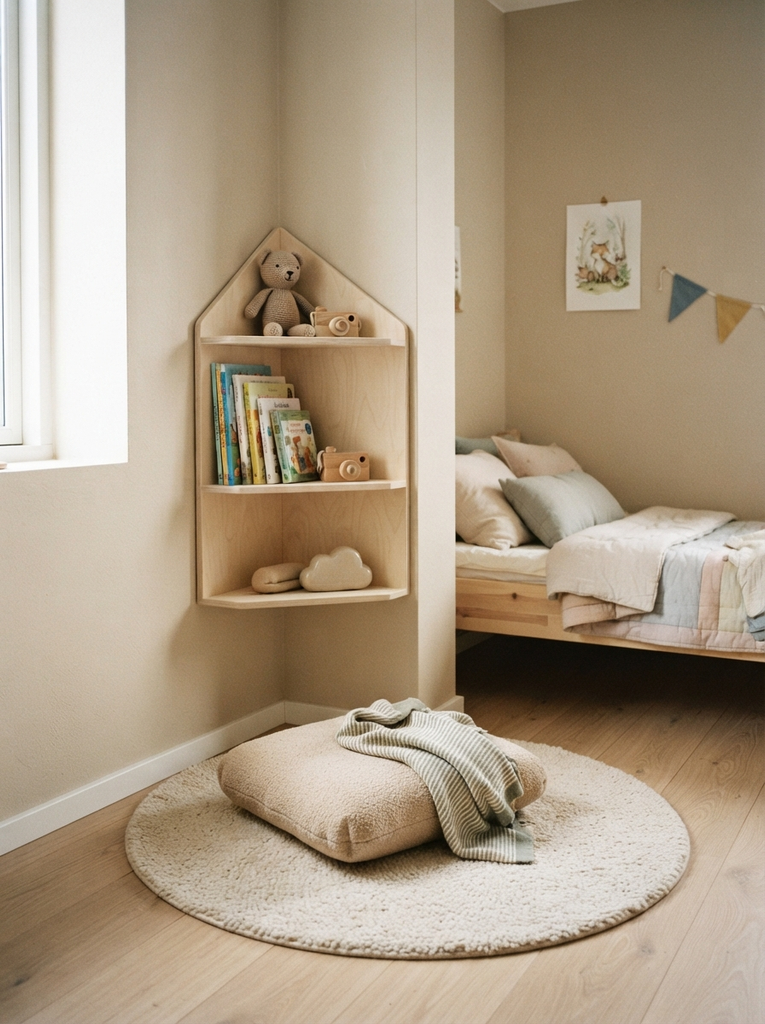
Corners are often wasted in small bedrooms. I use them for narrow bookcases, corner shelves, small storage units, or a cozy reading spot.
Even a small triangular corner shelf can provide useful storage. The key is choosing furniture with a footprint that matches the available space instead of forcing a large piece into the corner.
8. Install Tall Storage
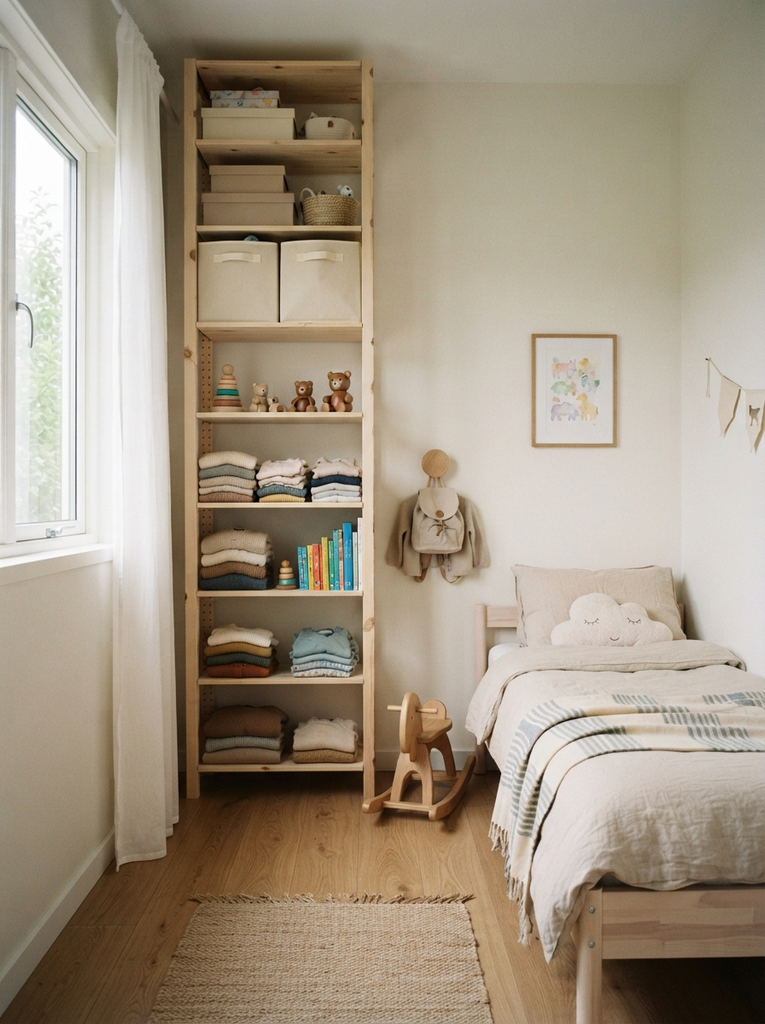
In a tiny bedroom, I prefer tall storage over wide storage when possible. A narrow wardrobe or tall shelving unit can use vertical space while keeping more floor area available.
I place frequently used clothing and toys at child-friendly heights. Less frequently used items can go higher, provided they are stored safely and do not create a falling-object hazard.
Also read: 19 Bathroom Counter Decor Ideas for a Stunning Space
9. Choose Multi-Functional Furniture
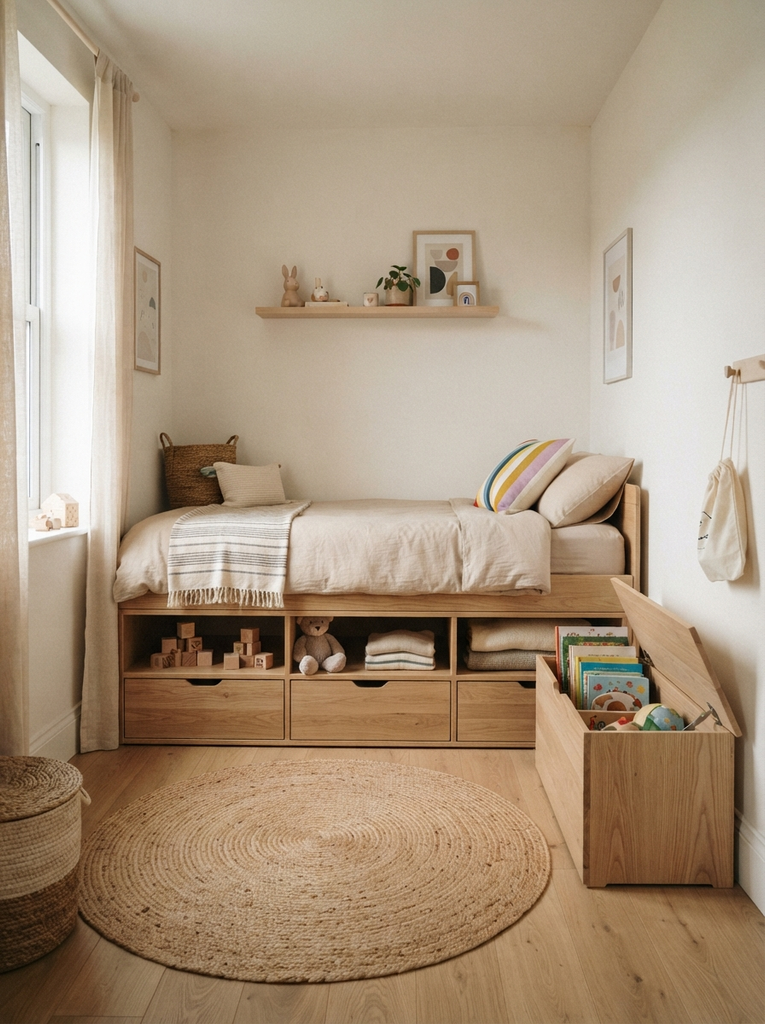
Furniture that performs two jobs can make a major difference in a very small room. A storage bench can provide seating and toy storage, while a bed with built-in drawers can handle both sleeping and organization.
When I shop for small-room furniture, I ask myself whether each item solves more than one problem. If it does not, I consider whether the room really has space for it.
10. Try a Built-In Storage Wall
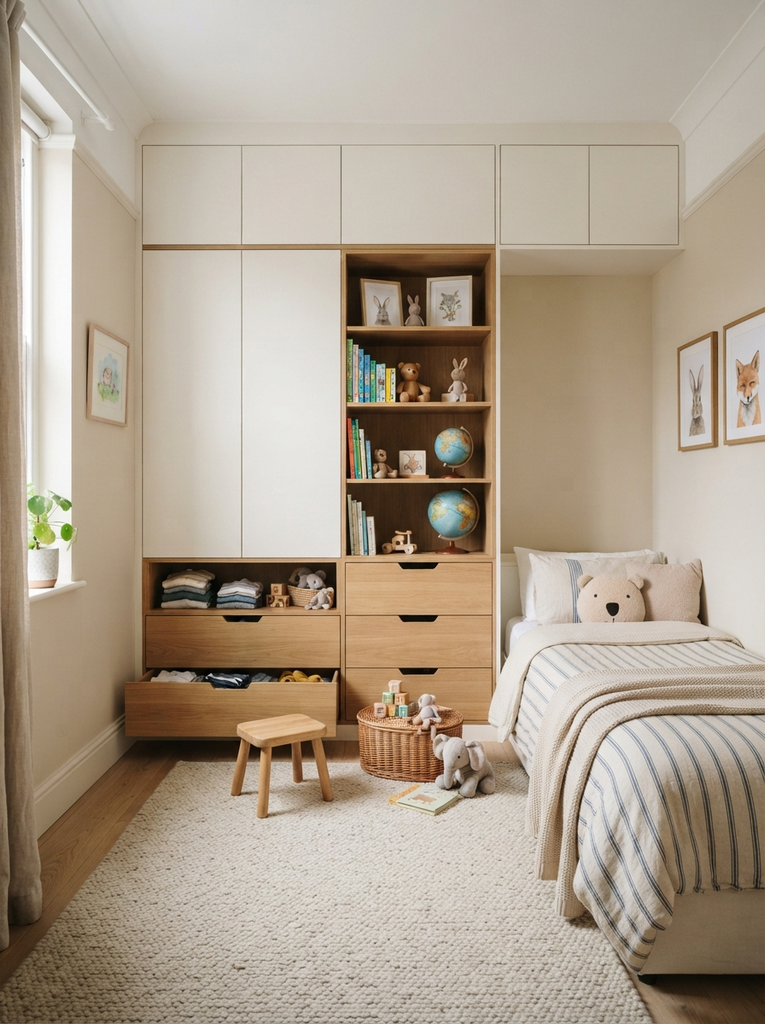
If the room layout allows it, built-in storage can turn an awkward wall into a highly organized zone. Cabinets, shelves, and drawers can be planned around the child’s needs rather than trying to fit several unrelated pieces of furniture together.
I would keep the design simple and include closed storage for items that tend to make the room look messy. Open shelves can then be reserved for books and a few favorite decorations.
11. Use a Pegboard Organizer
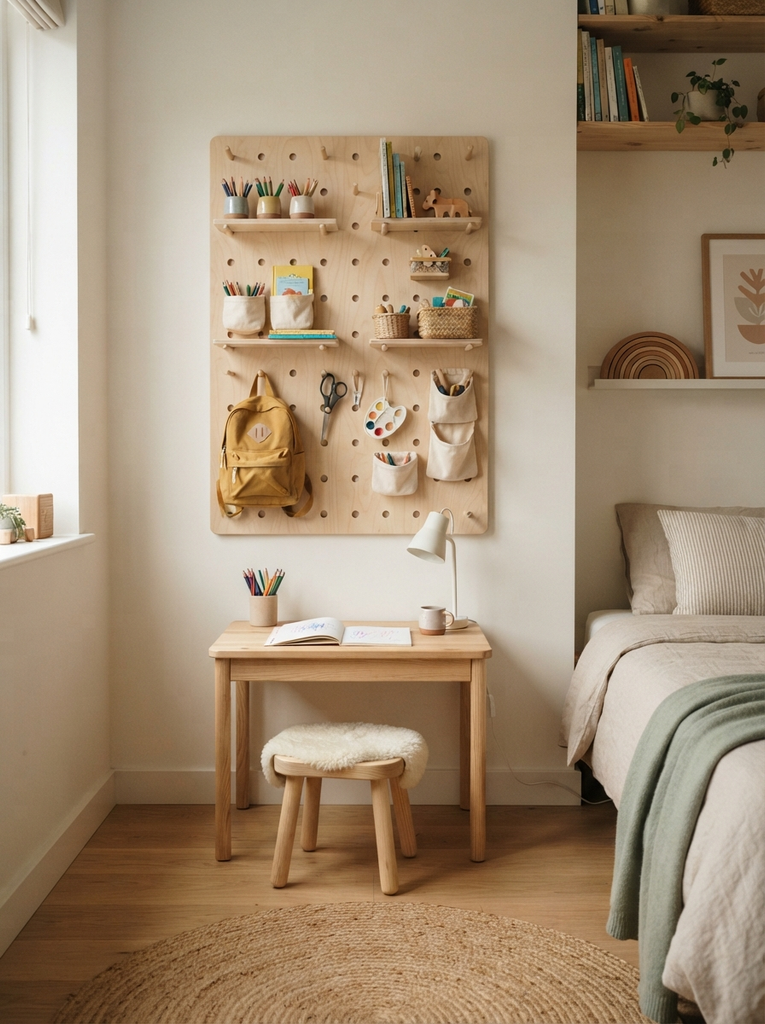
A pegboard takes advantage of vertical space and can be changed as a child’s needs change. I can use hooks for bags, baskets for small supplies, and shelves for lightweight items.
It works particularly well beside a desk or near the entrance. I make sure the board and hardware are securely attached because kids’ storage gets used much more actively than decorative wall storage.
12. Add Storage Behind the Door
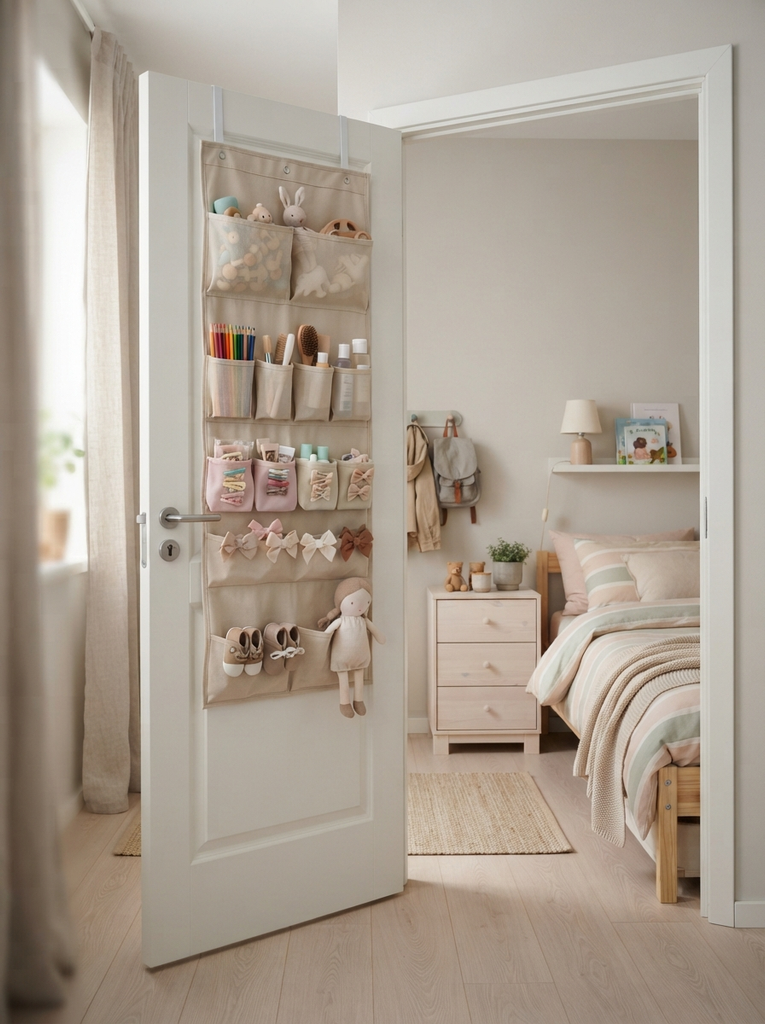
The back of a bedroom door can provide useful storage without taking away floor space. Over-the-door organizers can hold shoes, accessories, small toys, art supplies, or other lightweight belongings.
I like this idea for rooms where every square foot matters. I would first check that the organizer does not interfere with the door closing or place excessive weight on the door.
13. Use a Light Color Scheme
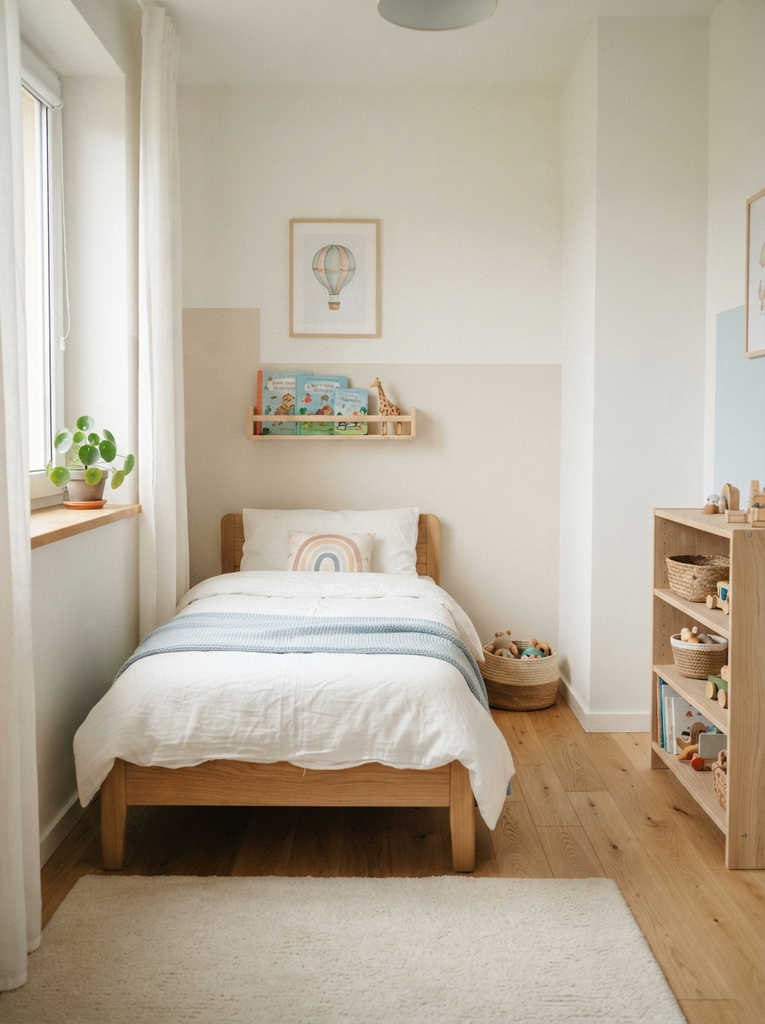
I often use white, soft beige, pale gray, light blue, or other gentle shades in very small bedrooms. Light colors can help the room feel brighter and more open, especially when paired with good natural or artificial lighting.
I don’t think everything has to be plain white. A colorful rug, bedding, artwork, or small accent wall can add personality without filling the entire room with strong patterns.
14. Keep Toys in Baskets
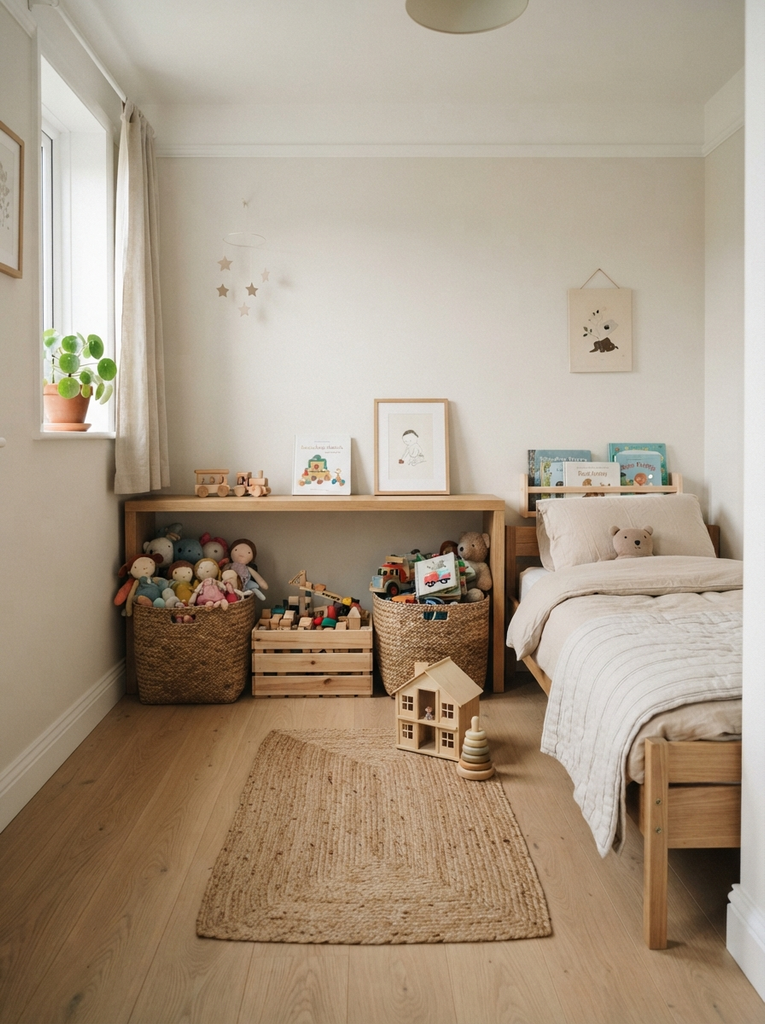
Too many small toys scattered around a tiny bedroom can make the available floor space disappear quickly. I use baskets or bins to create simple categories for toys.
Open baskets work well for toys that are used every day because children can put them away quickly. For small bedrooms, I prefer a few larger storage categories over having dozens of tiny containers.
15. Create a Cozy Reading Nook
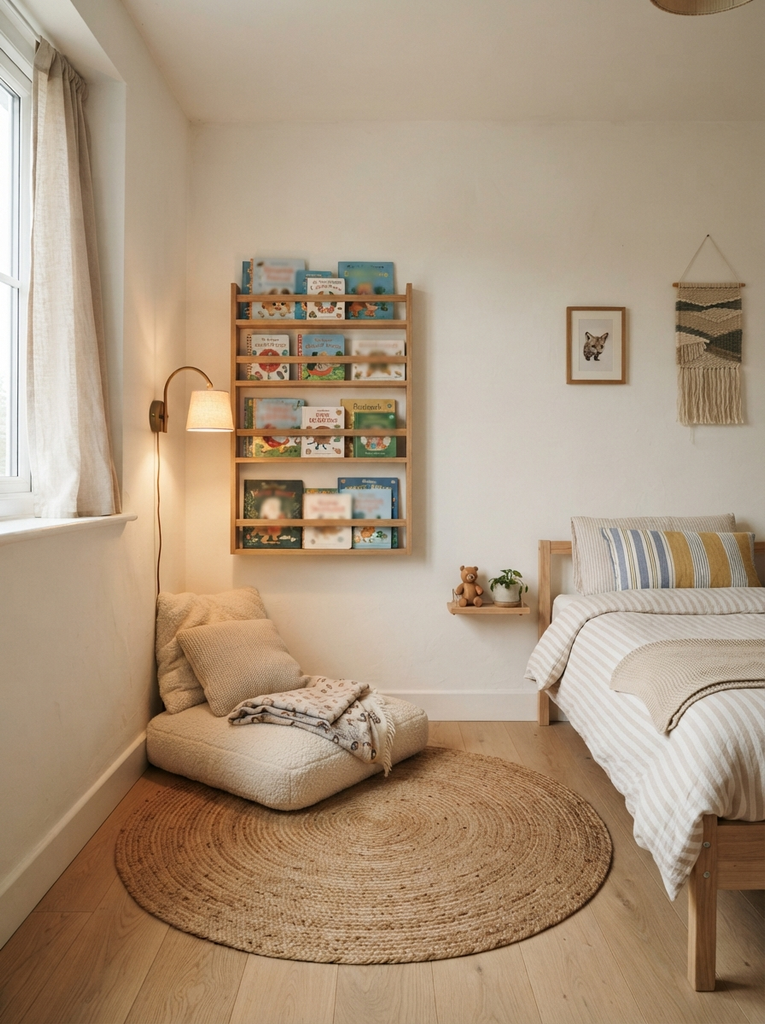
A reading nook does not need a large armchair. I can create one with a floor cushion, small wall-mounted bookshelf, and soft lighting in an unused corner.
I keep the setup simple so the reading area can also serve as a quiet play space. If the room is extremely small, a few picture books displayed on a narrow shelf may be all that is needed.
16. Use Floating Furniture
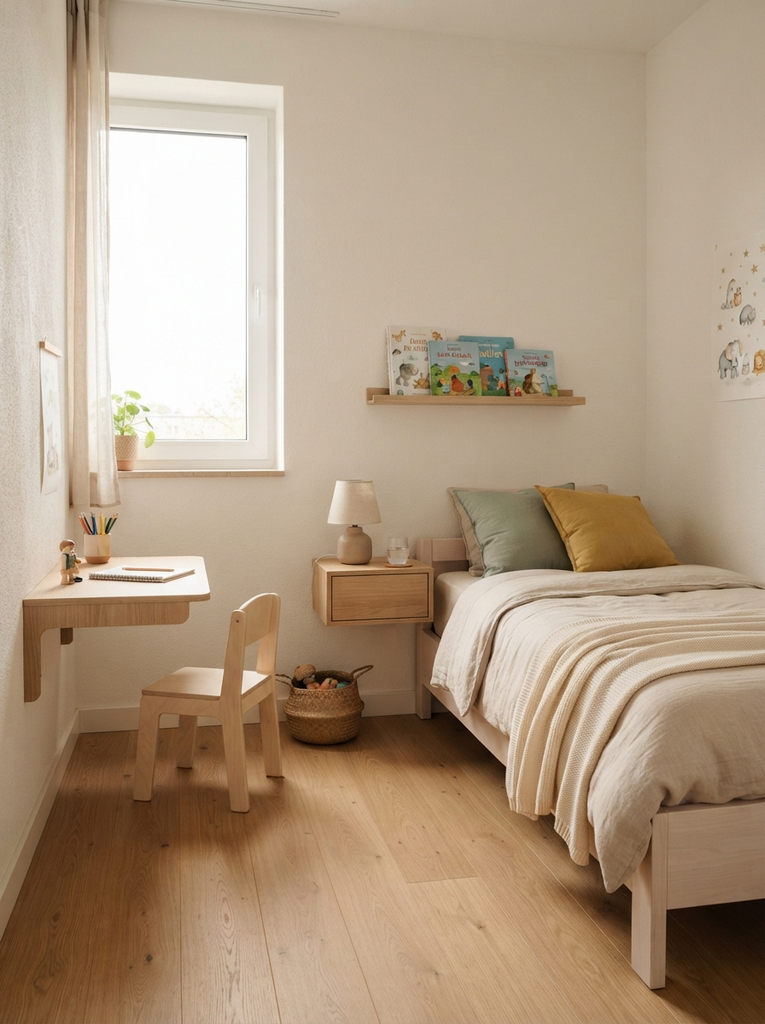
Floating furniture can visually and physically free up floor space. A wall-mounted nightstand, floating shelf, or compact desk can provide useful functions without requiring traditional legs and a large footprint.
I especially like floating pieces beside a bed because they can make cleaning the floor easier. Proper wall anchoring is important, particularly in a child’s room.
17. Rotate Toys and Decor
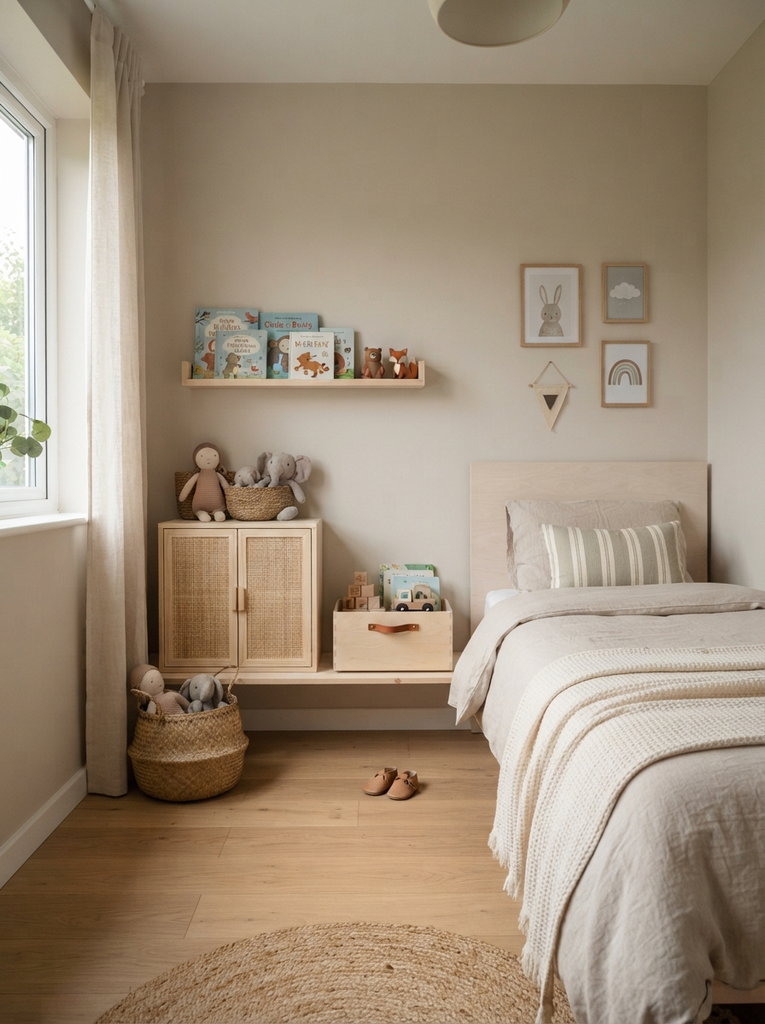
I don’t think a small bedroom needs to display every toy a child owns. Rotating toys can reduce clutter while keeping the room interesting.
I store some toys elsewhere and bring out a smaller selection at a time. The same approach works with seasonal decorations, craft supplies, and books that are not currently being used.
18. Keep the Layout Simple
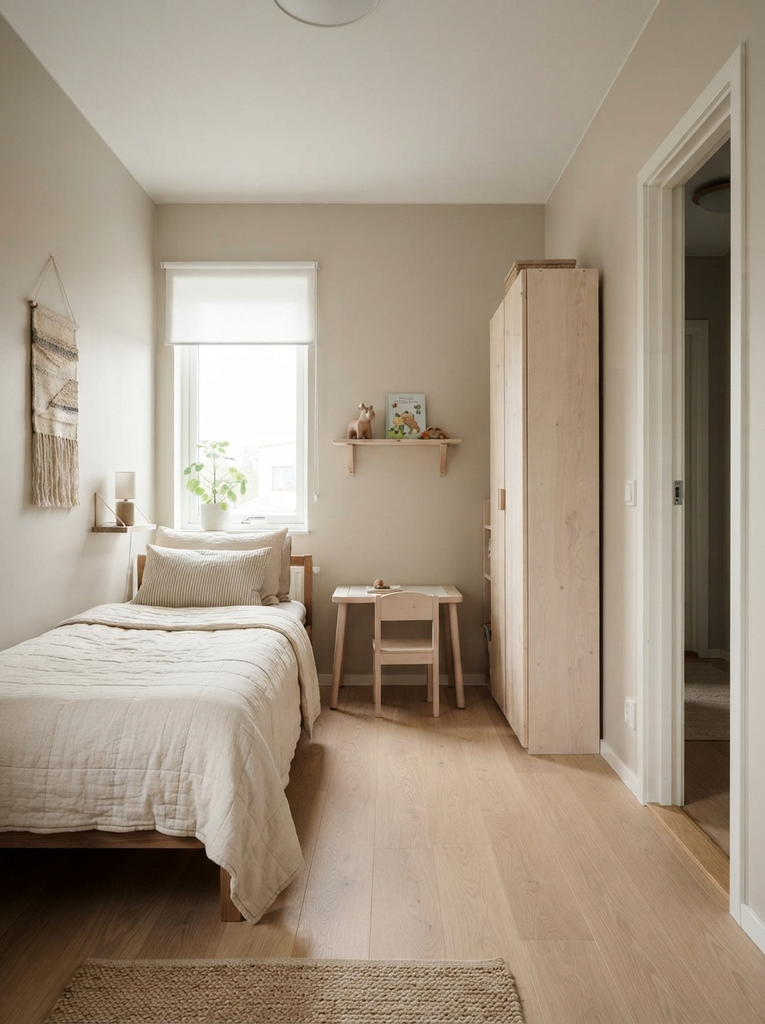
For the smallest bedrooms, I find that simplicity usually works better than trying to fit everything in. I start with the bed, then add essential storage and a study or play area only if there is enough room.
I keep the main walking path clear and avoid blocking windows, doors, heating vents, or other necessary access points. A room with fewer pieces of well-chosen furniture often feels much more usable than one packed with storage.
Pro Tip: I measure the room on paper before rearranging it. Marking the bed, wardrobe, desk, and door swing with their actual dimensions helps me spot cramped areas before moving heavy furniture.
Read this next: 24 Grown Woman Bedroom Ideas for A Matured Elegance
Frequently Asked Questions
1. How can I make a very small kids’ bedroom feel bigger?
I use light colors, compact furniture, vertical storage, and keep the center of the room as open as possible. Mirrors and good lighting can also help the space feel brighter.
2. What is the best bed for a very small kids’ bedroom?
A loft bed or bunk bed can save valuable floor space. For one child, a loft bed can create room underneath for storage, studying, or playing.
3. How do I organize toys in a very small bedroom?
I use baskets, labeled bins, under-bed drawers, and wall storage. Rotating toys also keeps clutter under control without requiring more furniture.
Conclusion
A very small bedroom does not mean a child has to give up comfort, storage, or personality. I focus on using vertical space, choosing furniture with multiple purposes, and keeping the floor as open as possible.
The best layout depends on the child’s age, the room’s measurements, and how the space is used every day. By starting with the essentials and adding storage carefully, I can make even a very small kids’ bedroom feel organized, comfortable, and personal.

One Comment