21 Boot Storage Ideas for 2026
Boots are the bulkiest things in my entryway, and for years mine lived in a sad pile by the door, flopping over and scuffing each other. These boot storage ideas are the systems I actually use in 2026 to keep every pair upright, dry, and easy to grab.
I measured as I went, because storage only works when it truly fits your boots: about 12 inches of clearance for ankle boots, 16 to 20 for tall boots, and roughly 5 inches of width per pair.
Key Takeaways
- I store boots upright — flopped shafts crease, crack, and age leather fast.
- My entryway handles the pairs we wear daily; everything else lives in a closet or cubby.
- A waterproof boot tray, sized 24 to 36 inches, catches most mud and meltwater before it reaches the floor.
- Boot trees and pool-noodle inserts cost almost nothing and keep tall boots standing straight for years.
- I measure my tallest pair first, then buy or build storage with at least 2 inches of clearance above it.
- Off-season boots get cleaned, stuffed, and boxed — never stored damp.
Related article: If your boots land in the mudroom like mine do, my mudroom storage ideas show how I built the bench, hooks, and cubbies around them.
21 Boot Storage Ideas for 2026
1. Mudroom Bench with a Boot Tray Underneath

My everyday system is a sturdy bench with a waterproof boot tray slid underneath it. We sit to pull boots on, kick them off onto the tray, and the mud, slush, and meltwater stay contained instead of spreading across the floorboards.
My 36-inch tray holds three adult pairs. A raised half-inch lip stops puddles best, and the tray lifts out for a rinse in seconds.
Pro Tip: Line the tray with a washable mat in winter — it quiets the clatter and soaks up the first round of slush.
2. Walk-In Closet Boot Shelf
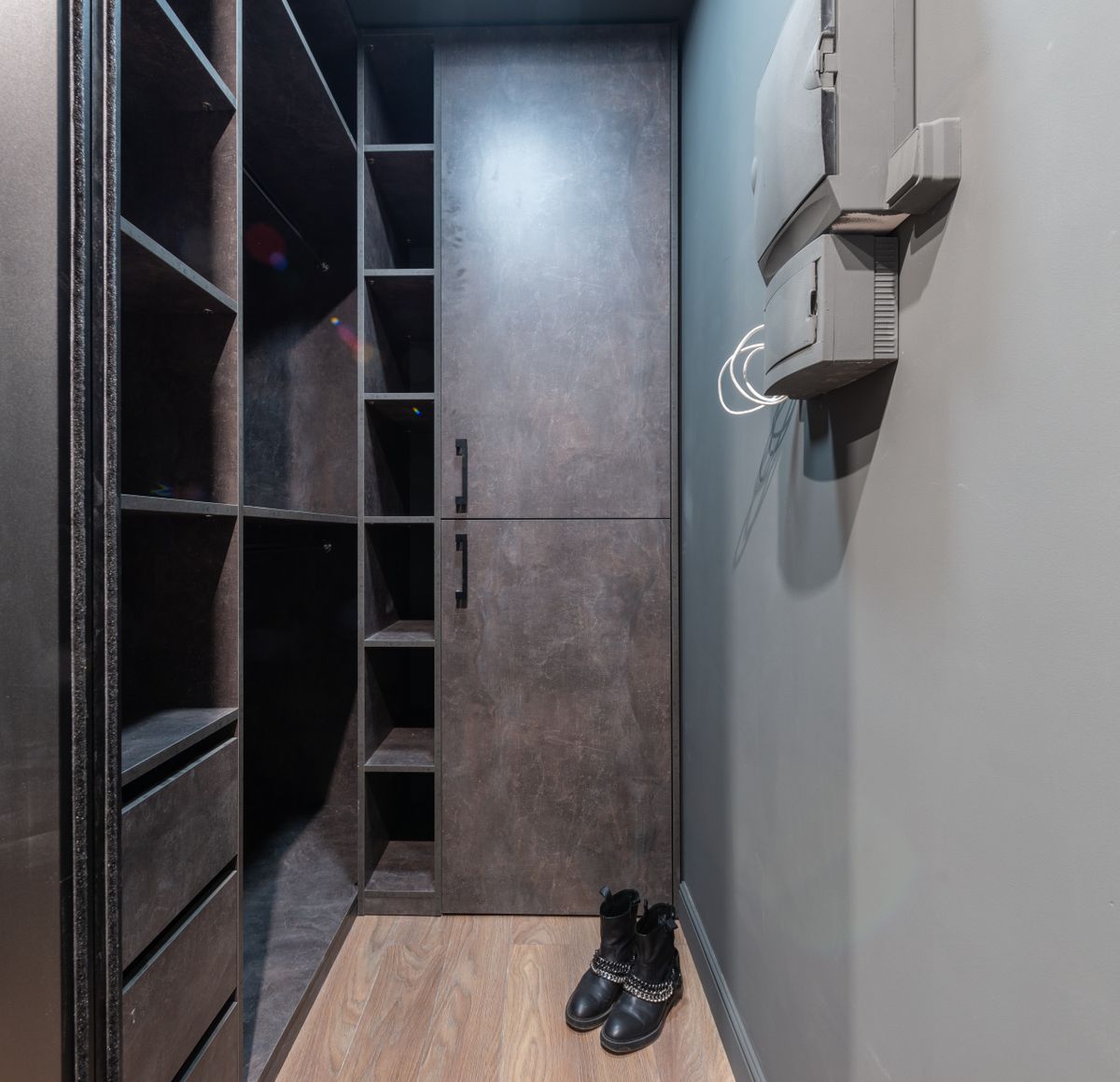
In my walk-in closet, boots get the floor space directly under my shortest hanging clothes, where dresses would otherwise waste it. I line pairs up in a single row, toes out, so I can see every pair at a glance.
With adjustable shelving, one low shelf 16 inches up does the same job and keeps soles off carpet. I keep five pairs here — the current rotation only.
Pro Tip: Angle a small mirror or light strip at floor level; dark closet floors hide black boots surprisingly well.
3. Cowboy Boot and Hat Closet Nook
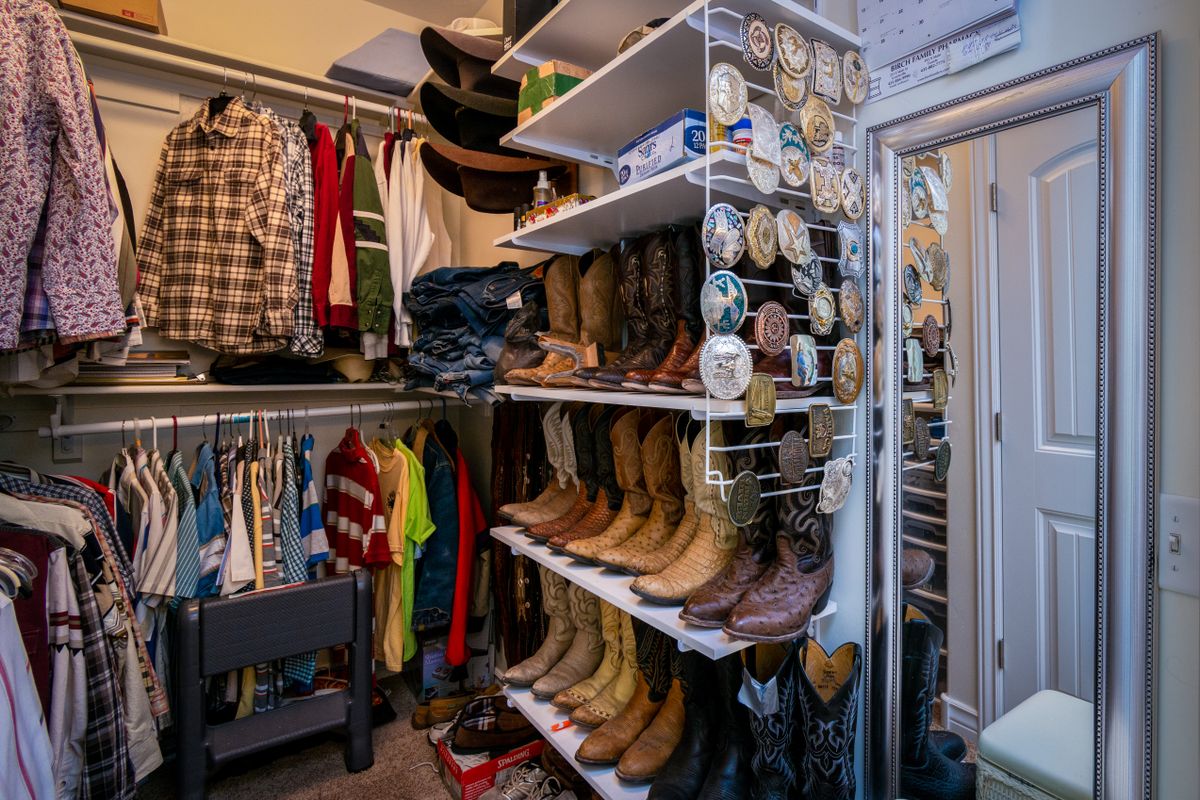
Cowboy boots have wide shafts and decorative stitching I actually want to see, so mine live in a dedicated closet nook with the hats stored right above them. Grouping a full outfit’s pieces together makes getting dressed noticeably faster.
The shelf is 14 inches deep, suiting the longer cowboy boot foot. Cedar blocks in each shaft absorb moisture and odors.
Pro Tip: Never stack cowboy boots sole-to-leather; the heel of one pair will dent the shaft of the pair below.
4. Rain Boots on a Rustic Wall Shelf
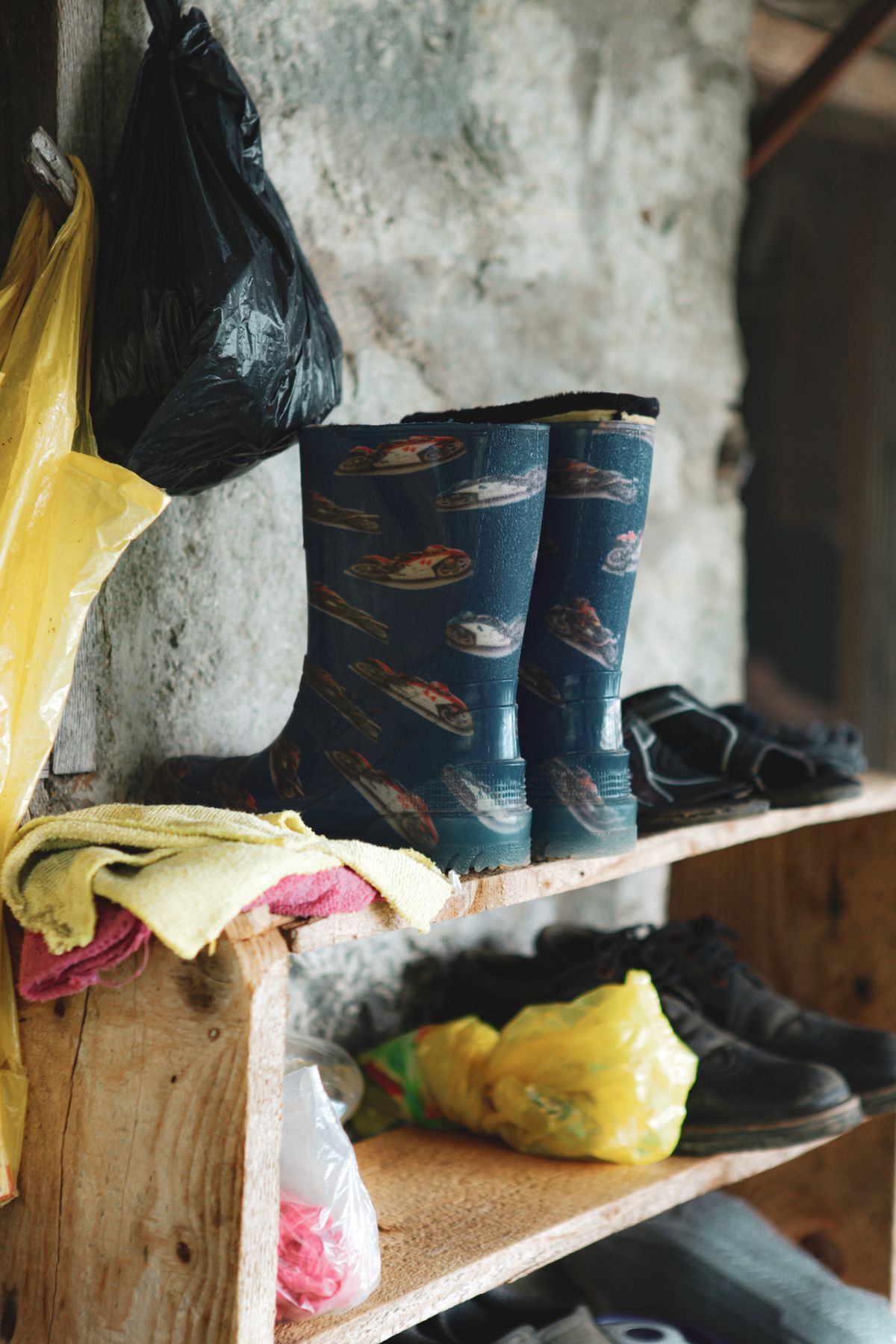
Rain boots are tall, stiff, and usually damp, so I moved ours onto a chunky wooden wall shelf by the back door where air can circulate around them. Off the floor, they dry faster and stop tripping everyone.
My shelf sits 18 inches up, with hooks underneath for umbrellas. Rain boots hold their shape, so they are the one pair I store out in the open as decor.
Pro Tip: Tip each boot upside down over a peg for ten minutes after a soaking — trapped water is what makes linings smell.
5. Weathered Wood Boot Rack

A simple slatted wooden rack is still my best budget answer for a porch or utility room. The slats let air under wet soles, the open design fits ankle boots and wellies alike, and it costs less than one pair of boots.
Mine has three tiers, 8 inches apart — ankle boots on every level, tall boots on top. Six pairs in a footprint smaller than a doormat.
Pro Tip: Once a year I sand and oil the wood; fifteen minutes of maintenance keeps a cheap rack going for a decade.
6. Family Locker Cubbies

When my nieces visit, boot chaos multiplies, so our mudroom lockers are my crowd-proof system. Each person gets one locker: boots at the bottom, coat and bag above. The rubber boots even store on top when the tall lockers fill up.
A 12-inch-wide locker fits one adult pair standing upright. I painted the interiors charcoal, which hides scuffs between cleanings.
Pro Tip: Add a name label at eye level, not on the boot section — people follow labels they can see without bending.
7. Numbered Cubbies for Kids’ Boots
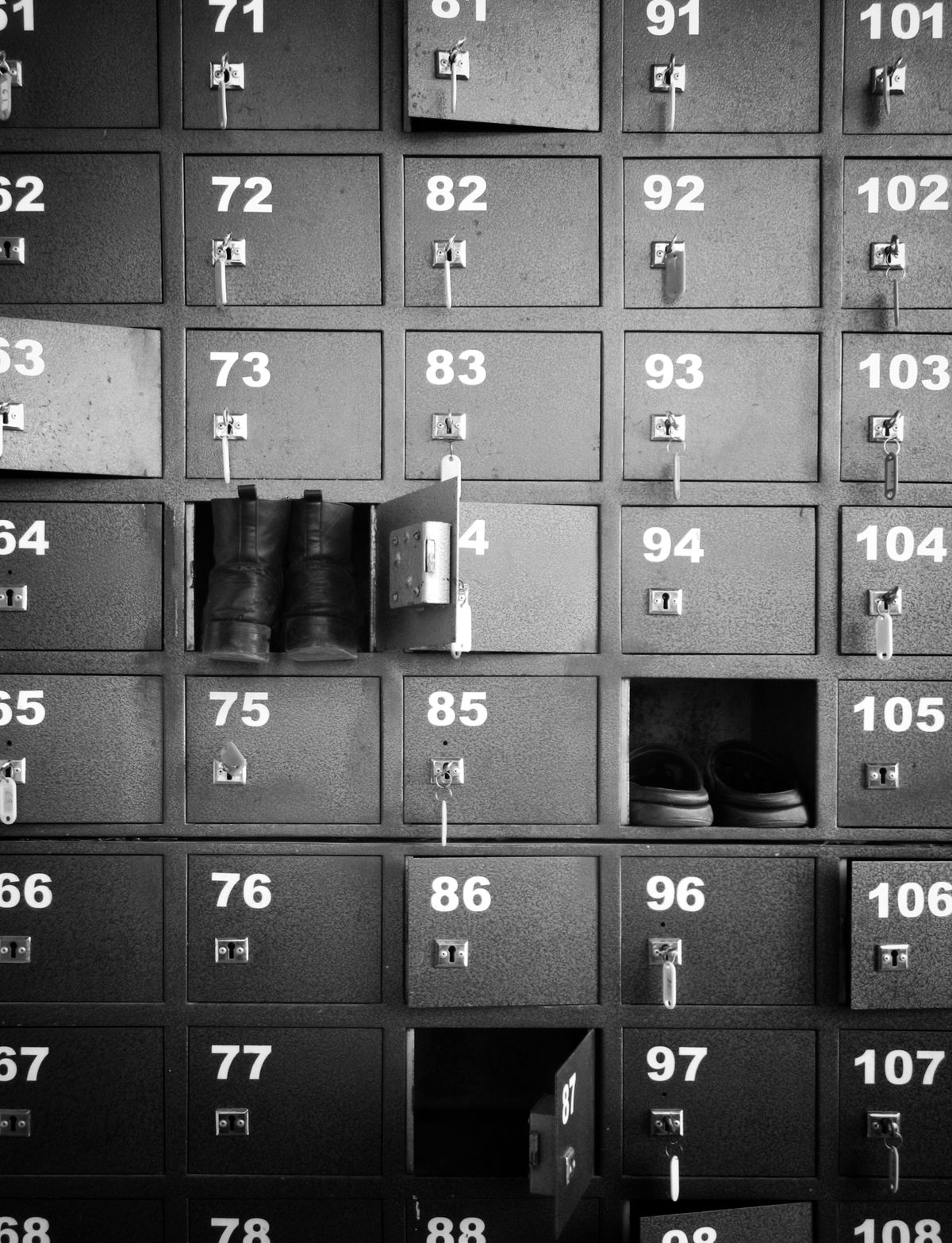
Numbered cubbies turned our hallway into a self-serve boot station for kids. Each child knows their number, and — most of the time — their boots, shoes, and school bag land in the right box without a single reminder from me.
Kid cubbies work at 10 inches wide and 12 tall for wellies up to about age ten. A small towel in each one wipes drips before they become puddles.
Pro Tip: Let each child decorate their number plate; ownership is the real organizing system here.
8. Hallway Bench with Wicker Baskets
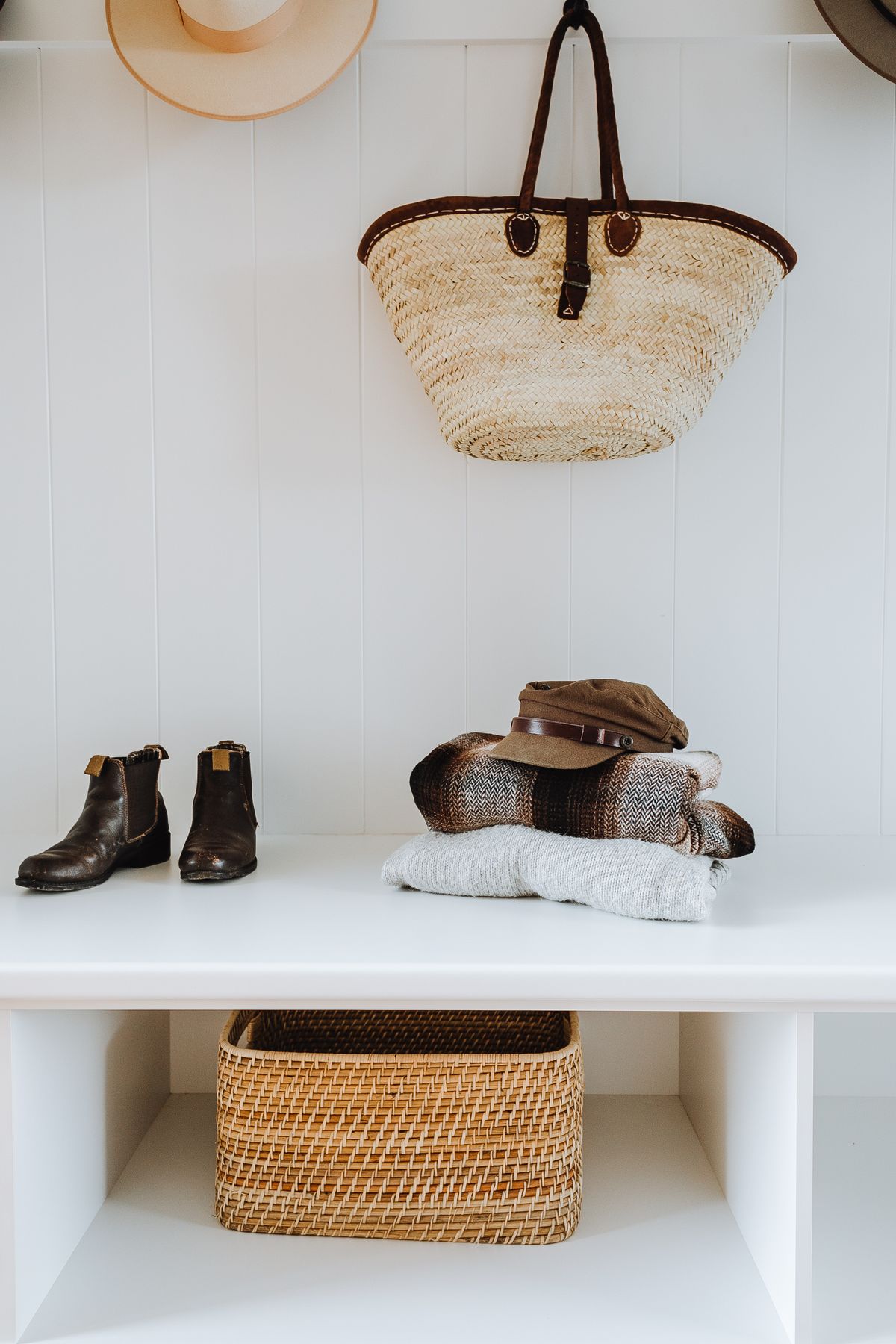
For a prettier entryway, I use a white bench with big wicker baskets tucked beneath it — one basket per person, holding their boots and scarves together. It hides the visual clutter while keeping everything within arm’s reach of the door.
Each basket is roughly 15 by 12 inches — one pair of boots laid heel-to-toe. Throws and hats on top soften a very practical storage wall.
Pro Tip: Felt pads under basket bottoms stop them scratching wood floors when kids drag them out.
9. Open Shelf Boot Display
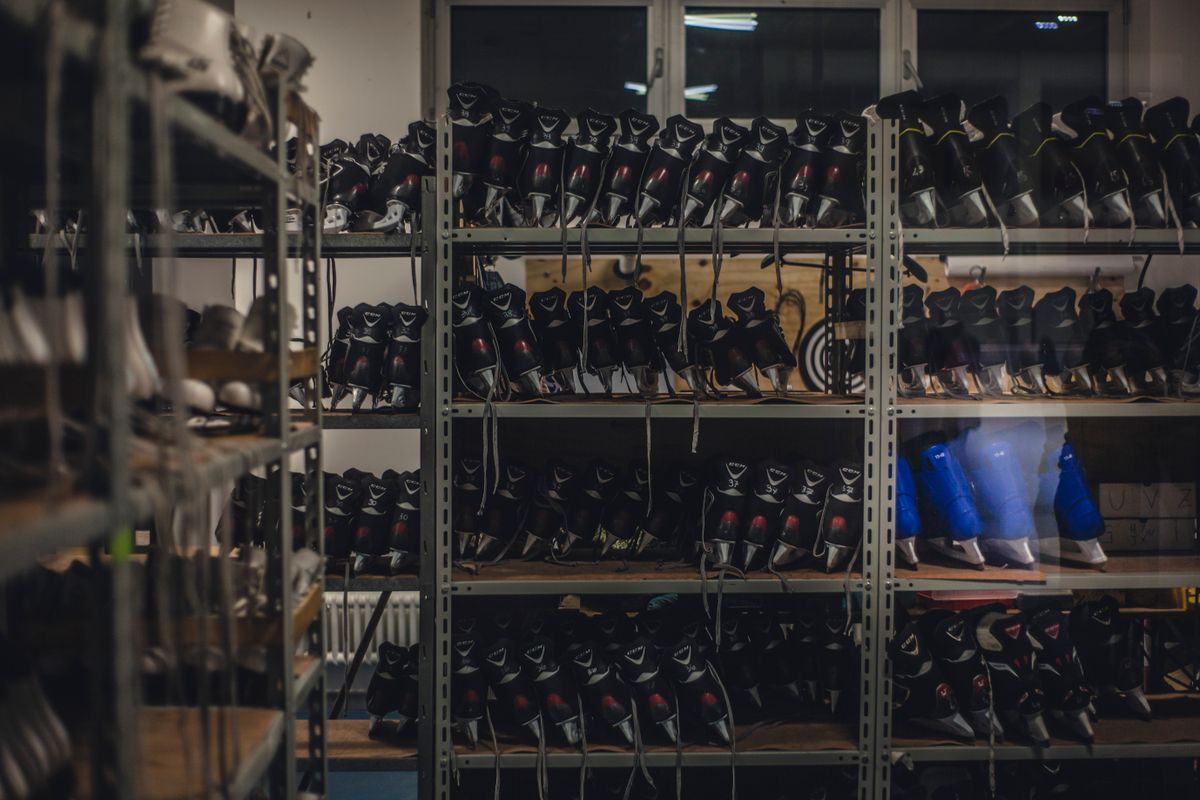
If your boots are beautiful, store them like a shop display. Open shelving with every pair visible in one row is the system I use for my leather collection in the spare-room closet — no digging, no forgotten pairs at the back.
Shelves 12 inches deep, spaced 18 apart, show tall boots without crowding. A finger’s width between pairs keeps air moving and leather from sticking.
Pro Tip: Dust open-shelf boots monthly with a dry cloth; displayed storage only stays pretty if it stays clean.
10. Vintage Shelves for a Leather Boot Collection
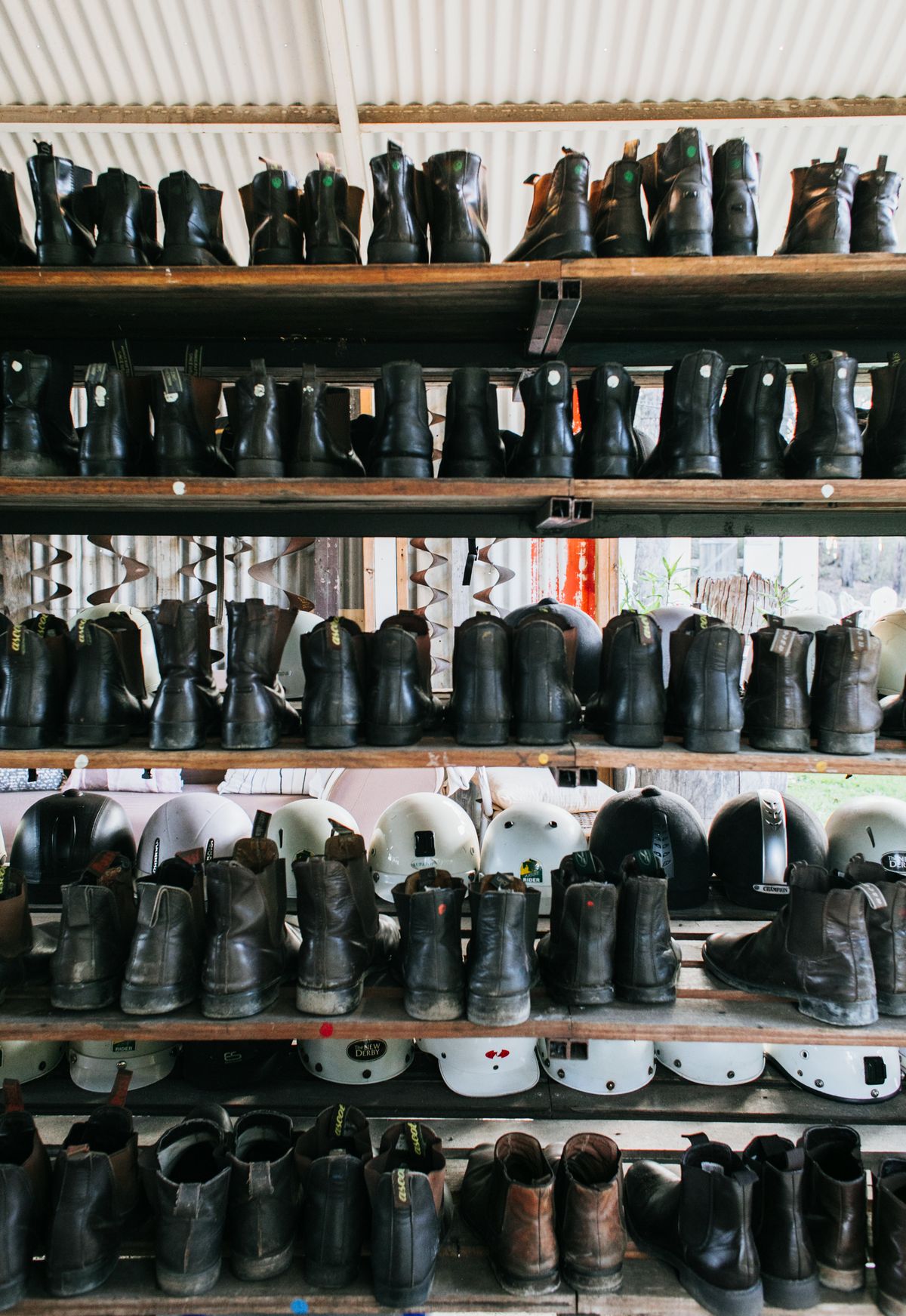
My oldest leather boots live on vintage wooden shelves in the guest room, grouped by color. Older leather needs breathing room more than any other kind, and open shelves deliver it while turning the collection into part of the room.
I condition these pairs twice a year and rotate the front row. Toe-out shelf storage develops far fewer creases than a bin ever will.
Pro Tip: Slip a cedar shoe tree into stored leather boots; it holds the foot shape while the shaft insert holds the top.
11. Warm Shoe Rack by the Door
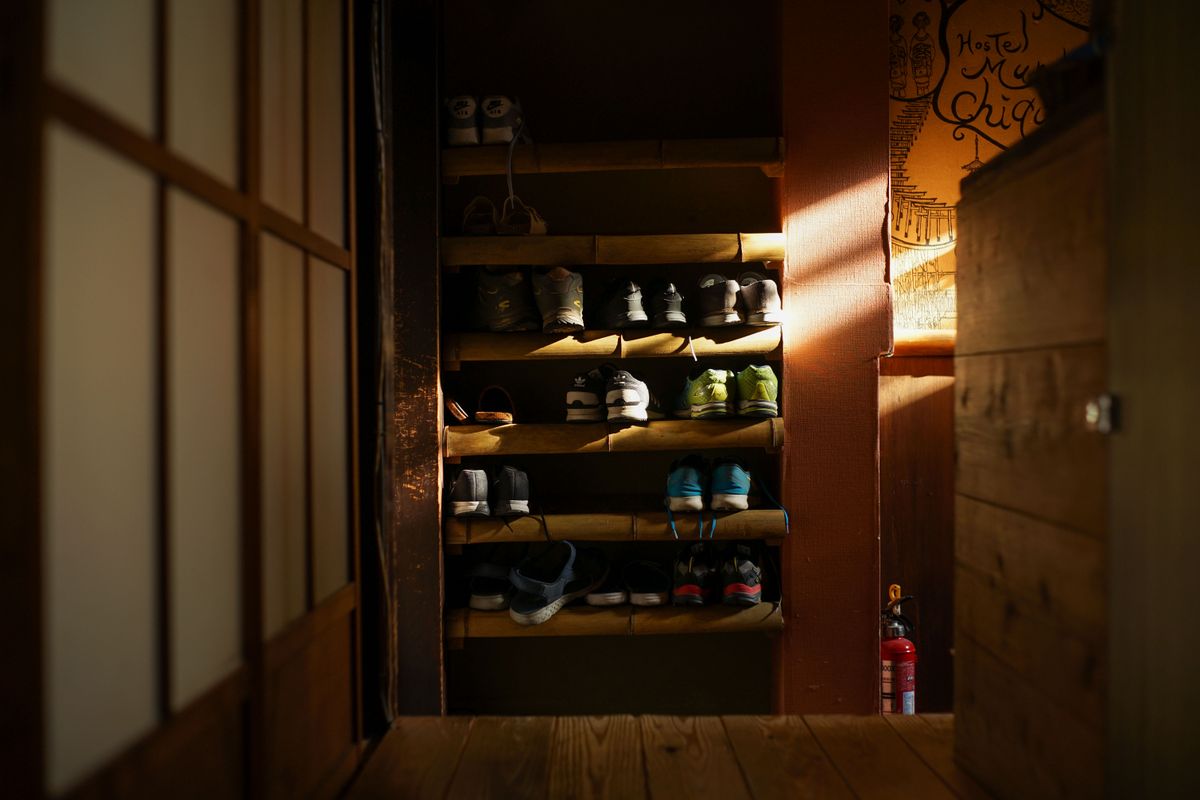
A compact wooden shoe rack right inside the front door is my overflow station for the boots guests and family actually wear this week. Warm wood tones keep it from looking like utility furniture in the hallway.
This 31-inch, four-tier rack holds about eight pairs with ankle boots low. Anything that does not fit goes back to the closet — the limit is the system.
Pro Tip: Keep one empty slot on purpose; a completely full rack is where the floor pile starts again.
Read this next: That little hallway rack freed up more space than I expected — my under-stair storage ideas tackle the other dead zone in my house the same way.
12. Boot Trees and Shapers
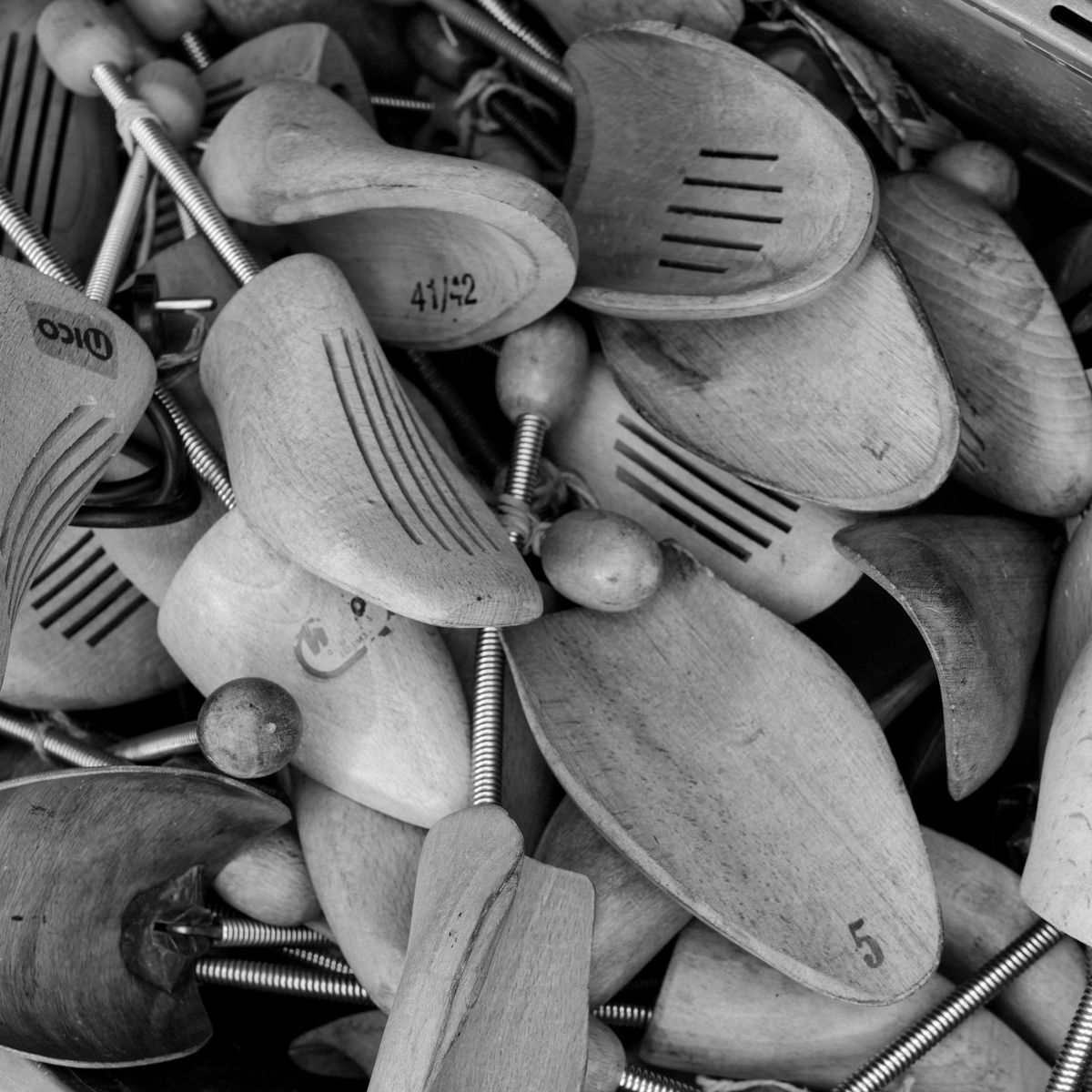
The cheapest boot storage upgrade I own is a pile of wooden boot trees and shaft shapers. A boot that stands straight takes up half the visual space of a flopped one, and the leather genuinely lasts longer without the crease at the ankle.
Without trees, I roll a magazine or slide in a cut pool noodle — pennies, and it works on every shaft height. Every tall pair gets an insert.
Pro Tip: Buy trees a half-size snug rather than loose; a sloppy tree slides out and teaches the boot to lean again.
13. Closet Corner with Shoe Storage and Coat Rack
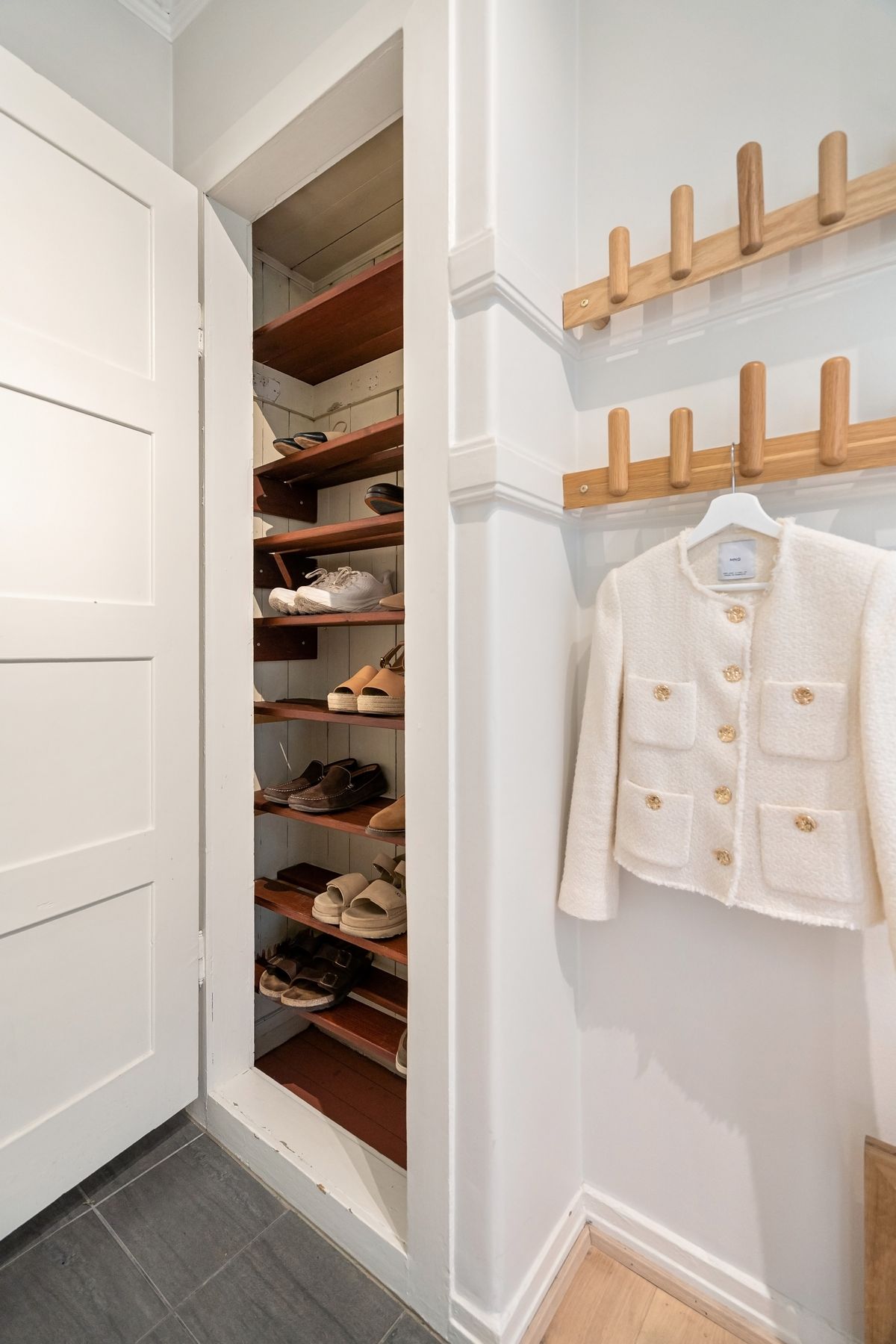
The corner where coats hang above shoes is prime boot real estate most closets waste. I fitted mine with low shoe storage under a coat rack, so full winter outfits — coat, boots, scarf — come together in one square yard.
Boots sit at floor level, shoes above, coats at 60 inches — an order that matches how you dress and undress.
Pro Tip: One hook per coat only. Double-hooked coats are what push boots out of their corner by December.
14. Wooden Wall Organizer with Hooks
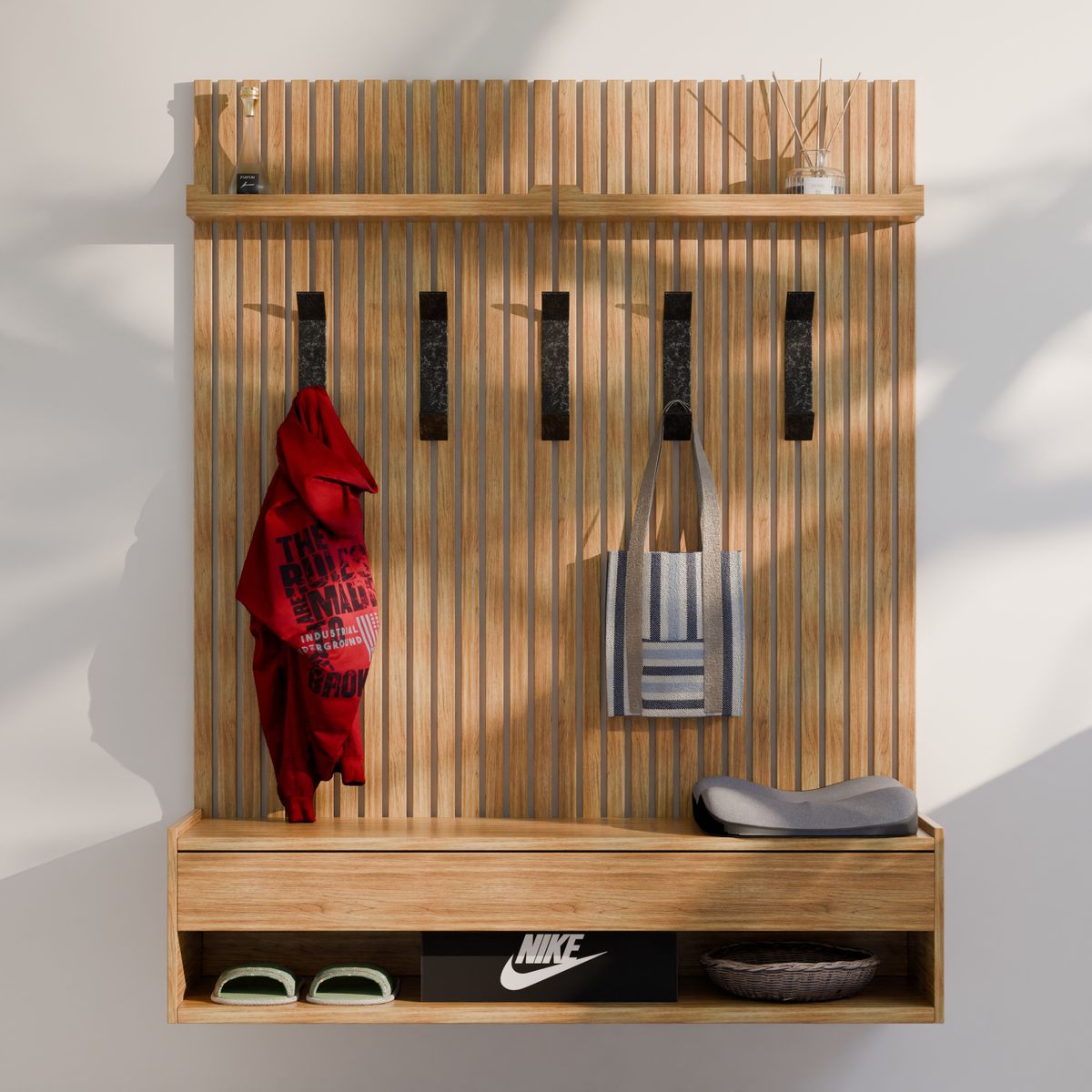
In a narrow hall with no floor to spare, my wall organizer carries the load: hooks for bags and hats at the top, and the wall space beneath stays clear so boots line up in a single file row below.
The unit is 40 inches wide, mounted 48 inches up. Single-file storage sounds strict, but in a 36-inch hall it is the difference between walking through and sidling.
Pro Tip: Use wall anchors rated for double the loaded weight — wet winter boots are heavier than you think.
15. Labeled Boxes on the Top Shelf
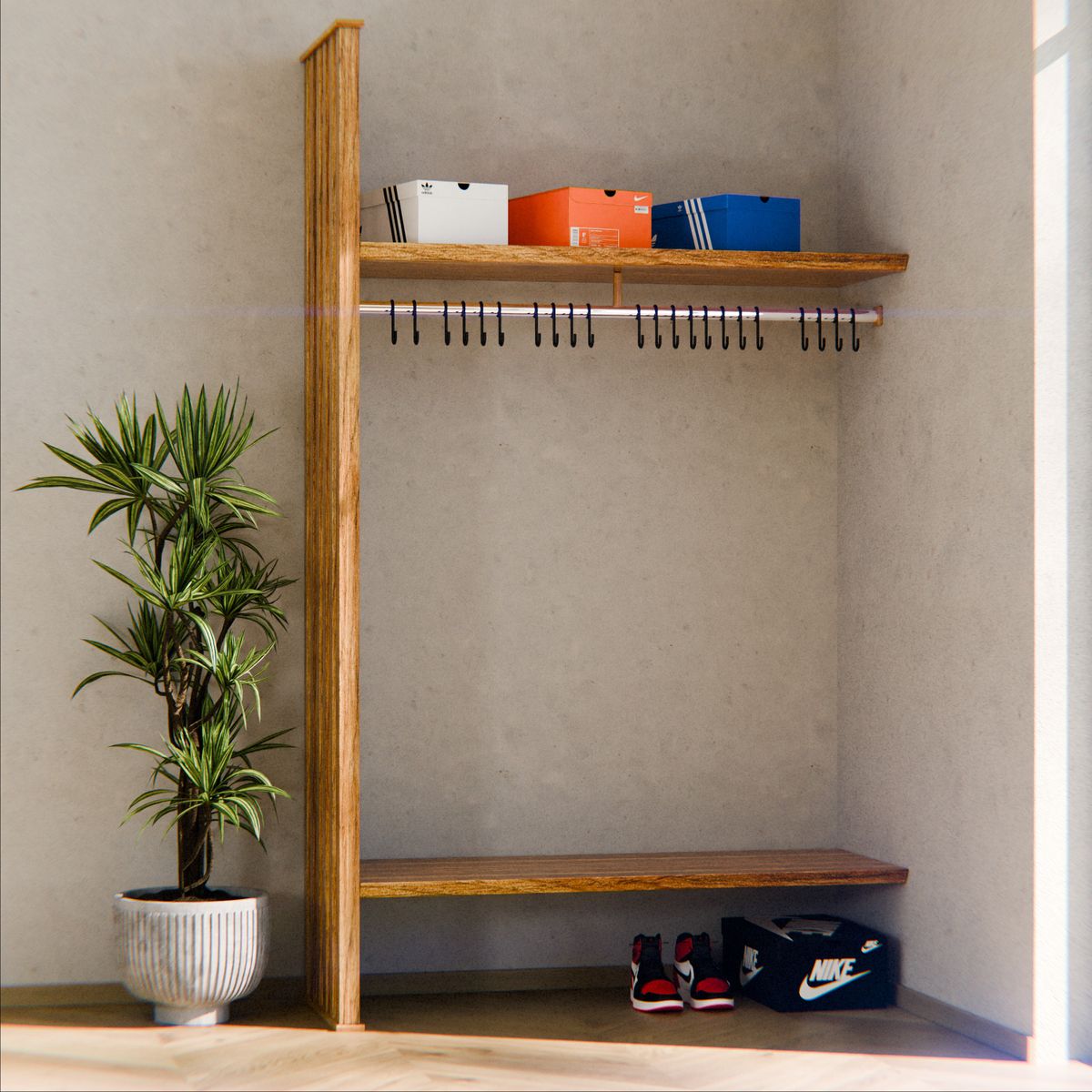
Off-season boots go up high in my closet in labeled boxes on the top shelf. I clean them, stuff the shafts, close the lid, and label the short end with the boot name and size — future me has never once regretted the labels.
Boot boxes run about 22 inches long for tall pairs — check before buying a matching set. I tape a photo of each pair to the box end.
Pro Tip: Store the box lid underneath while you fill it; a lid you have to hunt for is a lid that never goes back on.
16. Colorful Cubby Cabinet for Kids
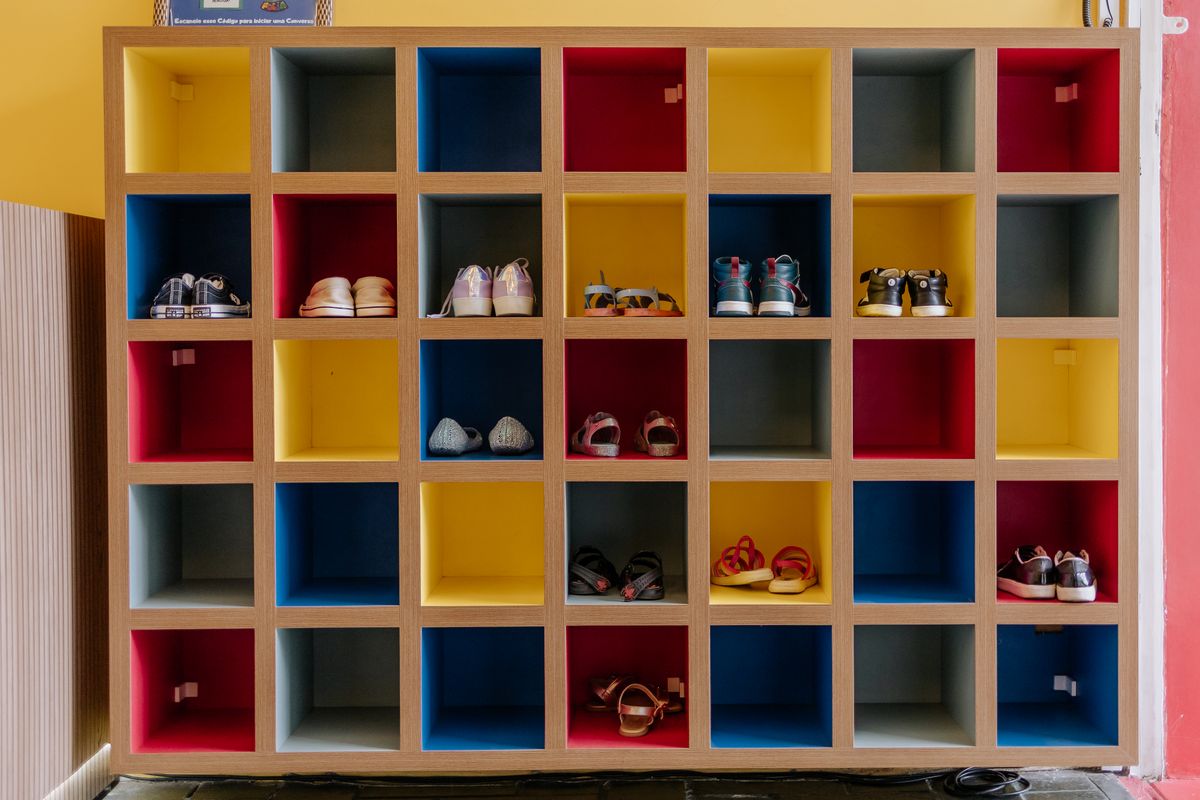
A bright cubby cabinet solved the kids’ boot scramble at my sister’s house, so I copied it for visiting grandchildren. Each colored box is one child’s, boots and all, and the rainbow front makes tidying feel like a game instead of a chore.
The 10-inch cubes suit children’s wellies and snow boots, not adult tall boots — exactly the point. Adults keep out, kids keep order.
Pro Tip: Put the youngest child’s cubbies on the bottom row; reaching up is where ‘I’ll do it later’ piles begin.
17. White Built-In Entryway Shelving
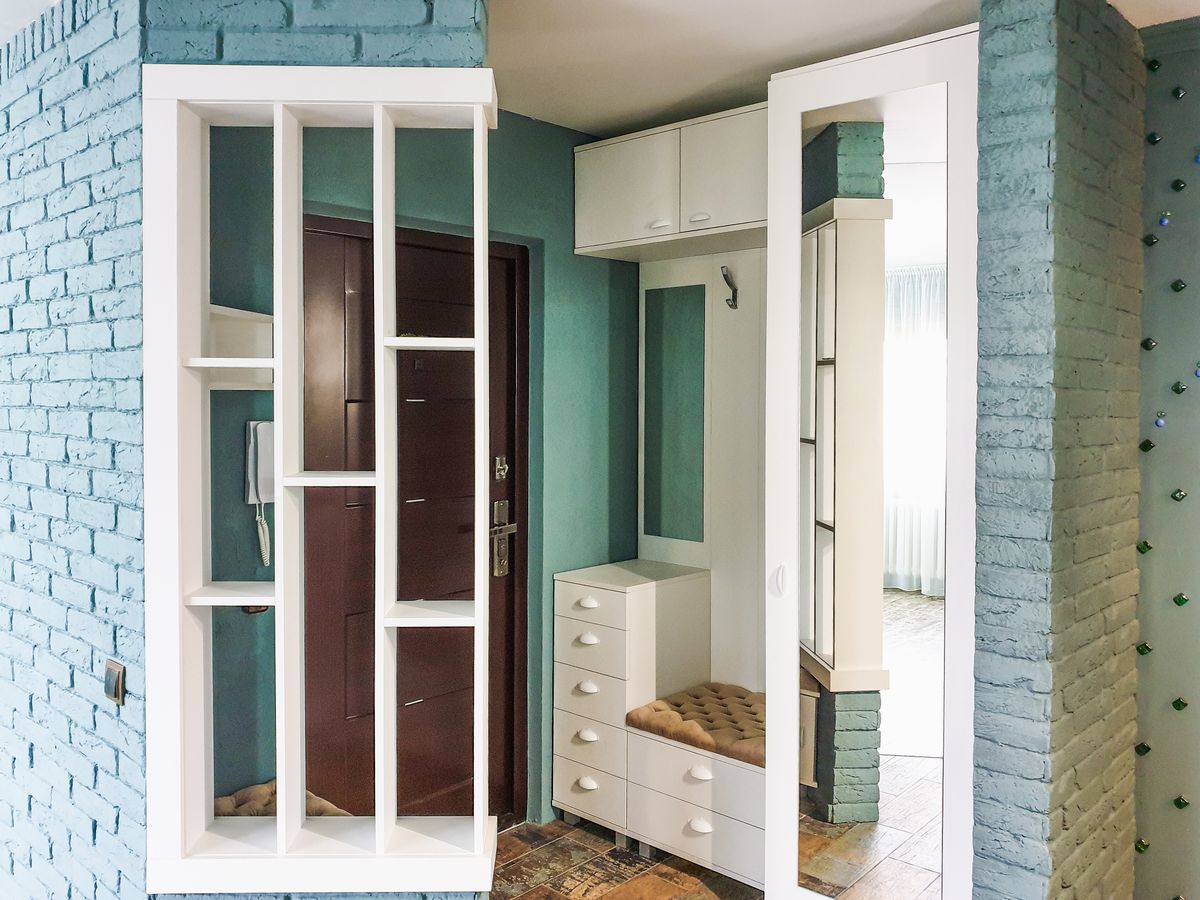
Built-in white shelving transformed our brick entryway from a dumping ground into a boot wall. Floor-to-ceiling shelves mean tall boots get the tall bottom section, shoes stack above, and baskets hide gloves and scarves at eye level.
My bottom shelf is built 20 inches high for boots — standard 12-inch shelving is the mistake everyone makes once. Measure your tallest boot, add two inches, build to that.
Pro Tip: Semi-gloss paint on entryway shelves wipes clean in seconds; matte paint holds onto mud ghosts forever.
18. Modern Bench and Shelf Combo

My current favorite ready-made setup pairs a cushioned bench with a slim shelving tower: boots under the bench, daily shoes on the tower, and a top shelf for the handbag. It reads as furniture, not storage, which matters in an open-plan entry.
The combo is under 48 inches wide and fully freestanding — the built-in look for renters, and it moves with you.
Pro Tip: Choose a bench cushion in outdoor fabric; it shrugs off wet coat drips that would stain indoor upholstery.
19. Minimalist Hallway Boot Nook
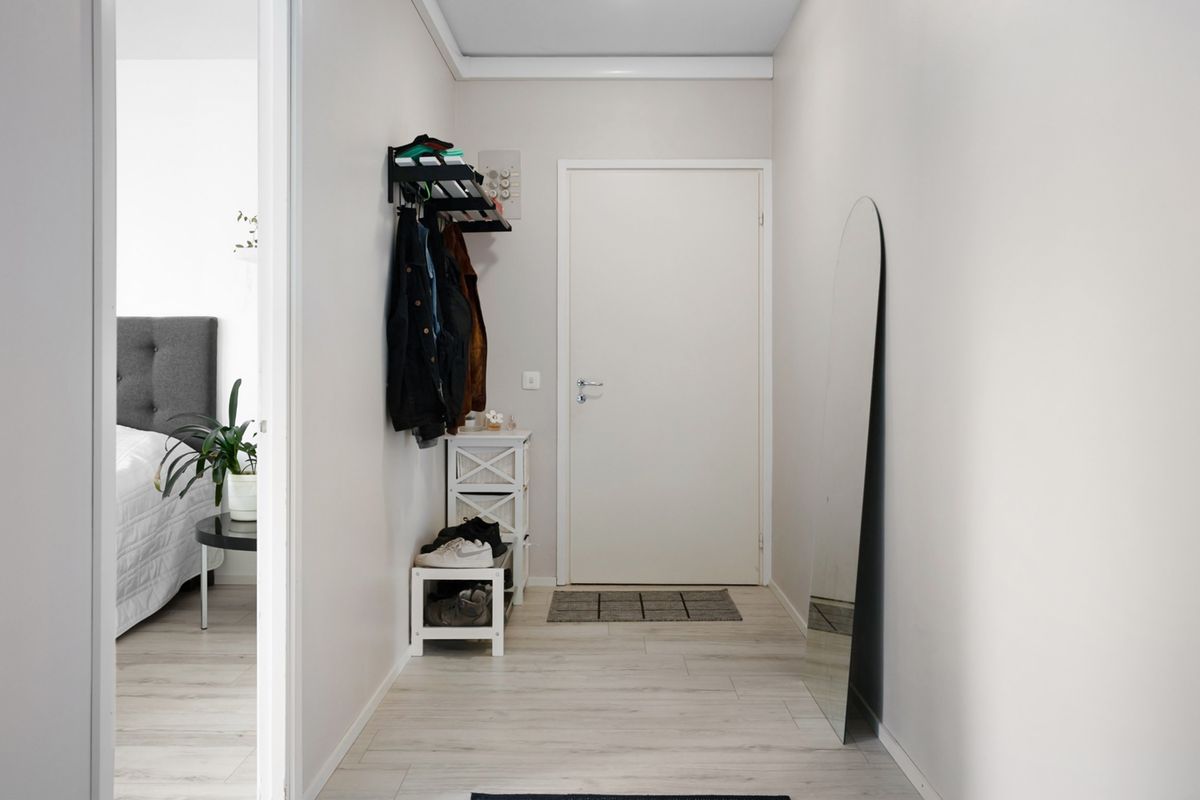
Not every home needs a system — my friend’s minimalist hall proves a single tidy nook works. Two pairs of boots, one tray, one hook each. When the rule is ‘only what fits the nook,’ the hallway stays calm by design.
Her nook is a 24-inch slice of hall. It works because the limit is physical: when a third pair arrives, an old pair leaves.
Pro Tip: A nook this visible demands matching boots out front; keep the scruffy work pair as the closet pair.
20. Garage Corner for Work Boots
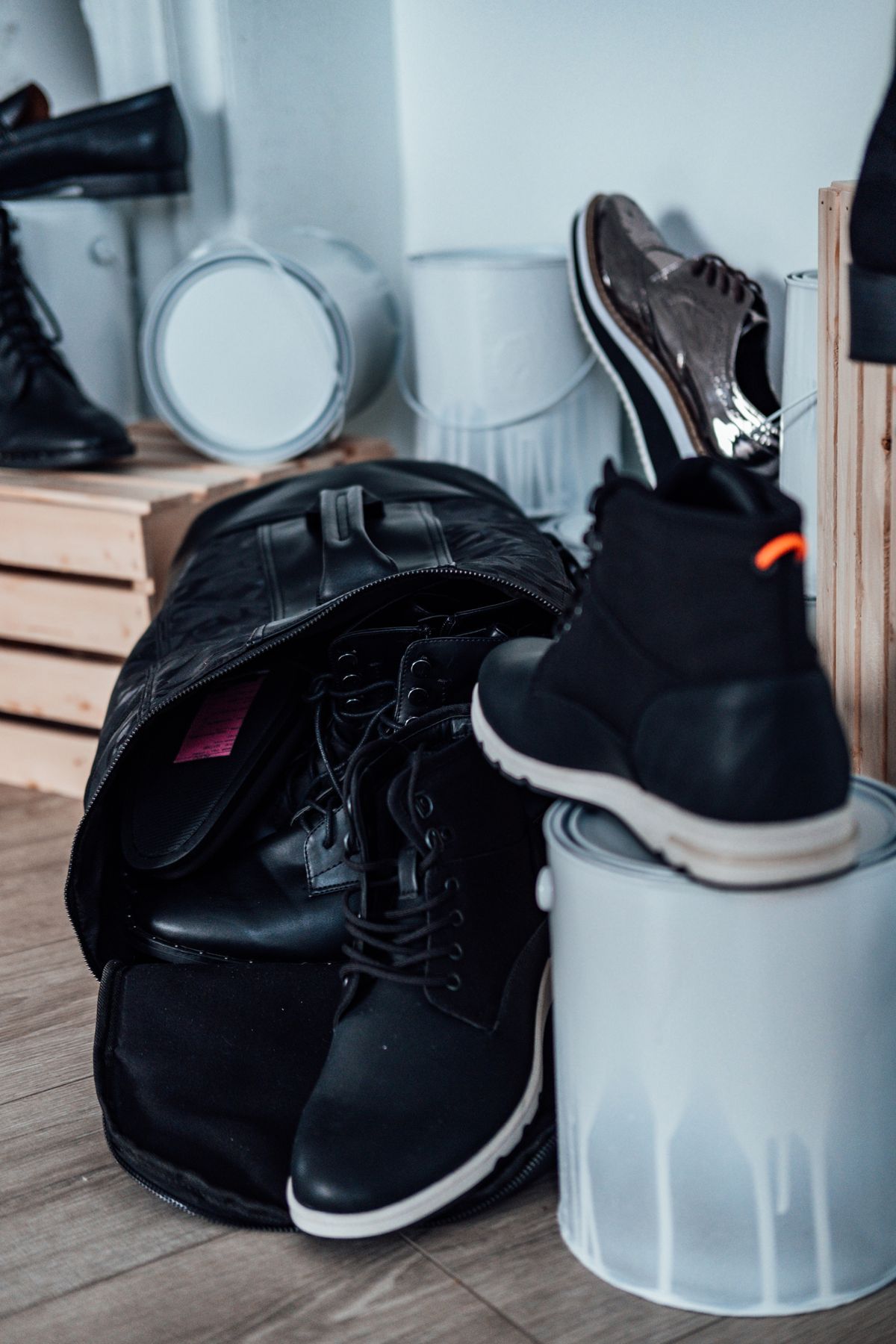
Work boots never cross my threshold anymore. They live in a garage corner on a raised rubber mat beside the tool bags, where concrete dust and job-site mud belong. A small fan on a timer dries them between shifts.
The 24-by-36 mat holds two pairs, its raised edge containing mud flakes until Saturday’s shake-out. Cold garages are fine for work boots; damp ones are not.
Pro Tip: Sprinkle baking soda inside work boots weekly — a garage corner can develop a personality you do not want.
21. Rain Boot Drying Corner
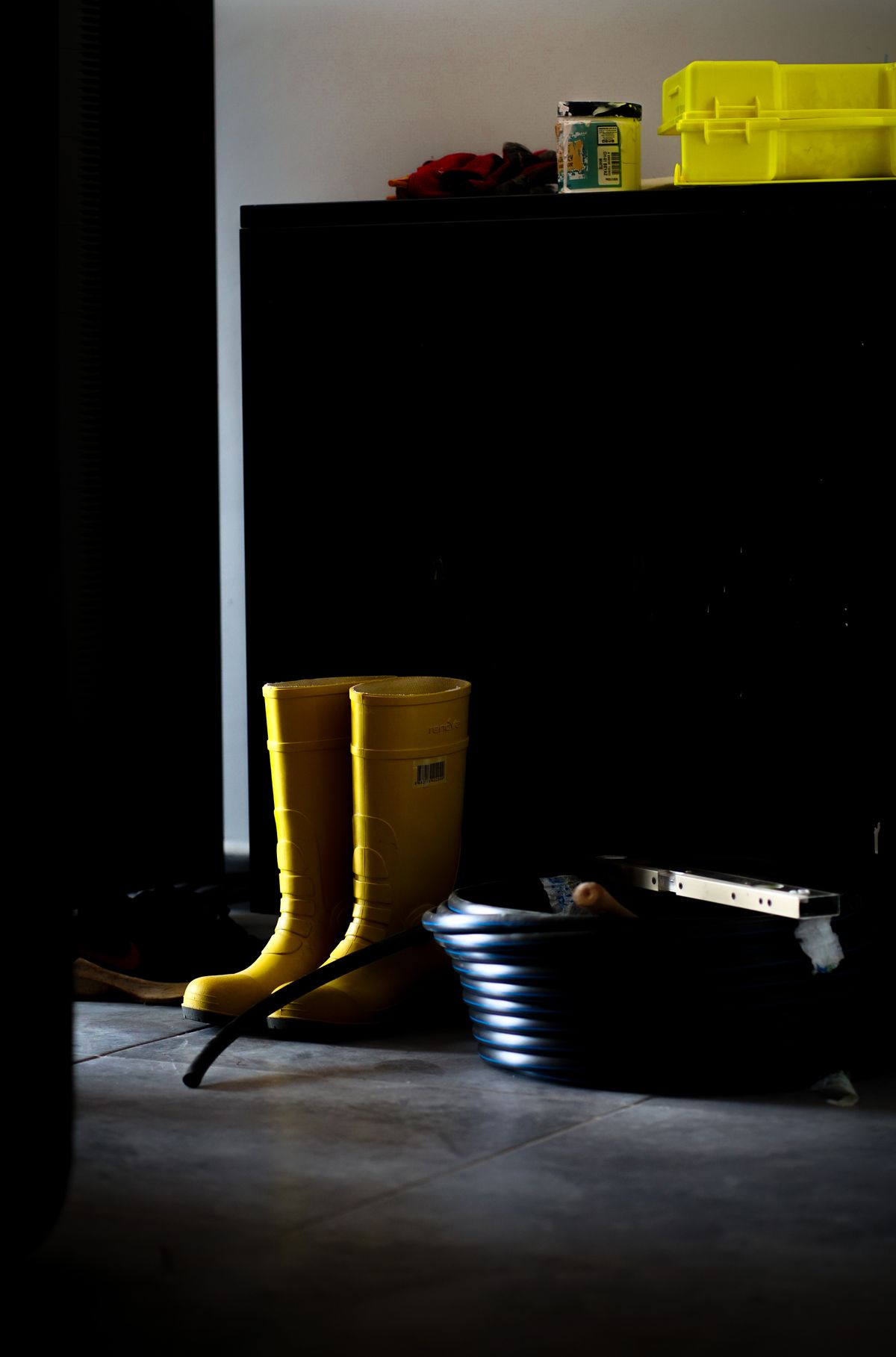
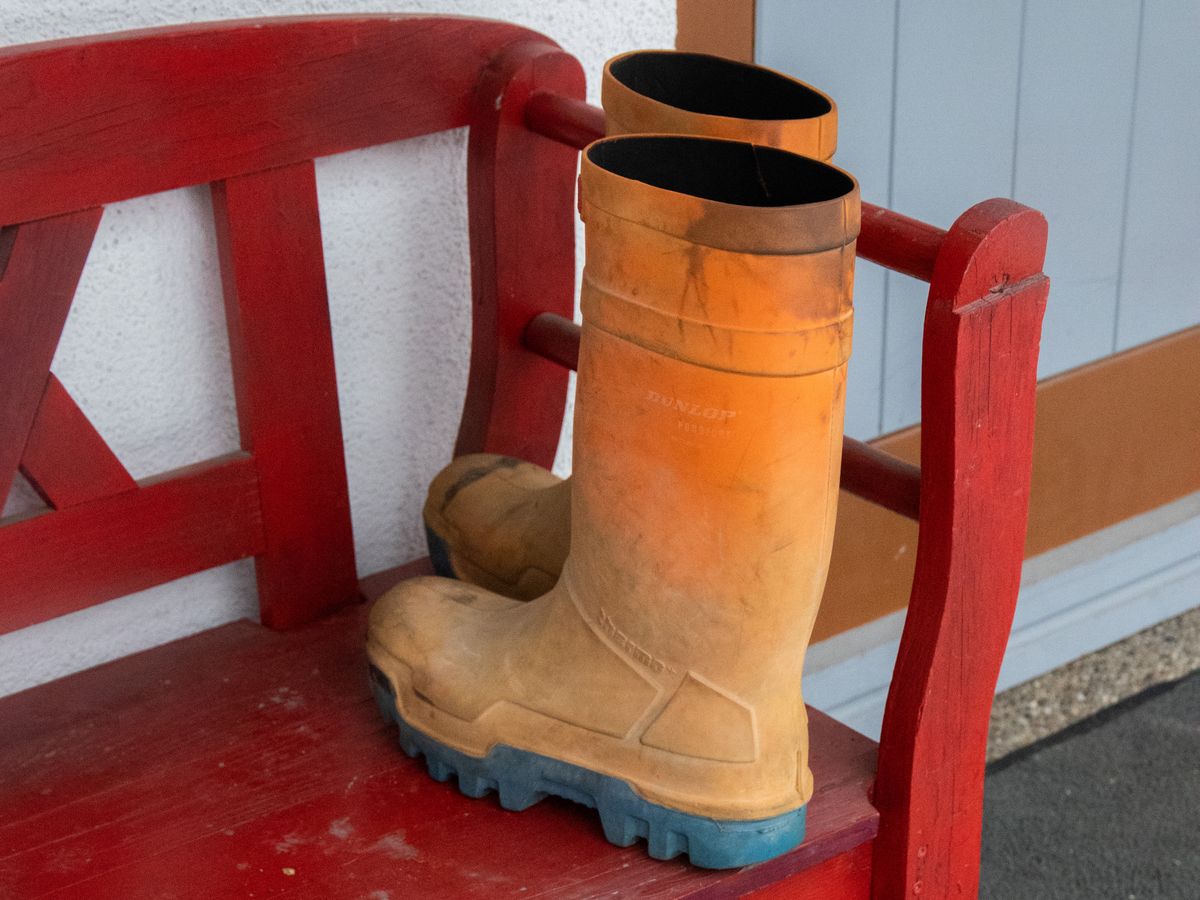
My last system is a dedicated drying corner: one tray, one small rack, and every wet boot in the house goes there first, no exceptions. Yellow wellies by the radiator dry overnight instead of puddling under the coat hooks for days.
The corner takes under two square feet beside a heat vent. Once boots are dry — usually by morning — they graduate to their normal shelf or cubby.
Pro Tip: Never dry leather boots directly on a radiator; near the heat, not on it, or the leather dries stiff and cracks.
Also read: Boots were only half my hallway battle — my clothes storage ideas for small spaces fixed the closet that caused the overflow.
Frequently Asked Questions About Boot Storage
How do I store tall boots so they don’t fall over?
I use a boot tree, shaft shaper, rolled magazine, or a cut pool noodle inside every tall pair. The insert holds the shaft upright, prevents the ankle crease that ruins leather, and takes two seconds to pop in.
What is the best way to store boots in a small entryway?
A bench with a boot tray underneath is my top pick for tight spaces. It gives seating, hides boots in dead space, and catches mud in one 36-inch footprint. Keep it to weekly pairs; store the rest in a closet.
Can I store boots in the garage?
Yes, if the garage is dry. I keep work boots on a raised rubber mat, off any standing water, with a small fan after wet days. Leather dress boots belong in the house — damp concrete and temperature swings are hard on them.
How do I stop muddy boots from ruining my floors?
Every muddy pair goes onto a lipped boot tray or into my drying corner first, no exceptions. The tray catches the meltwater, a washable mat absorbs the splashes, and boots only reach shelves and closets once they are fully dry and brushed off.
How should I store boots over the summer?
I clean them, condition leather pairs, stuff the shafts, and store them upright in labeled boxes on a closet top shelf. Never box boots dirty or damp — mildew loves a sealed box. A cedar block per pair keeps them fresh.
Do boot trees really make a difference?
Absolutely. Boots with trees keep their shape for years, while unsupported shafts fold and crack at the ankle. Wooden trees also absorb moisture and odor — the cheapest insurance good boots can get.
Final Thoughts
Twenty-one systems sounds like a lot, but I only use three per house: a tray where boots land, a closet for the rotation, and boxes up high for off-season pairs. Start with your worst bottleneck.
Measure your tallest pair, give it a home with room to stand up straight, and your entryway will calm down within a week — mine did, and the pile by my door has never come back.