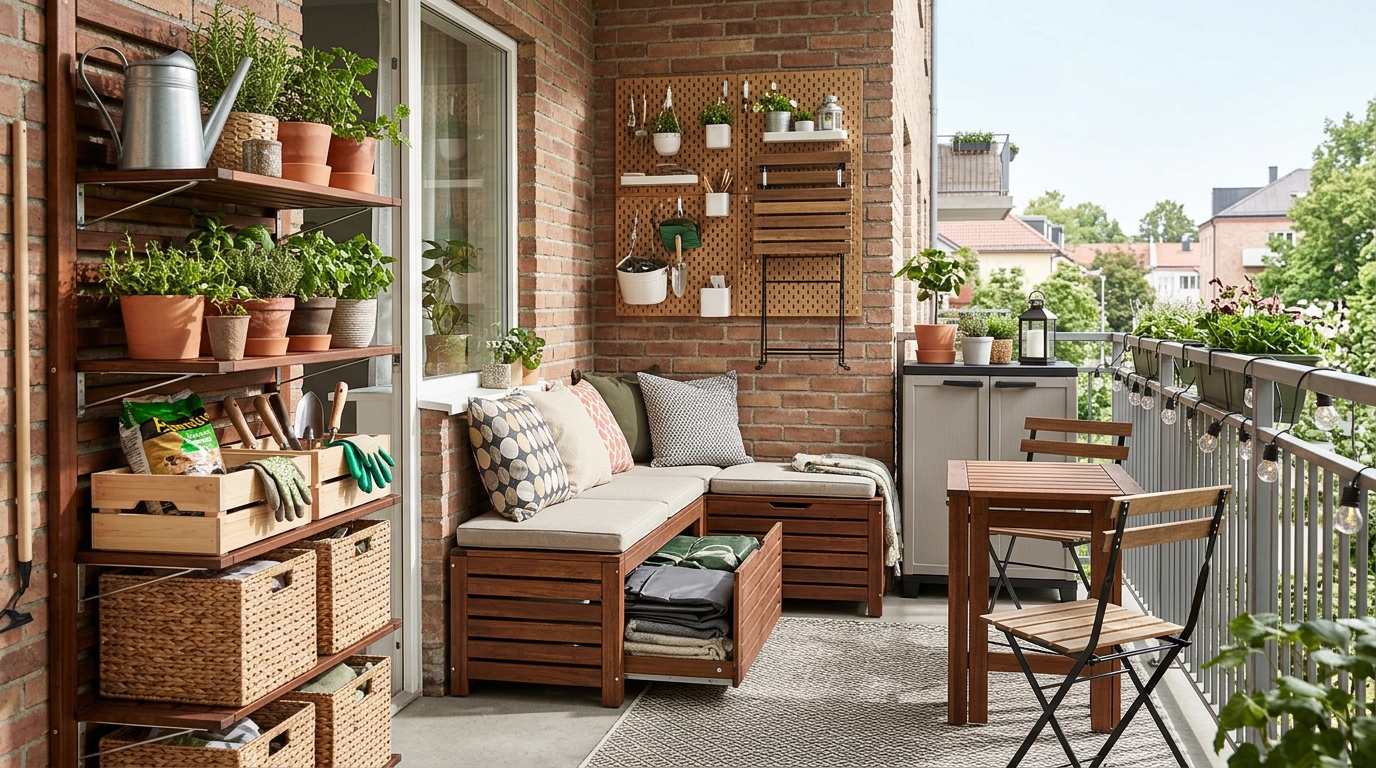
16 Balcony Storage Ideas for 2026
Balcony storage can be harder than it looks. I’ve found that the challenge isn’t simply finding somewhere to put things; it’s fitting storage into a space where floor area, access, weather exposure, and furniture placement all compete for attention.
Before choosing anything, I look at what I actually need to keep outside, how often I use it, and how exposed the balcony is to rain and sun. A covered balcony gives me more flexibility than a completely open one.
I also pay attention to depth. A cabinet or bench can offer useful capacity, but if it interferes with a door, railing, or walking path, it isn’t a practical solution.
With the right combination of cabinets, benches, shelves, racks, planters, and other dual-purpose pieces, even a narrow balcony can hold useful supplies without becoming difficult to move around.
I get the most from a small balcony when storage performs more than one job. A bench can provide seating and concealed storage, while a console can offer a useful surface with baskets underneath.
Closed cabinets work well for items I don’t want on display, while open shelves and racks are better for belongings I reach regularly. Vertical storage can also make use of wall height without taking up additional floor area.
Renters have plenty of options too. Freestanding cabinets, slim racks, storage benches, and removable organizers can provide useful capacity without requiring permanent changes to the property.
Save this for later

Table of Contents
Weather exposure should guide every outdoor-storage decision. I consider rain, direct sunlight, humidity, wind, drainage, and standing water before deciding what can safely stay outside.
Key Takeaways
- Use wall height when floor space is already limited.
- Combine seating and storage when you need both.
- Choose closed storage for clutter-prone or weather-sensitive belongings.
- Keep frequently used items within comfortable reach.
- Leave room for walking, doors, drawers, and storage lids to operate.
- Renters can rely on freestanding and removable solutions.
- Choose outdoor-rated products according to the actual exposure of the balcony.
- Keep heavy belongings lower and consider stability when using tall furniture.
Related article: 25 Mop And Broom Storage Ideas for 2026
How to Choose the Right Balcony Storage
I start with the balcony itself rather than the storage product. Measuring the width, usable wall height, furniture placement, railing position, door swing, and available walking path helps me eliminate options that look good but won’t work in the actual space.
Very small balcony
Slim vertical cabinets, narrow utility racks, and dual-purpose benches make better use of a tight footprint. Wall storage can also help where the wall structure and property rules allow suitable installation.
Need extra seating
A storage bench gives me two functions in one piece of furniture. A lift-top version is particularly useful when I want a larger storage cavity for cushions, throws, or seasonal items.
Gardening-focused balcony
A garden tool cabinet or utility rack gives gardening supplies a defined home. Hooks and shelves can separate hand tools, watering equipment, gloves, pots, and other small supplies.
Almost no floor space
Wall-mounted shelves, cabinets, or planters can shift some storage away from the floor. I only use mounted solutions when the wall, hardware, product load rating, and property rules make them appropriate.
Renter
Freestanding cabinets, slim racks, storage benches, and removable organizers are usually easier choices than permanent installations. If drilling or mounting is involved, I check the lease or ask for permission first.
Covered balcony
A covered space gives storage more protection, but it isn’t automatically dry. Wind-driven rain, humidity, and condensation can still reach stored belongings.
Fully exposed balcony
I look for products specifically designed for outdoor use and avoid storing moisture-sensitive or valuable belongings outside unless they have appropriate protection. Drainage and protection from standing water matter just as much as the material itself.
Awkward area
An under-stair box, low-profile cabinet, or compact custom solution can make an otherwise difficult corner useful, provided the space is actually suitable for storage.
Frequently used items
I keep everyday belongings at easy-to-reach heights rather than putting them behind rarely used items or overhead. Heavy objects generally stay lower, while lightweight and infrequently used items can go higher.
Pro Tip: I think about the space needed to use the storage, not just the space occupied by the storage. A cabinet that fits on paper can still be frustrating if its doors cannot open fully.
Slim Vertical Closet

A slim vertical closet makes sense when I have very little floor width but enough usable wall height. It can hold folding chairs, brooms, cleaning supplies, small planters, and gardening tools in one contained area.
Adjustable shelves make the interior easier to adapt. I would leave a taller section for long tools rather than trying to force everything onto equal-height shelves.
Depth matters here. A cabinet that is too deep can narrow the walking route, particularly when the balcony is already tight.
For outdoor use, I look for an exterior-rated finish and consider raising the cabinet slightly where appropriate so the base has less prolonged contact with wet flooring.
Garden Tool Cabinet
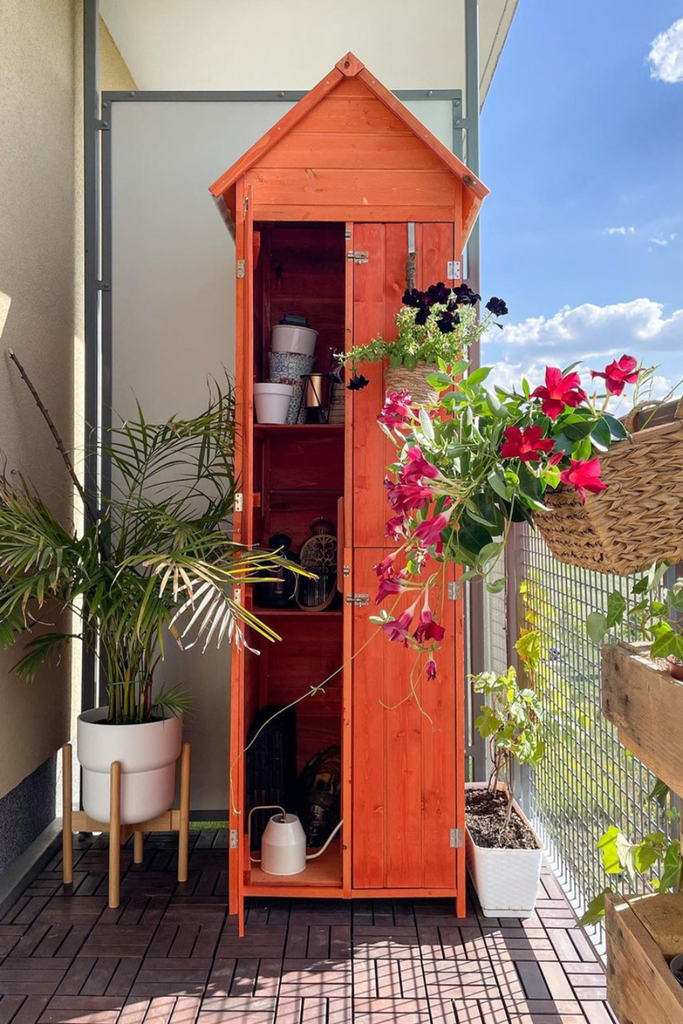
A garden tool cabinet has a more specific job than a general storage cupboard. I use this type of setup for pots, gloves, hand tools, watering equipment, and gardening supplies that I regularly need near my plants.
Inside, I prefer a combination of shelves and hooks. Small tools can stay together, while long-handled items need their own vertical section.
Opened bags of soil or other gardening products are better kept in suitable sealed containers when practical, especially where moisture is an issue. This also keeps the cabinet easier to clean.
I don’t assume that a painted indoor cabinet is suitable for outdoor use. Water can work into joints, edges, hinges, and bottom panels, so I look for construction intended for the balcony’s actual exposure.
Pro Tip: I keep the tools I use most often near the front or at an easy height. Good organization should reduce searching, not create another step before I can start gardening.
Wall Cabinet Setup
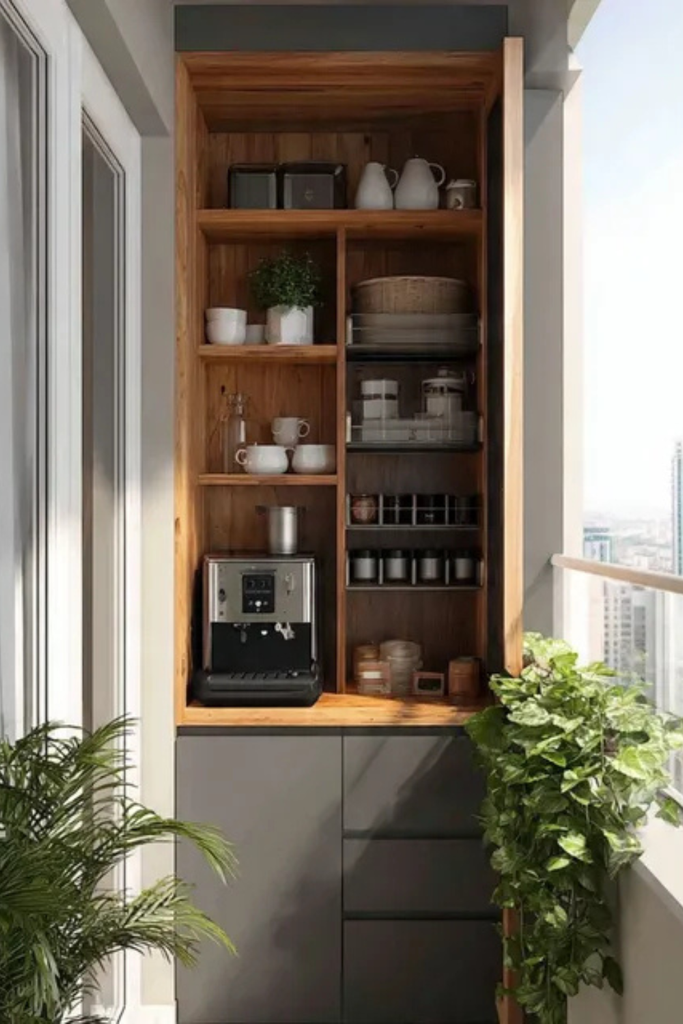
A wall cabinet is useful when I want to keep the balcony floor relatively open. It moves storage upward and puts smaller supplies behind doors where they are less visually distracting.
This works for things such as gardening accessories, outdoor tableware, small tools, or other compact belongings. I would avoid filling an elevated cabinet with heavy items simply because there is room for them.
For a mounted cabinet, the wall construction and fixing hardware matter. The product’s load rating also needs to account for what will actually be stored inside.
Renters should treat permanent mounting as a property decision, not simply a storage decision. If permission isn’t available, a freestanding cabinet can provide a similar organizational function without altering the wall.
Console With Storage

A console is different from a closed cabinet because it gives me a small working or display surface while keeping some storage underneath.
A shallow model can work well beside a wall or along a wider section of balcony. Baskets underneath can hold small gardening supplies, outdoor games, cleaning items, or table accessories.
I like this option when I need a little storage but don’t want the visual weight of a full cabinet. The top can hold a few useful items, but I avoid turning it into a permanent drop zone.
Before placing one, I check that baskets can slide out and that the console doesn’t reduce the walking route.
Vertical Wall Planters
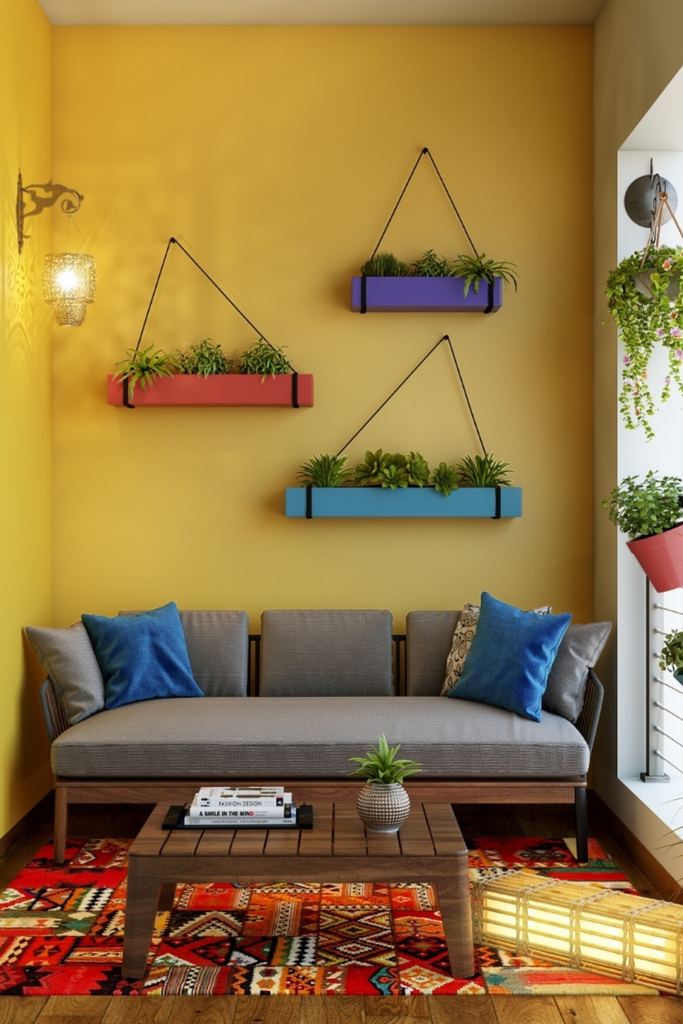
Plants can consume a surprising amount of balcony floor space, so moving some of them upward can indirectly create room for storage and seating.
Wall-mounted or suitable railing-compatible planters can keep greenery off the ground. I never assume that every railing is designed to carry planters, though, so the attachment method and loaded weight need to be appropriate.
Wet growing media is heavier than dry material, and watering adds more weight. The support needs to be suitable for the planter once it is fully loaded, not just when it is empty.
Drainage deserves attention too. I want excess water directed somewhere appropriate rather than dripping onto stored belongings, furniture, or areas below.
Built-In Wall Shelves
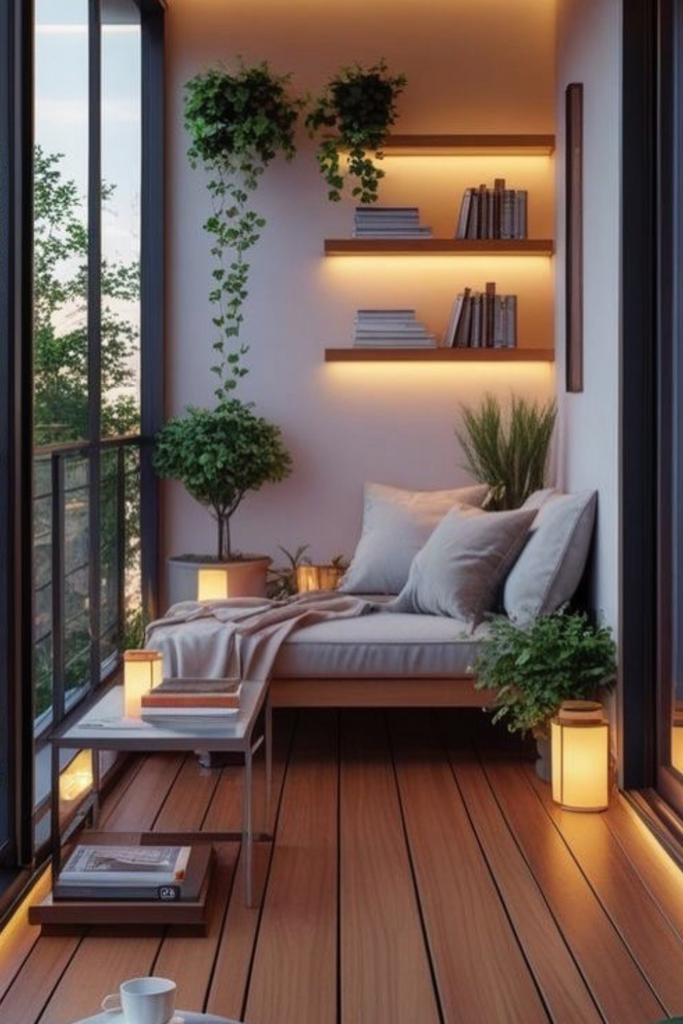
Built-in or floating shelves are useful when I want quick access to lightweight belongings without adding another piece of floor furniture.
I can use baskets for gardening accessories and outdoor supplies or display a few weather-appropriate decorative pieces. Books and other moisture-sensitive items only make sense where the shelves are properly protected.
The wall and hardware need to support the intended load. I also avoid treating a shelf’s appearance as proof that it can carry heavy storage containers.
Open shelving has one major tradeoff: access is easy, but protection from dust, rain, and direct sunlight is limited. For exposed balconies, I reserve it for items that can handle those conditions.
Pro Tip: I leave some empty shelf space instead of filling every level. It makes frequently used items easier to grab and gives me somewhere to put something temporarily without creating a pile.
Bench With Compartments
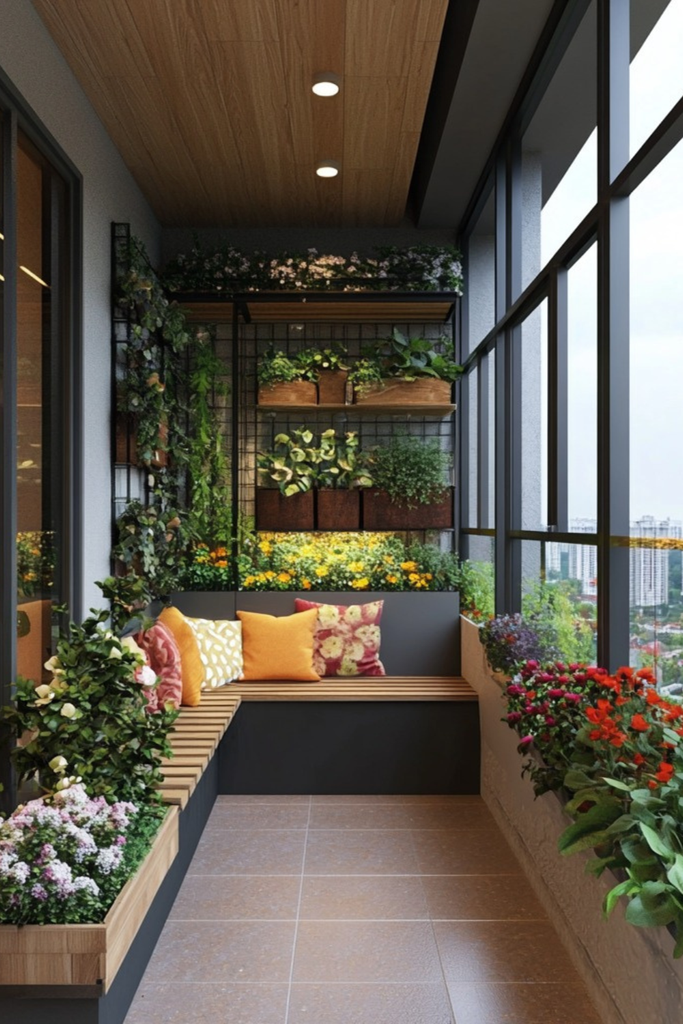
A bench with compartments works when I need seating and concealed storage in the same area.
The storage can hold cushions, blankets, gardening accessories, or other balcony items that I want nearby but don’t necessarily want sitting out.
The compartment design matters. Wide access makes it easier to reach belongings, while internal bins or dividers prevent one large cavity from becoming a mixed pile.
Fabric items should go inside completely dry. If I’m storing outdoor cushions or blankets for longer periods, I also consider whether the compartment has enough airflow for the way those items are being stored.
Low Profile Cabinet
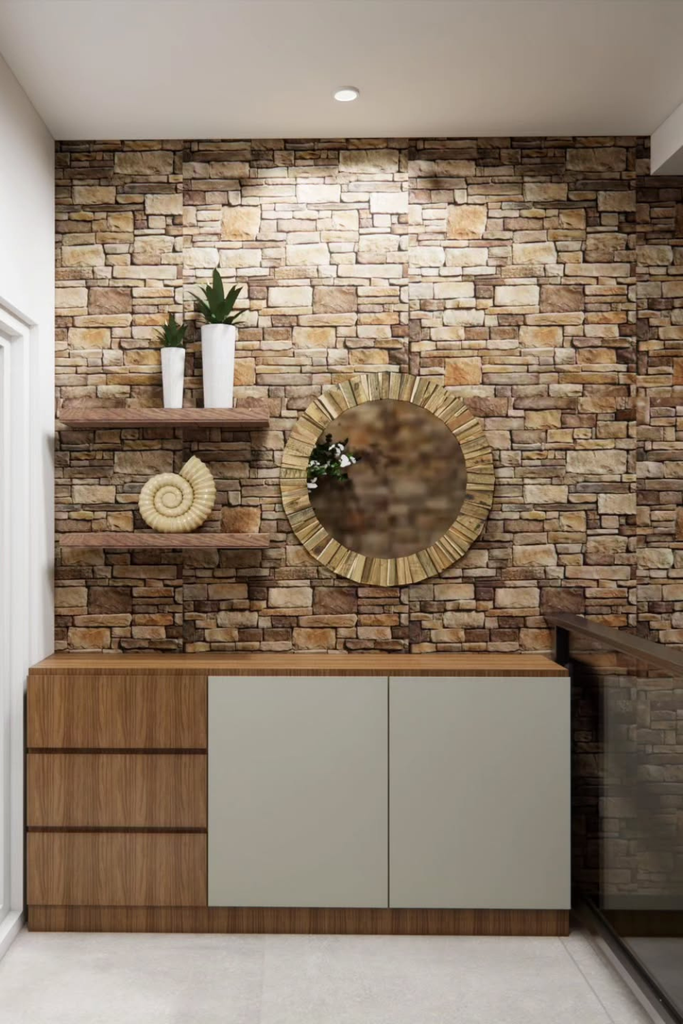
A low-profile cabinet gives me concealed storage without taking up the visual height of a tall cupboard. It can be useful for bulkier belongings that don’t need to be reached constantly.
The top can provide a small surface for planters or outdoor accessories, but I keep the arrangement practical rather than covering the entire surface.
I pay close attention to the cabinet depth and height in relation to the railing, doors, and nearby furniture. On a narrow balcony, a few extra inches of depth can affect how easily I move around.
For exposed locations, I look for outdoor-rated construction and follow the manufacturer’s care recommendations instead of assuming any finished cabinet will tolerate prolonged weather exposure.
Also read: How to Organize Kitchen Cabinets
Under-Stair Storage Box
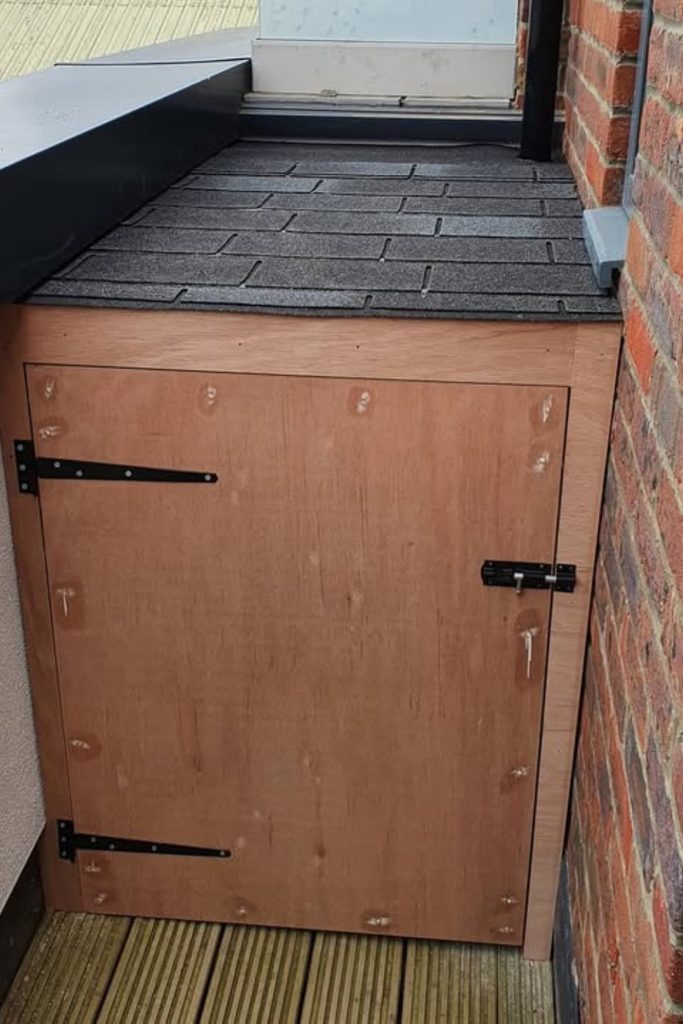
Where an exterior staircase creates an accessible empty area, the space underneath can become useful storage.
A custom box or cabinet may hold pots, gardening equipment, outdoor cleaning supplies, or other belongings suited to the location.
The construction needs to account for water. Drainage, sealed surfaces, appropriate ventilation, and protection against moisture all matter if rain can reach the area.
I also make sure the opening is easy to access. There is little benefit in creating hidden storage if furniture, stairs, or other structures make the door difficult to use.
This idea only applies when the balcony or terrace actually has a suitable space beneath exterior stairs.
AC Unit Cover

An AC unit cover needs more care than ordinary balcony furniture. I treat it as an equipment enclosure, not as a convenient place to build storage around an operating air conditioner.
Air intake and exhaust areas need to remain unobstructed, and the manufacturer’s installation and clearance requirements should take priority. A solid box around the unit can interfere with airflow and operation.
If I want to hide the equipment visually, I look for a purpose-designed enclosure or have the solution professionally planned when necessary. The enclosure should also leave service access available for inspection and maintenance.
I would never use the area around the operating unit as an excuse to block ventilation or make the equipment difficult to reach.
Lift-Top Bench Storage
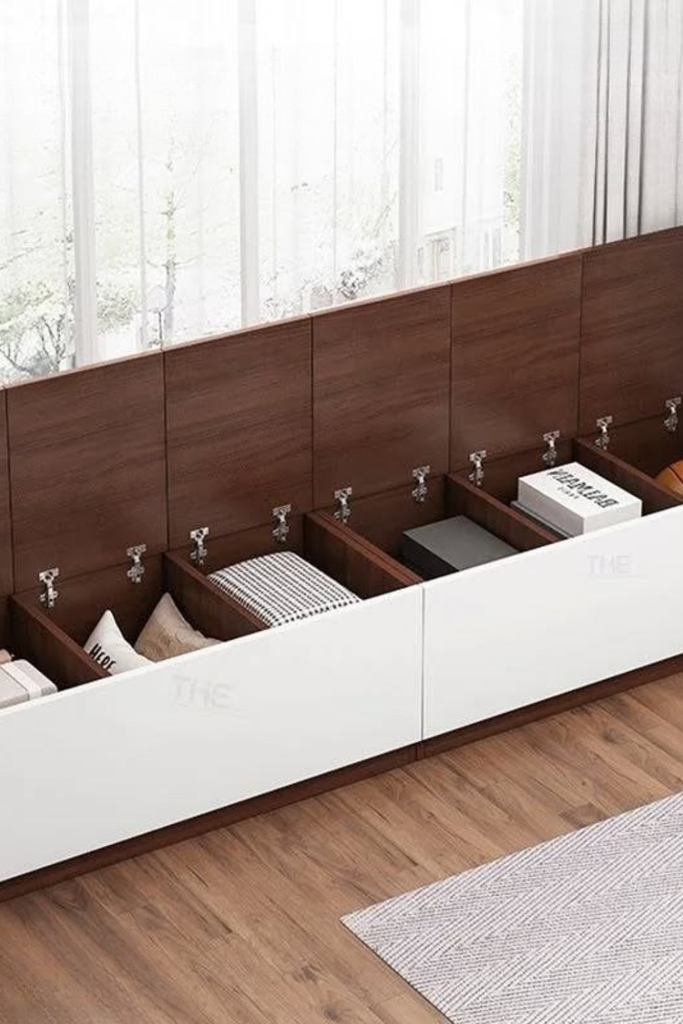
A lift-top bench is useful when I want a larger storage cavity that I can access from above while still using the bench as seating.
This makes it practical for cushions, throws, gardening accessories, or seasonal balcony items. Because the cavity can be fairly large, I prefer using separate containers inside rather than dropping everything into one deep compartment.
The lid needs enough room to open fully without hitting a wall, railing, table, or other furniture. I check this before positioning the bench.
Anything made from fabric goes inside only after it is completely dry. If I notice condensation or dampness, I deal with the moisture before closing the compartment again.
Pro Tip: I divide a large storage cavity by category. Keeping cushions together and gardening supplies in their own container makes a lift-top bench much easier to maintain.
Full-Height Cabinet
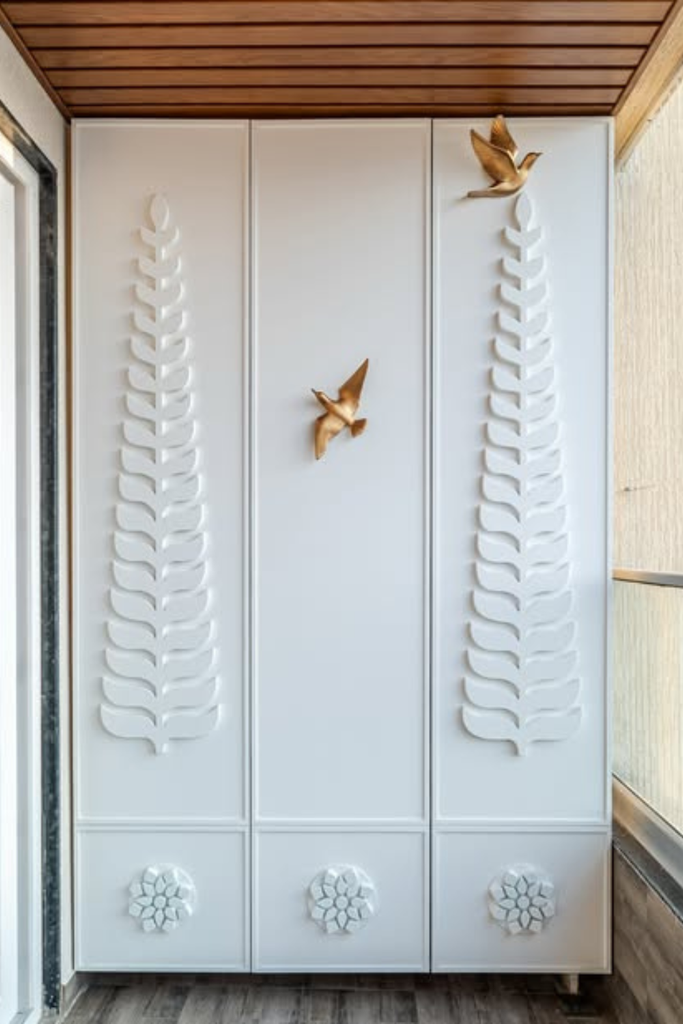
A full-height cabinet makes sense when I have one narrow section where I can concentrate most of my storage.
I use the lower part for heavier belongings and reserve upper shelves for lighter items that I don’t need every day. Adjustable shelving makes the arrangement easier to change as my storage needs evolve.
Tall furniture needs particular attention to stability. Wind exposure, the cabinet’s design, the surface beneath it, and the manufacturer’s instructions all affect how it should be secured or positioned.
I also avoid putting heavy belongings above shoulder height. Lower storage is generally easier to access when the contents have some weight.
Overhead Wall Cabinets
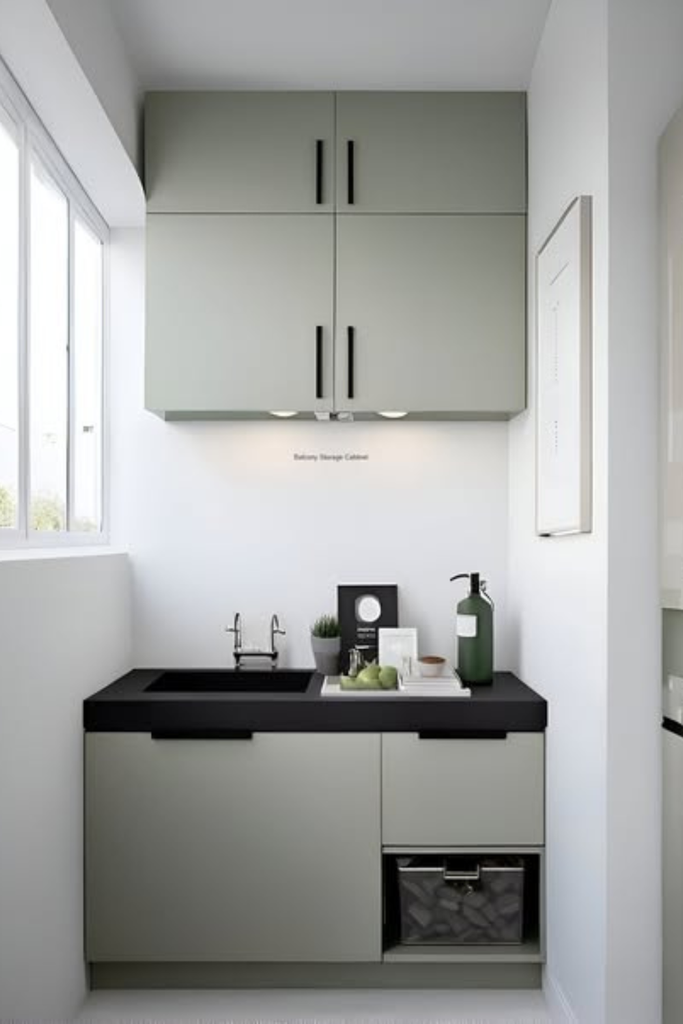
Overhead wall cabinets can provide storage without occupying the main floor area, but I use them selectively.
They make more sense for lightweight belongings that I access occasionally than for heavy tools or frequently used supplies.
Before installation, I consider the wall construction, fixing method, cabinet weight, and expected contents. Doors also need enough clearance to open without hitting windows, lights, furniture, or people using the balcony.
For renters, I would only make permanent wall changes with the appropriate property permission. A freestanding alternative is often simpler.
Open Shelf Styling
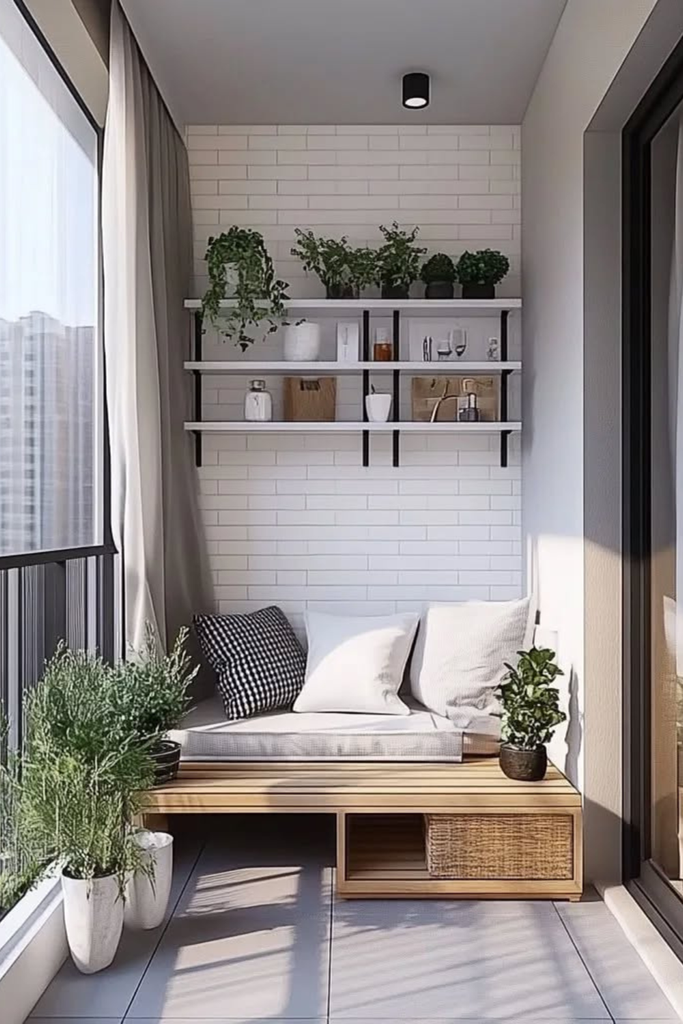
Open shelves are useful when I want quick access and don’t need the same protection that a closed cabinet provides.
I use them for suitable planters, baskets, lanterns, and other outdoor accessories. The items themselves should be able to tolerate the amount of dust, sunlight, humidity, and rain reaching that location.
I find that grouping similar belongings keeps an open shelf easier to use. A few baskets for smaller items are usually more practical than displaying dozens of individual pieces.
Because everything remains visible, I avoid overfilling the shelves. Leaving some open space makes it easier to clean and reduces the feeling of clutter.
Hidden Bench Compartments

Hidden bench compartments can make a compact seating area or awkward corner work harder without relying on one large storage cavity.
Instead of simply lifting an entire seat, I can use divided compartments or smaller access panels for different categories of belongings. This is useful for small gardening accessories, cushions, or other items that I want separated.
The openings should be large enough to reach the back without awkward stretching. I also check that lids and doors remain stable during normal use and don’t unexpectedly close while someone is reaching inside.
A stable base matters too, particularly when the bench will be used regularly for seating.
Slim Utility Rack
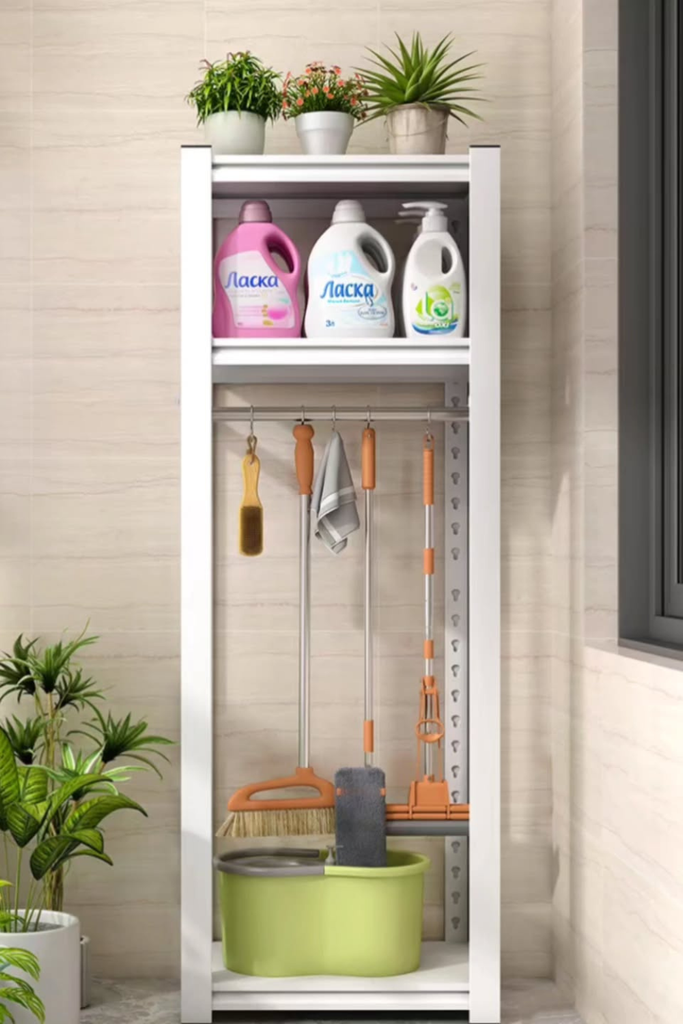
A slim utility rack is a practical choice when I need frequently used items close at hand but don’t have room for a full cabinet.
It can hold watering cans, hand tools, cleaning supplies, baskets, or folded outdoor textiles. Adjustable shelves help when the stored items vary in height.
Before choosing one, I measure the rack’s depth against the actual walking path. I also check that nearby doors, furniture, and balcony access points can still be used normally.
Heavier items generally belong on the lower shelves, which keeps the rack easier to handle and can improve stability. For an exposed balcony, I look for a rack intended for outdoor conditions rather than adapting an indoor unit.
FAQs
Can Hidden Storage Work on a Very Small Balcony?
Yes. I would start with slim vertical furniture, a narrow rack, or dual-purpose seating rather than several separate storage pieces.
The main goal is to increase useful storage without taking away the space needed to walk, sit, open doors, or use the balcony normally.
What Materials Last Long Outdoors?
There isn’t one material that works best for every balcony. I look for products specifically designed for outdoor use and consider the level of rain, sunlight, humidity, and wind the item will receive.
The finish, hardware, joints, drainage, and manufacturer’s care instructions matter as much as the basic material.
What Should I Store on a Balcony?
I keep items outside only when their material and the storage location can handle the conditions. Gardening tools, suitable outdoor accessories, planters, and properly protected cushions can make sense.
Moisture-sensitive, valuable, or temperature-sensitive belongings are usually better stored indoors unless the balcony storage provides appropriate protection.
How Do I Protect Balcony Storage From Rain?
I start with outdoor-rated storage and place it where the balcony provides some natural protection when possible. Raised furniture can also help reduce prolonged contact with standing water.
Sealed containers are useful for smaller belongings, while good drainage helps prevent water from collecting around the storage itself. I follow the product’s care instructions rather than assuming a cabinet is completely waterproof.
What Is the Best Balcony Storage for Renters?
Freestanding cabinets, slim utility racks, storage benches, consoles, and removable organizers can all work without permanent structural changes.
If a storage solution requires drilling or another permanent installation, I check the lease and get the required permission first.
How Do I Keep a Small Balcony From Looking Cluttered?
I use closed storage for items that don’t need to stay visible and reserve open shelves for a smaller number of useful or weather-suitable belongings.
Dual-purpose furniture also helps because one piece can provide seating and storage. Most importantly, I leave enough open floor area to move around comfortably instead of filling every available corner.
Read this next: 30 Bathroom Storage Ideas to Keep Your Space Organized
Conclusion
Good balcony storage isn’t about filling every empty spot. I get better results when each storage piece has a clear purpose and still leaves the balcony comfortable to use.
A storage bench can handle seating and hidden belongings, while cabinets and racks can keep tools and supplies contained. Shelves and planters can move some functions upward when floor space is scarce.
I also consider the balcony’s exposure, material care, drainage, measurements, accessibility, and furniture stability before bringing anything outside. That approach helps me choose storage that remains useful instead of becoming another item I have to work around.




3 Comments