
24 Sweater Storage Ideas for 2026
Sweaters can take up much more closet space than their number suggests. Chunky knits, bulky pullovers, cardigans, and lightweight sweaters all have different storage needs, so putting everything into one tall pile rarely works well for long.
I usually prefer storage that supports the sweater across its surface, keeps frequently worn pieces within easy reach, and lets me remove one item without disturbing everything around it. In a small closet, I also look at unused vertical space, drawers, and the area underneath the bed before buying another organizer.
The right setup does not have to be expensive or complicated. A few shelves, dividers, bins, or changes to the way sweaters are folded can make an existing closet much easier to use.
These 24 sweater storage ideas cover shelves, drawers, cabinets, bins, bags, cubes, trays, and hanging methods. I’ve included options for bulky sweaters, lightweight knits, seasonal clothing, deep drawers, wide shelves, and small closets.
Save this for later
Table of Contents
I also explain how I decide which method makes sense based on sweater weight, fabric, available space, and how often I need each piece. Some methods are better for daily access, while others make more sense for sweaters that spend most of the year in seasonal storage.
Key Takeaways
- I usually fold heavier sweaters so their weight is supported across the garment.
- Lightweight knits may work on hangers when they are properly supported.
- Short sweater stacks are easier to access and maintain than very tall piles.
- Vertical drawer folding can make individual sweaters easier to see.
- Upper shelves and under-bed areas are useful for seasonal knitwear.
- Clear bins prioritize visibility, while labeled bins prioritize identification.
- Shelf dividers separate stacks, while shelf sections create broader categories.
- Storage containers should be measured against the actual space, including access and clearance.
- Clean, completely dry sweaters are the starting point for seasonal storage.
- The best sweater storage system is one that I can realistically maintain.
Related article: 21 Belt Storage Ideas for 2026
How I Choose a Sweater Storage Method
There isn’t one universally best way to store every sweater. I look at the garment first and the available storage space second.
A chunky or heavy knit generally gets more support from a shelf or drawer than from a hanger. Lightweight sweaters and some cardigans give me more flexibility, especially when I have limited shelving.
Fabric and construction matter, too. A delicate sweater, a bulky pullover, and a lightweight everyday knit don’t necessarily need the same treatment. For pieces that are prone to snagging or distortion, I favor a setup with enough room to remove them without dragging them against other garments.
I also consider how often I wear something. Everyday sweaters deserve an easy-to-reach drawer or middle shelf, while seasonal pieces can go higher in the closet or under the bed.
Before adding storage, I measure the usable shelf width, shelf depth, and vertical clearance. For drawers, I check the width, depth, and height. If I’m considering a bin, I also check the opening, door clearance, and the space needed to pull the container out.
A container that technically fits isn’t useful if I can’t comfortably open it or remove a sweater. I also consider whether the storage area is clean and dry and whether the material is sturdy enough for the weight I’m putting inside.
1. Color Zoning

Color zoning works best when I have a larger sweater collection spread across several shelves or sections of a closet. Instead of mixing every shade together, I create broad color families.
For example, neutral shades can occupy one section while darker colors, brighter colors, and patterned sweaters have their own areas. This is different from simply stacking one color at a time because the goal here is to organize the overall sweater area into larger zones.
I find this especially useful when I already have enough shelving and want a system that makes the whole closet easier to scan.
2. Shelf Stacks

Open shelves are a natural place for folded sweaters, particularly heavier knits that I don’t want hanging from their shoulders.
I fold sweaters into similar-sized rectangles and keep the heavier pieces toward the bottom of each stack. I avoid making piles so tall that removing one sweater causes the rest to lean or fall.
Shelf stacks also work well when I want to separate sweaters by weight or use. Everyday knits can stay on a middle shelf, while less-used winter pieces can occupy a higher section.
3. Bed Drawers
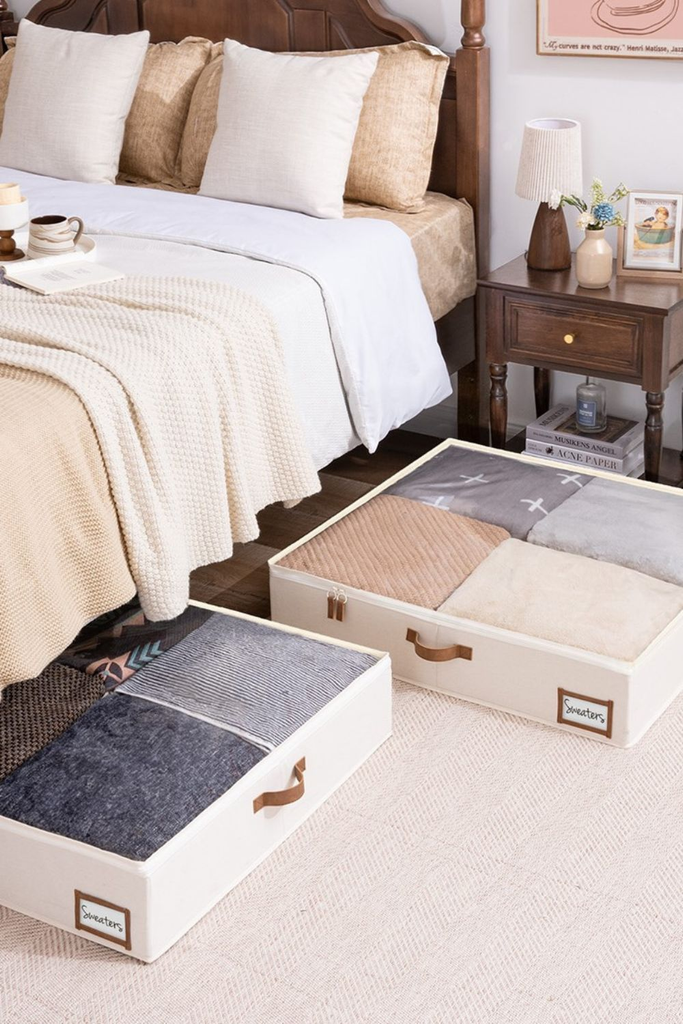
The space beneath the bed can be valuable when a closet doesn’t have enough room for seasonal sweaters.
I fold the sweaters and separate them into practical groups before putting them into under-bed drawers or suitable containers. Since these pieces may stay there for several months, I make sure they are clean and completely dry first.
This is particularly useful in a small bedroom because it uses existing floor space instead of requiring another closet or cabinet.
Pro Tip: Check how far a drawer or under-bed container needs to slide out before choosing its location. A storage box isn’t very helpful if a bed, nightstand, or wall blocks access.
4. Clear Bins

Clear bins are useful when visibility is the main problem. I can see which sweater group is inside without opening several containers.
I mainly use this approach for seasonal sweater storage or pieces that aren’t needed every day. Sweaters should be folded rather than crammed into the bin, and I leave enough room for the contents to be removed without forcing them out.
The storage environment matters more than simply choosing a particular material. I keep stored knitwear in a clean, dry location and make sure the container suits that environment.
A small label can still help, even with clear sides, especially when several bins look similar.
5. Zipper Bags

Zippered fabric storage bags are a flexible option when I want seasonal sweater storage without using rigid containers.
I fold each sweater and place it inside without packing the bag too tightly. Because the bags are lightweight, they can be useful on shelves, in wardrobes, or under a bed when their dimensions suit the space.
I also check the bag’s construction before using it for heavier knitwear. A lightweight storage bag may be perfectly practical for a few thin sweaters but less suitable for a large collection of bulky pieces.
This method is particularly handy when I need storage that can be moved or folded away when empty.
6. Shelf Dividers
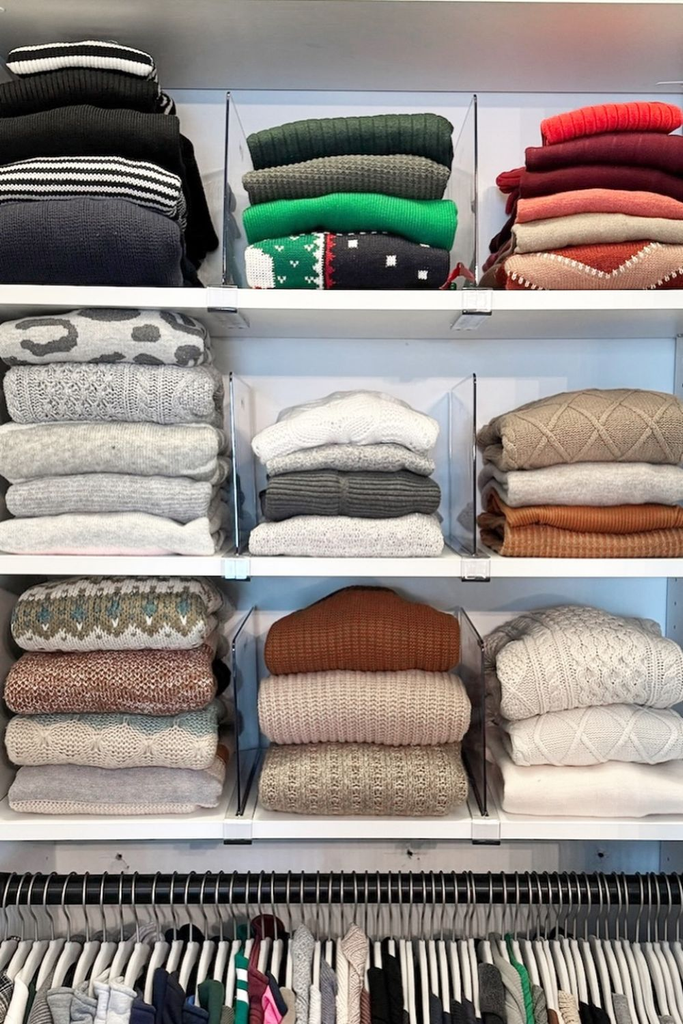
Shelf dividers solve a very specific problem: keeping separate sweater stacks from spreading into one another.
I place the dividers between groups so each pile has a defined boundary. This is helpful on a wide shelf where sweaters would otherwise slowly migrate sideways.
I keep the individual stacks reasonably short and fold the garments consistently. A divider can keep a pile contained, but it won’t make an overloaded stack easier to use.
This setup works especially well when I want separate sections for different sweater types without installing additional shelving.
7. Cabinet Shelves
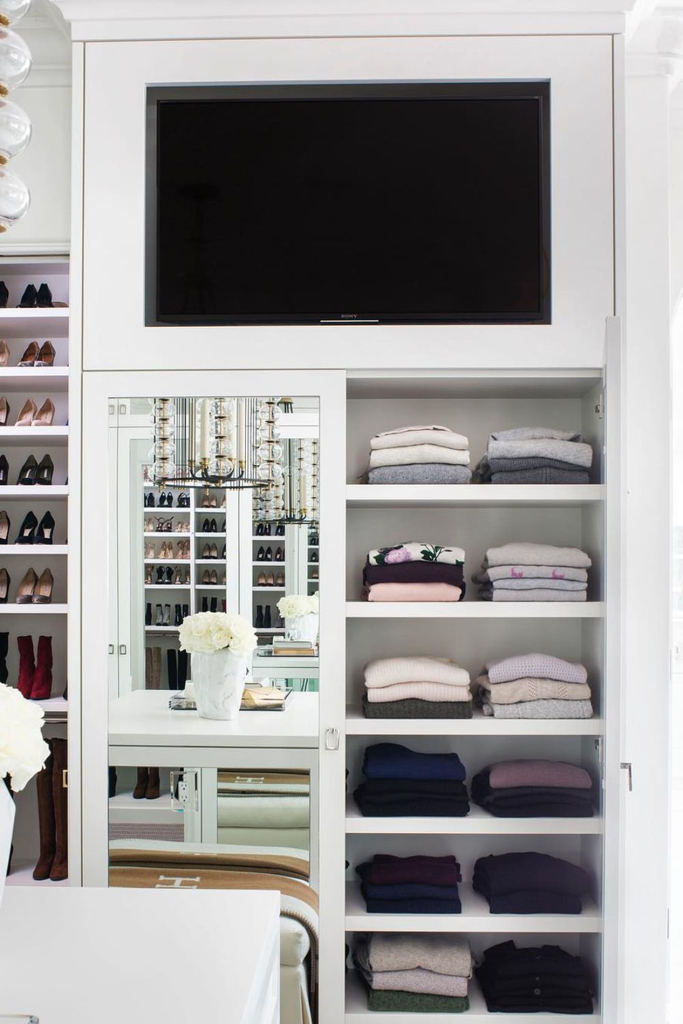
Cabinet shelves give sweaters their own enclosed storage levels and can make use of vertical space that might otherwise be wasted.
I fold the sweaters into compact rectangles and use shorter stacks so I can remove one without disturbing everything underneath it.
The closed cabinet can also be useful when I want less exposure to everyday dust or direct light. I reserve the easiest shelves for frequently worn sweaters and use higher areas for seasonal pieces.
This is a practical option for existing wardrobes, armoires, and cabinets, so I don’t need a custom closet to make the idea work.
8. Fabric Boxes
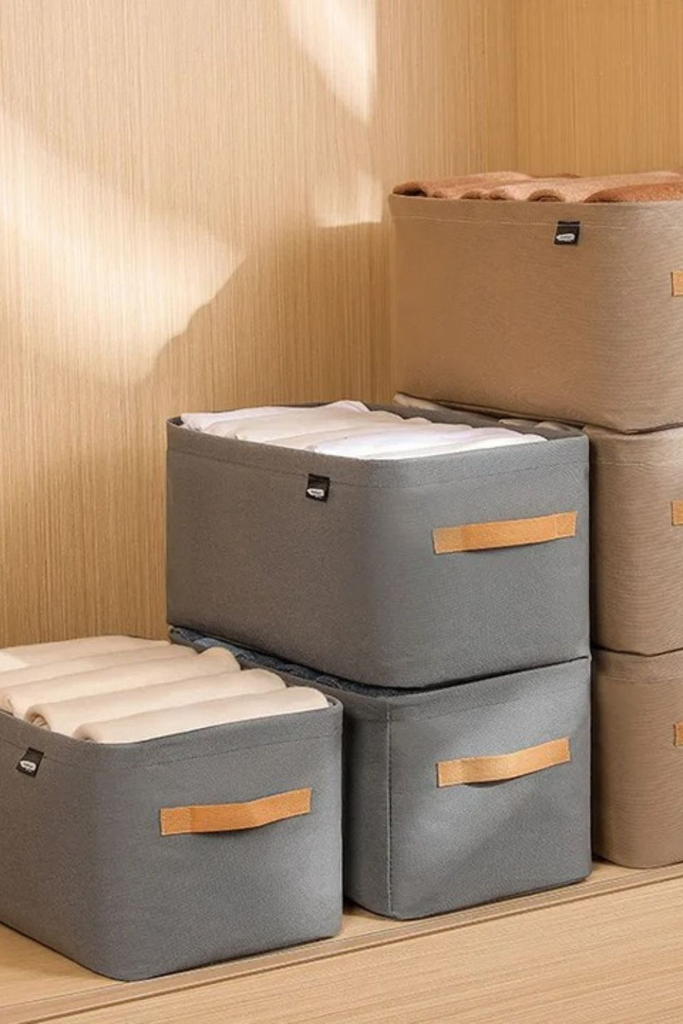
Fabric boxes work well when I want to organize folded sweaters on an open shelf without the visual bulk of rigid plastic containers.
I use them to create individual categories, such as cardigans, lightweight knits, or seasonal sweaters. The softer construction can also make them convenient for shelves where I want to lift the entire box out.
I avoid overfilling them because a box that is difficult to reach into quickly becomes frustrating.
For renters, fabric boxes are also useful because they don’t require permanent installation. I can move them to another shelf or take them with me if my storage arrangement changes.
9. Folding Hang
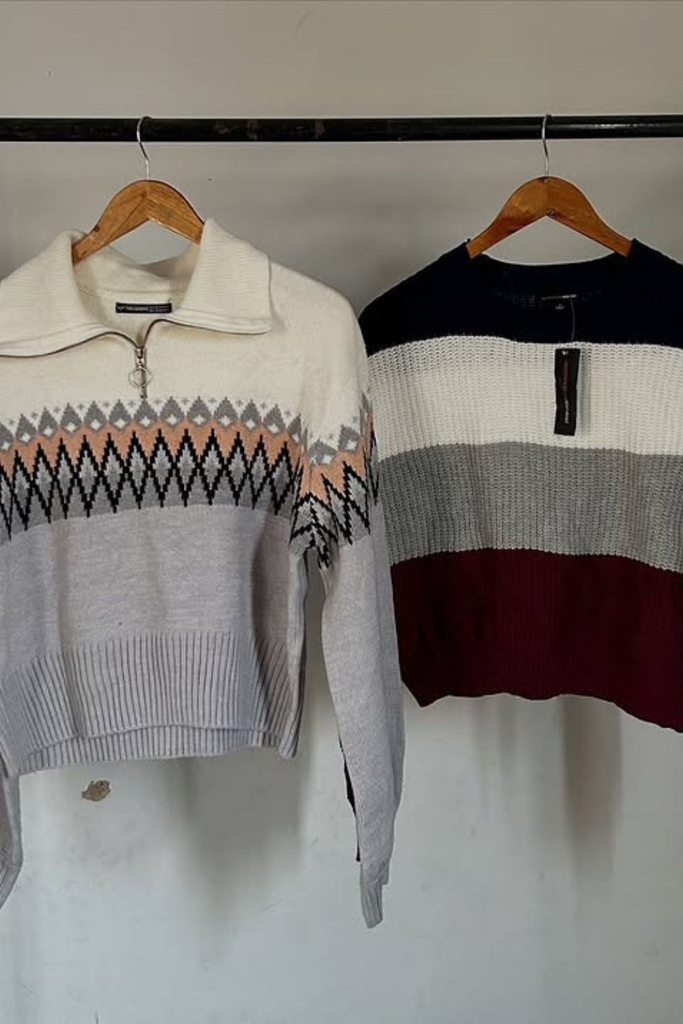
When hanging space is more available than shelf space, folding a sweater over a hanger gives me another option.
I fold the sweater and place it across the horizontal hanger bar so the garment is supported by the bar rather than suspended entirely from the shoulders. This distributes the weight over a larger area.
I reserve this method mainly for lightweight or medium-weight knits that I want to keep visible. For very heavy sweaters, flat storage still tends to be my first choice.
I also avoid overcrowding the rod. Wider or supportive hangers can be helpful when appropriate, but giving each garment enough room to be removed easily is just as important.
10. Color Stacks
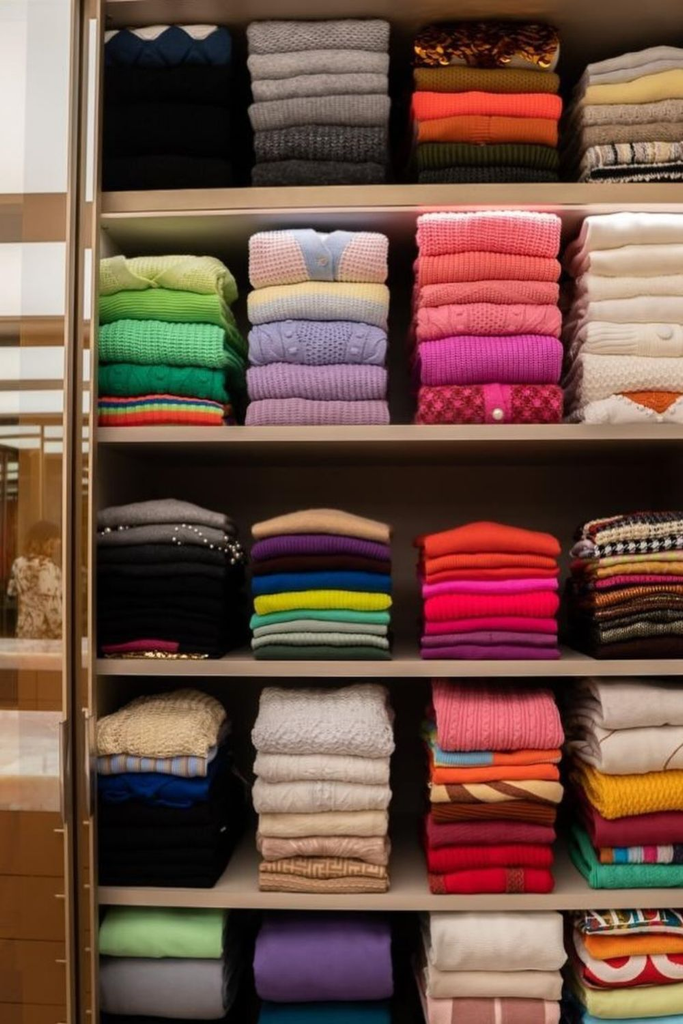
Color stacks are specifically about organizing folded sweater piles by shade.
I might put blues together, keep greens in another stack, and separate bright colors from neutral pieces. This makes it quicker to locate a particular color when I’m choosing an outfit.
The key difference from color zoning is that each stack has its own color identity. I use this method when I have enough shelf width for several smaller piles rather than one large mixed stack.
Keeping the piles relatively short also makes everyday access easier.
11. Drawer Folding
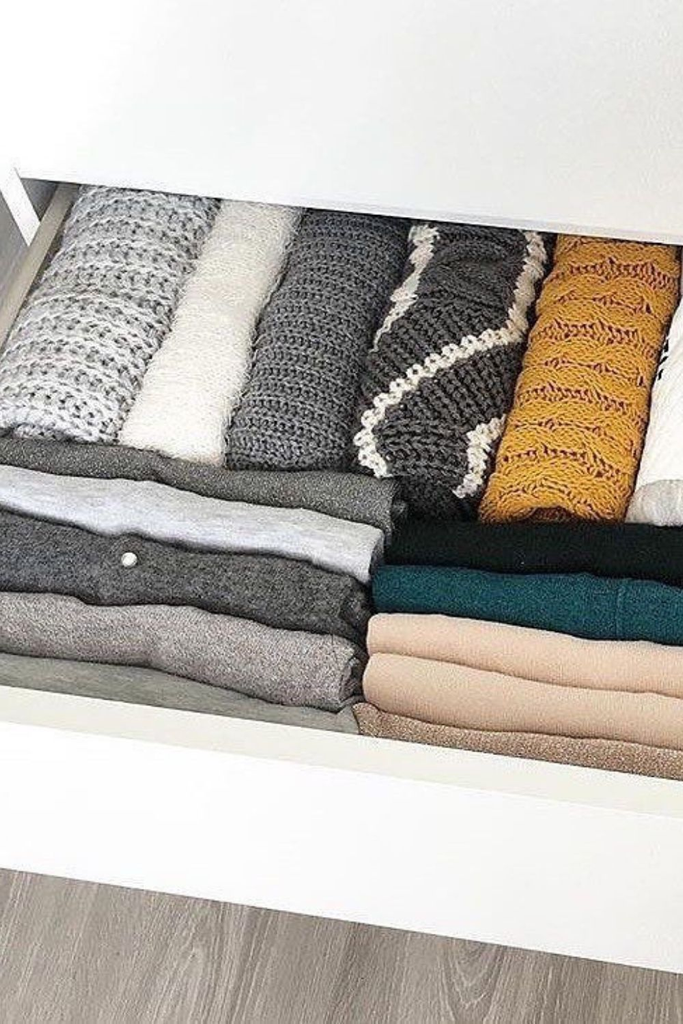
Vertical drawer folding is one of my preferred solutions for drawers because I can see more of the collection at once.
I fold each sweater into a compact rectangle and place it upright beside the others. Instead of reaching down through a flat pile, I can identify the sweater I want from the visible edges.
This works best when the drawer is deep enough to support the folded pieces but not so deep that the sweaters fall over.
I also group similar weights or types together. Heavy sweaters can need more space and support than thin everyday knits, so I don’t force every sweater into exactly the same arrangement.
12. Closet Layers

Closet layers are useful when a wardrobe has both hanging space and shelving.
I use the hanging rod for clothing that belongs there and reserve shelf levels for folded sweaters. This creates separate storage zones instead of allowing knitwear to compete with shirts and jackets.
Middle shelves are convenient for sweaters I wear regularly. Higher shelves can hold seasonal pieces that don’t need daily access.
The goal is not to fill every shelf completely. Leaving some breathing room makes it easier to maintain the system and put laundry away.
13. Drawer Dividers
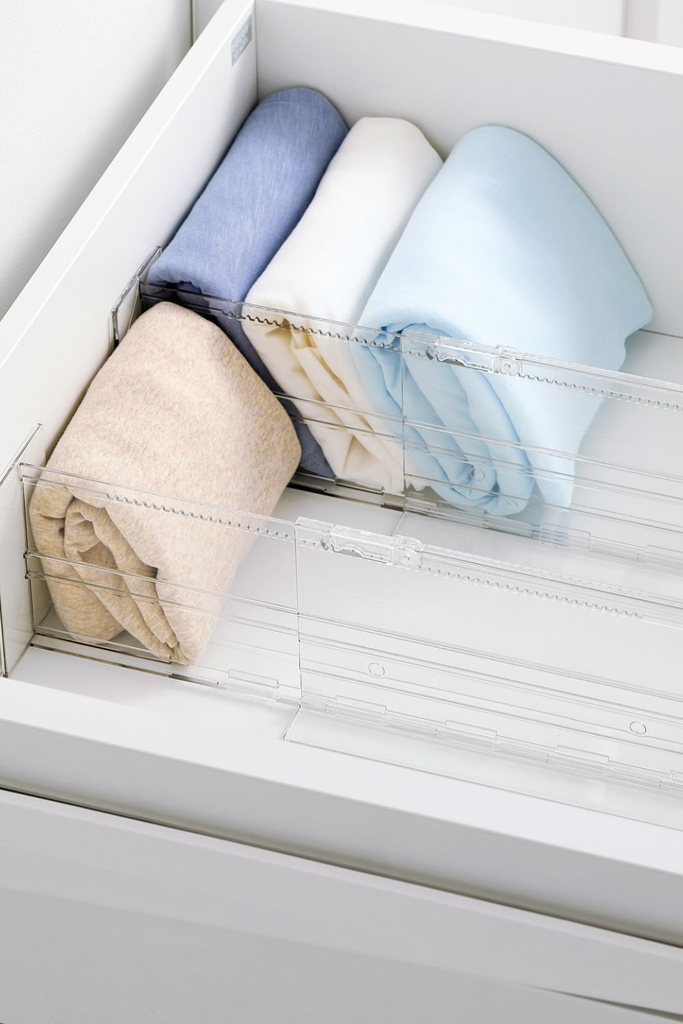
Wide drawers can become difficult to manage when folded sweaters slide into one another. Drawer dividers create smaller sections and give each category a defined home.
I use them to separate sweaters by type, color, or frequency of use. With vertical folding, each section becomes a small row of visible sweaters.
This method is different from simple drawer folding because the dividers help control the width of each category. That can be especially useful when a drawer holds several different kinds of knitwear.
I also choose adjustable dividers when the drawer contents may change over time.
14. Cube Shelves

Cube shelves provide individual compartments instead of one long open shelf.
I use each cube for a small sweater category and keep the contents at a manageable level. One cube might hold cardigans while another contains heavier pullovers.
The compartment itself creates a physical boundary, so sweaters are less likely to spread across the shelf.
This can be a useful freestanding solution for renters or anyone who doesn’t have built-in closet shelving. I still check the cube’s dimensions before storing bulky sweaters because not every compartment has enough usable depth or height for thick knits.
Also read: 16 Window Seat Storage Ideas for 2026
15. Labeled Bins
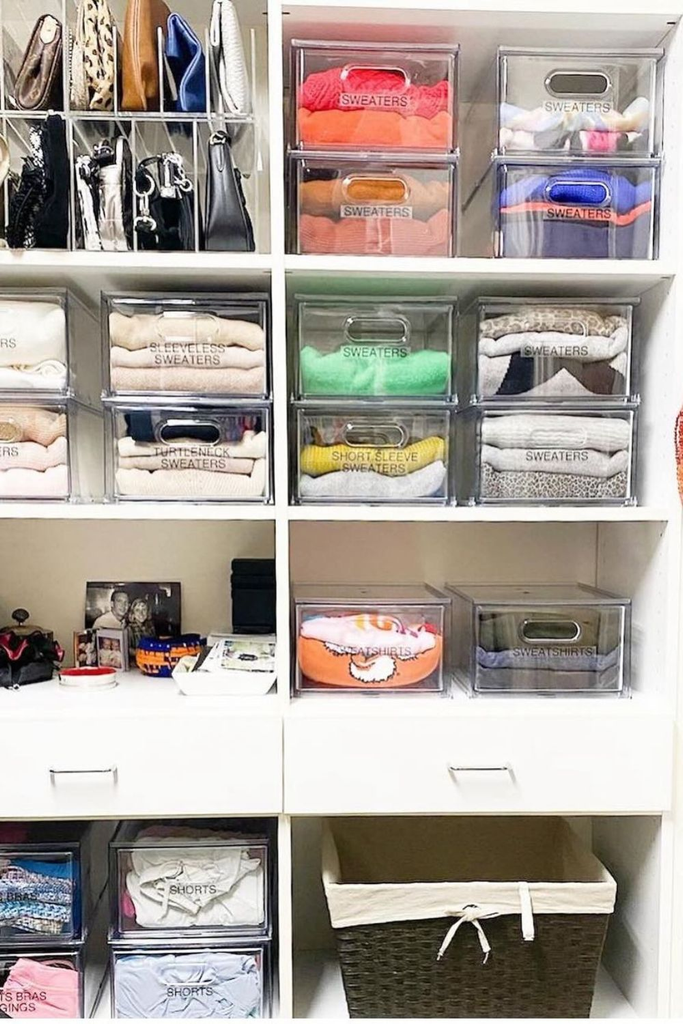
Labeled bins are most useful when I need to identify sweaters quickly without relying on visibility.
For example, I can label containers according to “lightweight knits,” “heavy sweaters,” “cardigans,” or “winter.” The categories should match the size of my actual collection rather than creating lots of nearly empty bins.
This approach is particularly helpful for seasonal storage because I can find a specific group without opening every container.
I fold the sweaters before storing them and avoid packing the bin so tightly that removing one item becomes difficult.
16. Upper Storage

Upper closet shelves are valuable for sweaters I don’t need every day.
I use this space for seasonal or occasional knitwear and keep frequently worn sweaters at a more comfortable height.
Storage boxes or bins can help keep the upper shelf organized, but I first check whether I can safely and comfortably remove the container. A heavy bin placed too high isn’t a practical storage solution.
For a small closet, using existing upper space can free the lower shelves for everyday clothing without adding permanent storage.
17. Neutral Stacks
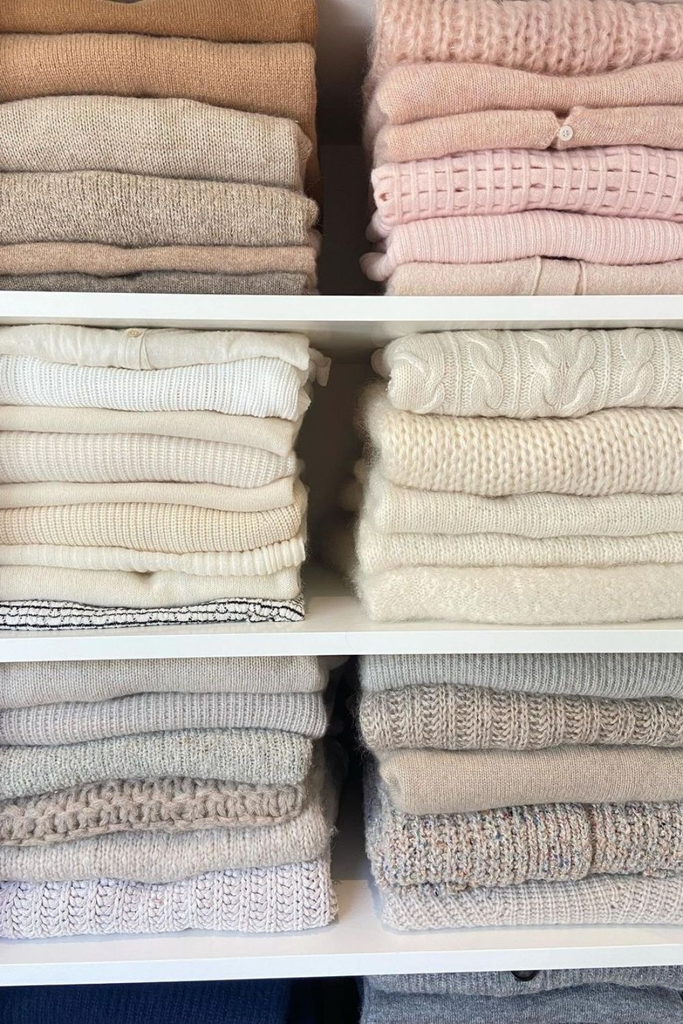
Neutral stacks focus specifically on creating a dedicated group for neutral-colored sweaters.
I can place cream, beige, gray, brown, black, and similar shades together rather than mixing them with bright or patterned pieces.
This is especially useful when neutral sweaters make up a large portion of the wardrobe. I keep heavier pieces lower in the stack and lighter ones toward the top.
Short piles make the system easier to maintain, particularly when one neutral sweater is worn repeatedly.
18. Rolled Rows

Rolling is an optional storage method that can work well in certain deep drawers or compartments.
I fold the sleeves inward and roll the sweater from the bottom upward, then place the rolls side by side. This lets me see several pieces without building one tall pile.
I don’t use rolling as a universal replacement for folding. Bulky or delicate sweaters may be easier to manage when stored flat, depending on their construction and the space available.
Before choosing this method, I check whether the drawer is deep enough to hold the rows without compressing the garments.
19. Vertical Shelves

Tall shelving can make good use of closet height when floor space is limited.
I use the different shelf levels to create a dedicated sweater zone, with everyday pieces around the easiest-to-reach height.
Rather than making one large stack on each shelf, I keep the piles modest and fold them consistently. This helps the storage stay manageable when I remove a sweater.
For small closets, vertical storage can be particularly useful because it adds organization without requiring more floor space.
20. Color Hanging
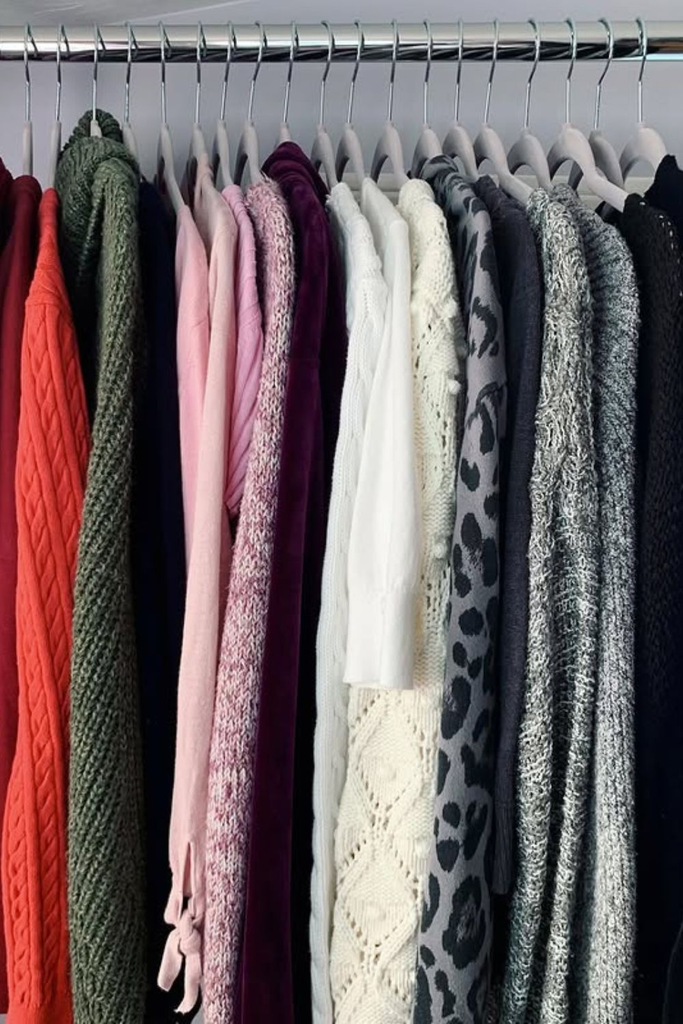
Color hanging works for sweaters that are suitable for being hung, particularly lightweight knits.
I arrange the garments by color so the hanging section has a simple sequence that makes individual pieces easier to locate.
I don’t use this method simply because I have spare rod space. The sweater’s weight and construction still determine whether hanging makes sense. Heavier knitwear generally gets better support when folded.
If I hang lightweight sweaters, I leave enough room between them and use a suitable supportive hanger rather than squeezing everything onto the rod.
21. Shelf Sections

Shelf sections divide a long shelf into broader categories rather than simply separating every stack.
I might designate one side for everyday sweaters, another for seasonal pieces, and another for patterned knits. This is useful when the collection is large enough to need categories but not large enough to justify many separate containers.
I can create the boundaries with spacing, organizers, or existing shelf structure.
The main advantage is easier retrieval. I know which part of the shelf to check before I start moving sweaters around.
22. Stack Trays

Stack trays are useful when I want to separate layers of folded sweaters on a shelf.
Instead of making one tall pile, I place a folded group on each tray. Depending on the tray design, I can access a particular layer without rebuilding the entire stack.
I use this approach when shelf depth or height makes ordinary stacks awkward. Each tray also gives me a defined place to return the sweaters after laundry day.
Before buying trays, I measure the shelf width, depth, and vertical clearance. The tray needs enough room to sit properly and still allow access to the stored sweater.
23. Acrylic Stacks

Acrylic organizers are useful when visibility is the main goal and I want physical separation between sweater groups.
The transparent sides allow me to see the contents while keeping each group contained. I might use one section for lightweight sweaters and another for a particular color family.
This approach works best for smaller or lighter collections because the organizer itself needs to be suitable for the weight and size of the garments.
I also check the available shelf space carefully. Clear storage doesn’t automatically make a crowded shelf easier to use if the organizer takes up more room than expected.
24. Grid Shelves
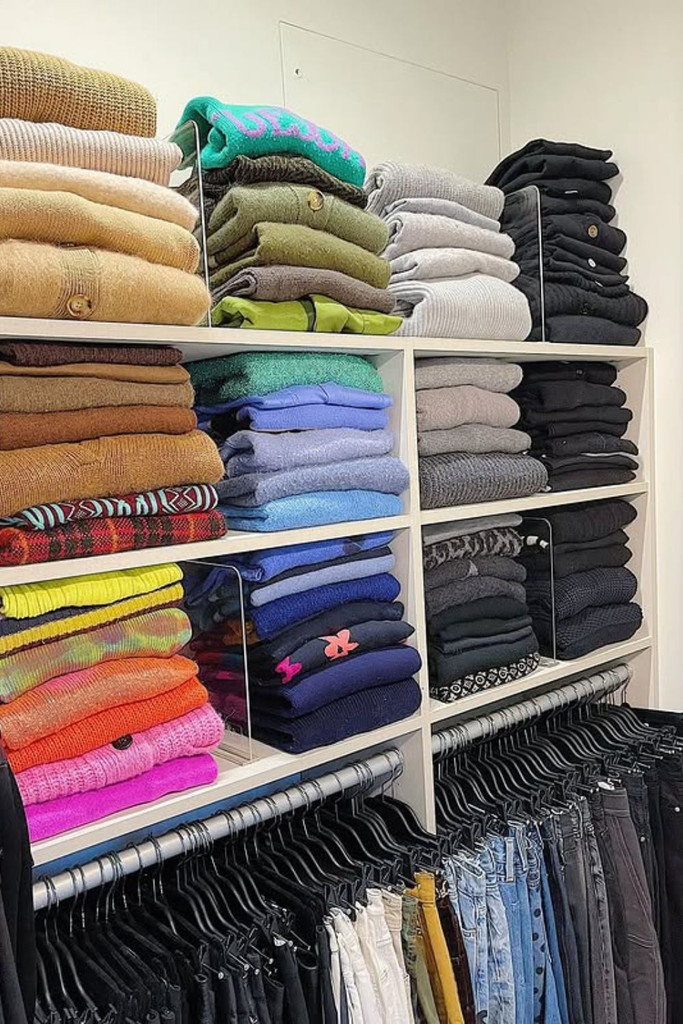
Grid shelves divide a larger storage area into individual compartments, making them useful when sweaters need their own defined spaces.
I can dedicate different compartments to different sweater categories rather than creating one large collection on a single shelf.
Everyday sweaters go in the easiest-to-reach sections, while seasonal pieces can occupy higher compartments.
This method is particularly useful for a large collection or for a freestanding closet system. For renters, a movable grid organizer can provide additional structure without assuming that a permanent closet installation is possible.
Sweater Storage for Small Closets
A small closet usually benefits from using space in more than one direction. I look up before I look for more floor space, because upper shelves can hold sweaters that aren’t needed every day.
Under-bed storage is another useful option for seasonal knitwear. Shallow drawers, cube organizers, shelf dividers, and carefully folded sweaters can also make an existing closet work harder.
I don’t automatically buy a new organizer when the closet feels crowded. Sometimes moving seasonal sweaters out of the everyday storage area or changing flat piles to vertical drawer folding solves the problem.
For renters, I favor freestanding or removable organization where appropriate. Fabric boxes, portable cubes, bins, and drawer dividers can add structure without requiring a custom closet system or permanent changes to the room.
Pro Tip: When closet space is tight, give the easiest-to-reach locations to the sweaters you wear most. Storage becomes much more practical when everyday clothing isn’t buried behind seasonal pieces.
What I Check Before Buying Sweater Storage
Before buying another storage product, I check:
- Exact shelf, drawer, or floor dimensions
- Sweater thickness and overall weight
- How many sweaters I actually need to store
- Whether individual pieces will be easy to remove
- Drawer, door, and container-opening clearance
- Whether the storage can support the intended contents
- Whether the container will fit the actual location
- Whether I can comfortably reach the storage
- Whether I already own something that can solve the problem
I measure the usable space rather than relying only on advertised product dimensions. Width and depth matter, but vertical clearance and access matter too.
A container that fits inside a closet may still be a poor choice if the door cannot open fully or I don’t have enough room to pull the bin out.
How I Keep Sweater Storage Organized
The easiest storage system to maintain is the one I don’t have to constantly rebuild.
After laundry day, I return sweaters to their assigned category instead of creating a temporary pile that slowly becomes permanent. If a stack starts leaning, I refold it before it becomes difficult to manage.
Frequently worn sweaters stay in easy-to-reach areas. Seasonal pieces can move to upper shelves or under-bed storage when the weather changes.
Season changes are also a good opportunity to look at what I actually wore. If a sweater is no longer being used, I can decide whether it needs repair, should be donated, or simply doesn’t need to take up prime closet space.
I try to keep the system simple enough that putting one sweater away takes almost no thought. That is usually what keeps an organization system working beyond the first day.
Sweater Storage FAQ
Should sweaters be folded or hung?
For heavier knitwear, I usually prefer folding because the garment gets support across more of its surface. Lightweight sweaters may be suitable for hanging when the hanger and garment construction provide appropriate support.
If I hang a sweater, I prefer the folding-hanger method rather than leaving the full weight suspended from the shoulders.
What is the best way to store sweaters for the off-season?
I start with clean, completely dry sweaters. Then I fold them and place them in a suitable container or storage bag that fits the location and the type of garment.
The storage area should be appropriate for clothing, particularly in terms of cleanliness and moisture. I also avoid cramming too many sweaters into one container because that makes access harder.
Cedar products or lavender sachets can be an optional addition to a storage routine, but I don’t treat them as a guarantee against clothing pests. Clean garments and suitable storage conditions remain the basics.
How do I store bulky sweaters in a small closet?
I look for storage outside the most valuable everyday closet space. Under-bed storage and upper shelves are good places to consider for seasonal bulky sweaters.
For sweaters that stay in the closet, I use shorter shelf stacks, cube compartments, or other methods that give thick garments enough room.
I also rotate seasonal pieces so the closet isn’t trying to hold every sweater in the same easy-access area year-round.
How can I organize sweaters in a deep drawer?
I usually consider vertical folding or, for suitable sweaters, rolled rows. Vertical folding lets me see individual pieces, while rolling can work when the drawer’s depth and shape make side-by-side rows practical.
I avoid filling the drawer so tightly that sweaters become difficult to remove. Drawer dividers can also help keep separate categories from spreading into one another.
Are storage bins good for sweaters?
Storage bins can be useful when their size, construction, and location suit the sweaters being stored. I use them particularly for seasonal pieces or clothing that doesn’t need frequent access.
I make sure the sweaters are clean and completely dry before storing them and avoid overcrowding the container.
The best bin isn’t necessarily the largest one. I want one that I can access easily and carry or move safely when needed.
How do I keep sweater stacks from falling over?
I start with consistent folding and shorter piles. Heavier sweaters generally work better toward the bottom, while lighter pieces can sit above them.
Shelf dividers can help when several stacks share a wide shelf. If the shelf is very deep, trays or separate compartments may make access easier than one large pile.
How should I store delicate sweaters?
I generally give delicate sweaters extra room and avoid forcing them into an overfilled container or cramped shelf.
Flat storage can be a practical choice when the sweater needs consistent support. I also keep delicate pieces separate from anything that could snag them during removal or storage.
Before putting one away for the season, I check that it is clean and completely dry and choose a storage location that is clean, dry, and easy enough to access without pulling at the garment.
A good sweater-storage system doesn’t need to look like a custom closet. I get better results when I match the storage method to the sweater and the space I already have.
Heavier knitwear can stay folded on supportive shelves or in drawers, while suitable lightweight sweaters have more flexibility. Seasonal pieces don’t need prime closet space, and small closets can often gain useful capacity by using upper shelves and under-bed areas.
The most important part is making the system easy enough to maintain. When every sweater has a sensible place and I can reach the pieces I actually wear, keeping the closet organized becomes much less work.
Read this next: 21 Bedside Storage Ideas for 2026
Conclusion
I’ve found that the best sweater storage system is the one that matches the sweaters I actually own and the space I have available. Heavy knits usually do better folded on a shelf or in a drawer, while lightweight sweaters may work on a properly arranged hanger.
For a small closet, I would start by using the space I already have before buying more organizers. Upper shelves, under-bed storage, drawer dividers, and shorter sweater stacks can make a big difference without requiring a major closet makeover.
Most importantly, I keep the system simple enough to maintain. When sweaters have clear categories and an easy place to go after laundry day, the closet stays organized with much less effort.



One Comment