22 Clothes Storage Ideas for Small Spaces in 2026
My current closet is barely five feet wide, so every inch in it has to earn its keep. These clothes storage ideas for small spaces are the systems I use in 2026 to fit a full wardrobe into that footprint — no shove-it-in-and-close-the-door method anymore.
The secret is matching storage to the garment: slim hangers for shirts, shelves for knits, a short rail for dresses, boxes only for rarely worn pieces.
Key Takeaways
- I hang what wrinkles and fold what stretches — that one rule settles most small-closet arguments.
- Slim hangers roughly doubled my hanging space; bulky wooden hangers are for coats only now.
- A standard closet is 24 inches deep, so I store across the width and up the walls, never deeper.
- Open rails and garment racks turn spare corners into closets when there is no closet at all.
- Off-season clothes live in labeled boxes up high, not in my everyday reach zone.
- I declutter twice a year; small spaces cannot store ‘maybe’ clothes and stay calm.
Related article: My entryway needed the same treatment as my closet — my umbrella storage ideas corralled the last clutter pile by my front door.
22 Clothes Storage Ideas for Small Spaces in 2026
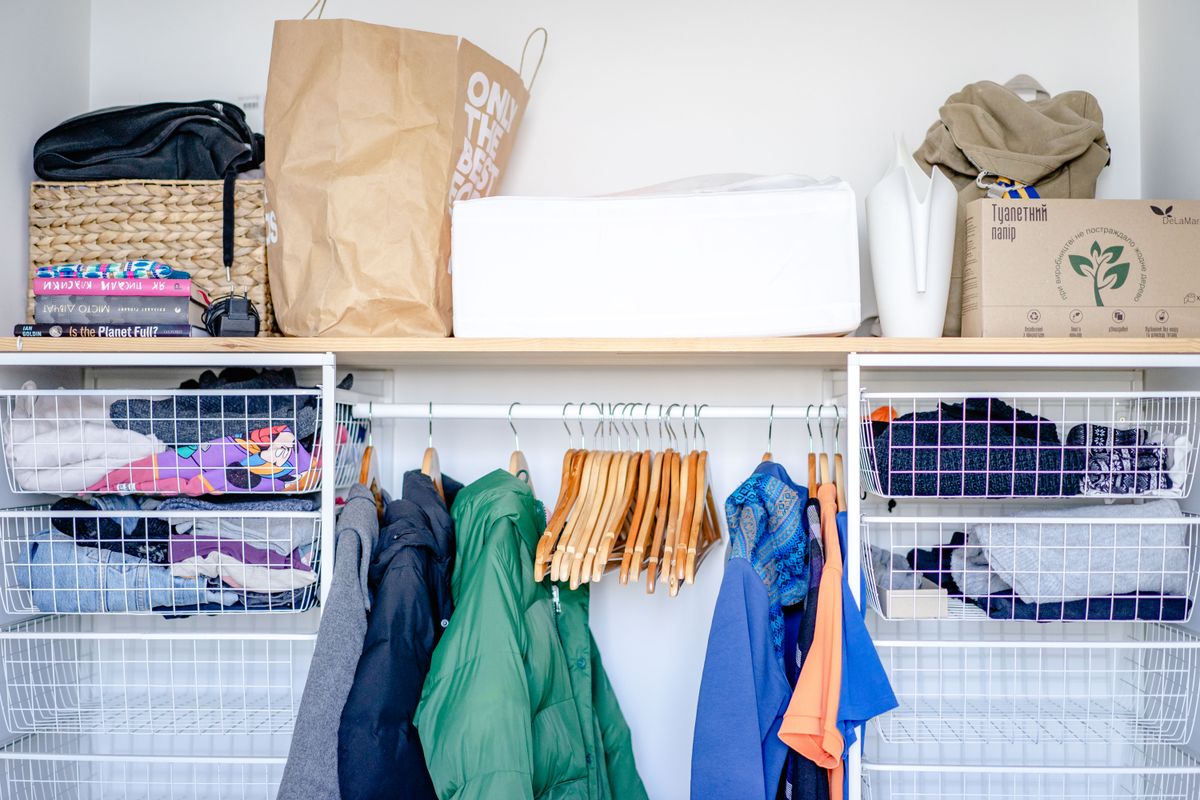
1. Open Wardrobe Rail with Baskets
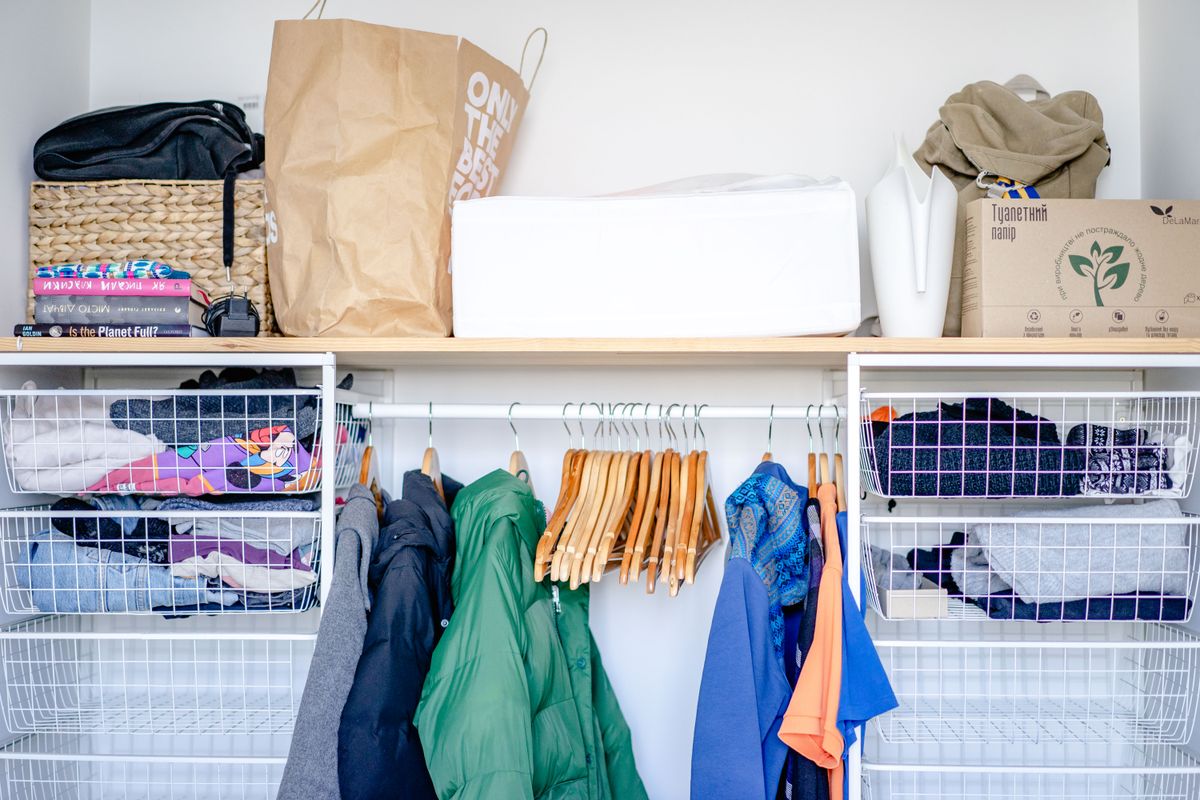
With no built-in closet in our spare room, I built one from a simple open rail and a row of baskets underneath. Shirts and dresses hang where I can see them, and the baskets swallow folded tees, gym gear, and scarves.
The rail is 48 inches wide, the baskets 13-inch cubes. Open storage only works edited — I keep this rail at about thirty pieces, max.
Pro Tip: Face every hanger the same direction; it sounds fussy, but a uniform rail instantly looks twice as tidy.
2. Storage Boxes on the Wardrobe Top Shelf

The top shelf of my wardrobe used to be a graveyard for tote bags. Now it holds four matching storage boxes: off-season sweaters, holiday outfits, spare linens, and keepsake tees I cannot part with but never wear.
Each box is labeled on the short end; nothing up there is in my weekly rotation. I need a step stool for that shelf — exactly why only rare-use things live there.
Pro Tip: Measure the shelf before buying boxes; mine fits 15-inch boxes with an inch to spare, no forcing.
3. Shelved Wardrobe for Bags and Accessories
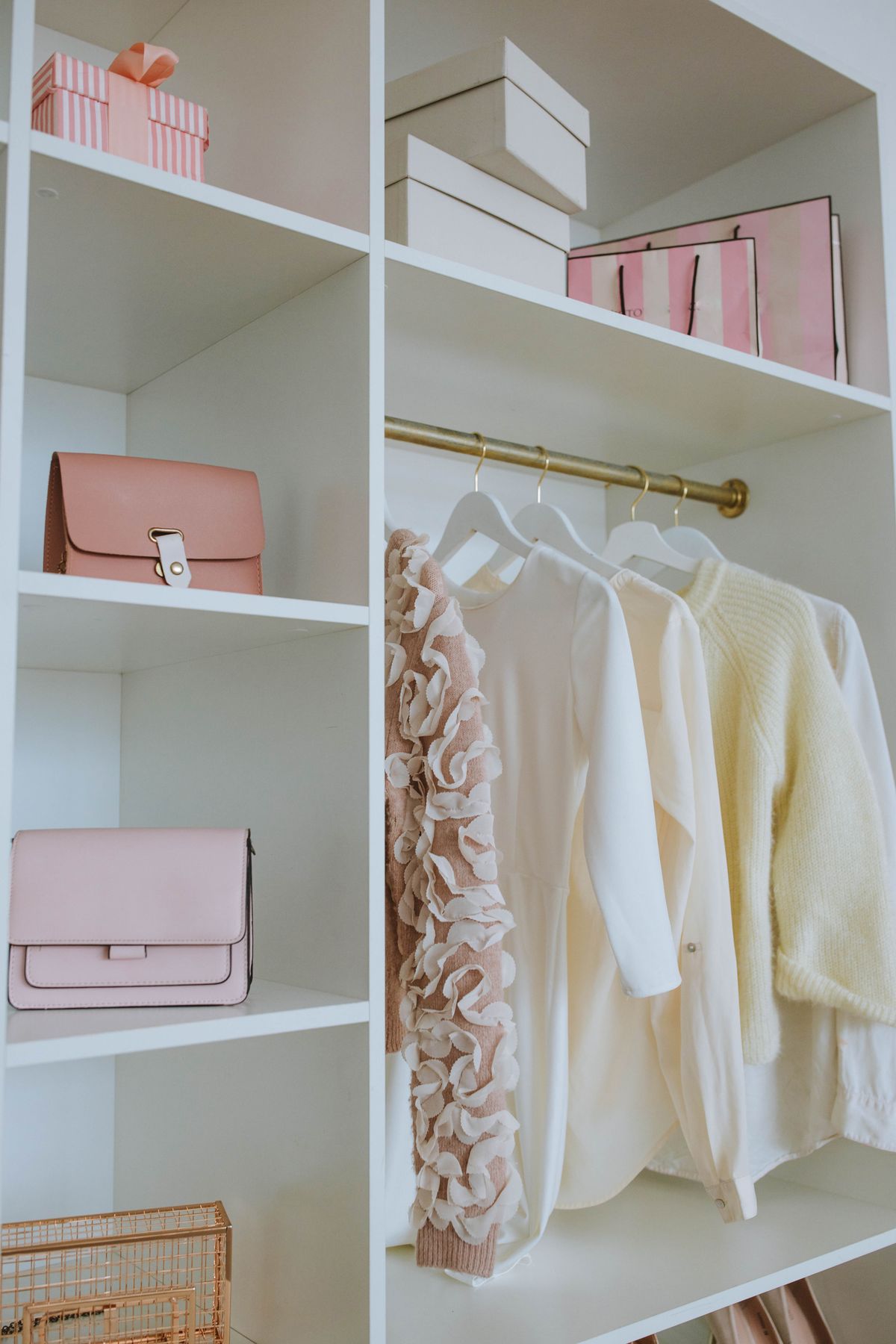
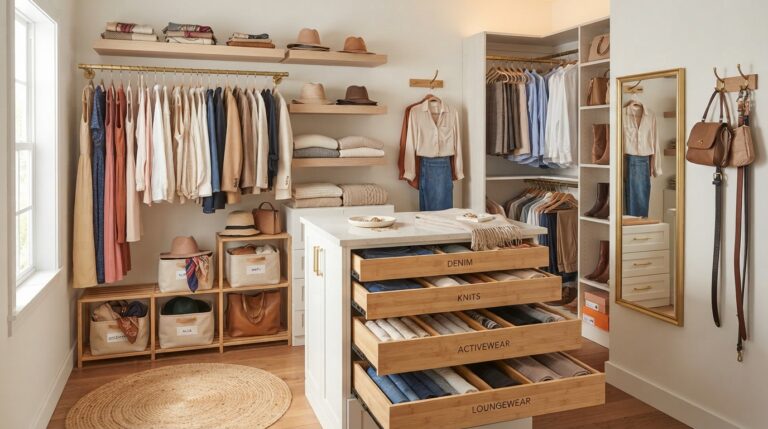
One narrow section of my wardrobe is all shelves, and it works harder than hanging space ever did. Handbags stand upright on one shelf, folded jeans on another, and a small tray catches belts and sunglasses.
My shelves are 12 inches deep — enough for a folded stack, too shallow for pile-and-hide. Seeing everything at once cut my morning decision time.
Pro Tip: Stuff handbags with tissue or a rolled scarf so they stand up and keep their shape on the shelf.
4. Neutral Capsule Closet

My capsule experiment started in this little closet: about thirty neutral pieces that all mix together. With everything beige, white, denim, and black, a five-foot closet suddenly feels like a boutique instead of a squeeze.
Capsule storage is an editing system: a new piece in means one in the same category goes out, so the rail never creeps past comfortable.
Pro Tip: Keep the capsule palette on one rail and prints on another; mixing them is where visual clutter starts.
5. Closet System with Boxes and Shoe Shelves
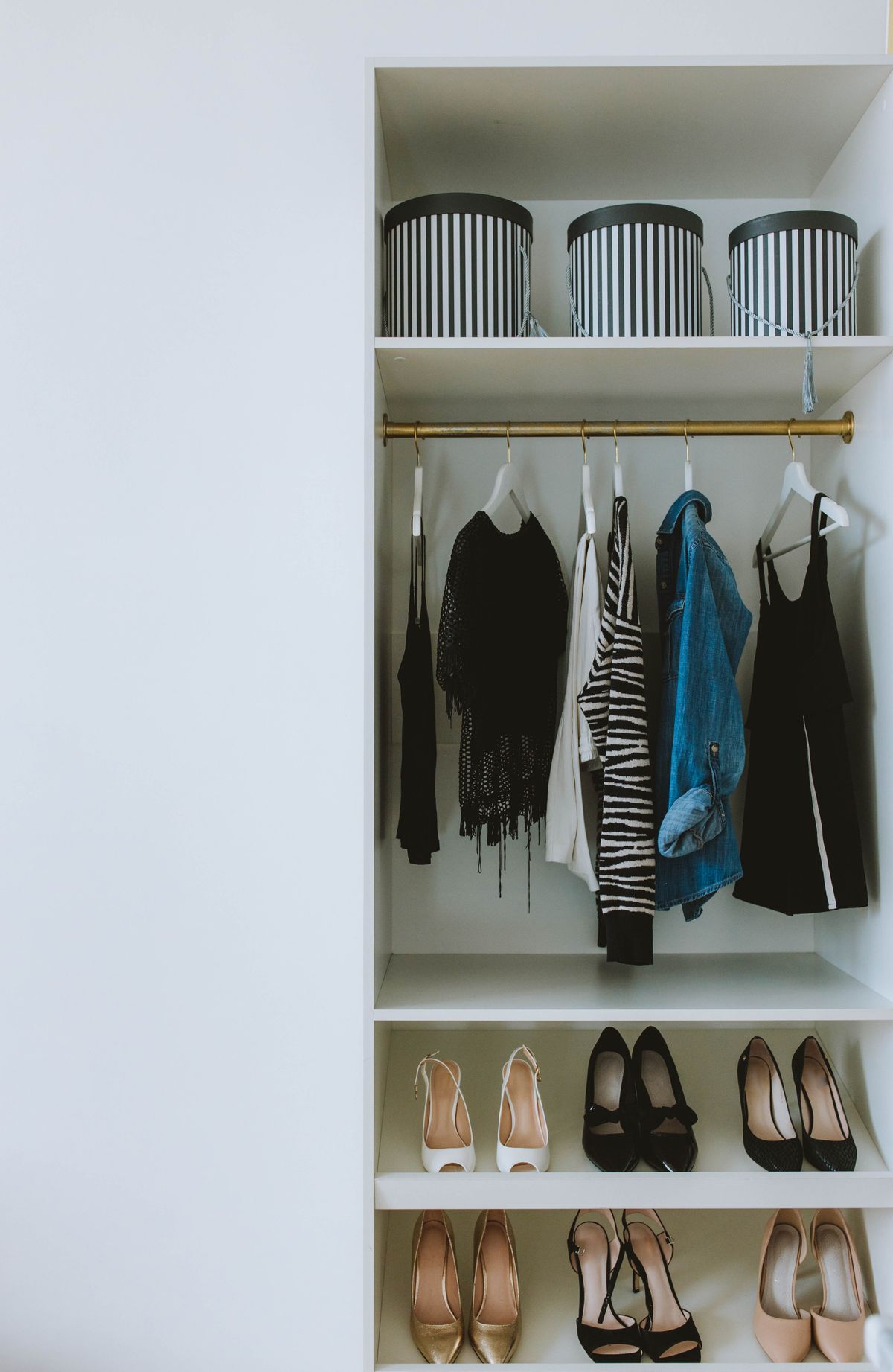
A simple kit closet system — two hanging sections, three shelves, one shoe row — turned my chaotic reach-in into zones. Clothes in the middle, shoes low, boxes high: I can find anything in the dark now.
The kit cost less than a new dresser and used the full 96 inches of height my old single rod wasted. In small spaces, vertical is almost always the free real estate.
Pro Tip: Install the shoe shelf at a slight angle; tilted shelves show every pair instead of hiding the back row.
6. One-Color Hanging Rail

Grouping one color family per rail section is my cheapest calm-down trick. My whites and soft pinks hang together, and the closet reads as serene even when it is completely full.
Color grouping speeds up laundry day — everything returns to its obvious home. In a small closet, that visual quiet matters most.
Pro Tip: Within each color, hang light to dark; your eye will find pieces faster than any label system.
7. Double-Hang Closet Rod
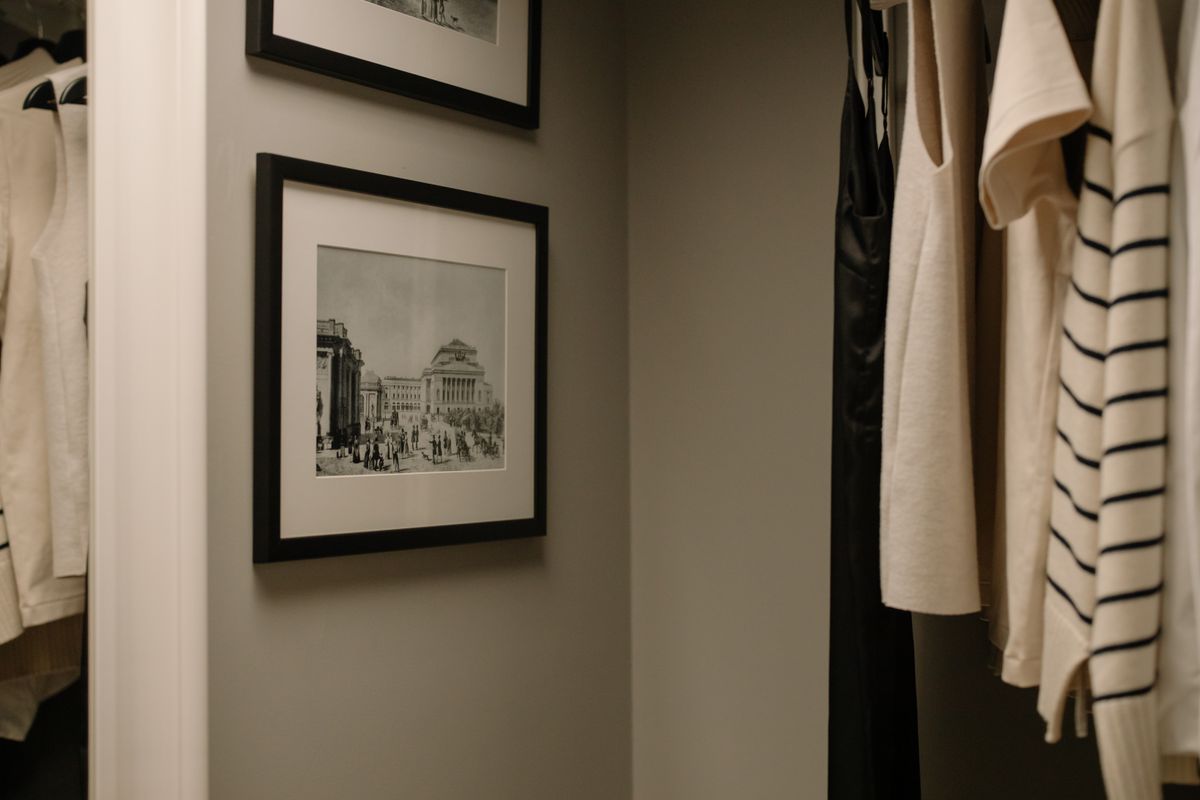
Doubling my hanging rod was the single biggest upgrade in this closet. Two rods — one at 84 inches, one at 42 — hold shirts above and folded-over trousers and skirts below, in the space one rod of dresses used.
Most shirts need 38 to 40 inches of drop, so a double-hang fits most standard closets. I kept one 24-inch section single for dresses and coats.
Pro Tip: Hang the heavier rod load on the side nearest the closet wall stud for extra support.
8. Slim Hangers for Every Shirt

Switching from chunky wooden hangers to slim velvet ones genuinely doubled my rail. A wooden hanger is about half an inch thick; a slim one is under a quarter inch — across forty shirts, that difference is a whole extra section.
Velvet grips straps and silk blouses that used to slide off. I swapped in one afternoon and donated the wooden set the same day.
Pro Tip: Buy slim hangers in one color; a mismatched hanger drawer creeps back in faster than you would believe.
9. Matching Wooden Hangers on One Rod
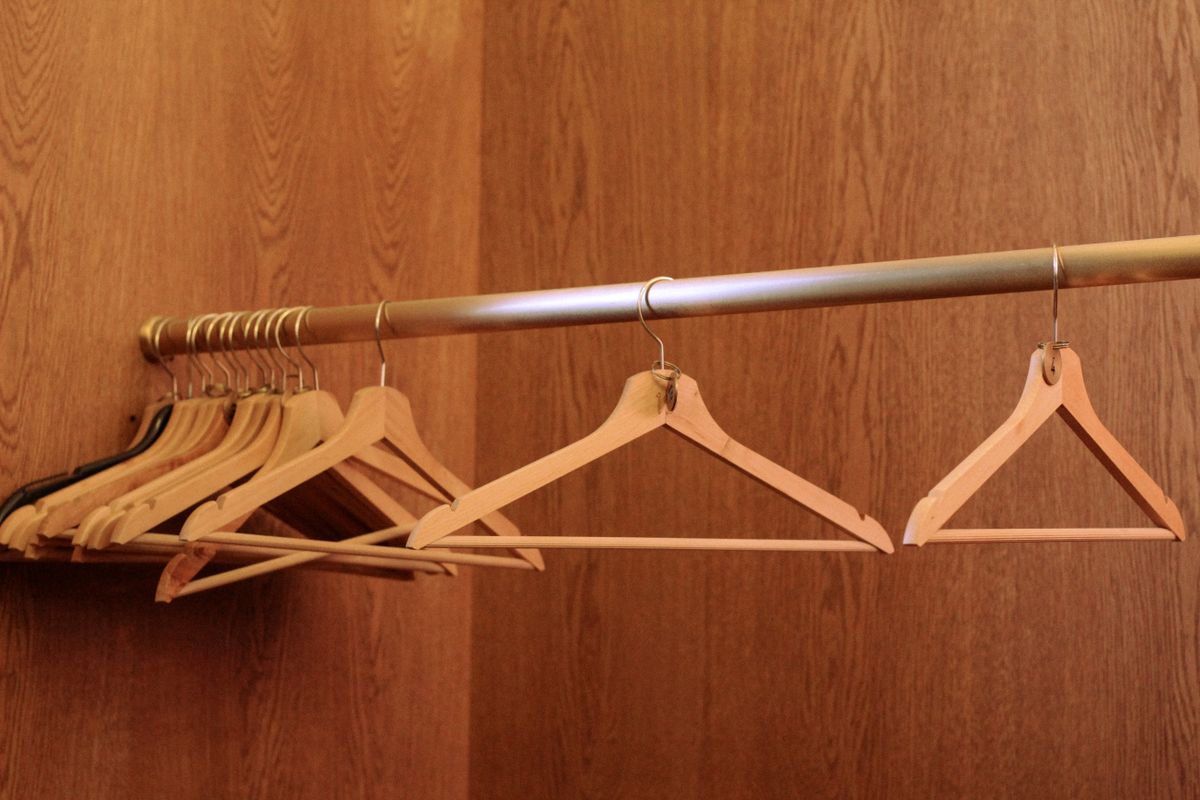
For my husband’s closet, matching wooden hangers were the answer instead. His shirts are heavier, the rod is short, and twelve identical hangers make twelve shirts look intentional instead of crammed.
Uniform hangers remove the visual static that makes small closets feel chaotic. His section holds fewer pieces than mine, but always looks like a shop rail.
Pro Tip: Space hangers a finger apart as you hang laundry; pre-spaced clothes never bunch into wrinkles.
10. Folded Stacks on Open Shelves
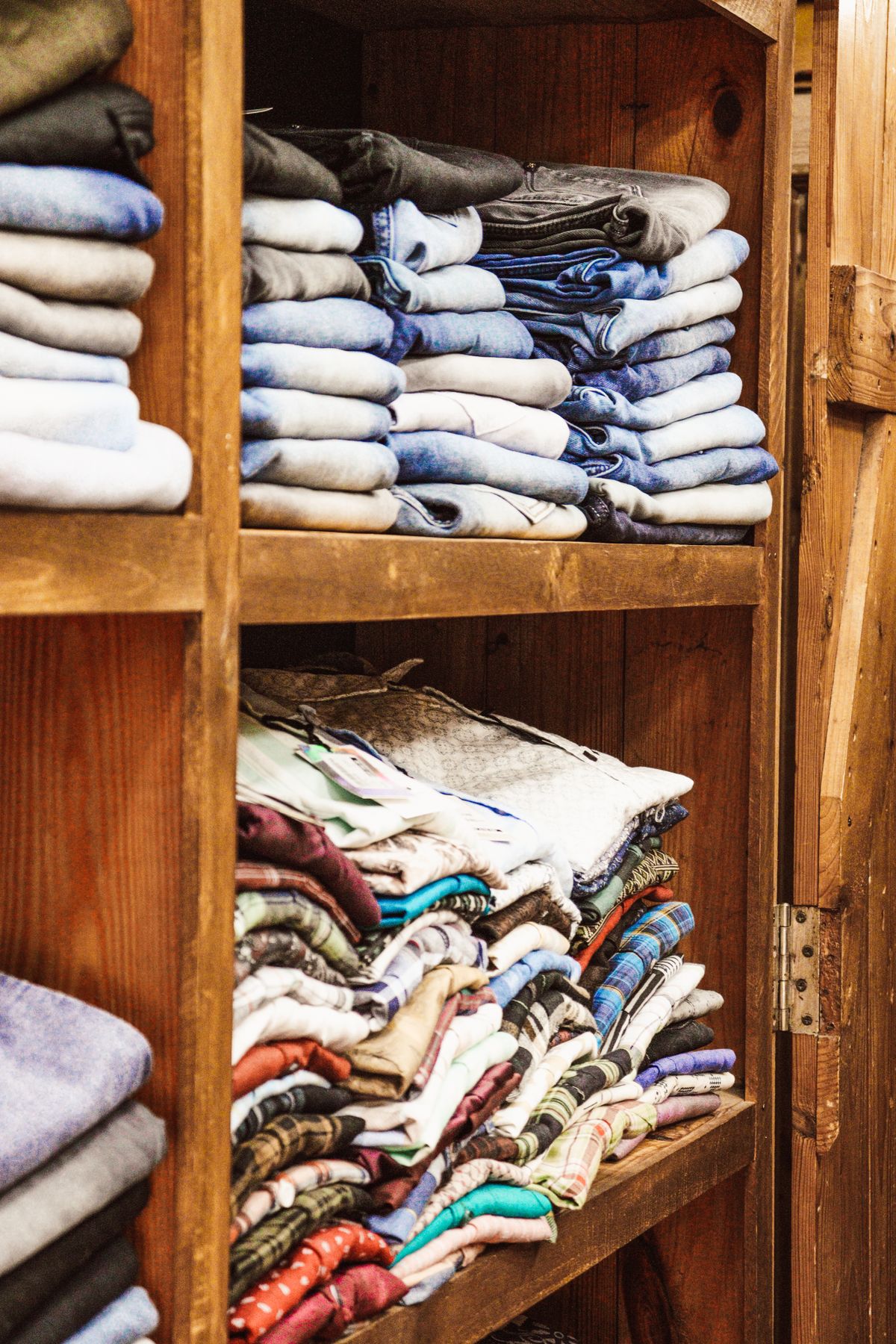
Knits, tees, and jeans live folded on my open shelves, because hanging stretches knitwear out of shape. I fold everything to the same rectangle — about 10 by 12 inches — so stacks stand straight like books.
I cap stacks at eight pieces — taller stacks topple, and the bottom three items never get worn anyway.
Pro Tip: File-fold in a drawer if stacks frustrate you; folded upright, every tee is visible at once.
11. Rolling Garment Rack
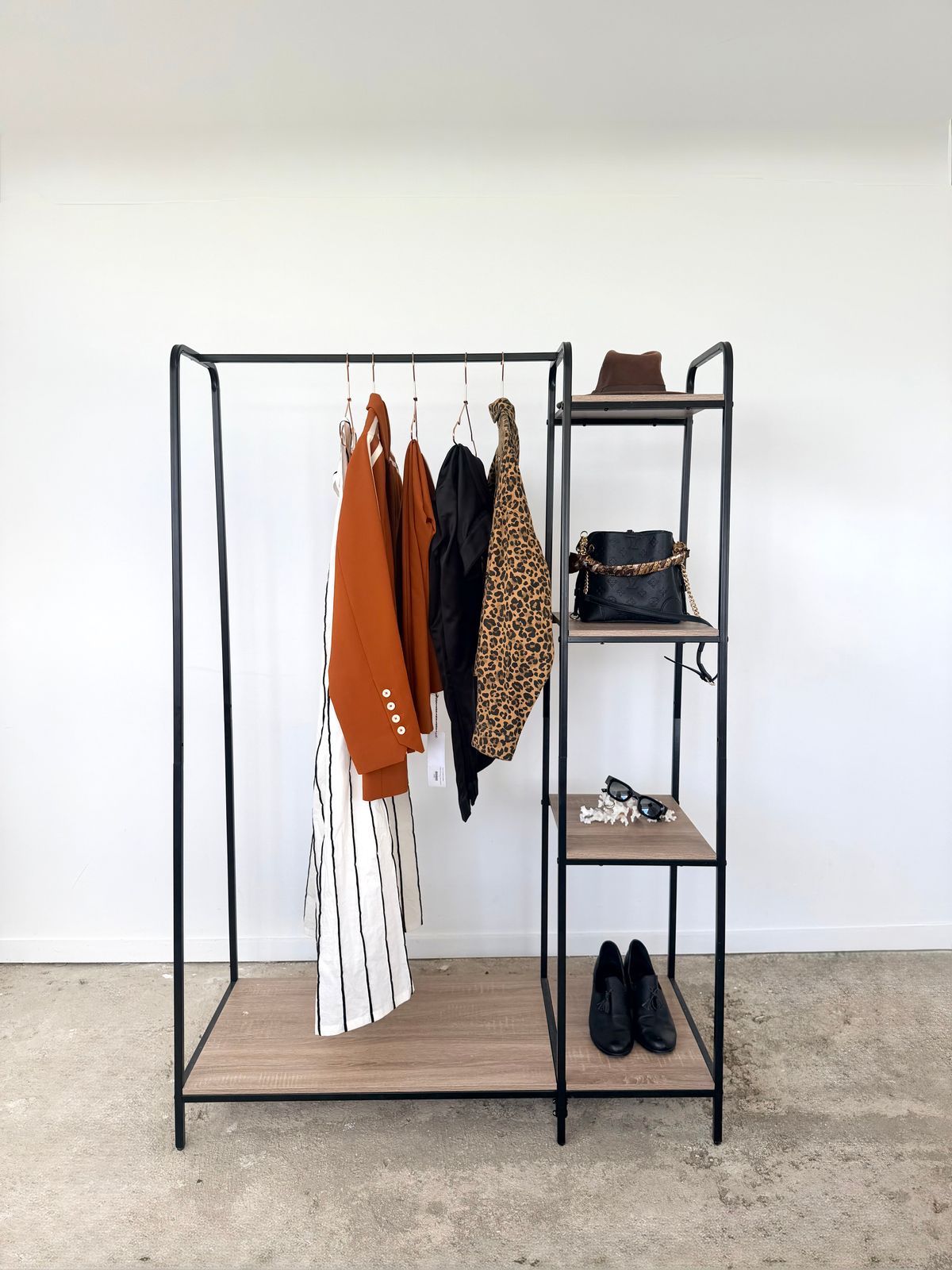
My rolling garment rack is the hardest-working piece in the house. It holds this week’s outfits in the bedroom, party dresses in the spare room at holidays, and laundry overflow when guests arrive.
A 42-inch rack holds roughly twenty hangers and rolls through a standard doorway. Because it moves, it never becomes a permanent pile.
Pro Tip: Lock the caster wheels once it is placed; a slowly rolling rack will migrate into your walkway overnight.
Read this next: My rack parks by the front door during party season, which is why my mudroom storage ideas had to work around it — they might help your entryway too.
12. Studio Garment Rack by the Door
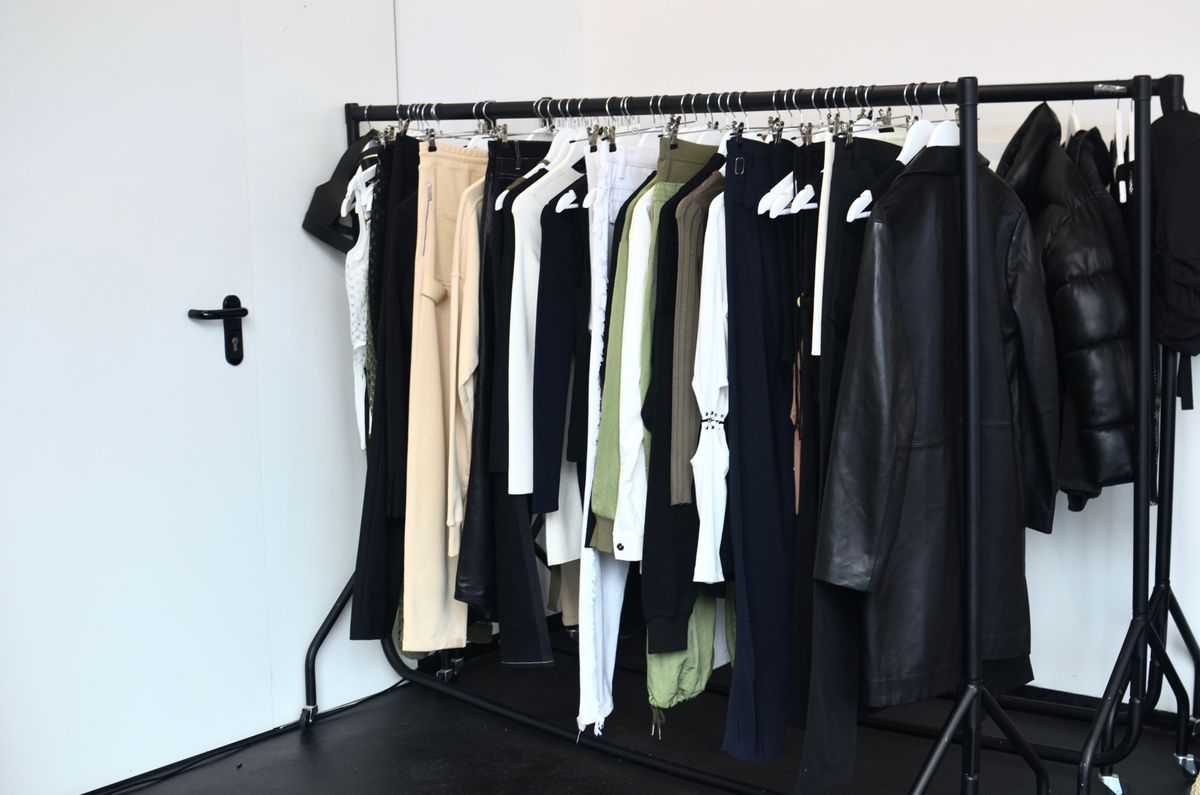
In my niece’s studio apartment, one garment rack by the door is the entire closet. Coats and everyday clothes share it, a basket underneath holds shoes, and a curtain panel hides it when she wants the room to feel less bedroom.
Her studio rail is 48 inches with about fifteen daily pieces; everything else lives in two suitcases under the bed — discipline I still admire.
Pro Tip: Hang studio clothes by outfit order, not category; getting dressed from one rail should take one minute.
13. Open Wardrobe with a Shoe Shelf Below
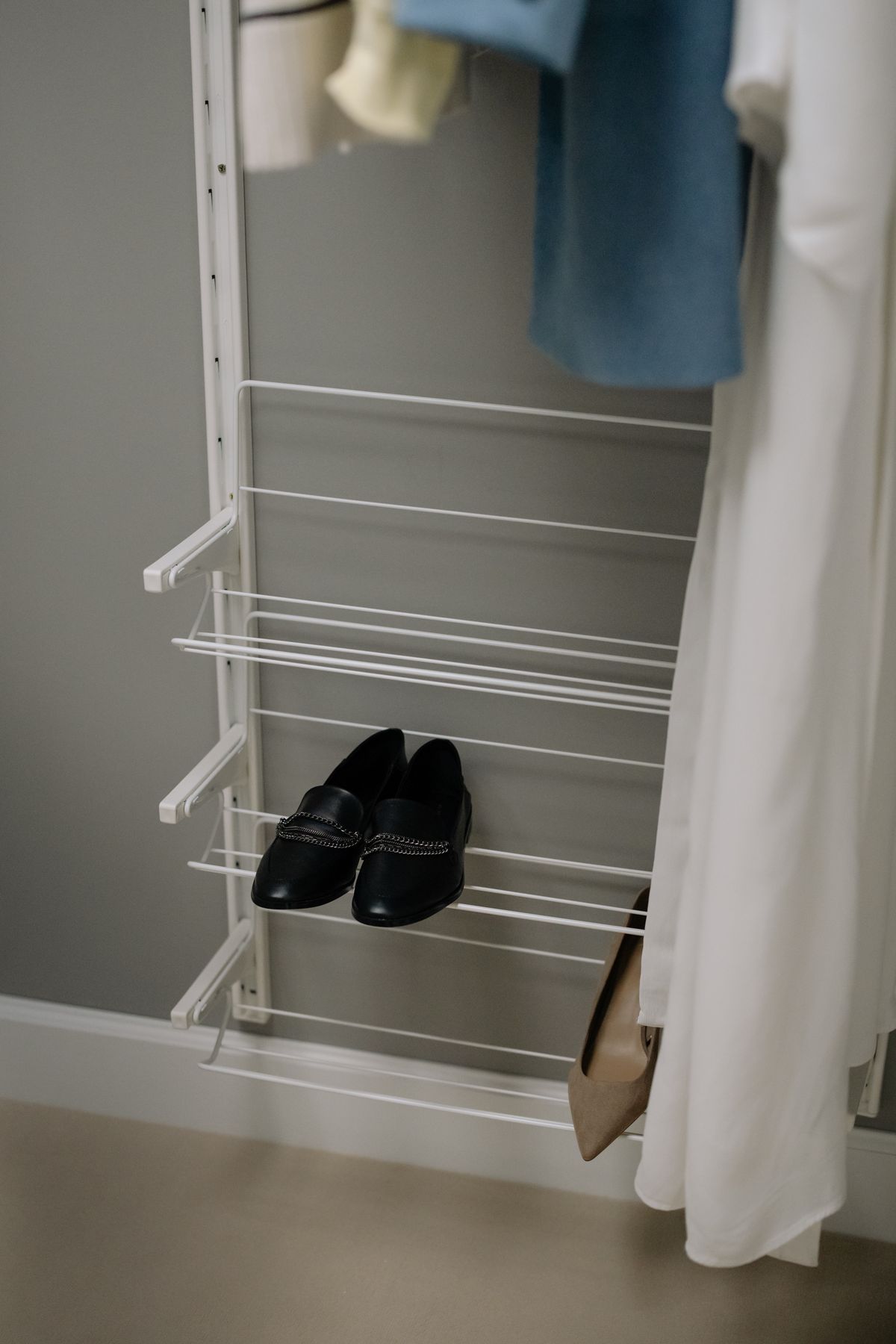
This open wardrobe pairs the hanging rail with a shoe shelf directly beneath it, and that pairing is smarter than it looks. Full outfits assemble in one glance, and the shoes stop migrating to the hallway.
The rail sits at 66 inches, shoe shelf at floor level — tall enough for midi dresses. I copied it for our guest room; visitors unpack properly now.
Pro Tip: Keep the shoe shelf to three pairs; it is a staging shelf, not the whole shoe collection.
14. A Long-Hang Section Just for Dresses
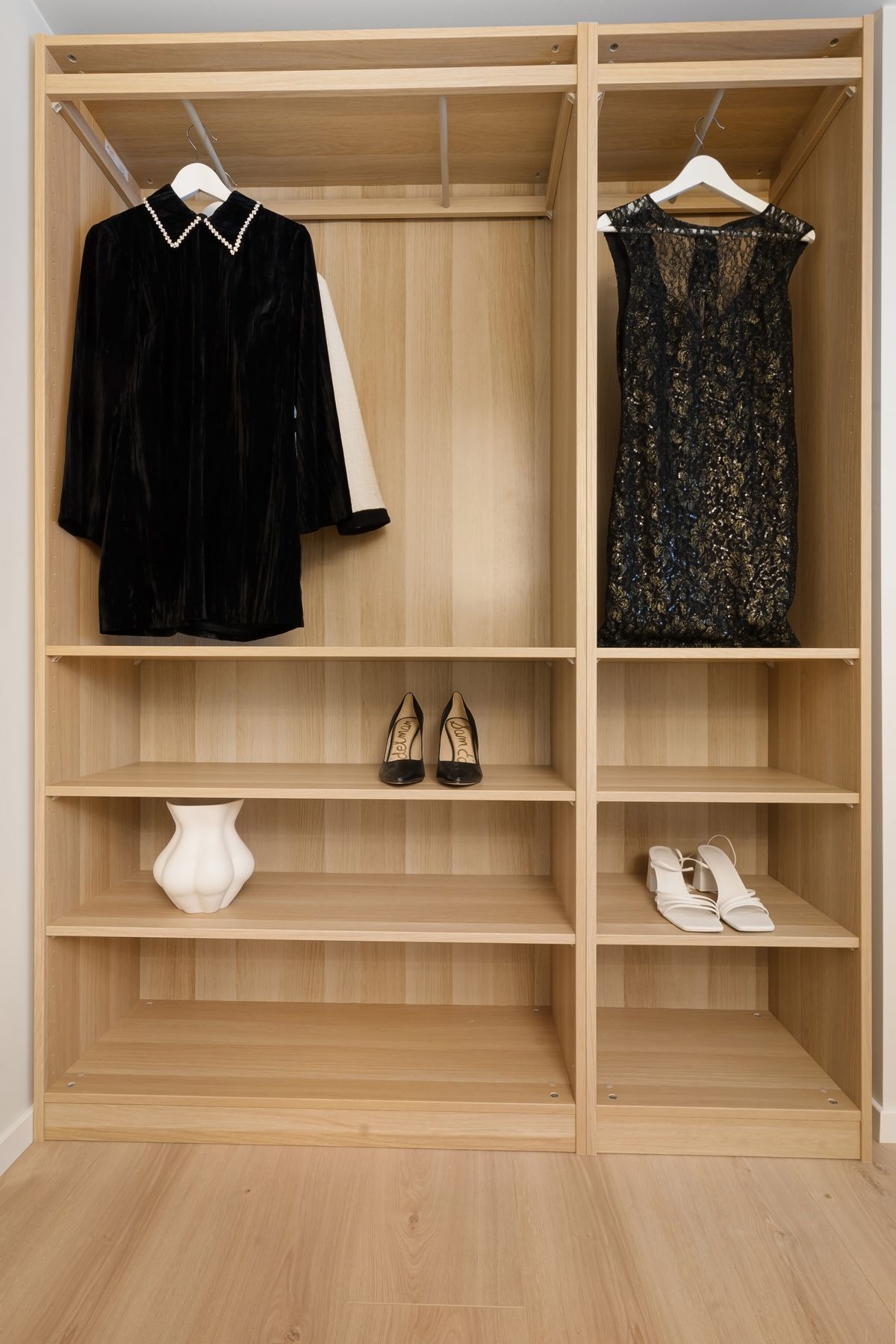
Dresses and long coats get one protected 24-inch section of my closet, because folding a dress ruins it and squeezing it between shirts wrinkles it. Everything else in the closet is negotiable; the long-hang section is not.
Measure your longest dress, add two inches — that is the rod height. Mine is 58 inches, leaving a short shelf beneath for heels.
Pro Tip: Store special-occasion dresses in breathable garment bags, never dry-cleaner plastic, which traps moisture.
15. All-Black Hangers for a Streamlined Rail
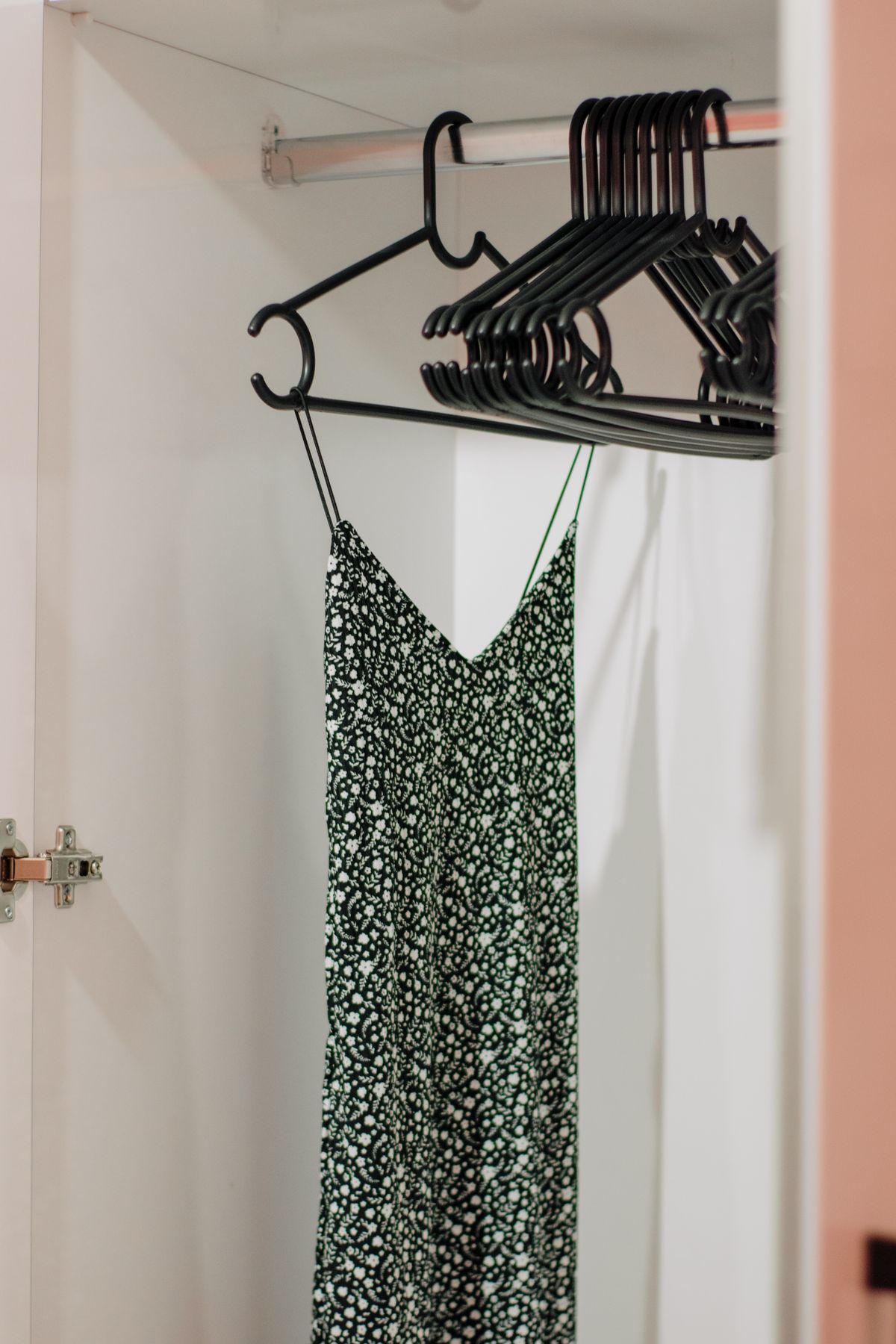
My evening clothes hang on black hangers, and the rail looks like a boutique’s after-dark section. In a small closet, anything that makes the space feel designed rather than stuffed is worth the tiny cost.
Black hangers hide scuffs white ones show within a month. I buy twenty at a time so the set never mixes with my everyday slim hangers.
Pro Tip: Keep one empty hanger at the end of each rail — it is the visual full stop that makes a rail look finished.
16. Shirts on a Wooden Beam Rail
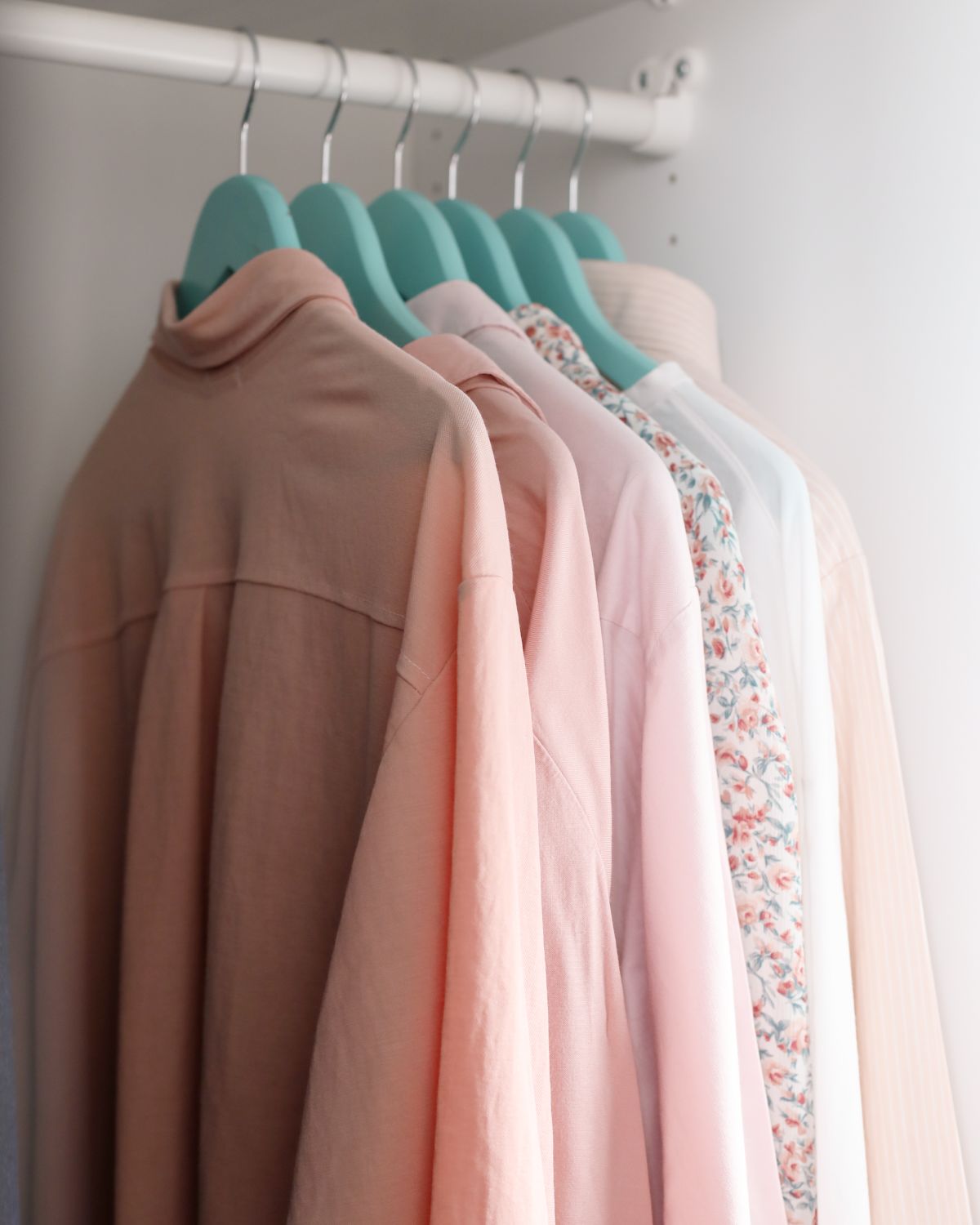
A friend mounted her rail on a wooden beam in an attic room where a wardrobe would never fit the sloping ceiling. Shirts hang along the beam, and the awkward eaves corner became the best storage in the flat.
Exposed-structure storage works on any sturdy beam or alcove. Confirm the load first — forty shirts weigh around 20 pounds.
Pro Tip: In eaves spaces, hang shortest garments at the lowest end so nothing drags on the slope.
17. Kids’ Closet with Labeled Bins
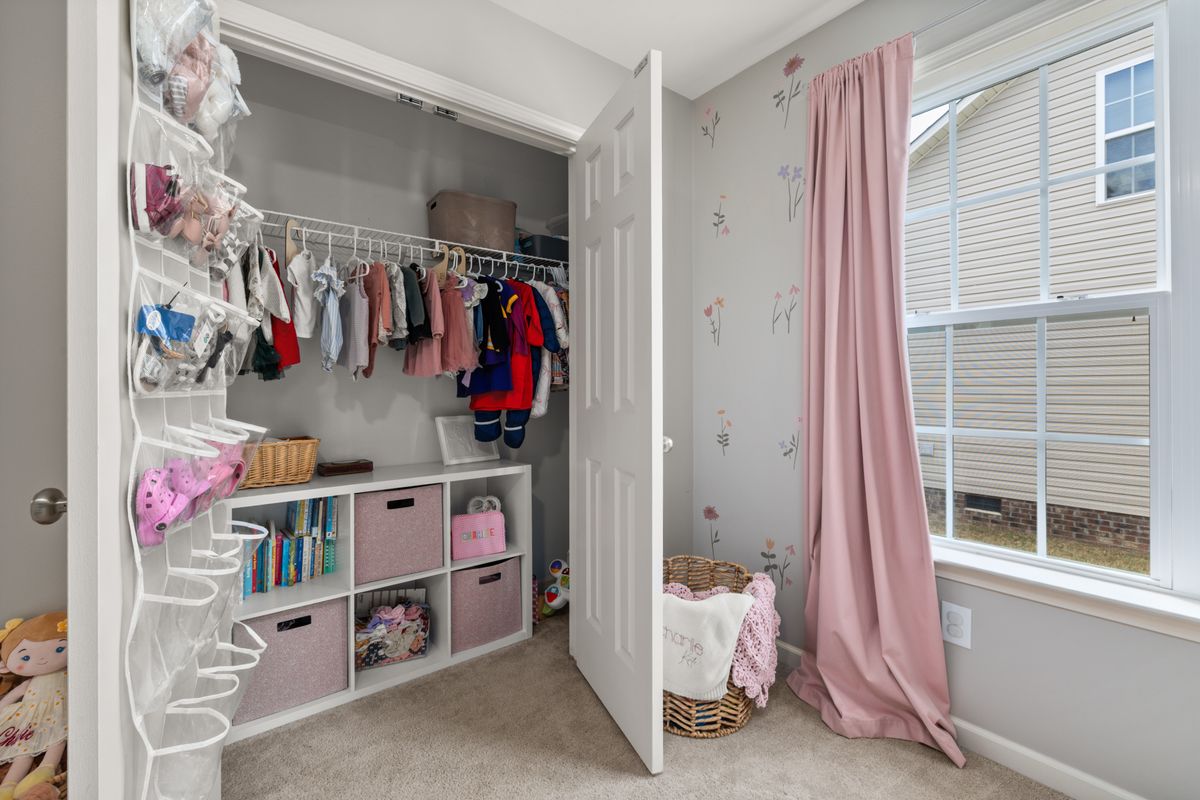
The grandkids’ closet at my house runs on labeled bins: one for pajamas, one for play clothes, one for the dress-up things that otherwise colonize the floor. Pictures on the labels mean pre-readers can tidy up solo.
Kids need only 30 inches of drop, so I stacked a second rod below the first — a ten-outfit closet now holds thirty, sorted.
Pro Tip: Put tomorrow’s outfit hook at kid height; morning decisions made the night before save everyone’s sanity.
18. Kids’ Closet with Toy-and-Clothes Zones
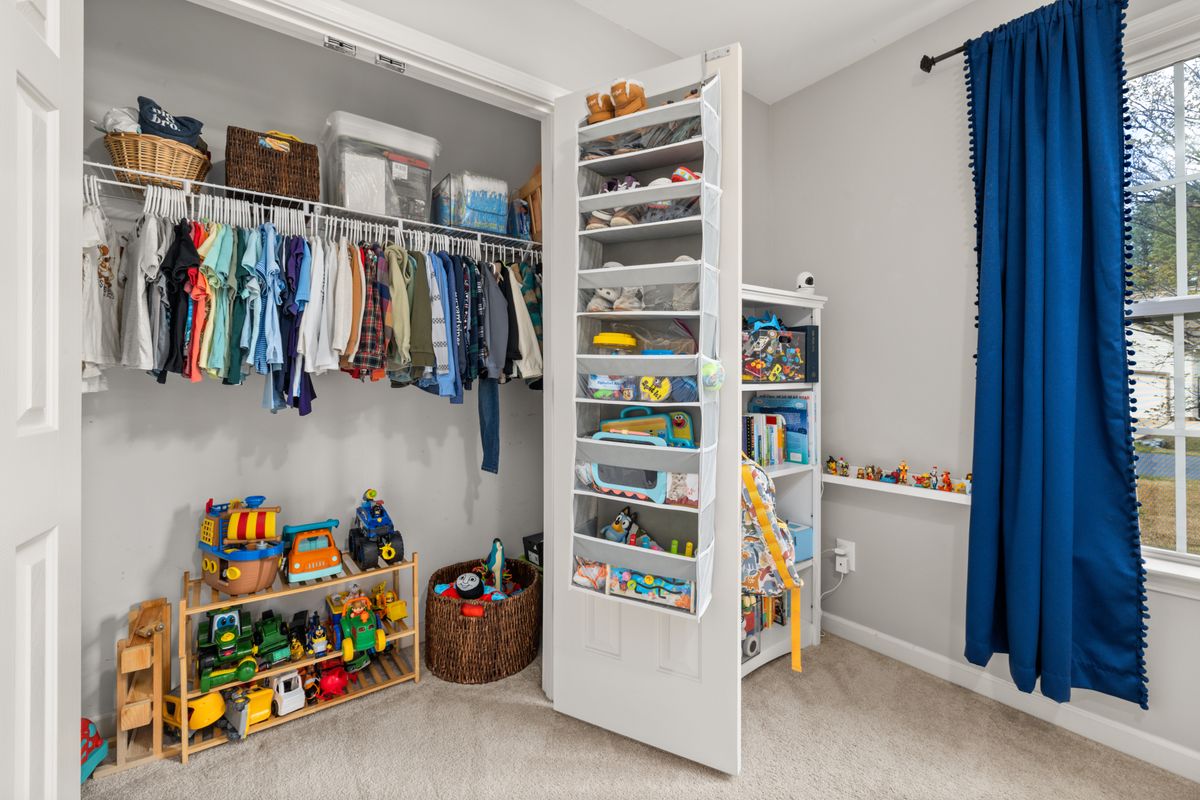
This second kids’ setup splits the closet in half: clothes on the left, toys and books on the right. When storage zones are obvious, small people actually respect them — most days, anyway.
The split fits a standard 48-inch kids’ closet: rod for clothes, cubes for toys, and a floor that stays clear for hide-and-seek.
Pro Tip: Rotate the toy zone monthly from a hallway bin; fresh toys, same small closet, zero new storage needed.
19. Handbags on Closet Shelves
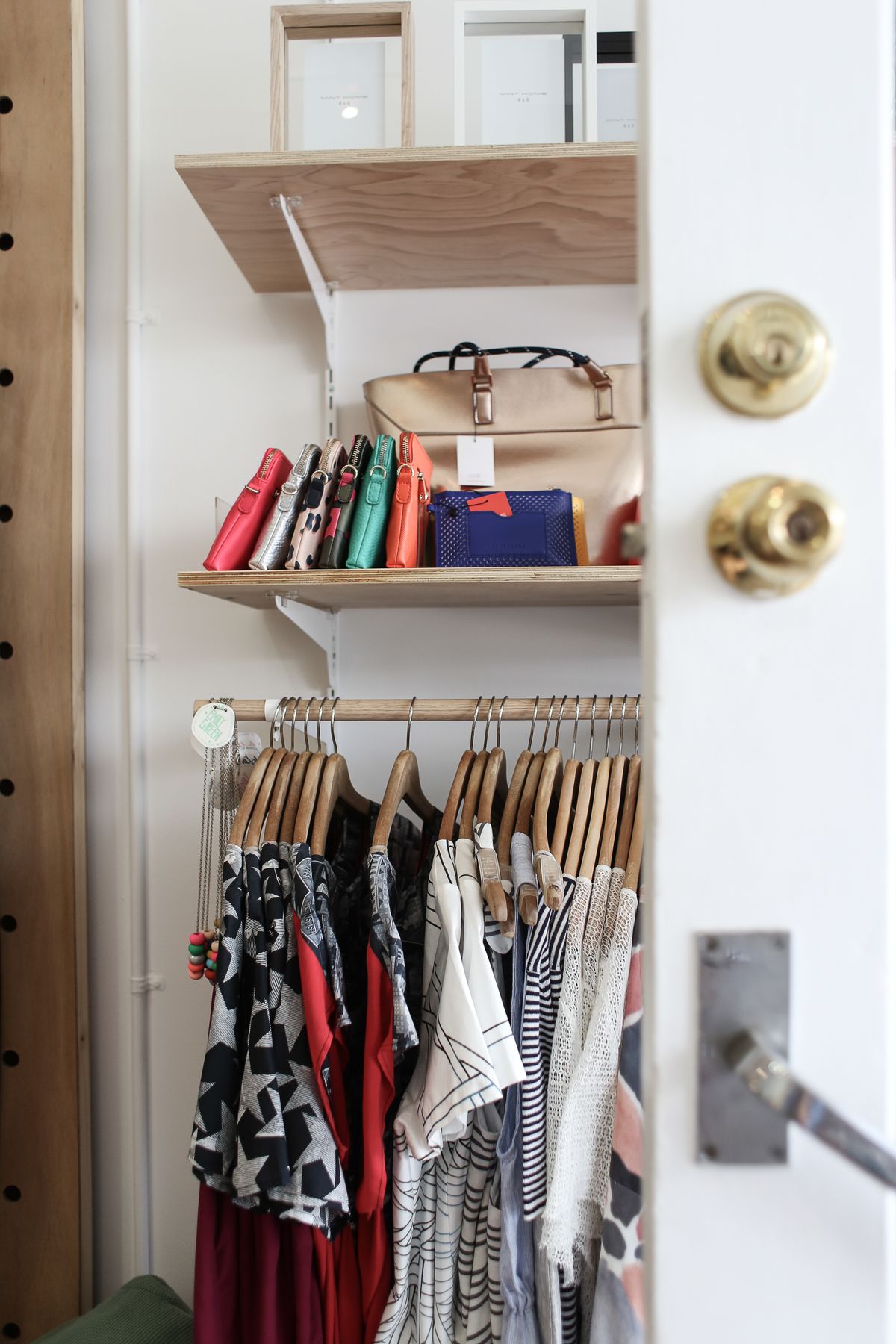
My handbags used to live in a heap on the closet floor, and the bottom bag aged five years for every one at the top. Now they stand in a row on a shelf, stuffed lightly, dust-bagged, visible.
A 12-inch shelf holds about five everyday bags upright. Displaying them means I actually rotate bags instead of carrying one for six months.
Pro Tip: Keep one hook free beside the shelf for the bag in use today; it stops the grab-and-dump habit.
20. Corner-Fitted Walk-In Storage
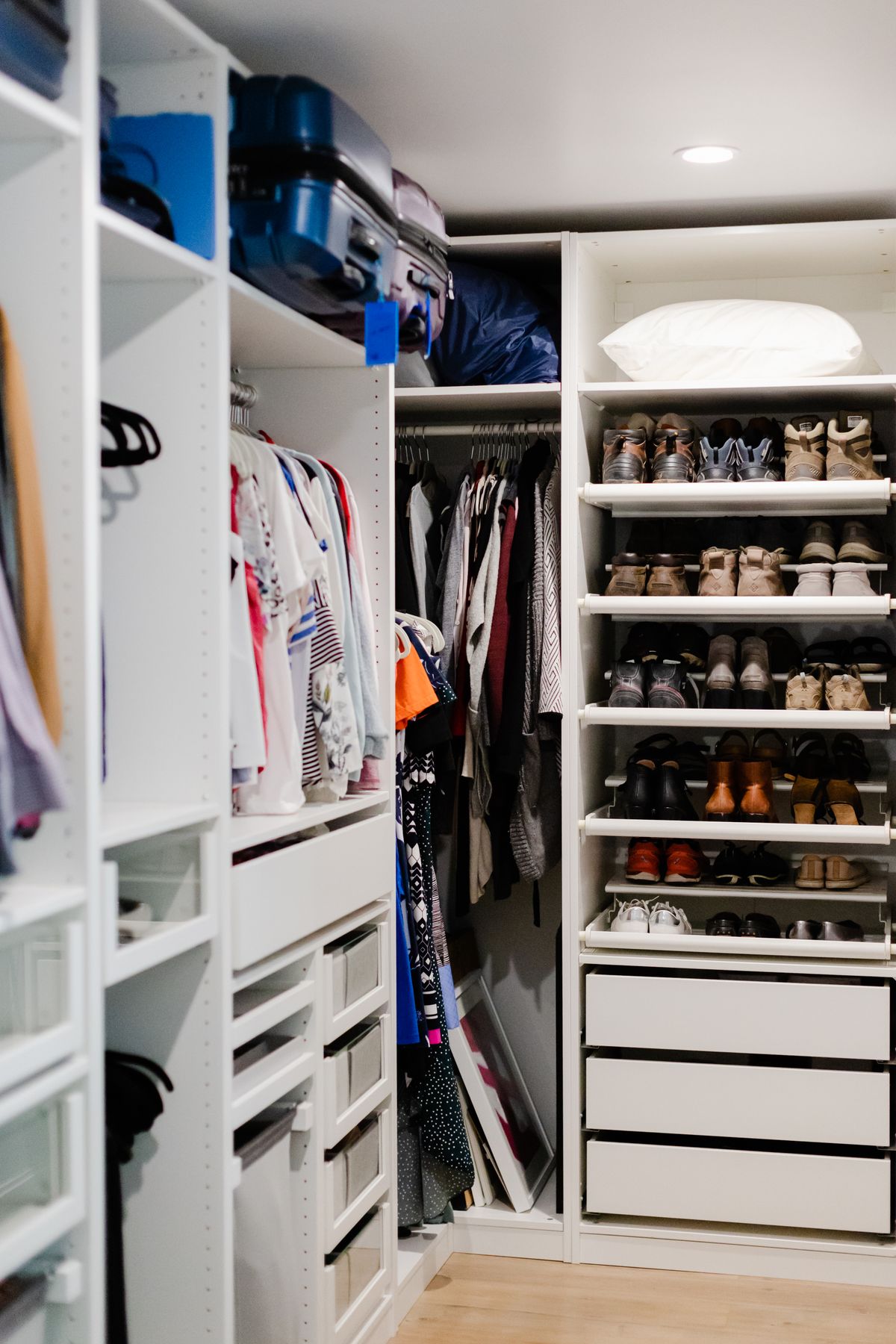
When we finally fitted the box-room closet, wrapping shelves around the corner was the revelation. Corners are where small closets waste a full cubic yard; corner shelves turned ours into shoe and folded-knit storage.
Clothes hang on the two straight walls; the corner is shelves only. Nothing hangs in front of anything else — the rule that fixed every closet since.
Pro Tip: Corner shelves at 14 inches deep beat corner hanging rails; you can see and reach every single item.
21. The Seasonal Rotation Rail
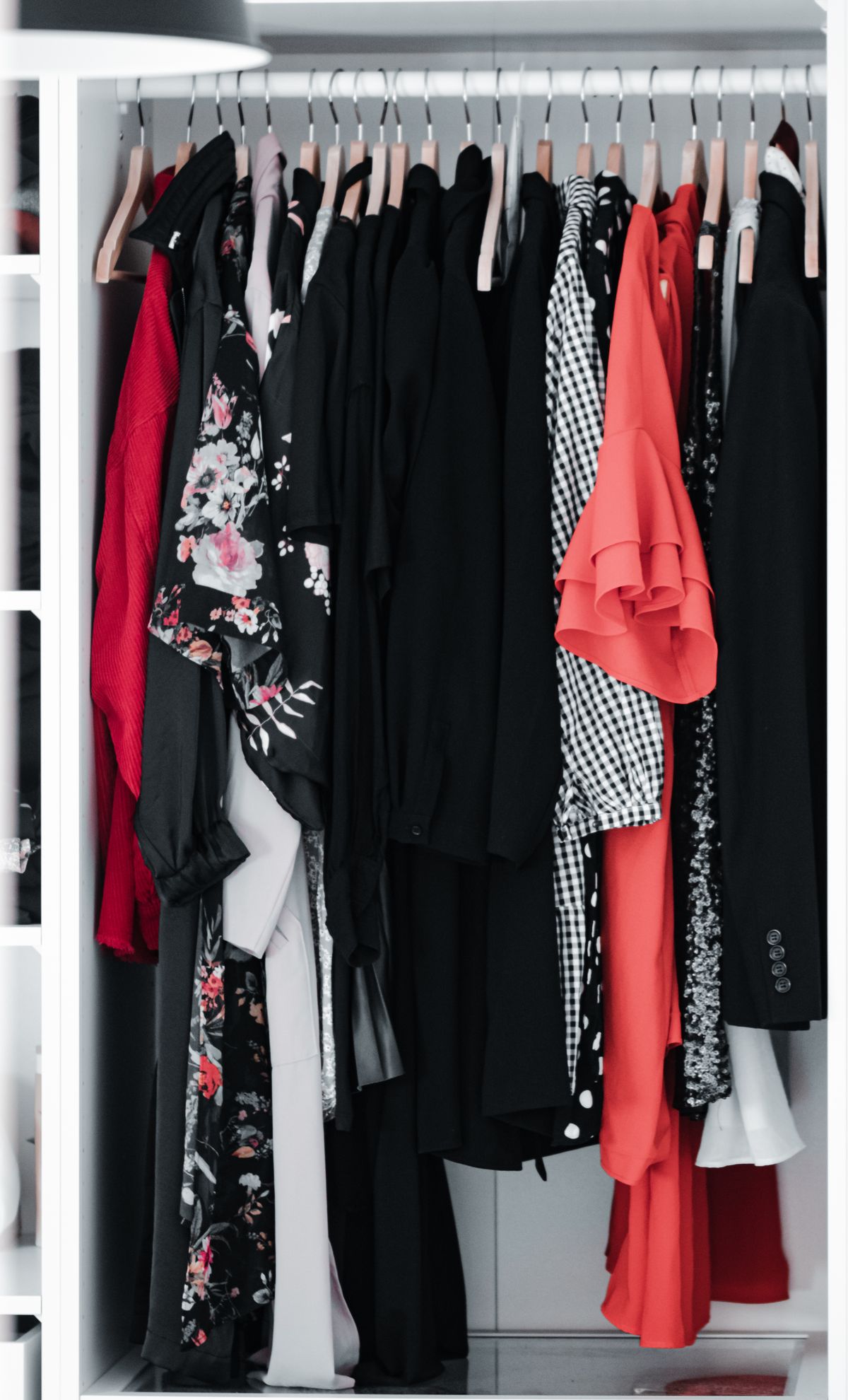
Twice a year, this rail gets emptied completely. Summer clothes come down, winter goes up, and anything unworn for a full season gets donated. The rotation is the system — the rail is just where it happens.
My out-of-season half lives in two top-shelf boxes, so the rail only holds what the weather is doing. Small closets fail as four-season closets.
Pro Tip: Photograph the rail before each swap; next season’s you will shop your own closet instead of a store.
22. Color-Grouped Closet Wall

My final system is pure joy: one closet wall grouped by color, rainbow order. It sounds decorative, but it is the fastest dressing system I own — I think ‘blue today’ and my hand is already on the right section.
Color grouping exposes duplicates instantly — I owned four near-identical black cardigans before this wall told me the truth. Now: one, worn constantly.
Pro Tip: Photograph your color wall yearly; watching it shrink to favorites is the best declutter motivation I know.
Also read: Once the closet behaves, the hallway is next — my boot storage ideas ended the shoe pile by my door for good.
Frequently Asked Questions About Clothes Storage for Small Spaces
How can I store clothes in a room with no closet?
Start with a garment rack or open rail — 42 to 48 inches holds a working wardrobe — plus baskets or a cube unit underneath for folded pieces. A curtain keeps it feeling like a room.
Is it better to fold or hang clothes in a small closet?
I hang what wrinkles — shirts, dresses, trousers — and fold what stretches, like knits, tees, and jeans. Hanging everything wastes rail space; folding everything guarantees wrinkles. The mix is the answer.
How much space do slim hangers really save?
In my closet, a real half. Wooden hangers run about half an inch thick and slim velvet ones under a quarter inch, so forty shirts that filled my rail now take roughly twenty inches. It is the cheapest capacity upgrade I have ever bought.
Where should I store out-of-season clothes?
Up high or under the bed — anywhere outside your daily reach zone. I use labeled boxes on the closet’s top shelf. Clean everything before boxing it, and skip airtight plastic for natural fibers, which need a little airflow to stay fresh.
How do I keep a small wardrobe from smelling musty?
Airflow and dry clothes, mostly. I never hang anything even slightly damp, I leave the closet door open an hour a day, and cedar blocks sit on each shelf. A bowl of baking soda, swapped monthly, absorbs the rest.
How often should I declutter a small closet?
I do a full edit twice a year at the seasonal rotation, plus a five-minute scan monthly. Small closets have no buffer for ‘maybe’ clothes — if I have not worn it in a year and it is not occasion wear, it goes.
Final Thoughts
A small closet is not a storage failure — mine holds more, more calmly, than the big closet I had twenty years ago. The difference is entirely in the matching: the right garment on the right hanger, shelf, rail, or box.
Start with the slim-hanger swap and one honest declutter this weekend. Those two moves alone will show you which of these 22 ideas your space is actually asking for.

3 Comments