25 Holiday Decor Storage Ideas for 2026
Holiday decorating makes my home feel warm and festive, but putting everything away afterward can be a different story. Christmas ornaments, artificial greenery, string lights, seasonal pillows, and decorative dishes all need a place to go once the celebrations are over.
I find that holiday storage becomes much easier when I plan where each item belongs before packing anything away. A few well-chosen containers, clearly marked shelves, and smart use of unused spaces can help me keep decorations organized without sacrificing valuable living space.
In this guide, I’m sharing 25 holiday decor storage ideas that work for different homes, from small apartments to houses with garages, closets, and storage rooms. I’ll also cover ways to protect fragile pieces, manage bulky decorations, and make unpacking next season less frustrating.
I organize holiday decorations by type, season, size, and how often I use them. Clear bins, divided ornament boxes, wall-mounted wreath storage, dedicated tree bags, and sturdy shelving can help me keep everything accessible without creating clutter. For smaller homes, I make better use of vertical space, under-bed storage, closet shelves, and rolling carts.
Save this for later
Table of Contents
I also pay attention to storage conditions. Decorations need a dry location, fragile items need cushioning, and electrical lights should be checked before packing. With a simple labeling system and a designated place for each category, I can protect my favorite decorations and make next year’s decorating easier.
Key Takeaways
- I sort decorations by holiday and category before putting them away.
- Clear bins and readable labels help me find items without opening every container.
- Divided boxes and protective padding reduce the risk of damage to fragile ornaments and dishes.
- Vertical shelves, closet organizers, and under-bed containers help me save floor space.
- I store lights loosely enough to avoid damaging their wires and check them before reuse.
- I choose dry, suitable storage areas and keep delicate decorations away from heat, leaks, and excessive humidity.
- I review my collection each year so I don’t waste storage space on decorations I no longer use.
Related article: 16 Balcony Storage Ideas for 2026
Where Should You Store Christmas and Holiday Decorations in a Small Home?
When storage space is limited, I don’t automatically assume that I need another cabinet or a larger storage room. I first look at the spaces I already have and decide which ones can accommodate seasonal items without interfering with everyday routines.
The top shelves of a closet, the area beneath a bed, and the upper sections of a utility cupboard can be useful for lightweight decorations. A garage or basement may work for sturdy items, provided the area stays dry and the containers are suitable for those conditions.
I also make use of vertical space. A shelving unit, wall-mounted hooks, or a narrow rolling cart can hold decorations without spreading boxes across the floor. Before buying anything, I measure the available width, height, and depth to make sure the storage solution fits.
My main rule is to keep frequently used items easy to reach and reserve higher shelves for lightweight decorations that I only need once a year. I avoid placing heavy containers overhead or storing valuable, delicate pieces in damp or extremely hot areas.
Pro Tip: Before choosing a storage system, group your decorations into categories and estimate how many containers each category needs. This helps you buy the right sizes instead of ending up with organizers that don’t fit your belongings.
Wreath Wall
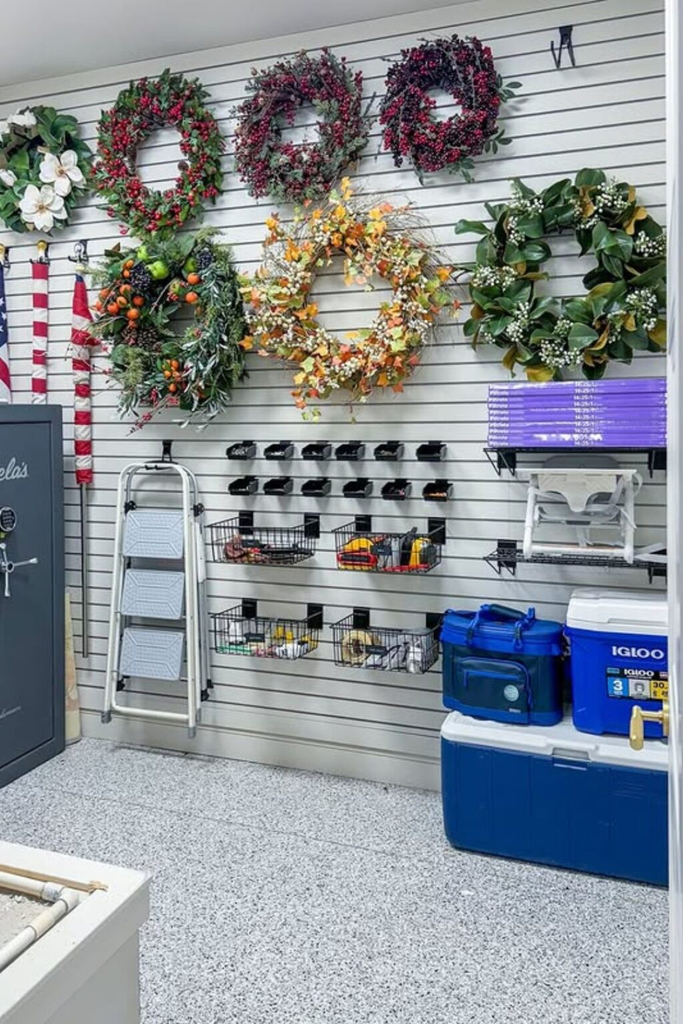
Wreaths can take up more room than expected, especially when I have separate designs for Christmas, autumn, Easter, or other occasions. Stacking them on top of each other can flatten decorative foliage, bend wire frames, or damage attached ornaments.
I prefer hanging wreaths individually on a sturdy hook rail or slat wall. This arrangement keeps them visible and prevents them from being crushed under other decorations. A spare closet wall, utility room, or suitable garage wall can work well for this setup.
For delicate wreaths, I use a breathable protective cover or a properly sized wreath container, depending on the materials. I also check that the hanging point supports the wreath’s weight and that it won’t fall when someone opens a nearby door.
If wall space is limited, I can use a vertical wreath organizer or a dedicated storage bag that accommodates several wreaths without squeezing them together.
Pro Tip: Label each wreath by holiday or room so I can choose the right one without removing every item from the wall.
Clear Bins
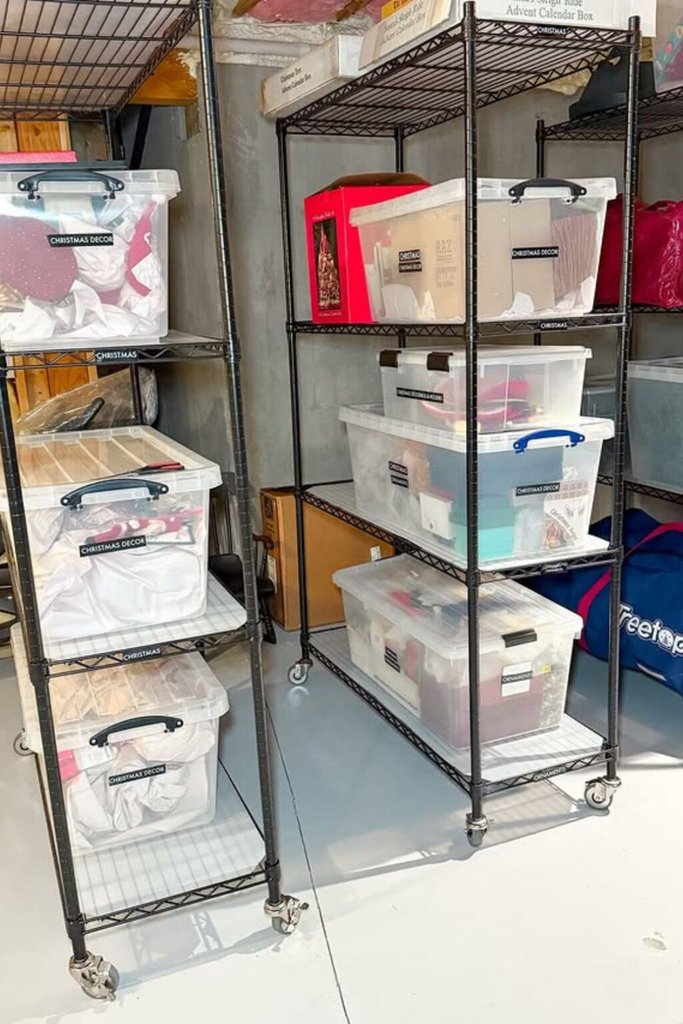
Clear storage bins are useful when I want to see what I own without opening every box. They work particularly well for ornaments, artificial greenery, tree accessories, and smaller decorations that benefit from being grouped together.
I choose containers based on the items inside rather than buying one oversized bin for everything. Smaller boxes are easier to lift and organize, while larger containers can accommodate lightweight, bulky pieces such as artificial garlands.
I place the bins on sturdy shelves whenever possible. This keeps them off the floor and makes it easier to retrieve the container I need. I also leave enough space to pull each bin out without moving the entire stack.
Clear plastic does not automatically protect decorations from moisture, temperature changes, or crushing. I make sure everything is clean and dry before packing it away, and I avoid tightly packing delicate items against the lid.
Pro Tip: Use clear bins for visibility and add a label on the front for faster identification. A bin containing Christmas tree lights, for example, should be labeled accordingly rather than simply marked “Christmas.”
Label System
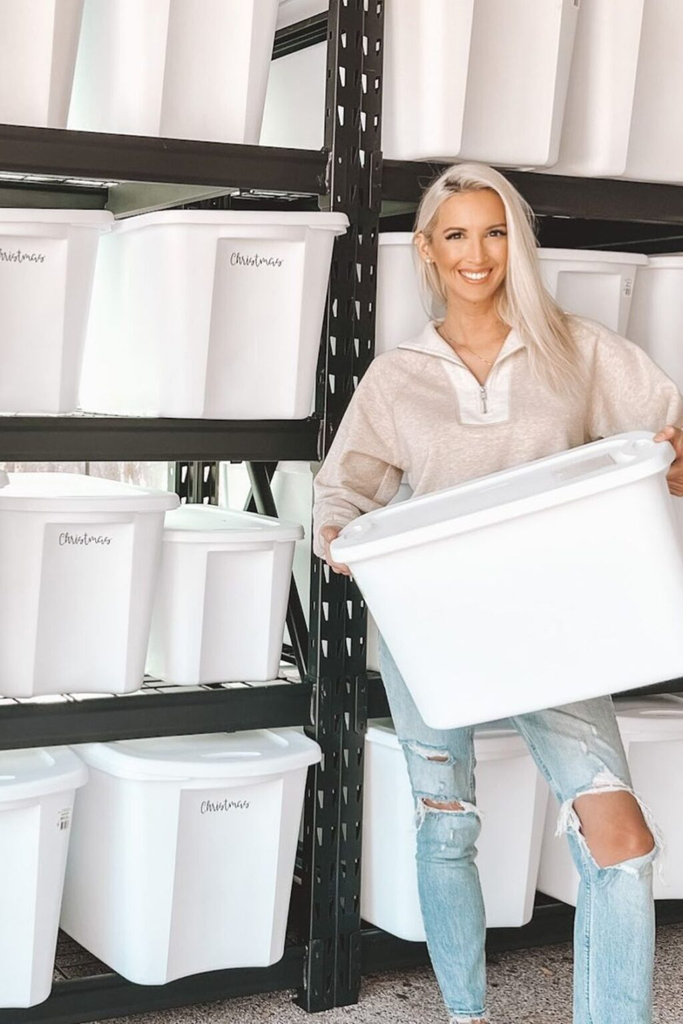
I find that a good labeling system can make a bigger difference than buying more storage containers. Without labels, even a well-organized shelf can turn into a guessing game when I need one particular decoration.
I assign each container a specific category, such as tree ornaments, outdoor lights, stockings, table decorations, or gift-wrapping supplies. If I have several boxes for the same holiday, I add a more specific description to each one.
For example, instead of labeling three containers “Christmas,” I might label them “Christmas Ornaments,” “Christmas Lights,” and “Christmas Table Decor.” This makes it easier to put things away in the correct place after the season ends.
I use labels that remain readable throughout storage and place them where they can be seen when the containers are stacked on shelves. If I use opaque bins, detailed labels are especially important.
Pro Tip: Keep a simple inventory on your phone or in a notebook if you have many containers. I can note which shelf holds each category without needing to unpack the boxes.
Ornament Cases
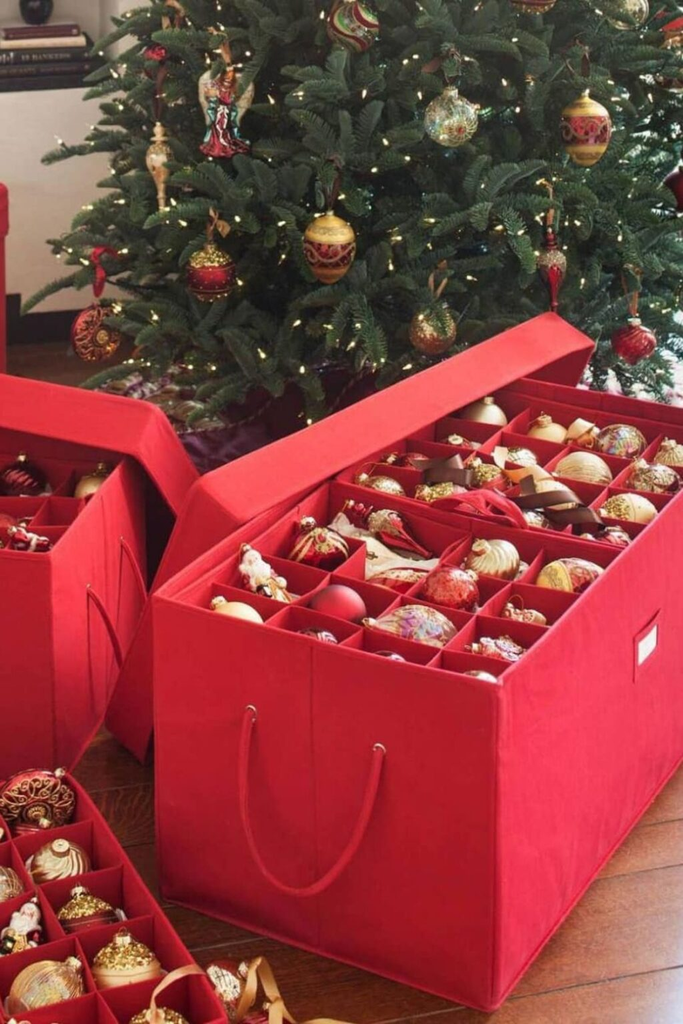
Glass ornaments, ceramic decorations, and sentimental keepsakes need more protection than ordinary seasonal accessories. I avoid placing them loosely in a large box, where they can knock against one another when the container moves.
Divided ornament cases give each piece its own compartment. I choose a case with compartments that fit the ornaments rather than forcing larger pieces into small sections.
For unusually shaped or especially delicate ornaments, I add acid-free tissue paper or another suitable soft protective material. I keep hooks and small hanging accessories in a separate labeled pouch so they don’t scratch painted finishes.
Before packing, I check each ornament for loose parts or existing damage. I also make sure the container closes securely without pressing against anything inside.
For valuable or sentimental decorations, I store the cases somewhere stable and dry rather than in a location exposed to extreme temperatures or accidental impacts.
Pro Tip: Keep the heaviest ornament cases on lower shelves. This makes them easier to lift safely and reduces the chance of a fragile box falling from above.
Holiday Zones

I find it easier to manage seasonal decorations when each holiday has a designated storage area. Instead of mixing autumn leaves, Halloween accessories, Easter decorations, and Christmas ornaments in the same containers, I group them by the time of year I use them.
A shelving unit can have separate sections for each season. Larger holidays may need several containers, while a smaller collection might fit in one box. I adjust the arrangement to match my actual belongings rather than giving every holiday the same amount of space.
I also consider when I decorate. Items needed early in the season should be easier to reach than decorations used for a single occasion later in the year.
If I have limited shelving, I can use a single section for several holidays, provided each category has its own labeled container. This approach works in closets, storage cupboards, garages, and dry basements.
Pro Tip: Keep a small box of frequently used seasonal accessories near the front of the relevant shelf. This can hold items such as hooks, ribbon, batteries, or reusable hanging supplies.
Tree Storage
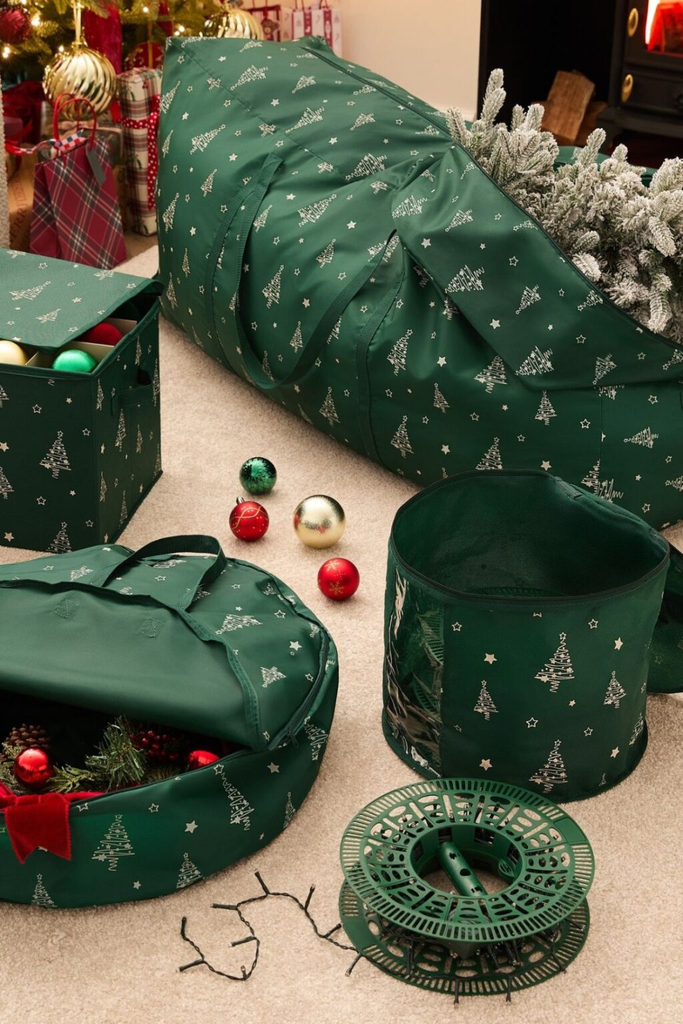
Artificial Christmas trees can be awkward to store because their branches and sections take up considerable room. If I force a tree into an ordinary box that is too small, I risk bending the branches or damaging the stand and connecting parts.
A dedicated tree storage bag is a practical option. After taking the tree apart according to the manufacturer’s instructions, I fold the branches gently and place each section inside the bag without forcing it into position.
I keep the tree stand, assembly hardware, and any removable pieces together so I don’t have to search for them next December. If the tree has multiple sections, I can separate them with protective material to reduce rubbing during storage.
Before choosing a location, I measure the packed tree and check whether the bag can fit through the doorway and into the intended storage space. A dry closet, suitable garage, or climate-controlled storage area may work, depending on the tree and local conditions.
Pro Tip: If I use a garage or attic, I check the manufacturer’s storage recommendations and avoid locations where extreme heat or moisture could damage the tree’s materials.
Storage Room
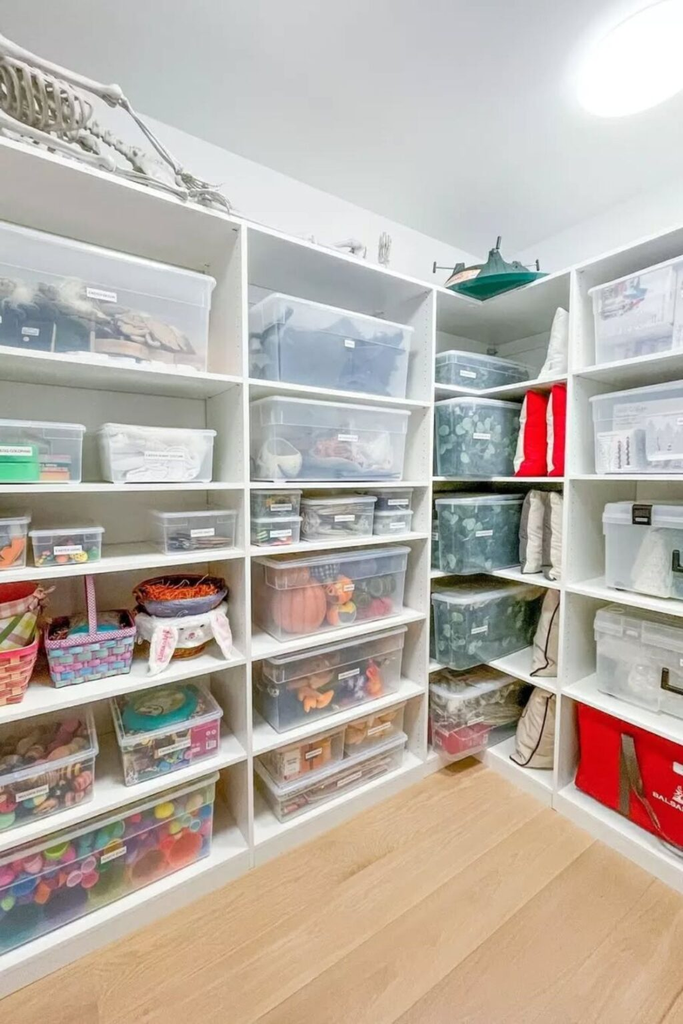
A dedicated storage room is helpful when holiday decorations have gradually spread throughout the house. I don’t need an entire room for this purpose; a single organized wall or a section of a utility area may be enough.
I use open cubbies or adjustable shelves to separate ornaments, wreaths, lights, garlands, and larger seasonal accessories. Matching containers can create a tidy appearance, but I prioritize practical sizes and easy access over making every box identical.
I reserve lower shelves for heavier containers and keep delicate or lightweight decorations on shelves where they won’t be crushed. Frequently used categories stay near the front, while rarely needed items can occupy less accessible spaces.
If the storage area also contains cleaning supplies, tools, or household equipment, I keep those items separate from fragile decorations. This reduces the risk of spills, impacts, or sharp objects damaging the contents.
Pro Tip: Leave a little room for newly purchased or handmade decorations. An overfilled storage room quickly becomes difficult to maintain.
Drawer Towers
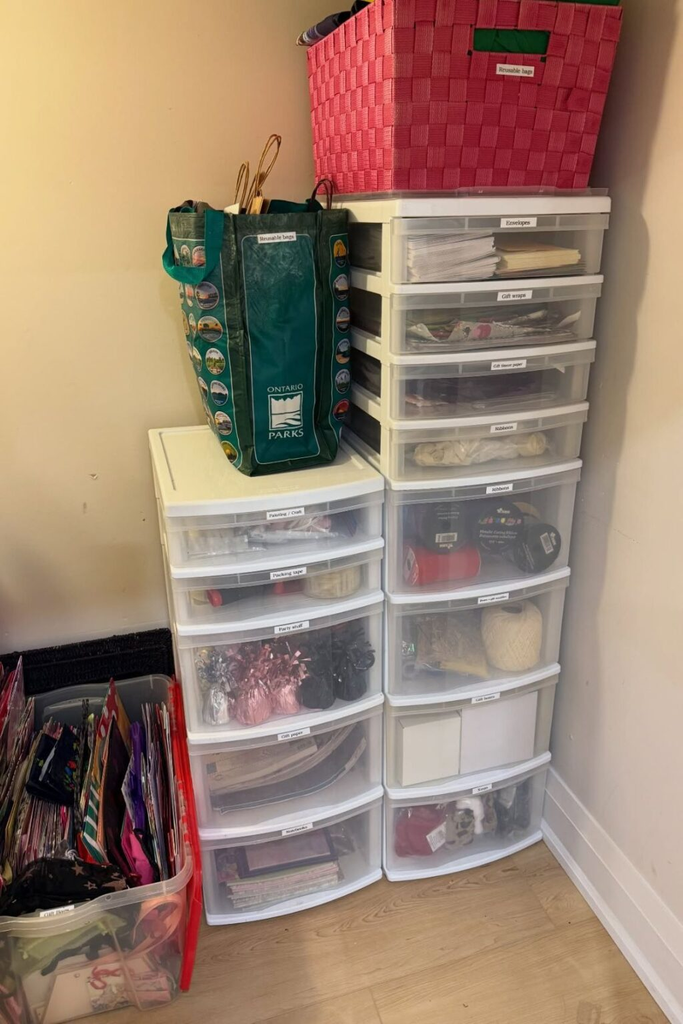
Small holiday accessories often disappear into the bottoms of large storage boxes. Ornament hooks, replacement bulbs, ribbon scraps, miniature figurines, and craft supplies are much easier to manage when I separate them into smaller compartments.
Stackable drawer towers can fit into a spare closet, craft room, or storage nook. Transparent drawers help me identify the contents, while small dividers prevent different supplies from becoming mixed together.
I use one drawer for each practical category rather than assigning a drawer to every individual item. For example, I might keep gift tags and small bows together while storing ornament hooks separately.
Drawer towers are best for lightweight items that don’t need extensive cushioning. I wouldn’t use ordinary plastic drawers as the only protection for fragile glass ornaments or heavy objects that could crack the drawer.
If young children visit my home, I also keep small accessories such as hooks and tiny decorative pieces in a secure location.
Pro Tip: Add a label to each drawer if the contents aren’t immediately obvious. This is particularly useful when several family members help decorate.
Cabinet Shelves

Cabinets are a good choice when I want holiday decorations out of sight but still easy to access. A tall cupboard with adjustable shelves can hold several categories without requiring a separate storage room.
I use small containers inside the cabinet to keep ornaments, ribbons, miniature lights, seasonal candles, and table accessories separate. This prevents loose items from shifting whenever I remove a box.
Adjustable shelves are particularly helpful because holiday decorations vary in size. I can leave extra height for a small tabletop tree or taller figurines while using narrower shelves for compact boxes.
I also consider ventilation and the cabinet’s location. I avoid storing heat-sensitive or delicate decorations in cupboards near appliances that produce heat, and I make sure the area stays dry.
When using an existing kitchen or hallway cabinet, I keep everyday essentials accessible and avoid letting seasonal items take over the space I need throughout the year.
Pro Tip: Measure the cabinet’s interior dimensions, including shelf spacing and door clearance, before purchasing storage bins.
Closet Storage
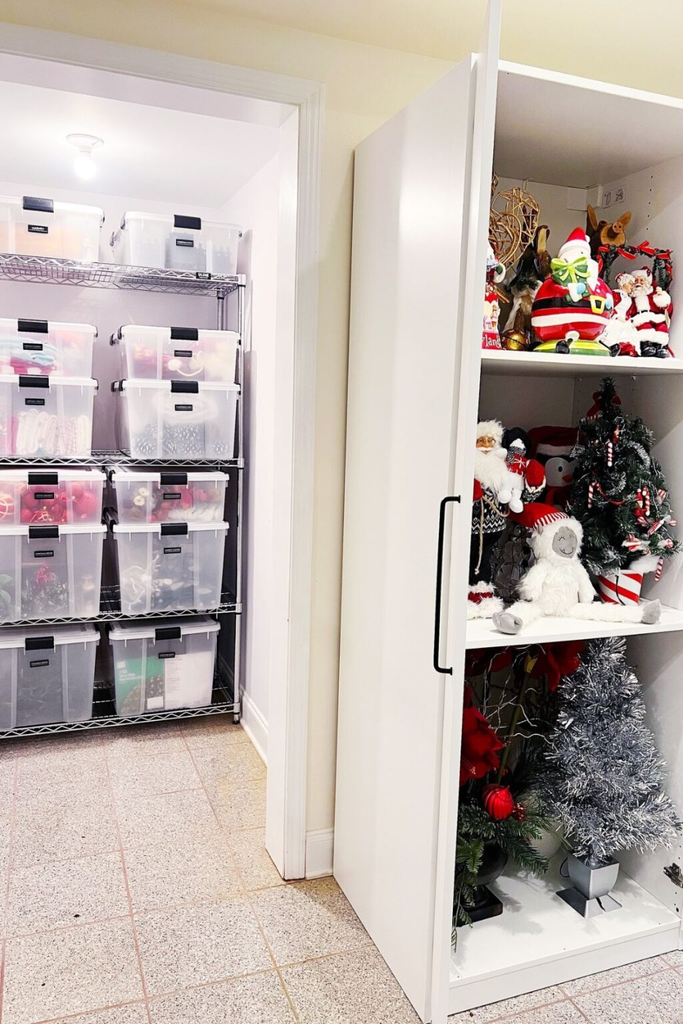
A closet can become a useful holiday storage station when I divide it into clear zones. The key is to make seasonal decorations fit around the items I use regularly instead of filling the entire closet with boxes.
I place labeled containers on shelves and use the floor area for larger, lightweight items that can be moved safely. Small trees, decorative baskets, and sturdy seasonal accessories may fit beside the bins, depending on the available space.
I keep fragile ornaments in protective cases rather than placing them under heavier boxes. I also avoid overloading closet rods with storage organizers that aren’t designed to support substantial weight.
If I use a shared closet, I reserve one shelf or section for holiday decorations so they don’t become mixed with clothing, shoes, or everyday supplies.
Pro Tip: Store the decorations I use first near the front of the closet. I can then start decorating without moving several other containers out of the way.
Rolling Cart

A rolling cart can serve as a temporary decorating station and a compact storage solution. I find this particularly useful when I decorate in different rooms or need to carry supplies between a closet and the living room.
I use the drawers or trays for ribbon, ornament hooks, batteries, small decorations, and other accessories. Keeping these supplies together means I don’t have to return to the storage room every time I need something.
Once decorating is finished, I can roll the cart into a suitable closet or storage corner. A narrow model with locking wheels is helpful when floor space is limited.
I make sure the cart is not overloaded and that heavier objects sit on lower shelves. Fragile glass decorations should be secured in suitable containers rather than left loose on an open tray.
A rolling cart won’t replace large seasonal storage for everyone, but it can make the decorating process more organized.
Pro Tip: Reserve one small container on the cart for supplies that need replacing, such as damaged hooks or nonworking light bulbs. Check these items before the next decorating season.
Closet Tree
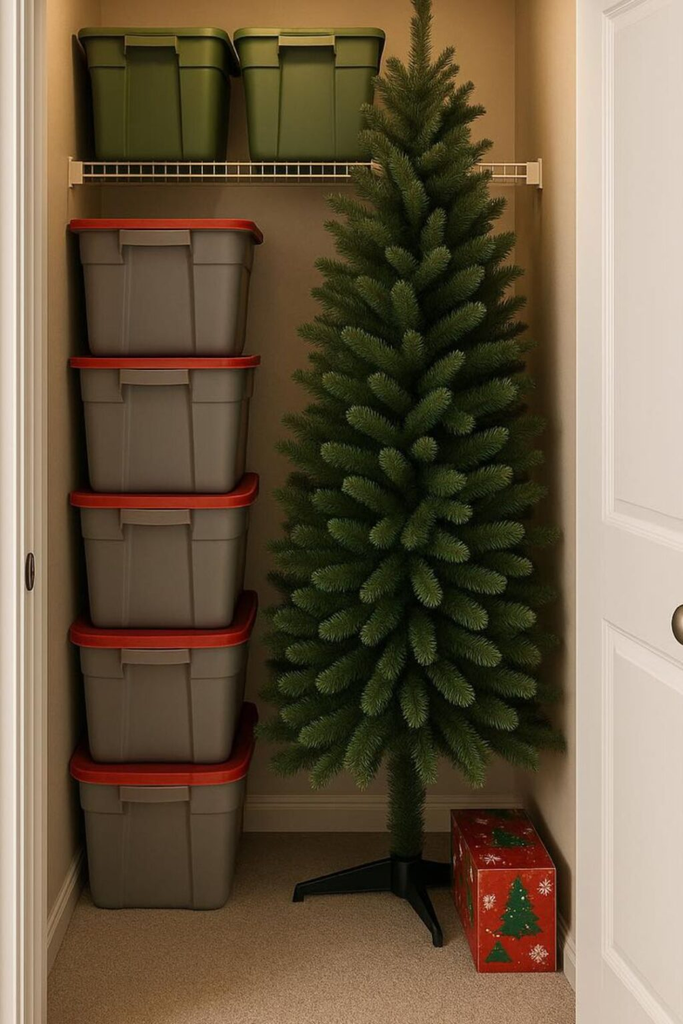
If I have enough vertical clearance, storing an artificial Christmas tree upright may be an alternative to taking it apart. This approach can save assembly time, but it depends on the tree’s size, construction, and available storage space.
I first check whether the manufacturer allows upright storage and whether the tree can stand securely without placing stress on its branches or base. A purpose-built upright tree bag or stand may help keep it contained and stable.
I choose a location where the tree won’t block a walkway, interfere with a door, or become a tipping hazard. I also protect it from dust and avoid areas with excessive heat or moisture.
For smaller homes, a narrow closet may work if there is enough room around the tree. If the closet is too cramped, a disassembled tree in a suitable storage bag may be the more practical option.
I don’t assume that upright storage will automatically preserve the branches better. The result depends on how the tree is supported and how its branches are positioned.
Pro Tip: Measure the tree’s height and widest point before committing to upright storage. Include enough clearance to remove the cover without scraping nearby shelves or walls.
Color Sorting

If I decorate my Christmas tree with a particular color scheme, sorting ornaments by color can make setup much easier. Instead of searching through one mixed box, I can reach for the group that matches the look I want.
I use separate small containers or divided sections for colors such as gold, silver, red, blue, or green. Clear bins help me identify the contents, and labels are useful when shades look similar or the ornaments are stored in opaque boxes.
I keep special ornaments, such as sentimental pieces or delicate heirlooms, separate from ordinary color groups when they need extra protection. Color should guide the organization, but it shouldn’t replace safe packing.
Hooks and other small accessories go into a separate labeled container so they don’t scratch ornament finishes or become scattered between boxes.
This method works particularly well if I change my tree’s color scheme from year to year or use different combinations in different rooms.
Pro Tip: If I have several similar shades, I add a small photo of the ornaments to the label. This helps me identify the right collection without opening each container.
Also read: 15 Scarf Storage Ideas for 2026
Attic Shelves
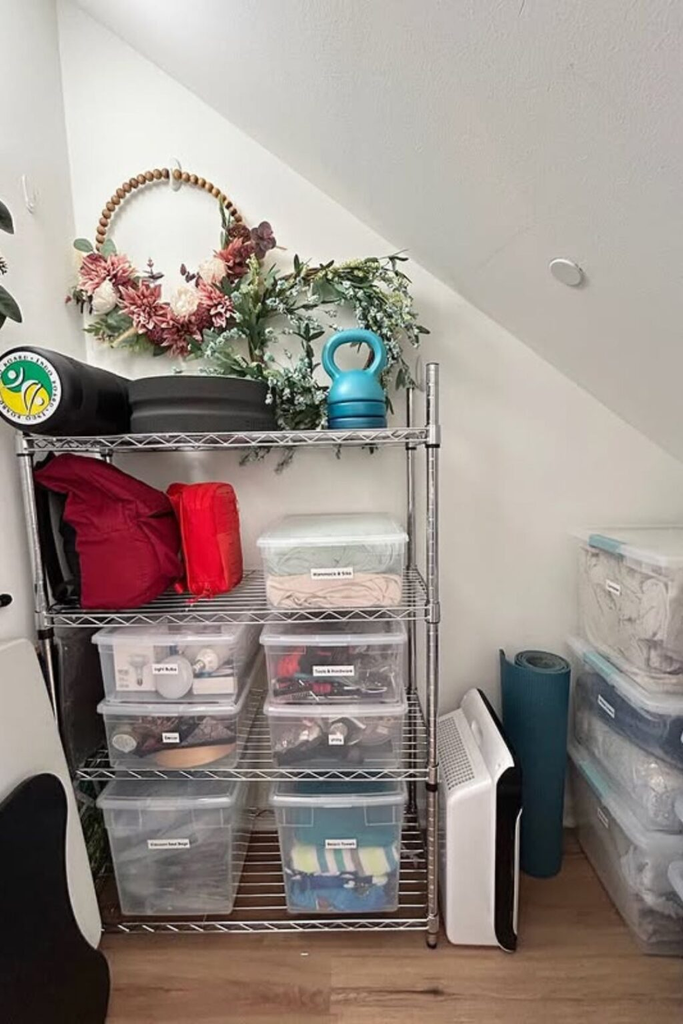
An attic can provide useful seasonal storage, especially when the rest of the home has limited closet space. However, I check the conditions carefully before storing decorations there.
Attics can become extremely hot in summer and cold in winter. Temperature swings and moisture may damage delicate ornaments, artificial greenery, electronics, candles, and other sensitive materials. I reserve attic storage for items that can tolerate the conditions and follow the manufacturer’s guidance.
Shelves fitted beneath sloping ceilings can make awkward areas more useful. I place heavy bins on lower shelves and keep lightweight items higher up, ensuring the shelving is stable and suitable for the load.
I use well-fitting containers to keep dust and pests away, but I don’t assume a sealed plastic bin will solve every moisture problem. Decorations must be dry before packing, and the attic itself should be free of leaks and persistent dampness.
I also leave a clear path to the stored items so I can retrieve them without climbing over boxes or disturbing other belongings.
Pro Tip: Store irreplaceable ornaments, photographs, electronics, and other temperature-sensitive items inside the home if the attic conditions are unsuitable.
Garland Bins
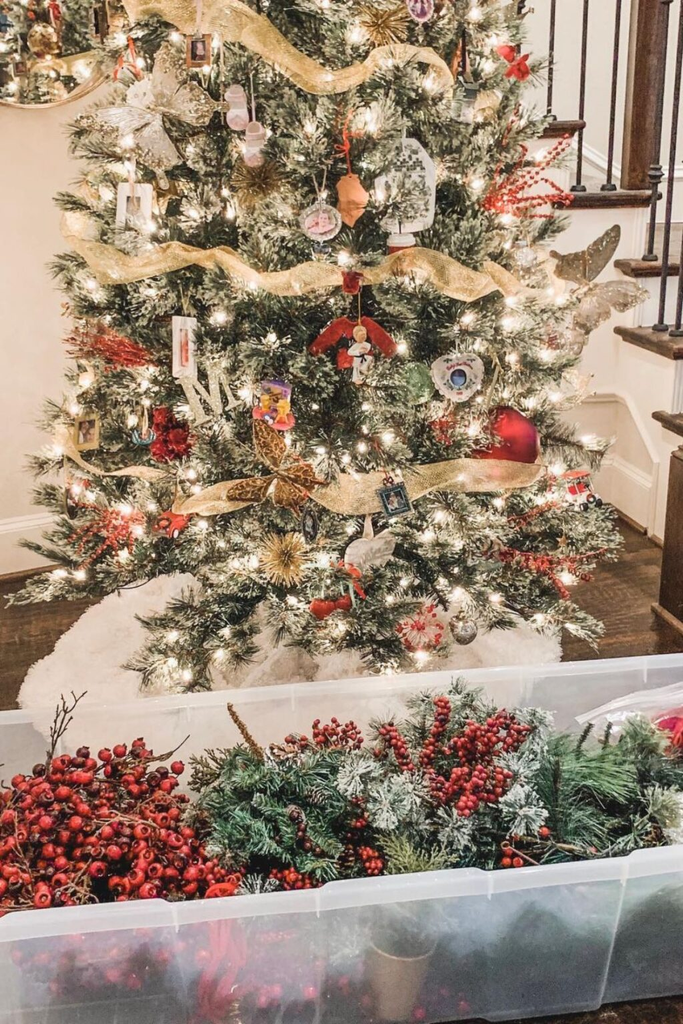
Artificial garlands, berry branches, and decorative picks can become tangled or misshapen when squeezed into small containers. I prefer long, appropriately sized bins that allow the greenery to rest without excessive bending.
Before packing, I remove loose decorations and check for damaged wire, broken stems, or detachable pieces. I then arrange the garlands loosely inside the container, following their natural shape as much as possible.
If I need to layer several garlands, I place a clean sheet of suitable protective material between delicate finishes. I avoid pressing heavy objects on top because this can flatten foliage and damage decorative details.
Clear bins make the contents easy to identify, while labels help me distinguish indoor garlands from outdoor decorations. I store them on shelves or in an available under-stair space, provided the location stays dry.
For oversized greenery that doesn’t fit in a regular bin, a dedicated storage bag or a larger container may be more suitable.
Pro Tip: Take a quick photo of how a particularly elaborate garland is arranged before storing it. I can use the picture as a reference when decorating next season.
Gift Closet
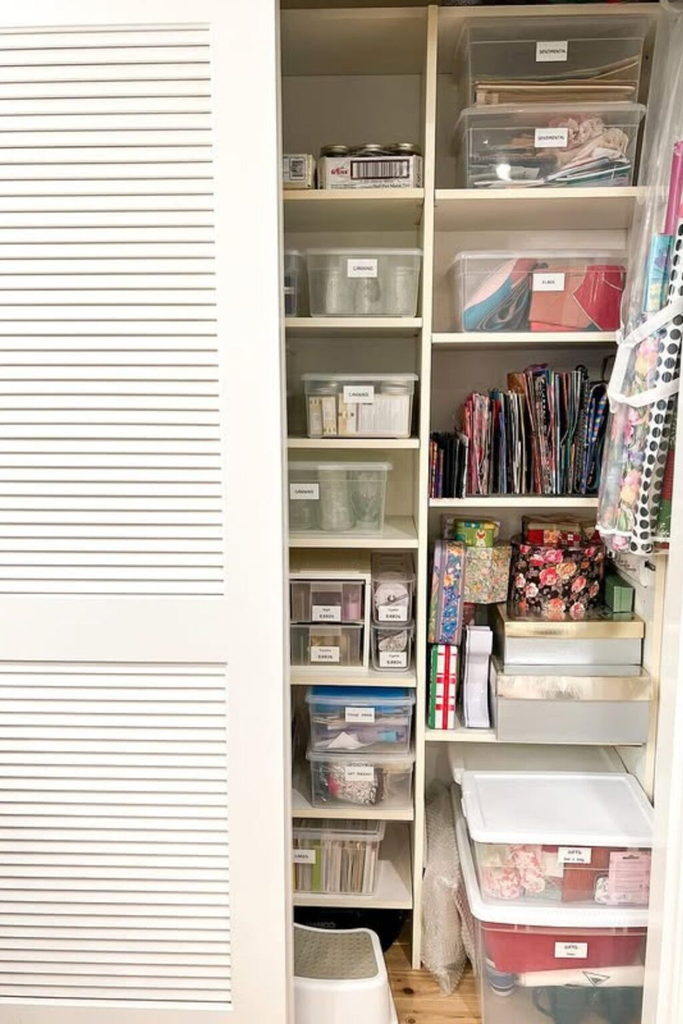
Wrapping supplies can take up more room than expected when rolls of paper, gift bags, bows, ribbons, and tape are scattered throughout the house. I prefer keeping them together in one designated closet or cupboard.
Tall compartments or upright holders help prevent wrapping paper from getting crushed. Small bins can hold gift tags, ribbon, bows, scissors, and tape, while larger shelves accommodate reusable gift bags and seasonal packaging.
I separate everyday wrapping supplies from holiday-specific items when I use them at different times of the year. This keeps Christmas materials organized without making birthday or everyday gift wrapping harder.
I also check that scissors and other sharp tools are stored safely, particularly if children can access the closet. Gift supplies should remain dry, and paper should be kept away from damp walls or areas where leaks may occur.
If I don’t have a dedicated closet, a narrow shelf organizer or a lidded container can serve the same purpose.
Pro Tip: Keep a small inventory of wrapping paper and reusable gift bags before shopping for more. This helps prevent duplicate purchases and saves storage space.
Seasonal Boxes
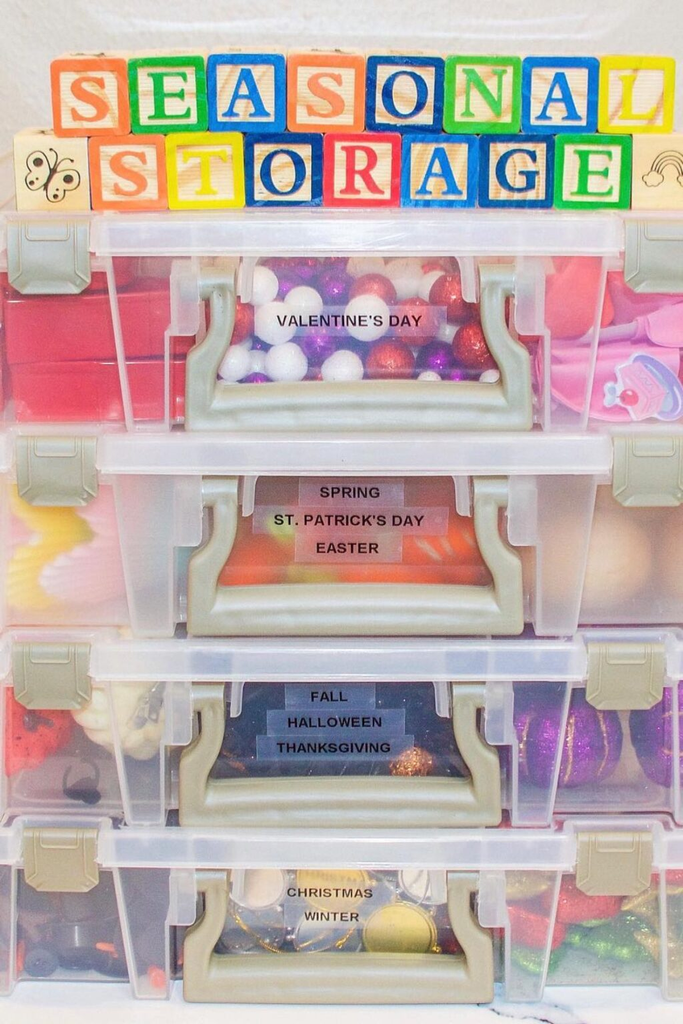
I find seasonal boxes useful when I decorate for several holidays throughout the year. Instead of combining everything in one large collection, I assign containers to occasions such as Valentine’s Day, Easter, Halloween, Thanksgiving, and Christmas.
The size of each box depends on the number and type of decorations I own. A smaller container may hold tabletop accessories and lightweight craft pieces, while a larger one can accommodate bulkier seasonal items.
I label each box clearly and store the containers together whenever possible. If I have limited room, I can use a shared shelving unit or cupboard, keeping each holiday’s belongings in separate containers.
Before packing, I remove batteries from battery-powered decorations when the manufacturer’s instructions recommend it. I also make sure items are clean and dry, particularly fabric decorations and pieces used outdoors.
Seasonal boxes are most effective when I resist the urge to fill every available gap with unrelated objects. Keeping categories separate makes unpacking and repacking more straightforward.
Pro Tip: Add the month or season when you typically use a container to its label. This helps me prioritize which boxes should stay easiest to reach.
Shelf Wall
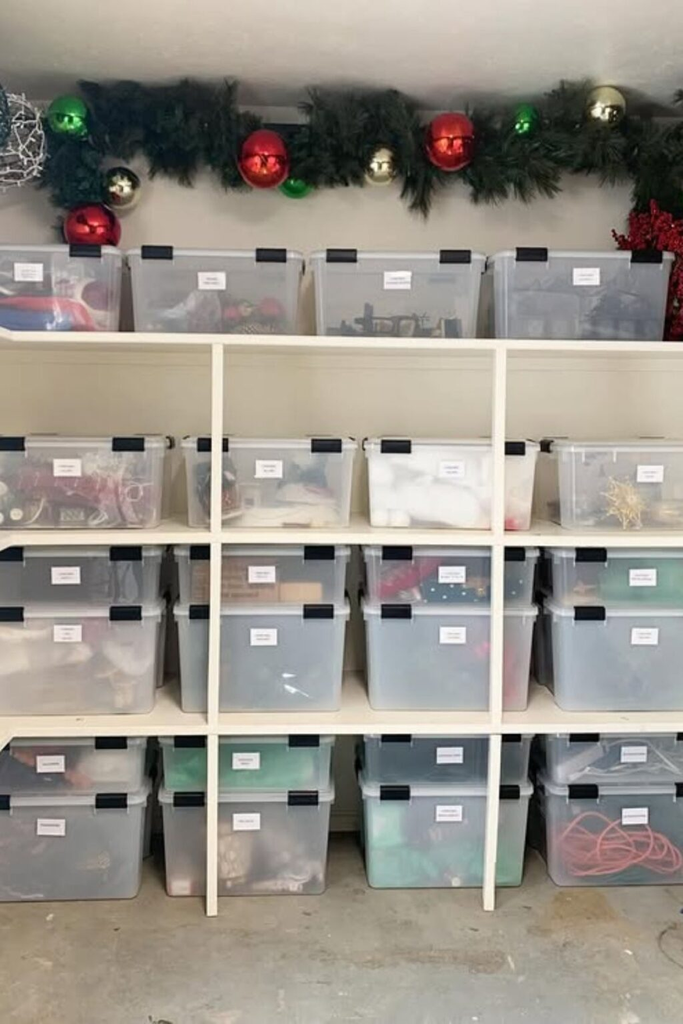
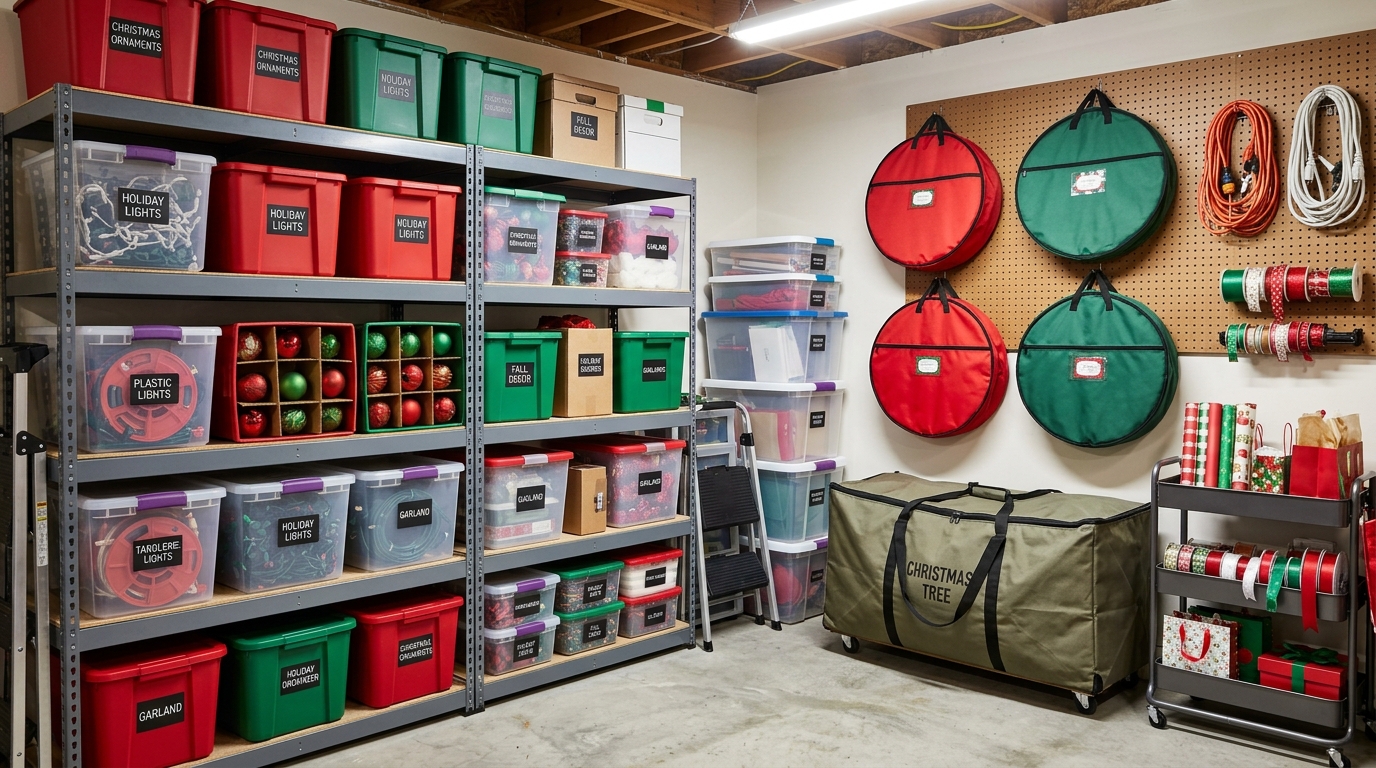
A full wall of shelving can provide a home for holiday decorations when I have a garage, basement, or storage room available. Rather than leaving bins scattered on the floor, I give each category a designated shelf or section.
I choose shelving that can safely support the combined weight of the containers and anchor it according to the manufacturer’s instructions. I measure the space first, leaving enough clearance to remove bins and access nearby doors or equipment.
I place heavier containers on lower shelves and lighter boxes higher up. Fragile decorations remain in divided or padded cases, and I avoid stacking heavy bins on top of delicate items.
Clear containers and front-facing labels make the shelves easier to use. I also leave some room between categories so that adding a new decoration doesn’t require rearranging the entire wall.
For smaller homes, a single narrow shelving unit may offer the same benefits without taking over a room.
Pro Tip: Keep a consistent category order across the shelves, such as lights, ornaments, greenery, and table decor. Once I learn the arrangement, finding things becomes much quicker.
Wrap Station
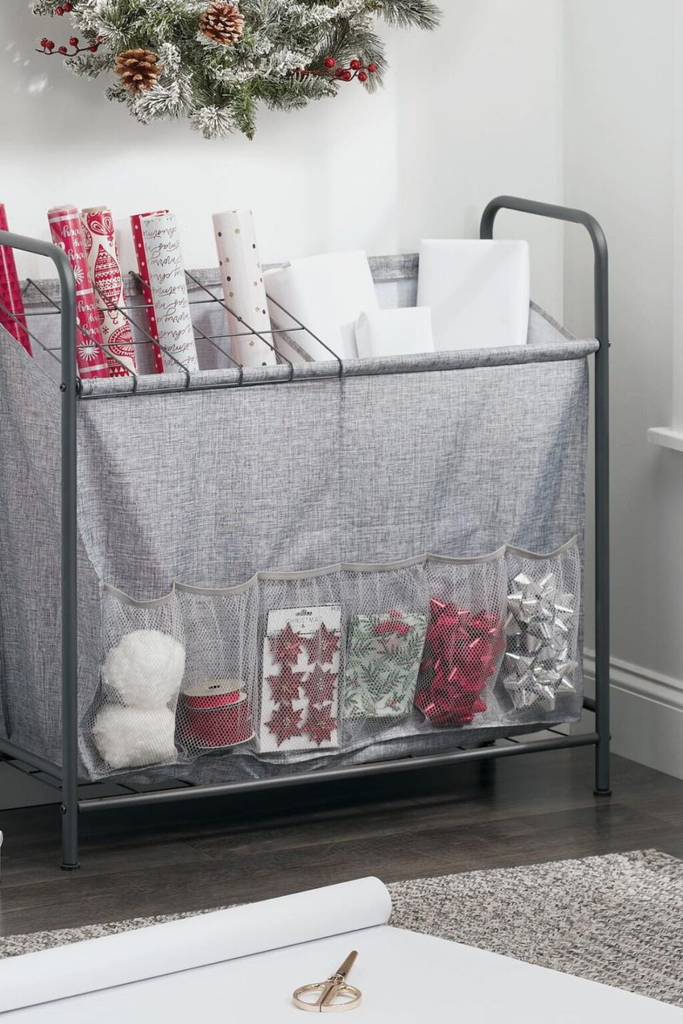
A dedicated wrapping station keeps gift-preparation supplies together and gives me a place to work without spreading materials across the dining table or living room.
I use upright compartments for paper rolls and separate pockets or bins for ribbon, tape, bows, gift tags, and scissors. If I don’t have space for a permanent station, a lightweight organizer or narrow rolling unit can be stored in a closet between uses.
I make sure the paper rolls fit without bending and that the organizer is stable enough to hold its contents. Heavy items belong near the bottom, while small accessories can go in shallow containers where they are easy to see.
If the station is used for both birthdays and holidays, I keep general supplies together and place seasonal gift tags or decorative extras in separate labeled pouches.
I also choose a location where paper won’t be exposed to moisture, direct heat, or accidental spills.
Pro Tip: Keep a small amount of commonly used tape, scissors, and gift tags in an easy-to-reach section. The main supplies can stay organized without interrupting the wrapping process.
Pillow Rack

Seasonal throw pillows can fill a closet quickly, especially when I switch between holiday prints, autumn colors, and everyday covers. A vertical rack or shelf arrangement can help me use space more efficiently.
Before storing pillows, I check the care labels and clean them as recommended. I make sure the covers and inserts are completely dry to reduce the risk of musty odors or mildew during storage.
If the pillows have removable covers, I may store the covers separately in a labeled fabric container and use the inserts throughout the year. This can save space when the covers are the main part of the seasonal design.
A rack can work for lightweight pillows that fit securely, but I don’t use a narrow rack that forces them into an awkward shape. For long-term storage, clean fabric bags or suitable breathable containers may be a better choice.
I avoid placing heavy boxes on top of pillows because prolonged compression can affect their shape and filling.
Pro Tip: If closet space is limited, store seasonal pillow covers together by holiday and label the container with the matching room or pillow size.
Light Spools
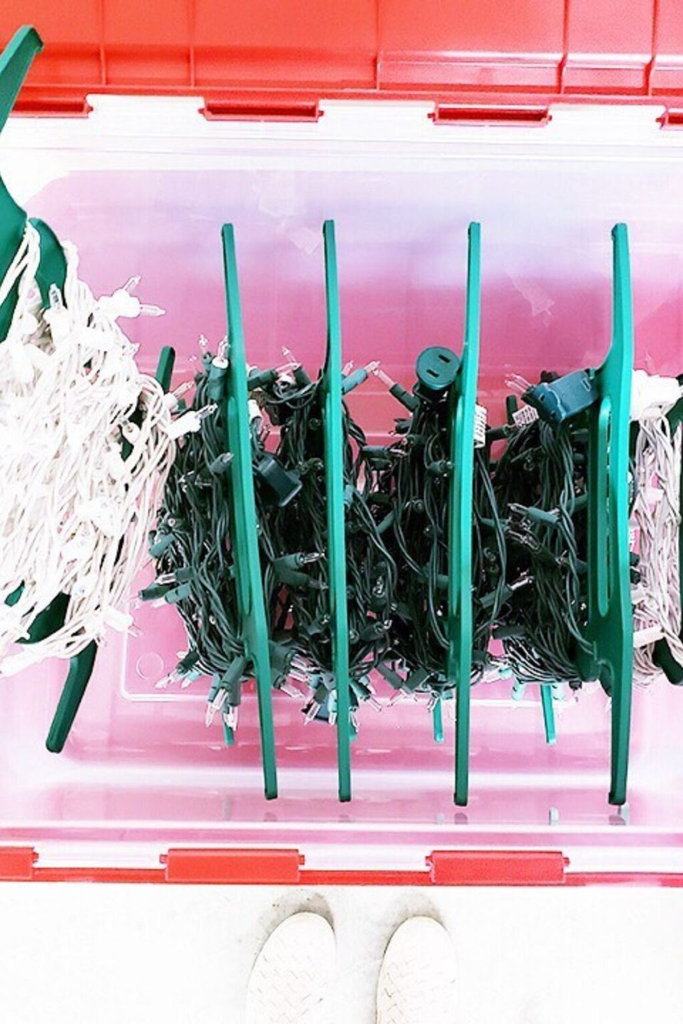
String lights are easier to manage when each strand is kept separate. I avoid throwing loose lights into a single box because the wires can become tangled, and pulling them apart may damage bulbs or connections.
Reusable light reels, sturdy spools, or purpose-made organizers can keep strands neatly wound. I follow the product instructions and avoid wrapping lights so tightly that the wire or insulation becomes strained.
Before storage, I unplug the lights and inspect the cords, plugs, and bulbs for visible damage. Any damaged set should be removed from use rather than packed away for another season.
I keep each strand separate and label it according to its purpose, such as indoor tree lights, outdoor string lights, or window decorations. Outdoor-rated lights and accessories should remain clearly identified so I can use them in the appropriate setting.
I store the organizers in a dry place and avoid crushing them beneath heavier containers.
Pro Tip: Take a photo of the lights in use or note their approximate length and location on the label. This makes it easier to choose the right strand when decorating next year.
Garage Shelves
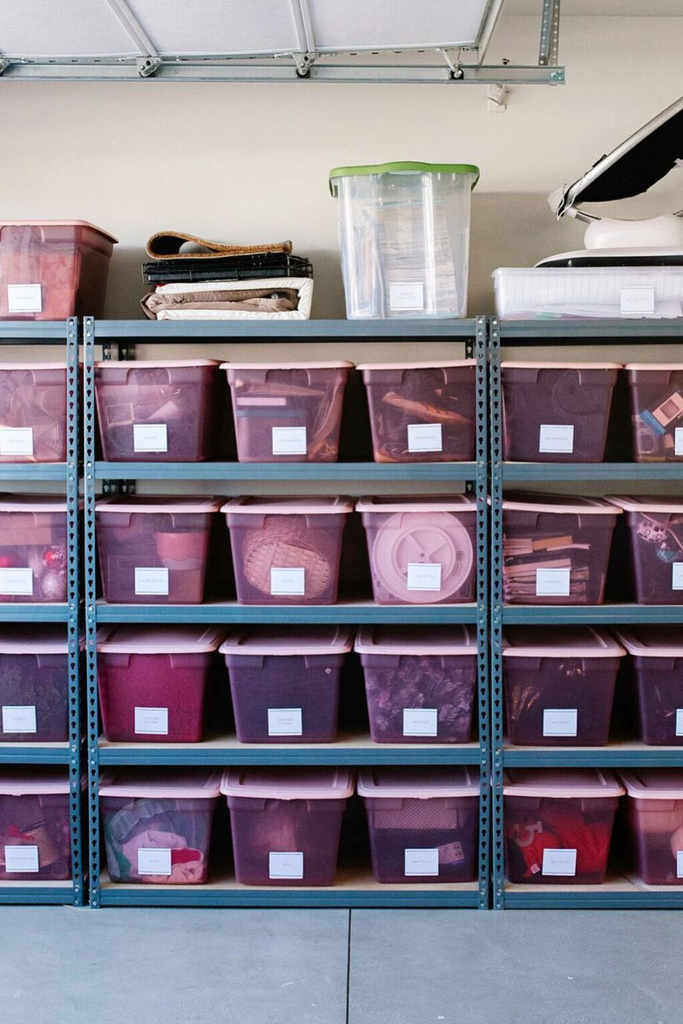
A garage can be a convenient place for storing large holiday decorations, especially when I have sturdy shelving and limited indoor storage. However, I don’t assume that every garage is suitable for every type of decoration.
I begin by choosing shelving designed for the expected weight and securing it as instructed. Large bins containing tree stands, durable outdoor decorations, or sturdy accessories can go on lower shelves, while lightweight containers can occupy higher levels.
I keep decorations away from vehicle paths, tools, chemicals, and areas where water may enter. Fragile ornaments, delicate textiles, candles, and temperature-sensitive items may be better stored inside the house if the garage experiences extreme temperatures or moisture.
I use suitable containers to protect decorations from dust and pests, and I make sure everything is dry before packing it away. Labels facing outward help me find the right box without moving several others.
Pro Tip: Leave enough space around garage shelves to remove bins safely. A storage system that blocks access to doors, electrical panels, or frequently used equipment isn’t practical.
Decor Shelves
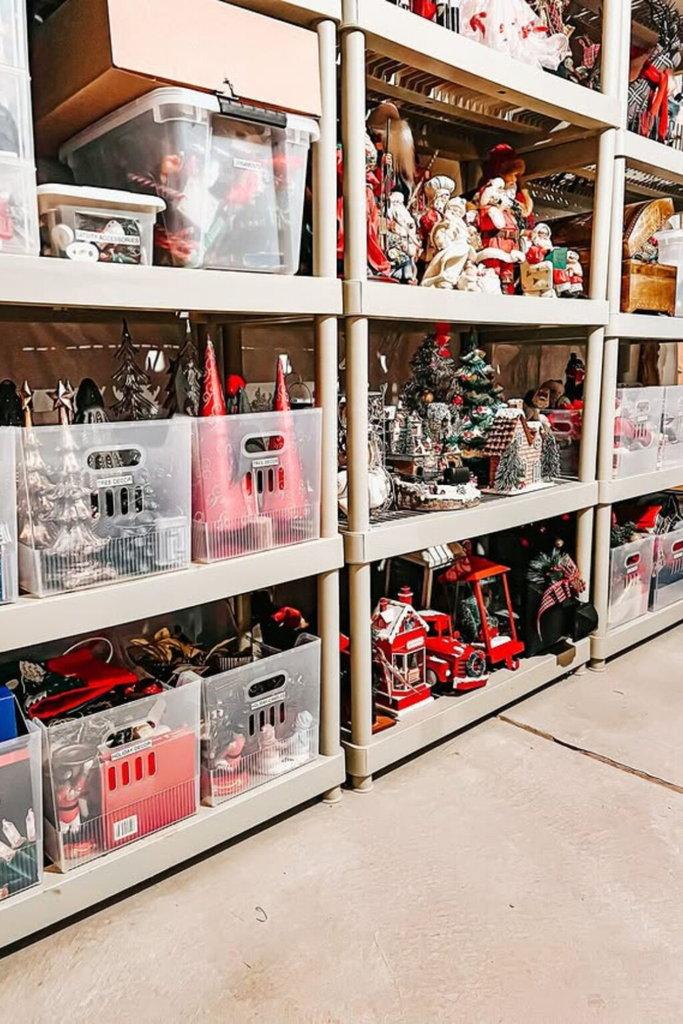
Holiday figurines, miniature houses, nutcrackers, and tabletop trees often need more careful storage than everyday decorations. I avoid piling these pieces into a large container where their delicate parts can collide.
Open shelves can hold sturdy decorative pieces that I want to keep visible and easy to reach. For items that are fragile, dusty, or easily knocked over, I prefer individual protective containers or padded compartments.
I arrange decorations by size and weight, keeping heavier pieces on lower shelves. Smaller figurines can go into labeled boxes with cushioning, while larger objects may need their own containers to prevent pressure from surrounding items.
I also consider the storage environment. Painted finishes, fabric details, and delicate materials can be affected by moisture, heat, or direct sunlight, so I choose a suitable location.
If I use open shelves, I make sure the objects are stable and won’t fall when another item is removed.
Pro Tip: Wrap unusually shaped figurines separately and label the box as fragile. A note about the contents can also help me unpack the items in the right order.
Bin Labels
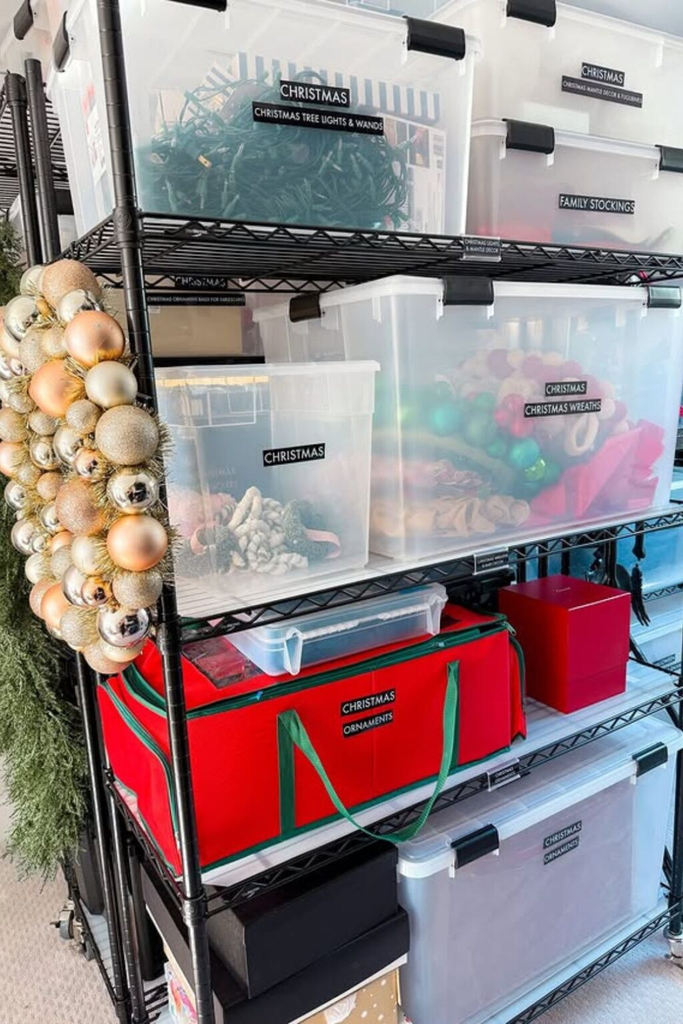
I use bin labels to make holiday storage easier to maintain, particularly when several containers look alike. A clear label tells me where an item belongs and helps other family members put it back correctly.
I label containers by their contents, such as wreaths, tree lights, ornaments, stockings, or outdoor decorations. If a category fills more than one bin, I add a useful distinction, such as “Tree Ornaments—Glass” and “Tree Ornaments—Everyday.”
Labels should be easy to read without removing the container from the shelf. I place them on the front or side that faces outward, depending on how the bins are stored.
For opaque containers, I include enough detail to identify the contents. For clear bins, a short label is often sufficient because I can also see what’s inside.
I avoid labeling a box only by the room where I used the decorations. The contents may change locations next year, but their category will still help me find them.
Pro Tip: Update labels whenever I change what’s inside a container. An accurate label is far more useful than a neat-looking one that no longer matches the contents.
Dish Protectors

Holiday mugs, serving dishes, platters, and decorative plates can chip or crack when stored loosely. I use padded dish protectors or suitable divided containers to keep delicate pieces from rubbing against one another.
I clean and dry every item before packing it. For plates and shallow dishes, individual padded sleeves or separators can help prevent scratches. Mugs and cups need enough cushioning around their handles, which are often vulnerable to impacts.
I choose a container that supports the weight of the dishes and can be lifted safely. Rather than filling one oversized box with heavy tableware, I divide the collection into manageable containers.
I also keep seasonal dishes separate from ordinary kitchen items when I don’t use them throughout the year. This makes holiday table setup easier and reduces unnecessary handling.
If the dishes are valuable or particularly delicate, I use extra padding and store them in a stable, dry cabinet or suitable indoor storage area.
Pro Tip: Label dish containers as fragile and indicate which side should remain upright. Keep heavy dish boxes on lower shelves so they are easier to lift without straining.
Read this next: 16 Window Seat Storage Ideas for 2026
FAQs
What is the best way to protect fragile holiday decorations during storage?
I start by separating fragile decorations from heavier items and choosing containers that fit their size and shape. Divided ornament cases, padded dish organizers, and individual protective wrapping can help prevent pieces from knocking against one another.
For unusually shaped figurines or sentimental ornaments, I use suitable cushioning around delicate details. I avoid packing items so tightly that pressure builds against their surfaces, and I make sure the container closes without forcing the contents down.
I also consider where the container will be stored. A dry, stable location is generally better for delicate decorations than a damp garage or an attic with large temperature swings. Before packing, I check that the decorations are clean and completely dry.
How can you keep holiday decorations organized year after year?
I keep holiday decorations organized by assigning each category a designated container and storage location. Lights, ornaments, wreaths, tableware, gift-wrapping supplies, and seasonal textiles each have their own place.
I label the containers clearly and arrange them on stable shelves, with heavier items lower down and lightweight decorations higher up. Fragile pieces receive separate protection, while frequently used items stay easy to reach.
At the end of each season, I check the condition of the decorations, remove damaged items, and update labels if the contents have changed. I also make a note of supplies I need to replace rather than buying duplicates because I can’t find what I already own.
The most useful storage system is one I can maintain without too much effort. By keeping categories consistent and choosing storage that fits my home, I can make both packing away and decorating next season easier.
Conclusion
I don’t need a large storage room or an expensive collection of organizers to keep holiday decorations in good condition. I can make better use of my existing space with clear bins, divided ornament cases, sturdy shelves, and a simple labeling system.
The most important step is to give each category a suitable place and consider what it needs to stay protected. Fragile ornaments need cushioning, lights need careful handling, and textiles should be clean and dry before storage.
I also review my decorations at the end of each season so I can make room for the items I actually use. With a little planning, I can keep my home organized throughout the year and spend less time searching for decorations when the next holiday arrives.