
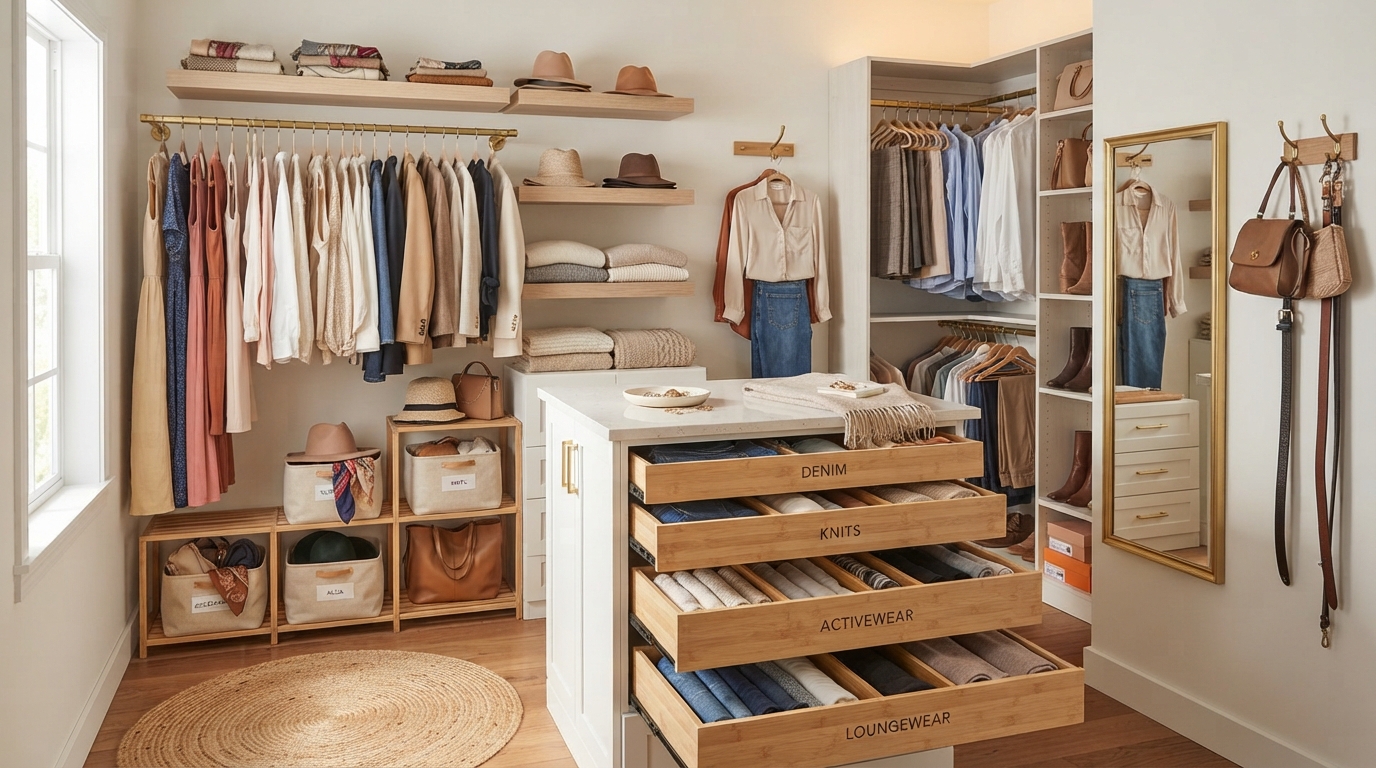
22 Clothing Organization Ideas for 2026
I used to think a messy closet meant I simply needed more storage. After organizing several tight wardrobes, I found that the bigger issue is usually how the available space is being used. A shelf that is too deep, a single hanging rod, or a pile of clothes without categories can make even a decent-sized closet feel overloaded.
I now look at clothing storage as a simple system: clothes I use often should be easy to reach, folded pieces should have defined sections, and seasonal items should be moved out of the prime storage areas.
The good news is that many useful changes do not require a complete closet renovation. Small additions such as shelf dividers, door organizers, bins, or a second hanging level can make a noticeable difference.
In this guide, I’m sharing 22 clothing organization ideas that can help you use vertical space, shelves, doors, walls, and underused corners more effectively. I’ve included solutions for folded clothes, hanging garments, shoes, seasonal pieces, accessories, and small closets.
Save this for later
Table of Contents
I also focus on practical details such as visibility, accessibility, weight distribution, and how frequently each category is used. My goal is not to make a closet look perfect for one day, but to create a setup that is easy to maintain after laundry day.
Key Takeaways
- I keep frequently worn clothes in the easiest-to-reach areas.
- Shelf dividers help prevent folded stacks from spreading across the shelf.
- Door and wall storage can handle smaller accessories without using valuable shelf space.
- Seasonal clothing works better in labeled bins, covers, or trunks away from everyday garments.
- A second hanging level can nearly double the usable hanging area for shorter garments.
- Clear containers make stored clothing easier to identify without opening every box.
- I prefer organizing clothes by category first and then using color as a secondary system.
- The best storage method is one that makes putting clothes away as easy as taking them out.
Related article: 22 Linen Closet Organization Hallway Ideas for 2026
What Are Smart Storage Solutions for Clothes in Small Spaces?
I think of smart clothing storage as making every usable area serve a clear purpose. That can mean using the back of a door, adding vertical compartments, separating deep shelves, or moving rarely used clothing into another storage zone.
In a small closet, I avoid treating every item equally. Everyday shirts and frequently worn pants deserve the easiest access, while formalwear and seasonal clothing can occupy less convenient areas.
Vertical space is particularly useful because walls and the upper portions of closets are often underused. Adding another hanging level or narrow shelving can increase storage without making the floor area smaller.
I also find that visibility matters almost as much as capacity. If I cannot quickly see what is inside a box or bin, I am more likely to forget about those clothes and buy or search for something unnecessarily.
Door Shelves
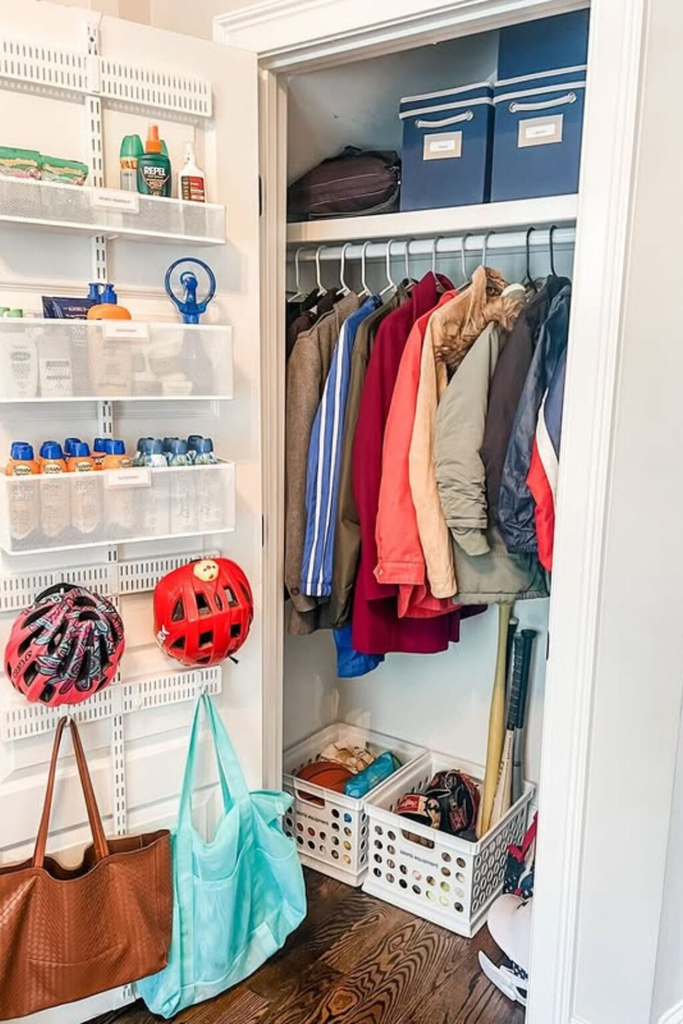
I like using the inside of a closet door for small clothing-related items because it turns an otherwise overlooked surface into useful vertical storage.
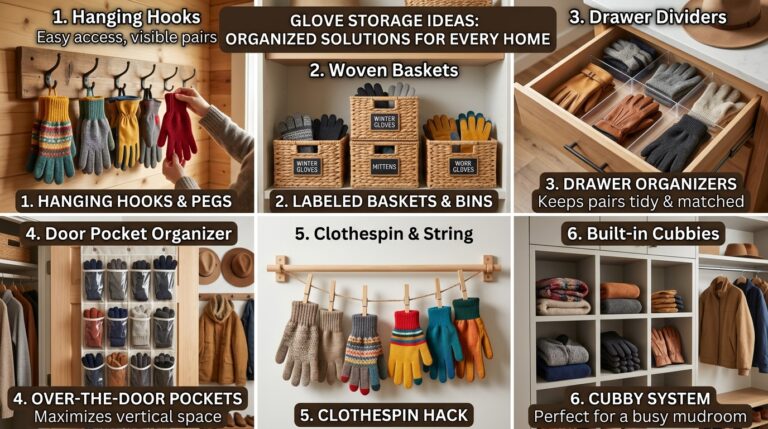
Slim shelves or hanging organizers can hold scarves, belts, caps, gloves, folded accessories, or small bags. I avoid putting very heavy items on a door-mounted system unless the hardware is specifically designed to support the load.
For a shared closet, I find labeled baskets especially useful. Each person can have a small section instead of mixing accessories together.
Pro Tip: Measure the gap between the door and the closet shelves before buying a door organizer. A unit that is too deep can interfere with the door closing properly.
Shelf Sections
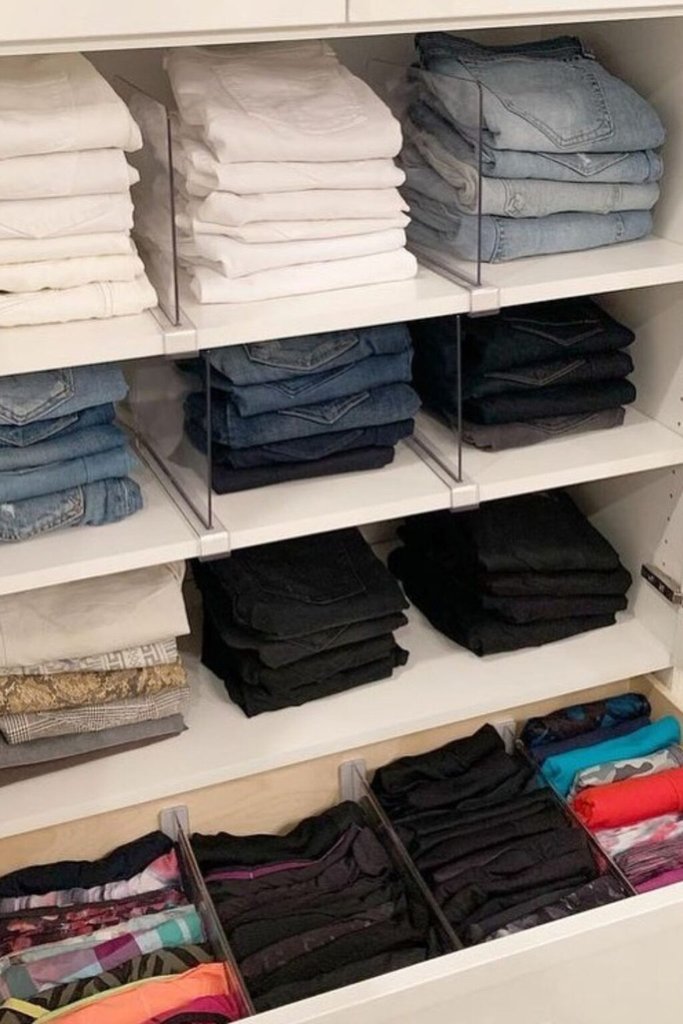
I use shelf dividers when folded clothing keeps spreading sideways. Without some kind of boundary, one missing sweater can easily turn an entire stack into a messy pile.
Dividers create separate sections for jeans, shirts, sweaters, or other categories. Clear acrylic versions are particularly useful when I want the shelf to remain visually open.
I usually organize by clothing type first rather than trying to create a complicated system. Once each section has a purpose, putting clean laundry away becomes much faster.
Color Folding
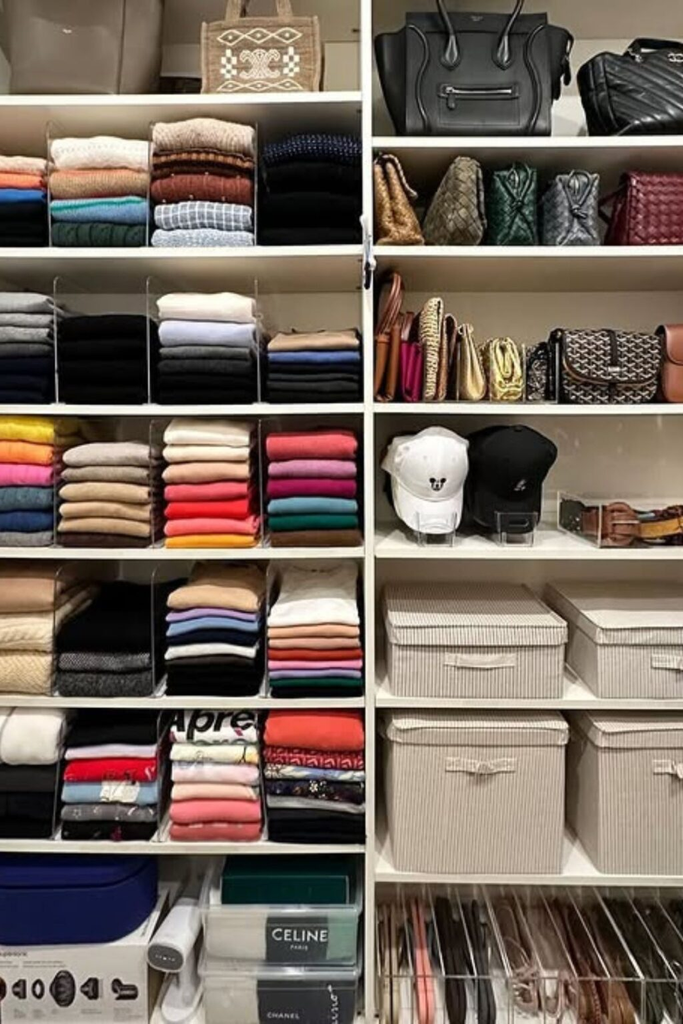
Color organization works best for me after I have already separated clothing by type. For example, I might keep T-shirts together and then arrange them from lighter shades to darker shades.
This approach makes the closet easier to scan because I can recognize both the category and color quickly. It can also make open shelving look more orderly without requiring decorative storage.
I would not force every closet into a rainbow system, though. If sorting by color makes laundry harder to put away, category-based organization is usually more practical.
Open Wardrobe
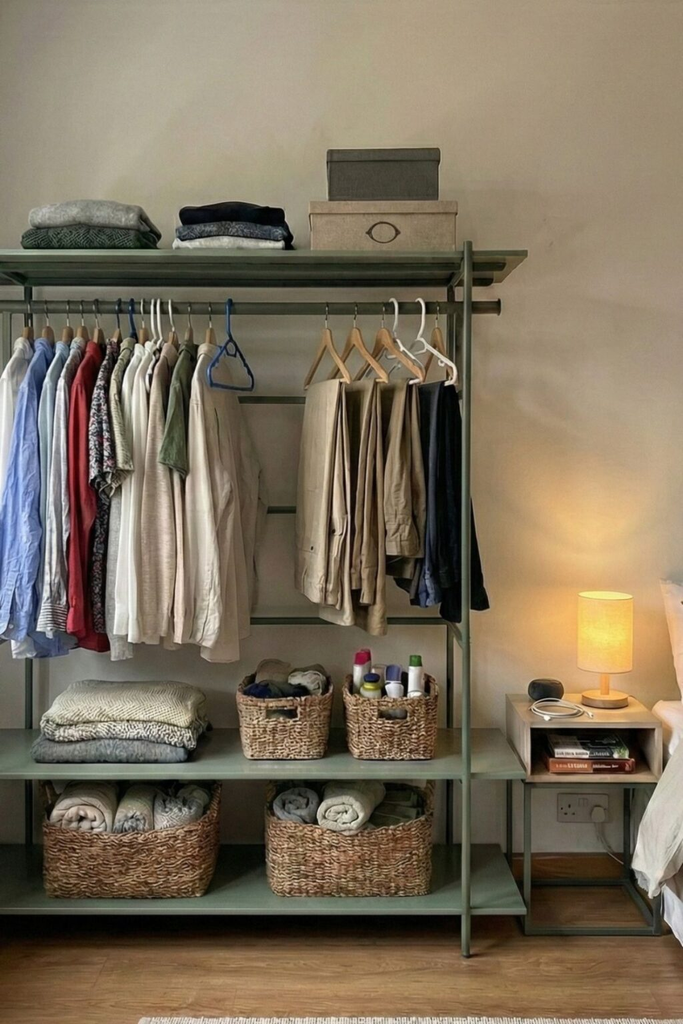
An open wardrobe can be a useful alternative when a bedroom does not have a built-in closet. I like the fact that everything remains visible, which can reduce the time spent searching through closed drawers.
A simple arrangement can include a hanging rail for shirts, dresses, and jackets with shelves or baskets underneath for folded clothing.
Because open wardrobes leave clothes exposed, I prefer keeping the most frequently worn pieces there and storing seasonal or delicate clothing in covered containers.
Pro Tip: Leave some breathing room between hanging garments. An overcrowded rail makes clothes harder to remove and return neatly.
Shoe Shelf
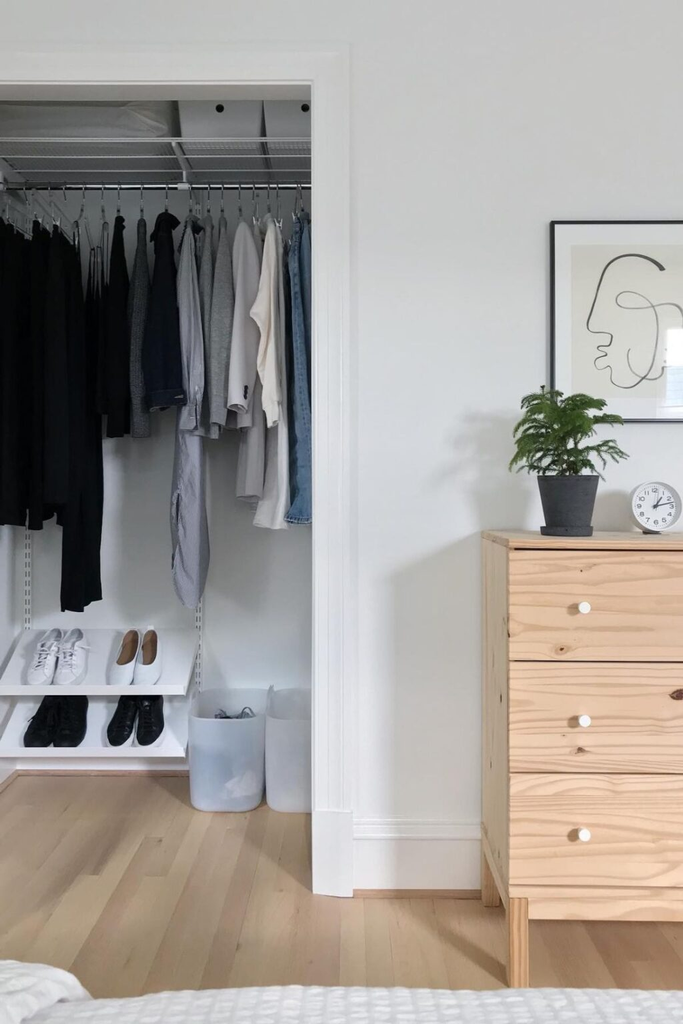
Shoes can quickly take over the floor at the bottom of a wardrobe. I prefer giving them a dedicated shelf or rack so they do not become mixed into clothing storage.
Angled shelves can be helpful because the fronts of the shoes remain visible. A lower pull-out rack is another option when floor-level space is limited.
I keep everyday shoes near the bottom and move special-occasion pairs to less accessible storage. This keeps the daily section practical instead of filling it with footwear I rarely use.
Garment Covers
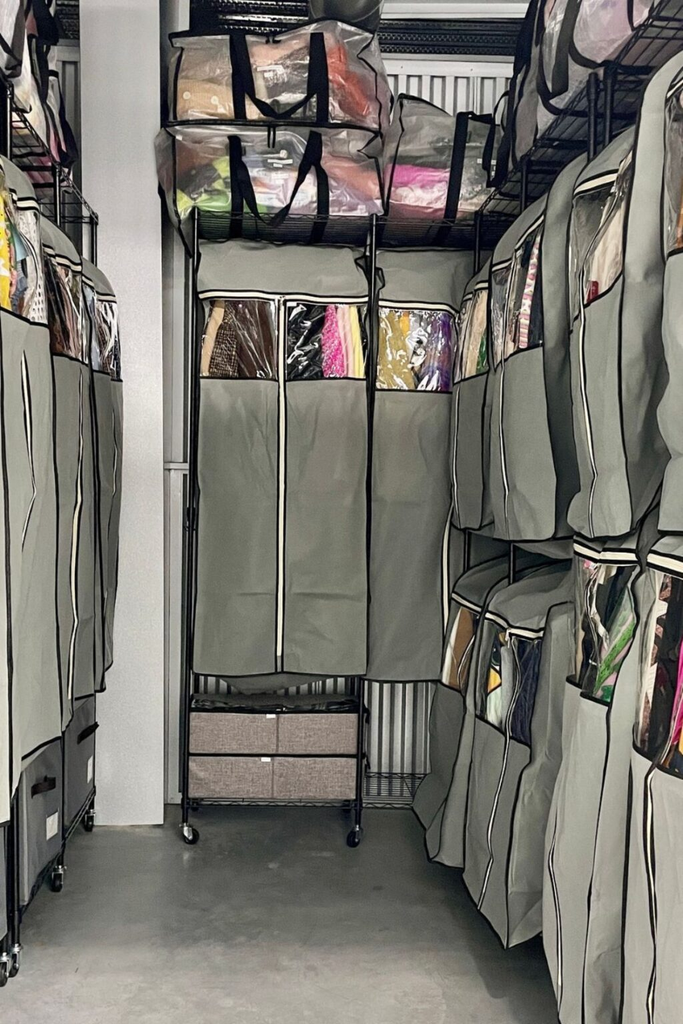
I use garment covers for pieces that need extra protection, especially formal clothing, long dresses, suits, and garments that are not worn frequently.
Clear or partially transparent covers make identification easier, while breathable fabric covers can be useful when I want to protect clothing without completely enclosing it in plastic.
I label covers when several similar garments are stored together. This small step saves me from opening multiple covers when looking for one particular outfit.
Pro Tip: Before covering a garment for long-term storage, make sure it is clean and completely dry. Storing damp or dirty fabric can lead to unpleasant odors and fabric damage.
Pull Bins
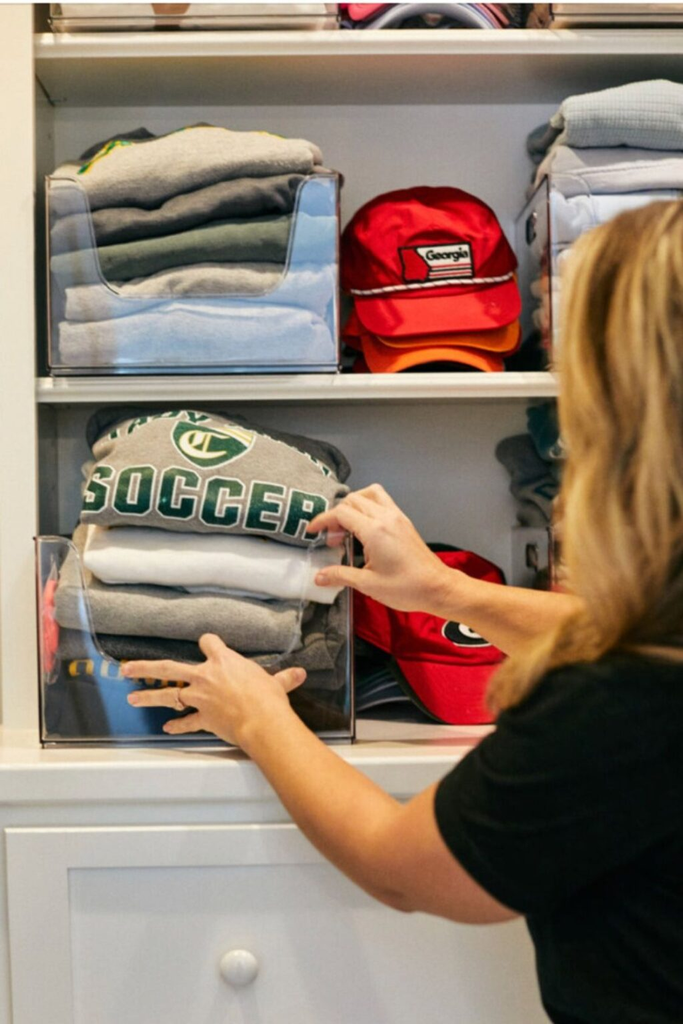
Deep shelves can waste space when I have to reach past the front items to find something at the back. Pull-out bins solve this by bringing the contents forward.
I use them for folded sweaters, hoodies, workout clothing, or other soft garments that are difficult to keep stacked neatly.
Clear bins are useful when visibility matters, while fabric versions can create a softer appearance. I prefer assigning one category to each bin rather than mixing unrelated clothing.
Wardrobe Zones
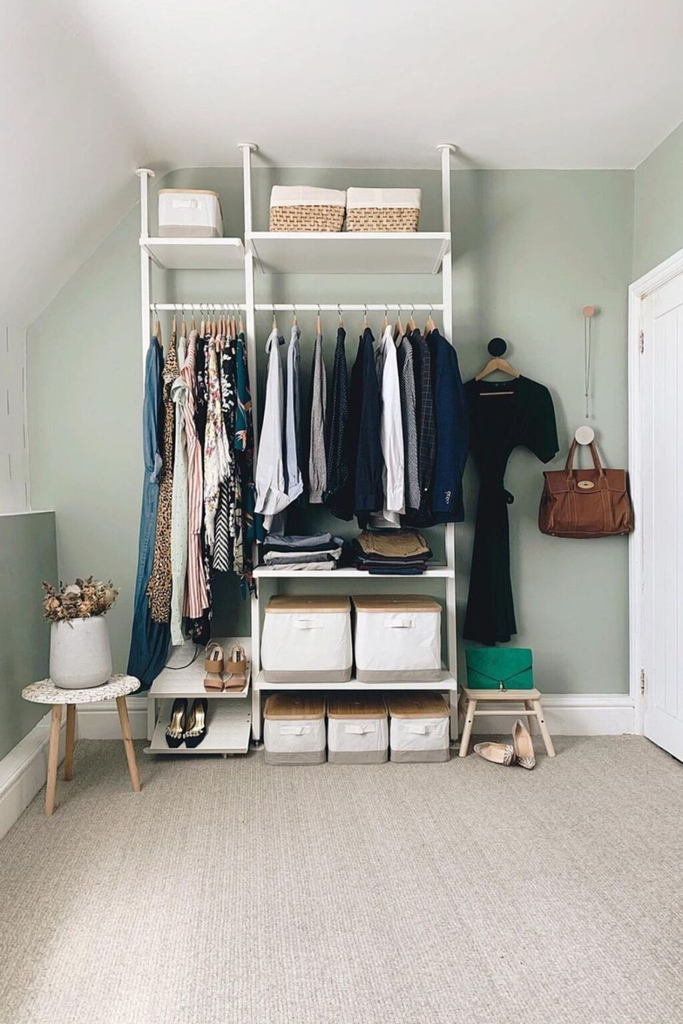
Dividing a wardrobe into zones makes the entire system easier to understand. I might use one section for hanging clothes, another for folded garments, a lower area for shoes, and upper shelves for seasonal storage.
The advantage is that every category has a home. I do not have to decide where an item belongs every time I put laundry away.
I also keep frequently used clothing between about waist and eye level whenever possible. Less-used items can move higher or into deeper storage.
Fabric Bins
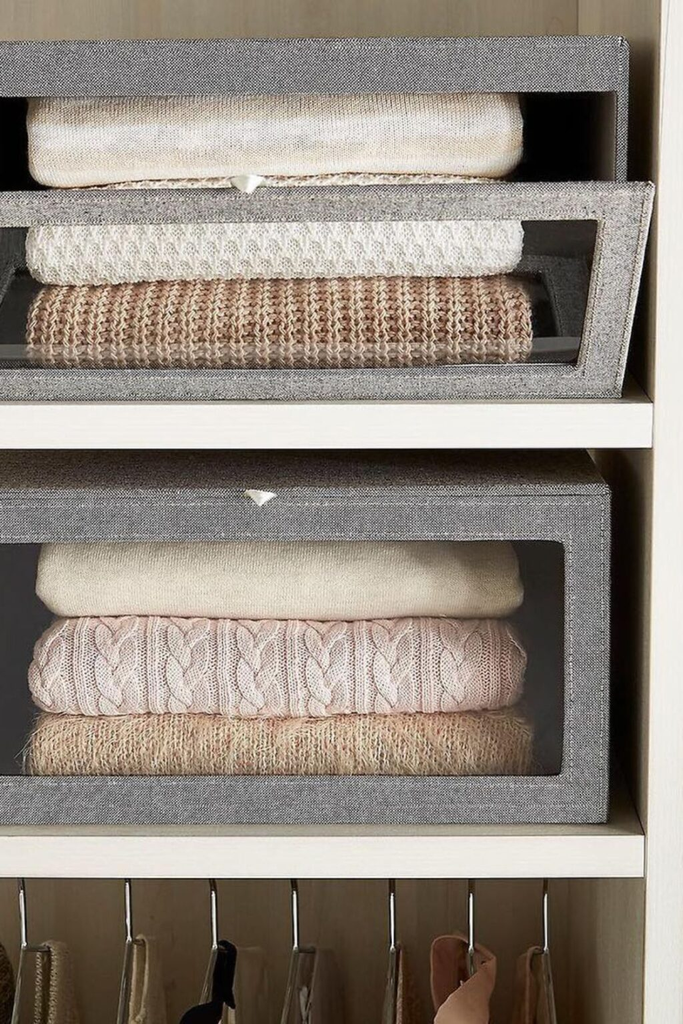
Fabric bins are useful when shelves are deep or when folded clothing does not stay in neat stacks. I particularly like them for sweaters, pajamas, seasonal clothing, and soft accessories.
Bins with handles are easier to pull down from high shelves. Labeling each container also helps prevent the common problem of opening several boxes just to find one item.
I try not to overfill fabric bins. When clothes are packed too tightly, they become difficult to remove and return, which defeats the purpose of the organizer.
Clear Boxes
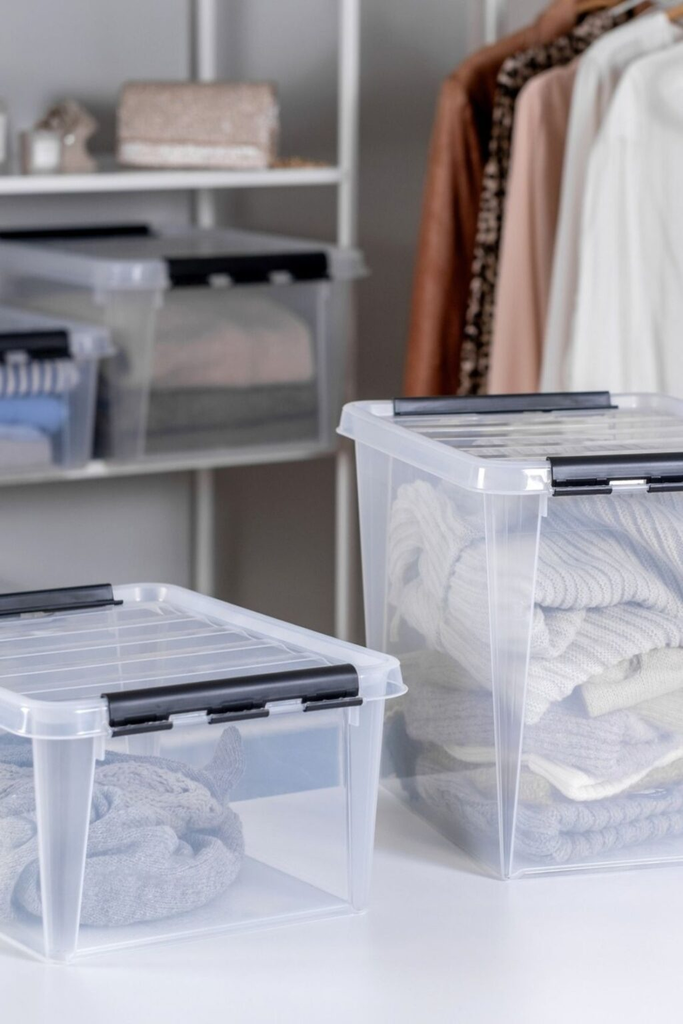
Clear storage boxes are one of my favorite options for seasonal clothing because I can see the contents without opening the container.
I use them for things such as winter accessories, heavier sweaters, or clothing that is only needed during a particular season.
I prefer using one box for one broad category rather than putting completely unrelated items together. A simple label on the front makes the system even easier to maintain.
Pro Tip: Store seasonal boxes in the least convenient locations and keep everyday clothing in the prime areas. Storage space should reflect how often you use the contents.
Coat Row
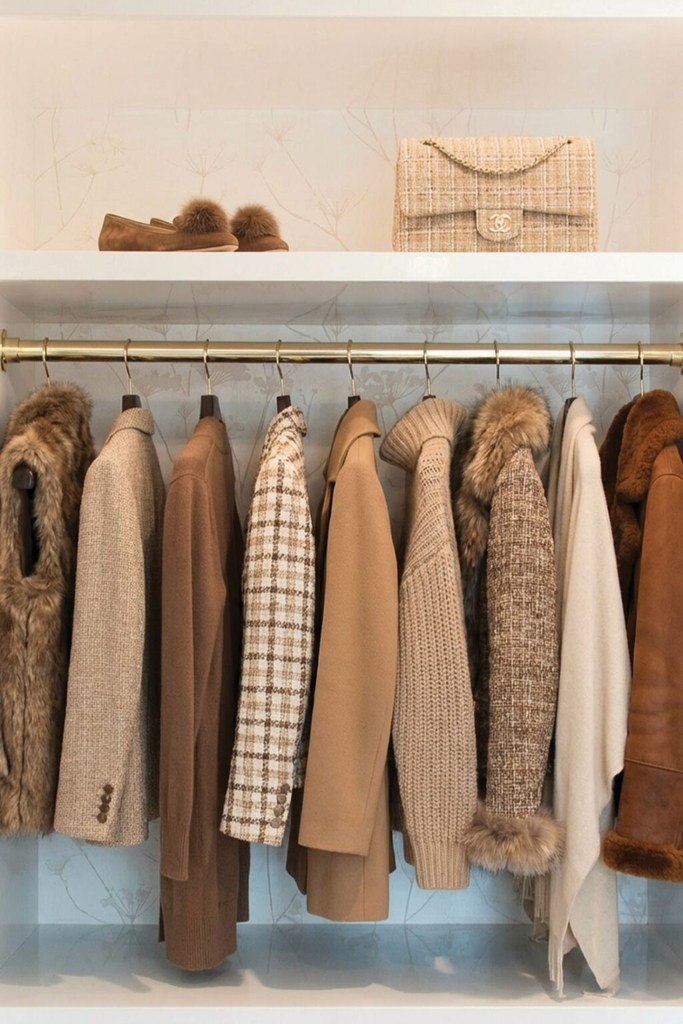
Coats and jackets need more room than lightweight shirts, so I prefer giving bulky outerwear its own hanging section when possible.
A sturdy hanging rod can keep coats together while preventing them from crushing smaller garments. I also find matching hangers helpful when the section is visible because they create a cleaner appearance.
If upper shelf space is available, I use it for hats, bags, gloves, and seasonal accessories rather than allowing these smaller pieces to crowd the hanging rail.
Also read: 30 Modern Bright Living Room Ideas To Liven Your Space
Shelf Dividers
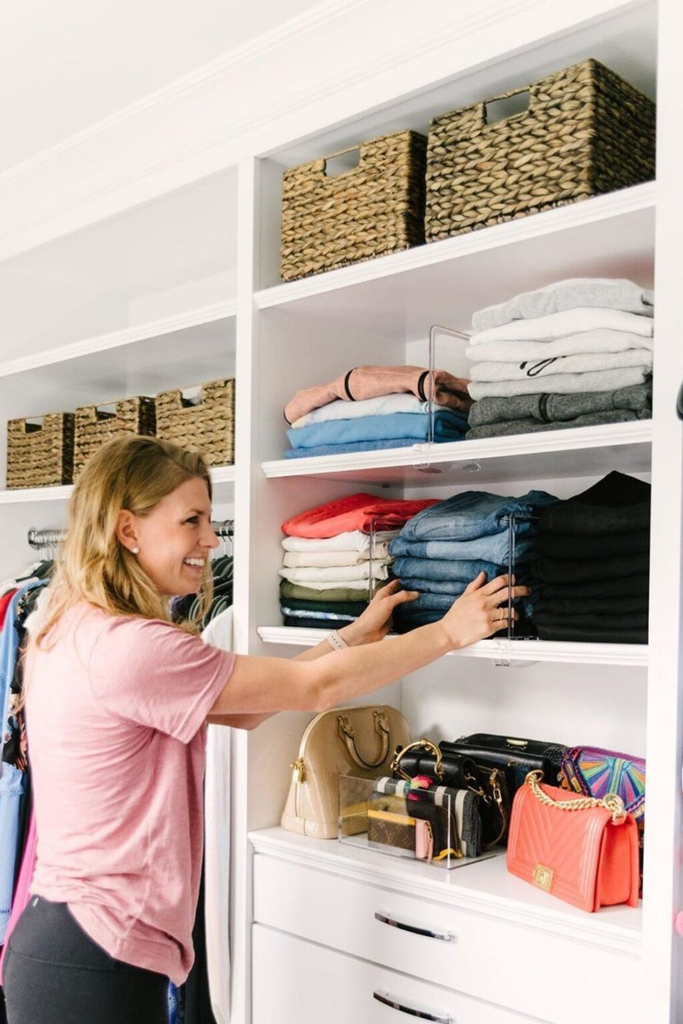
Shelf dividers are especially helpful for clothing that needs to stay folded. I use them to create individual sections for jeans, shirts, sweaters, and similar categories.
The main benefit is containment. When I remove one item, the neighboring stacks are less likely to collapse into the empty space.
Most simple shelf dividers can be installed without permanent changes, which makes them useful for renters or anyone who does not want to modify the closet.
Pant Hangers
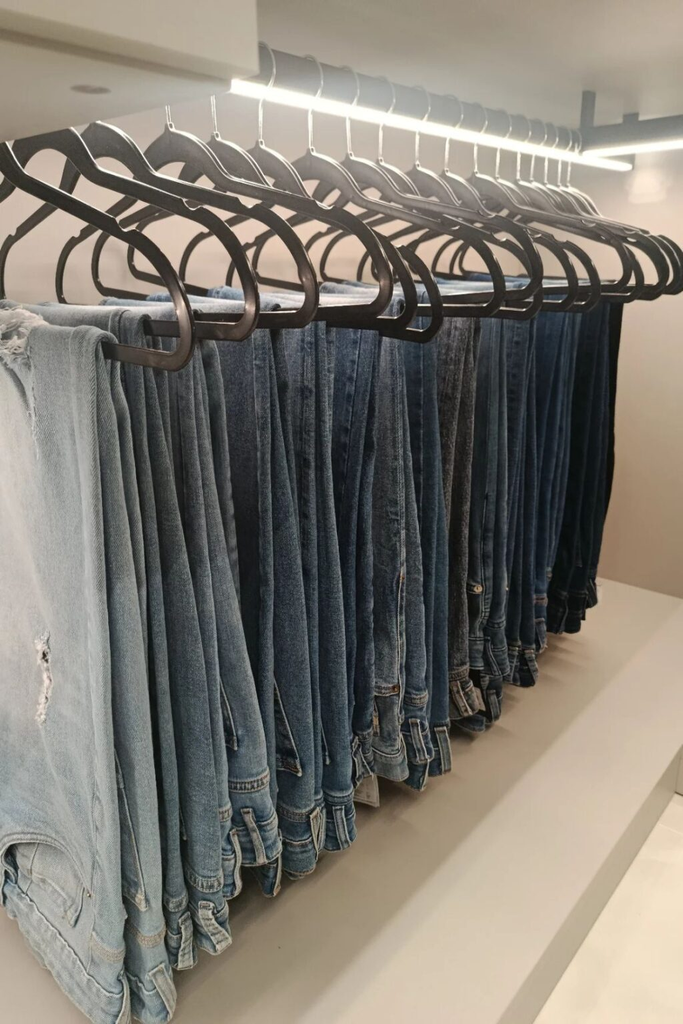
Jeans and trousers can consume a surprising amount of shelf space because they are thick when folded. Hanging them can free that shelf area for lighter garments.
I like using hangers designed specifically for pants so each pair has its own position. Grouping similar colors together also makes choosing a pair faster.
This method works particularly well when the closet has unused horizontal hanging space but limited shelving.
Pro Tip: Avoid cramming too many heavy pairs onto one lightweight rod. Check the rod and hanger weight capacity before creating a large hanging section.
Storage Trunks
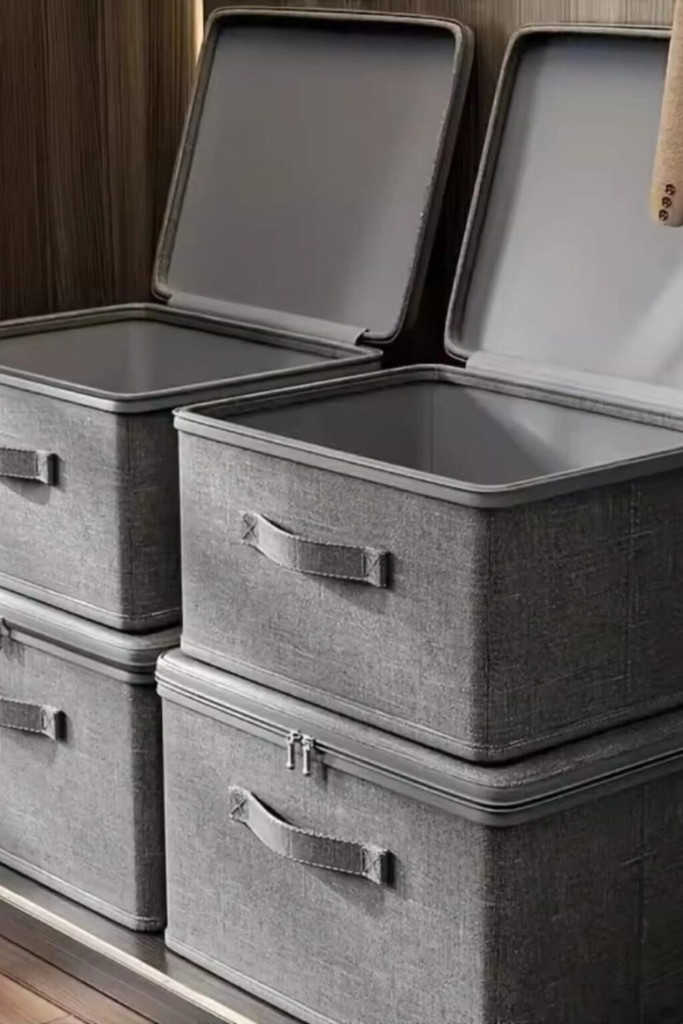
Large storage trunks are useful for bulky clothing that does not need daily access. I use them for things such as winter jackets, heavy sweaters, extra blankets, or other seasonal textiles.
Their rigid structure can help protect the contents while allowing the trunk to function as a storage piece outside the closet.
Depending on the room, a trunk can sit under a bed, at the bottom of a wardrobe, or in another dry storage area. I always choose a location where it can be opened without having to move several other items first.
Modular Closet
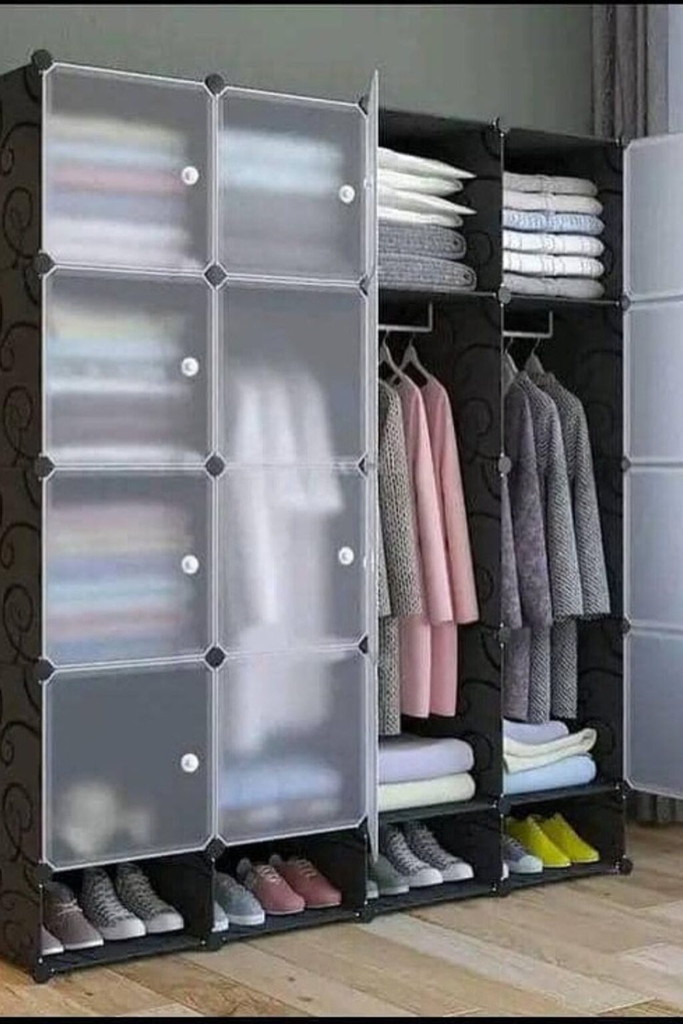
A modular closet is a practical option when there is no built-in wardrobe or when the existing setup does not match the amount of clothing being stored.
The major advantage is flexibility. Shelves, cubes, hanging sections, and other components can often be arranged according to the available wall space.
I find this especially useful in rental homes, apartments, dorm-style rooms, or bedrooms where a permanent installation is not practical.
Pro Tip: Before assembling a modular system, measure the wall width, ceiling height, nearby doors, and walking clearance. Storage that technically fits can still make a room uncomfortable if it blocks movement.
Locker Wardrobe
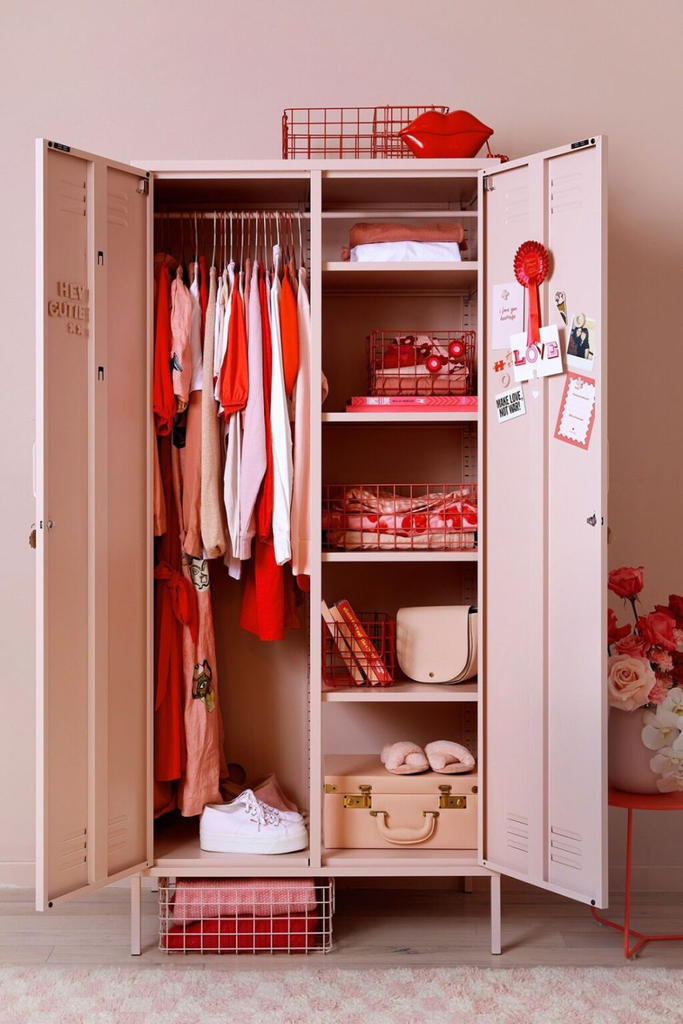
A tall locker-style wardrobe can combine several types of storage in one vertical footprint. I like using one side for hanging garments and the other for folded clothing or accessories.
Open shelves make frequently used pieces easy to reach, while baskets can contain smaller items that would otherwise become scattered.
The lower section can be reserved for shoes or heavier storage containers. This makes the full height of the wardrobe useful instead of relying only on the hanging rail.
Wire Baskets
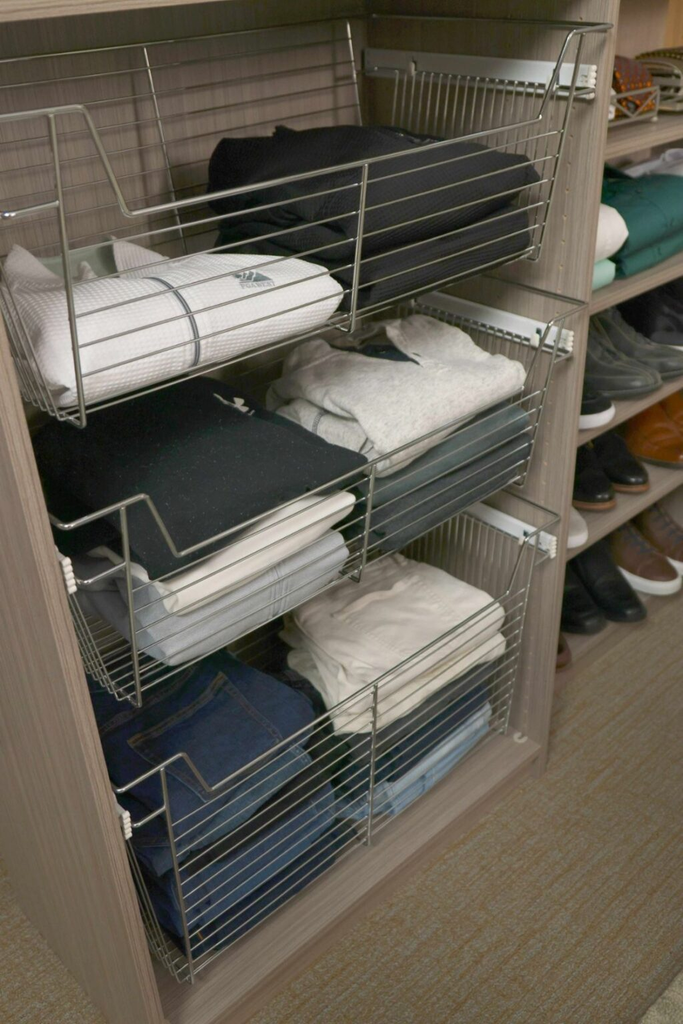
Wire baskets work well on deep shelves because they can be pulled forward rather than forcing me to reach into the back.
I use them for categories such as T-shirts, workout clothing, jeans, or everyday basics. Giving every basket a category prevents the storage system from becoming another place where clothes disappear.
The open construction also makes the contents visible from several angles. For a closet that needs airflow around stored fabrics, this can be useful.
Shirt Bins
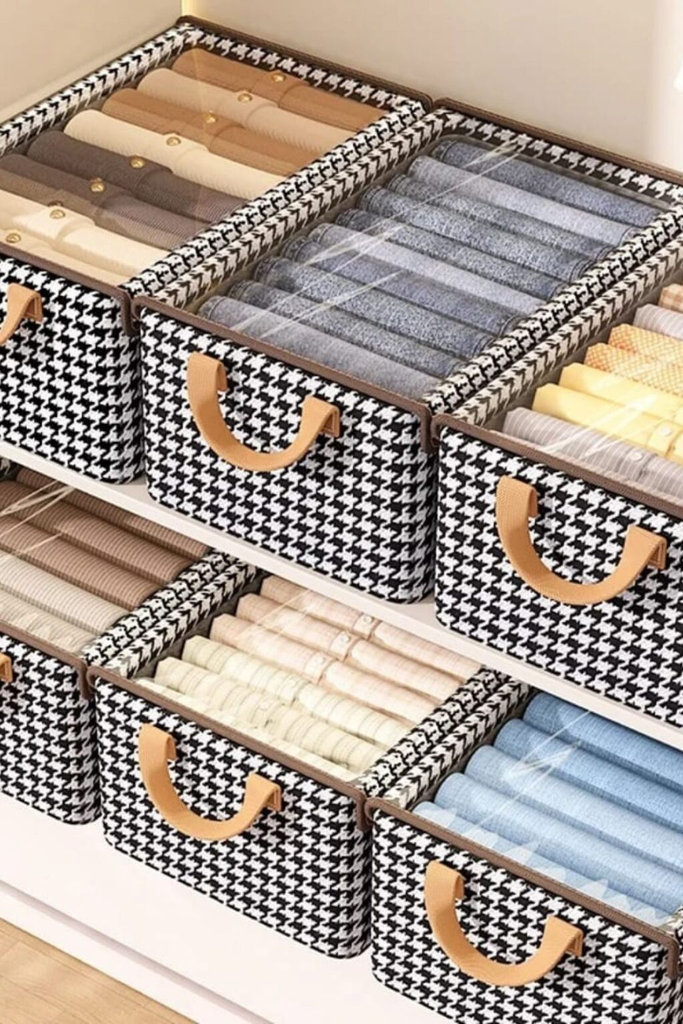
Instead of stacking shirts into tall piles, I prefer placing them vertically inside a suitable bin when the container allows it. This lets me see several shirts at once rather than removing the top pieces to reach the bottom.
I can group shirts by purpose, such as casual tops, work shirts, or seasonal pieces.
The key is not to pack the container too tightly. Clothes should be easy to remove and return without disturbing the rest of the bin.
Cube Storage
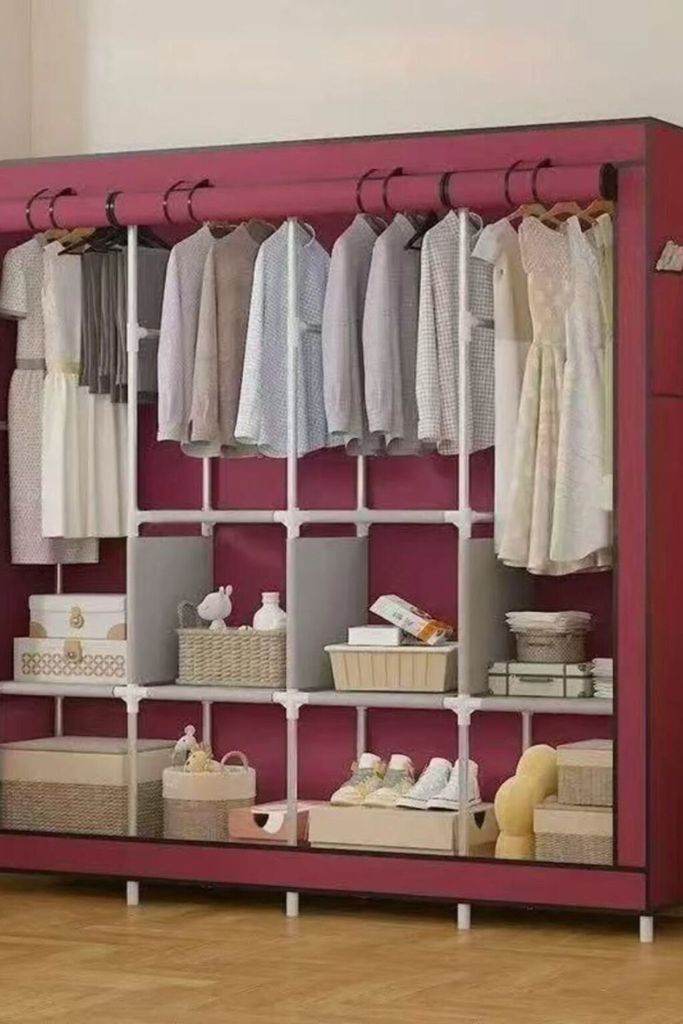
Cube shelving gives me a simple way to divide a larger storage area into smaller sections. Each cube can have one job, such as storing folded T-shirts, accessories, shoes, or seasonal items.
I particularly like this setup for shared spaces because different cubes can be assigned to different people or categories.
Small fabric baskets can also fit inside many cube systems, allowing me to hide smaller pieces while keeping the overall structure organized.
Rolling Rack
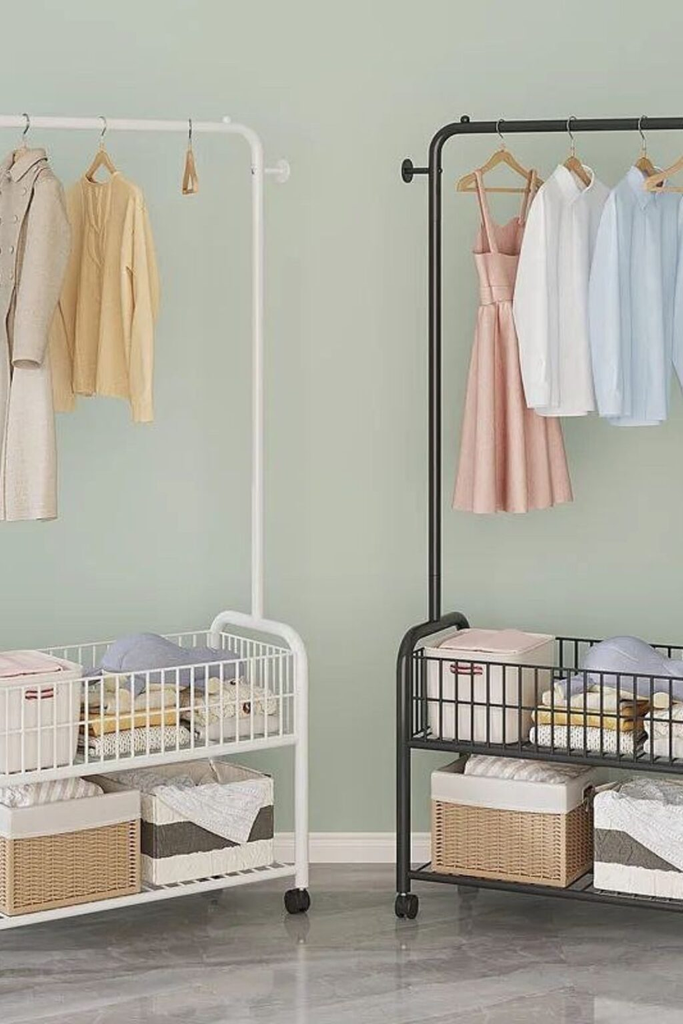
A rolling clothing rack gives me flexible hanging storage without requiring a permanent closet installation. I find it useful when a bedroom or laundry area needs additional temporary storage.
The rack can hold frequently worn clothes, recently ironed outfits, guest clothing, or pieces waiting to be put away.
Wheels make it easy to move the rack when cleaning or rearranging the room. I would keep heavier garments toward the center and check that the rack has a stable base before loading it heavily.
Wall Organizer
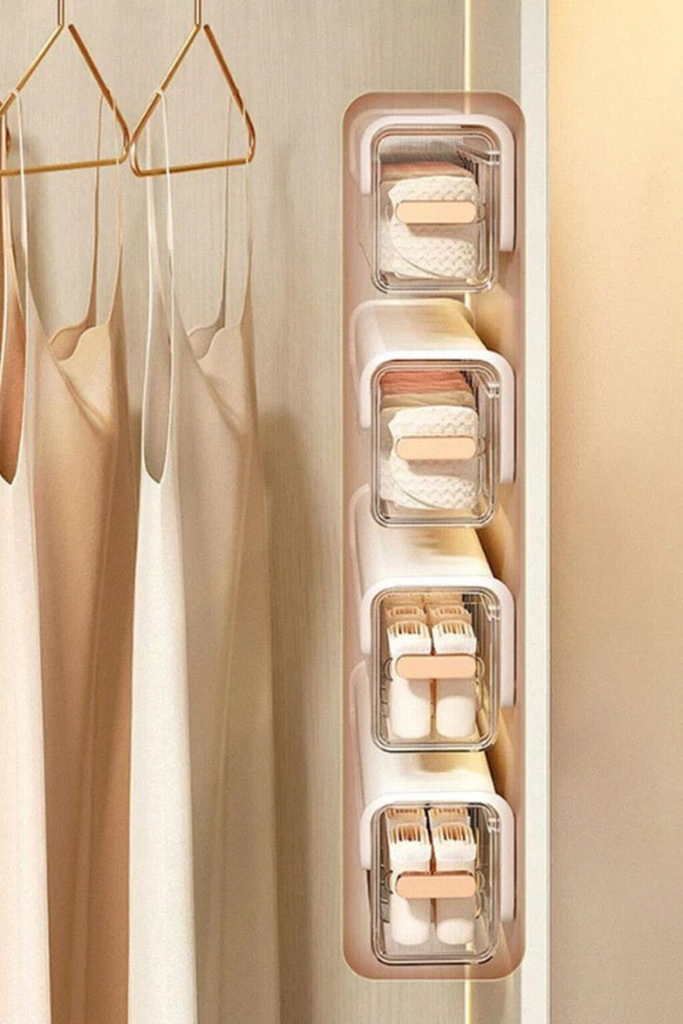
Wall organizers can turn narrow unused wall areas into storage for smaller clothing items. I use this type of storage for socks, underwear, belts, scarves, and accessories rather than bulky garments.
Clear pockets or compartments make it easy to identify what is inside. This can also free drawer space for larger clothing.
Before mounting anything, I check the wall material and the organizer’s weight limit. A small organizer is only useful if it stays securely attached.
Double Rack
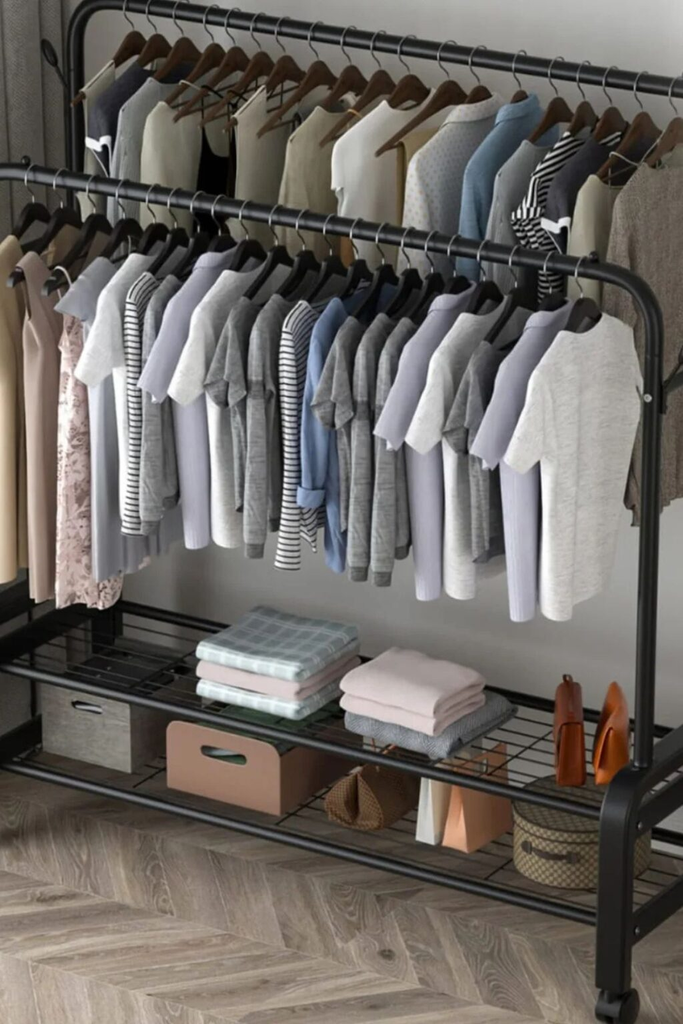
A double hanging rack creates two levels of hanging space, which can be particularly effective for shorter clothing such as shirts, blouses, skirts, and folded-over trousers.
I usually place the more frequently worn items at the easiest height and use the upper level for less frequently used pieces.
This approach works best when the garments do not require the full vertical height of a long hanging section. It allows me to use vertical space instead of expanding the closet outward.
Read this next: 13 Affordable Outdoor Seating Options For Small Spaces
FAQs
How do you organize clothes in a small closet without adding furniture?
I start by using the storage space that already exists. A second hanging rod, shelf dividers, door organizer, or slim wall storage can add function without taking up much floor area.
I also separate everyday clothing from seasonal pieces. Keeping rarely worn garments in higher or less accessible areas leaves the prime storage zones available for clothing I use regularly.
What is the best way to store seasonal clothes in a small space?
I prefer folding seasonal clothing and placing it in labeled clear boxes or breathable fabric containers. I then move those containers to upper shelves, under-bed storage, or another dry area that does not interfere with everyday clothing.
Before storing anything for several months, I make sure it is clean and fully dry. I also avoid overpacking containers because compressed clothing is harder to retrieve and reorganize later.
Conclusion
I’ve found that a well-organized clothing area is less about owning the perfect closet and more about giving every category a sensible home. Even a small wardrobe can work better when I use vertical space, separate folded stacks, and move seasonal clothing away from everyday pieces.
The most useful system is one that I can maintain without extra effort. If putting a shirt away takes only a few seconds because its storage location is obvious, the organization is much more likely to last.
I would start with the biggest problem first rather than changing the entire closet at once. A shelf divider, second hanging level, labeled bin, or door organizer may be enough to make the rest of the space easier to manage.


2 Comments