24 Kids Games for Family Reunions That Get Every Generation Playing
There is nothing quite like a family reunion where the kids actually play with their grandparents instead of staring at screens in separate corners, and kids games for family reunions are how we make that happen. I have run these games at our own reunions for years, with cousins aged four to seventy-four, and I picked only the ones that survived real, chaotic, multi-generation play.
How I picked and tested these: every game below was played at least twice at a real family gathering, with at least three generations involved. I kept the ones where the youngest and the oldest both had a genuine chance to win, and I dropped anything that needed expensive gear, long explanations, or more patience than a reunion afternoon allows.
One thing I learned early: the best reunion games are not about winning. They are about giving a shy eight-year-old a reason to talk to an uncle she sees once a year, and giving grandpa a reason to laugh until his sides hurt. Keep score lightly, rotate teams often, and always end before anyone is tired or sore.
Key Takeaways
- Mix active games with seated ones so grandparents and toddlers both get their moment.
- Form mixed-age, mixed-family teams so cousins meet relatives they barely know.
- Keep rules to one minute of explanation; if it takes longer, simplify it on the spot.
- Appoint a young “game captain” each round; kids take ownership and adults relax.
My Favorite Kids Games for Family Reunions
1. Three-Legged Race
Tie the inside legs of two players together and race to the finish line, and you have instant comedy and instant bonding. I always pair a child with an adult from a different branch of the family, because nothing breaks the ice faster than two people trying not to fall over while tied together.
At our last reunion, my seven-year-old niece was paired with her great-uncle, and by the finish line they were laughing so hard they could barely walk. I use soft fabric strips rather than rope, which is kinder on ankles. The downside is that falls happen, so I run this on flat grass only, never on a slope, and I keep the race short, about twenty yards.

Image credit: IndoIndians
Pro Tip: Let pairs practice walking ten steps before the race starts; the practice walk is often funnier than the race itself.
Cost: Free with scarves or fabric strips | Time: 15–20 minutes | Difficulty: Easy
2. Sack Race
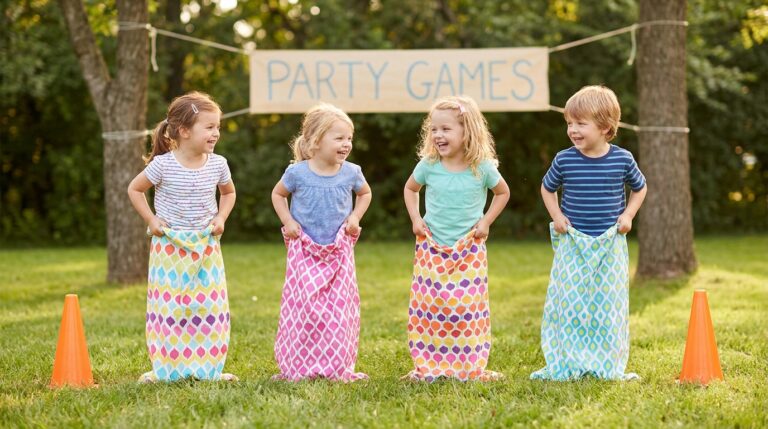
Everyone climbs into a sack, holds it at waist height, and hops to the finish line. It is gloriously undignified, which is exactly why grandparents love it as much as kids do. I run heats by age first, then a grand final where the heat winners face off, which gives everyone at least two races.
I bought a set of sturdy burlap sacks years ago, and they have survived dozens of reunions, though I now check every sack for holes before race day after one memorable mid-race rip. My father-in-law won the over-sixty heat last year and still mentions it. The downside is that hopping is hard on knees, so older players can opt for a “waddle” division, which is just as funny.
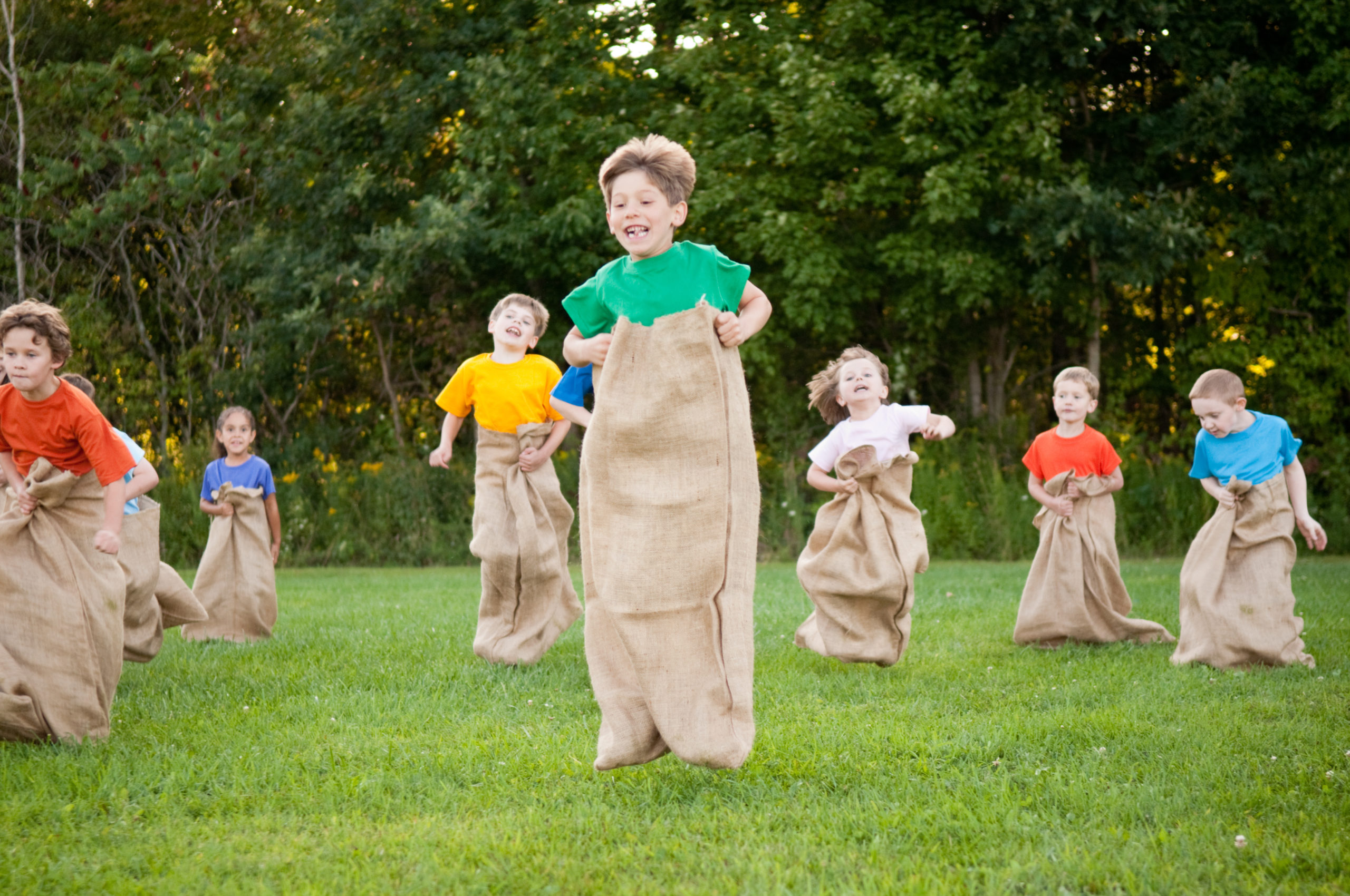
Image credit: Fountain Fitness Center
Pro Tip: Use old pillowcases for kids under six; full sacks are too long for little legs and cause more tumbles than laughs.
Cost: $10–$15 for sacks | Time: 20 minutes | Difficulty: Easy
3. Family Scavenger Hunt
Give each team a list of things to find around the reunion site: a red leaf, a photo of grandma, something older than the youngest player, a cousin’s signature. Teams race to tick off the most items, and the list itself becomes a tour of the family. I always include a few family-history items, like finding the year grandpa’s house was built.
Last year I added “a photo with someone you had never met before today,” and it did more for family bonding than any speech ever has. I print the lists on card so they survive excited hands. The downside is that competitive teams can get rough about boundaries, so I mark the hunt area clearly and ban entering anyone’s house or car.

Image credit: Little Passports
Pro Tip: Add photo challenges instead of collecting items; teams show their camera roll at the end, and judging the photos becomes its own entertainment.
Cost: Free | Time: 30–45 minutes | Difficulty: Easy
4. Tug of War
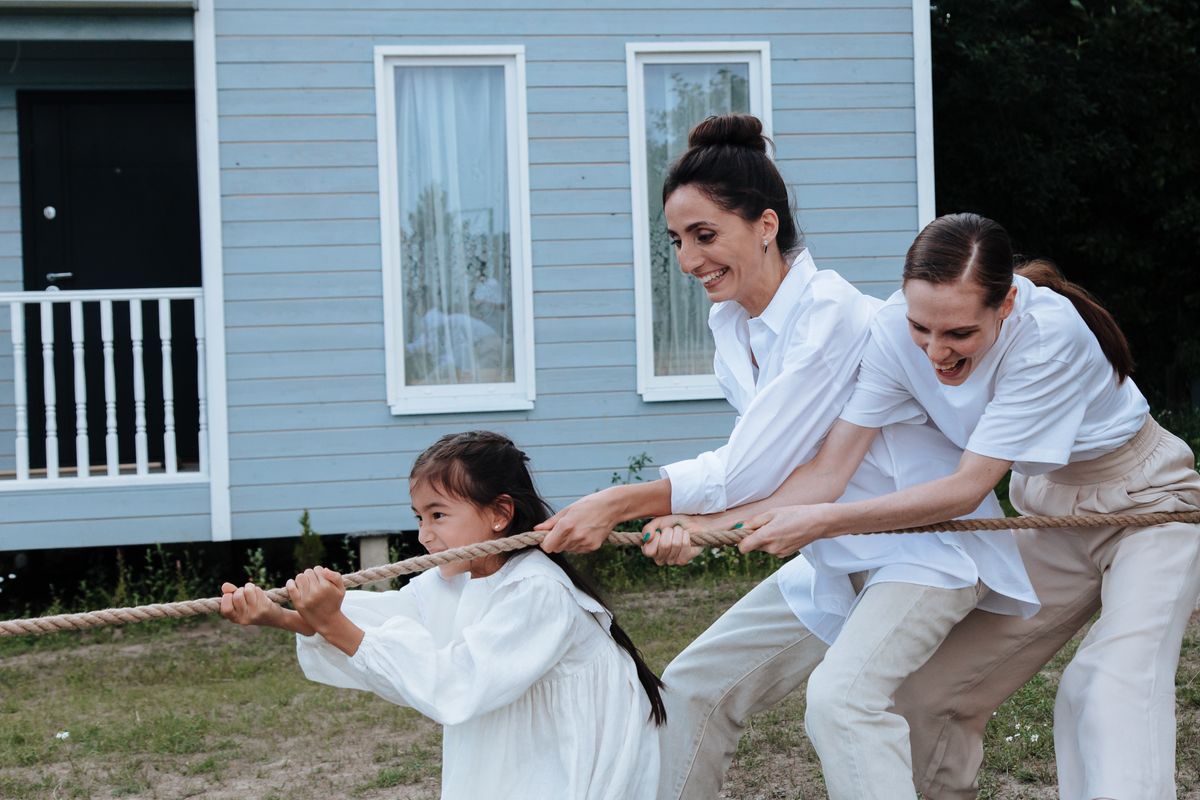
A long rope, a line on the grass, and two teams pulling with everything they have is the most reliably thrilling game I know. I split teams by mixing ages and families, never kids versus adults, because a mixed team that wins together celebrates together. First team to pull the marker over the line wins the round.
At one reunion, the “under-tens plus grandparents” team beat the teenagers, and the cheer that went up could be heard down the street. I use a thick, soft rope and gloves for little hands after one rope-burn incident taught me better. The downside is that it can get intense, so I cap rounds at two minutes and stop immediately if anyone falls.
Pro Tip: Anchor the youngest player at the back as the “anchor” and let them shout the rhythm; it gives them a starring role without the hardest pulling.
Cost: $10–$20 for a rope | Time: 20 minutes | Difficulty: Easy
5. Egg and Spoon Race
Balance an egg on a spoon, race to the line and back, and try not to drop it. I use hard-boiled eggs for the first rounds and raw eggs only for the brave finalists, because raw egg on a lawn is funny once and a mess every time after. Kids and grandparents compete on equal footing here, which is rare and wonderful.
My grandmother won this at eighty-two by walking slowly and steadily while the kids sprinted and dropped everything, and she still tells that story at every gathering. The lesson was not lost on the children. The downside is that dropped eggs attract wasps in summer, so I keep a bucket and a cloth handy and clear any breakage immediately.
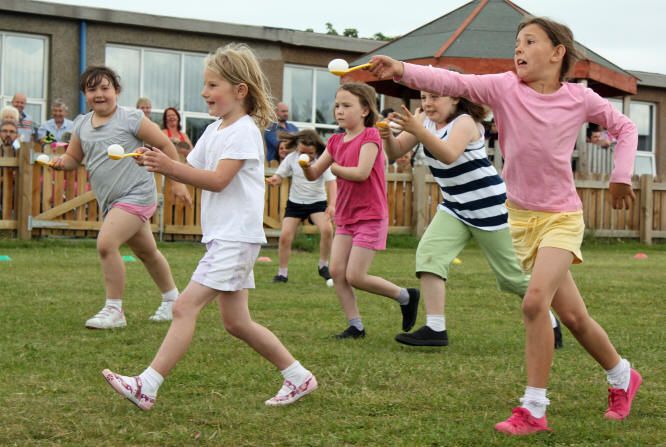
Image credit: TopTeny
Pro Tip: Let kids under five carry a ping pong ball instead of an egg; it bounces rather than breaks, and they still get the full race experience.
Cost: Under $5 | Time: 15 minutes | Difficulty: Easy
6. Family Bingo Night
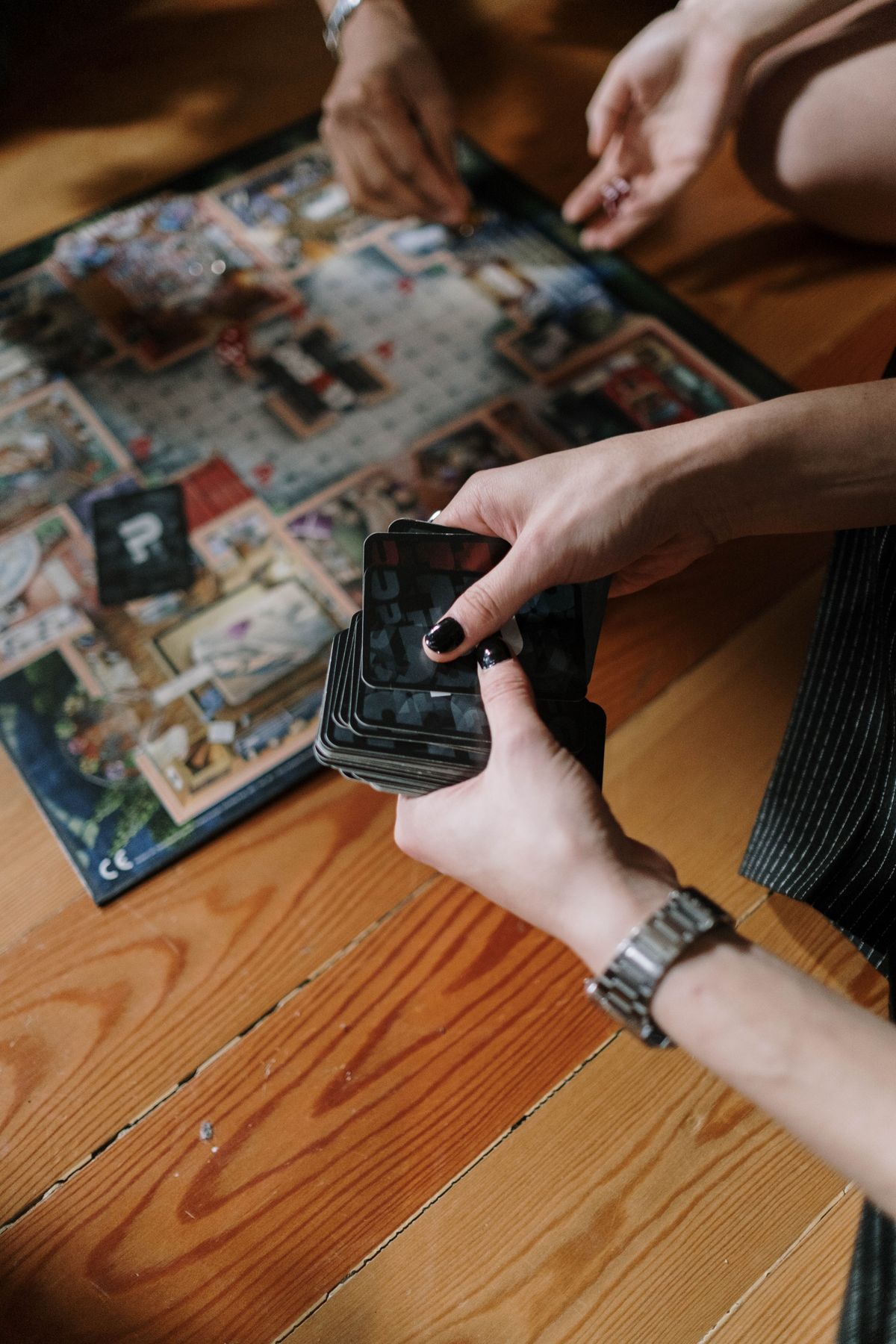
Family bingo uses cards printed with family facts instead of numbers: “has been to another country,” “plays an instrument,” “was born in December.” Players must find a relative who matches each square and get them to sign it. It is a game and a family interview rolled into one, and it works beautifully indoors when the weather turns.
I made our first set of cards by hand the night before a reunion, and my aunt still keeps hers on her fridge. The shy cousins who would never start a conversation suddenly had a reason to approach everyone. The downside is the prep time, so now I reuse a template and only swap in a few new squares each year.
Pro Tip: Offer small prizes for the first full row and the first full card, and let the winner call the next round.
Cost: Free to print | Time: 30 minutes | Difficulty: Easy
7. Generation Relay Race
Each team must include at least one player from three different generations, and the relay itself mixes skills: a sprint, a beanbag toss, a puzzle piece placed, and a silly dance at the final cone. Because every leg suits a different age, no single star player can carry a team, and everyone matters.
I designed this after watching teenagers dominate every race at one reunion while the little ones watched from the sidelines. The mixed legs changed everything, and the dance finish became a tradition. The downside is that it needs a bit of setup and a clear explanation, so I demonstrate each leg once before the real race begins.

Image credit: PE Planning
Pro Tip: Let each team choose its running order; the strategy talk beforehand is half the fun.
Cost: Free | Time: 25 minutes | Difficulty: Easy to moderate
8. Cornhole Tournament
Two boards, eight beanbags, and a bracket drawn on a whiteboard is all a cornhole tournament needs, and it runs itself once it starts. I pair kids with adults for doubles, which keeps the skill gap friendly, and I run a loser’s bracket so nobody is out after one bad round.
My uncle built our boards from scrap wood one winter, and they have become reunion furniture, dragged out before the food is even served. The game is calm enough for conversation, which is the point at a reunion. The downside is that boards are bulky to transport, so if you are reuniting at a park, check whether the venue has a set you can borrow.
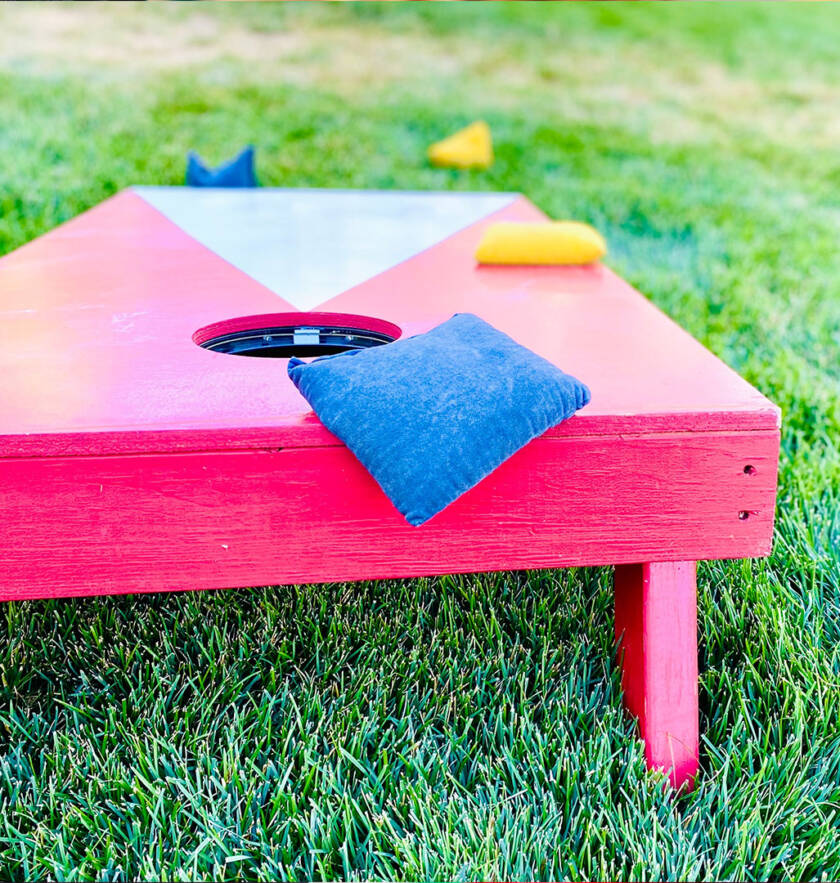
Image credit: Arts Alley Concord
Pro Tip: Move the throwing line closer for players under eight and call it the “rookie line”; kids love having their own official line.
Cost: $30–$60 for a set, or borrow | Time: 45 minutes for a tournament | Difficulty: Easy
9. Giant Jenga Showdown
Stack oversized wooden blocks into a tower, then take turns pulling one block and placing it on top until the tower falls. The groans, the held breath, and the slow-motion collapse are pure reunion gold. I play it on a sturdy table on the patio, where a crowd can gather without blocking the game.
At our last reunion, the tower survived eleven rounds, and by the end, three generations were standing around it offering whispered advice to a very nervous ten-year-old. He pulled the winning block and the cheer was enormous. The downside is that falling blocks can sting toes, so I insist on shoes for players standing close, and I keep toddlers at a safe distance.

Image credit: Penny Pinchin Mom
Pro Tip: Write a silly dare on a few blocks, like “do your best animal impression,” to keep the game lively between careful pulls.
Cost: $20–$40 for a set | Time: 20–30 minutes per game | Difficulty: Easy
Also read: Party Games for Large Groups for more ideas that work when the guest list is big.
10. Capture the Flag
Two teams, two territories, two flags, and one gloriously energetic hour. Players sneak into enemy territory to grab the flag while guarding their own, and tagged players go to “jail” until a teammate frees them. It is the reunion game my teenagers request first, and it gets even the screen-glued cousins running.
I use bandanas as flags and cones to mark the boundary, and I always walk the boundaries with both teams before starting, after one game dissolved into an argument about where the line was. The downside is that it needs a big space and at least ten players to really work, so I save it for reunions at parks or big yards, not small gardens.
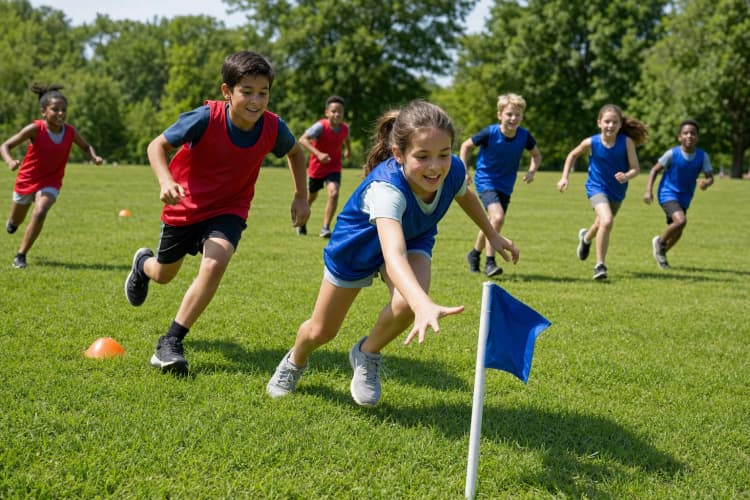
Image credit: Play at Me
Pro Tip: Add a “safe zone” around each jail so freed players get a few steps of head start; it keeps the game flowing instead of stalling.
Cost: Free with bandanas | Time: 45–60 minutes | Difficulty: Moderate
11. Balloon Pop Relay
Teams race to pop balloons by sitting on them, one balloon per player, and the first team to pop them all wins. It sounds easy until you watch a confident teenager bounce helplessly on a stubborn balloon while the whole family cheers. I keep a backup bag of balloons because pops are unpredictable and spares are essential.
I first ran this at a reunion where rain had driven us indoors, and it worked just as well in a big living room as it does on grass. My aunt, who claims she hates games, popped three in a row and demanded a rematch. The downside is the noise, which can upset toddlers and dogs, so I warn everyone first and keep pets in another room.

Image credit: DIY Sprout
Pro Tip: Slightly underinflate balloons for younger kids; they pop with less force and far less startling noise.
Cost: Under $5 | Time: 15 minutes | Difficulty: Easy
12. Family Trivia Challenge
Write trivia questions about your own family: What year did grandma and grandpa marry? What was dad’s first job? Which cousin has lived in three countries? Teams buzz in, argue lovingly about the answers, and learn family history without a single boring speech. I collect questions from relatives in advance, which is half the fun.
The best question I ever used was “who once locked themselves in the car at a wedding,” and the reveal caused a fifteen-minute laughing fit. I keep a mix of easy questions for kids and hard ones for the old-timers. The downside is that someone has to be the quizmaster and miss playing, so I rotate the role every ten questions.
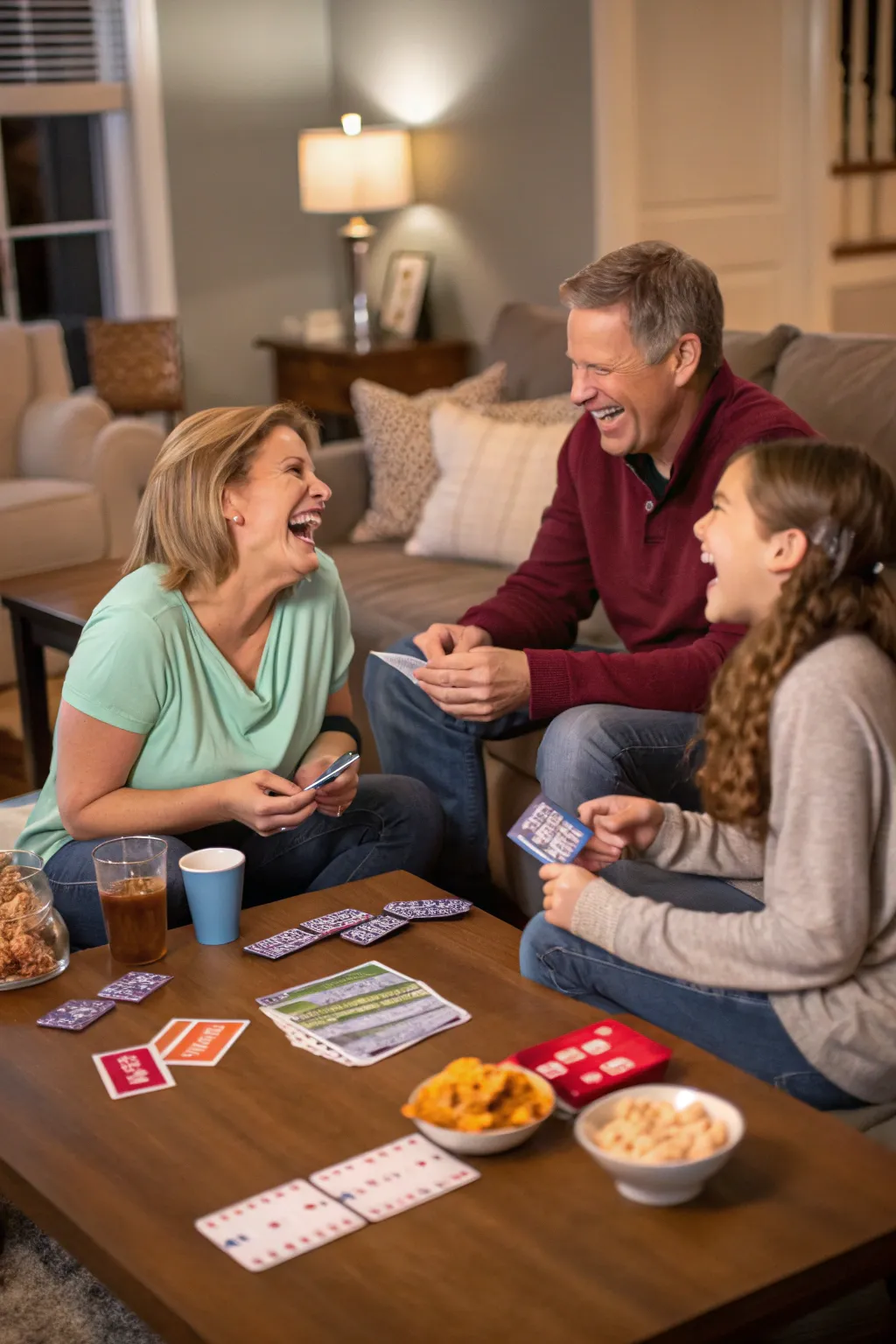
Image credit: Casolia
Pro Tip: Give kids a “phone a relative” lifeline once per game; calling grandma for an answer is delightful, not cheating.
Cost: Free | Time: 30–45 minutes | Difficulty: Easy
13. Charades, Family Edition
Act out family memories, relatives, and inside jokes without speaking, while your team guesses. “Uncle Joe’s fishing trip” is far funnier to act out than any movie title, and the game gives quieter relatives a stage without forcing them to speak. I write prompts on slips of paper in advance, sorted into easy and hard piles.
My shyest niece once acted out her grandfather’s snoring so accurately that the whole room guessed it in seconds, and she glowed for the rest of the day. That is what this game is for. The downside is that some adults freeze on stage, so I always let players swap a prompt once, no questions asked, which removes the fear entirely.

Image credit: Psycat Games
Pro Tip: Let kids under seven act in pairs with an adult; the partnership removes stage fright and doubles the comedy.
Cost: Free | Time: 30 minutes | Difficulty: Easy
14. Musical Chairs for All Ages
Chairs in a circle, music playing, and everyone walking around until the music stops and the scramble begins. It is chaos, it is loud, and it is the game that gets grandparents out of their seats like nothing else. I use family playlist songs so every generation hears something they love.
At one reunion, my seventy-year-old mother won by sheer determination, and the photo of her triumphant on the last chair is now framed in her hallway. I use sturdy chairs and remove one each round as usual. The downside is that the scramble can get rough, so I ban diving for chairs and require walking, not running, which keeps it safe and still hilarious.

Image credit: WHO Times
Pro Tip: Play a slow song for the first round so older players find their footing, then speed up the playlist gradually.
Cost: Free | Time: 20 minutes | Difficulty: Easy
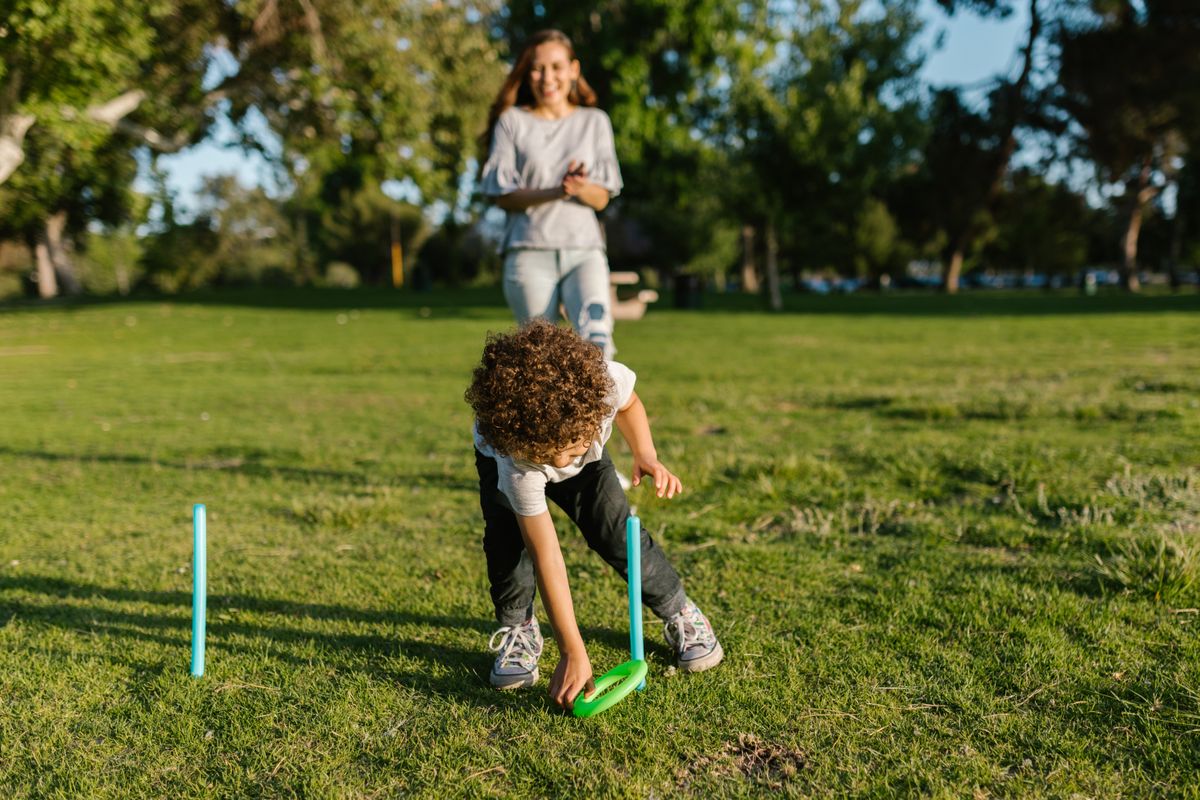
15. Ring Toss
Toss rings onto pegs or bottles from a marked line, score points by distance, and you have a game that a four-year-old and an eighty-year-old can play side by side. I use plastic rings and a wooden peg board, and I let kids move closer while adults throw from farther back, which keeps every round close.
This is my secret weapon for the quiet hour after lunch, when everyone is full and nobody wants to run. It sits on the patio and people drift over in twos and threes, chatting while they toss. The downside is that it can feel too calm for high-energy kids, so I pair it with a livelier game running nearby and let kids wander between the two.
Pro Tip: Paint the pegs different colors and assign different points to each color; the scoring adds strategy to a simple toss.
Cost: $10–$20 for a set | Time: 20–30 minutes | Difficulty: Easy
16. Wheelbarrow Race
One player walks on their hands while their partner holds their legs, and the pair races to the finish line. It is the funniest-looking race in this entire list, and it builds trust between partners fast, because the “wheelbarrow” has to trust the holder completely. I pair cousins who barely know each other on purpose.
Last summer, two cousins who had never met before the reunion won the wheelbarrow final, and they spent the rest of the weekend inseparable. That is the real prize of this game. The downside is that it is hard on wrists and arms, so I keep races short, use soft grass, and let anyone switch roles halfway if they are tired.

Image credit: Denner’s HQ
Pro Tip: Run this one on flat, soft grass and mark the lane with cones so pairs do not drift into each other.
Cost: Free | Time: 15 minutes | Difficulty: Moderate
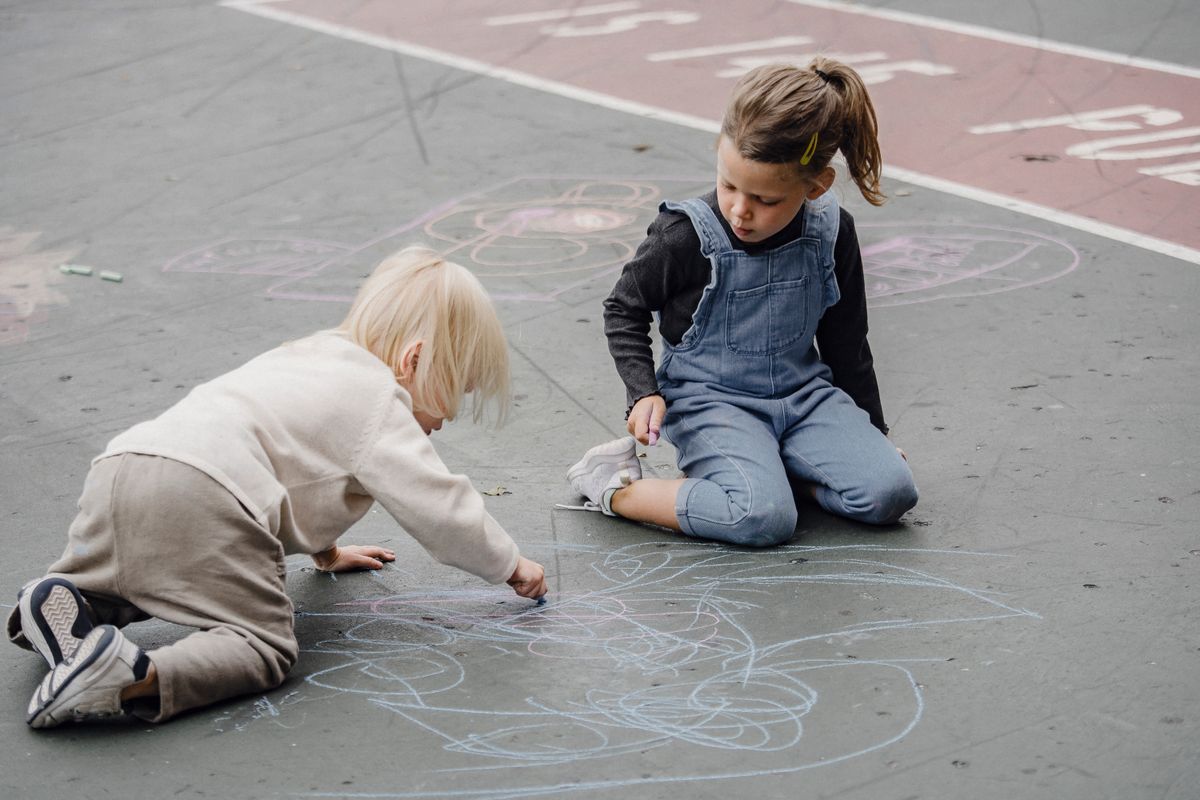
17. Pictionary Relay
One player draws a family-themed word, the next guesses and runs to draw the next one, and the team that finishes its list first wins. It combines drawing, guessing, and running, so different kids shine at different moments. I use a whiteboard for each team so everyone can see the drawings taking shape.
The drawings themselves become reunion artifacts; I photograph the best ones every year, and we now have a small gallery of gloriously bad drawings of family pets. My brother’s attempt at a horse is legendary. The downside is that drawing under time pressure embarrasses some kids, so I stress that funny drawings score just as well as accurate ones, and they always do.
Pro Tip: Use a mix of easy words for younger players and harder ones for older players, and let teams choose who draws which word.
Cost: Free with paper or whiteboards | Time: 25 minutes | Difficulty: Easy
Related article: Simple Group Games for Kids if you want more team games for a big family crowd.
18. Kickball Game
Kickball is baseball without the bat, which makes it perfect for mixed ages: anyone can kick a big, soft ball, and the rules are familiar enough that nobody needs a long explanation. I split teams by family branch, use a big rubber playground ball, and let kids pitch by rolling the ball gently.
Our reunion kickball game has become an annual event with its own trophy, a spray-painted golden ball that lives on my sister’s mantel. The game lasts about an hour and the sideline commentary is half the fun. The downside is that it needs a decent field and at least eight players per side to feel right, so I only schedule it when the reunion is big enough.
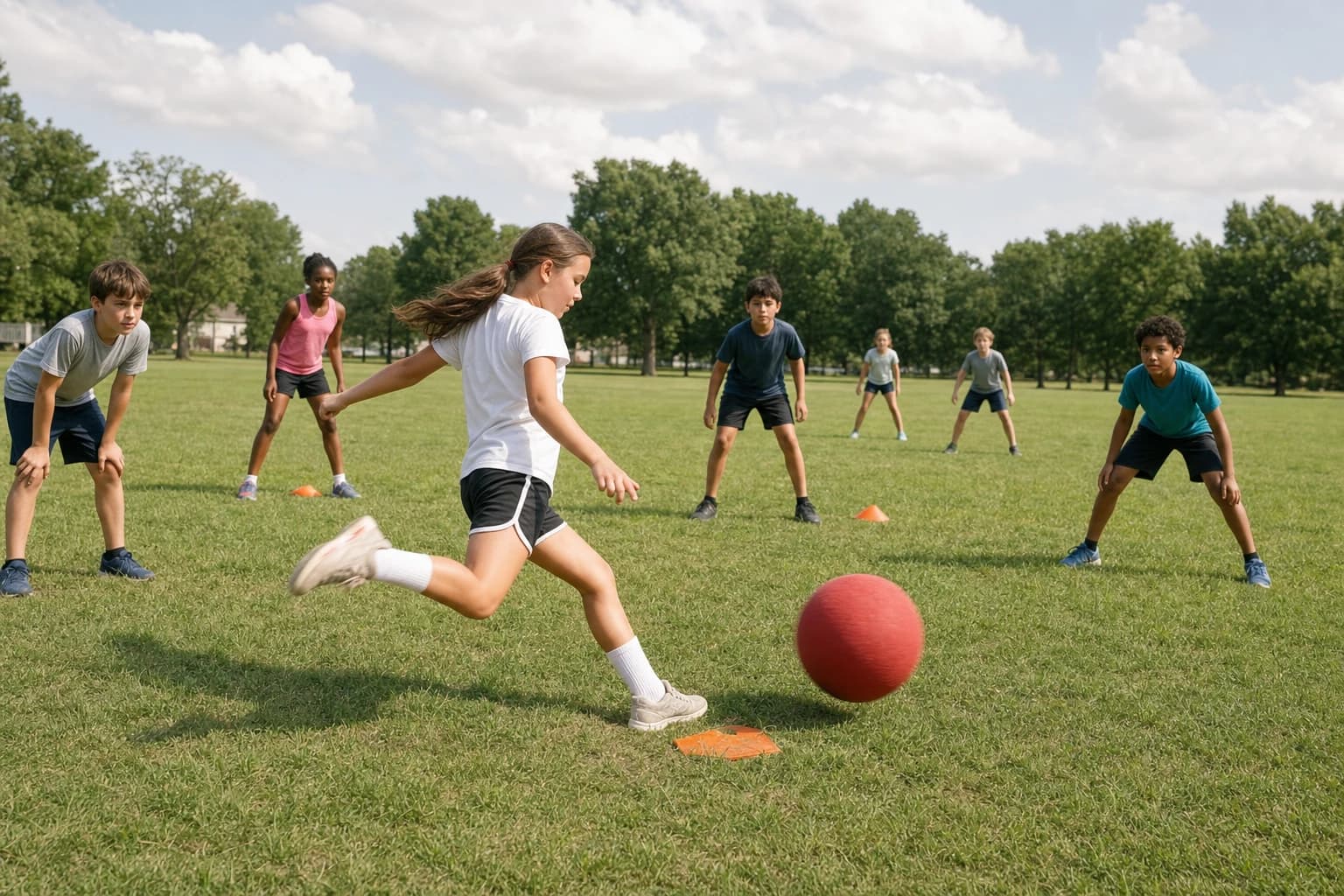
Image credit: Play at Me
Pro Tip: Use bases made from paper plates or towels so the field can be set up anywhere in two minutes.
Cost: $10–$15 for a ball | Time: 45–60 minutes | Difficulty: Easy to moderate
19. Hide and Seek, Big Yard Edition
Classic hide and seek becomes a reunion epic when the hiding area is a whole yard, a park, or a farm. I set clear boundaries, a base, and a time limit, and I let adults hide too, which the kids find absolutely thrilling. One seeker, everyone else hidden, and the round ends when the last player is found.
My favorite reunion moment ever was finding my uncle, a grown man, folded into a garden shed behind the watering cans, trying not to laugh. The game works because it is familiar to every generation. The downside is safety: I walk the boundaries first, lock off sheds with tools and any road access, and ban hiding in cars.
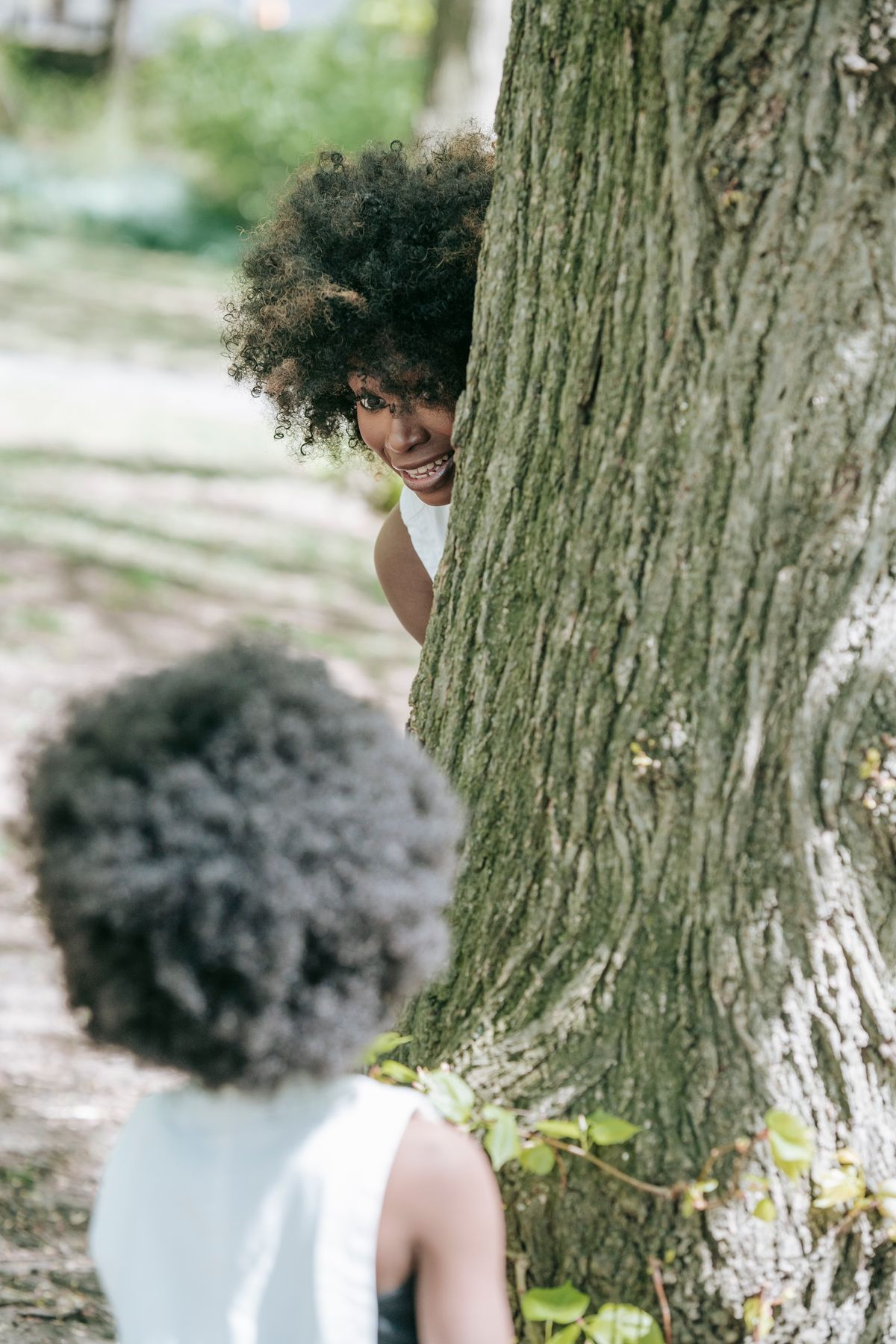
Pro Tip: Give the seeker a whistle and set a five-minute limit; a round that drags on loses its magic fast.
Cost: Free | Time: 20–30 minutes | Difficulty: Easy
20. Frisbee Golf
Set up targets around the yard, like buckets, trees, or hula hoops on the ground, and players throw a frisbee toward each target in as few throws as possible. It is golf without clubs, it works at any pace, and it lets grandparents play a full round while chatting, which is exactly the reunion vibe I want.
I made our first course with laundry baskets and lawn chairs, and the kids immediately started designing harder holes. One hole required throwing through a hanging hula hoop, and it took twenty minutes for anyone to manage it. The downside is that stray frisbees can wander into flower beds or neighbors’ yards, so I keep the course away from fences and roads.
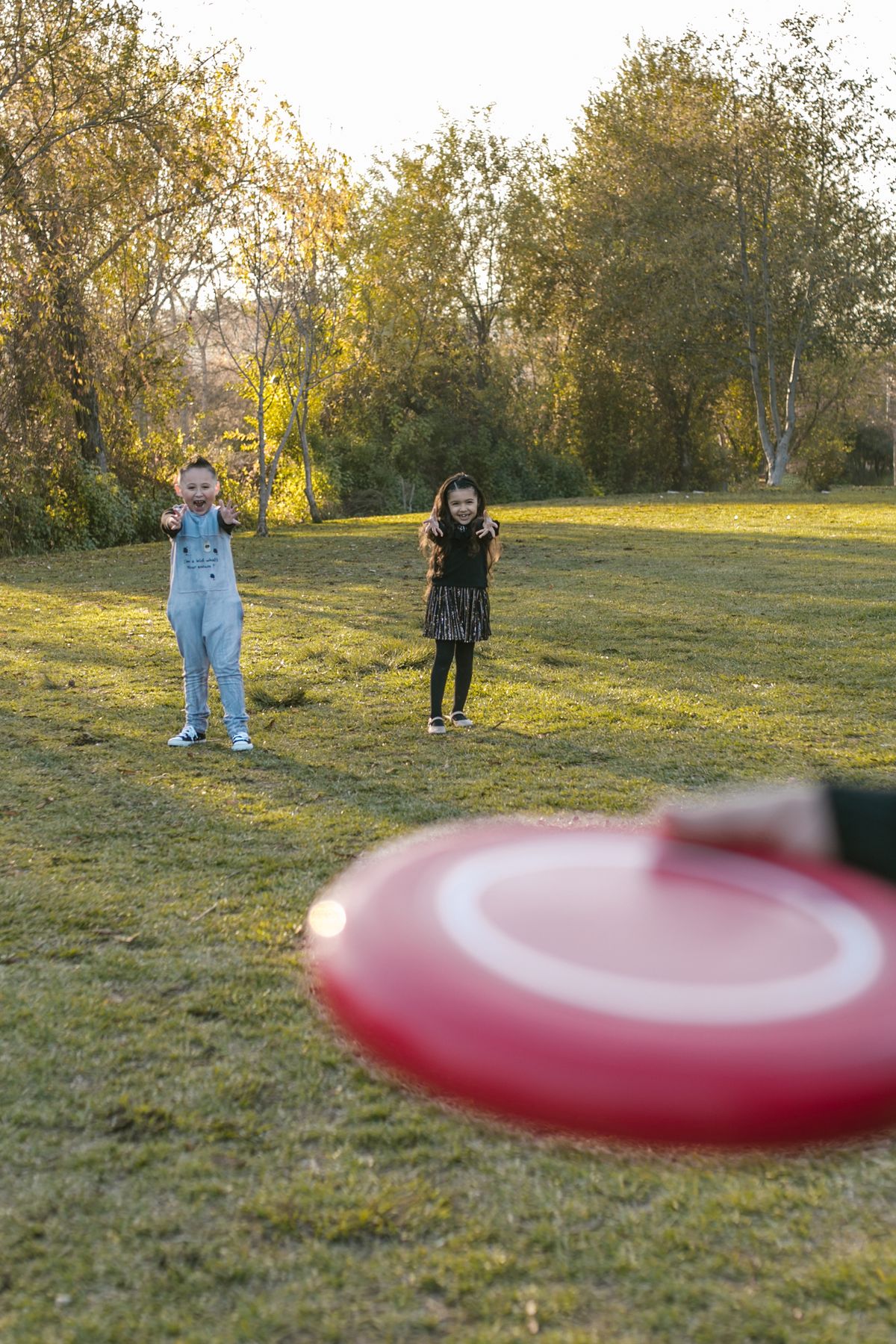
Pro Tip: Use soft foam frisbees for younger players; they fly shorter and are much kinder when they hit someone by accident.
Cost: $5–$15 | Time: 30–45 minutes | Difficulty: Easy
21. Hula Hoop Contest
Who can keep a hoop spinning longest? Who can hoop while walking? Who can hoop two at once? A hula hoop contest sounds simple, but it turns into a full show once the music starts and the crowd gathers. I run timed rounds, then trick rounds, then a final showdown between the best two hoopers.
My mother won the over-sixty round last year with a technique she claims she learned in 1962, and nobody has been able to beat her since. The contest is wonderful because it is pure individual skill, no teams, no arguments. The downside is that some kids cannot hoop at all, so I add a “hoop rolling” race alongside it, which anyone can join.
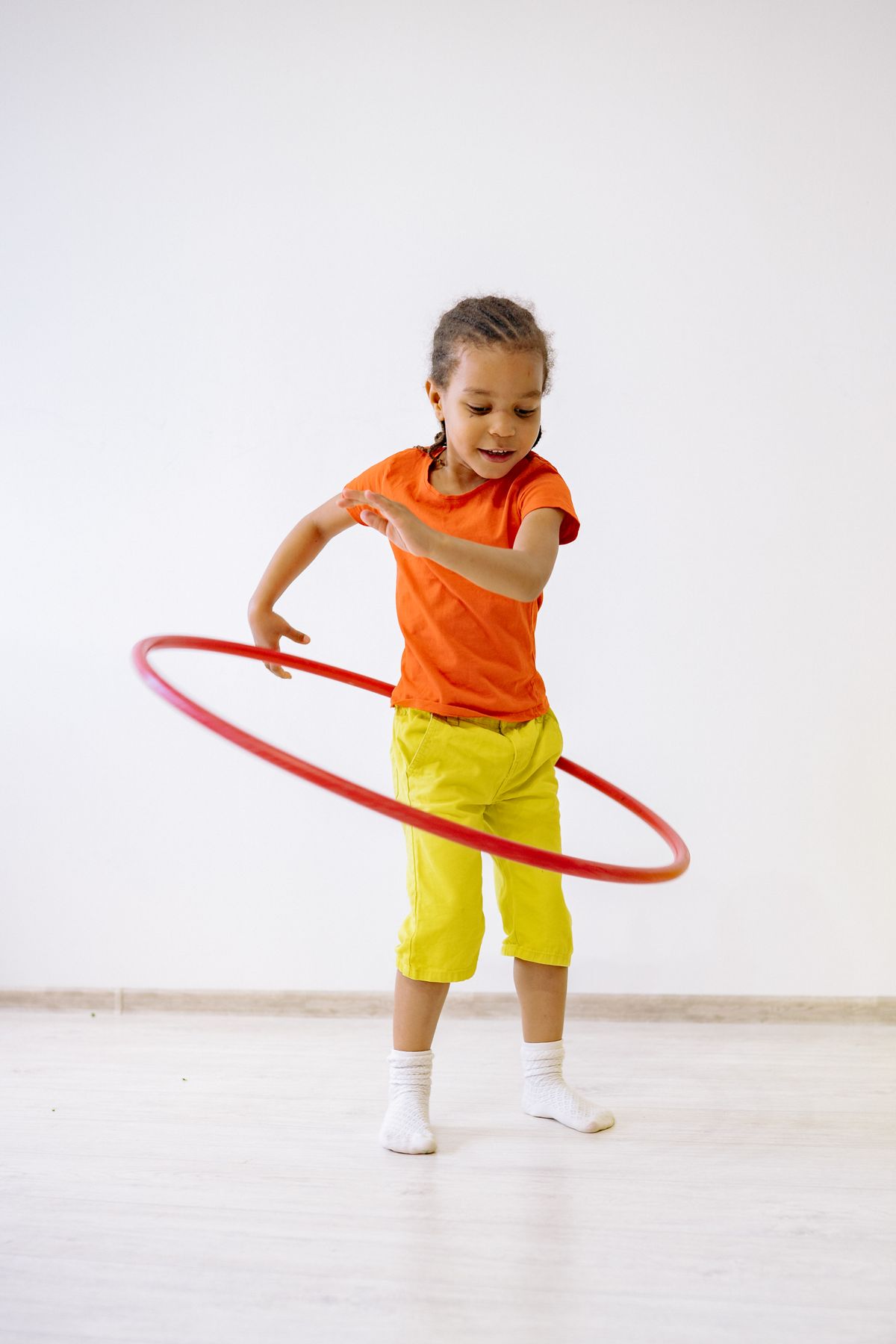
Pro Tip: Buy weighted hoops for adults and light ones for kids; the right weight makes a huge difference to success.
Cost: $5–$10 per hoop | Time: 20 minutes | Difficulty: Easy
22. Storytelling Circle
Everyone sits in a circle, and one person starts a story with a single sentence. Each person adds a sentence, and the story grows wilder with every turn. I start with a family prompt, like “the summer the cousins found a secret door,” and let the story run wherever the group takes it. Kids love the silliness, and adults love hearing how kids think.
Our best circle story involved a runaway goat, a lost wedding ring, and a helicopter made of cheese, and we still quote lines from it. I appoint a “scribe” to write down the best sentences. The downside is that shy kids can freeze when their turn comes, so I allow passing once, or letting a neighbor help, and the circle stays comfortable.
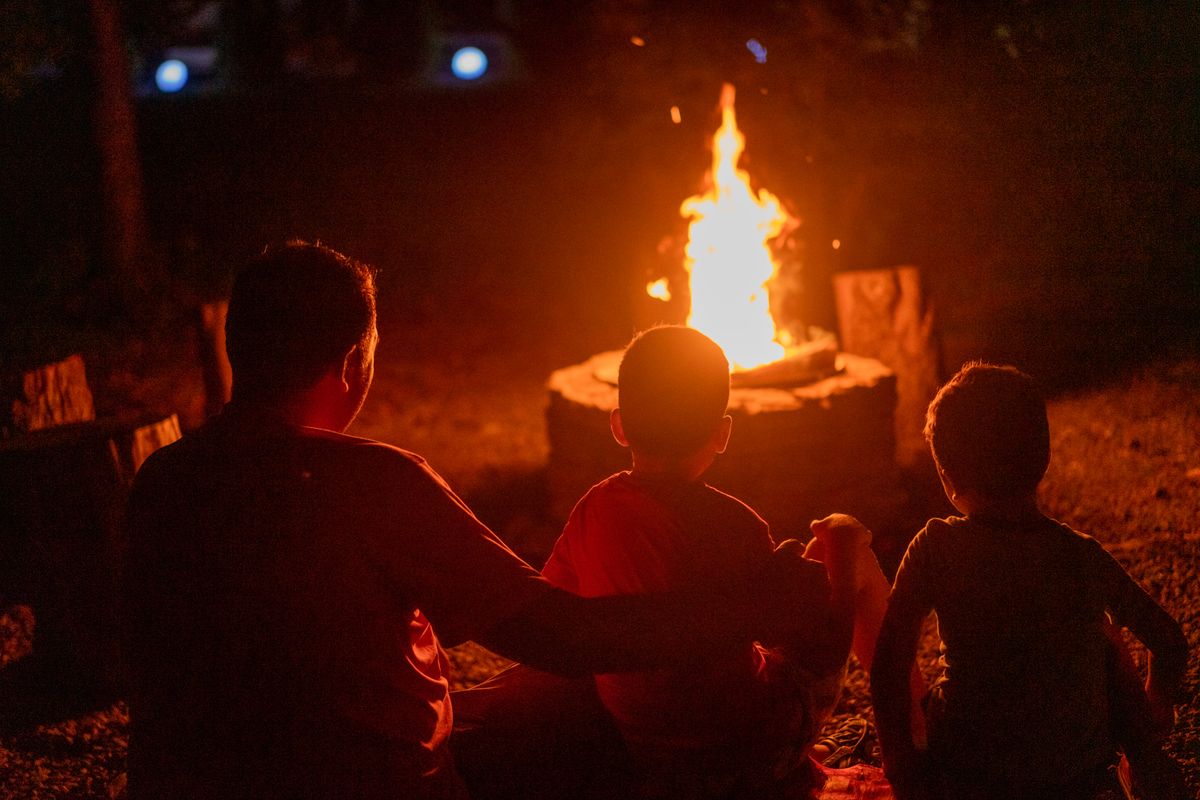
Pro Tip: Do this one in the evening around a fire pit or candles; the atmosphere makes even simple stories feel magical.
Cost: Free | Time: 30 minutes | Difficulty: Easy
23. Red Light, Green Light
One player is the traffic light, facing away, calling “green light” while everyone runs toward them, then spinning around on “red light.” Anyone caught moving goes back to the start. It needs no equipment, works for huge groups, and the tension of freezing mid-sprint makes kids shriek with laughter every single time.
I played this with twenty cousins at a park reunion, and the final sprint, with five kids frozen inches from the line, is still talked about. I let the winner become the next traffic light, which keeps the role rotating. The downside is that the traffic light can play favorites with timing, so I use a timer for green lights, ten seconds maximum, to keep it fair.
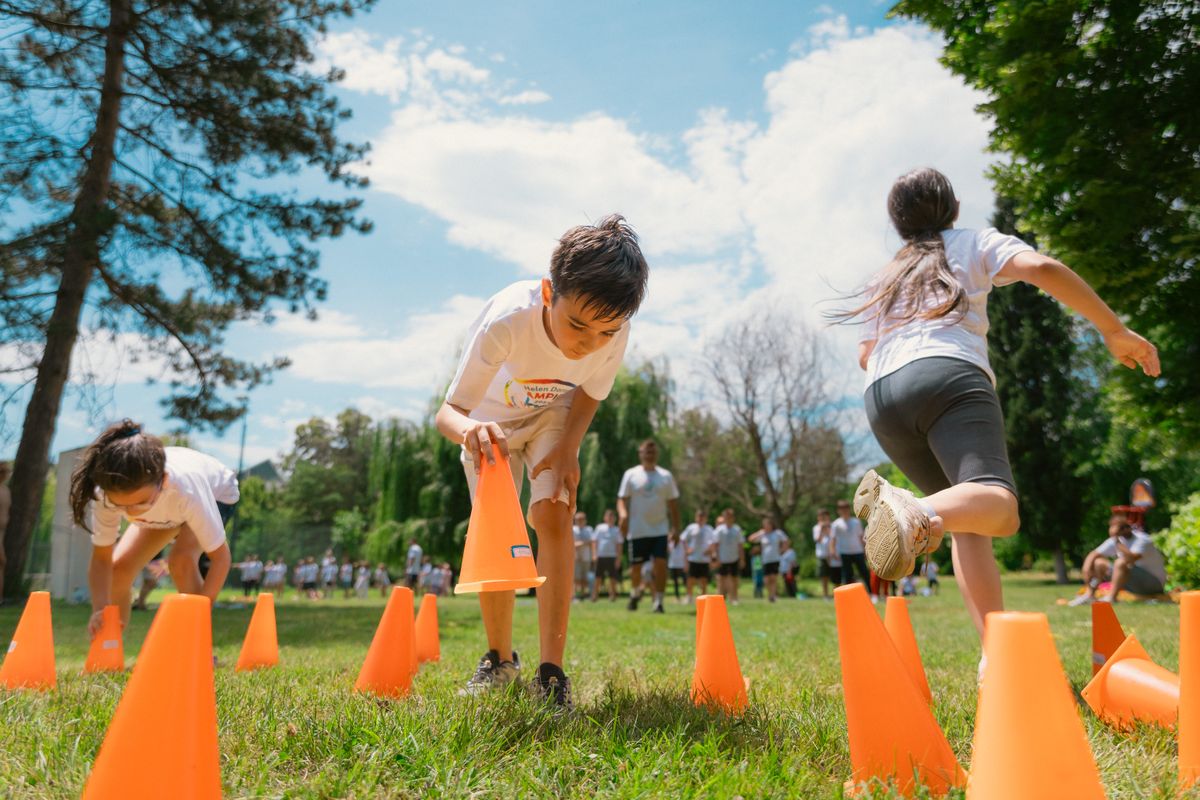
Pro Tip: Add a “yellow light” round where players must walk in slow motion; it is hilarious and gives younger kids a fair chance.
Cost: Free | Time: 15–20 minutes | Difficulty: Easy
24. Family Talent Showdown
End the reunion with a talent show: singing, magic tricks, jokes, dancing, and whatever odd skill a cousin has been hiding. Acts get two minutes each, the audience votes with applause, and everyone gets a round of applause regardless. It is the perfect closer because it celebrates the family itself rather than crowning a winner.
Last year my nephew performed a card trick he had practiced for weeks, my aunt sang a song from her childhood, and a seven-year-old did a comedy routine about her own family that brought the house down. I keep a simple sign-up sheet so acts are planned, not sprung. The downside is stage fright, so I always open with a group act, a family song, to warm up the room.
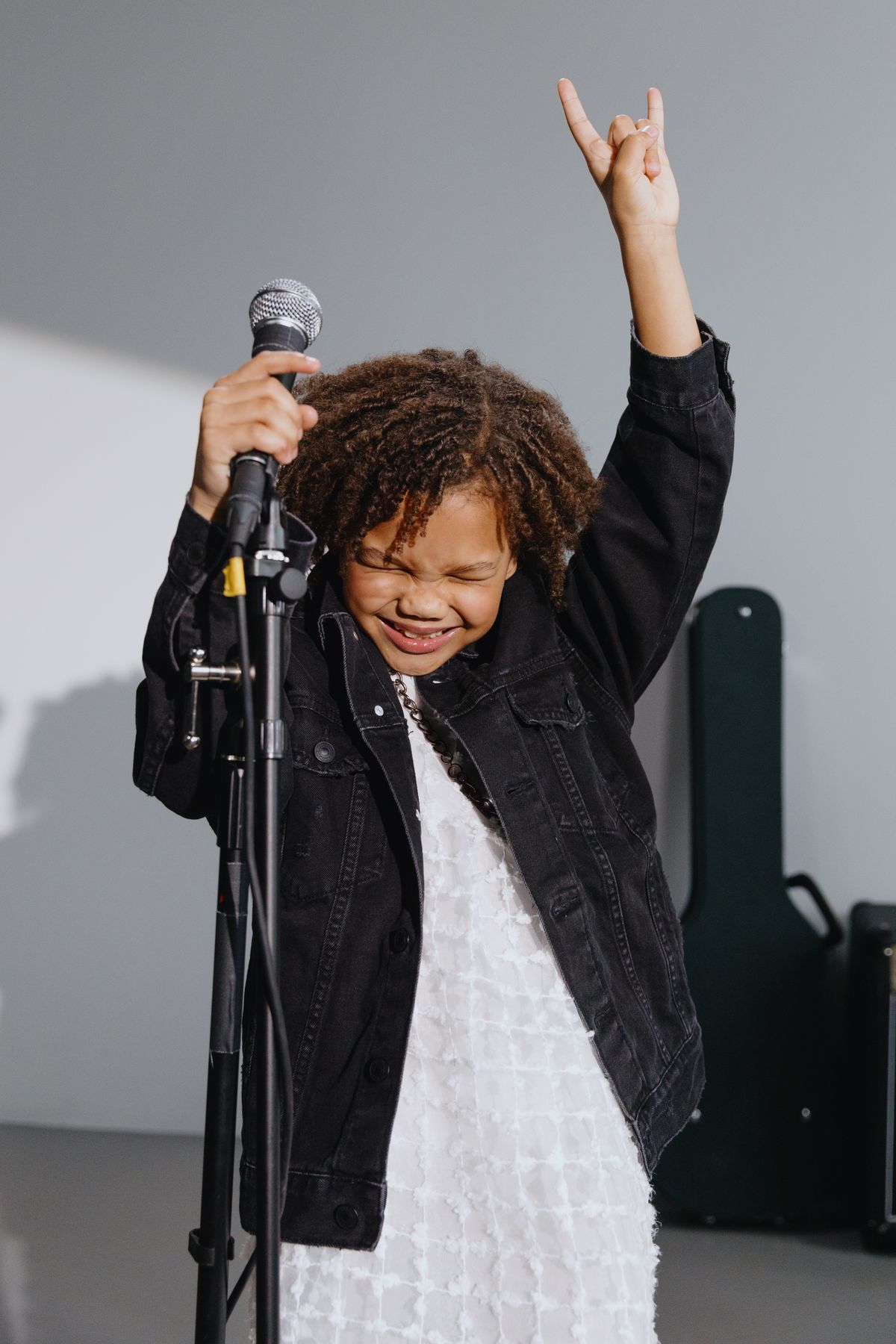
Pro Tip: Give every performer a small certificate or ribbon; at a reunion, everyone is a star, and the keepsake matters more than any prize.
Cost: Free | Time: 45–60 minutes | Difficulty: Easy
Quick Comparison: Which Game Fits Your Reunion?
| Game | Best For | Cost | Effort |
|---|---|---|---|
| Three-Legged Race | Breaking the ice | Free | Low |
| Family Trivia | Learning family history | Free | Medium prep |
| Capture the Flag | Big groups, big spaces | Free | High energy |
| Cornhole | Relaxed chatting | $30–$60 | Low |
| Talent Showdown | Closing the day | Free | Low |
Mistakes I Made (So You Don’t Have To)
Letting one family dominate the teams. At an early reunion, I let siblings stick together, and the other branches felt like outsiders. Now I mix every team deliberately, and the whole reunion feels like one family instead of several.
Scheduling games back to back with no breaks. I once packed six games into one afternoon, and by the third, everyone was tired and cranky. Now I leave thirty minutes of free time between games for snacks and conversation, which is the real point anyway.
Forgetting the grandparents’ comfort. I set up a tug of war on a slope once, and my father slipped. Now every game gets a flat, shaded spot, chairs nearby, and a clear opt-out that nobody is teased for taking.
Overcomplicating the rules. A game with a five-minute explanation is a game half the kids have already stopped listening to. If I cannot explain it in one minute, I simplify it on the spot, and the game is always better for it.
Frequently Asked Questions
What are the best kids games for family reunions with mixed ages? The ones where age is not an advantage: ring toss, family bingo, trivia, storytelling, and charades. I always open with one of these so the youngest and oldest both feel included from the start.
How many games should I plan for a reunion day? Four to six games across the day is plenty, with free time between them. I pick two active, two calm, and one big closer like the talent show, and I let the day breathe around them.
What if it rains on reunion day? Bingo, trivia, charades, and storytelling all move indoors beautifully, and balloon pop relay works in a big living room. I always keep two indoor games in reserve, just in case.
How do I get teenagers to actually join in? Give them real roles: referee, quizmaster, team captain, or photographer. Teenagers who will not play a game will often run one, and once they are involved, they usually end up playing anyway.
Final Thoughts
The games themselves are almost beside the point. What I remember from our reunions is not who won the sack race but the sight of my father laughing with a grandchild he sees twice a year, and a cousin I barely knew becoming a friend over a game of trivia. Kids games for family reunions are simply the excuse that gets everyone into the same yard, playing on the same team.
Pick three or four games from this list for your next reunion, mix the teams well, and leave plenty of time for the conversations that happen between games. And for the relatives who want to keep playing after the reunion ends, read this next: Party Games for Senior Citizens, which works beautifully for grandparents’ game nights too.