
20 Kids Christmas Party Games That Keep Little Guests Happy
I have run many Christmas parties for kids, and the games make or break the afternoon. The snacks disappear and the music fades, but a good game is what kids talk about all the way home. These kids christmas party games are the ones I actually ran at children’s parties, not ideas I copied from a list and hoped would work.
I tested these games myself, at home and at classroom parties. If a game ended in tears or bored children, it did not make this list. If kids begged to play it again, it did. Related article for more general party game ideas once you have picked your Christmas games.
Key Takeaways: Kids Christmas Party Games
- Mix calm, active, and crafty games so every child finds something they love.
- Most cost under $15 and take 10 to 20 minutes.
- Small prizes, clear rules, and a visible timer keep the energy happy, not wild.
- Play in teams when a game feels too exposing for a shy child.
- Start easy and save the silliest game for after snacks.
1. Pin the Nose on Rudolph

This is my go-to opener because every child already knows Rudolph. I tape a reindeer poster to the wall at eye level, cut out red pom-pom noses with tape on the back, and blindfold one child at a time. Each child spins once, walks forward, and sticks the nose where they think it belongs, while the rest cheer. You need a poster, pom-poms, a blindfold, and tape.
At my party last year, my shyest guest, a five-year-old who had barely spoken, stuck the nose on Rudolph’s ear and laughed so hard she forgot to be shy. The honest downside is that blindfolded children can bump into furniture, so clear a wide path and keep an adult beside the poster.
Pro Tip: Give every child a sticker for trying.
Cost: Under $10 | 15 minutes | Easy | Ages: 3–8
2. Christmas Scavenger Hunt

A scavenger hunt is my secret weapon for burning off excitement before cake. I hide twelve Christmas items around the living room and garden: a candy cane, a jingle bell, a pinecone, and a red bauble. Each team gets a picture list, and a paper bag for non-readers. I set a 15-minute timer and promise a small prize to the first team back.
One year I hid a tiny bell inside a plant pot, and two brothers worked together like detectives, whispering and pointing. The downside is real, though: if one item is hidden too well, a team can stall and lose heart, so I hide two easy items near the start to build confidence.
Pro Tip: Use picture clues for under-sixes.
Cost: Under $10 | 15–20 minutes | Easy | Ages: 5–12
3. Indoor Snowball Fight

When it is too cold outside, this game saves the party. I make fifty “snowballs” from white socks rolled into balls, split the room in half with masking tape, and let two teams throw across the line for three minutes. Then we count how many snowballs landed on each side. The team with fewer on their side wins, keeping everyone throwing until the whistle.
I ran this at a classroom party with twenty kids, and the noise was joyful rather than chaotic because the rules were so simple. The honest downside is that soft snowballs still sting if thrown hard at a face, so I ban head shots and use only soft socks for the youngest players.
Pro Tip: Play three short rounds.
Cost: Free to $5 | 15 minutes | Easy | Ages: 4–10
4. Cookie Decorating Race

Every party I host ends up at the table with icing, and turning it into a race makes it even better. I bake plain star and tree cookies ahead of time, set out icing, sprinkles, and mini candies, and give each child one cookie and five minutes. The categories are funniest, fanciest, and most Christmassy cookie, so three children win instead of one.
At one party, a seven-year-old boy made a cookie with a full icing beard and named it Santa’s cousin, and the whole table was in stitches. The downside is the sugar rush that follows, so I run this near the end and send cookies home in little bags rather than letting kids eat three each.
Pro Tip: Put icing in squeeze bottles.
Cost: $10–15 | 20 minutes | Easy | Ages: 4–12
5. Ornament Painting Station

Not every child wants to run around, and this calm station is my answer for the quiet crafters. I buy clear plastic baubles, pour a little acrylic paint inside each one, and let kids swirl it around, then add glitter, stickers, and a ribbon. Each child makes one ornament to take home as a favour. You need baubles, paint, glitter, stickers, and ribbon.
I set this up at a party where one little girl barely joined the loud games, and she spent a happy half hour making a pink and gold bauble she still hangs on her tree. The downside is drying time: painted baubles smudge if packed too soon, so I set them by the door and hand them out as families leave.
Pro Tip: Pre-pour paint into small cups.
Cost: $12–15 | 20–30 minutes | Easy | Ages: 3–10
6. Christmas Bingo
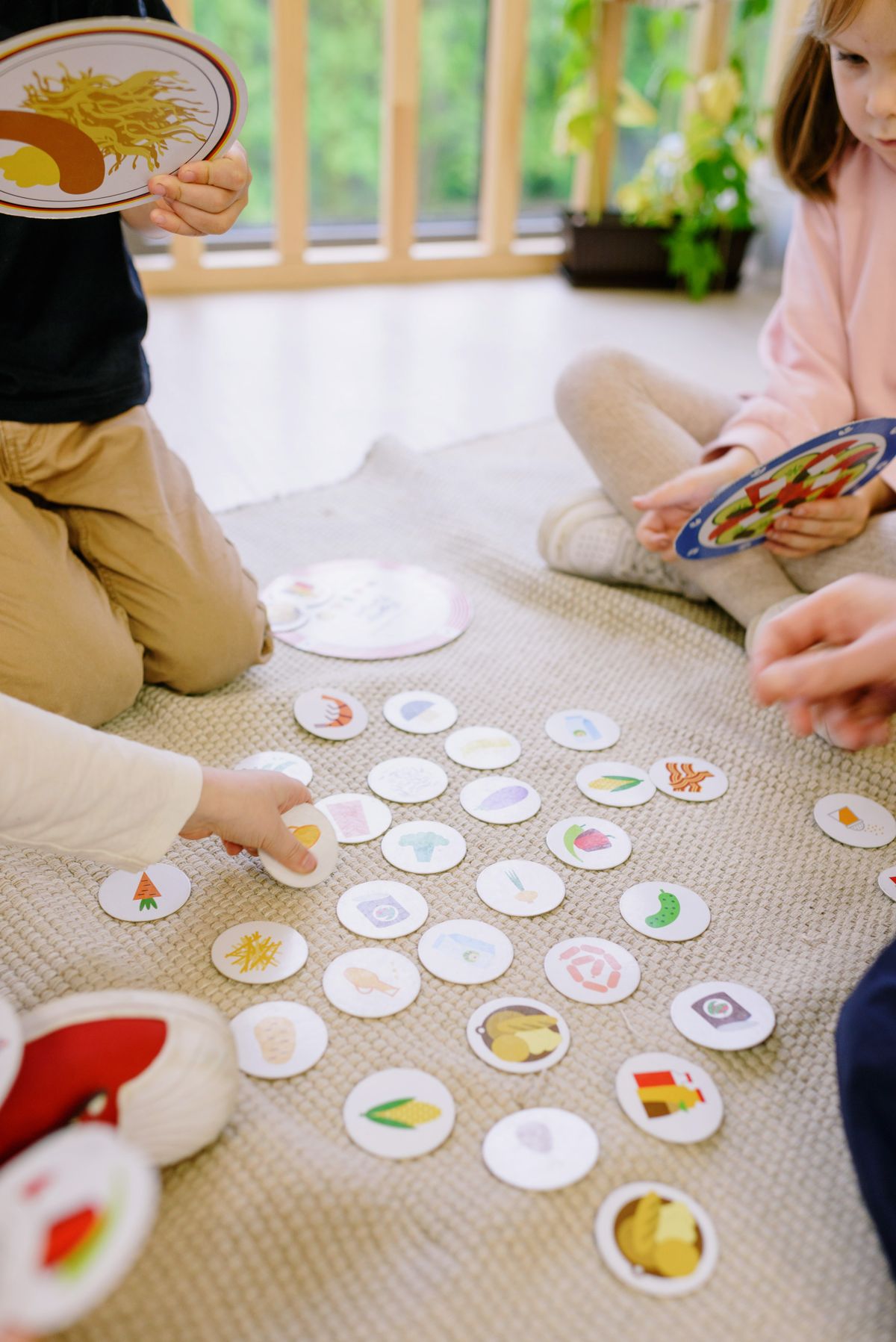
Bingo is the game I pull out when kids need to sit down and breathe. I print cards with Christmas pictures instead of numbers: a tree, a star, a stocking, a snowman, and a candy cane. I call pictures from a bag, kids cover matches with buttons, and the first to fill a row shouts “Merry Bingo!” You need printed cards, markers, and picture tokens.
I played this with five-year-olds and eleven-year-olds together, and the picture cards meant the little ones could play without reading a thing. The downside is that bingo can drag if you play too many rounds, so I stop at three rounds and switch to something active before fidgeting starts.
Pro Tip: Slip cards into clear sleeves for reuse.
Cost: Under $5 | 15 minutes | Easy | Ages: 5–12
7. Musical Chairs, Christmas Edition

Musical chairs never fails, and the Christmas version just adds festive music and a Santa hat on every chair. I set out one fewer chair than children, play a Christmas song, and when the music stops, everyone scrambles for a seat. The child left standing does a silly forfeit, like a reindeer dance, instead of leaving the game.
At my last party, the final round came down to two cousins who both lunged for the last chair and ended up sharing it, laughing too hard to care who won. The downside is that children can push when competitive, so I space chairs wide apart and remind everyone that pushing means sitting out one turn.
Pro Tip: Let eliminated children control the music.
Cost: Free | 15 minutes | Easy | Ages: 4–9
8. Build-a-Snowman Relay

If you have snow, this relay is pure joy, and if you do not, it works indoors with rolled white paper and tape. Outside, each team builds a snowman in stages: one child rolls the base, the next adds the middle, the next the head, then the team dresses it with a scarf, hat, and carrot nose. The first finished snowman wins.
I ran this in my garden with two teams of six, and a nine-year-old carefully placing a carrot nose while his team shouted directions was priceless. The downside is cold hands and wet sleeves, so I keep the relay to ten minutes and bring everyone inside for hot chocolate straight after.
Pro Tip: Photograph each finished snowman before judging.
Cost: Under $10 | 15 minutes | Medium | Ages: 5–12
9. Christmas Tree Decorating Race

Give each team a small tabletop tree and a box of unbreakable ornaments, and race to decorate it in ten minutes. I judge on three things: most ornaments hung, tidiest tinsel, and best topper placement, so speed alone never wins. Each team gets the same box: twelve baubles, one tinsel string, a star topper, and plenty of encouragement.
One year, a team of six-year-olds hung every bauble on one branch and called it “the heavy side,” and the judges gave them the creativity point on the spot. The downside is tangled tinsel, which eats up time, so I pre-cut tinsel into short lengths and ban long strings. Use plastic ornaments only.
Pro Tip: Let each team name their tree first.
Cost: $12–15 | 15 minutes | Easy | Ages: 4–12
10. Santa Hat Toss

This simple tossing game needs almost no setup, and even the littlest guests can play. I stand a row of buckets at increasing distances, label them 1, 2, and 3 points, and let each child toss three beanbags into them. The highest score after three rounds wins a small prize. You need buckets, beanbags, and paper labels.
I set this up in a hallway where space was tight, and it became the quiet corner shy kids drifted to between loud games. My four-year-old niece scored on her first throw and demanded a rematch. The downside is that older kids master it fast and get bored, so I move buckets further back for over-eights.
Pro Tip: Use soft beanbags, not hard balls.
Cost: Under $10 | 10–15 minutes | Easy | Ages: 3–8
11. Gift Wrap Relay

This relay turns the most boring grown-up job into the funniest race of the party. Each team gets a small box, wrapping paper, tape, and a bow. The first child wraps the box, runs back, and tags the next child, who unwraps it and wraps it again. The team finishing three full wrap cycles first wins. You need boxes, paper, tape, and bows.
At a party of ten kids, one boy wrapped his box so tightly that his teammate needed a full minute to tear it open, and the whole room cheered. The downside is wasted paper, so I reuse the same sheets all afternoon and buy cheap paper. Keep scissors at a supervised table only.
Pro Tip: Use same-size boxes for every team.
Cost: Under $10 | 15 minutes | Medium | Ages: 6–12
12. Christmas Charades

Charades works beautifully at Christmas because the words are things kids already know: snowman, reindeer, Santa, sleigh, and candy cane. I write words on cards, split kids into two teams, and let one child act while their team guesses within one minute. No talking, no pointing at the object, just acting. You need word cards, a timer, and a score sheet.
I watched a normally quiet eight-year-old act out a reindeer so convincingly, antler hands and all, that both teams guessed in five seconds. The downside is that shy children may freeze on stage, so I let kids play in pairs for their first turn and never force a child who says no.
Pro Tip: Use picture cards for under-sevens.
Cost: Free | 20 minutes | Easy | Ages: 6–12
13. Snowman Bowling

For this game I stack ten white plastic cups into a triangle, draw a snowman face on the front cup, and let kids roll a soft ball to knock them down. Each child gets two rolls, and the knocked cups are the score. Kids love it far more than plain bowling. You need cups, a marker, and a soft ball.
I set this up on my kitchen floor with a towel as the lane, and a five-year-old knocked down nine cups on his first roll and looked genuinely shocked. The downside is cups flying everywhere, so I play against a wall and use a very soft ball. I appoint two “pin setters” from waiting children.
Pro Tip: Write point values on cups.
Cost: Under $5 | 15 minutes | Easy | Ages: 3–9
14. Candy Cane Hunt

This is the easiest game on the list, and every child goes home with something. I hide twenty candy canes around one room or the garden, tell kids how many there are, and let them hunt for five minutes. Each child keeps what they find, and whoever finds the single gold-wrapped cane wins a bonus prize.
One year I hid a cane inside a shoe by the door, and the girl who found it announced it like she had won a trophy. The downside is that older kids find them all in two minutes, so for mixed ages I hide some canes high up and cap the take at three per child. Check for nut allergies first.
Pro Tip: Count canes back in afterwards.
Cost: Under $10 | 10 minutes | Easy | Ages: 3–8
15. Christmas Trivia for Kids

Trivia sounds grown-up, but kids love it when questions are silly and teams mix ages. I print twenty questions in two rounds: easy ones like “What colour is Rudolph’s nose?” and funny ones like “What do reindeer eat for a snack?” Teams of four discuss each answer for thirty seconds before I reveal it. You need printed questions, pens, and a small prize.
At my classroom party, younger kids beat the older team on the snack question because they guessed “candy canes” with total confidence, and the room erupted. The downside is that trivia feels like school if questions are too hard, so half my questions are deliberately silly, and each team gets one “ask an adult” lifeline.
Pro Tip: Read each question twice.
Cost: Free | 20 minutes | Easy | Ages: 7–12
16. Freeze Dance, Jingle Bell Edition

Freeze dance needs no explanation, which works even when kids bounce off the walls. I tie a jingle bell bracelet on each wrist, play a Christmas song, and when the music stops, everyone freezes like a statue. Anyone who wobbles does a silly dance move to get back in. You need a speaker, songs, and bell bracelets.
I played this right after lunch when energy was peaking, and it channelled all that bounce into giggles instead of chaos. One little boy froze mid-jump, one leg in the air, and held it for ten seconds while everyone applauded. The downside is that judging “who moved” causes arguments, so I judge leniently and call out only big wobbles.
Pro Tip: Play twenty-second bursts of music.
Cost: Under $10 | 10–15 minutes | Easy | Ages: 3–9
17. Gingerbread House Build-Off

This is the showpiece game of the party, and it doubles as a centrepiece. I buy small gingerbread house kits, one per team of three, and give each team thirty minutes to build and decorate. Icing is the glue, candies are the decoration, and I judge on sturdiness, creativity, and best candy roof. You need kits, extra icing, and candies.
At one party, a team’s roof slid off twice before they learned to hold it for a full minute while the icing set, and their cheer when it stayed up was the best sound of the day. The downside is cost and time: kits are not cheap, and thirty minutes is long for small children, so I run this only with over-fives.
Pro Tip: Assemble plain walls the night before.
Cost: $15–20 | 30–40 minutes | Medium | Ages: 5–12
18. Stocking Guessing Game

This quiet game is perfect for winding down, because it uses hands and brains instead of feet. I fill a stocking with eight small items: a jingle bell, a pinecone, a candy cane, a small toy, a bauble, a ribbon, a cookie cutter, and a tiny teddy. Each child reaches in without looking, feels one item, and guesses what it is. Three correct guesses wins a prize.
I ran this at a party where one boy guessed every item correctly by touch alone, and the other children treated him like a magician all day. The downside is hygiene and patience: many hands in one stocking, and a slow queue, so I wipe items between rounds and run a second game nearby.
Pro Tip: Use a second stocking for younger kids.
Cost: Under $10 | 15 minutes | Easy | Ages: 4–10
19. Christmas Pictionary

Pictionary is my pick for older kids who want a challenge without running around. I write Christmas words on cards, like snowman, sleigh, stocking, and mistletoe, and one child draws while their team guesses within one minute. A whiteboard or big paper pad works best, with thick markers. You need word cards, a board, markers, and a timer.
At a family party, my ten-year-old niece drew a sleigh that looked exactly like a bathtub, and her team still guessed it from the reindeer lines she added last. The downside is that children who feel bad at drawing may refuse their turn, so I let them draw in pairs and keep first-round words easy. Praise guessing, not just drawing.
Pro Tip: Add an eyes-closed bonus round.
Cost: Under $5 | 20 minutes | Easy | Ages: 6–12
20. Snow Painting Art

With snow and spray bottles, this is the most magical game of the party. I fill spray bottles with water and a few drops of food colouring, one colour per bottle, and let kids spray pictures and patterns onto clean snow. Each child gets a section of garden, and we photograph the gallery before it melts. You need spray bottles, colouring, and warm gloves.
I tried this with my own kids on a snowy afternoon, and my daughter sprayed a giant red heart that stayed visible until the thaw, which she checked every morning. The downside is cold fingers and stained gloves, so I use old gloves, keep the session short, and bring everyone in for warm drinks after. Keep an indoor craft as backup.
Pro Tip: Use a light hand with colouring.
Cost: Under $5 | 20 minutes | Easy | Ages: 3–10
For fast fillers between bigger games, Also read about one-minute games.
Christmas Party Games at a Glance
| Game | Best Ages | Time | Energy Level |
|---|---|---|---|
| Pin the Nose on Rudolph | 3–8 | 15 min | Calm |
| Christmas Scavenger Hunt | 5–12 | 15–20 min | Active |
| Indoor Snowball Fight | 4–10 | 15 min | High |
| Cookie Decorating Race | 4–12 | 20 min | Calm |
| Ornament Painting Station | 3–10 | 20–30 min | Calm |
| Christmas Bingo | 5–12 | 15 min | Calm |
| Musical Chairs, Christmas Edition | 4–9 | 15 min | Active |
| Build-a-Snowman Relay | 5–12 | 15 min | High |
| Christmas Tree Decorating Race | 4–12 | 15 min | Calm |
| Santa Hat Toss | 3–8 | 10–15 min | Calm |
| Gift Wrap Relay | 6–12 | 15 min | Active |
| Christmas Charades | 6–12 | 20 min | Calm |
| Snowman Bowling | 3–9 | 15 min | Active |
| Candy Cane Hunt | 3–8 | 10 min | Active |
| Christmas Trivia for Kids | 7–12 | 20 min | Calm |
| Freeze Dance, Jingle Bell Edition | 3–9 | 10–15 min | High |
| Gingerbread House Build-Off | 5–12 | 30–40 min | Calm |
| Stocking Guessing Game | 4–10 | 15 min | Calm |
| Christmas Pictionary | 6–12 | 20 min | Calm |
| Snow Painting Art | 3–10 | 20 min | Active |
Mistakes I Made / What I Learned the Hard Way
Planning too many games. My first party had twelve games scheduled and we finished four. Now I plan six games and let favourites run long.
Forgetting the shy kids. I once ran a party where every game needed solo performance, and two children sat out. Now every loud game has a team version.
Skipping the safety check. At one party a child tripped on a loose rug near an unchecked staircase. I never skip the room check now.
Buying prizes nobody wants. I used to buy one big prize and watch the rest deflate. Now every child gets a small prize for playing.
Frequently Asked Questions About Kids Christmas Party Games
How many games should I plan for a two-hour party? Plan five or six games, mixing calm and active ones. Kids need snack breaks and free play.
What if kids have a wide age range? Use mixed-age teams so older kids help younger ones. Picture cards help too.
Do I need special supplies for these games? Most use things you already have: socks, cups, paper, and chairs. Gingerbread kits and small trees are the only pricier items.
Final Thoughts
Pick six games, prep them the night before, and enjoy the party yourself. Kids will not remember perfect tinsel, but they will remember laughing with friends.
If you want a quieter wind-down after the excitement, Read this next for board game ideas that work beautifully after the party games end.

2 Comments