20 Kids Science Games for Rainy Days That Feel Like Play, Not Homework
On a rainy day when the kids cannot go outside, these kids science games for rainy days are my favourite way to turn restlessness into curiosity. Every game below is one I have actually played with my own children at the kitchen table, and each one sneaks a real science idea into something that feels like play, not homework. Related article Fun Halloween Science Experiments for Kids.
How I tested these: I picked games that use ordinary kitchen and craft supplies, take under forty minutes, and give a visible result, because a science game that ends in ‘trust me, it worked’ loses a child fast. I kept the ones my kids asked to repeat and dropped the ones that fizzled, literally and figuratively.
The games cover chemistry, physics, earth science, and engineering, and they are ordered from quick wins to longer projects. Start with a fast, dramatic one like the volcano, then let a slow one like the crystal race run in the background all week.
Key Takeaways
- Every one of these kids science games for rainy days uses supplies from the kitchen or craft drawer, with no special kit to buy.
- Start with a fast, visual result, then let a slow experiment run in the background for days.
- Predict before you test: the guess is where the real learning happens.
- An adult handles hot water, sharp tools, and raw eggs; everything else is safe for kids to run themselves.
Kids Science Games for Rainy Days: How We Tested Them
1. Baking Soda Volcano Race
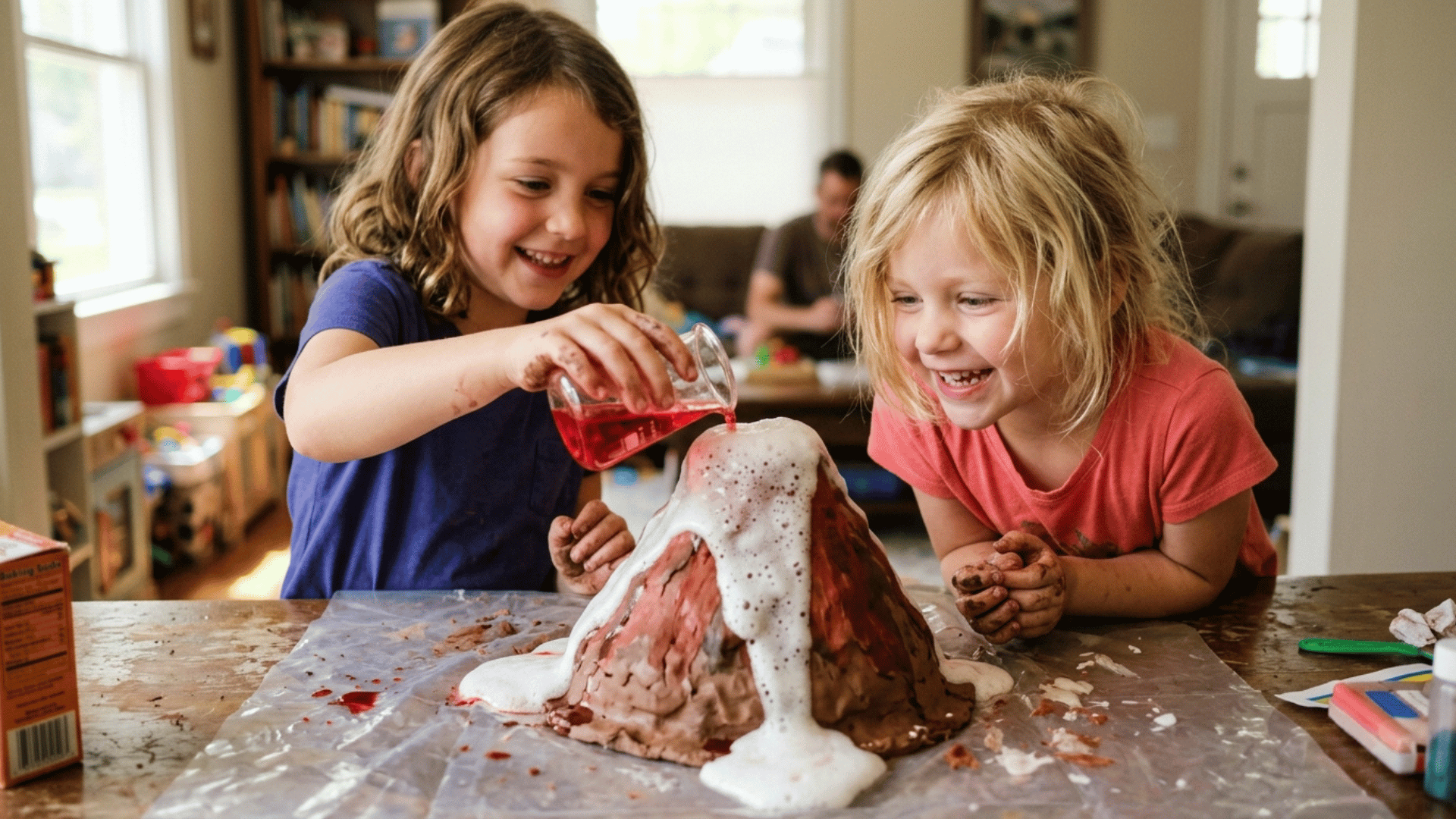
Image credit: Occasionally Crafty
I build two small volcanoes from cups wrapped in foil, spoon two tablespoons of baking soda into each, and add a few drops of food colouring. On the count of three, each child pours in a quarter cup of vinegar and we watch whose volcano erupts highest.
This is the classic for a reason: it is fast, dramatic, and teaches acids and bases without a single worksheet. My son now explains the fizz to visitors like a professor. The downside is the mess: vinegar foam runs everywhere, so we do this on a tray in the kitchen sink area and keep towels ready before anyone pours.
Cost: Under $5 | Time: 20 minutes | Difficulty: Easy
2. Rain Gauge Challenge

Image credit: Only Passionate Curiosity
I cut the top off a clear plastic bottle, flip it into the base like a funnel, and mark centimetre lines up the side with a ruler and tape. We place it outside in the rain, check it after an hour, and each child guesses the rainfall before we read the level together.
This turned a grey rainy day into a weather station at our house, and my daughter checked the gauge three times before lunch. It teaches measuring and patience in one go. The downside is that it only works when it actually rains, so on dry days we practise by pouring measured cups of water in and reading the scale instead.
Cost: Free | Time: 15 minutes setup, check hourly | Difficulty: Easy
3. Walking Water Rainbow

Image credit: Fun Learning for Kids
I line up five cups, fill the first, third, and fifth with water and red, yellow, and blue food colouring, and leave the second and fourth empty. Paper towels folded into strips bridge each pair of cups, and over a few hours the coloured water climbs the towels and mixes into a rainbow.
I set this up after breakfast and the kids checked it after every cartoon, which made a slow rainy morning feel like an experiment in progress. It teaches capillary action in a way they can actually see. The downside is the wait: nothing much happens in the first hour, so I pair it with a faster game and let this one run in the background.
Cost: Under $5 | Time: 10 minutes setup, 3-6 hours to watch | Difficulty: Easy
4. Sink or Float Prediction Game

Image credit: Kiindred
I gather ten household objects: a spoon, a cork, a coin, a sponge, a crayon, a leaf, a marble, a bottle cap, a rubber duck, and a pebble. Each child predicts sink or float for every object, writes it down, and then we test them one by one in a bowl of water.
My youngest was sure the heavy spoon would float and the light leaf would sink, and watching him rethink that was the best part. This game teaches that weight alone does not decide floating. The downside is the splashing: enthusiastic testing soaks sleeves, so I use a deep bowl on a tray and keep a towel within reach.
Cost: Free | Time: 20 minutes | Difficulty: Easy
5. Magic Milk Colour Swirl
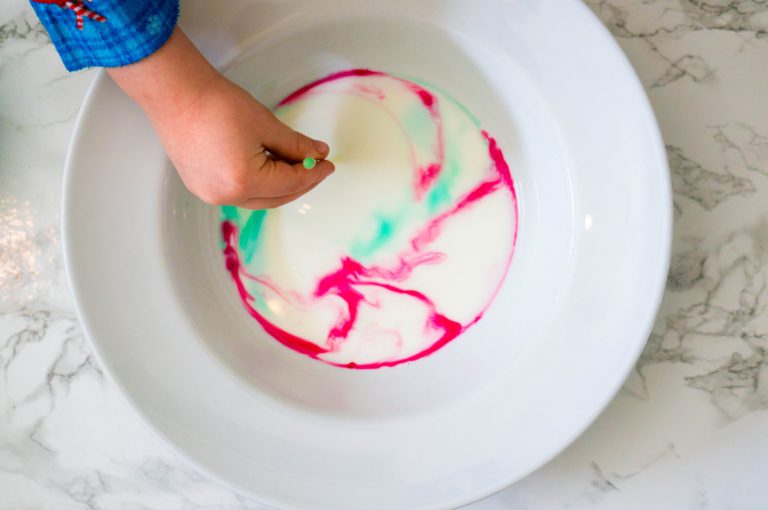
Image credit: Kids Hoekje
I pour whole milk into a shallow dish, add drops of red, blue, and yellow food colouring, and let each child dip a cotton bud in dish soap and touch the surface. The colours burst and swirl away from the soap, and the kids take turns touching different spots to see new patterns form.
This is the prettiest five-minute experiment I know, and my daughter gasped the first time the colours moved on their own. It shows how soap breaks up fat in milk, which is a real chemistry idea hiding in a beautiful mess. The downside is that it only works well with whole milk, and skim milk gives a much weaker swirl, so I buy the right milk first.
Cost: Under $5 | Time: 10 minutes | Difficulty: Easy
6. Cloud in a Jar
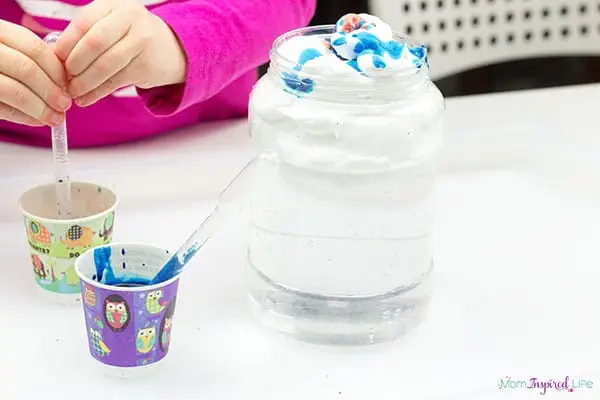
Image credit: Canadian Budget Binder
I fill a glass jar one-third with hot water, spray a little hairspray inside, cover the top with a plate of ice cubes, and wait. Within a minute a small cloud forms inside the jar, and when I lift the plate it wisps out like real fog.
I did this on a stormy afternoon and it felt like we had bottled the weather. It is quick, visual, and needs almost nothing. The downside is the hot water and the hairspray: an adult must handle both, and the cloud vanishes fast, so I do it twice in a row so everyone gets a proper look before it disappears.
Cost: Free | Time: 10 minutes | Difficulty: Easy
7. Block Bridge Engineering Challenge
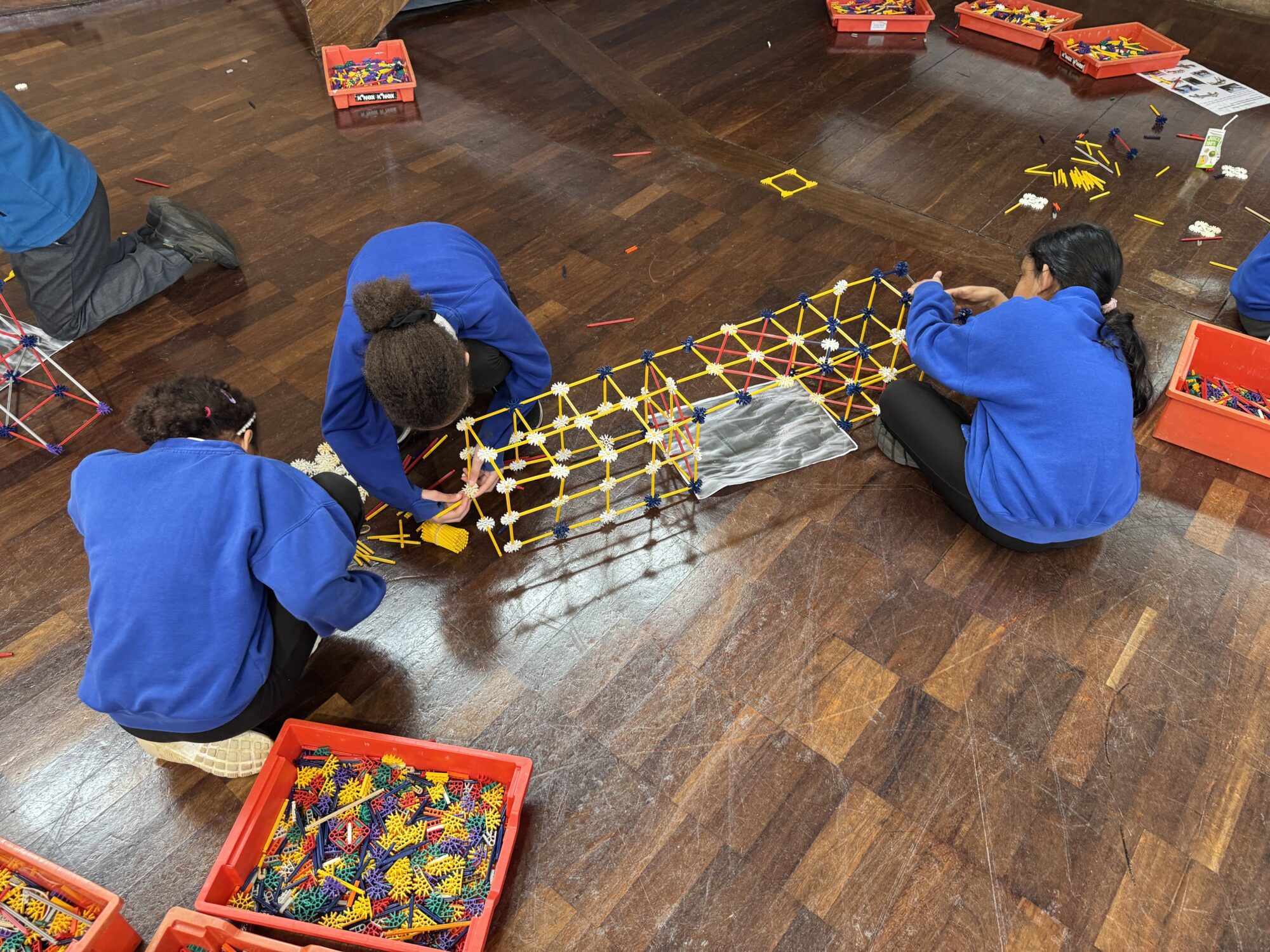
Image credit: MCS Oxford
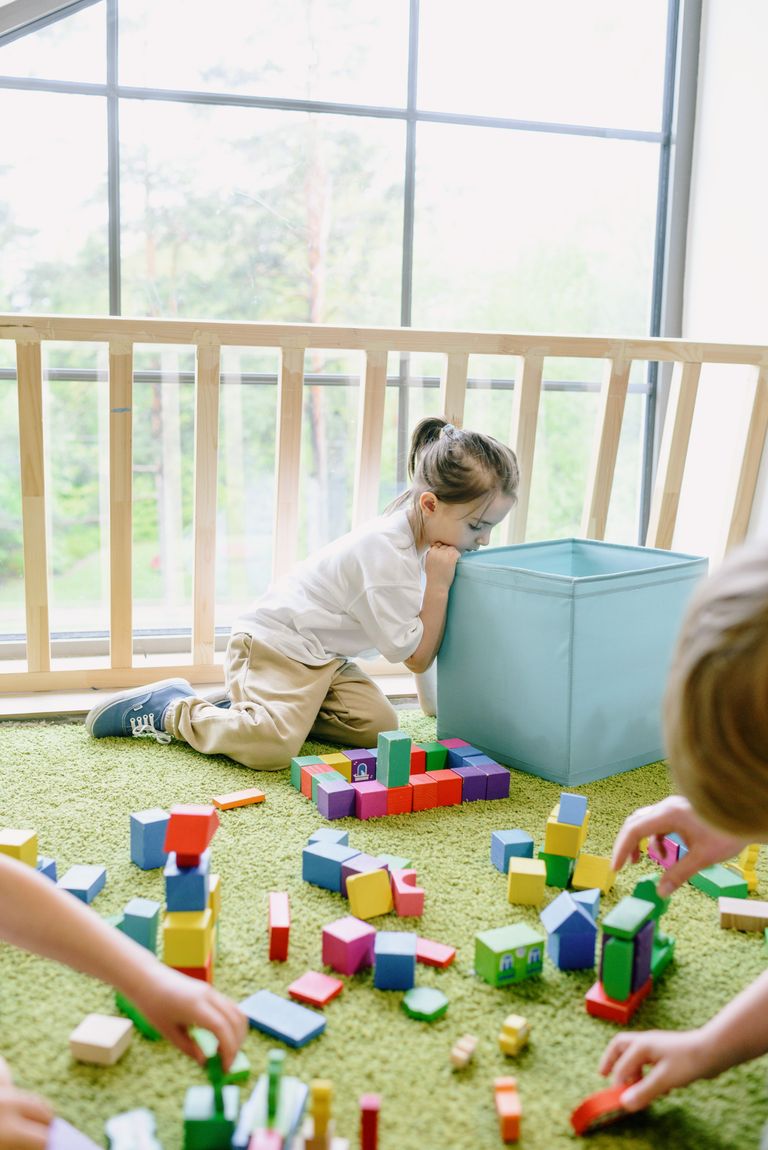
I give each child twenty wooden blocks or books and challenge them to build a bridge across a gap between two stacks of books, wide enough for a toy car to cross. We test each bridge with coins added one at a time until it collapses, and count how many coins it held.
My son rebuilt his bridge four times, each time wider at the base, and he could explain why it held more coins. That is engineering thinking without any pressure. The downside is the collapse: it can upset a younger child who worked hard, so I celebrate the coin count like a score and let everyone rebuild immediately.
Cost: Free | Time: 30 minutes | Difficulty: Medium
8. Egg Drop Challenge

Image credit: Business Journal Daily
I give each child one raw egg, a paper bag of scrap materials like cotton wool, straws, newspaper, and tape, and twenty minutes to build a container. Then we drop them one by one from a chair, then a table, then the top of the stairs onto a towel.
This is the most exciting rainy-day game in our house, and the countdown before each drop is pure theatre. It teaches cushioning and planning better than any explanation. The downside is the obvious one: raw eggs break and smell, so I use a plastic sheet underneath, keep paper towels ready, and never drop over carpet.
Cost: Under $5 | Time: 40 minutes | Difficulty: Medium
9. Static Electricity Balloon Race
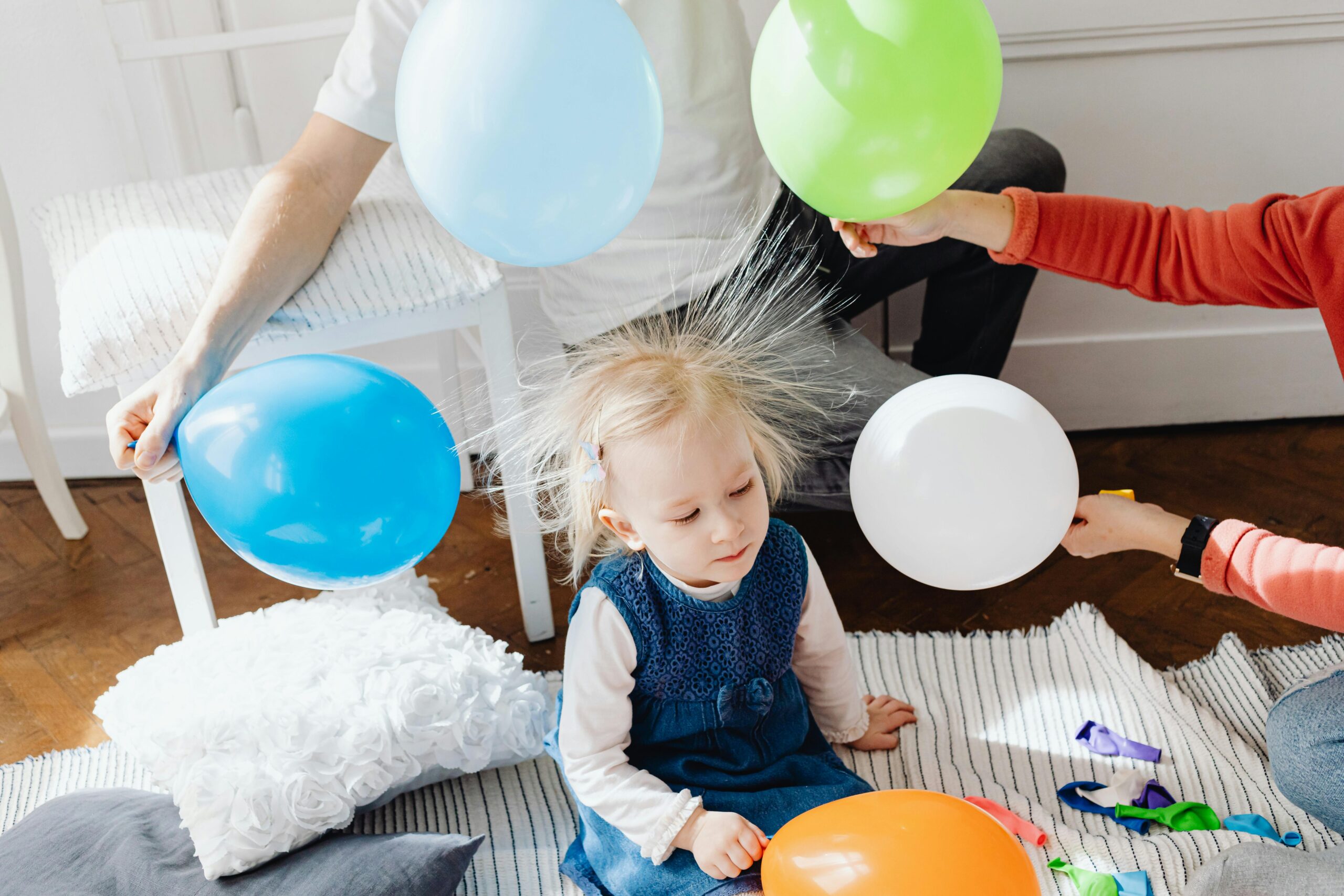
Image credit: Bumblebee Technologies
I blow up two balloons, rub each on a woollen jumper for thirty seconds, and race them across the table by holding them near small paper pieces or by seeing whose balloon picks up the most bits.
My daughter was delighted when her balloon lifted paper bits like magic, and she now explains static to anyone who will listen. It is a perfect rainy-day game because it needs nothing special. The downside is that it fails on very humid days and with some balloon brands, so I keep a spare pack and test one balloon before promising a race.
Cost: Under $5 | Time: 15 minutes | Difficulty: Easy
10. Rock Candy Crystal Race

Image credit: Growing a Jeweled Rose
I boil two cups of water with four cups of sugar, pour it into jars, dip a string weighted with a paperclip, and leave the jars somewhere still. Each child owns one jar and checks it daily, measuring crystal growth with a ruler and photographing the changes.
This is the slow-burn game that teaches patience like nothing else, and my kids checked their jars every morning for a week. Watching sugar turn into crystals feels like magic with an explanation. The downside is the wait: real crystals take days, sometimes a week, so I start this on a Friday and treat it as a side project, not a single-afternoon game.
Cost: Under $5 | Time: 15 minutes setup, days to grow | Difficulty: Medium
Also read Science Art Projects for Kids.
11. Spaghetti Tower Challenge

I give each child twenty pieces of dry spaghetti and a handful of small building pieces, and challenge them to build the tallest freestanding tower in ten minutes. Towers are measured standing on the table, and any tower that falls before measuring gets one rebuild.
This is the game that turns a pantry staple into an engineering contest, and my kids argue about strategy like professionals. The wide-base lesson from the marshmallow game came back here too. The downside is the fragility: spaghetti snaps at the worst moment, so I hand out extra pieces and count a snap as part of the challenge, not a failure.
Cost: Under $5 | Time: 20 minutes | Difficulty: Medium
12. Colour Mixing Lab
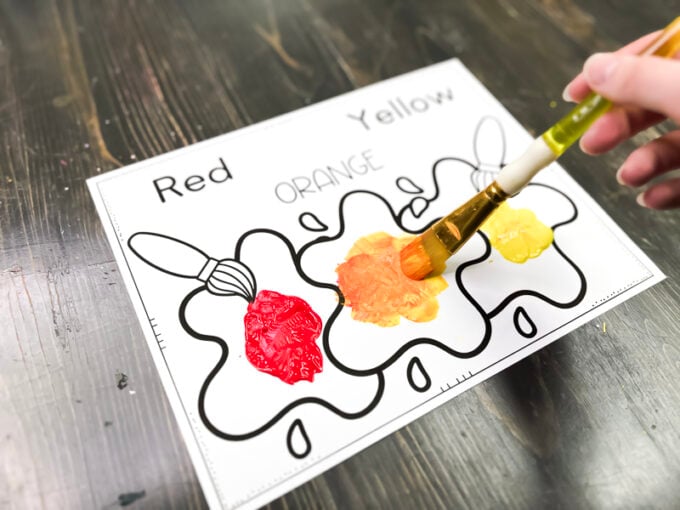
Image credit: Little Bins for Little Hands
I set out three cups of red, yellow, and blue paint or coloured water, plus empty cups and droppers, and give each child a mixing chart to fill in. They predict what red plus yellow makes, test it, and record the result, then try trickier mixes like blue plus red in different amounts.
My youngest treated this like a potion lab and announced every new colour like a discovery, which is exactly the spirit I wanted. It teaches primary and secondary colours through doing, not memorising. The downside is stained hands and clothes, so everyone wears an old shirt and we use washable paint only, no exceptions.
Cost: Under $5 | Time: 25 minutes | Difficulty: Easy
13. Paper Airplane Distance Contest

Image credit: Kids Activities Blog
I give each child three sheets of paper and show them two classic folds: the dart and the glider. They build, test, adjust one fold at a time, and then we fly from a taped line in the hallway, measuring each landing with a tape measure.
This contest turned our hallway into an airport for an afternoon, and my son changed his wing fold three times after watching his plane nose-dive. That is the scientific method in action, even if he does not call it that. The downside is the paper planes everywhere afterwards, so I make cleanup part of the game: each plane earns a point when recycled.
Cost: Free | Time: 30 minutes | Difficulty: Easy
14. Ice Melting Race

Image credit: Science Sparks
I freeze four identical ice cubes in muffin tins, then give each child a cube and a different tool: salt, sugar, warm water, or just hands. They race to melt their cube first, checking every minute and recording what happens.
This is a brilliant rainy-day race because it feels like a competition and works like a lesson. My daughter was convinced warm water would win and was genuinely shocked when salt took it. The downside is the puddles: melting ice plus excited hands means water everywhere, so this game lives on a tray with towels underneath.
Cost: Free | Time: 20 minutes | Difficulty: Easy
15. Water Cycle in a Bag
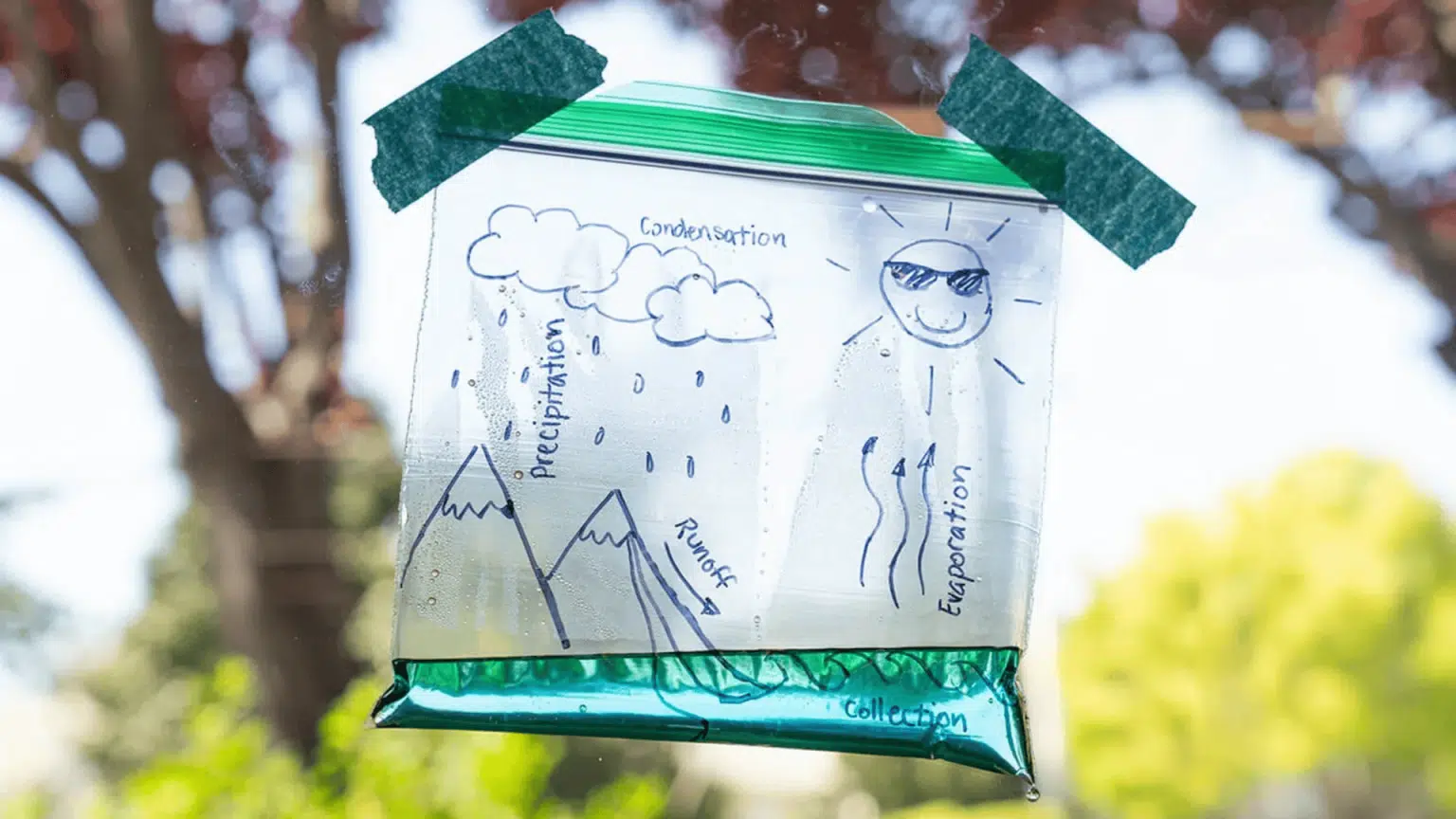
Image credit: Freddy the Frogcaster
I draw a sun, clouds, and a sea on a zip-lock bag with markers, pour in a quarter cup of water, seal it, and tape it to a sunny window. Over the day, water evaporates, condenses on the bag, and drips back down like rain.
I taped this to the kitchen window on a rainy morning and by dinner the kids were pointing at real condensation like meteorologists. It makes the water cycle visible instead of abstract. The downside is that it needs a sunny window to work well, so on a truly grey day I tape it to the brightest window we have and accept a slower result.
Cost: Free | Time: 10 minutes setup, all day to watch | Difficulty: Easy
16. Magnet Fishing Game

Image credit: Super Simple
I cut paper fish, attach a paperclip to each, and tie a small magnet to a string on a stick to make a fishing rod. The fish go in a box as a pond, and each fish has a point value or a science question on the back.
This is the game my youngest asks for by name, because fishing with a magnet feels like a trick that should not work. It teaches magnetism and turn-taking at once. The downside is the tangled string: it knots if two children fish at once, so I keep one rod in play and the other child acts as scorekeeper until we swap.
Cost: Under $5 | Time: 25 minutes | Difficulty: Easy
17. Bubble Science Challenge

Image credit: Little Bins for Little Hands
I mix one cup of dish soap, six cups of water, and a tablespoon of glycerine if I have it, then challenge the kids to blow the biggest bubble, the longest-lasting bubble, and a bubble inside a bubble using a straw and a plate.
Bubbles are the rare game that works for a toddler and a ten-year-old at the same table, and my kids spent an hour chasing their own records. It teaches surface tension without anyone noticing. The downside is the soapy floor: bubble mix drips everywhere, so we play this on the kitchen tiles or outside under a porch, never on carpet.
Cost: Under $5 | Time: 30 minutes | Difficulty: Easy
18. Density Tower

Image credit: Freddy the Frogcaster
I pour honey, dish soap, water, and oil into a tall glass in that order, very slowly down the side, and watch them settle into layers instead of mixing. Then we drop in a grape, a coin, and a small plastic bead and predict which layer each will stop at.
This looks like a magic trick and it is actually a density lesson, which is my favourite kind of rainy-day game. My son predicted the grape would sink to the bottom and was fascinated when it stopped halfway. The downside is the pouring: rush it and the layers mix into a murky mess, so an adult pours while the kids watch and predict.
Cost: Under $5 | Time: 20 minutes | Difficulty: Easy
19. Tin Can Telephone Game

Image credit: Made by Joel
I punch a small hole in the bottom of two clean tin cans, thread a long piece of string through, knot it inside each can, and pull the string tight between two rooms.
This old-fashioned game still amazes my kids, because hearing a whisper through string feels impossible until it works. It teaches how sound travels as vibrations. The downside is the string: it only works when pulled tight, so I tape the middle of the string to nothing, keep it off the furniture, and let the kids hold the cans steady.
Cost: Free | Time: 20 minutes | Difficulty: Easy
20. Shadow Size Experiment

Image credit: Richmond Mom
I tape a piece of paper to the wall, shine a torch at a toy dinosaur, and move the torch closer and farther away while the kids trace the shadow each time. They predict whether the shadow grows or shrinks before each move, and we measure the outlines with a ruler.
This turned bedtime torches into a science lab at our house, and my daughter still remembers that closer means bigger. It is calm, quiet, and perfect for the end of a rainy day. The downside is that it needs a darkish room to see the shadow clearly, so we close the curtains and play it in the late afternoon when the light is already fading.
Cost: Free | Time: 20 minutes | Difficulty: Easy
At a Glance: Comparison Table
| Game | Best Age | Mess Level | Setup Time |
|---|---|---|---|
| Baking Soda Volcano Race | 4-12 | High | 10 min |
| Rain Gauge Challenge | 5-12 | Low | 10 min |
| Walking Water Rainbow | 4-10 | Low | 10 min |
| Sink or Float Game | 3-8 | Medium | 5 min |
| Magic Milk Swirl | 3-10 | Medium | 5 min |
| Cloud in a Jar | 5-12 | Low | 5 min |
| Block Bridge Challenge | 5-12 | Low | 5 min |
| Egg Drop Challenge | 6-12 | High | 20 min |
| Static Balloon Race | 4-10 | Low | 5 min |
| Rock Candy Crystal Race | 6-12 | Low | 15 min |
| Spaghetti Tower | 5-12 | Low | 5 min |
| Colour Mixing Lab | 3-9 | Medium | 5 min |
| Paper Airplane Contest | 5-12 | Low | 5 min |
| Ice Melting Race | 4-10 | Medium | Overnight freeze |
| Water Cycle in a Bag | 5-12 | Low | 10 min |
| Magnet Fishing Game | 3-8 | Low | 15 min |
| Bubble Science Challenge | 3-12 | High | 10 min |
| Density Tower | 5-12 | Medium | 10 min |
| Tin Can Telephone | 4-10 | Low | 10 min |
| Shadow Size Experiment | 4-10 | Low | 5 min |
Mistakes I Made (So You Don’t Have To)
I once let the kids pour vinegar into the volcano without a tray and spent the afternoon wiping the table and the floor. Now every wet or fizzy experiment starts on a tray in the kitchen, and the towels come out before the first pour, not after the first spill.
I used to explain the science before the experiment and watched eyes glaze over. Now I let them predict and test first, and explain afterwards when they actually want to know why it happened. The learning sticks much better that way.
I learned not to promise a result I have not tested myself. One humid day the static balloons refused to work and I had two disappointed faces, so now I test one balloon, one crystal jar, or one bubble mix before announcing the game.
I once ran three messy experiments back to back and ended up with a kitchen I did not want to clean. Now I pair one messy game with one dry game, and I let the slow experiments run for days instead of cramming everything into one afternoon.
Frequently Asked Questions
What age are these kids science games for rainy days best for?
Most suit ages 3 to 12, and the table gives a best age for each game.
Are these games safe for young children?
Yes, with adult help for hot water, boiling sugar water, and tin-can holes. I flag those steps in each game.
Do I need a science kit?
No. Every game uses things from the kitchen or craft drawer: baking soda, vinegar, food colouring, cups, string, and paper.
How long does each game take?
Most take 10 to 40 minutes, and I list the time for each one.
What if an experiment does not work?
That is still science. I ask the kids what they think went wrong, change one thing, and try again.
Final Thoughts
These kids science games for rainy days work because they treat children like real investigators, not an audience. They predict, they test, they argue about results, and somewhere in the middle they learn how the world works.
Start with the volcano this weekend, tape the water-cycle bag to the window, and start the crystal jars on Friday. By next week your kids will be checking experiments before breakfast, and that is a rainy-day win in my book.
Read this next Rainy Day Games for Kids.