17 Foyer Storage Ideas for Entryway 2026
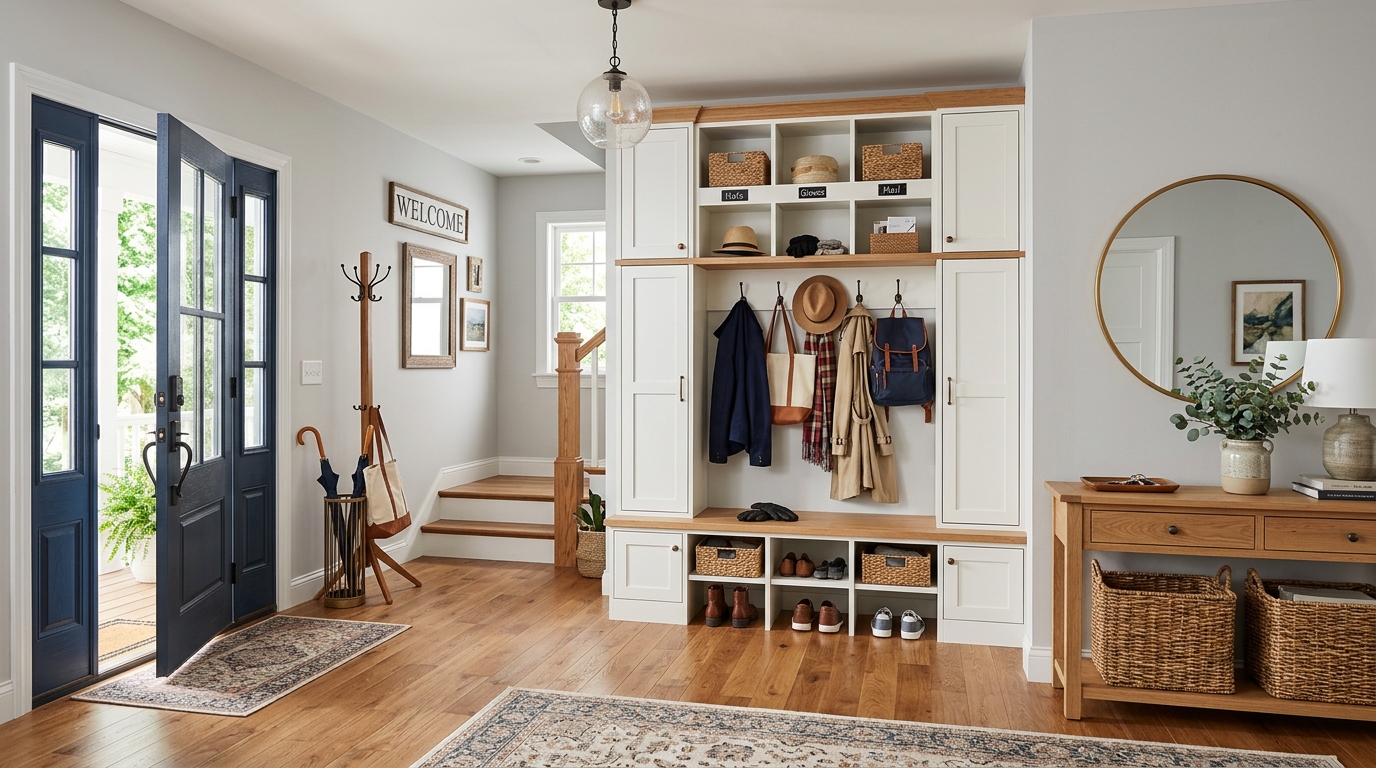
I’ve found that the foyer can become one of the busiest areas in a home within minutes. Shoes arrive first, followed by backpacks, jackets, sports gear, shopping bags, and all the small items nobody wants to carry farther inside.
With children, the storage challenge gets bigger because the system has to work for different ages and daily routines. Storage that looks attractive but is difficult to reach often ends up being ignored.
My approach is to create a clear place for the things that come through the door most often. A useful entryway may combine open cubbies, hooks, a bench, drawers, baskets, or cabinets depending on the space available.
A large mudroom isn’t necessary to make this work. Even a narrow hallway or apartment entrance can benefit from storage that follows the family’s actual traffic pattern.
In this guide, I’m sharing 17 foyer storage ideas for managing shoes, coats, backpacks, sports equipment, bags, and everyday clutter. I’ve included options for large family entryways, narrow halls, apartments, and awkward walls.
Save this for later
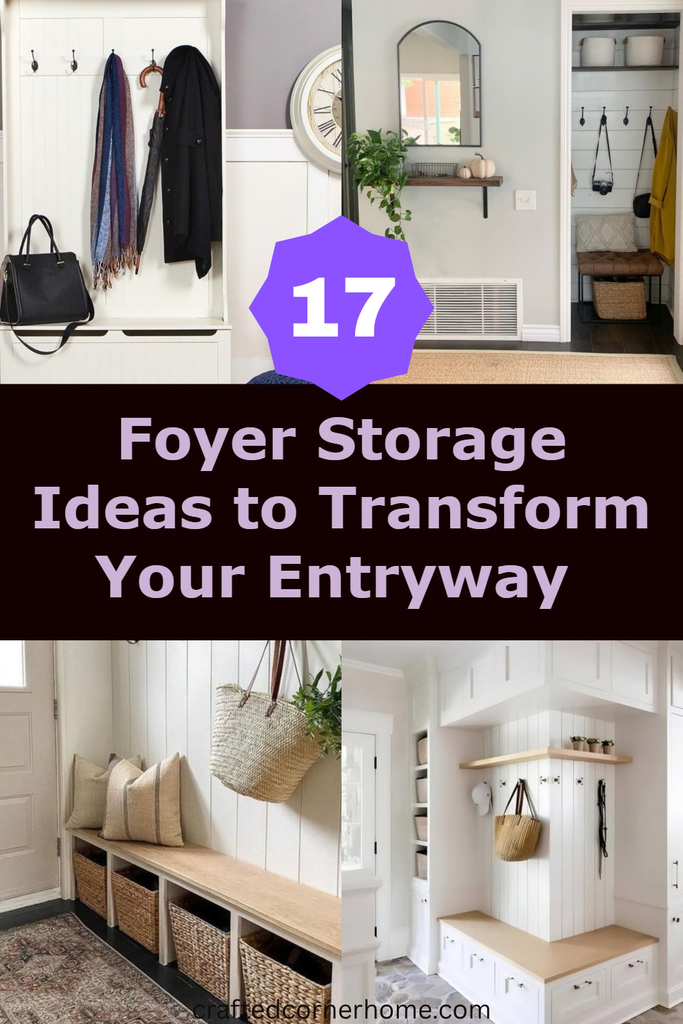
Table of Contents
Some setups focus on maximum built-in capacity, while others use simple benches, hooks, baskets, shoe racks, or existing closets. I’ve also included practical advice about accessibility, measurements, lighting, storage capacity, and safe installation.
Key Takeaways
- Give each family member a defined storage zone when shared storage becomes difficult to manage.
- Keep frequently used hooks, baskets, cubbies, and shoe storage within comfortable reach of the people using them.
- Use benches when seating and storage need to share the same footprint.
- Reserve closed cabinets and drawers for seasonal or less frequently used belongings.
- In narrow foyers, use shallow furniture and vertical wall space instead of taking over the walkway.
- Secure tall, freestanding, and wall-mounted storage according to the manufacturer’s instructions, especially in homes with young children.
Related article: 12 Pot Lid Storage Ideas for 2026
What’s the Most Practical Entryway Storage Setup for Families With Kids?
The most practical family entryway isn’t necessarily the one with the most cabinets. I’ve found that the better system is the one that makes the everyday routine simple enough to repeat.
Children need storage they can reasonably reach. Lower hooks, accessible baskets, open shoe shelves, and clearly defined cubbies can make it easier to put everyday belongings in the right area.
A bench is useful when the household needs somewhere to sit while putting on shoes. The space underneath can then handle footwear, baskets, or other daily items instead of becoming another empty area.
I also prefer a mix of open and closed storage. Open areas are convenient for backpacks, coats, and shoes used every day, while drawers and cabinets can contain seasonal clothing, spare bags, and items that don’t need to be visible.
Most importantly, I look at how people actually enter and leave the house. Storage works better when it sits close to the door and fits the available walking space rather than forcing everyone to change their routine.
Hidden Bench Drawers
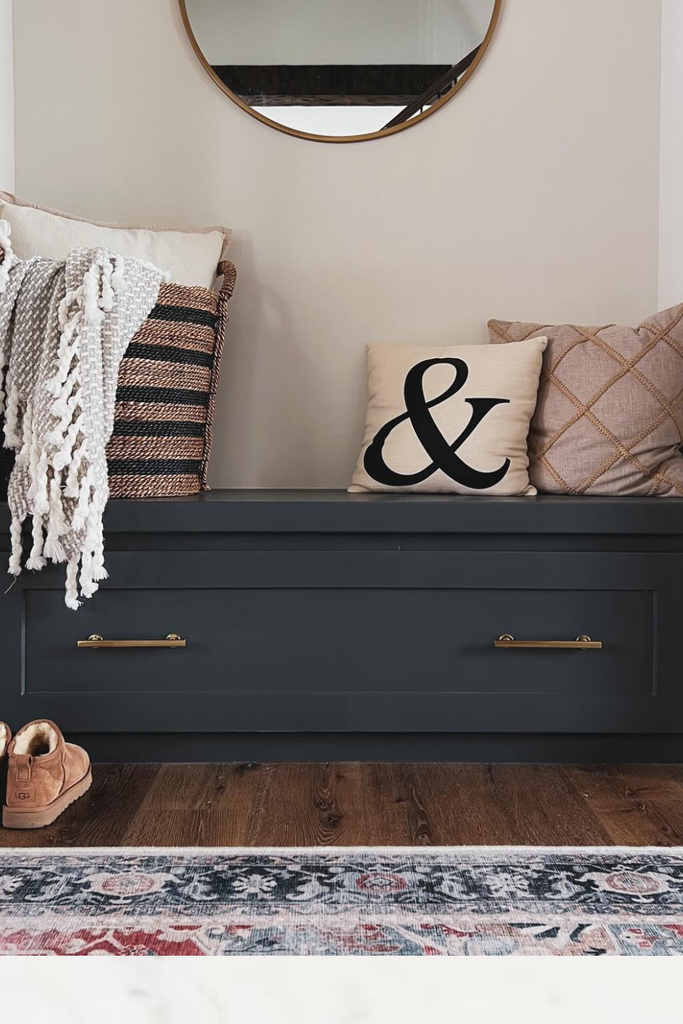
A bench with drawers underneath is a good choice when I want seating without leaving shoes and accessories visible. The drawers give each family member a defined place for smaller everyday belongings.
One drawer can hold shoes, while another might be used for hats, gloves, or other accessories. Assigning drawers by person can also make shared storage easier to understand.
This setup is particularly useful in a narrow foyer where open baskets or large cubbies could make the space look crowded. The bench provides a practical seating area while the drawers keep the storage concealed.
Soft-close drawer hardware is an optional upgrade worth considering for a frequently used bench. A mirror above can reflect available light and provide a useful final check before leaving the house.
Before installing a bench, I would measure the full door swing and available walkway. Drawers also need enough room to open fully without interfering with nearby doors or foot traffic.
Pro Tip: Mark the bench footprint on the floor with painter’s tape before building or buying anything. It gives you a quick way to check whether the seating and drawer depth feel comfortable in the actual foyer.
Open Basket Cubbies
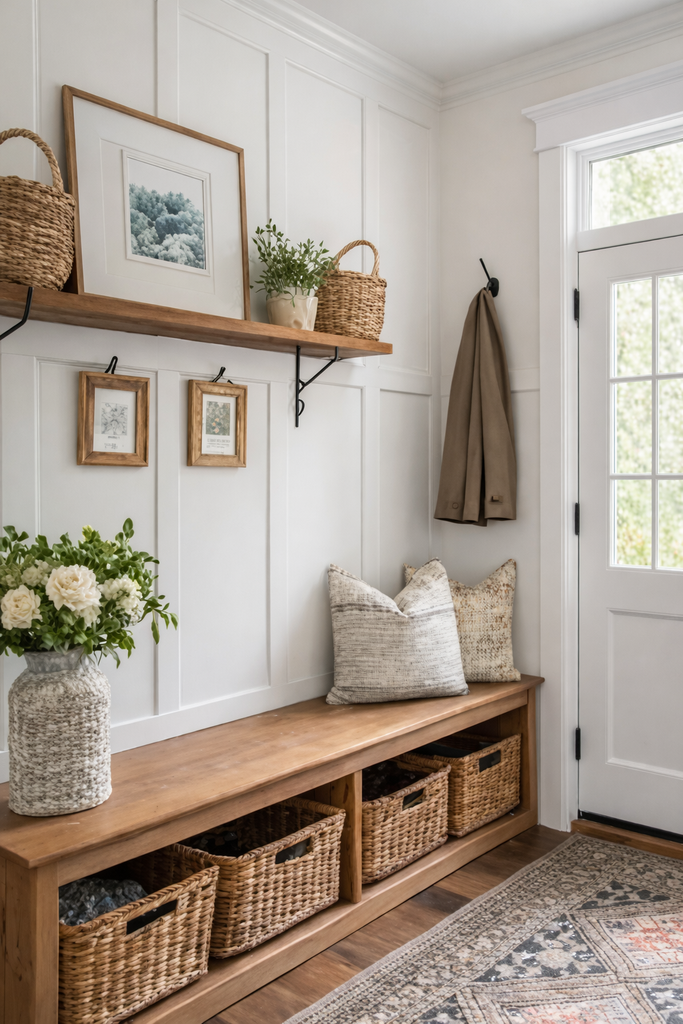
Open cubbies with individual baskets are useful when a family needs quick, visible drop-and-go storage. Instead of opening drawers or doors, children can place everyday belongings directly into their assigned basket.
I like this approach for shoes, hats, sports accessories, and other items that move in and out of the house regularly. Labels can make similar-looking baskets easier to identify.
A low storage unit can provide the cubbies without requiring custom cabinetry. Matching baskets can make the area look more organized, but the main advantage is accessibility rather than appearance.
This setup works best when the goal is to make everyday storage easy to reach. It isn’t the right choice if the main priority is hiding every item from view.
Pro Tip: Keep the baskets used most often in the easiest-to-reach cubbies. Seasonal or occasional items can go higher so the lower spaces remain available for daily routines.
Full Mudroom Wall
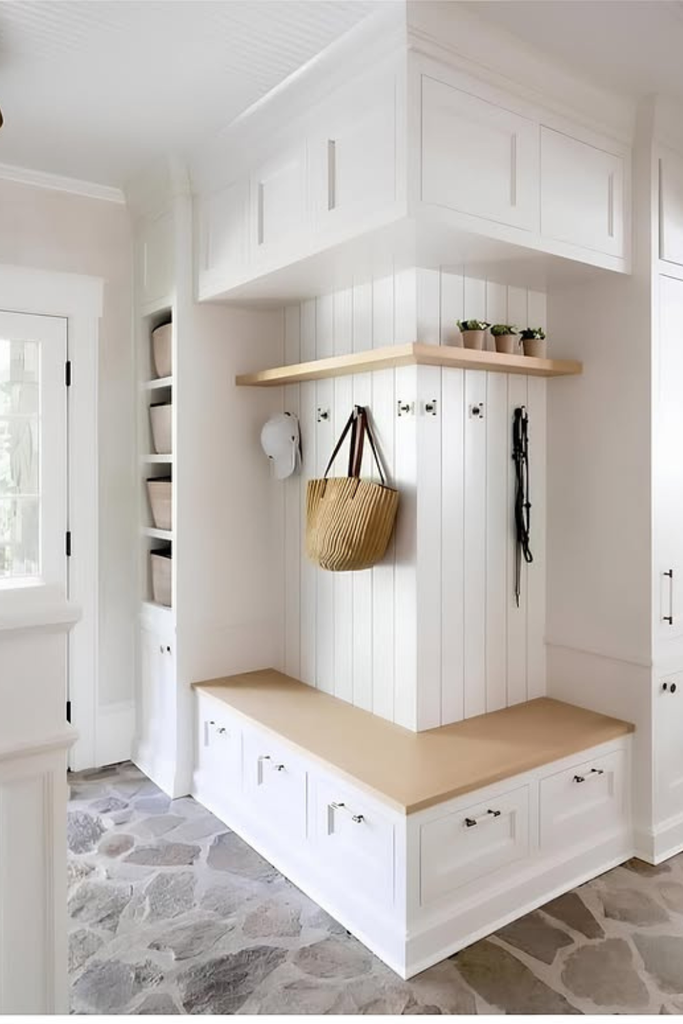
When a family needs maximum storage from one wall, a full mudroom-style setup can make good use of the entire vertical space.
A typical arrangement can combine lower cabinets or drawers, a bench, sturdy hooks, open shelving, baskets, and overhead cabinets. Each part can serve a different storage purpose instead of relying on one type of compartment.
Lower storage can handle everyday footwear and sports equipment. Hooks can take care of coats and backpacks, while upper cabinets are useful for seasonal belongings that don’t need daily access.
Open side shelves can hold baskets for smaller accessories while keeping them easier to reach. A wall panel behind the hooks can also create a more finished appearance and provide a defined surface for mounting hardware.
This is a more involved installation than a freestanding storage piece, so I would check the wall construction and follow the appropriate anchoring requirements for cabinets, shelves, and hooks.
Pro Tip: Plan the wall from the bottom up before choosing finishes. Start with the items that need daily access, then assign the less frequently used belongings to higher or enclosed storage.
Wood Hook Nook
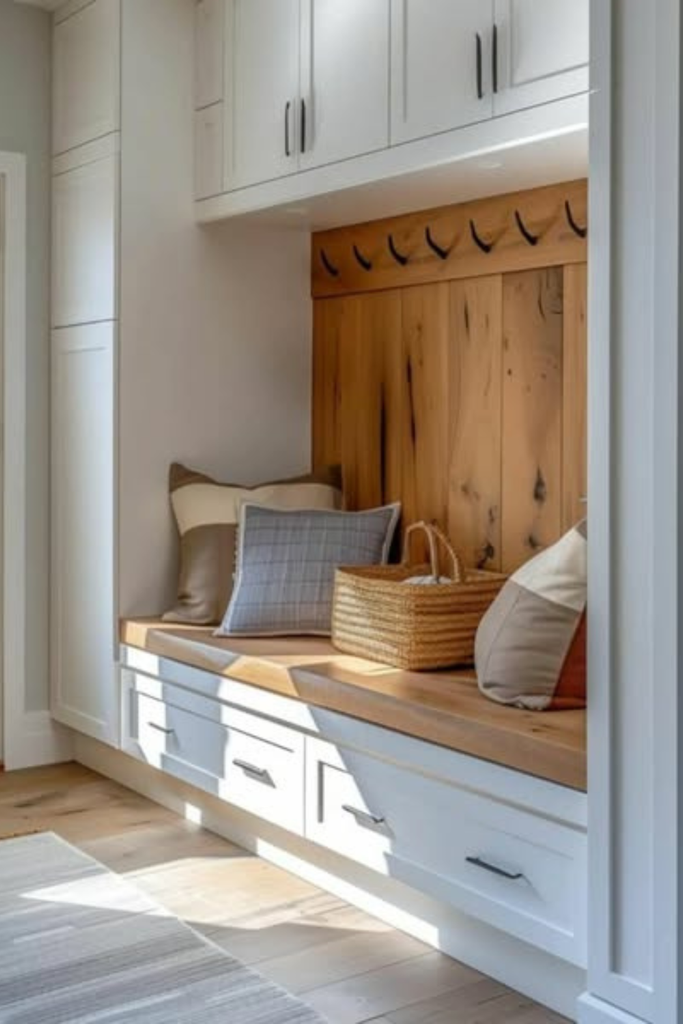
A wood hook nook creates a clearly defined drop zone without requiring an entire wall of cabinetry. I like this approach when coats and bags are the main source of entryway clutter.
A wood backing panel gives the area a distinct visual boundary. Sturdy hooks can then hold coats, backpacks, totes, and everyday bags without spreading those items across the rest of the foyer.
A small bench can be added underneath if seating is useful, but it doesn’t need to become a full storage wall. The purpose here is to establish one obvious landing spot.
For a simple built-in appearance, the backing panel can be framed by surrounding trim or cabinetry. Darker hardware can provide contrast against natural or painted wood.
Because hooks carry the weight of frequently handled bags and coats, I would use suitable mounting hardware and follow the manufacturer’s installation requirements.
Open Closet System
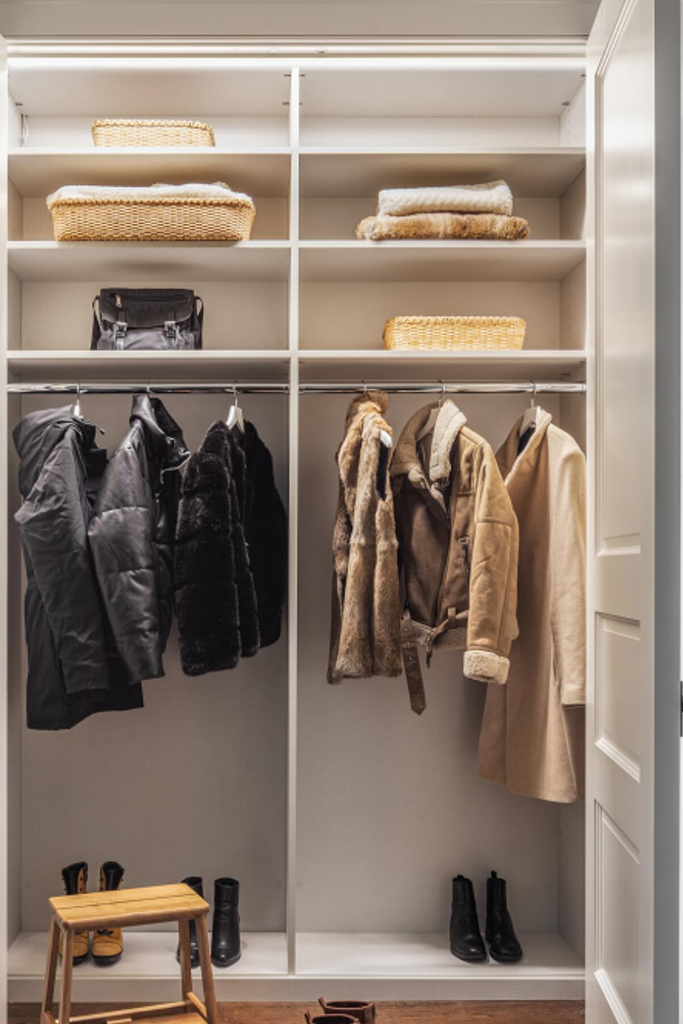
An open closet system is most useful when hanging clothes are the main storage problem. Instead of relying on a few hooks, the entire area can provide multiple hanging sections.
Separate sections can be assigned to different family members. Where the closet height and system allow it, double hanging rods can create additional hanging capacity.
Upper shelves are useful for baskets containing gloves, scarves, seasonal accessories, and other items that don’t need to hang. Matching hangers can also make a visible system look more orderly.
The tradeoff is that everything remains on display. I would keep the system edited rather than filling every available section, because overcrowded open storage quickly becomes difficult to use.
This arrangement works best for households that don’t mind seeing coats and bags or are willing to keep the visible storage limited to items currently in rotation.
Cabinet And Hooks
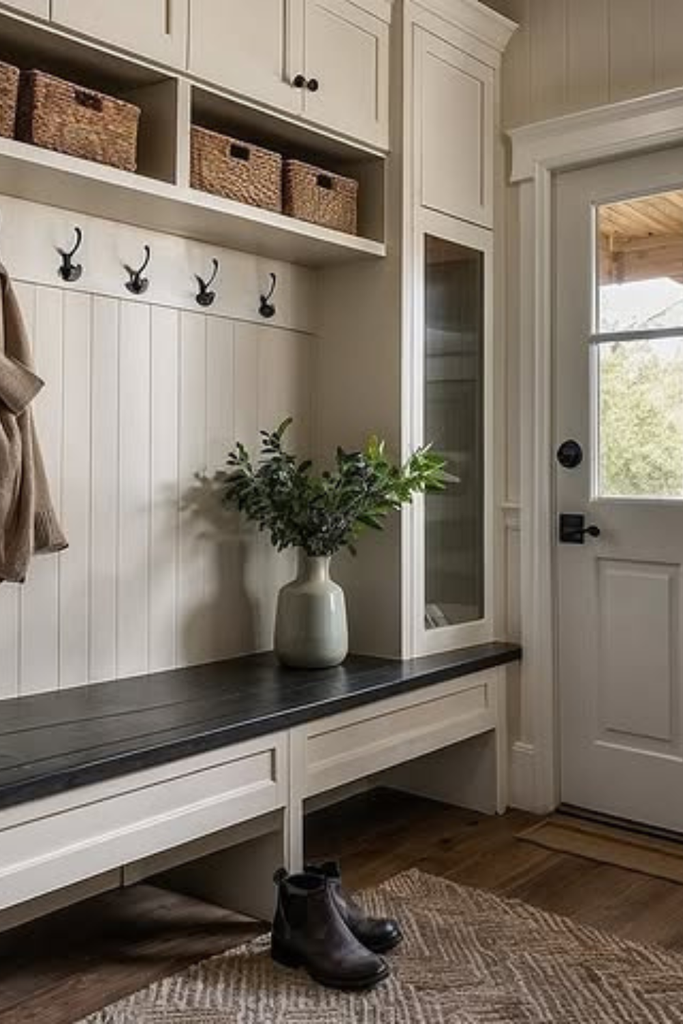
Combining cabinets with hooks creates one defined zone for both visible and concealed storage. Daily items stay accessible while less frequently used belongings can be tucked away.
Hooks can handle coats, backpacks, and bags that need to be grabbed quickly. Cabinets above or beside them can store seasonal accessories, spare bags, and other items that don’t need to remain visible.
Lower drawers or cabinets can provide another layer of containment for shoes and smaller clutter. A beadboard or wood backing can give the hook area a finished surface without turning the whole wall into a large built-in.
For families with children, the most frequently used hooks should be positioned where the intended users can reach them comfortably.
Pro Tip: Don’t plan every cabinet around full capacity. Leaving some unused space makes it easier to put away an unexpected bag, jacket, or seasonal item without reorganizing the entire cabinet.
Slim Cabinet Combo
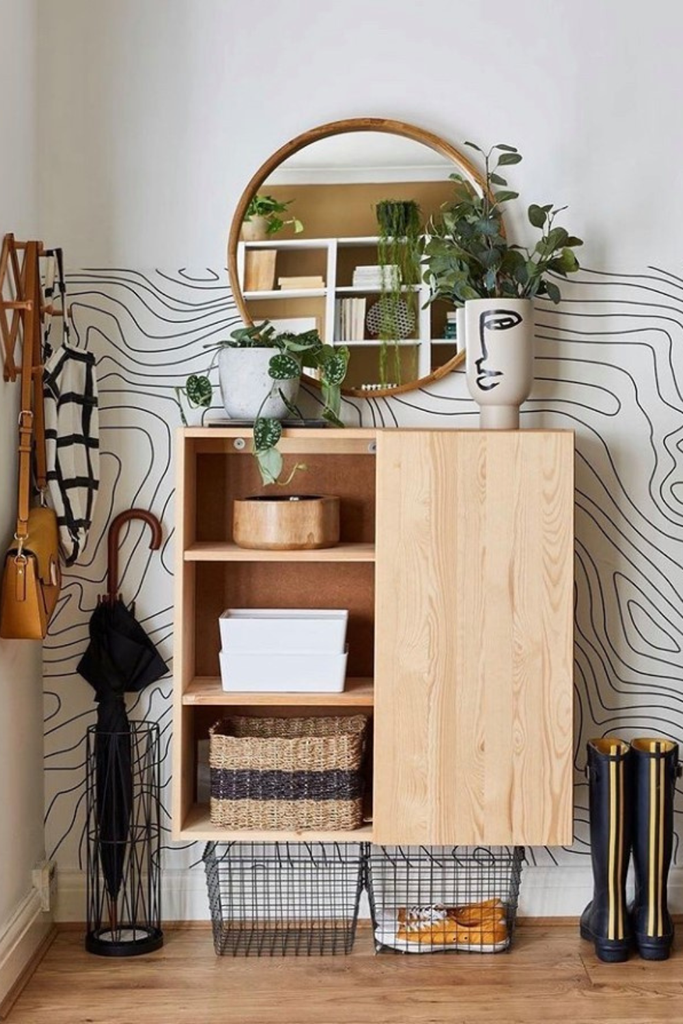
A slim cabinet combination is designed for foyers where floor depth is limited. It can provide concealed storage without taking as much space from the walking path as a deeper unit.
A shallow closed cabinet can contain small accessories and visual clutter, while a nearby shelf or wall hook provides quick access to bags and frequently used items.
This is particularly practical in apartments and tight hallways where every inch of floor depth matters. Before buying anything, I would measure the available space rather than relying only on the furniture’s advertised description.
A round or narrow mirror above the cabinet can also help reflect light and give the foyer a more open appearance.
The main advantage here is the shallow footprint. It isn’t about adding as much storage as possible; it’s about fitting useful storage into a space that cannot accommodate bulky furniture.
Labeled Family Stations
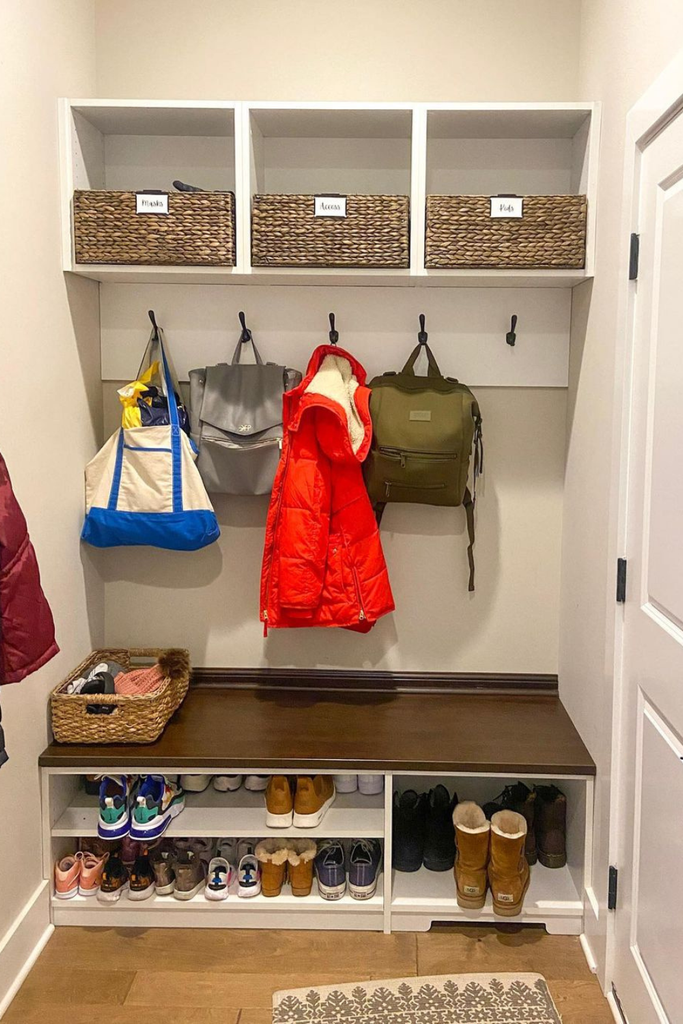
Individual family stations work well when shared storage causes confusion. Each person gets a defined location rather than everyone placing belongings in one large communal area.
A simple station might include one hook, one basket or cubby, and a nearby shoe space. Labels can help younger children identify their area, particularly when several storage containers look alike.
Keeping these zones accessible makes the routine easier to follow. The goal isn’t to guarantee that children will always put things away, but to remove unnecessary obstacles from the process.
I prefer simple systems here. If each person knows exactly where a backpack, coat, and shoes belong, there is less need for complicated organization rules.
Deep Bench Cubbies
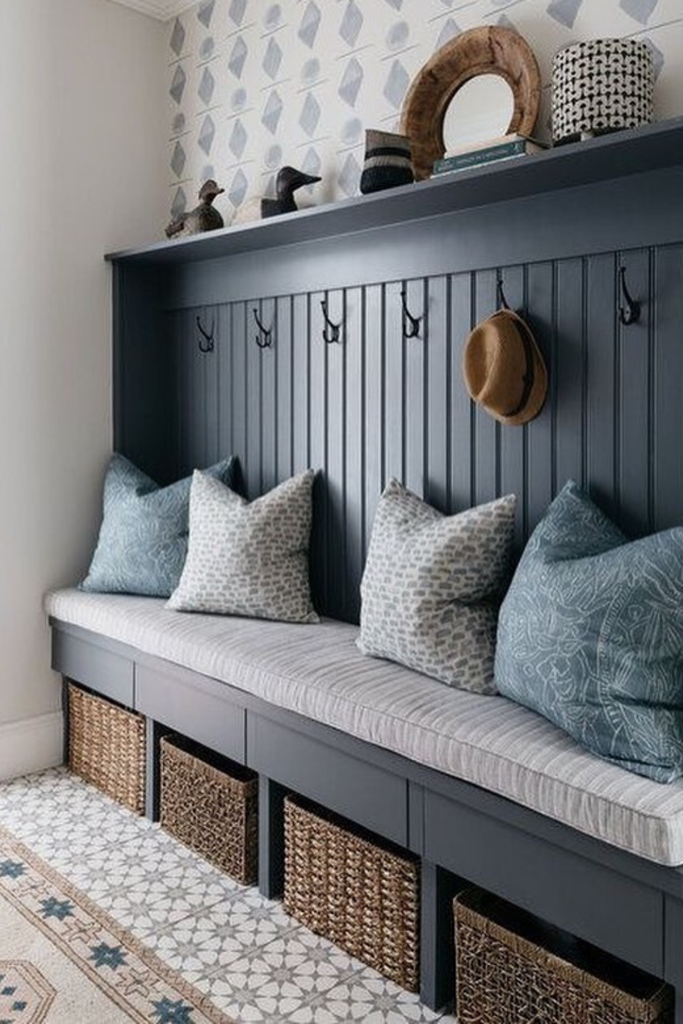
A long wall can accommodate a deep bench with divided cubbies underneath, making this a useful option for larger households that need several individual storage areas.
Unlike a drawer-based bench, these compartments remain open and can hold larger baskets, shoes, sports equipment, or bags. Each section can be assigned to one family member or used for a specific category.
Hooks above the bench keep coats and backpacks from occupying the seating surface. The long bench also gives several people room to sit without needing separate chairs.
This setup is particularly useful when the household has enough wall length to dedicate to one continuous storage zone.
The bench itself should be properly supported for its intended use. I would not assume that a decorative cabinet or floating shelf is suitable for seating unless it has been designed and installed for that purpose.
Pro Tip: Measure the baskets before building the cubbies. A compartment that is only slightly too small can make an otherwise useful storage system frustrating to use.
Also read: 16 Cast Iron Wall Storage Ideas for 2026
Slatted Storage Wall
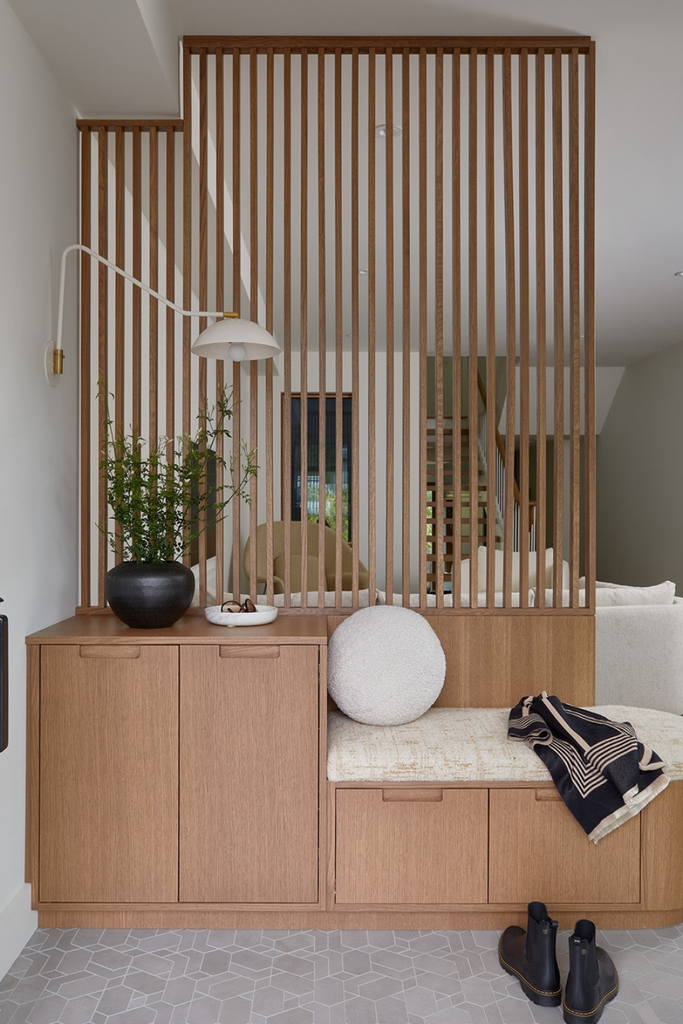
A slatted storage wall has a different purpose from a standard storage unit: it helps define the entry without completely closing it off from an open living area.
Vertical wood slats can create visual separation while allowing the space to retain an open feel. This works particularly well in modern interiors where architectural texture is part of the design.
The storage itself can be integrated into the wall with a bench and lower cabinets. That keeps everyday belongings contained while the slatted section provides a lighter visual divider.
Because this type of entryway can sit within a larger open room, lighting deserves attention. Recessed ceiling lights or a nearby wall fixture can help illuminate the storage area rather than leaving it dependent on light from another part of the home.
For any wall-mounted components, I would use appropriate hardware and follow installation requirements for the wall material and expected load.
Minimal Hook Bench
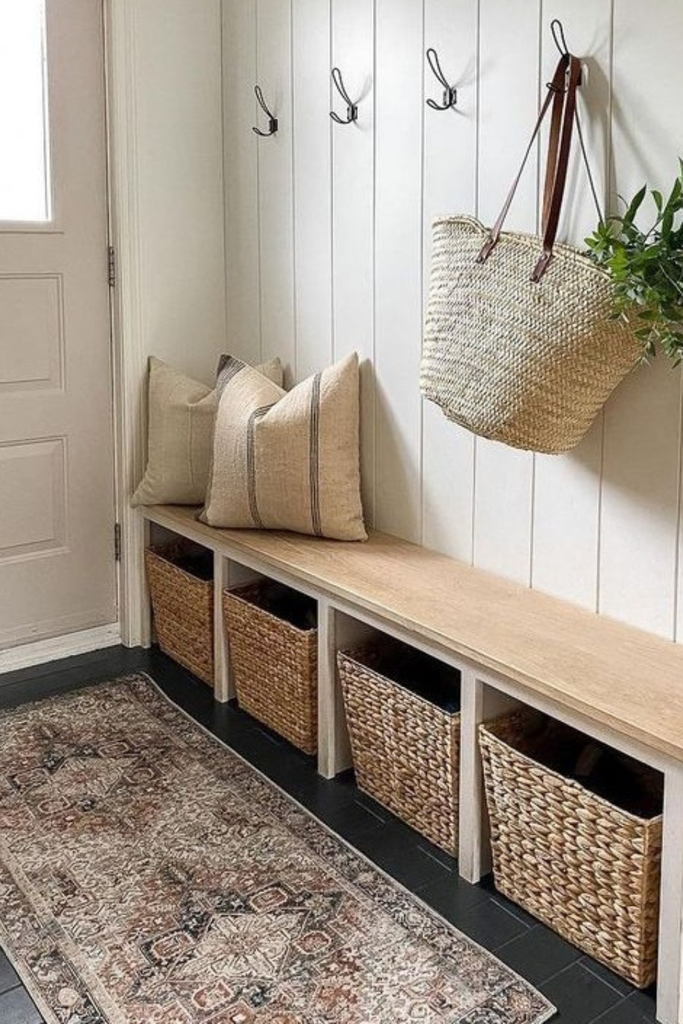
When the foyer is small, I don’t think a complicated storage system is always necessary. A simple bench, a few sturdy hooks, and baskets underneath can cover the basics.
This arrangement works well for smaller households or anyone who wants a low-maintenance entryway. The bench provides seating, while the baskets contain shoes and miscellaneous items without adding cabinets.
Hooks can be positioned at different heights when both adults and children use the space. Lower hooks should only be used where they can be safely and securely mounted.
The visual advantage is simplicity. With fewer storage components, there are also fewer places for unnecessary belongings to accumulate.
Pro Tip: Keep this setup intentionally limited. If the bench becomes a dumping surface, remove items that don’t belong there rather than adding more containers.
Shelf And Rail
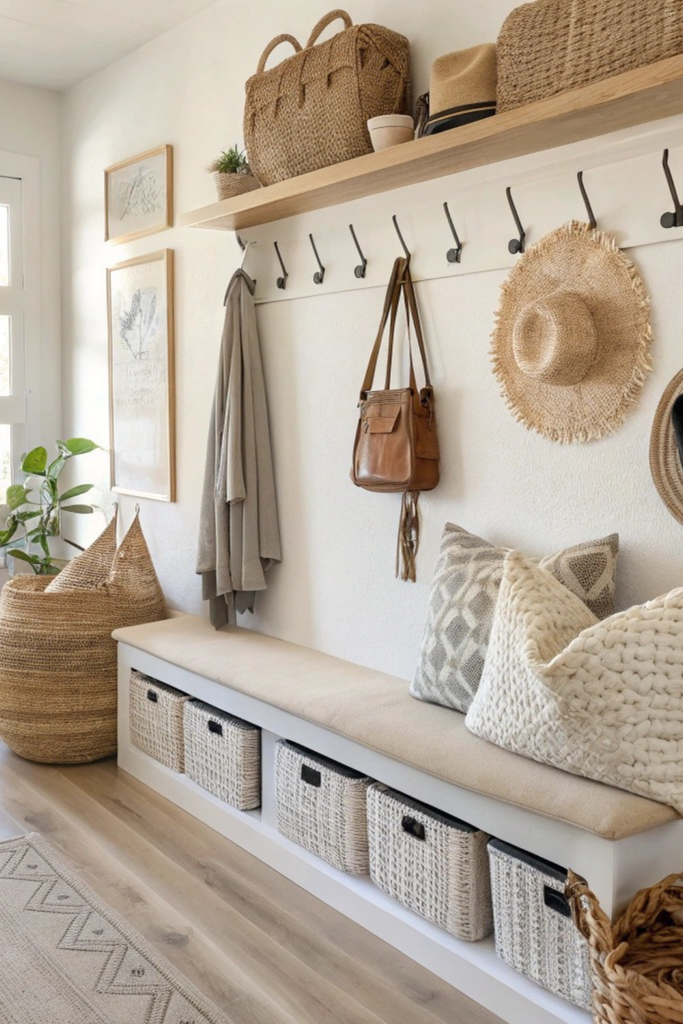
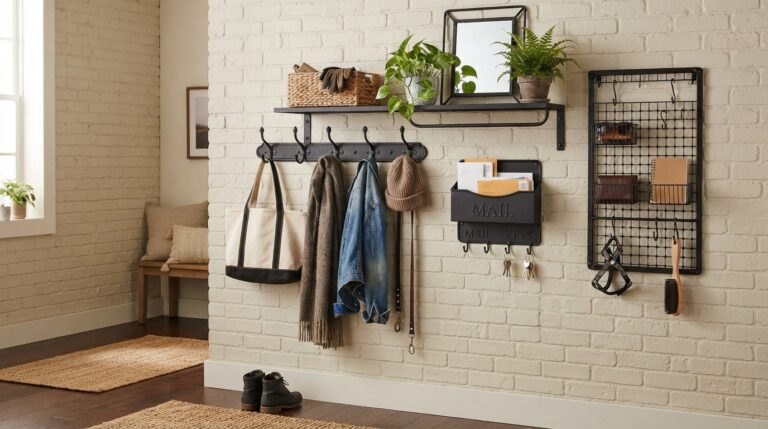
A shelf-and-rail system makes use of vertical wall space when there isn’t much room for floor furniture.
A sturdy wall-mounted rail can support hooks for coats, bags, and hats, while an upper shelf provides space for baskets containing seasonal accessories or backup supplies.
Shoe storage can remain below the rail in a low rack or basket, creating a complete entryway system without requiring a deep cabinet.
This works particularly well on a wider wall where there is enough horizontal space for several hooks but not enough floor depth for built-in furniture.
For shelves holding heavier baskets or belongings, I would secure the brackets according to the manufacturer’s instructions and use suitable wall support rather than assuming any wall surface can carry the same load.
Compact Hall Tree
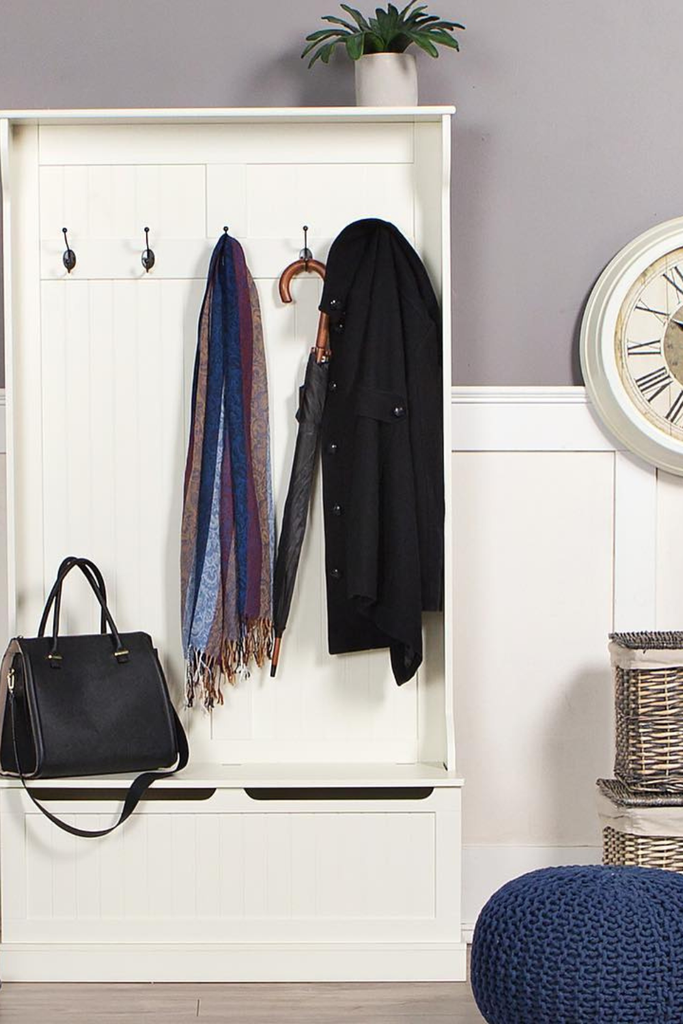
A compact hall tree combines several functions into one freestanding piece. That is its main advantage over separate furniture.
One unit can provide hooks for coats and bags, a small seat for changing shoes, and lower storage for footwear or accessories. This makes it particularly useful in apartments and small foyers where several pieces of furniture would take up too much room.
Before choosing one, I would measure both its width and depth and check how it affects the walking route. Doors and nearby furniture also need to be considered.
Tall freestanding furniture should be anchored according to the manufacturer’s instructions, especially in homes with young children. Anti-tip hardware is an important part of making a freestanding storage piece safer.
Narrow Wall Built-In
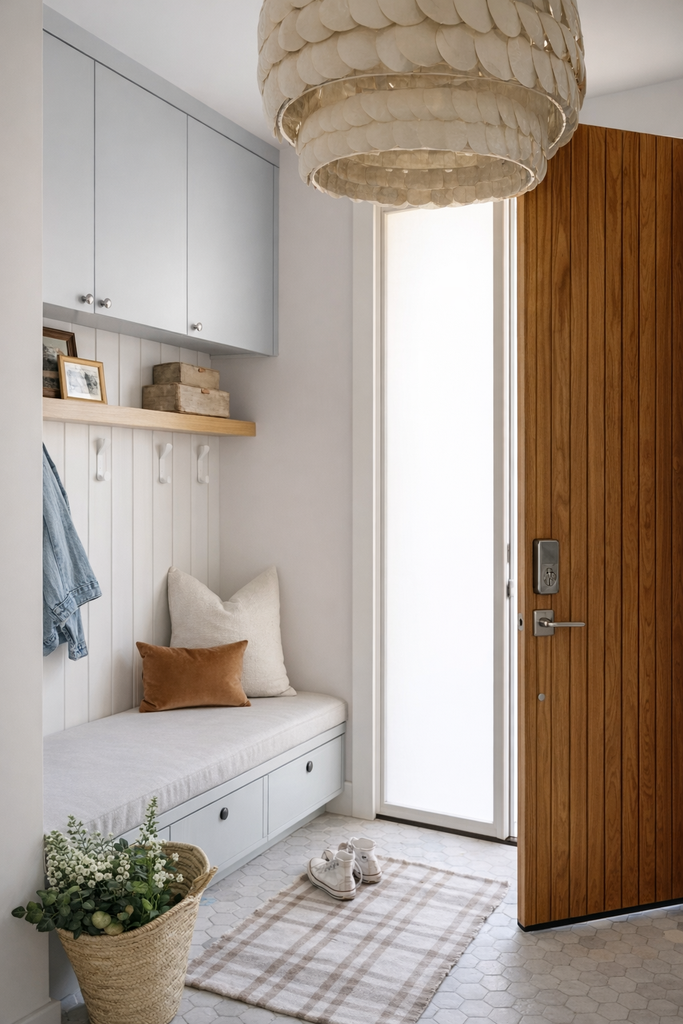
An awkward narrow wall can become useful storage when the design takes advantage of vertical space rather than adding depth.
A shallow built-in bench can provide seating without taking over the hallway. Drawers beneath can contain shoes and smaller accessories, while hooks above handle jackets and bags.
Upper cabinets can make use of otherwise wasted wall height for seasonal items. Because the wall is narrow, every component needs to be planned around the available depth.
This approach is different from a full mudroom wall because the goal is to solve a specific space problem rather than maximize storage across a large wall.
Before installation, I would check the full door swing, drawer opening, and available walkway. A custom unit should make the narrow passage more functional, not create another obstacle.
Double Bench Alcove
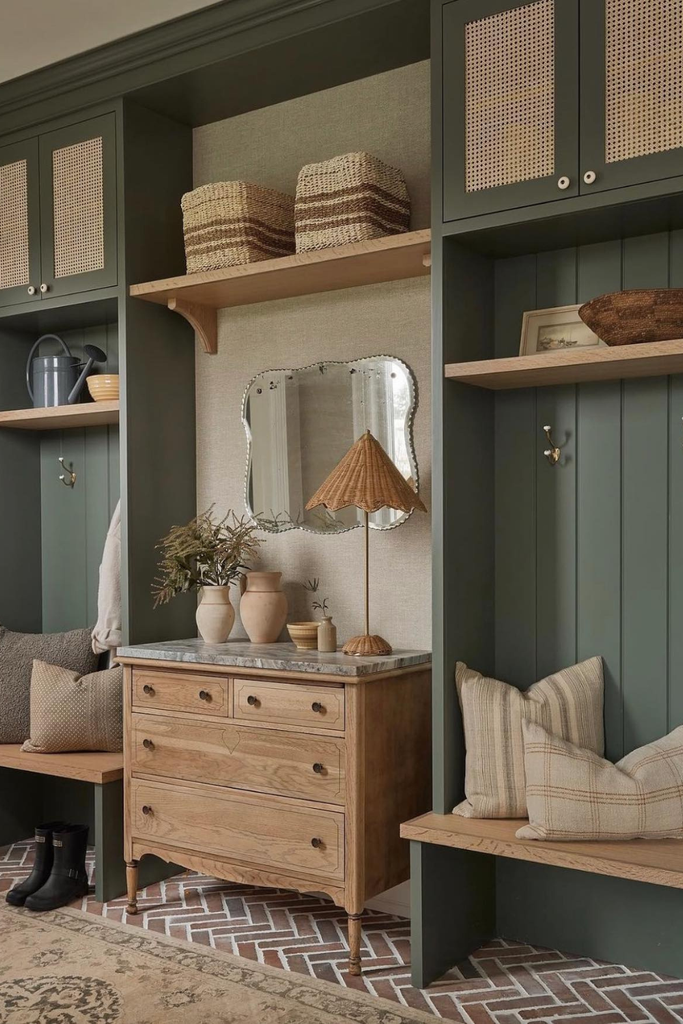
A double bench alcove is suited to larger families that have enough wall space for several separate landing areas.
Two bench sections can create distinct zones so backpacks, coats, and shoes don’t all collect in one spot. Tall cabinets at the sides can contain seasonal belongings, while open shelving keeps selected baskets within easier reach.
Center drawers can handle smaller items such as keys and accessories. The two seating areas also make it easier for more than one person to get ready at the same time.
This arrangement requires considerably more wall space than a basic bench, so I would only consider it when the foyer or mudroom area can accommodate the full layout comfortably.
Lighting becomes important when the cabinetry is deep or tall. Recessed fixtures or another nearby light source can make the individual storage zones easier to use.
Pro Tip: Divide the two sections according to how your household actually functions. Separate family members, children and adults, or different categories such as school gear and outdoor equipment can all work better than one shared pile.
Simple Shoe Rack
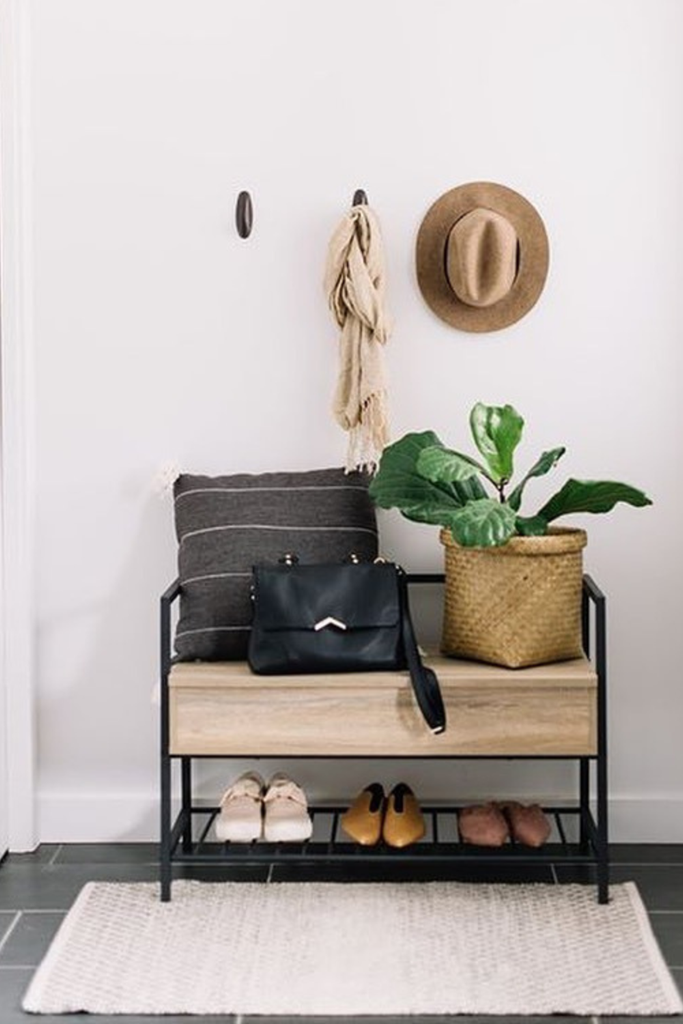
When shoes are the main problem, I prefer solving the shoe problem directly instead of installing a complete storage wall.
A narrow shoe rack beneath a bench can keep everyday footwear contained while preserving floor space. Because the shoes remain visible, family members can quickly see what is available when leaving the house.
Hooks above can handle lightweight bags, hats, and scarves without adding another piece of furniture. The bench provides a place to sit while changing footwear.
This is especially useful for apartments, side entrances, and small foyers where the storage need is specific rather than extensive.
I would leave enough clearance around the rack and bench for comfortable movement. A storage piece that forces everyone to step around it defeats the purpose of making the entrance easier to use.
Closet Turned Mudroom
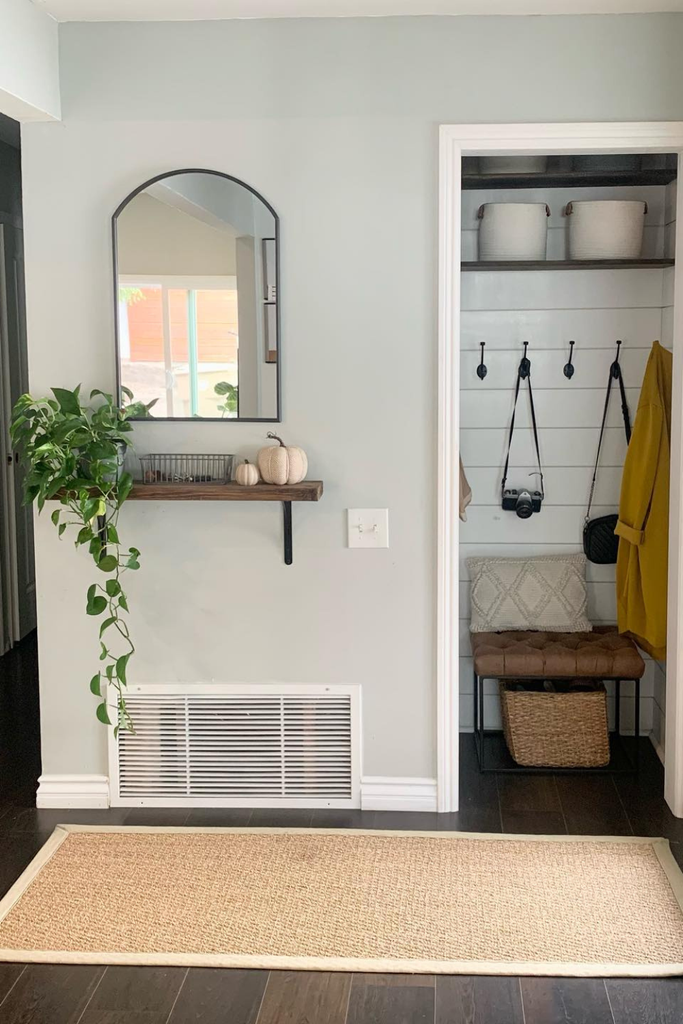
An underused closet can provide a ready-made footprint for an entryway storage zone. Instead of adding furniture to the hallway, this approach repurposes space that already exists.
If the closet door isn’t needed for privacy, temperature control, or another household purpose, removing it can make the storage easier to access. Hooks on the back wall can hold coats and bags, while upper shelves can accommodate baskets.
A small bench or low seat can provide a place to change shoes if the closet has enough depth. Bins or open shelving underneath can keep footwear contained.
Before making changes, I would check what the existing closet is used for and whether removing the door affects the room. Shelves, hooks, and any added storage should also be securely mounted according to the appropriate installation requirements.
The biggest advantage is that no additional hallway footprint is required. The storage is created by making better use of an existing enclosed area.
FAQs
How Do You Keep Kids From Dumping Everything on the Floor?
I’ve found that storage works better when children can reach it and understand exactly where things belong. A hook placed too high or a basket hidden behind several doors adds extra steps to an already busy routine.
I prefer giving each child a clearly defined hook, basket, cubby, or shoe area. Open storage can be especially convenient for belongings that are used every day.
That doesn’t mean children will automatically keep the foyer tidy. It simply makes the intended routine easier to follow.
I also recommend watching the entryway for several days before changing the storage. The things that repeatedly land on the floor can show you what the current system is missing.
What’s Better for Families: Open or Closed Storage?
I prefer a combination rather than choosing only one. Open storage is convenient for daily items such as backpacks, coats, shoes, and frequently used accessories.
Closed storage is better suited to seasonal clothing, spare bags, backup supplies, and belongings that don’t need to remain visible.
An entirely open system can look busy when too many things are stored there. An entirely closed system can add extra steps for children and other family members.
The balance depends on what your household uses every day and what can be stored out of sight until it is needed.
What Is the Best Entryway Storage for a Small Hallway?
For a small hallway, I would start by protecting the walking space. Shallow furniture, wall-mounted hooks, vertical shelving, and compact shoe storage can provide useful organization without taking over the floor.
A narrow bench with storage underneath can combine seating and organization, while a wall rail can move coats and bags off the floor.
Before buying anything, measure the available depth and check how nearby doors open. The goal is to add storage without creating a new obstacle.
How Deep Should Entryway Storage Be?
There isn’t one depth that works for every foyer because the right size depends on the available wall, walking route, doors, and type of storage.
Instead of relying on a universal number, I recommend measuring the actual space first. Mark the proposed furniture footprint on the floor and check how comfortably people can walk past it.
Don’t forget to test doors, drawers, and cabinets in their fully open positions. That often reveals clearance problems that aren’t obvious when the furniture is closed.
How Do You Organize Shoes in a Family Entryway?
I find it easiest to keep everyday shoes closest to the entrance and avoid using the foyer as long-term storage for every pair the family owns.
Individual cubbies, baskets, or open shoe shelves can give each person a defined space. Seasonal or rarely used footwear can be moved to another storage area when practical.
If shoes continue to overflow, that is useful information. It may mean the entryway is being asked to store more footwear than the available space can comfortably handle.
Read this next: 18 Pillow Storage Ideas for 2026
Conclusion
A functional foyer doesn’t require a huge mudroom or an expensive renovation. The most useful setup is the one that provides enough capacity, keeps everyday items accessible, and fits the way the household actually moves through the entrance.
I focus on four things when planning entryway storage: easy access, appropriate capacity, safe installation, and a layout that matches the family’s routine.
Whether the solution is a simple shoe rack, a few hooks, a repurposed closet, or a complete storage wall, the system should make everyday tasks easier rather than adding more steps.
When backpacks, shoes, coats, and bags have a logical place near the door, keeping the foyer organized becomes a much more manageable part of the daily routine.