
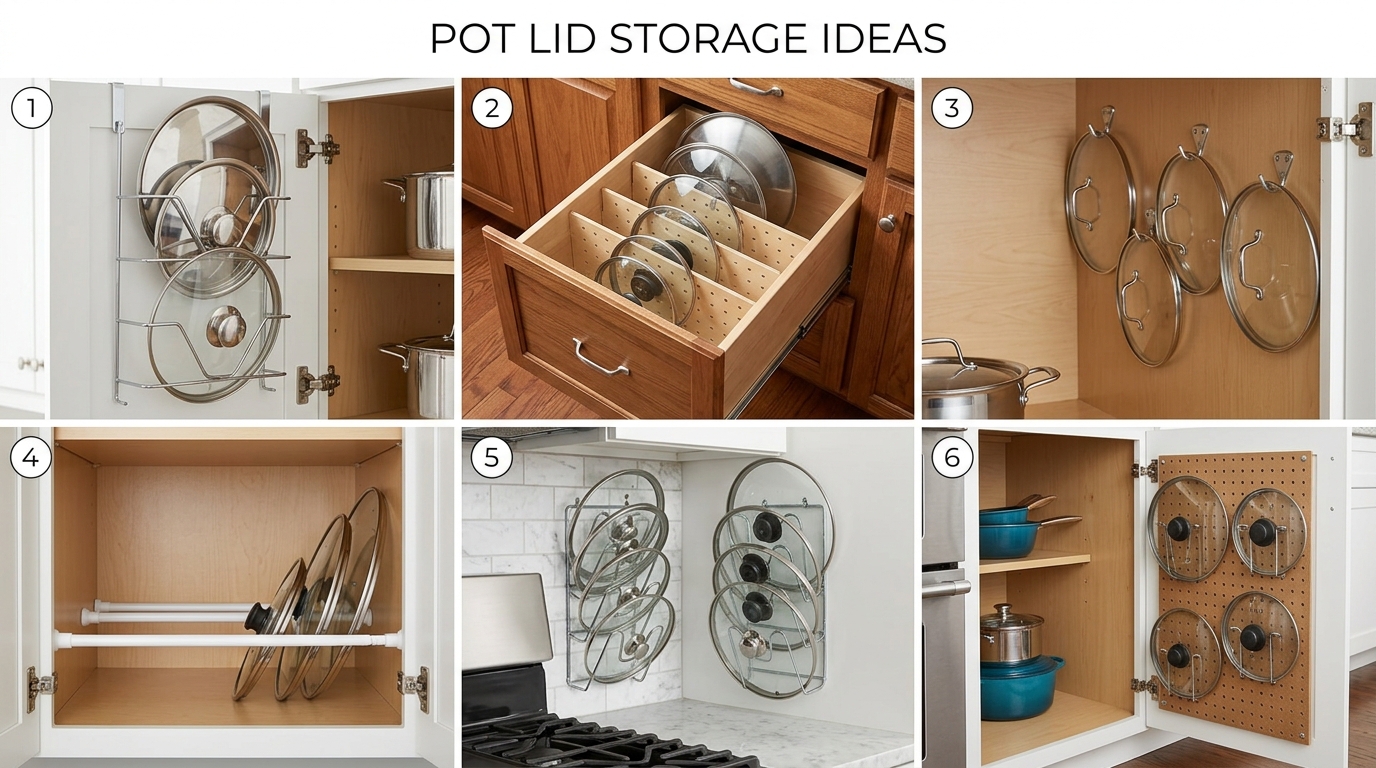
12 Pot Lid Storage Ideas for 2026
Pot lids are one of those kitchen items that seem easy to organize until I actually have to find a place for all of them. Their round shapes, handles, and different sizes can make a cabinet look messy very quickly.
I’ve found that the biggest improvement comes from giving lids their own storage space instead of letting them sit loose with the pots. Upright racks, drawer dividers, cabinet-door holders, and simple wooden slots can all work, depending on the kitchen layout.
Before buying an organizer, I measure the available width, depth, and height and think about which lids I use most often. That small bit of planning helps me avoid buying a rack that blocks a door, wastes drawer space, or cannot accommodate larger lids.
Below, I’m sharing 12 practical pot lid storage ideas, along with tips for choosing a setup that can stay organized during everyday cooking.
The easiest way I’ve found to control pot lid clutter is to store lids vertically and give each one a defined space. Cabinet racks, drawer organizers, door-mounted holders, and wooden dividers can all create separate slots without requiring a major kitchen renovation.
For a small kitchen, I would first look at unused cabinet-door space or a narrow drawer. For a larger kitchen, a deep pull-out drawer or adjustable cabinet rack can keep lids organized alongside cookware.
I also pay attention to lid weight, handle height, cabinet clearance, and how often each lid is used. Glass lids need stable support, while larger metal lids need enough vertical and horizontal room to prevent them from shifting.
The best system is not necessarily the most expensive one. It is the setup that fits the available space, allows me to grab a lid without moving several others, and is easy enough to maintain after daily cooking.
Key Takeaways
- I prefer vertical storage because individual lids are easier to see and remove.
- I always measure cabinets and drawers before buying a rack or divider.
- Cabinet doors can provide useful storage without taking up shelf space.
- Deep drawers work especially well for larger collections of lids.
- Heavy glass lids need sturdy support and enough space between pieces.
- Frequently used lids should stay close to the main cooking area.
- Separating lids from stacked pots can reduce shifting and unnecessary clutter.
- A simple divider system can work just as well as a specialized organizer.
Related article: 19 Jacket Storage Ideas for 2026
How Can I Create a Pot Lid Storage System That Stays Organized Long-Term?
I start by looking at how my kitchen already works rather than trying to force every lid into one particular type of organizer.
First, I choose a storage location that is close to where I normally cook. Depending on the kitchen, that might be a lower cabinet, deep drawer, cabinet door, or open shelf. I then measure the usable space, including the clearance needed for handles and doors to close properly.
For most kitchens, I find vertical storage easier to maintain than a pile of loose lids. Each lid gets its own slot, so I can remove one without disturbing the others.
I also separate everyday lids from pieces I rarely use. The lids I reach for several times a week belong in the easiest-to-access section, while occasional cookware can go farther back or higher up.
Pro Tip: Before purchasing an organizer, measure the actual interior dimensions rather than relying only on the cabinet’s outside measurements. Hinges, drawer slides, shelves, and door frames can reduce usable space considerably.
Adjustable Cabinet Racks
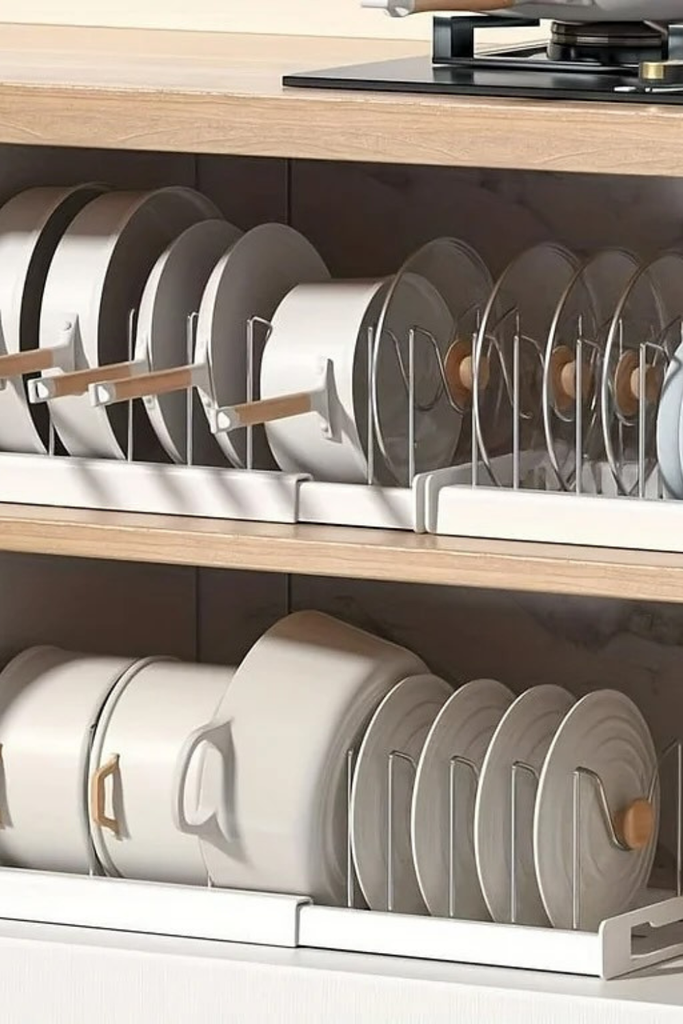
An adjustable cabinet rack is one of the simplest ways I can turn a shelf into a vertical filing system for pot lids.
Instead of stacking lids on top of one another, I place each lid between dividers. The individual sections keep the lids upright and make it easier to identify the size I need.
I would use this option when I have a standard cabinet shelf with enough depth but no built-in way to keep cookware organized. Adjustable dividers are particularly useful when my lids come in several different diameters.
Before installing or placing the rack, I measure the shelf width and check the cabinet height. I also make sure the largest lid can stand upright without hitting the shelf above it.
Pro Tip: Leave a little extra space around your most frequently used lids. A slot that is too tight may technically fit the lid but make everyday removal frustrating.
Pull-Out Peg Panel
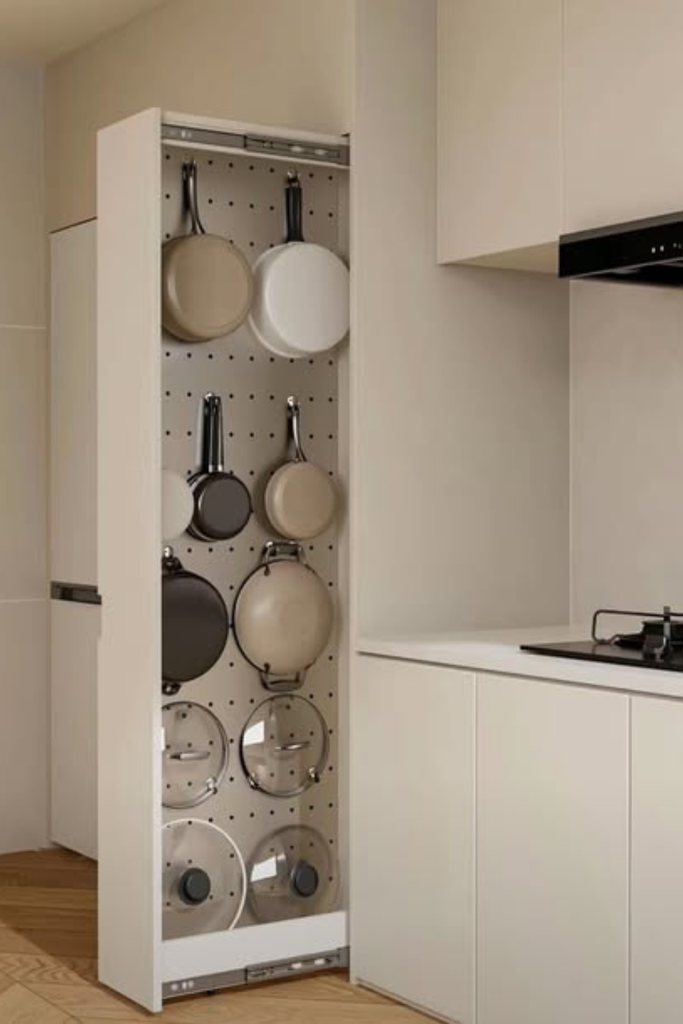
A pull-out peg panel can make use of a narrow cabinet that might otherwise become wasted space.
I like this concept when I have a slim area near the refrigerator, stove, or another cabinet that is difficult to use for traditional shelving. A sliding frame allows the storage section to pull toward me instead of requiring me to reach into a deep, narrow opening.
With adjustable pegs or hooks, I can arrange the space for different cookware sizes. Depending on the design, the same pull-out unit may also hold smaller pots or other cooking accessories.
The important part is making sure the frame is properly supported and the hardware can handle the combined weight of the cookware.
Pro Tip: Check the full extension of the pull-out before installation. I want enough room to access the back of the organizer without the frame hitting nearby cabinets or appliances.
Cabinet Door Mount
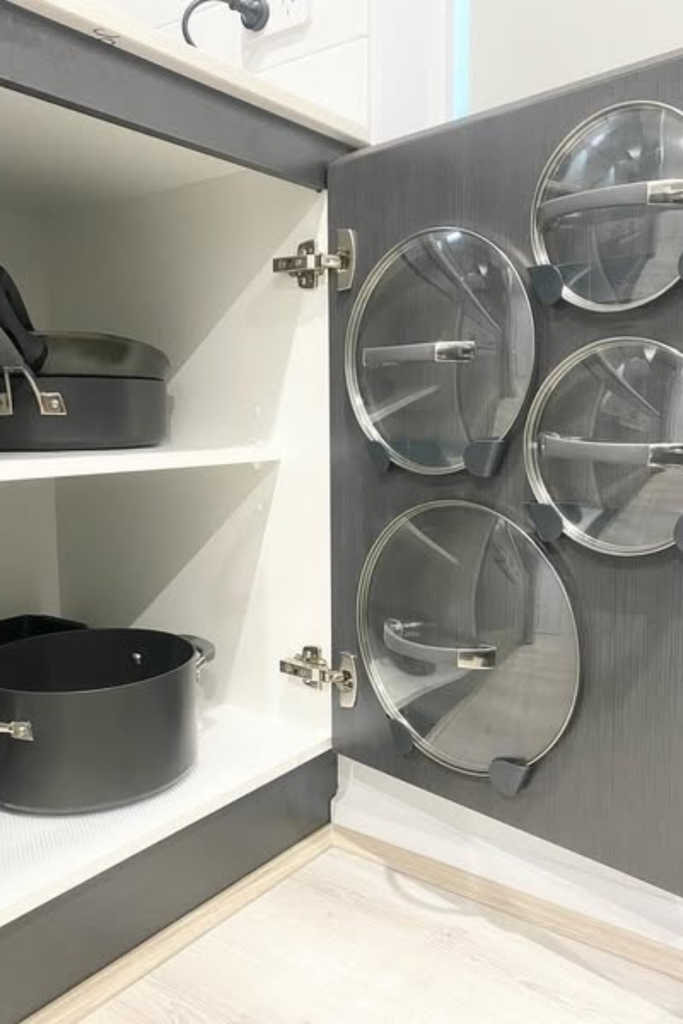
The inside of a cabinet door is valuable storage space that is easy to overlook.
I can use a purpose-built lid holder or sturdy brackets to keep several lids upright against the door. This works particularly well when the cabinet has unused interior-door space but limited shelf capacity.
Before installing anything, I check the door clearance. The organizer should not interfere with the shelves, cookware, or cabinet frame when the door closes.
I also consider the weight of the lids. Heavier glass or large metal lids need a properly secured holder rather than a lightweight adhesive solution that may not be designed for the load.
Pro Tip: Close the cabinet slowly after positioning the holder for the first time. This lets me check for contact points before the organizer or cookware gets damaged.
Dual-Zone Storage
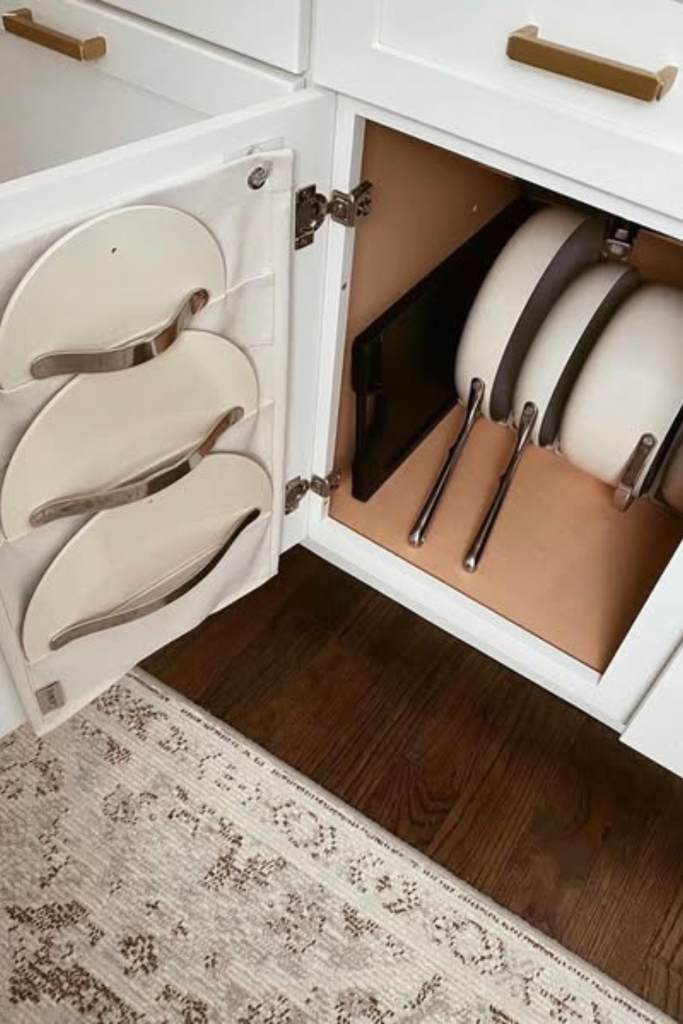
When I have a large cabinet, I can divide the storage into two separate zones instead of trying to fit everything together.
One section can hold lids vertically while another section stores pots, pans, or other cookware. A slim holder on the cabinet door can handle smaller lids while larger pieces stay inside the cabinet.
This arrangement is useful when I want cookware and lids in the same general location but do not want them piled together.
I measure both the cabinet depth and door clearance before installing anything. A door-mounted holder can reduce the available interior space, so I make sure pots and lids still have room to sit comfortably.
Pro Tip: Keep the cookware I use most often in the easiest-to-reach zone. Organization should reduce steps during cooking rather than simply make the cabinet look tidy.
Countertop Display Stand
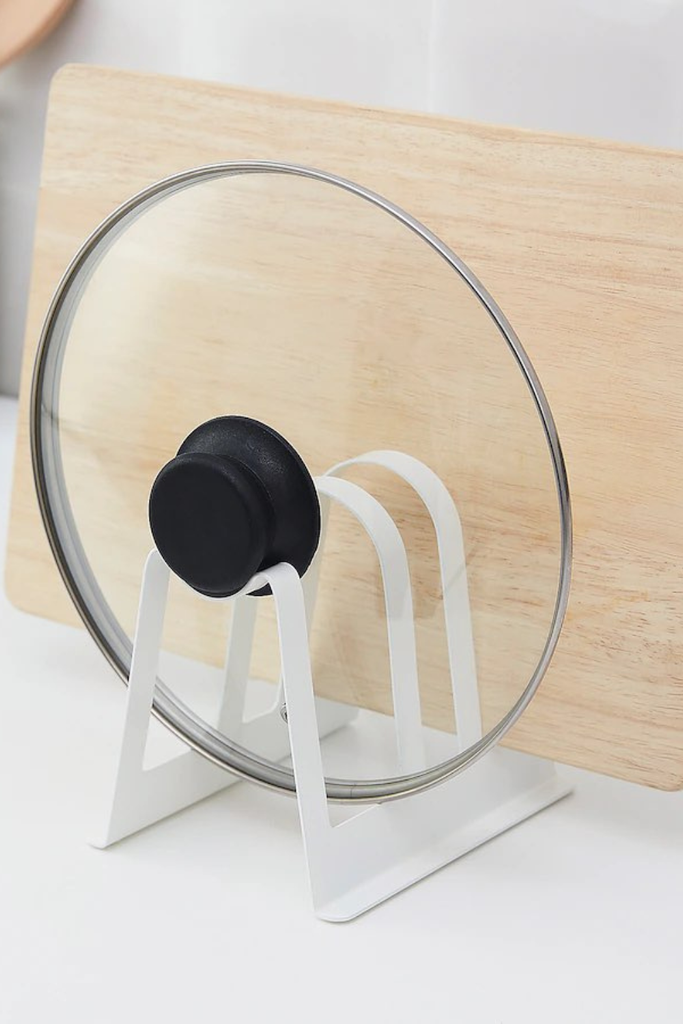
A countertop lid stand can be useful when I have very little cabinet space or repeatedly use the same few lids throughout the day.
I would place it close to my cooking area but away from direct heat, splattering oil, and areas where it could easily be knocked over. A stable base matters because a falling lid can damage the lid itself or nearby items.
Some countertop organizers can also hold cutting boards or other flat kitchen pieces, which can make a small footprint more useful.
The downside is that countertop storage remains visible, so I prefer it for a small number of frequently used pieces rather than my entire lid collection.
Pro Tip: Choose a location where the stand does not interfere with food preparation. A storage solution is less useful if it takes away valuable counter space.
Deep Drawer Filing
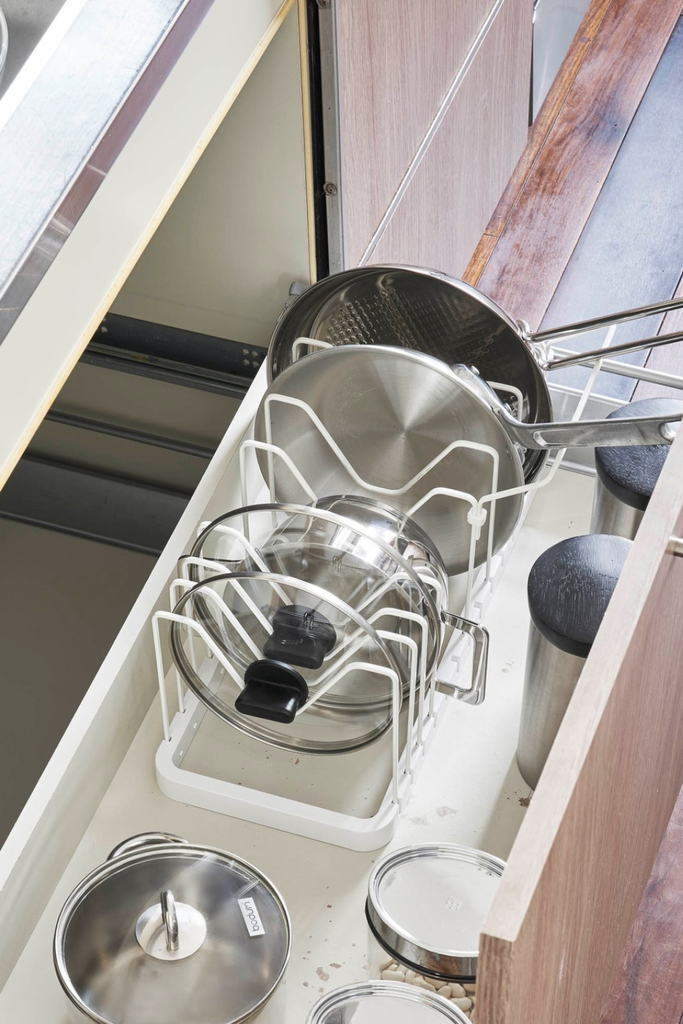
A deep kitchen drawer can become an excellent lid organizer when there is enough vertical clearance.
I like filing lids upright inside a sturdy drawer organizer because I can see several sizes at once. Instead of lifting a stack, I simply pull out the lid I need.
Before using this method, I measure the drawer height with the drawer fully closed. Handles can sometimes extend higher than the lid itself and may prevent the drawer from closing.
I place larger lids toward the back when that makes sense for the drawer layout and keep the pieces I use most often closer to the front.
Pro Tip: Test the drawer with the organizer empty first. Then add the lids and open and close it several times to make sure nothing catches on the frame or cabinet above.
Also read: 20 Makeup Brush Storage Ideas for 2026
Vertical Door Rack
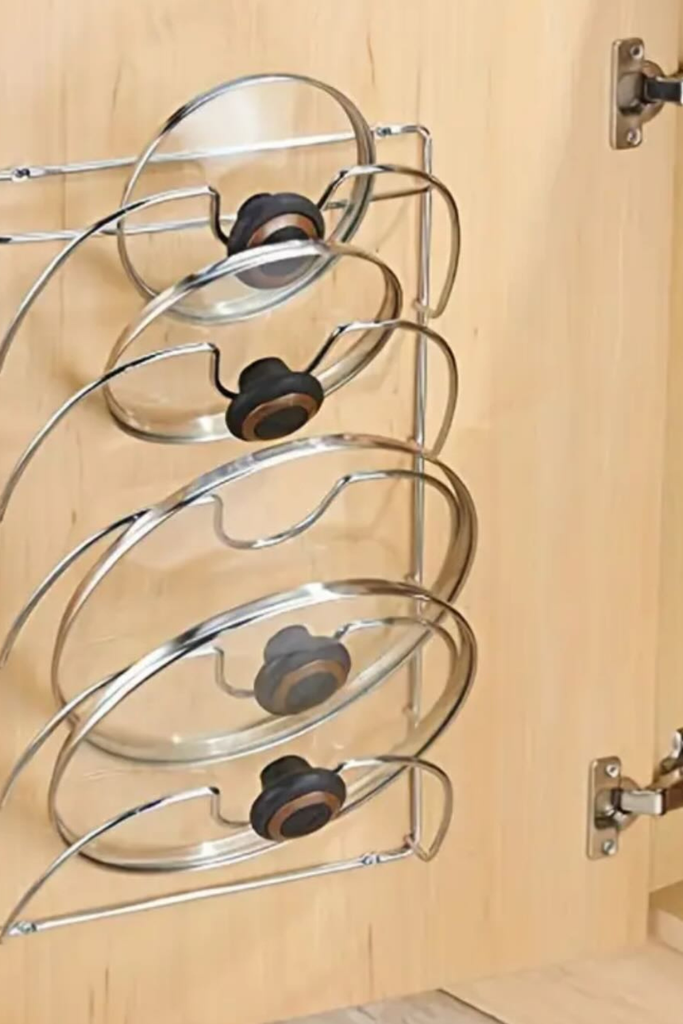
A vertical door rack creates another storage zone without using the main cabinet shelf.
I find this especially useful in lower cabinets where the inside of the door has enough room for a slim rack. Each lid can stand separately, making it easier to see the entire collection.
For stability, I prefer a rack that is designed for the weight of cookware and can be securely attached to the cabinet. This becomes particularly important when storing heavier glass lids.
I also arrange the lids so the cabinet door remains balanced and closes easily. Larger or heavier pieces may need to be positioned lower depending on the rack’s design.
Pro Tip: Do not assume that every cabinet door can support a storage rack. Check the cabinet construction and the organizer’s installation requirements before adding significant weight.
Heavy-Duty Drawer Rack
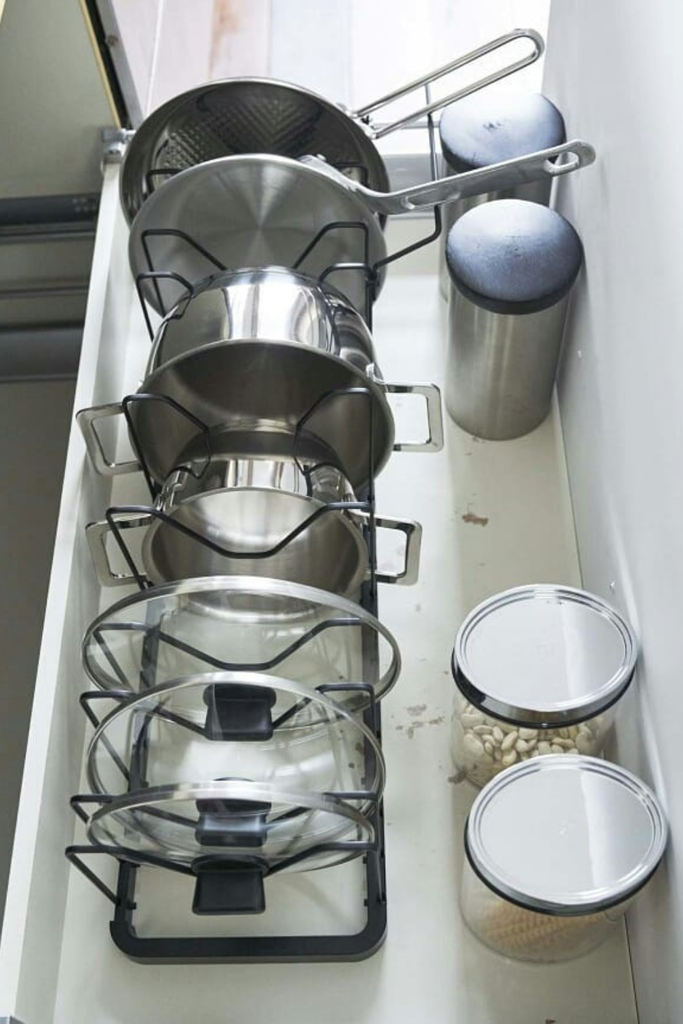
For a larger cookware collection, a heavy-duty drawer rack can provide stronger support than a lightweight divider.
I would use this in a wide, deep lower drawer where there is enough room for several lids to stand vertically. A sturdy metal rack can keep heavier lids separated while still allowing me to remove one at a time.
I check the drawer’s weight capacity before loading it. The combined weight of the organizer and several metal or glass lids can be substantial.
I also make sure the rack does not interfere with the drawer mechanism or leave handles pressed against the top when the drawer closes.
Pro Tip: If a drawer feels difficult to open after adding the cookware, do not keep using it as normal. Recheck the load and make sure the drawer hardware is appropriate for the total weight.
Top Shelf Slot
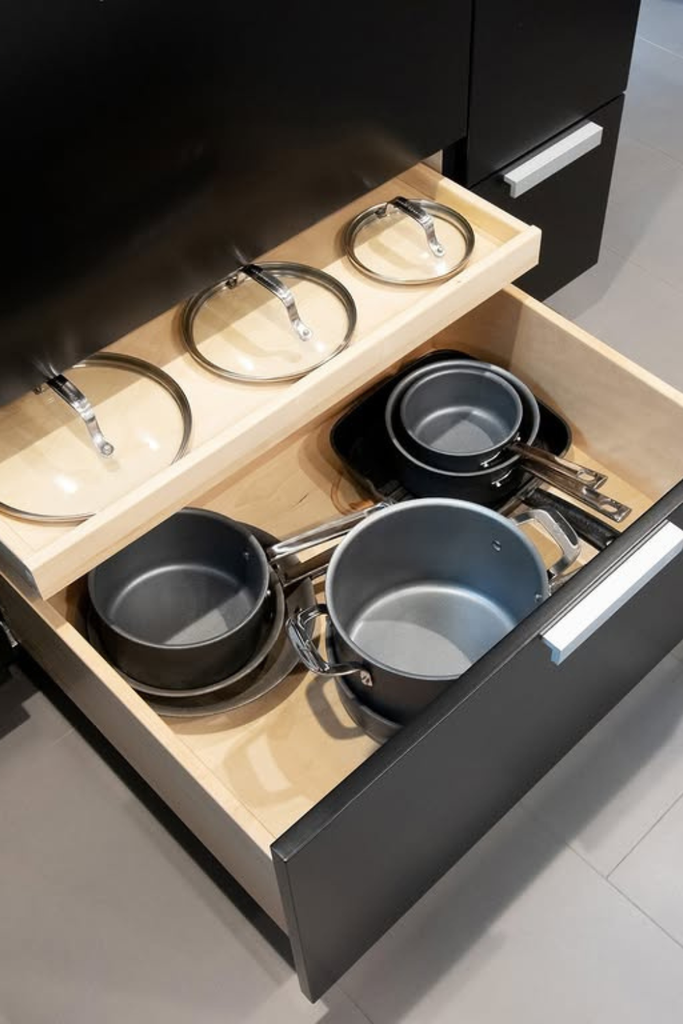
A narrow slot built along the upper portion of a deep drawer can create a dedicated home for lids while leaving the main drawer area available for pots.
This setup works particularly well when I have a wide drawer and want to keep cookware together without creating one large pile.
A slim wooden strip, divider, or purpose-built rack can create the separation. The important measurement is the lid thickness and handle clearance, not just the overall drawer width.
I make sure the slot is secure and positioned so the lids cannot slide forward when the drawer opens.
Pro Tip: Leave enough clearance around each lid handle to remove it comfortably. A beautifully compact storage system is not practical if I have to pull out other cookware first.
Mixed Drawer Zones
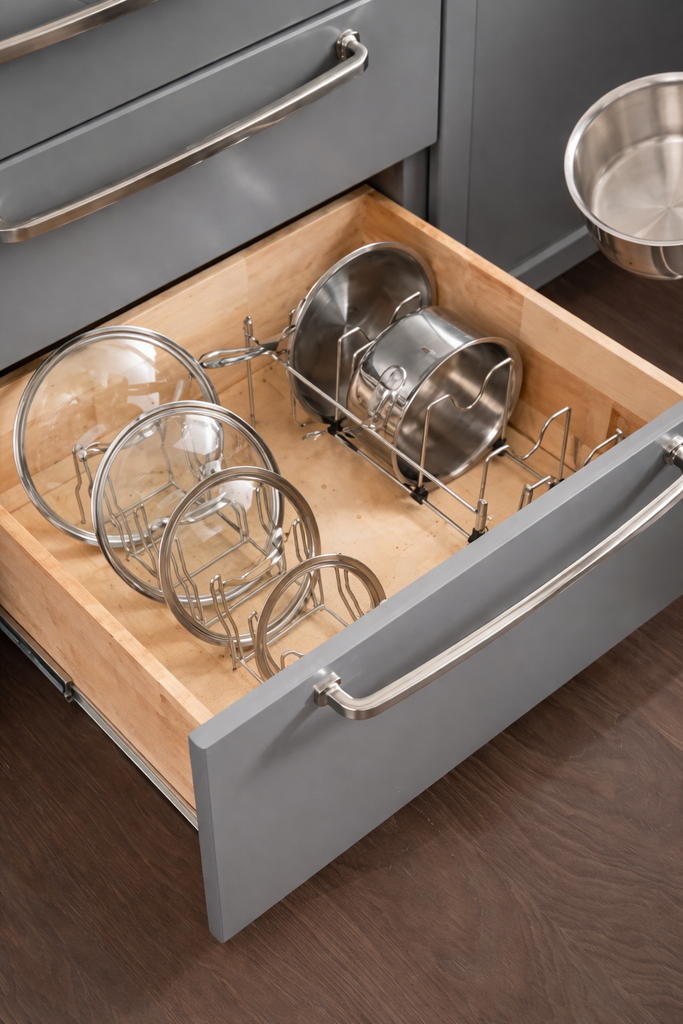
A wide drawer can handle both pots and lids when I divide it into clear sections.
I can use adjustable dividers to create one area for upright lids and another for stacked pots. This keeps everything in the same general location while preventing the lids from becoming buried underneath cookware.
I arrange the drawer according to how often I use each piece. Frequently used lids stay near the front, while larger or less frequently used pieces can occupy the back.
I also check that pot handles and lid handles do not overlap in a way that makes the drawer difficult to close.
Pro Tip: Give each category a defined boundary. When every item has a specific zone, it is much easier to put everything back in the right place after cooking.
Slim Divider Rack
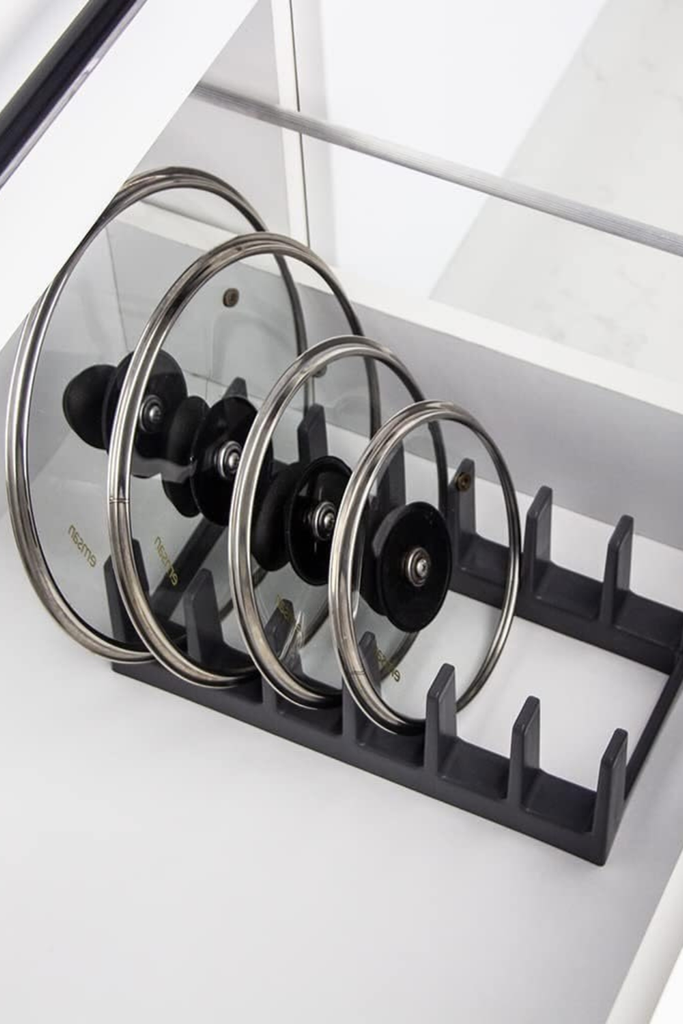
A slim divider rack can solve the problem when I have a smaller drawer or limited cabinet width.
Instead of trying to store several lids in a large organizer, I use narrow lanes that keep each piece upright. This is especially helpful for smaller lids that might otherwise slide around a drawer.
I measure the narrowest usable section first and select a rack that fits without wasting the available width.
For glass lids, I make sure the dividers provide enough separation that the edges are not constantly rubbing against neighboring pieces.
Pro Tip: Sort lids by size before installing the rack. This helps me determine how many slots I actually need instead of buying an organizer with unnecessary dividers.
Wooden Slot Holders
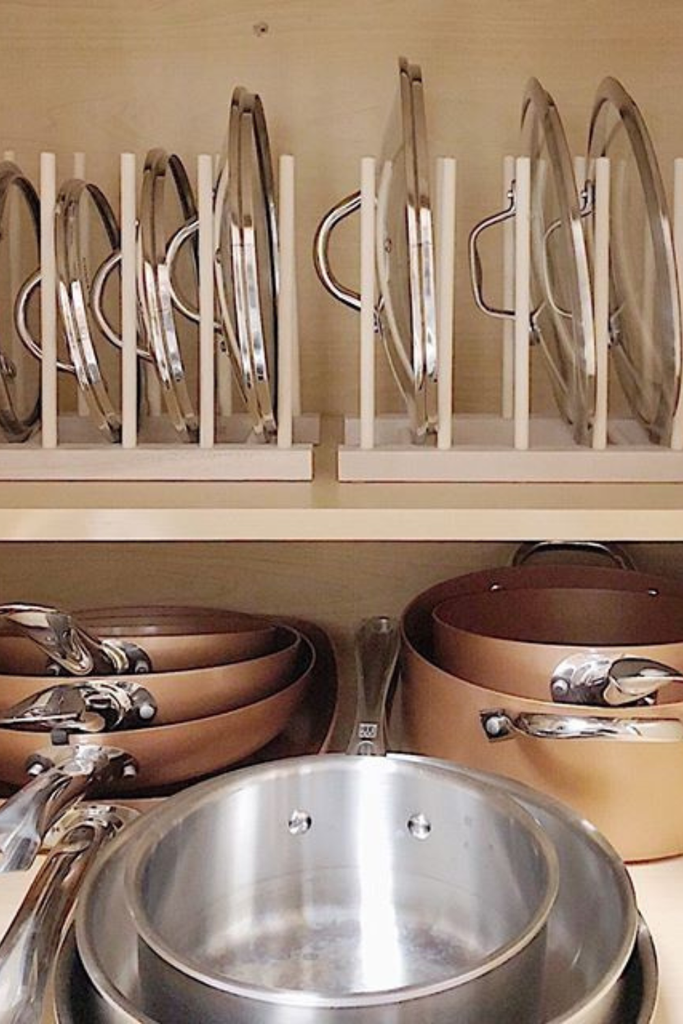
Wooden slot holders offer a simple storage option when I want the organization system to blend into an open shelf or visible cabinet.
I can use separate holders to divide lids by size, cookware set, or frequency of use. Each lid gets its own slot, so I do not have to move several pieces just to reach one.
This approach can work particularly well on a wide shelf where there is enough depth for the holder and enough room above it for the lids to stand securely.
I also like using the lower portion of the same cabinet for stacked pots while keeping the lids upright above them.
Pro Tip: Look for smooth, well-finished surfaces and stable bases. Rough edges can scratch cookware, while a lightweight holder may move when a lid is removed.
FAQs
What is the best way to store pot lids?
I find vertical storage works best because each lid has its own space and can be removed without disturbing the others. Drawer dividers, cabinet racks, and door-mounted holders are all useful options.
How do I store pot lids in a small kitchen?
I use unused areas such as the inside of cabinet doors, narrow drawers, or a small countertop section. Measuring the space first helps me choose an organizer that does not waste valuable room.
Should pot lids be stored upright or flat?
I prefer storing most pot lids upright because they are easier to see and access. Individual slots also reduce the need to move a stack of lids when I need one particular size.
How can I organize large pot lids?
For large lids, I use a deep drawer, sturdy cabinet rack, or heavy-duty divider with enough clearance for the handles. I make sure the storage area can support their weight without overcrowding.
How should I store glass pot lids?
I store glass lids upright with dividers between them to reduce contact between the edges. I also avoid overfilling the rack and use a sturdy organizer that keeps each lid stable.
Should You Store Lids With Pots?
I usually prefer storing lids separately from stacked pots because it makes both pieces easier to access.
When a lid rests on top of a pot, I often have to move that lid before reaching the cookware underneath. An upright rack or separate drawer section lets me grab either item independently.
If cabinet space is limited, I can still keep pots and lids in the same drawer or cabinet as long as I give them separate zones.
What’s the Best Way to Store Glass Lids Safely?
I store glass lids upright in sturdy dividers rather than piling them into a tight stack.
The main goal is to prevent the glass edges from repeatedly rubbing against other lids and to keep each piece supported. I also avoid overcrowding the organizer because a tightly packed rack makes removal more likely to cause bumping.
For heavier glass lids, I choose a holder designed for the weight and make sure it is securely positioned or installed.
Pro Tip: Check glass lids for chips or cracks during regular kitchen cleanups. Damaged glass cookware should be handled according to the manufacturer’s safety guidance rather than kept in normal daily rotation.
Read this next: 21 Cutting Board Storage Ideas For 2026
Conclusion
I’ve found that pot lid organization becomes much easier once I stop treating lids as something that has to be balanced on top of pots.
A vertical rack, cabinet-door holder, deep drawer, countertop stand, or simple wooden divider can give each lid a predictable place. The right choice depends on the cabinet dimensions, cookware collection, and how often I use each piece.
My first step would always be measuring the available space and deciding where I naturally reach for cookware. From there, I can choose a storage method that keeps lids visible, accessible, and easy to put away after cooking.
A good kitchen organization system does not have to be complicated. If I can grab the lid I need without moving several other pieces, the storage setup is already doing its job.

One Comment