
15 Clever Small Kitchen Organization Ideas
A small kitchen can feel crowded very quickly, especially when every cabinet, drawer, and countertop has to work hard. I’ve found that the biggest improvement usually comes from using the space more intentionally rather than simply adding more storage products.
When I organize a compact kitchen, I first look for forgotten space: the back of cabinet doors, the side of the refrigerator, vertical areas inside cabinets, and awkward corners. I also remove items that are rarely used before deciding what storage solutions I actually need.
The most effective small kitchen organization ideas combine decluttering, vertical storage, drawer organization, cabinet organizers, and unused wall space. Simple additions such as drawer dividers, Lazy Susans, tension rods, wire shelves, and pull-out organizers can make everyday items much easier to reach.
I recommend organizing one area at a time instead of emptying the entire kitchen at once. Start with drawers or one cabinet, remove duplicates and unused items, then add storage where it solves a specific problem.
Save this for later
Table of Contents
For very small kitchens, I pay special attention to vertical space. Plates can be stored upright, pans can be separated with racks, and frequently used utensils can be hung rather than taking up valuable cabinet space.
Key Takeaways
- Decluttering creates storage space before you buy organizers.
- Drawer dividers keep small kitchen tools separated and easier to find.
- The side of the refrigerator can hold magnetic organizers and spices.
- Vertical racks make better use of tall cabinet interiors.
- Lazy Susans work especially well in deep cabinets and refrigerators.
- Tension rods can separate trays, cutting boards, and baking sheets.
- Wire shelves can create a second storage level inside cabinets.
- Cabinet-door racks turn otherwise unused space into useful storage.
- Pull-out shelves make items at the back of deep cabinets easier to reach.
- A single wall shelf can provide practical storage without taking much room.
Related article: How to Organize Kitchen Cabinets
Small kitchen organization Ideas
When I’m working with a small kitchen, I try to make every storage area earn its place. The goal isn’t to fill every available inch; it’s to make the things I use regularly easy to reach while keeping less-used items out of the way.
These 15 ideas cover everything from simple decluttering to inexpensive organizers and more permanent storage upgrades.
15 Easy Tips for Organizing a Small Kitchen
#1. Purge Your Kitchen of Unused Appliances and Utensils and Those You Have Duplicates of
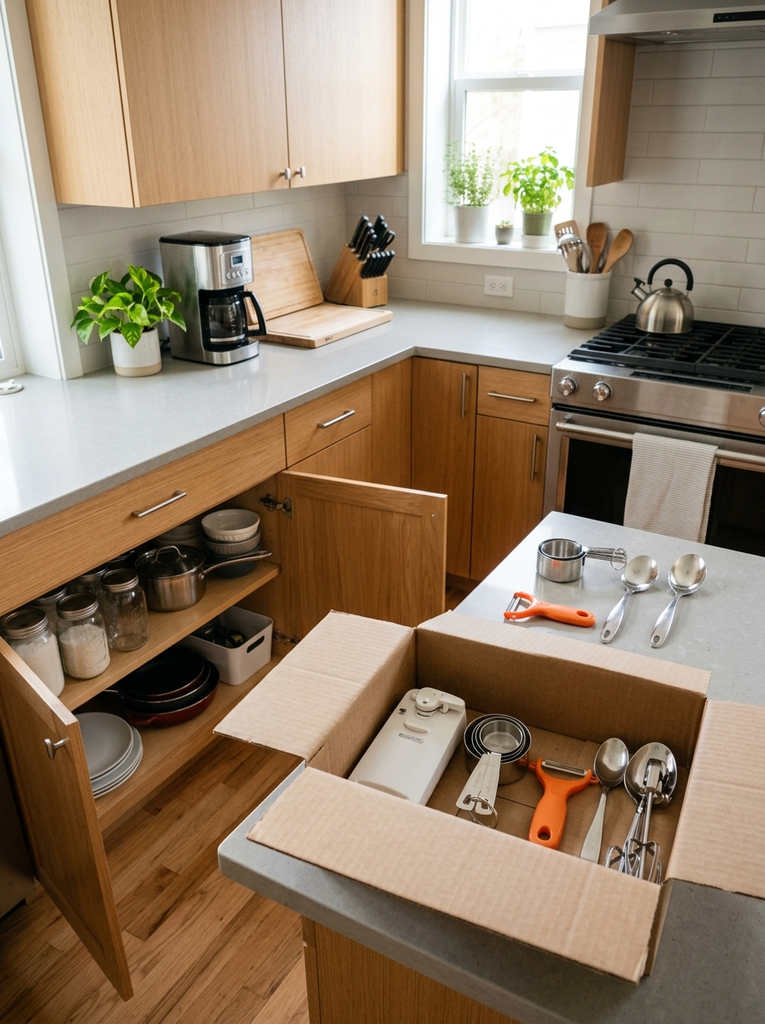
I always start kitchen organization with a clear-out. There is little benefit in buying another storage basket when the real problem is having too many things competing for the same limited space.
Small appliances are often the biggest offenders. I look at gadgets I haven’t used in the past year and ask whether they genuinely serve a purpose in my current kitchen.
Duplicate utensils deserve the same attention. If I have several peelers, measuring cups, serving spoons, or other tools that perform the same job, I keep the ones I actually reach for.
I also check for chipped dishes, missing-piece containers, expired pantry items, and cookware that no longer works properly. Removing these items can free surprisingly useful cabinet and drawer space.
Pro Tip: Before buying an organizer, empty the area first. Measure the available space afterward so you’re solving the actual storage problem rather than simply adding another item.
#2. Drawer Dividers Can Help to Streamline Your Tiny Kitchen Storage Spaces
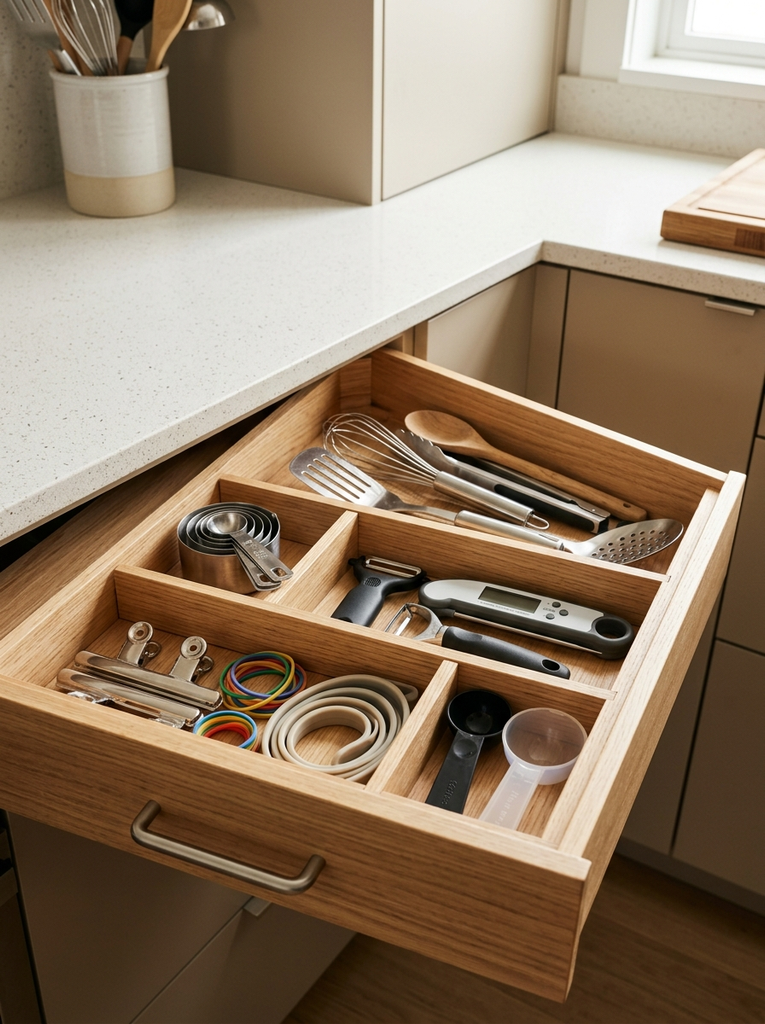
Kitchen drawers become much easier to use when everything has a defined place. Without dividers, small tools tend to slide around and form one messy pile.
I use dividers to separate categories such as measuring tools, cooking utensils, food-storage accessories, and miscellaneous kitchen items. Adjustable versions are especially useful because drawer dimensions vary from kitchen to kitchen.
For tiny items, smaller compartments can prevent things such as clips, rubber bands, and reusable ties from getting scattered throughout the drawer.
For larger tools, I prefer longer sections that accommodate measuring cups, thermometers, scoops, peelers, and similar utensils without forcing them into an overcrowded space.
Pro Tip: Leave a little breathing room around each category. A drawer that is packed completely full may technically hold more, but it will be harder to use every day.
#3. Make Use of that Unused Real Estate on the Side of Your Refrigerator
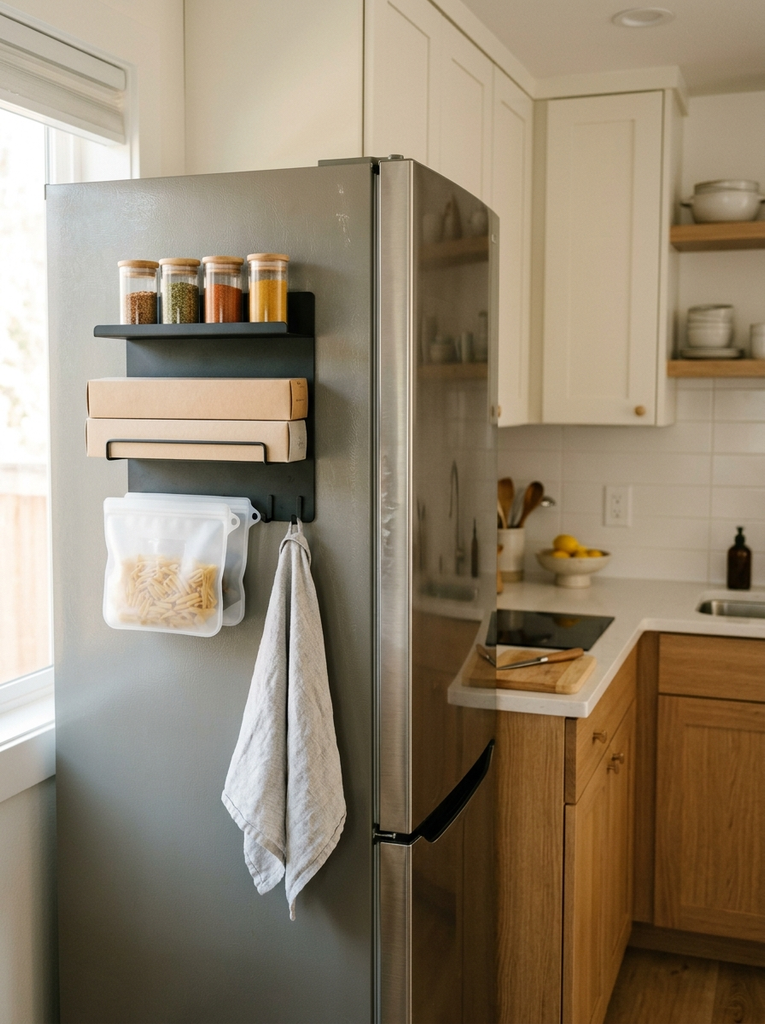
In a compact kitchen, I look beyond cabinets and countertops for storage opportunities. The side of the refrigerator is often one of those overlooked areas.
A magnetic organizer can turn this vertical surface into a convenient spot for items such as paper towels, kitchen towels, wraps, bags, or frequently used seasonings.
Magnetic spice containers can be particularly helpful when cabinet space is limited. Instead of using a shelf for several small spice jars, I can move some of them onto the refrigerator’s side.
Before adding anything magnetic, I check the refrigerator manufacturer’s recommendations and make sure the organizer is securely attached and does not interfere with doors or ventilation.
Pro Tip: Keep only frequently used items on the refrigerator side. Too many visible containers can make a small kitchen look more cluttered rather than more organized.
#4. Use Vertical Racks for Plates and Bowls
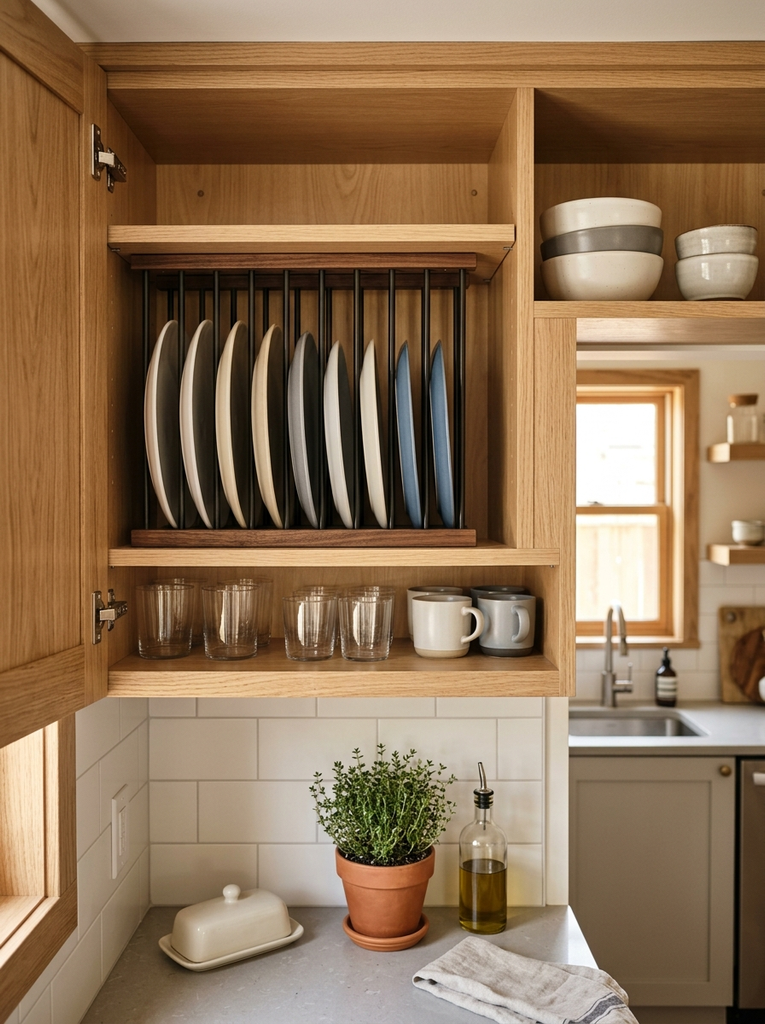
I find that cabinet height is often wasted when dishes are simply stacked in large piles. A vertical dish rack changes the way I use that space by allowing certain plates, serving pieces, or bowls to be stored more efficiently.
This arrangement can also make individual dishes easier to remove. Instead of lifting a tall stack to reach one plate at the bottom, I can take out the piece I need.
I keep everyday dishes in the easiest-to-reach section of the cabinet and reserve higher or less convenient areas for serving pieces and special-occasion dinnerware.
The exact setup depends on the cabinet height and shelf depth, so I measure before purchasing a rack.
#5. Kitchen Sink Caddy
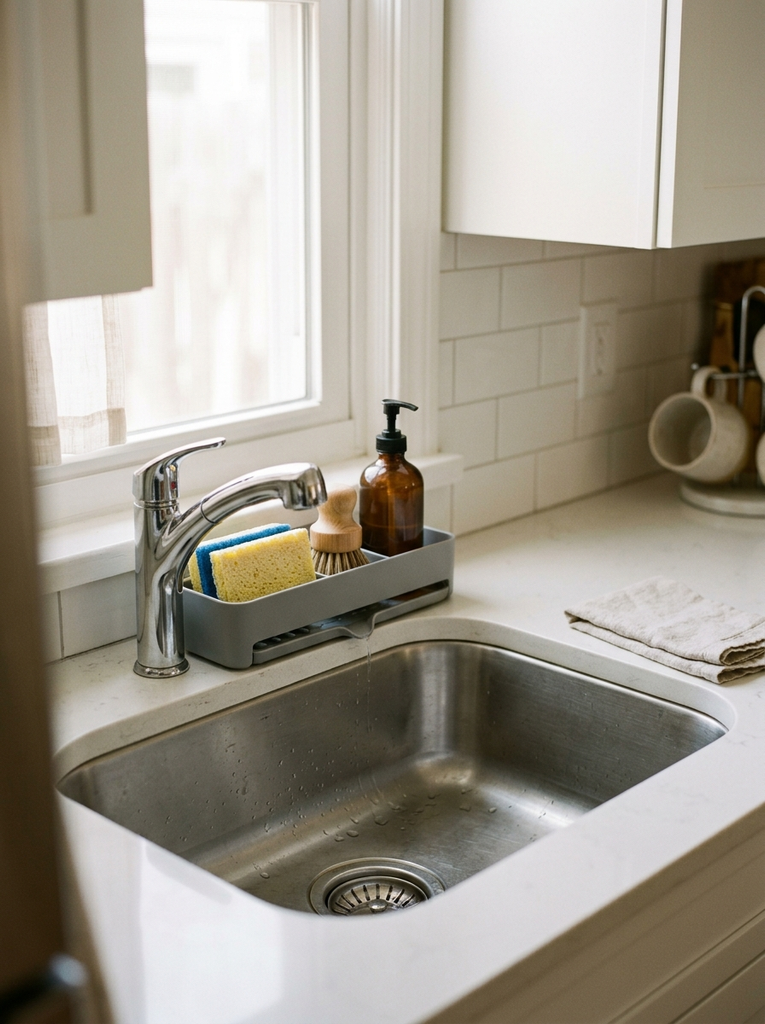
The area around the sink can become cluttered quickly because several cleaning items need to stay within reach.
A sink caddy gives me one designated place for a sponge, dish brush, and small cleaning tools. Some designs include drainage holes so water can escape instead of sitting underneath wet sponges.
I prefer a caddy that fits comfortably beside or inside the sink without taking over valuable counter space.
For a very small kitchen, keeping the sink area limited to the tools I use daily can make the entire countertop feel less crowded.
#6. Hang ‘Em Up!
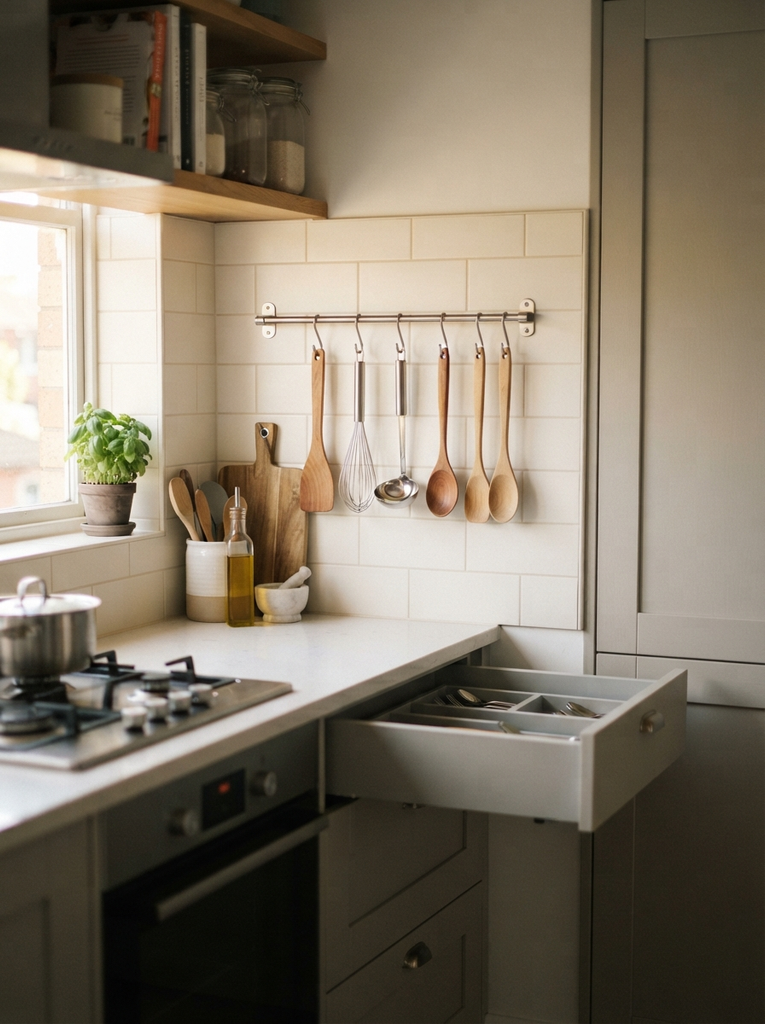
When cabinet space is tight, I look upward. Hanging frequently used utensils can free an entire drawer section while keeping cooking tools close to the stove or main preparation area.
A rail with hooks can hold spatulas, whisks, ladles, and cooking spoons. I place the tools I use most often within easy reach rather than hanging every utensil I own.
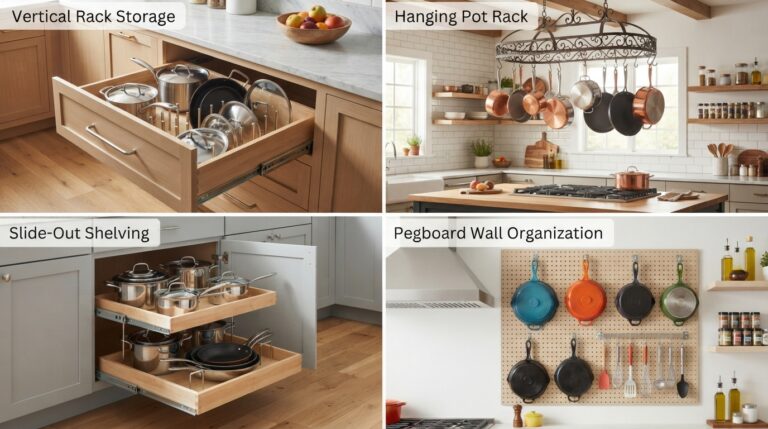
For larger cookware, a sturdy wall-mounted rail or properly installed pegboard can provide a practical alternative to stacking pots and pans inside a cabinet.
Some kitchens can also accommodate an overhead pot rack, although I would only use one if the ceiling structure and installation method can safely support the weight.
Pro Tip: Keep hanging storage focused on everyday cookware. A wall covered with rarely used tools can create visual clutter and make the kitchen feel smaller.
#7. Make the Most of Your Limited Space with Lazy Susans
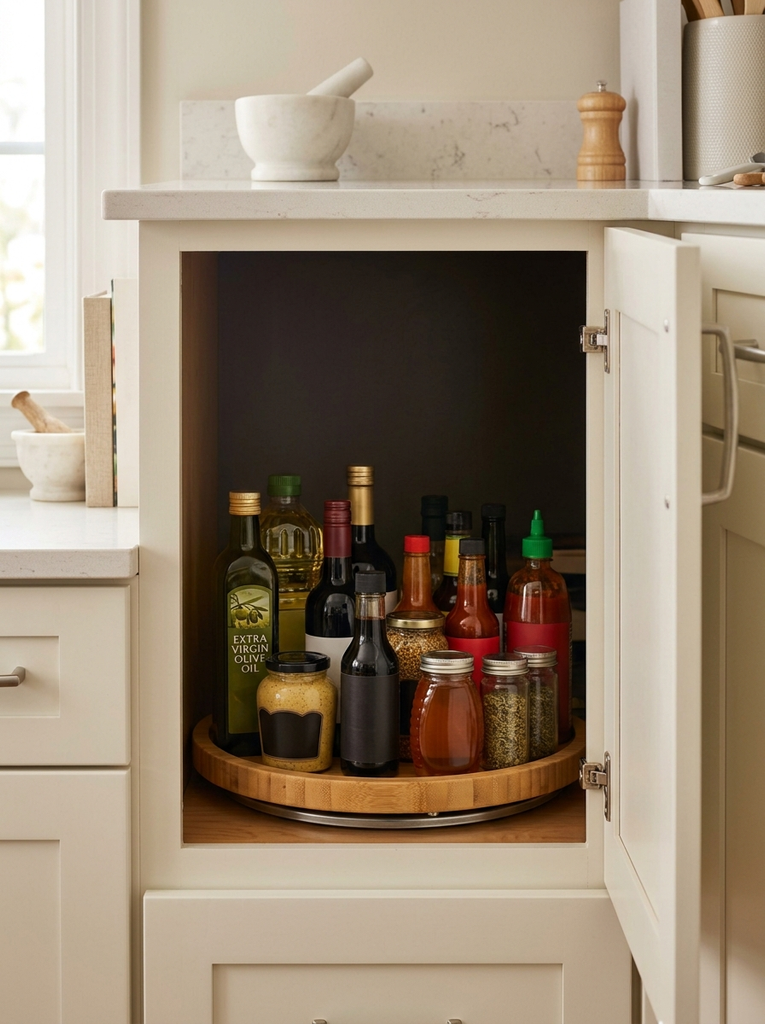
Deep cabinets can be frustrating because smaller containers often disappear behind larger ones. A Lazy Susan helps solve that problem by allowing me to rotate the contents toward me.
I find them particularly useful for sauces, oils, condiments, baking ingredients, and other bottles that are difficult to reach in a deep cabinet.
They can also work well inside the refrigerator. Grouping similar condiments on one turntable keeps them together and reduces the need to move several bottles just to find one item.
For best results, I choose a Lazy Susan that leaves enough clearance for the cabinet door and surrounding shelves.
Pro Tip: Give each turntable a category. For example, I might use one for sauces and another for baking supplies rather than mixing unrelated items together.
#8. Use Tension Rods to Hold Flat Items Upright
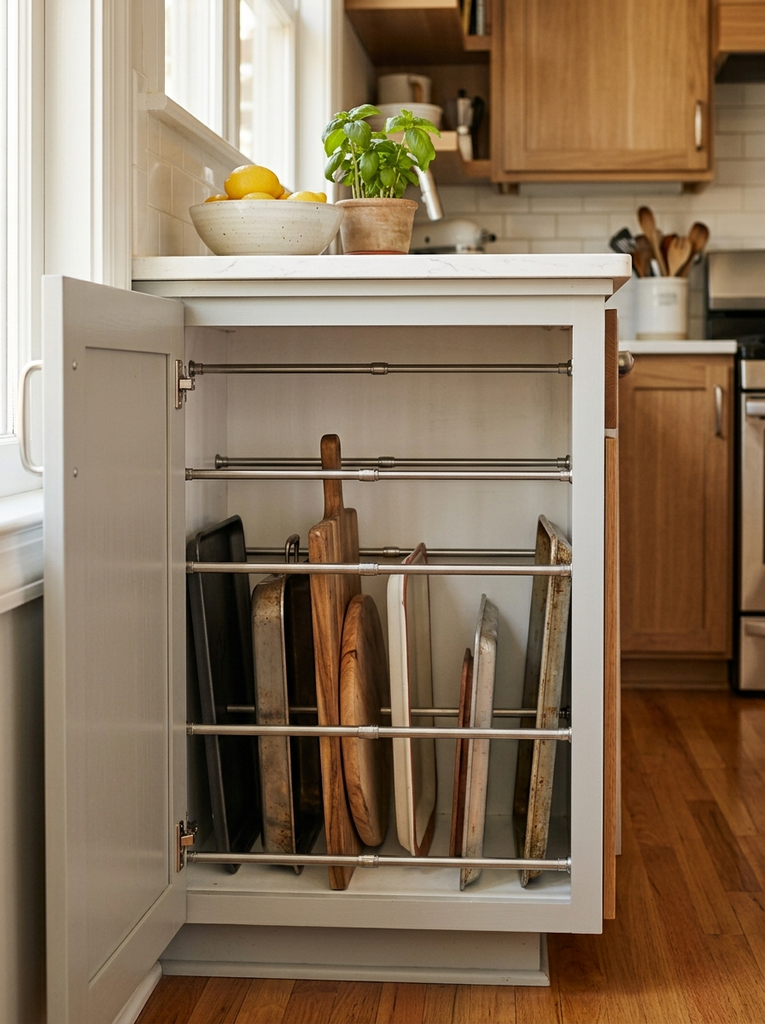
Large flat kitchen items often waste cabinet space when they are stacked horizontally. Baking sheets, serving trays, cutting boards, and similar pieces can be easier to manage when stored vertically.
I can install tension rods across an appropriate cabinet section to create simple dividers. The rods keep flat items separated so they don’t slide into one another.
The spacing should match the thickness of the items being stored. I also make sure the rods are firmly installed and suitable for the cabinet before relying on them to support heavier cookware.
This setup makes it much easier to pull out one baking sheet without disturbing everything around it.
Also read: 15 Space Saving Small Kitchen Table Ideas
#9. Double Your Kitchen Cabinet Storage Space With Wire racks
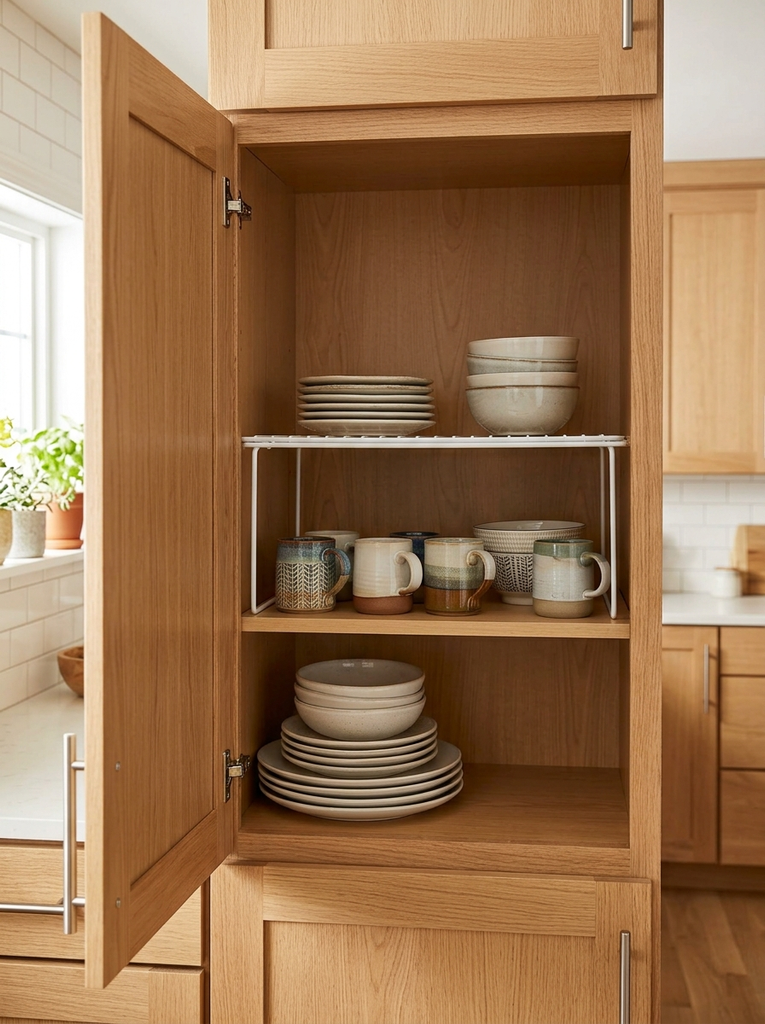
Tall cabinet shelves sometimes leave a large amount of unused vertical space. A wire shelf insert can divide that open area into two levels.
I use this type of organizer for smaller plates, bowls, mugs, and glasses that would otherwise occupy only the bottom portion of a tall shelf.
It can also separate different categories of dishes. Smaller pieces can sit beneath the insert while larger or taller pieces remain above it.
Before buying one, I measure the cabinet’s width, depth, and usable height. I also check the shelf’s weight capacity if I plan to store heavier dishes.
#10. Adjustable Bakeware Racks
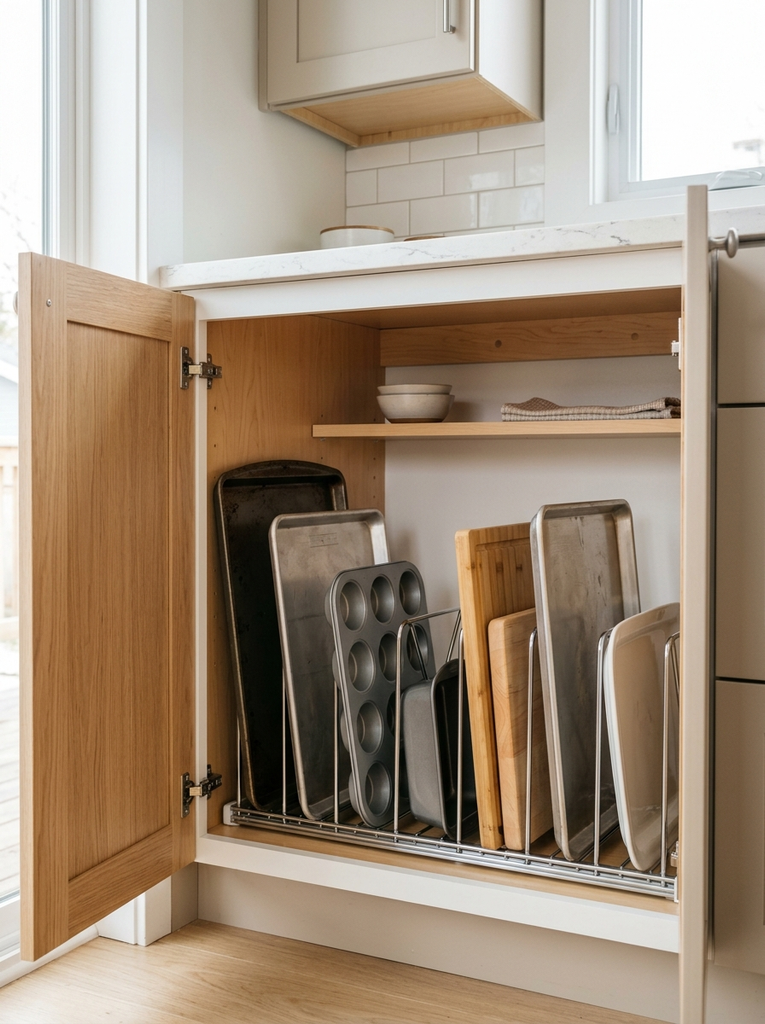
Bakeware can be difficult to organize because pans, lids, cutting boards, and trays come in different shapes and sizes.
An adjustable rack gives each item its own slot, allowing me to store pieces vertically rather than creating unstable piles.
I find this especially useful inside lower cabinets or a pantry where larger baking equipment can otherwise become difficult to reach.
The adjustable dividers also make the setup easier to change when my collection of pans or boards changes.
Pro Tip: Group items by function. Keeping baking pans together and cutting boards together makes the rack much easier to maintain after cooking.
More Clever Storage Ideas for Small Kitchens
Small kitchens benefit from storage solutions that use areas I might otherwise ignore. Cabinet doors, narrow wall sections, and the space beneath counters can all provide additional capacity without requiring a larger kitchen.
Use the Inside of those Cupboard Doors
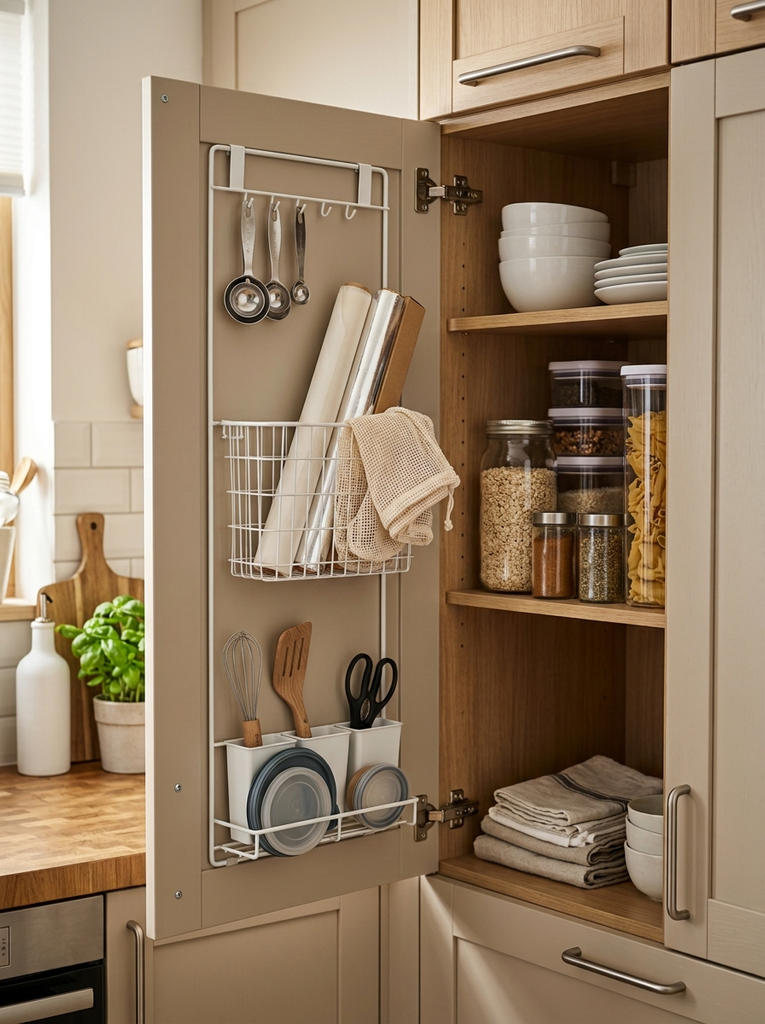
The inside of a cabinet door is an easy place to add storage because it is normally empty.
Depending on the cabinet and door clearance, I can use this area for lightweight items such as wraps, cleaning supplies, measuring tools, or small kitchen accessories.
I always check the depth before installing anything. A door-mounted organizer that is too deep can prevent the cabinet from closing properly or interfere with the shelves inside.
For renters, removable over-the-door options can provide similar benefits without permanent installation.
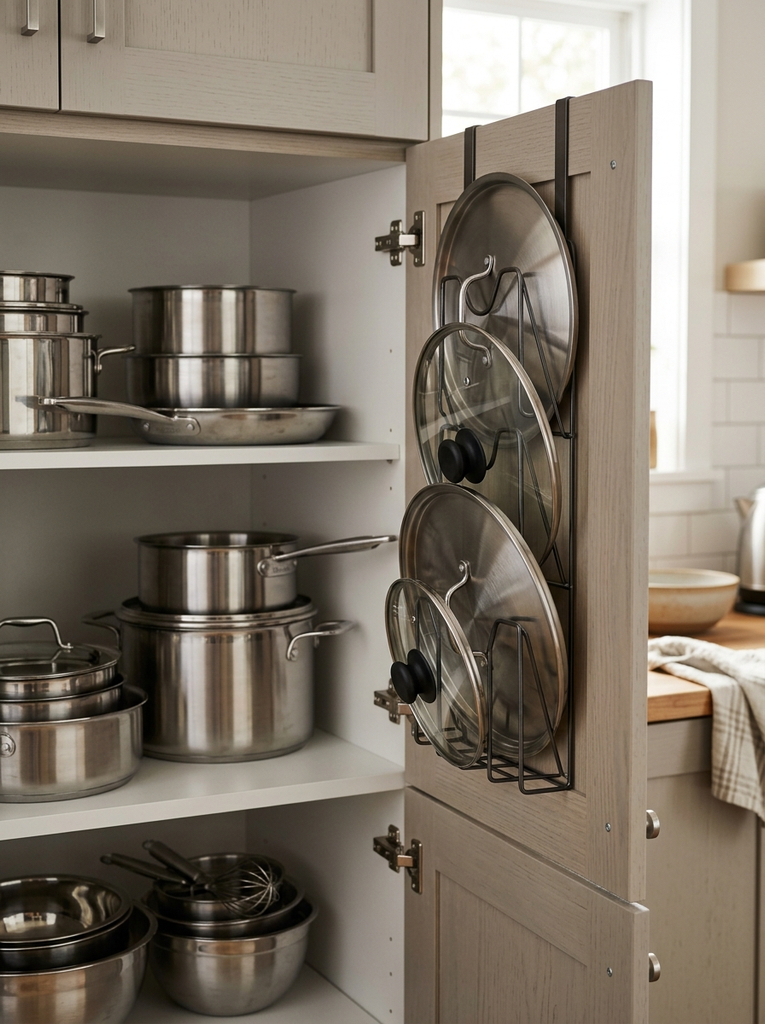
#11. Over the Door Pan Lid Racks
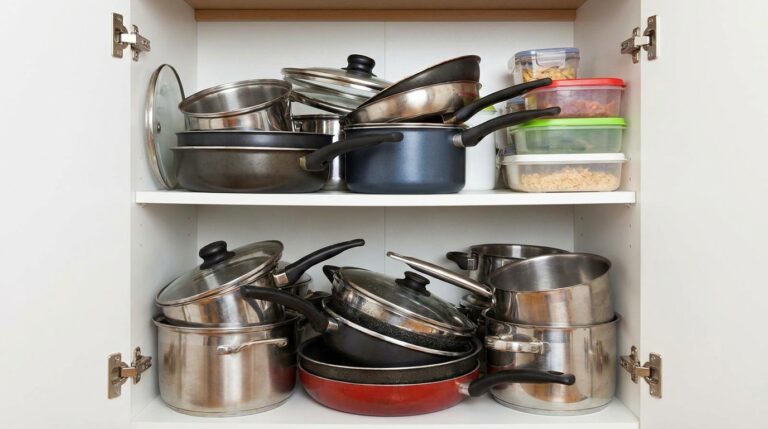
Pan lids are awkward because their handles and rounded shapes make them difficult to stack neatly.
An over-the-door lid rack gives each lid a defined position and keeps them accessible without using the main cabinet shelf for a pile of lids.
I like this solution when my cookware cabinet has enough door clearance for the rack. Before installing one, I check whether the cabinet door can still close normally.
Keeping lids separate from the pans can also make it easier to grab the correct lid without moving several pieces of cookware.
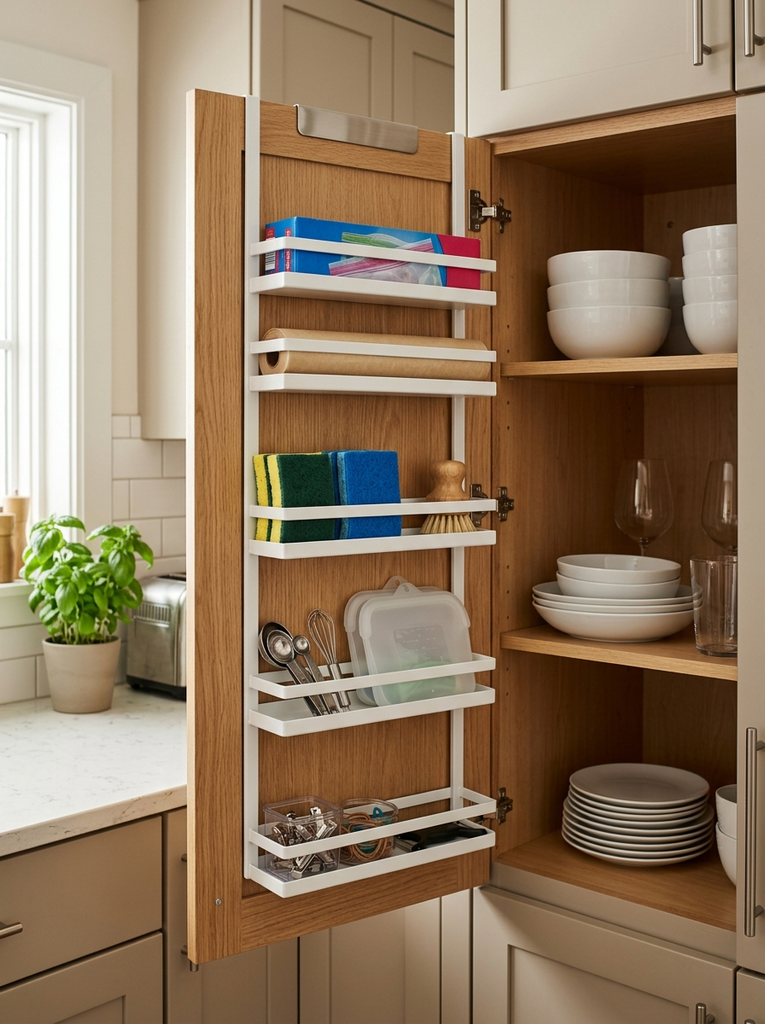
#12. Over the Door Storage Racks with Enclosed Shelves
Door-mounted shelves can add useful storage for lightweight kitchen supplies without taking up the main cabinet shelf.
I can use enclosed racks for cleaning products, spare sponges, kitchen accessories, or other small items that need to stay organized.
For cleaning supplies, I keep products securely contained and separate from food and food-preparation equipment.
Pro Tip: Check both the cabinet-door thickness and the available clearance before purchasing an over-the-door organizer. A few minutes of measuring can prevent an expensive fit problem.
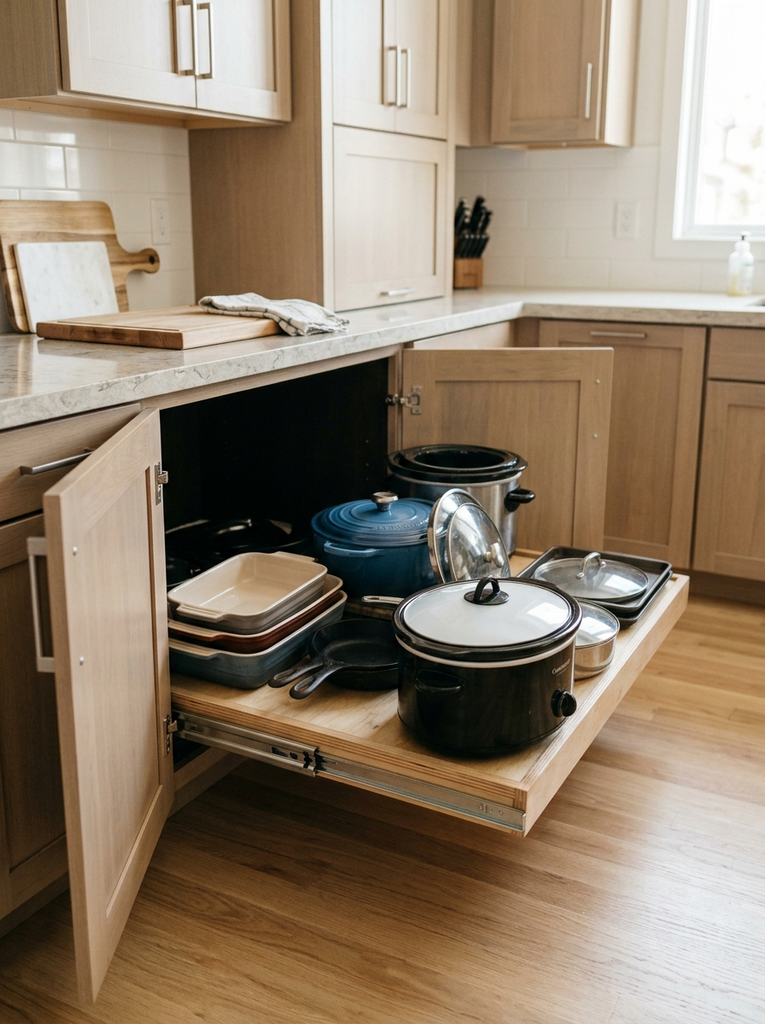
#13. Slide Out Kitchen Shelves
Deep cabinets provide plenty of volume but can be frustrating to use because items at the back are easy to forget.
Pull-out shelves solve this by bringing the contents toward me. Instead of reaching deep into a cabinet or removing several items, I can slide the shelf forward.
I measure the cabinet opening carefully before choosing a system, including the interior width, depth, and height available around hinges or plumbing.
These shelves can be especially useful for heavy cookware, pantry containers, and other items that are difficult to reach in fixed cabinets.
Pro Tip: Put frequently used items toward the front of the pull-out shelf and reserve the rear section for things I use less often. That keeps the whole shelf functional rather than simply moving the clutter forward.
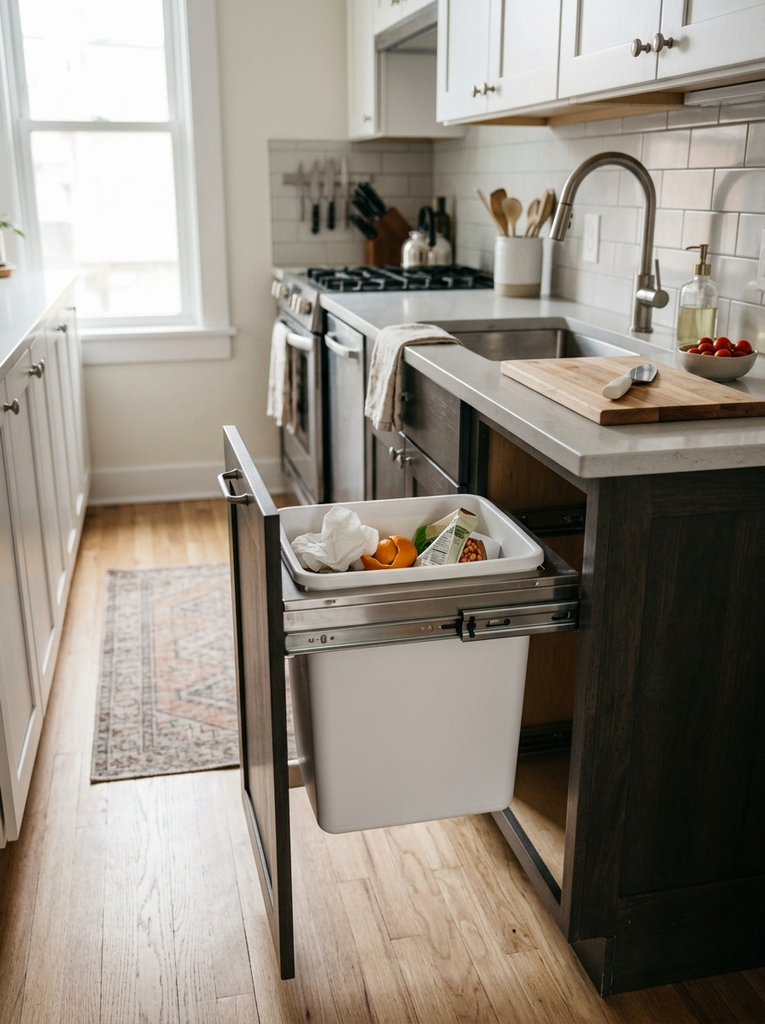
#14. Under the Counter Pull Out Trash container
A trash bin can take up a surprising amount of floor or cabinet space in a small kitchen.
A pull-out container installed beneath the counter keeps the bin hidden while making it accessible when I’m preparing meals.
This setup can also improve the walking area because the trash container no longer needs to sit permanently beside the cabinets.
I make sure there is sufficient clearance for the door and bin, particularly in a narrow kitchen where every inch of walkway matters.
#15. Even a Single Wall Mounted Shelf Can Make Organizing Your Kitchen Easier
I don’t always need a complete shelving system to gain useful storage. Even one well-positioned wall shelf can provide another surface for everyday kitchen supplies.
I like using shelves for attractive pantry containers filled with dry foods such as rice, pasta, beans, or other frequently used ingredients.
Clear containers can make it easier to see what I have, while matching containers can give an open shelf a more organized appearance.
I place wall shelves where they are easy to reach but away from areas where they could interfere with cooking, cabinet doors, or normal movement through the kitchen.
Pro Tip: Use open shelving for items that look tidy enough to display. For less attractive or rarely used supplies, closed storage usually keeps a small kitchen looking calmer.
Read this next: 20 Cozy Fall Kitchen Decor Ideas to Make Your Home Feel Warm and Inviting
Frequently Asked Questions About Small Kitchen Organization
What is the best way to organize a small kitchen?
I start by decluttering unused and duplicate items, then organize drawers, cabinets, and vertical spaces based on how often I use each item.
How can I create more storage in a tiny kitchen?
I make use of overlooked areas such as cabinet doors, refrigerator sides, wall space, and vertical cabinet space with racks, shelves, and organizers.
How do I keep a small kitchen organized?
I give every item a specific place, group similar items together, and regularly remove things I no longer use so the storage doesn’t become overcrowded.
Final Thoughts on Small Kitchen Organizing Ideas and Hacks
Organizing a small kitchen does not have to mean buying dozens of storage products. I get better results when I first remove what I no longer use and then improve the areas that cause the most frustration.
I would start with one drawer, cabinet, or countertop section rather than trying to reorganize everything in one afternoon. Once that area works well, I move to the next one.
The biggest gains usually come from combining several simple ideas: use vertical space, take advantage of cabinet doors, make deep storage easier to reach, and keep everyday items close at hand.
A small kitchen can still be comfortable and functional. With the right arrangement, I can make better use of the storage I already have while keeping meal preparation and cleanup much easier.

2 Comments