20 Farmhouse Christmas Decor Projects
I love farmhouse Christmas decorating because it feels warm and festive without needing a house full of expensive decorations. Natural wood, simple greenery, baskets, metal containers, burlap, and vintage-style pieces give me plenty to work with.
What I like most is being able to make these projects fit what I already have. An old basket, a suitable piece of wood, a glass jar, or a vintage container can often become part of a Christmas display instead of sitting unused in storage.
I also choose projects based on the space I have. A porch planter works well outdoors, a small jar fits on a shelf, and a wall sign can add Christmas character without taking up floor space.
These 20 farmhouse Christmas decor projects cover porches, entryways, fireplaces, dining tables, staircases, walls, shelves, and small corners. Some are quick decorating projects, while others involve basic crafting or woodworking.
Save this for later
Table of Contents
I have included ideas for different skill levels and spaces, along with tips for choosing materials, placing decorations safely, and reusing pieces after Christmas. You can pick just a few projects instead of trying to decorate every room.
Key Takeaways
- I rely on wood, greenery, baskets, metal, burlap, and neutral colors for a farmhouse Christmas feel.
- Simple projects often work better than filling a room with seasonal decorations.
- Small jars, signs, swags, and vignettes are useful when floor or shelf space is limited.
- Reclaimed and pallet wood should be clean, sound, and suitable for the intended use.
- Fresh greenery needs more care than artificial stems, especially near heat.
- Stairways, fireplaces, candles, and outdoor displays need extra attention to placement and stability.
- I favor decorations that can be reused, repurposed, or easily stored after the holidays.
Related article: 21 Fun Pinecone Christmas Crafts
1. Christmas Planters
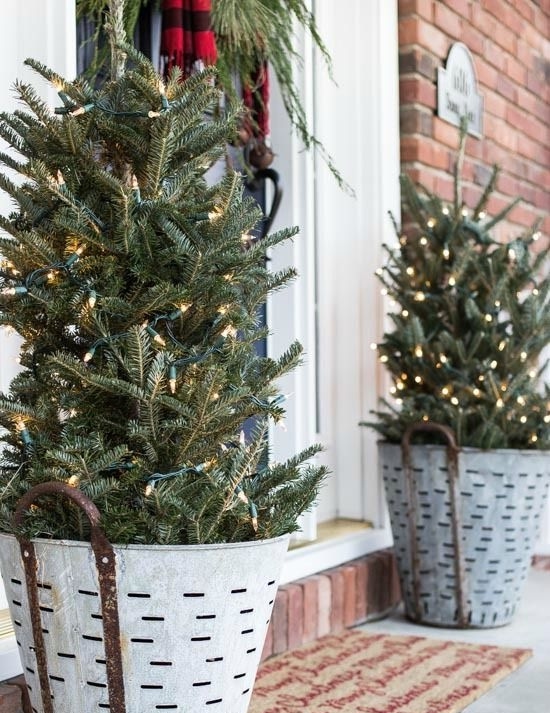
A simple metal planter filled with a small evergreen is one of the easiest ways I can give a porch or front entry a farmhouse Christmas feel. Olive-bucket-style containers work especially well because their aged or galvanized appearance pairs naturally with wood and greenery.
For the arrangement, I use a small evergreen, faux tree, or evergreen branches and fill around the base with pinecones or additional greenery. A little burlap ribbon can add texture without making the planter look too busy.
This idea works best when I want something noticeable outside without taking up much room. For a narrow porch, I would use one container on each side of the door rather than several smaller decorations scattered around.
For outdoor use, I choose a container and greenery that can handle moisture and temperature changes. I also make sure the planter is heavy or stable enough that normal wind will not knock it into the walkway.
Pro Tip: I keep the planter after Christmas and change the contents by season. That gives me a useful container instead of another Christmas-only item taking up storage space.
2. Vintage Watering Can
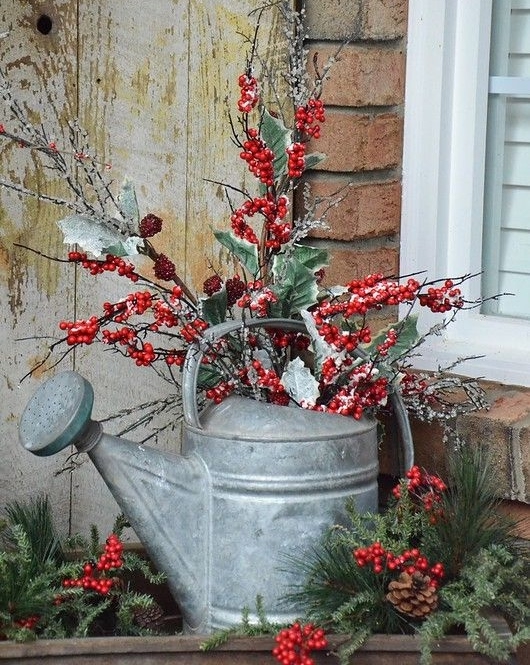
An old metal watering can makes an easy farmhouse-style Christmas container. I can fill it with faux evergreen branches, berry stems, pinecones, or a few winter branches and place it near the front door, on a porch, or inside an entryway.
The container already provides most of the character, so I keep the arrangement fairly simple. A few tall branches usually look better than packing the opening with too many decorations.
If the watering can is genuinely old, I check it for rust, sharp edges, loose handles, or flaking material before using it. A sentimental vintage piece is better kept indoors where moisture will not cause further damage.
For an outdoor display, I also secure lightweight branches so wind does not pull them out of the container or scatter pieces across the porch.
3. Reclaimed Wood Christmas Tree and Star
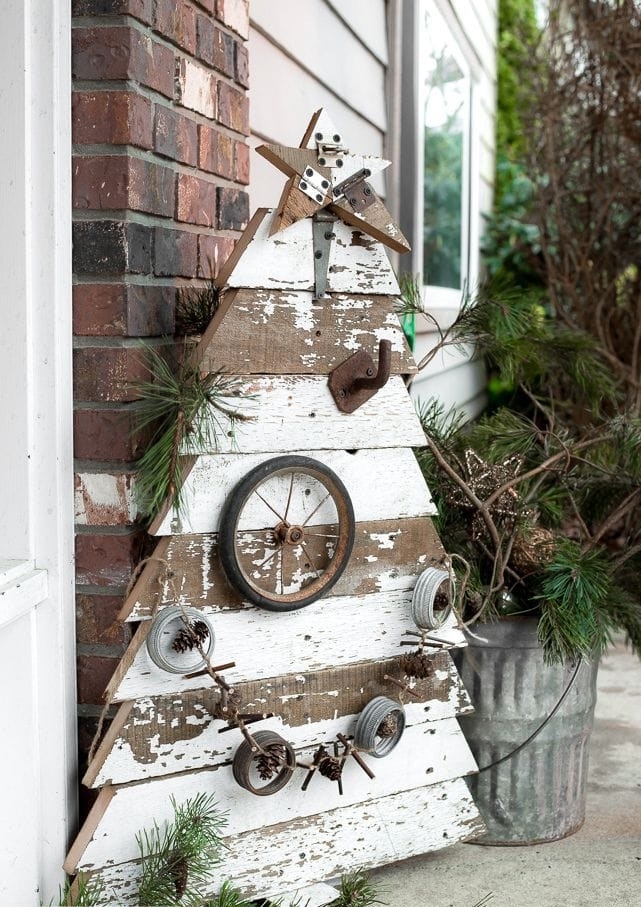
Reclaimed wood is a natural match for farmhouse Christmas decorating because the marks, knots, and worn finish can provide much of the decoration by themselves. I can make a simple wooden tree or star from suitable old boards rather than starting with perfectly finished lumber.
For a basic tree, I arrange boards in a triangular shape and secure them to a simple backing or support. A star can be assembled from straight pieces cut to the appropriate angles. The exact construction depends on the size and type of wood I am using.
Before bringing reclaimed wood indoors, I inspect every board carefully for rot, insects, loose nails, splinters, or questionable finishes. I only use clean, sound wood from a source I am comfortable with, and I avoid using unknown old painted materials that could create a problem when cut or sanded.
For an outdoor tree or star, I choose materials and finishes that can tolerate the weather. I also give the finished piece a stable base or secure it properly so it does not fall during windy weather.
This is one of the more involved projects on the list, so I would choose it when I actually want a woodworking project rather than a quick afternoon decoration.
Pro Tip: Sand every reachable edge and corner before displaying a wooden Christmas decoration, particularly when it will be handled by children.
4. Fireplace Decor Basket
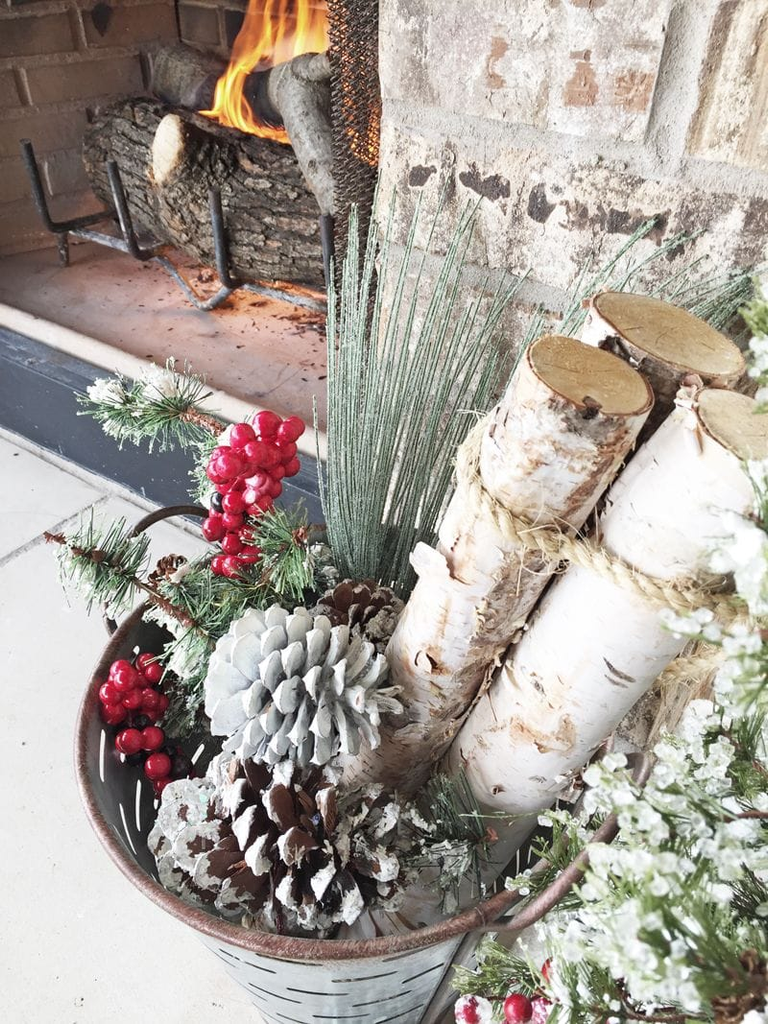
A rustic basket or metal container can fill the empty space beside a fireplace without adding another large piece of furniture. I can arrange pinecones, faux greenery, decorative logs, berry stems, or birch-style branches inside it.
The farmhouse look comes from the materials and relaxed arrangement rather than from adding lots of Christmas ornaments. A simple basket with a few natural textures is usually enough.
When the fireplace is used, I leave a safe amount of space between the basket and the heat or flames. I never place dry greenery, paper, fabric, or artificial materials where sparks could reach them.
If I have a non-working fireplace, I have more freedom with placement, but I still keep the arrangement stable and away from places where it could easily be knocked over.
5. Joy Holiday Sign Christmas Wall Art
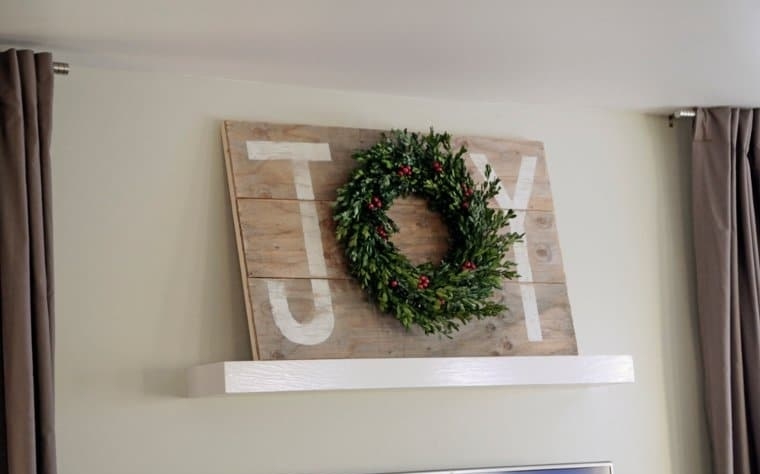
A large wooden JOY sign gives me a way to decorate an empty wall while keeping the rest of the room fairly simple. For a farmhouse version, I would use a weathered-looking wood board, plain lettering, and greenery in place of the “O.”
I can make the sign from a suitable wood board, then add the letters with paint, vinyl, stencils, or a printed design. A small wreath or greenery ring can serve as the center letter.
This project is especially useful in a small home because wall space does not compete with furniture or floor space. I would use a smaller version above a console or shelf and a larger one only where the wall can comfortably support it.
Before hanging a wooden sign, I check its weight and use hardware suitable for the wall. I also avoid placing a heavy piece where it could fall directly onto a seating area.
6. Farmhouse Christmas Dining Room Setup
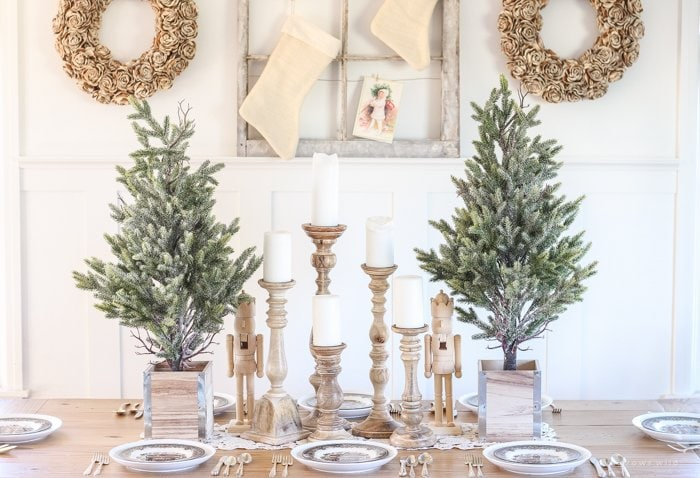
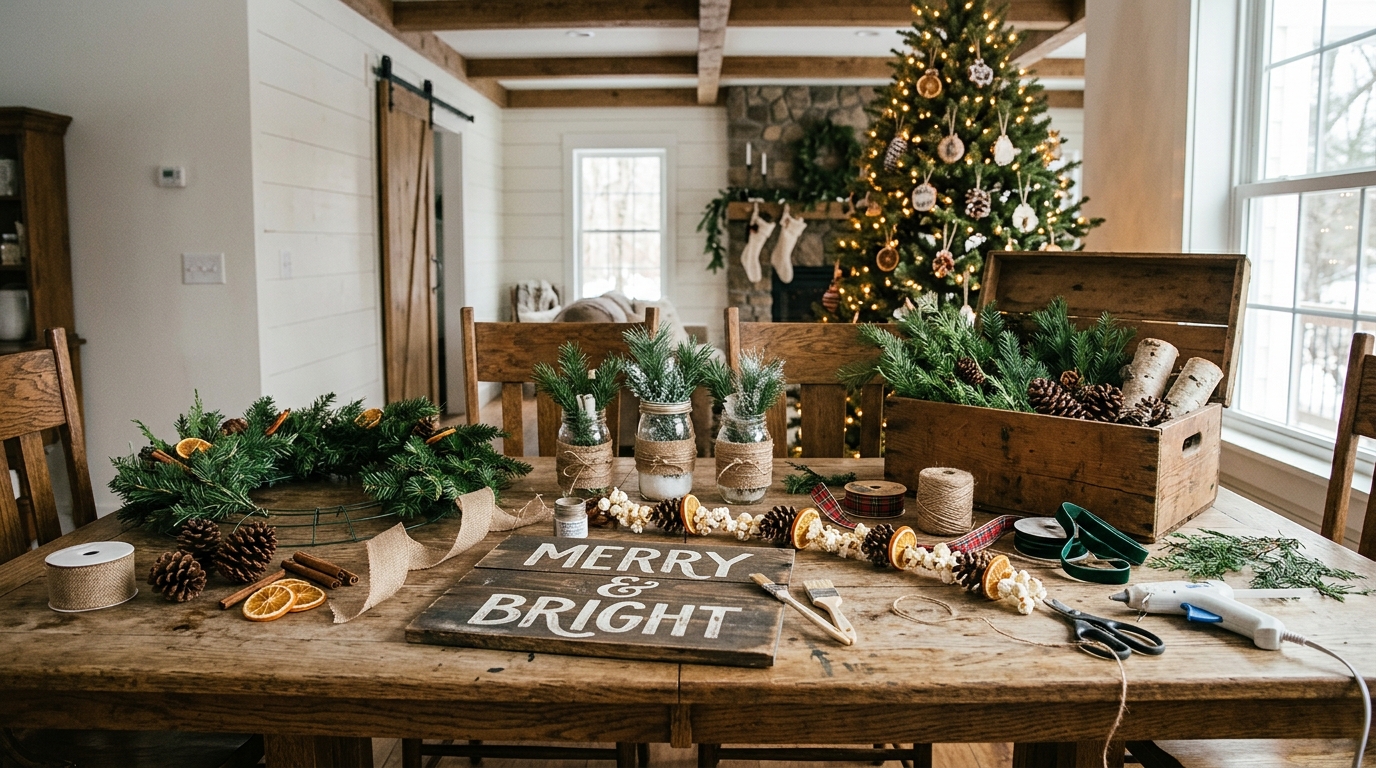
The dining table is one of my favorite places to add Christmas decor because it is already a natural gathering spot. I do not need a complicated tablescape. A wooden centerpiece box, simple greenery, neutral linens, metal candleholders, or a few vintage-style accents can be enough.
For a farmhouse look, I tend to combine natural wood with greenery and restrained colors rather than using a large collection of shiny ornaments. Small ceramic or wooden figures can add another layer without making the table feel crowded.
Before settling on the centerpiece, I think about how the table will actually be used. I leave room for plates, glasses, serving dishes, and comfortable seating, and I avoid a centerpiece that blocks everyone’s view across the table.
If I use candles, I keep flames well away from greenery, napkins, paper decorations, and other flammable materials. Battery-operated candles are an easy option when I want the same warm appearance with less concern about an open flame.
Pro Tip: I put the serving dishes on the table before finishing the centerpiece. If there is not enough practical space left, the decoration is too large.
7. Olive Branches Wreath
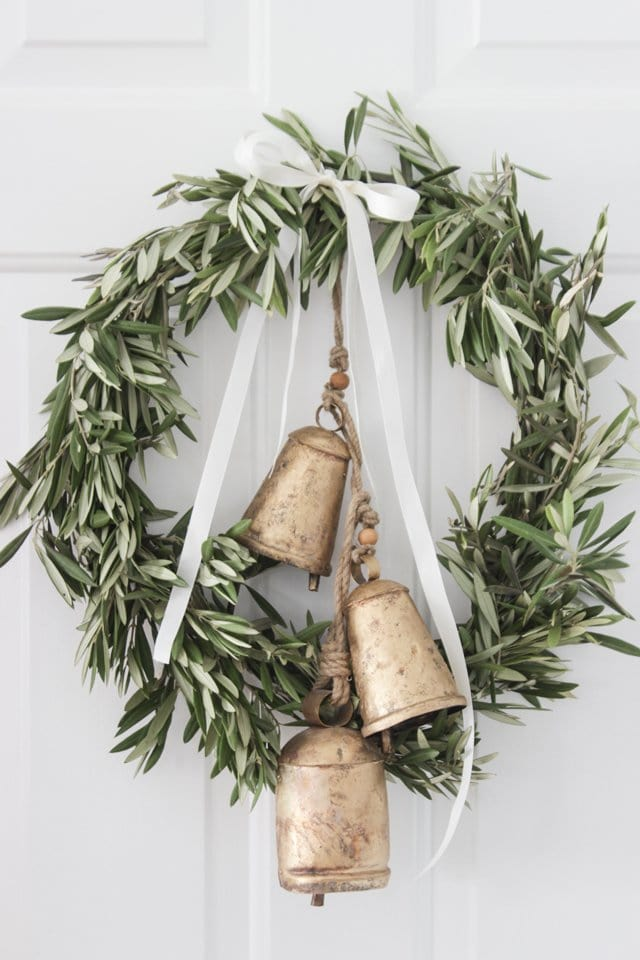
For a quieter Christmas display, I like a simple greenery wreath made with olive branches or similar foliage. Its natural shape works nicely with the neutral colors and understated materials I associate with farmhouse decorating.
To make one, I gather flexible branches, arrange them into a loose circle, and secure the stems with floral wire. A small ribbon, a few bells, or some berries can finish the wreath without covering up the greenery.
This type of wreath works well on an interior door, cabinet, wall, or small window. Because it is relatively simple, it also suits a smaller room where a large decorated wreath might feel too heavy.
Fresh branches need more care and will eventually dry out. Once greenery becomes very dry or brittle, I remove it rather than keeping it near candles, fireplaces, heaters, or other heat sources. Artificial stems make more sense when I want to reuse the wreath year after year.
8. Chippy White Christmas Sign
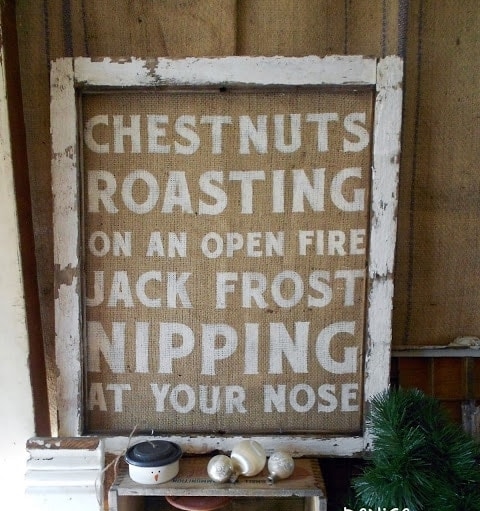
An old window frame can become the foundation for a farmhouse Christmas sign. I like this approach because a naturally weathered frame already has the worn character that I would otherwise have to create on new wood.
I can place burlap, linen, or another suitable fabric inside the frame and add a simple Christmas message. Stenciling, painted letters, or a printed design can all work depending on the tools and materials I have.
Before using an old frame, I inspect it for loose glass, exposed nails, splintered wood, and peeling or questionable paint. If I am unsure about the age or condition of the finish, I would rather use a newer frame with a distressed appearance than sand an unknown old coating indoors.
A smaller frame works well on a shelf or mantel, while a larger one can become wall art. I make sure the hanging hardware matches the weight of the finished piece.
9. Vintage Enamelware Pitchers Filled with Juniper
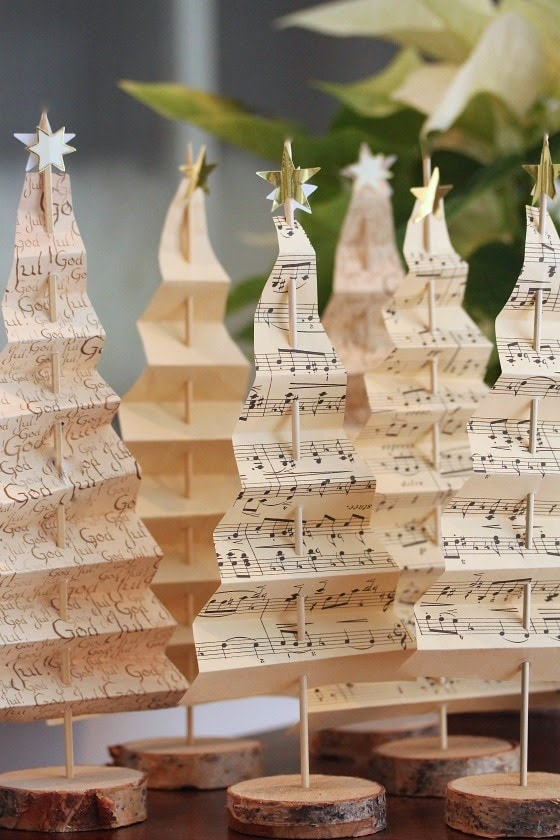
Vintage-style enamelware pitchers make useful containers for Christmas greenery. I can group one or several on an entry table, console, staircase landing, or the bottom area beside a stairway.
I fill the pitchers with juniper, evergreen branches, pinecones, or faux greenery. White enamelware works nicely with a neutral farmhouse palette, while a dark or muted color can give the arrangement a little more contrast.
For a staircase, placement matters more than decoration. I keep containers out of the walking path and away from the edges where they could be bumped.
If I use fresh greenery, I check it regularly and remove it once it becomes dry. Artificial greenery is easier for areas where I want the display to remain in place throughout the season.
10. Sheet Music Christmas Trees
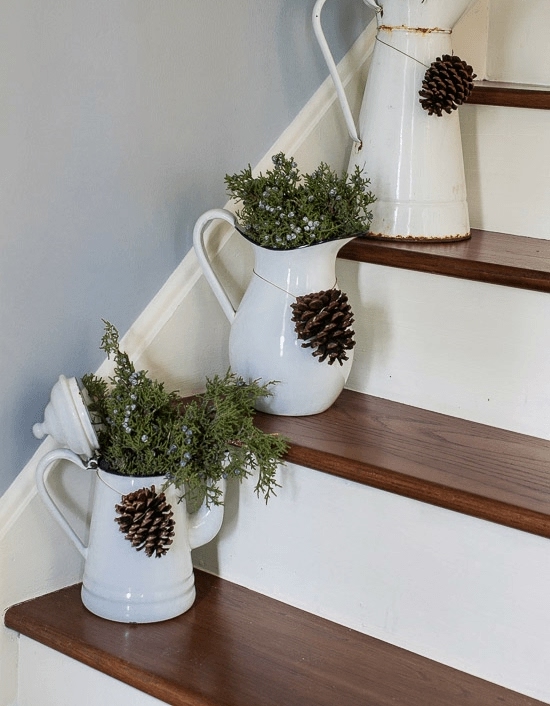
Small paper Christmas trees are a useful choice when I want a seasonal display but have very little space. I can make simple trees from suitable decorative paper or legally obtained printable designs and place them on a shelf, dining table, mantel, or sideboard.
For a basic version, I cut or fold paper into triangular tree shapes and secure each one around a long skewer or similar support. A small slice of wood can serve as the base, provided it is stable enough to keep the tree upright.
I like grouping several trees at different heights because the display feels fuller without requiring a large centerpiece. They can also work as individual place decorations for a Christmas dinner.
Because paper catches fire easily, I keep these trees away from candles, fireplaces, heaters, and other heat sources. I also place them somewhere they will not be knocked over easily.
Pro Tip: I use two or three coordinating paper patterns rather than many different prints. It keeps the little tree group looking connected without making the table too busy.
Also read: 20 Farmhouse Dollar Store Christmas Ideas
11. DIY Pallet Wood Centerpiece Box
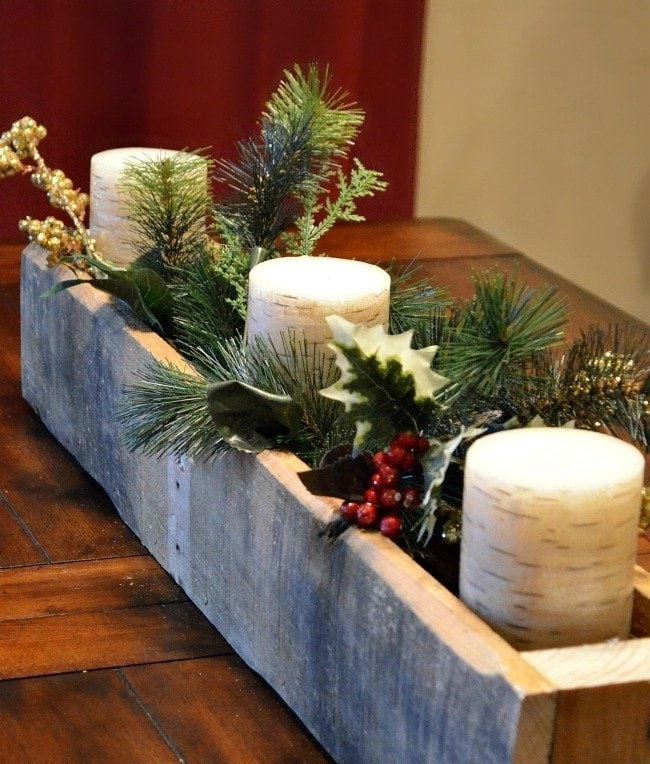
A pallet-style wood centerpiece box gives me a reusable base for seasonal decorating. I can fill it with Christmas greenery and then change the contents for another season instead of storing a completely different centerpiece.
For the basic project, I need suitable wood, a saw if cutting is required, nails or screws, a hammer or drill, and wood glue. I measure the pieces against the table before cutting so the finished box does not take up more space than I actually have.
I am careful about the word “pallet” here. I would not automatically bring an unknown pallet indoors just because it looks rustic. I use clean, sound wood from a suitable source and avoid boards with chemical contamination, heavy staining, rot, or other questionable conditions.
When cutting or assembling the box, I use eye protection, keep hands clear of cutting areas, and follow the instructions for the specific tools I am using. After assembly, I sand rough edges and check that the box sits level and does not rock.
The finished box can hold greenery, pinecones, ornaments, or battery-operated candles. If I use real candles, I keep them well separated from dry greenery and the wooden sides.
12. Snow Globe Jars
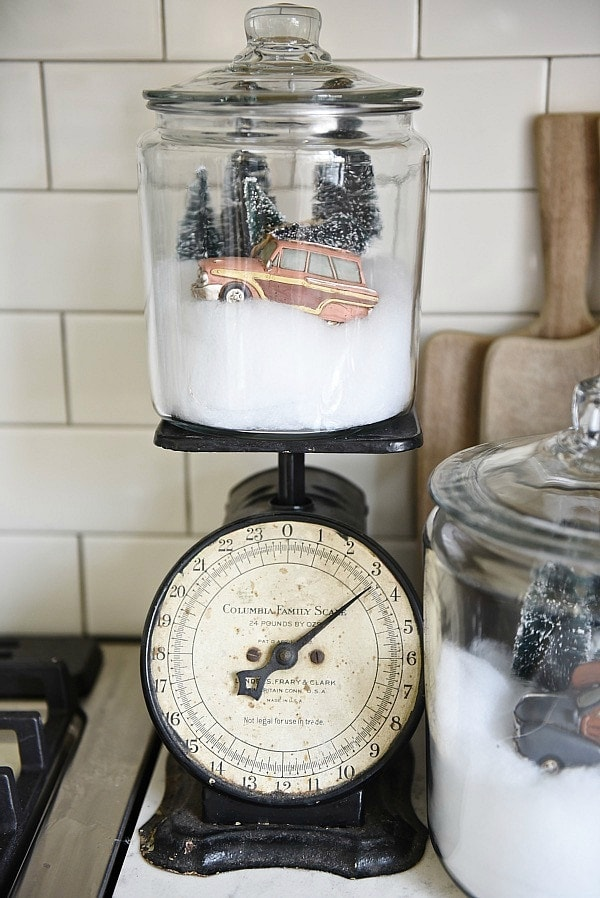
Snow globe jars are one of the easiest projects for a shelf or small Christmas display. I can use a clean glass jar, artificial snow or another suitable filler, and a few miniature Christmas pieces to create a tiny winter scene.
I start with a small amount of filler at the bottom, then arrange a miniature tree, vehicle, house, or woodland figure inside. I do not need to fill the entire jar because leaving some open space helps the scene remain visible.
The small size makes these particularly useful in apartments, bedrooms, offices, or narrow shelves where a larger Christmas decoration would be inconvenient.
I keep miniature figures and small decorative parts away from young children and pets who might try to handle or swallow them. I also place glass jars somewhere stable and not near the edge of a high shelf.
13. Stocking Staircase Decoration
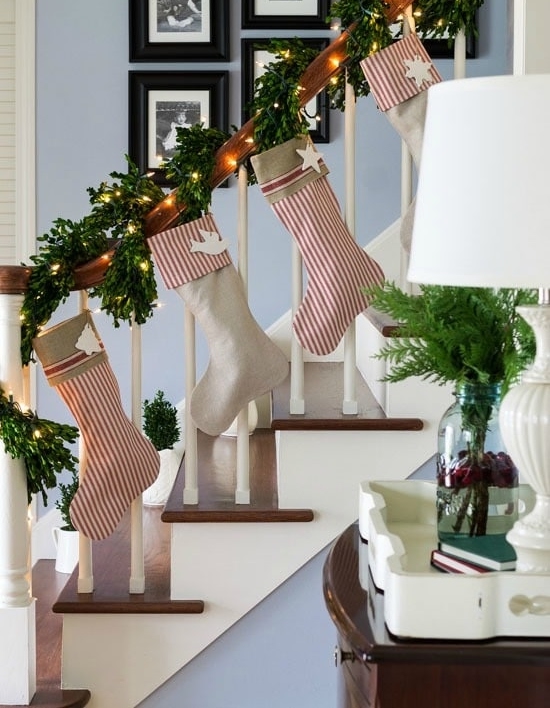
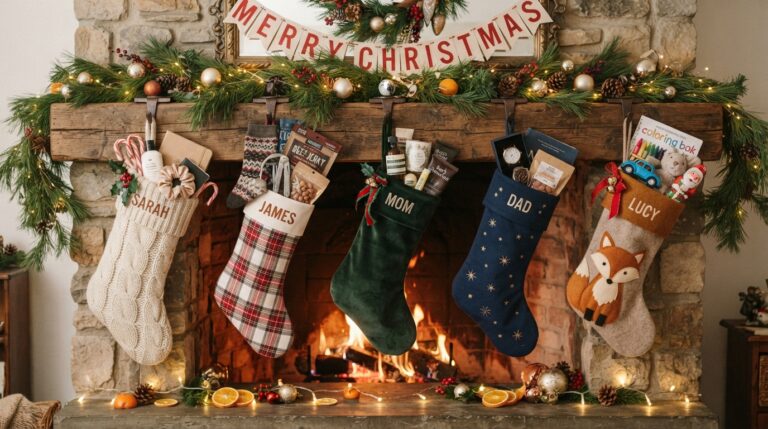
A staircase can provide a practical alternative when there is no fireplace for Christmas stockings. I can attach stockings to a suitable stair railing and combine them with a simple garland or string of lights.
I keep the arrangement close to the railing rather than allowing stockings, ribbon, or garland to hang into the stairs. Anything attached to the railing should also be secure enough that normal use of the staircase does not pull it loose.
If the stockings are decorative rather than meant to hold gifts, I use lightweight tissue or craft paper inside them to give them shape. There is no reason to add heavy filler to a display that will be hanging from a stair railing.
For lights, I route cords so they do not cross the walking path or create a snagging point. I also follow the manufacturer’s instructions for indoor or outdoor lights rather than assuming the same set can be used anywhere.
14. DIY Evergreen Christmas Swag
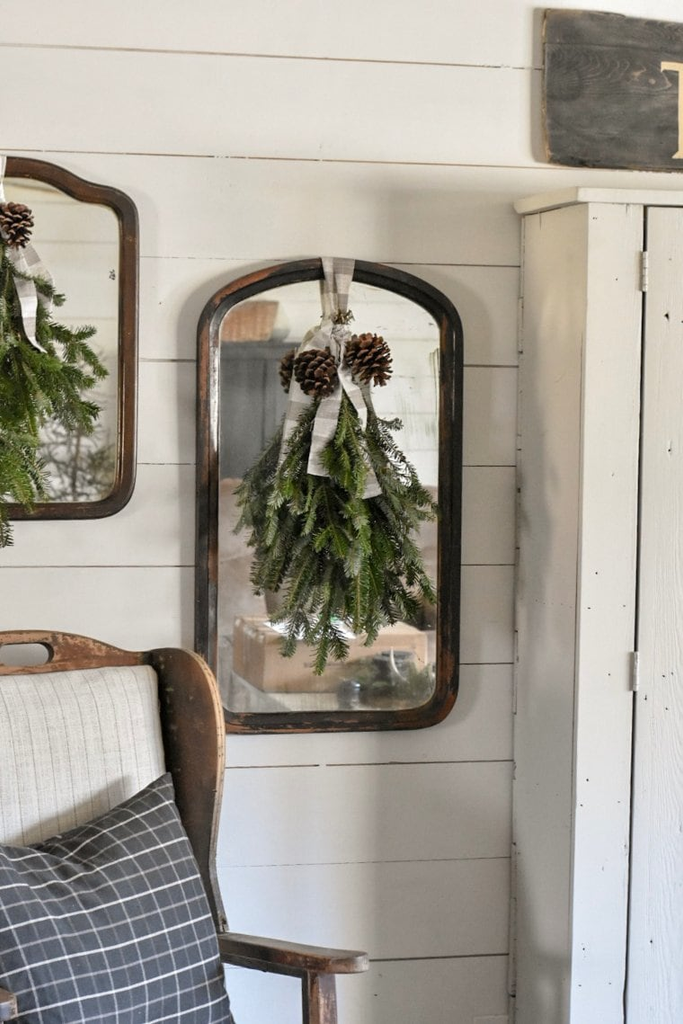
When I want natural greenery but do not have time to make a full wreath, an evergreen swag is a good shortcut. It also works well in narrow spaces because its long shape can follow a door, mantel, stair rail, cabinet, or wall.
To make one, I gather several evergreen stems, arrange the fuller pieces toward one end, and secure the stems together with floral wire or another suitable binding. A ribbon or a few pinecones can be added once the basic shape is secure.
The amount of greenery depends on where I plan to hang it. I make a smaller swag for a narrow door or cabinet and a fuller one for a large mantel or entry.
Fresh greenery needs attention because it dries over time. I keep it away from fireplaces, candles, heaters, and other heat sources, and I replace it when it becomes excessively dry. Artificial greenery is a practical choice when I want a decoration that can go back into storage after Christmas.
Pro Tip: I make the fuller end of the swag the visual starting point and let the stems become gradually lighter toward the other end. It gives the arrangement a natural shape without needing lots of extra decoration.
15. DIY Farmhouse Style Christmas Tree Sign
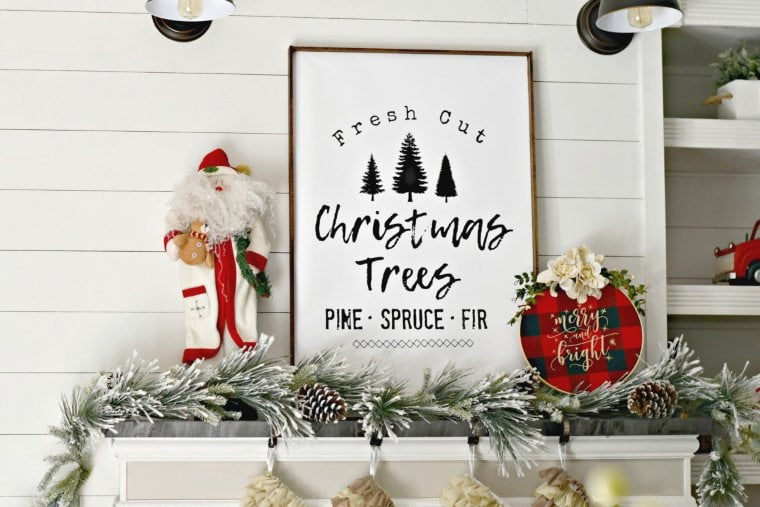
A printable Christmas sign is a good beginner project when I want farmhouse-style wall or mantel decor without doing much construction. I can print a simple holiday design, place it in a wood or distressed-style frame, and display it wherever I have a little open space.
For the farmhouse look, I would choose simple lettering and a restrained color palette rather than a very bright or heavily decorated design. A wood frame can provide most of the rustic character.
A collection of two or three smaller signs can work on a large wall, while one sign is usually enough for a small shelf or mantel. I avoid filling every available surface just because I have extra prints.
This is also an approachable project for older children. I keep scissors, adhesives, cutting tools, and other supplies appropriate to their age and provide supervision when needed.
16. DIY Christmas Wood Burlap Sign
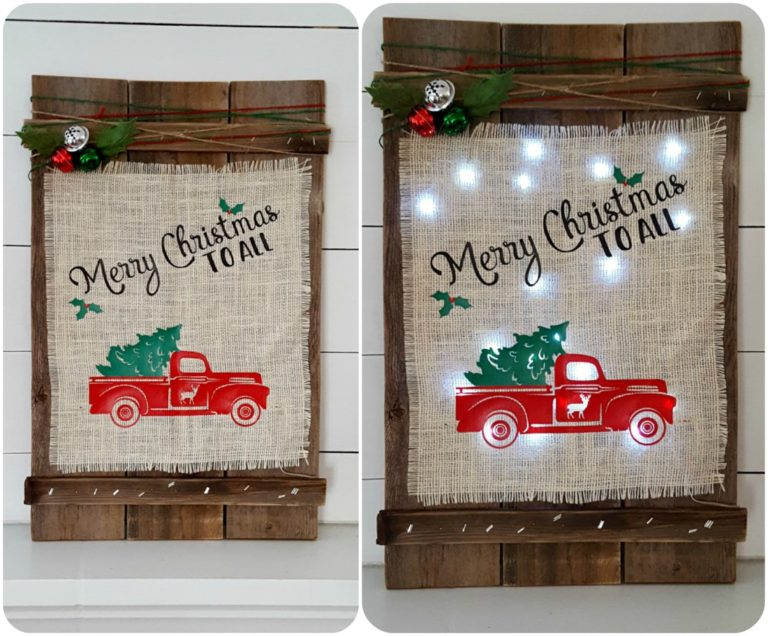
Burlap gives a Christmas sign a rough, natural texture that works well with wood and simple greenery. I can use a wooden board as the backing and attach burlap over it before adding a holiday message.
For the lettering, I can use a stencil, paint, fabric-safe marker, or a printed design transferred in a suitable way. The goal does not need to be perfect lettering; the slightly handmade appearance fits the relaxed style of the project.
This sign works on a wall, mantel, shelf, or entry table. A smaller version makes more sense when storage is limited, while a larger board can fill a blank wall without requiring several small decorations.
I store the finished sign somewhere dry after Christmas. Burlap can hold moisture and odors if it is packed away while damp, so I make sure the material is completely dry before storing it.
17. DIY Christmas Vignette
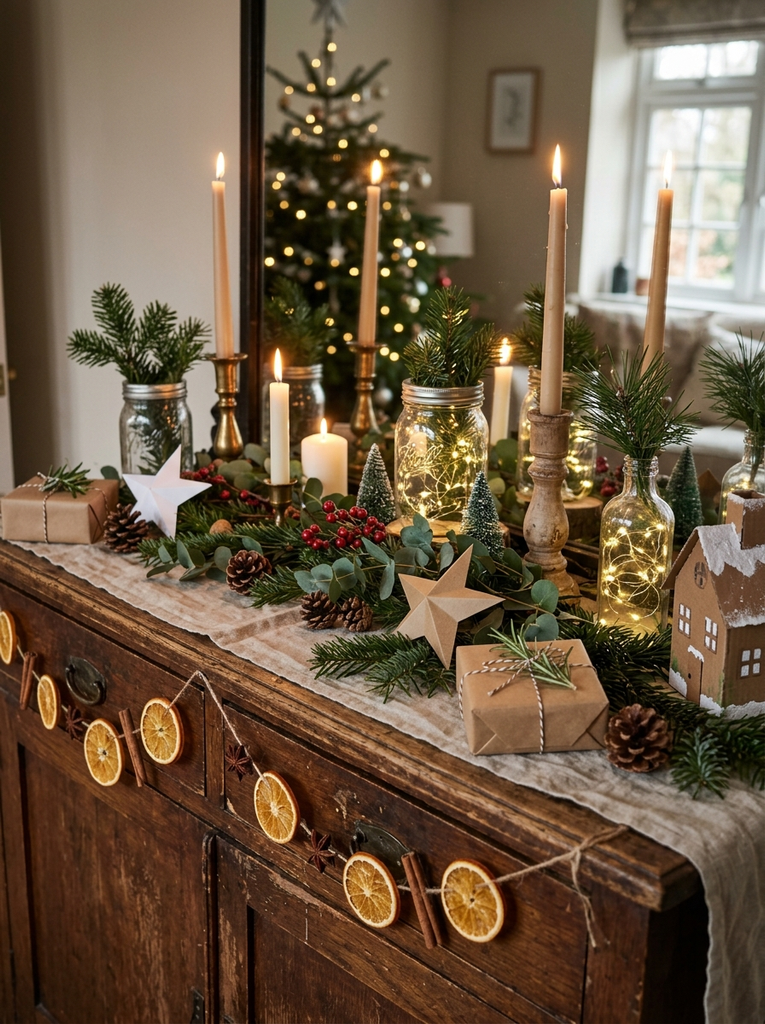
A Christmas vignette is one of the ideas I would choose first for a small home because it lets me decorate vertically and use a very limited amount of surface area. A crate, tray, basket, or shelf can provide the base.
I can layer a pitcher, a few vintage-style ornaments, leftover greenery, pinecones, cinnamon sticks, or another small seasonal object. Different heights help the arrangement feel intentional without needing a large number of pieces.
I also pay attention to the depth of the display. On a narrow console or shelf, I keep everything compact so it does not interfere with doors, drawers, or everyday movement.
For a rental or home where I cannot make many wall changes, a tabletop vignette is particularly useful because I can create a seasonal focal point without installing permanent hardware.
18. DIY Embroidery Hoop Christmas Ornaments
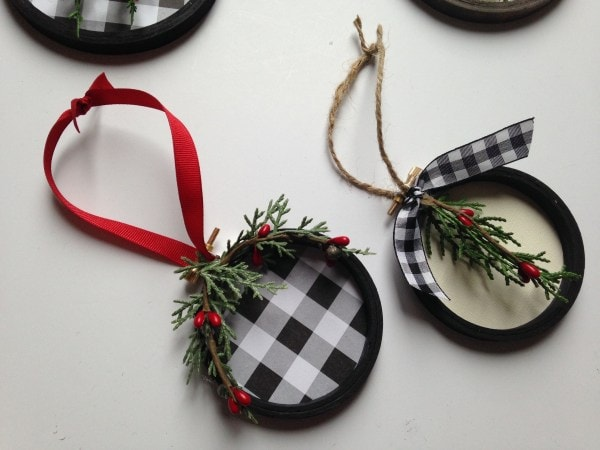
Embroidery hoops make simple farmhouse-style ornaments from fabric. I can choose linen, cotton, plaid, ticking-style fabric, or another pattern that works with the rest of my Christmas decorations.
To make one, I place the fabric between the inner and outer hoop, tighten it, trim away the excess fabric, and add a small loop for hanging. I can leave the fabric plain or add simple stitching, lettering, or a small appliqué.
These ornaments are useful beyond the Christmas tree. I can hang them from a garland, window, cabinet, or wall display, which makes them especially handy when I do not have room for a large tree.
I store fabric ornaments in a dry container where heavier decorations cannot crush them. Keeping them separated from sharp hooks and metal pieces also helps prevent the fabric from being snagged.
19. Easy Christmas Card Holder
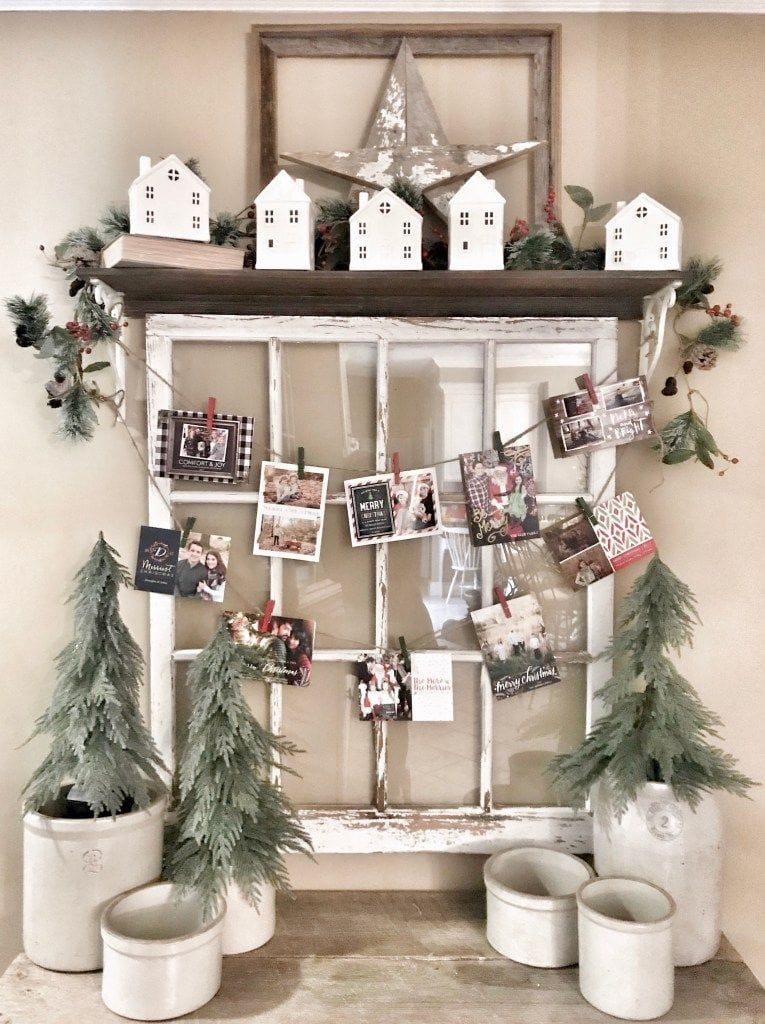
A Christmas card holder gives me a dedicated place for cards instead of letting them spread across the kitchen counter or dining table. It can also become part of the holiday decor.
For a simple version, I can use a wooden board, frame, wire, ribbon, clips, or small hooks. The farmhouse character comes from natural wood, simple hardware, linen or burlap ribbon, and a straightforward design rather than elaborate decoration.
I leave enough room between the attachment points so cards can be added throughout December. A holder that is already packed when the first few cards arrive will quickly become frustrating to use.
This is another good option for a small home because it uses vertical wall space instead of valuable counter space. After Christmas, I remove the cards and store the holder with my seasonal decorations.
Pro Tip: I leave a little extra capacity when making the holder. That way, new cards can be added without rearranging the whole display every few days.
20. Winter Basket Centerpiece
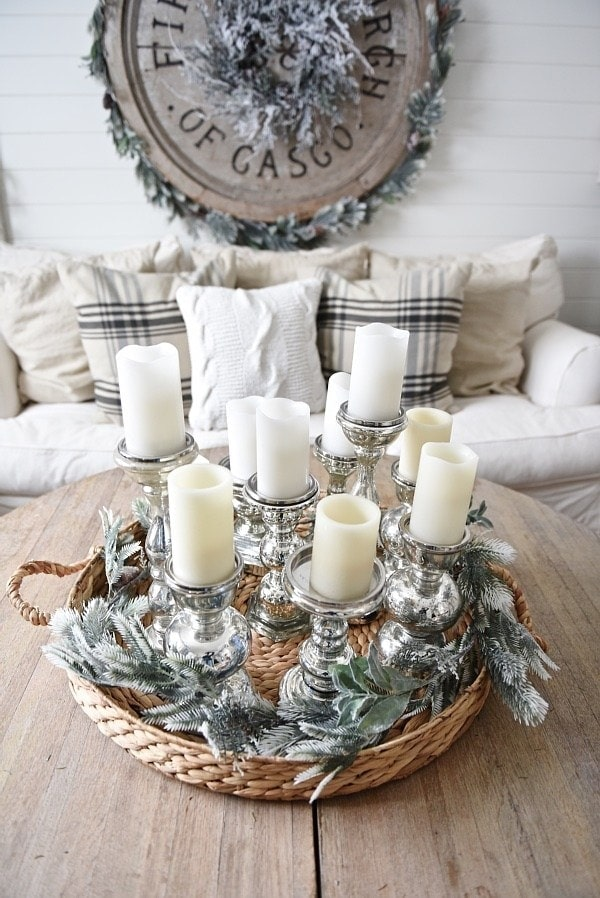
A winter basket centerpiece is a simple way to bring farmhouse texture to a dining table, coffee table, console, or entryway. I can use a basket I already own and fill it with evergreen stems, pinecones, branches, ornaments, or other winter accents.
I prefer keeping the arrangement loose enough that the basket itself remains visible. That natural woven texture is part of what makes the display work with farmhouse decor.
The size should match the surface. On a small dining table, a shallow basket or compact arrangement leaves more room for place settings. A larger basket can work on a console or entry table where there is more available space.
If I add candleholders, I keep open flames away from the basket fibers, dry greenery, paper, fabric, and other flammable materials. Battery-operated candles are a practical alternative when I want the appearance of candlelight without an open flame.
The basket itself can stay in use after Christmas. I can remove the seasonal contents and use it for blankets, everyday decor, or another seasonal arrangement instead of putting the whole container away.
Read this next: 13 Cute Wine Cork Crafts for Christmas
Frequently Asked Questions
What makes Christmas decor farmhouse style?
Farmhouse Christmas decor usually combines natural wood, greenery, baskets, burlap, metal containers, vintage-style pieces, and simple neutral colors. I find that keeping the materials natural and the arrangements uncomplicated gives the look its farmhouse character.
What are the easiest farmhouse Christmas projects for beginners?
I would start with snow globe jars, Christmas planters, a simple greenery wreath, a Christmas vignette, or embroidery hoop ornaments. These projects require fewer tools and are easy to adapt to the materials already available at home.
How can I decorate for Christmas in a small home?
I focus on decorations that use vertical or limited surface space, such as wall signs, small vignettes, embroidery hoop ornaments, paper trees, and compact centerpieces. I avoid large floor decorations that make narrow rooms or entryways harder to use.
Can farmhouse Christmas decorations be reused after the holidays?
Yes. Many of these projects are designed around items that already have everyday uses. I can reuse baskets, planters, wooden boxes, pitchers, and containers throughout the year by changing their seasonal contents.
What materials should I avoid when making farmhouse Christmas decorations?
I avoid questionable reclaimed or pallet wood, severely damaged materials, loose old paint, and anything that is damp, moldy, unstable, or difficult to clean. I also keep paper, dry greenery, fabric, and baskets away from candles, fireplaces, and other heat sources.
Conclusion
I think farmhouse Christmas decorating works best when I use a few well-chosen pieces instead of trying to fill every corner of the house. Natural wood, greenery, baskets, vintage-style containers, burlap, and handmade details can give a room a warm Christmas feel without requiring a large decorating budget.
I also get more value from projects that have a life beyond December. A basket can hold blankets, a planter can be replanted, a centerpiece box can change with the seasons, and a small vignette can be rearranged for another holiday.
The main lesson I keep coming back to is that I do not need to buy 20 new Christmas decorations. I can start with materials and containers I already have, choose the projects that suit my space, and make a few pieces that are easy to store and use again next year.


3 Comments