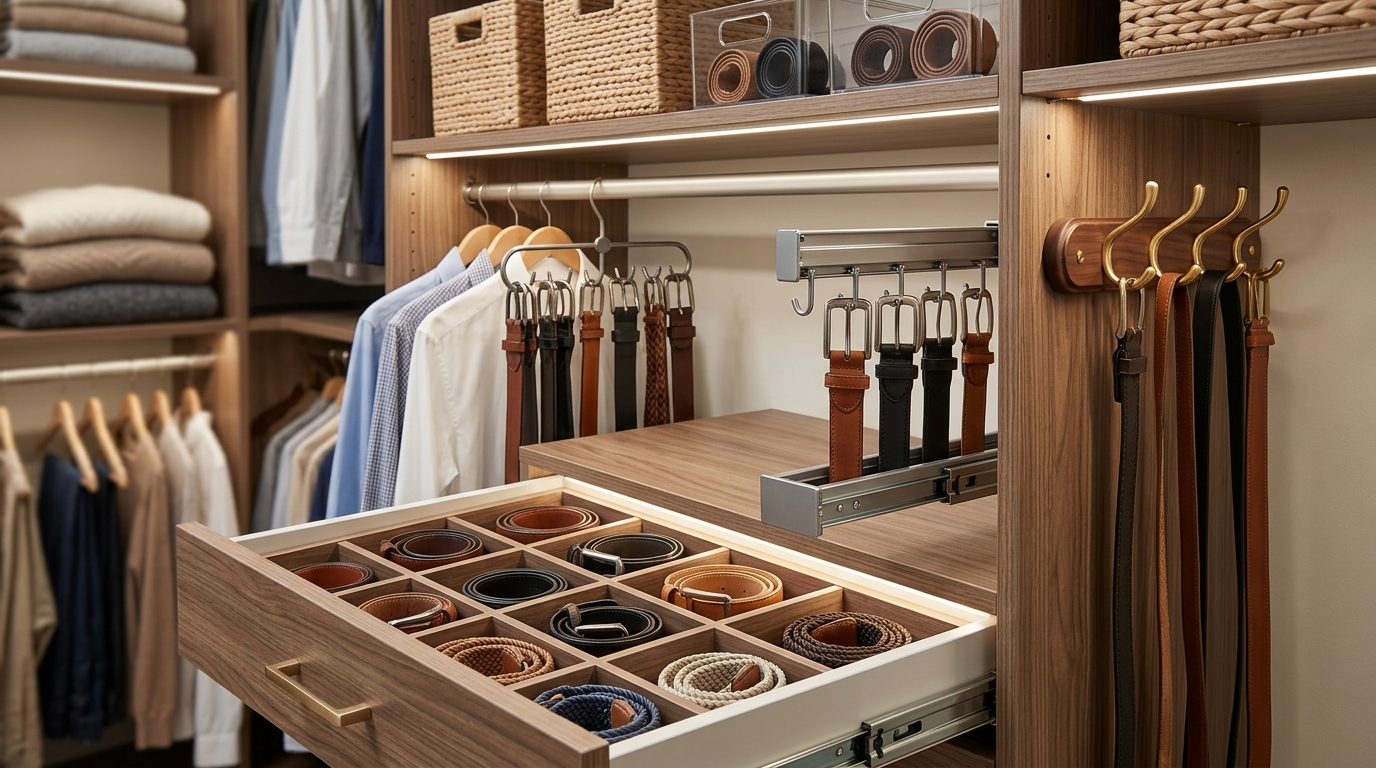
21 Belt Storage Ideas for 2026
I used to think belts were easy to store simply because they take up less room than most clothing. In practice, they can be surprisingly awkward. Buckles catch on other straps, belts disappear under accessories, and poorly arranged drawers can leave everything bent or tangled.
I’ve found that the right storage method depends on more than the number of belts I own. I consider how often I wear them, what each belt is made from, the size of the buckles, and how much usable closet space I actually have.
Leather, fabric, woven, and synthetic belts don’t necessarily need identical handling. A wide leather belt with a large buckle may need considerably more room than a thin fabric belt, so I always look at the belt itself before choosing an organizer.
I focus on three things when storing belts: keeping the straps relaxed, preventing buckles from unnecessarily rubbing against other items, and making frequently worn belts easy to reach. Hanging works well when I have spare vertical space, while loose coils in divided storage are useful when I prefer drawers or shelves.
Leather belts deserve extra attention to their storage environment. I keep them away from prolonged dampness, excessive heat, and direct sunlight, and I avoid forcing them into compartments that are too small. For other materials, I follow the manufacturer’s care instructions when they are available.
Save this for later

Table of Contents
The 21 ideas below cover simple pegs and hooks, closet-rod systems, drawer organizers, trays, boxes, wall storage, and built-in closet solutions. I can choose one based on the space I already have instead of adding bulky furniture unnecessarily.
Key Takeaways
- I hang belts when I have useful vertical closet space and want them easy to see.
- Divided drawers and trays work well when I want belts contained and protected from getting tangled.
- I avoid sharp or unnecessarily tight folds, especially with belts that can hold unwanted bends.
- Large buckles need enough width and depth to sit without crowding nearby items.
- Leather belts are best kept in a dry storage area away from prolonged direct sunlight and excessive heat.
- A small collection usually doesn’t need an elaborate organizer.
- Small closets can make good use of existing rods, shelves, walls, doors, and narrow vertical areas.
- Renters can favor freestanding or removable solutions when permanent mounting isn’t permitted.
Related article: 15 Scarf Storage Ideas for 2026
How Do You Keep Leather Belts in Good Shape During Storage?
I start by checking the belt material, buckle size, and storage environment. For leather, I try to avoid sharp repeated folds, heavy pressure, prolonged dampness, excessive heat, and long periods of direct sunlight.
For storage, I generally choose either hanging or a loose coil. A belt should not be wound so tightly that it is under unnecessary tension, and I avoid piling heavy accessories on top of it.
If a belt is damp after use, I let it dry naturally before putting it away. For belts made from fabric, woven materials, or synthetics, I check the care label when one is provided rather than assuming the same rules apply to leather.
The buckle often determines how much storage space I need. A long strap can fit easily into a drawer, but a bulky buckle may need additional height, width, or clearance.
Choosing the Right Storage Method
For a small collection, I don’t need much. A peg holder, belt tray, or simple hook can handle a handful of frequently worn belts.
For a larger collection, I get more benefit from separation and categorization. A belt tower, drawer grid, wall display, or larger organizer lets me sort belts by material, color, style, or frequency of use.
In a small closet, I first look at space I already have. The closet rod, underside of a shelf, suitable door area, or an unused wall can often hold belts without taking up valuable floor space.
For mostly leather belts, I prioritize storage that lets the strap remain relaxed and uncrowded. For frequently worn belts, I keep them within easy reach rather than putting them in a box at the back of the closet.
Dress and seasonal belts can go into a drawer or divided box if I don’t need them every day. For large buckles, I measure the actual buckle before choosing the compartment.
If I’m renting, I favor freestanding organizers, existing closet hardware, or removable options that are appropriate for the surface and weight. I don’t assume that a removable hook is suitable for every organizer.
Before buying or installing anything, I measure the drawer width, depth, and height; shelf clearance; available wall area; rack depth; and pull-out clearance. The longest belt matters, but the largest buckle can be the measurement that determines whether the system actually works.
Pro Tip: I measure the largest buckle first when I’m unsure about an organizer. A compartment that comfortably holds the strap may still be too shallow or narrow for the buckle.
Belt Tower

When horizontal shelf space is scarce, I can use height instead. A belt tower gives several belts their own vertical positions while keeping the footprint relatively narrow.
Stackable containers or narrow storage cylinders can work here, with one loosely coiled belt in each section where the space allows. I keep the buckle visible so I don’t have to pull apart the collection to find the right one.
This works well on a dresser, closet shelf, or inside a wardrobe with unused vertical space. The container diameter needs to accommodate the belt without forcing a wide leather strap into a tight coil.
Drawer Grid
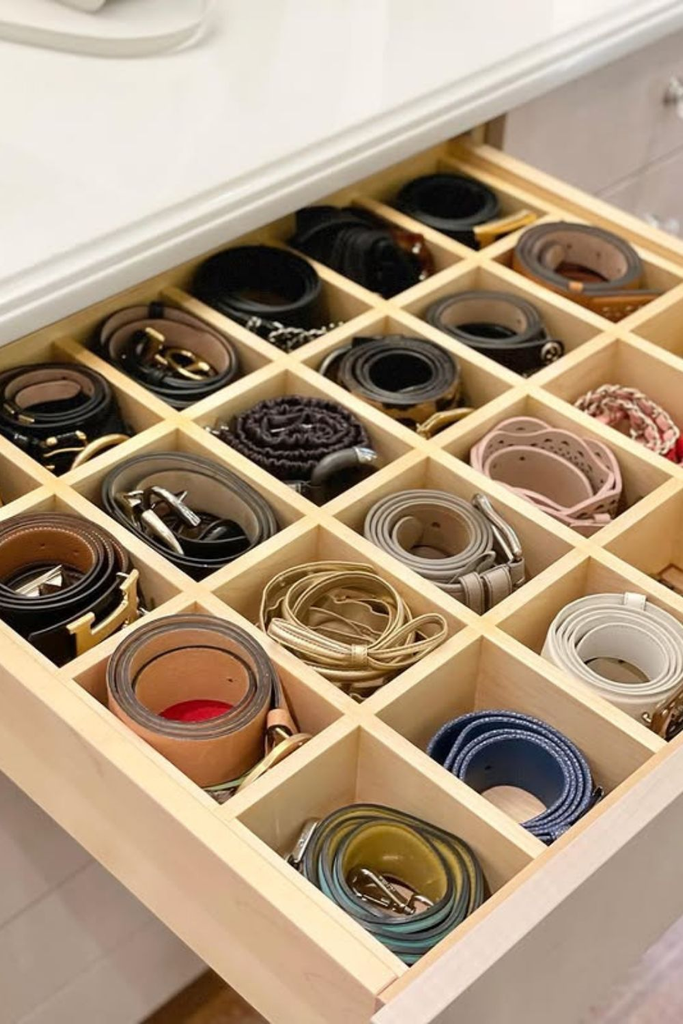
A drawer grid is useful when I want my belts hidden but still individually organized. Instead of allowing all the straps to collect in one large drawer compartment, I give each belt its own section.
Adjustable acrylic or wooden dividers let me change the layout as the collection changes. I loosely coil each belt and position it so the buckle doesn’t interfere with the neighboring compartments.
This works particularly well in dresser drawers and closet-island drawers. It also keeps the belts separated from other accessories that might otherwise become mixed into the same space.
Pro Tip: I position the buckle where I can see it as soon as the drawer opens. That small change makes selecting a belt much quicker.
Wall Display

An unused closet wall can become dedicated storage for a larger belt collection. A slat wall, rail, or similar mounted system gives me a place to hang belts individually rather than stacking them.
I like this option when I want to sort belts by color, material, or how often I wear them. It also makes the entire collection visible at once.
I use hooks that are suitable for the rail and the intended load, and I make sure the wall itself can support the mounting system. In a rental, I would only use permanent mounting if the property allows it and the wall construction is appropriate.
Hanger Hooks
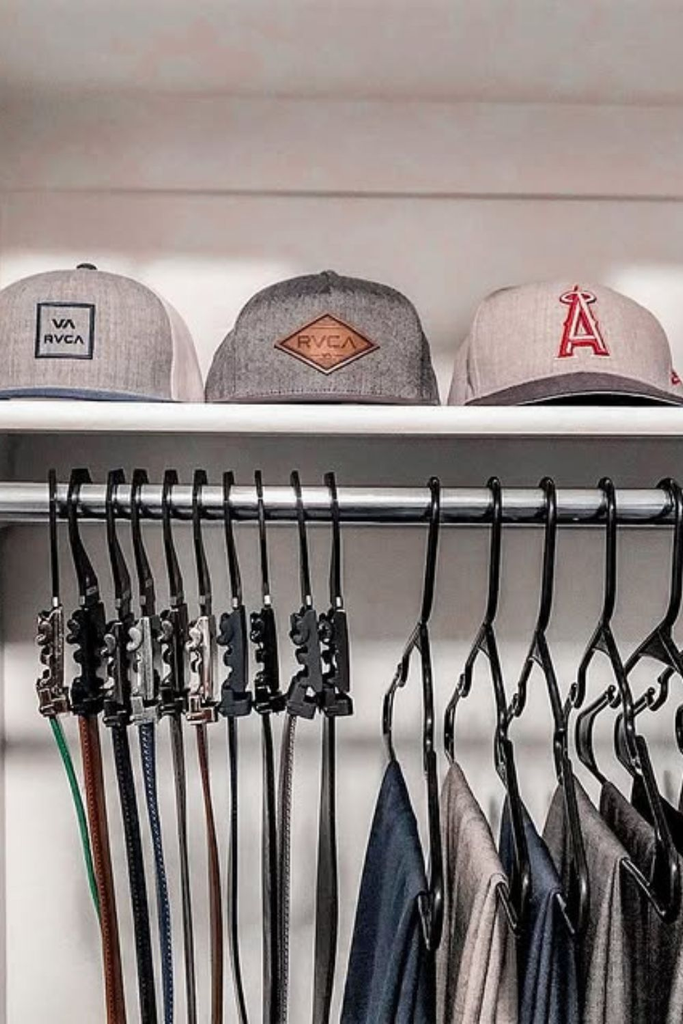
Hanger hooks give me several belt-storage positions while using roughly the footprint of one ordinary clothes hanger. That’s the main reason I would choose this over a larger wall or drawer system.
It works well in a small wardrobe where I have a useful closet rod but little spare drawer space. I can keep the belts near shirts or trousers, which makes choosing accessories part of the same morning routine.
I leave enough space between hooks for buckles and straps to hang without becoming a crowded bundle. I also avoid loading one hanger beyond what its construction is designed to hold.
Buckle Rack

A buckle rack is designed around visibility. Instead of making the entire strap the focus, it presents the buckle forward so I can identify a belt quickly.
I would place this type of rack on a dresser, closet shelf, or wardrobe compartment where I can see the individual belts. Slots or sections keep the buckles positioned separately rather than allowing them to collect in a pile.
This is particularly useful when buckle style matters to me. I can group everyday belts together and keep dressier options in another part of the rack without needing a large drawer.
Clip Hanger
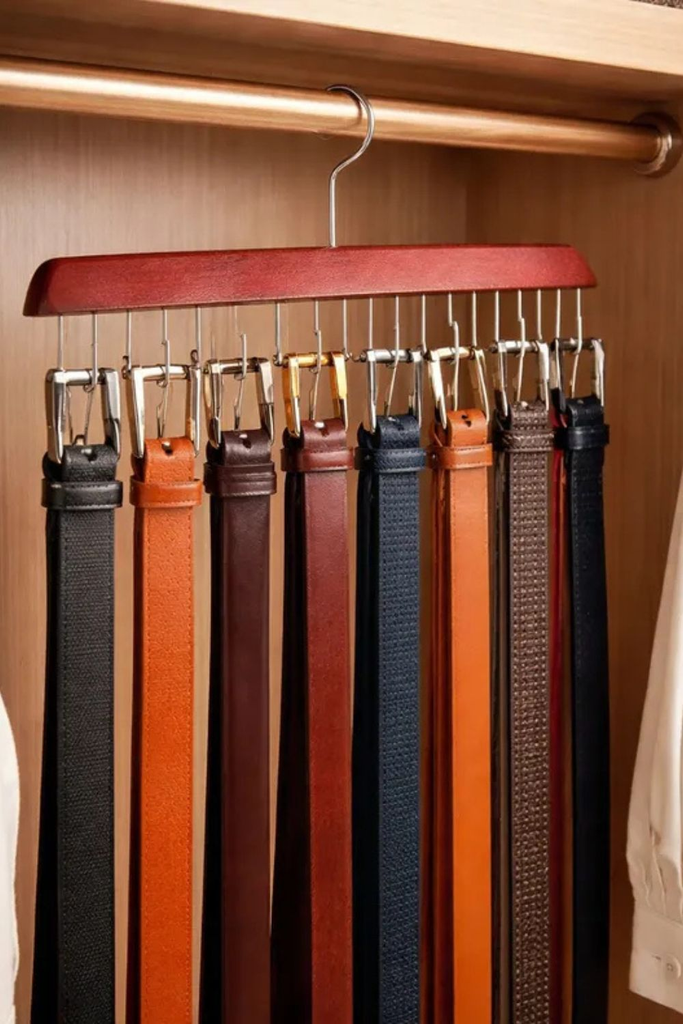
A clip hanger uses clips to hold individual belts from one hanger. I would choose this when I want the belts suspended individually but prefer physical clips over hooks.
The clips should have smooth contact points and enough grip to hold the belt without leaving a mark. I wouldn’t assume that a particular clip is suitable for delicate leather or every finish, so I check the belt and organizer together.
This works well from a closet rod and is useful when hanging space is more available than drawer space. I also leave some unused capacity rather than crowding the hanger.
Peg Holder
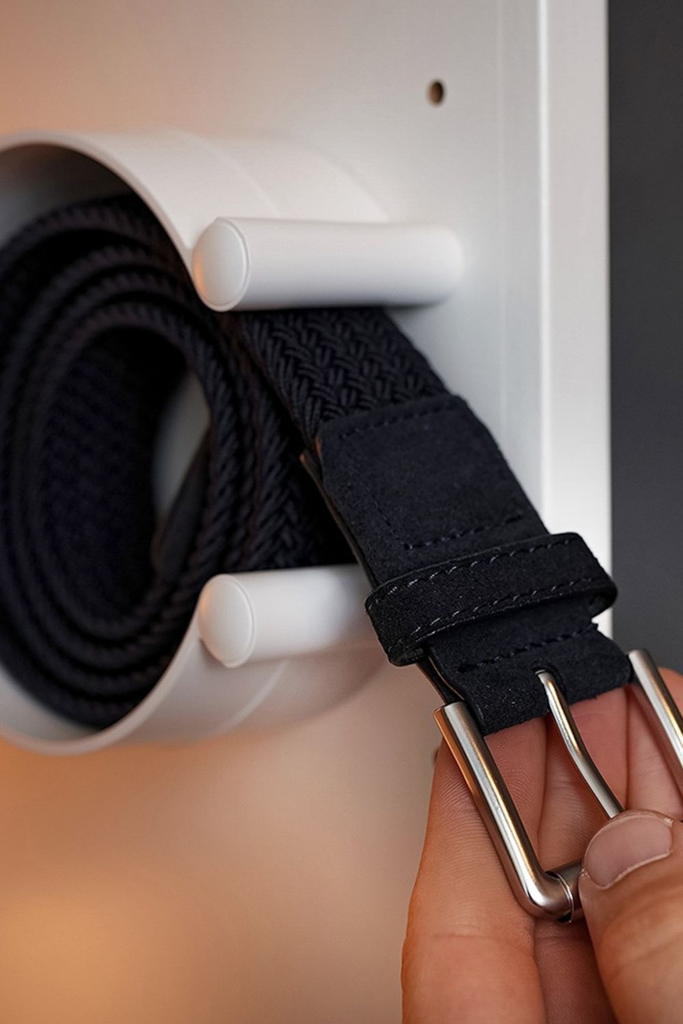
For a small collection, a row of pegs can be all I need. Each belt gets its own position, making this one of the simplest options in the article.
I would use it for belts I reach for regularly, placing the pegs inside a closet, on a suitable wall, or in an appropriate door location where the installation is allowed.
Spacing matters because large buckles can overlap even when the straps themselves are narrow. I leave enough room to lift one belt off without disturbing the others.
Divider Drawer

A deep drawer gives me more flexibility than a shallow accessory tray. I can create larger sections for wide belts and smaller ones for slim straps rather than forcing everything into identical compartments.
Adjustable dividers make this especially useful when belt sizes and buckle shapes vary. I loosely coil each belt and make sure the sections aren’t so tight that removing one belt pulls another along with it.
This approach works well in dresser drawers or closet islands. It is also useful when I want the belts completely contained instead of hanging in an open area.
Pro Tip: I leave a little unused drawer space instead of filling every compartment. That extra room makes it easier to remove one belt without disturbing the rest.
Hook Hanger
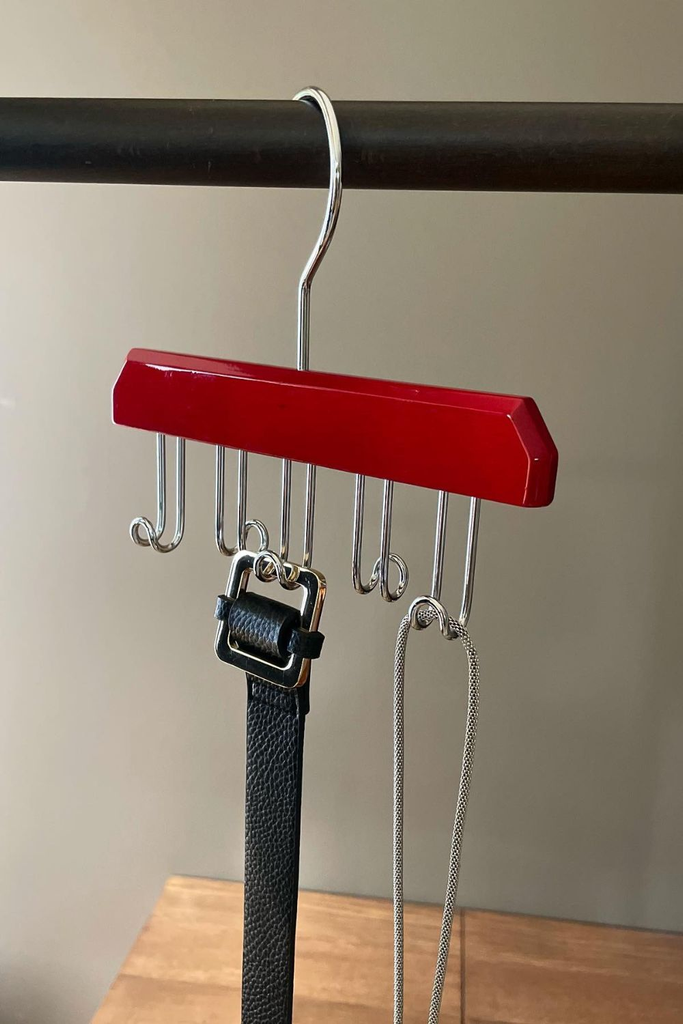
A hook hanger creates a compact belt station on a movable hanger, but I see it as slightly different from clip-based storage. Here, the belt rests from individual hooks rather than being gripped by clips.
I like this for a wardrobe where I want a dedicated belt hanger that I can move when I rearrange the closet. The hooks can also keep the straps separated from scarves or ties.
Because the belt hangs from a hook, I pay attention to the shape and finish of the hook and the size of the buckle. Wider buckles may need more room between positions than slim everyday belts.
Shelf Hooks
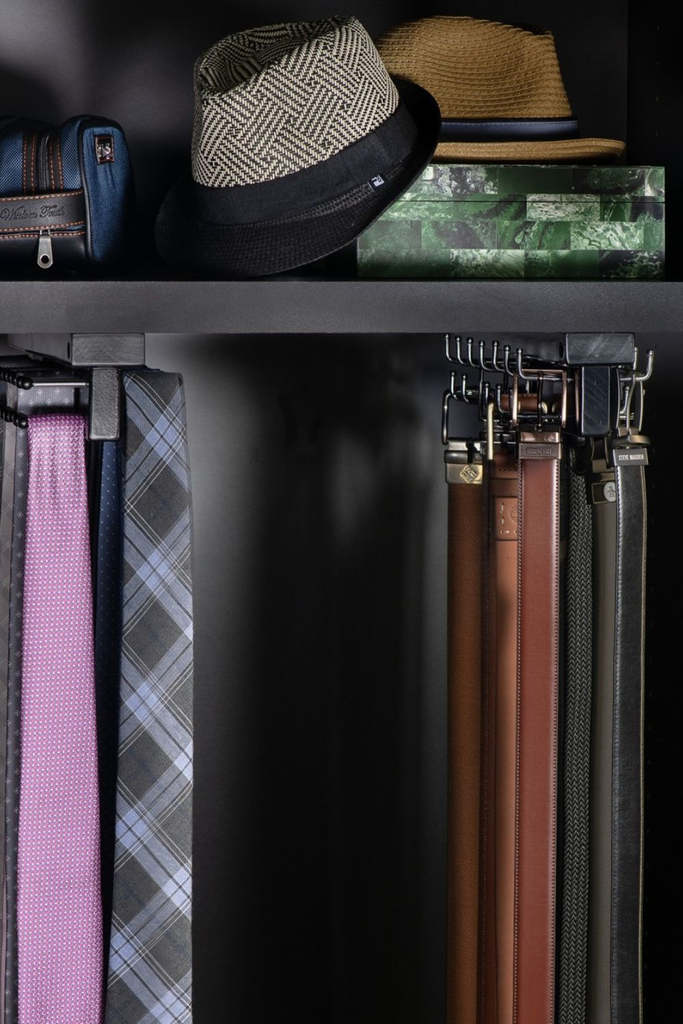
The underside of an existing closet shelf can provide useful belt storage without taking space from the main hanging rod. Shelf hooks make use of that otherwise overlooked area.
This is a good choice when I have sturdy shelving but limited drawer space. The belts can hang below the shelf while clothes continue to use the main rod.
Before using this method, I check the shelf construction, the weight limits of the hardware, and the available clearance. The organizer should not interfere with a closet door, drawer, or anything stored underneath it.
Also read: 19 Jacket Storage Ideas for 2026
Pull Rack

A pull-out rack is useful when belts are stored inside a deeper closet section and are difficult to reach from the front. Instead of reaching behind clothes, I can bring the belt rack toward me.
This makes the most sense in a built-in wardrobe, walk-in closet, or larger closet system where the necessary hardware and clearance already exist. It is less useful for a tiny collection that can be handled with a simple hook.
Before choosing one, I measure the available depth and width and check how far the rack needs to extend. I also make sure the movement won’t interfere with doors, drawers, or nearby clothing.
Belt Box
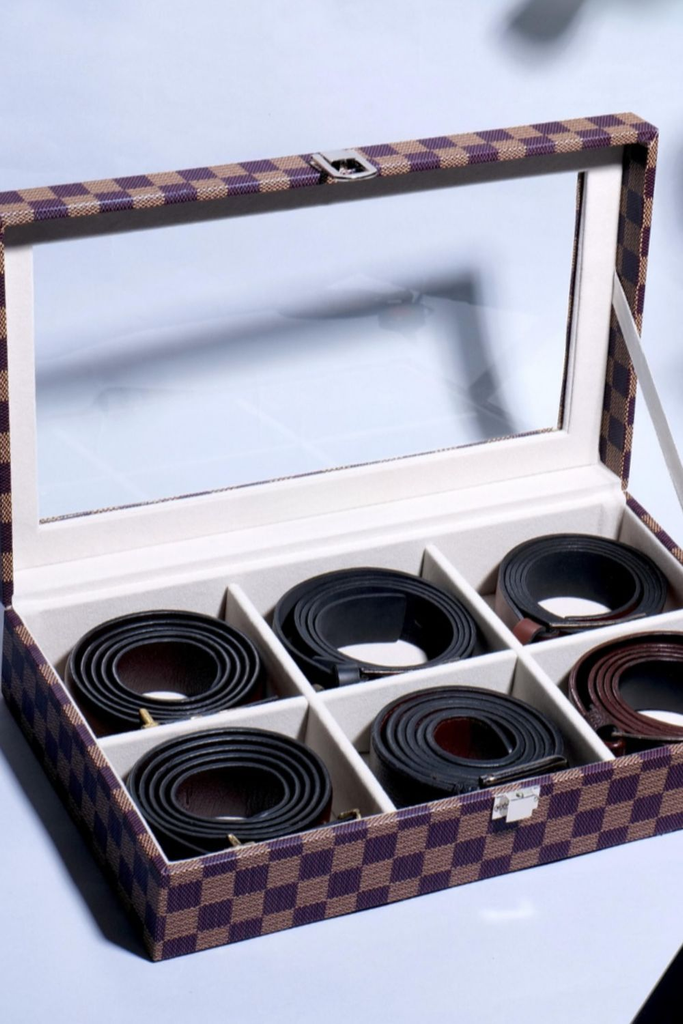
A divided belt box gives me a contained place for dress belts, seasonal belts, or pieces I don’t reach for every week. Separate sections help keep the straps from becoming one tangled group.
The box can reduce exposure to ordinary household dust, but it doesn’t correct a damp or poorly ventilated storage area. I still choose a dry location and avoid excessive heat.
I loosely coil each belt and check that the compartment is large enough for both the strap and buckle. For special belts, I don’t force the belt into a box simply because the box looks neat.
Accessory Drawer
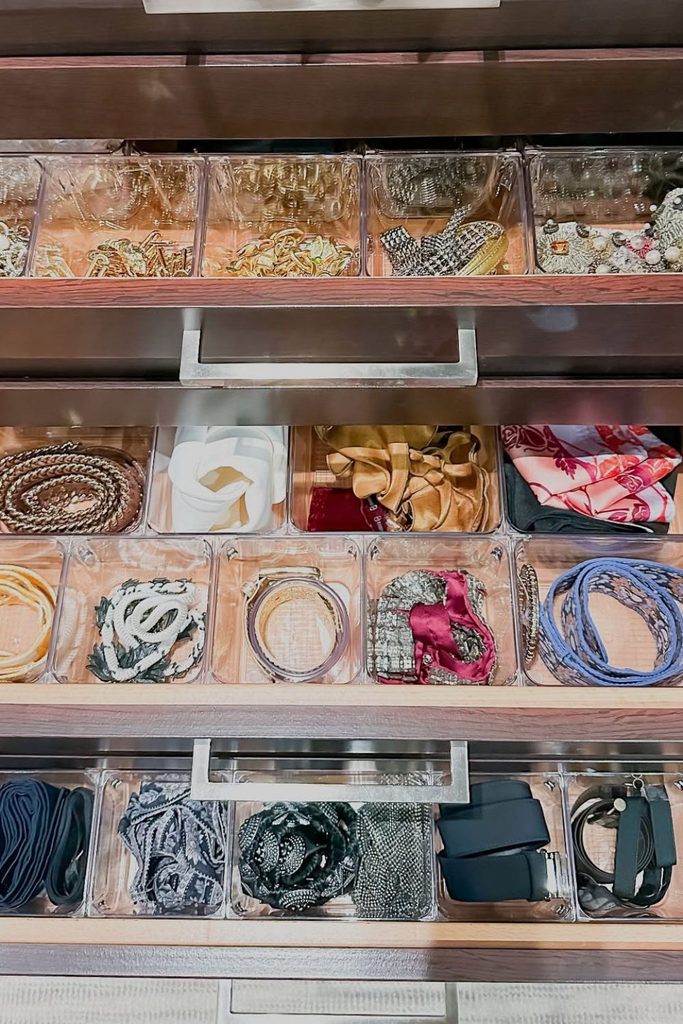
Sometimes I don’t need a belt-only drawer. If I already have a well-organized accessory drawer, I can assign part of it to belts alongside items such as watches, sunglasses, or scarves.
The benefit here is consolidation. Instead of creating another storage zone, I keep related accessories together while giving belts enough individual space to stay manageable.
This works well in dressers and closet islands. I keep the buckles visible where possible and avoid packing the drawer so tightly that belts become buried under other accessories.
Wall Strap

A fabric or strap-based organizer can be useful when I need vertical storage but don’t want a rigid rack. It can fit into a compact wardrobe or another suitable wall or door area where mounting is permitted.
I pay attention to how the organizer contacts the belt. The material and construction should not put sharp or concentrated pressure on a delicate strap, particularly if I’m storing leather.
For a rental, I would look for a removable or freestanding approach when appropriate rather than assuming permanent mounting is allowed. I also check the load and attachment method before filling the organizer.
Rod Hooks
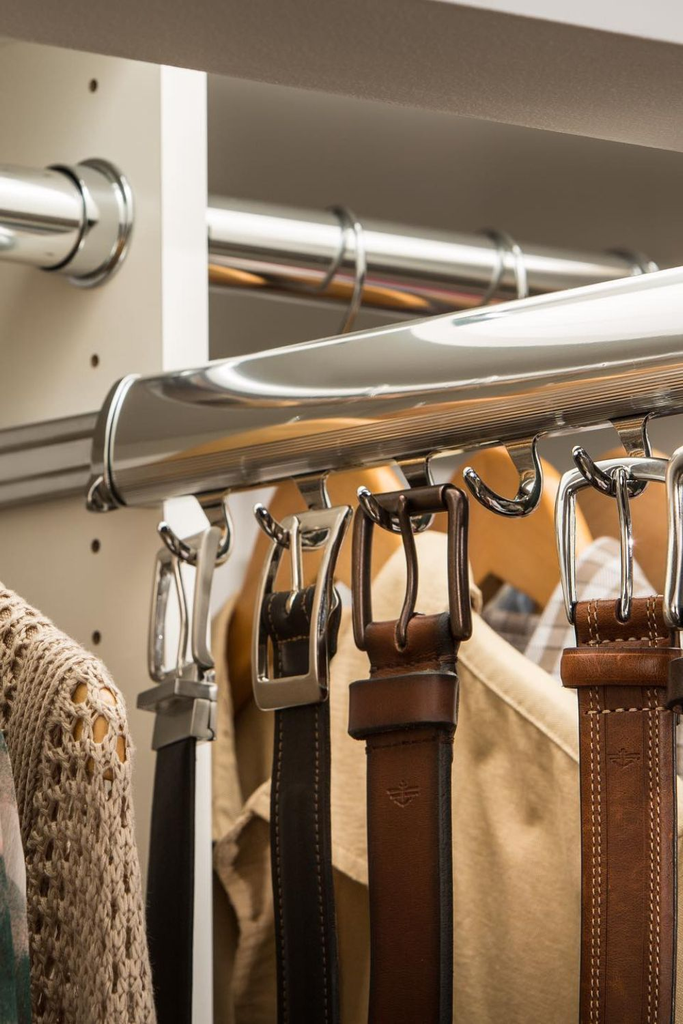
Rod hooks attach directly to the existing closet rod, so I don’t need a separate hanger. That’s the main difference I see between this and a hanger-based belt organizer.
This works well when I have an accessible closet rod and want belts positioned at a convenient height. I can arrange them by color, material, or frequency of use and keep my most-used options toward the front.
I avoid overcrowding the rod because too many belts can overlap and make the system harder to use. Giving the buckles some room also reduces unnecessary contact between neighboring belts.
Clear Organizer
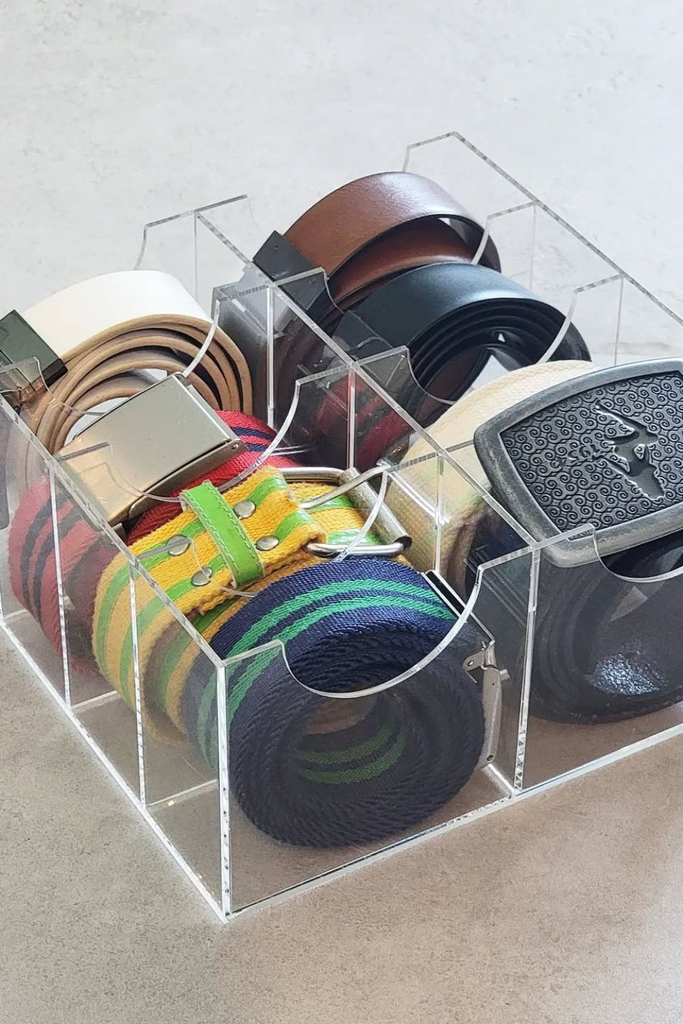
The main advantage of a clear organizer is immediate visibility. I can see the collection without opening a drawer or moving other accessories out of the way.
This works on a dresser, closet shelf, or inside a wardrobe compartment. Individual sections keep belts from spreading into one another and make it easier to notice which colors or styles I actually use.
I don’t treat the clear material as special protection for leather. Its value is visibility and organization, so I still keep leather belts in an appropriate storage environment.
Fabric Divider
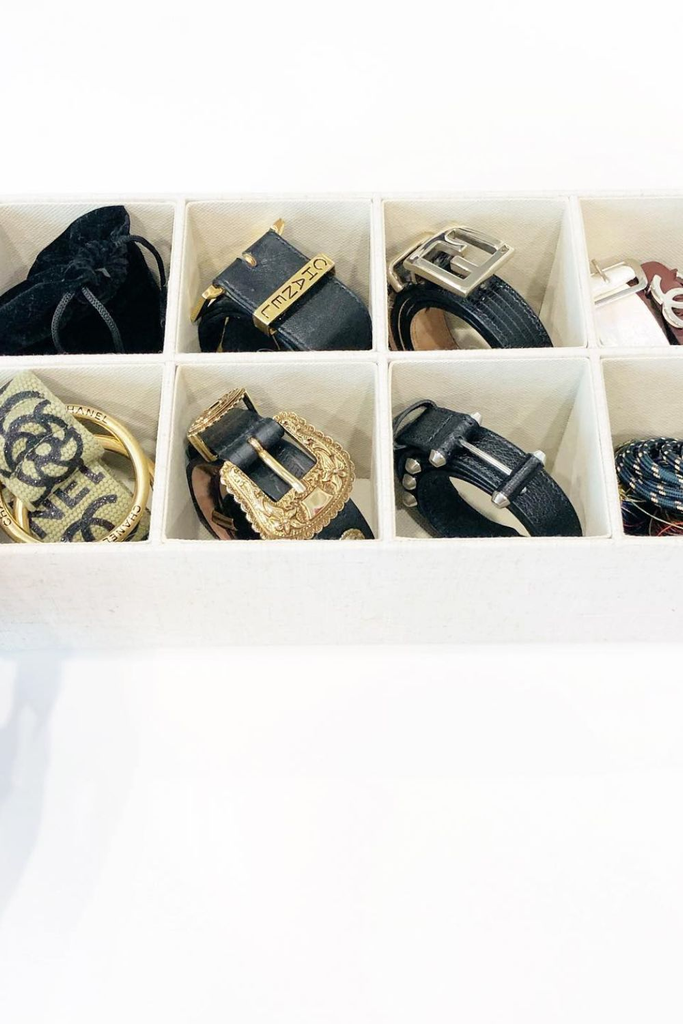
A fabric divider gives me softer, flexible compartments inside a drawer. I find this useful when I want individual belt sections without using rigid acrylic or wooden inserts.
The compartments can accommodate loosely coiled belts, and the flexible sides make it easier to adjust the arrangement when the collection changes. I still leave enough room for the buckle rather than squeezing every belt into an identically sized section.
This method can also work for smaller accessories stored in the same drawer. I choose the organizer based on the belt material and the construction of the divider rather than assuming soft fabric is automatically better for every belt.
Shelf Rows
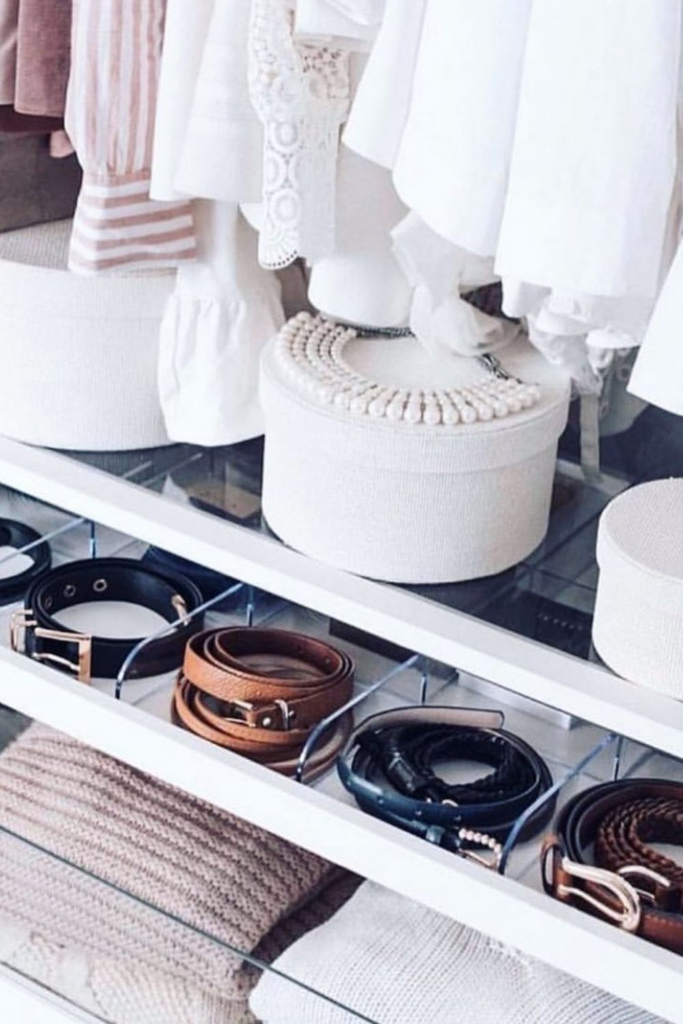
Open shelving offers a straightforward way to store belts without adding a dedicated cabinet. I can use small trays or shelf dividers to create rows and keep each belt in its own area.
This is especially useful when I already have a closet shelf that isn’t being fully used. Sorting the belts by color, type, or frequency makes the open arrangement easier to maintain.
I avoid placing heavy clothing or other objects directly on top of the belts. The point of the shelf system is to keep the belts accessible and contained, not compressed underneath another storage pile.
Display Island
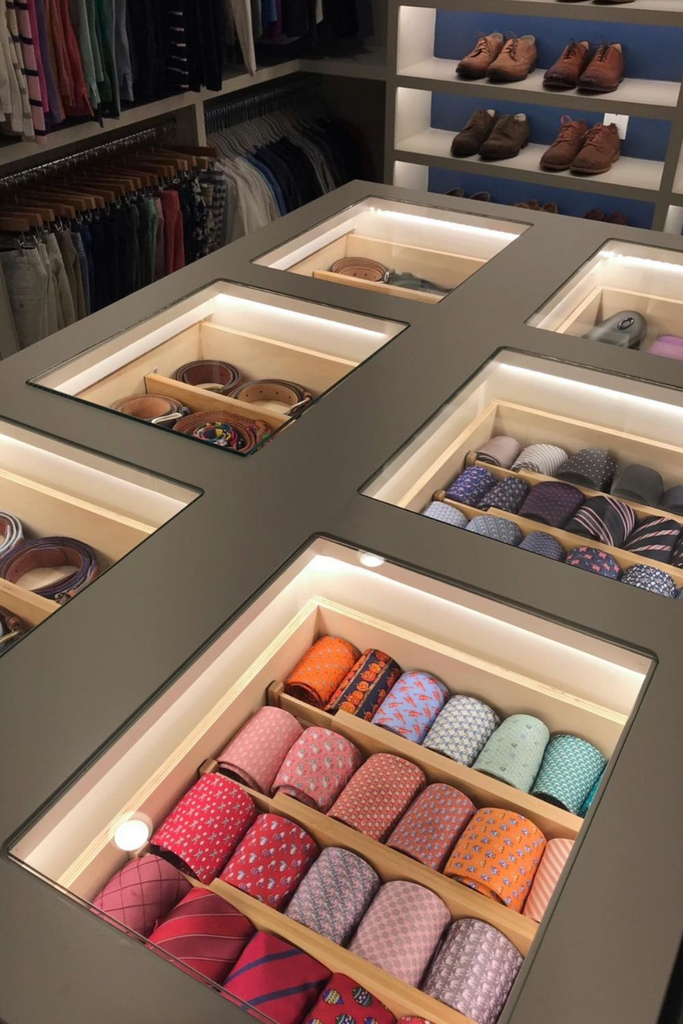
If I already have a closet island, its drawers can provide excellent belt storage. Divided inserts let me integrate belts into the furniture I already have instead of creating another storage unit.
I can keep belts alongside other small accessories while giving each category its own section. For a larger or more valuable collection, removable lined inserts can provide additional separation without permanently changing the drawer.
I wouldn’t add a closet island solely to store a modest belt collection. This idea makes more sense when the island is already part of the closet or serves several storage purposes.
Belt Tray
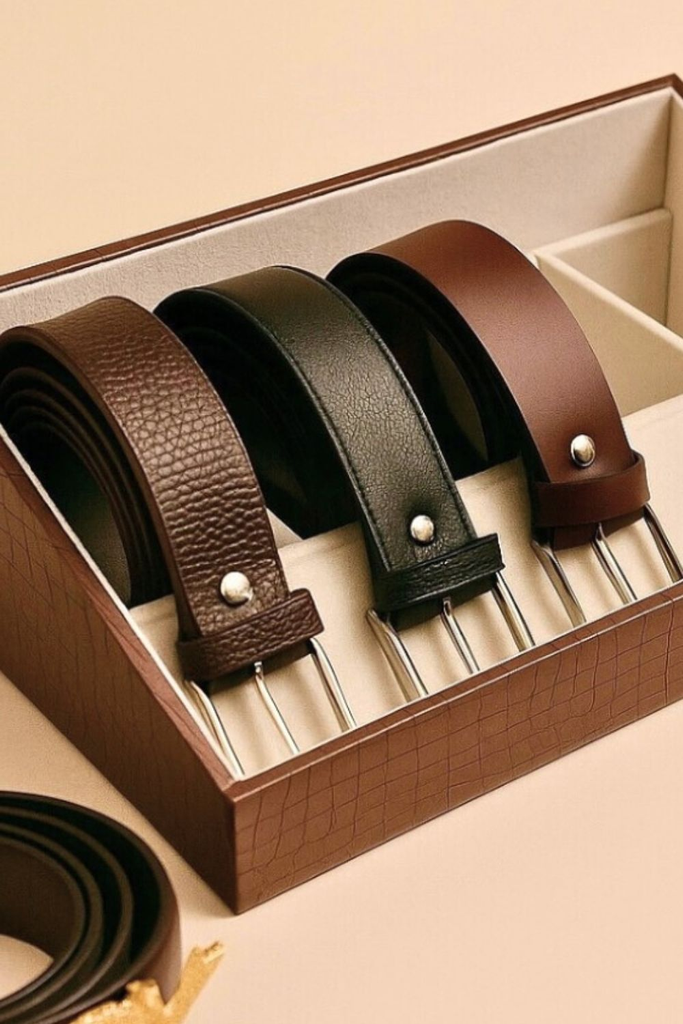
A belt tray works well for the smaller group of belts I wear most often. Instead of storing my entire collection together, I can keep a few everyday options in an easy-to-reach tray.
I can place the tray inside a drawer, on a closet shelf, or on a dresser. The tray needs enough depth for the buckle and enough width for the belt to sit in a relaxed coil.
This is especially practical when I rotate between a handful of favorite belts. Less-used or seasonal belts can stay in another storage area while the tray remains focused on daily use.
Pro Tip: I put the belts I reach for most often in the easiest-to-reach part of the tray. Storage becomes much more useful when it follows my actual routine.
Luxury Drawer

For premium or special-occasion belts, I prefer a drawer with more breathing room and soft, suitable inserts. The goal is careful storage rather than simply making the drawer look expensive.
Modular sections can hold belts separately from sunglasses, scarves, or other accessories. I leave enough space around larger buckles so they aren’t pressed against neighboring items.
Even in a premium drawer, the same basic care applies. I avoid excessive heat, damp conditions, heavy pressure, and unnecessary crowding, and I follow the manufacturer’s instructions when a particular belt has specific care requirements.
FAQs
How do you store belts without damaging the leather?
I prefer hanging leather belts appropriately or placing them in a loose coil inside a suitable drawer or tray. I avoid sharp repeated folds, excessive pressure, crowded compartments, prolonged dampness, and excessive heat.
The storage environment matters as much as the organizer. If the area is unsuitable for leather, putting the belt inside a box or drawer won’t solve the underlying problem.
Is it better to hang belts or roll them for storage?
Neither method is automatically best for every belt. I choose hanging when I have suitable vertical space and want quick visibility, while loose rolling works well for drawers, trays, and boxes.
The important part is avoiding unnecessary tightness, sharp bends, and overcrowding. I also consider the belt material and follow its care instructions when available.
How should I store belts in a small closet?
I start with space I already have rather than adding furniture. Closet-rod hooks, hanger-based systems, shelf hooks, narrow vertical storage, and suitable wall or door organizers can all make use of otherwise unused areas.
For a small collection, a simple peg holder or compact belt tray may be enough. The best choice depends on whether my closet has more usable rod, shelf, wall, or drawer space.
How do you organize a large belt collection?
I separate the belts so I can see and reach them without moving the entire collection. A wall display, belt tower, drawer grid, or larger divided system can work well depending on the closet layout.
I also group belts by a useful category, such as everyday, dress, seasonal, color, or material. I don’t create more categories than I can realistically maintain.
Should leather belts be rolled or hung?
I use either method when it allows the belt to remain relaxed and avoids sharp bends. Hanging can be convenient for frequent-use belts, while a loose coil can work well in a properly sized drawer or tray.
I avoid forcing a leather belt into a small roll just to make it fit. If the belt has specific care instructions, those take priority over a general storage preference.
How do you keep belt buckles from scratching other accessories?
I give larger buckles their own space instead of allowing several belts to pile together. Divided drawers, trays, racks, and boxes can help keep buckles from unnecessarily contacting nearby accessories.
I also avoid overfilling storage. When buckles are tightly packed, removing one belt often drags the others with it and increases the chance of unwanted rubbing.
Read this next: 22 Jeans Storage Ideas for 2026
Conclusion
I’ve found that good belt storage doesn’t have to be complicated. A small collection may only need a few pegs, hooks, or a simple tray, while a larger collection benefits from divided drawers, racks, or dedicated vertical storage.
The main goal is to keep belts relaxed, separated, easy to identify, and suited to the space I have. For leather belts, I also pay attention to moisture, heat, sunlight, and unnecessary pressure.
Even in a small closet, I can usually find useful space on an existing rod, shelf, wall, or door. Once storage matches how often I wear each belt and the size of my buckles, keeping the whole collection organized becomes much easier.



2 Comments