
26 Under Cabinet Storage Ideas for 2026
find that kitchen and bathroom cabinets often have more storage potential than they seem to offer. The problem is that deep shelves, awkward corners, plumbing, and narrow spaces can make everyday items difficult to reach. When I cannot see what I already own, I am also more likely to buy duplicates or leave things scattered on the counter.
I like to start by looking at the cabinet itself before buying organizers. A simple shelf insert might solve the problem, while a tall cabinet with heavy cookware may need a properly installed pull-out system. The right choice depends on what I store, how often I use it, and how much room I have to work with.
These 26 under cabinet storage ideas cover kitchens, bathrooms, pantries, cleaning supplies, cookware, recycling, and small household essentials. I explain how pull-down racks, sliding drawers, door-mounted organizers, clear bins, turntables, and vertical dividers can make existing cabinets easier to use.
Save this for later

Table of Contents
I recommend measuring the available space, checking weight limits, accounting for plumbing and door clearance, and choosing materials suited to the room. Renters can often use removable organizers, while permanent pull-outs and heavy lift systems may require professional installation.
Key Takeaways
- I start by measuring cabinet width, depth, height, and door clearance before purchasing an organizer.
- Pull-down racks help with high shelves, while full-extension drawers improve access to deep base cabinets.
- Adjustable shelves, labeled bins, and vertical dividers make better use of awkward spaces.
- Under-sink organizers must leave enough room for pipes, valves, and potential leaks.
- Heavy cookware and motorized or spring-assisted racks need secure mounting and adherence to the manufacturer’s weight limits.
- Renters can often improve storage with shelf-hanging baskets, freestanding bins, and removable organizers.
- I keep frequently used items within easy reach and store heavier items low whenever possible.
Related article: 23 Canned Food Storage Ideas for 2026
How Do Pull-Down Under-Cabinet Racks Work?
A pull-down cabinet rack helps bring items from a high shelf closer to a comfortable reaching height. Depending on the model, it uses hinged arms, a counterbalanced mechanism, or a spring-assisted system to guide the rack forward and downward.
To use one, I pull the handle as directed by the manufacturer, retrieve what I need, and return the rack to its raised position. The mechanism is designed to control the movement, but it should never be assumed to be safe simply because it feels smooth when empty.
Before choosing a pull-down rack, I check the cabinet’s internal dimensions, mounting points, door opening, and the product’s rated load. I also confirm that the cabinet structure can support the hardware and its contents. Heavy dishes, glass containers, and cookware should be loaded evenly within the specified limit.
These systems are particularly useful for people who struggle to reach upper shelves. However, they are not the only solution for awkward cabinets. A shelf riser, a small collection of lightweight bins, or moving everyday items to a lower shelf may solve the same problem at a much lower cost.
Save this article for later so you can compare the ideas when you are ready to organize your cabinets.
Full-Height Pull-Out

Tall cabinets can hold plenty of supplies, but fixed shelves often leave items at the back difficult to reach. I would use a full-height pull-out system to bring several shelves forward together, making it easier to see what is stored at different levels.
This setup works well in a pantry or a narrow cabinet near the cooking area. I would keep frequently used ingredients on the middle shelves, lighter backup supplies above, and heavier containers lower down. Adjustable shelves are helpful when the cabinet needs to hold a mix of cans, jars, and taller bottles.
Before installing one, I would measure the cabinet opening as well as its interior. The pull-out must clear the door, hinges, nearby appliances, and any projecting handles. Full-height hardware can be expensive, so I would compare it with simpler individual pull-out baskets before committing to a major upgrade.
Pro Tip: I label shelves or group similar foods together so I can check supplies quickly without pulling out every level.
Curved Corner Pull-Out
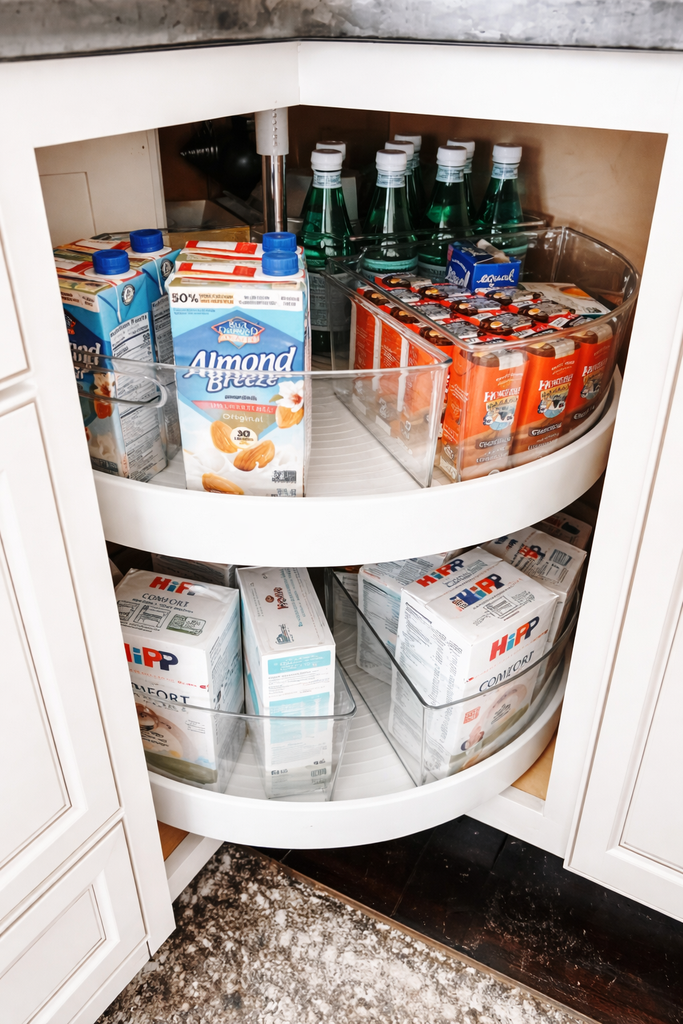
Corner cabinets can be frustrating because the back sections are often difficult to reach. A curved pull-out or rotating corner organizer helps bring stored items into view instead of leaving them hidden behind other cookware and containers.
I would consider this option for an L-shaped kitchen where pots, bowls, or pantry supplies tend to collect in the corner. Depending on the cabinet design, the hardware may slide outward, rotate, or combine both movements.
Not every corner cabinet can accommodate the same mechanism. I would check the door opening, hinge position, interior shape, and clearance before choosing a model. If a fitted system is too costly, removable turntables or a few well-sized bins can make the existing space easier to manage.
Pro Tip: Store items of similar size together and avoid stacking heavy cookware on rotating shelves unless the organizer is rated for that load.
Slim Bottle Pantry
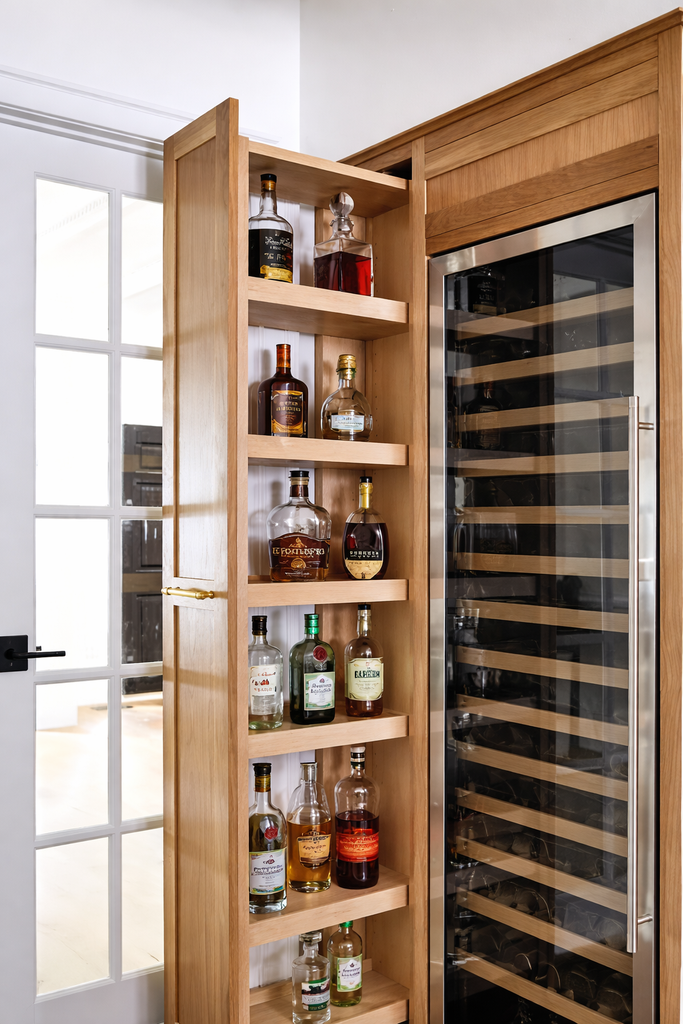
The narrow space beside a refrigerator or between cabinets can be useful for storing bottles, oils, sauces, and other pantry essentials. A slim pull-out pantry uses this vertical gap without requiring a full-width cabinet.
I would choose adjustable shelves or bottle rails that keep containers upright while allowing the drawer to slide smoothly. Oils and frequently used sauces can go on a convenient middle level, while less-used bottles can sit higher or lower.
Before installing one, I would measure the actual gap and leave enough clearance for the refrigerator door, handles, and ventilation requirements specified by the appliance manufacturer. A narrow organizer can also become unstable if it is overloaded or poorly mounted.
If the space is too small for a fitted pull-out, I would use an existing pantry shelf with a shallow bottle bin instead. I would also keep cooking oils away from direct heat and sunlight where practical.
Bathroom Linen Pull-Out

Bathrooms often need storage for towels, toilet paper, toiletries, and spare supplies, but bulky cabinets can make a small room feel crowded. A tall, narrow pull-out cabinet can make better use of vertical space beside a vanity or in another suitable location.
I would place folded hand towels and everyday toiletries on easy-to-reach shelves. Extra towels and sealed backup products can go higher, while a laundry hamper or other suitable container can sit at the bottom if the cabinet has enough room.
Moisture matters in this location. I would choose finishes designed for bathroom conditions, avoid trapping damp towels in an enclosed compartment, and keep stored items away from plumbing leaks. Good ventilation is important, particularly in bathrooms that stay humid after showers.
Pro Tip: I keep a small supply of frequently used products near the front and store backups separately so the cabinet does not become overcrowded.
Vanity Drawer Pull-Out

A bathroom vanity can quickly fill with makeup, skincare products, hair accessories, and daily toiletries. A pull-out organizer makes these items easier to find without spreading everything across the countertop.
I would use shallow trays for small products, dividers for brushes and tools, and deeper compartments for taller bottles. Grouping items by routine, such as morning skincare or hair care, makes it easier to put everything back in the right place.
Before adding an organizer, I would measure around the sink basin, drainpipe, and supply lines. Some vanities have less usable space than their exterior dimensions suggest. I would also keep electrical styling tools away from water and store them only after they have cooled.
A removable tray is a good starting point if I do not want to replace the existing drawers. I can test the layout first and invest in fitted inserts only if they make daily routines easier.
Split Storage Drawers

When small products, bottles, and backup supplies are mixed together, even a deep drawer can become difficult to use. Split storage drawers create separate zones so I can reach one category without moving everything else.
I would use one section for daily toiletries, another for grooming accessories, and a separate area for refills. Adjustable dividers work well when product sizes change, while removable bins make cleaning easier.
In a bathroom vanity, I would check the space around the plumbing before selecting a drawer system. I would also avoid filling compartments so tightly that drawers jam or products fall out when opened.
Pro Tip: Leave a little empty space in each section. It gives me room to replace products and prevents the organizer from becoming another crowded storage area.
Zoned Pantry Pull-Outs

A pantry becomes easier to maintain when each shelf has a clear purpose. Zoned pull-outs let me separate cans, baking ingredients, snacks, and bulk packages instead of mixing everything together.
I would place frequently used ingredients and everyday snacks at comfortable reaching height. Heavier cans and large containers belong on sturdy lower shelves, while lightweight backup items can go higher. Shallow bins help contain small packets that might otherwise slide behind larger packages.
For food storage, I would choose containers suitable for the contents and keep labels visible. I would also check expiration dates, use older products first, and avoid transferring food into containers without preserving important ingredient and allergen information.
If a fitted pantry system is outside my budget, I would start with labeled bins and a few shelf risers. These simple additions can improve visibility without changing the cabinetry.
Pro Tip: Group food by how I use it, such as breakfast, baking, and quick dinners, rather than organizing everything only by package type.
Utility Pull-Out Tower

Brooms, dustpans, sprays, cloths, and refills can become a jumble when they share a cabinet with unrelated household items. A utility pull-out tower creates a dedicated place for cleaning supplies and helps keep long tools upright.
I would use vertical slots or secure holders for suitable tools and separate shelves for bottles and cloths. Heavy refill containers should sit low, while smaller supplies can go in a removable caddy.
If I store cleaning products here, I would keep them in their original labeled containers and follow their storage instructions. Household chemicals should be kept away from children and pets, and incompatible products should never be mixed. I would also avoid placing chemicals where they could leak onto food, cookware, or personal-care items.
A narrow pull-out may fit beside a refrigerator or in a utility cabinet, but I would check door swing and appliance clearance first. For a rental, a freestanding caddy may be more practical than a permanently installed tower.
Cookware Lift System
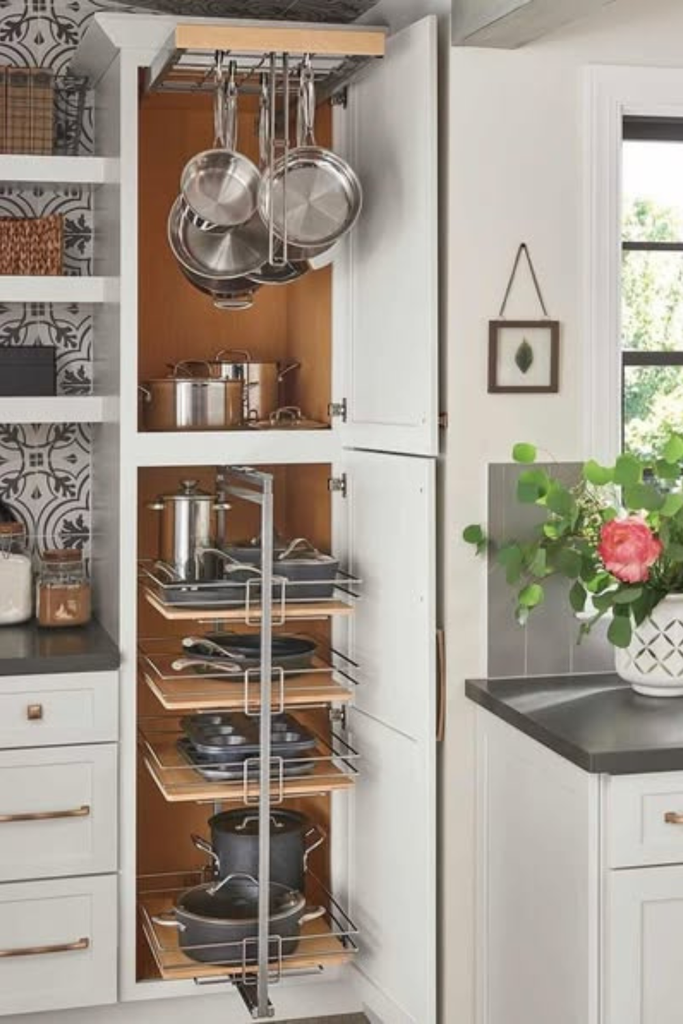
Heavy pots and pans can be difficult to retrieve from high cabinets, particularly when several pieces are stacked together. A purpose-built pull-down cookware lift can lower the stored items toward a more accessible position.
I would choose a system specifically rated for the weight of my cookware, including the rack itself if the manufacturer’s specifications require that calculation. The cabinet sides and mounting points must also be suitable for the hardware. Installation should follow the manufacturer’s instructions rather than relying on ordinary shelf brackets or improvised fasteners.
I would place heavier pans securely and avoid overloading one side. If the system feels loose, drops unexpectedly, or becomes difficult to operate, I would stop using it until the problem is checked.
For many kitchens, moving heavy cookware to a lower cabinet is the simpler and less expensive option. A sturdy pull-out drawer with dividers may provide easier access without requiring an overhead lifting mechanism.
Pro Tip: Keep the heaviest pans in a low, stable location whenever possible. This reduces the need to lift weight above shoulder height.
Dual Bin Pull-Out
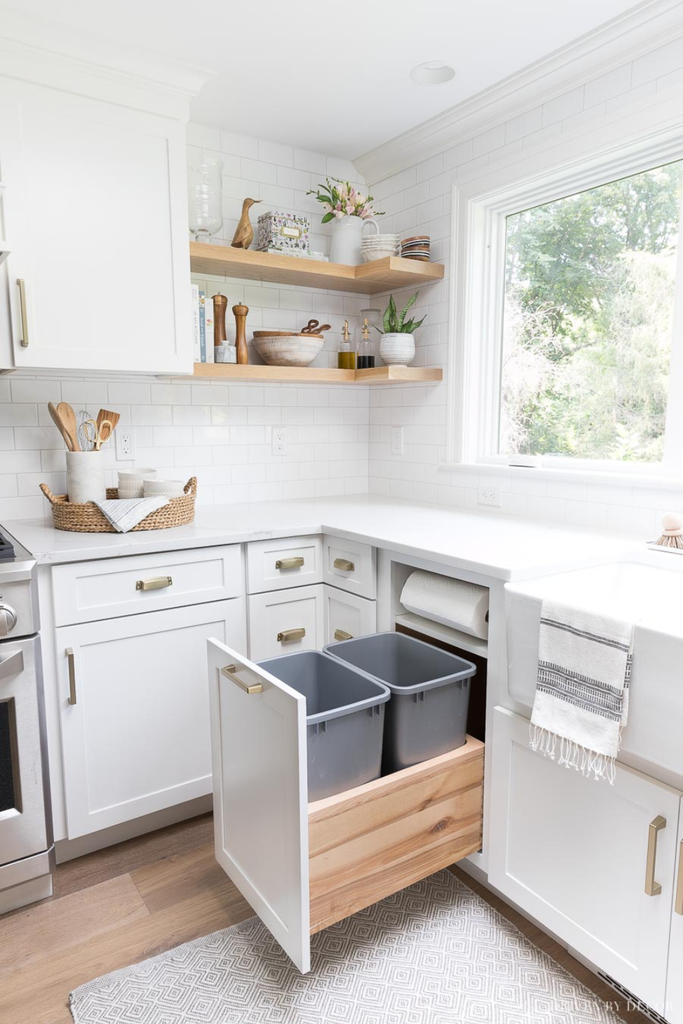
A dual-bin pull-out can make everyday waste and recycling easier to manage. Instead of leaving containers loose under the sink or beside the counter, I can slide them out when needed and tuck them away afterward.
I would place the bins near the main preparation or cleanup area, provided there is enough space for the cabinet doors and nearby appliances to open. Removable bins make it easier to empty and wash the containers, while a sturdy sliding frame helps prevent them from tipping.
Before buying a system, I would measure the cabinet opening and account for the sink bowl, pipes, and disposal unit if present. I would also confirm that the bins are large enough for the household’s needs but not so large that they become difficult to remove when full.
I would clean the bins regularly and use liners that fit properly. Food scraps and wet waste should not be left to accumulate, particularly in warm weather, because odors and leaks can develop.
Door-Mounted Pantry
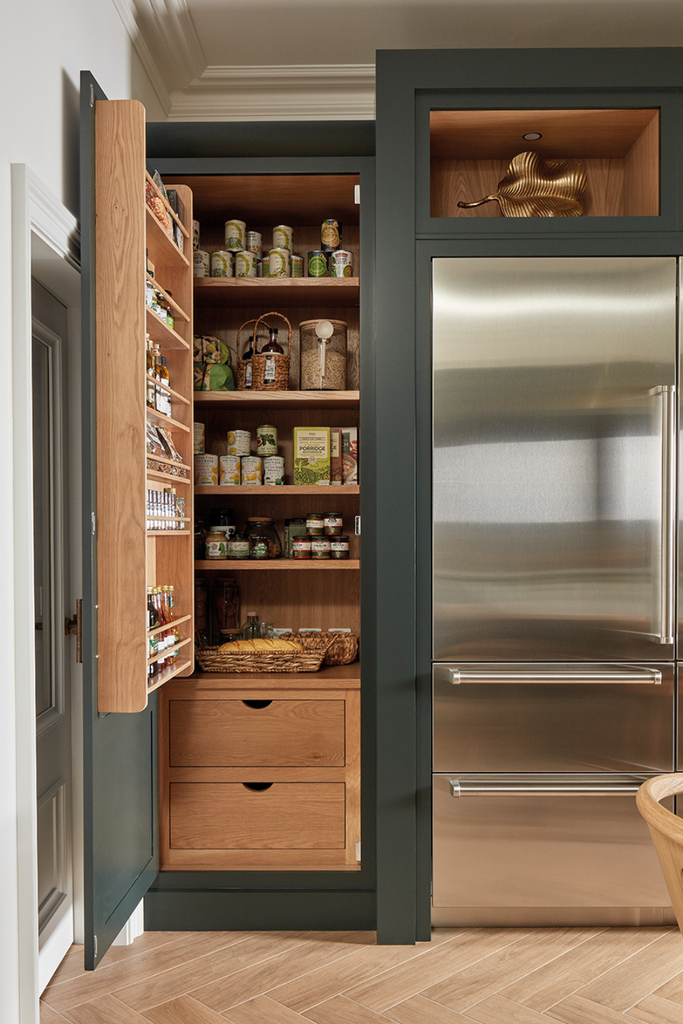
The inside of a pantry door can provide useful storage for spices, small jars, packets, and lightweight kitchen supplies. Shallow racks allow me to use this area without taking up another shelf.
I would keep frequently used spices and small packets in visible rows, with labels facing forward. Larger or heavier containers can stay on the main shelves, where their weight is better supported.
Door-mounted organizers need careful measuring. I would check the door thickness, hinge clearance, shelf depth, and the space between the closed door and the contents inside the cabinet. Items should not hit the shelves or become trapped when the door closes.
For a renter, an over-door organizer or a removable rack may be preferable to drilling into cabinetry. I would follow the product’s load limit and avoid putting glass jars in a setup that moves or rattles when the door opens.
Pro Tip: Keep the door rack shallow enough that it does not interfere with the pantry’s main shelves.
Deep Tool Drawer

Cooking utensils often become difficult to manage when long spatulas, tongs, ladles, and whisks are thrown into one deep drawer. Dividers help keep each tool in its place and make it easier to grab what I need while cooking.
I would choose a drawer close to the main cooking area, provided it does not interfere with the oven or other appliances. Long tools can sit in lengthwise compartments, while smaller accessories fit into separate sections.
Before purchasing inserts, I would measure the usable drawer depth, width, and height. I would also check that the drawer can close fully with the tools inside. Sharp knives should have suitable protective storage rather than being left loose with other utensils.
If I already have a deep drawer, adjustable dividers or washable containers may be enough. I would avoid buying a custom insert until I know how much space the tools actually need.
Pro Tip: Store the utensils I use most often near the front and move specialty tools toward the back to reduce unnecessary searching.
Counter-Depth Pull-Outs
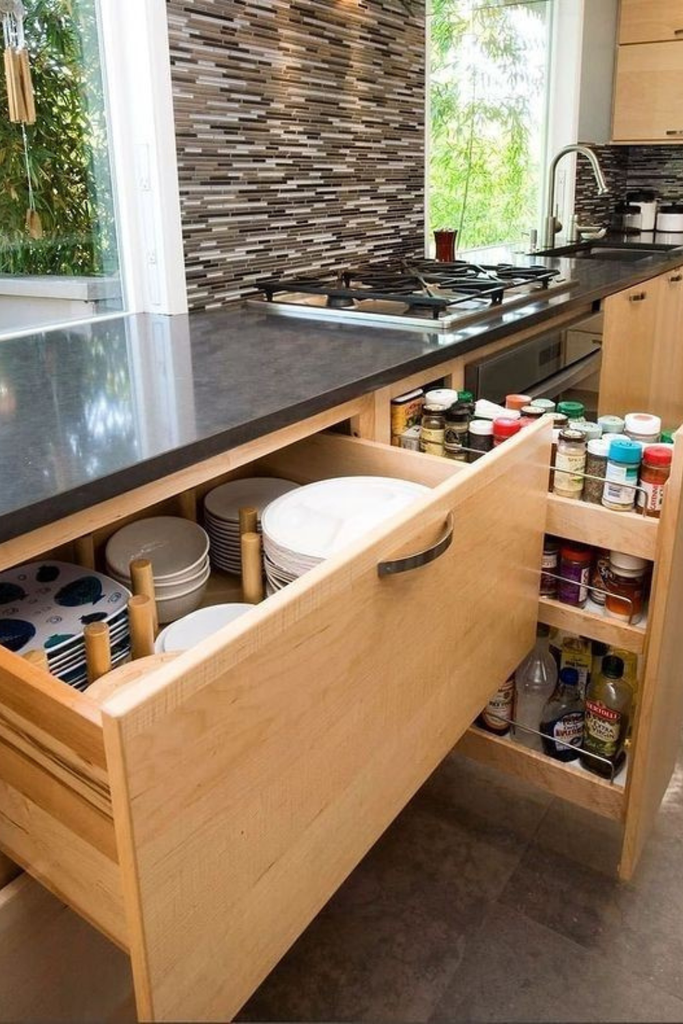
Deep base cabinets can hide dishes, food containers, oils, and small appliances behind whatever sits at the front. A full-extension pull-out shelf brings more of the cabinet contents within reach.
I would use these shelves beneath a preparation counter or in a pantry cabinet where I regularly retrieve ingredients and kitchen equipment. Adjustable dividers can help separate dishes, containers, and packaged foods.
The shelf must be suitable for the expected load, especially when it will hold heavy cookware or stacks of plates. I would check the runner’s weight rating, mounting requirements, and whether the cabinet frame is sturdy enough to support it.
I would also leave room for tall items and avoid stacking containers so high that they become unstable when the shelf moves. If the budget is limited, a removable bin that slides forward can provide some of the same convenience.
Appliance Garage Pull-Out
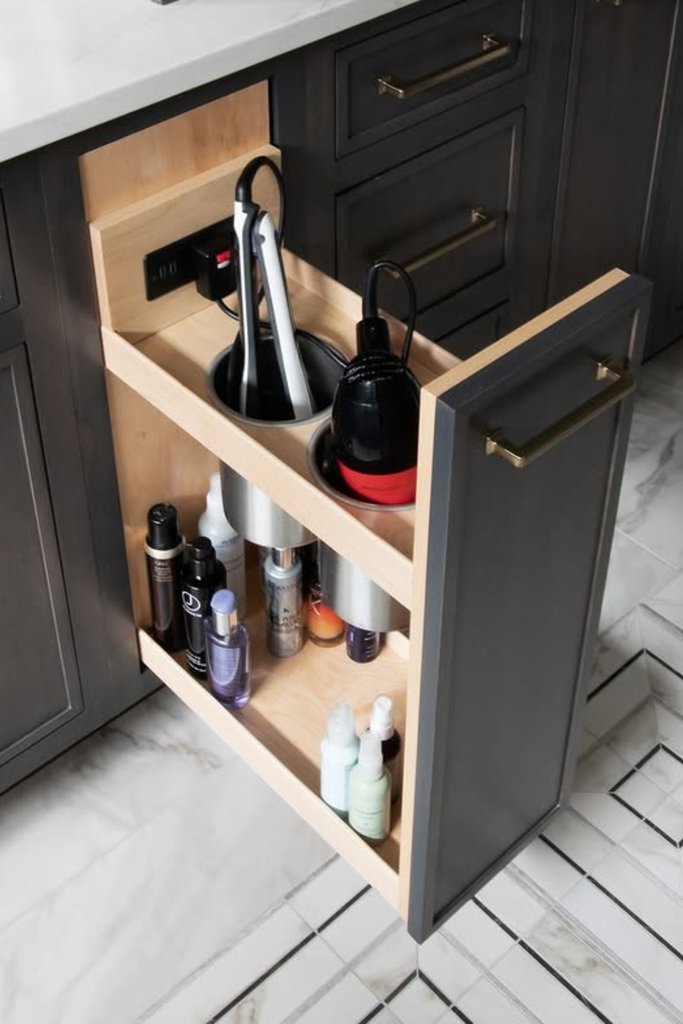
Small appliances can take over a countertop even when they are used frequently. A dedicated appliance cabinet or pull-out shelf can keep them organized while leaving more preparation space available.
I would consider this arrangement for a suitable base cabinet near an electrical outlet. The shelf needs to support the appliance’s weight and extend far enough for safe access. Heavy mixers, for example, require sturdier hardware than lightweight kitchen gadgets.
Electrical safety is especially important here. I would not operate an appliance inside an enclosed cabinet unless the appliance and cabinet setup are specifically designed for that use. Heat-producing appliances need appropriate ventilation and clearance, and cords should never become pinched in the sliding hardware.
If I want to use an appliance directly on a pull-out shelf, I would follow the manufacturer’s guidance for operation and storage. Otherwise, I would pull it out, place it on a suitable work surface, and return it after it has cooled and been cleaned.
Pro Tip: Measure the appliance with its attachments and handles in place, not just the main body, before choosing a storage cabinet.
Vertical Pantry Pull-Out
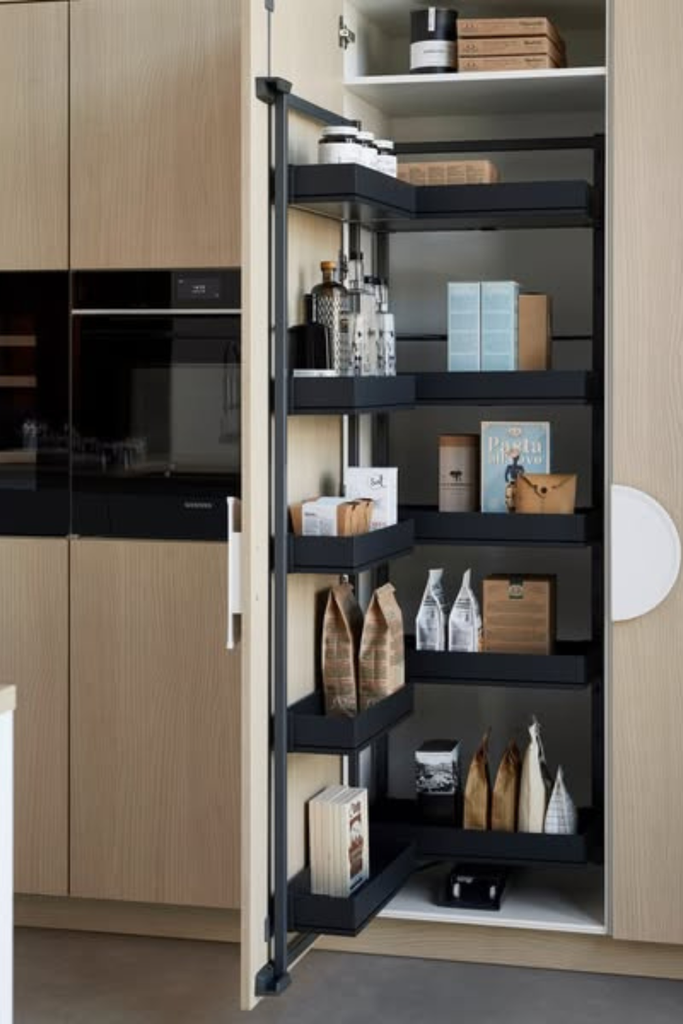
A tall, narrow pantry cabinet can hold more than it first appears to, especially when fixed shelves leave unused gaps. A vertical pull-out uses the cabinet’s height and brings stored goods forward.
I would use adjustable shelves for dry goods, jars, bottles, and boxed ingredients. Smaller containers should be kept secure, while heavier items belong on lower shelves. I would group products by category so the contents are easier to check before shopping.
Before installing a vertical pull-out, I would confirm the opening width, usable depth, mounting surface, and clearance around nearby appliances. Narrow pull-outs can be convenient, but they are not automatically suitable for every cabinet.
For a lower-cost alternative, I would use stackable bins or shelf risers inside the existing cabinet. These can improve visibility without requiring new runners or cabinet modifications.
Pro Tip: Keep a small inventory of backup staples so I can see what needs replacing instead of buying duplicates.
Also read: 16 Balcony Storage Ideas for 2026
Cleaning Supply Pull-Out

Cleaning products are easier to manage when sprays, cloths, brushes, and refills have separate places. A pull-out organizer can make a crowded utility cabinet more practical by bringing the supplies forward.
I would use a stable caddy for bottles, hooks or holders for suitable cleaning tools, and a separate compartment for cloths and sponges. Heavy bottles should stay low, and frequently used products should be easy to reach without moving other items.
Under-sink storage requires extra care because leaks can damage supplies and cabinet materials. I would check the area periodically for dampness and keep products in containers that can be removed easily if a spill occurs.
I would never transfer cleaning chemicals into unmarked drink bottles or mix products together. They should remain labeled and be stored according to their instructions, out of children’s and pets’ reach.
If the cabinet is rented or cannot be drilled into, a freestanding caddy or removable shelf organizer can provide a practical alternative.
Multi-Zone Pantry Stack
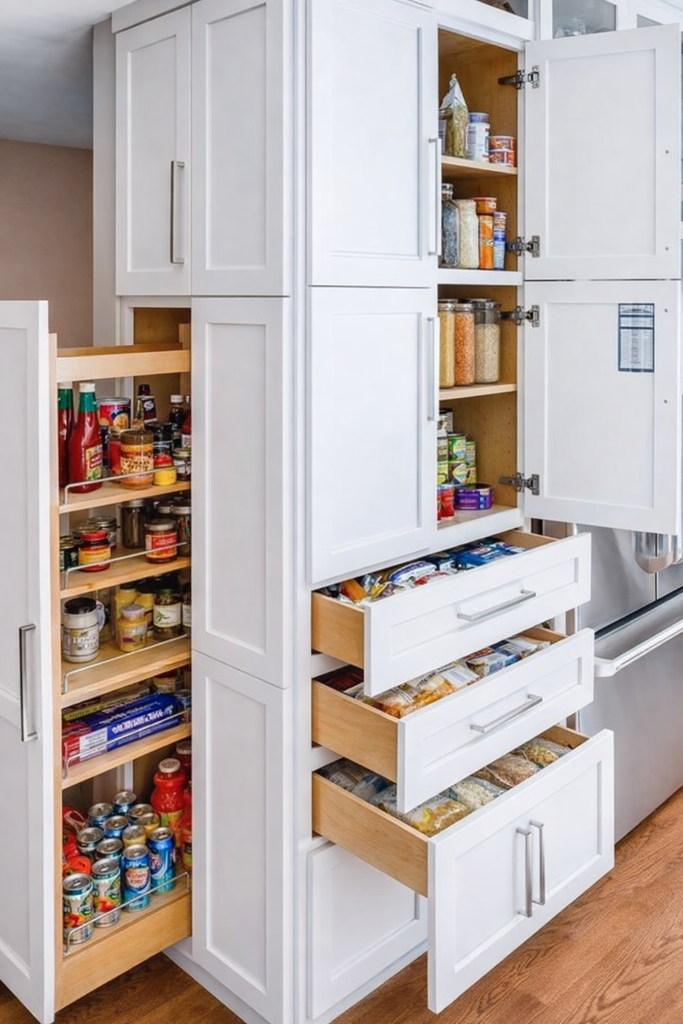
A household with many pantry staples may need more than one shelf or a single pull-out drawer. A multi-zone pantry combines different storage types in one cabinet run, giving each category a suitable place.
I would use pull-out shelves for jars and cans, drawers for snack packets, and fixed shelves for larger items that do not need frequent access. Everyday products should remain at a comfortable height, with heavy bulk packages stored lower down.
I would plan the layout around the household’s actual shopping habits instead of filling every available space. A pantry that is packed from top to bottom can be harder to use than one with a little room left for new groceries.
If a full cabinet renovation is not practical, I would create separate zones with labeled bins and adjustable shelf inserts. This is often an affordable way to test the arrangement before investing in fitted cabinetry.
Pro Tip: Leave one clearly defined space for new groceries so incoming items do not get mixed randomly into every category.
Open-Shelf Pull-Out

Open-shelf pull-outs are useful when I want to see pantry supplies without opening several boxes or moving stacked containers. The shelves slide forward, while their open design makes it easier to check the contents at a glance.
I would use them for jars, dry goods, and frequently used kitchen supplies. Adjustable shelf spacing helps accommodate different package heights, and a raised edge can prevent containers from sliding off during movement.
Open shelves do not protect their contents from dust or spills as well as closed containers. I would keep food in suitable packaging or sealed containers and clean the shelves regularly. Items that need protection from moisture, heat, or light should be stored accordingly.
This setup works well in a tall pantry or a suitable base cabinet. I would check the extension length and load rating before installation, particularly if the shelves will hold glass jars or heavy cans.
Swing-Out Pantry Panels

Deep corner pantries can waste space when the shelves are difficult to reach. Swing-out pantry panels use hinged or pivoting sections to bring shallow storage areas forward when the door opens.
I would use these panels for smaller jars, packets, and lightweight pantry items that fit securely on the racks. Larger and heavier supplies can remain on the main shelves, where they are less likely to shift when the panels move.
The cabinet must have enough clearance for the panels to swing without striking walls, appliances, or other doors. I would also check the hinges, mounting points, and weight limits because the load changes as the panels move.
For an existing pantry that cannot be modified, removable bins placed near the front may be a simpler solution. They will not use every corner, but they can make frequently used items much easier to reach.
Pro Tip: Keep the swing-out racks lightly loaded enough to move smoothly, and never assume that a hinge can support extra weight beyond its rated capacity.
Recycling Center Pull-Out

Recycling can become untidy when bottles, cans, and paper products are left in loose bags or mixed with household waste. A dedicated pull-out recycling center gives each material a defined place and makes sorting more convenient.
I would choose removable bins that suit the recycling collection rules in my area. One bin might hold cans and bottles, while another can be used for other accepted materials. If space is limited, I would prioritize the categories my household produces most often.
The cabinet should be easy to clean and large enough for the bins to slide out without hitting pipes or neighboring doors. I would empty the containers regularly, rinse items when required by local guidance, and keep wet or food-contaminated materials from creating odors.
If a fitted pull-out is too expensive, two or three freestanding containers can work just as well. I would label them clearly so everyone at home knows where each item belongs.
Hanging Under-Shelf Rack

The space beneath a cabinet shelf can be useful when the shelf above has enough clearance. A hanging under-shelf basket slides or hooks onto the shelf and creates an extra storage level without taking up the main shelf surface.
I would use it for lightweight items such as napkins, small packets, or suitable kitchen accessories. Some models can hold mugs or other items, but I would check the rack’s design and load limit before storing anything breakable.
The rack must fit the shelf thickness and leave enough room for the cabinet door to close. I would also check that it does not make the shelf unstable or obstruct items stored below.
This is one of the simplest options for renters because many models do not require drilling. I would still test the fit carefully and avoid placing heavy glassware overhead where it could fall.
Pro Tip: Use a hanging basket for items I reach for often, not as a place to store things I rarely use.
Wall Pantry Fold-Out

When a kitchen lacks cabinet space, a fold-out wall pantry can create additional storage along an available wall. Depending on the design, it may use a hinged panel, a shallow cabinet, or a door that opens to reveal several shelves.
I would use shallow compartments for packets, spices, and small jars, keeping heavier products on stronger lower shelves. The interior should be arranged so items remain stable when the unit opens and closes.
Wall-mounted storage needs secure installation into suitable structural supports using hardware appropriate for the wall and the loaded unit. I would not rely on adhesive hooks or ordinary drywall fixings for a heavy pantry. Before installation, I would also check for hidden wiring or plumbing and confirm that the open door will not obstruct a walkway.
For renters, a freestanding narrow shelving unit may be a safer option if wall drilling is not allowed. It can offer similar storage without making permanent changes to the property.
Clear-Bin Pantry

Small food packets, baking ingredients, and miscellaneous supplies are easy to lose on deep shelves. Clear bins allow me to group similar products together while keeping the contents visible.
I would dedicate separate bins to categories such as baking supplies, breakfast items, snacks, or seasoning packets. Labels help identify each group, especially when several products look similar. I would choose bins that fit the shelf and can be lifted out easily for cleaning.
Clear containers are helpful, but I would not assume that every food should be transferred out of its original packaging. I would preserve cooking instructions, expiration information, ingredient lists, and allergen details. If I use airtight containers, I would choose ones suitable for the specific food and make sure everything is dry before storing it.
This approach also works for non-food items, including craft supplies and household refills. I would avoid stacking bins so high that the lower ones become difficult to reach.
Pro Tip: Label the front of each bin and place newer pantry items behind older ones when appropriate, so existing supplies are used first.
Sink Base Pull-Out

The cabinet beneath a kitchen or bathroom sink can be awkward because pipes, valves, and the basin take up valuable space. A U-shaped pull-out or plumbing-friendly organizer can make better use of the remaining area.
I would measure around the plumbing rather than assuming the cabinet is an empty rectangle. The organizer needs enough clearance to slide without catching on pipes, and it should leave access to shutoff valves and other fittings.
I would use the available shelves for suitable cleaning products, sponges, or sealed household supplies. In a kitchen, I would keep food and cookware separate from cleaning chemicals. In a bathroom, I would use moisture-resistant materials and avoid storing paper products directly against damp cabinet surfaces.
Because leaks can occur under sinks, I would check the cabinet periodically for water damage and avoid blocking any visible signs of a leak. I would also keep products in stable containers that can be removed quickly if repairs are needed.
If the pipes leave very little room, a small removable caddy may work better than a fitted pull-out system.
Bathroom Turntable Storage

Bathroom cabinets often contain bottles and small products that are hard to reach when they sit behind one another. A turntable, sometimes called a lazy Susan, lets me rotate the contents toward the front rather than reaching into the back.
I would choose a low-profile model that fits the cabinet and clears the plumbing. Small skincare products, toiletries, and other suitable containers can be grouped on the tray, with taller bottles positioned so they remain stable while it turns.
Before buying one, I would measure the cabinet’s usable width and height and account for the sink basin and drainpipe. A round tray may waste space in some narrow cabinets, so a rectangular pull-out or small removable bins could be a better fit.
I would clean the tray regularly and avoid overloading it with heavy glass bottles. If products leak, I would remove the tray and dry the cabinet before putting everything back.
Pro Tip: Keep everyday items on the turntable and store refills elsewhere so the tray remains easy to rotate.
Vertical Board Pull-Out
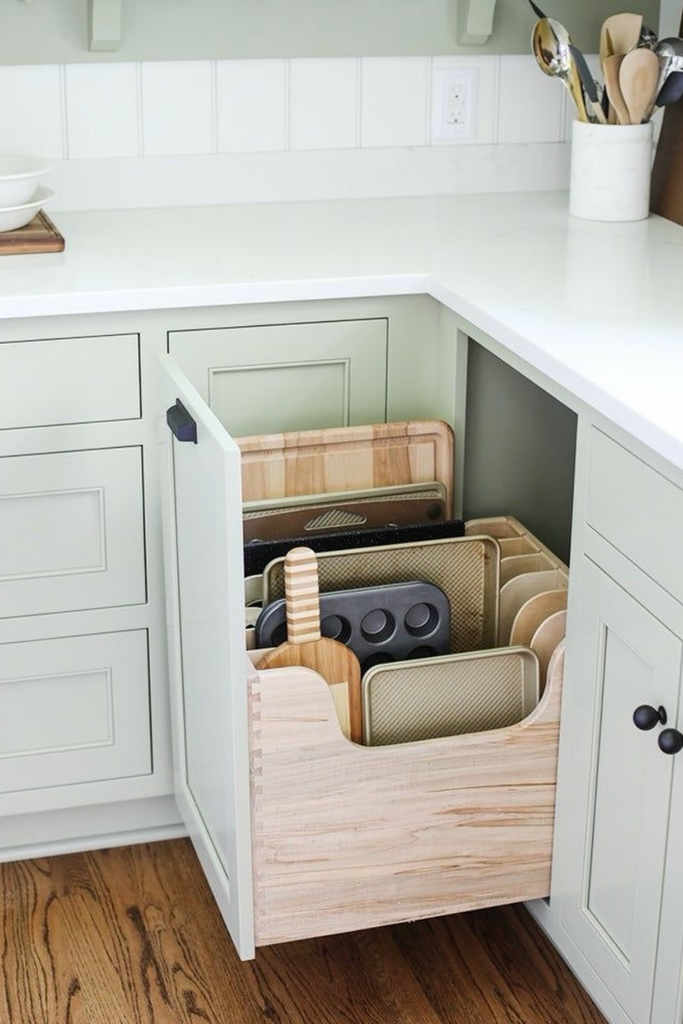
Cutting boards, baking trays, and serving boards can take up too much room when stacked flat. A vertical organizer stores them on their edges, making it easier to remove one without lifting the whole pile.
I would place the organizer in a suitable base cabinet near the food preparation area. Separate slots help prevent boards from rubbing together, while a stable base keeps them upright.
I would measure the height and depth of the largest board or tray before choosing the divider. The organizer should allow enough room to remove each item without scraping nearby cabinet surfaces or catching on the door.
For hygiene, I would let cutting boards dry thoroughly before storing them. Damp boards should not be placed in a tight, enclosed space, and boards used for raw meat should be cleaned according to food-safety guidance before being returned to storage.
A simple adjustable divider can be enough if I already have a suitable cabinet. I would only invest in a fitted pull-out if the existing shelf makes boards difficult to reach.
FAQs
How do you choose the right under-cabinet storage for your space?
I start by identifying the problem rather than choosing an organizer because it looks attractive. If I struggle to reach a high shelf, I consider a pull-down rack or move everyday items lower. If the back of a base cabinet is difficult to use, a full-extension pull-out or removable bin may be a better fit.
Next, I measure the cabinet’s internal width, depth, and height. I check the door swing, hinges, nearby appliances, plumbing, and the space needed to open drawers fully. For any mounted system, I also review the installation requirements and weight rating.
I consider how often I use the stored items, how heavy they are, and whether the room is humid. Kitchens may need easy-to-clean surfaces and sturdy hardware, while bathrooms benefit from moisture-resistant materials and good ventilation.
Finally, I compare the cost of a fitted system with simpler options such as shelf risers, hanging baskets, dividers, and clear bins. I prefer to test a low-cost arrangement first if I am not sure which layout will work best.
Does under-cabinet storage work in rental homes?
Yes. I can often improve cabinet storage in a rental without drilling holes or replacing the existing shelves. Slide-on baskets, shelf risers, freestanding bins, removable drawer dividers, and suitable over-door organizers are useful starting points.
I would check the organizer’s fit and load limit before using it. A hanging rack must be compatible with the shelf thickness, and an over-door product must not prevent the door from closing properly. Heavy items and breakable containers should not be stored in a lightweight organizer that is not designed to hold them.
For pull-down racks, wall-mounted fold-out pantries, and fitted pull-out drawers, I would ask the landlord for permission before making permanent changes. These systems may require drilling, reinforced mounting points, or cabinet alterations.
I would also choose storage that can be removed and cleaned when I move out. The best rental-friendly solution is one that improves access without damaging the cabinets or making the space harder to maintain.
Read this next: 15 Scarf Storage Ideas for 2026
Conclusion
I find that the most useful cabinet upgrades are the ones that solve a specific everyday problem. A pull-down rack can help with high shelves, a sliding drawer can make deep cabinets easier to use, and a few well-chosen bins can bring order to a crowded pantry without a major renovation.
Before spending money, I would measure the space, sort the items I want to store, and decide which products need to be easy to reach. I would also check weight limits, mounting requirements, ventilation, and plumbing clearance before installing any hardware.
I do not need to redesign every cabinet at once. Starting with one frustrating area makes it easier to see what works and build a storage system that suits my home, budget, and daily routine.




2 Comments