
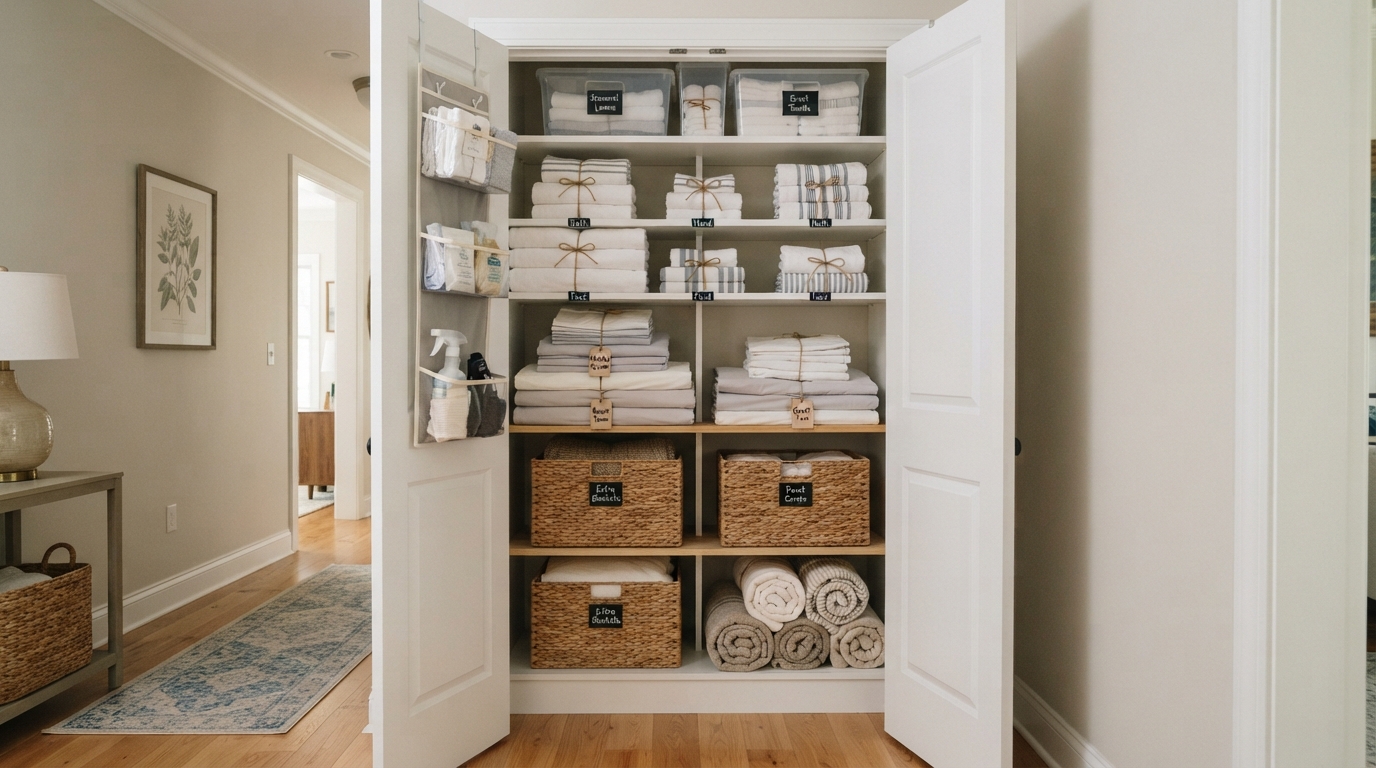
22 Linen Closet Organization Hallway Ideas for 2026
A hallway linen closet can look perfectly organized on laundry day and somehow become a mess again a week later. I’ve found that the problem usually isn’t the number of towels or sheets—it’s that the closet doesn’t have a clear system for putting everything back.
When towels, bedding, toiletries, and extra household supplies share the same shelves, small changes can make a big difference. I like to assign each category a specific location and use simple organizers only where they actually solve a storage problem.
The depth and height of the closet matter, too. Deep shelves are useful for bulky bedding but can make small items difficult to reach, while narrow shelves often work better for everyday towels and toiletries.
In this guide, I’m sharing 22 hallway linen closet organization ideas that I would use to make a small or busy closet easier to access, restock, and maintain throughout the year.
I recommend starting by removing everything from the closet and grouping similar items together. Towels, sheet sets, blankets, toiletries, bathroom supplies, and cleaning items should each have a defined home.
For shelves that are deep or difficult to reach, I find bins, baskets, drawers, and pull-out containers especially useful. Labels can also make a shared household system much easier because everyone can see where an item belongs.
Save this for later
Table of Contents
I also like using vertical space instead of allowing large stacks to spread across an entire shelf. Shelf dividers, uniform folding, rolled towels, and dedicated zones can help you fit more without making the closet difficult to use.
Key Takeaways
- Group towels, sheets, toiletries, and household supplies before organizing.
- Keep frequently used items between waist and eye level when possible.
- Use baskets and bins to contain small or flexible items.
- Store seasonal blankets and backup linens higher up.
- Use shelf dividers when folded stacks repeatedly collapse.
- Keep complete sheet sets together by bed size.
- Leave some open space so items can be removed without disturbing everything else.
- Label shared storage areas so the system is easier for everyone to follow.
Related article: 18 Storage Bin Rack DIY Ideas for 2026
What Storage Solutions Work Best for Hallway Linen Closets?
I start with the items rather than the containers. Before buying organizers, I empty the closet and sort everything into broad groups such as bath towels, hand towels, bedding, blankets, toiletries, and backup supplies.
Once I know what I actually need to store, I can decide which shelves need baskets, dividers, drawers, or open space. This prevents me from filling the closet with organizers that look nice but reduce usable storage.
For deep shelves, I prefer containers that can be pulled forward. For narrow shelves, dividers and short stacks usually work better because they make individual items easier to grab.
I also avoid packing shelves completely full. Leaving a little breathing room makes laundry-day restocking much easier and reduces the chance that one missing towel will bring down an entire stack.
Pro Tip: Organize based on how often you use something. Everyday towels belong in the easiest-to-reach area, while guest bedding and seasonal blankets can go higher or farther back.
Smart Zones
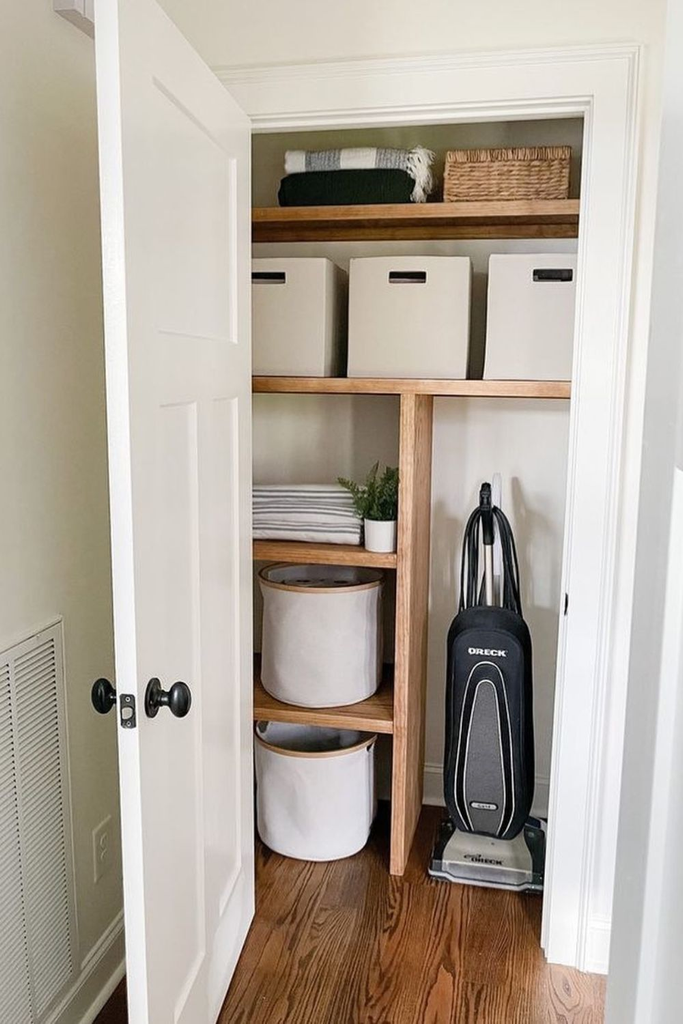
I like dividing a hallway linen closet into practical zones instead of treating every shelf as one large storage area.
One section can hold everyday towels, another can hold bedding, and a smaller area can handle toiletries or household backups. If the closet is wide enough, a vertical divider can create two distinct sections.
I would keep frequently used linens around the middle of the closet because they are easier to reach without stretching or bending. Higher shelves can then handle bulky comforters or seasonal items.
If a vacuum, mop, or other cleaning equipment needs to share the closet, giving those larger items their own vertical section can prevent them from interfering with folded linens.
Label System
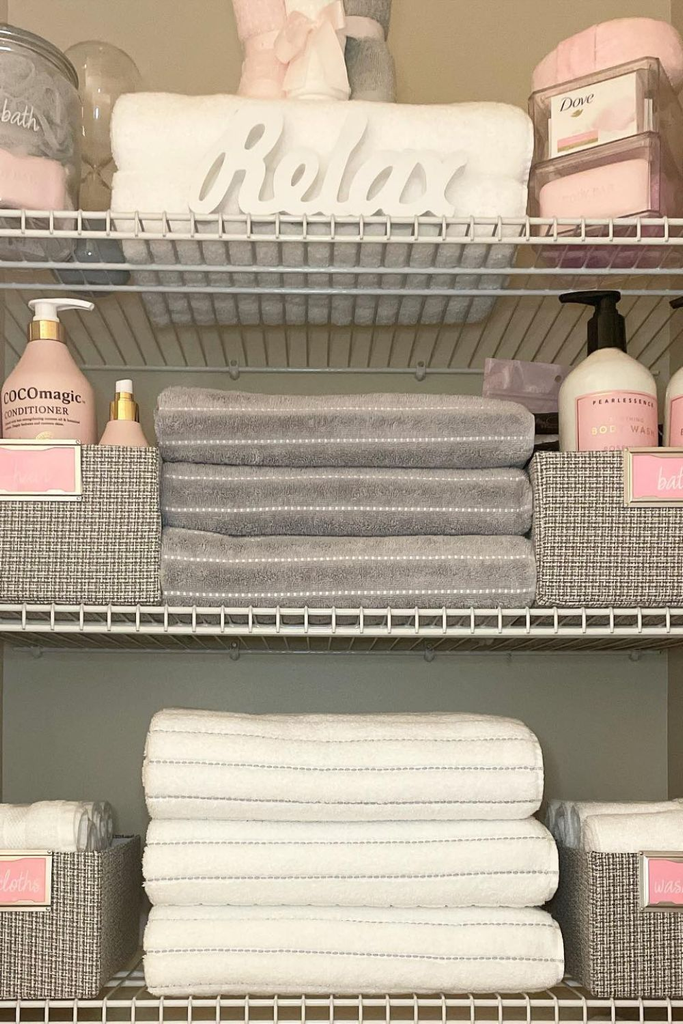
Labels are especially useful when more than one person uses the linen closet. I find that a simple word such as “Hand Towels,” “Queen Sheets,” or “Toiletries” is usually enough.
I prefer placing labels on the front of baskets or along shelf edges where they can be seen without moving anything. This turns putting things away into a simple matching task.
Small supplies such as soaps, lotions, travel toiletries, and extra washcloths can easily spread across a shelf. A labeled container keeps them grouped together.
For a family closet, I would keep the labels simple and consistent rather than using different styles for every basket.
Door Storage
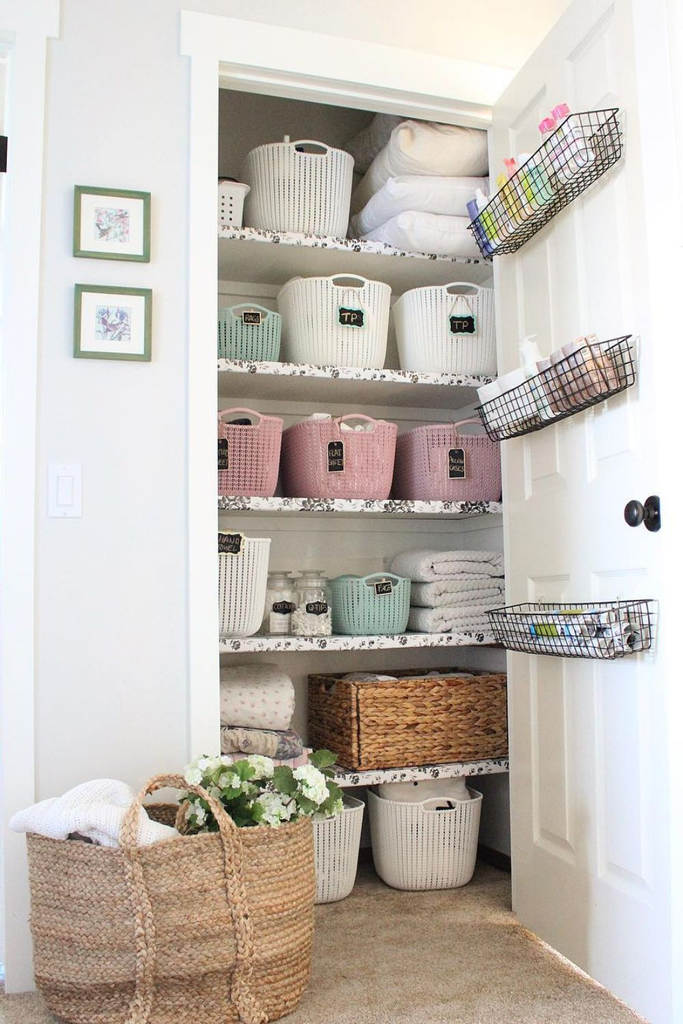
The back of the closet door is often unused storage space. A slim over-the-door organizer or shallow mounted basket can hold small items without taking away shelf space.
I would use this area for lightweight supplies such as travel toiletries, extra hair-care products, small cleaning items, or personal-care backups.
Because the door moves every time the closet opens, I avoid putting heavy items in the organizer. Keeping the contents lightweight also reduces stress on the hinges.
This approach is particularly useful when the hallway closet is narrow and every shelf is already occupied.
Shelf Dividers
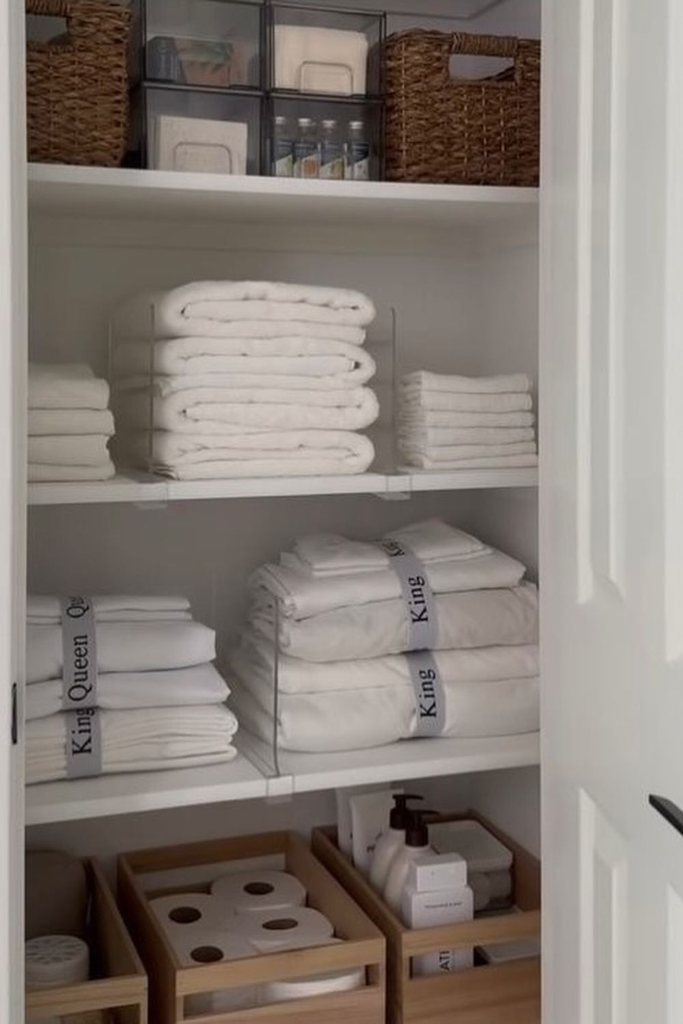
I use shelf dividers when towels or bedding repeatedly lean into one another. They create individual sections so one stack can be removed without disturbing the next.
Clear acrylic dividers are useful when I want the shelves to remain visually open, while sturdier dividers can work better for heavier towels.
I would divide a large shelf into practical groups such as bath towels, hand towels, and washcloths rather than creating too many tiny sections.
The goal is not to make the shelf look perfect. It is to make it easier to remove one item and put it back without causing a chain reaction.
Fabric Bins
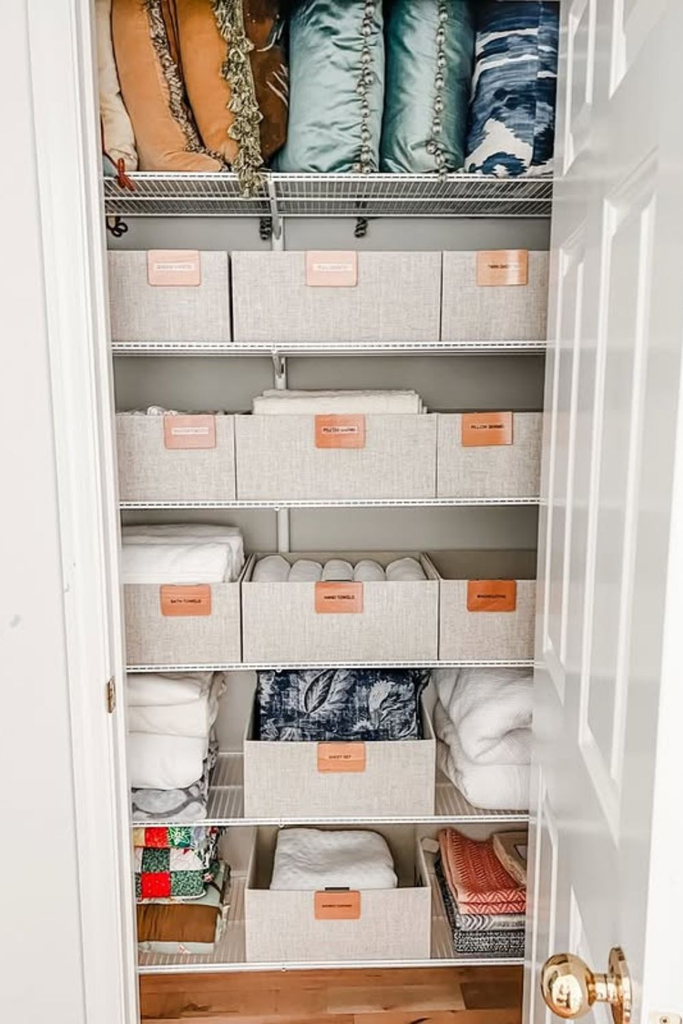
Fabric bins are helpful when I need to contain soft items that do not stack particularly well. I can dedicate one bin to extra pillowcases, another to guest towels, and another to seasonal linens.
They also work nicely on wire shelves because the fabric base prevents small items from slipping through the gaps.
I prefer bins with handles when the shelf is deep. A handle lets me pull the entire container forward instead of reaching over other items.
For heavier blankets, I would choose a sturdy container rather than an oversized fabric bin that becomes difficult to lift.
Clear Bins
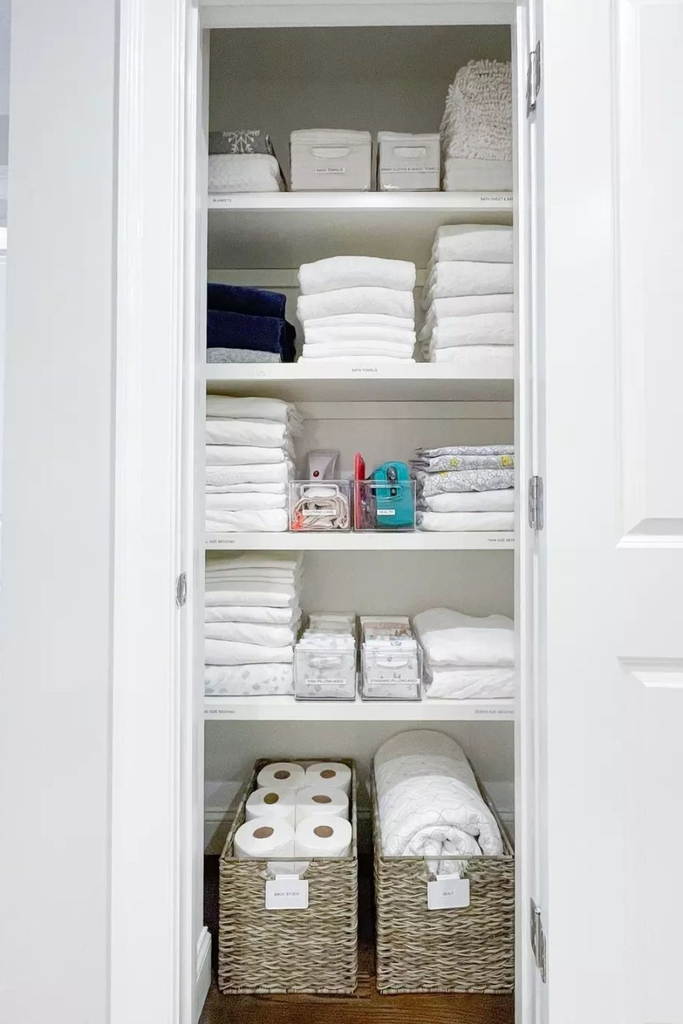
Clear bins make small supplies much easier to locate. I can see the contents without opening several containers or disturbing folded linens.
I would use them for items such as travel toiletries, extra hygiene supplies, first-aid basics, or small bathroom accessories.
For a hallway closet, I prefer placing these containers at a comfortable reach rather than hiding them on the highest shelf.
Pro Tip: Keep only one category in each clear bin. When several unrelated products are mixed together, the transparency helps less because you still have to search through the contents.
Layered Storage
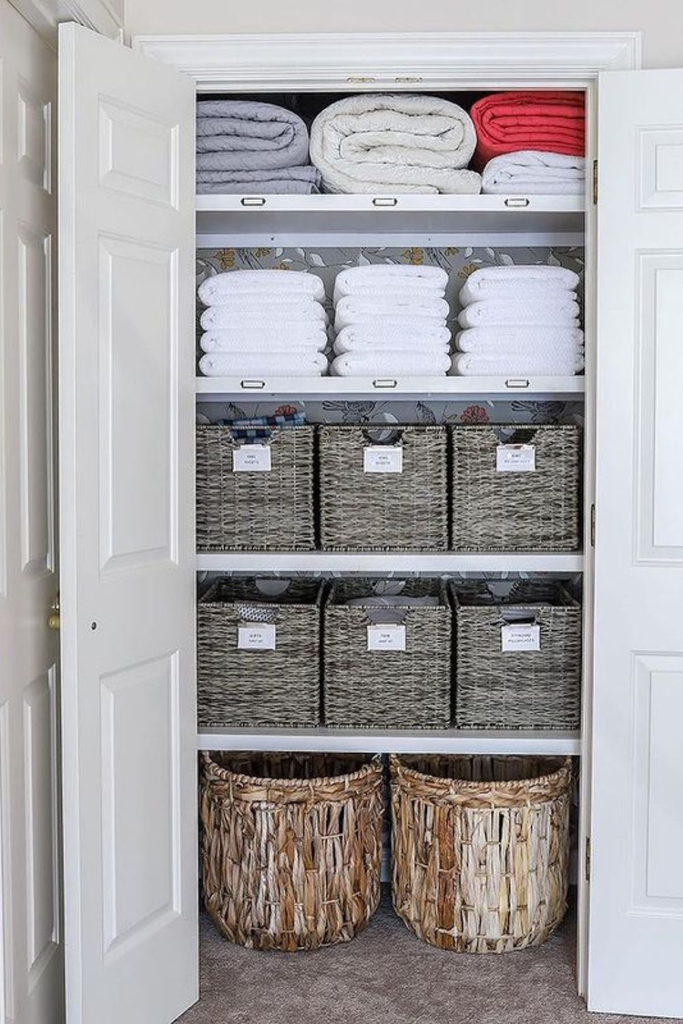
I find that assigning different functions to different shelf levels makes a linen closet much easier to use.
The highest shelf can hold bulky blankets, seasonal bedding, or rarely used guest linens. Middle shelves can handle everyday towels and frequently changed sheets.
Lower shelves are useful for heavier baskets and larger supplies because I don’t have to lift them overhead.
This layered approach also keeps everyday items visible while moving less frequently used belongings out of the way.
Drawer Storage
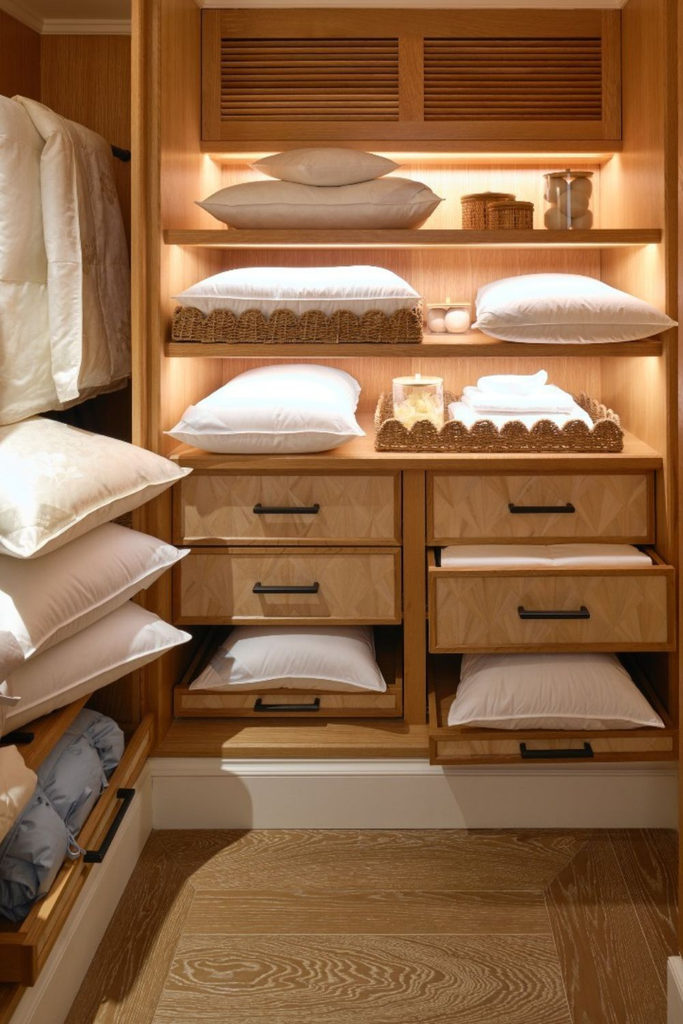
Drawers are useful when small linens constantly become mixed together. A drawer can hold pillowcases, washcloths, fitted sheets, or smaller bedding pieces without allowing them to spill across a shelf.
I particularly like drawers for sheet sets because I can separate them by bed size. A drawer labeled “Twin,” “Queen,” or “King” makes changing bedding much faster.
If you are adding drawers to an existing closet, measure the shelf depth, width, and vertical clearance first. A drawer that barely fits will be frustrating to use.
I would keep bulky blankets on open shelves or in larger baskets rather than forcing them into shallow drawers.
Rolled Towels
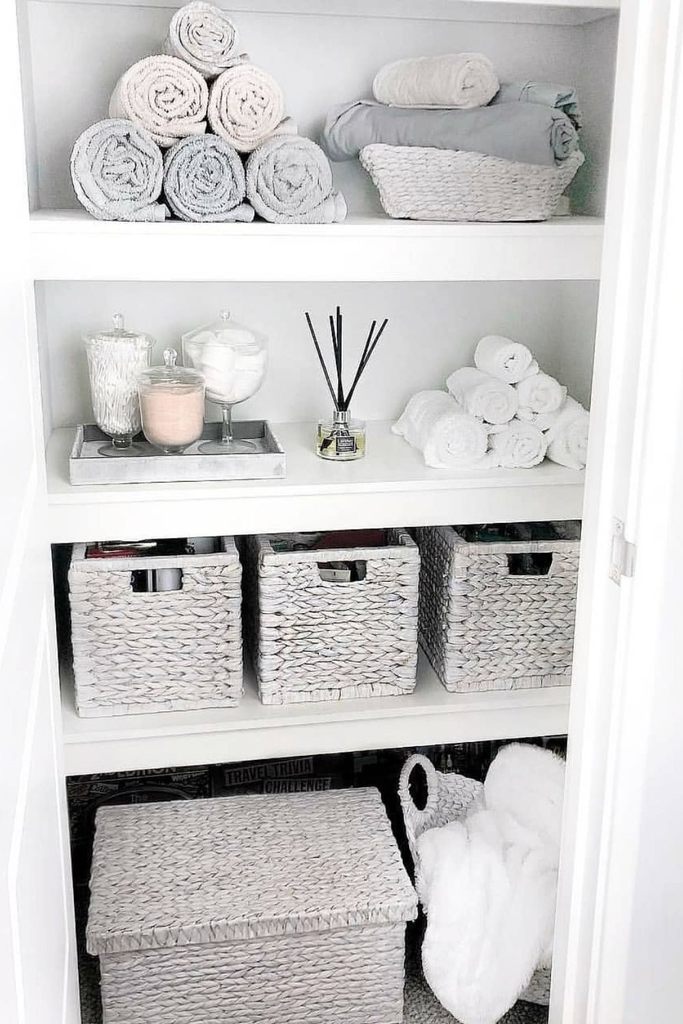
Rolling towels can be a practical alternative when folded stacks constantly fall over. The compact shape makes it easier to arrange towels in a basket or along a shelf.
I find this especially useful for hand towels, guest towels, or smaller bath towels. Large bath sheets may take up more space when rolled, so I would test the arrangement before switching everything.
For a neat display, I can line the rolls from front to back or place them vertically inside a basket.
The main advantage is accessibility: I can remove one towel without pulling apart a tall folded stack.
Labeled Baskets
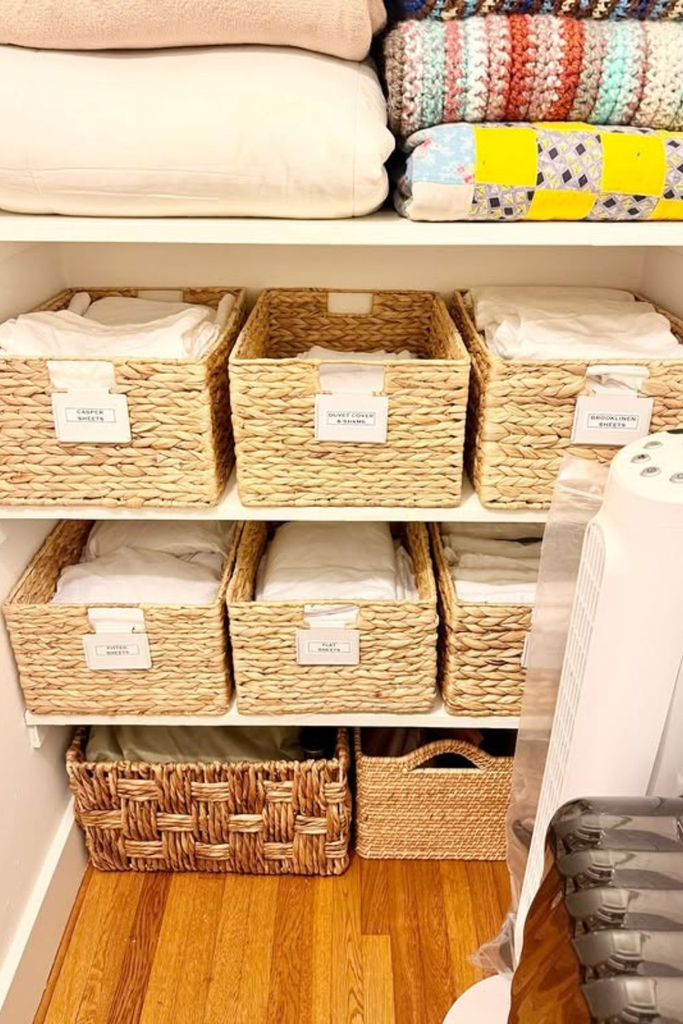
Labeled baskets give each type of linen a defined home. I might use separate baskets for guest sheets, duvet covers, extra pillowcases, or seasonal bedding.
I prefer putting frequently used baskets where I can reach them comfortably. Larger baskets containing blankets can go higher if they are lightweight enough to lift safely.
A front label is especially helpful when baskets look similar. It eliminates the need to open several containers just to find one sheet set.
Vertical Stacks
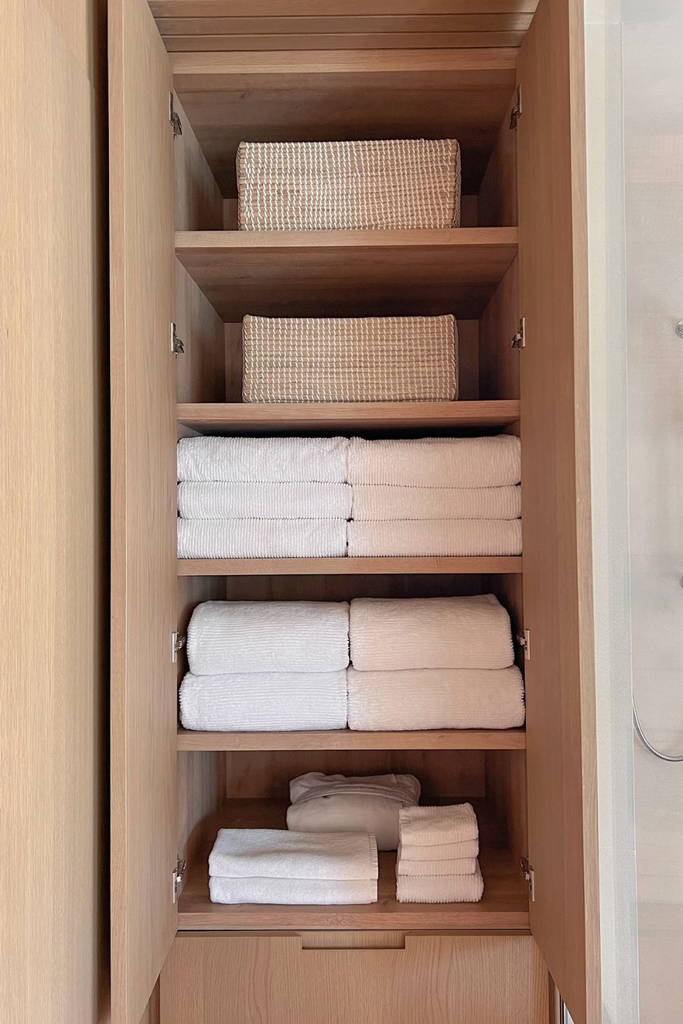
Tall closets benefit from using the full height of each shelf without allowing stacks to become unstable.
I fold towels into consistent sizes and keep similar towels together. For example, bath towels can have one stack while hand towels and washcloths have their own smaller sections.
I would avoid making a towel stack so tall that removing the bottom towel requires taking everything above it down.
If a stack starts leaning, that is usually a sign that I need a divider, a smaller stack, or a basket rather than simply adding more folding.
Uniform Folding
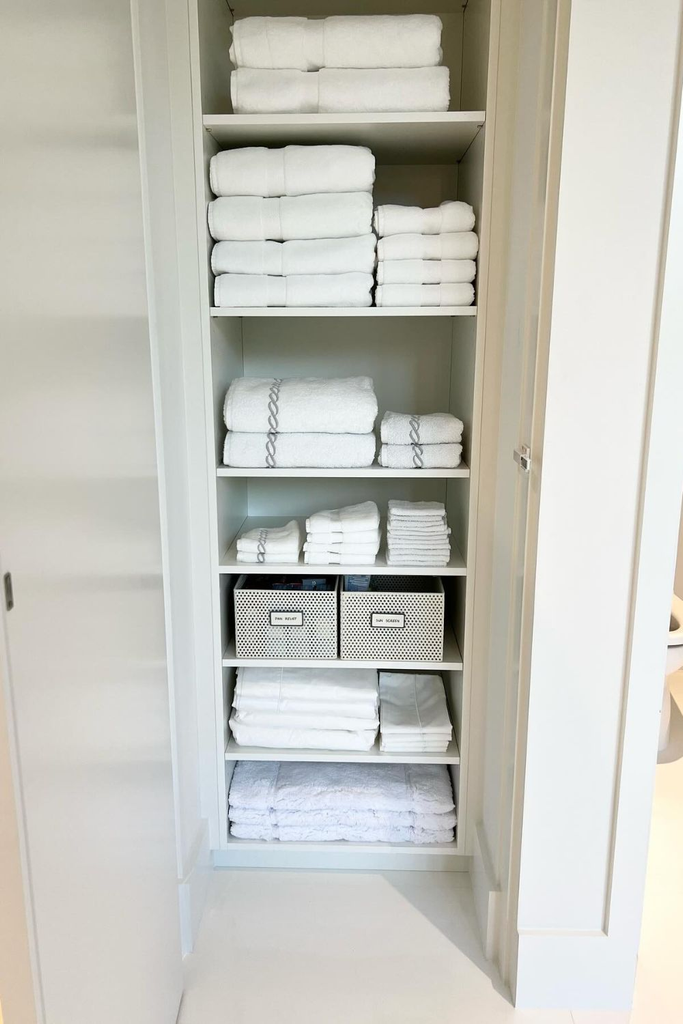
Consistent folding makes a noticeable difference in a small closet. When towels are folded to similar dimensions, I can create stable stacks and use shelf space more efficiently.
I usually keep bath towels together and place smaller hand towels and washcloths in their own sections.
Uniform folding also makes it easier to see how much of each item I actually have. That helps prevent buying more towels when several are simply hidden behind another stack.
Pro Tip: Choose one folding method and use it consistently. A simple repeatable fold is more useful than a complicated method that nobody wants to maintain.
Also read: 16 Cast Iron Wall Storage Ideas for 2026
Sheet Bundles
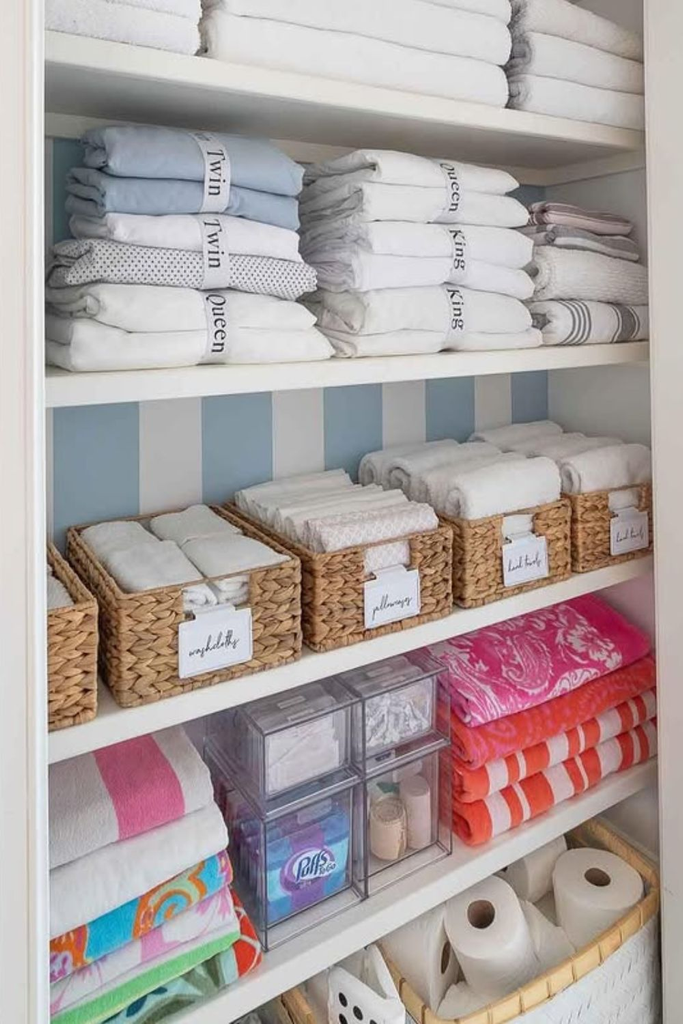
Keeping complete sheet sets together saves me from searching for a matching pillowcase later.
I fold the fitted sheet, flat sheet, and pillowcases into one compact bundle and store each set according to bed size.
Another simple option is placing the folded pieces inside one matching pillowcase. This keeps the set together without needing another storage container.
I recommend separating Twin, Full, Queen, King, and other sizes clearly, especially when several beds in the home use different dimensions.
Shelf Sections
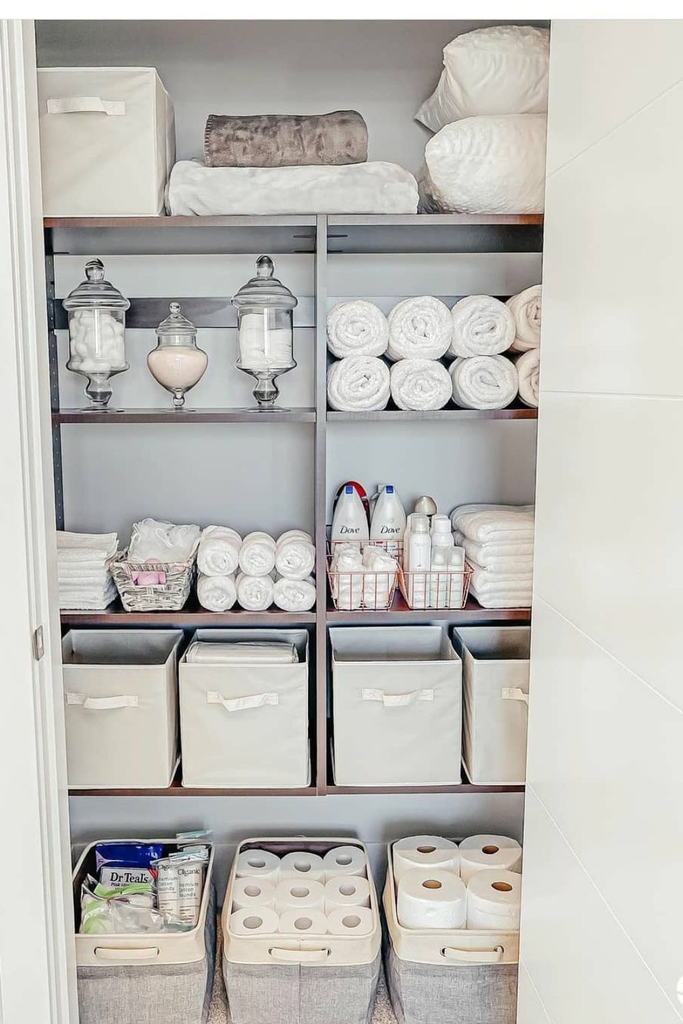
A wide shelf can become difficult to manage when towels, toiletries, and bedding are all mixed together. I solve this by creating smaller sections.
One side might hold towels while the other contains baskets for bathroom supplies. A simple divider can prevent the categories from gradually spreading into one another.
I also like using small trays for bottles and loose toiletries because they create a defined boundary.
The key is to give every section one main job instead of trying to fit unrelated items into the same space.
Shelf Layers
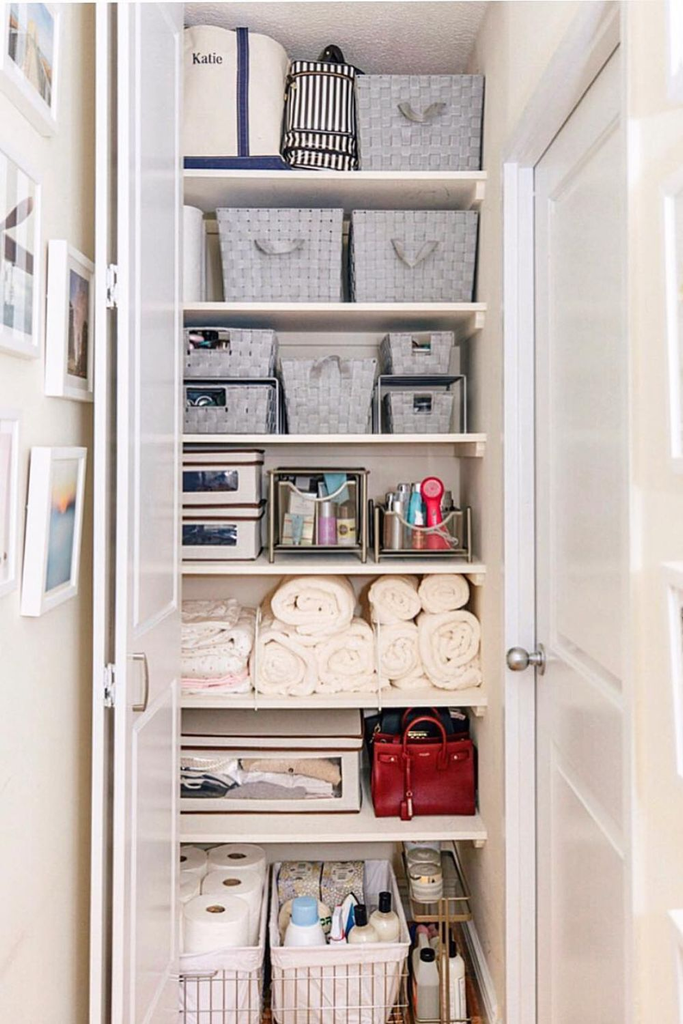
I find it helpful to think of the closet from top to bottom rather than shelf by shelf.
Upper shelves can hold seasonal or backup items. The middle section can be reserved for everyday towels and frequently used bedding.
Lower shelves can handle larger baskets, toilet paper, cleaning supplies, or heavier items that are safer to lift from a lower position.
This setup creates a predictable system. Once each level has a purpose, I spend less time deciding where something should go.
Size Sorting
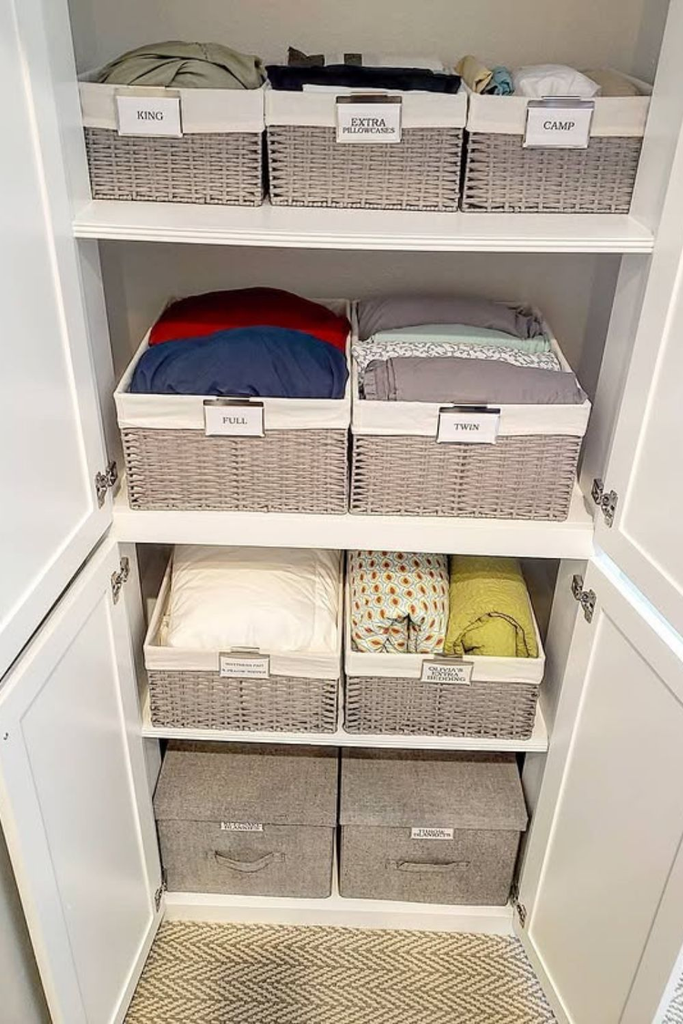
Sorting bedding by size is one of the easiest ways to reduce frustration. I keep Queen sheets separate from King, Full, or Twin sets rather than mixing them into one large pile.
I like using labeled baskets because the category remains visible even when the contents are folded tightly.
Before storing a sheet set, I make sure the pieces belong together and fold them into a compact bundle.
This is particularly helpful when several bedrooms use different mattress sizes. I can grab the correct set without unfolding multiple packages.
Glass Cabinets
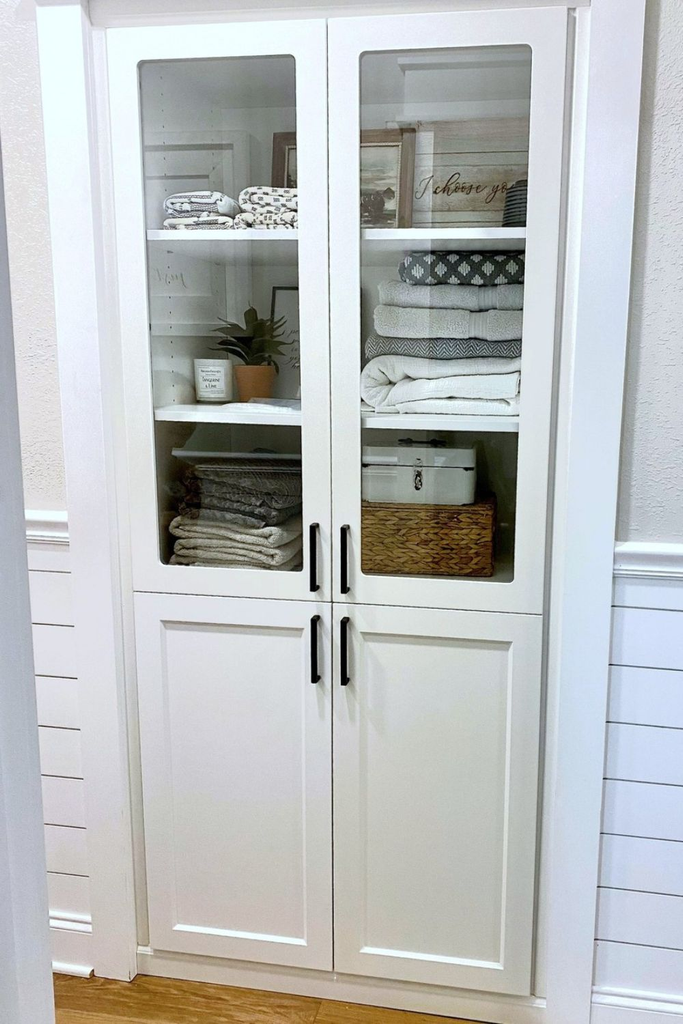
Glass-front cabinets offer a different approach to closed storage. They protect linens while allowing me to see what is stored inside.
I would keep the shelves visually simple by grouping towels and bedding by type and color rather than filling the cabinet with unrelated products.
Small decorative boxes can hide personal-care supplies or other items that I don’t want visible.
This option works particularly well when the hallway closet is part of a more visible area of the home and I want the storage to look intentional.
Wire Shelves
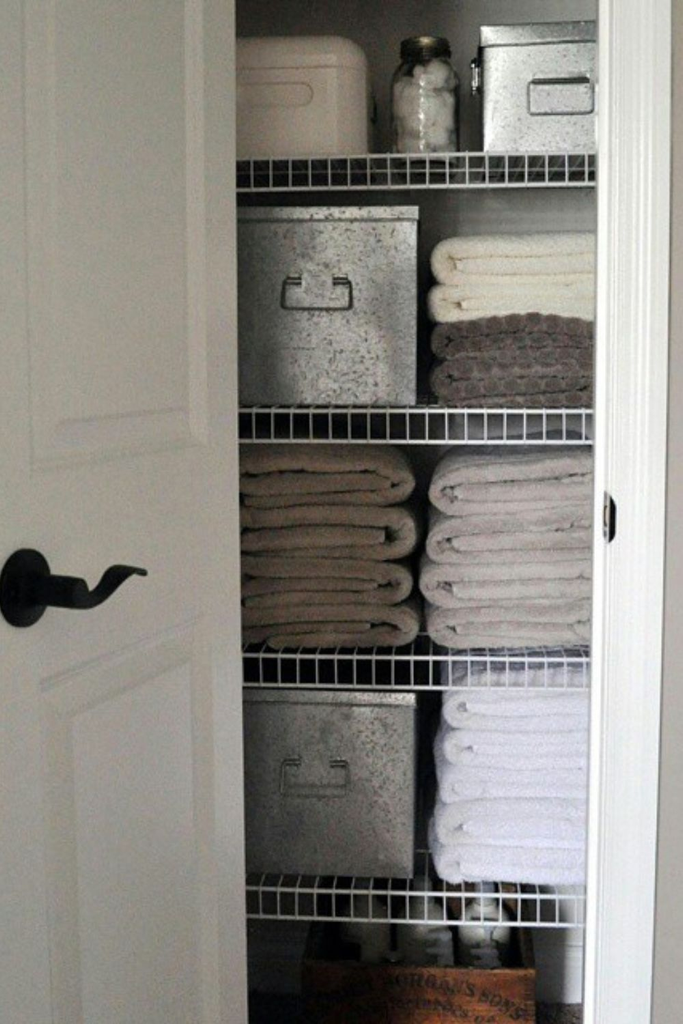
Wire shelves are flexible because they allow air to circulate around stored linens and can often be adjusted as storage needs change.
I like using baskets on wire shelving when smaller items could otherwise fall through the gaps. Towels and larger folded linens can sit directly on the shelf.
Everyday towels should stay at an easy-to-reach height, while spare bedding can move to the upper shelves.
If the wire shelves are adjustable, I would measure the tallest items before changing the shelf positions. A few inches of extra clearance can make a large basket much easier to remove.
Shelf Labels
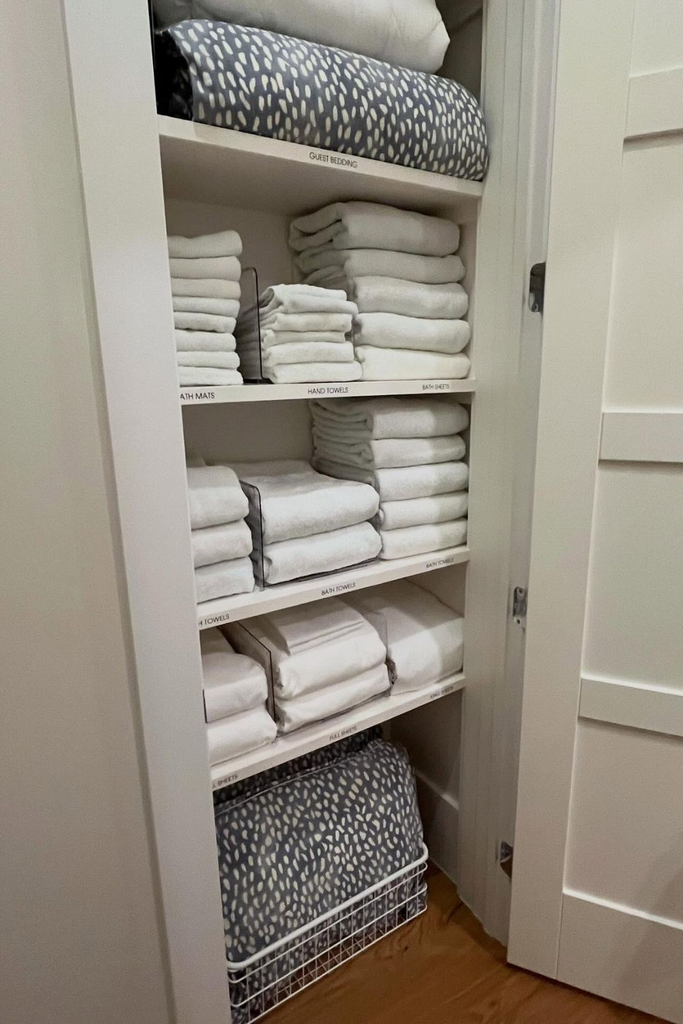
Shelf labels make a shared closet easier to maintain because the intended location is visible even after the contents have been removed.
I might label shelves “Bath Towels,” “Hand Towels,” “Sheets,” or “Blankets,” depending on what the household uses most.
The labels do not need to be elaborate. Clear, readable wording is more useful than decorative signs that are difficult to scan.
I also keep similar-sized linens together so each shelf remains visually balanced and easy to restock.
Built-In Storage
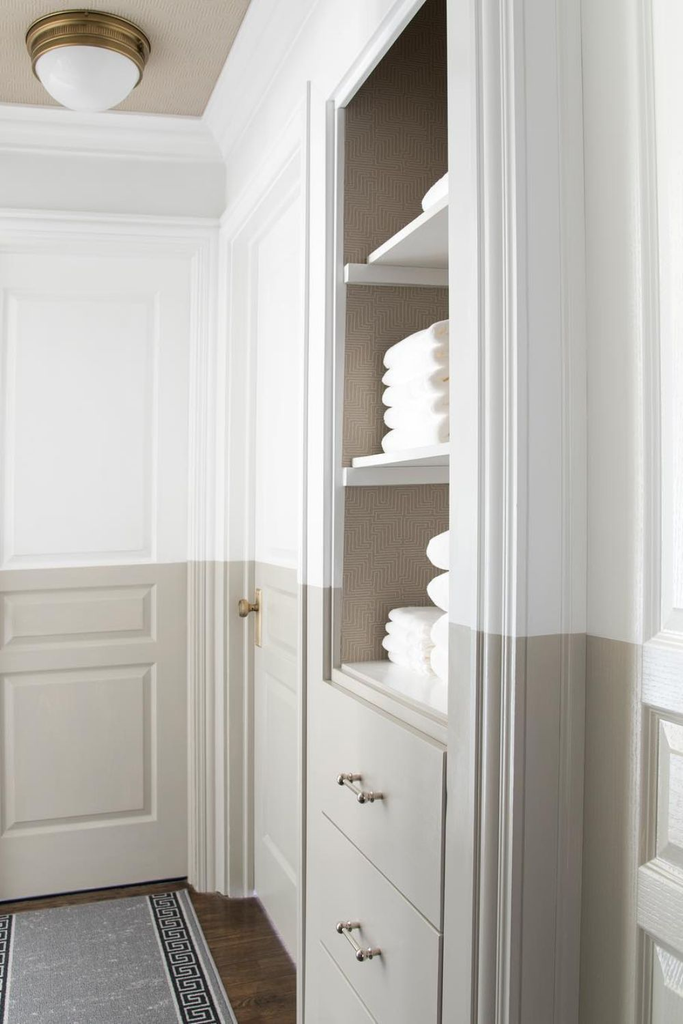
A built-in linen cabinet can make excellent use of an otherwise unused hallway wall. This is especially useful when a traditional closet would take up too much floor space.
I would use open shelves for everyday towels and drawers or closed compartments for smaller supplies.
Before installing anything permanent, I would check the wall depth, nearby doors, trim, electrical components, and the amount of clearance needed for people walking through the hallway.
For a narrow corridor, shallow built-in storage can provide useful capacity without making the walkway feel cramped.
Modular Storage
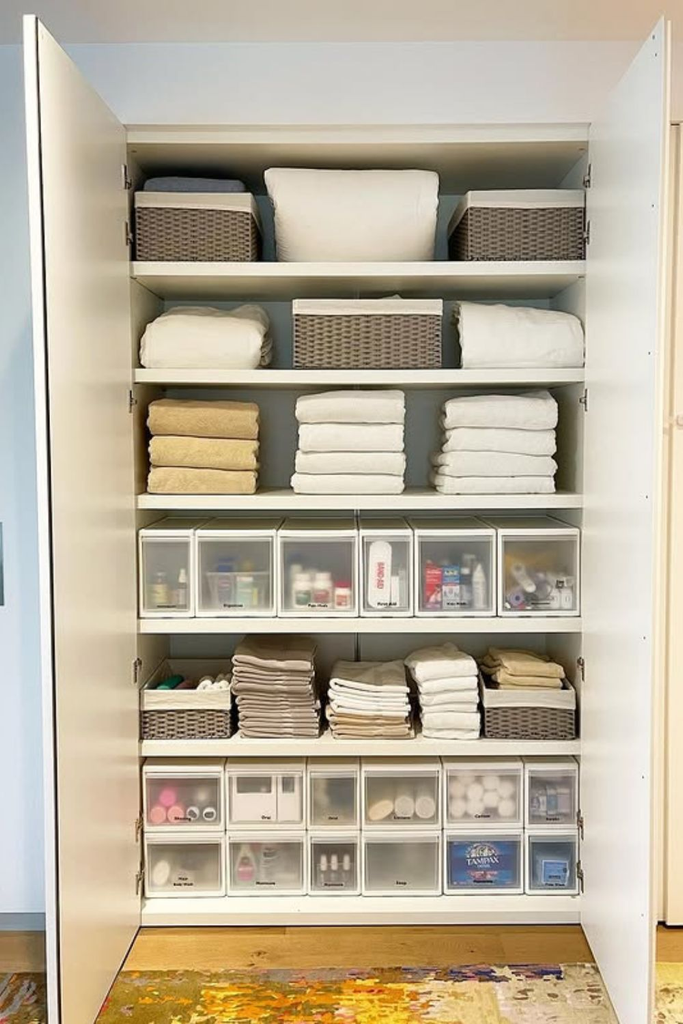
Modular storage lets me combine shelves, baskets, drawers, and containers based on what the closet actually needs.
Open shelving works well for folded towels because I can see them immediately. Small drawers or containers can handle toiletries and other loose supplies.
Baskets are useful for extra bedding that doesn’t need to be accessed every day.
I like this approach because the system can change as household needs change. If one category grows, I can adjust the storage rather than redesigning the entire closet.
Supply Zones
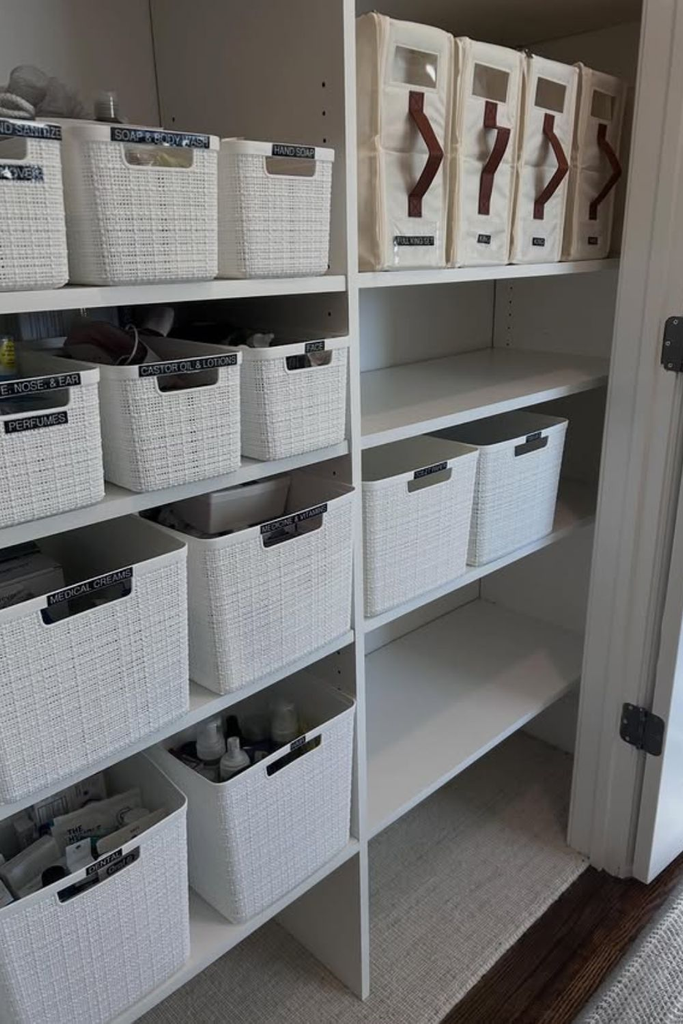
Small household supplies need their own zones because they can quickly disappear behind towels and bedding.
I would separate soaps, personal-care items, first-aid supplies, cleaning products, and paper goods instead of putting them all into one basket.
Labels make the categories easier to maintain, especially when several people share the closet.
I also recommend keeping products that need special storage or safety precautions according to their labels and away from linens if spills could damage the fabric.
A simple supply-zone system keeps small bottles and packages from taking over the shelves.
Read this next: 18 Pillow Storage Ideas for 2026
FAQs
How do you keep a hallway linen closet from getting messy again?
I give every major category a permanent home and avoid overfilling the shelves. Towels stay together, sheet sets stay grouped by size, and small supplies go into labeled containers.
I also leave enough room to remove one item without disturbing an entire stack. That small amount of open space makes daily maintenance much easier.
What should you store in a hallway linen closet?
I usually reserve a hallway linen closet for items that are needed in multiple rooms, such as bath towels, hand towels, washcloths, sheets, pillowcases, blankets, and selected bathroom supplies.
If space allows, I can also store guest linens or backup toiletries there. I avoid turning the closet into a catch-all because unrelated items quickly make the storage system harder to maintain.
Conclusion
A hallway linen closet does not need complicated organizers to stay useful. I get better results when I first decide what belongs in the closet and then give each category a practical home.
Simple changes such as labeled baskets, shelf dividers, sheet bundles, vertical stacks, and door storage can make a surprisingly small closet easier to use.
I also recommend reviewing the system after a few weeks. If a particular basket is always overflowing or a shelf is difficult to reach, that is useful information. I would adjust the storage rather than forcing the original setup to work.
The best linen closet organization is the one that makes everyday life easier and is simple enough to maintain after laundry day.





One Comment