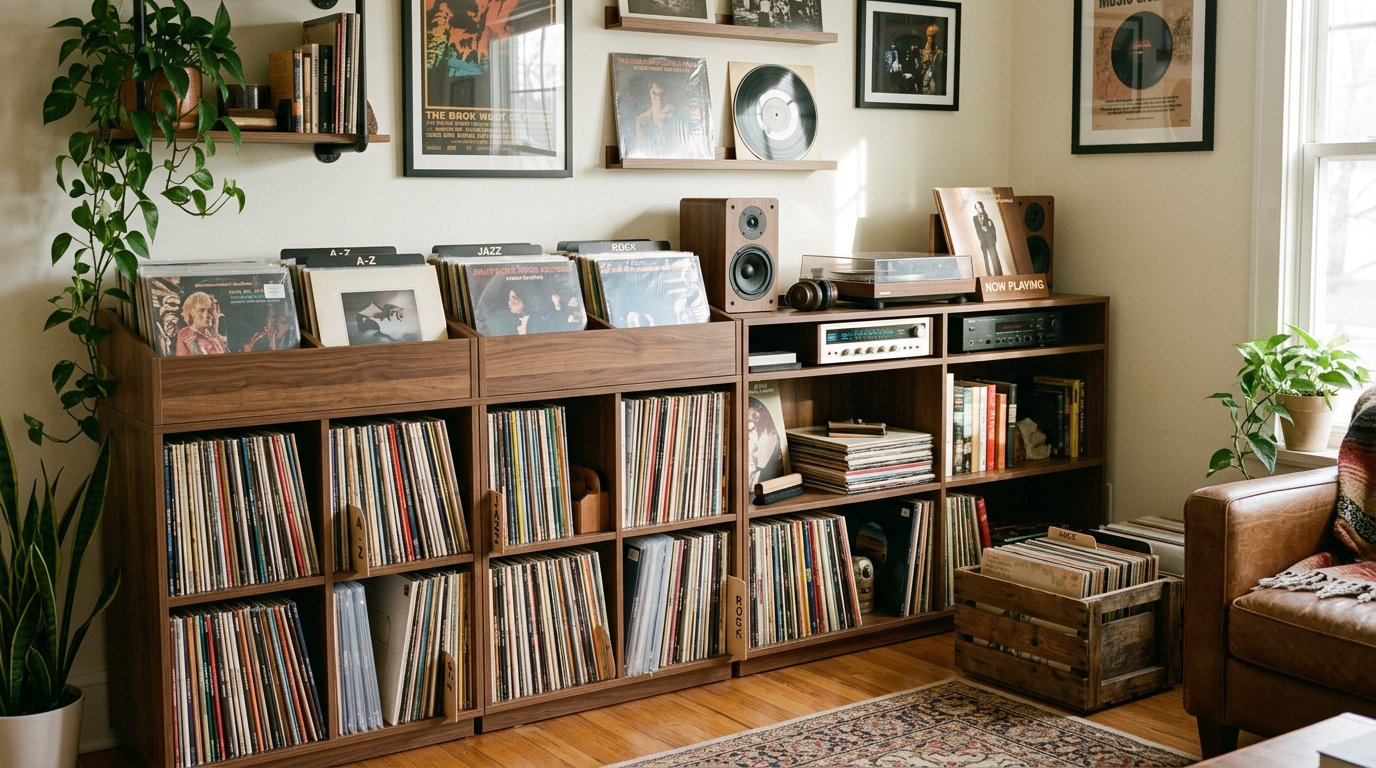
21 Vinyl Record Storage Ideas for 2026
I love how vinyl records can turn a simple corner of a home into a personal music space. However, I’ve learned that storing a collection takes more thought than finding a shelf that looks good. The right setup should protect my records, make browsing easy, and fit the way I use my living room, bedroom, or listening area.
When I plan vinyl storage, I focus on three things: keeping records upright, choosing furniture that can handle their weight, and protecting them from heat, moisture, and direct sunlight. I also think about how much space I need for my growing collection and whether I want to display album covers or keep everything neatly tucked away.
I can organize vinyl records in many ways, from cube shelving and low media consoles to built-in cabinets, wall-mounted shelves, and dedicated listening stations. The best option depends on my collection size, available floor space, furniture strength, and preferred decorating style.
Save this for later
Table of Contents
I keep records upright with proper support, avoid overcrowding, and choose a cool, dry location away from direct sunlight and heat sources. These 21 vinyl record storage ideas combine practical protection with attractive ways to display and enjoy a collection.
Key Takeaways
- Store records vertically: I keep LPs standing upright rather than stacking them horizontally for long periods.
- Choose sturdy furniture: I look for shelves and cabinets that can support the combined weight of my collection without bowing.
- Leave room to browse: I avoid squeezing records together so tightly that pulling one out bends its sleeve.
- Control the environment: I keep vinyl away from radiators, direct sunlight, damp walls, and areas with large temperature changes.
- Match storage to my home: I can use compact consoles for small collections, cube units for flexible storage, or built-in shelving for larger libraries.
- Protect the records and covers: I use suitable inner and outer sleeves, keep records clean, and avoid touching the playing surfaces unnecessarily.
Related article: 23 Under Stair Storage Ideas for 2026
What is the Proper Way to Store Vinyl Records?
I always start with the basics before choosing a storage style. Vinyl records need steady support, a suitable indoor environment, and enough room to move without forcing the sleeves against one another. A beautiful cabinet will not protect my collection if it sits beside a heater or allows records to lean at an angle.
The National Archives and Records Administration recommends storing disc recordings vertically in their sleeves and avoiding stacks of discs. Its archival guidance also emphasizes stable temperatures, low humidity, and protection from sunlight.
For everyday home storage, I follow these practical rules:
- Keep LPs upright, with their spines facing outward.
- Use shelves deep enough to support the full record jacket.
- Add dividers or bookends to prevent rows from leaning.
- Avoid packing records so tightly that removing one damages its neighbors.
- Keep the collection away from direct sunlight, radiators, fireplaces, and equipment that gets hot.
- Check the storage area for dampness, musty smells, and signs of mold.
Pro Tip: I check the shelf itself before filling it. Vinyl collections are heavier than they look, and a shelf that starts to sag can put uneven pressure on the records. I distribute the collection across sturdy compartments and check that the furniture remains level.
Cube Shelf System

When I want storage that can grow with my collection, cube shelving is one of the first options I consider. Each compartment creates a natural boundary for a group of records, making it easier to sort albums by artist, genre, or decade.
I prefer a sturdy unit with compartments large enough for standard LP jackets. The square layout also gives me room to keep records separate from speakers, cleaning supplies, and other accessories. I can use the top surface for a turntable if it is stable, level, and wide enough for the equipment.
This setup works especially well in living rooms, music rooms, and apartments where one piece of furniture needs to do several jobs. I avoid using lightweight decorative cubes unless the manufacturer confirms that they can support the load.
Pro Tip: I use sturdy dividers inside wider compartments and leave enough room to browse without forcing records out of place.
Low Media Console

A low media console gives me a practical way to combine music storage with everyday living room furniture. It keeps records close to the turntable and leaves the rest of the room feeling open rather than crowded with tall shelving.
I look for a console with deep shelves, a strong top, and enough internal support for the weight of my albums. Open compartments make browsing simple, while doors can reduce dust exposure when the records are not in use.
I also pay attention to the equipment placed on top. A turntable needs a level, stable surface, and I leave enough clearance for its dust cover to open fully. If an amplifier sits inside the console, I make sure it has adequate ventilation and does not heat the records above or beside it.
Pro Tip: Before buying a console, I measure the record jackets and the available shelf depth rather than relying on the furniture’s overall dimensions.
Mixed Storage Console

I like a mixed storage console when I need one piece of furniture for records, books, audio equipment, and a few decorative items. It makes a music corner feel connected to the rest of the home instead of looking like a separate storage area.
The trick is to give each item its own space. I reserve the strongest, best-supported compartments for vinyl, keep heavier equipment on shelves designed to carry its weight, and place lightweight accessories elsewhere. I avoid allowing books or equipment to press against the album jackets.
This arrangement suits home offices, family rooms, and smaller listening areas. If the furniture has adjustable shelves, I set the height to fit LPs comfortably rather than leaving excessive space that lets records lean.
Pro Tip: I keep cables and small accessories in a separate drawer or box so they cannot snag sleeves when I pull out an album.
Vertical Display Cabinet

When floor space is limited, I look upward. A tall storage cabinet can hold a useful number of records without taking up the width of a long media console, making it a good choice for bedrooms, reading corners, and compact apartments.
I choose a cabinet with shelves that support the records along their bottom edges and provide enough side support to keep each row straight. I also check that the furniture is stable and secure it to the wall when appropriate, especially if it is tall or narrow.
I reserve the top shelves for lighter items and place the records at a comfortable height for regular browsing. I avoid putting valuable albums in hard-to-reach spots where I might accidentally pull several sleeves out together.
Pro Tip: I measure the full cabinet opening, including any door frames or internal supports, to make sure my LP jackets can slide in and out easily.
Modular Display Rack

A modular rack is useful when I expect my record collection to grow over time. Instead of replacing an entire storage system, I can add compatible sections as my needs change.
I look for modules with a firm base, secure connections, and side supports that stop records from sliding or leaning. Metal and solid wood can both work well, provided the design is stable and rated for the weight it will carry.
I can arrange the modules in a horizontal row, build a taller storage area, or create separate sections for different music genres. I leave enough room around the rack for easy access and avoid placing records in a position where they could fall if a module shifts.
Pro Tip: I plan the final footprint before purchasing multiple modules, including the space needed to walk around the unit and remove albums comfortably.
Open Grid Shelving

Open grid shelving gives me a clean, organized look while making it easy to see the collection. The individual compartments help divide albums into manageable groups, and the open design makes the storage feel lighter than a large enclosed cabinet.
I use grid shelving only when its dimensions and load rating suit vinyl records. Some decorative grids have compartments that are too small for LP jackets, while others are not strong enough for a heavy collection. I check both before committing to the design.
Because the records remain exposed, I keep the unit away from direct sunlight and areas where dust collects quickly. I also leave room for ventilation around audio equipment rather than squeezing a receiver into a small, enclosed compartment.
Pro Tip: I use simple genre labels on the shelf edges so I can find albums quickly without repeatedly moving the records around.
Low Profile Credenza

A low-profile credenza is a good fit when I want a long, understated piece of furniture that provides generous storage without dominating the room. Its horizontal shape works particularly well beneath artwork or along a wide living room wall.
I choose a model with strong internal dividers and shelves deep enough for full-size record jackets. If the cabinet has closed sections, I use them for spare sleeves, record-cleaning supplies, and accessories while keeping frequently played albums in an accessible compartment.
I also check the top surface for stability before placing a turntable on it. Decorative objects are fine, but I keep them away from the turntable’s moving parts and leave enough space to handle records safely.
Pro Tip: I divide a long collection into smaller sections instead of allowing one uninterrupted row of records to lean against a single end panel.
Wall-Paired Console

I like pairing a record console with wall art because it turns a practical storage area into a personal feature of the room. A few favorite album covers can make the space feel individual without requiring every record to be displayed.
I use a sturdy floor-standing console for the main collection and reserve the wall above it for lightweight framed artwork. If I mount shelves or display frames, I check the wall type, fasteners, and mounting instructions before installing them.
For records that I play regularly, I prefer the console’s protected storage compartments rather than leaving the discs exposed as decoration. This keeps the collection accessible while reducing unnecessary handling and light exposure.
Pro Tip: I leave a clear working area around the turntable so I can lift the dust cover and change records without knocking into frames or decorations.
Open Side Rack

An open-sided rack can be a smart choice when I want to store a smaller collection without adding a bulky cabinet. Its simple frame makes it easy to reach for an album, and the open design can work beside a chair, desk, or listening station.
I check that the bottom panel supports the entire row of records and that the sides prevent the collection from tipping outward. Open sides do not automatically mean the rack provides enough support, so I avoid designs that allow the albums to lean heavily.
I also consider where dust and sunlight enter the room. A slim rack near a window may look attractive, but I position it outside direct sun and away from heaters or damp exterior walls.
Pro Tip: I keep the rack on a level floor and use suitable bookends or dividers if the collection does not fill the available width.
Drawer Storage Wall

When I prefer a tidy room with fewer items on show, I consider a drawer-based storage wall. It can provide a place for records, audio accessories, and other equipment while keeping the overall appearance simple.
I pay special attention to the drawer design. Standard shallow drawers may not fit LP jackets properly, and a drawer that is too wide can allow records to slide or lean. I look for deep, well-supported drawers with dividers that keep the records upright.
I also make sure the drawers move smoothly and can support the weight of their contents. For a large collection, I distribute albums between several drawers instead of loading one section excessively.
Pro Tip: I label each drawer by artist, genre, or alphabetical range so I can find records without opening every compartment.
Also read: 22 Yarn Storage Ideas for 2026
Flip-Front Showcase

A flip-front showcase is ideal when I enjoy seeing album artwork while keeping most of my collection stored neatly. The front panel can display a few favorite records, while the remaining albums stay upright in the compartments below.
I choose a design with secure hinges and enough clearance for the front panel to open without striking nearby furniture. The display section should hold albums securely rather than leaving them leaning against a loose edge.
This arrangement works well in a dedicated listening room or a living room where music is part of the décor. I rotate the displayed covers occasionally, but I keep the records themselves protected in suitable sleeves and away from direct sunlight.
Pro Tip: I display the cover of an album I am currently listening to, then return it to its proper storage position when I change records.
Sunlit Listening Stand

Natural light can make a listening corner feel welcoming, but I am careful about placing vinyl near a sunny window. Direct sunlight can heat the discs and fade printed album covers, even when the room itself feels comfortable.
I position the stand where daylight reaches the room without falling directly on the records. Sheer curtains or suitable window coverings can soften incoming light, but I do not rely on them alone if the collection still becomes warm.
A solid stand with a level top gives the turntable a stable place to sit. I keep the albums below it upright and supported, and I avoid storing them above radiators or near other heat sources.
Pro Tip: I check the temperature around the storage area during the warmest part of the day. A location that seems safe in the morning may become much hotter in the afternoon.
Built-In Vinyl Wall

melbournecustomwallunits.com.au
For a large collection, I would consider a built-in vinyl wall. It can turn an entire section of a room into a dedicated music area, with record compartments, a listening station, and separate storage for equipment.
The most important part is planning the structure before installation. I measure the records, estimate the collection’s weight, and make sure the shelves and supports are designed for that load. Wide shelves may need additional reinforcement to prevent sagging over time.
I also plan cable routes, ventilation, and access to audio equipment. Closed cabinets can hide clutter, while open shelves make it easier to browse albums. I keep the collection away from damp walls and direct sunlight regardless of the cabinet style.
Pro Tip: I leave some empty shelf space when planning a built-in unit. It gives me room for future purchases without forcing extra albums into already crowded compartments.
Compact Listening Console

I do not need a large music room to enjoy vinyl. A compact listening console can provide enough room for a turntable and a modest record collection while fitting into an unused corner or a small apartment.
I choose a console with a stable top and at least one compartment designed for upright LP storage. If the unit is too small for my whole collection, I keep my most frequently played records nearby and store the rest on a separate shelf.
I also think about the listening experience. The turntable needs room for its dust cover and tonearm, while speakers should have enough space to work as intended. I avoid filling every available surface with decorations.
Pro Tip: I measure the turntable with its dust cover open, not just the closed dimensions, before deciding where the console will go.
Corner Vinyl Library

An unused corner can become a practical home for a growing collection. I like this idea because it makes use of space that might otherwise remain empty, especially in a spare room or a dedicated listening area.
I can use two matching shelving units along adjoining walls or choose a purpose-built corner cabinet. I check that both sections are level and supported properly, and I leave enough clearance to pull records out without hitting the adjoining wall.
I arrange the albums in manageable groups, using dividers to keep each section upright. If the corner is dark, I add gentle room lighting rather than placing a hot lamp close to the record sleeves.
Pro Tip: I avoid pushing the shelves tightly against a wall that feels damp or has a history of condensation. A different wall may be a safer choice for long-term storage.
Framed Record Gallery

Album artwork can be part of the room’s personality, so I like using a framed gallery to display covers that mean something to me. A coordinated arrangement above a console can create a focal point without using additional floor space.
I keep the distinction between display and storage clear. Framed albums are for viewing, while the records I play regularly stay in protective sleeves and upright storage. If I display valuable original covers, I use suitable frames and avoid locations with direct sunlight.
Before hanging frames, I plan the spacing and use mounting hardware appropriate for the wall. I keep the arrangement far enough above the turntable that changing a record will not lead to accidental bumps.
Pro Tip: I choose a small group of covers that share a color palette or theme. This creates a more organized display than filling every inch of wall space.
Alcove Cube Storage

A recessed alcove can be an excellent spot for a record collection because it uses an existing architectural feature rather than taking up the middle of a room. I consider this option in living rooms, hallways with suitable space, or rooms with built-in wall recesses.
I measure the width, height, and depth of the alcove carefully before choosing cube units. The compartments need to fit LP jackets without forcing them into place, and the shelf structure must support the combined weight of the records.
I also leave room for ventilation if I plan to place audio equipment in the same area. An alcove can trap heat more easily than an open wall, particularly when equipment is enclosed or the space is crowded.
Pro Tip: I use a removable, properly sized shelf unit if I want flexibility later. For a permanent installation, I make sure the shelving can be accessed and maintained without damaging the surrounding wall.
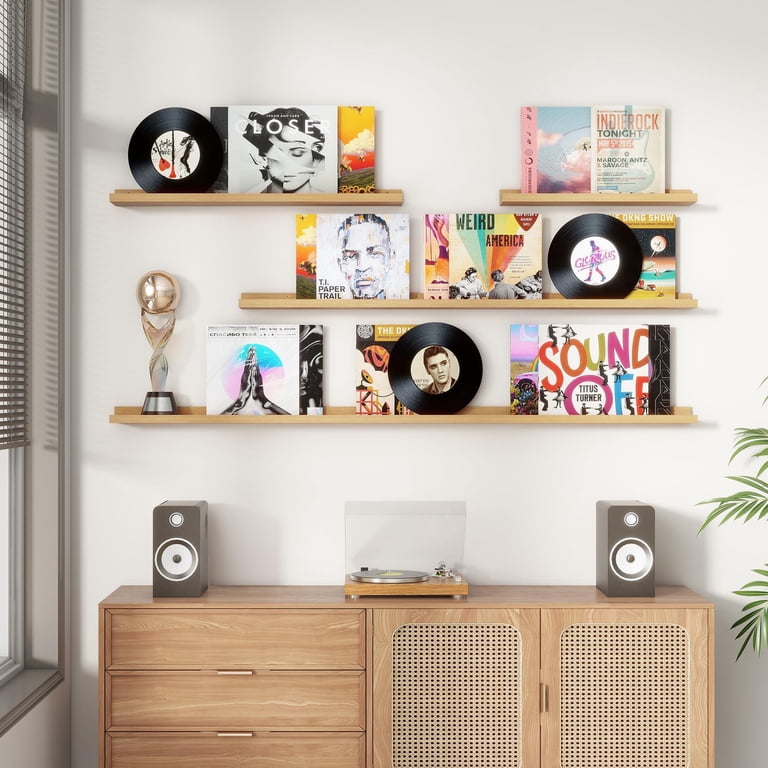
Vertical Wall Shelves
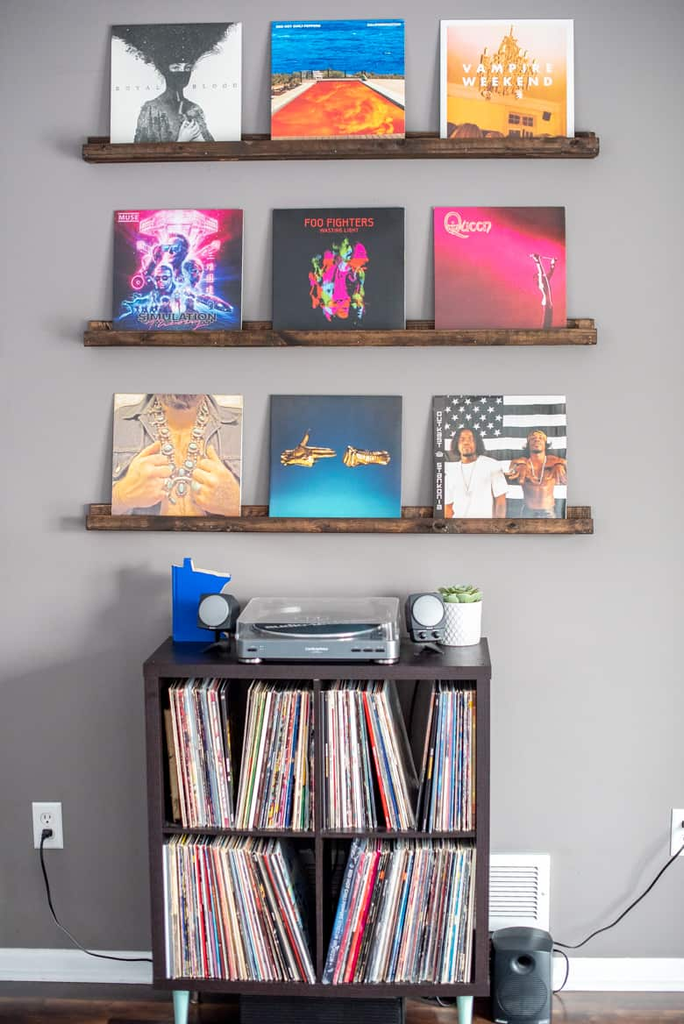
Source: https://www.brepea.com/diy-vinyl-record-wall-shelves/
When floor space is limited, I consider wall shelves for displaying a small selection of album covers. They can make a narrow wall feel purposeful and keep favorite records visible without adding another piece of furniture.
I distinguish display ledges from proper long-term storage shelves. A shallow ledge can show the front cover of an album, but it may not safely hold a deep row of records. For storing a larger collection, I choose shelves specifically designed to support LPs and have them installed securely into suitable wall supports.
I also keep displayed covers away from direct sunlight and make sure the shelf lip is high enough to prevent albums from slipping forward.
Pro Tip: I use wall ledges for a rotating selection of favorite covers and keep the rest of my collection in a sturdy cabinet.
Full-Wall Archive
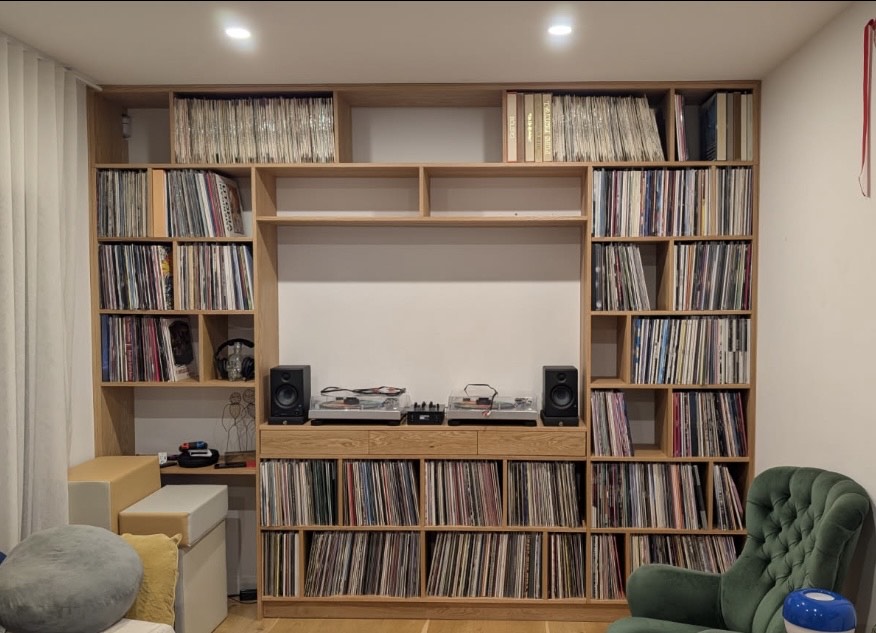
Source: https://www.melbournecustomwallunits.com.au/
When a collection takes up several shelves already, I may prefer one organized wall rather than multiple separate storage units. A full-wall archive can keep records, a turntable, speakers, and accessories together in one planned layout.
I divide the collection into sections so the weight is distributed across the shelving system. Each shelf needs enough support to prevent bending, and the wall unit itself must be suitable for the building and the intended load.
I also plan how I will use the space. Frequently played records should be easy to reach, while spare sleeves and less-used accessories can go into lower cabinets or drawers. Good lighting helps me browse, but I avoid lights that produce excessive heat near the records.
Pro Tip: Before installing a large wall unit, I estimate how much space my current collection occupies and leave room for future additions.
Boxed Display Cubes

Source: https://www.ebay.com/itm/397404902506
Box-style display cubes give me a straightforward way to separate albums into smaller groups. I can dedicate each compartment to a genre, artist, or collection, which makes browsing easier and keeps records from spreading across the room.
I check that each cube is wide and deep enough for the albums and that its base can handle the load. If the compartments are too large for the number of records I own, I add suitable dividers so the albums remain upright rather than leaning against one side.
I can also reserve one compartment for a few covers I want to show off. I keep the rest of the collection protected in sleeves and away from direct sunlight.
Pro Tip: I use removable dividers rather than packing extra records into a cube that is already full.
Window-Edge Console
Source: https://www.walmart.com/ip/5479028494
A console near a window can make a listening area feel bright and open, but I would not place my records where direct sunlight falls on them. Sunlight can warm the vinyl and fade album artwork, so I pay attention to the actual position of the sun rather than judging the space by how pleasant it looks.
I choose a sturdy console with enough depth for LPs and place it outside the direct path of sunlight. Curtains or blinds can help control the light, but I still check for heat buildup during the day.
For a room with large windows, I may position the turntable and records along an adjacent wall instead. That gives me the bright atmosphere I want without making the collection dependent on window coverings for protection.
Pro Tip: I check the storage area during the hottest part of the day before making it the permanent home for my collection.
Read this next: 23 Backpack Storage Ideas for 2026
FAQs
Can vinyl records be stored in boxes long-term?
Yes, I can store vinyl records in boxes for long periods, provided the boxes offer proper support and I keep them in a suitable environment. I prefer sturdy record-storage boxes designed for LPs rather than thin cardboard cartons or flexible plastic bins that can bend under the weight.
I place records upright, in their sleeves, and pack them snugly enough to prevent leaning without squeezing them together. I avoid laying a large stack flat because the weight can put unnecessary pressure on the discs and their jackets.
The storage location matters just as much as the box. I choose a cool, dry indoor space away from sunlight, damp walls, and major temperature changes. I also keep boxes off the floor where spills or flooding could damage the collection.
Pro Tip: I label each box with its contents and leave a small inventory list inside or nearby. This makes it easier to find albums without repeatedly unpacking the collection.
How much space should vinyl records have on a shelf?
I leave enough room for records to stand upright and slide in and out without resistance. There is no single spacing measurement that works for every collection because jacket thickness, protective outer sleeves, and shelf design can all affect the fit.
My practical test is simple: I should be able to browse the records without forcing them apart or bending the covers. At the same time, I avoid leaving a small group of records unsupported in a wide compartment where they can lean over.
When a shelf becomes crowded, I add another compartment, use suitable dividers, or move part of the collection to another unit. I never try to solve a space problem by squeezing more records into a shelf that is already full.
Pro Tip: I check the shelves every few months, especially after adding new albums. A collection that fitted comfortably before can become too crowded as it grows.
I find that the best vinyl record storage setup is one that makes my collection easy to enjoy while protecting it from damage. Whether I choose a simple cube shelf, a compact console, or a full-wall archive, I focus on sturdy construction, upright storage, and a location that stays cool, dry, and out of direct sunlight.
I also remind myself that good organization does not have to be expensive. A well-supported shelf, a few dividers, protective sleeves, and regular checks can make a meaningful difference. As my collection grows, I can expand my storage gradually instead of overcrowding the furniture I already have.




2 Comments