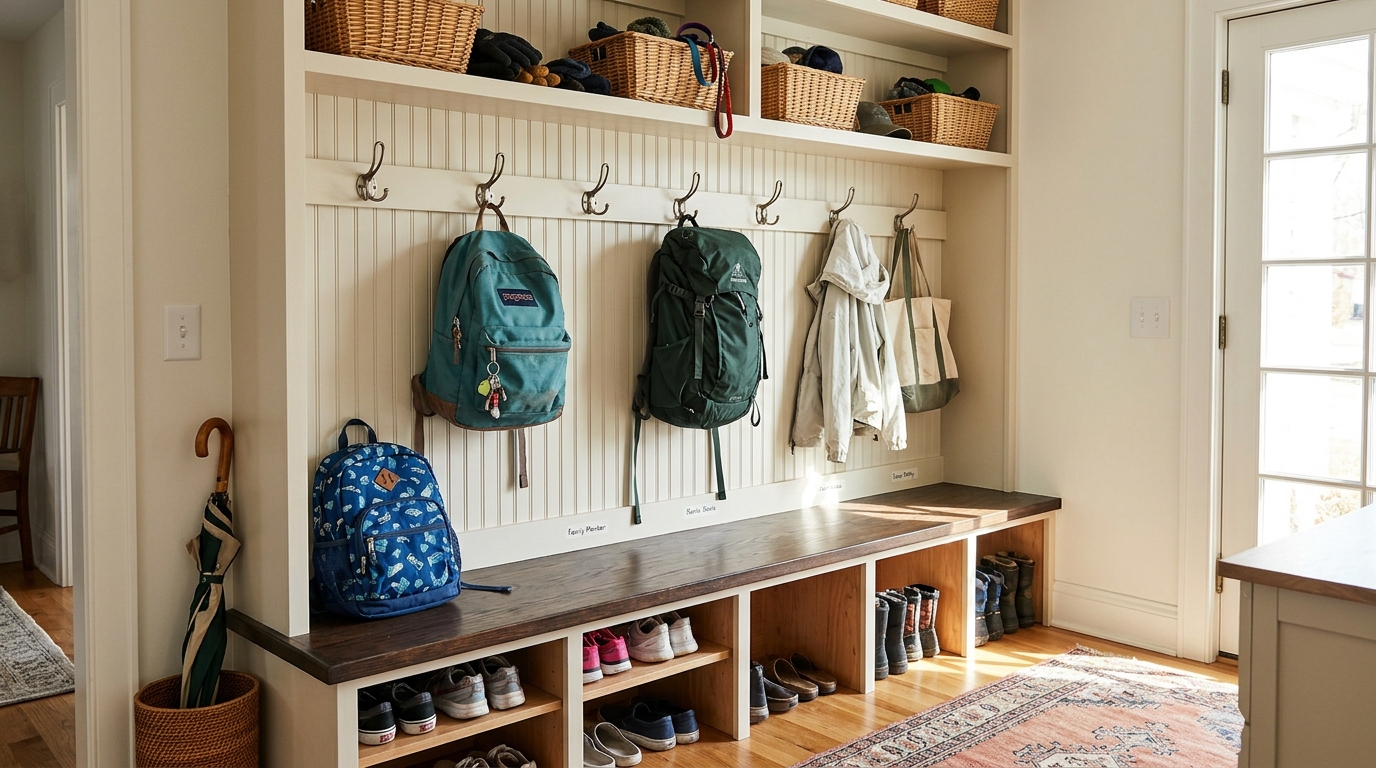
23 Backpack Storage Ideas for 2026
Backpacks often end up on entryway floors, dining chairs, or crowded closet shelves when there isn’t a clear place to put them. It’s easy for a few bags to make an otherwise tidy room feel cluttered, especially when everyone in the household uses a different backpack.
The best backpack storage ideas don’t have to involve custom furniture or expensive organizers. A sturdy hook, a small cubby, or an unused section of closet can be enough when the storage fits your daily routine.
When choosing a setup, consider how many backpacks you have, how often you use them, their loaded weight, and the space available. A child who carries a school bag every day needs a different arrangement from an adult storing hiking backpacks between trips.
I recommend starting with the simplest storage solution that meets your needs. Wall hooks and compact peg rails work well for everyday bags, while open cubbies and locker-style units help separate backpacks in busy households. Closets, structured organizers, and storage totes are useful for bags that aren’t needed as often.
Save this for later
Table of Contents
These 23 backpack storage ideas cover entryways, bedrooms, mudrooms, closets, and small spaces. You’ll also find practical guidance on choosing appropriate hooks, keeping bags accessible, preventing clutter, and storing backpacks clean and dry.
Key Takeaways
- Match storage to your routine: Keep frequently used backpacks near the entryway or bedroom door.
- Use available space wisely: Wall rails, corner hooks, and vertical cubbies can work in areas where bulky furniture won’t fit.
- Separate everyone’s belongings: Individual hooks, labeled compartments, and personal lockers make shared storage easier to manage.
- Check weight limits: Consider the weight of a fully loaded backpack before choosing hooks, shelves, rails, or freestanding racks.
- Protect bags between uses: Empty backpacks, follow their care labels, and let them dry completely before storing them.
- Start with what you have: An existing closet shelf or a suitable wall hook may be enough without purchasing a complete organizer.
Related article: 24 Basement Storage Ideas for 2026
What is the Best Way to Store Backpacks at Home?
The best way to store backpacks at home is to give them a convenient, designated spot that suits how they’re used. For everyday school bags, I prefer storage near the entrance or another place family members naturally pass when coming home.
Wall hooks are useful when floor space is limited, while open cubbies offer separate compartments for several bags. A closet organizer can work better when you want backpacks out of sight, and a storage tote is more suitable for spare bags that aren’t used regularly.
Before settling on an arrangement, consider the number of backpacks, their dimensions, and how heavy they become when packed. A small daypack may fit comfortably on a basic hook, but a loaded school bag or sports backpack needs a suitably rated support.
It’s also worth thinking about who will use the storage. Children need reachable hooks or low compartments, while adults may prefer a closet station or a dedicated gear area. Whatever you choose, leave enough clearance for straps and side pockets, and keep bags from obstructing doors or walkways.
1. Low Wall Hooks
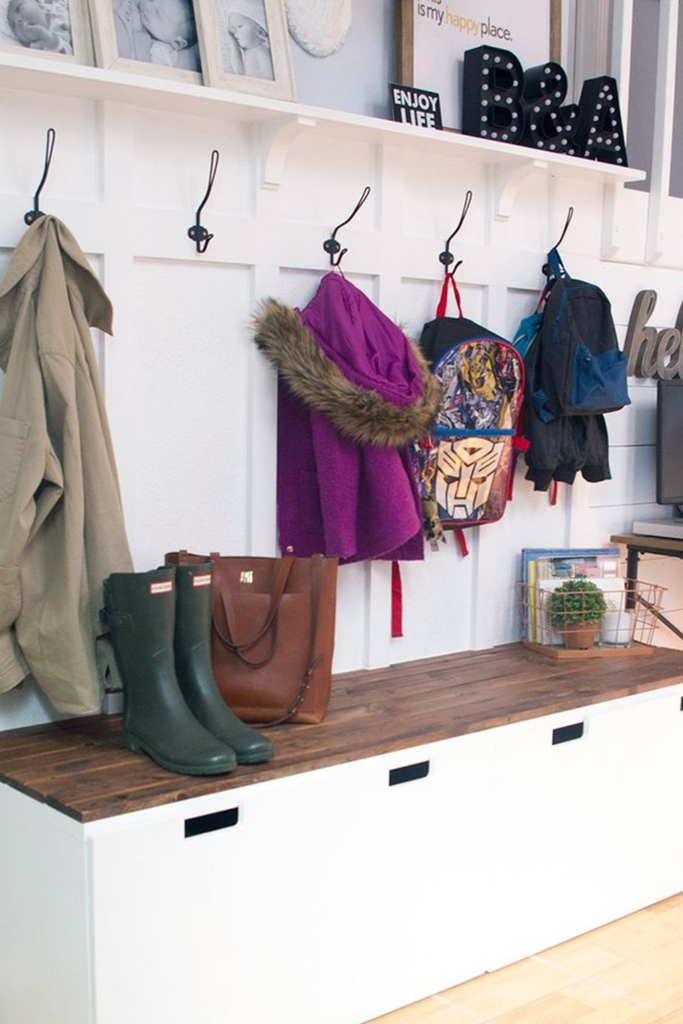
Low wall hooks provide a simple home for backpacks near the entrance. They’re particularly useful for families who want everyone to hang up their bag as soon as they walk through the door.
Choose a sturdy hook for each regular user and position it at a comfortable height. If children will use the hooks independently, make sure they can reach them without standing on a bench or chair.
A narrow bench beneath the hooks can provide a place to remove shoes. You can add a small shoe rack if space permits, but keep the walkway clear when backpacks are hanging.
Pro Tip: Check the combined weight of the backpack and its contents before selecting the hook. Use mounting hardware appropriate for the wall material and expected load rather than relying on appearance alone.
2. Carry-All Storage Bag
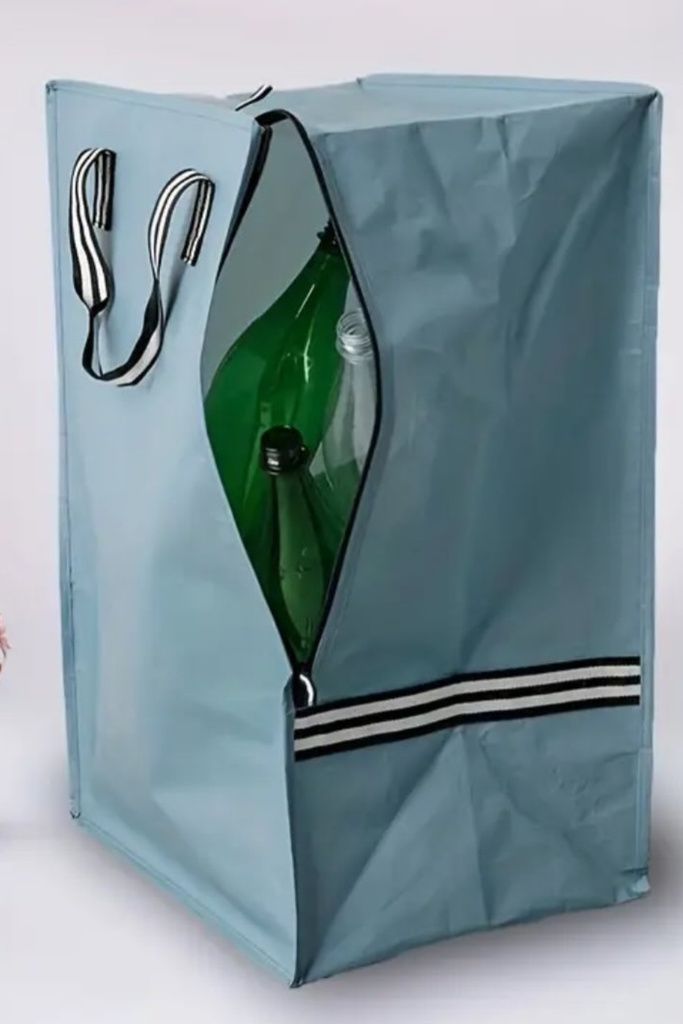
A large storage tote can keep spare backpacks together instead of spreading them across different closets. This option suits seasonal bags, travel backpacks, or school bags kept for occasional use.
Choose a container with enough room for the bags to sit without being forced into tight folds. A structured tote may be easier to use because it holds its shape when you remove one backpack.
Store the tote on an accessible closet shelf or in a clean corner. For long-term storage, make sure each backpack is empty and completely dry before placing it inside.
Best for: Spare or seasonal backpacks that don’t need to be reached every morning.
Pro Tip: If the bags are different sizes, place the larger ones at the bottom only when doing so won’t crush the smaller bags. Avoid tightly packing backpacks with rigid frames or delicate components.
3. Built-In Drop Zone
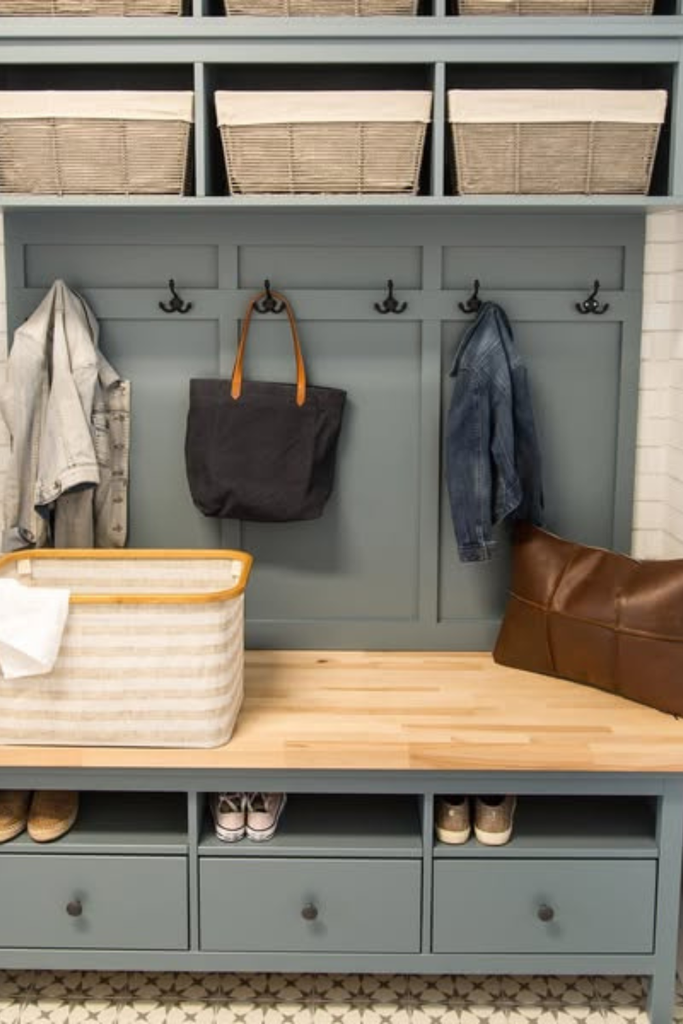
A built-in drop zone combines backpack storage with the other items people bring home each day. It’s a practical option for a mudroom or a larger entryway where coats, shoes, lunch bags, and school supplies need their own places.
A useful layout includes hooks for backpacks and jackets, a bench for changing shoes, and lower cubbies or drawers for everyday accessories. Baskets can hold smaller belongings that otherwise end up scattered across the bench.
If you’re planning a custom unit, measure the wall and check the depth of the backpacks before deciding where everything will go. The finished arrangement should leave enough room to sit, open doors, and move through the entrance comfortably.
A smaller setup can provide much the same function without built-in cabinetry. A bench, a hook rail, and a few baskets may be all you need.
Pro Tip: Give each household member a designated section. Separate spaces make it easier to return bags and find the right belongings before leaving home.
4. Open Cubby Wall
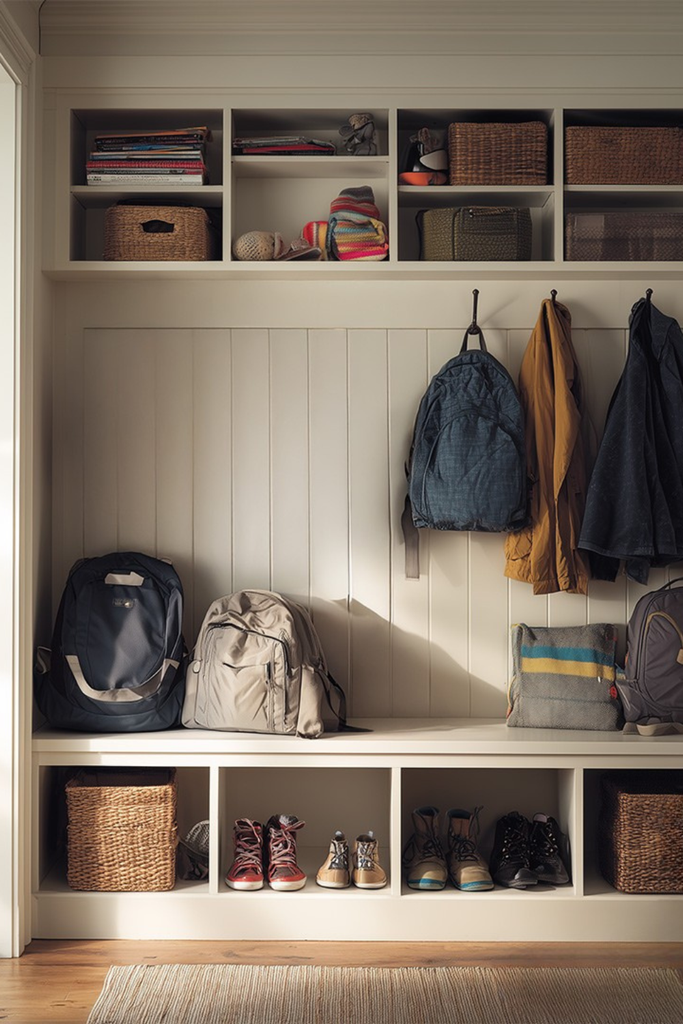
An open cubby wall keeps backpacks visible and separates them into individual compartments. It works well in family entryways, shared bedrooms, and homework areas where several bags need to remain accessible.
Choose compartments that fit the largest backpack without forcing it inside or bending the frame. Wider cubbies may accommodate bulky school bags, while smaller compartments can hold daypacks or lightweight bags.
Hooks above the unit can provide space for jackets, and small baskets can collect loose accessories. Keep the cubbies open enough for easy access rather than filling every space with extra items.
Best for: Households that need organized, everyday storage for several backpacks.
Pro Tip: Measure your largest bag, including its side pockets and protruding straps. Check the internal dimensions of the cubby rather than relying only on the unit’s external measurements.
5. Lighted Bench Hooks
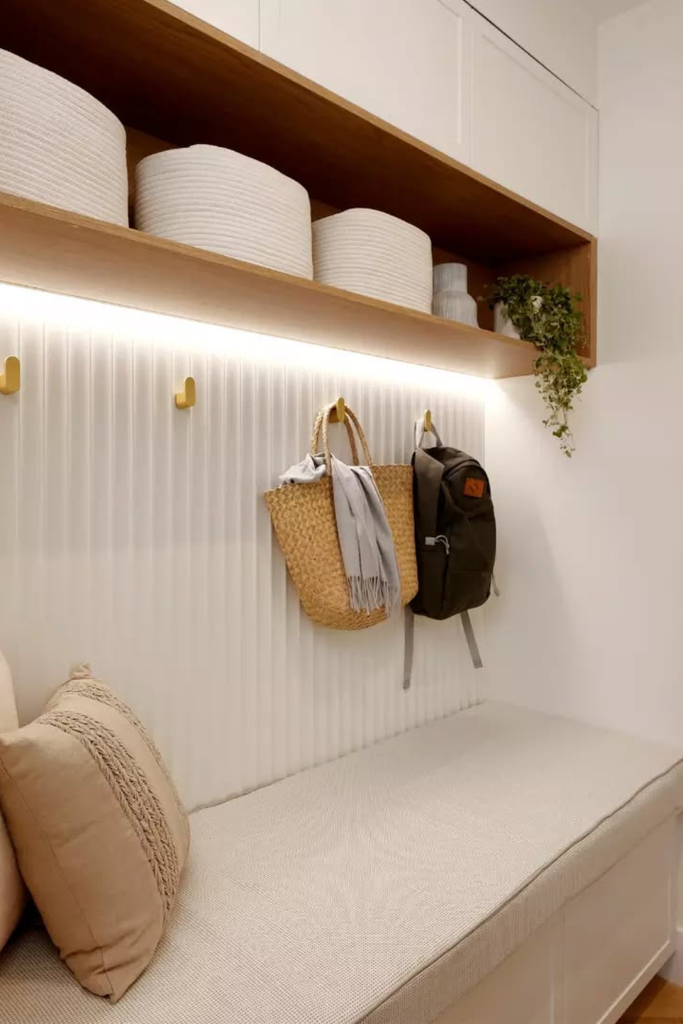
A bench with backpack hooks combines a place to sit with a convenient bag-storage area. It’s especially useful near an entrance where people regularly remove shoes or sort their belongings before heading out.
Install the hooks above the bench at reachable heights and leave enough space for bags to hang freely. A lower shelf can hold shoes, while a small basket can collect gloves, hats, or reusable bags.
If the area is dim, an LED strip beneath a shelf may improve visibility. Choose a suitable light and install it according to the manufacturer’s instructions, keeping wiring and electrical components away from damp footwear.
Make sure the bench remains stable and that hanging backpacks don’t interfere with sitting or walking through the entryway.
Pro Tip: In a narrow entrance, measure the bench depth and the space needed for hanging bags before purchasing furniture. A compact arrangement is more useful than one that blocks the door or walkway.
6. Structured Bag Organizers
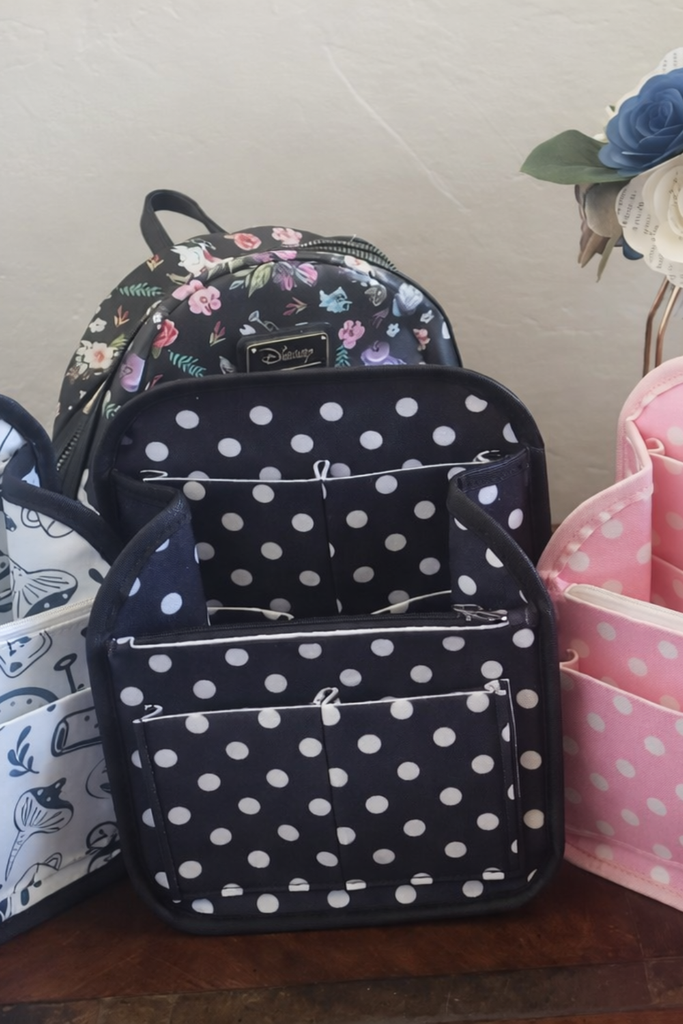
Structured bag organizers help keep backpacks separated and upright on a closet shelf. They’re useful when bags tend to slump together, making it difficult to remove one without disturbing the others.
Look for shelf dividers or individual compartments that suit your backpack sizes. Bags with stiff frames or bulky pockets may need more room than lightweight daypacks.
Arrange frequently used backpacks toward the front of the shelf. Less frequently used bags can sit farther back, provided they’re still easy to reach without pulling down other items.
Best for: Closets and bedroom shelves where several backpacks need to stay organized without taking up additional floor space.
Pro Tip: You may not need a dedicated backpack organizer. If the shelf is sturdy and deep enough, suitable dividers or separate open bins can provide the organization you need.
7. Locker-Style Storage
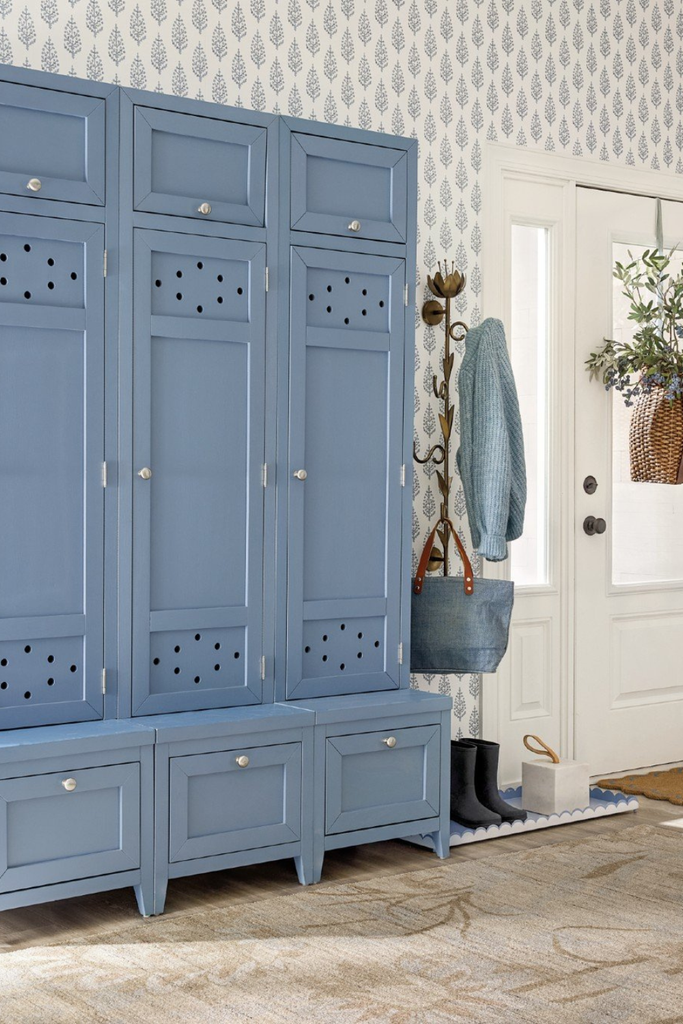
Locker-style storage gives each backpack its own enclosed compartment. It can be a good fit for shared entryways, busy family homes, or spaces where you prefer bags to remain out of sight.
Choose compartments that accommodate the largest backpack and allow the door to close without pressing against the bag. Ventilation openings can help with airflow, but they don’t replace the need to dry damp backpacks before storage.
Individual lockers also make it easier to separate school bags, sports equipment, and personal belongings. Labels can identify each person’s space without requiring an elaborate organizing system.
Check the unit’s dimensions, door swing, and installation requirements before buying. If the locker is tall or freestanding, follow the manufacturer’s instructions for securing it against tipping.
Pro Tip: Keep frequently used items near the front of each compartment and avoid filling lockers with loose belongings that make backpacks difficult to remove.
8. Wood Panel Hooks
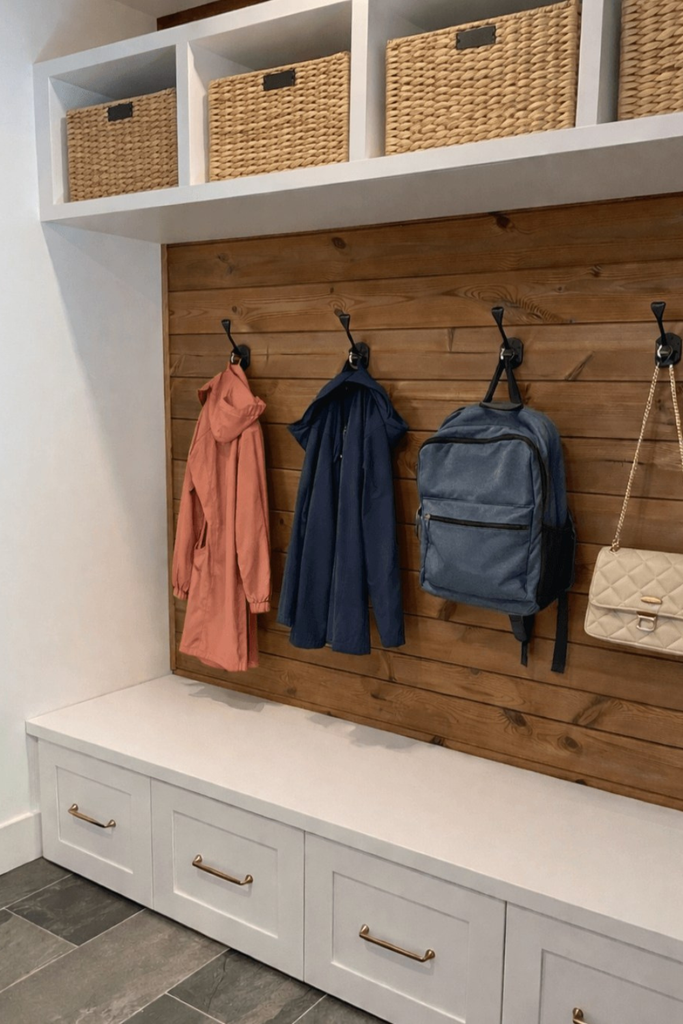
A wooden backing panel creates a defined area for a row of backpack hooks. It can also provide a coordinated look when you want storage to complement the surrounding furniture.
Choose a panel large enough to accommodate the number of bags you plan to hang. Attach suitable hooks to the panel, then secure the panel to the wall using mounting hardware appropriate for its construction and the expected load.
A narrow shelf or shoe rack beneath the panel can hold smaller everyday items. Keep heavy backpacks at comfortable heights and avoid placing the hooks where hanging bags interfere with doors or walkways.
If you rent, check your rental agreement before drilling into the wall. A freestanding rack may be a better choice when permanent changes aren’t allowed.
Pro Tip: The panel itself isn’t automatically strong enough to support loaded backpacks. Check the strength of the hooks, their attachment to the panel, and the panel’s connection to the wall.
9. Pegboard Wall Setup
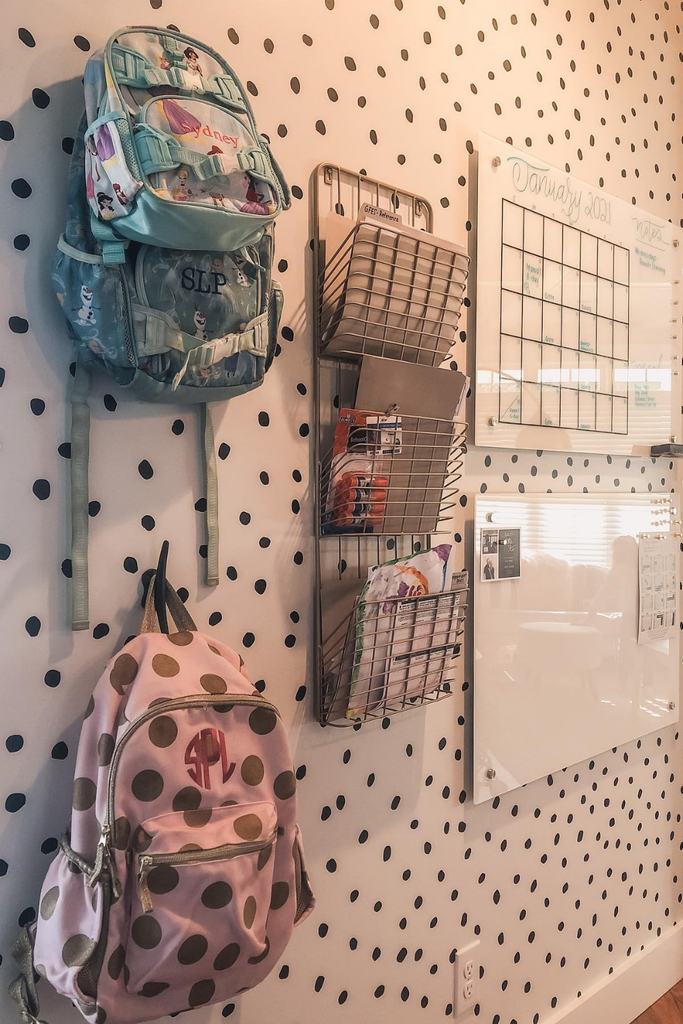
A pegboard provides flexible storage because hooks and baskets can be moved as your needs change. It works well in a homework corner, craft room, or shared workspace where backpacks and school supplies are kept together.
Arrange the hooks for the largest bags first, then add baskets for small accessories such as pencil cases, chargers, and stationery. This helps prevent smaller items from competing with the backpacks for space.
Use a pegboard and mounting system designed for the expected load. Keep the bags separated enough to prevent straps from catching on nearby hooks or accessories.
Best for: People who want an adjustable storage arrangement for backpacks and related everyday items.
Pro Tip: Don’t assume every pegboard hook is suitable for a heavy school bag. Check the manufacturer’s load guidance and make sure the board is mounted securely.
10. Gear Room Wall
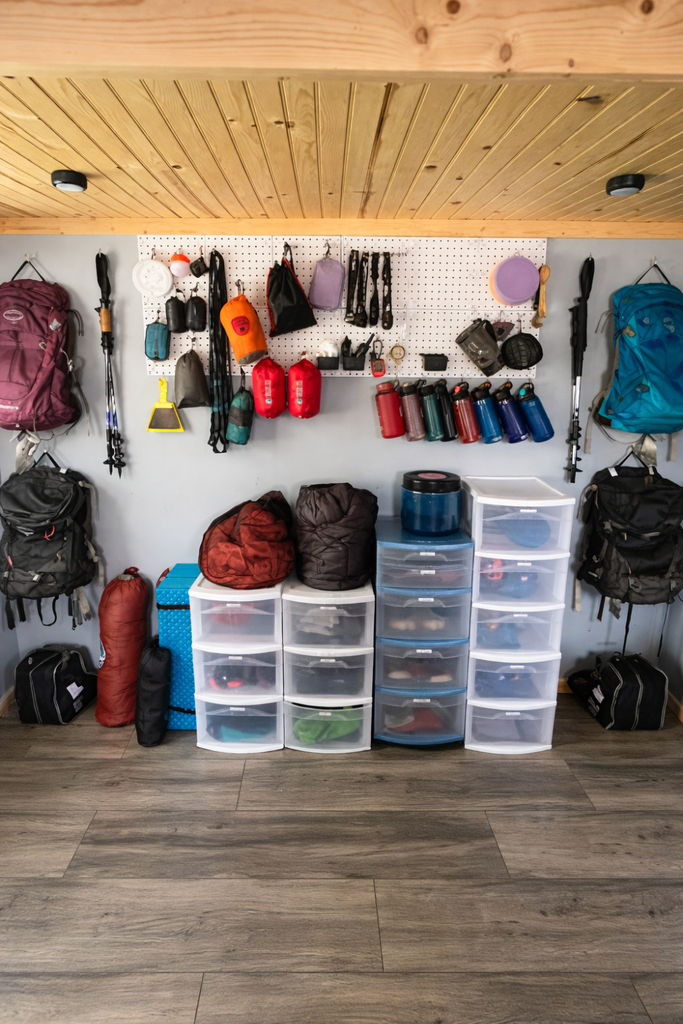
A dedicated gear room wall is useful when backpacks are part of a larger collection of hiking, camping, or sports equipment. Rather than scattering bags throughout the house, you can keep related items together in a spare room, utility area, or suitable basement.
Use appropriate hooks or a mounted rail for backpacks, with shelves or bins for smaller equipment. Clear containers can make accessories easier to identify, while separate sections help keep clean bags away from muddy shoes and wet gear.
Before storing a backpack, empty it and check for damp fabric, food wrappers, or leaking containers. If the room has a moisture problem, address it before using the space for long-term storage.
Pro Tip: Keep frequently used equipment in an easy-to-reach area and reserve higher shelves for lightweight items that aren’t needed often.
Also read: 24 Storage Ideas For Small Spaces in 2026
11. Slim Wall Rail
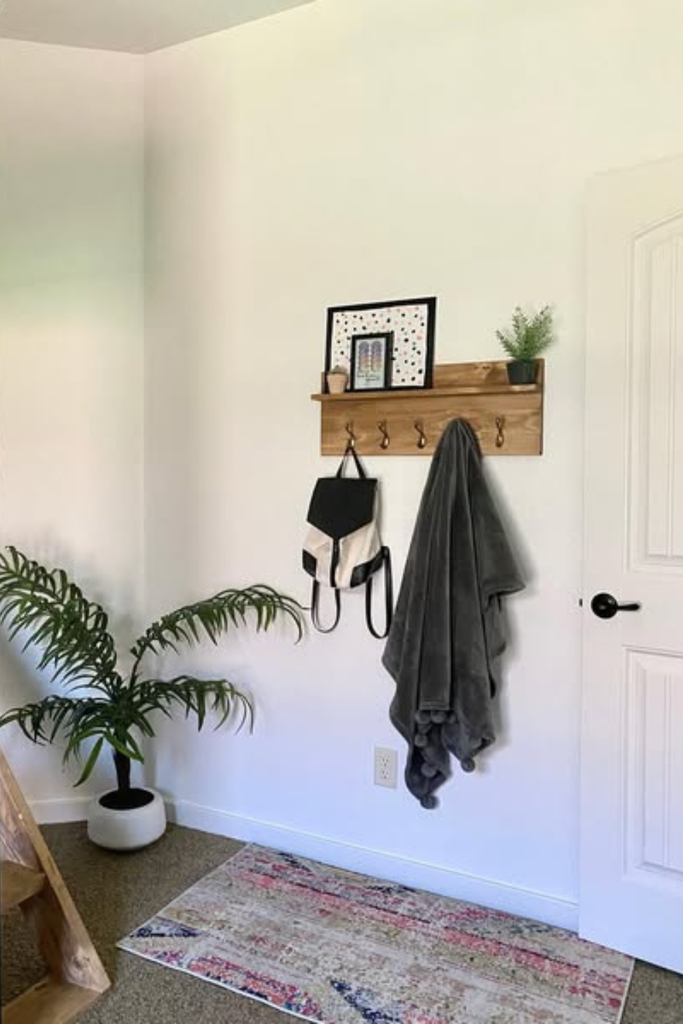
A slim wall rail offers backpack storage without the bulk of a cabinet or freestanding rack. It suits narrow entryways, small apartments, and unused sections of bedroom walls.
Choose a rail with enough hooks for your regular bags and space them so the backpacks don’t overlap excessively. A short rail is often more practical than a long one if only one or two people need storage.
Position the rail where hanging bags won’t catch on passing clothing or obstruct a doorway. The mounting method should suit the wall material and the combined weight of the loaded backpacks.
Best for: Small spaces where floor area is limited and backpacks need to remain accessible.
Pro Tip: Before installing the rail, hold the largest backpack against the wall to check its depth and strap clearance. This helps you avoid placing the rail too close to a door or narrow passage.
12. Kids Cubby Station
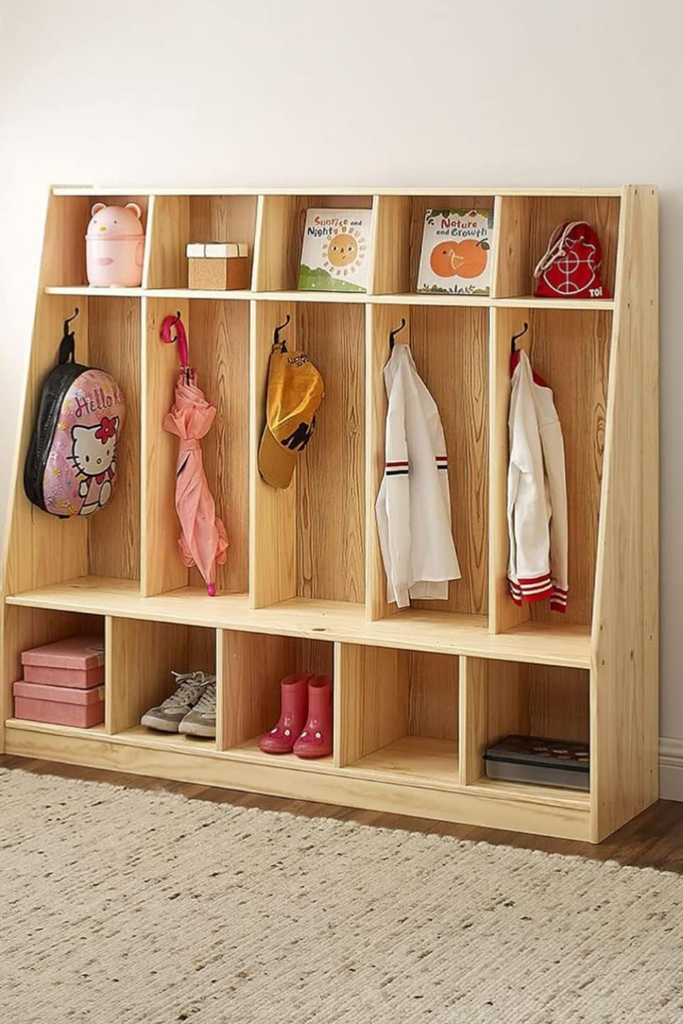
A kids’ cubby station gives each child a simple, recognizable place for school belongings. It can work near a bedroom door, in a playroom, or beside the main entrance.
Use open compartments that children can reach easily, with lower hooks for backpacks and space for lunch boxes or small accessories. Name labels or simple symbols can help younger children identify their own sections.
The station should make the morning routine easier rather than introduce more steps. Keep everyday belongings together, but avoid overfilling the cubbies with toys, loose papers, or items that make the backpacks difficult to remove.
Pro Tip: Secure tall storage furniture according to the manufacturer’s anti-tip instructions. Children shouldn’t need to climb on shelves or benches to reach their backpacks.
13. Hanging Cubby Slots
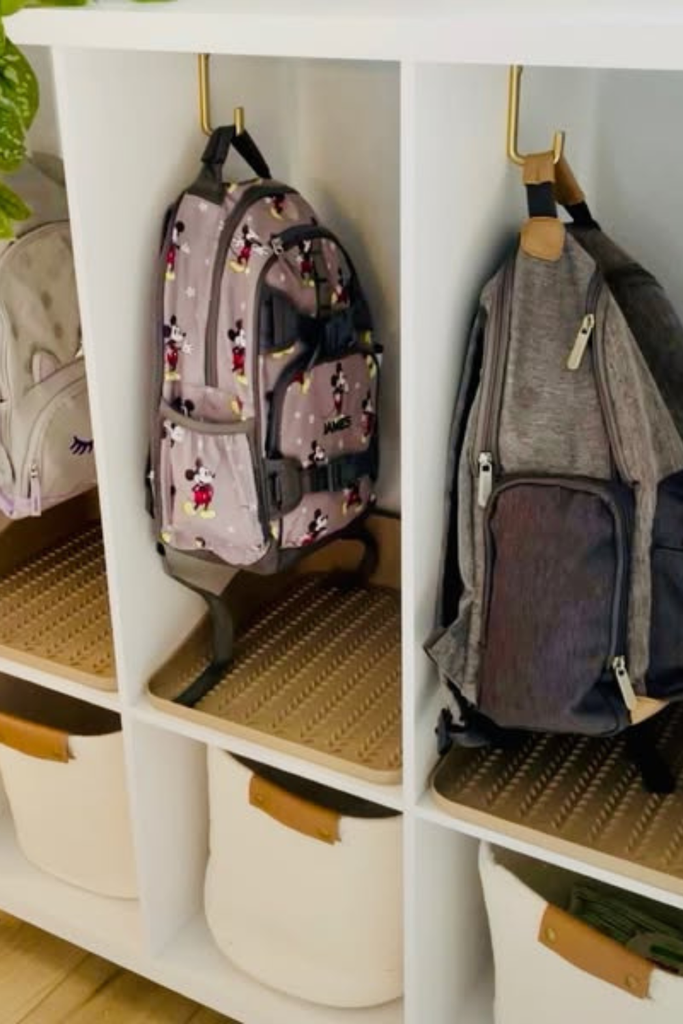
Hanging cubby slots provide vertical storage for lightweight bags and smaller backpacks. Depending on the design, they may hang from a closet rod or another suitable support, making them useful when there isn’t room for a separate shelving unit.
Choose compartments that fit your bags without stretching the fabric or forcing the zippers closed. Some hanging organizers are designed for clothing or lightweight accessories, so check the manufacturer’s weight limits before placing backpacks inside.
This option may not suit large school bags filled with books or sports equipment. If the organizer sags, the compartments become difficult to use, or the support bends, choose a sturdier alternative.
Best for: Lightweight backpacks, daypacks, or occasional-use bags in a closet.
Pro Tip: Keep the heaviest items out of hanging fabric compartments unless the product is specifically designed to support them.
14. Corner Hook Zone
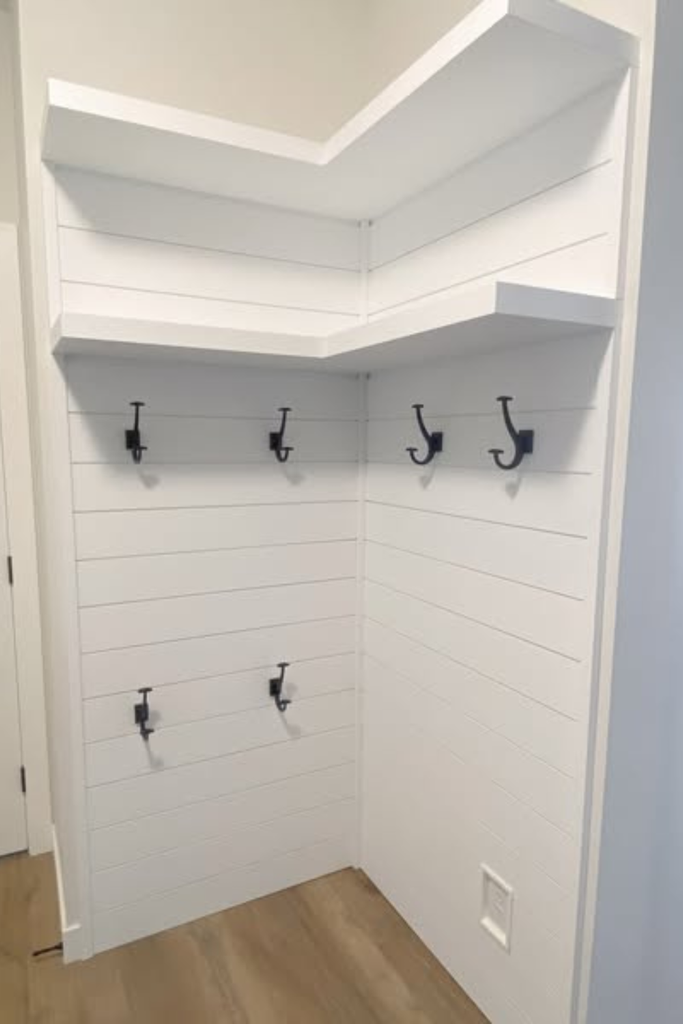
An unused corner can hold a few backpacks without requiring a full storage cabinet. This arrangement is useful in a small entryway or a hallway where a bulky piece of furniture would take up too much room.
Install hooks along one wall or arrange them on both walls if the corner allows enough clearance. Staggering their heights can help prevent larger bags from overlapping.
An upper shelf may hold lightweight accessories, but avoid placing heavy objects overhead. Make sure the backpacks don’t project into the main walking path or obstruct a doorway.
Pro Tip: If the corner is narrow, start with just two or three hooks. Adding more storage is only helpful if people can still pass comfortably and remove their bags easily.
15. Floating Peg Display
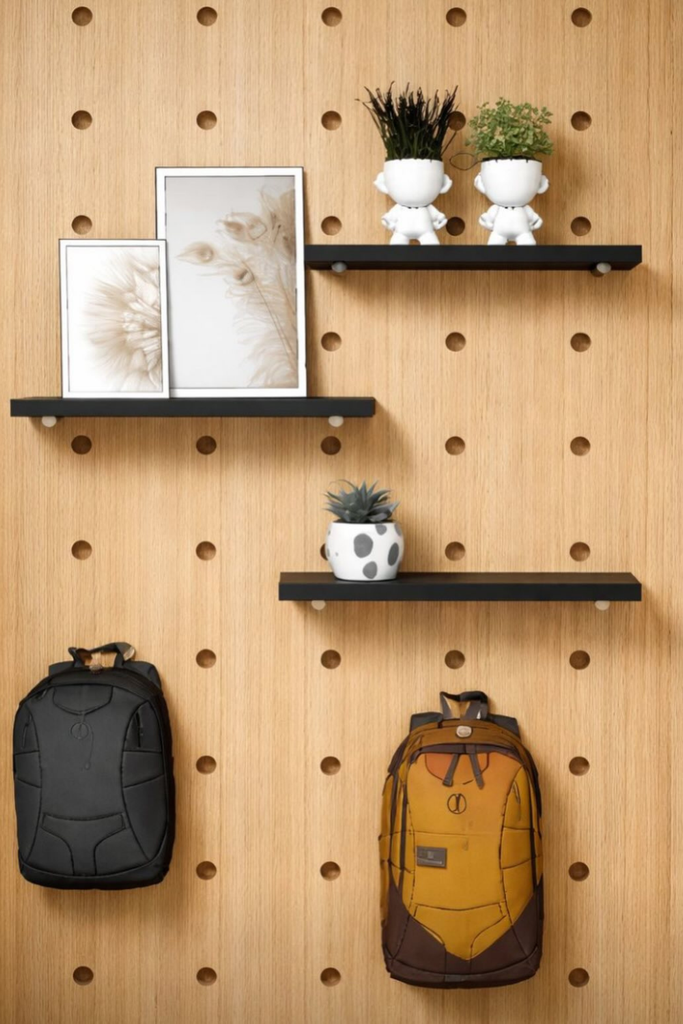
A floating peg display combines backpack storage with shelves for a few decorative items. It can suit a teen bedroom, home office, or other space where you want everyday bags to remain visible without making the room feel like a mudroom.
Use the pegs for backpacks and reserve the shelves for lightweight items such as framed pictures or small accessories. Keep enough open space between the bags and the display objects so straps don’t catch when someone removes a backpack.
Choose shelves and mounting hardware appropriate for their intended loads. The decorative appearance shouldn’t come at the expense of easy access or secure installation.
Pro Tip: Keep the most frequently used backpack on an easy-to-reach peg and avoid placing fragile decorations directly beside hanging straps.
16. Freestanding Rack Unit
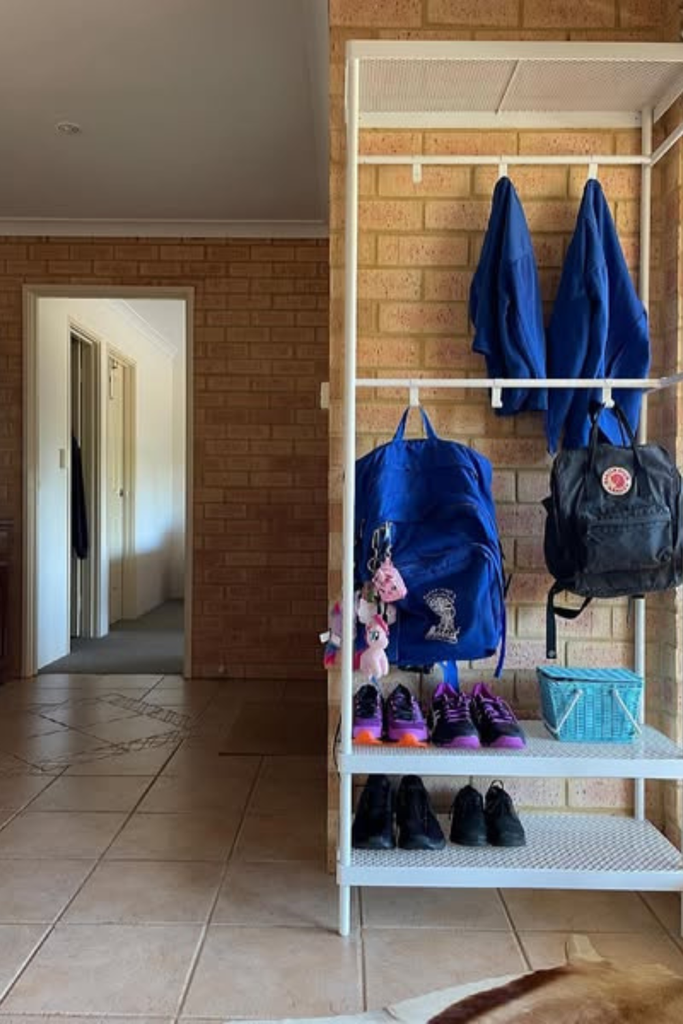
A freestanding rack is a practical alternative when you don’t want to mount storage permanently to the wall. It can suit rental homes, dorm rooms, or rooms where the layout may change.
Look for a stable rack with suitable hooks or a top rail for backpacks. Shelves below can hold shoes, small bags, or accessories, provided the unit’s design and weight limits allow it.
Leave enough space between hanging backpacks to prevent straps from tangling. Place the rack where it won’t block doors or narrow walkways, and check its stability when removing a heavy bag.
Best for: People who want movable backpack storage without permanent wall installation.
Pro Tip: Follow the manufacturer’s assembly and anti-tip instructions. A freestanding unit should remain stable when one side is loaded more heavily than the other.
17. Closet Gear Station
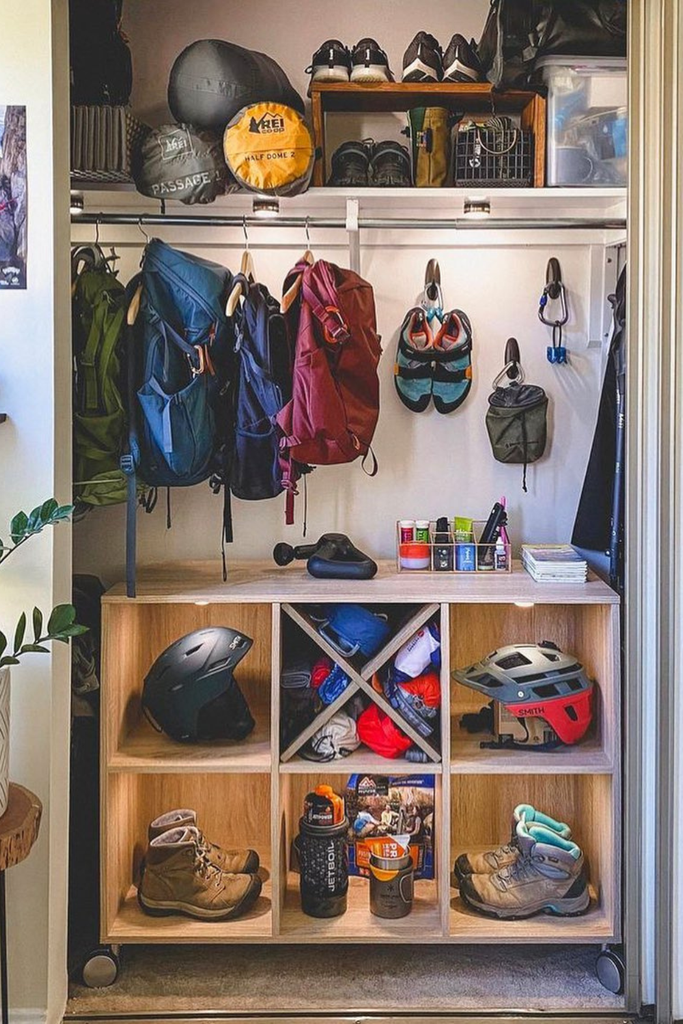
A closet gear station keeps backpacks and related daily-use items together while allowing the room to look tidy when the doors are closed. It works well in bedrooms and entry closets with enough depth for the bags.
Use a suitable hook rail, shelf, or hanging organizer for backpacks, with lower bins for shoes, helmets, lunch bags, or other accessories. Keep everyday bags near the front so they don’t disappear behind coats and stored belongings.
Check that the closet doors close without pressing against the bags. If the closet rod or shelving will support a hanging organizer, confirm its load capacity before adding heavy backpacks.
Pro Tip: Separate clean everyday bags from muddy sports gear. A dedicated bin for used equipment helps prevent dirt from spreading through the closet.
18. Ladder Style Stand
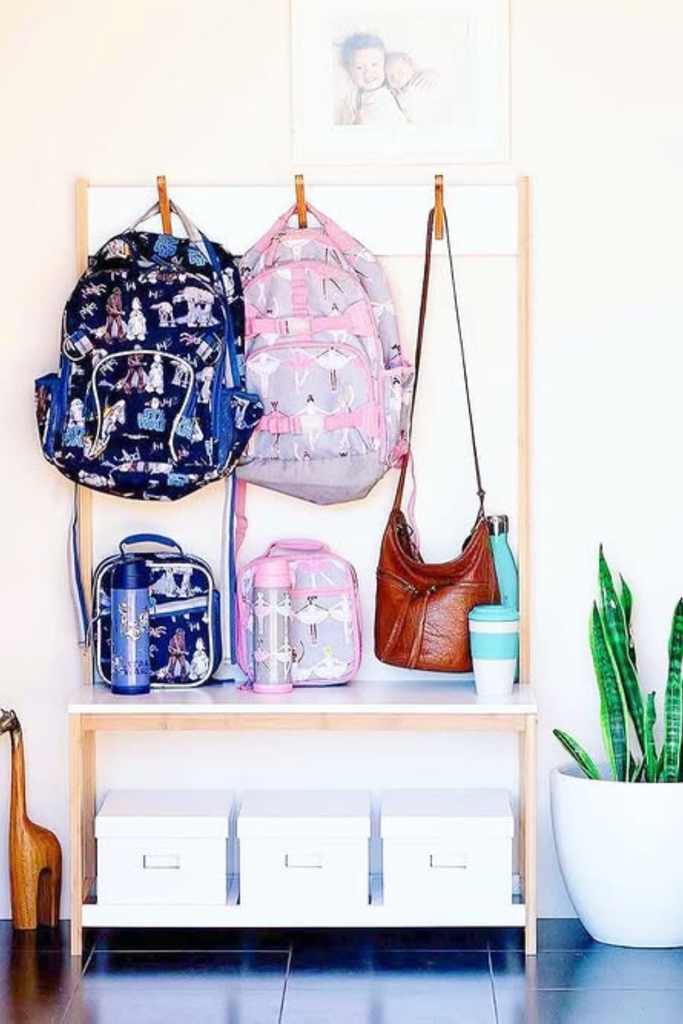
A ladder-style stand offers an alternative to conventional wall hooks. Its upright design can hold backpacks at different heights and may fit into a bedroom or home office where you want storage to look like a piece of furniture.
Choose a stand with suitable hooks or rungs and enough space for the backpacks to hang without overlapping. If it has a lower shelf, use it for lightweight accessories or a small storage basket.
Check the stand’s weight limits and stability before placing loaded bags on it. Follow the manufacturer’s instructions for positioning and securing the unit, especially if children use the room.
Pro Tip: Place heavier backpacks lower when the design permits and the manufacturer allows it. Avoid hanging bags in a way that makes the stand lean or become unstable when one is removed.
19. Hallway Cubby Pair
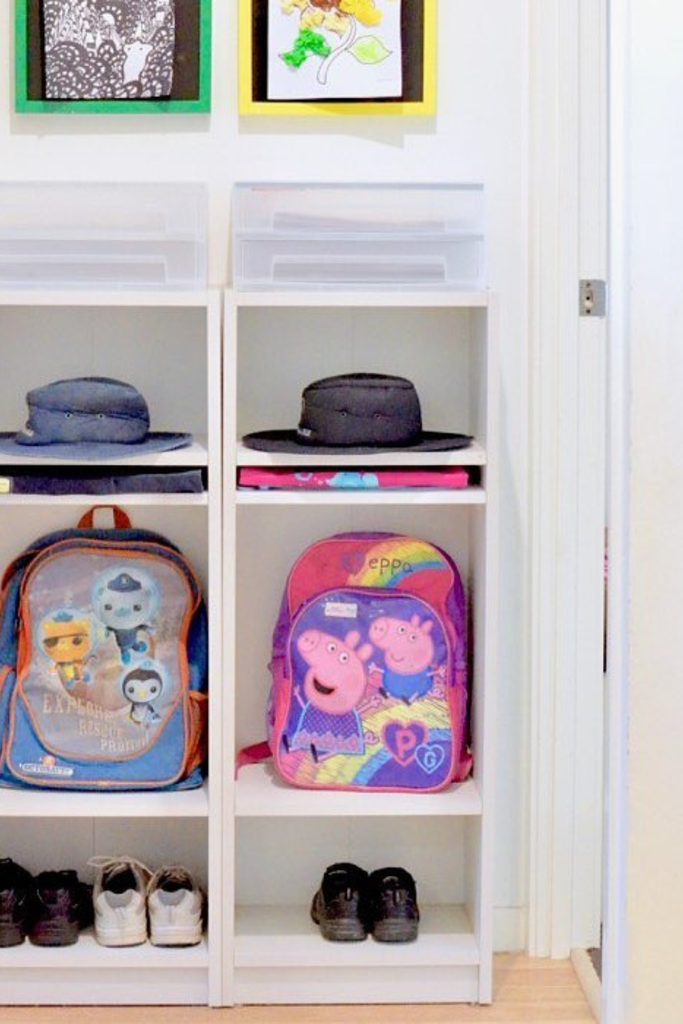
Two narrow cubby units can provide separate backpack storage when a single wide unit won’t fit the available wall. This setup may work in a short hallway or a small entryway shared by several household members.
Choose cubbies that fit your bags and leave enough room for straps to stay inside the storage area. One unit can hold backpacks while the other accommodates shoes, hats, or smaller everyday items.
Measure the hallway before placing the units side by side or on separate sections of the wall. Check that doors and drawers can open fully without obstructing the walking path.
Pro Tip: Matching units can create a coordinated appearance, but they don’t have to be identical if your storage needs differ. Prioritize useful compartment sizes over appearance alone.
20. Soft Hook Rail
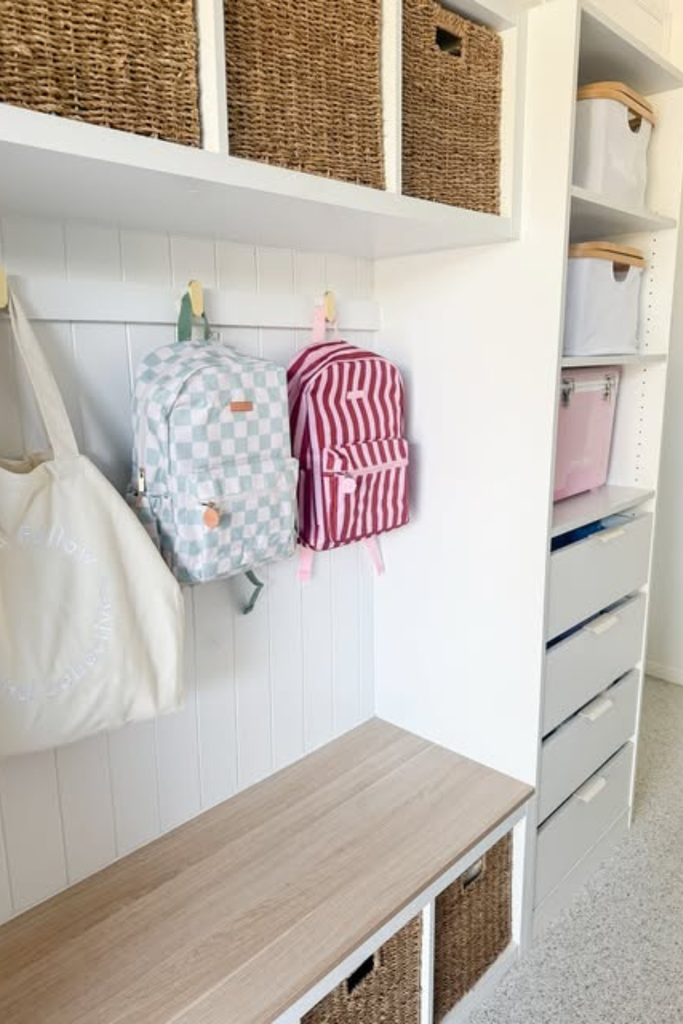
A hook rail with smooth, suitably sized hooks provides a simple place to hang everyday backpacks. It’s a useful choice for an entryway where you want basic storage without adding a large cabinet.
Choose hooks with enough depth to hold the straps securely and edges that are unlikely to snag the fabric. A bench beneath the rail or a nearby basket can provide space for shoes and small accessories.
Check that the rail and its mounting hardware are suitable for the weight of the loaded bags. Decorative rails may be intended for lightweight items, so don’t assume they can support heavy school backpacks.
Pro Tip: If backpack straps have adjustable buckles or loose ends, arrange them so they don’t catch on neighboring hooks or nearby clothing.
21. Personal Locker Cubes
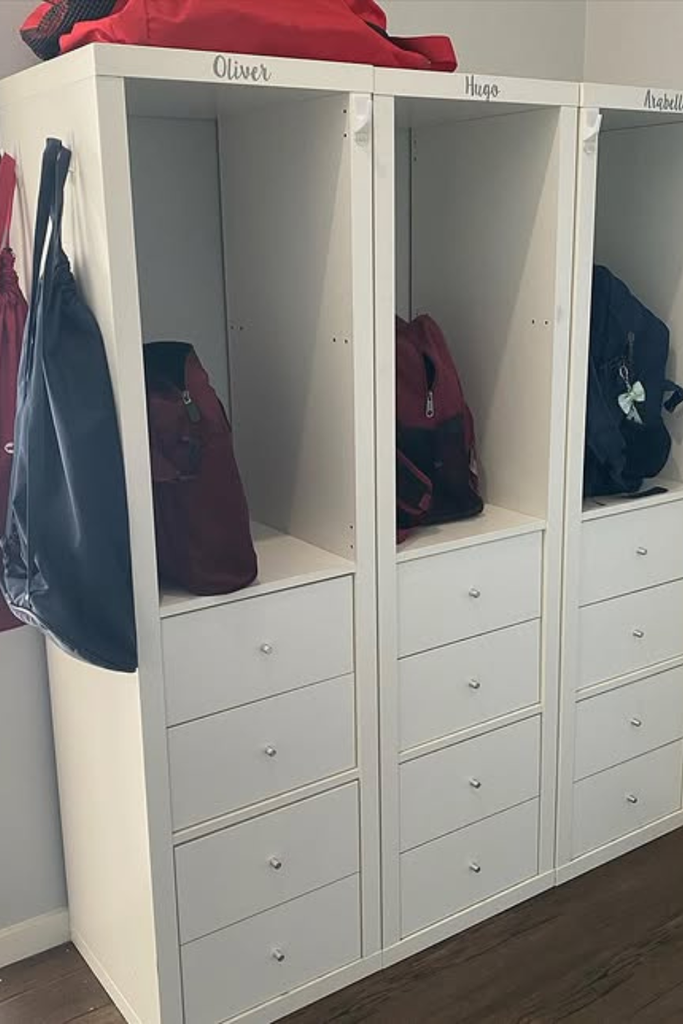
Personal locker cubes provide separate compartments for backpacks, sports bags, and everyday accessories. They can be useful in larger households where belongings often get mixed together near the entrance.
Assign each person a compartment and use simple labels to identify the spaces. Depending on the unit, drawers below can hold smaller items while the main section keeps backpacks accessible.
Check the internal dimensions before purchasing, particularly if some family members carry bulky sports or school bags. Make sure doors and drawers have enough clearance and that tall units are installed according to the manufacturer’s safety instructions.
Pro Tip: Keep each compartment limited to the items its owner uses regularly. Overfilling the cubes can make backpacks difficult to remove and reduce the usefulness of the system.
22. Compact Peg Rail
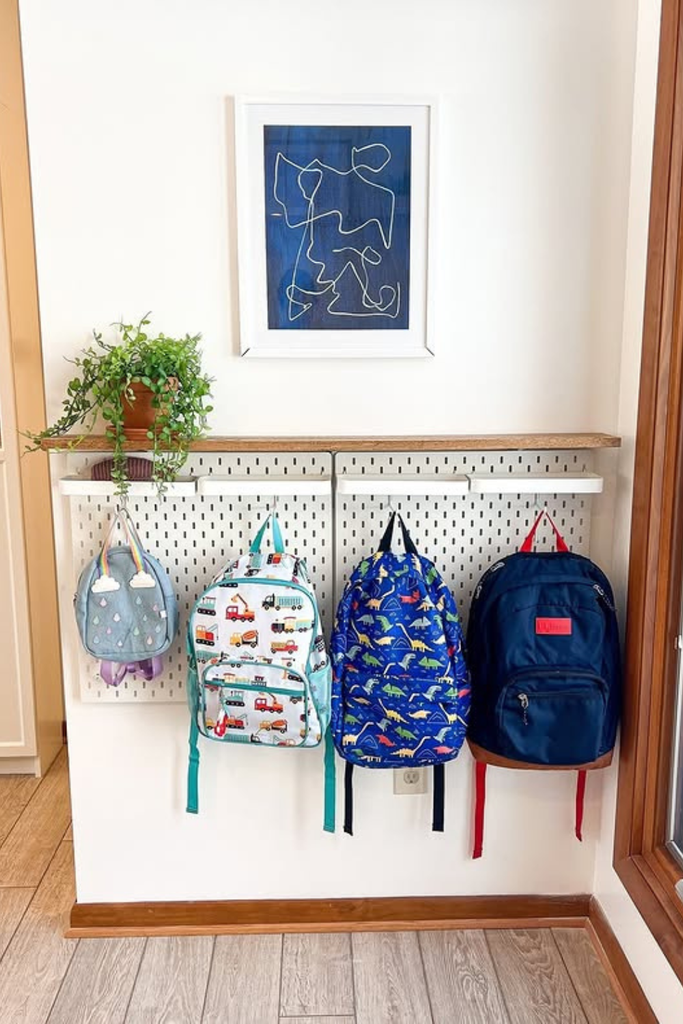
A compact peg rail is a minimal solution for a small number of backpacks. It works well in a narrow entryway, a bedroom, or a pass-through space where a full storage rack would be unnecessary.
Install the rail where the bags are easy to reach and won’t obstruct movement. Choose pegs suited to the backpack straps and leave enough room for the bags to hang without pressing tightly against each other.
A short rail is usually sufficient for one or two regular users. If you need to store several bulky backpacks, a wider rail or a separate cubby unit may be more practical.
Pro Tip: Check the rail’s load capacity and mounting requirements before installation. In a rental home, confirm that drilling is allowed or choose a suitable freestanding alternative.
23. Single Hook Focus
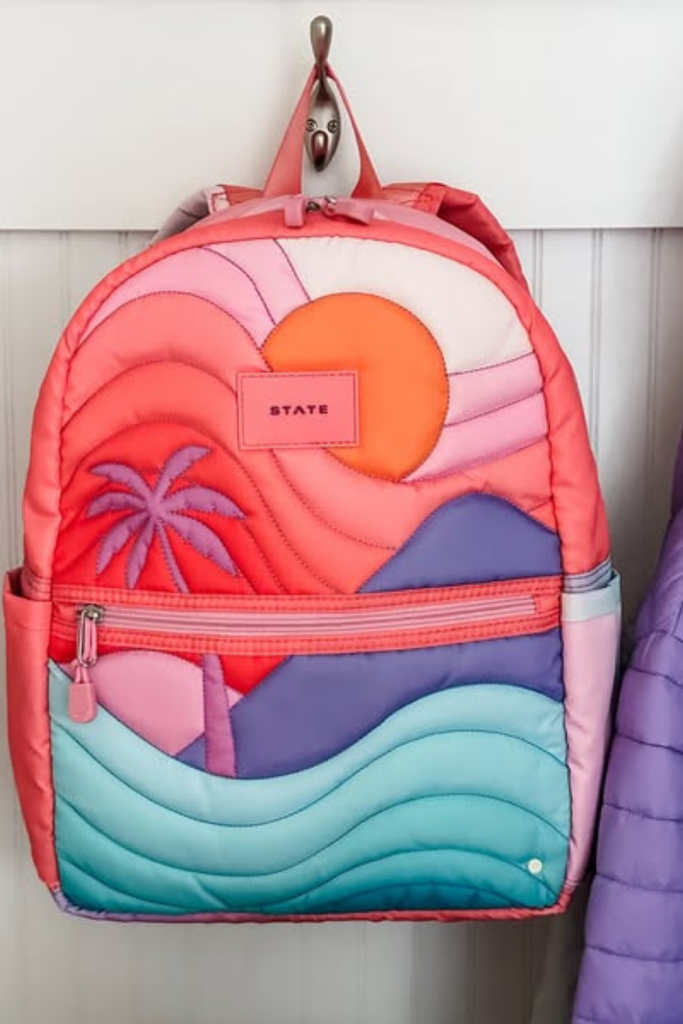
If you use just one backpack regularly, a single sturdy hook may be all the storage you need. It works beside a desk, near a bedroom door, or inside a closet where the bag can remain accessible without taking up shelf space.
Choose a hook that supports the fully loaded backpack and holds its strap securely. Position it so the bag doesn’t drag on the floor, press against a door, or interfere with other belongings.
The hook still needs appropriate mounting hardware for the wall material and expected load. If the backpack becomes heavier or you start storing additional bags, reassess whether the hook remains suitable.
Pro Tip: Before buying an organizer, try using an existing, properly installed hook if you already have one in a convenient location. Sometimes a designated spot is all that’s missing.
FAQs
How do you keep backpacks clean while in storage?
Empty backpacks after use and remove food wrappers, crumbs, loose papers, and anything that could leak. Check the care label before cleaning because washing instructions vary by fabric, coating, and construction.
Allow the bag to dry completely before putting it in a closet, fabric organizer, or closed storage container. Keeping backpacks off the floor and leaving some space between them can also help reduce contact with dirt and allow airflow.
Should backpacks be stored indoors or in a garage?
For everyday and long-term storage, a clean, dry indoor area is usually the more practical choice. Garages and basements vary in humidity, temperature, sunlight exposure, and pest activity, so their suitability depends on the actual conditions.
If you store backpacks in a garage, keep them away from damp floors and walls and check them occasionally for moisture or damage. Empty and dry each bag before putting it away.
How do you store school backpacks in a small entryway?
A short wall rail, a few well-positioned hooks, or a narrow cubby unit can work well in a small entryway. Choose a location that allows the bags to hang without blocking the door or reducing the room needed to walk through.
If wall mounting isn’t practical, consider a compact freestanding rack. Measure the available space and account for the depth of the backpacks, not just the width of the storage unit.
Is it better to hang or shelve backpacks?
Both methods can work, depending on the bag and the storage space. Hooks make everyday backpacks easy to grab, while shelves and cubbies provide support and can be useful for bags that don’t hang comfortably by their straps.
For heavier backpacks, check the weight limits of the hook or shelf and the way it is mounted. If a bag is awkward to hang or its straps could be strained, a suitably sized shelf or cubby may be the better choice.
How do you store backpacks for a long period?
Start by emptying the backpacks and cleaning them according to their care labels. Let them dry fully, then store them in a clean, dry place away from direct sunlight, damp surfaces, and pests.
Avoid crushing structured bags beneath heavy objects or packing damp backpacks tightly together. Check stored bags occasionally, especially if the storage area is prone to humidity or temperature changes.
How can children keep backpacks organized?
Give each child a reachable hook or a clearly marked cubby near the place where they normally enter the home. Keep the setup simple enough that putting the backpack away becomes part of the daily routine.
A nearby basket for lunch boxes, hats, or school accessories can help keep smaller items together. Make sure children can reach their belongings without climbing on furniture or handling heavy objects stored overhead.
Check this out: 26 Under Cabinet Storage Ideas for 2026
Conclusion
The most useful backpack storage ideas are the ones that fit your home, your bags, and your daily routine. A single hook may be enough for one frequently used backpack, while a family with several school and sports bags may benefit from individual cubbies or a dedicated drop zone.
Before buying anything, look at the storage you already have. An unused closet shelf, a suitable wall, or a small corner may provide enough room for a practical setup.
Pay attention to loaded weight, mounting requirements, access, and airflow. With a little planning, you can keep backpacks off the floor, protect them between uses, and make it easier for everyone to find their bag when they need it.




One Comment