21 Cutting Board Storage Ideas For 2026
Cutting boards are easy to use but surprisingly awkward to store. Their flat, wide shape often leads to the same problem: they end up leaning against the backsplash, stacked in a deep cabinet, or taking up valuable counter space.
When organizing a kitchen, I look at how often an item is used, where the related task happens, and how much space the item needs when it is put away. Cutting boards are a good example because the best storage solution is usually not the biggest one. It is the one that makes the board easy to reach without creating another pile of clutter.
The collection matters, too. A household with two thin boards has very different storage needs from one with several thick wooden boards, large serving boards, and separate boards used for different foods.
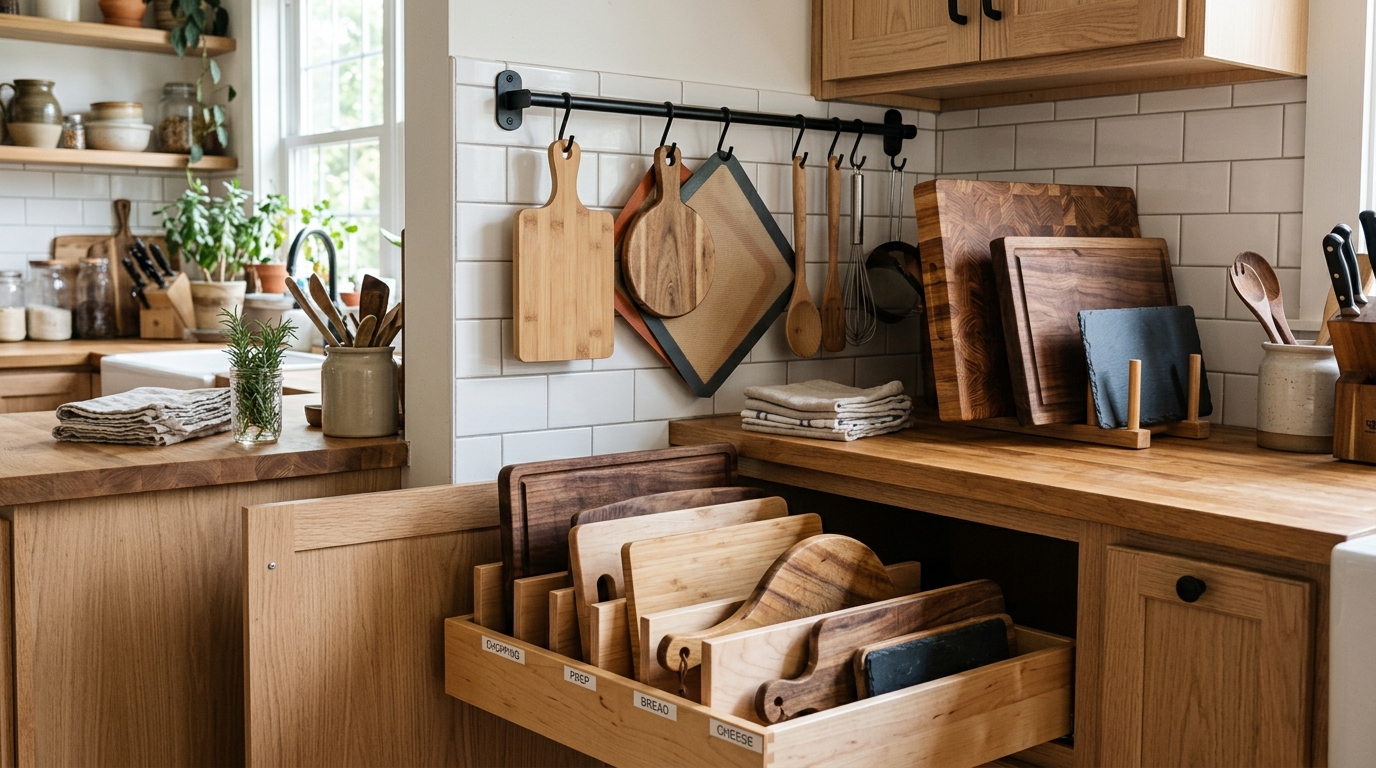
The most practical cutting board storage ideas use vertical space, narrow cabinet areas, drawers, pullouts, or otherwise unused wall space. Upright storage is particularly useful when several boards need to remain accessible without taking over the countertop.
For a small kitchen, I would first inspect cabinet doors, narrow gaps, empty wall sections, and unused corners. Renters can usually work with freestanding racks or removable hooks, while a kitchen remodel creates more opportunities for dedicated drawers and pullout cabinets.
Save this for later
Table of Contents
Before buying or installing anything, measure the boards themselves, including their thickness, width, length, and any handles. Then check the available cabinet depth, drawer clearance, wall space, and weight capacity. Good storage should fit the collection rather than forcing the collection to fit the organizer.
Key Takeaways
- Vertical storage works well when several cutting boards need individual spaces.
- Small kitchens can make use of cabinet doors, narrow gaps, walls, and corners.
- Deep cabinets are easier to use with pullout storage or vertical dividers.
- Drawer storage works best when the drawer has enough clearance for the largest board.
- Decorative boards can be stored where they contribute to the kitchen’s appearance.
- Heavy boards need stable racks and properly supported hardware.
- Clean cutting boards should be completely dry before enclosed storage.
- Separating boards by purpose can support an organized food-preparation routine, but proper cleaning and safe food handling are still essential.
Related article: 18 Pan Storage Ideas for 2026
How Can You Store Cutting Boards Without Taking Counter Space?
I start by looking for unused space rather than adding another organizer to an already crowded countertop. Cabinet interiors, cabinet doors, narrow gaps, deep corners, drawers, and open wall sections can all become useful storage areas.
The next step is measuring. Check the largest cutting board’s length, width, and thickness, then compare those measurements with the cabinet or drawer where it will live. A storage system that works for thin plastic boards may not have enough room for thick wooden ones.
Vertical storage is often practical because it lets several boards stand separately. Instead of lifting a stack to reach the bottom board, each one can be removed independently.
Moisture also matters. Cutting boards should be washed appropriately for their material and allowed to become completely dry before being placed in enclosed storage. Dividers and open slots are helpful because they prevent boards from being pressed tightly together.
For a rental kitchen, removable hooks or a freestanding rack can solve the problem without permanent installation. In a remodel, built-in drawers, cabinet dividers, and pullouts can be designed around the actual board collection.
Wall Hooks
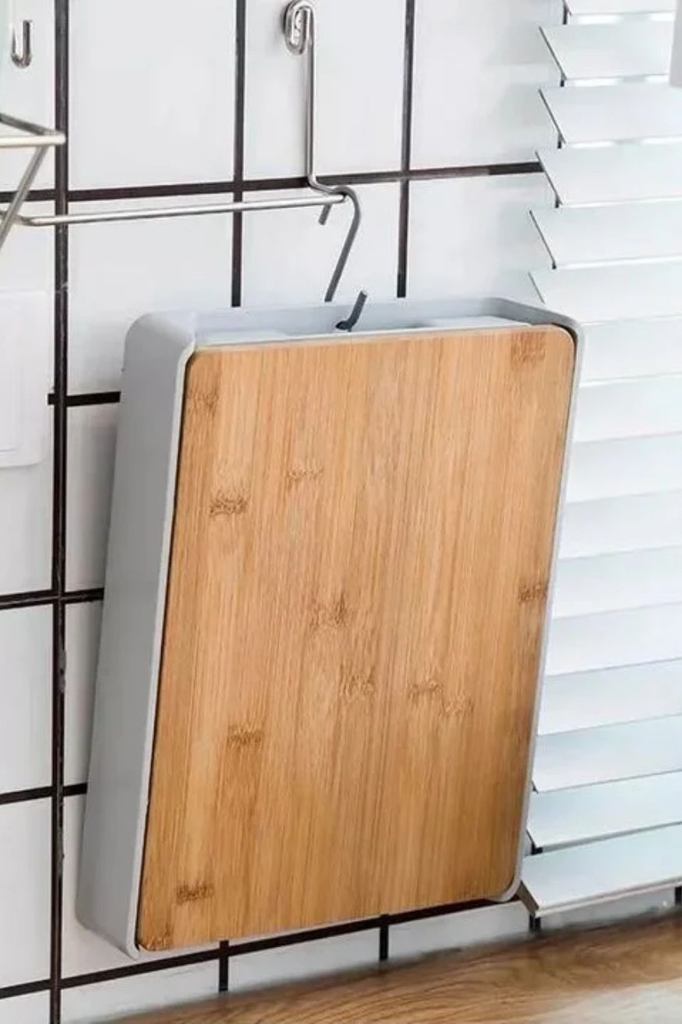
Wall hooks are useful when cabinet and drawer space is limited but there is an empty section of wall near the preparation area.
This works particularly well for boards with handles or hanging holes. Instead of leaning several boards against the counter, each board can have its own hook.
Before installing hooks, I check the wall material, hardware requirements, available clearance, and the weight of the boards. Heavy hardwood boards need more secure support than lightweight boards.
For renters, removable hooks may be an option when the wall surface and product specifications allow it. I would not use them for a heavy board unless the manufacturer’s weight rating and installation requirements are suitable.
The location matters just as much as the hardware. A board should be easy to reach without sitting directly where it can be splashed by the sink or interfere with normal movement.
Pro Tip: Leave enough room around hanging boards to remove one without having to move the others. Storage should make the cooking workflow easier, not create another small obstacle.
Hidden Rack
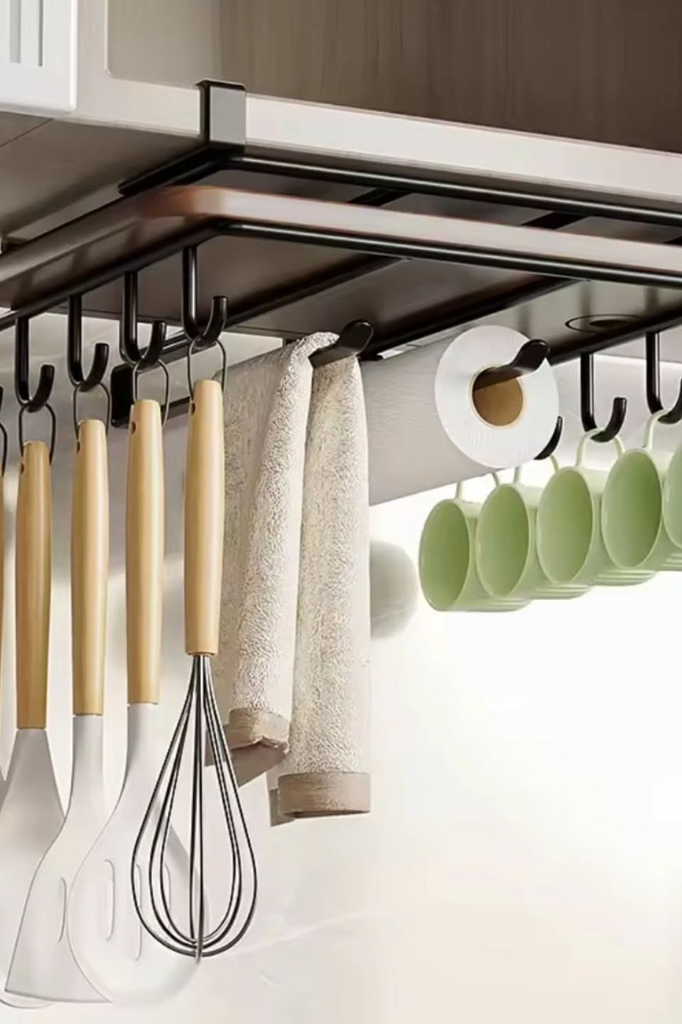
The underside of an upper cabinet can provide a useful storage zone when the countertop below is already busy.
A narrow rack installed beneath the cabinet can hold suitable cutting boards without using another drawer or shelf. This is most practical when the cabinet height and countertop clearance leave enough room for the board to be removed comfortably.
I would measure the full area first, including the rack depth and the board’s height. Also check whether installation could interfere with cabinet lighting, doors, or the surface below.
This option is better suited to homeowners who can make a permanent installation. In a rental, a freestanding rack or removable storage solution may be more appropriate.
Because this area is close to food-preparation surfaces, boards should be clean and fully dry before being put away.
Divider Stand
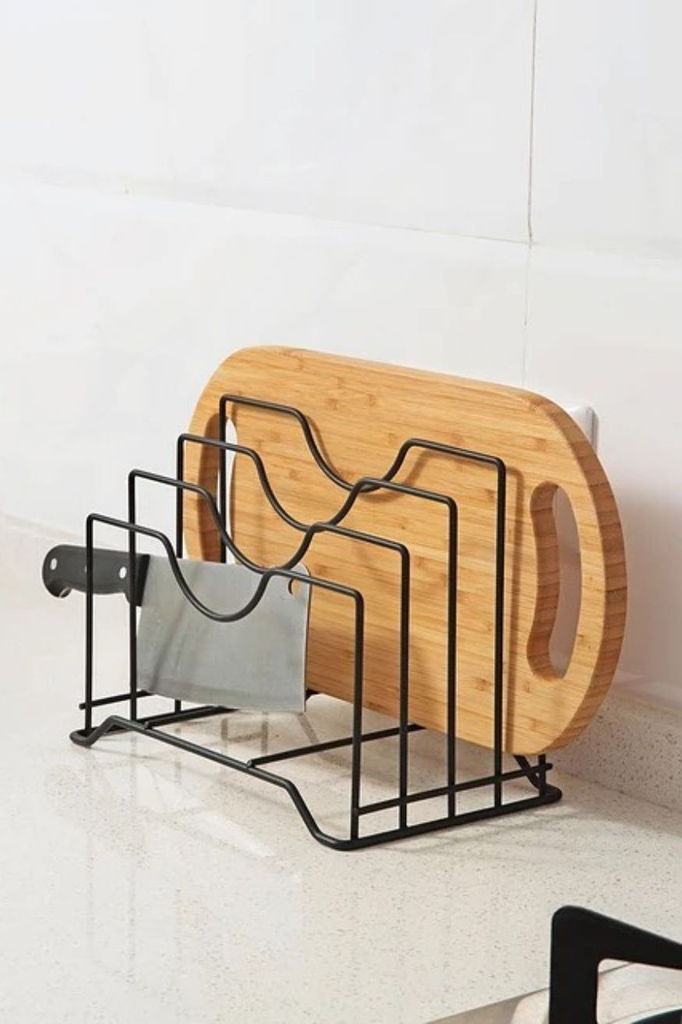
A divider stand is different from a basic wooden rack because its main purpose is to create individual compartments for boards.
I use this type of organization when several boards need to be separated by size or purpose. Each board has a defined slot, so removing one does not cause the rest to fall over.
A divider stand can sit inside a cabinet, on a pantry shelf, or on a small section of countertop. It is especially useful when there is enough vertical clearance but not enough width for a broad storage container.
Before purchasing one, check the width of each slot against the thickest board. Also check whether the base is wide enough to remain stable when a heavy board is removed.
Shelf Display
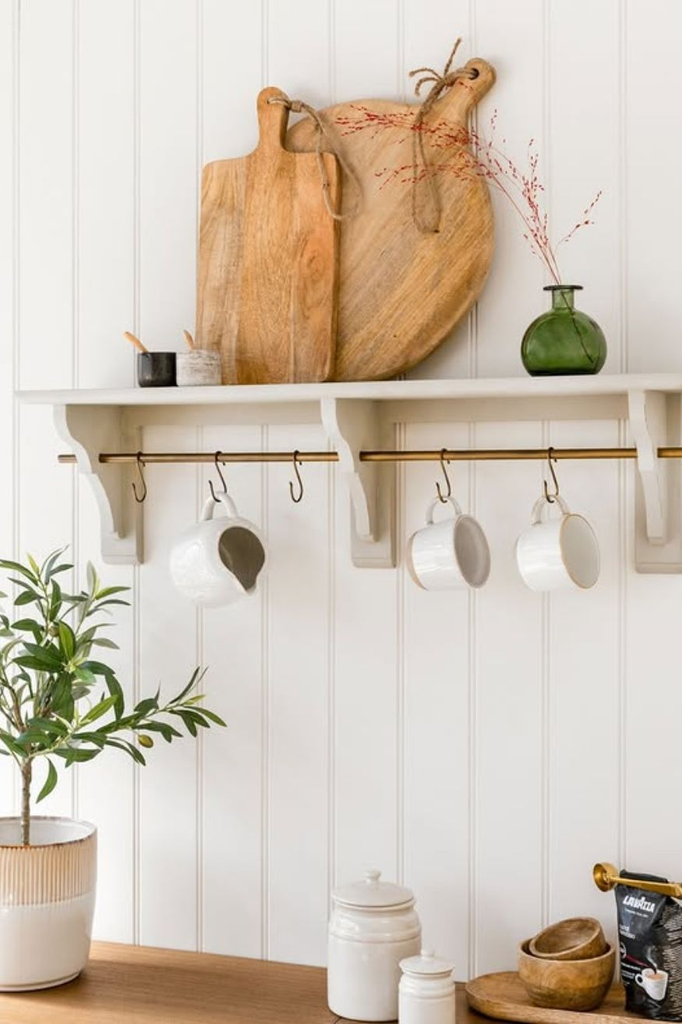
Some cutting boards are attractive enough to store in plain sight. A substantial wooden board can add warmth to an open shelf while remaining available for everyday use.
This arrangement works particularly well for decorative or serving boards that already complement the kitchen’s materials and colors.
I would avoid simply leaning heavy boards wherever they fit. The shelf needs enough depth and stability, and the boards should not be able to slide into a walkway or fall when another item is removed.
Open shelving is also a good opportunity to combine storage with kitchen styling. Everyday boards can stay within comfortable reach, while decorative pieces can occupy less accessible areas.
Drawer Insert
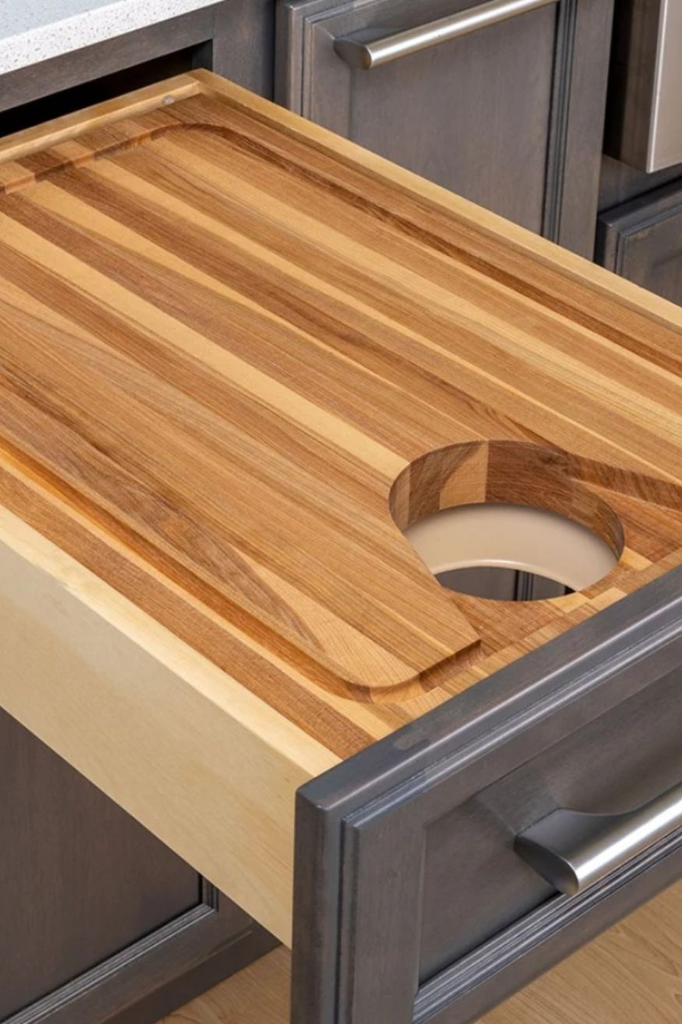
A drawer insert is designed to organize boards inside an existing drawer rather than creating a completely separate drawer system.
This makes sense when a suitable drawer already exists but its contents are becoming difficult to control. Dividers can keep boards separated and prevent them from shifting every time the drawer opens.
The drawer must be large enough to accommodate the board dimensions with adequate clearance. Measure the internal drawer dimensions rather than relying only on the cabinet’s advertised width.
This solution is particularly useful for kitchens where a clean countertop is important and the boards are used frequently enough to justify dedicated drawer space.
Hook Rails
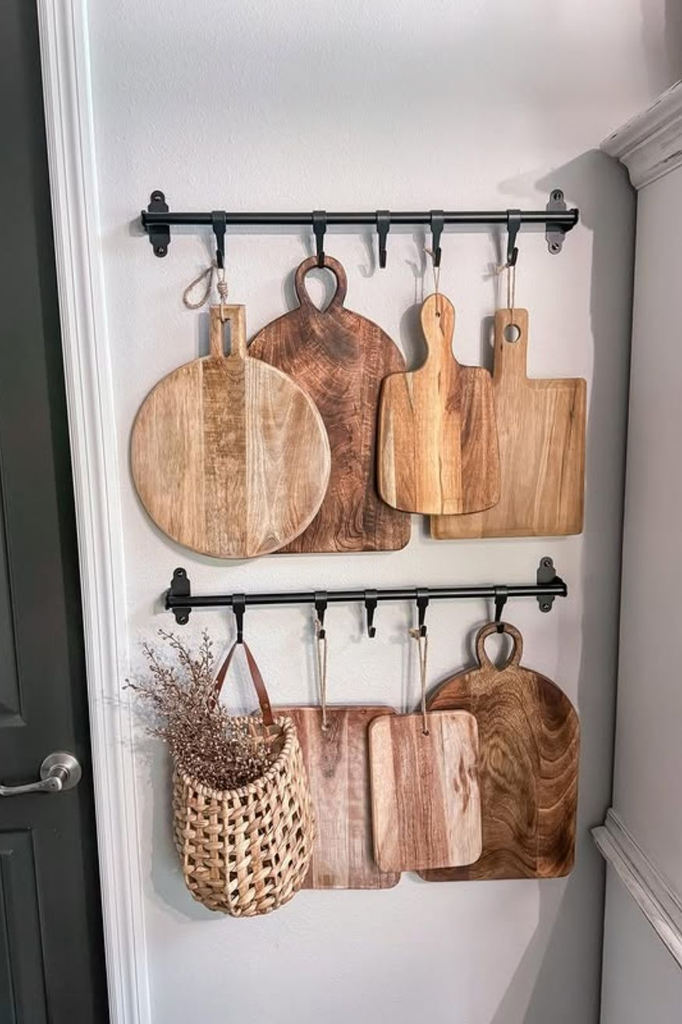
A hook rail provides several hanging points along one narrow section of wall. It is different from individual hooks because the rail creates a flexible storage zone for multiple boards or other lightweight kitchen items.
This can work well when a kitchen has a long but narrow unused wall section. Boards with handles can be hung separately instead of leaning together.
For heavier boards, the rail and its mounting points need to be appropriate for the total load, not just the weight of one board.
I would also keep the rail away from areas where boards could be bumped by people walking past or repeatedly exposed to water.
Combo Holder
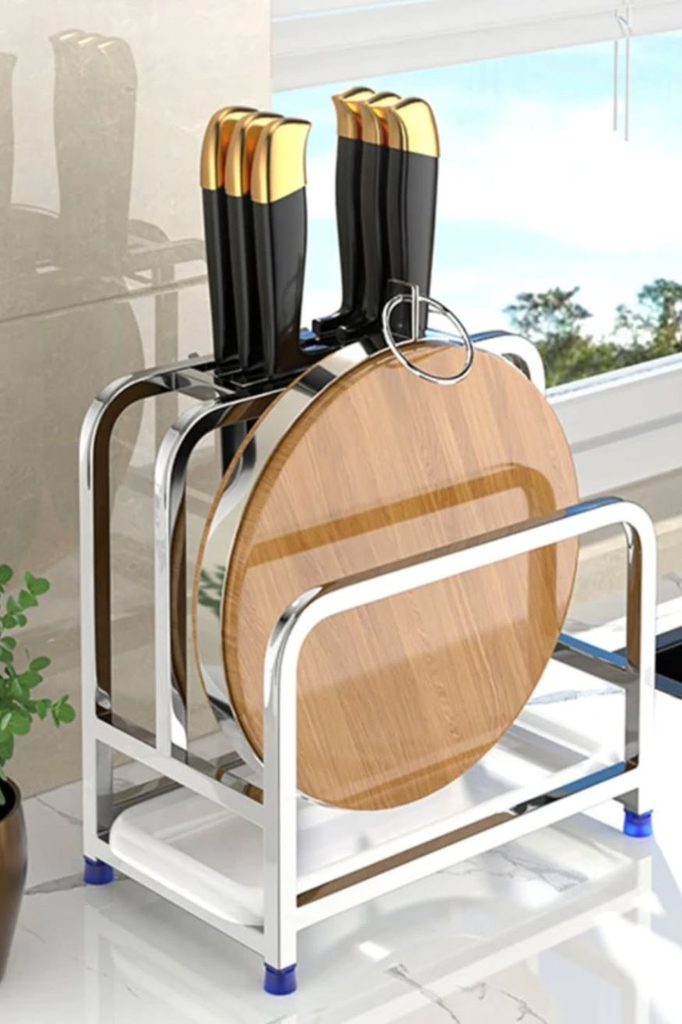
A combination holder is useful when cutting boards are only one part of the storage problem. Some organizers provide separate sections for boards along with knives, lids, or other preparation tools.
This setup works best near the main preparation area because the purpose is to group items that are commonly used during the same task.
The important distinction is organization, not simply fitting more items into one container. Knives need secure storage, while boards need enough space to stand without being tightly compressed.
For a small kitchen, combining related tools can reduce the number of separate storage zones. However, I would still make sure every compartment is easy to access and clean.
Gallery Wall
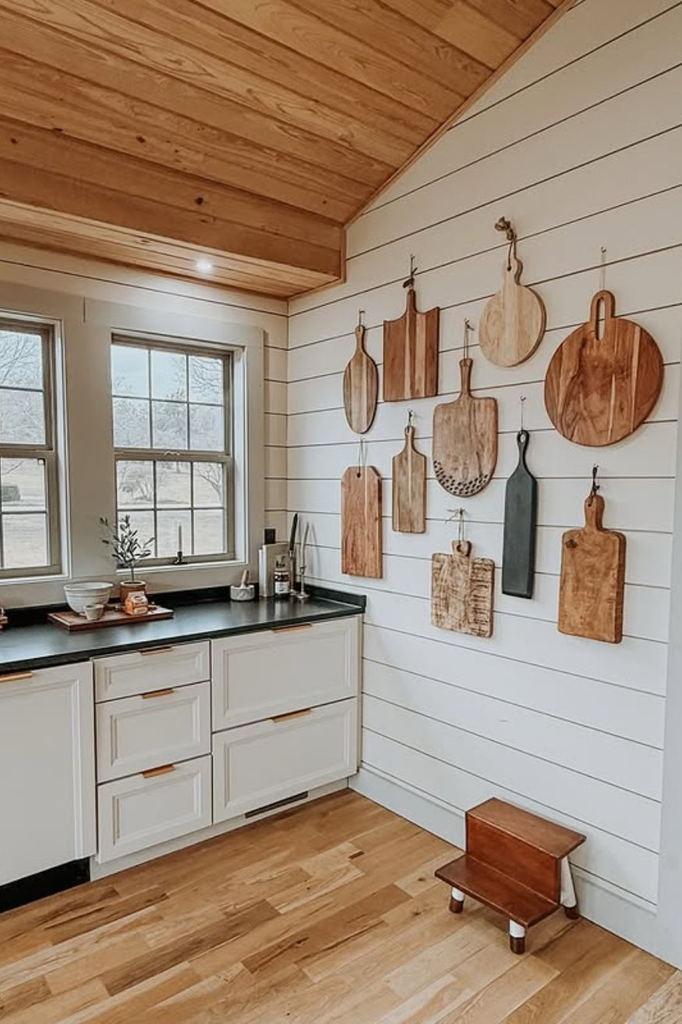
A gallery wall turns attractive cutting and serving boards into part of the kitchen decor.
This is particularly suitable for decorative wooden boards, vintage-style pieces, or boards with different shapes and finishes. Varying their sizes can make the display feel intentional rather than like a row of identical storage hooks.
Everyday boards should remain within comfortable reach, while decorative pieces can occupy higher positions.
Wall hardware should match the weight of the boards and the wall construction. Heavy boards deserve secure mounting rather than relying on lightweight decorative hardware.
Labeled Boards
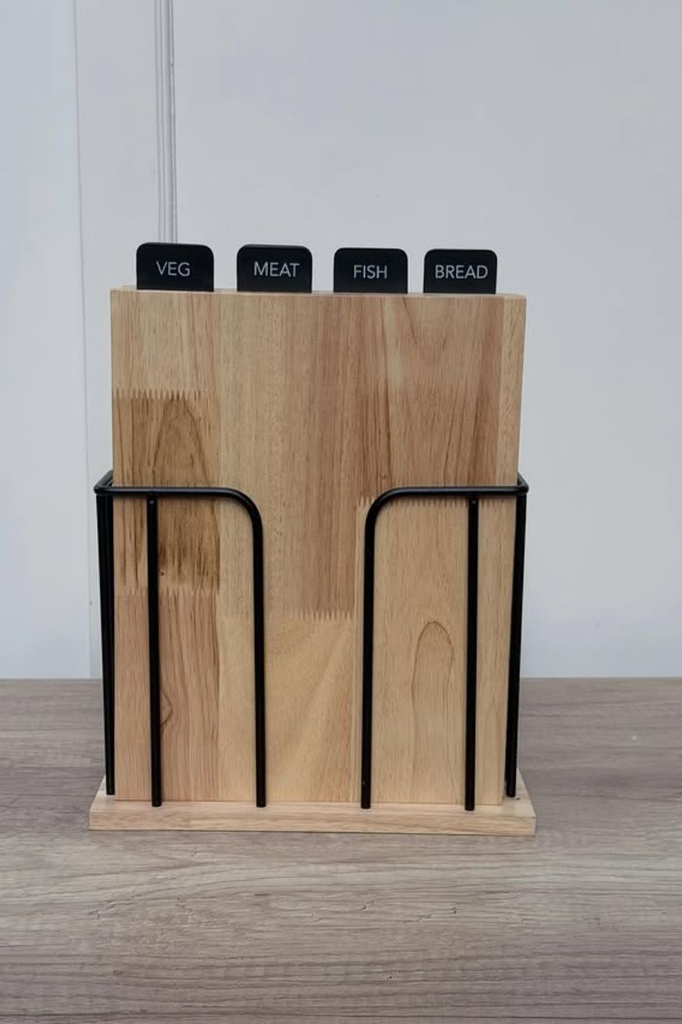
When a household keeps several boards for different preparation tasks, labels or simple color cues can make the storage system easier to follow.
For example, boards can be assigned to categories such as bread, produce, or raw proteins. This organization can reduce mix-ups, but labels themselves do not prevent cross-contamination.
Safe food preparation still depends on using appropriate boards for the task, cleaning them properly, and following recommended food-safety practices.
Once the categories are established, vertical dividers can give each board a specific location. That makes it easier for everyone in the household to return the correct board to the correct place.
Pro Tip: Keep the labeling system simple. If there are too many categories, the storage system becomes harder to maintain than the original problem.
Wooden Rack
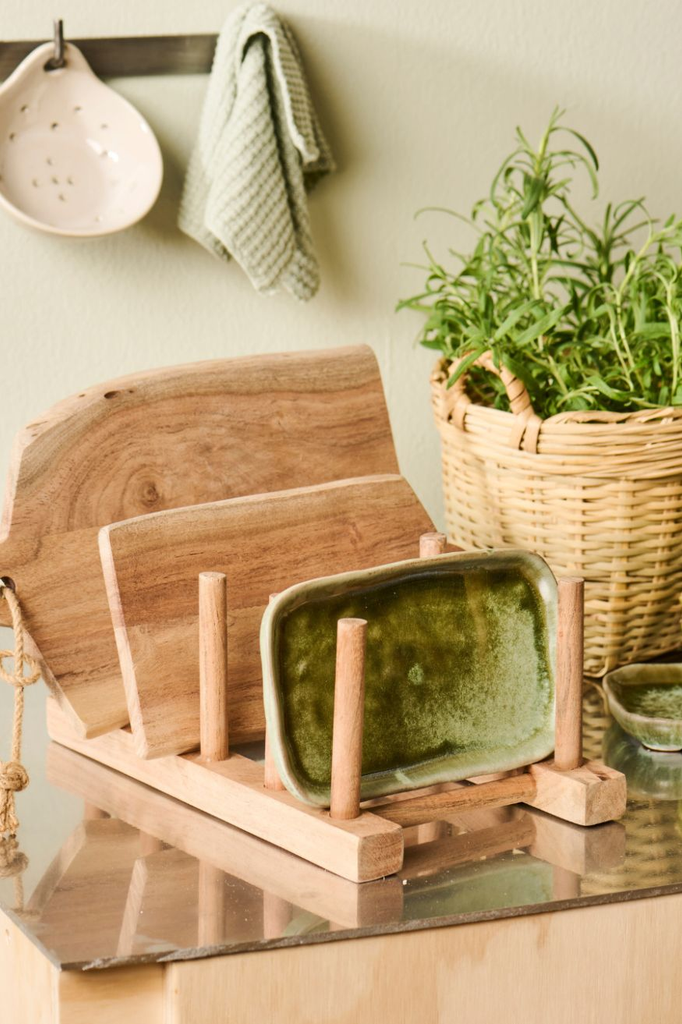
A wooden rack is primarily useful when the storage piece itself needs to fit naturally into the kitchen’s decor.
Unlike a divider insert designed mainly for cabinet organization, a freestanding wooden rack can be displayed on a countertop, open shelf, or other visible area.
It can hold cutting boards, serving boards, or similar flat kitchen pieces while keeping them upright.
Before using one for heavy boards, check the base width and overall stability. A rack should remain steady when the heaviest board is removed or returned.
This option suits kitchens where visible storage is acceptable and the organizer needs to look like part of the room rather than a hidden cabinet accessory.
Also read: 22 Clothing Organization Ideas for 2026
Slim Organizer
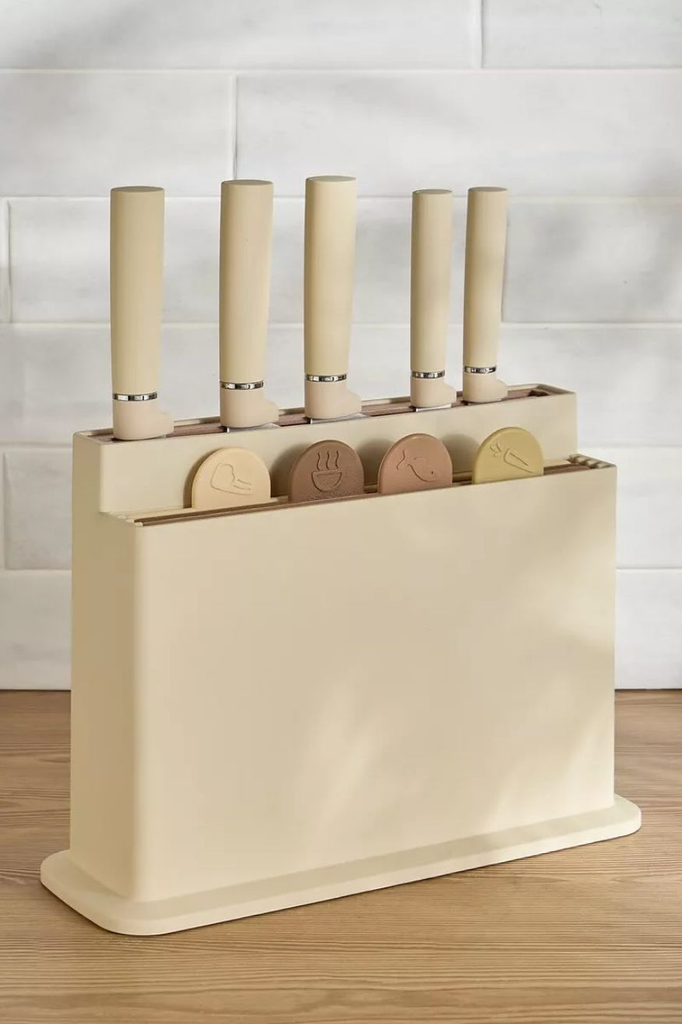
A slim organizer is useful when the kitchen has only a narrow amount of available width.
This type of storage can fit into the side of a cabinet, a small countertop section, or another narrow zone that cannot accommodate a wider rack.
The main advantage is its footprint. It gives boards separate spaces without requiring a large storage area.
I would measure the narrowest available opening first and then compare it with the organizer’s exterior dimensions. Also check the thickness of the boards because a slim unit can quickly become difficult to use if its slots are too narrow.
Pullout Cabinet
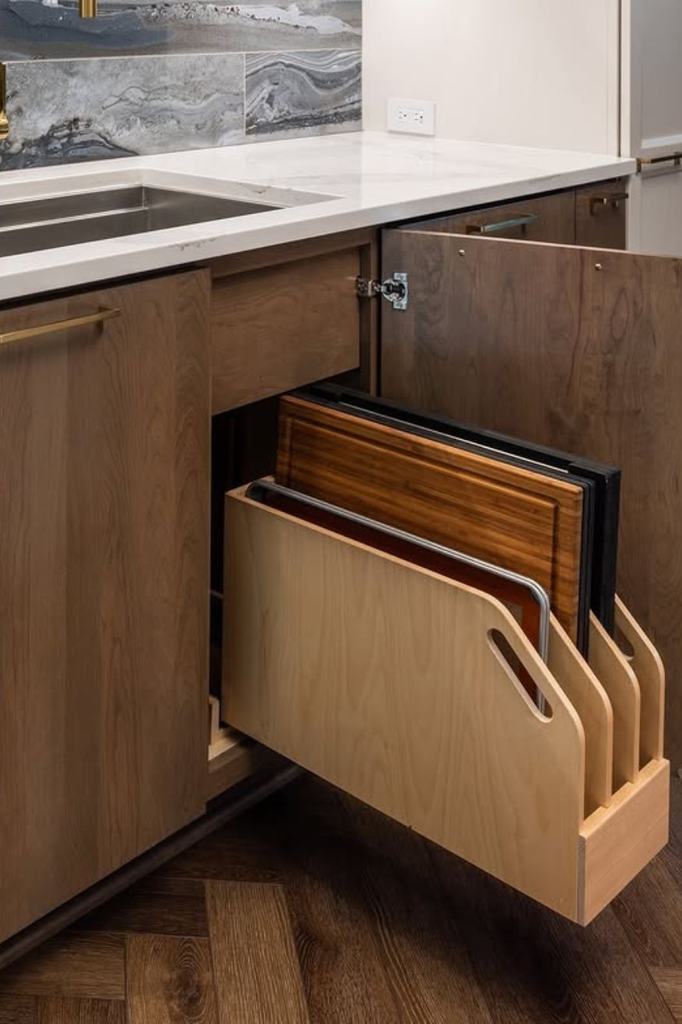
A pullout cabinet is particularly useful for deep lower cabinets where boards would otherwise disappear toward the back.
Instead of reaching into a deep cabinet, the entire storage section moves forward. This makes large boards, trays, and serving pieces easier to see and retrieve.
This is mainly a remodel or custom-cabinet solution rather than a quick rental-friendly fix.
Before planning it, check the cabinet’s internal depth, door opening, hardware clearance, and the weight the pullout mechanism can support. Large wooden boards can be substantially heavier than thin plastic or composite boards.
For a household that cooks frequently with several large boards, the improved access can make a meaningful difference to everyday kitchen workflow.
Prep Drawer
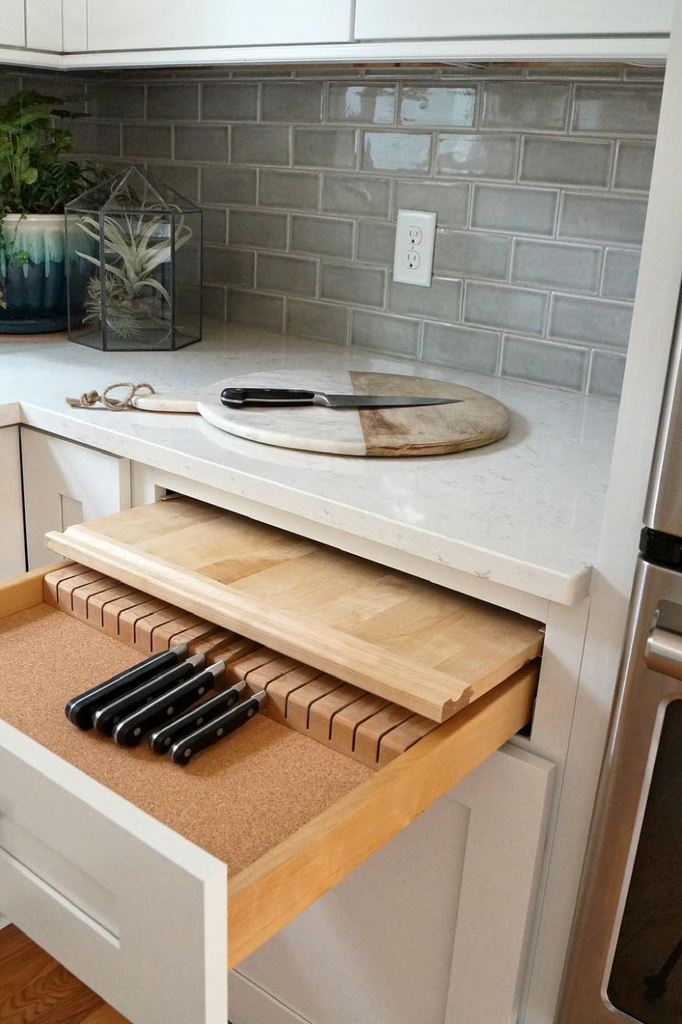
A prep drawer is different from a general kitchen drawer because it is planned around the food-preparation area and the tools used there.
Positioning cutting boards close to the main work surface means the board does not have to travel from another part of the kitchen every time vegetables, bread, or other ingredients need preparation.
A drawer can also include organized spaces for related tools, provided there is enough room and the items can be stored safely.
For a remodel, measure the largest board before specifying the drawer. Check the drawer’s internal height, opening clearance, and the distance needed to pull it out fully without hitting nearby cabinets or appliances.
Cabinet Slots
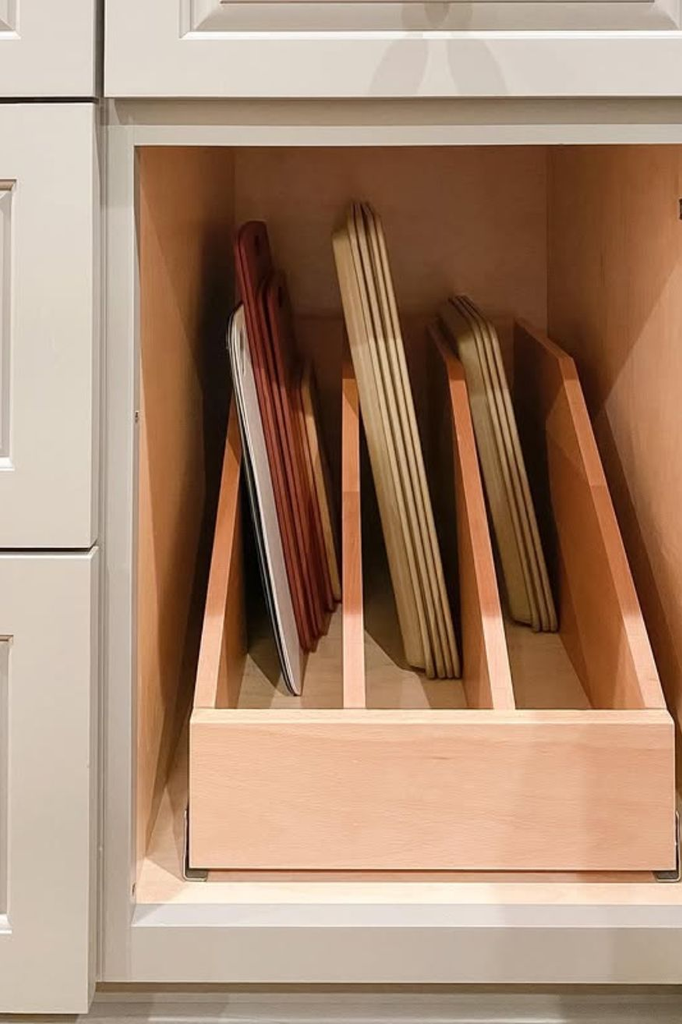
Cabinet slots create permanent or semi-permanent vertical compartments inside a cabinet.
They are particularly useful when the collection includes several boards that need to stay upright but the cabinet does not have a convenient built-in divider.
The important difference from a freestanding divider stand is that cabinet slots are planned as part of the cabinet’s internal organization. They can make otherwise unused vertical space more efficient.
Before installing them, measure the cabinet’s usable depth and height and account for hinges, shelves, plumbing, or other internal obstructions.
Boards should have enough room to slide in and out without scraping against the cabinet or becoming tightly wedged together.
Corner Storage
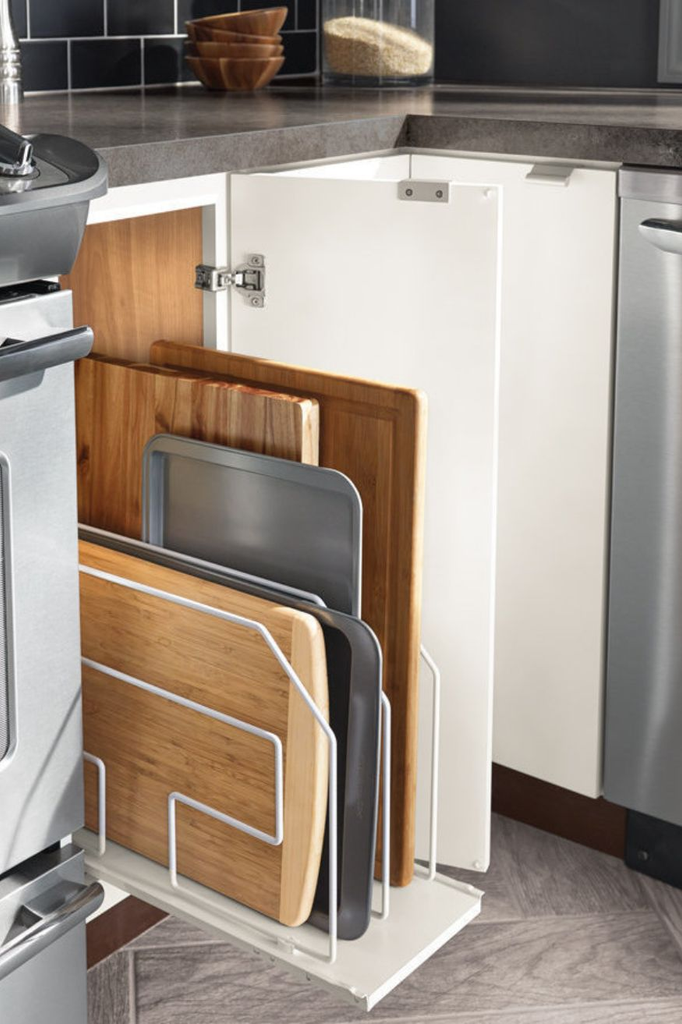
Corner storage is helpful when an awkward kitchen corner is deep enough to hold larger flat items but difficult to access.
A pullout system can bring the boards forward instead of forcing me to reach into a dark corner. This can work particularly well for large cutting boards, baking sheets, and serving pieces.
Because corner cabinets vary considerably in shape and size, I would measure the actual opening and internal dimensions before choosing a system.
For a renovation, this is an area worth planning early because the cabinet layout and hardware determine how accessible the finished storage will be.
Hidden Drawer
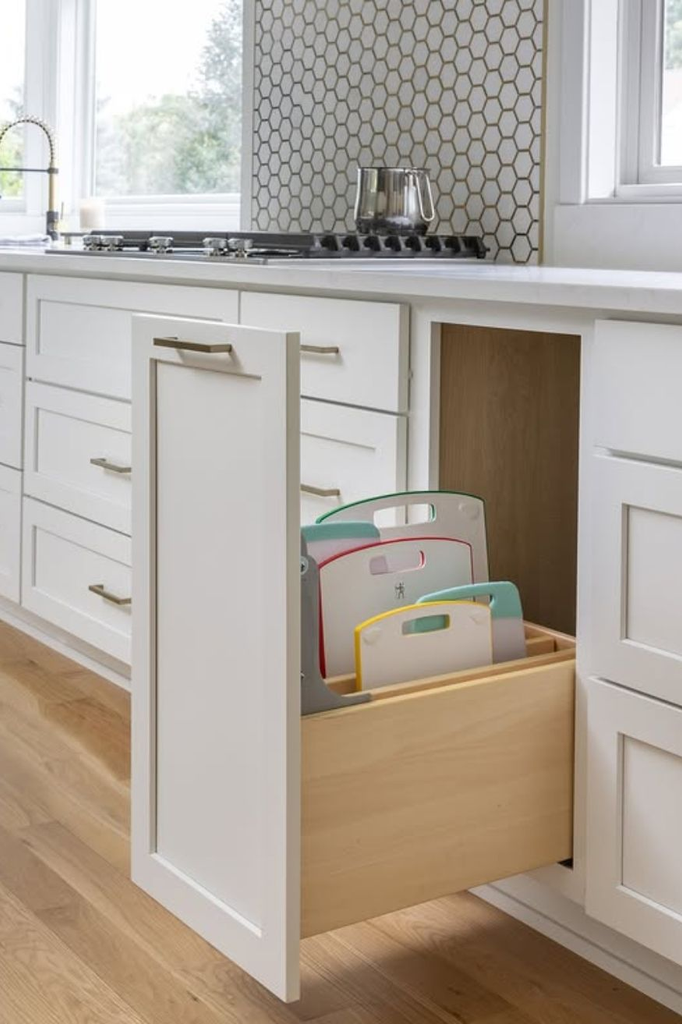
A hidden drawer is useful when there is a narrow section of cabinetry that would otherwise become wasted space.
This differs from a standard kitchen drawer because it can be designed specifically around a narrow collection of cutting boards. Vertical dividers keep the boards upright and prevent them from becoming a loose stack.
This type of storage is particularly suitable for a kitchen remodel or custom cabinetry project. It is not usually the first choice for renters because the solution depends on the cabinet construction.
Before installation, check the available width, drawer depth, board thickness, and clearance from nearby cabinet doors.
Sink Cabinet
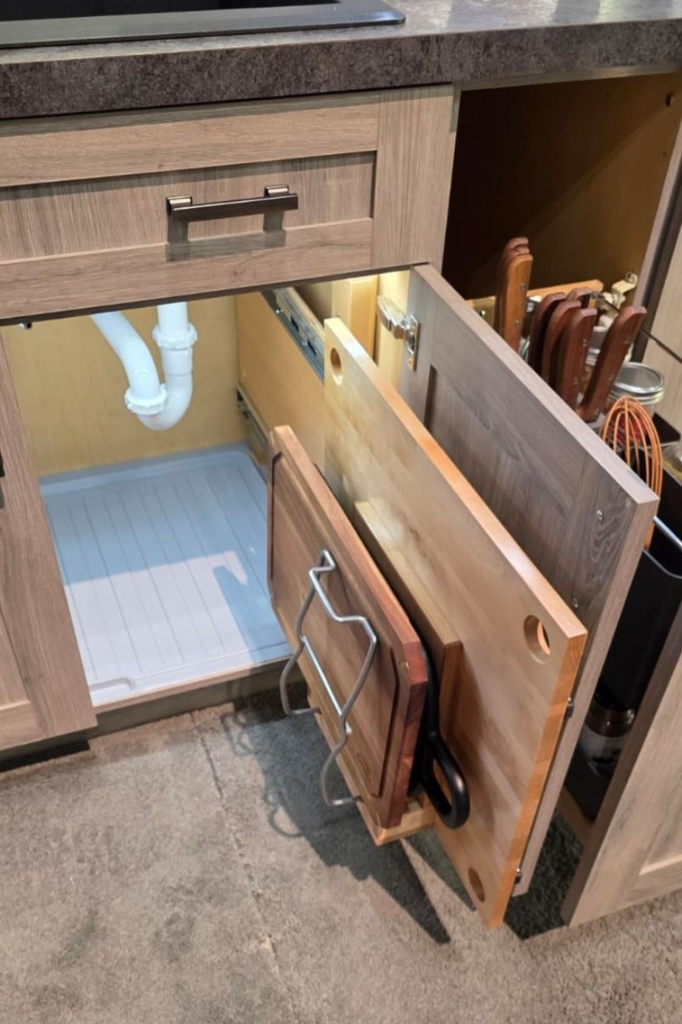
The area around the sink can provide useful storage, but it requires more planning than an ordinary cabinet because plumbing occupies valuable space.
A narrow pullout beside the plumbing may hold cutting boards vertically without interfering with the sink cabinet’s main storage area.
I would never plan this space without first checking where the supply lines, drain, shutoff valves, and other plumbing components are located. Storage should not block access needed for repairs.
Moisture is another concern. Cutting boards should be completely dry before being stored, and the cabinet should not be used as a place to keep boards that are still wet from washing.
For a remodel, this is a good example of why storage should be planned around the actual kitchen infrastructure rather than added afterward.
Styled Stand
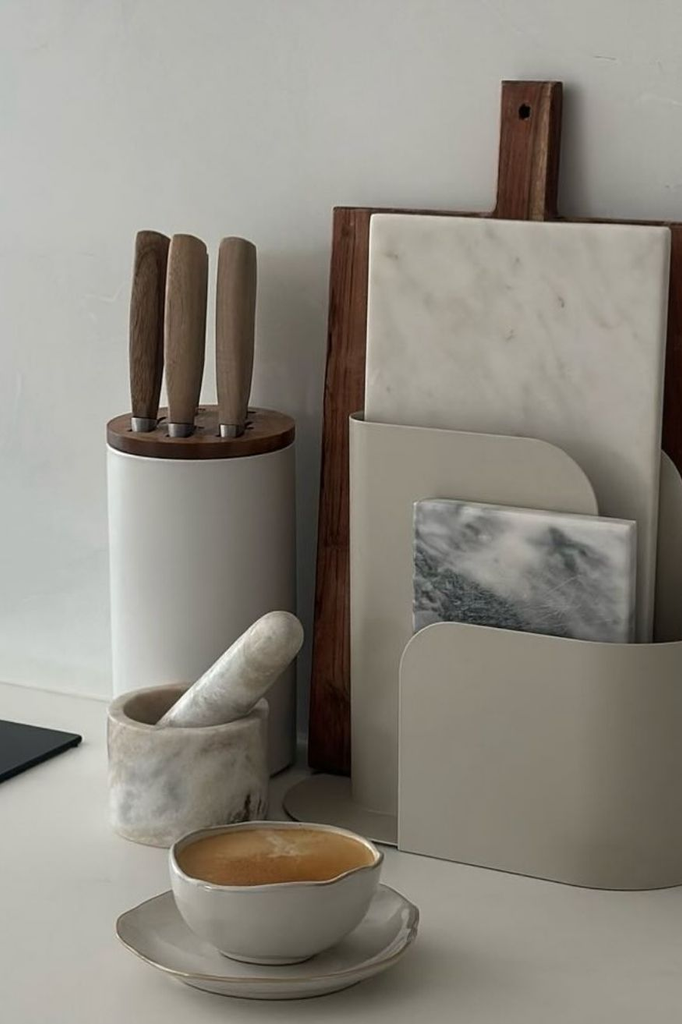
A styled stand works when cutting boards are going to remain visible and need to look intentional as part of the kitchen.
The arrangement can be kept simple: larger boards toward the back and smaller, frequently used pieces toward the front.
Unlike a slim organizer hidden inside a cabinet, this type of stand is meant to contribute to the appearance of the room as well as provide storage.
Stability is important, particularly when using thick wooden boards. A stand with a narrow base may look neat but can become frustrating if it tips when the front board is removed.
Dual Storage
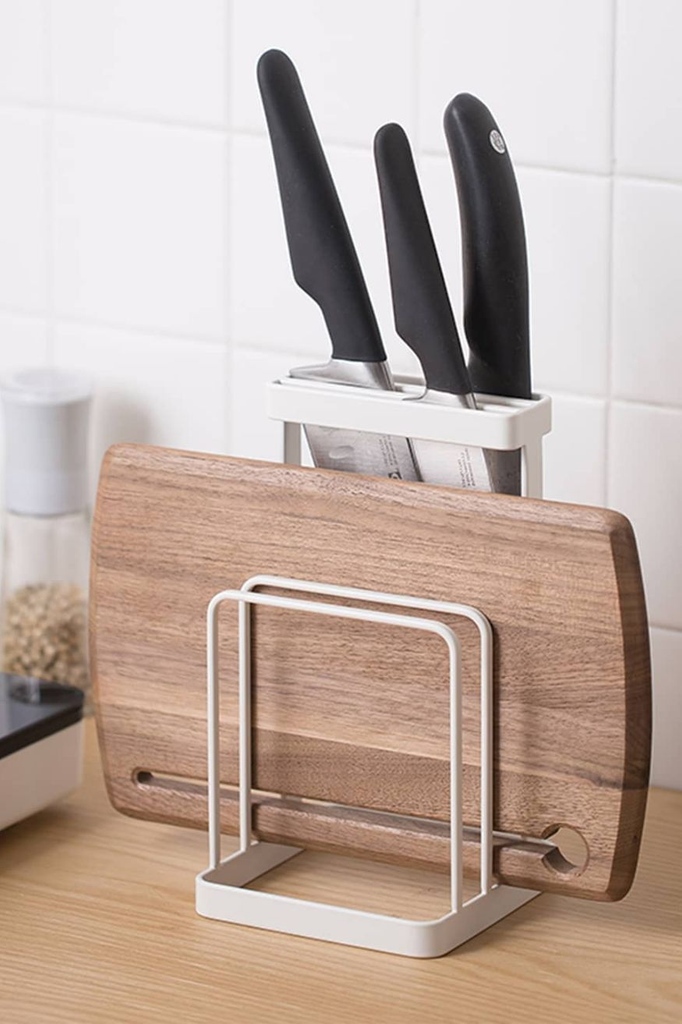
A dual-storage organizer combines cutting board storage with a separate area for knives or other closely related preparation tools.
The advantage is workflow. When the board and knife are needed for the same task, keeping them in the same general area can reduce unnecessary trips across the kitchen.
The storage should still keep the two items properly separated. Knives need secure compartments that protect the blades and reduce the chance of accidental contact when retrieving a board.
I would place this organizer near the main preparation zone rather than beside an area that receives frequent splashes.
Kitchen Drawer
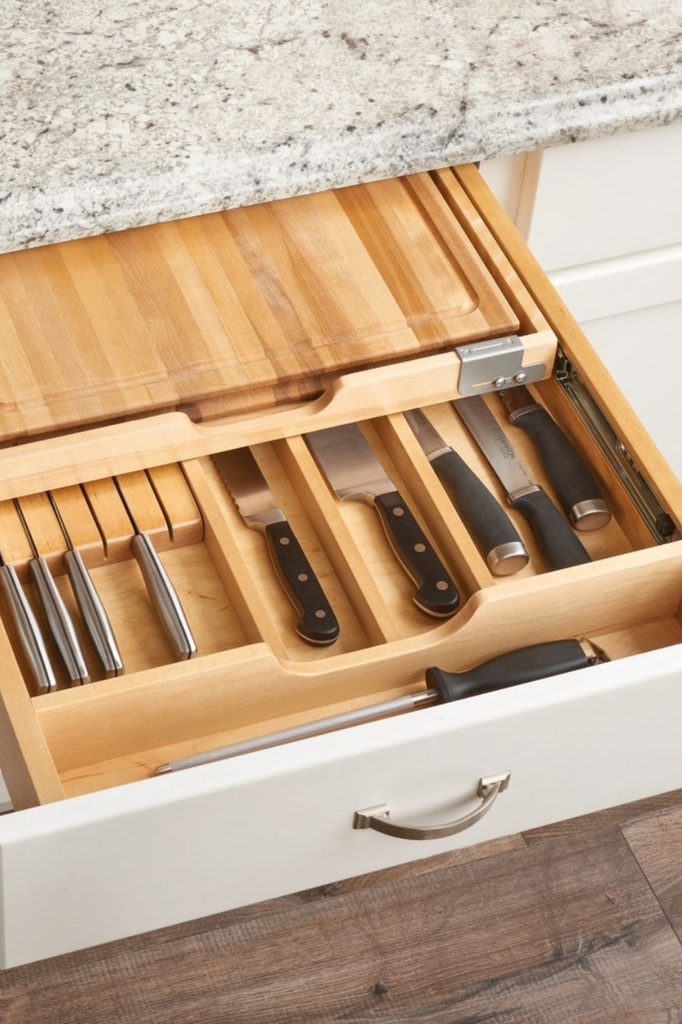
A dedicated kitchen drawer can provide hidden cutting board storage while keeping boards close to the food-preparation area.
This differs from a drawer insert because the entire drawer can be planned specifically around the board collection. It may also include separate compartments for smaller preparation tools.
For a new kitchen, this is worth considering when there is enough drawer depth and width for the largest boards. A drawer that is too shallow will force boards to lie awkwardly or prevent the drawer from closing properly.
Before committing to the layout, check the board dimensions, drawer box dimensions, hardware clearance, and nearby cabinet openings.
Read this next: 22 Linen Closet Organization Hallway Ideas for 2026
FAQs
Where should cutting boards be stored in a small kitchen?
In a small kitchen, I would first look for unused vertical space. Cabinet dividers, slim organizers, cabinet-door storage, removable hooks, and narrow pullouts can all keep boards off the countertop.
The best location is usually close to the main preparation area, but boards should be kept away from unnecessary splashing and stored only after they are clean and completely dry.
Is it better to store cutting boards vertically or flat?
Vertical storage is often easier when several boards need to remain accessible because each board can have its own space. It also avoids creating a heavy stack that has to be moved to reach the bottom board.
Flat storage can work well inside a properly sized drawer or shelf. The important considerations are keeping boards clean and dry, preventing unnecessary moisture buildup, and making sure the storage arrangement does not make frequently used boards difficult to reach.
How do I choose the right cutting board storage for my kitchen?
Start by measuring your largest board, including its thickness and any handle. Then measure the cabinet, drawer, wall section, or gap where the storage will go.
After that, consider how often you use each board, how heavy the collection is, whether the storage is temporary or permanent, and whether you need separate spaces for different board types.
For a rental, freestanding or removable solutions are usually more practical. For a remodel, dedicated drawers, cabinet slots, and pullouts can be planned around the actual kitchen layout.
Conclusion
Cutting board storage works best when it follows the way the kitchen is actually used. There is no reason to install a large organizer if a narrow cabinet section already provides enough space, just as a tiny countertop rack will not solve the problem when a household has several large wooden boards.
For a small kitchen, vertical dividers, slim organizers, hooks, and carefully chosen pullouts can make better use of limited space. For a remodel, dedicated drawers, cabinet slots, and corner storage can be planned around board dimensions and everyday workflow.
I always come back to three practical questions: Where will the board be used, how much space does it actually require, and can it be stored clean and completely dry? Once those questions are answered, choosing the right storage becomes much simpler.
The goal is not simply to hide cutting boards. It is to give each one a practical home that keeps the kitchen easier to use, easier to maintain, and less cluttered.

One Comment