22 Jeans Storage Ideas for 2026
Jeans are one of those wardrobe staples that can make an organized closet look messy surprisingly quickly. Denim is heavier and bulkier than many everyday garments, so tall stacks can lean, drawers can become difficult to close, and crowded closet rods can become hard to manage.
I have had the best results when I stop trying to store every pair the same way. The right method depends on whether I have more shelf space, drawer space, or hanging room, as well as which jeans I reach for most often.
For everyday pairs, visibility and quick access matter most to me. Jeans that are rarely worn or only used during a particular season can take a less convenient spot without getting in the way of my daily routine.
Below, I’m sharing 22 jeans storage ideas that work with different closet layouts, from simple folding systems to pull-out hardware and vertical storage.
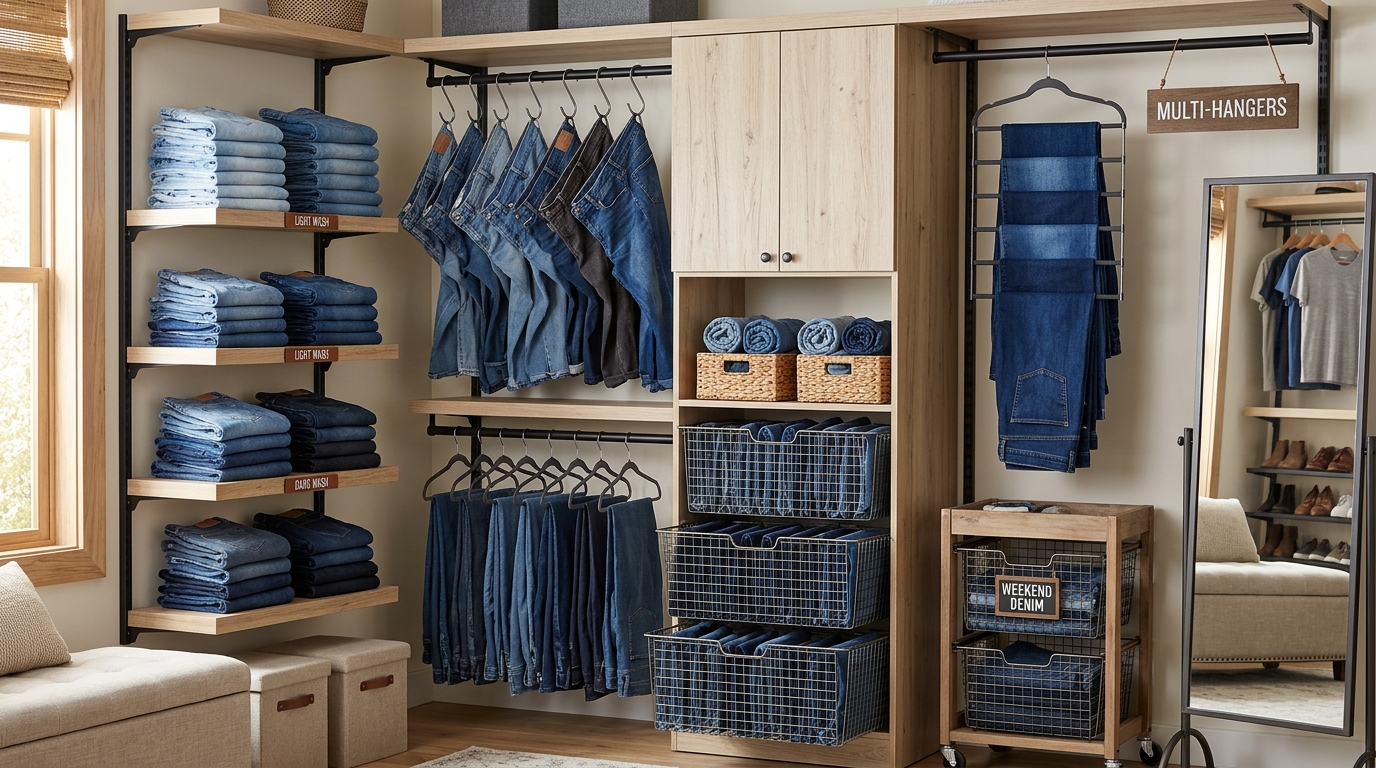
The easiest way to organize jeans is to match the storage method to the space available. Hanging methods work well when rod space is plentiful, while file folding and drawer dividers are useful when drawers are doing most of the work. Shelves work best with manageable stacks and enough separation to prevent piles from leaning or spreading.
For small closets, vertical solutions such as tier hangers, hanging organizers, and ladder racks can make better use of the available height. Pull-out racks and wire drawers are particularly useful in deep cabinets where items at the back are difficult to reach.
I also organize based on how I actually use my jeans. I generally keep the pairs I wear most often in the easiest-to-reach locations, then sort by wash or color and, when helpful, by fit or style. This is more practical than putting rarely worn jeans in prime storage simply to maintain a color sequence.
Save this for later
Table of Contents
No storage method can guarantee wrinkle-free denim, but smoothing jeans before folding, following the natural seams, avoiding excessive compression, and preventing overcrowded storage can reduce unnecessary creasing.
Key Takeaways
- I choose storage according to the closet’s available shelves, drawers, rods, and vertical space.
- Frequently worn jeans deserve the easiest-to-reach locations.
- Heavy denim is easier to manage in shorter, stable stacks than in tall piles.
- File folding helps keep individual pairs visible inside suitable drawers.
- Hanging systems require sturdy hangers, clips, rods, and mounting hardware appropriate for the load.
- Pull-out storage should be measured carefully for width, depth, height, clearance, and weight capacity.
- Color, wash, fit, and style can be useful sorting systems, but access should come first.
- Seasonal jeans should be clean and completely dry before going into labeled storage bins.
Related article: 26 Toilet Paper Storage Ideas for 2026
What Are The Easiest Ways To Store Jeans Without Wrinkles?
I think of “wrinkle-free” as a goal rather than a guarantee. Denim can develop creases from the way it is folded, compressed, or left sitting in a crowded space, so good storage is really about reducing unnecessary pressure and awkward folds.
Before folding a pair, I smooth the legs and align the natural seams. A consistent fold keeps the denim easier to stack or arrange vertically and prevents oddly shaped piles from taking over a drawer or shelf.
For drawers, vertical file folding can make each pair easier to see. The drawer should still have enough usable height and width for the jeans to stand without being forced into place.
When hanging jeans, I leave enough room for the denim to hang naturally. Sturdy hangers and properly secured closet hardware matter because several pairs of jeans can add much more weight than a row of lightweight shirts.
I also follow the garment care label, particularly for denim with coatings, embellishments, stretch fibers, or other special construction. The goal is a storage system that protects the clothing while making everyday access easier.
Waistband Hanging
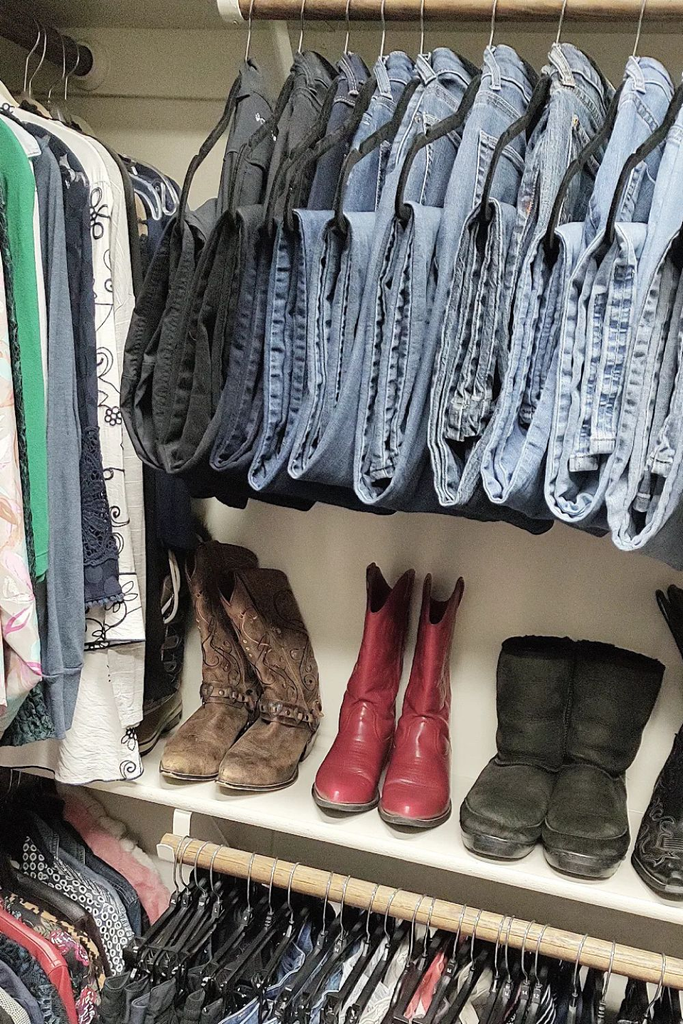
Waistband hanging is a straightforward option when I have unused closet rod space. A suitable hanger supports the jeans from the waistband, allowing the legs to hang down instead of taking up shelf or drawer space.
I make sure the hanger is strong enough for denim and that the weight is distributed appropriately. Very lightweight hangers may not be suitable for heavier jeans or for a large collection.
Spacing is just as important as the hanger itself. When pairs are packed tightly together, the denim becomes difficult to see and remove, and the rod can carry more concentrated weight than intended.
This method works particularly well for frequently worn jeans in a walk-in closet or wardrobe with generous hanging space. I can then group the pairs by wash while keeping my most-used styles toward the easiest-to-reach section.
Pro Tip: If the waistband shows pressure marks after hanging, I switch to a different hanger or hanging method rather than continuing to use hardware that is not working well for that garment.
Drawer Dividers
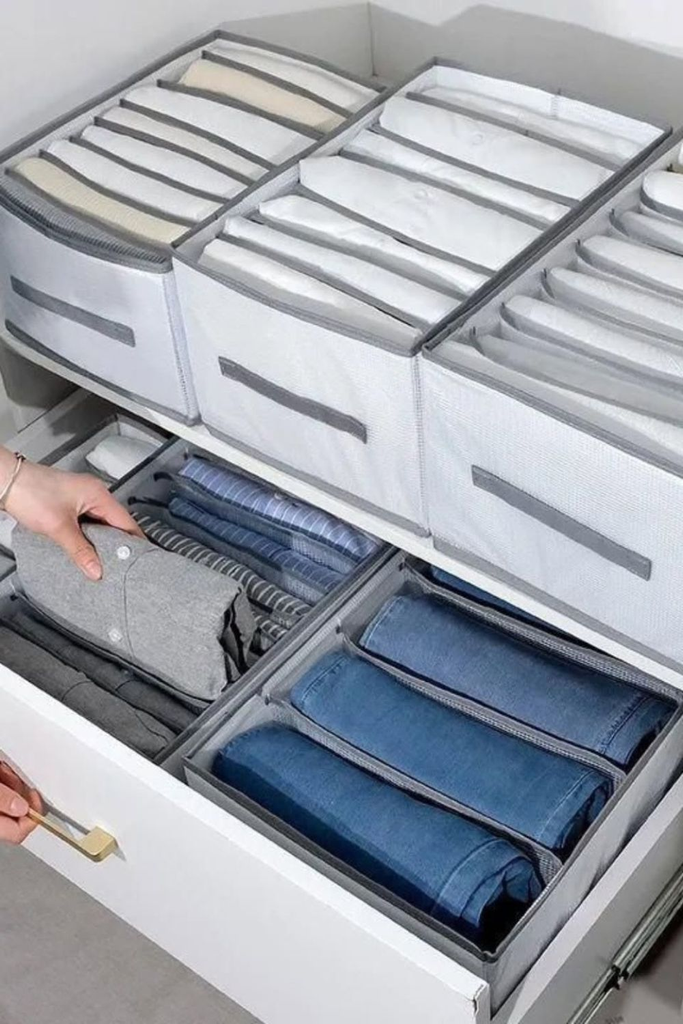
Drawer dividers turn one large drawer into several defined sections. This is useful when folded jeans tend to slide sideways or mix together every time the drawer opens.
I create sections based on how I dress rather than dividing everything purely by color. One section might hold everyday jeans, while another contains less frequently worn fits.
The dividers also give each folded group a boundary, so one pair is less likely to pull several others out when I reach into the drawer. Adjustable dividers are convenient when drawer dimensions or clothing needs change.
Before filling the drawer, I check its usable interior dimensions. A divider system only works well when there is enough clearance for the drawer to open and close without forcing the denim against the top.
Slide Rack
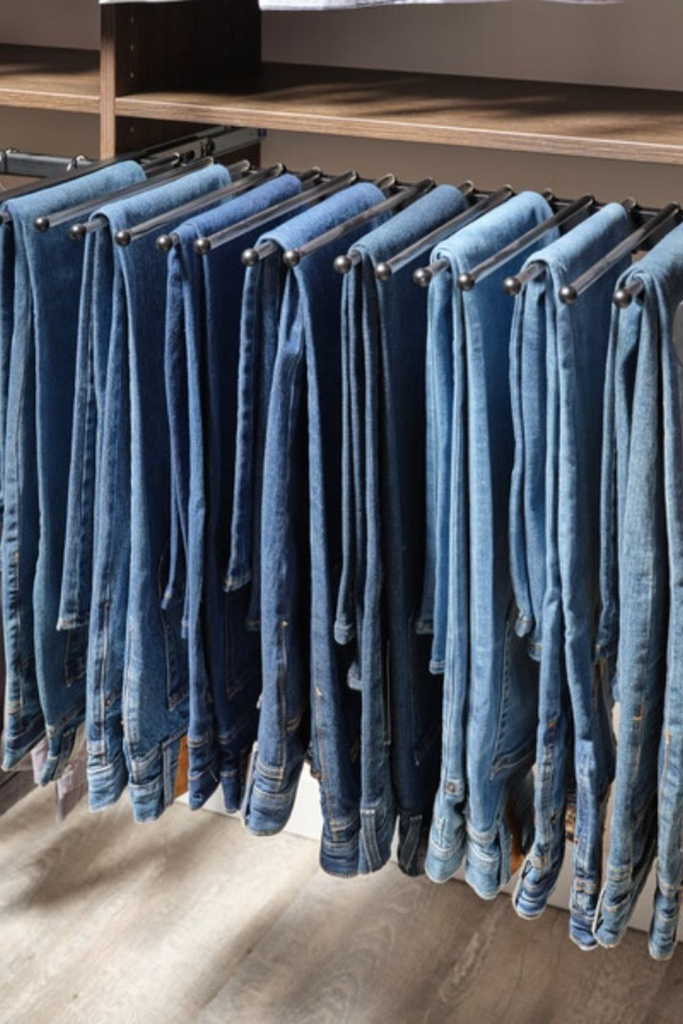
A slide rack can make a deep cabinet or lower closet section much easier to use. Instead of reaching toward the back of a fixed shelf, I pull the rack forward and bring the stored jeans into view.
Each level or bar can hold a separate pair, depending on the rack’s design. This keeps the denim from becoming one large pile and makes individual pairs easier to select.
I would measure the available width, depth, and height before buying one. The rack also needs enough clearance to extend fully without hitting a door, shelf, drawer, or nearby clothing.
Load capacity matters here because several pairs of denim can become surprisingly heavy. I follow the manufacturer’s weight rating and make sure the mounting surface is suitable for the hardware.
Clip Hanging
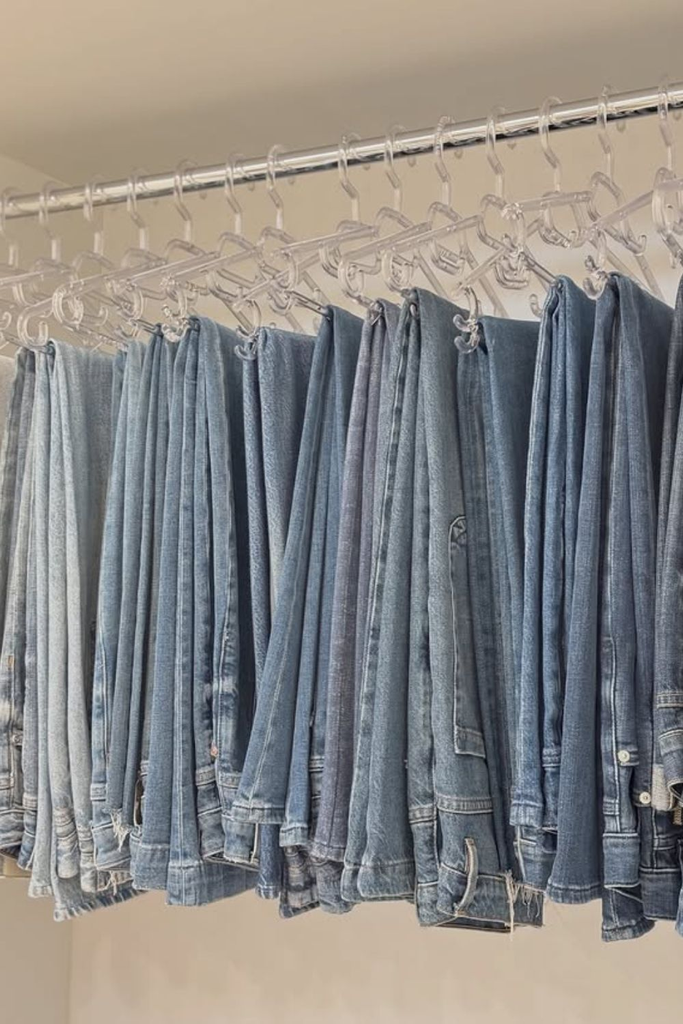
Clip hangers give jeans their own dedicated hanging position. Rather than folding the denim over a bar, the clips grip the waistband while the legs hang vertically.
I look for strong clips with smooth contact surfaces. Excessive pressure can leave marks, so I avoid using a clip that has to be tightened aggressively to keep the jeans in place.
This arrangement works well when I want to see every pair along a closet rod. It is particularly convenient for a collection that includes several washes or similar styles because I can scan the entire row quickly.
The closet rod and brackets should be checked as well. A sturdy clip does not solve the problem if the rod itself is overloaded or poorly supported.
Pro Tip: I leave a little space between clip hangers rather than filling every available inch. That small gap makes removing one pair much less frustrating.
Shelf Stacks
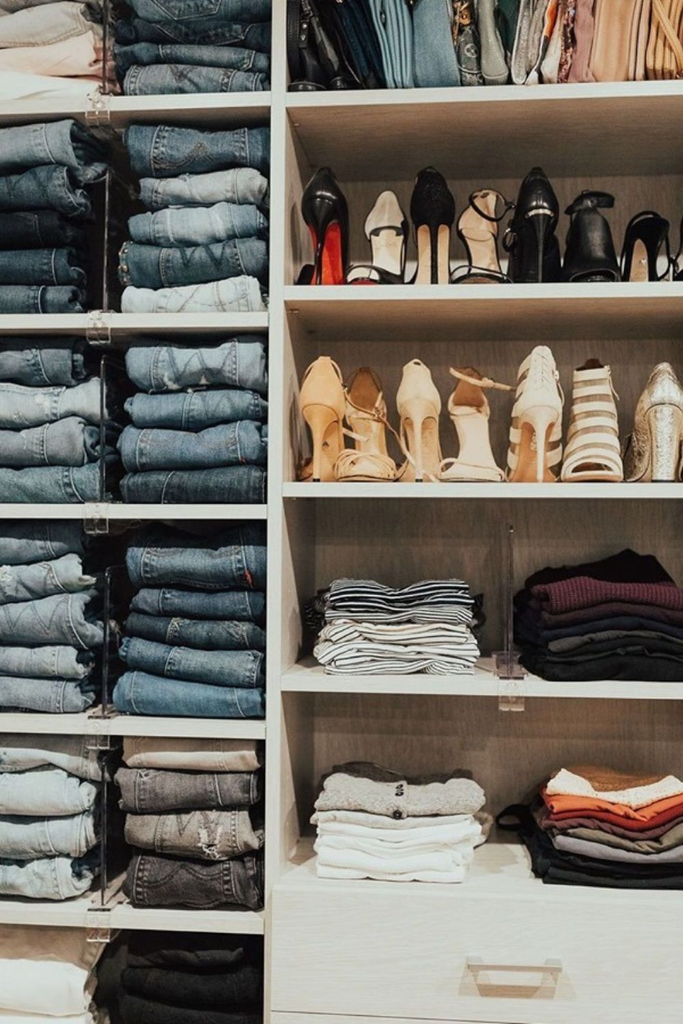
Shelf storage works well when I have open shelving but limited hanging space. The key is keeping the stacks controlled rather than trying to fit every pair into one tall pile.
I fold the jeans into similar-sized rectangles and keep the heavier denim toward the bottom. If a stack begins leaning or becomes difficult to remove from, I treat that as a sign that it needs to be divided.
Shelf dividers can create separate zones for everyday jeans, different washes, or different fits. They are especially helpful on long shelves where folded clothing tends to spread sideways.
I also leave enough room to pull one pair out without dragging the rest of the stack forward. This makes the shelf easier to maintain after laundry and during busy mornings.
Rod Sorting
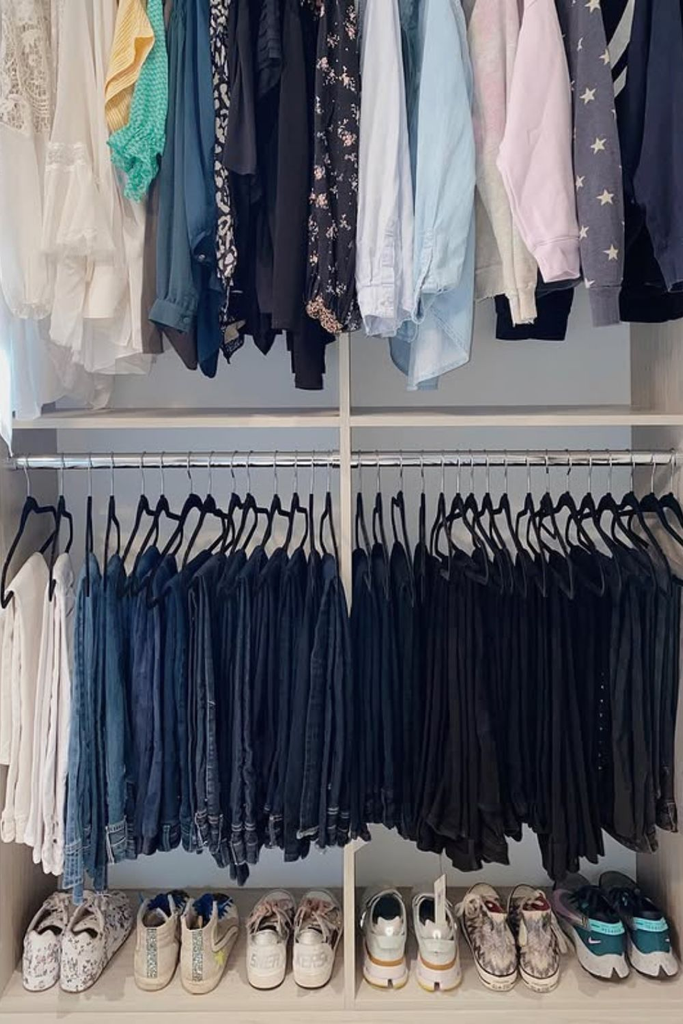
Rod sorting uses part of the closet rod specifically for jeans. I fold each pair over a suitable hanger bar and arrange the denim so the section has a clear visual order.
My usual priority is frequency of wear first. Within that arrangement, sorting by wash or color can make the row easier to scan, and grouping by fit can help when I have several similar shades.
This method suits wardrobes where shelf or drawer space is limited but the closet has usable rod capacity. Slim hangers can reduce bulk, but they still need to be strong enough for denim.
I avoid pushing too many pairs onto one rod section. If the rod begins bowing or the brackets show signs of strain, the collection needs to be redistributed rather than squeezed into the same area.
File Folding
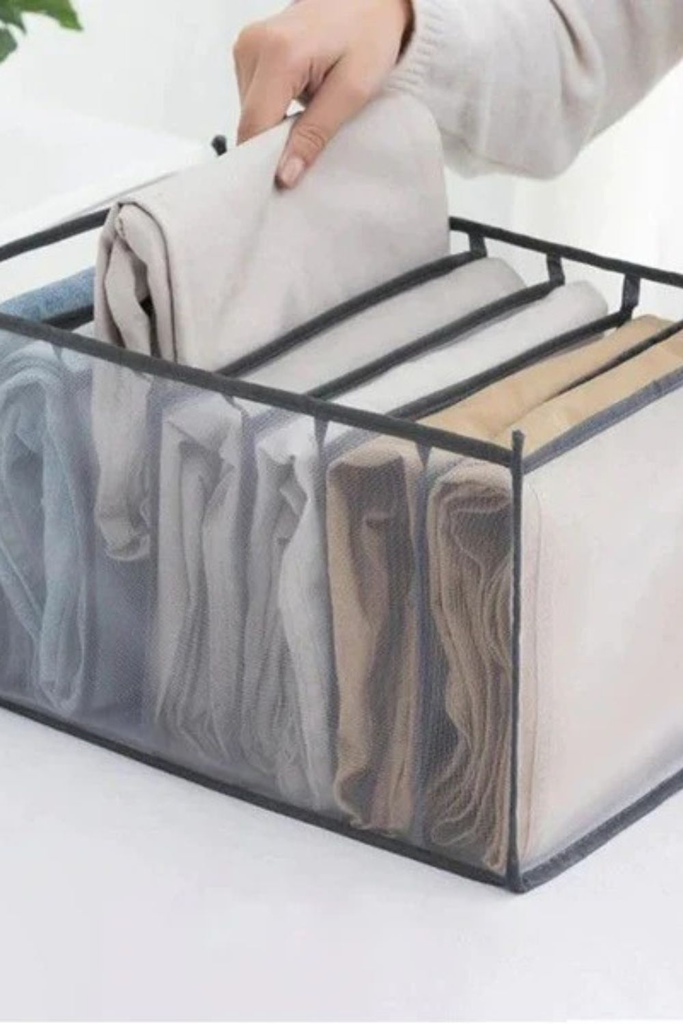
File folding changes the way jeans sit inside a drawer or storage compartment. Instead of creating a flat pile, I arrange the folded pairs upright so their edges remain visible.
This is especially useful in deeper drawers because I can see several pairs at once rather than uncovering the bottom of a stack. Removing one pair also causes less disruption to the rest.
I smooth the jeans first, align the legs, and fold them into a consistent shape. The final size needs to suit the drawer, so I avoid forcing oversized folds into a shallow compartment.
Dividers or small storage compartments can help keep the upright rows from falling sideways. This approach can also work on suitable open shelves where each folded pair can stand securely.
Pro Tip: I leave a little clearance around the folded row. An overstuffed drawer defeats the benefit of file folding because the jeans become difficult to pull out.
Divider Shelves
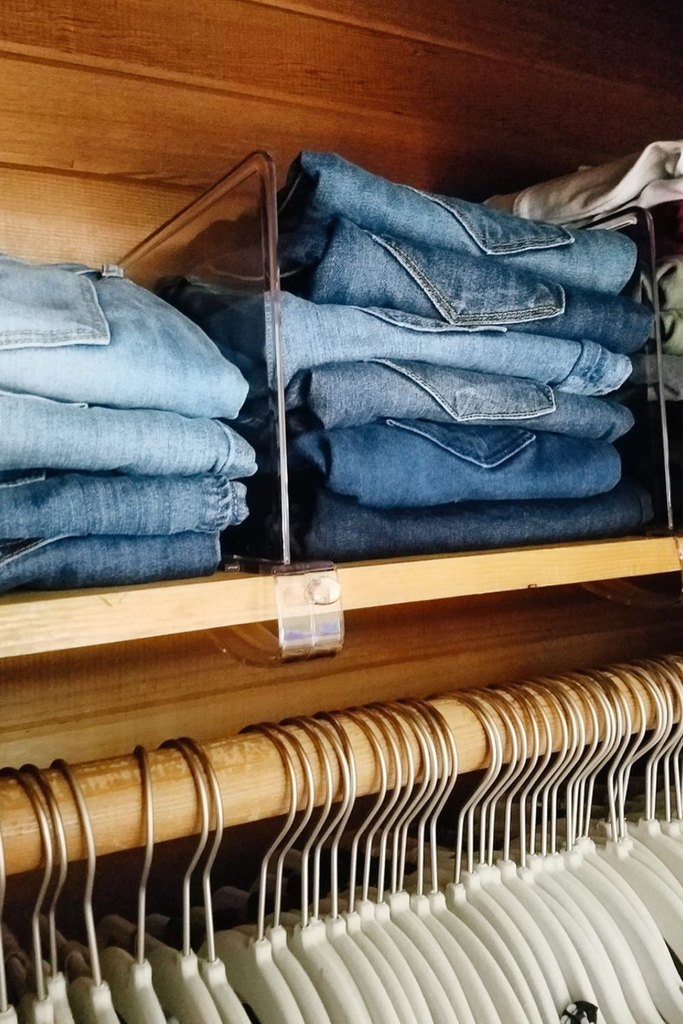
Shelf dividers solve a different problem from drawer dividers: they keep separate stacks from spreading across a long shelf.
I use them when one shelf has enough room for several groups but no built-in boundaries. A divider can separate everyday denim from less-used pairs or keep different washes from blending into one large pile.
The stacks themselves still need to be reasonable in height. A divider can stop a pile from moving sideways, but it will not prevent a very tall stack from leaning forward or collapsing.
Before using a clip-on divider, I check that it fits the shelf thickness and is appropriate for the amount of denim I plan to store. This is particularly important on open shelving where the organizer is carrying the visual and physical boundary between groups.
Tier Hangers
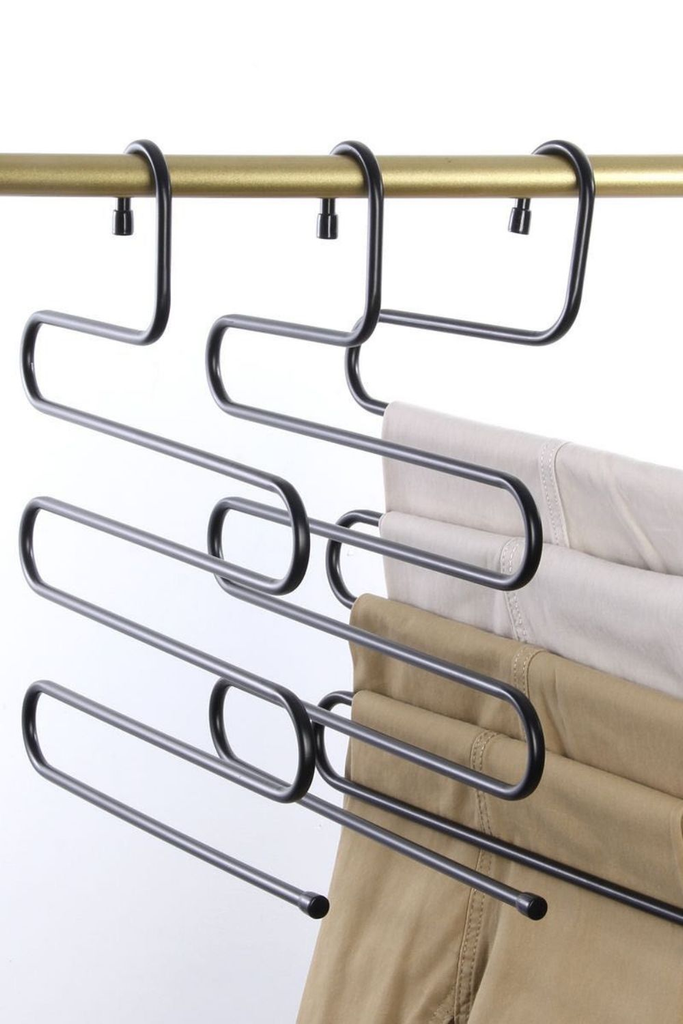
Tier hangers are useful when closet height is available but horizontal rod space is limited. Several bars are arranged vertically on one hanger, allowing multiple pairs to occupy the same general section.
I use this type of storage selectively because the combined weight of several pairs can be substantial. The hanger needs to be designed for the intended load, and I avoid adding more denim simply because there is an unused bar.
This system can be helpful in small closets where every bit of vertical space matters. Each pair remains separated rather than forming one bulky shelf pile.
It also works best when the jeans are arranged so I can reach the lower levels without having to move several garments first.
Color Sections
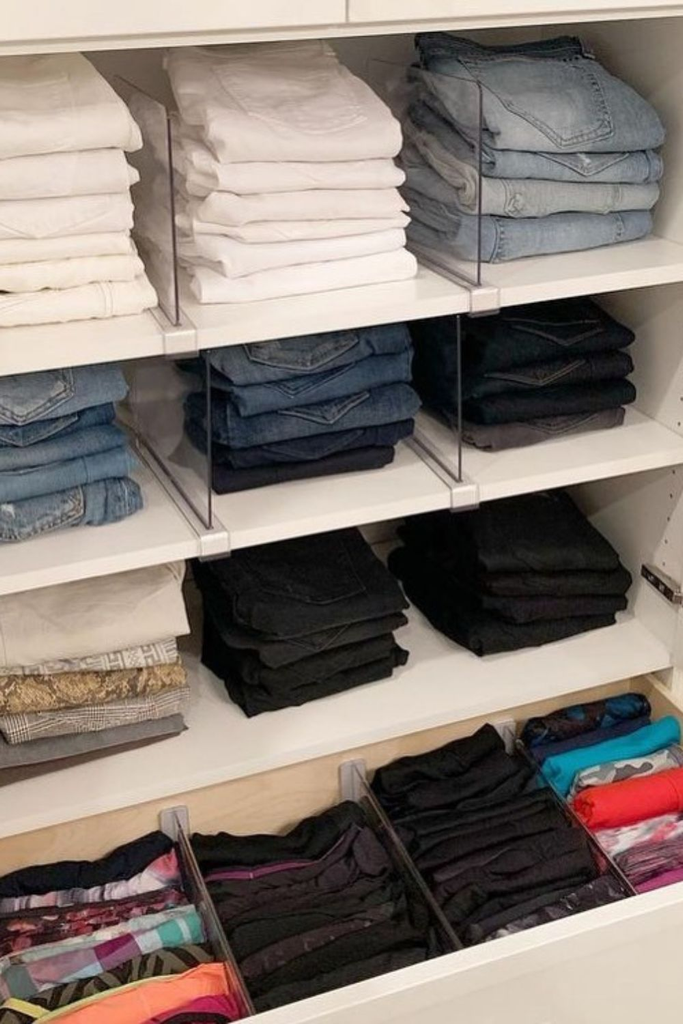
Color sections give folded denim a simple visual system. Light washes, medium blues, and dark denim can each have their own area, making it easier to recognize the collection at a glance.
I do not make color the first priority when organizing. If I wear two dark pairs constantly and rarely wear a light pair, the everyday jeans deserve the more accessible location.
Once frequency of use is handled, color can help bring order to the remaining collection. Fit or style can then be used as a secondary category if the wardrobe is large enough to benefit from it.
Shelf dividers work particularly well here because they stop one heavy group from gradually spreading into the next.
Hanging Organizers
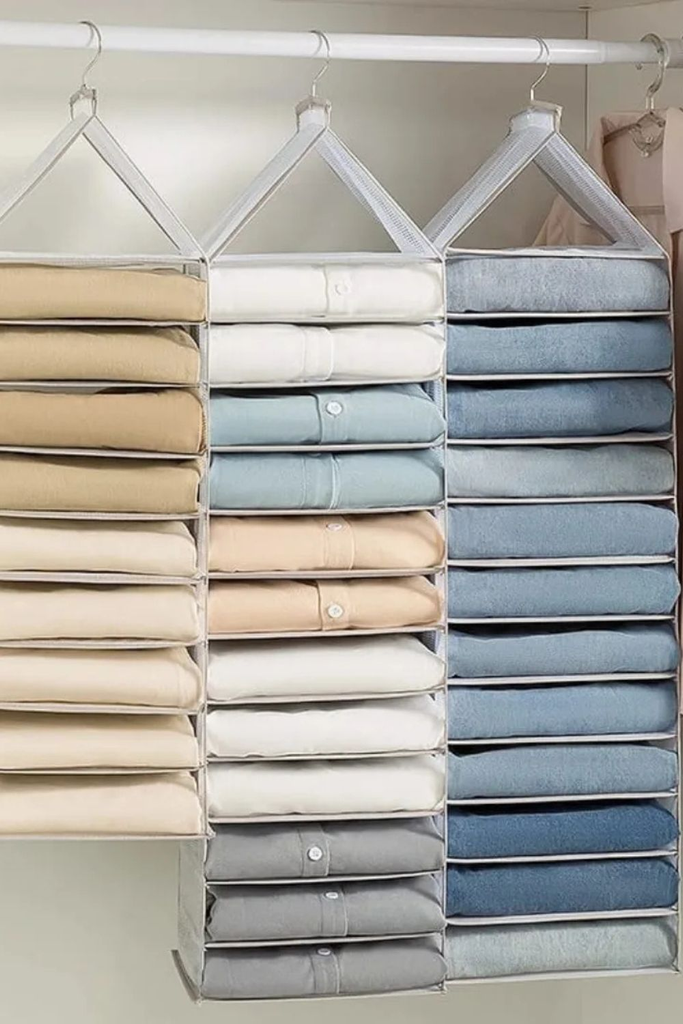
Hanging shelf organizers turn the vertical area below a closet rod into compartments. Folded jeans can sit in individual sections rather than taking up a traditional shelf.
This works well in a small closet that has height but very little built-in shelving. It can also be useful in a rental home because it does not require permanent shelving installation.
I pay attention to the organizer’s construction and load capacity before filling the compartments with heavy denim. Fabric compartments can sag when they are overloaded, which makes an otherwise useful system frustrating to maintain.
For everyday access, I place frequently worn jeans in the easiest compartments to reach. Less-used pairs can go higher or farther down if the organizer’s design allows it.
Also read: 18 Pillow Storage Ideas for 2026
Ladder Rack
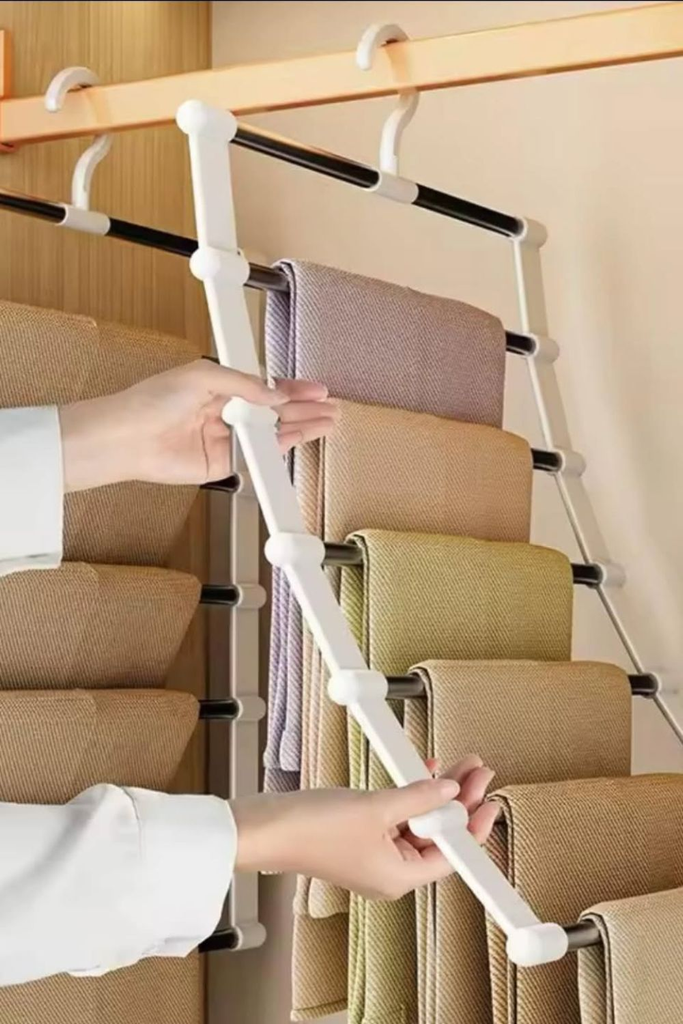
A ladder rack provides several separated horizontal levels for jeans. Unlike a single shelf stack, the denim is distributed across different levels, so removing one pair does not require disturbing a large pile.
I see this as a useful option for closets with plenty of vertical room but limited shelving. It can also make different washes easier to view because each level creates a natural visual break.
The rack should be attached or hung according to its manufacturer’s instructions. I check the supporting rod or mounting surface and the rack’s load rating before filling every level.
Keeping each level reasonably light also makes the system easier to use. Maximum capacity is not necessarily the most practical capacity for everyday storage.
Pant Hooks
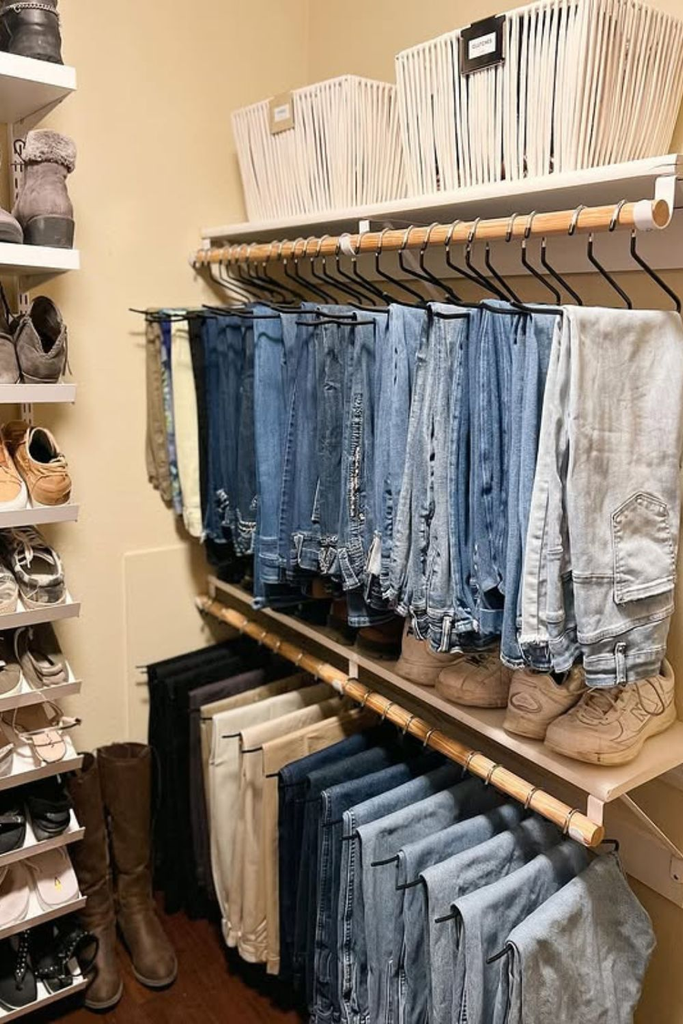
Pant hooks provide individual hanging points for jeans. Each pair can occupy its own hook, creating a simple row instead of a collection of overlapping hangers.
This is useful when I want a very visible setup. It can work especially well in a walk-in closet or dressing area where an empty wall or rail can be dedicated to frequently worn denim.
Spacing the hooks evenly gives the jeans room to hang and makes individual pairs easier to remove. I avoid placing them so close together that the legs overlap.
For mounted hooks, I choose hardware based on the wall type and expected load. I would not rely on a generic adhesive hook for several heavy pairs unless the product specifically indicates that it is suitable for that application.
Pro Tip: I mock up the hook spacing before drilling. A quick layout with removable tape helps me check reach, overlap, and the amount of wall space the finished system will use.
Basket Storage
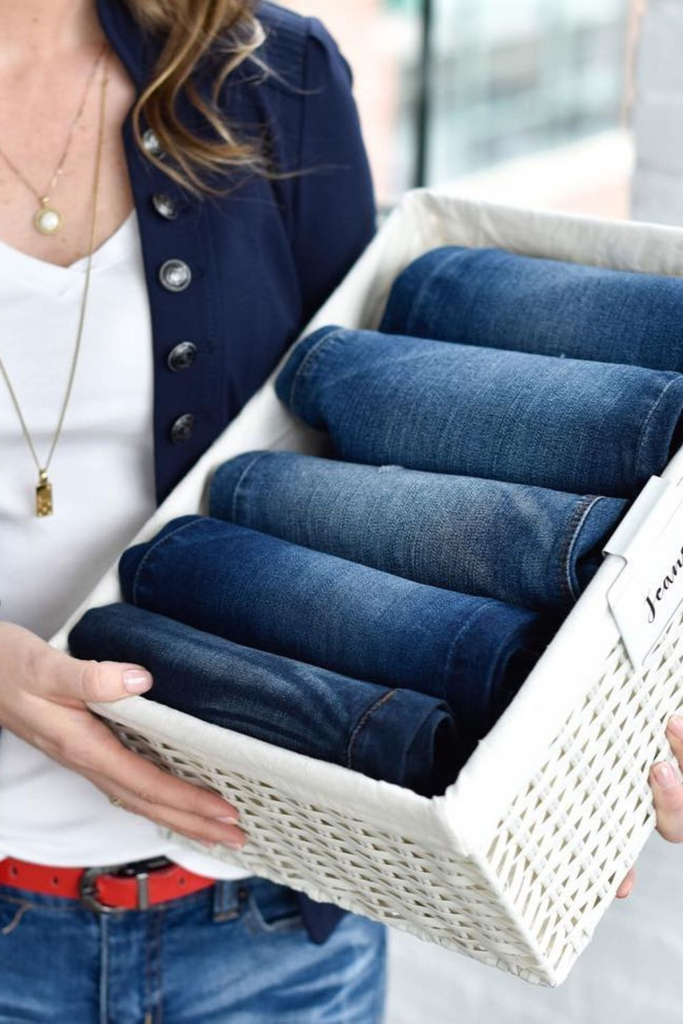
Baskets provide contained storage without requiring permanent closet hardware. They work well on open shelves, wardrobe shelves, or decorative storage systems where I want the jeans grouped together.
I generally fold jeans when reducing unnecessary creases is a priority. Rolling can be useful when the basket’s shape makes it easier to arrange rolled items, but I avoid tightly compressing denim just to fit more pairs inside.
An open basket also makes frequently accessed jeans easy to reach. For less frequently worn pairs, a deeper basket can keep them contained without taking up additional shelf sections.
Labels become useful when several baskets look alike. A simple label identifying everyday, seasonal, or specific-fit jeans saves time when the collection grows.
Wire Drawers
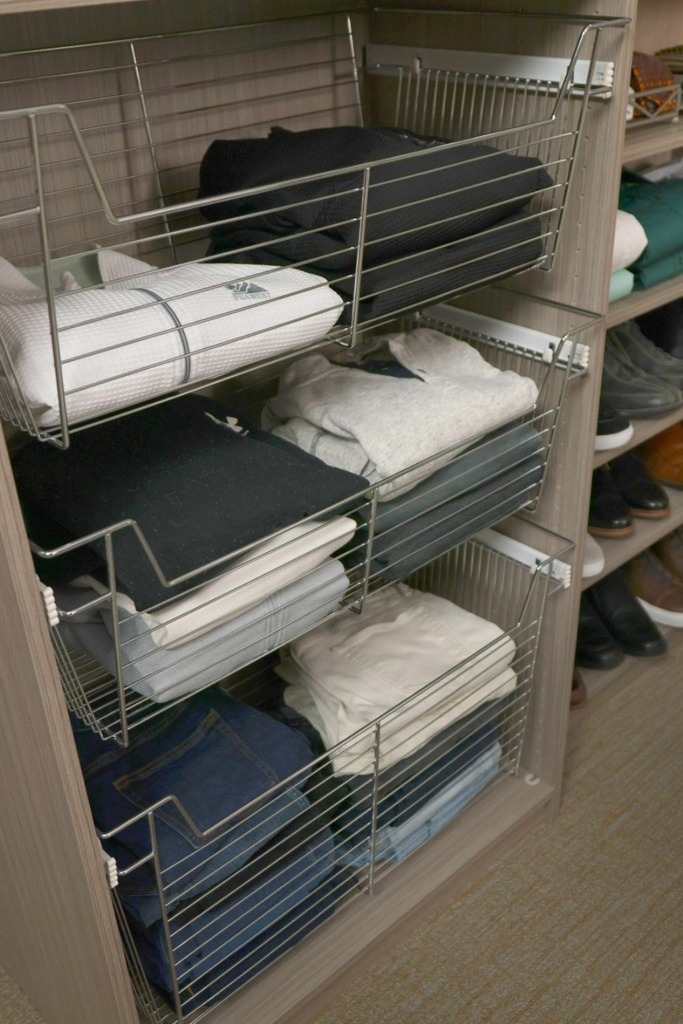
Wire drawers are particularly useful in deep closet systems because they pull the stored denim toward me. Instead of reaching over a stack at the front, I can extend the drawer and see more of its contents.
Before installing one, I measure the available width, depth, and height and check the drawer’s complete movement path. Doors, adjacent drawers, shelves, and trim can all affect how far a pull-out system can travel.
The mounting surface and manufacturer’s load rating also matter. I do not fill a drawer to its physical capacity unless the hardware is designed to support that weight.
Folded jeans can be arranged in manageable groups inside the drawer. This gives me the visibility benefits of a drawer without creating a deep, hidden pile.
Drawer Stacks
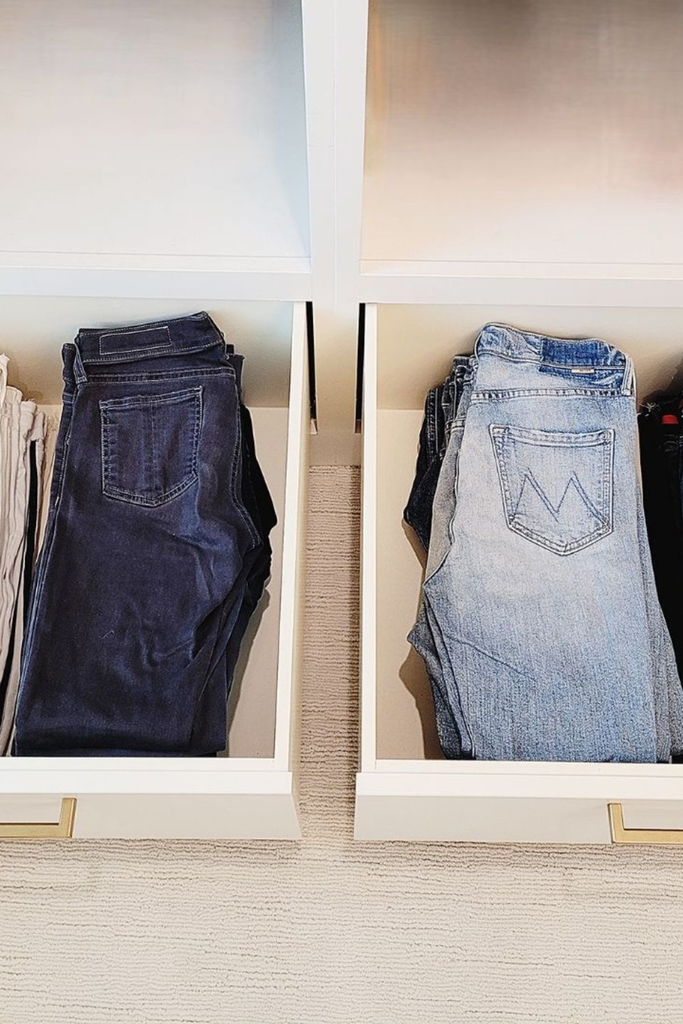
Drawer stacks are different from file folding because the focus here is on creating manageable folded groups inside a dresser or wardrobe drawer.
I fold each pair consistently and keep the stacks low enough that removing one pair does not cause the rest to tumble. The right height depends on the drawer’s dimensions and the thickness of the denim.
Wide drawers can accommodate several smaller groups side by side. I may separate them by everyday wear, wash, or fit depending on what makes the drawer easiest to use.
I also avoid filling the drawer so tightly that the jeans have to be pushed down to close it. Adequate clearance is part of good storage, not wasted space.
Rod Clips
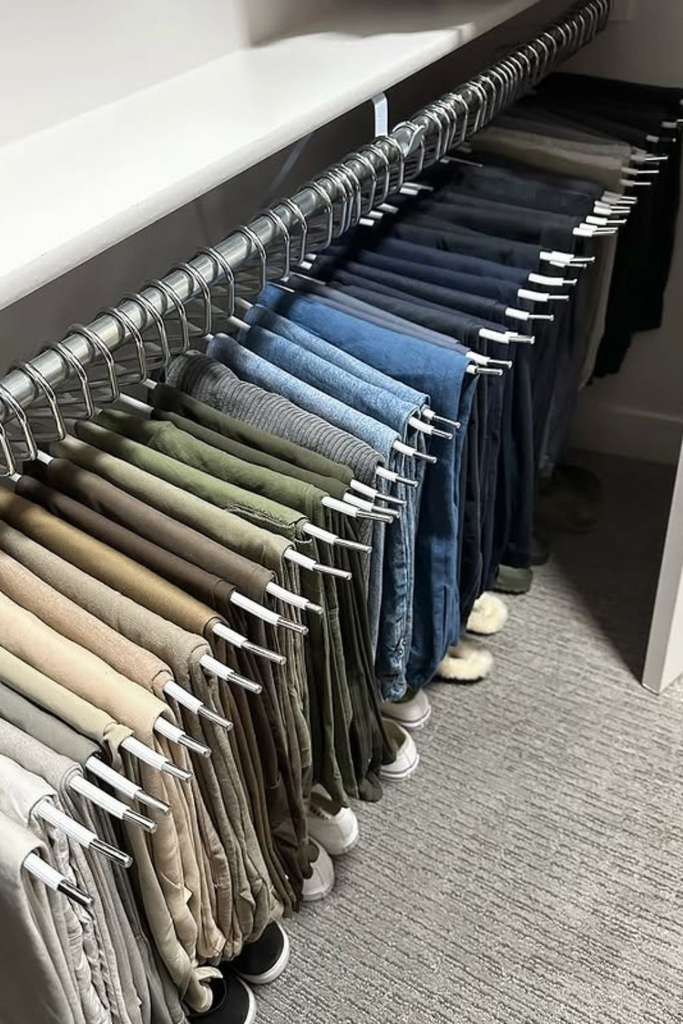
Rod clips use clip attachments along a closet rod to create a row of individually supported jeans. While this is similar to clip hanging, the emphasis here is on using the rod itself as a dedicated denim section.
I find this especially useful when I have a long closet rod and want the jeans arranged in a visible sequence. Each pair has its own position, so one garment can be removed without pulling a folded pile apart.
Clips should be strong enough for the denim and should grip without excessive pressure. Smooth contact points are preferable, particularly for garments that show marks easily.
I keep the rod from becoming overcrowded and check its brackets when storing a large number of heavy pairs. The complete system has to support the combined load, not just the individual clips.
Wall Hooks
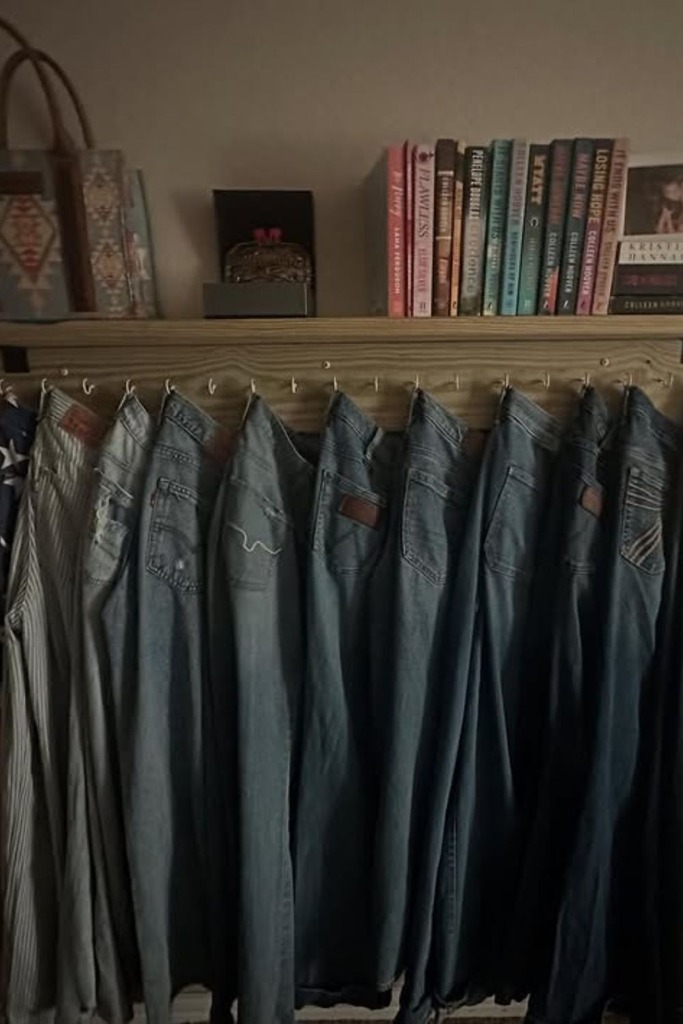
Wall hooks can create denim storage where there is no practical closet rod or shelf. A wall-mounted rail with individual hooks gives frequently worn jeans their own accessible location.
This can be useful in a bedroom, dressing area, or walk-in closet with an otherwise unused wall. It can also be a practical option when floor space is limited.
Installation needs to match the wall material and expected weight. I use appropriate anchors or mounting hardware rather than assuming that a hook will hold simply because it fits the wall.
If a shelf is added above the rail, I keep it separate from the denim’s load and follow the shelf manufacturer’s capacity. Bags or accessories can go there without turning the denim hooks into an overloaded storage station.
Color Hanging
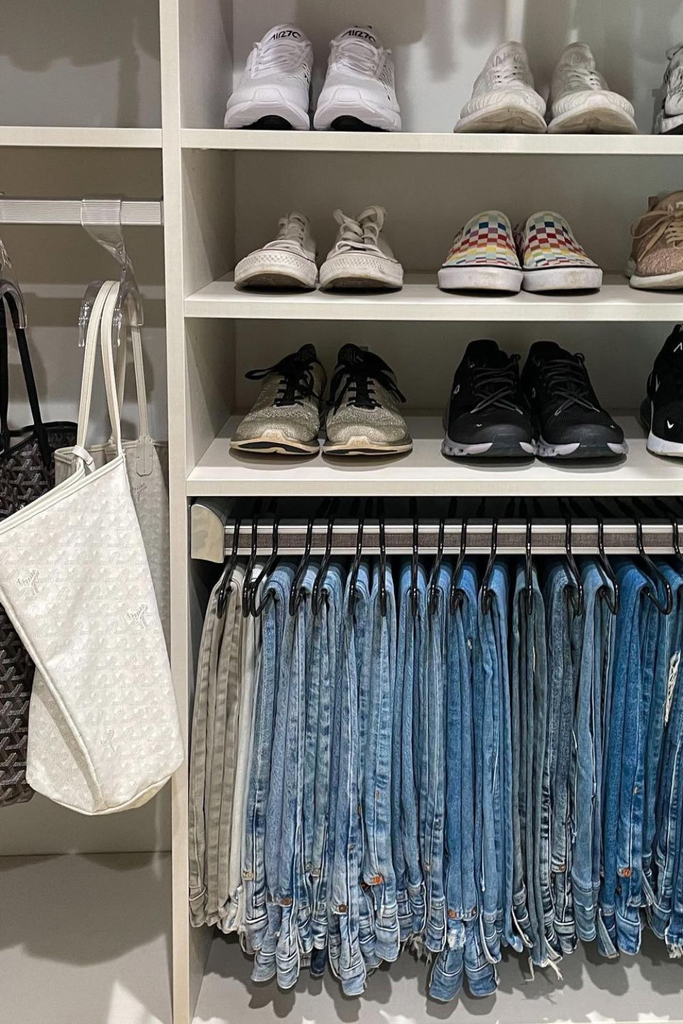
Color hanging is a visual system for jeans already stored on hangers. I arrange the hanging pairs from lighter washes through darker denim so the section has an easy-to-follow sequence.
This works well for people who prefer a closet that can be scanned quickly. I can identify a general wash without pulling several pairs forward.
Frequency of wear still comes first in my own closet. A frequently worn pair belongs somewhere convenient even if it technically breaks the color sequence.
Within a color group, fit or style can become the next sorting layer. That is particularly helpful when several pairs have similar washes but different cuts.
Cabinet Rack
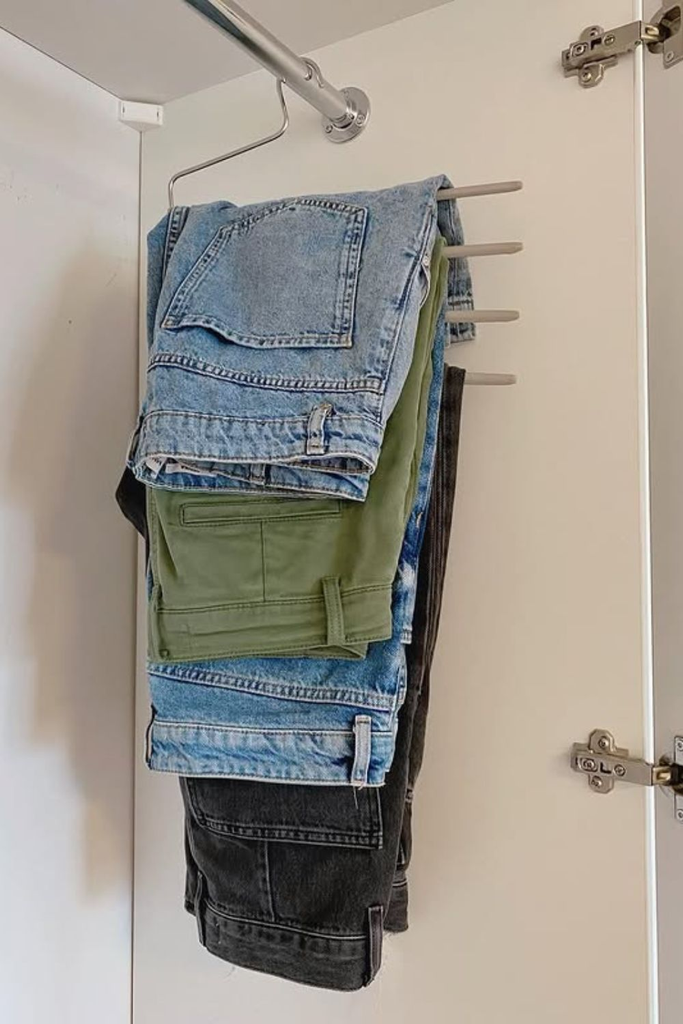
A cabinet rack makes use of deep or awkward cabinet space by bringing hanging denim forward. It is especially useful when the area would otherwise become a difficult-to-reach shelf.
I measure the cabinet’s width, depth, and height first and account for the rack’s full extension. Door hinges, shelves, and neighboring hardware can affect whether a pull-out rack will actually work once installed.
Load capacity is another consideration. I check both the rack’s rating and the cabinet’s mounting surface because the entire installation needs to support the stored denim.
Keeping one manageable group of jeans on each section also prevents the cabinet from becoming crowded. The advantage of pull-out hardware is access, so I do not want to cancel that benefit by overloading it.
Storage Bins
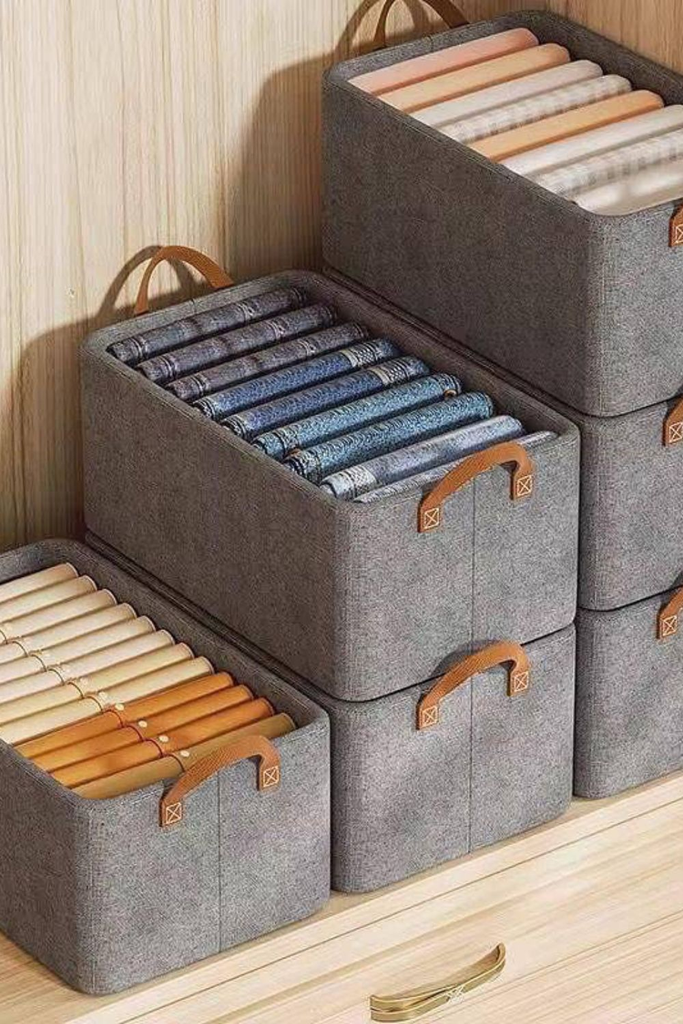
Storage bins are best reserved for jeans that I do not need every day. Seasonal pairs, occasional styles, or denim that I want to keep available without occupying prime closet space can go into labeled containers.
Before storing them, I make sure the jeans are clean and completely dry. I choose a clean, dry location and avoid damp areas or places exposed to significant temperature extremes where practical.
I label each bin clearly so I know what is inside without opening several containers. “Summer jeans” or “occasional denim” is more useful than a generic clothing label.
I also leave enough room for the jeans to sit naturally. Tightly compressing denim simply to maximize the bin’s capacity can make retrieval harder and may create unnecessary creasing.
Uniform Hangers
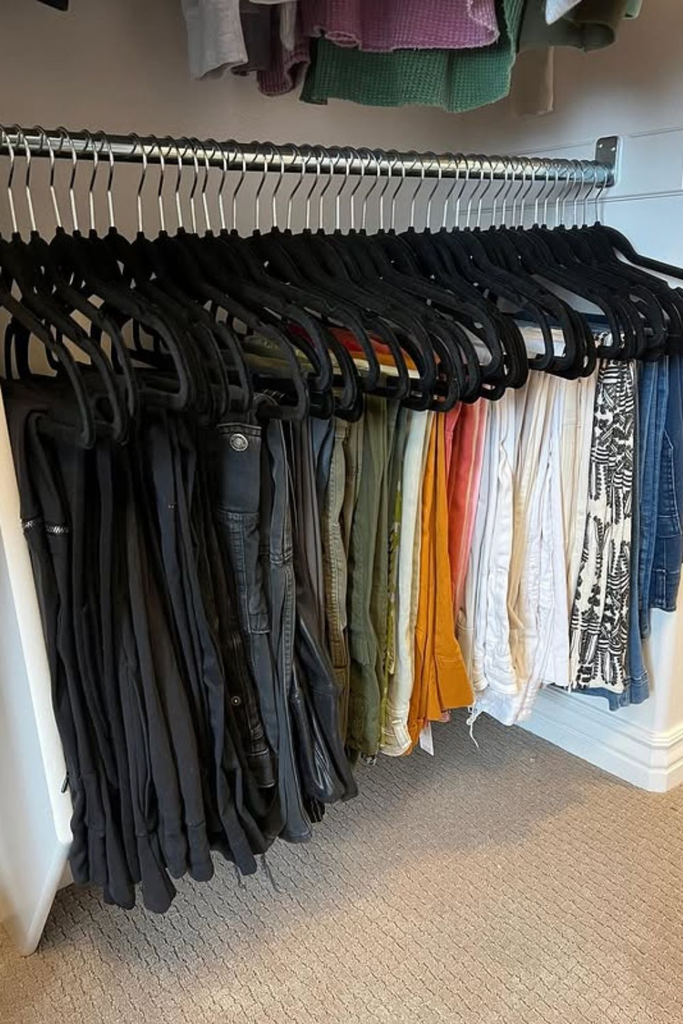
A uniform hanger system is less about a particular hanging technique and more about creating consistency across the closet. Matching hanger types and spacing give the denim section a cleaner appearance and make it easier to maintain.
I choose hangers based on the weight of my jeans rather than buying a set simply because all the hangers look alike. Consistency is useful only when the hardware is appropriate for the garments.
Keeping similar spacing between hangers also makes it easier to return jeans to their assigned positions after laundry. There is less guesswork about where each pair belongs.
This approach works particularly well in a walk-in closet or organized wardrobe where I want the entire clothing area to have a consistent visual system.
Read this next: 30 Bathroom Storage Ideas to Keep Your Space Organized
FAQs
Can hanging jeans damage their shape over time?
Hanging can be a practical way to store jeans, but the method and hardware matter. I use hangers or clips that are appropriate for the weight of the denim and avoid concentrating too much pressure on a small section of the waistband.
If I notice marks, stretching, slipping, or other changes around the waistband, I change the hanging method. Folding over a sturdy hanger bar can be an alternative when clips are not suitable.
I also check the garment care label, especially for jeans made with unusual fabrics, finishes, or decorative details. Care instructions should take priority over a preferred storage system.
How many pairs of jeans should be stored in one stack?
There is no single stack size that works for every closet. Denim thickness, shelf depth, the stability of the shelf, and how often I remove the jeans all affect what feels manageable.
As a personal starting point, I often work with around three to five pairs in a stack when the denim is relatively heavy. That is not a universal rule; a thinner collection may support a different arrangement.
If the pile leans, becomes difficult to reach, or collapses whenever I remove one pair, I divide it regardless of the number of jeans in it.
For frequently worn denim, smaller stacks can be especially practical because I am accessing them often. Less-used pairs can sometimes be grouped differently as long as the storage remains stable and easy enough to maintain.
Conclusion
I have found that the most useful jeans storage system starts with the space I already have. A deep drawer may benefit from file folding, open shelving may need shorter stacks and dividers, and a small closet may work better with vertical or hanging solutions.
From there, I organize around real use. Frequently worn jeans stay within easy reach, while wash, color, fit, and style can provide additional structure when they genuinely make the closet easier to navigate.
I do not try to maximize every shelf, drawer, or hanger. Keeping denim supported, visible, and manageable makes it much easier to put laundry away and maintain the organization over time.