22 Fabric Storage Ideas for 2026
Fabric can get out of control surprisingly fast. A few fat quarters turn into stacks, scraps collect in baskets, and larger cuts often end up wherever I can find an empty shelf.
I’ve found that good fabric storage is less about having a huge craft room and more about giving every type of fabric a clear home. When I can see what I own, I waste less time searching and am much more likely to use materials I already have.
Whether you sew clothing, quilt, make crafts, or simply keep fabric for future projects, these storage ideas can help you use walls, closets, shelves, drawers, and small corners more effectively.
I recommend choosing a fabric storage method based on how much fabric you own, how often you use it, and the amount of space available. Open shelving works well when I want everything visible, while cabinets and drawers are better when I want a cleaner appearance and added protection from dust.
For smaller pieces, I find that clear drawers, baskets, small cubes, and labeled containers make the most sense. Larger yardage and fabric bolts need deeper shelves or vertical storage so they don’t become unstable piles.
Save this for later
Table of Contents
The most useful systems also group fabric in a way that makes sense to me, such as by color, material, project, season, or size. I can usually find what I need much faster when I use one consistent system instead of mixing several methods together.
Key Takeaways
- I sort fabric before buying new storage so I know exactly what I need to contain.
- Color sorting makes a fabric collection easier to browse, especially for quilting and sewing projects.
- Clear containers work particularly well for scraps, fat quarters, and smaller cuts.
- Vertical storage can make a big difference when floor and shelf space are limited.
- Labels prevent storage bins from becoming mystery boxes later.
- I keep frequently used fabrics within easy reach and less-used materials higher up or farther back.
- Fabric should be kept away from excessive moisture, direct sunlight, and dusty areas whenever possible.
- A simple system that I can maintain is more useful than an elaborate setup that becomes messy again.
Related article: 25 Mop And Broom Storage Ideas for 2026
Aesthetic Display Ideas
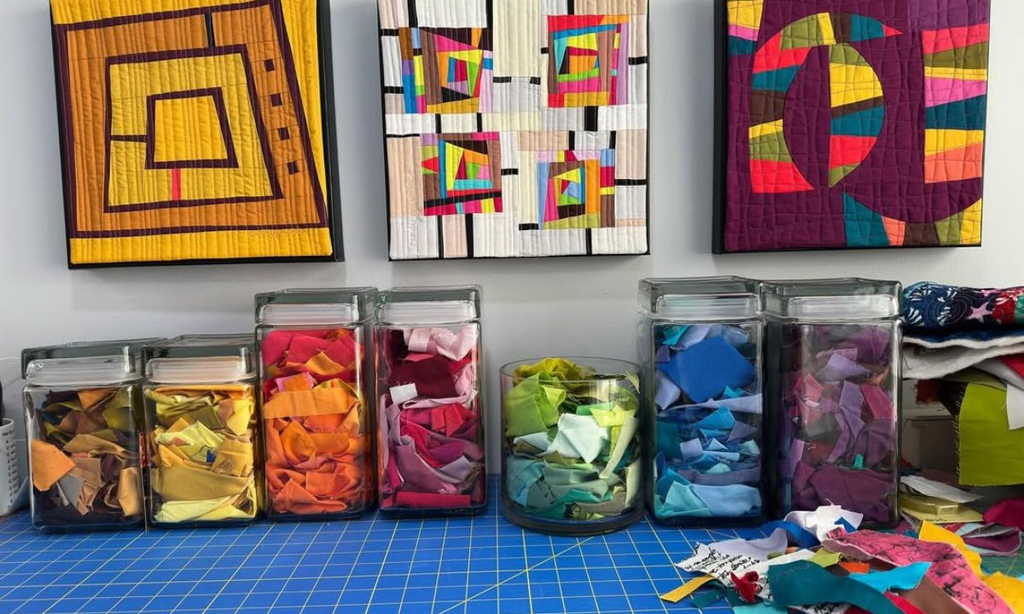
I like using some fabric as part of the room’s decor instead of hiding everything behind closed doors. When fabrics have attractive colors or patterns, a neat display can make a sewing or craft area feel more personal.
One simple option is to roll small fabric pieces and place them inside clear glass jars. I can arrange the rolls by color, creating a small rainbow or an ombré effect without needing much shelf space.
This method works particularly well for scraps and smaller cuts that are too small to justify a large storage container. It also lets me see what I already have before cutting into a new piece.
For a more finished look, I can add simple labels to the jars or group them by color family. I prefer keeping the display limited to fabrics I use regularly because displaying everything can quickly make the space look crowded.
Pro Tip: Keep delicate or valuable fabrics out of direct sunlight. Long-term UV exposure can cause some dyes to fade, even when the fabric is stored indoors.
Fabric Storage
Color-Coded Shelves
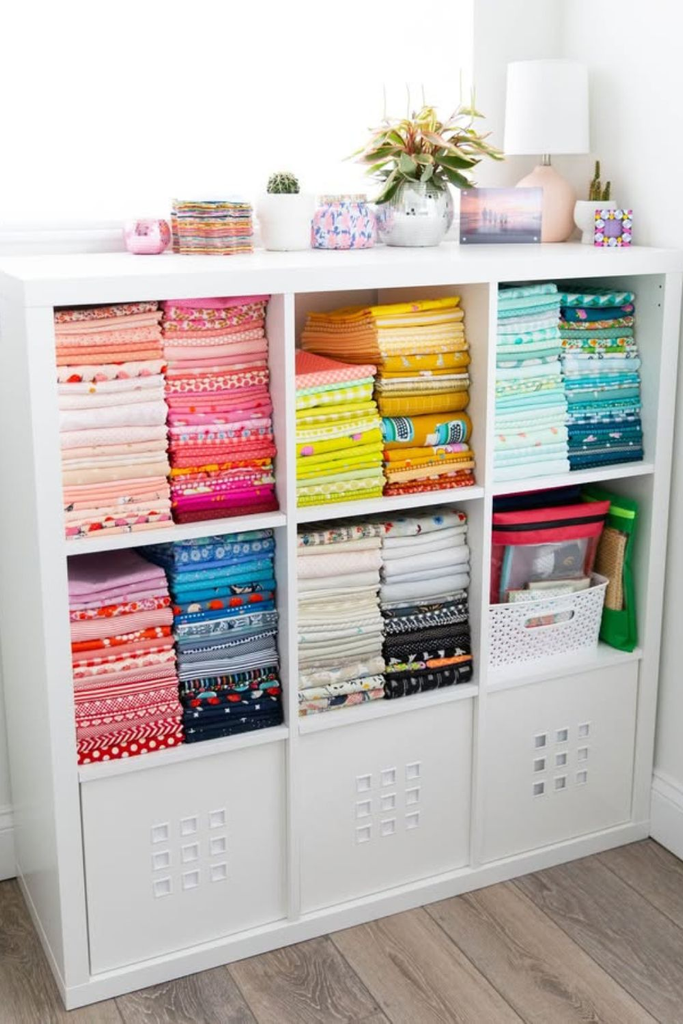
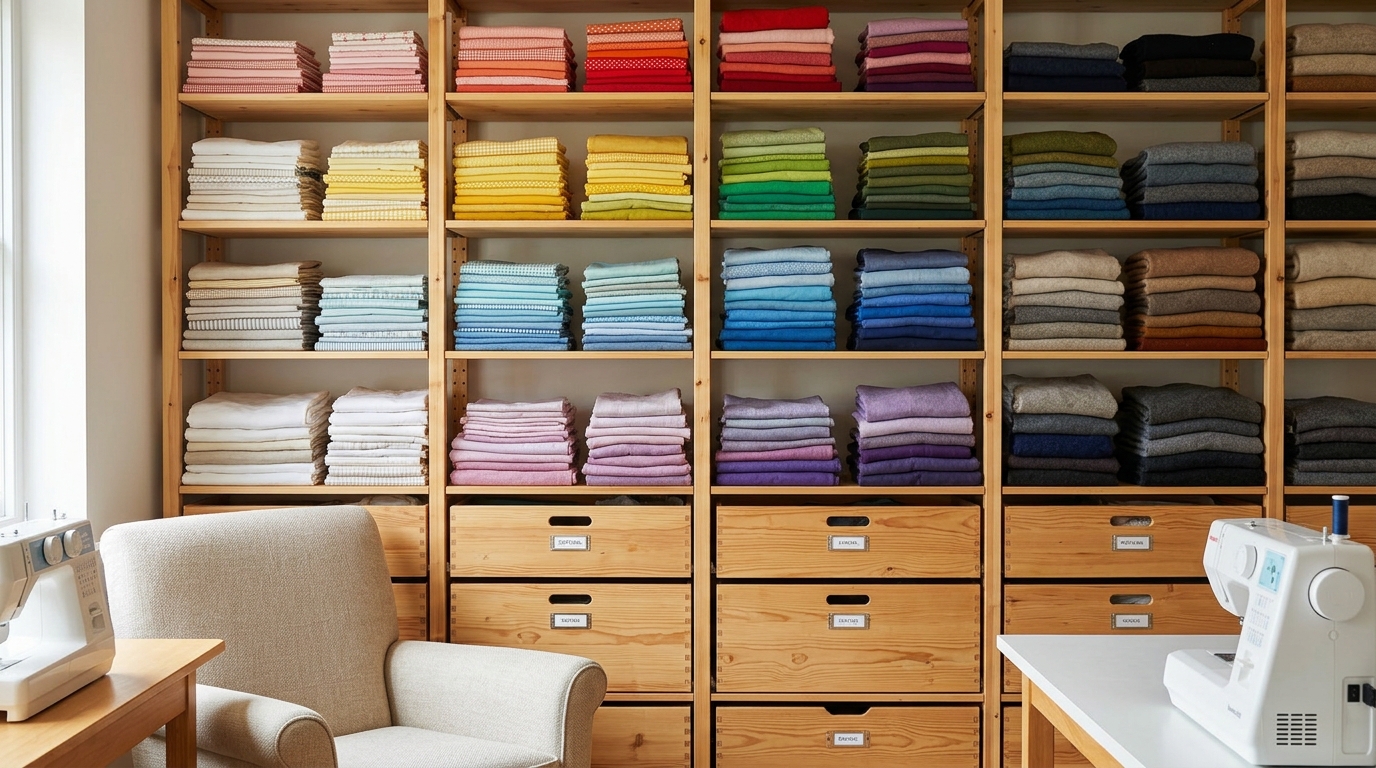
Open shelving becomes much easier to manage when I organize fabric by color instead of stacking random prints together.
I can create sections for reds, blues, greens, neutrals, pinks, and other color families. Within each section, I fold the fabric to a similar size so the shelves look consistent and are easier to browse.
I especially like this approach for quilting fabric because I can quickly compare different shades while planning a project.
Pro Tip: Leave a little breathing room on each shelf. Completely packed shelves make it harder to remove one piece without disturbing the entire stack.
Cabinet Workstation Combo
When space is limited, I like combining fabric storage with the actual sewing workstation.
A cabinet can hold folded yardage, sewing supplies, thread, trims, and unfinished projects while the top becomes a cutting or sewing surface.
I usually place the materials I use most often in the easiest-to-reach drawers or shelves. Less frequently used fabric can go into the lower or less accessible sections.
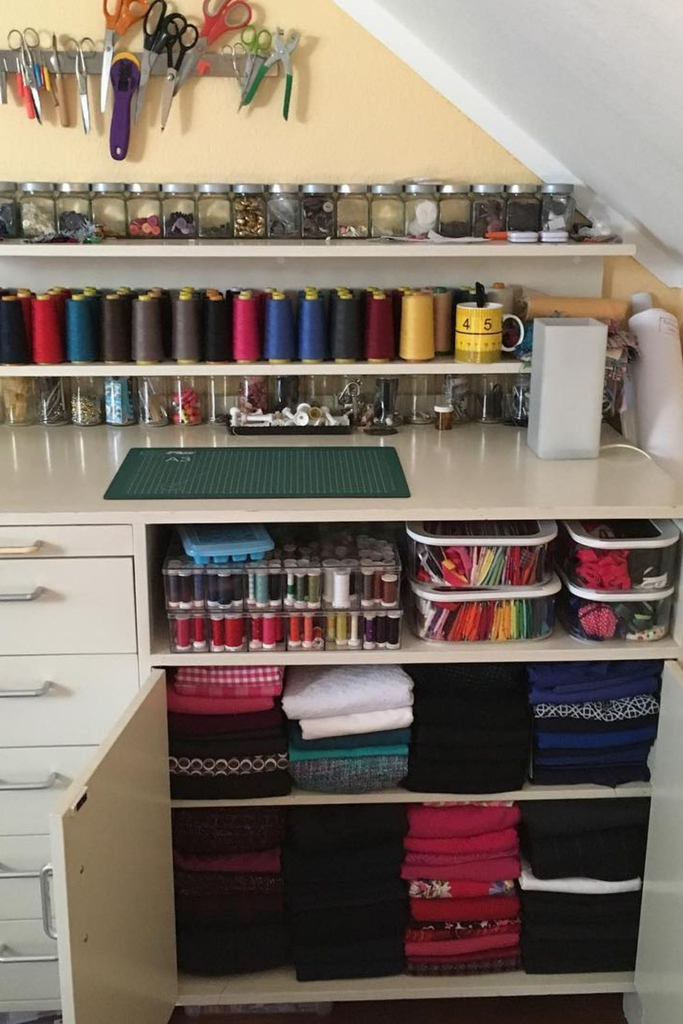
This arrangement reduces unnecessary trips across the room and keeps my main workspace focused on the project I’m working on.
Modular Crate Wall
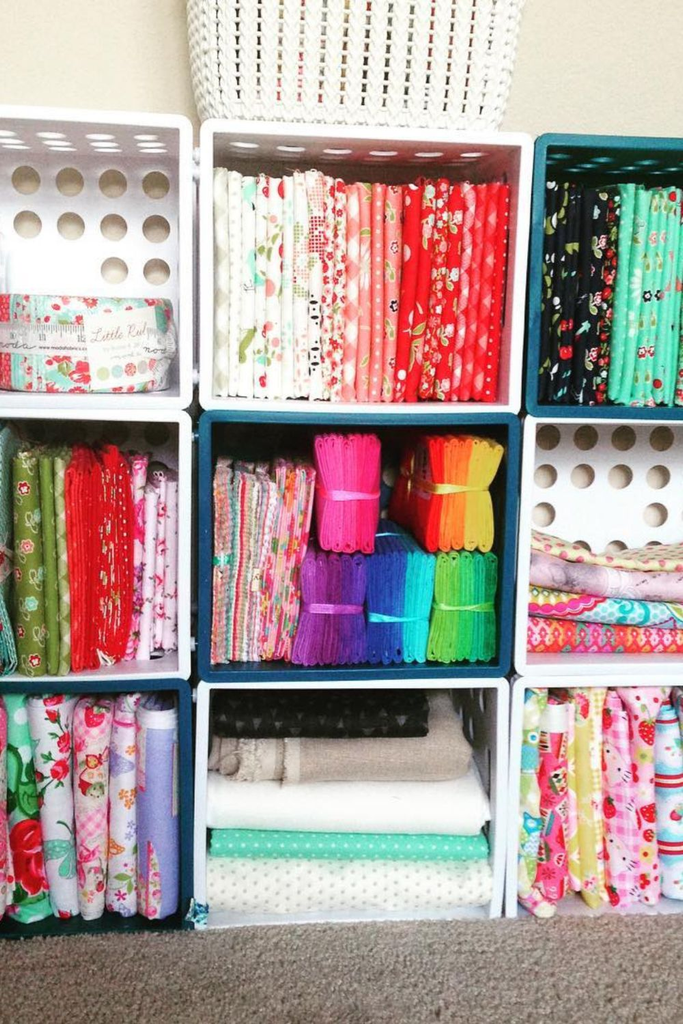
Stackable crates are a useful option when I want flexible storage without committing to permanent shelving.
I can arrange the crates vertically or horizontally and change the layout when my collection grows. Each crate can hold a different fabric category, such as holiday prints, quilting cottons, upholstery remnants, or unfinished projects.
Because the crates are separate units, I can also remove one and take it directly to my work area.
Pro Tip: Secure tall crate arrangements properly if they are stacked several levels high. Stability matters more than squeezing in one additional container.
Closet Bin System
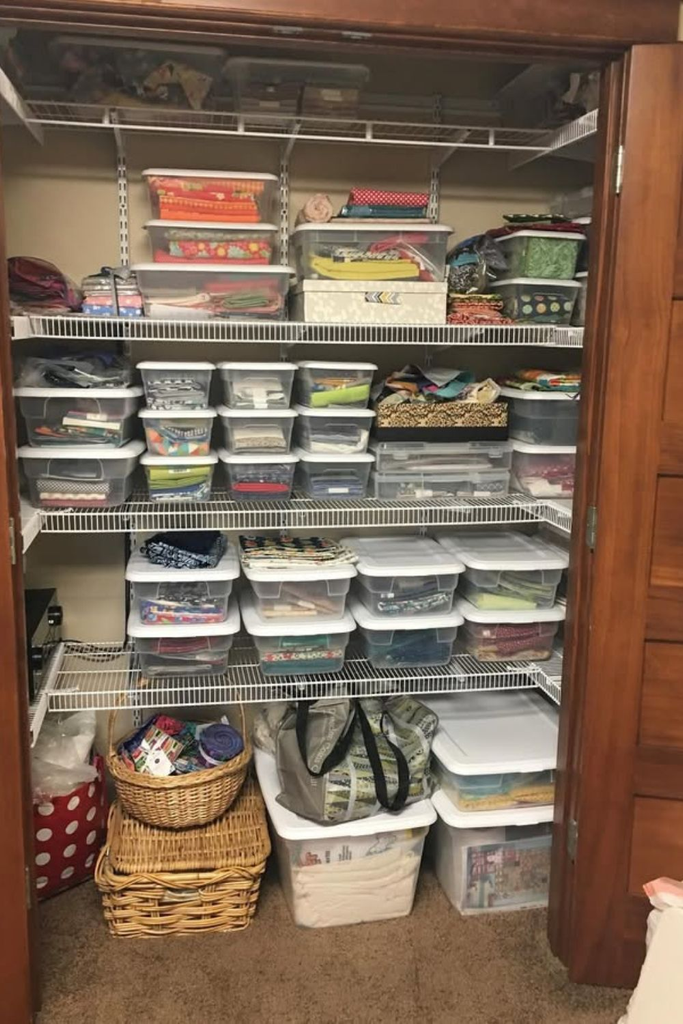
A closet can become an excellent hidden fabric storage area when I add sturdy shelves and clearly labeled bins.
I prefer clear containers when possible because I can identify the contents without opening every box. If I use opaque bins, I make the labels large enough to read from several feet away.
Large yardage can be folded into deeper containers, while smaller scraps and sewing accessories can be separated into smaller bins.
This approach keeps fabric away from everyday visual clutter while still making the collection easy to manage.
Basket Cube Wall
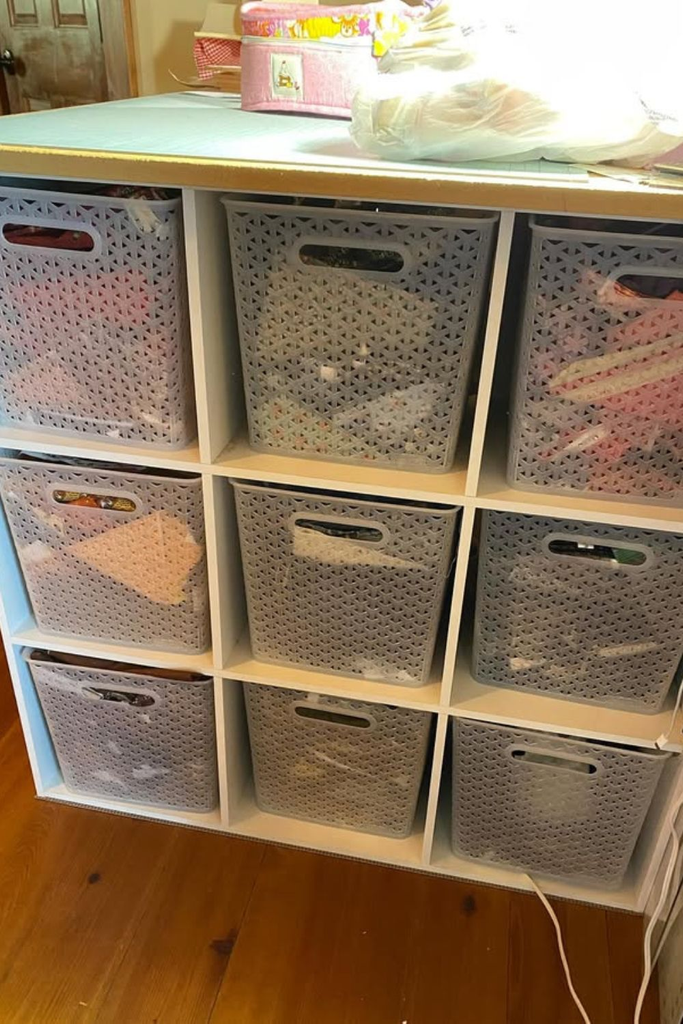
Cube organizers are useful because each compartment creates a natural storage zone.
I can place fabric into matching baskets and assign each basket a category. One might hold scraps, another quilting cotton, and another seasonal fabric.
The organizer can also double as a work surface if it has a sturdy top. That makes it particularly useful in small craft rooms where every piece of furniture needs to perform more than one job.
Clear Color Drawers
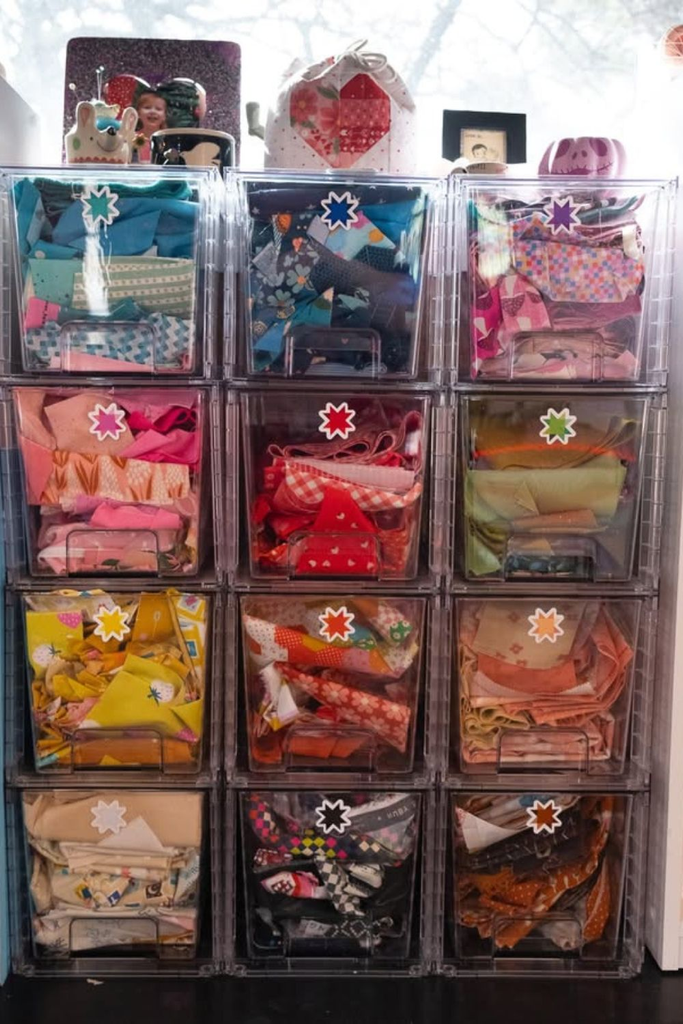
Clear drawers are one of my favorite options for small fabric pieces because I can see the contents without opening anything.
I can dedicate each drawer to a color group, fabric type, or project. Smaller cuts such as fat quarters and scraps are much easier to keep under control when they have individual compartments.
The transparent fronts also make it obvious when a drawer is becoming too full.
Pro Tip: Don’t mix very small scraps with larger cuts in the same drawer. The tiny pieces tend to settle at the bottom and make larger pieces difficult to find.
Metal Rack Corner
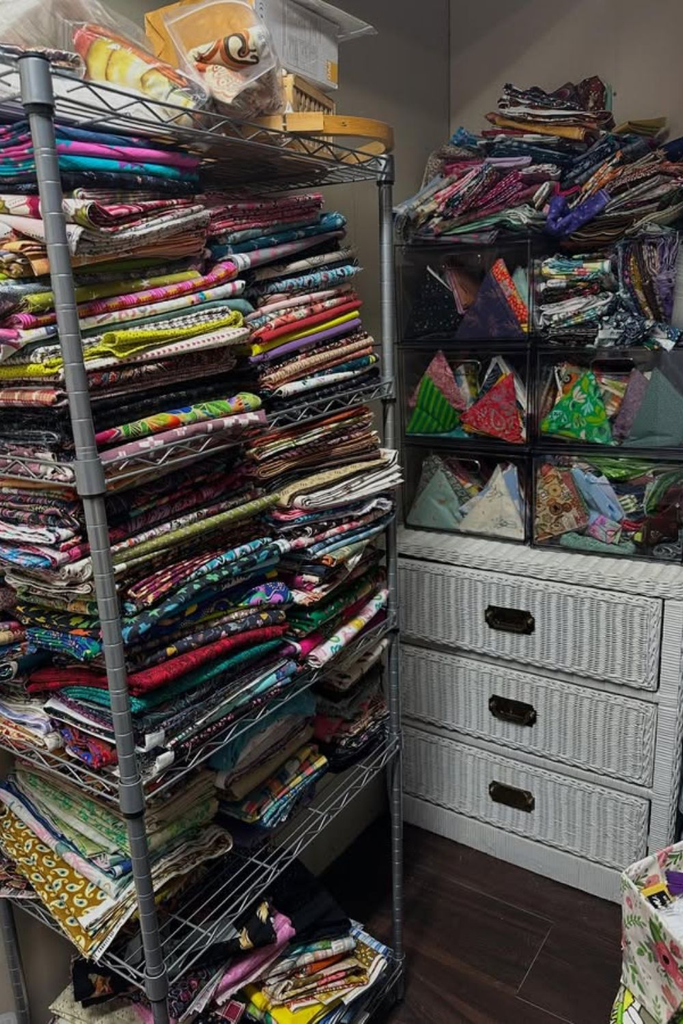
A metal shelving rack can hold a surprisingly large amount of folded fabric without taking up much floor space.
I can arrange fabric by color, material, or project and use the lower shelves for heavier containers or sewing supplies.
This type of rack is particularly helpful when I need practical storage rather than furniture that blends completely into the room.
For a softer appearance, I can place smaller fabric pieces in baskets or bins on the shelves.
Under-Desk Cubes
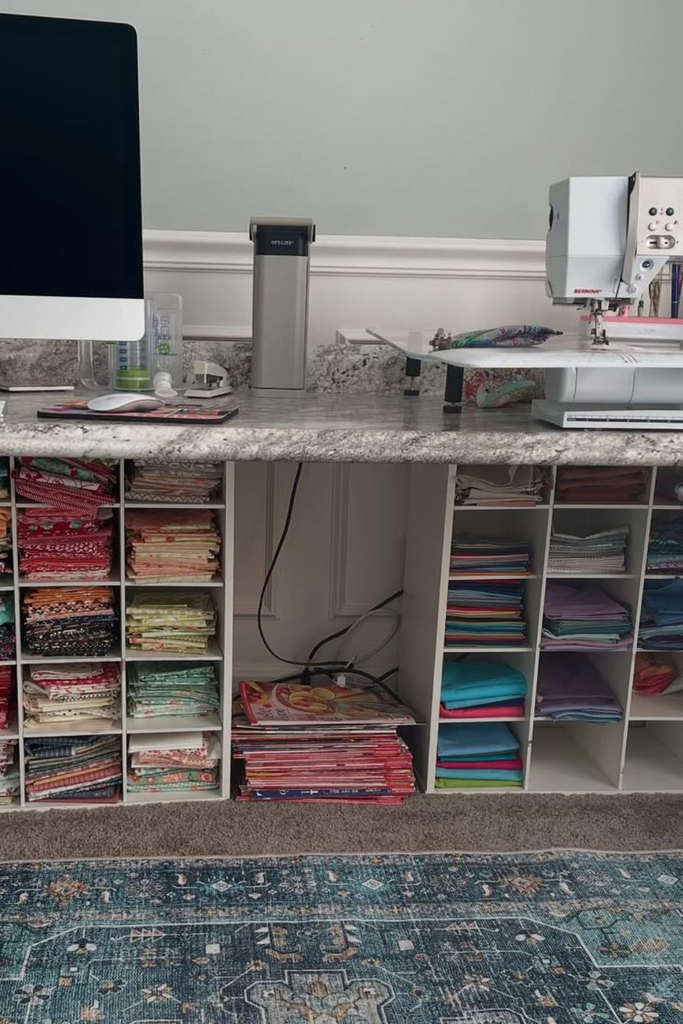
The space underneath a sewing desk is often wasted, but small cube shelves can turn it into useful storage.
I can keep frequently used fabric directly under my workstation and arrange the cubes by color or project.
Because the storage stays below the work surface, it doesn’t take additional wall or floor space elsewhere in the room.
I find this especially useful when working in a bedroom, shared room, or small home office where dedicated craft furniture isn’t practical.
Labeled Bin Racks
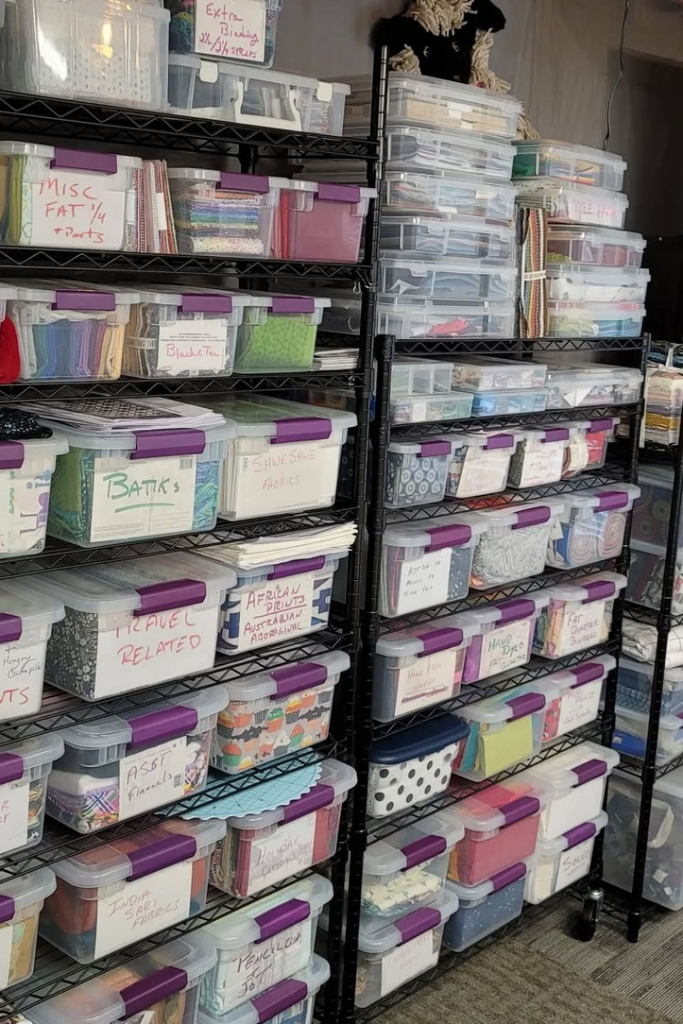
For a large collection, labeled bins can make a major difference.
I can sort fabrics into specific groups such as children’s prints, batiks, florals, seasonal fabrics, solids, or upholstery remnants. The important part is making the categories specific enough that I know where something belongs.
Sturdy shelving keeps the bins accessible, while labels eliminate the need to open several containers before finding the right material.
Pro Tip: Label the front and top of containers if you stack them. A label that disappears underneath another bin isn’t very helpful.
Shelf And Drawer Combo
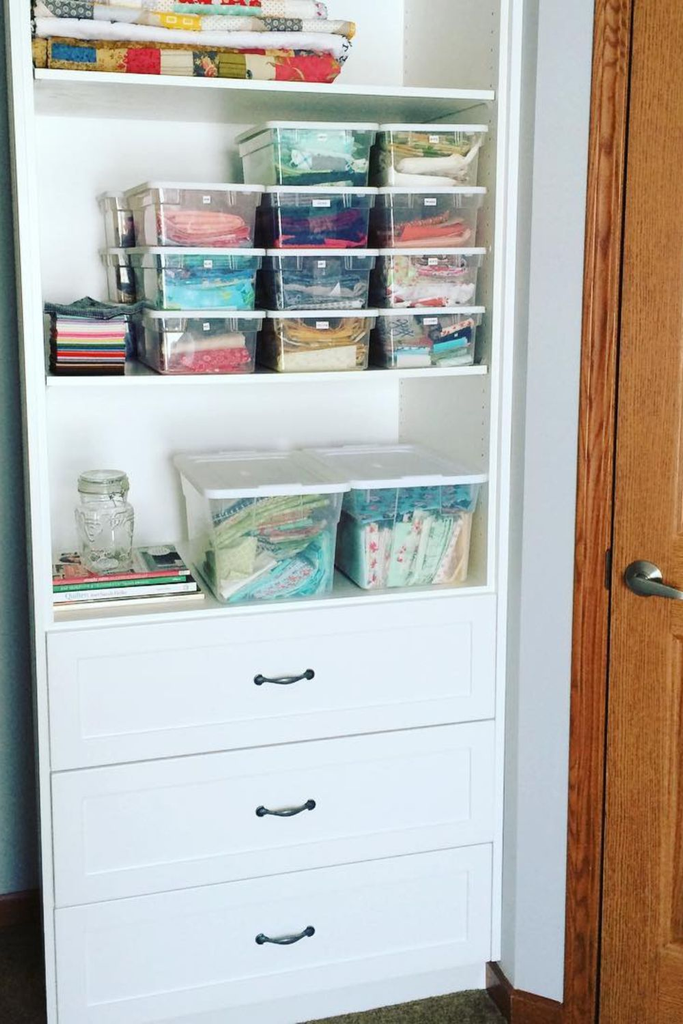
A combination of open shelves and drawers gives me two different storage options in one piece of furniture.
I use open shelving for fabrics I reach for often and drawers for scraps, bulky materials, unfinished projects, or supplies I don’t need to see every day.
This setup also helps keep the room visually balanced. Not everything has to be displayed for the storage system to work well.
Slanted Wood Shelves
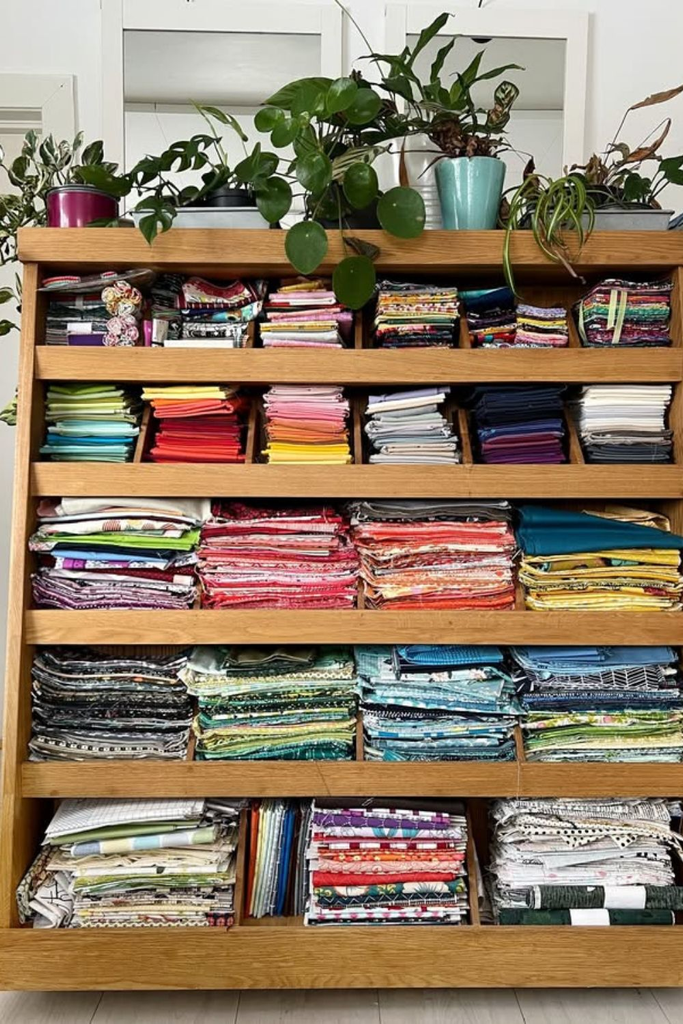
Slanted shelves can give a fabric collection a small-shop appearance while making folded fabric easier to see.
The angled surface allows the front edge of each stack to remain visible, which helps when I’m choosing between several colors or prints.
I would use this setup for fabrics that I browse frequently rather than pieces that need long-term hidden storage.
Adding a small plant or decorative object nearby can make the shelving feel like part of the room rather than purely functional storage.
Also read: 15 Clever Small Kitchen Organization Ideas
Mini Shelf Cubes
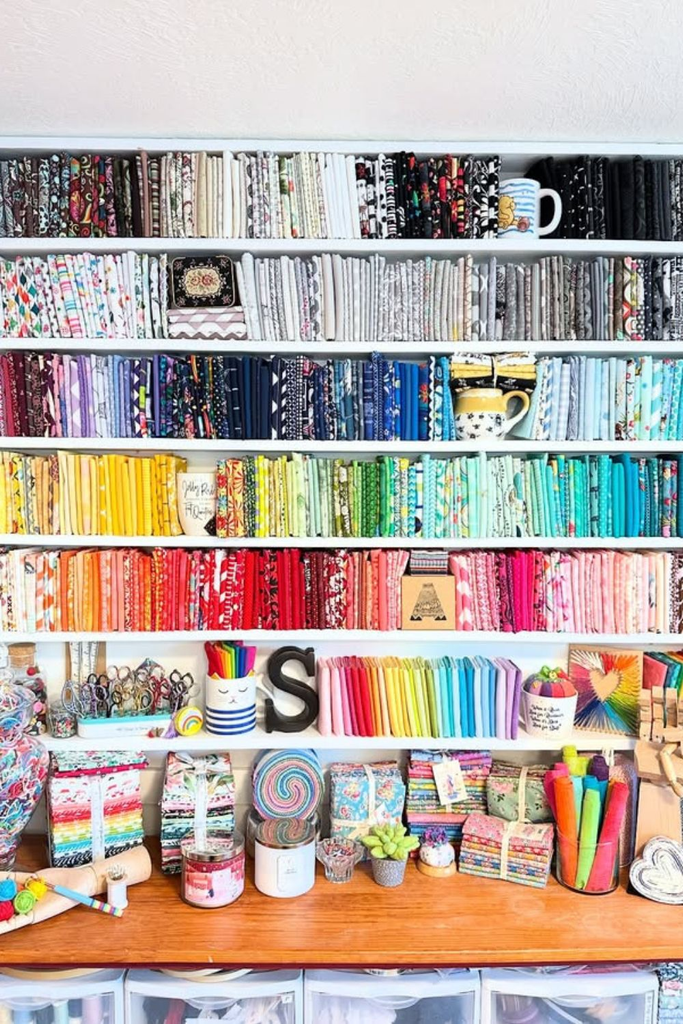
Small cube shelves work well for fat quarters, fabric bundles, and other compact cuts.
I can organize each cube by color or project and keep the fabrics I use most often close to my sewing area.
Their compact size also makes them useful for shared rooms where a large shelving unit would feel overwhelming.
I prefer using smaller shelves for smaller pieces because it prevents me from creating deep piles that become difficult to sort through.
Minimalist Hidden Cubes
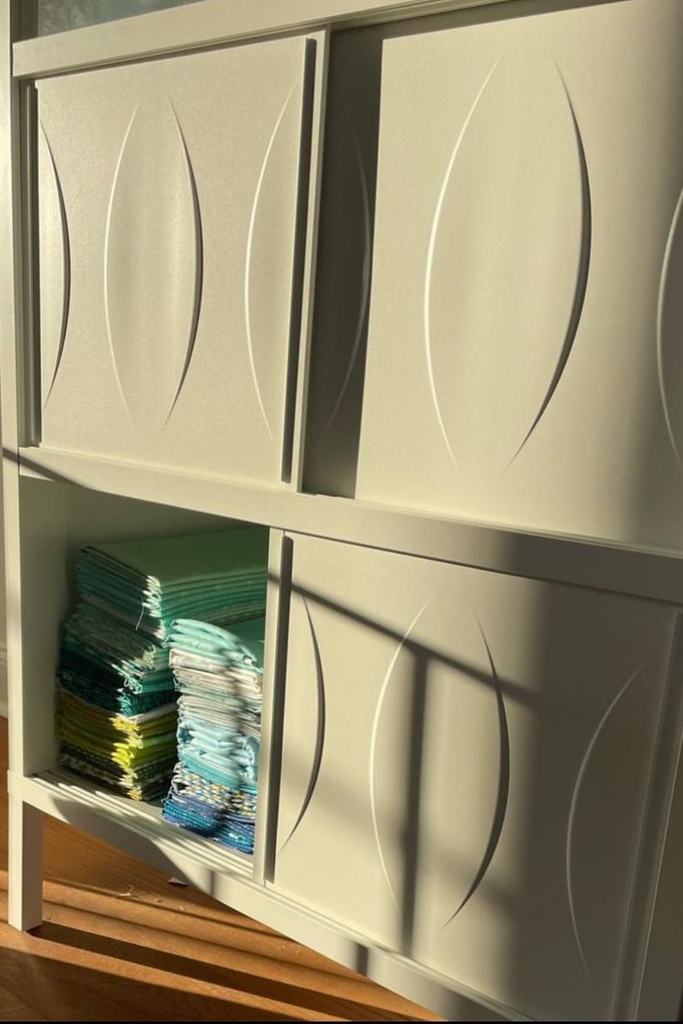
For a cleaner room, I like combining closed storage with one or two open sections.
The closed compartments hide fabric when I want the room to look tidy, while an open cubby can display a neatly folded stack or a current project.
This is a good compromise for multipurpose rooms where the craft area also needs to function as a guest room, office, or living space.
Neutral furniture can help the colorful fabric remain the visual focus without making the entire room feel busy.
Mesh Drawer Towers
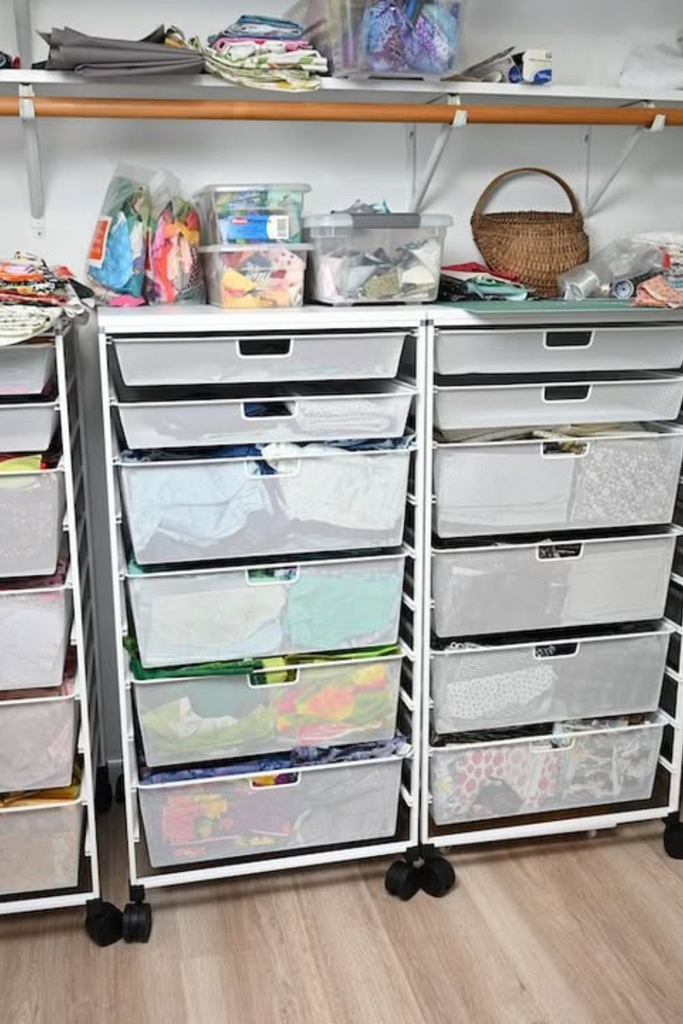
Rolling mesh drawer towers are useful when I need lightweight storage that I can move around.
The open mesh allows me to see the general contents of each drawer, while the drawers keep small pieces from spreading across the room.
I can use one drawer for scraps, another for fat quarters, and another for active sewing projects.
The wheels are especially useful when I need to move supplies closer to my cutting table and then clear the area afterward.
Acrylic Side Drawers
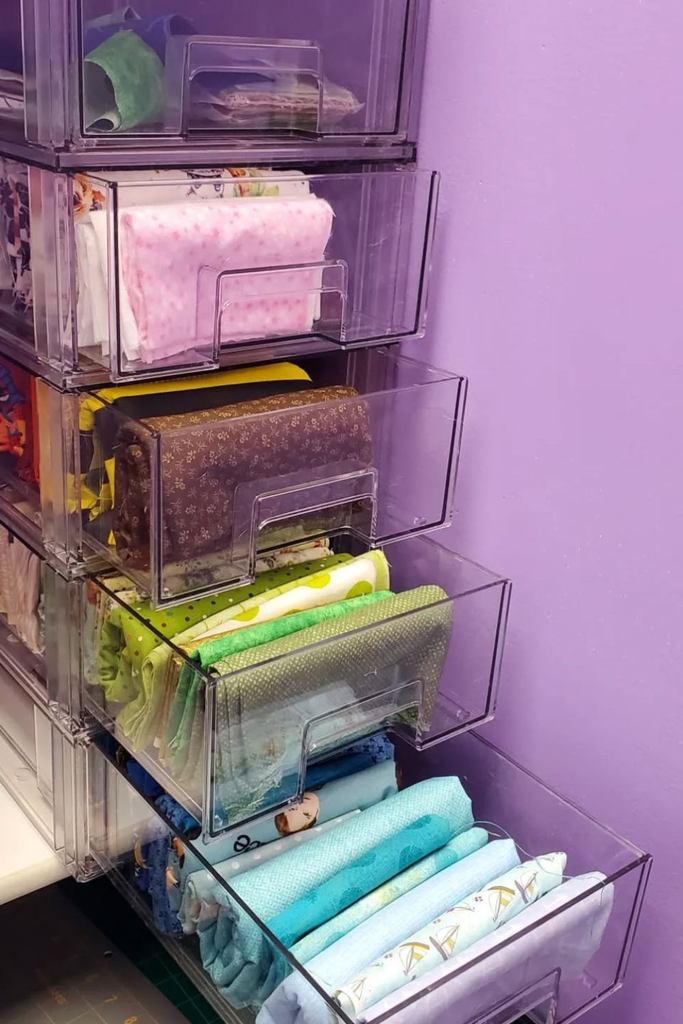
Clear acrylic drawers are a practical choice when I want compact storage with excellent visibility.
Because the drawers are transparent, I can quickly identify fabric by color and size without pulling everything out.
I like using deeper drawers for folded pieces and shallower ones for scraps, trims, and small project components.
Vertical drawer storage can be particularly helpful in narrow craft areas because it uses height instead of spreading storage across the floor.
Tiny Fabric Cubes
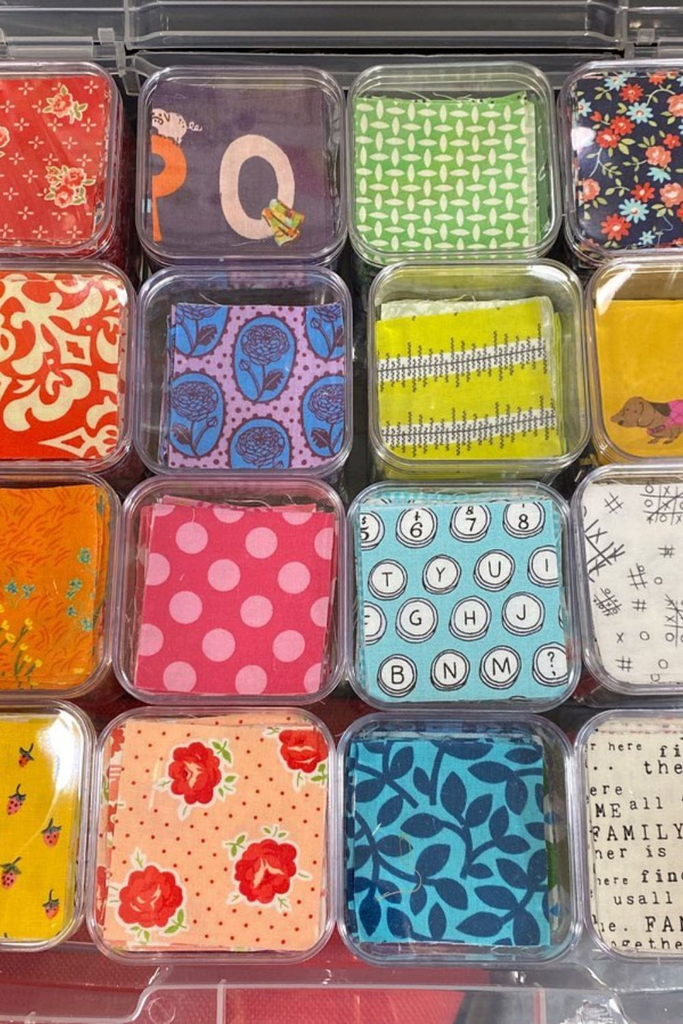
Small lidded containers are ideal for the little pieces that tend to disappear inside larger fabric bins.
I can use them for fabric swatches, tiny scraps, applique pieces, samples, or prepared components for a specific project.
Clear lids make it easier to identify the contents, while stackable shapes keep these small containers from taking over a drawer.
This is one of the systems I would choose when precision matters more than storing large amounts of fabric at once.
Vertical Bar Rack
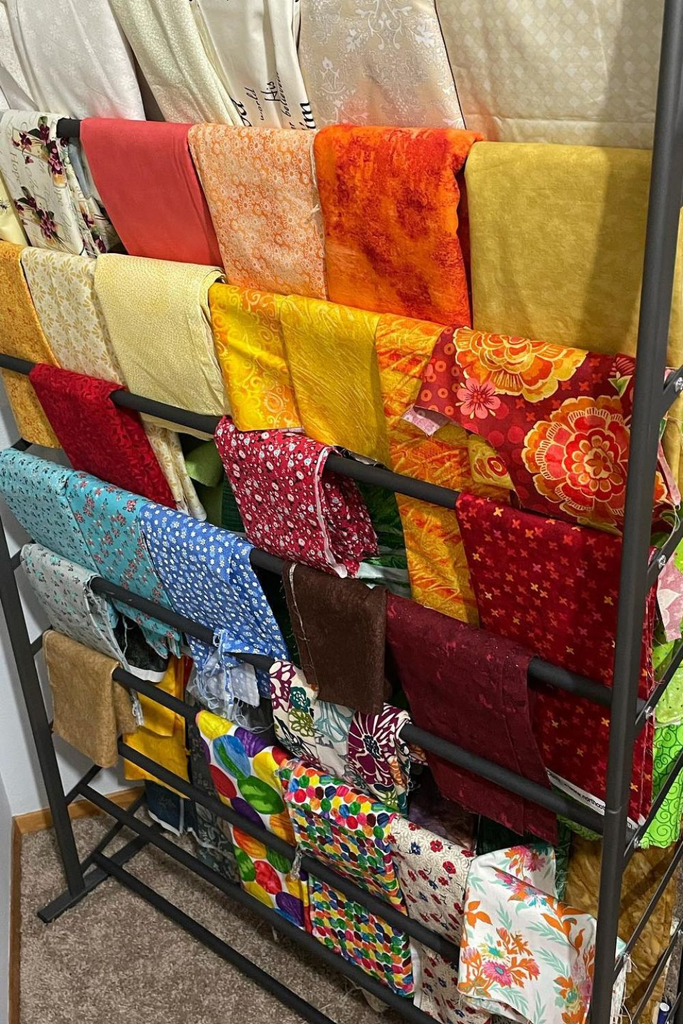
A vertical rack with horizontal bars gives me another way to use wall space.
Instead of folding every piece, I can carefully drape selected fabrics over the bars so the colors and patterns remain visible.
This works best for fabrics that I use regularly and want to grab quickly. It can also create an attractive display when the materials are arranged by color.
I would avoid overcrowding the rack because too many layers can make the fabric difficult to remove and may create unnecessary creases.
Rolling Cart System
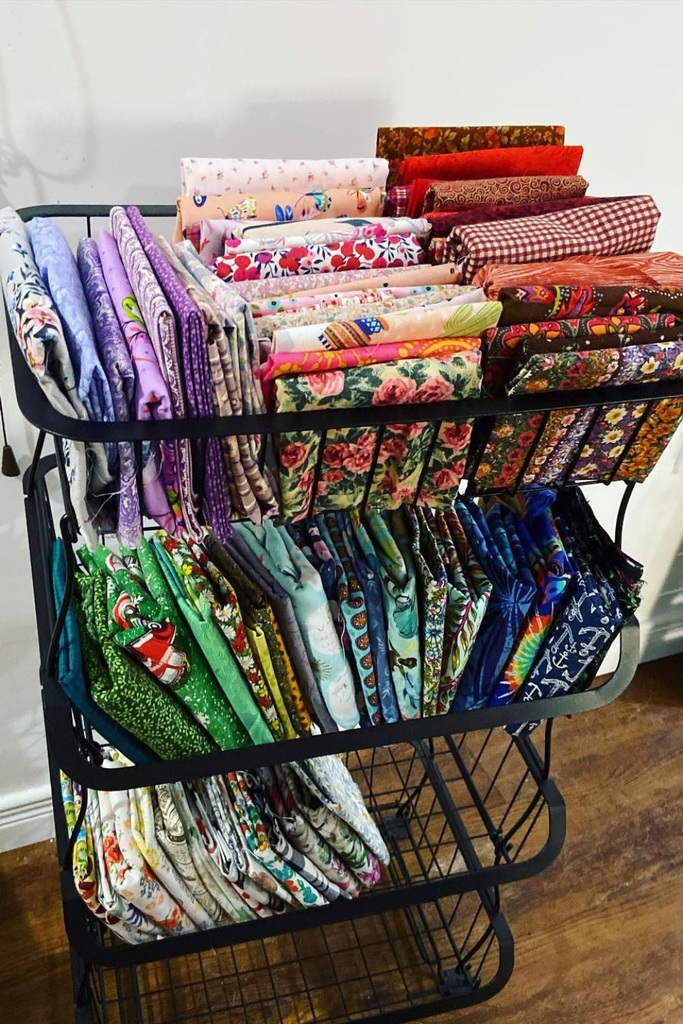
A slim rolling cart is one of the easiest storage solutions for a small sewing area.
I can use the different levels for separate fabric categories and roll the entire cart next to my sewing machine when I’m working.
When the project is finished, I can move it back against a wall or into a closet.
This setup is especially helpful when I don’t have a permanent craft room because the cart can serve as mobile storage rather than another large piece of furniture.
Pro Tip: Keep one cart section reserved for current projects. This prevents unfinished work from getting mixed into your main fabric collection.
Narrow Shelf Tower
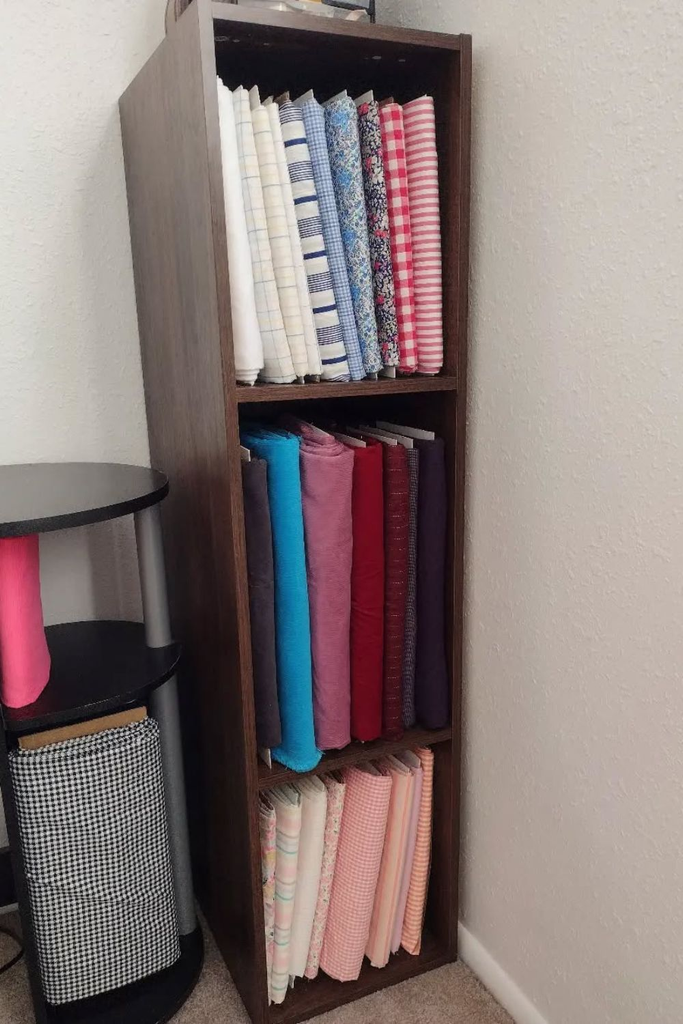
A tall, narrow shelving unit can make use of an awkward corner that might otherwise remain empty.
I can stand larger folded fabrics or fabric bolts vertically and organize them by color, type, or project.
The vertical arrangement keeps the footprint small while giving me several levels of storage.
This is a useful choice for apartments, small craft rooms, and other spaces where width is limited but ceiling height is available.
Angled Bolt Shelf
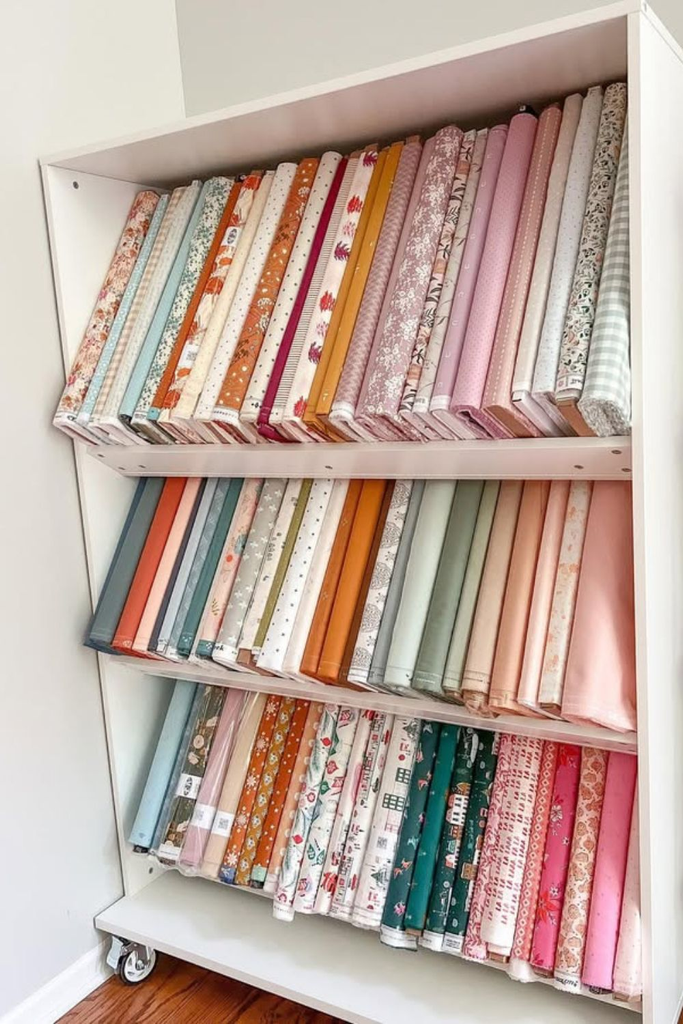
For anyone who stores fabric on bolts, an angled shelf can make the collection easier to browse.
I can arrange bolts by color, fabric type, or intended project and keep the edges facing outward so I can identify them quickly.
The angled arrangement also gives the storage a more professional appearance similar to the way fabric is displayed in some sewing shops.
If the unit has casters, I can move it when rearranging the room or creating more working space.
Glass-Front Cabinet
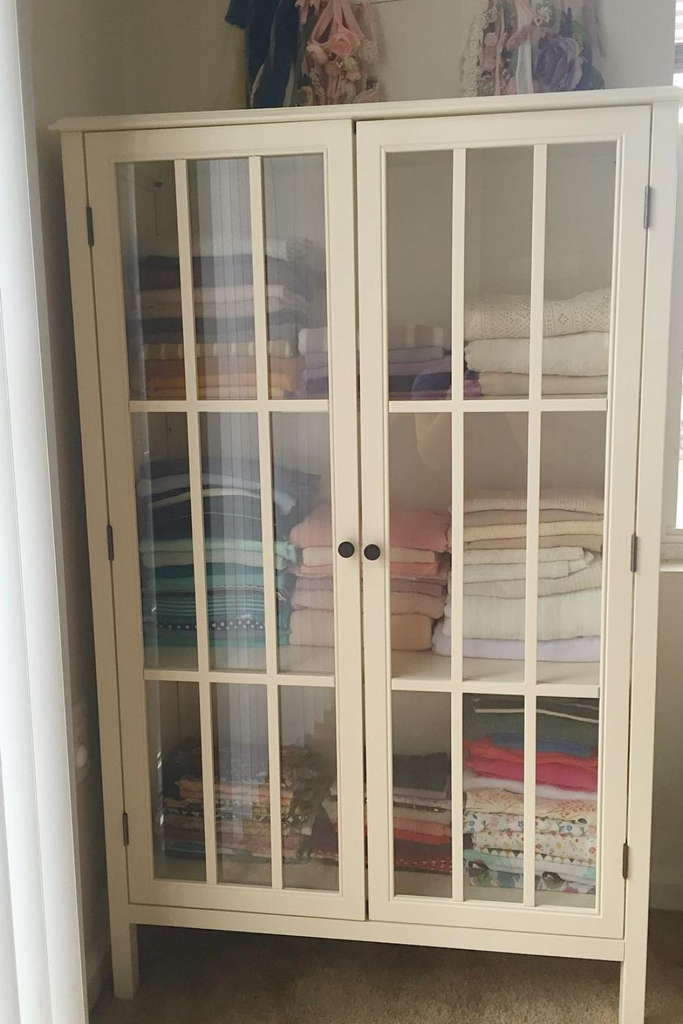
A glass-front cabinet gives me the visibility of open shelving while adding a layer of protection.
I can fold fabric neatly and arrange it by color or texture behind the doors. The glass allows me to see the collection without leaving everything exposed.
This style works particularly well when the craft room is part of another living area because the cabinet can look more like regular furniture.
I would reserve the most attractive fabrics for the visible shelves and keep less-used supplies in closed sections.
Compact Closet Tower
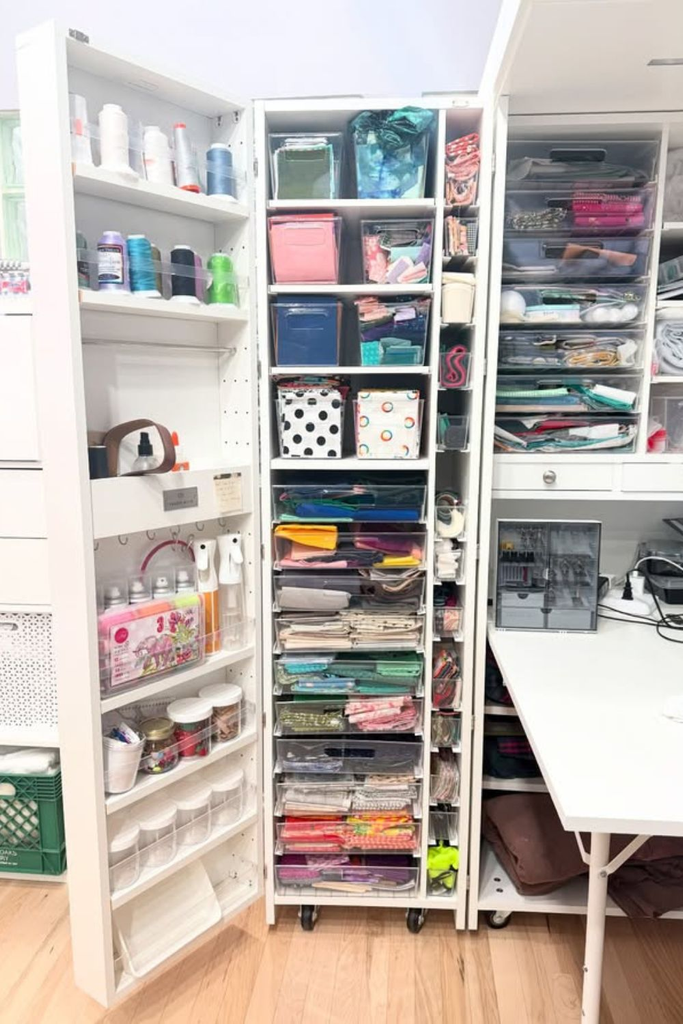
A tall storage tower can make a narrow closet or unused corner much more useful.
I can use shallow cubbies for folded fabric, drawers for small supplies, and bins for projects or materials that I don’t need every day.
Adding casters makes the unit easier to move when I need to clean or reorganize the room.
For a small workspace, I like this approach because it combines several storage functions without requiring a wide piece of furniture.
Read this next: How to Organize Kitchen Cabinets
Frequently Asked Questions
What is the best way to store fabric?
I find that folding fabric neatly and sorting it by color, type, or size makes it easiest to manage. Shelves, drawers, and clear bins all work well.
How do I store fabric in a small space?
I recommend using vertical shelves, rolling carts, under-desk cubes, or narrow storage towers. These options use height without taking up much floor space.
Should fabric be stored in plastic bins?
Yes, plastic bins can protect fabric from dust and moisture. I prefer clear bins because I can see the contents without opening every container.
How should I organize fabric scraps?
I sort scraps by color, size, or project and keep them in smaller labeled bins or drawers. This keeps tiny pieces from getting mixed with larger fabric cuts.
Conclusion
I’ve found that fabric storage works best when the system matches the way I actually sew and craft. A beautiful shelving setup isn’t helpful if I have to dig through every stack to find one piece of fabric.
Before buying containers, I recommend sorting the collection into broad categories and deciding which fabrics need to stay visible. From there, I can choose shelves, drawers, baskets, bins, carts, or cabinets based on the available space.
I also try to leave some room for future purchases. Fabric collections tend to grow, and a storage system with no spare capacity can become frustrating very quickly.
The goal isn’t to create a perfect-looking craft room. For me, the real win is being able to see what I own, put everything back easily, and reach for my fabric without creating another pile of clutter.


2 Comments