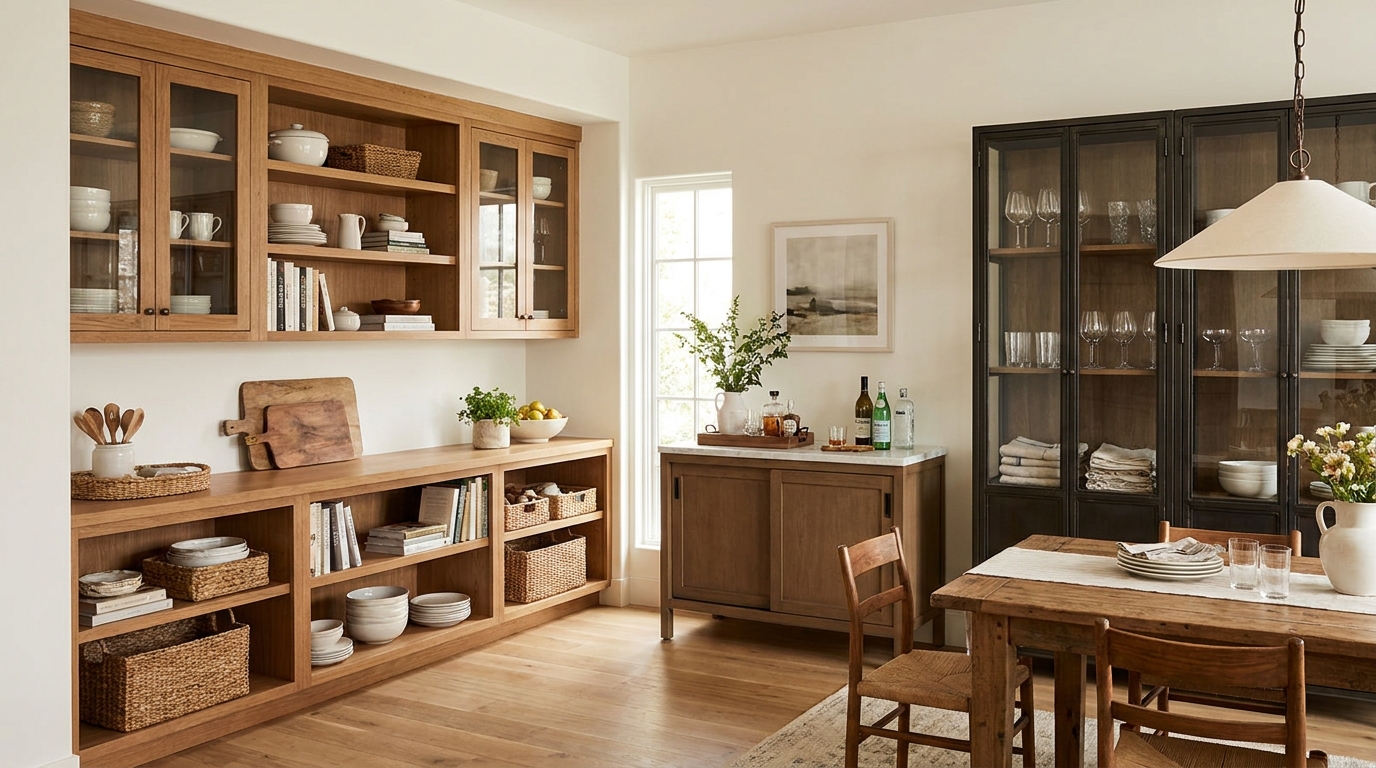
26 Dining Room Storage Ideas for 2026
When I plan dining room storage, I look at the room’s layout, the items that need a home, and how the space is used every day. A slim cabinet might work better than a wide sideboard in a narrow room, while a built-in storage wall could be useful for a household that regularly hosts family dinners.
These 26 dining room storage ideas cover built-in cabinetry, glass-front cabinets, beverage stations, open shelving, vintage furniture, and storage benches. I’ll also explain what to measure, how to choose between open and closed storage, and which safety details to check before installing cabinets or adding furniture.
I share 26 dining room storage solutions that help organize dinnerware, serving supplies, linens, glassware, books, and entertaining essentials without unnecessarily crowding the room. Options include slim china cabinets for small spaces, sideboards for everyday serving needs, full-wall cabinetry for larger collections, and storage seating for dining nooks.
Save this for later
Table of Contents
The right choice depends on your available wall space, ceiling height, furniture placement, and daily routine. Before buying or installing anything, measure the cabinet footprint, account for handles and door swings, and check how chairs move when people sit down or stand up. A practical storage arrangement should make meals easier to manage while leaving the dining area comfortable to use.
Key Takeaways
- Use space efficiently: Wall-mounted cabinets, narrow furniture, and vertical storage can reduce the need for extra floor-standing pieces.
- Match storage to your routine: Keep everyday dishes and linens accessible, with seasonal or occasional-use items stored farther away.
- Choose open or closed storage carefully: Closed cabinets hide clutter, while open shelves and glass-front doors provide visibility but require more attention to organization.
- Measure the whole working area: Check cabinet depth, drawer extensions, chair movement, and walking paths before committing to a layout.
- Consider furniture with more than one purpose: A storage bench or a sideboard with a serving surface may be more useful than several separate pieces.
- Plan installations safely: Follow manufacturer instructions, check wall construction, and secure tall or top-heavy furniture as recommended.
Related article: 26 Narrow Storage Ideas for 2026
How I Choose Dining Room Storage
I start by listing the items that need a home and separating everyday essentials from things used only for holidays or special gatherings. Plates, drinking glasses, napkins, and frequently used serving utensils should be easy to reach. Extra platters, seasonal decorations, and spare linens can occupy less accessible shelves.
Next, I assess the room itself. Wall width, cabinet depth, ceiling height, windows, doorways, and the space around the dining table all affect which furniture will fit. A narrow dining room may need a shallow cabinet, while an open-plan room might accommodate a sideboard or a coordinated storage wall.
I also consider whether the room serves other purposes. If it doubles as a breakfast area or workspace, the storage may need a dedicated place for coffee supplies or paperwork. Households that prefer quick cleanup may benefit from closed cupboards, while people who use the same dishes daily might appreciate open shelving.
Finally, I check installation requirements, furniture stability, and maintenance. Wall-mounted units need appropriate fixings, permanent built-ins may be restricted in rental properties, and visible shelves require regular dusting. I want the finished arrangement to support comfortable meals, not simply fill an empty wall.
How Do I Organize a Dining Room with Limited Space?
When space is tight, I focus on removing unnecessary items and assigning a clear home to everything that belongs in the dining room. Adding more furniture is not always the answer. Sometimes the better solution is to use an existing cabinet more effectively or replace a bulky piece with a slimmer one.
I follow a simple process:
- Remove items that do not belong: Move paperwork, household supplies, and unrelated belongings to their proper storage areas.
- Separate daily and occasional items: Keep frequently used dishes and linens close at hand, and store special-occasion pieces elsewhere in the room.
- Measure the usable space: Check the wall, floor area, ceiling height, and any restrictions created by windows or doorways.
- Choose multifunctional furniture: Consider a sideboard with a serving surface or a bench with suitable storage underneath.
- Test the layout: Make sure chairs can move, doors can open, and people can pass around the table without difficulty.
I also look for underused corners and wall areas before bringing in another freestanding cabinet. A shallow cupboard can sometimes provide enough space for glassware without taking up as much room as a deep storage unit.
Pro Tip: Measure the room with the dining chairs pulled out as they would be during a meal. Use painter’s tape to mark the proposed cabinet footprint and, where practical, the door or drawer opening area. Walk around the table before buying anything to see whether the arrangement will work in everyday use.
1. Built-In Wall Storage
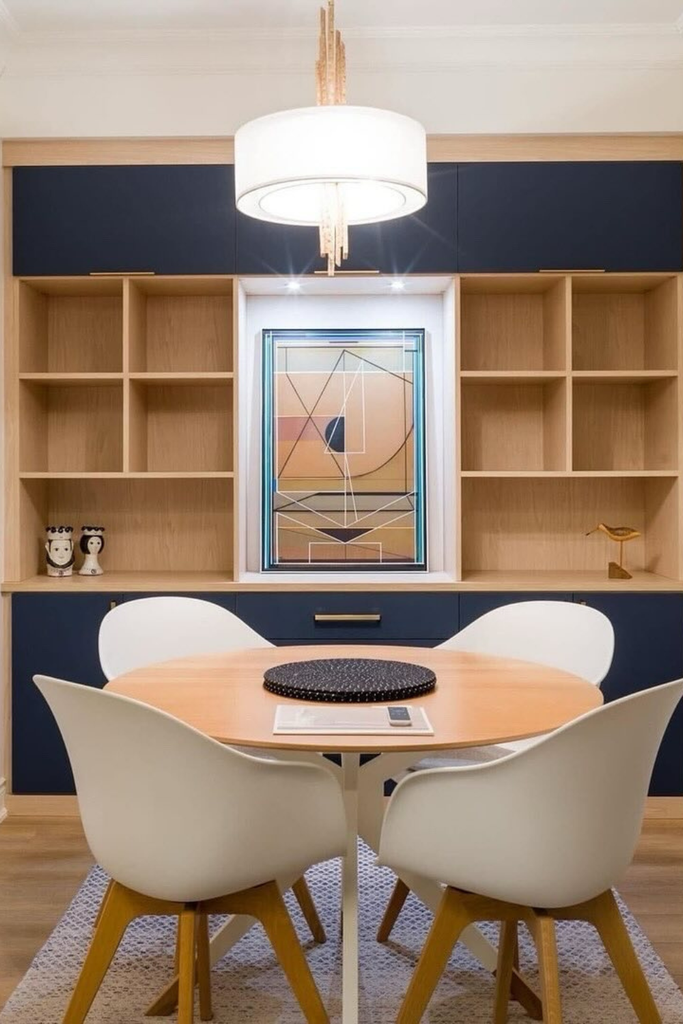
Built-in wall storage is useful when I want cabinetry to fit a particular wall rather than work around the dimensions of a freestanding unit. It can make use of awkward wall sections and provide storage that feels integrated with the dining room.
A combination of closed cupboards and open shelves gives each section a clear job. The cupboards can hold tablecloths, serving utensils, and less attractive supplies, while the shelves can accommodate frequently used dishes or a few items worth displaying.
I would plan the cabinet layout around the actual contents instead of choosing shelf spacing by appearance alone. Measure the largest platters, serving bowls, and other pieces first so the finished storage can accommodate them without awkward stacking.
Built-ins require more planning than movable furniture. Before drilling or cutting into a wall, check for concealed wiring and plumbing, confirm the wall construction, and review any rental restrictions. Follow the cabinet manufacturer’s installation requirements and seek professional help if the structure or fixing method is uncertain.
2. Glass Cabinet Storage
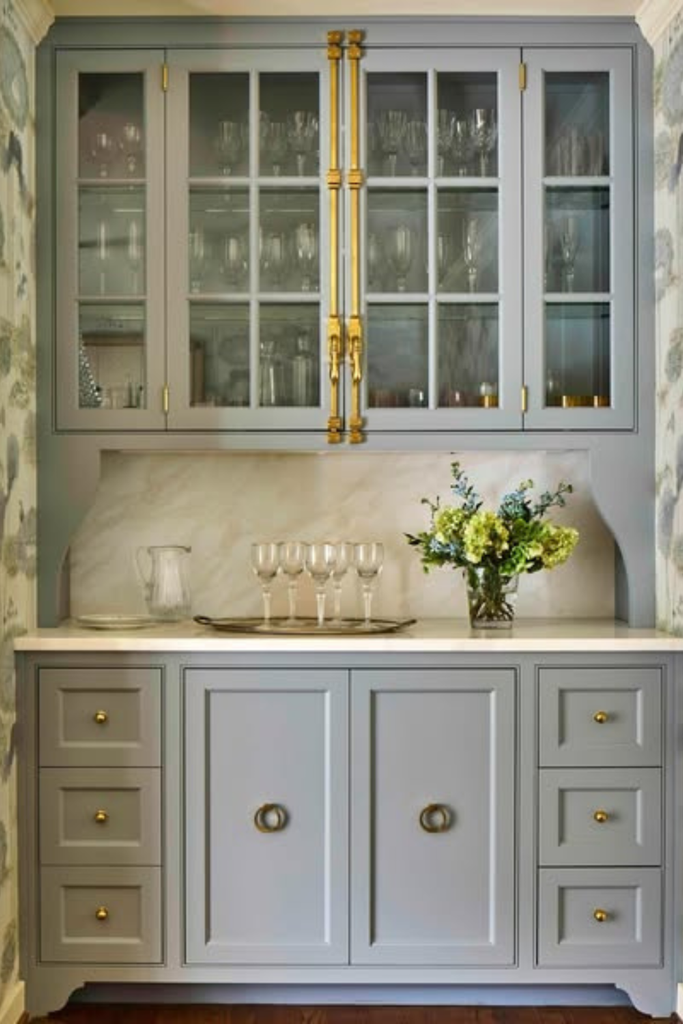
Glass-front cabinets work well when I want dinnerware protected behind doors but still easy to identify. They are particularly useful for glassware, cups, plates, and serving pieces that I reach for regularly.
The cabinet can have shallow shelves for glasses and smaller dishes, with deeper storage below for larger items. I would measure the height and width of the actual pieces, leaving enough room to remove them without knocking against neighboring dishes.
Glass doors reduce direct exposure to dust compared with open shelving, but they do not eliminate cleaning. Fingerprints and dust can still accumulate, and crowded shelves can make it difficult to see what is inside.
Before choosing a cabinet, check the shelf load limits and the stability of the whole unit. Glassware should sit securely on level shelves, and tall cabinets should be anchored as directed by the manufacturer. If interior lighting is planned, choose fixtures rated for the intended installation and arrange the wiring before the cabinet is fitted.
3. Full-Wall Storage
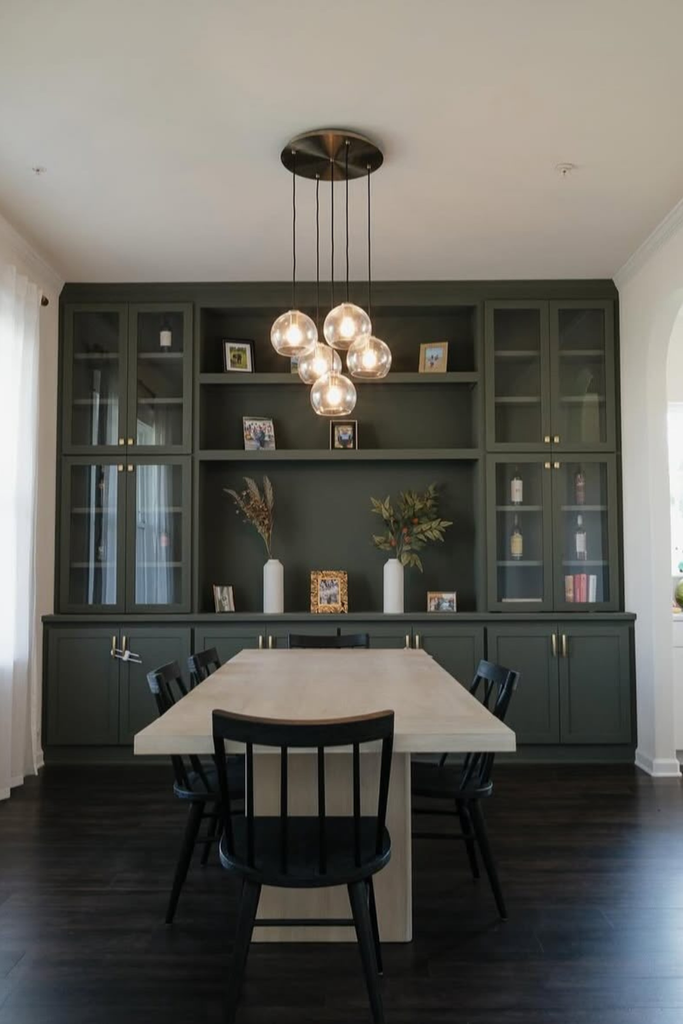
Full-wall storage is best suited to a dining room with a long, relatively uninterrupted wall. Instead of spreading cabinets around the room, this arrangement creates one coordinated place for dinnerware, linens, serving supplies, and display pieces.
I would plan the wall around both storage and meal preparation. A continuous serving counter can provide a place to arrange dishes before dinner, while cupboards beneath it keep supplies out of sight. Upper cabinets or shelves can be added where the wall height and room proportions allow.
The important distinction is that the entire wall functions as one organized area. Each section should have a purpose, such as serving, storing everyday dishes, or keeping occasional-use items. A large cabinet run is less useful if there is no convenient place to set down a platter or reach the things needed most often.
Before installation, mark the dining table’s position and check the available space around the chairs. Full-wall cabinetry can occupy a substantial part of the room, so the layout should leave enough space for people to move comfortably. Plan electrical work and any required wall preparation before the cabinetry is installed.
4. Display-First Storage
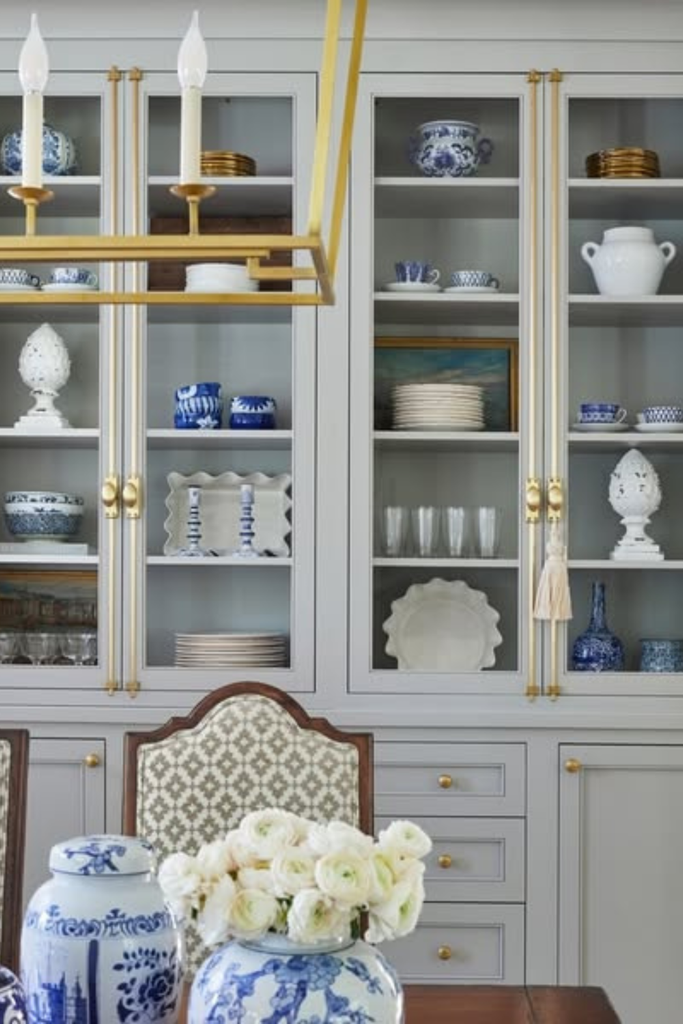
Display-first storage is for people who want selected dinnerware or serving pieces to be part of the room’s decor. Rather than filling shelves with anything that fits, I would decide which items deserve to remain visible and give those pieces enough space to be appreciated.
A glass-front cabinet or a set of open shelves can hold a favorite dish collection, a few serving bowls, or pieces already owned and used regularly. There is no need to purchase matching dishes simply to make the shelves look coordinated.
I would group related items and leave some space between them. Less attractive supplies, spare linens, and small accessories can go into closed storage so the display remains easy to maintain.
This approach works best when appearance and access are considered together. Items placed too tightly together are harder to remove and put back safely. Before arranging a display, check that shelves can support the weight and that heavier dishes are positioned securely at a convenient height.
5. Entertaining Storage Wall
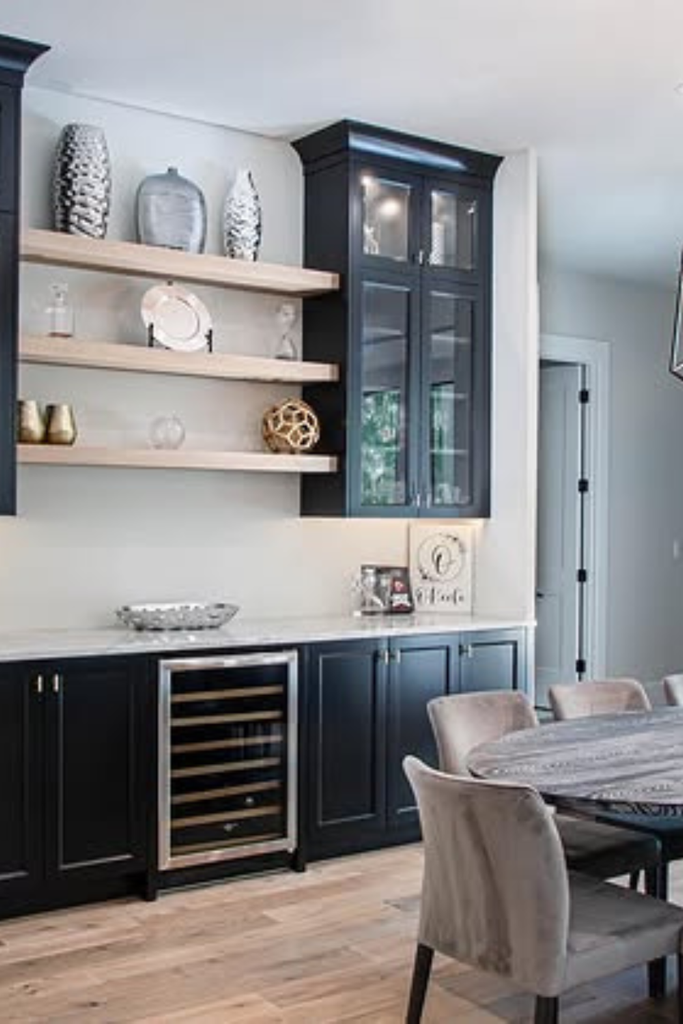
An entertaining storage wall is designed around hosting rather than everyday breakfast or routine meal preparation. It keeps serving platters, extra napkins, table runners, drink accessories, and special-occasion dishes close to the dining table.
I would organize the wall according to the order in which items are needed. Serving pieces and table linens could be stored near the serving surface, while less frequently used decorations could occupy a separate cupboard. This makes setting the table and clearing up easier when guests arrive.
A counter or other clear surface is especially useful for staging dishes before a meal. Open shelves can hold a small selection of frequently used entertaining supplies, while closed cupboards provide space for everything that does not need to be displayed.
If the dining room is near the kitchen, this arrangement can reduce unnecessary trips between rooms. I would still keep enough space around the table for chairs and serving traffic. If a beverage appliance is included, its ventilation, electrical requirements, and door clearance need to be checked separately.
6. Sideboard Cabinet Setup
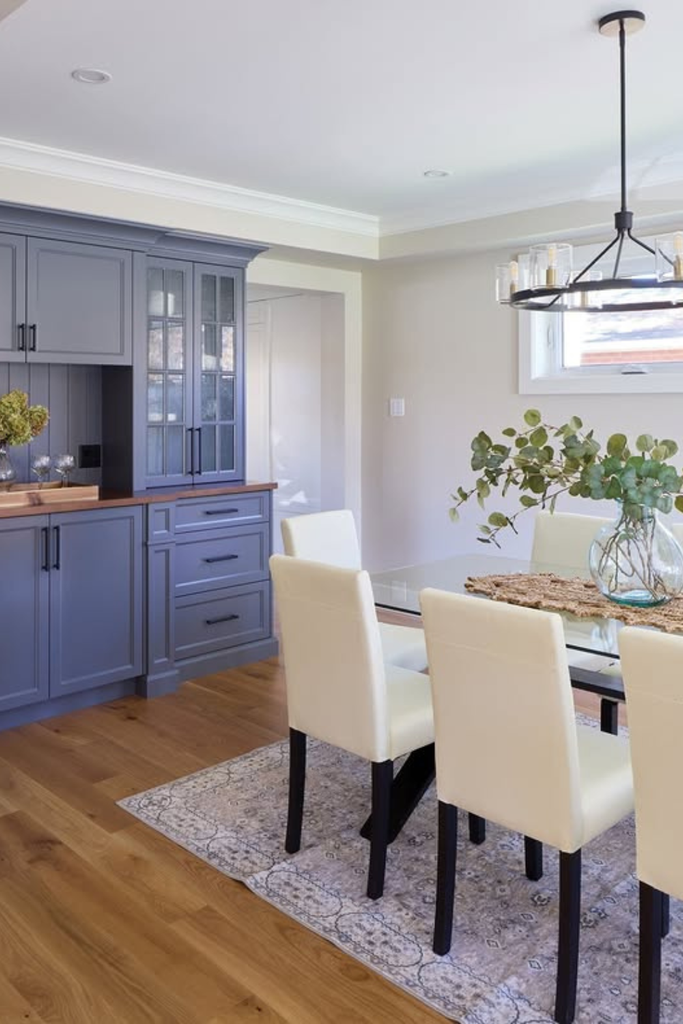
A sideboard is a practical choice when dining supplies need to stay close to the table but there is no reason to install a full wall of cabinetry. It is especially useful between the kitchen and dining area, where dishes and linens can be reached during meal preparation.
I would assign each part of the sideboard a particular job. Shallow drawers are useful for cutlery, napkins, placemats, and small table accessories. Larger cupboards can hold serving bowls, tablecloths, and platters that do not fit comfortably in drawers.
The top provides a convenient place to arrange dishes before a meal or set out serving items when guests arrive. It should not become a permanent landing spot for mail, bags, and unrelated household clutter.
Before purchasing a sideboard, measure its width and depth and check how the doors open. A unit may fit against the wall but still interfere with chair movement. Choose storage that holds the items you need without making the dining area difficult to navigate.
7. Slim China Cabinet
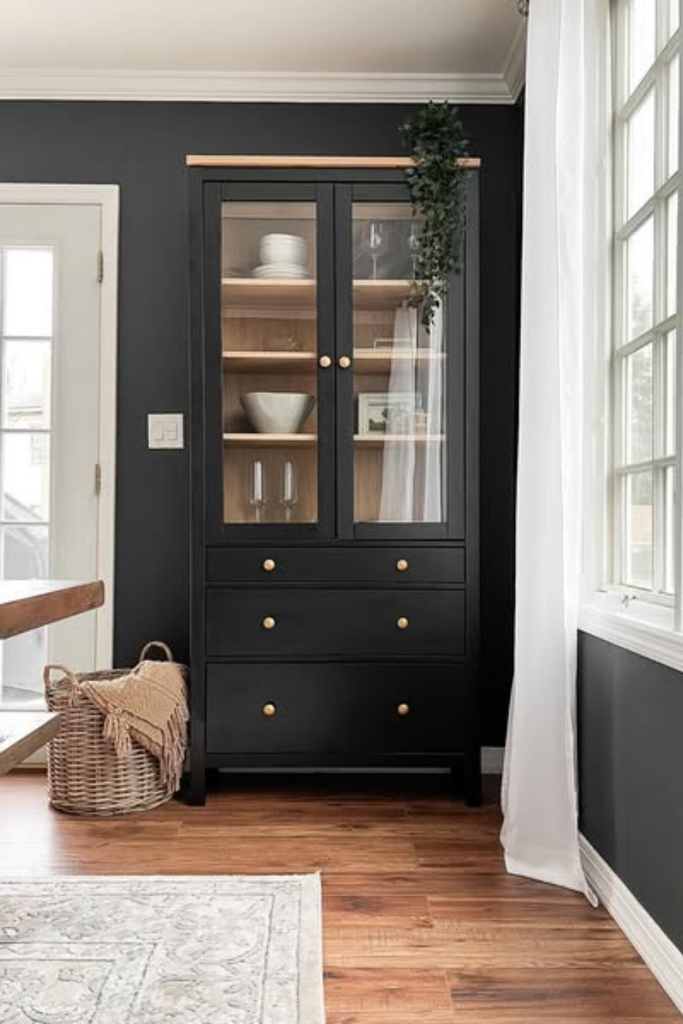
A slim china cabinet makes use of vertical space without requiring the width of a traditional sideboard. I would consider it for a narrow dining room, apartment, or dining nook where a wider cabinet would block a walkway or take up valuable floor space.
Look for a layout that suits the items you own. Glass-front upper shelves can hold plates, cups, and glasses, while lower drawers or cupboards can accommodate table linens and smaller serving accessories.
Check the cabinet’s depth, including handles and decorative trim. Also measure its height against the ceiling and any nearby windows or wall fixtures. A narrow cabinet is not automatically a good fit if its doors cannot open fully or it blocks access to another part of the room.
For tall or top-heavy models, follow the manufacturer’s anchoring instructions. Keep frequently used items within comfortable reach, and reserve high shelves for lightweight pieces that are needed only occasionally.
8. Bar Cabinet Niche
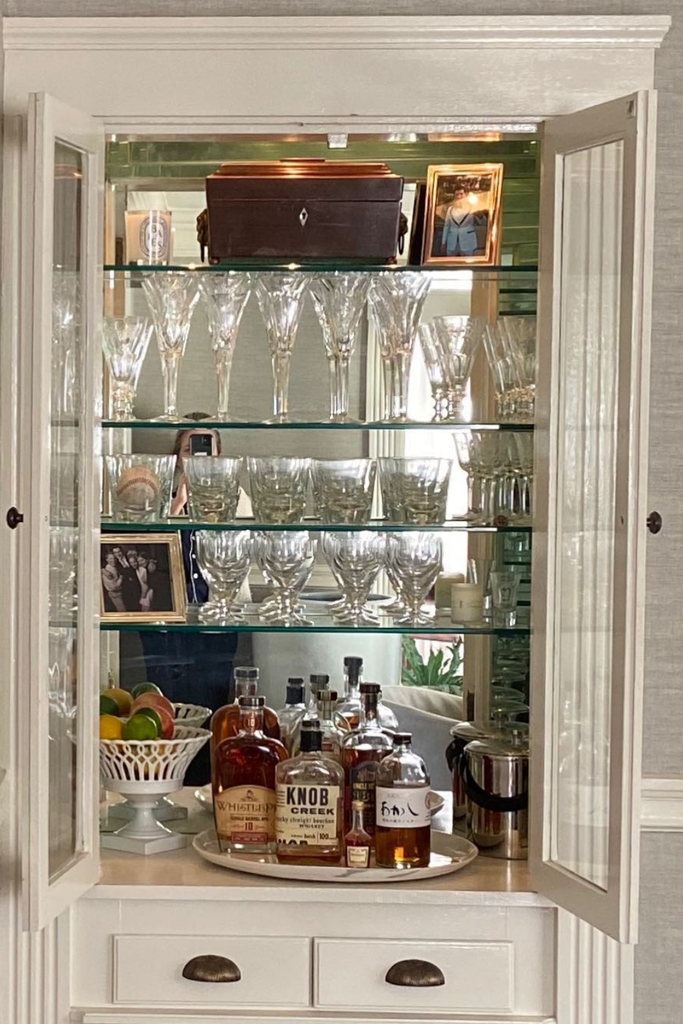
An existing recessed wall area can provide a useful place for a compact bar cabinet without introducing another piece of furniture into the room. I would first check whether the niche has enough depth and width for the intended shelves, doors, and stored items.
Glass shelves can hold glasses or small serving pieces, while a closed cupboard below can store coasters, napkins, and bottle openers. A mirrored backing is another option, although it will need regular cleaning to remove fingerprints and marks.
The key is to work with the actual recess rather than assume a standard cabinet will fit. Measure the opening at several points, since walls and older built-in spaces are not always perfectly square. Check door swing and make sure the niche will not obstruct an adjoining hallway or doorway.
If the niche is being created as part of a renovation, check for concealed services before cutting into the wall. For enclosed lighting or an appliance, confirm the installation requirements before finalizing the cabinetry.
9. Symmetrical Storage Run
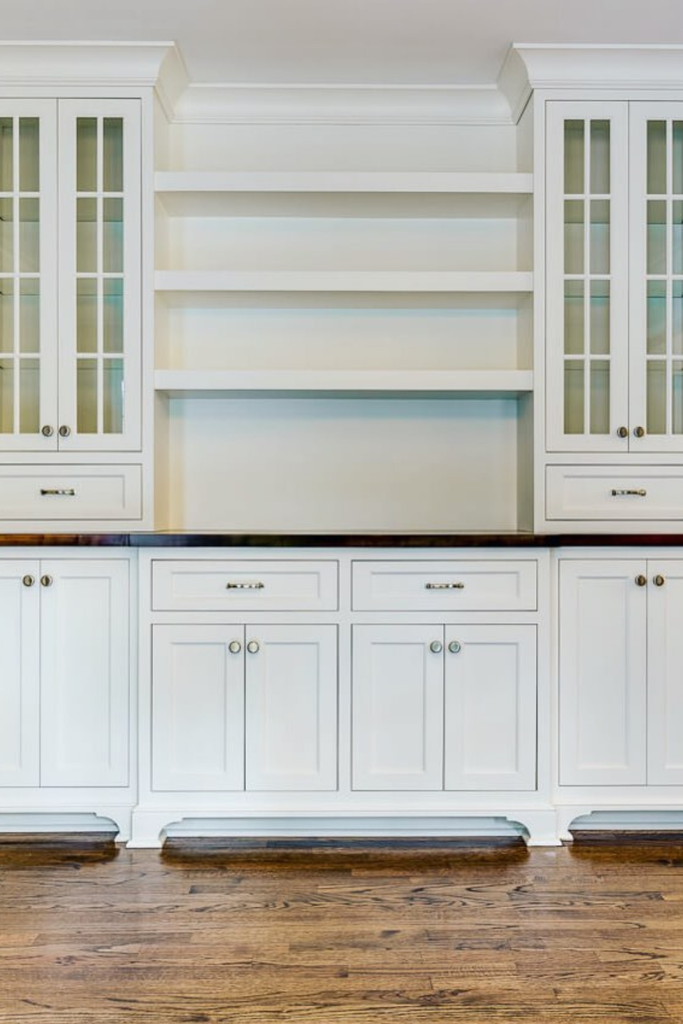
A symmetrical storage run uses matching or visually balanced cabinets along an uninterrupted wall. It can work well in a dining room where the available width allows a central serving area with storage on either side.
Matching cupboards can create a consistent appearance, but their interiors do not need to be identical. One side might hold dinnerware while the other accommodates linens or serving accessories. I would organize each section according to its contents rather than sacrifice useful storage just to achieve perfect symmetry.
The center can be used for a mirror, artwork, or a serving surface, provided there is enough room for the items needed during a meal. Keep the arrangement proportional to the wall and the dining table.
Before installation, measure the full wall and mark the cabinet positions. Check that the units will not cover switches, interfere with doorways, or leave awkward gaps around windows. Built-in cabinets should be fixed according to the wall construction and manufacturer’s requirements.
10. Fireplace Storage Moment
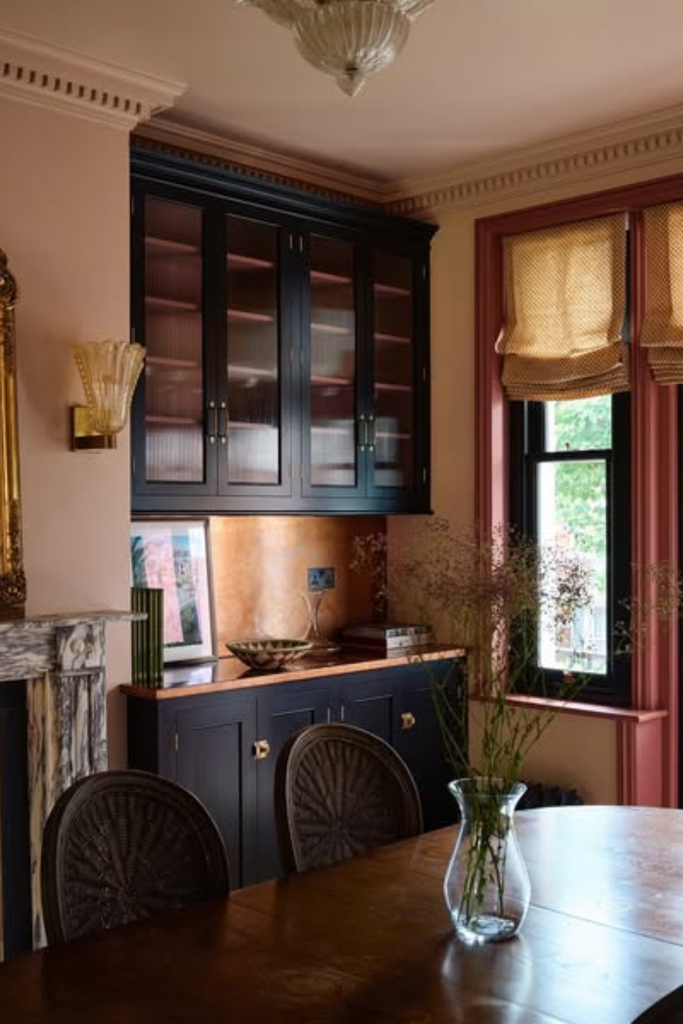
The space beside a fireplace may offer room for built-in storage, but I would treat safety as the first consideration rather than starting with the cabinet design. The appropriate arrangement depends on the type of fireplace, its installation instructions, and the conditions around it.
Where permitted, storage can hold table linens, serving dishes, and other dining essentials. Closed cupboards keep everyday supplies out of sight, while a small display section can hold selected items without filling the entire wall.
Before planning cabinetry, check the fireplace manufacturer’s requirements for clearances, combustible materials, ventilation openings, and access panels. Heat exposure and the suitability of nearby materials also need to be considered. A cabinet that physically fits beside the fireplace is not necessarily an appropriate installation.
If the requirements are unclear, get advice from a qualified professional familiar with that fireplace type. Wall sconces, shelf lighting, or other electrical fixtures should be positioned according to their own installation requirements and the fireplace’s safety instructions.
11. Pantry-Style Storage
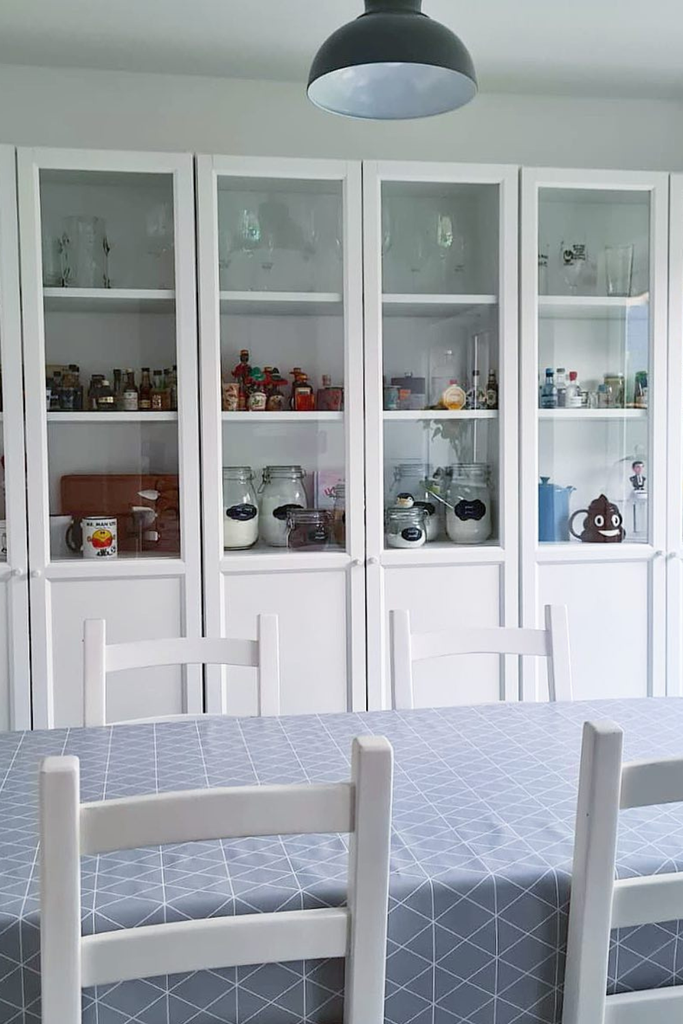
Pantry-style storage is useful when the dining room needs to hold more than plates and linens. It can accommodate packaged snacks, spare tableware, serving supplies, and small appliances used during meals.
Tall cabinets with adjustable shelves allow the arrangement to change as household needs change. Store frequently used items at accessible heights and reserve higher shelves for lighter items that are used occasionally. Heavy appliances and large serving pieces belong on shelves designed to support their weight.
When storing food, use clean, dry containers suitable for the intended contents and follow the packaging’s storage instructions. If packaged food is transferred to another container, retain the ingredient and allergen information so it remains available when needed. Keep food separate from cleaning products and other household chemicals.
An ordinary dining room cupboard is not suitable for every food item. Refrigerated or otherwise temperature-sensitive foods must remain in appropriate storage. I would also avoid overcrowding tall cabinets, since items should be easy to identify and remove without pulling other containers down.
12. Beverage Storage Center
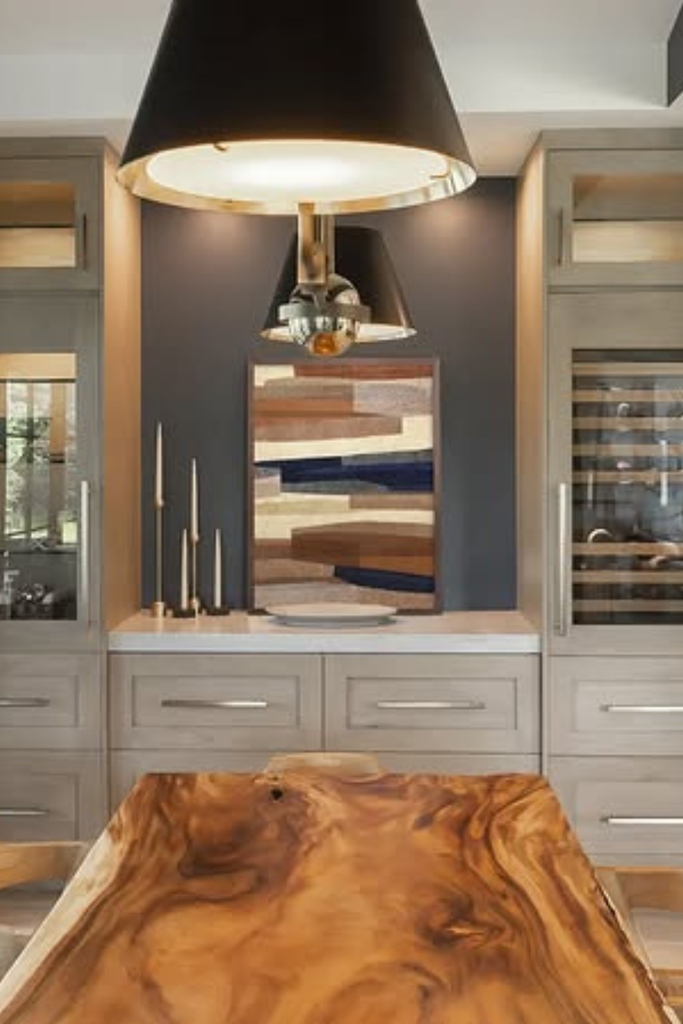
A beverage storage center provides a dedicated place for preparing and serving drinks. Unlike a compact bar niche, it is planned as a complete working station with a useful counter, organized storage, and potentially a suitable beverage refrigerator.
The counter should have enough clear surface area to set down cups, glasses, or a serving tray. Drawers and cupboards can hold the accessories that belong at the station, while upper shelves provide space for frequently used items.
If a refrigerator is part of the plan, confirm that the selected model is designed for the proposed installation. Check the required ventilation clearances, electrical supply, maintenance access, appliance dimensions, and door-opening space. Not every beverage refrigerator is suitable for full enclosure inside cabinetry.
I would also consider who uses the station and how often. A household that prepares drinks daily may need a different arrangement from one that uses the area mainly when entertaining. Keeping the supplies together makes the counter easier to use and simpler to clear afterward.
13. Library Wall Storage
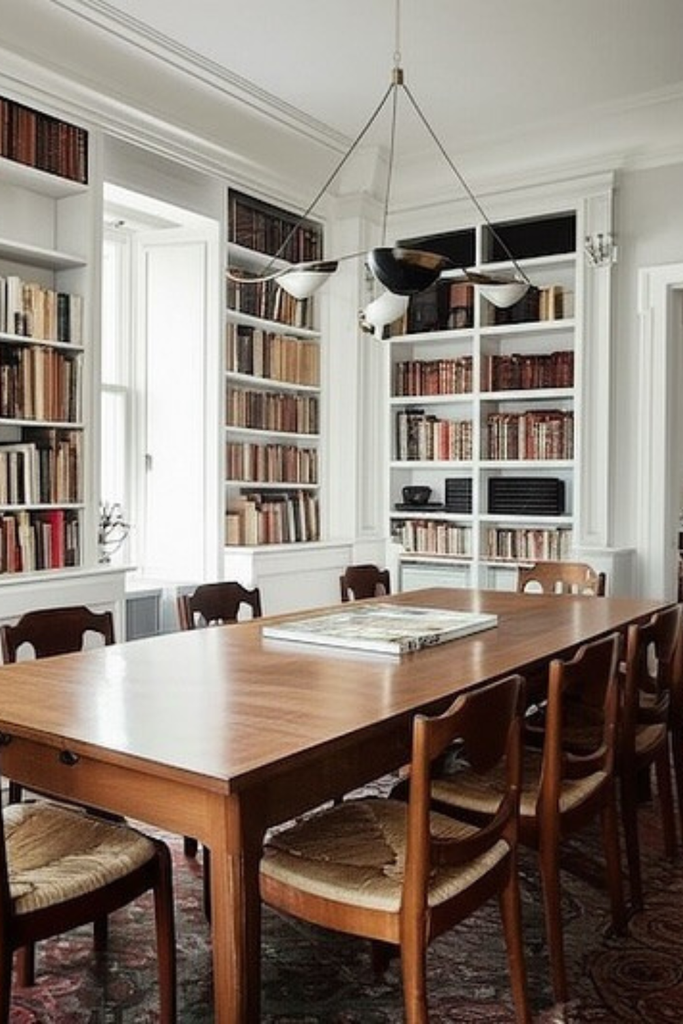
A library wall combines books with selected dining essentials, making it useful for a home where cookbooks, reference books, and dinnerware need to share space. I would divide the shelving into separate zones instead of mixing books and serving pieces without a plan.
Cookbooks and reference materials can occupy one section, while dishes and decorative pieces belong in another. Frequently used books and dinnerware should sit at accessible heights, with less-used items stored farther away.
Shelf depth needs to suit the actual contents. Oversized cookbooks and serving platters may need more room than small paperbacks or cups. Check the shelf’s rated load capacity, particularly when storing heavy books or ceramic dishes, and place heavier items on adequately supported shelves.
I would also consider how the shelves will be reached. Items should be accessible without stretching over the dining table or climbing on unstable furniture. Tall bookcases and shelving units should be secured as recommended by the manufacturer, especially when they carry heavy contents.
Also read: 15 Scarf Storage Ideas for 2026
14. Balanced Beverage Storage
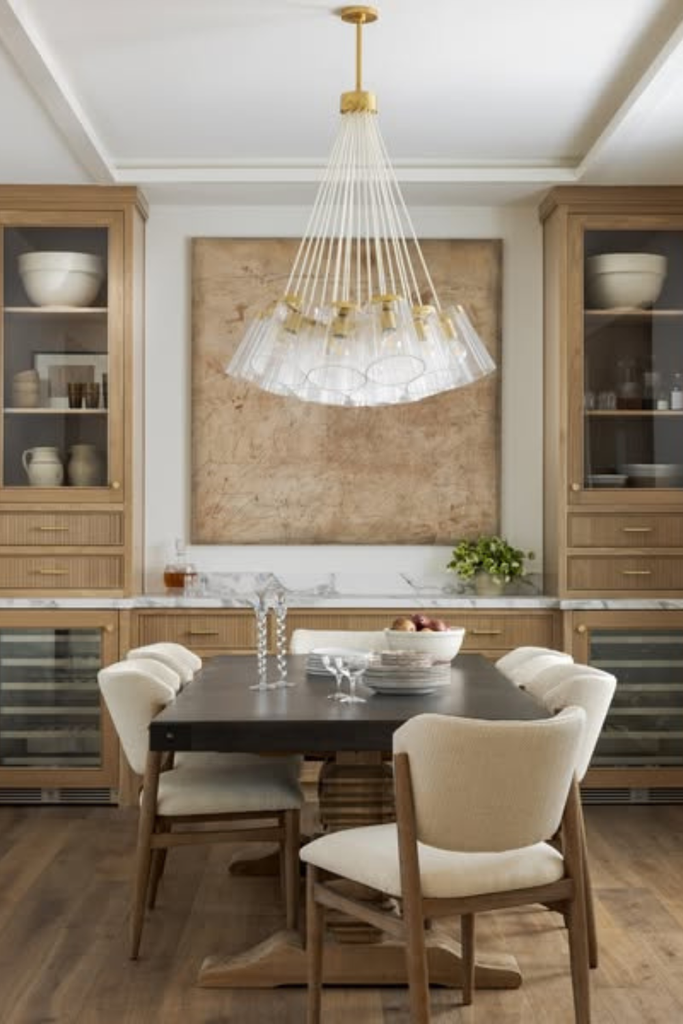
Balanced beverage storage is a built-in arrangement with a central serving counter and storage on both sides. It differs from a complete beverage center because its main focus is a coordinated layout rather than adding every possible drink-preparation feature.
Matching side cabinets can hold glasses, serving accessories, and other entertaining supplies. The central counter stays available for arranging drinks or setting down a tray, while lower cupboards provide space for items that do not need to remain visible.
The storage on each side can be adjusted to suit actual needs. If one side requires more drawers and the other needs shelves, the exterior can still look balanced without forcing both interiors to be identical.
Before settling on the layout, check the width of the central work surface and the full opening range of the cabinets. If an appliance is included beneath the counter, confirm that it fits the intended installation and does not prevent nearby drawers or doors from opening.
15. Low Sideboard Storage
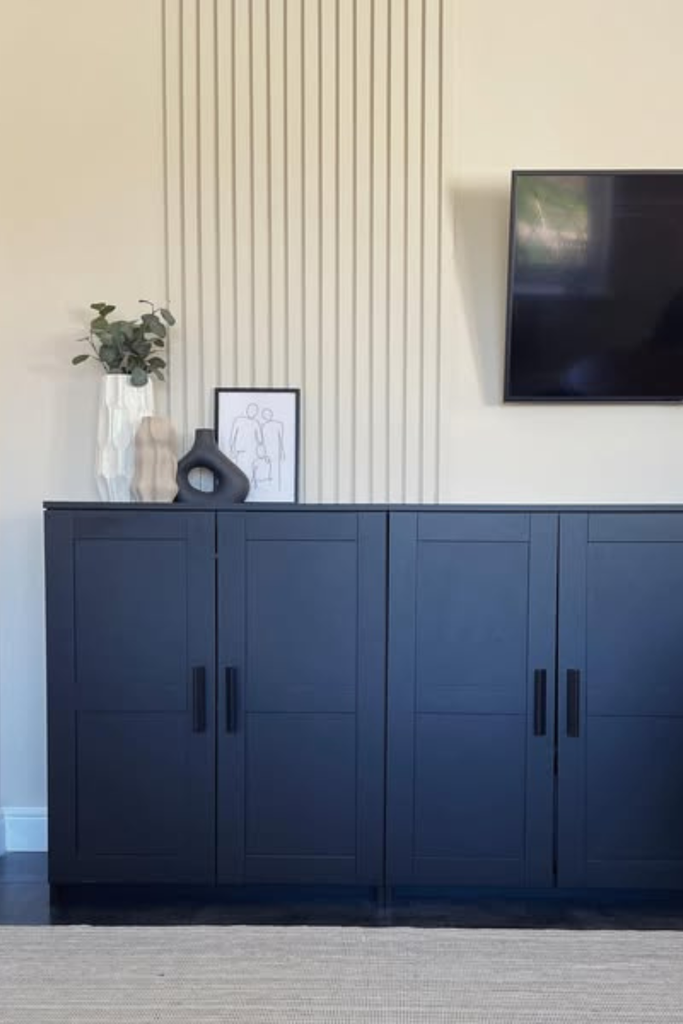
A low sideboard is useful when I want to add storage without covering too much of the wall. Its lower profile can help preserve a sense of openness in a compact dining room or an open-plan living and dining area.
This option is especially useful when the room does not need a large display cabinet. The sideboard can hold linens, placemats, serving pieces, and other essentials behind closed doors, while the wall above remains available for artwork or a mirror.
I would pay attention to the relationship between the sideboard, the table, and the wall space above it. A cabinet that is too deep can interfere with chair movement, while one that is too small may not hold enough to justify the floor space it occupies.
The top can provide a temporary serving surface, but it should remain useful rather than becoming crowded with permanent decorations. Choose a cabinet with enough internal space for the items you actually need to store.
16. Vintage Hutch Storage
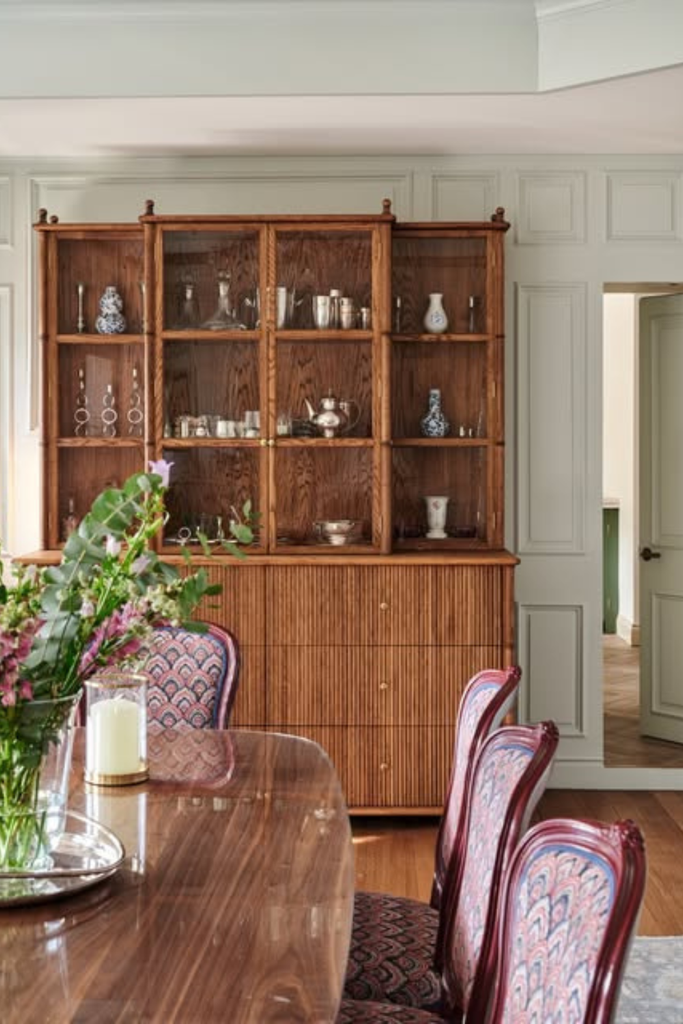
A vintage hutch can provide useful storage while allowing existing furniture to remain part of the dining room. I would consider secondhand furniture when a suitable piece offers the right dimensions, shelf arrangement, and usable storage for dinnerware and linens.
Many hutches have open or glass-front shelves above and closed cupboards or drawers below. The upper section can display selected dishes, while the lower storage keeps tablecloths, serving utensils, and less attractive supplies out of sight.
Before buying a secondhand hutch, inspect its joints, hinges, drawer runners, shelves, and back panel. Look for signs of moisture damage, pests, musty odors, loose connections, and previous repairs that may affect stability. Check whether the shelves can support the weight of the dishes you plan to store.
Measure the piece carefully, including its depth and door swing. If it is tall or top-heavy, secure it according to appropriate installation guidance. A vintage finish may look appealing, but the furniture still needs to be sound, stable, and practical for everyday use.
17. Floor-to-Ceiling Cabinets
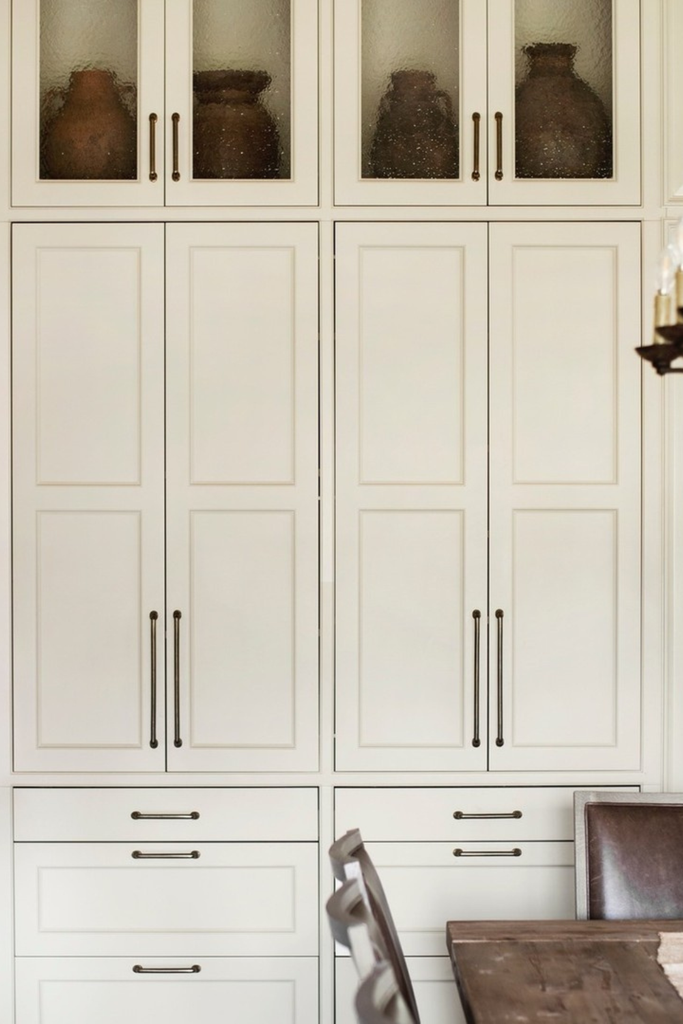
Floor-to-ceiling cabinets are useful when a dining room needs to store a large collection of dishes, serving pieces, seasonal supplies, or other household essentials. Their main advantage is making use of available wall height rather than relying only on low furniture.
I would plan the interior around how often each item is needed. Everyday plates, bowls, and linens belong in accessible sections, while seasonal decorations and occasional-use serving pieces can occupy higher shelves. Heavy items should stay on shelves that are designed to carry their weight and can be reached safely.
Measure the ceiling height at the installation site and check for uneven floors, trim, light fittings, and other obstructions. Full-height cabinets may require careful installation to fit securely, and the wall must be suitable for the intended fixing method.
This design is most useful when the wall can accommodate the cabinet depth without narrowing the route around the table. If the room is small, a shallower upper section or a less visually heavy finish may be worth considering.
18. Wine Storage Feature
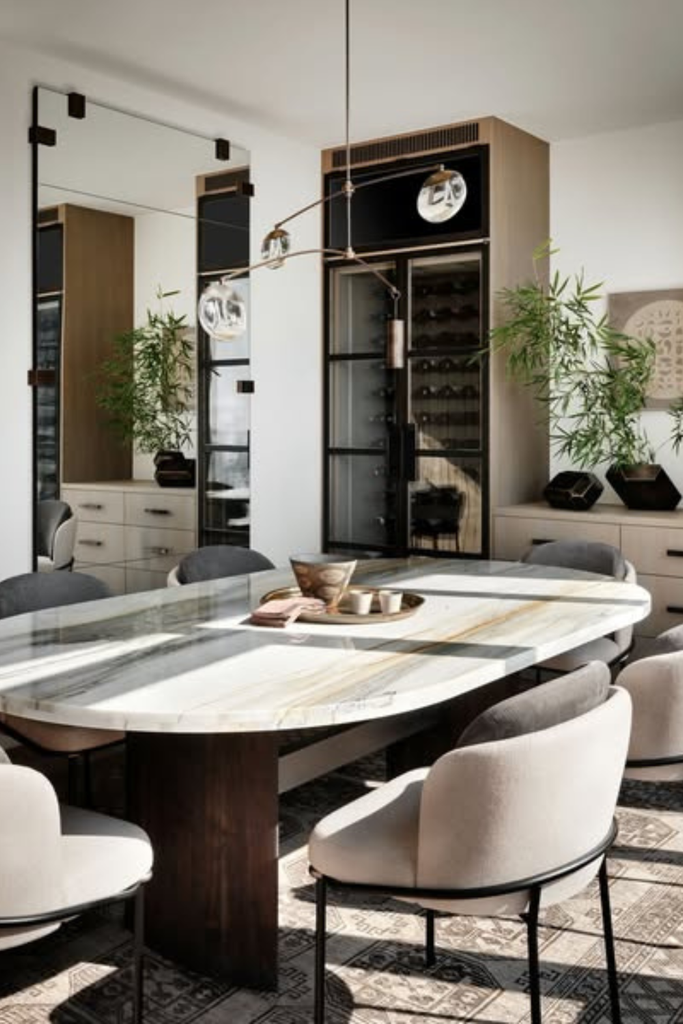
A wine-storage feature can organize bottles alongside glasses, serving accessories, and other items used for entertaining. The first decision is whether the main goal is displaying a small collection or storing wine under more controlled conditions.
A decorative rack or cabinet may suit bottles intended for relatively short-term use, provided the location is appropriate for the bottles and the manufacturer’s guidance. Wine intended for longer storage may need more stable conditions, with temperature, light, and environmental changes considered according to the wine and storage period.
An ordinary dining room cupboard does not automatically provide controlled temperature or humidity. If those conditions matter, choose a suitable purpose-designed unit rather than assuming a decorative cabinet will provide them.
I would also check the stability of bottle racks, the cabinet’s load capacity, and the space needed to remove bottles without knocking nearby glassware. Keep any electrical appliance accessible for maintenance and follow its ventilation and installation instructions.
19. Kitchen-Style Storage
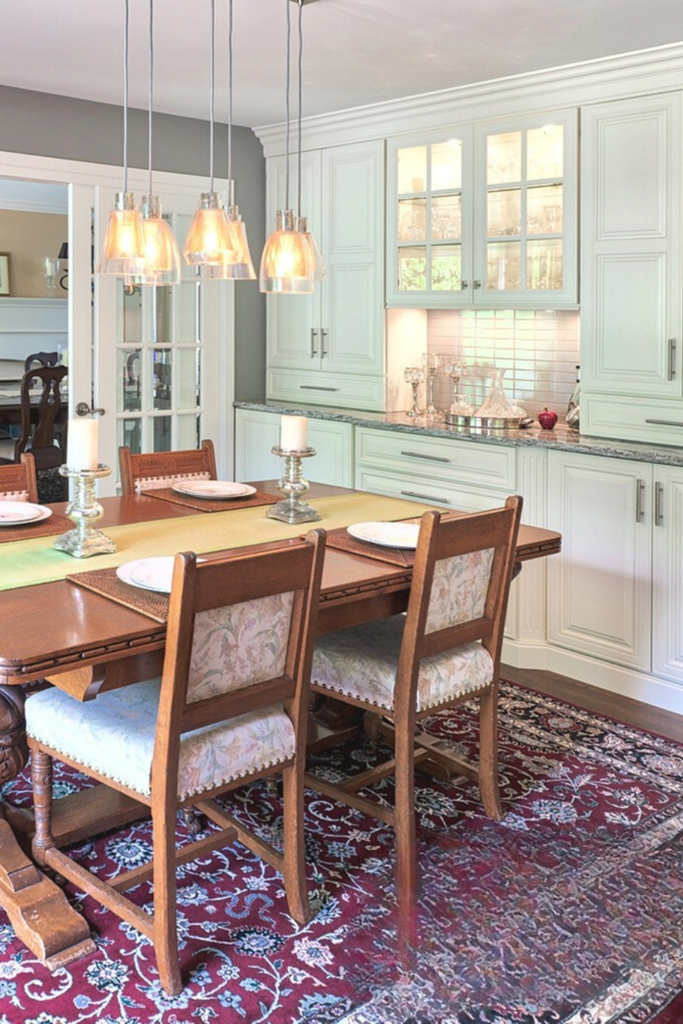
Kitchen-style storage works well when the dining room is used for everyday meals and needs its own practical work surface. It can provide a place for breakfast dishes, coffee supplies, napkins, and frequently used tableware without requiring every item to be carried from the kitchen each time.
I would organize the cabinets around daily routines. Cups and plates can sit in accessible cupboards, while drawers hold napkins and small accessories. A clear counter provides room to arrange breakfast items or prepare drinks before everyone sits down.
This arrangement differs from an entertaining storage wall because it supports repeated daily tasks rather than mainly serving guests. The goal is to make routine meals easier and reduce the amount of clutter left on the dining table.
Measure the available wall and counter area before adding cabinets. If a coffee maker or other appliance is planned, check its dimensions, electrical requirements, and any ventilation or clearance needs. The finished layout should leave enough space for the chairs and people using the table.
20. Open Shelf Balance
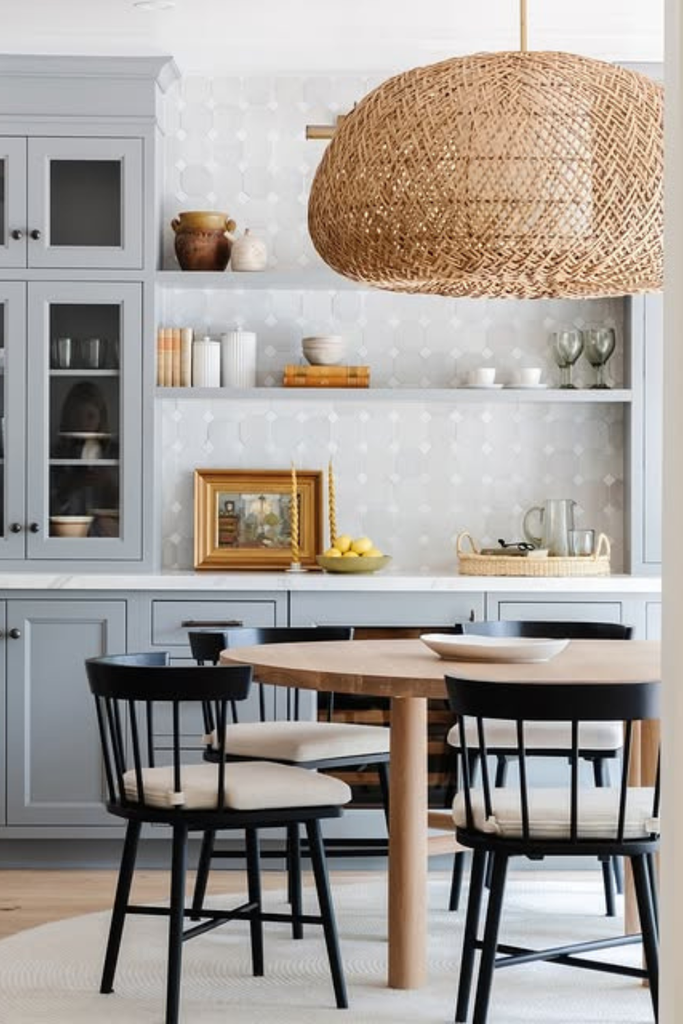
Open shelving is useful when everyday dishes need to stay accessible and a row of upper cabinets would feel too bulky. It can work above a low storage unit or on a suitable wall where the shelves will not interfere with the table or chairs.
I would use open shelves for items that are handled regularly, such as plates, bowls, and cups. Keep the arrangement practical: stack dishes securely, group similar items, and place smaller accessories in suitable containers if needed.
Shelf depth and support are important. Measure the actual dishes and serving pieces before choosing a shelf, and check the load rating for the intended weight. Heavier objects should sit securely on adequately supported shelves rather than near an edge.
Open shelves collect dust and need regular cleaning, especially when they hold items used for eating and drinking. Leave some empty space so pieces are easy to remove and return without knocking neighboring items. Closed storage below can accommodate spare linens and supplies that do not need to remain visible.
Pro Tip: Before ordering shelves, measure your largest serving platter and the height of your tallest glasses. Use those measurements to plan the shelf spacing so you are not left with attractive shelves that cannot hold the items you actually use.
21. Bar Drawer Storage
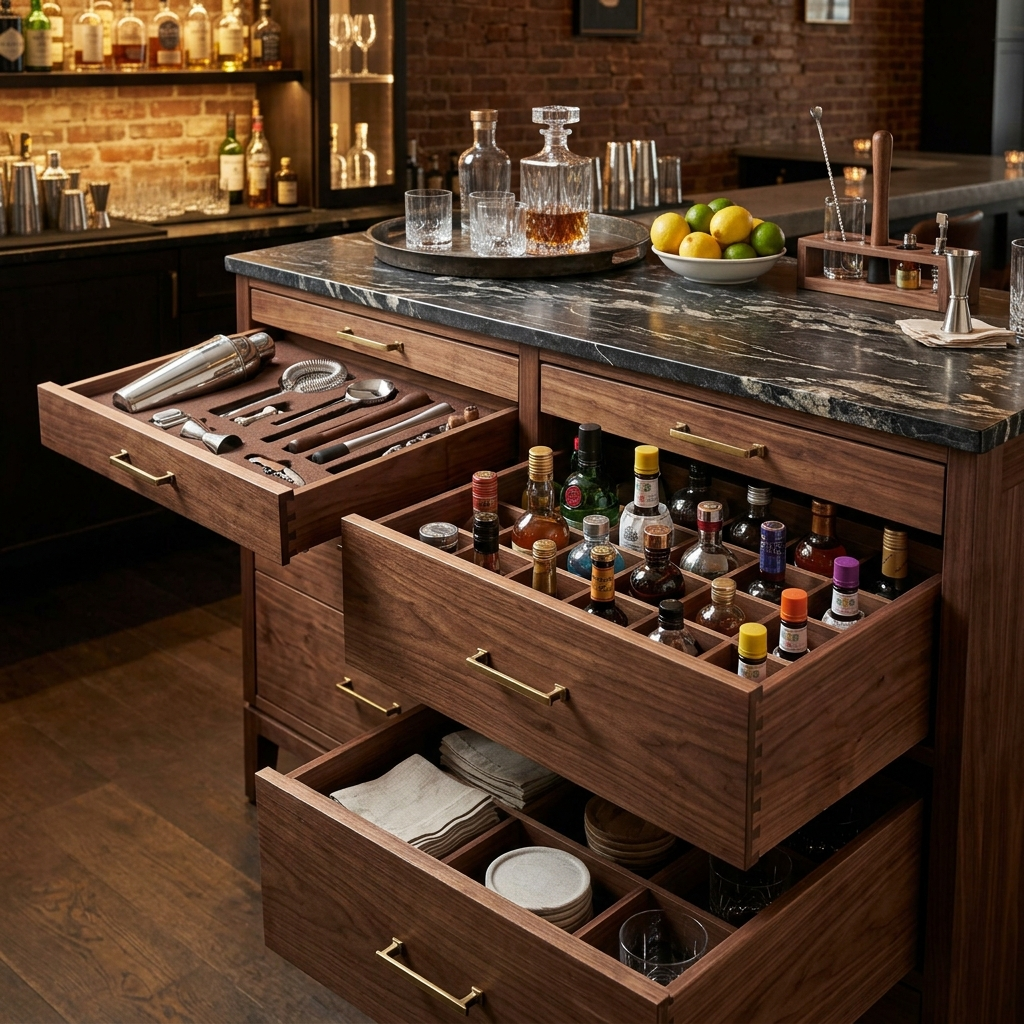
Bar drawer storage focuses on organizing the small accessories that can quickly become scattered around a beverage cabinet. Divided drawers can keep coasters, bottle openers, napkins, measuring tools, and other supplies easy to find.
I would choose adjustable dividers or organizers that fit the drawer’s internal dimensions. Group related items together and give frequently used tools a convenient place near the front. This reduces rummaging and makes it easier to return things after use.
Bottles require more care than lightweight accessories. Before storing them in a drawer, check the drawer’s load capacity, dimensions, and stability. Use suitable dividers or other restraints where appropriate to stop contents from rolling or shifting when the drawer opens.
Heavy items should be stored in adequately supported compartments, preferably lower down when that improves safe access. Avoid overloading the drawer or forcing it closed around tall objects. The aim is to keep small supplies organized without making the storage difficult to operate.
22. Storage Seating Combo
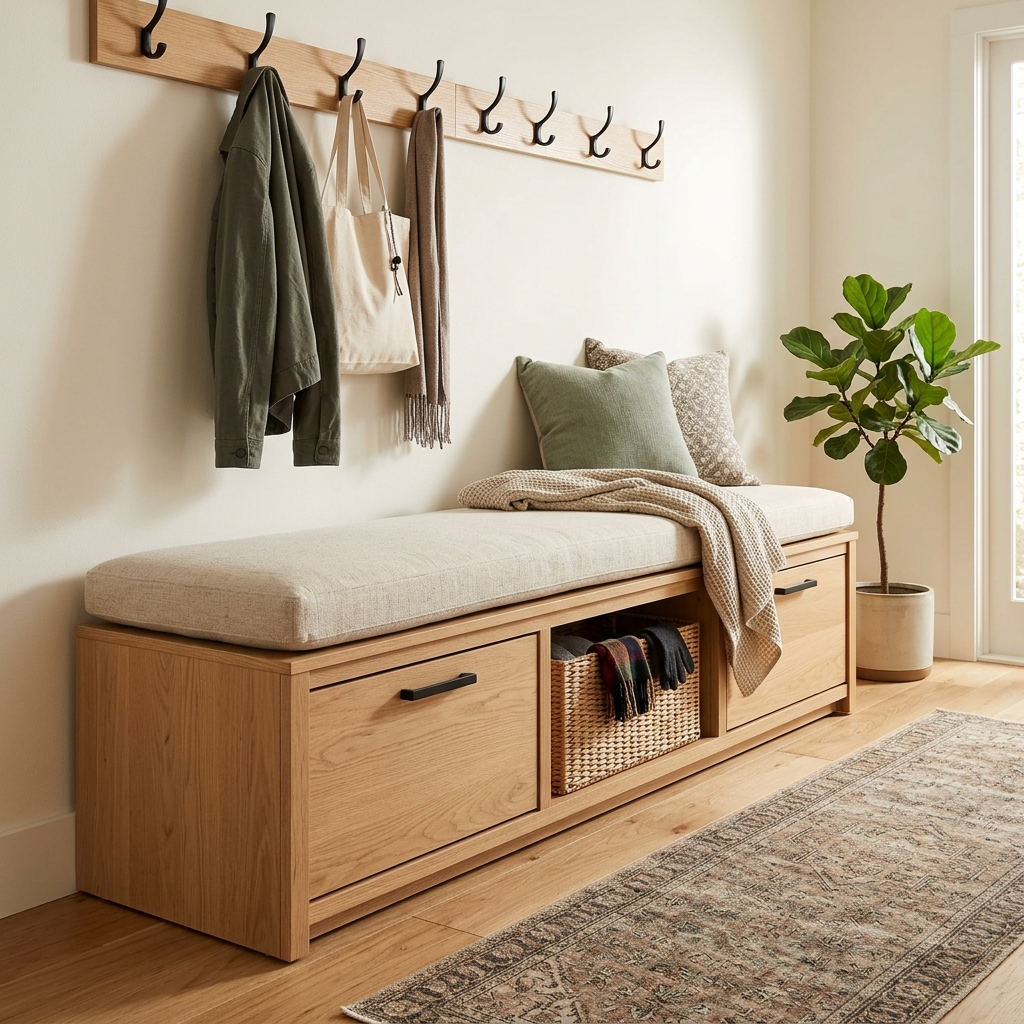
A storage bench or banquette can provide seating and extra storage in a dining nook. It may be a better fit than adding a separate cupboard when the room needs another place to sit as well as somewhere to keep selected dining essentials.
The storage compartment can hold lightweight items such as placemats, reusable napkins, or table runners, provided the compartment is suitable for those contents. I would avoid storing damp fabrics, food, or items that require airflow in a closed space that does not provide appropriate conditions.
Comfort and access matter just as much as storage capacity. Check the bench’s seat height and depth against the table, and make sure the lid or drawers can open without hitting table legs or nearby furniture. The storage should not make it difficult for someone to sit down or stand up.
Before purchasing or building a bench, check its weight limits and how it is supported. A built-in bench may need secure fixing, while a freestanding model should remain stable during normal use.
23. Art-Centered Storage
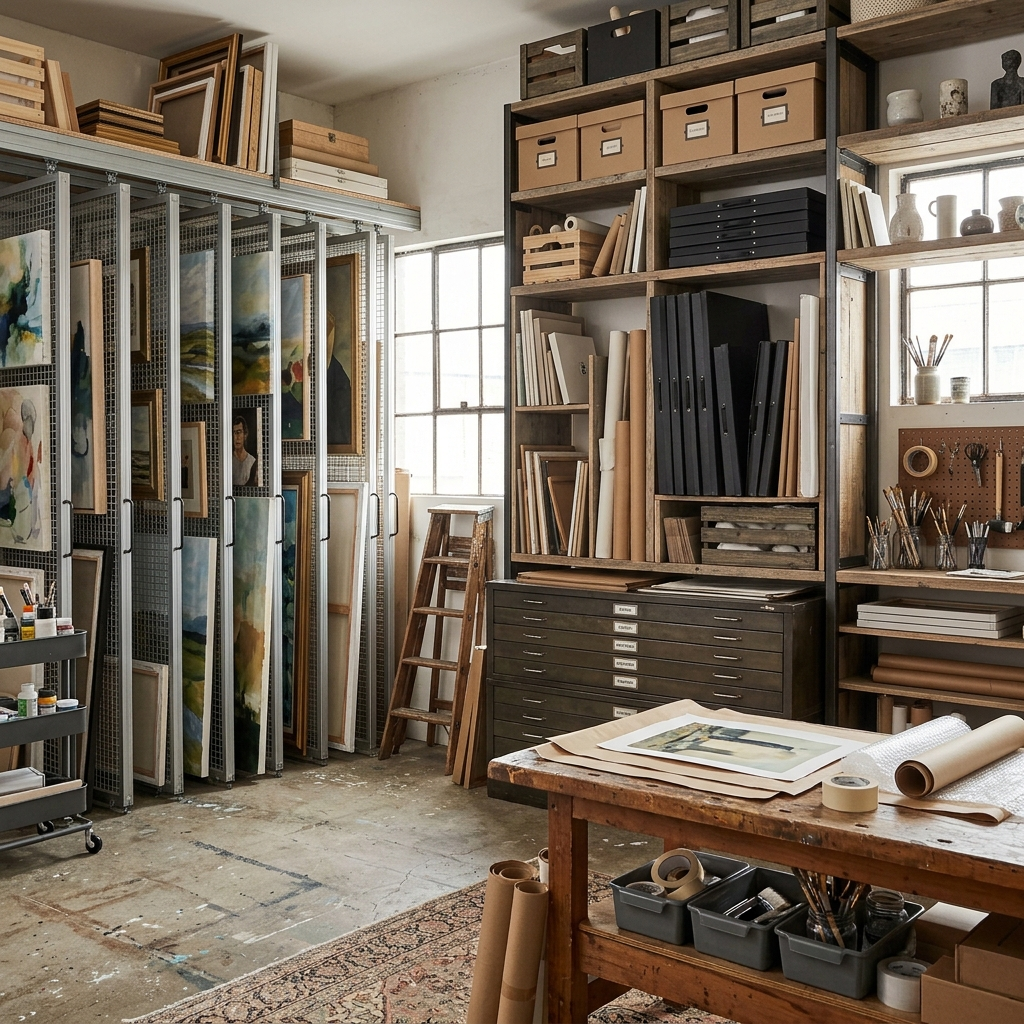
Art-centered storage combines practical cabinetry with a central artwork or mirror. I would choose this layout when a dining room needs more closed storage but I also want the wall to have a clear focal point.
A low cabinet or a row of base cupboards can hold dinnerware, table linens, and serving accessories. A mirror or piece of artwork above the center gives the wall a visual focus without requiring more furniture on the floor.
The top should remain useful for serving, so I would avoid covering it with too many decorative objects. If the cabinet is used before meals, leave enough room to set down platters or arrange dishes. The central artwork should be secured appropriately and positioned where it will not be knocked by serving items or chair movement.
Lighting can be kept simple. A suitable wall light may highlight the artwork, while the room’s general lighting handles everyday use. If electrical fixtures are being added, plan their location before installing the cabinets or hanging the artwork.
24. Corner Display Cabinet
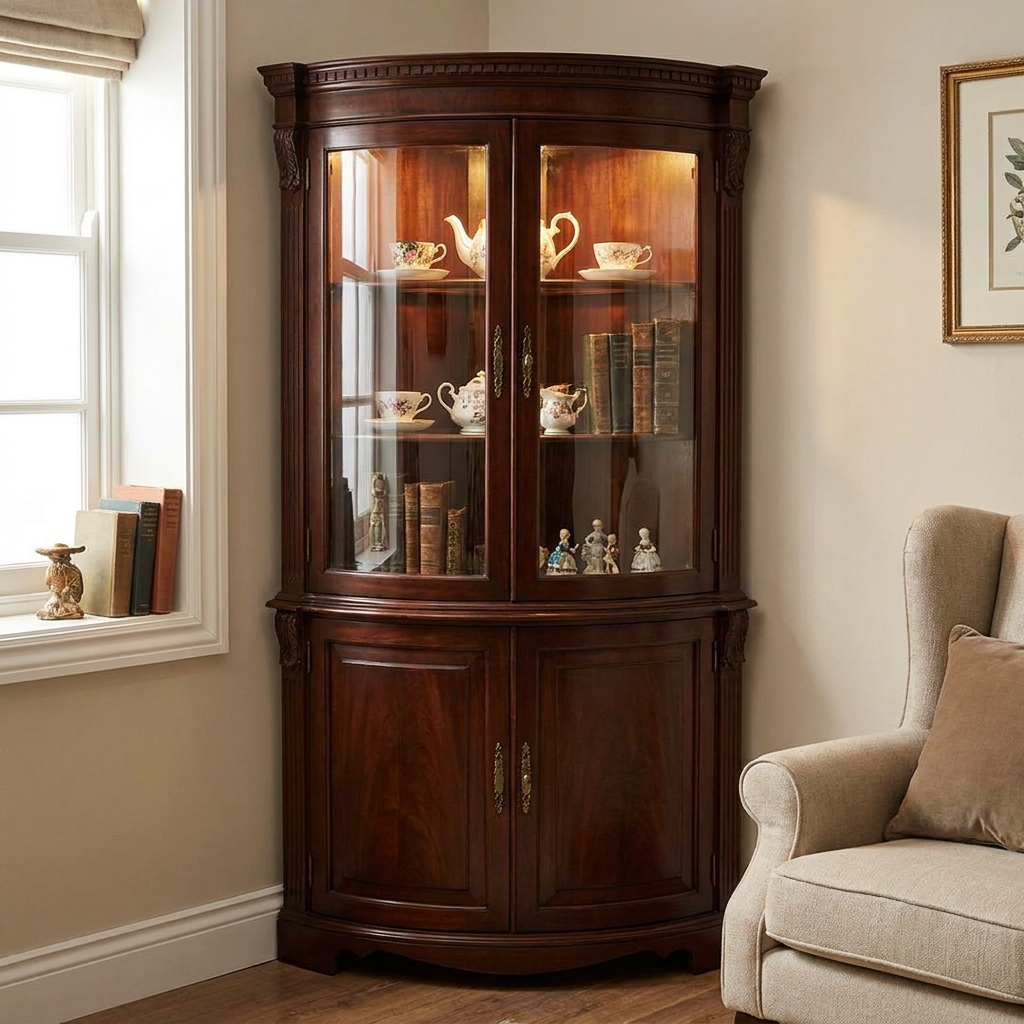
A corner display cabinet can make use of an awkward area where a conventional sideboard would be difficult to place. It is particularly useful when a banquette, doorway, or window arrangement breaks up the available wall space.
I would choose a cabinet with a footprint that fits the actual corner rather than assuming any narrow cabinet will work. The interior can hold serving dishes, cups, plates, or a small collection of items that are useful to keep near the table.
Check both wall measurements, nearby trim, and the cabinet’s full door swing. A cabinet may fit into the corner but still be awkward to use if its door strikes the table or another piece of furniture.
The display should remain practical. Keep frequently used items within reach and avoid putting heavy dishes on high shelves that are difficult to access. If the cabinet is tall or top-heavy, secure it as recommended by the manufacturer.
25. Glass Wall Storage
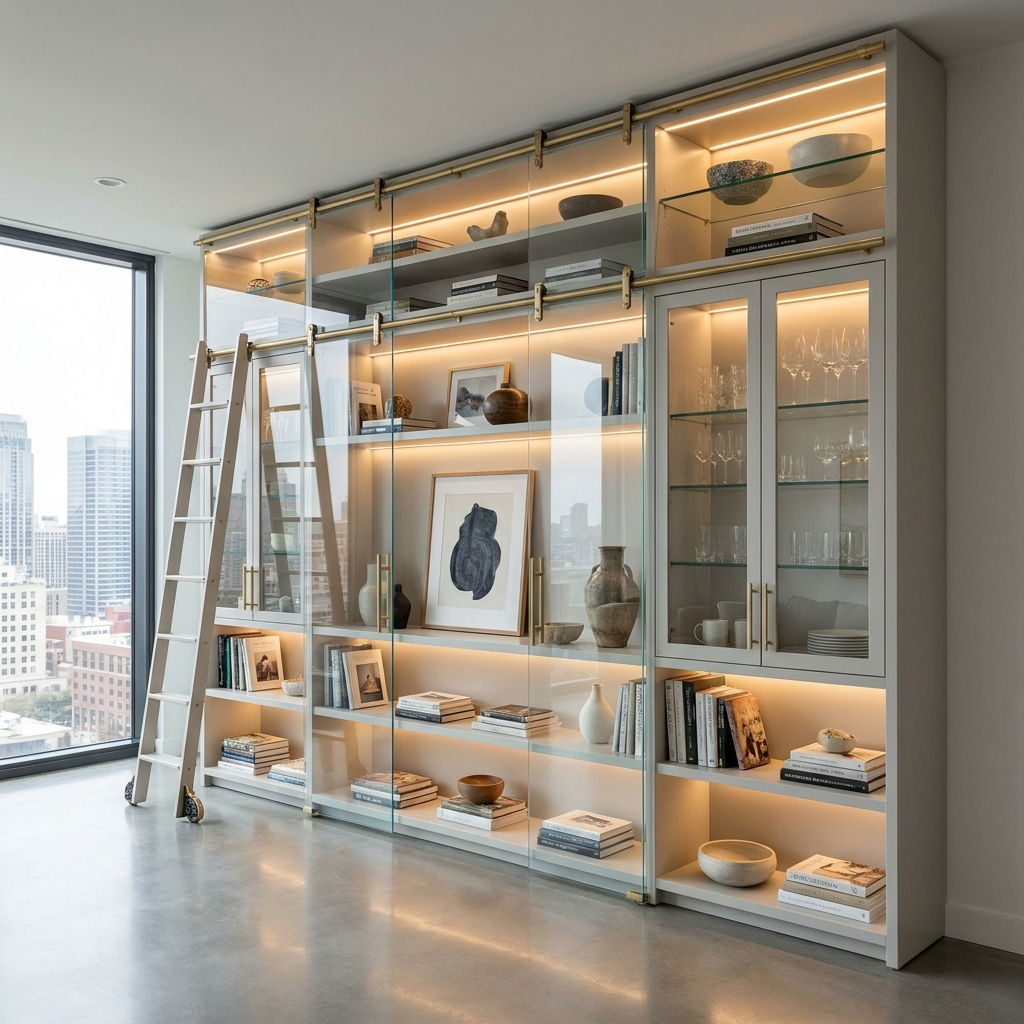
Wall-mounted glass-front storage can provide visible, protected storage without the footprint of a freestanding cabinet. I would consider it when floor space is limited and the wall can safely support a suitable cabinet.
The main planning decision is the cabinet’s depth. Measure the dishes and glasses it needs to hold, then account for the door and handle projections. A shallow cabinet may work for cups and smaller plates but may not accommodate large serving platters.
Wall construction and installation requirements are particularly important here. Check the cabinet’s loaded weight, use fixings appropriate to the wall and intended load, and follow the manufacturer’s mounting instructions. Before drilling, check for concealed wiring and plumbing. If the wall construction or load-bearing capacity is uncertain, get appropriate professional advice.
Wall-mounted cabinets should not be placed where open doors interfere with the dining table or walking path. The contents should also be arranged so frequently used pieces can be reached without stretching awkwardly.
26. Tall Corner Storage
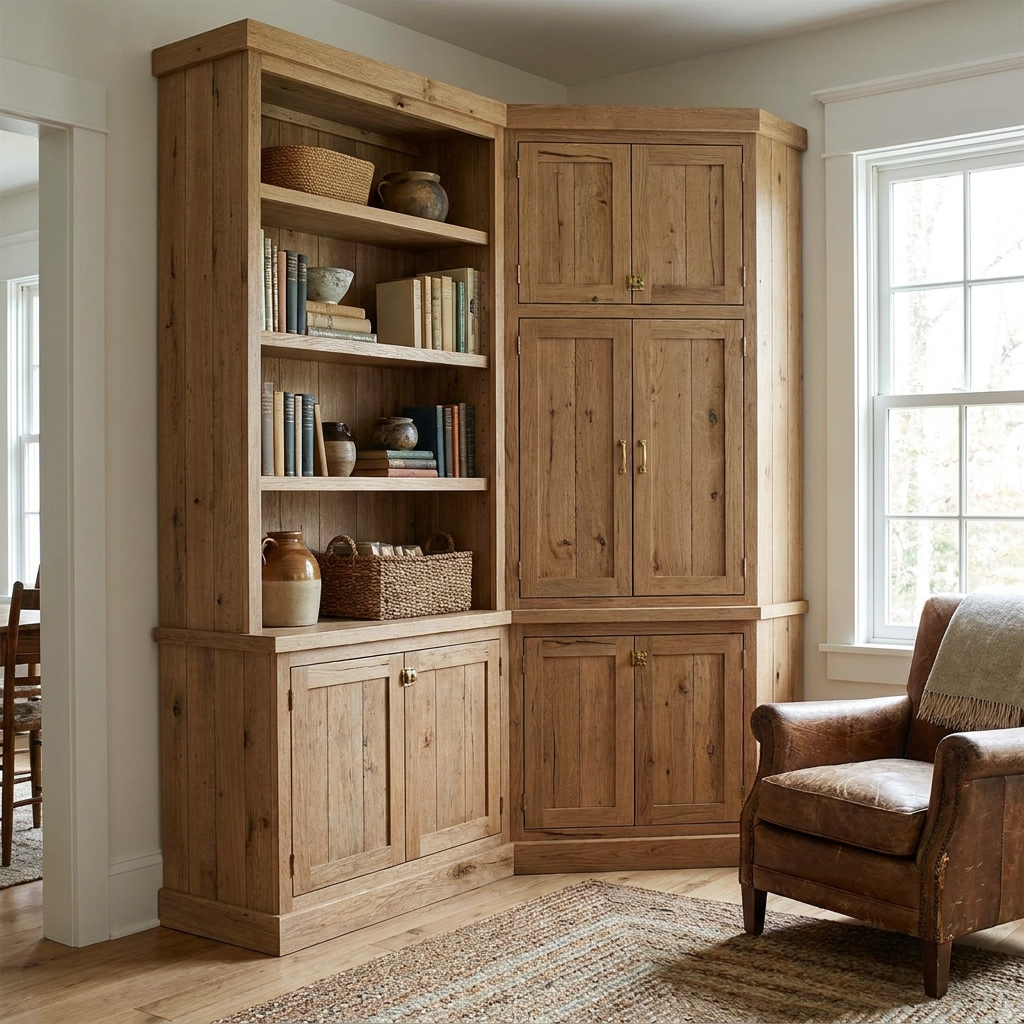
Tall corner storage makes use of vertical space when the dining room has limited uninterrupted wall width. It can be useful where windows, doorways, or built-in seating leave only a small area available for a storage unit.
I would look for a cabinet with a footprint that fits the corner without projecting too far into the room. The interior can hold selected dishes, glasses, and serving accessories, with the most frequently used items kept at a comfortable height.
A tall cabinet needs careful attention to stability and access. Check its loaded weight, door swing, shelf capacity, and anchoring requirements. Do not rely on a narrow footprint alone to keep a tall unit stable, especially when it contains heavy dinnerware.
Before placing the cabinet, confirm that it does not obstruct curtains, windows, switches, or the route around the table. This option works best when it uses otherwise difficult wall space without making the dining area harder to navigate.
Dining Room Storage FAQs
What’s the best storage furniture for a small dining room?
I would start with furniture that provides enough storage without interfering with the dining table. A slim china cabinet can use vertical space, while a shallow wall-mounted cabinet may work when floor space is particularly limited.
A sideboard is useful if you need a serving surface, and a storage bench may suit a dining nook where extra seating is also needed. Measure the available area and check chair movement, cabinet depth, and door clearance before choosing.
The best piece depends on what needs to be stored and how the room is used. There is no single cabinet style that suits every dining room.
How do I keep open shelves from looking cluttered?
Keep only useful or selected items on display. Group similar dishes, stack plates securely, and use suitable containers for small accessories. Leave enough space to remove items without knocking over neighboring pieces.
Store spare linens and unrelated supplies in closed cupboards. Open shelves also need regular dusting, so avoid displaying more items than you can comfortably clean and maintain.
Should I choose open or closed dining room storage?
Open shelves are useful for frequently used dishes that you want to reach quickly, but they expose items to dust and require regular tidying. Glass-front cabinets provide visibility with some protection from dust, while solid doors hide everyday clutter.
I would choose based on what needs to be stored and how much maintenance the household is willing to handle. A combination of open and closed storage often provides flexibility without requiring everything to remain on display.
What should I store in a dining room sideboard?
A sideboard can hold table linens, placemats, cutlery, napkins, serving bowls, platters, and other items used during meals. Drawers are useful for smaller accessories, while cupboards can accommodate larger or irregularly shaped pieces.
Keep frequently used supplies in accessible sections and avoid overloading shelves or drawers. If you use the top for serving, leave enough clear surface space to arrange dishes when needed.
How can I add dining room storage without taking up too much floor space?
Start by looking at available wall space and vertical height. A properly installed wall cabinet, built-in storage, or narrow china cabinet may provide the capacity you need without adding several bulky pieces of furniture.
You can also consider multifunctional furniture, such as a storage bench that provides seating and a place for table linens. Before committing, check mounting requirements, furniture stability, and the space needed to open doors and move chairs.
Read this next: 17 Foyer Storage Ideas for Entryway 2026
Conclusion
The best dining room storage ideas are the ones that match the room’s dimensions and the way the household uses it. Built-in wall storage can accommodate a larger collection, a slim china cabinet can suit a narrow space, and a sideboard can keep serving essentials close to the table. Open shelves, beverage stations, vintage hutches, and storage benches each serve different needs.
I recommend starting with the items that need a home rather than buying furniture first. Sort everyday dishes, linens, serving supplies, and occasional-use pieces, then measure the available wall and floor space. Check chair movement, door swings, shelf capacity, and installation requirements before deciding on a layout.
A well-organized dining room does not need every wall filled with cabinets. A few carefully chosen storage solutions can keep essentials accessible, leave the table ready for meals, and make everyday dining and entertaining easier to manage.




One Comment