How to Make a Very Small Bedroom Cozy: 17 Ideas
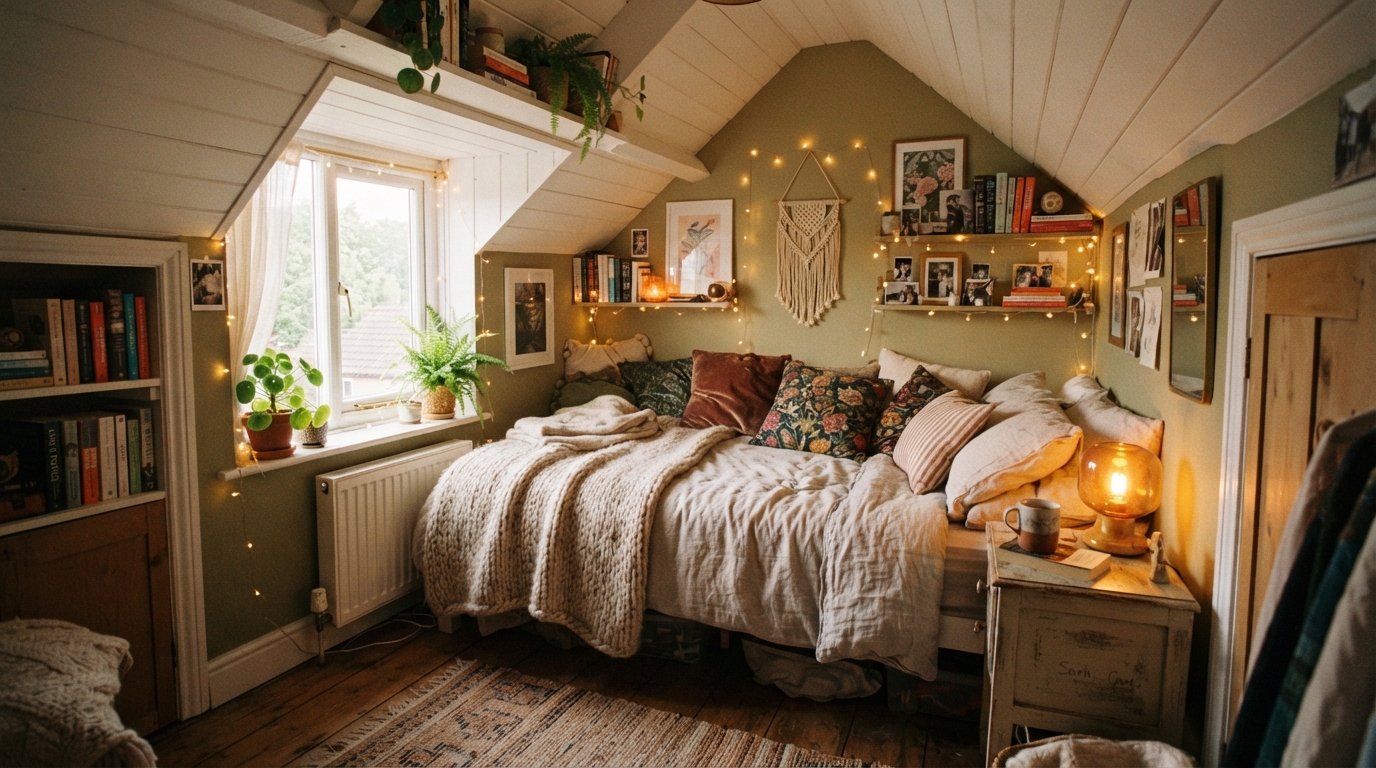
A very small bedroom can still feel warm, comfortable, and inviting. I’ve found that coziness in a tiny room is less about adding more furniture and more about choosing the right textures, lighting, colors, and storage solutions.
When floor space is limited, I focus on making the bed the comfortable center of the room while keeping walkways clear. I also use vertical space, soft fabrics, warm lighting, and a few personal details to make the room feel finished without making it feel crowded.
I make a very small bedroom cozy by keeping the furniture compact, choosing a calming color palette, layering bedding, adding warm lighting, and using rugs and curtains to soften the space. I also use wall-mounted storage, under-bed storage, mirrors, and multifunctional furniture to keep clutter under control.
Save this for later

Table of Contents
The goal is not to fill every empty corner. I prefer leaving some visual breathing room because too many objects can make a small bedroom feel even smaller. A few carefully chosen pieces usually create a more comfortable result.
Key Takeaways
- I keep furniture proportional to the room instead of choosing oversized pieces.
- I use warm bulbs and layered lighting to make the bedroom feel softer at night.
- I layer bedding, cushions, throws, and rugs for physical and visual comfort.
- I use vertical walls and the area beneath the bed for storage.
- I choose light or muted colors when I want the room to feel more open.
- I keep decorative items limited so the room stays cozy rather than cluttered.
- I make the bed the main comfort zone and organize everything else around it.
Related article: 18 Very Small Bedroom Ideas for Kids
1. Choose a Warm, Light Color Palette
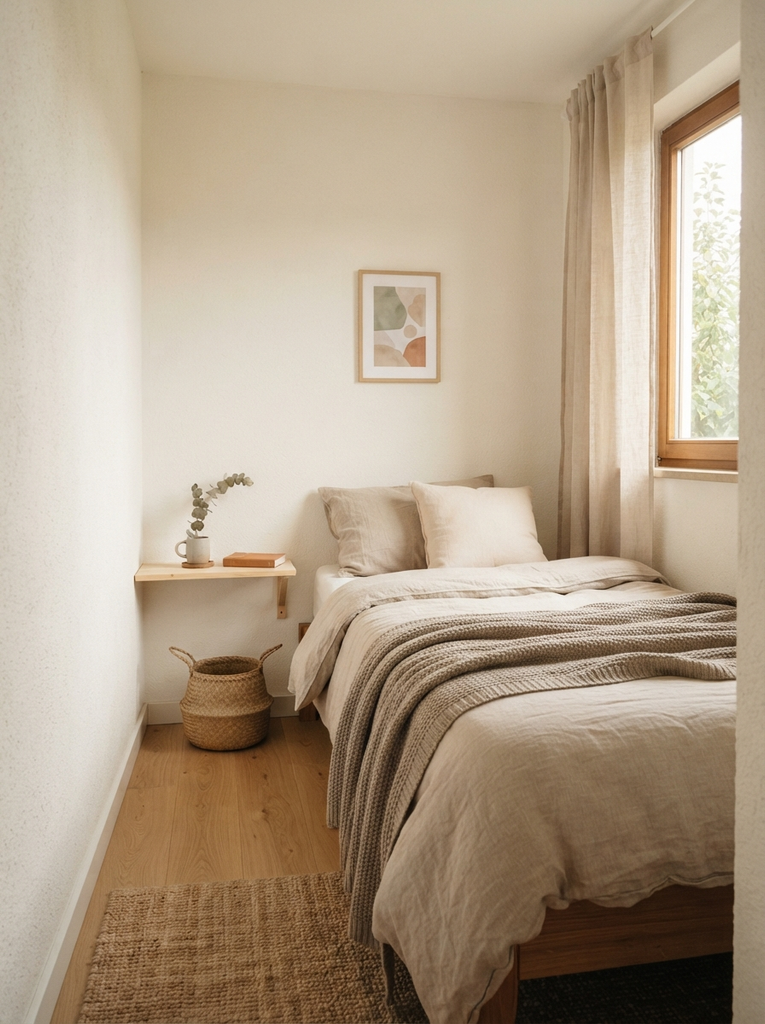
I usually start with the walls because color has a big effect on how a small bedroom feels. Soft white, warm beige, light taupe, pale gray, or muted earthy shades can help the room feel brighter and less enclosed.
That does not mean everything needs to be plain white. I like adding slightly deeper shades through bedding, artwork, curtains, or a small accent wall.
Pro Tip: If the room receives limited natural light, I test paint samples during both daytime and evening. A color can look much darker once the room is lit by lamps instead of daylight.
2. Make the Bed Extra Comfortable
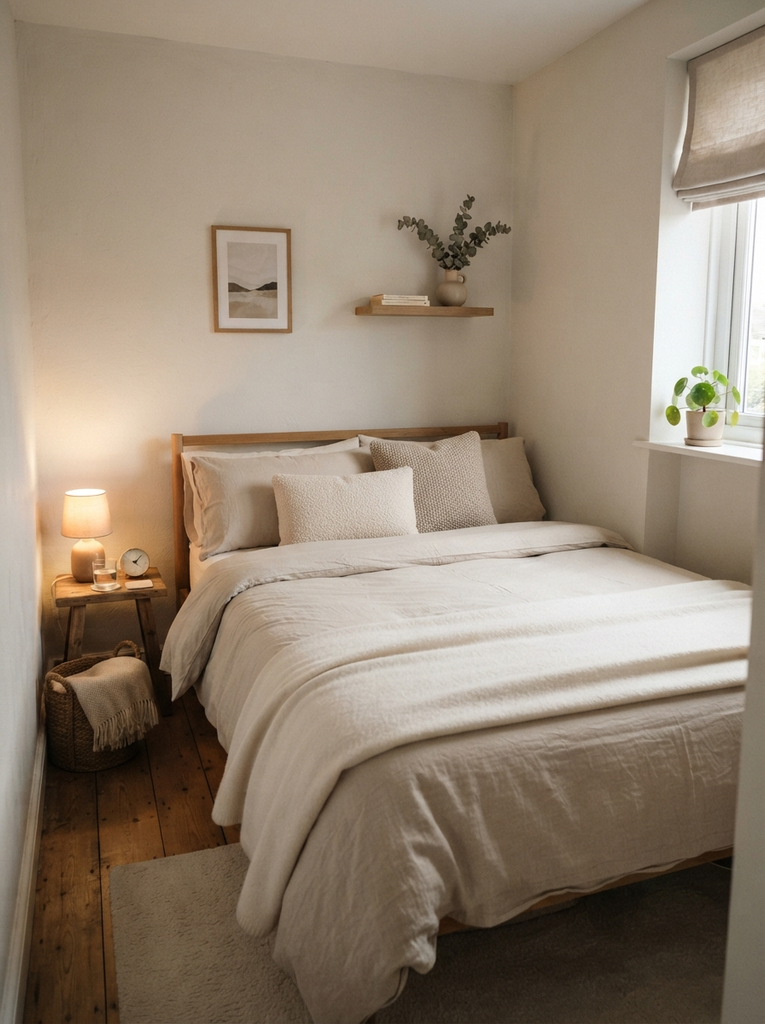
In a tiny bedroom, the bed often takes up the largest amount of floor space, so I make it the main cozy feature. A comfortable mattress, soft sheets, a duvet, and a few well-chosen pillows can change the entire feel of the room.
I prefer layering rather than piling on too many cushions. One or two sleeping pillows, a couple of decorative cushions, and a soft throw at the foot of the bed are usually enough.
3. Add Soft Bedding Layers
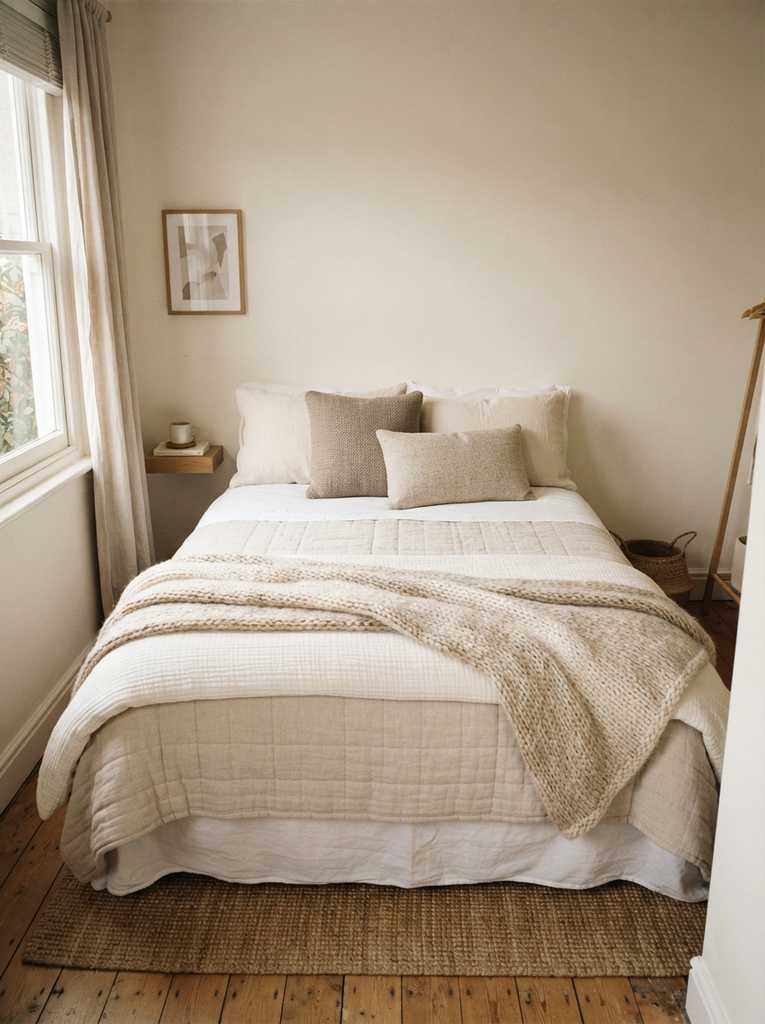
I use different fabric textures to make a small bedroom feel warmer. Cotton sheets, a quilted coverlet, a knitted throw, or a soft duvet can add depth without requiring additional furniture.
I also like mixing subtle textures instead of using many different patterns. This gives the bed a relaxed appearance while keeping the small room visually calm.
4. Use Warm, Layered Lighting
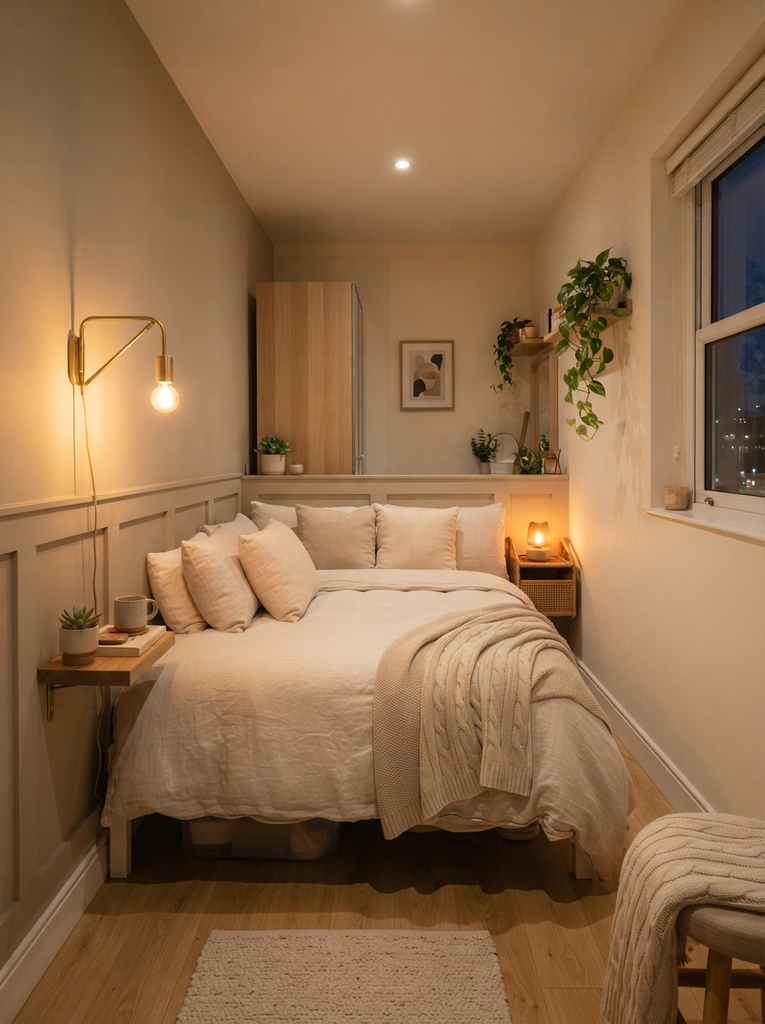
Good lighting can make a tiny bedroom feel much more inviting. I avoid relying only on a bright ceiling fixture and instead combine general lighting with bedside or wall lighting.
Warm white bulbs around 2700K to 3000K are commonly used for relaxing residential spaces. I find that this warmer range works particularly well around bedtime because it creates a softer atmosphere.
Pro Tip: Wall-mounted sconces are especially useful when bedside tables are too large for the available space. They provide useful light without taking up valuable floor or tabletop area.
5. Put a Small Rug Beside the Bed
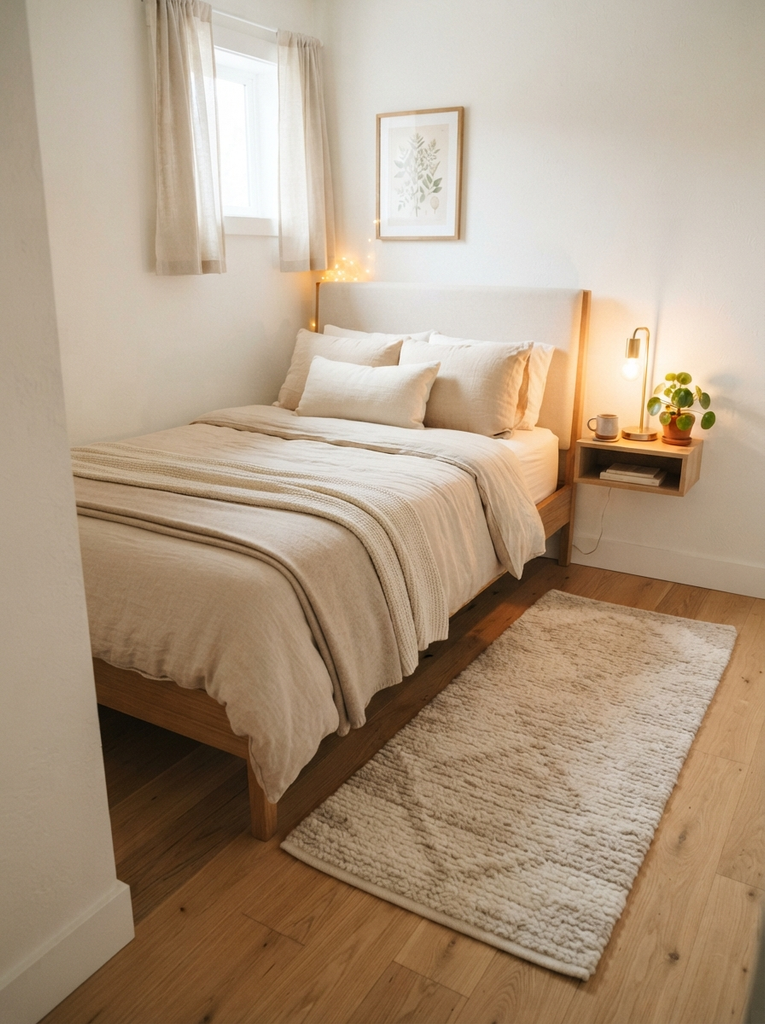
A rug can make a small bedroom feel noticeably softer, especially when the flooring is hard. I often place a compact rug where my feet will land when getting out of bed.
If there is enough room, I may use a larger rug partially underneath the bed. In an extremely tight room, however, a small runner or bedside rug can provide the same cozy feeling without overwhelming the floor.
6. Hang Curtains High and Wide
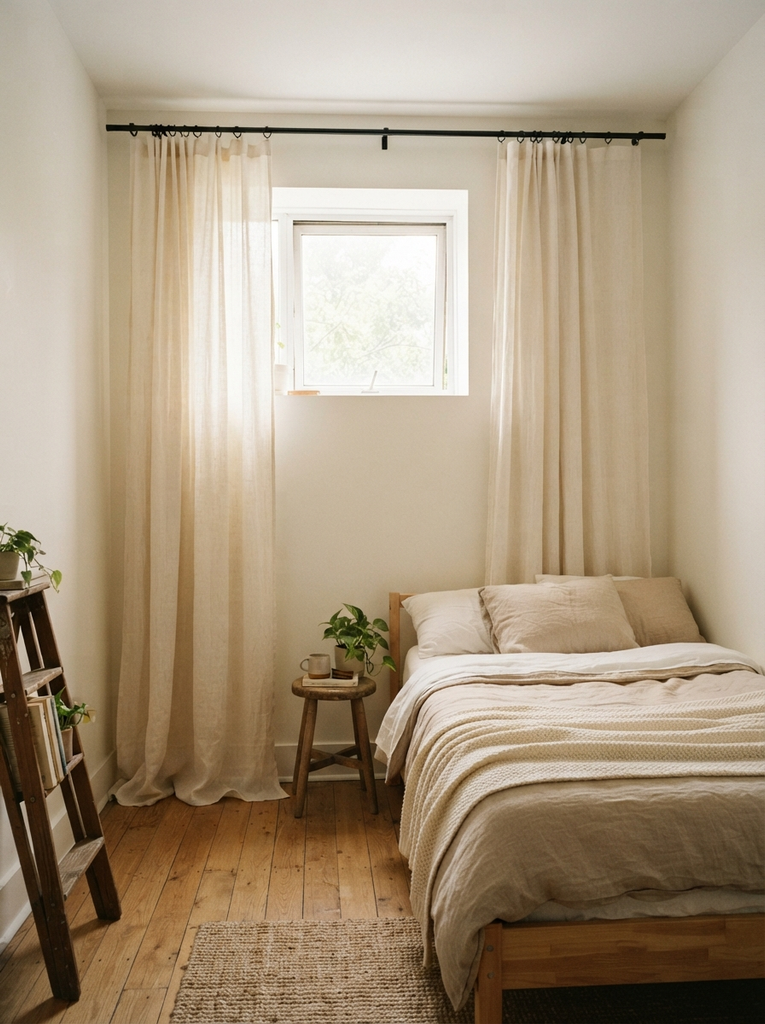
I like using curtains to add softness while also making the room feel taller. Rather than mounting the curtain rod directly above the window, I position it higher when the wall and window layout allow it.
Long curtains that reach close to the floor can create a more finished appearance. For a small bedroom, I generally choose lightweight fabrics and simple colors so the window area does not become visually heavy.
7. Use the Wall Space for Storage
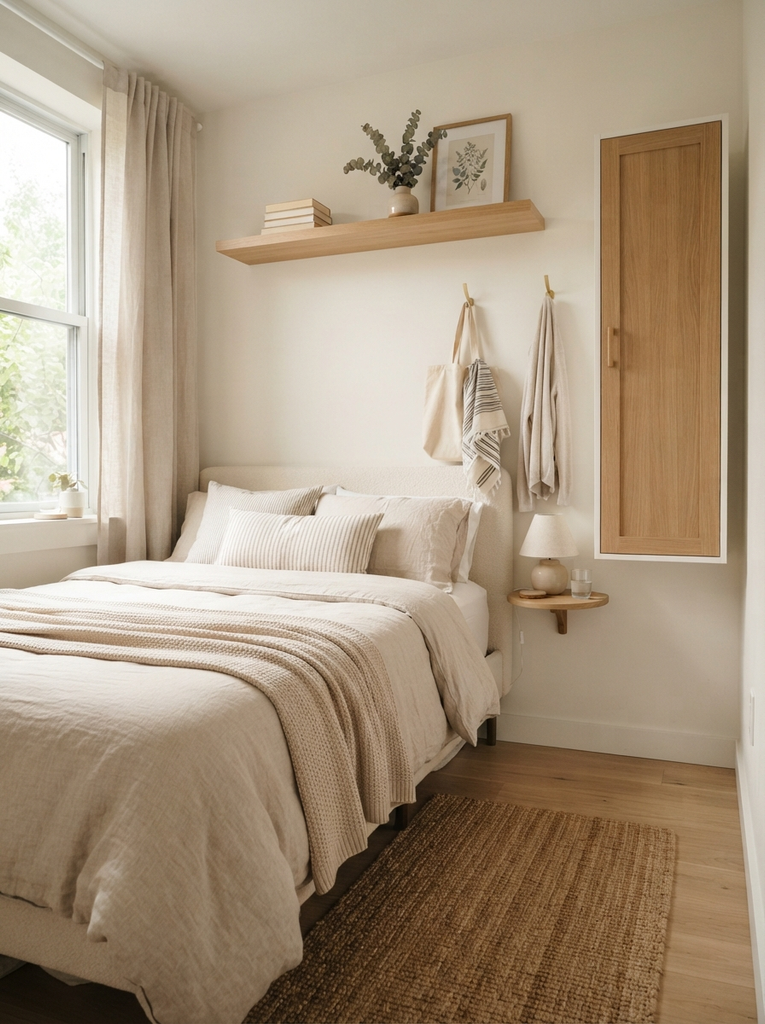
When floor space is limited, I look upward. Floating shelves, wall hooks, narrow cabinets, and pegboards can provide useful storage without taking up much floor area.
I try not to overload these surfaces. A small bedroom can quickly look messy if every shelf is filled, so I keep frequently used items accessible and store less attractive belongings elsewhere.
Pro Tip: Keep everyday items within easy reach and place seasonal or rarely used belongings in higher storage areas. This makes the room easier to maintain.
8. Create a Cozy Reading Corner
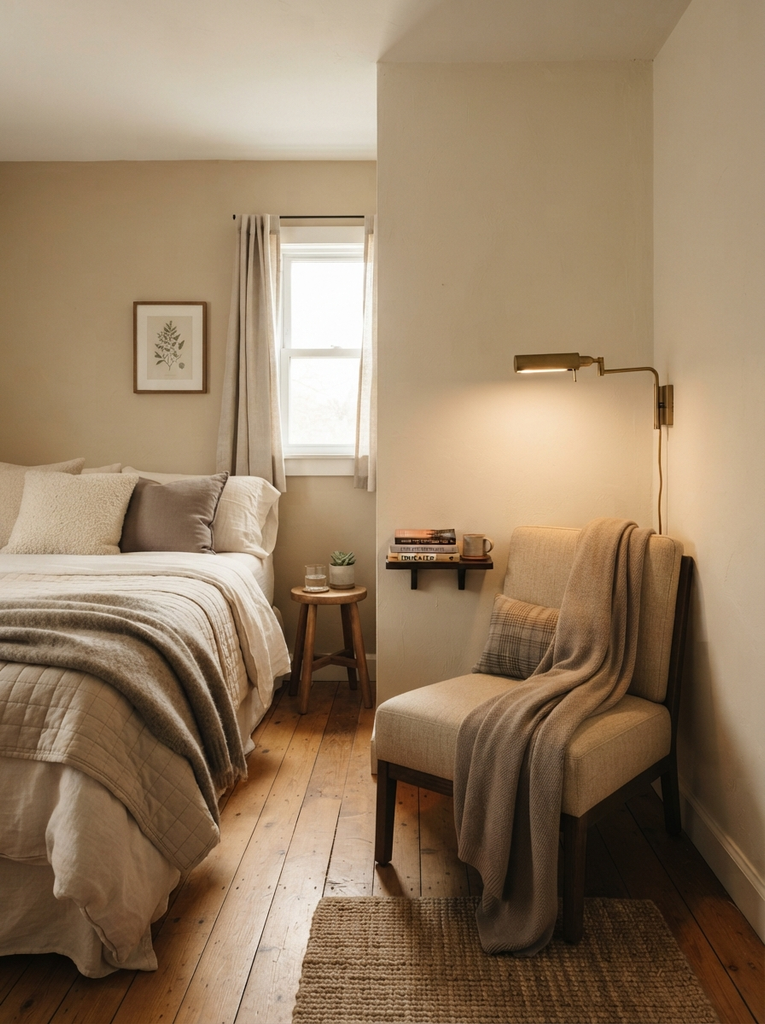
Even a very small bedroom may have enough room for a compact reading spot. I look for an unused corner where I can fit a narrow chair, floor cushion, or small pouf.
If there is no room for a chair, I use the bed itself as the reading zone. A wall-mounted reading light and a small shelf can create a dedicated corner without adding another large piece of furniture.
Also read: 21 Very Small Bedroom Ideas
9. Add a Mirror to Reflect Light
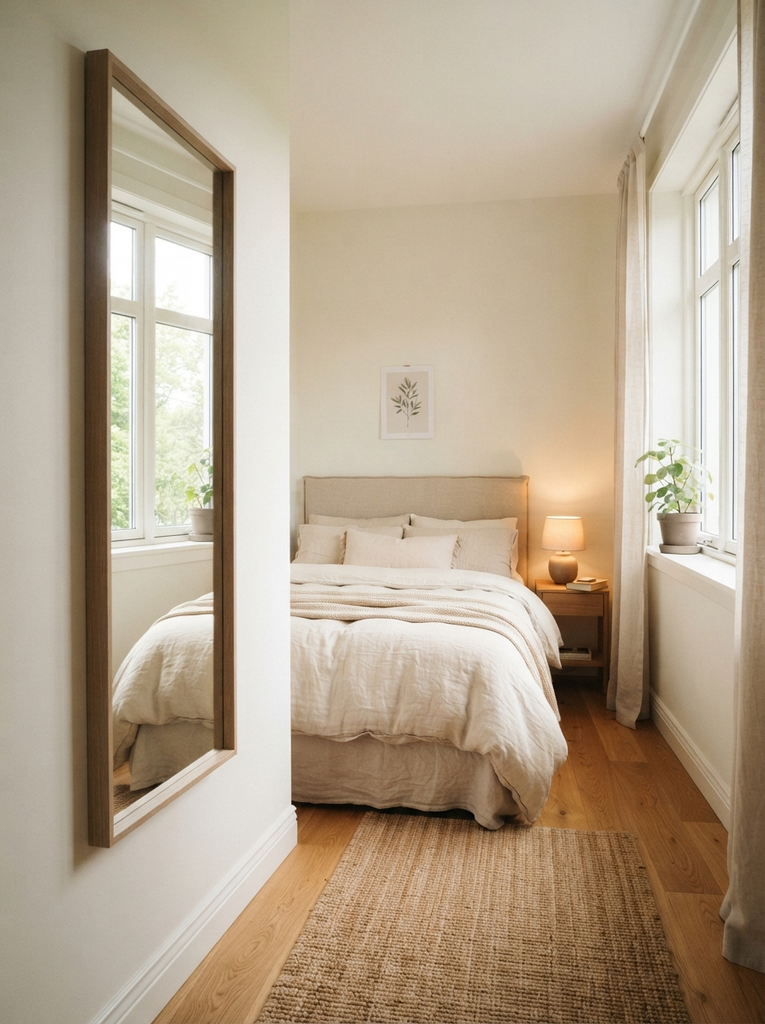
I use mirrors carefully in small bedrooms because they can make the space feel brighter and more open. A mirror placed across from or near a window can help reflect available daylight around the room.
A full-length mirror can also be useful when mounted on a wall or door. I avoid adding several decorative mirrors simply for the sake of it because too many reflective surfaces can make the room feel visually busy.
10. Choose Furniture With More Than One Purpose
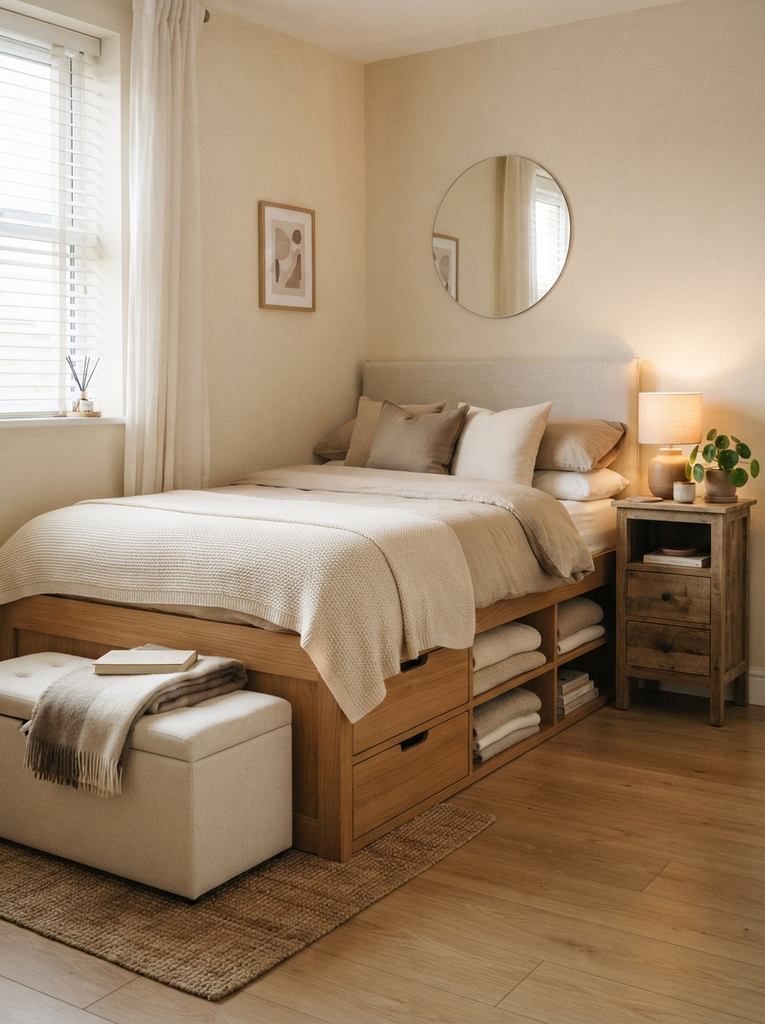
I get more value from every piece of furniture when it serves two jobs. For example, a storage ottoman can provide seating and hidden storage, while a bedside table with drawers can hold books, chargers, and other small belongings.
For extremely small bedrooms, I also consider a bed with built-in drawers or a narrow desk that can double as a vanity or workspace.
The key is to measure before buying. I leave enough clearance around furniture for comfortable movement instead of squeezing in the largest item that technically fits.
11. Use Under-Bed Storage
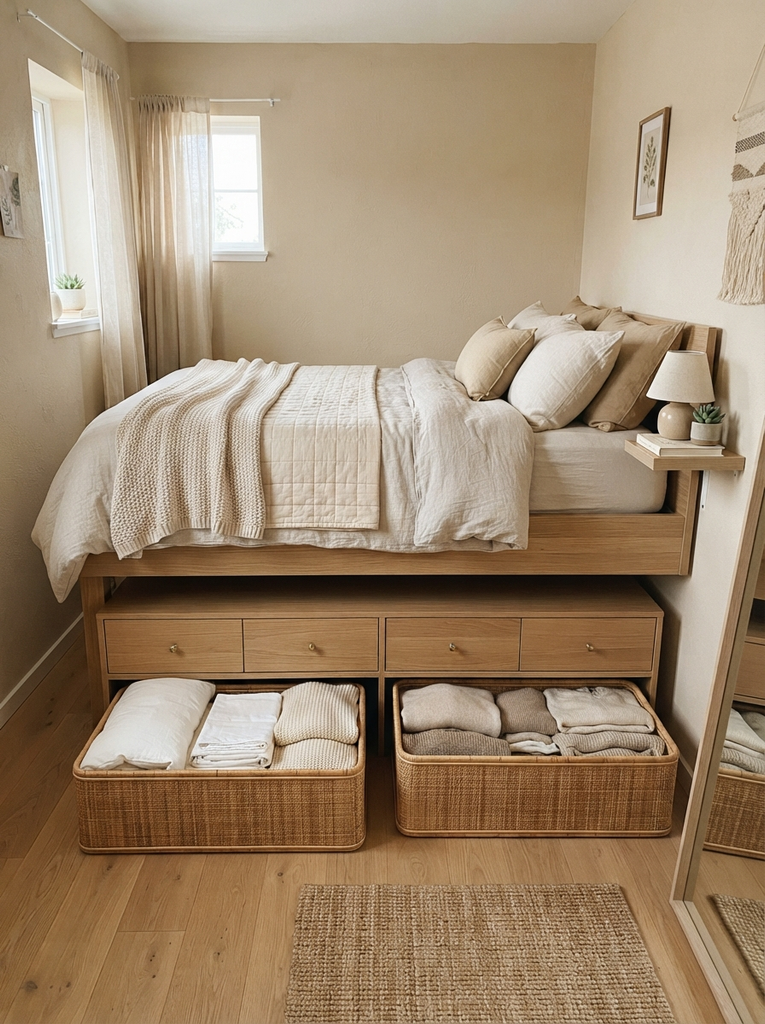
The space beneath the bed is one of the easiest areas to overlook. I use it for items that I do not need every day, such as spare bedding, off-season clothing, or accessories.
Low storage boxes, fabric containers, or built-in drawers can keep these belongings contained. I prefer matching or concealed containers because visible piles underneath the bed can make the entire bedroom look untidy.
12. Keep Nightstands Small
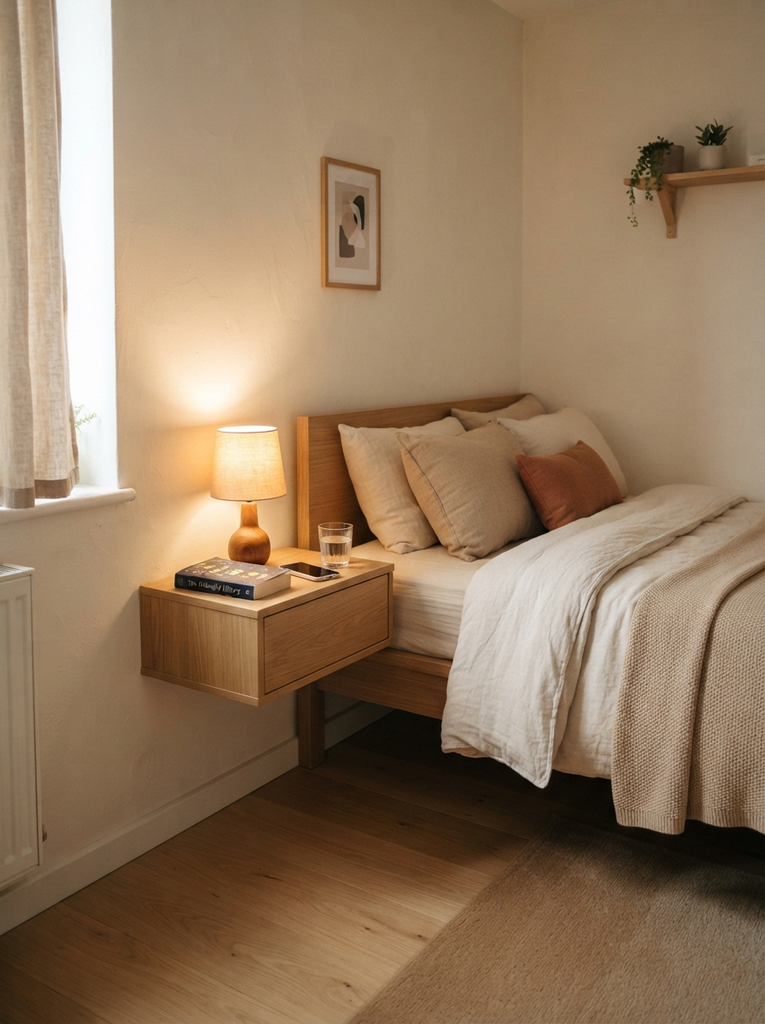
A traditional nightstand may be too bulky for a very small bedroom. I often replace it with a narrow table, floating shelf, wall-mounted cabinet, or even a small stool when appropriate.
I only keep essentials beside the bed. A lamp, phone, book, and water are usually enough for me, while everything else can go into a drawer or another storage area.
Pro Tip: Before buying a nightstand, measure the remaining space beside the bed and check door, drawer, and walking clearances. A few extra inches can make daily movement much easier.
13. Add Personal Wall Decor
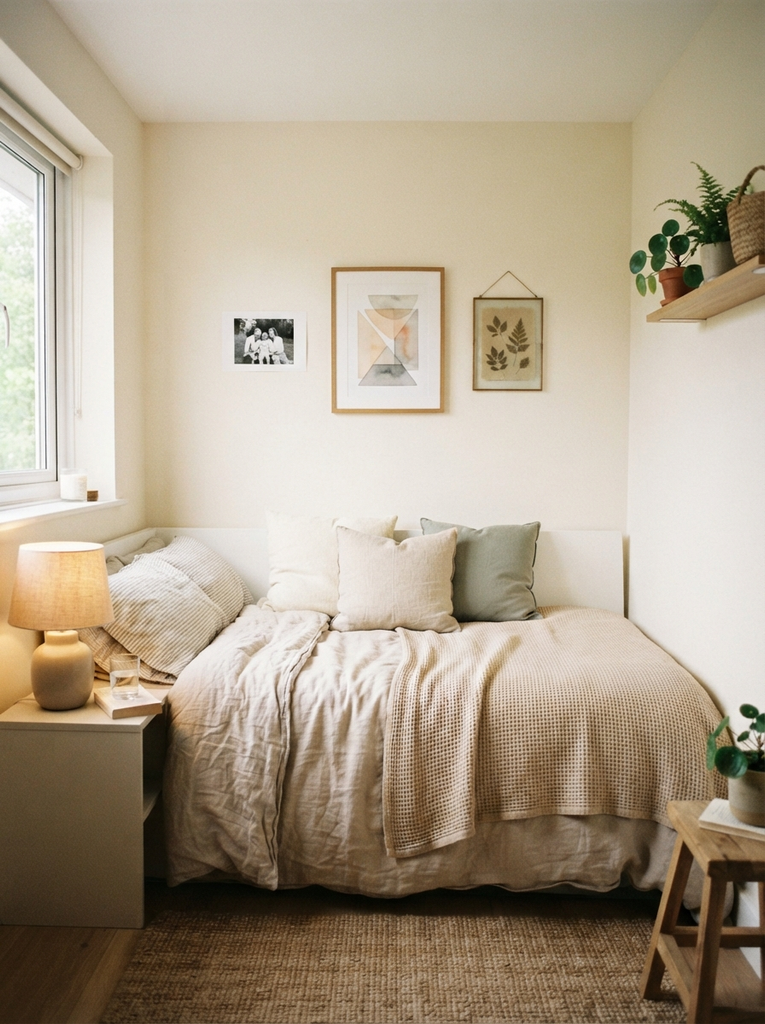
I like adding personality through the walls because wall decor does not require much floor space. A small gallery arrangement, framed artwork, family photographs, or a simple textile can make the room feel more personal.
In a tiny bedroom, I avoid covering every wall. One well-planned focal point often looks more intentional than several unrelated decorations scattered around the room.
14. Bring in a Little Greenery
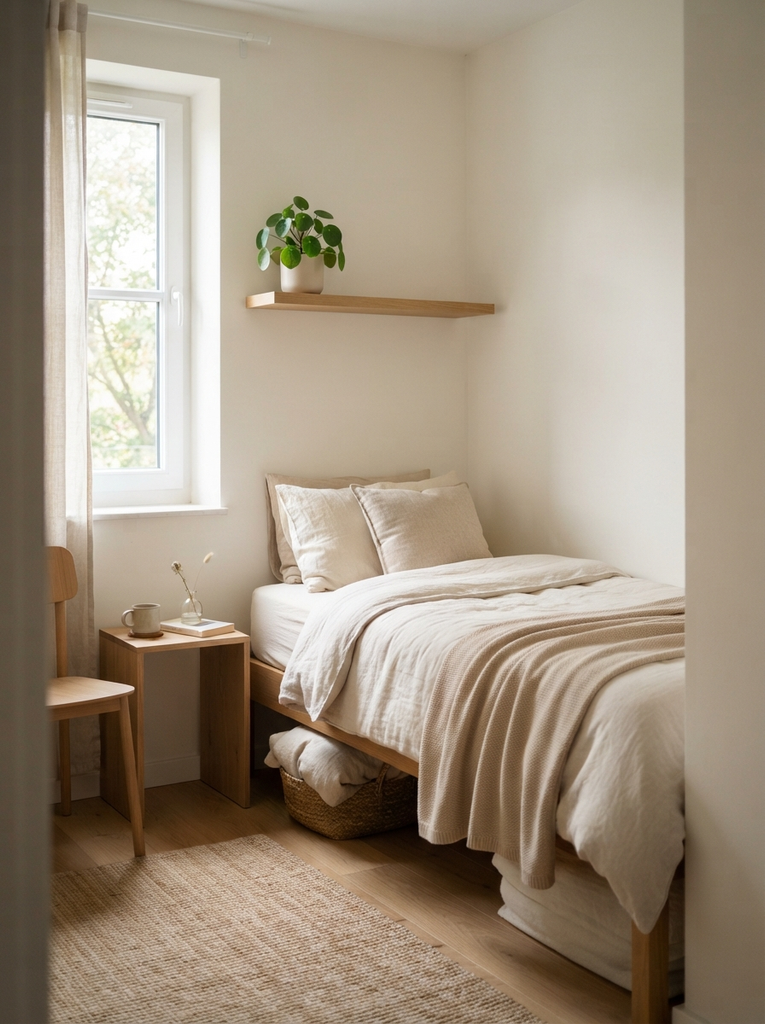
A small plant can add life and softness to a bedroom without taking up much room. I choose compact varieties that suit the available light and place them on a shelf, windowsill, or small stand.
If natural light is limited, I do not force a plant into an unsuitable location. A realistic faux plant can provide a similar decorative effect without requiring a particular light level.
15. Use a Consistent Color Scheme
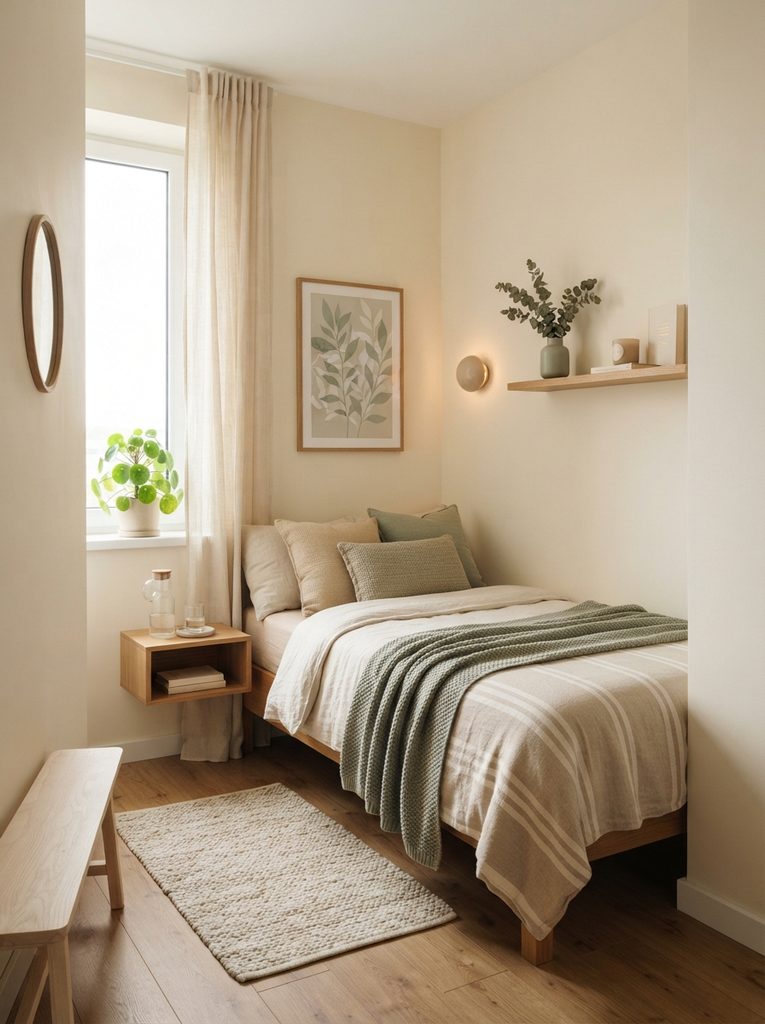
I find that a small bedroom feels calmer when the main colors work together. I usually choose two or three dominant colors and repeat them through the bedding, curtains, rug, artwork, and accessories.
This does not mean every item has to match perfectly. Instead, I use related shades so the eye can move around the room without being interrupted by too many competing colors.
16. Keep Clutter Under Control
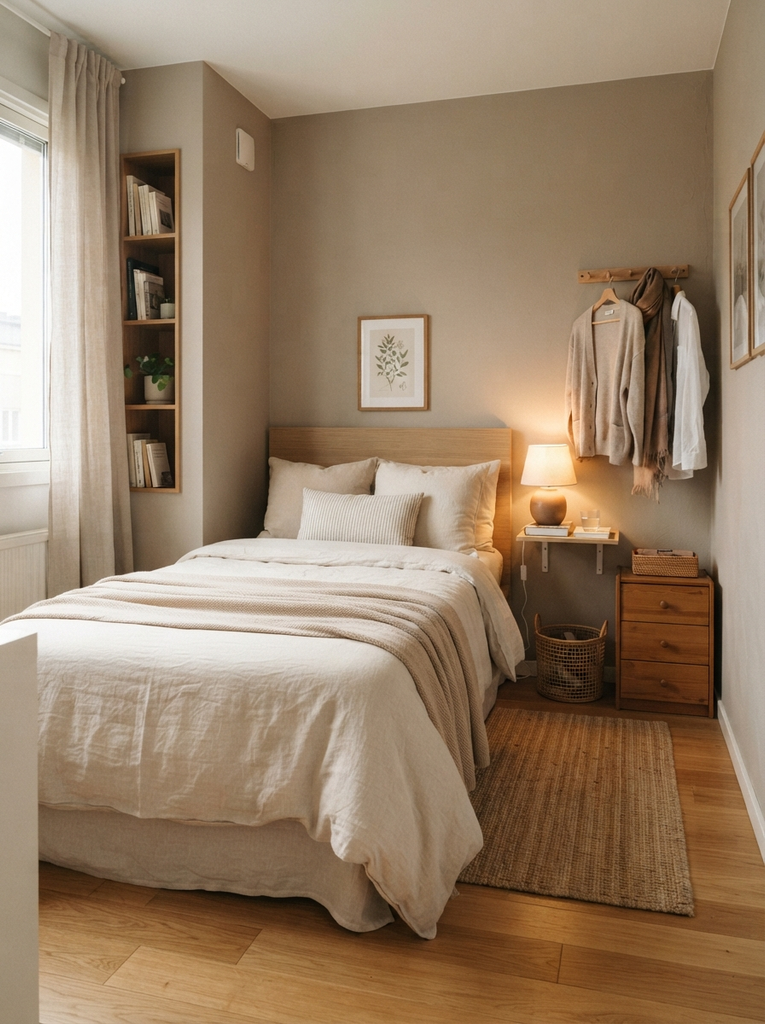
For me, this is one of the most important parts of making a tiny bedroom cozy. Even attractive furniture and decorations can feel overwhelming when clothing, cables, books, and miscellaneous items are left out.
I give frequently used belongings a designated home and make a quick reset part of my routine. Keeping surfaces reasonably clear allows the soft textures and decorative details to stand out.
Pro Tip: I use the simple rule of keeping one useful item where I need it and storing the rest. Small bedrooms benefit more from easy organization than from having lots of decorative storage.
Read this next: 24 Grown Woman Bedroom Ideas for A Matured Elegance
17. Add Small Cozy Details
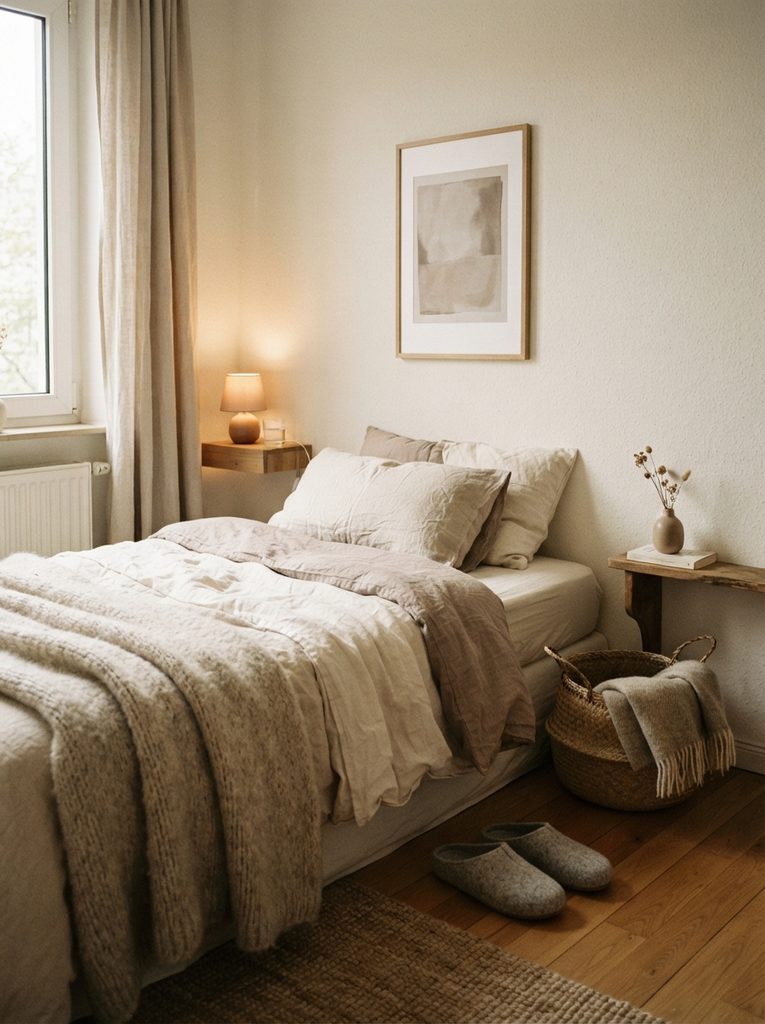
Finally, I add the little details that make the room feel like a place I actually want to spend time in. A soft throw, favorite artwork, a scented-free decorative element, a small basket, or a comfortable pair of slippers can make the space feel more personal.
I do not try to make every corner decorative. In a very small bedroom, leaving some empty space is part of the design because it prevents the room from feeling crowded.
Frequently Asked Questions
How can I make a very small bedroom feel cozy?
I use warm lighting, soft bedding, a few layered textures, and calming colors. I also keep clutter under control so the room feels comfortable rather than crowded.
What colors make a small bedroom feel cozy?
Soft white, warm beige, light taupe, muted gray, and gentle earthy shades can make a small bedroom feel brighter and more relaxing. I add deeper colors through small accents.
How do I decorate a tiny bedroom without making it feel crowded?
I choose furniture that fits the room, use wall space for storage and decor, and avoid filling every empty corner. A few meaningful pieces usually create a cozier result.
Conclusion
Making a very small bedroom cozy does not require a major renovation or lots of expensive furniture. I focus first on comfort, then on lighting, storage, texture, and personal touches.
A soft bed, warm lighting, practical storage, coordinated colors, and a little greenery can completely change how a small room feels. Most importantly, I keep only the things that serve a purpose or genuinely make the room more enjoyable.