
24 Sunglasses Storage Ideas for 2026
Sunglasses are easy to misplace when I don’t have a dedicated spot for them. I’ve found that a little organization can make a big difference, whether I’m getting ready in the morning, switching between favorite frames, or packing for a trip. A good storage setup should protect the lenses, keep frames in shape, and make every pair easy to find.
In this guide, I’m sharing 24 sunglasses storage ideas for 2026 that work in bedrooms, closets, entryways, desks, and even cars. From simple drawer organizers to attractive wall displays, there are options for small spaces and larger collections alike.
Save this for later
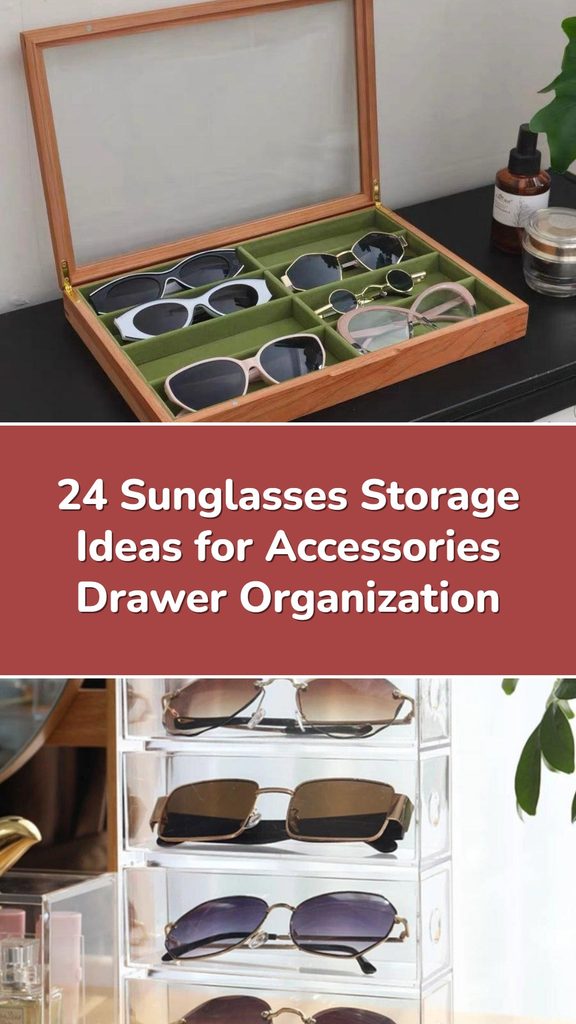
Table of Contents
I recommend choosing sunglasses storage based on how often you wear each pair, how much room you have, and how much protection your frames need. Wall-mounted holders and display shelves make everyday pairs easy to reach, while lined boxes, drawer inserts, and individual sleeves help protect sunglasses from scratches and dust. For travel, compact padded cases and roll-up organizers keep frames secure on the move. With the right setup, I can keep my collection organized without sacrificing useful space or personal style.
Key Takeaways
- Protect the lenses: I use individual compartments, soft sleeves, or lined cases to reduce scratches.
- Make everyday pairs accessible: Entryway holders, bedside trays, and desk drawers work well for sunglasses I reach for often.
- Use vertical space: Wall pockets, pegboards, and floating shelves help free up crowded drawers and countertops.
- Choose storage that fits the collection: Small trays suit a few pairs, while modular organizers and compartmentalized boxes work better for larger collections.
- Store sunglasses properly in the car: I prefer a secure holder or protective case instead of leaving frames loose on the dashboard.
- Keep travel storage compact: Padded cases and roll-up organizers help prevent frames from shifting around in luggage.
Related article: 20 Hot Wheel Storage Ideas for 2026
1. How Do People Store Sunglasses?
I find that the best sunglasses storage solutions balance protection, visibility, and convenience. Some people keep their favorite pairs in a bedside drawer, while others use wall-mounted organizers or display racks to make their collections part of the room’s decor.
Leaving sunglasses loose on a countertop or tossing several pairs into one drawer might seem convenient, but frames can rub together, lenses can become scratched, and delicate hinges may be strained. A dedicated storage spot helps reduce these problems.
When choosing a system, I consider how many pairs I own, where I usually put on sunglasses, and whether I need space for prescription sunglasses or oversized frames. I also look for organizers with soft interiors and enough room to prevent the lenses from touching other objects.
Pro Tip: I keep my most frequently worn sunglasses near the entrance and store less-used pairs in a lined drawer or protective case. This keeps my daily routine simple without leaving the entire collection exposed.
1.1. Vertical Wall Pockets

Vertical wall pockets are a practical option when I want to keep sunglasses visible without taking up valuable drawer space. A fabric or clear-pocket organizer can hang near a bedroom mirror, inside a closet, or beside the front door.
I like this approach for smaller collections because each pair can have its own pocket. Transparent compartments make it easier to identify frames quickly, while fabric pockets can offer a softer place to store them.
For the neatest result, I choose an organizer with pockets wide enough to hold the frames without bending the arms. I also make sure it hangs securely and stays away from areas where it could be knocked into frequently.
Pro Tip: I place the organizer close to where I get ready, but away from direct sunlight to limit unnecessary light exposure.
1.2. Floating Display Shelves

Floating shelves give sunglasses a decorative home while keeping them within easy reach. I would use them in a dressing room, walk-in closet, or bedroom where I have enough wall space to arrange several pairs neatly.
To recreate this idea, I would install a narrow shelf and arrange sunglasses with enough space between frames to prevent contact. Small dividers or individual stands can help keep pairs upright and stop them from sliding around.
White shelves create a clean look, while wood adds warmth to the room. If I want a more polished display, I can add gentle room lighting, but I avoid placing the collection where direct sunlight can fall on it for long periods.
Pro Tip: Before installing shelves, I measure the depth needed for my widest frames and leave enough room to pick up each pair without disturbing the others.
1.3. Lined Storage Box

A lined storage box is one of my preferred options when protecting sunglasses matters more than displaying them. It works well inside a closet, on a dresser, or in a drawer where I want to keep the collection together.
I look for a box with separate compartments and a soft felt or velvet lining. Each pair gets its own space, reducing friction between frames and lenses. A lid also helps keep dust away when the sunglasses aren’t in regular use.
For larger collections, I would choose a box with adjustable dividers so the compartments can accommodate different frame sizes. A compact box is enough for a few everyday pairs, while a wider model can hold seasonal options.
Pro Tip: I make sure the lid closes without pressing against the sunglasses. A protective box should provide enough clearance for the frames rather than forcing them into a tight space.
1.4. Clear Drawer Tower

A clear drawer tower makes it easy to see a sunglasses collection without opening several containers. I would place one on a vanity, inside a closet, or in a dressing area where counter space is limited.
The transparent drawers help me identify the pair I want quickly. To make the setup safer, I add soft inserts or small dividers instead of allowing multiple pairs to slide around together.
This option is especially useful when I rotate sunglasses according to outfits, activities, or seasons. It also keeps the collection contained, so the dresser doesn’t become cluttered with loose cases.
Pro Tip: I label the drawers by use, such as everyday, dressy, and sports sunglasses, if I own enough pairs to make sorting worthwhile.
1.5. Drawer Grid System

A drawer grid system is a simple way to give every pair a permanent place. I like this option for bedroom dressers, closet drawers, and vanity cabinets because it keeps sunglasses organized without making them part of the room’s decor.
I use a compartment tray or adjustable drawer dividers to create individual spaces. The compartments should be wide enough for the frames and deep enough to keep them from slipping into neighboring sections.
Soft-lined dividers are especially useful when storing several pairs together. I can arrange the sunglasses by frame color, frequency of use, or type, making it easier to find the right pair when I’m in a hurry.
Pro Tip: I measure the inside of the drawer before buying an organizer. A tray that fits the drawer properly is less likely to shift every time I open or close it.
1.6. Hanging Storage Panel

A hanging storage panel is useful when I want to use the back of a closet or bedroom door instead of filling another drawer. Pocket panels are available in fabric and transparent materials, making it easy to choose a style that suits the space.
I prefer clear pockets when I want to see every pair at a glance. Fabric versions can create a softer appearance, particularly inside a wardrobe where I want accessories tucked away.
Before hanging the panel, I check the size of each pocket and make sure the material supports the frames without squeezing them. I also leave enough space around the door so the sunglasses don’t get trapped or knocked against the wall.
Pro Tip: I use the upper pockets for pairs I wear most often and reserve lower pockets for less-used frames, provided they remain easy to reach safely.
1.7. Bag-Attached Case

A bag-attached sunglasses case is convenient when I’m heading out and don’t want to search through a crowded handbag. A small pouch with a clip, loop, or secure attachment can stay connected to the bag I use most often.
I look for a padded case that closes securely and has enough room for the frames. Soft-lined interiors help protect lenses from contact with other belongings, while a sturdy outer layer offers additional protection against everyday bumps.
This solution works best for a regular everyday pair rather than an entire collection. I can move the case between bags when needed, provided the attachment is secure and the pouch doesn’t swing into hard surfaces.
Pro Tip: I keep the case away from keys, loose coins, and other items that could scratch the lenses if the closure opens accidentally.
1.8. Glass-Top Case

A glass-top storage case lets me display sunglasses while keeping them covered. I would place it on a dresser, vanity, or closet shelf where the collection can remain visible without being exposed to as much dust.
For this setup, I choose a box with a soft interior and individual compartments. The glass lid makes it easy to view the frames, while the divided interior keeps them from rubbing against each other.
This style suits people who enjoy seeing their accessories arranged neatly. However, I avoid positioning the case in direct sunlight, especially near windows where concentrated light or heat may affect the storage area.
Pro Tip: I choose a case with a secure lid and enough internal height for larger frames. This helps prevent the lid from pressing against the sunglasses.
1.9. Wall Hook Rail

A wall hook rail provides a straightforward storage solution near an entryway, hallway, or dressing area. I like the idea of assigning a specific hook to each pair so I can grab my sunglasses on the way out.
To make this setup more protective, I would use padded hooks or suitable holders that support the frames without putting pressure on the lenses or delicate arms. I avoid rough or narrow hooks that could scratch the finish.
A rail also makes it easy to organize a small collection vertically. For a more finished look, I can choose a wooden rail that matches the surrounding furniture or a simple metal design for a modern room.
Pro Tip: I position the rail away from busy doorways where bags, jackets, or other accessories could knock the sunglasses to the floor.
1.10. Rotating Display Stand

A rotating display stand is a useful choice when I own several pairs and want to see them all in one place. Its turning base makes it possible to browse the collection without lifting multiple cases or rearranging a shelf.
I would look for a stand with secure holders that keep frames separated. A wooden or metal base can provide a decorative finish, while a compact design helps save space on a dresser or closet shelf.
This arrangement works best for sunglasses I use frequently. For expensive, delicate, or rarely worn pairs, I would still consider individual protective cases rather than leaving them exposed on a display stand.
Pro Tip: I check that the stand rotates smoothly and stays stable on the surface. A wobbly base can make the frames fall or collide when I turn it.
1.11. Built-In Display Niche

A built-in display niche gives sunglasses a dedicated place within a closet or dressing room. I would consider this idea when planning a wardrobe renovation or organizing a space with unused wall sections.
The niche can include narrow shelves, individual dividers, or small stands that keep frames aligned. Adding a shallow drawer underneath provides a convenient place for cleaning cloths, spare cases, and other accessories.
I prefer a layout that combines open display space with enclosed storage. This allows me to keep a few favorite pairs visible while protecting the rest of the collection from dust.
Pro Tip: I plan the shelf depth around my largest sunglasses and avoid placing decorative lighting where it creates excessive heat or shines directly onto the lenses.
Also read: 22 Yarn Storage Ideas for 2026
1.12. Tiered Table Rack

A tiered tabletop rack is a practical option for a vanity, desk, or dresser. By arranging sunglasses across several levels, I can store more pairs vertically without spreading them across the entire surface.
I would choose a rack with stable supports and enough separation between each pair. Acrylic offers a light, modern appearance, while wood can make the arrangement feel warmer and more suited to a traditional bedroom.
The most important detail is how the frames sit on the rack. Each pair should rest securely without placing pressure on the lenses or forcing the arms into an awkward position.
Pro Tip: I place the rack where I can reach the upper and lower levels comfortably. If I have to move other items every time I need sunglasses, the system won’t stay convenient.
1.13. Modular Wall Cubes

Modular wall cubes let me create a storage layout that fits my collection and available wall space. I can use a few units for everyday sunglasses or arrange several in a grid for a larger assortment.
I would choose cubes with smooth interiors and enough room for each pair to sit without touching neighboring frames. Small inserts can help keep sunglasses in position, particularly when the compartments are larger than the frames themselves.
This setup can look attractive inside a closet or above a vanity. It also makes it easy to add more storage later if the collection grows, as long as the wall can support the additional units.
Pro Tip: I plan the arrangement on paper before mounting the cubes. Checking the spacing first helps me avoid a display that looks crowded or leaves some pairs difficult to reach.
1.14. Deep Drawer Inserts

Deep drawer inserts are ideal when I want to store sunglasses out of sight without squeezing them into a shallow space. I would use them in a bedroom dresser, a built-in wardrobe, or a dedicated accessory drawer.
I prefer soft-lined trays with individual compartments that accommodate different frame shapes. The extra depth is helpful for larger sunglasses, but I still make sure the frames lie comfortably without being stacked or pressed together.
A drawer organizer also keeps the collection away from everyday surface clutter. When I close the drawer, the sunglasses remain contained and less exposed to dust than they would on an open shelf.
Pro Tip: I keep heavier accessories in separate compartments rather than placing them on top of sunglasses. This reduces the chance of pressure damage when the drawer is opened or closed.
1.15. Pegboard Display Wall
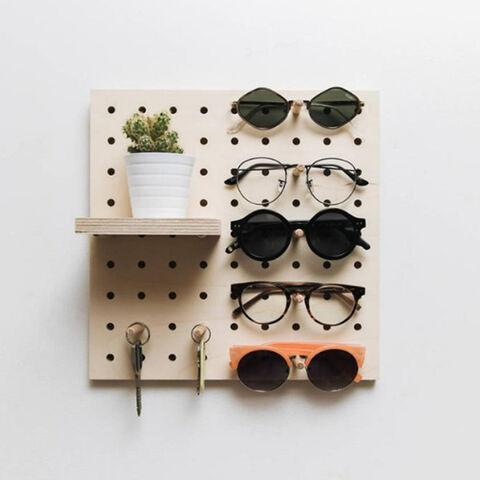
A pegboard display wall offers flexible storage for a large sunglasses collection. I like that the layout can be changed whenever I add new pairs or decide to organize the frames differently.
To recreate this idea, I would install a sturdy pegboard and use suitable hooks or holders designed to support accessories securely. The pegs should be spaced far enough apart to prevent frames from touching, and the board must be mounted firmly.
This arrangement works well in a dressing room, walk-in closet, or hobby-style accessory area. I can group sunglasses by color, style, or frequency of use while keeping the collection visible.
Pro Tip: I test each holder with a lightweight item before placing sunglasses on it. I also check the mounting hardware and avoid positioning the board where frames could be bumped frequently.
1.16. Drawer Felt Sleeves

Felt sleeves are a simple option for protecting individual pairs inside a drawer, tote, or storage box. I find them particularly useful when I want to keep sunglasses separated without buying a large organizer.
I place one pair in each sleeve and arrange them side by side. The soft material creates a barrier between frames and lenses, helping reduce friction when the sunglasses move during normal handling.
Before choosing sleeves, I check that they fit my frames comfortably and don’t put pressure on the arms. I also make sure the sleeves are clean, since grit or dust trapped inside the fabric can still scratch lenses.
Pro Tip: I use a clean microfiber cloth to remove dust from the lenses before putting the sunglasses away. A sleeve protects the pair during storage, but it shouldn’t be used as a substitute for cleaning.
1.17. Magnetic Closure Case

A magnetic closure case is a convenient option for sunglasses I carry throughout the day. The closure makes it quick to put the glasses away, while a well-constructed outer shell can provide some protection against accidental bumps.
I would choose a case with a soft interior, smooth edges, and enough space for the frames. A rigid or semi-rigid design is preferable when the case will be carried in a crowded backpack or work bag.
I also check that the magnetic closure stays shut during normal movement. The case should fit comfortably in the bag without forcing the sunglasses inside or placing pressure on the hinges.
Pro Tip: I keep the case in a dedicated pocket rather than dropping it into a compartment filled with heavy objects. Even a sturdy case benefits from careful placement.
1.18. Car Visor Holder

A car visor holder keeps sunglasses within reach when I’m driving. Instead of leaving them loose on the dashboard or in a cup holder, I can secure them in a designated holder designed for vehicle use.
I look for a holder with a soft lining and a secure grip that doesn’t squeeze the frames. It should attach firmly to the visor without obstructing my view, interfering with airbags, or getting in the way of other vehicle controls.
Because parked cars can become very hot, I avoid treating the visor as long-term storage. Heat can damage some frame materials and coatings, so I take my sunglasses indoors when the car will be parked for an extended period.
Pro Tip: I never reach for or adjust sunglasses while the vehicle is moving. I set up the holder and handle the glasses when the car is safely parked.
1.19. Jewelry Drawer Hybrid

A jewelry drawer can also work as sunglasses storage when I want my accessories in one place. This arrangement is especially helpful in a bedroom or dressing room where drawer space is limited.
I use wider compartments for sunglasses and keep smaller jewelry sections separate. Individual spaces prevent necklaces, earrings, and other items from rubbing against the lenses or catching on the frames.
If the drawer has a soft lining, I check that it is clean and free of loose stones, metal edges, or other objects that could cause scratches. I also avoid stacking jewelry trays directly on top of unprotected sunglasses.
Pro Tip: I reserve one section for sunglasses and another for their cleaning cloths or protective cases. Keeping related items together makes my morning routine easier without mixing everything into one compartment.
1.20. Suitcase Travel Roll

A roll-up sunglasses organizer is useful when I need to pack several pairs for a holiday or weekend trip. Its flexible design can take up less space than carrying a separate hard case for every pair.
I choose a roll with padded, individual sections and secure fastenings. Each pair goes into its own compartment before I roll the organizer closed, making sure the frames aren’t pressed tightly together.
I pack the roll where it won’t be crushed by shoes, toiletries, or heavy luggage. For especially delicate or valuable sunglasses, I may prefer a hard-shell case that offers more resistance to pressure.
Pro Tip: I check every closure before placing the organizer in my suitcase. A secure roll helps keep the sunglasses in place, but it still needs protection from heavy items during travel.
1.21. Bedside Catch Tray

A bedside catch tray gives sunglasses a reliable place to go at the end of the day. I like this idea because small accessories can easily disappear beneath pillows, fall behind furniture, or get mixed up with other bedside items.
I would choose a tray with a soft lining or add a clean protective insert. A shallow tray keeps the glasses visible, while raised edges help prevent them from sliding onto the floor.
This option works best for one or two pairs that I use regularly. If I have a larger collection, I would keep the tray for daily favorites and store the remaining sunglasses in a drawer or protective box.
Pro Tip: I place the tray away from the edge of the nightstand and keep drinks, skincare products, and other spill-prone items separate.
1.22. Closet Shelf Basket

A closet shelf basket helps contain sunglasses when I want a simple storage solution without installing shelves or building a custom organizer. It works particularly well for accessories that I don’t need to display individually.
I would choose a basket with a stable shape and add small compartments or individual cases inside. This keeps the sunglasses from sliding into one another whenever I move the basket.
A fabric-lined basket can create a softer storage area, while a rigid organizer may be easier to clean. Whichever style I choose, I make sure the shelf is accessible and the basket isn’t so deep that I have to dig through the contents.
Pro Tip: I store sunglasses upright or in separate compartments rather than piling them together at the bottom. That makes it easier to find a pair without disturbing the rest.
1.23. Desk Access Drawer

A desk drawer is a useful place for sunglasses when I spend much of the day working and need them nearby before heading outside. It keeps the frames out of the way without requiring extra space on the desktop.
I use a shallow organizer with individual sections so the sunglasses don’t slide around beside stationery, cables, or electronic accessories. A soft insert helps reduce friction and keeps the frames separate from hard objects.
I also avoid placing sunglasses beneath laptops, books, or other heavy items. Even when the drawer is closed, the contents should remain arranged so that nothing presses against the frames.
Pro Tip: I keep only the pairs I regularly need in my desk drawer. A smaller collection is easier to manage and leaves room for other essentials.
1.24. Minimal Display Ledge

A minimal display ledge is a good option when I want a neat sunglasses display but don’t have room for a large rack. A narrow ledge above a dresser or inside a closet can hold a few favorite pairs without using much surface space.
I would choose a ledge with a stable surface and a small lip or suitable holders to prevent the sunglasses from sliding off. Soft inserts can provide extra grip, but I make sure they don’t leave residue or scratch the frames.
This idea works best for a small, carefully selected collection. Since the sunglasses remain exposed, I would keep the ledge away from direct sunlight and clean the display area regularly to prevent dust buildup.
Pro Tip: I avoid overcrowding the ledge. Leaving space between pairs makes them easier to pick up and reduces the chance of one frame knocking against another.
2. FAQs
2.1. How do you store sunglasses without scratching them?
I store sunglasses in individual compartments, clean protective sleeves, or cases with soft interiors. The main goal is to prevent the lenses and frames from rubbing against hard surfaces or other accessories.
Before putting a pair away, I remove loose dust using a clean microfiber cloth. I avoid wiping dusty lenses with rough fabric because particles can cause scratches. I also make sure the storage compartment is clean and large enough to hold the frames without squeezing them.
For extra protection, I keep sunglasses away from keys, coins, jewelry, and heavy objects. If I use an open display, I leave enough room between pairs and move delicate or valuable sunglasses into protective cases when they aren’t in use.
2.2. Where is the best place to keep sunglasses at home?
I choose a storage location based on where I usually wear and remove my sunglasses. An entryway shelf or wall holder is convenient for everyday pairs, while a bedroom dresser or bedside tray works well for glasses I use regularly.
For a larger collection, I prefer a lined storage box, drawer organizer, or closet system with individual compartments. These options keep the sunglasses together and reduce exposure to dust and accidental bumps.
I also avoid storing sunglasses in places that become excessively hot or receive prolonged direct sunlight. A cool, dry indoor location away from heat sources is generally a sensible choice for everyday storage.
Read this next: 25 Fruit Storage Ideas for 2026
Conclusion
I find that keeping sunglasses organized doesn’t require expensive furniture or a complicated storage system. A small lined box, a set of drawer dividers, or a simple wall holder can make everyday routines easier while helping protect frames and lenses.
The best option depends on the size of the collection, the available space, and how often each pair is used. I would start with one storage area for everyday sunglasses and a separate protected space for the rest. Once every pair has a designated home, finding the right frames becomes easier and keeping them in good condition takes less effort.



3 Comments