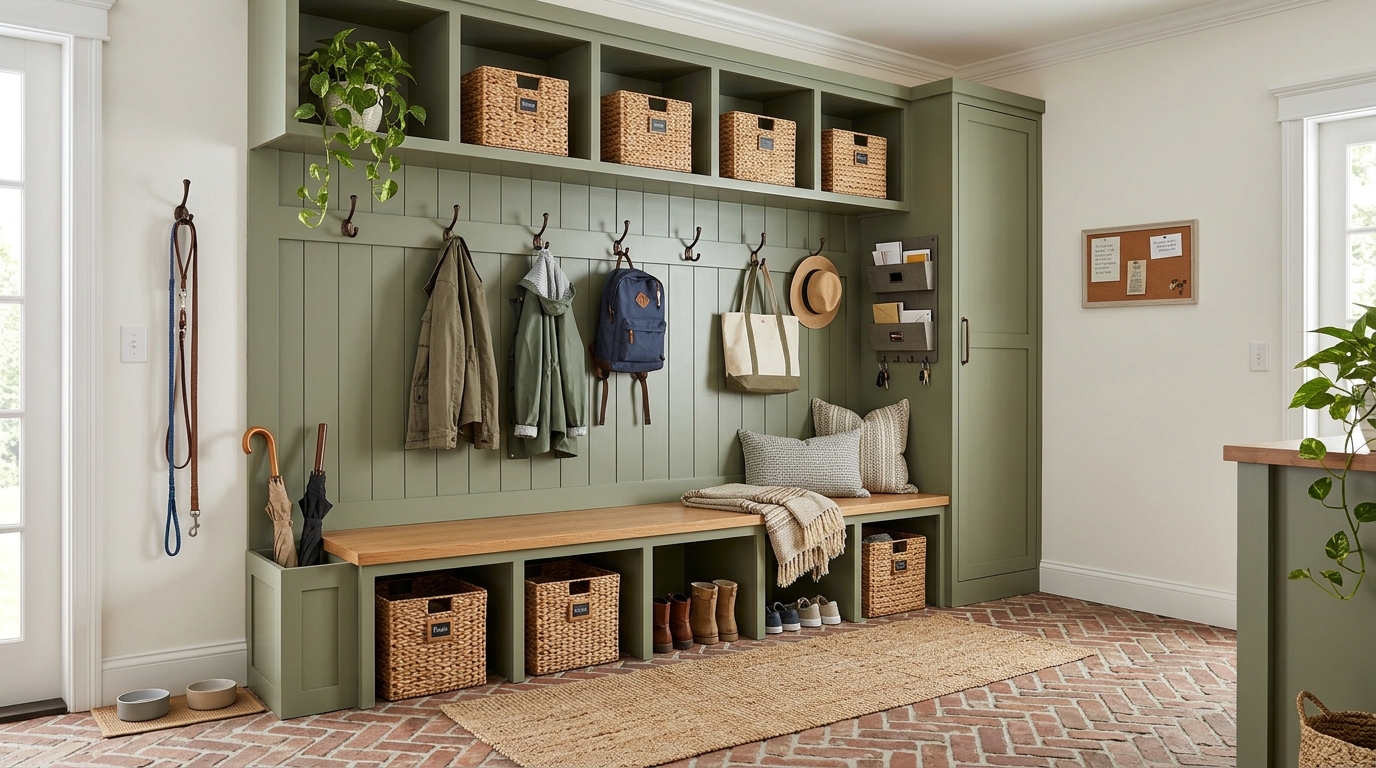
22 Mudroom Storage Ideas for 2026
I find that the best way to organize an entryway is to give everyday items a proper home. Shoes, coats, backpacks, umbrellas, and shopping bags can quickly take over the space near the door when there is no clear storage system.
A well-planned mudroom can solve this problem without requiring a large room or an expensive renovation. I would start with a bench, a few sturdy hooks, and storage that fits the way my household moves through the day.
In this guide, I’m sharing 22 mudroom storage ideas, from compact wall organizers to built-in lockers, window benches, and full-height cabinets. I’ve also included practical planning advice and links to relevant online design references.
I recommend choosing mudroom storage based on the items you use most often and the space available near your entrance. Open cubbies, hooks, and benches make everyday belongings easy to reach, while drawers, baskets, and closed cabinets keep less attractive items out of sight.
Save this for later
Table of Contents
For a small entryway, I would use vertical storage and shallow furniture to preserve walking space. For a busy family, I would assign each person a separate storage area. If coats and shoes regularly get wet, I would also prioritize washable surfaces and good airflow.
Key Takeaways
- I would give everyday shoes, coats, bags, and keys a dedicated place near the entrance.
- I would combine open storage for frequently used items with closed cabinets for seasonal belongings.
- I would use vertical shelves, wall hooks, and narrow benches to make small entryways more useful.
- I would assign separate cubbies or hooks to each family member to reduce clutter.
- I would choose moisture-resistant finishes and allow wet footwear and outerwear to dry properly.
- I would measure the available wall and walking clearance before buying furniture or planning built-ins.
Related article: 23 Under Stair Storage Ideas for 2026
What Do People Store in a Mudroom?
I treat a mudroom as a practical transition space between the outdoors and the rest of the home. It is where I would put the belongings that usually come through the door with me.
These commonly include shoes, coats, jackets, backpacks, handbags, umbrellas, hats, gloves, and keys. Depending on my household’s needs, I might also make room for pet leashes, sports equipment, reusable shopping bags, and outdoor accessories.
I would keep frequently used items within easy reach and store seasonal belongings higher up or behind cabinet doors. Wet shoes and coats should have a suitable drying area rather than being packed immediately into a closed compartment.
My main goal would be to stop clutter before it spreads into the kitchen, living room, and hallway. Even a small wall near the entrance can serve this purpose when I organize it around everyday routines.
Pro Tip: Before choosing furniture, I would observe what everyone drops near the door for a few days. That simple check helps me decide whether I need more shoe space, additional hooks, a bag shelf, or hidden storage.
1. Vertical Drop Zone

Image reference: Mudroom drop-zone design ideas.
I would use a vertical drop zone if I had a wide entry wall but limited floor space. A row of hooks, a narrow bench, and a few open cubbies can keep everyday belongings organized without filling the hallway with furniture.
I would reserve the hooks for coats and bags, use baskets for smaller accessories, and keep the bench area clear enough for putting on shoes. A shelf above the hooks could hold hats or other lightweight items.
Pro Tip: I would place frequently used hooks at comfortable heights for everyone in the household. Lower hooks are especially useful for children who need to put away their own backpacks and jackets.
2. Built-In Bench Lockers

Image reference: Mudroom bench cabinet inspiration.
Built-in lockers are a good choice when I want each family member to have a separate place for coats, shoes, and bags. A bench makes changing shoes easier, while drawers or lift-up compartments can hide footwear and everyday gear.
For a darker design, I would balance deep cabinet colors with lighter flooring, a wood bench, or warm lighting. This keeps the storage wall from feeling too heavy.
I would also plan enough hanging space for bulky jackets and backpacks before deciding how wide each locker should be.
Pro Tip: I would label individual lockers or assign one compartment to each person. A clear system is easier to maintain than one large shared storage space.
3. Slim Wall Cubbies

Image reference: Entryway bench and cubby inspiration.
When an entryway is narrow, I would avoid deep cabinets that make walking through the door uncomfortable. Slim wall cubbies provide a useful place for shoes, hats, small bags, and baskets without taking up unnecessary floor space.
A shallow bench below the storage can provide somewhere to sit while putting on footwear. I would keep the design simple, using a light finish and a few matching baskets to reduce visual clutter.
Before installing anything, I would measure the available depth and check that doors, drawers, and the main walking route remain unobstructed.
Pro Tip: I would store only everyday essentials in shallow cubbies. Bulky boots and large bags may need a separate, deeper compartment.
4. Full-Height Cabinets

Image reference: Custom mudroom bench cabinets.
I would choose full-height cabinets if I wanted to use the entire wall for storage. Floor-to-ceiling cabinetry makes room for coats, cleaning supplies, sports equipment, bags, and seasonal accessories while keeping most belongings out of sight.
The lower section could hold shoes and frequently used items, while upper shelves could store things I only need occasionally. A small step stool may be helpful for reaching higher compartments safely.
This design works particularly well in a dedicated mudroom where the cabinets can be planned around the room’s dimensions.
Pro Tip: I would measure the tallest items I intend to store before setting shelf heights. Adjustable shelves make it easier to reorganize as household needs change.
5. Locker-Style Wall

Image reference: Mudroom locker and bench inspiration.
A locker-style wall gives each person a defined space for daily belongings. I like this approach for busy households because it separates coats, backpacks, shoes, and sports gear instead of letting everything collect in one pile.
I would combine upper cubbies with individual hooks and lower shoe compartments. If several people share the entryway, I would keep the sections consistent so everyone knows where their belongings belong.
The design can be built from custom cabinetry or adapted with modular storage units, depending on the budget and available space.
Pro Tip: I would allow extra hanging room for winter coats and school bags rather than filling every section with narrow shelves.
6. Cabinet-Framed Bench

Image reference: Mudroom bench cabinet inspiration.
I would use a cabinet-framed bench when I wanted a storage wall that looked like part of the home’s original design. Tall cabinets on both sides can hide bulky belongings, while the central bench provides a convenient place to sit and remove shoes.
Drawers below the seat are useful for smaller footwear and accessories. I would add hooks and a durable back panel above the bench to protect the wall from everyday wear.
A wood seat or a few woven baskets can soften the appearance of painted cabinetry without making the area harder to clean.
Pro Tip: I would choose a bench finish that is easy to wipe down and secure wall-mounted storage properly, especially if children will use the bench every day.
7. Slatted Wall System

Image reference: Wooden slat wall with hooks and bench.
A slatted wall adds texture while creating a flexible place for hooks and accessories. I would consider this option if I wanted a modern mudroom without a wall of bulky cabinets.
I could install a bench below the slats, arrange hooks at useful heights, and add a shelf for hats or small baskets. The layout can be adjusted over time as storage needs change.
I would make sure the hooks and slat system are securely attached to suitable structural backing. Decorative slats alone may not be strong enough to support heavy bags or coats.
Pro Tip: I would use a durable, moisture-resistant finish on wood near an exterior door, especially if wet coats and umbrellas regularly hang there.
8. Glass-Front Storage

Image reference: Mudroom design inspiration.
Glass-front cabinets can make a storage wall feel lighter than a row of solid doors. I would use them for neatly arranged baskets, hats, folded scarves, and other accessories that I do not mind seeing through the glass.
A bench and hook rail below would keep everyday belongings easy to reach. I would reserve solid cabinets or drawers for items that look untidy when displayed.
This option works best when I can keep the cabinet contents reasonably organized. Glass doors reduce the closed-in appearance, but they do not hide clutter.
Pro Tip: I would use matching containers behind the glass to give the storage a tidy appearance without having to arrange every small item individually.
9. Vented Upper Cabinets

Image reference: Mudroom storage design inspiration.
I would consider ventilated cabinet doors if my household regularly brings in damp coats, sports gear, or outdoor accessories. Perforated or slatted doors can help air circulate, although ventilation also depends on the cabinet’s construction and the surrounding conditions.
I would keep wet items separate from dry clothing and avoid packing damp shoes into enclosed compartments. A washable floor mat or boot tray near the door would help contain water and dirt.
For particularly wet gear, I would allow items to dry fully before moving them into long-term storage.
Pro Tip: Ventilation is not a substitute for drying. I would leave enough space around damp items and check regularly for moisture buildup or musty smells.
10. Framed Bench Niche

Image reference: Closet-to-mudroom conversion inspiration.
A framed bench niche creates a dedicated place to sit without making the entryway feel like it is filled with separate furniture pieces. I would place the bench between tall cabinets and use the wall above it for hooks or a compact shelf.
The lower area could hold shoes in baskets or open compartments, while upper cabinets would store seasonal items and overflow. A wood back panel could add warmth to an otherwise simple design.
I would choose this layout when I had enough wall depth for a comfortable seat and enough clearance to walk past it.
Pro Tip: I would check the bench dimensions and the clearance around the doorway before building a recessed niche. A beautiful storage unit is not useful if it makes the entrance difficult to navigate.
Also read: 22 Under Desk Storage Ideas for 2026
11. Basket Upper Cubbies

Image reference: Mudroom storage ideas.
I would use upper cubbies with baskets when I needed a simple way to organize smaller items. Gloves, scarves, hats, pet accessories, and spare bags can easily become scattered when they do not have designated containers.
Woven baskets add texture, while fabric or plastic bins can work better for items that need frequent cleaning. I would label each basket so family members can return things to the correct place.
Because the baskets sit above the bench, I would keep heavier belongings on lower shelves and use the upper compartments for lightweight items.
Pro Tip: I would measure the cubbies before buying baskets. A little extra clearance makes containers easier to pull out without scraping the cabinet.
12. Layered Open Shelves

Image reference: Mudroom storage and shelving inspiration.
Layered open shelves are useful when I want to keep frequently used items visible. I would install a shelf above the hooks for hats and small baskets, then use the bench and lower compartments for shoes and bags.
Open shelving is often easier to adapt than fixed cabinetry. I can move containers, change the arrangement, and make better use of the wall as my storage needs change.
However, I would avoid filling every shelf with decorative items. The main purpose of the space should remain practical storage.
Pro Tip: I would keep one shelf for everyday essentials and another for occasional-use items. This makes it easier to find things without searching through several containers.
13. Arched Storage Nook

Image reference: Arched closet-to-mudroom design.
An arched storage nook can turn an ordinary entryway into a distinctive feature. I would use the curved opening to frame a bench, add a few hooks, and place baskets or shoe compartments underneath.
This design can work especially well when an existing doorway or architectural feature already has an arch. Building a new arch purely for storage may require more construction work than a simple bench-and-hook arrangement.
I would keep the storage inside the nook functional, using the upper shelves for lightweight items and the lower section for everyday shoes.
Pro Tip: I would plan the shape and dimensions before choosing cabinetry. Custom curved construction can increase the cost, so a simple rectangular storage unit may be the more practical option for a tight budget.
14. Utility Storage Tower

Image reference: Mudroom cabinetry inspiration.
I would add a tall utility cabinet when the mudroom also needs to hold cleaning supplies, a small vacuum, spare household items, or outdoor equipment. Keeping these belongings in one dedicated cabinet prevents them from taking over the shoe bench and coat area.
Adjustable shelves would help me accommodate items of different heights. I would keep frequently used supplies at a comfortable level and store heavier objects on lower shelves.
If the cabinet holds cleaning products, I would secure hazardous items away from children and pets.
Pro Tip: I would measure the actual vacuum, mop, or other tall equipment before choosing the cabinet. A few extra inches of usable height can make a big difference.
15. Mudroom-Pantry Combo

Image reference: Mudroom and utility-space inspiration.
A mudroom that connects to a pantry or utility room can make good use of space that already serves several purposes. I would keep coats, shoes, and bags near the entrance, then place bulk household supplies farther inside.
The key is to keep the two areas clearly separated. Outdoor belongings should not interfere with food storage, and muddy footwear should have a designated spot away from clean pantry shelves.
This arrangement is particularly helpful in homes where the garage or side entrance opens directly into a kitchen or utility area.
Pro Tip: I would plan the walking route first. The entrance should remain easy to use even when someone is carrying groceries, putting away shoes, or opening a pantry door.
16. Window Seat Dropzone

Image reference: Mudroom design ideas.
I would turn the space below a window into a useful drop zone rather than leaving it empty. A built-in bench can provide a place to sit, while drawers underneath hold shoes, bags, and everyday accessories.
The window brings natural light into the entryway, helping the space feel more open. I would add a small row of hooks nearby if the wall layout allows it, keeping coats and backpacks within easy reach.
I would also consider the window’s height and opening mechanism before planning the bench or any upper storage.
Pro Tip: I would use a washable bench cushion or skip the cushion entirely if the area regularly collects wet outdoor clothing and muddy gear.
17. Zoned Storage Wall

Image reference: Mudroom drop-zone storage planning.
I would divide a storage wall into separate zones instead of asking one shelf or cabinet to hold everything. Upper cubbies can store seasonal accessories, the middle section can hold coats and bags, and lower compartments can keep shoes off the floor.
This arrangement works well for shared family spaces because everyone can quickly see where each type of item belongs. I would also consider a small tray or shelf for keys and other things that are easy to misplace.
The best layout depends on the belongings that come through the door every day, not simply on how many cabinets fit along the wall.
Pro Tip: I would give each family member a defined section and keep seasonal overflow separate from everyday storage. That makes daily tidying easier.
18. Mixed Material Zones

Image reference: Mudroom cabinetry design inspiration.
I like the idea of mixing materials because it can make a practical storage area feel connected to the rest of the home. I would pair painted cabinets with a natural wood bench or use a wood-backed hook panel to create contrast.
Different materials can also help define separate functions. Closed cabinets hide clutter, while an open wood section highlights the everyday drop zone.
I would prioritize durability over appearance alone, particularly around the floor, bench, and hooks where shoes, bags, and wet clothing create regular wear.
Pro Tip: I would limit the design to a few coordinated finishes. Too many contrasting materials can make a small mudroom feel busy.
19. Corner Bench Storage

multitradebuildingservices.com
Image reference: Mudroom storage and bench inspiration.
I would consider an L-shaped bench if the entryway has an unused corner. It can create seating along two walls while making room underneath for shoes, baskets, or storage compartments.
Vertical shelves and hooks can use the wall space above the bench, and a tall cabinet at one end can hold bulkier items. I would keep the corner itself easy to access so belongings do not become trapped behind other things.
For smaller rooms, a compact corner bench may be more practical than a long storage unit that blocks the walking route.
Pro Tip: I would test the layout with the doors fully open and someone sitting on the bench. That helps reveal whether the corner design leaves enough room for everyday movement.
20. LED Bench Niche

Image reference: Modern mudroom design inspiration.
I would add LED lighting to a bench niche if the entryway has limited natural light or if I want better visibility in the evening. A strip light above the hooks can illuminate coats and bags, while ceiling lighting provides general illumination.
I would plan the wiring and light placement before the cabinetry is installed. The light should help me find everyday belongings without shining directly into my eyes.
A simple combination of concealed cabinets, a wood bench, and integrated lighting can give the area a clean, modern appearance.
Pro Tip: I would choose lighting that is suitable for the installation location and have electrical work completed safely. I would also make sure the controls are easy to reach when entering the house.
21. Open Rail System

Image reference: Mudroom drop-zone ideas.
An open rail system is one of the simpler options I would consider for a busy family entryway. A long row of hooks makes coats and bags easy to grab, while wire baskets or open shelves below provide a home for shoes and smaller belongings.
I would use a continuous shelf above the rail for lightweight accessories and keep the lower section open enough for cleaning. Because everything remains visible, the system is quick to use but requires regular tidying.
This is a useful alternative to custom cabinetry when I want a flexible setup without a major renovation.
Pro Tip: I would choose sturdy hooks and secure the rail to appropriate wall supports. The system should handle the actual weight of coats and bags rather than just look attractive.
22. Drawer Bench Storage

Image reference: Mudroom bench cabinet inspiration.
I would choose a drawer bench if shoes tend to collect in piles near the entrance. Deep drawers can separate everyday footwear, slippers, and accessories while keeping the floor clear.
I would add hooks above the bench for coats and bags, creating a complete drop zone in one area. Drawer dividers or individual sections can make it easier to find matching shoes without moving everything around.
This arrangement works best when the drawers can open fully without blocking a doorway or preventing someone from walking past the bench.
Pro Tip: I would avoid putting damp shoes directly into closed drawers. I would let them dry first or use a separate ventilated shoe area for wet footwear.
FAQs
How much storage does a mudroom really need?
I would size mudroom storage around the number of people using it and the belongings they bring home each day. A household with children, pets, or outdoor hobbies may need more space for shoes, backpacks, coats, and equipment than someone living alone.
As a starting point, I would plan one main coat hook and one designated shoe area per person. I would then add shared storage for guests, umbrellas, cleaning supplies, and seasonal accessories.
I would also leave some empty space instead of filling every shelf. A little flexibility makes it easier to accommodate bulky winter coats, new shoes, or changing household routines.
Pro Tip: I would measure the available wall, bench depth, cabinet dimensions, and walking clearance before purchasing storage furniture. The right amount of storage is the amount that works without making the entrance uncomfortable to use.
Should mudroom storage be open or closed?
I would use a combination of open and closed storage because each serves a different purpose. Open hooks, cubbies, and shoe shelves are convenient for belongings I use every day, while closed cabinets and drawers help conceal clutter.
Open storage also allows better visibility, so I can quickly check whether shoes, bags, or jackets are in their proper places. However, it can look messy when too many items are left out.
Closed storage gives the room a cleaner appearance, but wet items should not be sealed away before they have dried. I would keep damp footwear and outerwear in a suitable ventilated area.
Pro Tip: I would keep daily essentials near the entrance and move seasonal items into upper cabinets or deeper storage. This balance makes the mudroom easier to maintain without constant rearranging.
Read this next: 23 Backpack Storage Ideas for 2026
Conclusion
I believe an organized mudroom starts with understanding how the entrance is used every day. The most attractive storage design will not help much if it does not have enough room for the shoes, coats, bags, and accessories that regularly come through the door.
For a small entryway, I would start with wall hooks, a narrow bench, and vertical storage. For a busy household, I would consider individual lockers, labeled baskets, or a combination of drawers and cabinets. If the room regularly handles wet footwear, I would prioritize easy-to-clean surfaces and proper drying space.
I would also make one change at a time rather than investing in a complete renovation immediately. A few well-placed hooks and baskets may solve the problem, while a larger built-in system can be added if the household genuinely needs more capacity.
The best mudroom storage idea is the one that makes it easy to put things away and just as easy to find them when it is time to leave.



3 Comments