
24 Basement Storage Ideas for 2026
A basement can give me valuable extra storage space, but only when I can find what I need without moving five boxes first. Seasonal decorations, spare bedding, tools, kids’ toys, and household supplies can quickly take over if everything gets stacked in whatever corner has room.
I find it helpful to plan basement storage around two things: the conditions in the room and how often I need to use each item. A damp unfinished basement needs different storage solutions from a dry, finished basement that doubles as a family room or playroom.
In this guide, I’m sharing 24 basement storage ideas that make better use of shelves, walls, cabinets, furniture, and awkward spaces under the stairs. I’ll also explain how to organize belongings, protect items from moisture, and make everyday storage easier to maintain.
My favorite basement storage solutions start with sturdy shelving, clearly labeled containers, and a separate place for each category of belongings. Clear bins make supplies easier to identify, while closed cabinets keep finished rooms looking tidy. Under-stair cabinets, wall-mounted shelves, storage benches, and built-in units can turn unused areas into useful storage.
Save this for later
Table of Contents
Before buying organizers, I recommend checking for leaks, dampness, and musty smells. Keep belongings off concrete floors, choose materials suited to the basement environment, and avoid storing moisture-sensitive items in areas where humidity is not controlled.
Key Takeaways
- I start by checking for water leaks, dampness, and musty odors before organizing anything.
- Clear, labeled containers make seasonal items and household supplies easier to find.
- Sturdy shelves help me use vertical space without covering the entire floor.
- Closed cabinets and storage furniture work well in finished basements.
- I keep frequently used items at reachable heights and reserve upper shelves for lightweight belongings.
- Important papers, photographs, electronics, and delicate keepsakes need a dry, stable environment.
- Wall-mounted storage and under-stair cabinets make better use of awkward spaces.
Related article: 24 Storage Ideas For Small Spaces in 2026
What Do People Store in Basements?
I usually think of a basement as a place for belongings that I need occasionally but don’t want taking up space in the main living areas. Seasonal decorations, luggage, holiday supplies, sports equipment, tools, spare furniture, and extra household products are common choices.
Some households also use basements for laundry supplies, pantry overflow, books, toys, and hobby materials. In a finished basement, storage may need to share space with a guest room, home office, entertainment area, or children’s playroom.
However, not everything belongs in a basement. Humidity, leaks, temperature changes, and limited ventilation can damage cardboard boxes, fabrics, paper, and wood. Electronics and sentimental items also need more protection than ordinary household supplies.
Before deciding what to store, I check the room for signs of moisture and make sure the space is suitable for the items I want to keep there. I also leave access to electrical panels, plumbing shutoffs, sump pumps, and other equipment that may need maintenance.
Pro Tip: I sort everything into four groups before organizing: keep in the basement, move elsewhere, donate or sell, and discard. This helps me avoid buying storage containers for things I no longer need.
Clear Bin System
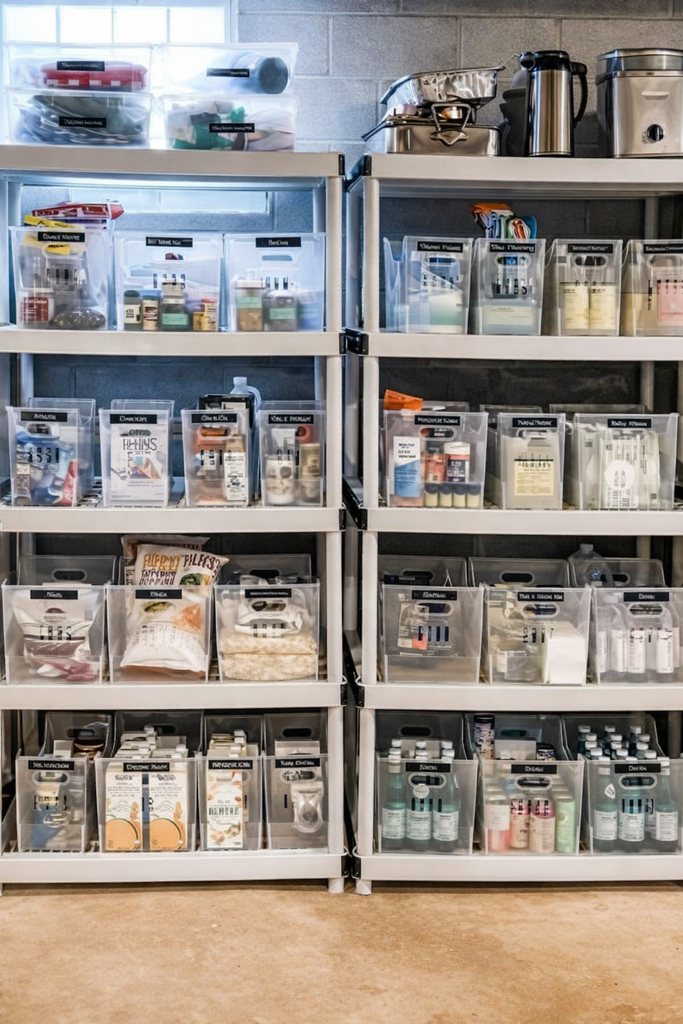
I like using clear bins on sturdy utility shelves because I can see the contents without opening every container. This arrangement works particularly well for holiday decorations, spare household supplies, craft materials, and children’s toys.
I group similar belongings together and give each shelf a purpose. For example, one section can hold seasonal decorations, another can hold spare linens, and a third can hold tools or home maintenance supplies.
I choose bins that fit the shelf depth without hanging over the edges. Labels are still useful because transparent containers can become difficult to read when several items are packed together.
Good overhead lighting helps me find things quickly, especially in unfinished basements with few windows. I also leave enough space around the shelves to walk safely and reach the containers.
Pro Tip: I measure the shelf depth, width, and clearance before buying bins. Matching container sizes can make stacking and rearranging easier, but I avoid stacking anything higher than I can safely reach.
Labeled Memory Bins
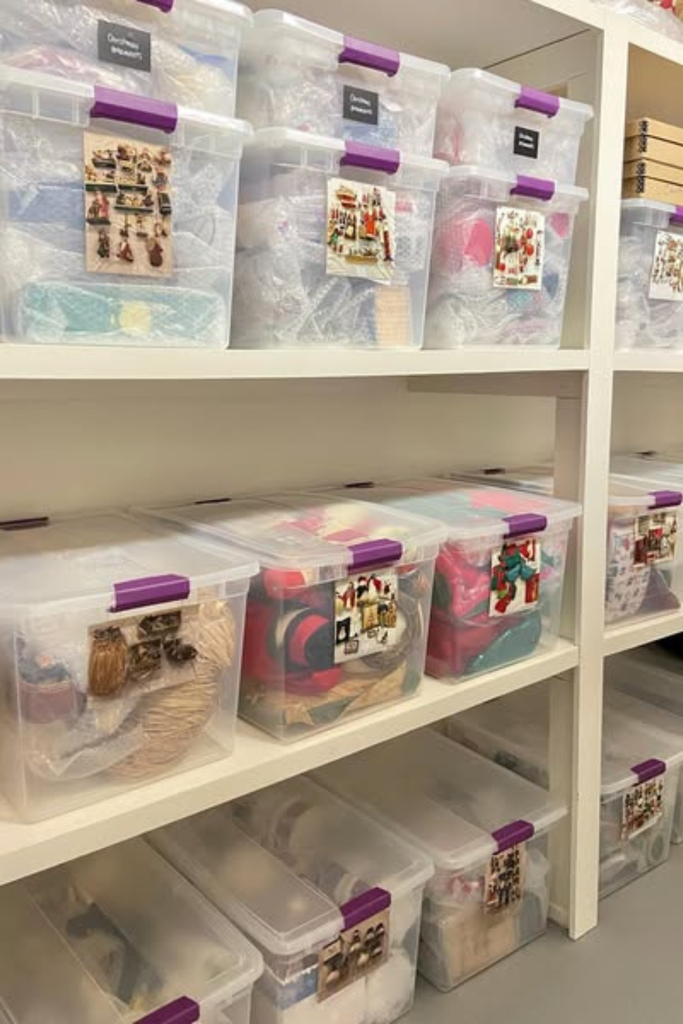
Family photographs, children’s artwork, letters, keepsakes, and other sentimental belongings deserve more care than everyday storage supplies. I prefer grouping these items in clearly labeled containers so I can locate a particular memory without unpacking everything.
I use labels that describe the contents, such as “Family Photos,” “School Memories,” or “Baby Keepsakes.” Adding a simple inventory or a few photographs of the contents can make it easier to remember what is inside.
For valuable paper items and photographs, I choose archival-quality materials where appropriate and keep them in a dry, climate-controlled area. An ordinary sealed plastic bin does not make a damp basement safe for delicate belongings; trapped moisture can still cause damage.
I also avoid overfilling containers with fragile objects. Acid-free tissue or suitable protective wrapping can help prevent scratches and reduce contact between delicate pieces.
Pro Tip: I keep irreplaceable photographs, original documents, and especially important family records somewhere with reliable temperature and humidity control rather than relying on basement storage alone.
Category Shelf Zones
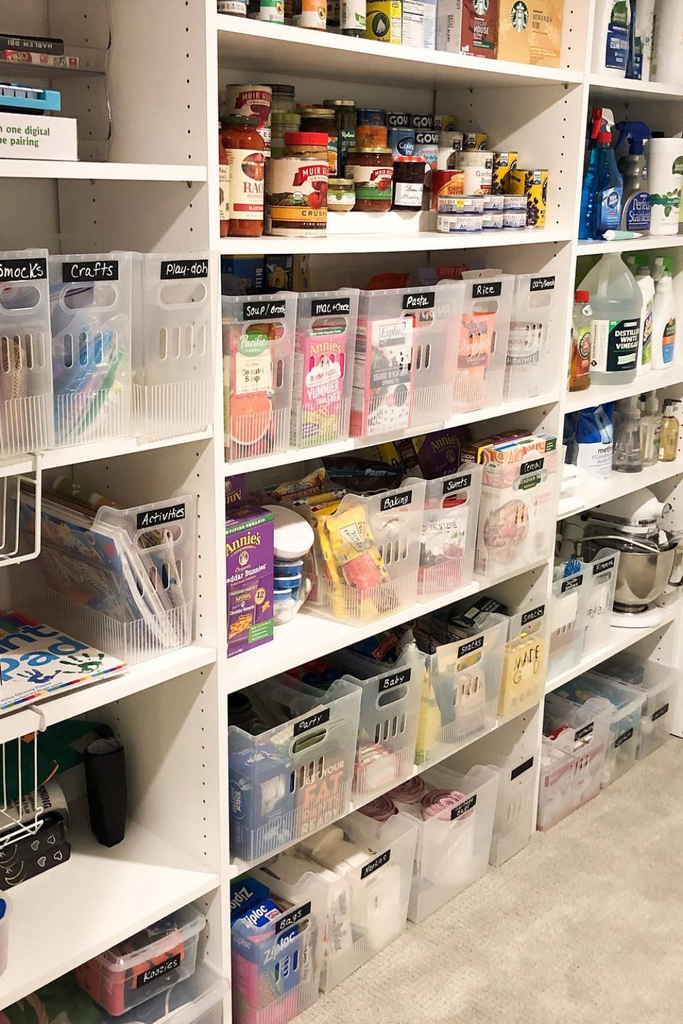
Giving each shelf a specific purpose helps me prevent basement storage from turning into a mixture of unrelated belongings. One shelf might hold laundry supplies, another could hold paper products, and a separate section could be reserved for small household tools.
I prefer keeping frequently used items near eye level or within comfortable reach. Shallow bins can work well for small supplies because I don’t have to move several layers of items to reach the ones at the back.
This system suits finished basements, utility rooms, and organized overflow storage areas. I use large, easy-to-read labels so everyone in the household knows where things belong.
I also leave room for restocking. When a shelf is packed from edge to edge, it becomes harder to notice what I already own or put items away after using them.
Pro Tip: I leave a little open space in each category rather than filling every shelf completely. That extra room makes it easier to put away new purchases without reorganizing the whole basement.
Bulk Storage Wall
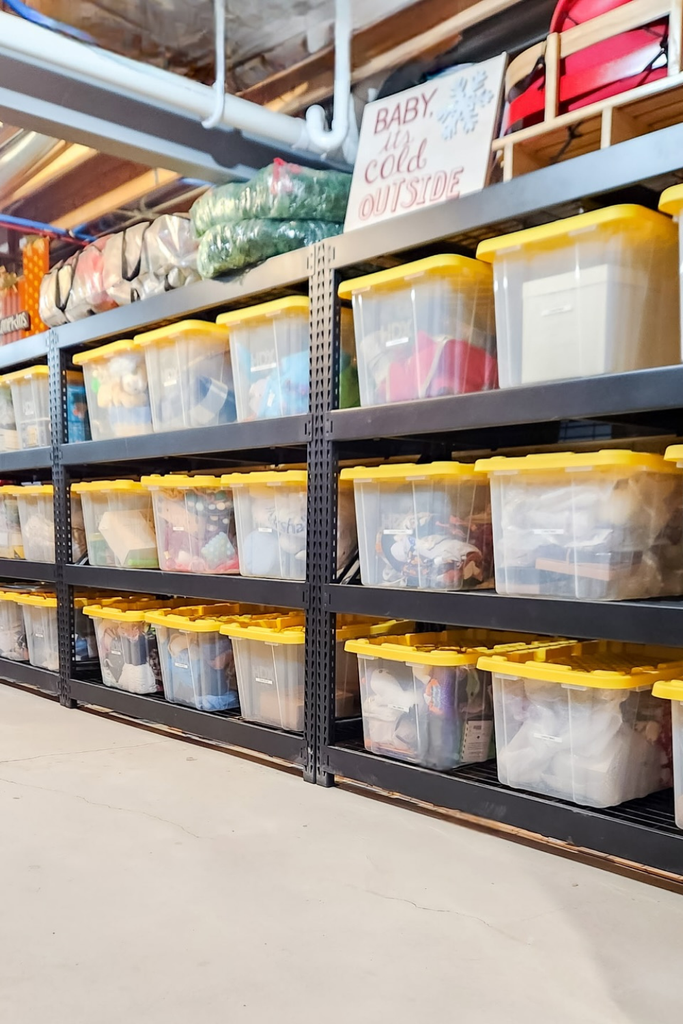
A long basement wall can hold a large amount of household storage when I arrange shelving in a consistent row. This setup is useful for seasonal clothing, camping gear, luggage, sports equipment, and bulky household supplies.
I choose shelving designed to support the expected weight and make sure the unit is assembled according to the manufacturer’s instructions. Heavy items belong on lower shelves, while lightweight items can go higher.
Uniform containers create a neater appearance and make it easier to use the available shelf space. I label the fronts where possible so I don’t have to remove every bin to find what I need.
I also check the wall and floor conditions before installing the shelving. If the basement has a history of water intrusion, I address the source of the moisture before placing stored belongings nearby.
Pro Tip: I measure the entire wall and plan the walking path before purchasing a long shelving system. I leave access to windows, doors, utility equipment, and any areas that need regular inspection.
Built-In Cabinets
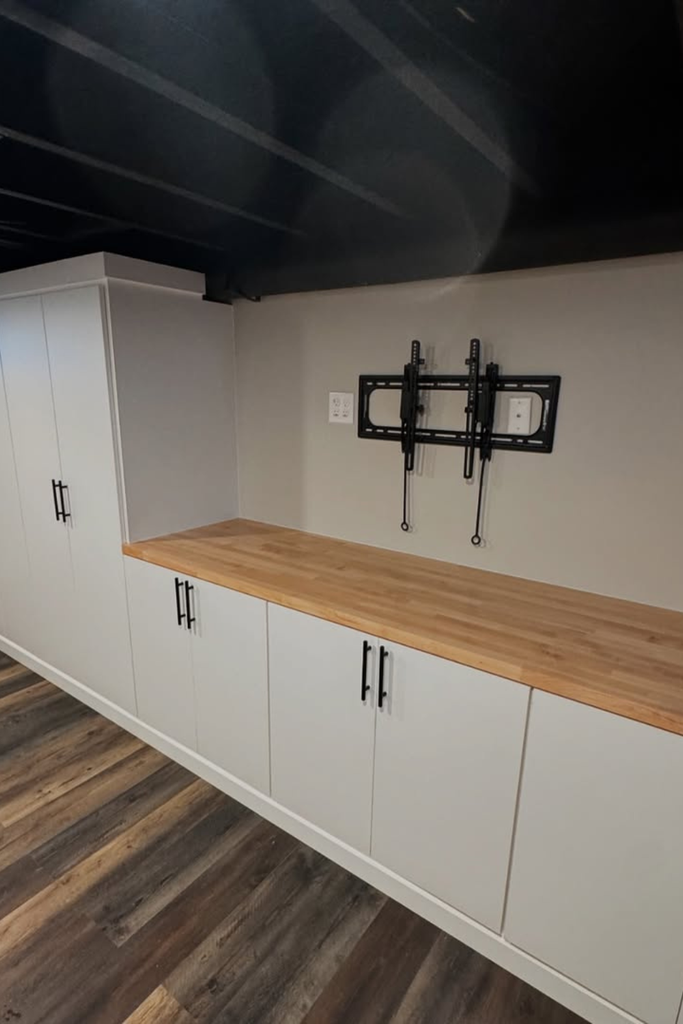
Built-in cabinets can make a finished basement feel more like a regular living space instead of a room full of storage containers. I like this option when the basement doubles as a family room, home office, or guest area.
Lower cabinets can hide games, blankets, craft supplies, and miscellaneous household items. Taller cabinets provide room for larger belongings, while a countertop can serve as a place to sort laundry, wrap gifts, or complete small projects.
I plan cabinet dimensions around the items I intend to store rather than choosing units based only on appearance. Adjustable shelves make it easier to accommodate changing needs.
Moisture control matters here, too. I use materials appropriate for the basement conditions and avoid installing cabinets against damp walls without addressing the underlying problem.
Pro Tip: Before installing permanent cabinets, I check for plumbing, electrical wiring, access panels, and potential water entry points. A cabinet should never block equipment that needs inspection or servicing.
Kid-Safe Storage
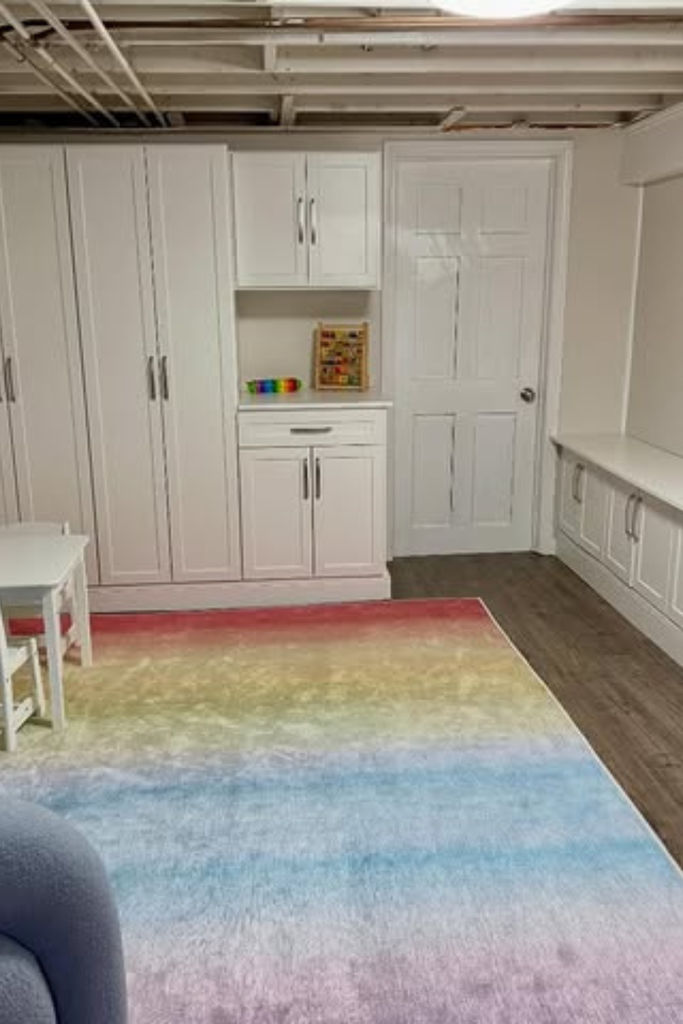
When a basement doubles as a playroom, I organize storage around the way children use the space. Low, accessible bins make it easier for kids to put away toys, puzzles, and building sets without climbing or pulling heavy containers from high shelves.
I use separate containers for different types of toys and keep an open area for playing. A low cabinet or sturdy storage bench can hold larger items, while small bins help keep frequently used toys together.
I secure tall furniture and shelving to suitable wall framing or anchors according to the manufacturer’s instructions. Heavy objects stay low, and I avoid placing furniture where children could climb toward windows, cords, or other hazards.
Lighting is important because children need to see toys and obstacles clearly. I also keep cleaning products, tools, batteries, sharp objects, and other potentially dangerous supplies in secure storage away from children’s reach.
Pro Tip: I check toys for age recommendations and small parts before storing them in shared play areas. Separate containers can help prevent younger children from accessing pieces intended for older kids.
Hidden Display Storage
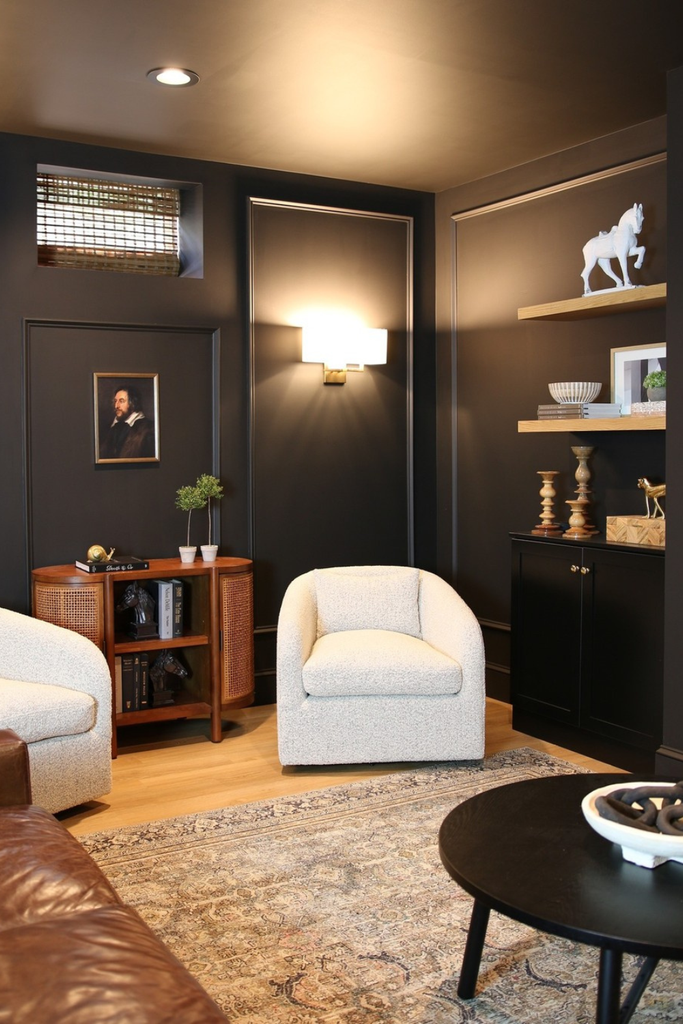
In a finished basement, I like combining closed storage with a few open shelves. Closed cabinets hide everyday clutter, while open shelves provide room for books, framed photographs, decorative objects, or a small collection.
This arrangement works well in entertainment rooms and basement lounges where I want the space to feel comfortable rather than crowded. I keep displayed objects to a manageable number so the shelves remain easy to clean.
I also consider lighting before deciding where to place decorative items. Even room lighting helps me see the contents, while small display lights can highlight selected shelves without making the whole wall look busy.
I avoid using open shelves for belongings that need protection from dust or changing humidity. Valuable objects and moisture-sensitive decorations are better kept in suitable enclosed storage in a dry room.
Pro Tip: I combine a few open shelves with closed cabinets below. That gives me room to display favorite pieces while keeping less attractive household supplies out of sight.
Furniture Does Double
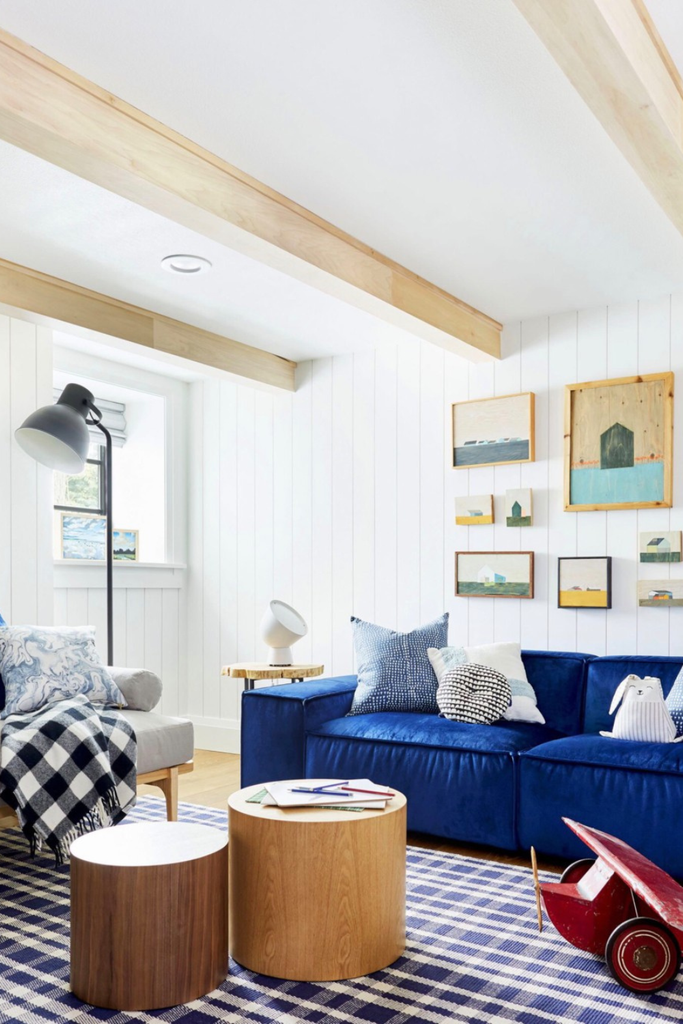
Multifunctional furniture is useful when a basement serves as both a living area and a storage space. A storage bench, lift-top table, or ottoman with an internal compartment can hold blankets, board games, pillows, and other items I want close at hand.
I choose furniture according to the amount of space available and how people move through the room. A bulky storage unit may hold plenty, but it isn’t helpful if it blocks a walkway or makes the seating area uncomfortable.
I also check the construction and weight limits before placing heavy objects inside storage furniture. Lids should be easy to operate, and items stored beneath seating should not create a tipping or pinching hazard.
For basements with limited floor space, furniture that serves two purposes can reduce the need for extra bins and cabinets.
Pro Tip: I reserve furniture compartments for lightweight items I use regularly. Heavy tools, cleaning products, and damp-prone belongings are better stored in suitable dedicated storage rather than inside upholstered furniture.
DIY Shelf Build
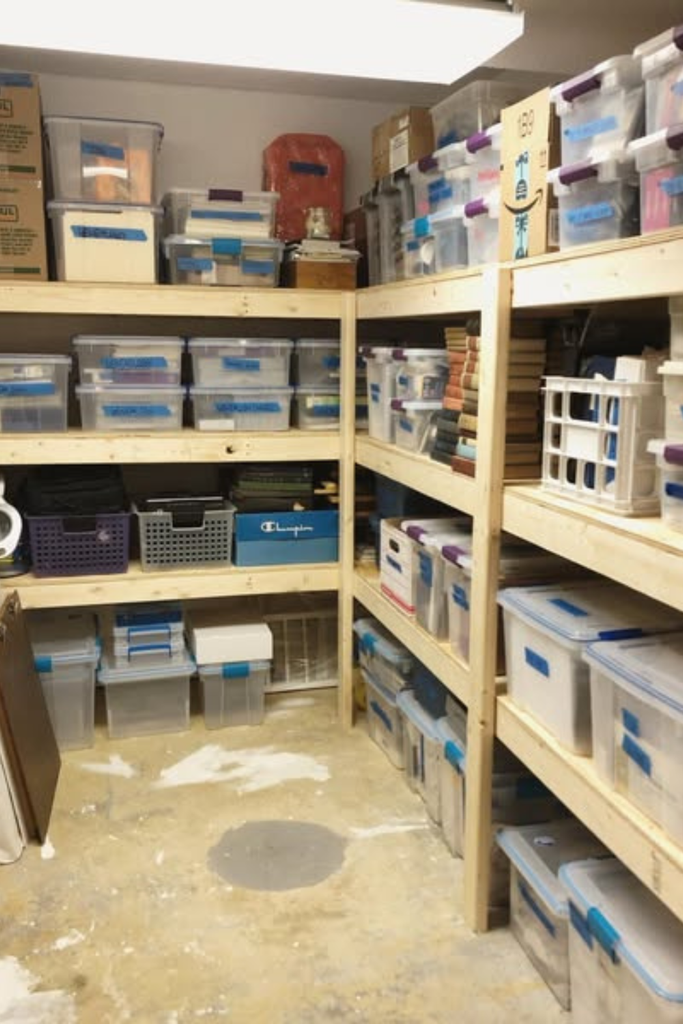
Building shelves can be a practical way to fit storage around the dimensions of an unfinished basement. I can choose the height, depth, and spacing to suit my containers instead of trying to make standard shelving work in an awkward area.
Before starting, I measure the available wall and decide what the shelves will hold. Basic lumber can work for many projects, but the materials, fasteners, supports, and overall design must match the expected load.
I make sure wall-mounted shelves are secured to suitable framing or masonry with appropriate hardware. Freestanding units should be stable, level, and assembled according to their design. If I plan to store particularly heavy equipment, I avoid guessing about weight capacity.
Air circulation is another consideration. I leave reasonable space around stored items and avoid pushing shelves against visibly damp walls. Painting or sealing a surface does not fix a leak or persistent moisture problem.
Pro Tip: I build the shelf plan around the containers I already own or intend to buy. Measuring those first helps me avoid wasted space and shelves that are too narrow or too far apart.
Wire Rack Rows
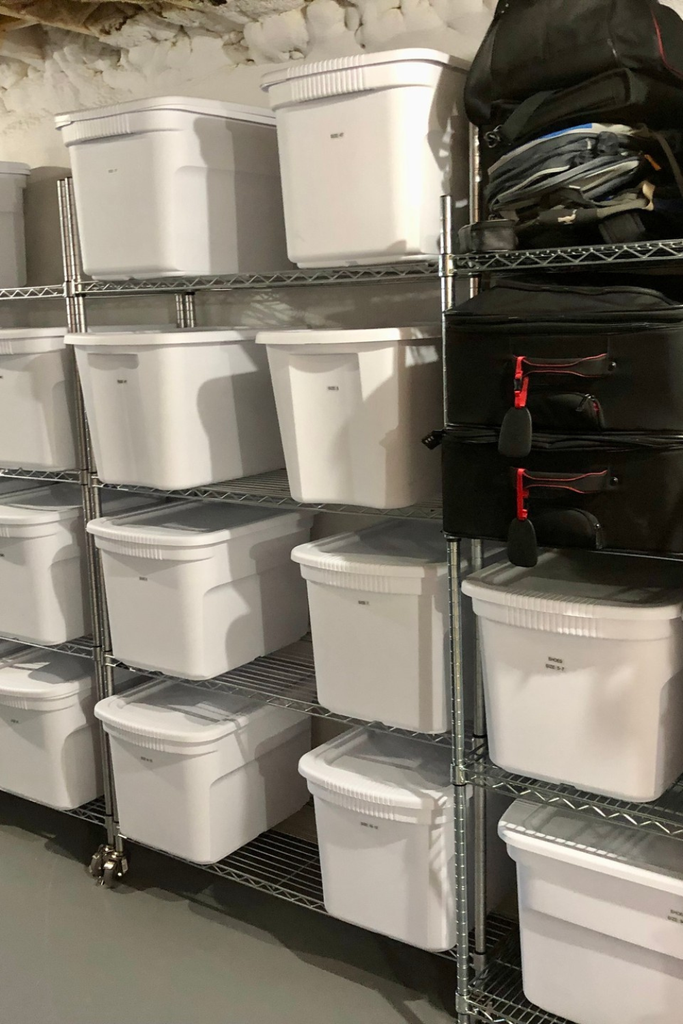
Wire shelving is useful in utility areas where ventilation and easy cleaning matter. Its open design allows air to circulate around stored items more freely than a solid-sided cabinet, making it a practical choice for many household supplies.
I choose a rack with a suitable load rating and adjustable shelves so I can accommodate different container heights. Locking wheels may be convenient for lightweight mobile storage, but I prefer a stable, fixed unit for heavy items.
I use plastic containers to group smaller belongings and keep labels visible. Open shelving can look tidy when each section has a purpose, but it doesn’t protect contents from dust or water leaks.
I also make sure the rack is level and placed where it won’t interfere with walking paths or basement equipment. I keep heavy containers on lower shelves and follow the manufacturer’s stacking and load instructions.
Pro Tip: I don’t treat wire shelving as a cure for basement dampness. If the room smells musty or has recurring condensation, I investigate the moisture source before storing fabrics, paper, or other vulnerable items there.
Custom Wall Shelves
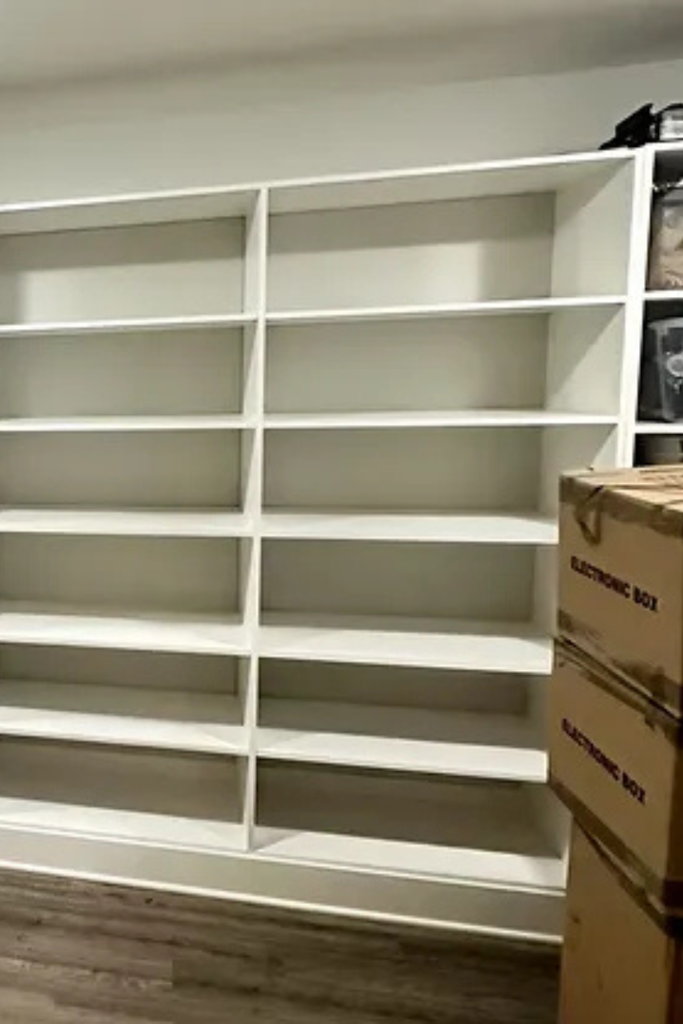
Custom wall shelves can make use of basement walls that don’t fit standard furniture dimensions. I find them especially helpful for storing books, display pieces, small baskets, or lightweight household supplies in a finished room.
I vary the shelf spacing according to the objects I plan to place on them. Taller sections can accommodate baskets and decorative pieces, while shorter spaces are useful for books and smaller containers.
If I want the shelves to blend into the room, painting them to match the walls can create a more unified appearance. I still prioritize the support system and attachment method over the finish.
I check what is behind the wall before drilling, especially in areas with electrical wiring or plumbing. For masonry walls, I use appropriate anchors and fasteners rather than assuming ordinary screws will hold securely.
Pro Tip: I keep frequently handled items on shelves that are easy to reach. Anything heavy, fragile, or awkward to lift should not be placed high above head level.
Library-Style Storage
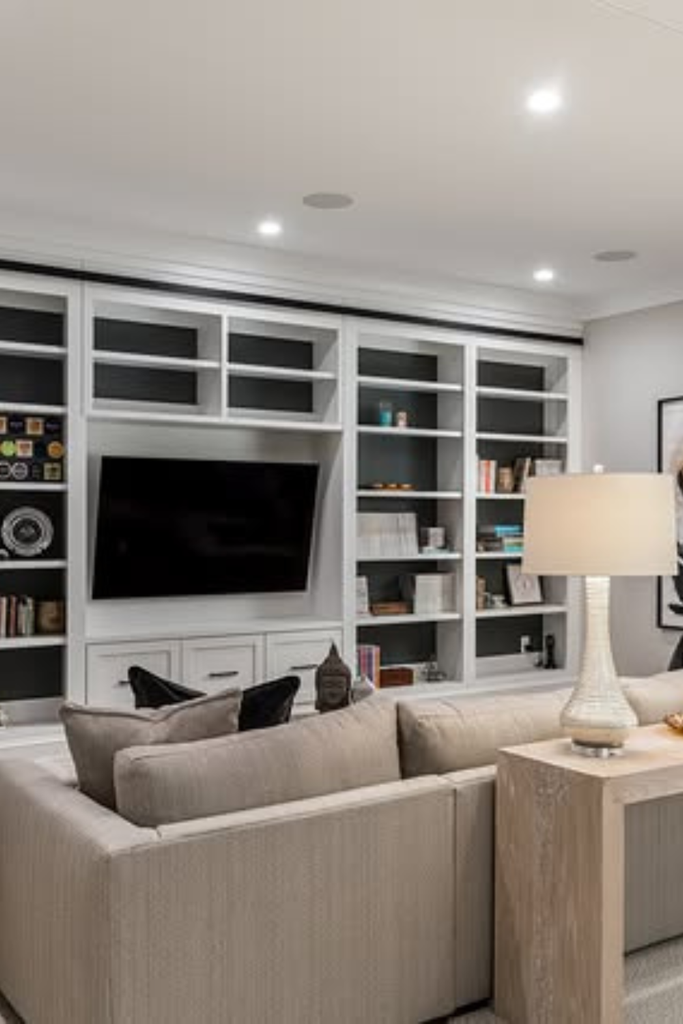
A basement library or reading corner benefits from shelving that keeps books organized and the floor clear. Full-wall bookcases can hold books, board games, magazines, and selected decorative pieces in one planned area.
I prefer adjustable shelves because book collections change over time. Closed cabinets at the bottom can hide overflow supplies, while open shelves above keep regularly used books accessible.
I leave enough space for comfortable seating and clear walking routes. A rolling ladder may suit a tall, professionally designed library, but I wouldn’t add one unless the room height, installation, and safe use make sense.
Books need a dry environment because persistent humidity can encourage mold and damage paper. If the basement is prone to dampness, I choose a different location for valuable books rather than trying to protect them with shelving alone.
Pro Tip: I organize books by a system that makes sense for the household, such as subject, family member, or frequency of use. I keep frequently read books within easy reach and reserve higher shelves for lightweight, less-used items.
Also read: 26 Vertical Storage Ideas for 2026
Media Wall Storage
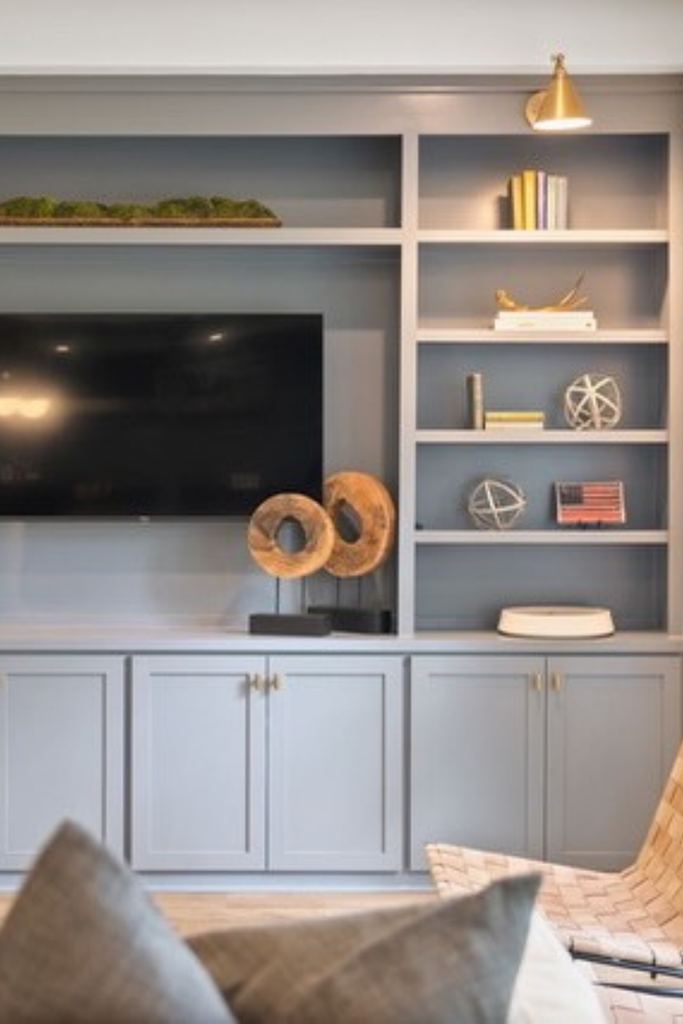
A media wall can provide a practical home for a television, gaming equipment, board games, remotes, and entertainment accessories. I like using low cabinets beneath the screen because they hide clutter without taking up additional floor space.
Open shelves at the sides can hold a few books and decorative pieces, while drawers or doors conceal small items that tend to spread around the room. I leave enough space for equipment ventilation and follow the manufacturer’s instructions for electronic devices.
Cable management deserves attention, too. I use suitable cable organizers to reduce tangles and keep cords from becoming trip hazards. Electrical equipment should stay away from areas where leaks or condensation are possible.
Lighting can improve the room, but I avoid placing bright fixtures where they reflect directly onto the television screen. A combination of comfortable ambient lighting and carefully positioned lamps usually works well.
Pro Tip: I label storage for controllers, remotes, and cables, and keep compatible accessories together. I also avoid overloading power strips or covering ventilation openings on electronic equipment.
Staircase Storage Nook
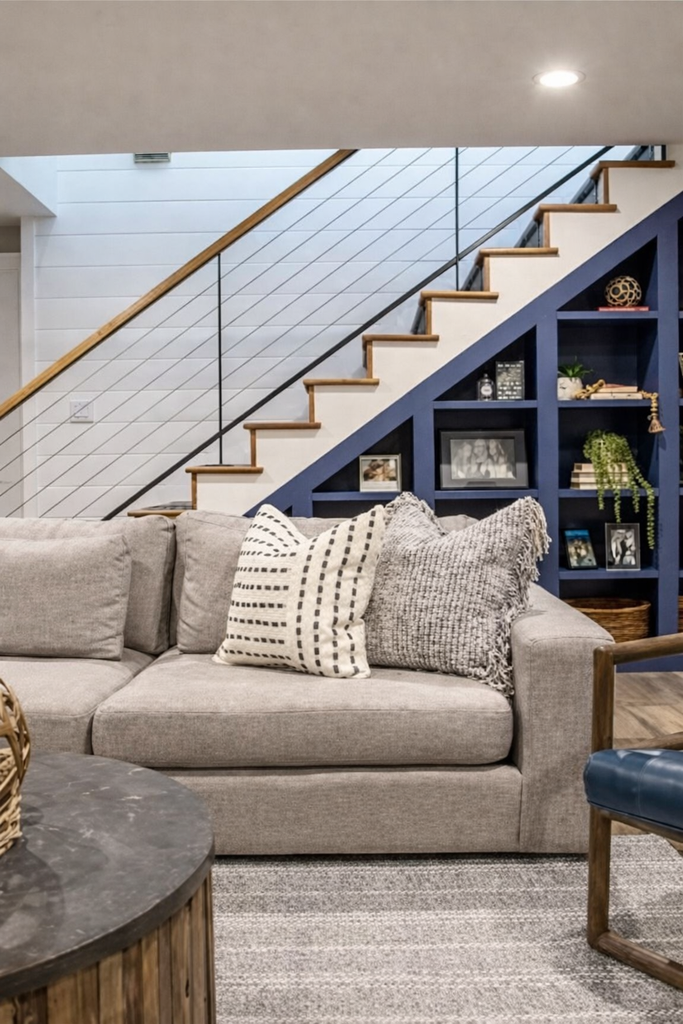
The space beneath basement stairs often goes unused because the ceiling slopes and standard furniture doesn’t fit. I can turn this area into useful storage by arranging shelves, drawers, or cabinets that follow the shape of the staircase.
I place frequently used items in the easiest-to-reach sections and reserve lower or deeper spaces for suitable belongings that I need less often. Custom shelving can make awkward corners more useful without taking over the rest of the basement.
Before building anything, I check for pipes, wiring, structural components, and access requirements. I also make sure the storage doesn’t interfere with the stairs, reduce headroom, or obstruct an exit route.
For a finished basement, cabinet doors can conceal supplies and make the nook look like part of the room. In an unfinished area, simple shelves may be more affordable and easier to adjust.
Pro Tip: I measure the height and depth at several points beneath the stairs because the available space changes along the slope. I plan each compartment around its actual dimensions instead of assuming the entire nook is uniform.
Under-Stair Pantry
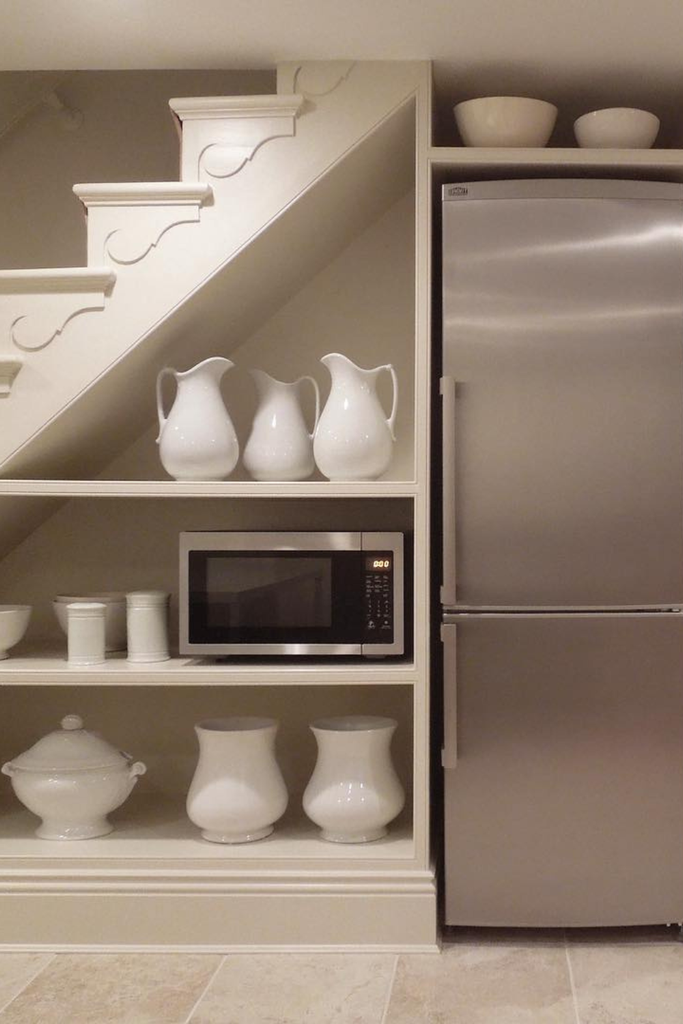
An under-stair pantry can help when a basement includes a food preparation area, entertaining space, or extra household storage. I use shelves or cabinets to keep suitable pantry supplies organized and easy to reach.
I group items by purpose, such as baking supplies, sealed dry goods, or unopened household products. Clear containers can help me see what is available, but I keep original packaging and important ingredient, allergen, and expiration information when needed.
Food storage requires a dry, clean environment with appropriate temperatures. I don’t use a damp basement for food simply because the space is available, and I avoid storing food alongside chemicals, paint, fuel, or cleaning products.
If I install cabinets beneath the stairs, I leave enough room to open doors and remove containers comfortably. Adjustable shelves help accommodate items of different heights without wasting space.
Pro Tip: I check the storage conditions and product labels before moving food into a basement pantry. I keep a simple inventory and place older suitable products where I can use them first.
Playroom Wall Storage
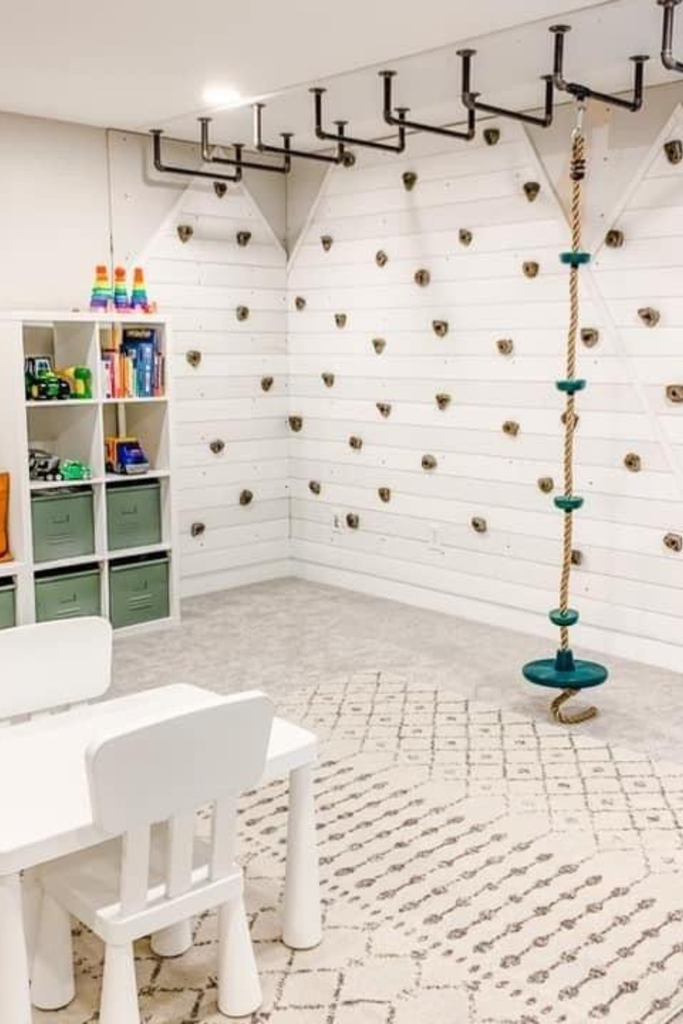
Wall-mounted cubbies and low storage bins help keep a basement playroom organized without using every inch of the floor. I like this approach because children can reach their toys while retaining space for games, crafts, and movement.
I group toys by type and use containers that are light enough for children to handle safely. Larger toys can go in lower compartments, while small pieces should be stored in suitable containers that younger children cannot access.
I securely mount wall storage using hardware suited to the wall material and expected weight. I avoid placing heavy objects above seating or play areas and keep cords, blind strings, and other hazards out of children’s reach.
Good lighting makes it easier to clean up and spot small objects on the floor. I also keep pathways clear, particularly near stairs and doors.
Pro Tip: I use picture labels or simple words to show where toys belong. A small number of clearly defined categories is usually easier for children to maintain than a complicated sorting system.
Seasonal Swap Shelves
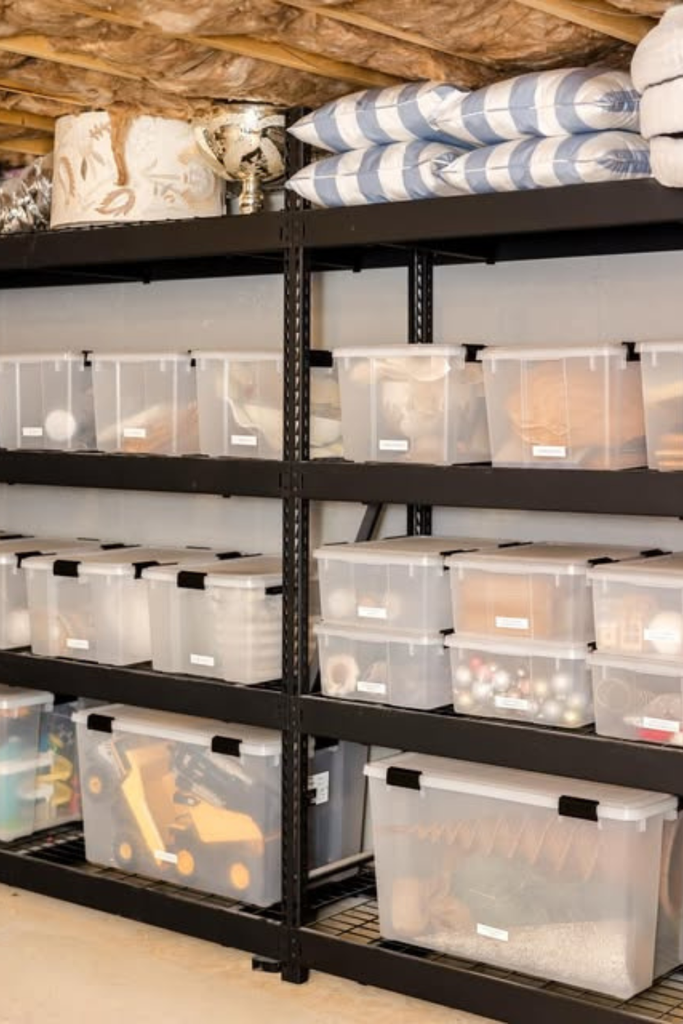
Seasonal storage works best when I can find decorations and equipment without opening every container. I dedicate sections of shelving to different times of year, such as winter holidays, summer activities, and seasonal clothing.
I use sturdy bins with clear labels and group related items together. For example, holiday lights and tree decorations can share a section, while outdoor entertaining supplies can occupy another.
I keep lightweight, bulky items on upper shelves and heavier containers lower down. Before storing seasonal fabrics, I make sure they are clean and completely dry, since damp items can develop odors or mold during long periods in storage.
I also review the contents when a season ends. Broken decorations and unused items don’t need to return to storage simply because there is space for them.
Pro Tip: I label containers on the front and top when possible. Front labels help me identify items on shelves, while top labels are useful when bins are stacked in an accessible area.
Labeled Zone Storage
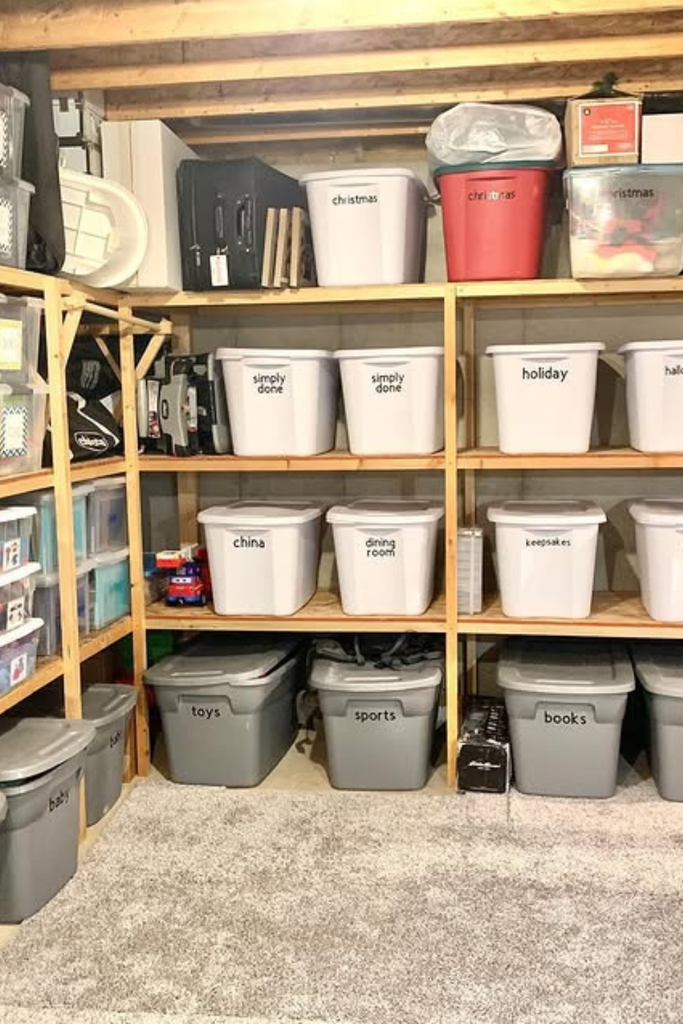
A basement becomes easier to manage when I divide it into clear zones rather than treating the entire room as one large storage area. I might create separate sections for tools, seasonal decorations, household supplies, and recreational equipment.
I keep related items together and label shelves or containers with simple descriptions. This makes it easier for other household members to return things to the right place instead of leaving them wherever they happen to fit.
I also plan zones around how often I use each category. Everyday supplies should be easy to reach, while rarely used items can go farther back, provided they remain accessible and safely stored.
I leave clear walking paths and avoid placing containers where they block electrical panels, plumbing, or other essential equipment. A neat-looking arrangement is not useful if I have to dismantle it to reach something important.
Pro Tip: I take a quick inventory of each zone before buying more supplies. It helps me spot duplicates, identify what needs replacing, and avoid filling the basement with items I already own.
Framed Media Storage
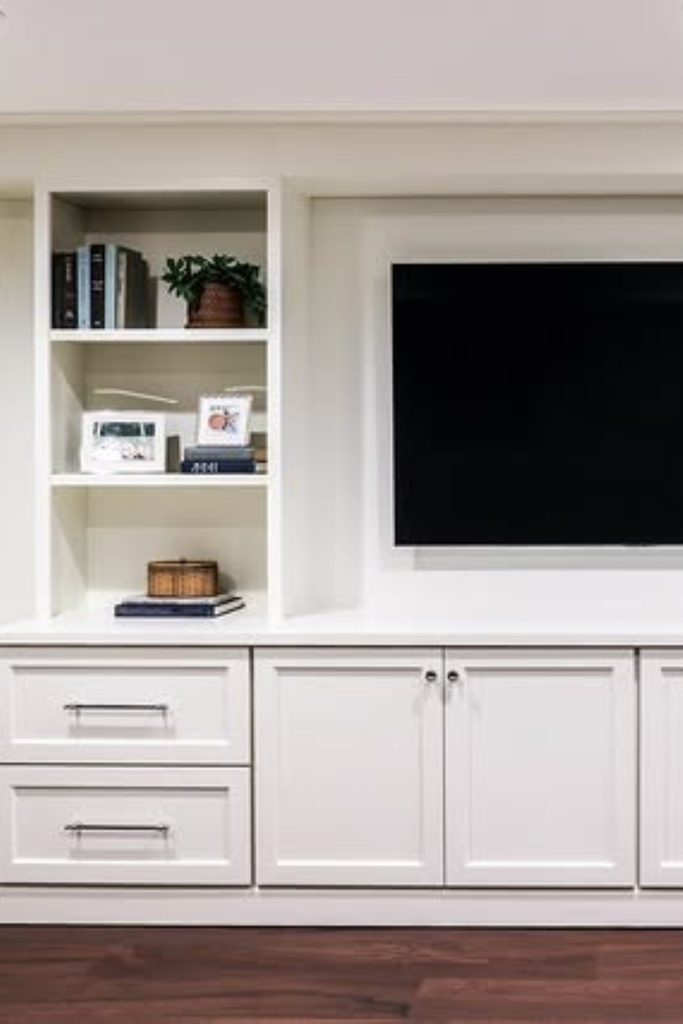
When a basement entertainment area needs more storage, I can frame the television with cabinets and side shelving. This creates a central focal point while providing room for games, books, remotes, and media accessories.
I use closed cabinets for items that I don’t want on display and keep open shelves relatively simple. Matching finishes can make the arrangement feel cohesive, but the design should still allow access to equipment and cables.
I check the dimensions of the television and the available wall before planning the cabinet layout. The screen should be positioned comfortably for viewing, and storage must not obstruct ventilation or equipment connections.
Lighting should support the room without causing glare on the screen. I prefer softer, indirect lighting near the seating area and make sure cords are secured and kept away from walkways.
Pro Tip: I leave some spare space inside media cabinets for future accessories. Overfilling them can restrict airflow and make it harder to access devices when something needs troubleshooting.
Pantry-Style Bins
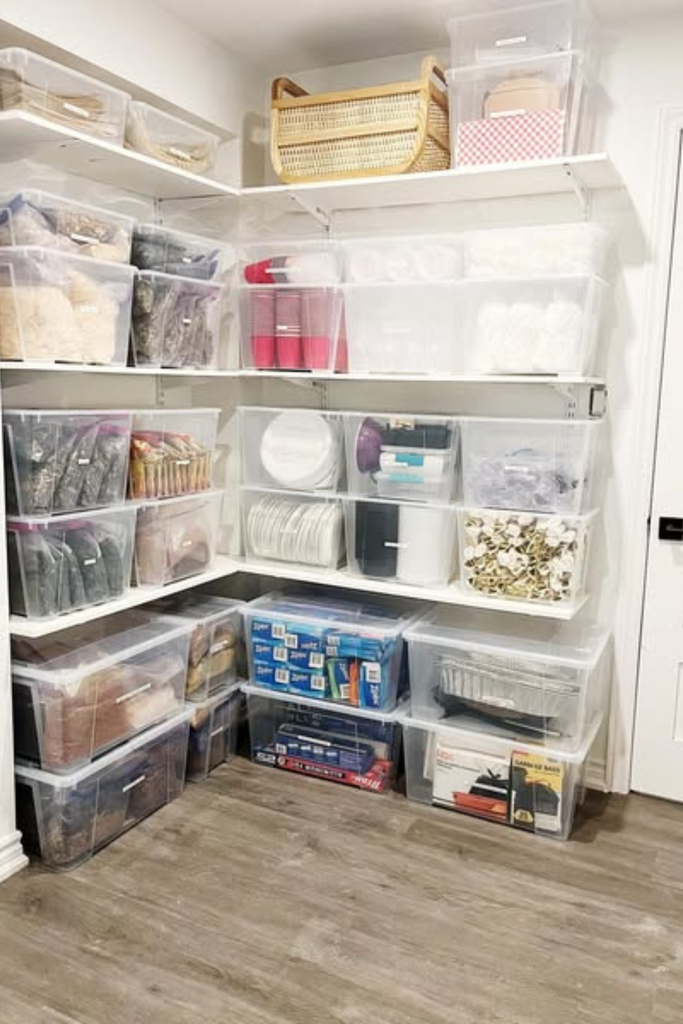
A pantry-style storage system can organize household supplies in a basement utility area or dry overflow pantry. I use adjustable shelving with labeled bins to group items such as paper products, sealed dry goods, craft supplies, or laundry essentials.
I sort by purpose rather than placing everything together simply because it fits. For example, all spare cleaning cloths can share a container, while sealed pantry goods stay in a separate, clean area away from chemicals.
Clear containers make contents easier to identify, but I choose the container type according to what I am storing. Some items are best kept in their original packaging, especially when labels contain safety, ingredient, or product information.
I keep the shelves accessible and leave space for restocking. A small step stool may help with occasional access to higher shelves, but frequently used items belong at comfortable heights.
Pro Tip: I avoid transferring products into unmarked containers. If I decant an item, I preserve the relevant identification and safety information so nobody has to guess what is inside.
Bookcase Base Storage
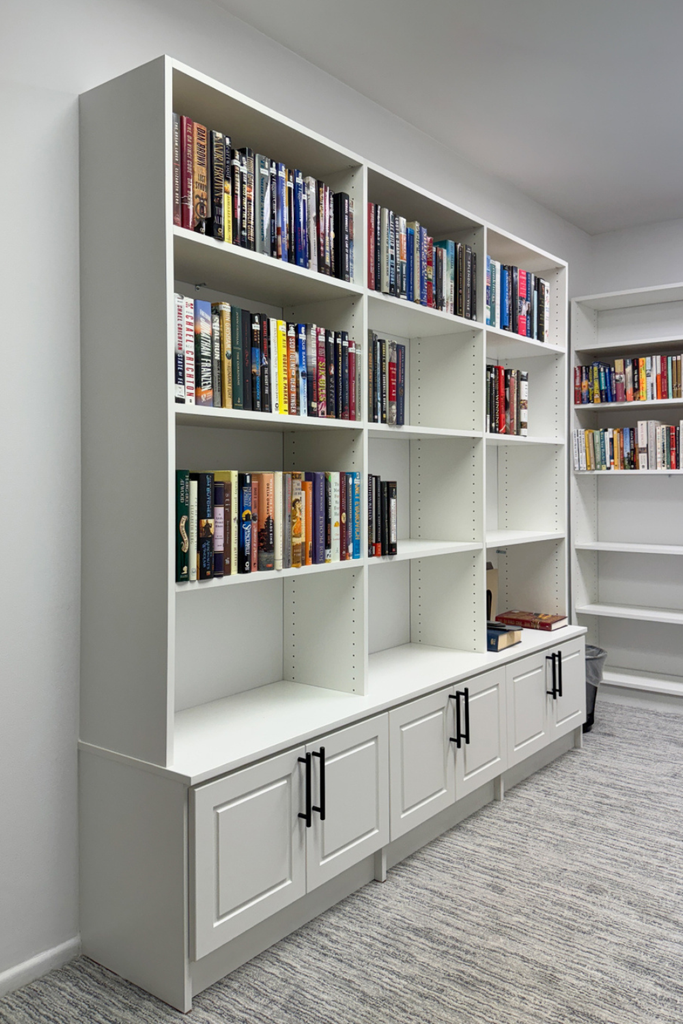
A bookcase with closed storage underneath combines display space with a place to hide less attractive belongings. I like this arrangement for basement offices, reading areas, and family rooms where books and everyday supplies share the same space.
I keep books and decorative items on the open shelves and use lower cabinets or drawers for stationery, games, charging accessories, and other small belongings. Adjustable shelves make it easier to change the layout as needs shift.
I check the bookcase’s stability and weight limits, particularly when it will hold a large collection of books. Tall units should be secured as directed by the manufacturer, and heavy objects should not be stored where they could fall onto people.
Because paper is vulnerable to damp conditions, I use book storage only in a basement that stays suitably dry. I check for musty smells and signs of moisture rather than assuming a cabinet will protect everything inside.
Pro Tip: I avoid packing shelves so tightly that books become difficult to remove. A little breathing room makes everyday use easier and reduces the chance of damaging covers and spines.
Bench Locker Storage
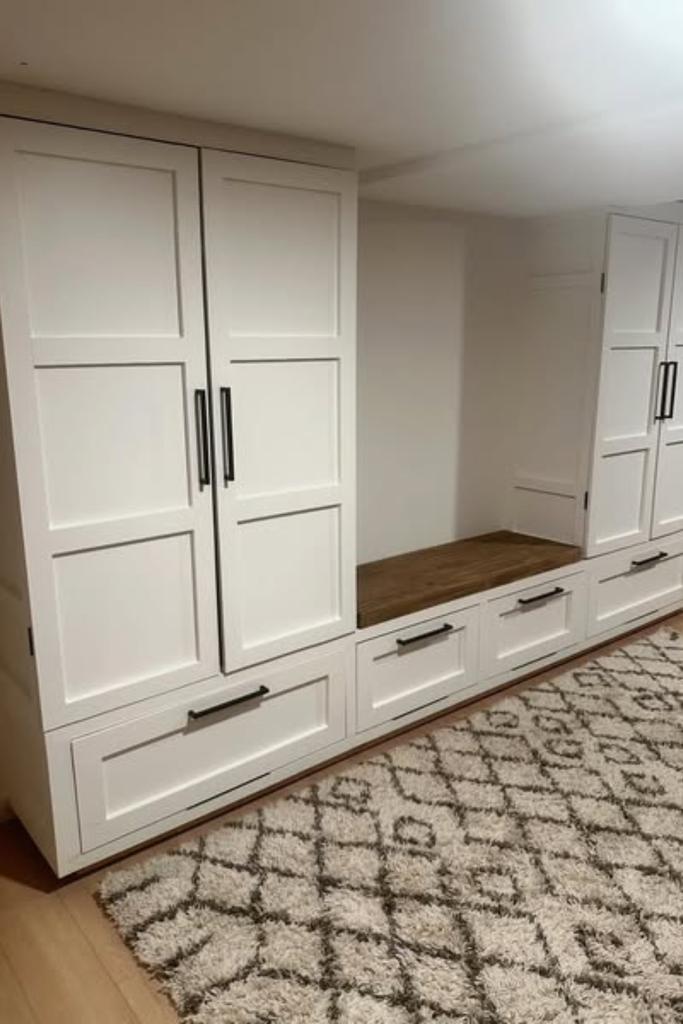
A basement entrance or mudroom area can benefit from storage that combines a bench with individual compartments. I use this style for shoes, bags, sports equipment, coats, and other items that tend to collect near the door.
A bench provides a convenient place to sit while putting on shoes, while drawers or baskets underneath hold smaller belongings. Taller lockers or cabinets can accommodate larger equipment and keep the entrance looking organized.
I choose durable materials that suit the conditions near the entrance and make sure the bench can support the intended weight. Shoes should be allowed to dry before being placed in enclosed compartments, particularly if they are wet from rain or snow.
I also leave enough room for doors to open and people to pass comfortably. Storage should not block an exit, narrow a stairway, or interfere with access to utility equipment.
Pro Tip: I keep a small tray or washable mat near the entrance for muddy footwear. This helps prevent dirt and moisture from spreading into the rest of the basement.
Low-Profile Built-Ins
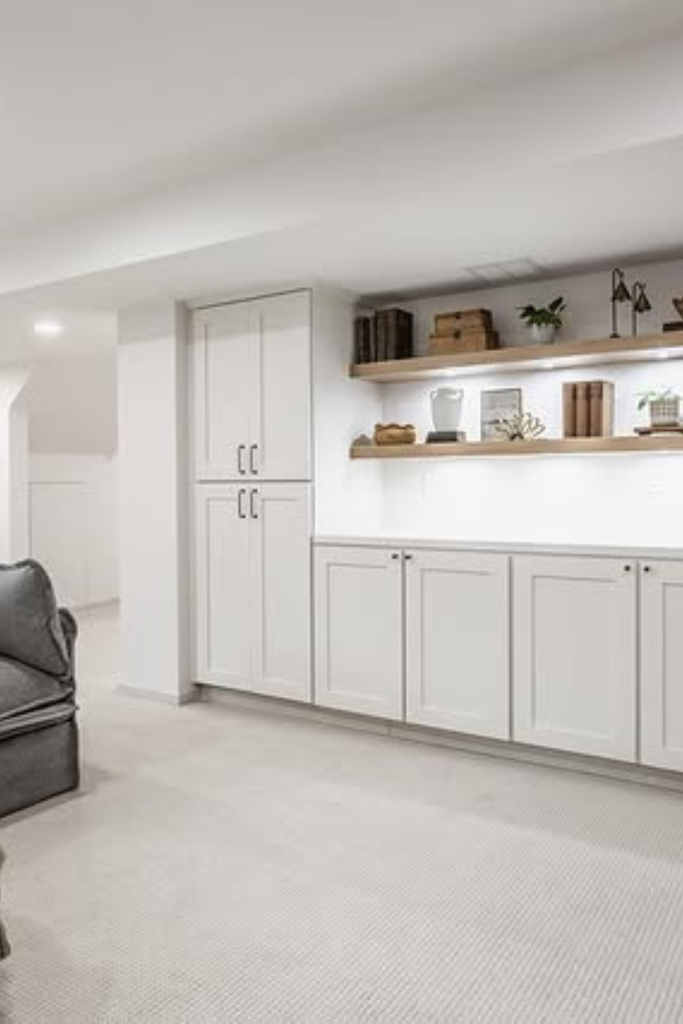
Basements with low ceilings can feel crowded when tall storage furniture fills the walls. I prefer low-profile cabinets and horizontal shelving when I want to create storage without making the room feel visually heavy.
Base cabinets can hold board games, spare linens, hobby supplies, and household items, while one or two open shelves provide room for books or decorations. Keeping the furniture close to the wall helps preserve usable floor space.
Before choosing built-ins, I measure the ceiling height, doors, windows, and any exposed pipes or ducts. I make sure the design does not interfere with required headroom, access, or ventilation.
I also consider whether a permanent installation makes sense. In a rental property, freestanding low cabinets may provide a similar benefit without requiring extensive changes to the room.
Pro Tip: I choose furniture dimensions based on the room’s actual clearances, not just its overall square footage. Keeping walkways open often makes a bigger difference than adding another storage unit.
Full-Wall Closets
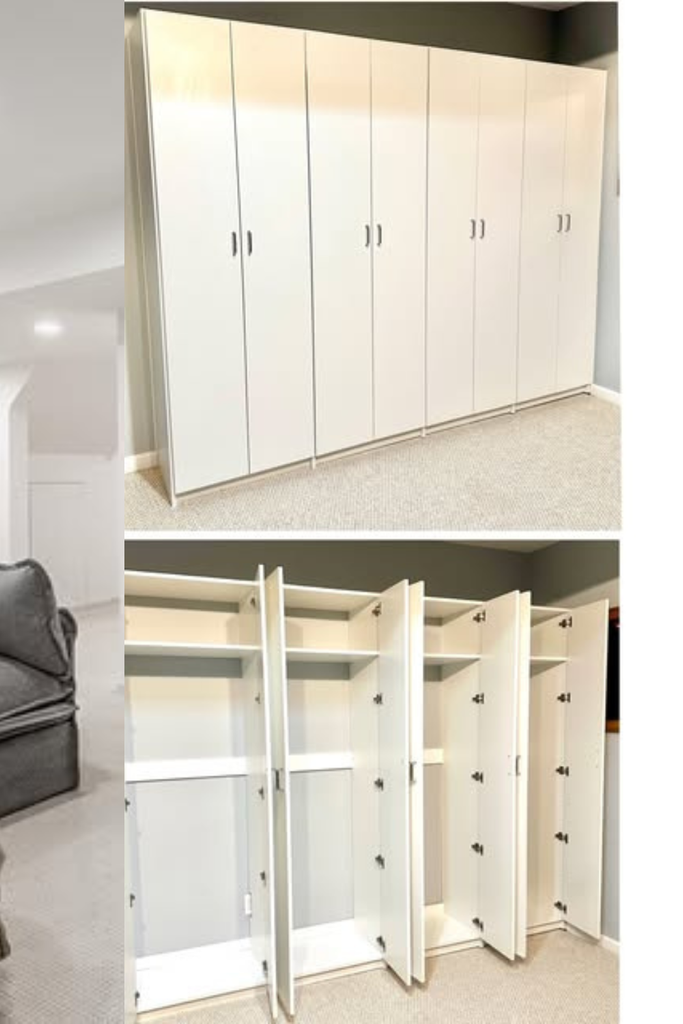
A full-wall closet can give a finished basement a clean appearance while hiding a wide range of household belongings. I like this option for guest areas, family rooms, home offices, and spaces that need flexible storage without displaying everything on open shelves.
Inside the closet, I use adjustable shelves, baskets, and hanging space where appropriate. Seasonal decorations can occupy one section, while linens, luggage, or hobby supplies have separate places elsewhere.
I plan the interior around the items I actually own. Tall compartments can hold larger equipment, while smaller shelves keep loose supplies organized. I also make sure doors can open fully and that the closet doesn’t block access to windows, electrical panels, or plumbing.
The closet should be installed in a dry area, with suitable materials and enough clearance to prevent stored belongings from resting against damp surfaces. If the basement has recurring water problems, I address them before adding permanent cabinetry.
Pro Tip: I leave a little room for future changes rather than designing every shelf around today’s belongings. Flexible storage is easier to maintain as household needs change.
FAQs
How to create storage in basement?
I start by checking the basement for leaks, condensation, musty odors, and other signs of moisture. If I find a problem, I address it before bringing in cardboard boxes, furniture, or belongings that could be damaged.
Next, I sort everything by category and decide what genuinely needs to stay. I measure the available space, plan clear walking routes, and choose storage based on the room’s conditions.
Sturdy shelving works well for labeled bins and seasonal supplies, while cabinets can help a finished basement look less cluttered. I use wall space where appropriate, keep heavy items low, and leave access to electrical panels, plumbing shutoffs, sump pumps, and other equipment.
Finally, I label the storage areas and make a simple inventory. I find that an easy-to-maintain arrangement is more useful than a complicated system that becomes disorganized after a few weeks.
What adds the most value to a basement?
I would focus first on making the basement dry, safe, well-lit, and useful. A well-organized storage area can improve everyday function, while built-in cabinets, flexible shelving, and under-stair storage can make good use of otherwise awkward spaces.
If the basement also serves as a family room, guest area, playroom, or home office, the storage should support that purpose without taking away too much usable floor space. A sensible layout, comfortable access, and a tidy appearance can make the room more appealing.
However, no single storage feature guarantees a particular increase in resale value. The effect depends on the home’s condition, the local market, the quality of the work, and how buyers view the finished space.
I would prioritize fixing moisture problems and making the room practical before investing in decorative cabinetry. Functional improvements tend to be more useful than expensive storage that doesn’t suit the way the basement is used.
Read this next: 26 Under Cabinet Storage Ideas for 2026
Conclusion
I get the best results from basement storage when I plan around the room’s conditions and the belongings I need to keep. Clear bins, sturdy shelves, labeled zones, built-in cabinets, and under-stair storage can all make the space easier to use.
I always put moisture control and safe access first. Once the basement is suitable for storage, I can organize each category, label the containers, and keep frequently used items within easy reach. A little planning makes it much easier to maintain an organized basement without wasting money on storage products I don’t need.




4 Comments