25 Book Craft DIY Ideas for 2026
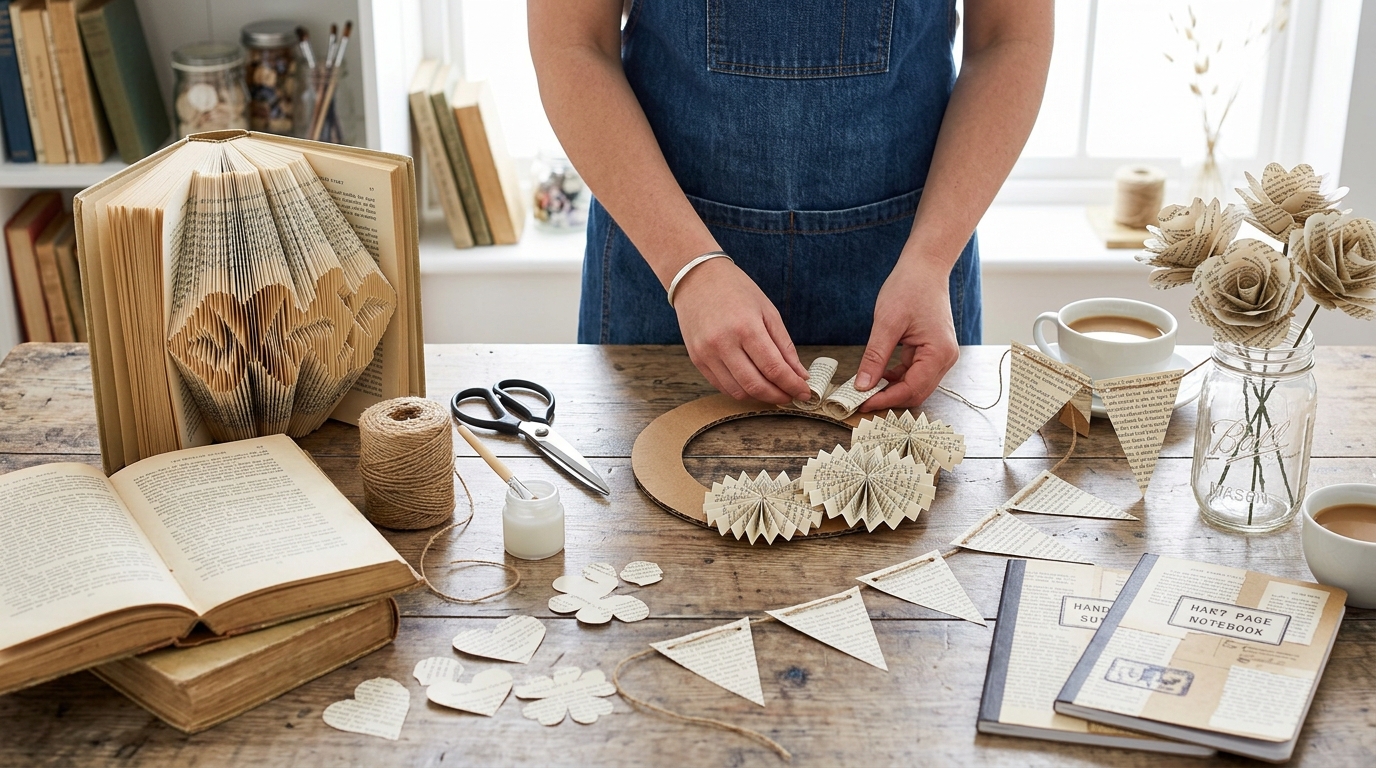
I’ve always liked the idea of giving old books a second life instead of letting them sit unused on a shelf. With a few simple folds, cuts, and decorative touches, an ordinary book can become wall art, seasonal decor, a centerpiece, or even a useful household accent.
What I’ve learned from working with paper crafts is that the finished result usually depends more on patience and preparation than complicated supplies. I get much cleaner shapes when I mark my folds first and work slowly rather than trying to finish a project quickly.
In this guide, I’m sharing 25 book craft DIY ideas that I would use for home decorating, gifts, seasonal displays, parties, and creative spaces in 2026.
I can turn old paperback and hardcover books into surprisingly attractive DIY decor with simple folding, cutting, rolling, painting, and layering techniques. These projects range from flowers and wreaths to pumpkins, trees, wall art, lampshades, and sculptural displays.
I recommend starting with inexpensive or unwanted books, especially when trying a folding technique for the first time. A book with flexible pages is easier to shape, while thicker paper works better when I need a project to hold a firm structure.
Save this for later
Table of Contents
Many of these ideas can also be customized for different seasons and decorating styles. I can keep the pages natural for a vintage look, add paint for more color, or combine folded pages with greenery, ribbon, beads, or LED lighting.
Key Takeaways
- I get better results when I mark important folds before manipulating the pages.
- Paperback books are useful for flexible projects, while sturdy hardcovers work well for structured displays.
- I avoid glossy pages because adhesive and folds can be more difficult to manage.
- Lightweight decorations help prevent folded pages from losing their shape.
- Low-heat LED lighting is the safer choice for paper-based light projects.
- Book crafts can be adapted for everyday decor, gifts, parties, and seasonal decorating.
- I always practice on an unwanted book before using a valuable or sentimental one.
Related article: Fall Leaf Crafts for Adults That Are Actually Worth Your Time
How can craft books improve skills?
Craft books can help me build practical skills because they give me a clear process to follow instead of leaving me to guess every step. When I repeat basic actions such as folding, measuring, cutting, gluing, or binding, I gradually become more accurate.
I also find that instructions make it easier to understand why a project works. If a fold is uneven or a shape starts leaning, I can identify where the problem happened and adjust my technique.
Paper crafts are especially useful for practicing patience and hand control. Small differences in measurements or folds can change the final shape, so slowing down usually produces a much cleaner result.
Over time, I can move beyond following instructions and start changing patterns, combining materials, and creating my own designs. That is where book crafting becomes much more personal.
Pro Tip: I always make a quick test fold with a few pages before committing to an entire book. It helps me see whether the paper weight and folding method will work.
Book Flower Bouquet
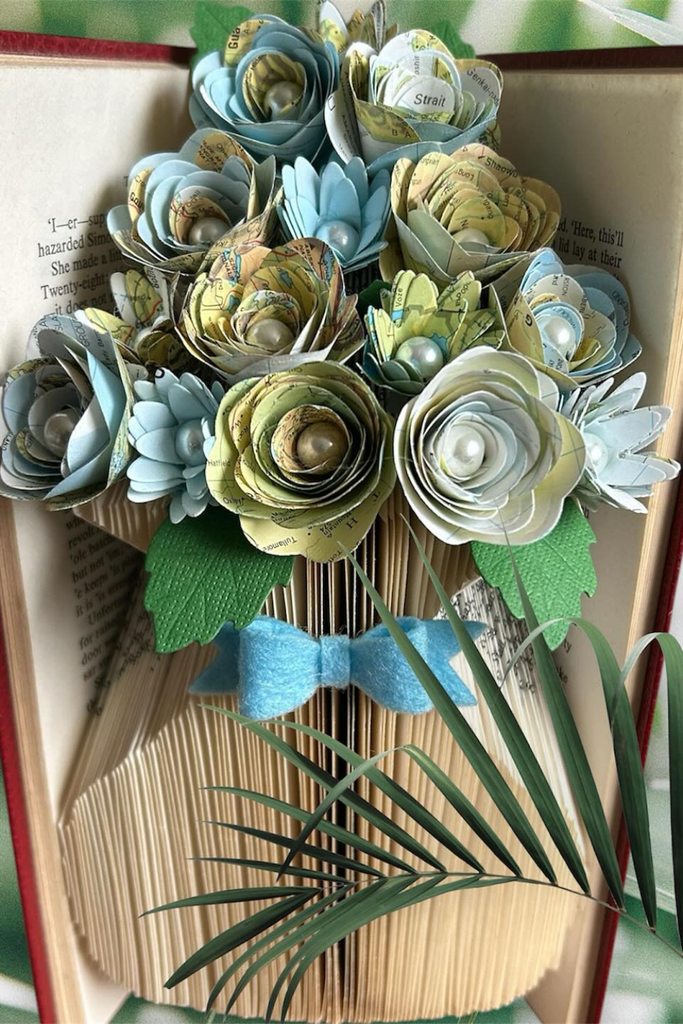
I can turn the pages of an old book into a decorative flower bouquet that works beautifully as a coffee table centerpiece, reading-room accent, or party decoration.
I fold individual sections into petal-like shapes and secure them carefully before adding a bead, pearl, or small paper detail to the center. Paper or fabric leaves can fill out the arrangement.
I prefer placing the finished bouquet where it receives soft natural light. Side lighting brings out the folds and gives the flowers more visual depth.
Folded Name Art
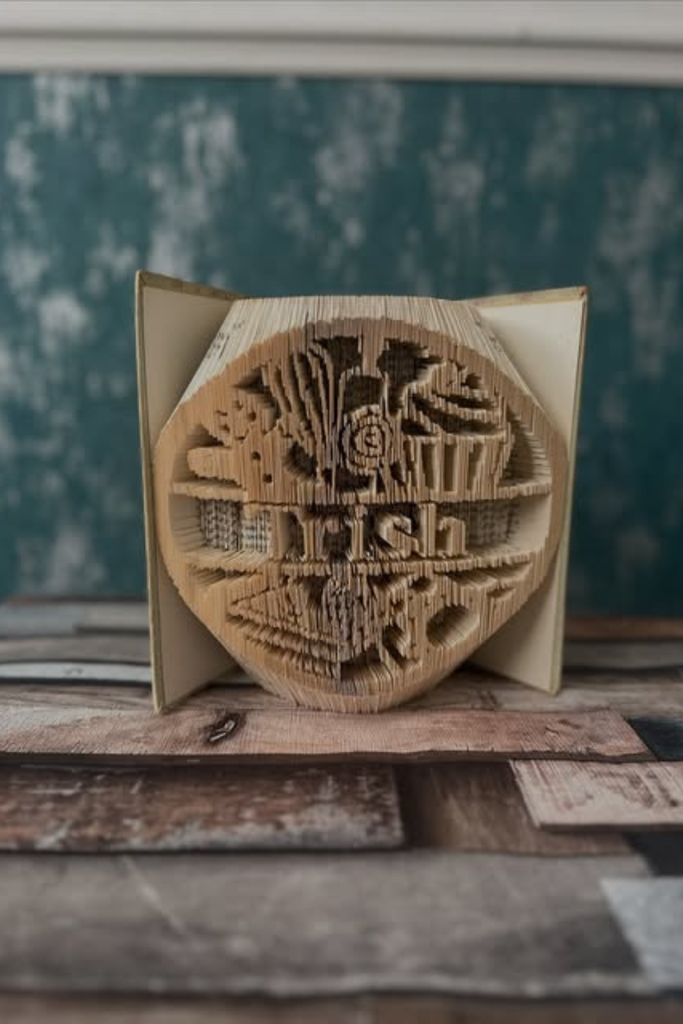
For personalized decor, I like using folded pages to create a name, initial, or simple word. I lightly mark the pattern on the page edges first so I have a guide while folding.
A thick paperback or hardcover with flexible pages can work well for this project. The most important part is keeping each fold consistent so the letters remain recognizable.
I can display the finished piece on a bookshelf, desk, or side table. It also makes a thoughtful handmade gift when I use a book with an appropriate theme.
Color-Edge Binding
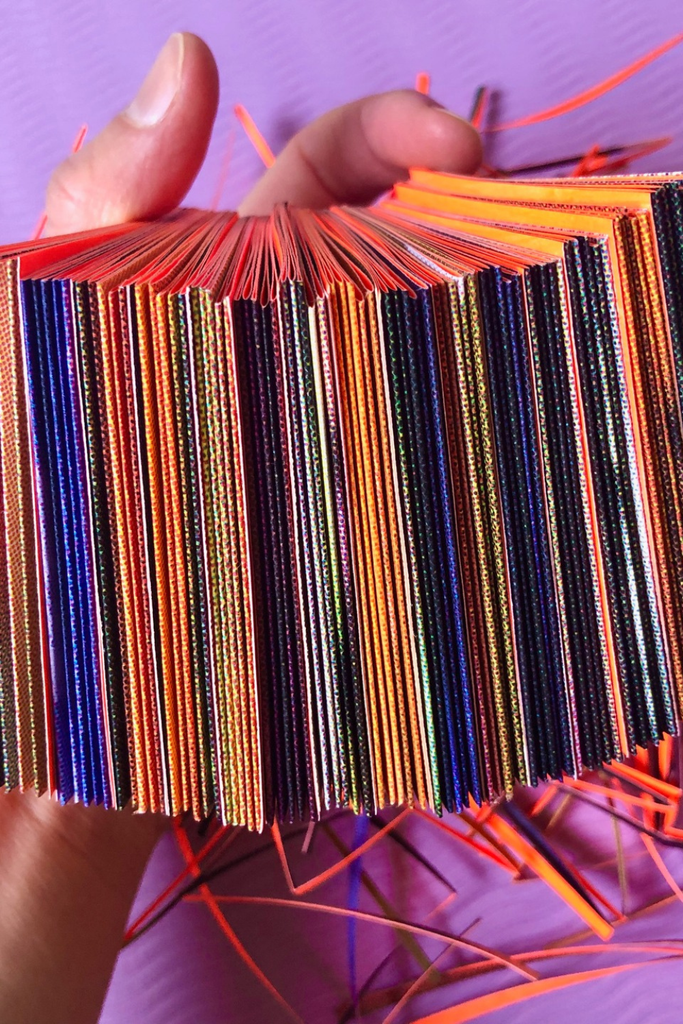
I can give an ordinary book a completely different appearance by adding color along the page edges. This is a simple way to introduce a modern accent without covering the entire cover.
I apply thin layers of paint to the edges and allow each layer to dry before adding another. Keeping the book firmly aligned helps prevent the color from becoming uneven.
I particularly like this idea for creative offices, craft rooms, and open shelving because the colored edges become a small but noticeable detail among neutral books.
Pro Tip: I use thin coats instead of applying a heavy layer at once. Too much paint can make pages stick together or change how easily the book opens.
Folded Book Scene
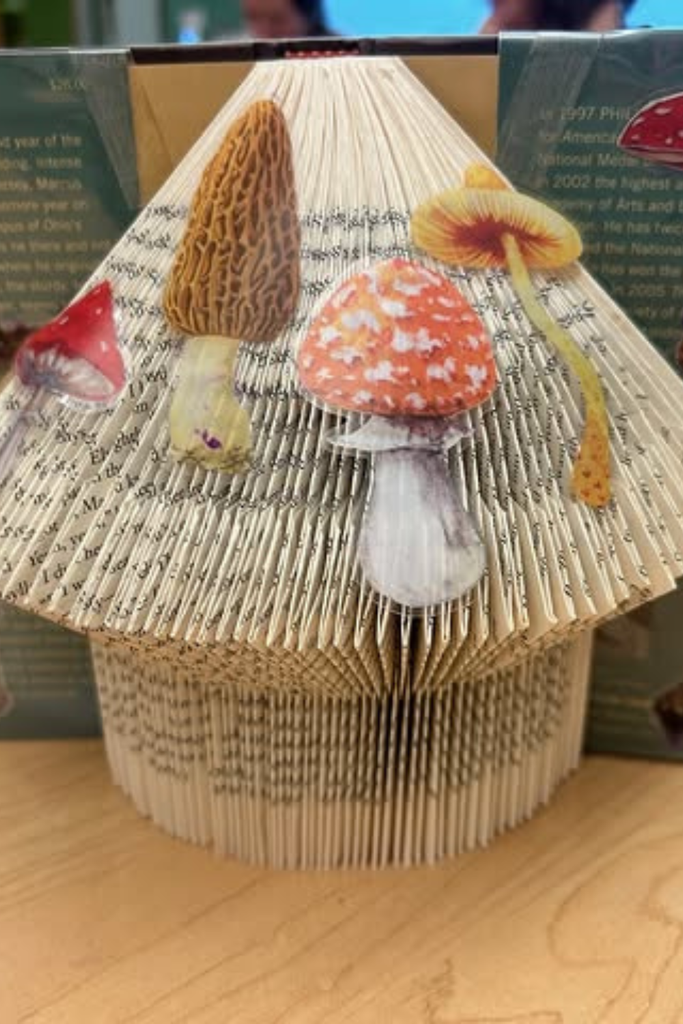
I can create a miniature scene inside an open book by combining folded pages with carefully positioned paper shapes.
I start with a stable folded base and then add cut-out illustrations or silhouettes at different depths. This creates a layered effect without requiring a large display area.
A reading corner, themed party table, or child’s creative space can be a good place for this type of project. I keep the added pieces lightweight so the book remains balanced.
Open Book Florals
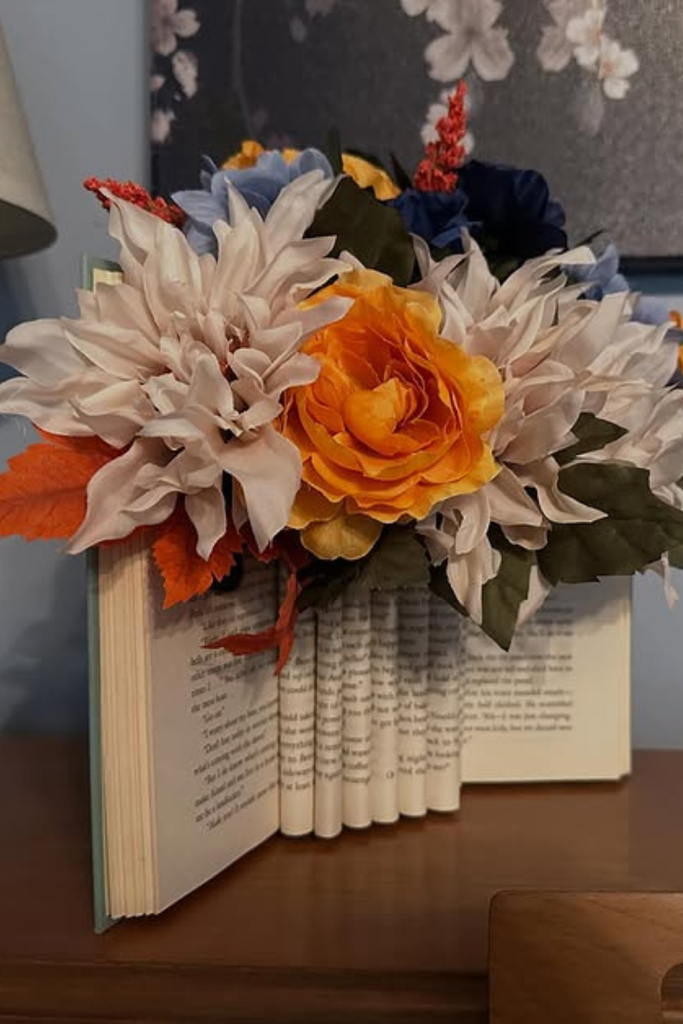
An open book can become an unusual floral display when I fan the pages and add paper, faux, or dried flowers near the center.
I secure the lower portion of the pages so the book does not slowly close or sag. Then I position the flowers where their weight is distributed evenly.
Warm indoor lighting works particularly well with this project because it emphasizes the page texture and creates gentle shadows around the flowers.
Sculpted Page Forms
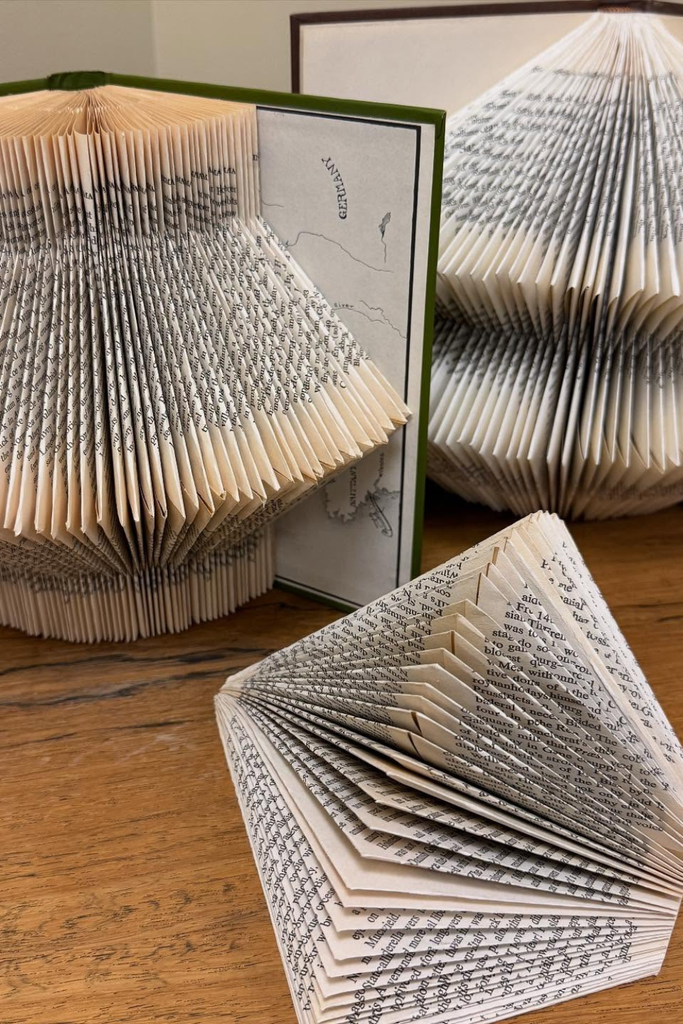
For a minimalist display, I like shaping book pages into geometric forms without adding much color or decoration.
I work outward from the spine and make repeated folds of similar size. A sturdy book is helpful because the pages need enough structure to maintain the finished shape.
This project looks natural on bookshelves, desks, and simple gallery-style displays. I prefer neutral surroundings so the folds become the main feature.
Shelf Bloom Accent
I can create a quick bookshelf accent by opening a hardcover book slightly, fanning the pages, and placing faux flowers or dried stems into the center.
I keep the flowers fairly vertical so the arrangement does not look disconnected from the surrounding books. A small amount of greenery can soften the edges.
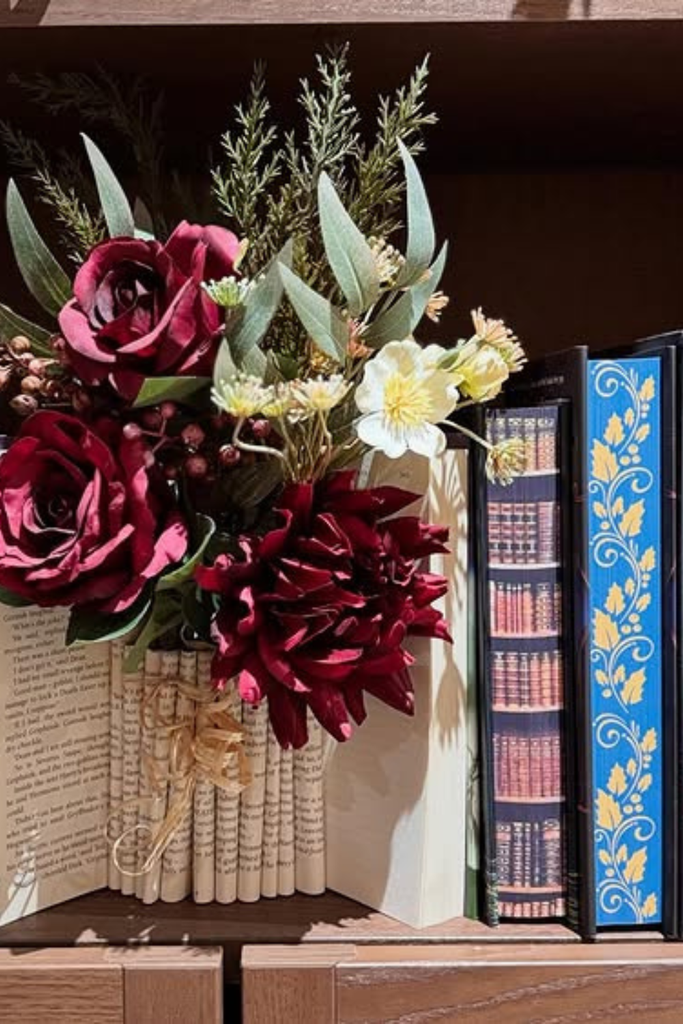
Warm shelf lighting can make the folds and flowers more noticeable, especially on darker shelves.
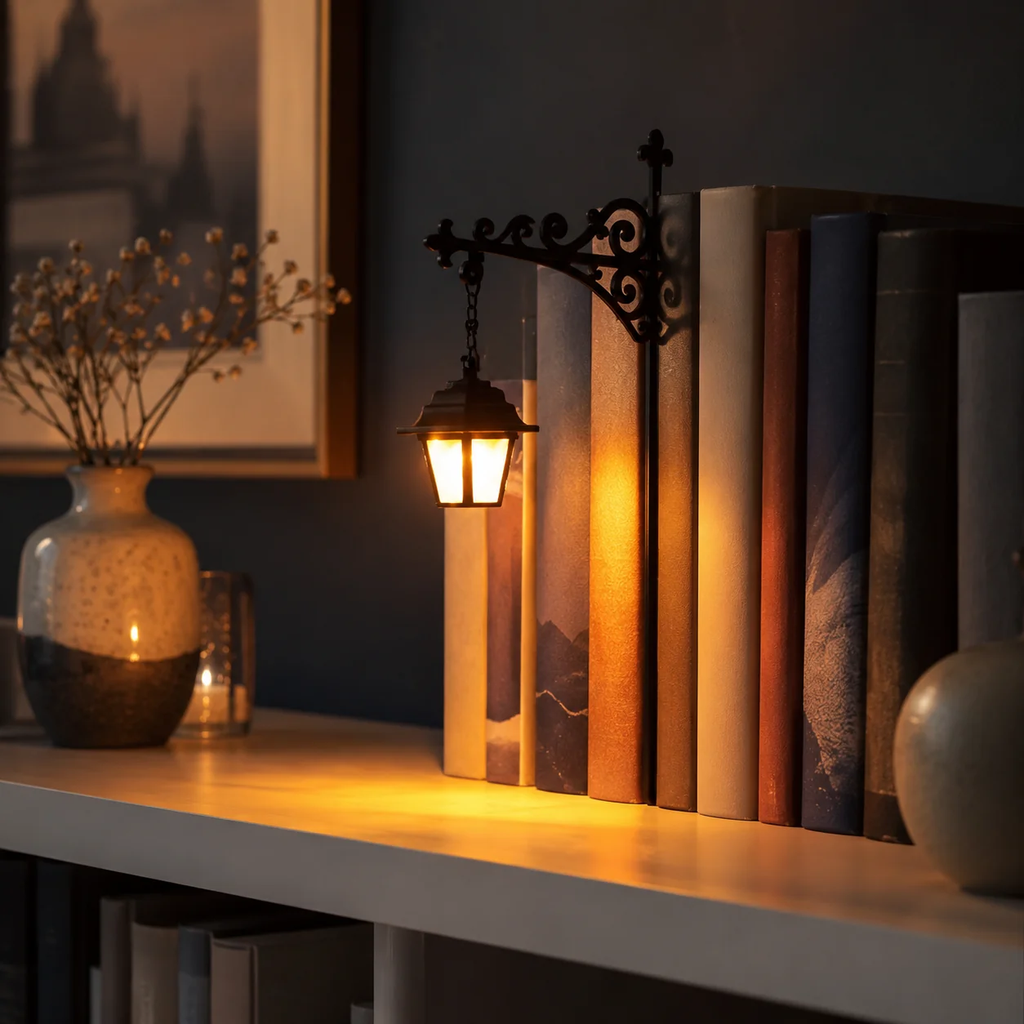
If I want an easier way to add a little warmth around the arrangement, a small bookshelf lamp can provide an extra layer of ambient light without changing the craft itself.
Cozy Book Vignette
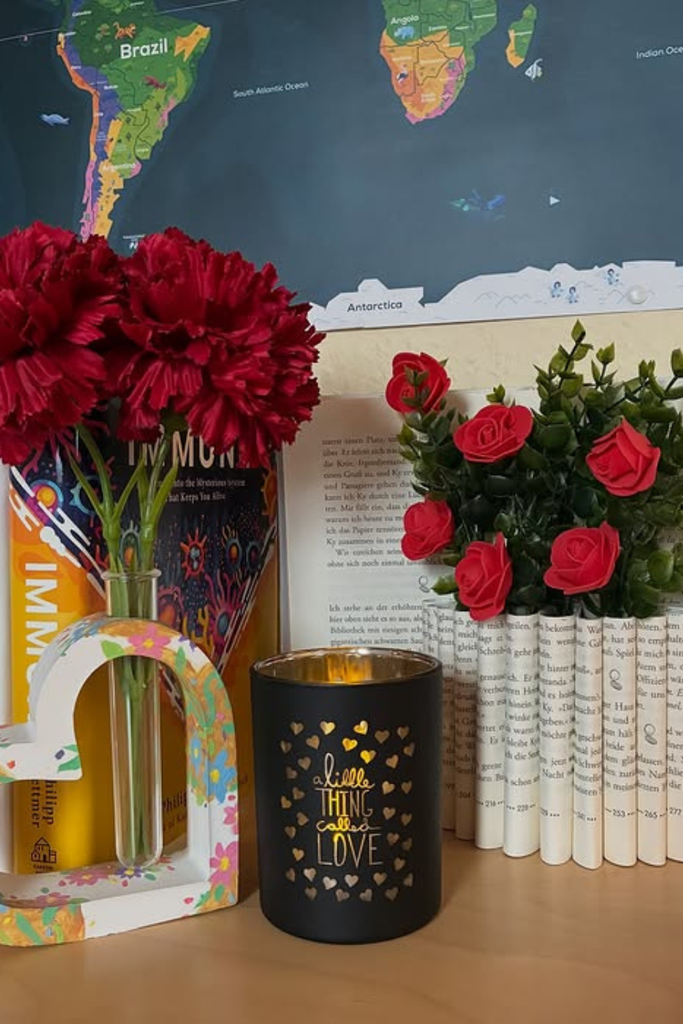
I like using an open book as the foundation for a small decorative vignette. I can place folded pages, small paper flowers, or rolled sections inside the opening.
The trick is keeping the arrangement simple. Too many decorative pieces can make a small display look crowded.
A candle-style LED light or warm accent lamp nearby can add atmosphere. I use this idea on desks, bedside tables, entryway shelves, or reading corners.
Textured Page Fold
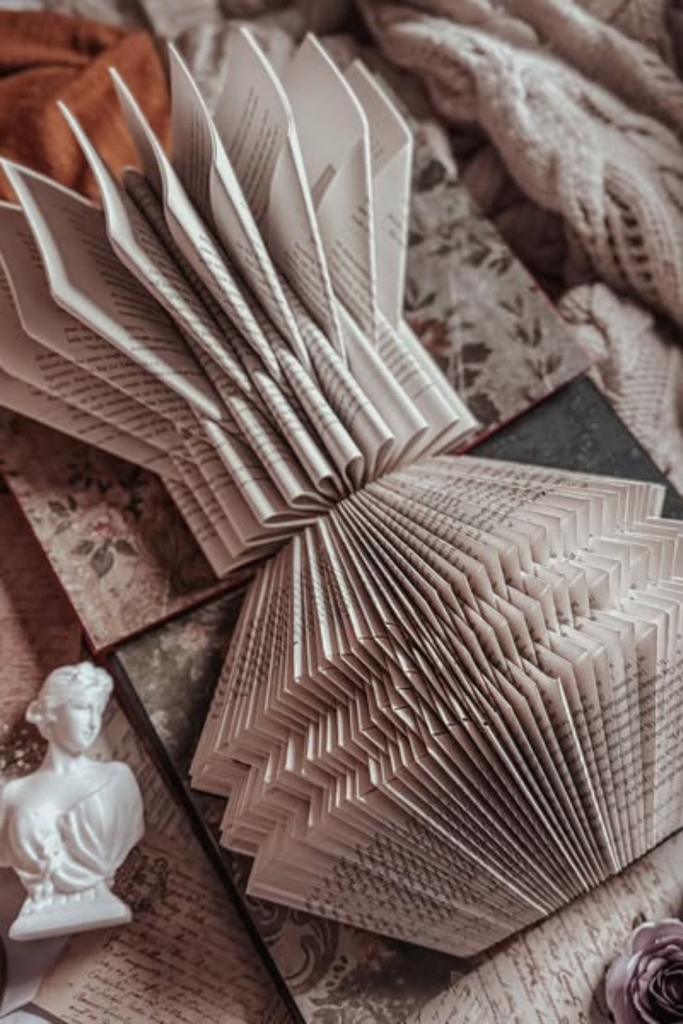
Instead of creating one large shape, I can alternate different folds to build a textured page surface.
I use softer folds alongside sharper ones so the finished piece has variation rather than looking completely flat. A lightweight book is easier to manipulate for this technique.
Angled natural light helps reveal the raised sections and shadows. This makes a simple folded book look more detailed without needing paint or additional embellishments.
Book Page Wreath
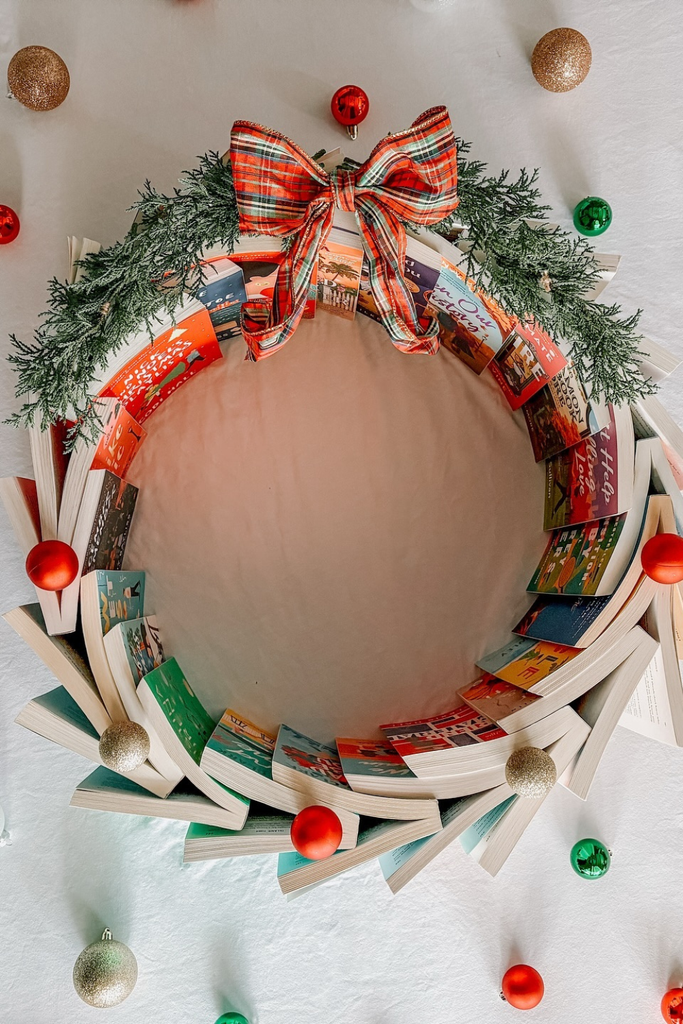
I can make a book page wreath when I want seasonal or vintage-inspired wall decor without buying a ready-made decoration.
I shape the pages around a sturdy circular base and overlap them enough to create a full appearance. Once the basic wreath is secure, I add ribbon, greenery, or small seasonal details.
I prefer adding embellishments near the end because too much weight can pull the paper out of shape. A simple wreath often looks more polished than one covered with too many decorations.
Book Page Pumpkins
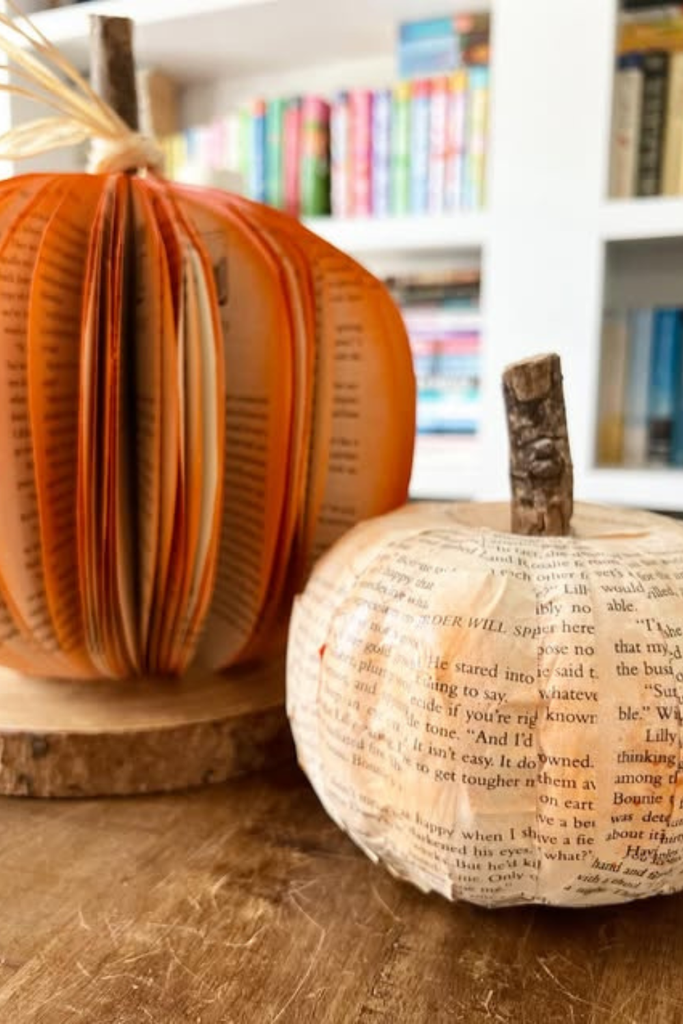
Book pages can be shaped into a round pumpkin-style decoration for fall displays. I arrange and fan the pages around the center until they form a rounded silhouette.
A small twig, paper stem, or faux greenery can finish the top. I can leave the pages natural for a neutral fall look or add subtle color if I want something more decorative.
I like placing these on mantels, shelves, dining tables, or entryway consoles where the texture can be seen up close.
Pro Tip: I make sure the center is secured firmly before shaping the pumpkin. A loose center can cause the pages to spread unevenly.
Book Wall Grid
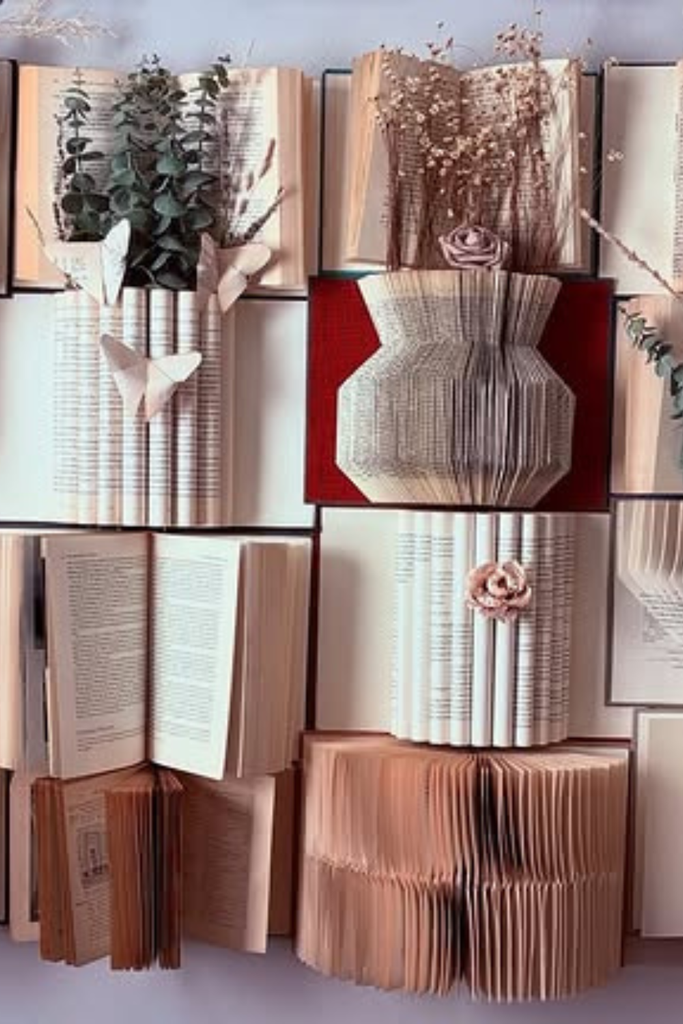
For a larger display, I can arrange altered books or folded book art in a loose grid across a wall.
I vary the folds slightly so each piece has its own shape while maintaining enough consistency for the overall arrangement to look intentional.
Neutral pages work especially well when I want a calm wall display. I can use this idea in a reading room, studio, home office, or creative workspace.
Holiday Book Accent
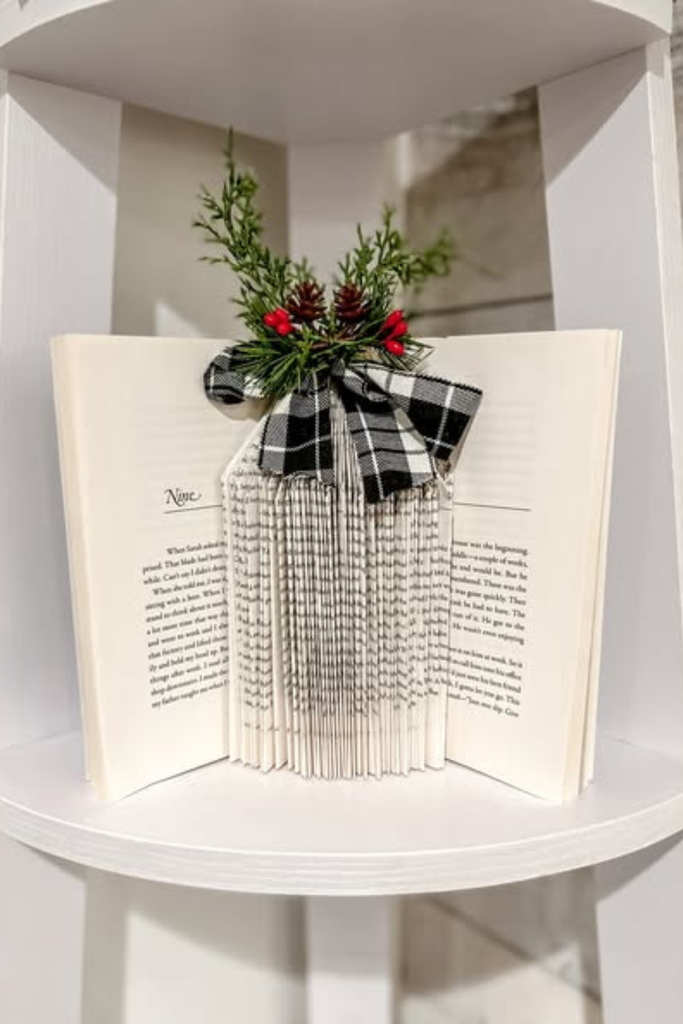
I can turn a book into a small holiday display by folding its pages into a standing shape and adding a few lightweight seasonal decorations.
Greenery, a narrow ribbon, or a small bow can make the project feel festive without covering the book completely.
I keep the additions lightweight because heavy decorations can pull the folded pages down. This works well on shelves, side tables, mantels, and holiday trays.
Storybook Light Box
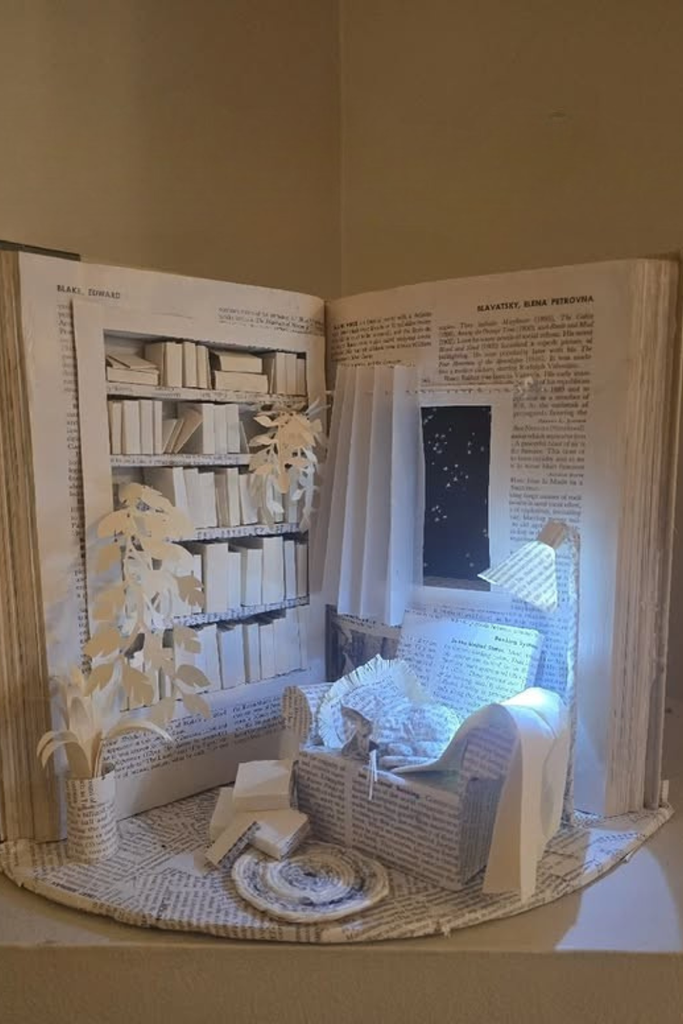
I can create a layered paper scene inside a box and add a small LED light behind it for a storybook-style display.
I cut several layers with slightly different shapes and spacing. When the light shines through the gaps, the layers create shadows and give the scene more depth.
I use only low-heat LED lighting around paper. Keeping the light source separated from delicate paper layers is an important safety step.
Also read: 23 Fun and Easy DIY Candles to Make at Home
Floating Fold Form
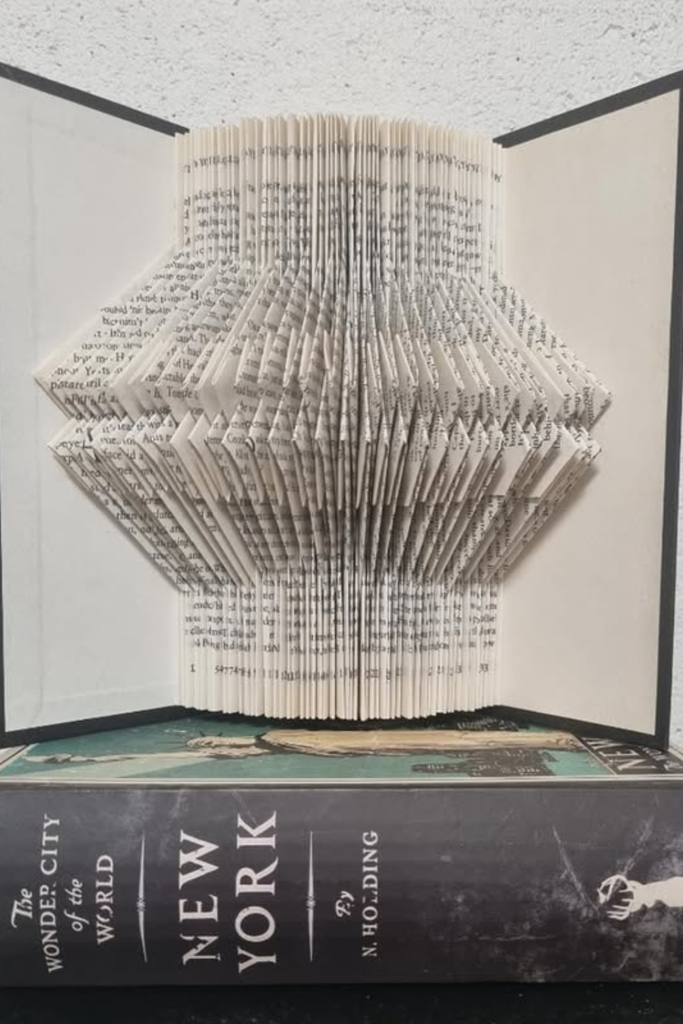
This project creates the illusion that the pages are forming a balanced shape in the center of an open book.
I fold both sides carefully and keep the measurements as consistent as possible. Even small differences can make the final form look uneven.
I prefer simple surroundings and soft lighting because the symmetry of the folded pages is the main attraction.
Heart Fold Gift
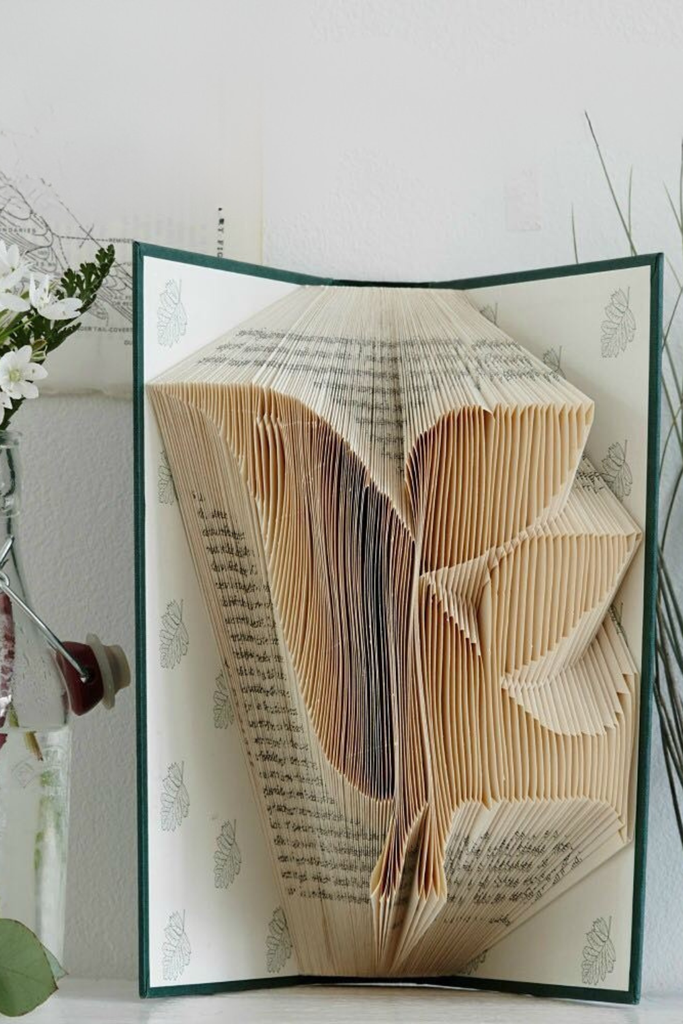
A folded book heart makes a personal handmade gift for someone who enjoys books or paper crafts.
I mark the folding pattern lightly before beginning, especially around the points where the heart needs to remain symmetrical. A thicker book can give the shape a more defined edge.
I can display the finished heart on a shelf or wrap it as part of a handmade gift. Warm side lighting can also emphasize the curved shape.
Stacked Book Snowmen
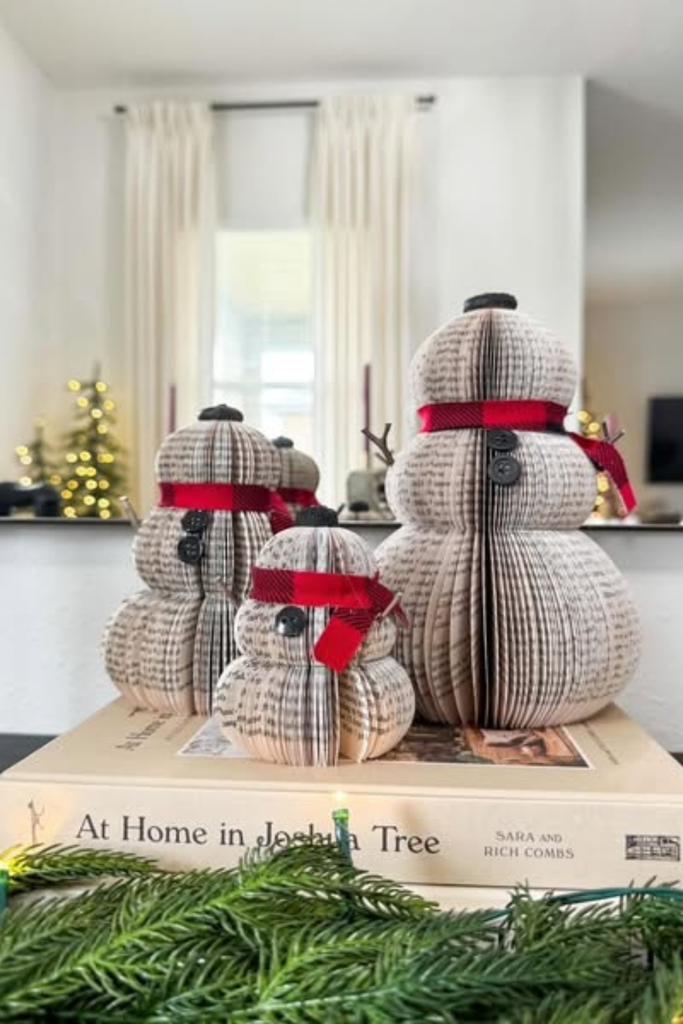
For winter decorating, I can turn folded books into playful snowman shapes and stack different sizes to create a simple display.
I add ribbon, buttons, felt, or other lightweight materials for the facial features and accessories. The goal is to keep the decorations small enough that they do not overwhelm the paper.
This project works particularly well on mantels, side tables, and holiday shelves. Warm fairy lights nearby can make the display feel cozy.
Decorated Book Cover
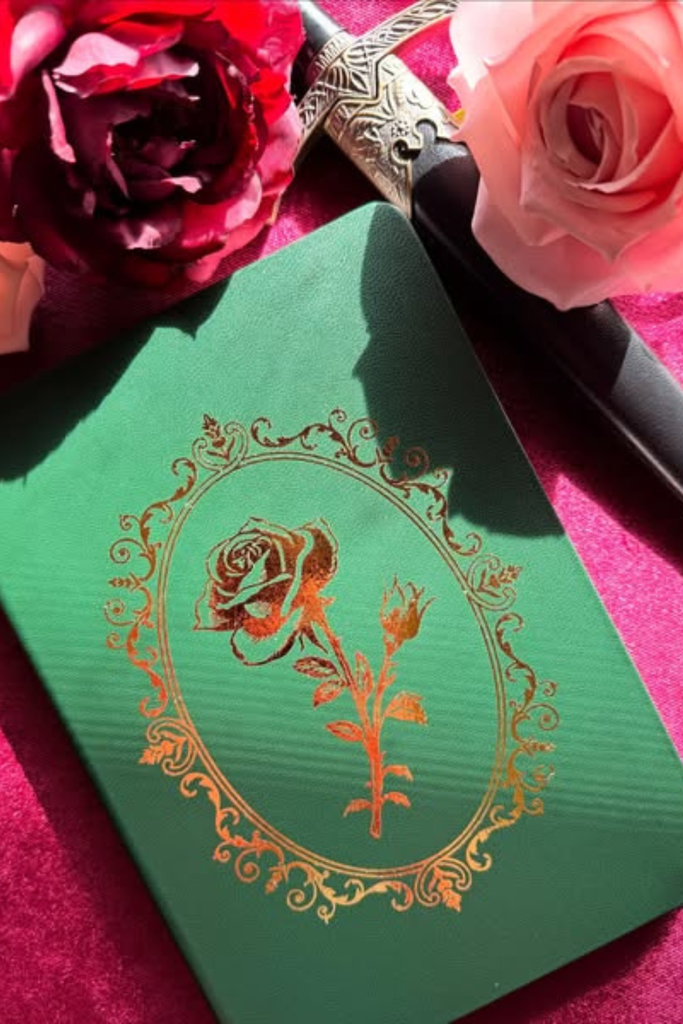
I can transform a plain book cover into a personalized keepsake by painting it, covering it with paper, or adding pressed flowers and small decorative details.
I keep most embellishments relatively flat so the book can still open and close without damaging the design.
This technique works for journals, decorative books, handmade gifts, or themed displays. Natural daylight helps me see small details clearly while I work.
Book Page Tree
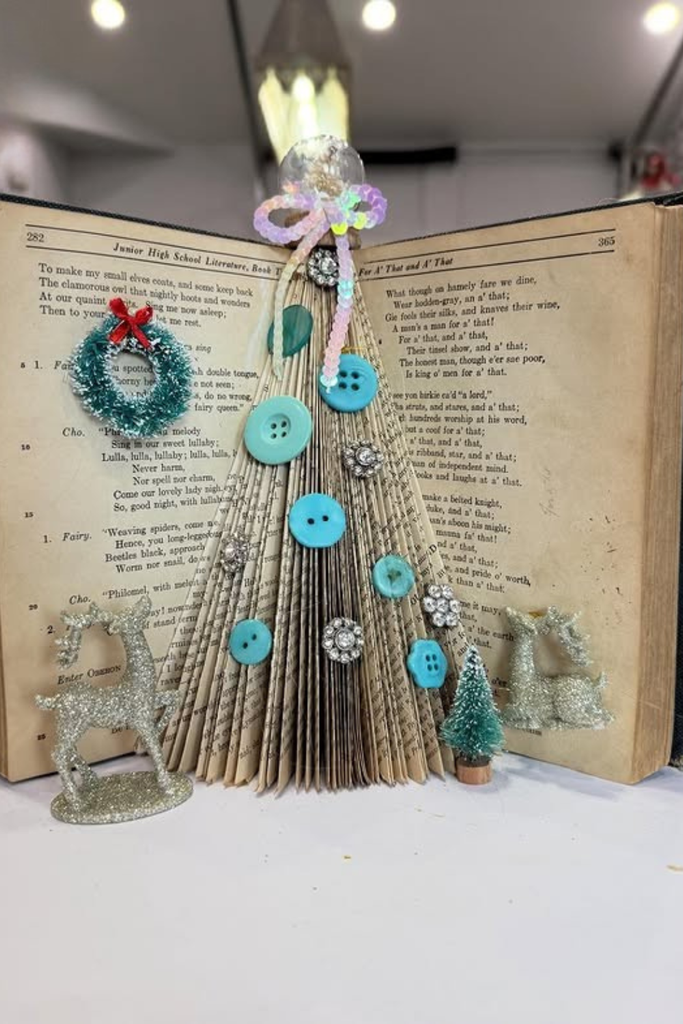
I can create a small paper tree by folding pages toward the center until they form a cone-like shape.
Once the folds are even, I secure the bottom so the tree can stand upright. Small buttons, charms, or paper decorations can be added afterward.
I like using several different book sizes to create a small group of trees on a shelf or holiday table.
Book Page Mobile
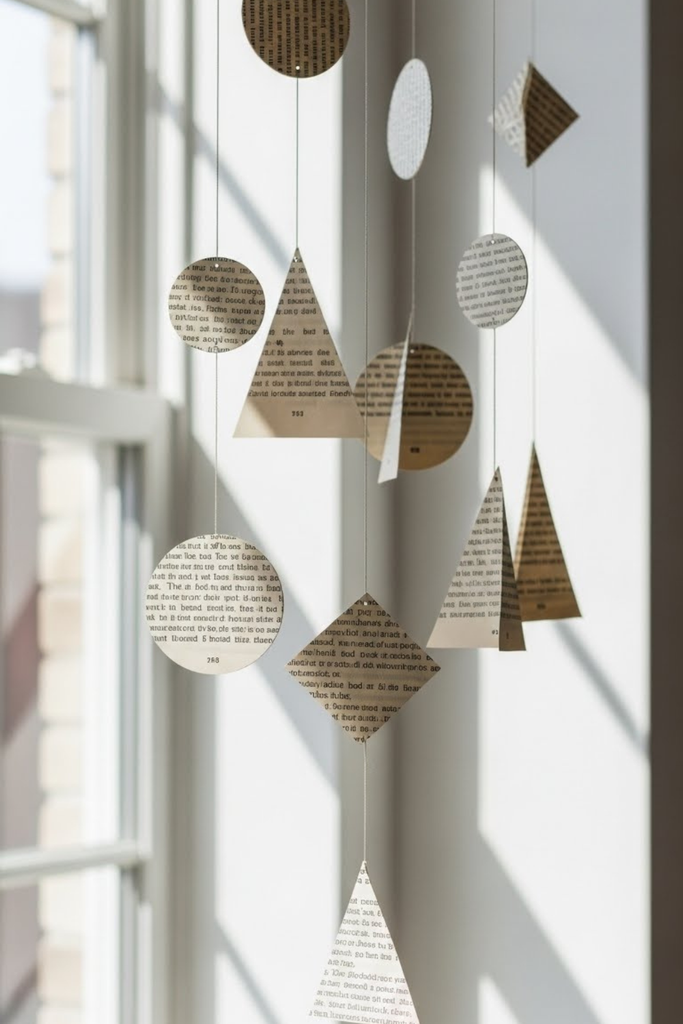
For a lightweight hanging decoration, I can cut book pages into simple shapes and suspend them at different heights.
I keep the pieces fairly small and leave enough space between them so they can move naturally. The uneven lengths give the mobile a more relaxed appearance.
Natural light works beautifully during the day. In the evening, a nearby lamp can cast soft shadows from the hanging shapes onto the wall.
Book Page Garland
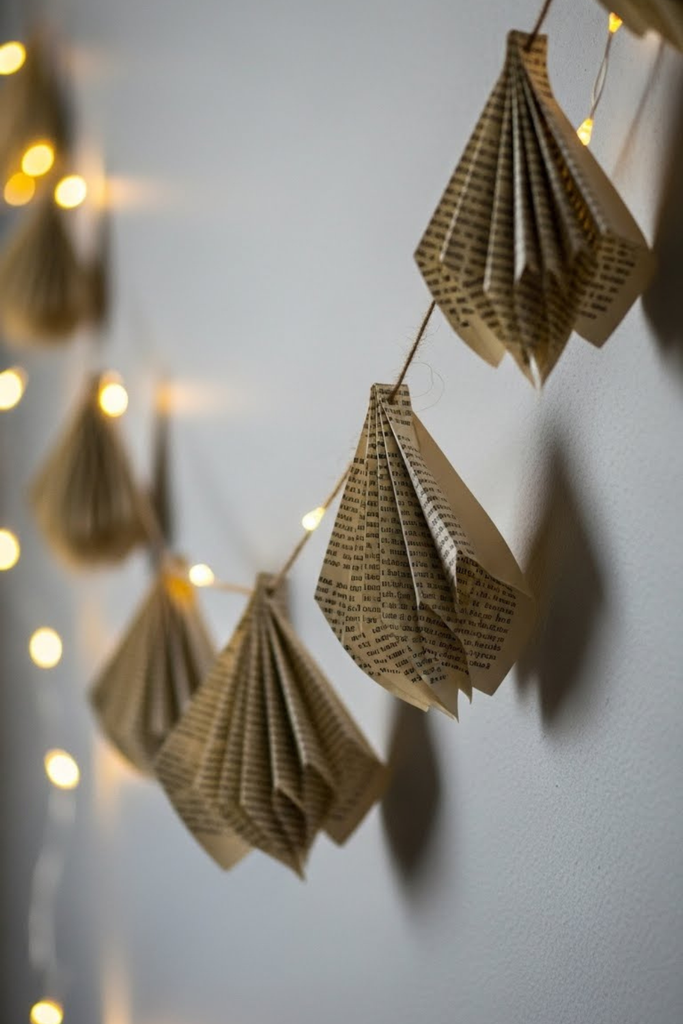
A book page garland is one of the simpler projects I can use for a party, reading nook, craft room, or entryway.
I cut the pages into repeated shapes and attach them to string or twine, leaving enough space between pieces for the garland to move.
I can combine the paper with warm fairy lights for parties or seasonal displays. I prefer using lightweight string and adhesive so the pages do not tear.
Rolled Page Vase
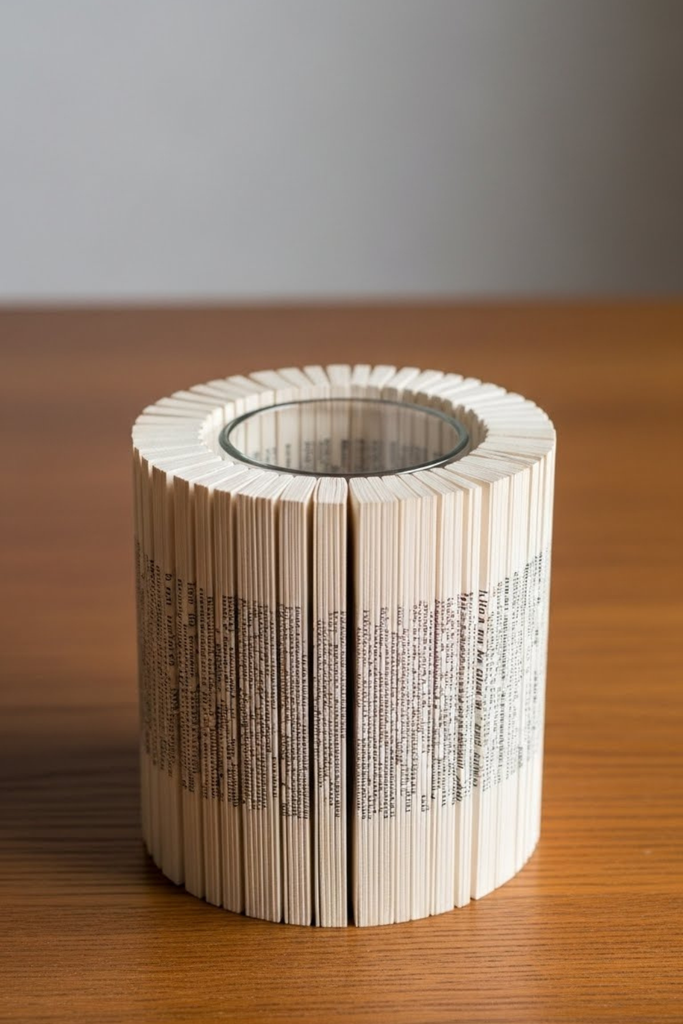
I can make a decorative outer vase by rolling book pages into tubes and arranging them around a glass container.
The glass insert is important because it keeps water away from the paper if I want to use real flowers. I can also use faux flowers and avoid moisture altogether.
I roll the pieces as evenly as possible and attach them closely together around the outside of the container. The finished texture works especially well with neutral flowers.
Book Spine Art
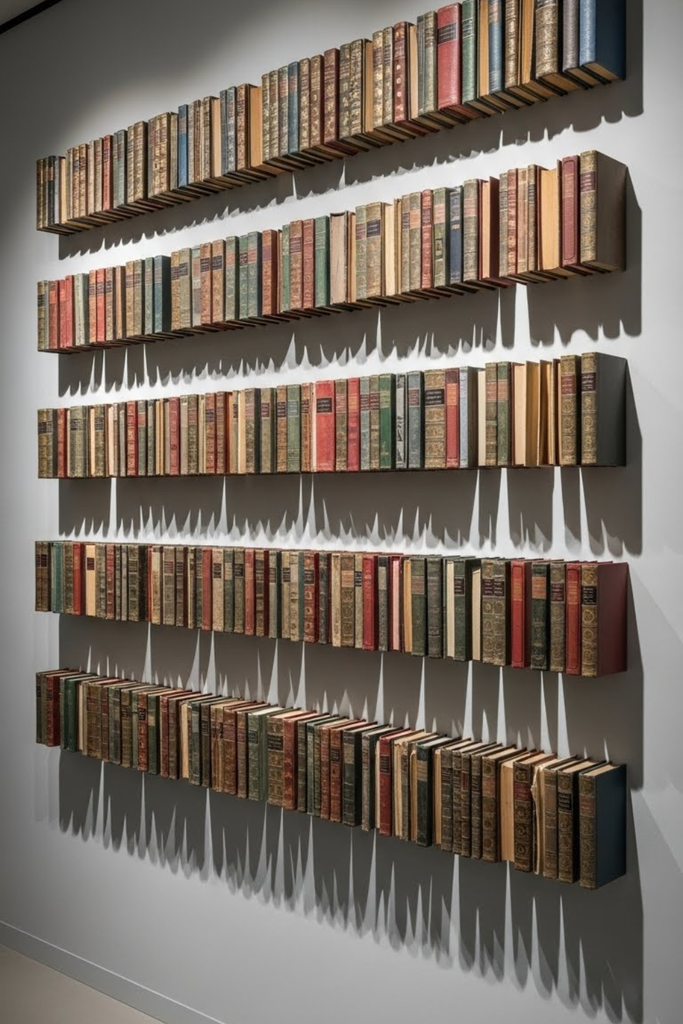
For minimalist wall decor, I can repurpose book spines into a simple art arrangement.
I arrange decorated spines in a straight line, geometric pattern, or another planned layout. Keeping the colors and spacing consistent helps the display look intentional.
This idea can work particularly well in home offices, reading rooms, libraries, and creative workspaces.
Page Cut Silhouettes
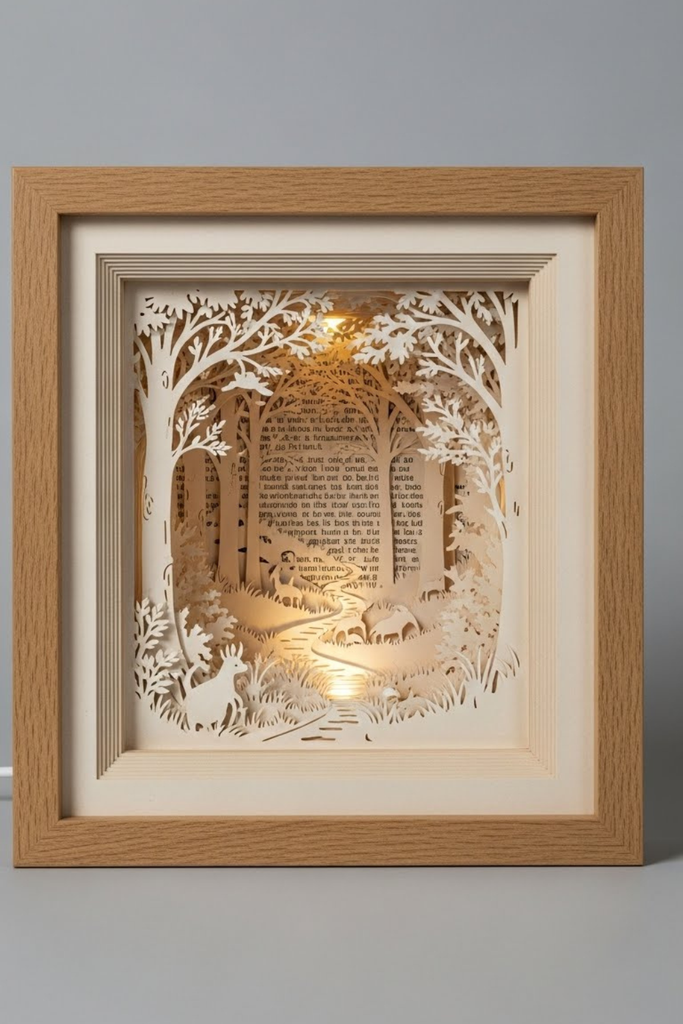
I can create layered silhouettes by cutting simple shapes, objects, or scenes into several sheets of book paper.
The key is keeping the cuts clean and leaving enough spacing between the layers. When the layers are stacked, they create depth without requiring a complicated construction.
A small LED light placed behind the artwork can cast soft shadows through the cut sections and make the design more noticeable.
Book Page Lampshade
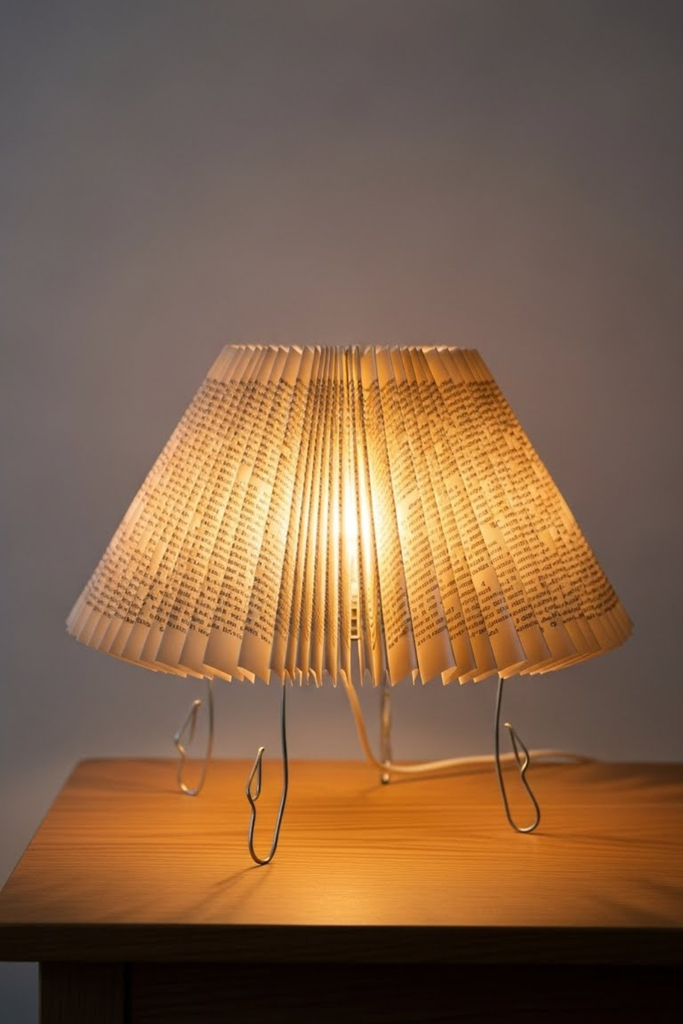
A book page lampshade can give a reading nook a warm, handmade appearance when it is constructed carefully.
I fold or layer pages around a suitable wire frame while leaving enough open space for ventilation. I use only low-heat LED bulbs because paper should never be placed close to a hot light source.
Warm LED light passing through the paper can create a soft glow and highlight the page texture. I also keep the finished shade away from heat sources and inspect the paper regularly for damage.
Pro Tip: For any paper lighting project, I would rather leave extra space around the bulb than make the shade too enclosed. Safety should come before the final appearance.
Read this next: Bumble Bee Crafts for Adults That Are Easy, Fun, and Actually Worth Making
FAQs
What kind of paper is best for DIY books?
For most book crafts, I prefer pages from unwanted paperbacks or books with a consistent, flexible paper weight. They are generally easier to fold than stiff or heavily coated pages.
I avoid glossy pages when possible because adhesive may not grip as well and repeated folding can cause cracking. Consistent paper is especially helpful for projects that require dozens of similar folds.
Which book craft is trending now?
Folded book art, sculptural page decor, seasonal book projects, and functional paper decorations continue to fit current handmade decorating styles.
I especially like simple neutral designs because they can work with modern, vintage, farmhouse, or minimalist interiors without looking overly busy.
Projects that combine decoration with a useful purpose, such as lighting, storage accents, or personalized gifts, are also practical choices when I want my craft to serve more than one purpose.
Conclusion
I find book crafts most rewarding when I treat the old book as a starting point rather than worrying about making every fold perfect. A little planning, consistent measurements, and patience can turn inexpensive materials into meaningful decor.
If I’m new to this type of crafting, I start with an unwanted book and one of the simpler projects, such as a page garland, flower, or basic folded shape. Once I understand how the pages behave, I can move on to more detailed designs.
The best part is that I can adjust almost every idea to match my home, season, color scheme, or occasion. That flexibility makes old-book crafts a useful way to create affordable handmade decor with plenty of personality.



3 Comments