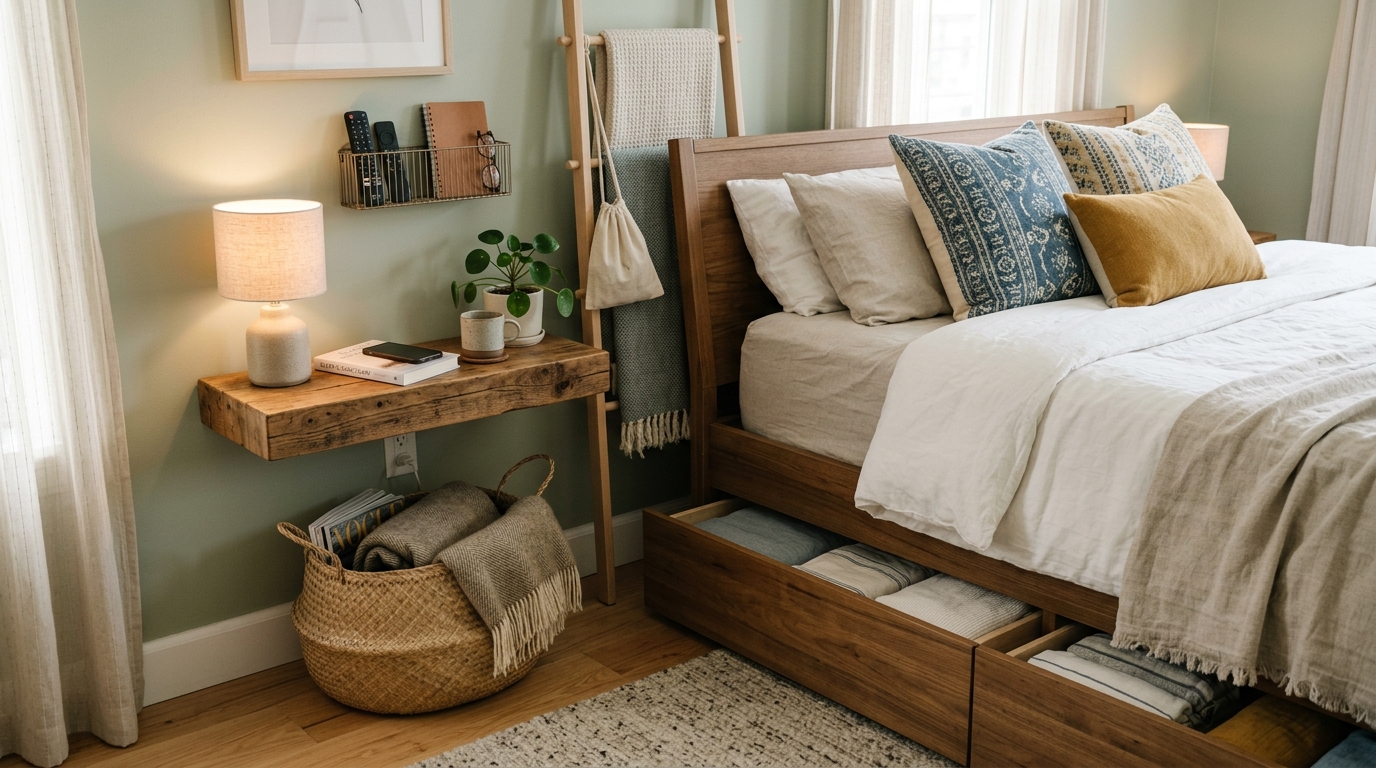
21 Bedside Storage Ideas for 2026
My nightstand usually starts the evening looking perfectly manageable. I may have my phone, a book, glasses, water, and a lamp nearby, but those few essentials can quickly turn into chargers, receipts, skincare, tissues, and things I forgot to put away.
I’ve learned that bedside clutter is often less about having a small nightstand and more about not having enough places for the things I keep nearby. When the top has to hold everything, it becomes a drop zone instead of a useful part of the bedroom.
The goal for me is not to hide everything. I want the things I use every night to stay within easy reach, while occasional items, backup supplies, and miscellaneous belongings have a proper home somewhere else.
That might mean using storage in the headboard, moving some items onto the wall, choosing a drawer unit, adding narrow shelving, or making better use of the space underneath the bed.
The best bedside storage depends on what I actually use, how much floor width I have, and whether I want open or concealed storage. In a small bedroom, wall-mounted options, headboard compartments, floating cubes, and narrow shelving can provide storage without taking up much floor space.
For rooms with a little more space, drawer stacks, compact cabinets, hybrid tables, baskets, and tiered storage can separate everyday items from belongings I only need occasionally.
I find it helpful to divide bedside belongings into two groups: things I reach for every night, such as my phone, glasses, book, water, and lamp, and everything else. Extra linens, seasonal belongings, backup cables, and less-used items can move into drawers, containers, or under-bed storage instead.
Save this for later

Table of Contents
The result is a bedside area that remains useful without asking one small tabletop to store everything I own.
Key Takeaways
- Keep the nightstand surface limited to items used regularly at bedtime.
- Wall-mounted storage can add capacity without taking up floor space.
- Drawers work well for small personal belongings that look messy when left out.
- Vertical storage makes better use of narrow areas beside the bed.
- Baskets, trays, and organizers work best when each has a specific purpose.
- Under-bed containers are useful for occasional and backup belongings.
- Keep heavier items lower on tall or freestanding storage for better stability.
Related article: 20 Makeup Brush Storage Ideas for 2026
What Are the Best Storage Options for a Nightstand?
I choose bedside storage based on my routine first and the furniture second. If I use something every night, I want it close enough to reach easily. If I only need it occasionally, there is little reason for it to occupy the best space beside my pillow.
Before choosing a storage piece, I look at the available floor width and depth, the walking space around the bed, and whether drawers or doors will have enough room to open fully.
Wall space can be more useful than floor space in a small bedroom. Renters may also prefer freestanding, stackable, or plug-in options that do not require permanent changes to the room.
Open shelves make frequently used items easy to grab, while drawers and cabinets are better when I want smaller belongings out of sight. The right choice depends on how much I need to store and how often I use it.
Pro Tip: I measure the gap beside the bed rather than guessing from the room itself. I also account for the space needed to open drawers or cabinet doors. A piece can fit between the bed and wall but still be uncomfortable to use if there is no clearance in front of it.
Headboard Storage
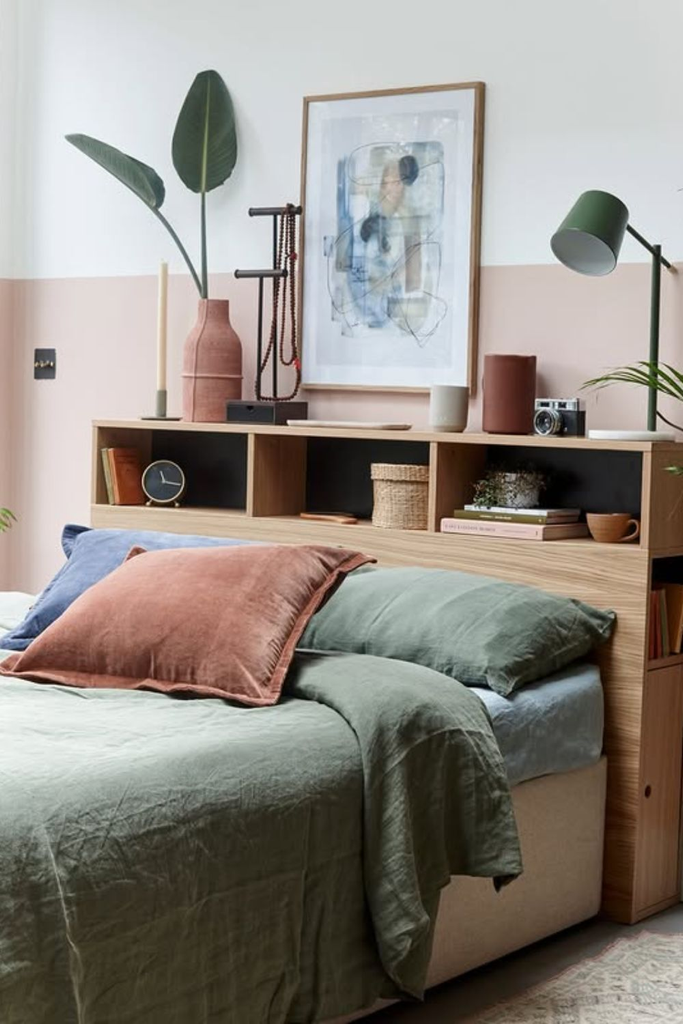
A storage headboard can take some of the pressure off the nightstand by putting shelves or cubbies directly around the bed. Books, glasses, small baskets, chargers, and other personal belongings can stay nearby without covering the tabletop.
This is one of the options I consider when floor space is limited. Instead of squeezing a wide cabinet into a narrow gap, I can use storage that is already part of the bed area.
Open cubbies are best for things I reach for regularly. Small baskets can contain loose cables or personal items so the compartments do not become cluttered.
If I already have a standard headboard, shallow shelving near it can provide a similar function. I would make sure any added shelving is properly supported and positioned so it does not create an unstable or awkward arrangement around the bed.
Floating Cube
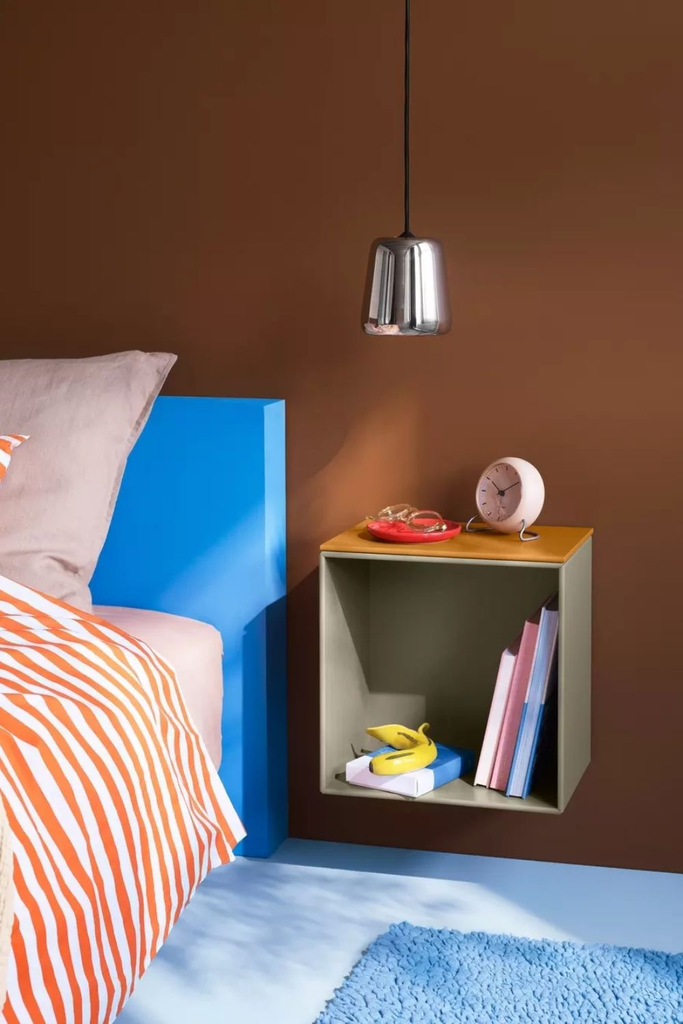
A floating cube gives me a compact bedside surface while keeping the floor underneath open. The top can hold a phone, glasses, small tray, or another lightweight essential, while the interior provides space for books and personal belongings.
Placement makes a noticeable difference. I want the cube at a comfortable height from the mattress so I can reach it naturally rather than stretching or sitting up awkwardly.
Because it is wall-mounted, I pay attention to the wall construction and use mounting hardware suitable for both the wall and the intended load. I follow the manufacturer’s installation instructions rather than assuming every wall can support the same amount of weight.
A wall-mounted or pendant light can also free the cube’s top from a bulky lamp base, leaving more room for the things I actually use at night.
Pro Tip: I keep wall-mounted bedside storage relatively light and avoid treating it like a full cabinet. A little empty space makes it easier to use and reduces the temptation to overload it.
Slim Drawer

A slim drawer unit is useful when the gap beside the bed is narrow but I still need enclosed storage. Its smaller footprint lets me use vertical space without bringing a wide nightstand into the walkway.
The drawer is a good place for charging cables, glasses cases, tissues, or other small personal belongings that tend to collect on the surface.
If the unit has an open section below, books or a basket can go there while the top remains available for a lamp and a few nighttime essentials.
For a tight bedroom, I check both width and depth before choosing one. A narrow piece can still create a problem if it projects too far into the walking path.
Drawer Stack
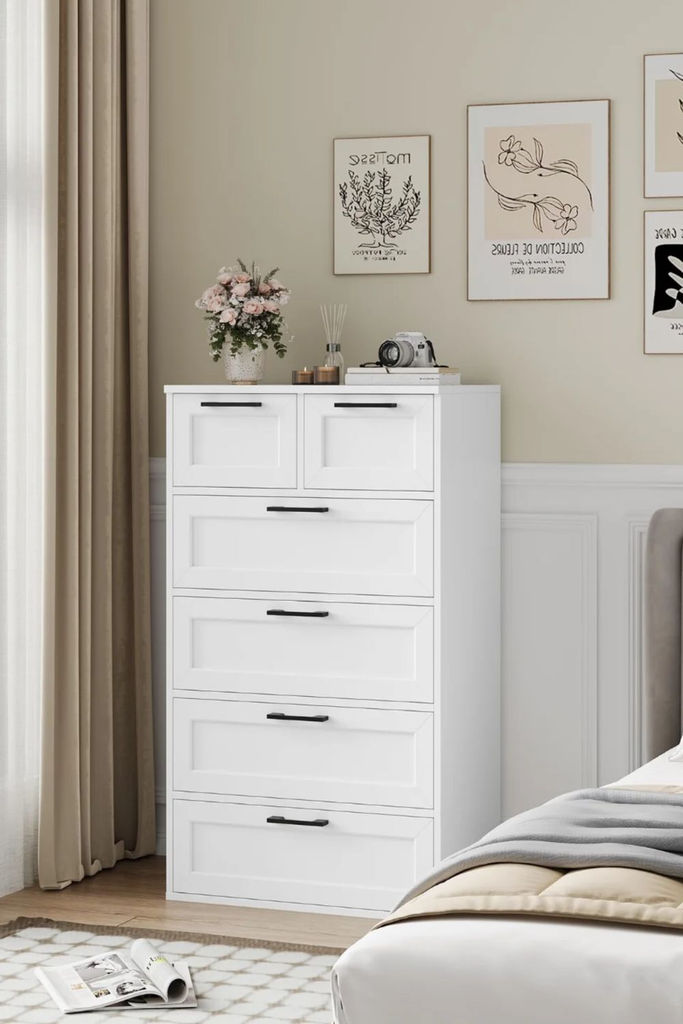
A drawer stack is different from a slim drawer because its main advantage is category separation. Several drawers give me an opportunity to assign different types of belongings to different places.
One drawer might hold charging accessories, another personal-care items, and another less frequently used bedside supplies. That makes it easier to put things away without creating one large catchall compartment.
I keep the most frequently used categories in the easiest-to-reach drawers. Deeper or lower drawers can handle bulkier items that do not need to be accessed every night.
The surface can then stay simple with a lamp, small tray, or another essential rather than becoming the main storage area.
Pro Tip: I do not try to organize every item individually. Simple categories are easier to maintain than a complicated system that takes longer to put things away than it did to take them out.
Hybrid Table
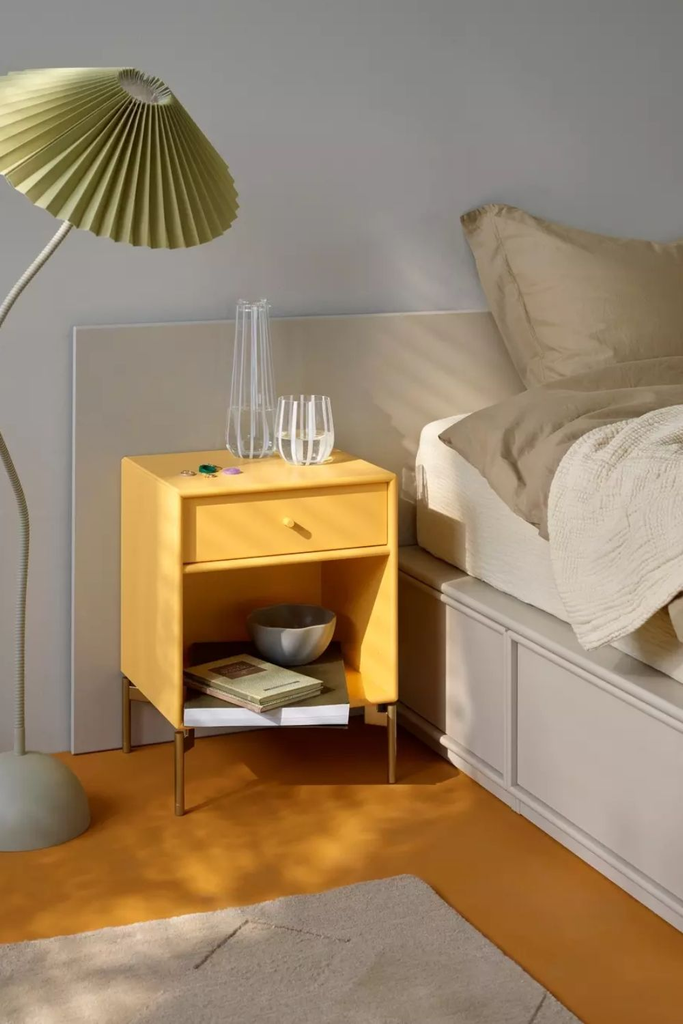
A hybrid bedside table combines a usable top with both open and concealed storage. I like this arrangement when I want more capacity than a basic nightstand but do not need a large cabinet.
The top can hold the items I use immediately, while a drawer keeps small belongings out of sight. An open shelf below provides space for books, a basket, or things I want nearby but do not reach for every night.
This combination also lets me control how much visual clutter is exposed. Items that look messy can stay inside the drawer while more presentable belongings remain accessible on the open shelf.
It is a practical choice when I want a little of everything without adding several separate pieces of furniture.
Wall Shelf
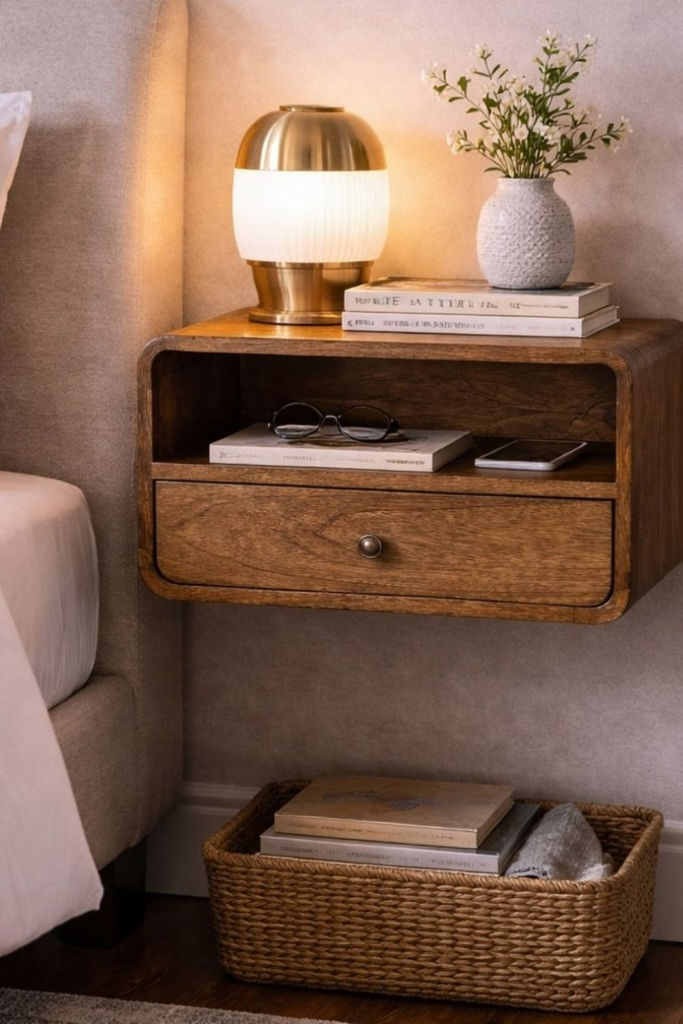
A wall shelf creates a bedside surface without using floor space. In a small bedroom, that can be more useful than trying to fit another piece of furniture between the bed and the wall.
A shallow shelf is often enough for a phone, glasses, book, small tray, or other lightweight essentials. A nearby basket can provide additional containment without making the shelf itself deeper.
I keep the shelf reasonably light and use appropriate anchors or mounting hardware for the wall type and intended load. I also consider the shelf depth because anything sticking too far out can interfere with movement beside the bed.
The simpler the shelf, the easier it is for me to keep it from becoming another cluttered surface.
Pro Tip: I think of a wall shelf as a replacement for the top of a nightstand, not as an excuse to store everything beside the bed. Keeping its purpose limited makes the setup easier to maintain.
Layered Shelf
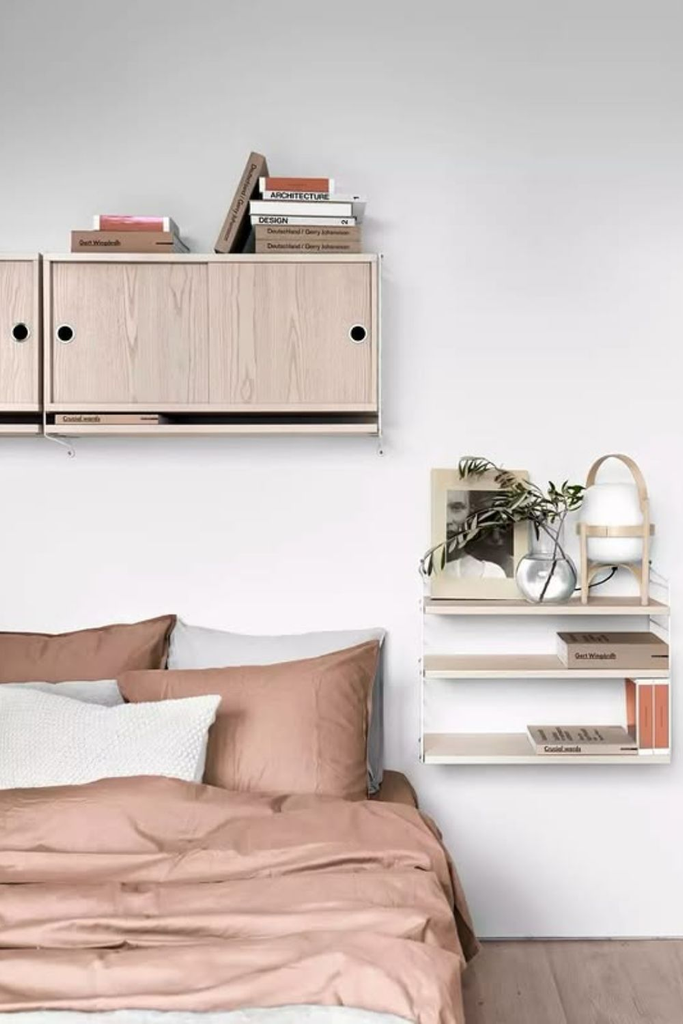
A layered shelf gives me several horizontal levels to work with instead of one crowded surface. This makes it useful when I need more storage but have limited width beside the bed.
Books can occupy one level, everyday belongings another, and lighter decorative items a higher shelf. If the unit includes a closed section, I use that for smaller items I would rather keep out of sight.
I pay attention to reach when arranging the shelves. The things I use most often belong in the easiest position, while occasional belongings can go farther away.
The advantage is organization by level. Instead of piling everything together, each section has a defined role.
Niche Storage
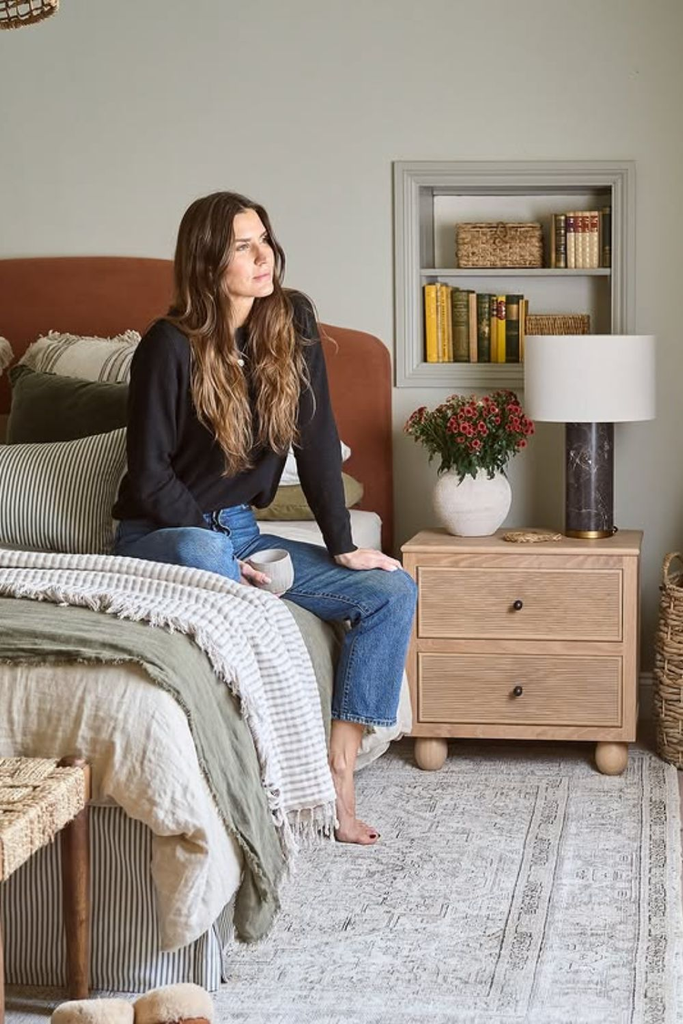
An existing recessed wall niche can provide discreet storage close to the bed without adding furniture to the floor. It can hold books, small baskets, or decorative belongings that would otherwise compete for nightstand space.
I would use the niche for larger or less frequently handled items while keeping a drawer or small surface nearby for everyday essentials.
Adding a new recessed niche is a different project because the wall construction needs to be considered before cutting into it. I would not assume that a wall can safely be opened just because the area appears empty.
For a simpler approach, a shallow wall shelf can create some of the same benefits without the construction involved in a built-in niche.
Compact Cabinet
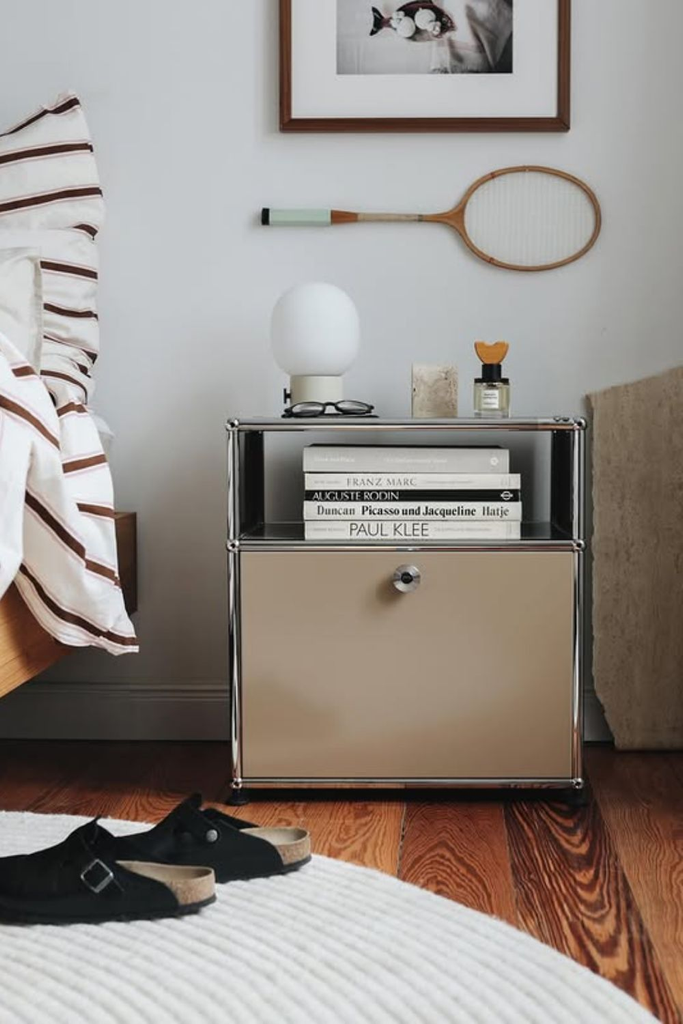
A compact cabinet gives me more concealed storage while still taking up less room than a full bedside chest. It can provide a top surface, an open shelf, and a closed compartment in one relatively small footprint.
I like giving each section a clear job. Books or journals can stay on the open shelf, while chargers, personal-care items, and other small belongings can be tucked into the cabinet.
This works particularly well when I need more hidden storage but do not want the bedroom dominated by a large piece of furniture.
Before buying one, I check the cabinet depth and door clearance. A narrow cabinet is only helpful if I can still walk comfortably around it and open it without hitting the bed.
Stack Boxes
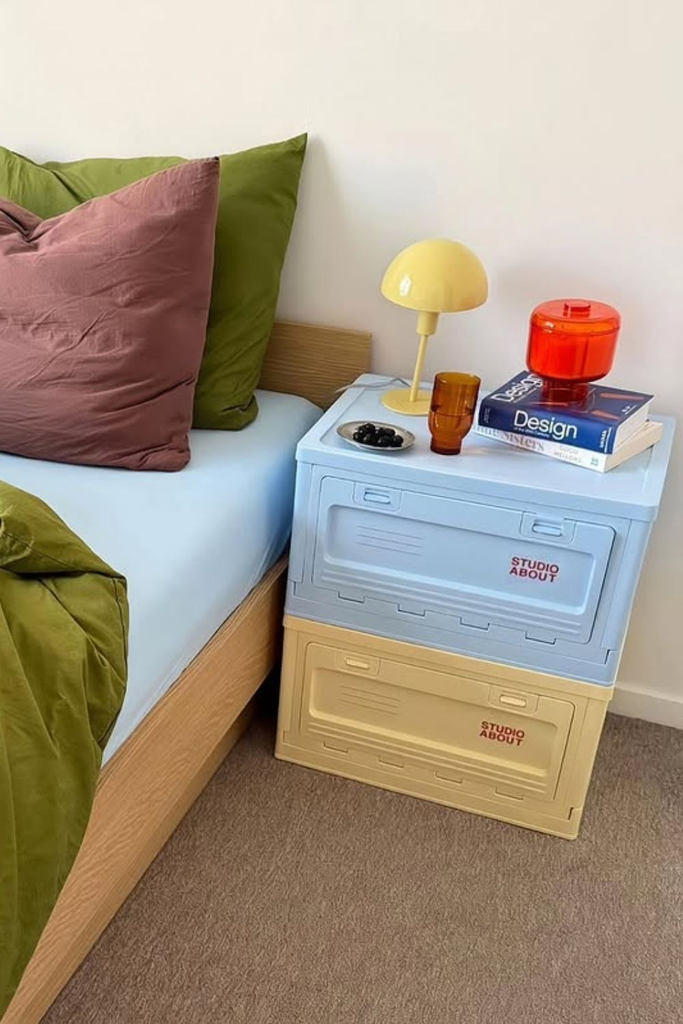
Stackable boxes give me bedside storage without committing to permanent furniture. They are especially useful for rental bedrooms, apartments, temporary setups, or anyone who expects their storage needs to change.
I can give each container a category, such as books, accessories, backup cables, or spare belongings. That is much more useful than stacking boxes and treating them as one large miscellaneous pile.
Stability matters with stacked storage. I keep the arrangement level, avoid excessive weight, and do not place heavy or breakable objects on an unstable top surface.
Another benefit is flexibility. If I rearrange the bedroom later, the boxes can move with me instead of leaving behind a storage system designed for one particular layout.
Also read: 22 Clothing Organization Ideas for 2026
Tiered Stand
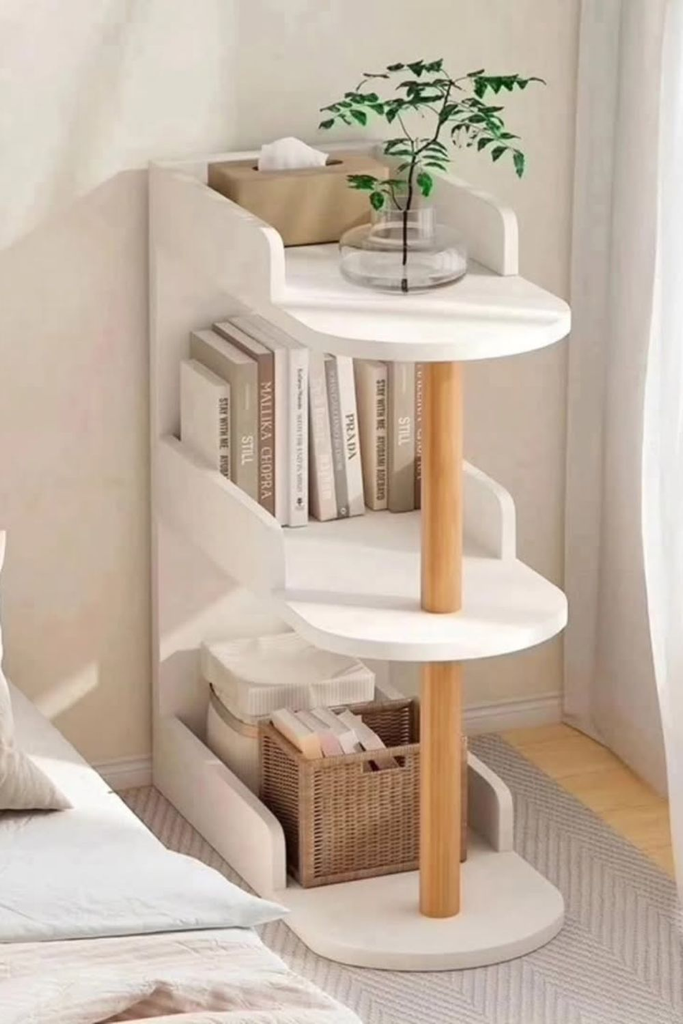
A tiered stand uses a stepped or multi-level design to provide storage in a relatively compact footprint. Unlike a wall shelf, it stays freestanding, so I can move it when I rearrange the room.
The lower level is a sensible place for heavier belongings, while books, baskets, and smaller everyday items can occupy the middle and upper sections.
I like this arrangement when I want open access to several categories without opening drawers. It also makes it easier to see what I have instead of hiding everything inside one container.
If the stand is tall or narrow, I make sure it sits securely and follow any manufacturer’s guidance about stabilizing or securing it. I avoid loading the highest level with heavy items.
Open Cube
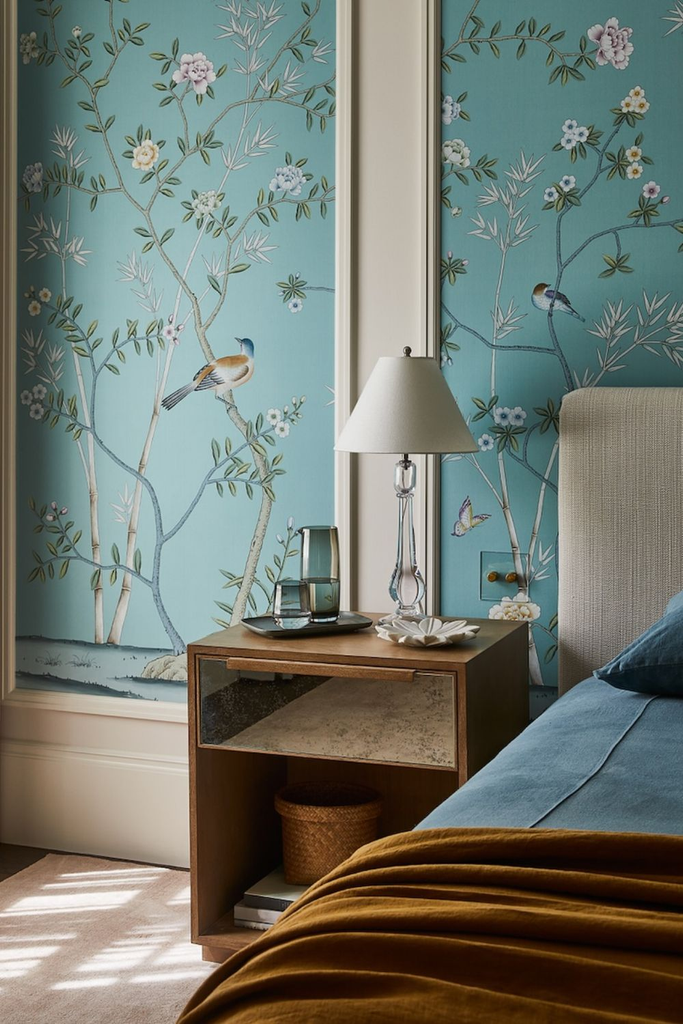
An open cube works as a compact bedside storage unit with a simple, accessible design. The top gives me a small surface, while the open compartment underneath can hold books, a basket, or other belongings.
I find a small tray particularly useful on top because it gives tiny items such as glasses or jewelry a defined landing place.
The open compartment is easier to manage when I group similar things together. A basket can contain loose items without requiring a drawer.
This is a good option when I want quick access and prefer visible storage over opening drawers. The tradeoff is that anything left loose remains visible, so the category system matters.
Modular Drawers
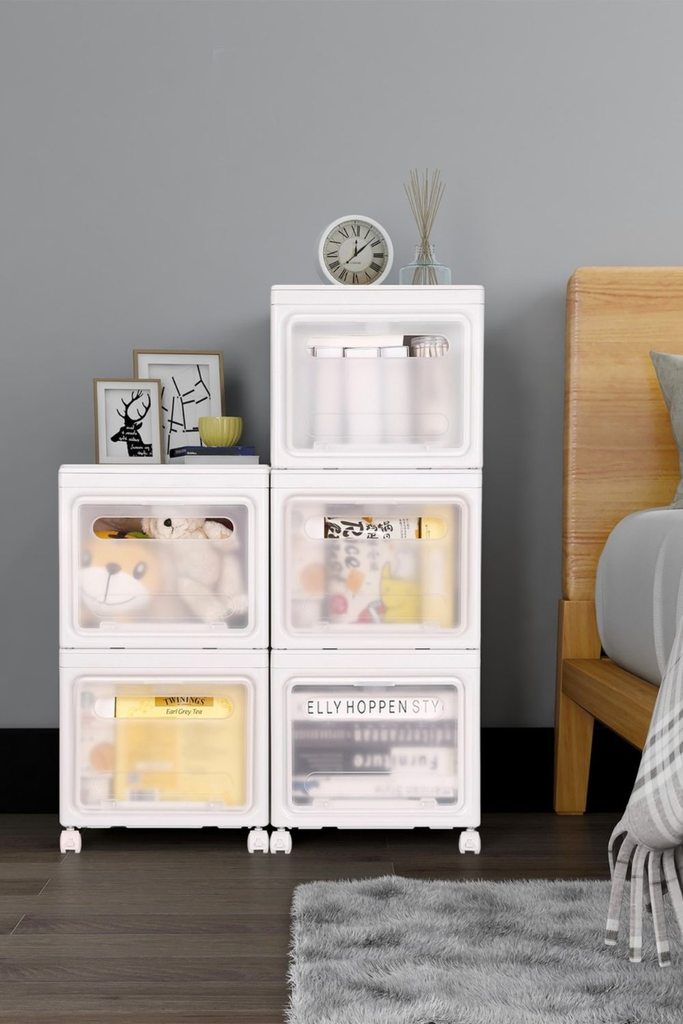
Modular drawers are useful when I need storage that can change with the room. Individual units can sometimes be arranged or combined to suit a narrow bedside area better than a fixed cabinet.
They work well for people who prefer clear categories because each drawer can have a specific purpose. Small personal belongings, accessories, cables, or backup supplies can be separated instead of mixed together.
Clear drawers make contents easy to identify, although I try not to overfill them. When every item is visible, a simple category system keeps the storage from looking chaotic.
Some modular units are also easy to move, which can help when cleaning or rearranging the bedroom. Their main advantage is flexibility rather than simply adding another set of drawers.
Wall Grid
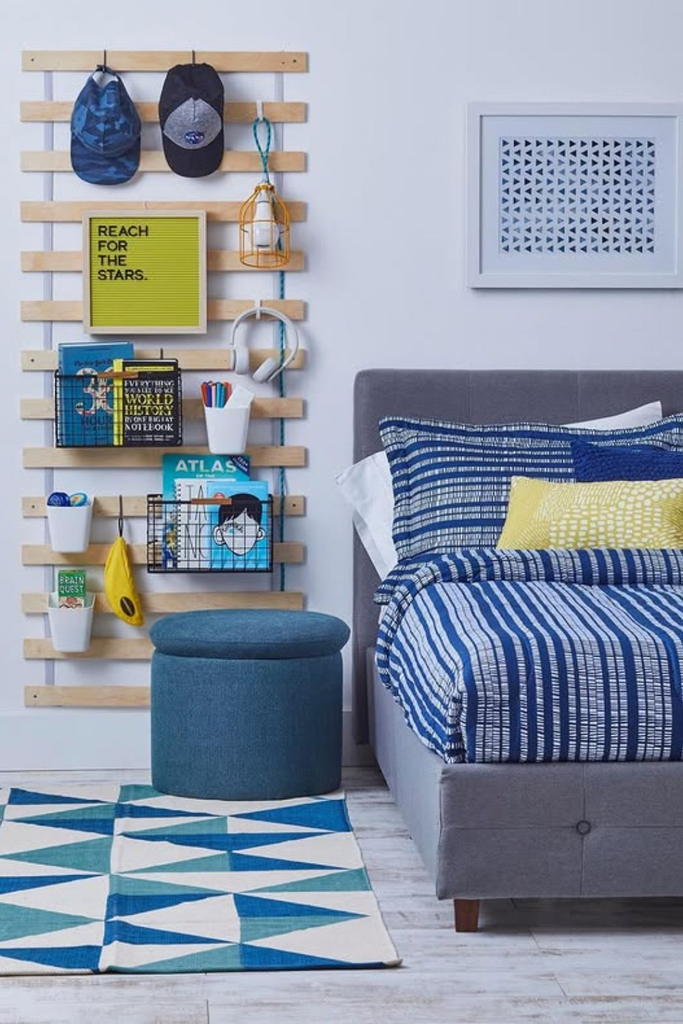
A wall grid turns an unused section of wall into a flexible bedside storage system. Hooks, small baskets, shelves, and holders can be arranged according to what I actually need.
For example, a basket can hold small accessories, a shelf can hold books, and a hook can handle lightweight items such as headphones.
I put frequently used items at an easy-to-reach height and leave less-used belongings farther away. Because the system is visible, I avoid adding more holders simply because I have empty space.
The other benefit is adjustability. If my storage needs change, I can often rearrange the components instead of replacing the entire setup.
Pro Tip: I start with only the accessories I know I need. A wall grid is most useful when it solves a specific storage problem rather than becoming a wall full of containers.
Hanging Lights
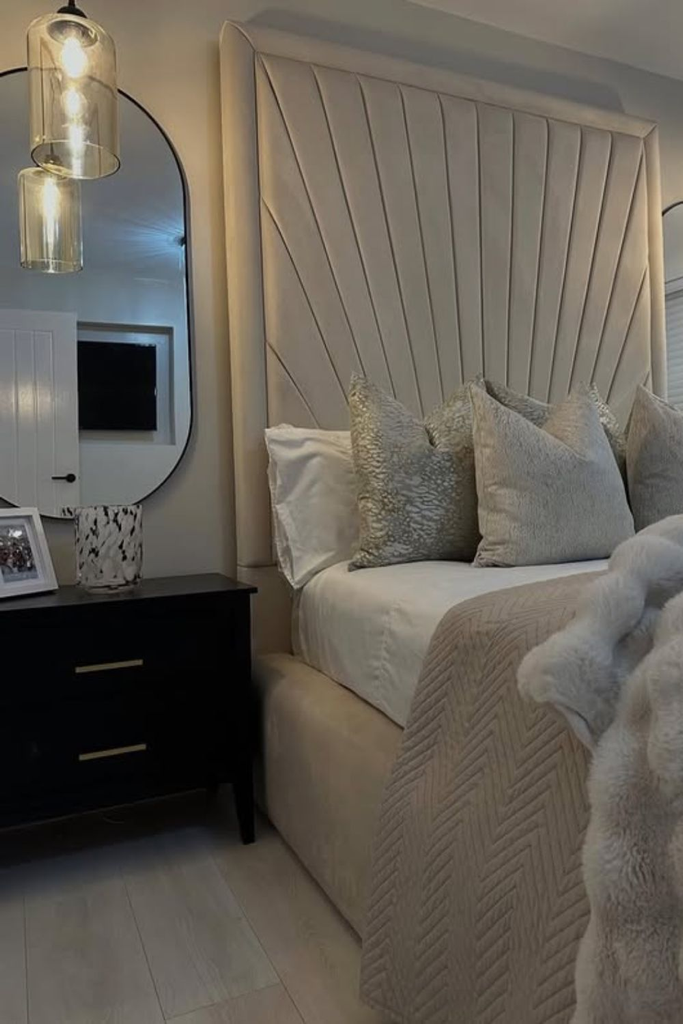
Moving the light away from the nightstand can free a surprising amount of usable surface. A pendant, wall-mounted fixture, or suitable plug-in light can leave the tabletop available for my phone, book, glasses, or water.
This is particularly useful when the nightstand is already small. Instead of trying to fit a lamp base beside everything else, the lighting occupies a different area.
For a hardwired fixture, electrical work should be completed safely and according to applicable local requirements. Renters may prefer a plug-in wall light or another removable option that does not require permanent electrical changes.
I also position the light based on where I actually lie and reach from bed. A fixture can look perfectly placed from across the room and still be inconvenient when I am trying to switch it off at night.
Shelf Tower
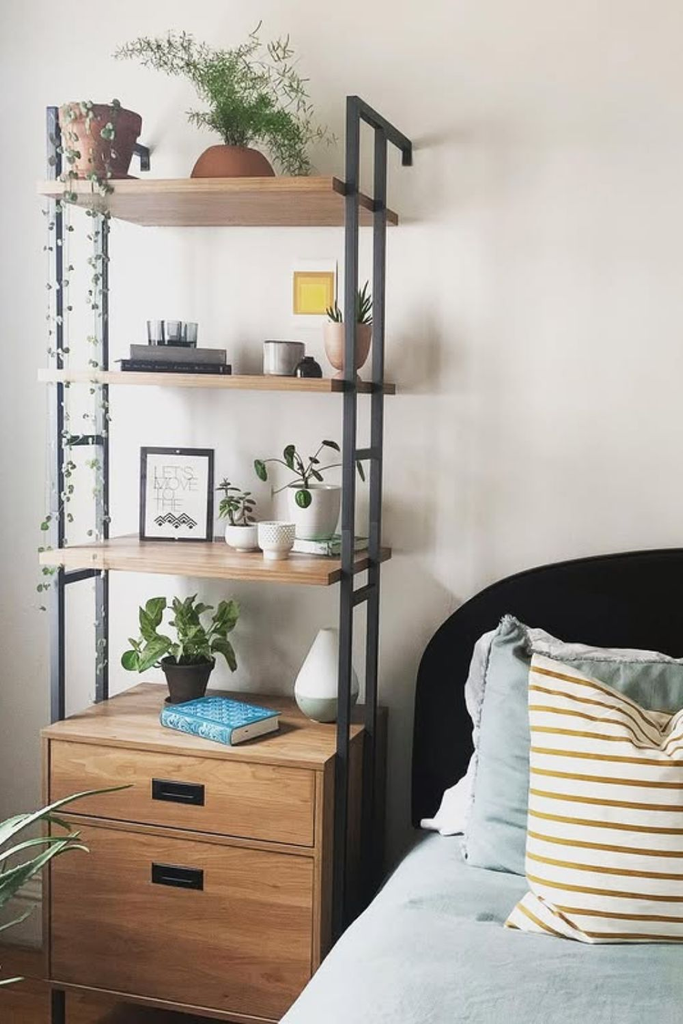
A shelf tower provides more vertical capacity than a short bedside shelf while using relatively little floor width. I like this when the bedroom is narrow but I still need several storage levels.
Open shelves can hold books, baskets, and a few decorative belongings, while drawers or enclosed sections can handle smaller items that I do not want visible.
The higher the unit, the more careful I am about what goes on top. Heavy belongings stay lower, and tall furniture should be kept stable and secured appropriately when necessary.
I also avoid filling every shelf simply because it is available. Leaving some open space makes the unit easier to use and prevents it from becoming another crowded storage zone.
Rack Combo
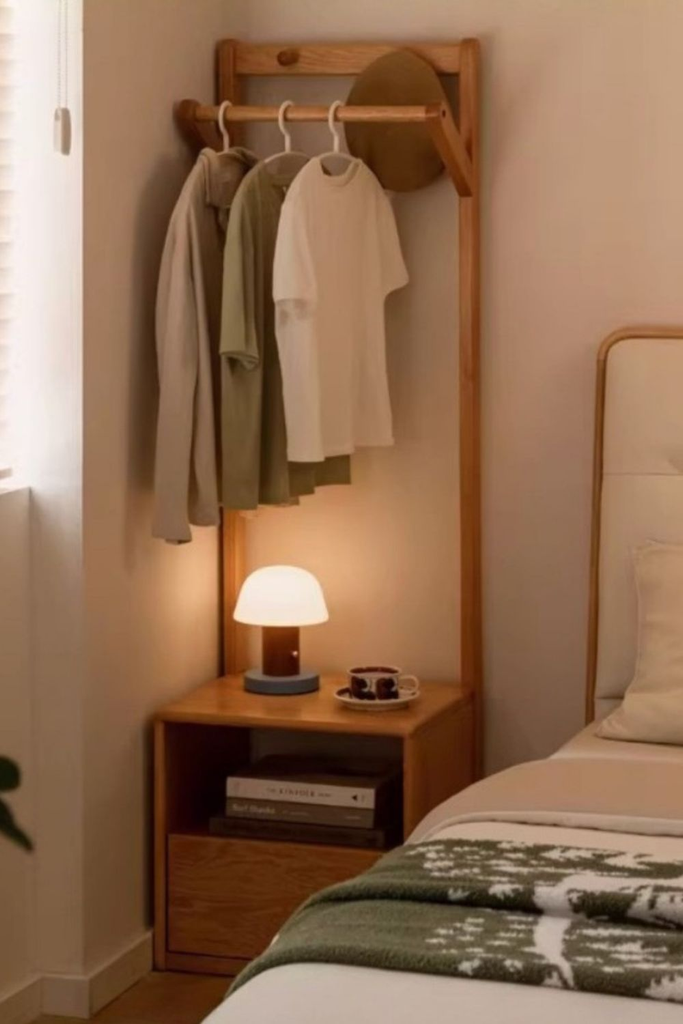
A rack combo can combine hanging space, shelving, and a small surface in one vertical arrangement. That makes it useful when the area beside the bed needs to do more than provide a place for a phone and lamp.
I might use the rail for a robe or frequently worn item, the upper surface for nighttime essentials, and the lower section for books or personal belongings.
This can be helpful in a bedroom where there is not enough room for several separate furniture pieces. One compact unit can handle multiple functions without requiring additional floor space.
Because the structure may be tall, I keep heavier belongings toward the bottom and avoid overloading upper shelves or the hanging rail. If the manufacturer recommends securing the unit, I follow those instructions.
Classic Drawers
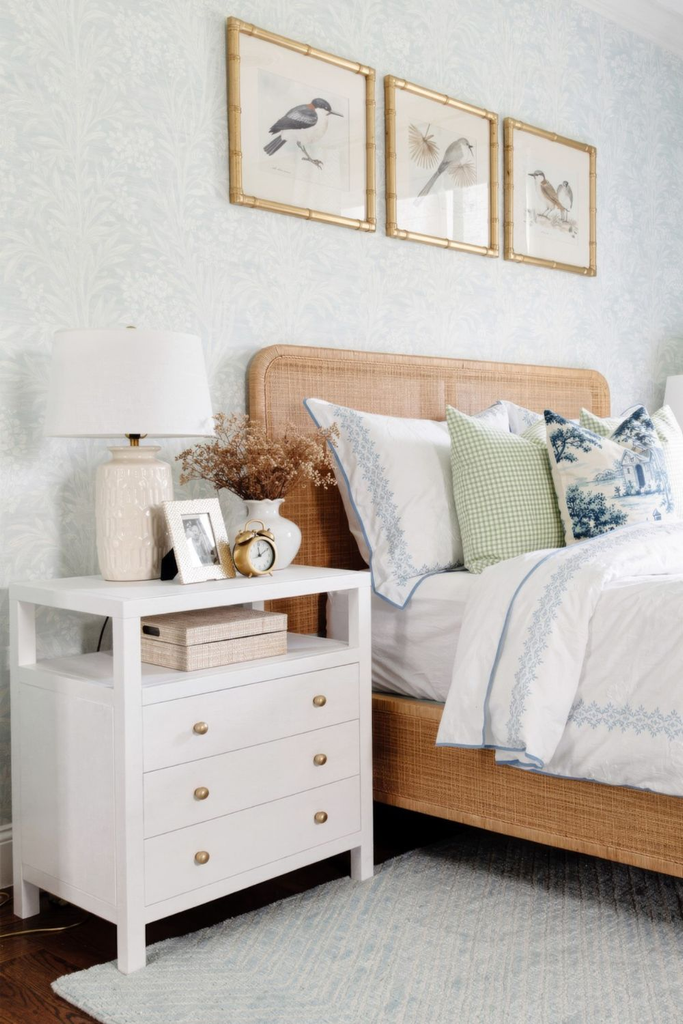
A traditional drawer nightstand remains one of the easiest options to live with. It gives me a familiar bedside surface while providing enclosed storage underneath.
The drawers can be divided into broad categories instead of becoming one catchall. Charging accessories, personal-care items, notebooks, and other small belongings can each have an appropriate place.
If the nightstand includes an open shelf, that space can hold books or a basket while the top stays reserved for things I actually use at bedtime.
I like this option when I do not need a complicated storage system. It is straightforward, easy to understand, and simple to maintain.
Pro Tip: I keep a small amount of empty drawer space available. That gives me somewhere to put an unexpected item without immediately creating another clutter pile on top of the nightstand.
Slim Rack
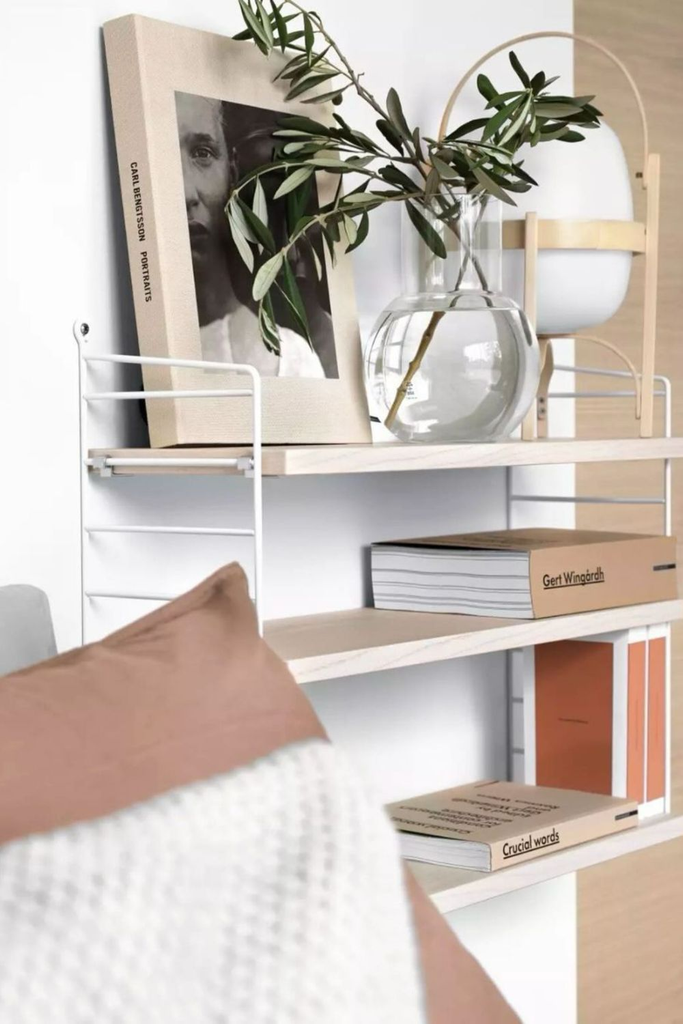
A slim rack is designed for the particularly narrow gap where a standard nightstand will not work. Its main advantage is width: I can gain several open storage levels without using much horizontal space.
Books and heavier belongings can go toward the bottom, while the upper level can hold lighter items such as a small tray or a few everyday essentials.
Side rails can help keep belongings from sliding off, which is useful when the shelves are narrow.
I still check the total depth before choosing one. A slim rack that is too deep for the walkway can make the bedroom harder to move through, even if its width is perfect.
If the rack is tall and narrow, I also make sure it sits securely and follow any available instructions for anchoring or stabilization.
Under Bed
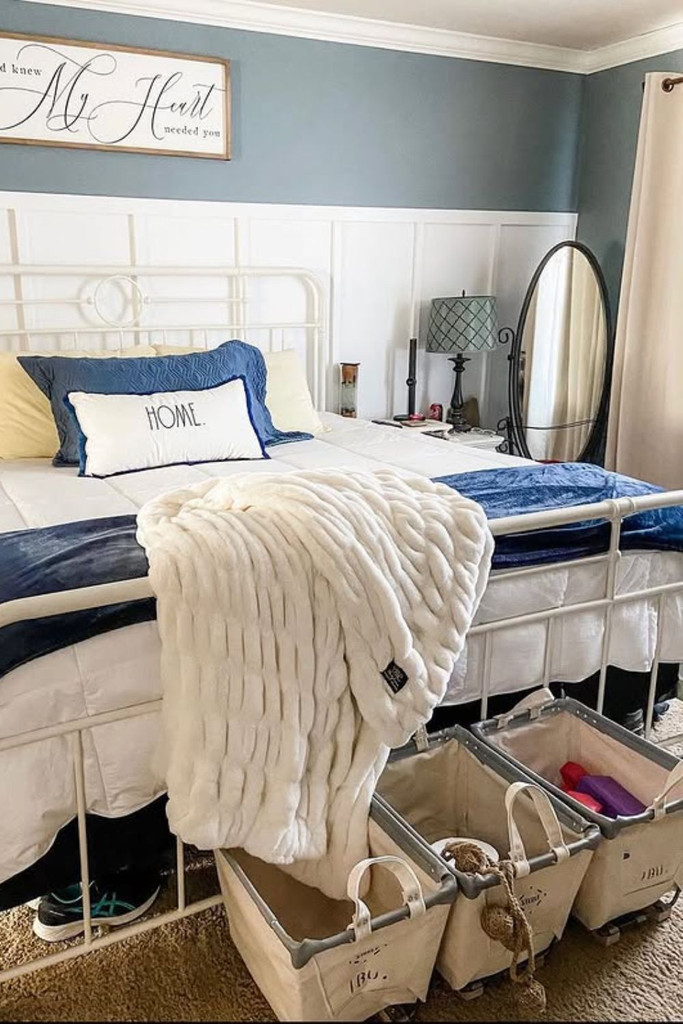
The space underneath the bed is one of my favorite places to move occasional belongings out of the bedside area. It lets me keep storage close without adding another cabinet or shelf.
Spare bedding, seasonal belongings, extra books, and backup supplies can go into low-profile containers designed to fit beneath the bed.
Containers with handles or wheels are easier to pull out when I need something or when I clean underneath the bed. Labels also save time because I can identify the contents without opening several boxes.
I pay attention to the conditions underneath the bed, too. If the area is enclosed or prone to moisture, I avoid storing items that could be damaged by those conditions and choose suitable containers.
Good airflow and easy cleaning access matter more to me than simply filling every available inch. The storage should make the bedroom easier to manage, not create a hidden pile that I forget about.
Pro Tip: I reserve under-bed storage for items I do not need every night. If I use something constantly, moving it under the bed only adds an unnecessary step to my routine.
Deep Drawers
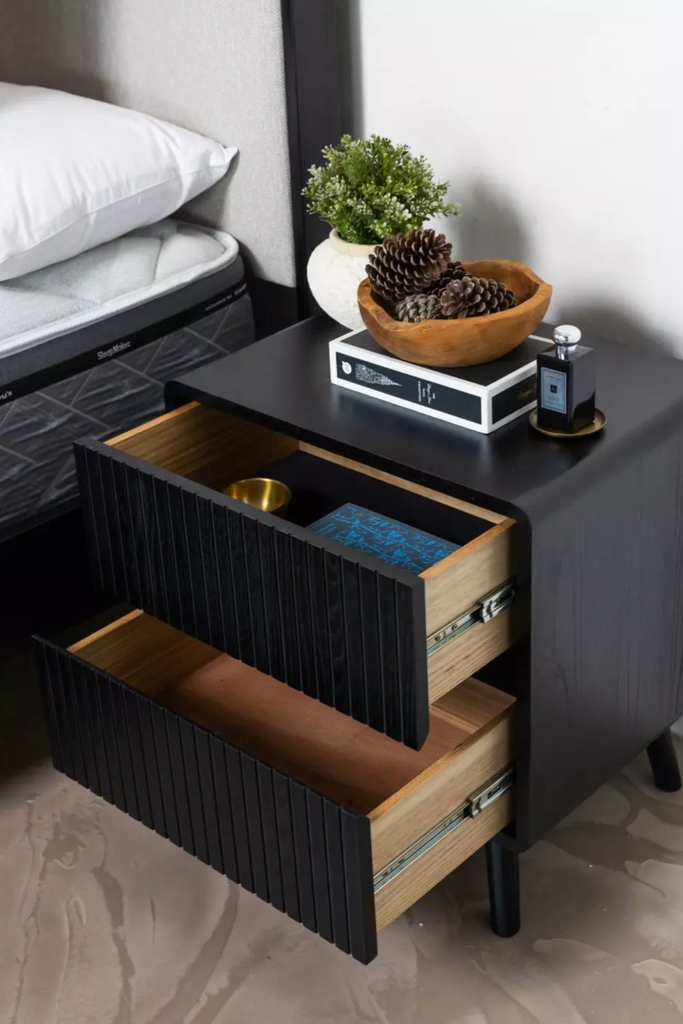
Deep drawers are useful when shallow bedside storage is not enough for the belongings I actually need to keep nearby. They provide more capacity for books, personal-care supplies, charging accessories, and other larger items.
Their extra depth can be helpful, but it also makes organization important. Without some separation, a deep drawer can quickly become a large container of mixed belongings.
I use simple dividers or smaller containers when necessary and keep categories broad enough that putting things away remains quick.
This option works well when I want most of my bedside belongings hidden while keeping them close. The top can then stay relatively clear instead of carrying everything the drawers could hold.
FAQs
How do you organize a nightstand without creating clutter?
I start by limiting the top to things I genuinely use at bedtime, such as my phone, glasses, a book, water, or a lamp.
Everything else gets a more suitable home in a drawer, basket, shelf, cabinet, or another storage area. I also avoid letting one drawer become a miscellaneous catchall.
What can replace a traditional nightstand in a small bedroom?
A floating cube, wall shelf, storage headboard, slim drawer unit, narrow rack, or compact cabinet can replace a traditional nightstand.
For belongings I use less often, under-bed storage can take some of the pressure off the bedside area without adding more furniture.
What should I keep on my nightstand?
I keep only the things I use regularly while I am in bed. Depending on my routine, that may include a phone, glasses, book, water, small tray, or lamp.
If an item is used only occasionally, I would rather store it in a drawer, cabinet, basket, or another nearby location.
How can I add bedside storage in a small bedroom?
I look at vertical and unused areas first. Wall shelves, floating cubes, storage headboards, layered shelving, slim racks, and narrow drawer units can provide capacity without requiring a wide nightstand.
Under-bed storage is another useful place for belongings that do not need to be accessed every night.
How do I organize a nightstand drawer?
I use simple categories rather than trying to organize every small object separately. Charging accessories, personal-care items, reading supplies, and other small belongings can each have a general section.
Small containers or drawer dividers can help when items move around, but I only add organizers when they solve an actual problem.
What can I use instead of a nightstand?
I can use a wall shelf, floating cube, storage headboard, slim rack, compact cabinet, tiered stand, or another bedside storage option from this list.
The best replacement depends on whether I need a surface, concealed storage, open shelving, or simply a place for a few nighttime essentials.
Read this next: 22 Linen Closet Organization Hallway Ideas for 2026
Conclusion
I do not think a tidy bedside area requires expensive furniture or a large bedroom. For me, the biggest improvement comes from deciding what actually belongs beside the bed and giving everything else a proper storage location.
When floor space is limited, I look toward the headboard, walls, vertical shelving, slim furniture, and under-bed area before adding something bulky. Drawers and compact cabinets are useful when I need more hidden storage without covering the room in containers.
The system also needs to fit my routine. Everyday essentials should be easy to reach, while backup and occasional belongings can live farther away.
If putting something away takes only a few seconds and I know exactly where it belongs, I am much less likely to let the nightstand become a daily clutter zone.






2 Comments