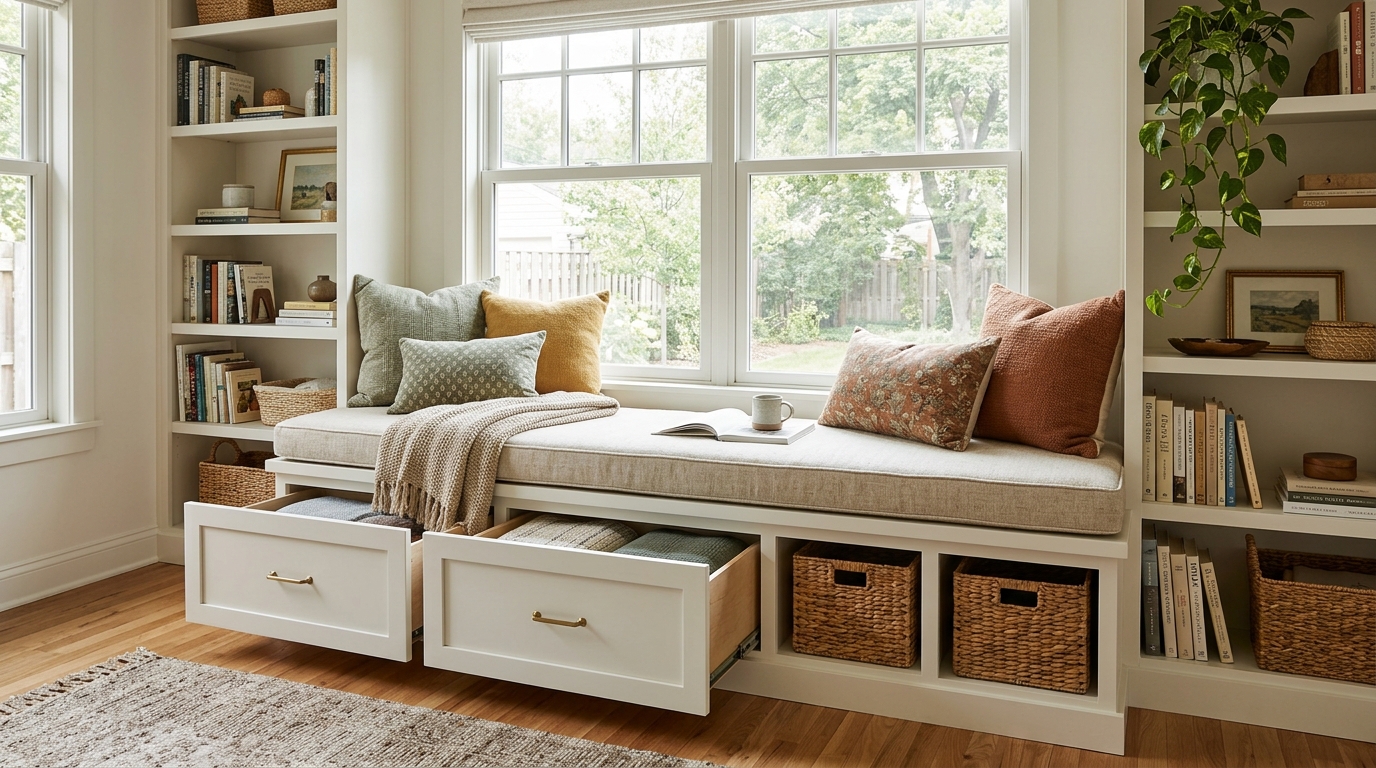
16 Window Seat Storage Ideas for 2026
An empty space beneath a window can be one of the most useful storage areas in a room, especially when floor space is limited. I like window seats because they can provide a place to sit, read, relax, or enjoy the light while also hiding things that would otherwise take up valuable cabinet or closet space.
The storage needs to match the way the room is actually used. Shallow drawers can be handy for items I reach for often, while a deeper lift-up compartment can make more sense for blankets, spare pillows, or seasonal belongings.
I’ve put together 16 window seat storage ideas covering drawers, cabinets, open shelving, cubbies, and larger built-in arrangements. Some work well in compact rooms, while others make better use of bay windows, long walls, corners, or awkward spaces.
A window seat can combine comfortable seating with storage without taking up the floor area required for a separate chair and cabinet. The right arrangement depends on the room, available depth, surrounding furniture, and the belongings I need to keep there.
Drawers are convenient for everyday items because they can be opened without clearing the seat. Lift-up storage and cabinets are more useful when I need a larger compartment for bulky or seasonal belongings, while shelves and taller cabinets make better use of vertical space.
Save this for later

Table of Contents
Before building or ordering anything, I check the overall width, available depth, floor-to-sill relationship, walking space, drawer and door clearances, window trim, outlets, heating equipment, and wall construction. Those details can change what will actually fit and how safely the finished bench can be used.
Key Takeaways
- I use drawers for belongings I access regularly and lift-up storage for bulky or seasonal items.
- Measure the window area and surrounding space before choosing the bench design.
- Make sure the seating depth works with the room instead of using a one-size-fits-all measurement.
- Check radiators, heating vents, outlets, window hardware, and trim before construction.
- Use vertical cabinets and shelving when floor space is limited.
- Baskets and internal dividers can keep deep storage from becoming one large catchall.
- Matching cabinetry, trim, paneling, hardware, or paint can help the bench look connected to the room.
Related article: 21 Bedside Storage Ideas for 2026
How to Choose the Right Window Seat Storage
I start by deciding what the storage actually needs to do. A beautiful bench that is difficult to open or too deep for the room will quickly become frustrating, so function comes before the finished appearance.
Need frequent access?
Drawers are usually the easiest choice for belongings I use often. I can pull them open without removing the cushion, which makes them practical for books, toys, craft supplies, shoes, or frequently used blankets.
Storing bulky or seasonal items?
A lift-up compartment or cabinet can provide a larger uninterrupted storage area. This works well for spare bedding, winter accessories, cushions, or other things that do not need to be accessed every day.
Working with a narrow room?
Keep the bench shallower and protect the walking route around it. I would rather sacrifice some storage depth than create a seat that makes the room difficult to move through.
Limited floor space?
Look upward. Tall cabinets and shelves beside the window can add considerable storage without extending the bench farther into the room.
Have a bay window?
A custom wraparound arrangement can follow the existing angles and make use of awkward corners. Each section should be measured individually because bay windows are not always perfectly symmetrical.
Want the storage to blend into the room?
Matching trim, cabinet fronts, paneling, paint, or hardware can make the bench look more integrated. This is especially useful when I want the storage to feel like part of the architecture rather than a separate piece of furniture.
Renting?
A permanent built-in may not be practical without permission. Freestanding benches, ready-made cabinets, baskets, movable drawer units, and other minimally invasive options can provide some of the same benefits without major wall or floor modifications.
Before ordering cabinets or cutting materials, I check more than the window width. I measure the available depth, floor-to-sill relationship, nearby furniture, walking clearance, drawer and cabinet-door opening space, trim, outlets, heating equipment, and wall construction.
There is no single bench dimension that works for every room. The useful dimensions are the ones that leave enough space for comfortable seating, practical storage, and safe movement around the finished unit.
Pro Tip: I mark the proposed bench footprint on the floor with painter’s tape before ordering cabinets or starting construction. Walking around the taped outline gives me a much better sense of the depth and helps reveal clearance problems while they are still easy to fix.
Framed Drawer Nook

This design treats the entire window area as a storage wall. Drawers beneath the seat provide convenient compartments for smaller belongings, while taller cabinets on either side take advantage of the unused wall height.
The lower drawers could hold toys, linens, clothing, books, or other items that need to stay organized. Larger side cabinets are better suited to bulkier belongings that would be awkward in shallow drawers.
For a cohesive built-in appearance, I would keep the cabinet fronts, trim, and hardware related to the surrounding room. The seating area then feels like the center of a larger storage system rather than an isolated bench.
If children will use the drawers, durable hardware and easy-to-grip pulls are practical choices. I also avoid creating unnecessary sharp edges around a seating area that gets regular family use.
Library Corner Bench
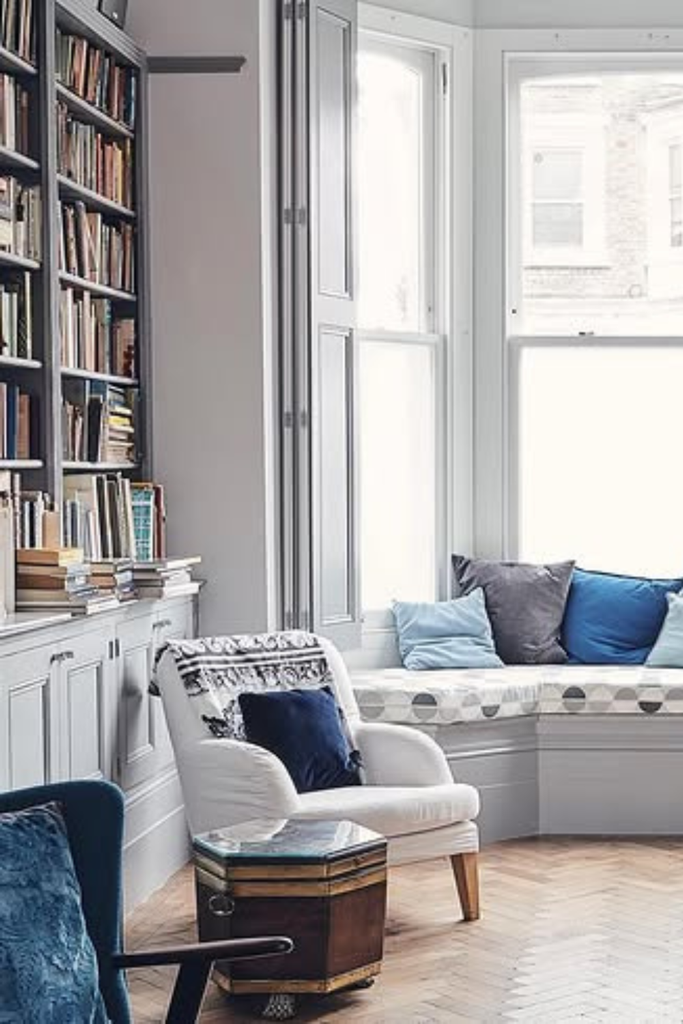
A smaller corner reading area can make good use of a window without requiring a full-wall installation. The bench sits beneath the window while shelving continues along the adjoining wall.
Lower cabinets can hide board games, blankets, or other less attractive items, while nearby shelves keep books within easy reach. This arrangement works particularly well in a family room, home office, or compact reading corner.
The main advantage here is scale. It gives me a dedicated reading and storage area without turning the entire window wall into cabinetry.
If the shelves will hold a lot of books, I make sure they have suitable support for the intended load rather than treating them like lightweight decorative shelving.
Glass Cabinet Bench

A glass-front cabinet bench is useful when I want some belongings hidden and others visible. Storage below the seat can conceal everyday clutter, while the upper glass doors provide a place for dishes, books, collectibles, or decorative objects.
This arrangement can work particularly well around a dining area or breakfast space where the window seat is close to other display and storage furniture.
I would resist filling every shelf. A smaller number of useful or attractive items is easier to maintain and keeps the display from becoming visually crowded.
One practical drawback is maintenance. Glass tends to show fingerprints and dust more readily than solid cabinet doors, so I reserve it for things I actually want to see rather than general storage.
Stair Landing Storage
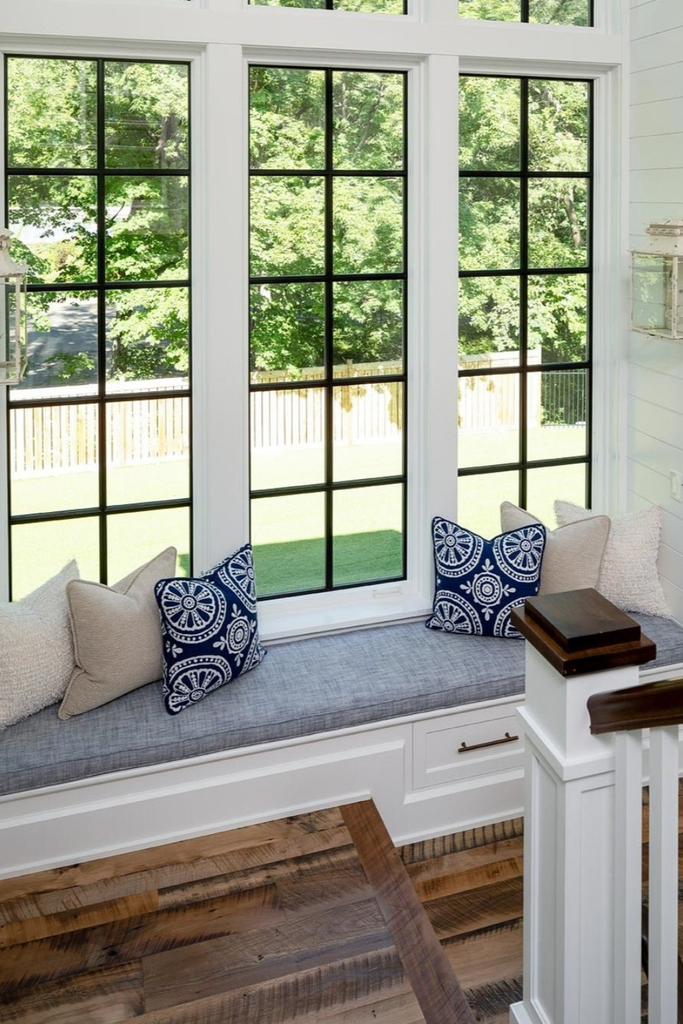
A stair landing or narrow upper hallway can be challenging to furnish because there may be very little spare floor space. A slim window bench can provide a useful seat and hidden storage without introducing a separate piece of furniture.
The storage could hold spare blankets, shoes, books, bags, or baskets, depending on what is needed nearby. The important part is keeping the bench from narrowing the walkway too much.
I would keep the seat depth appropriate for the available landing and check that drawers or doors can open without blocking the stairs or hallway.
Wall-mounted lighting can also be useful here because it provides illumination without taking up floor space.
Extended Drawer Bench
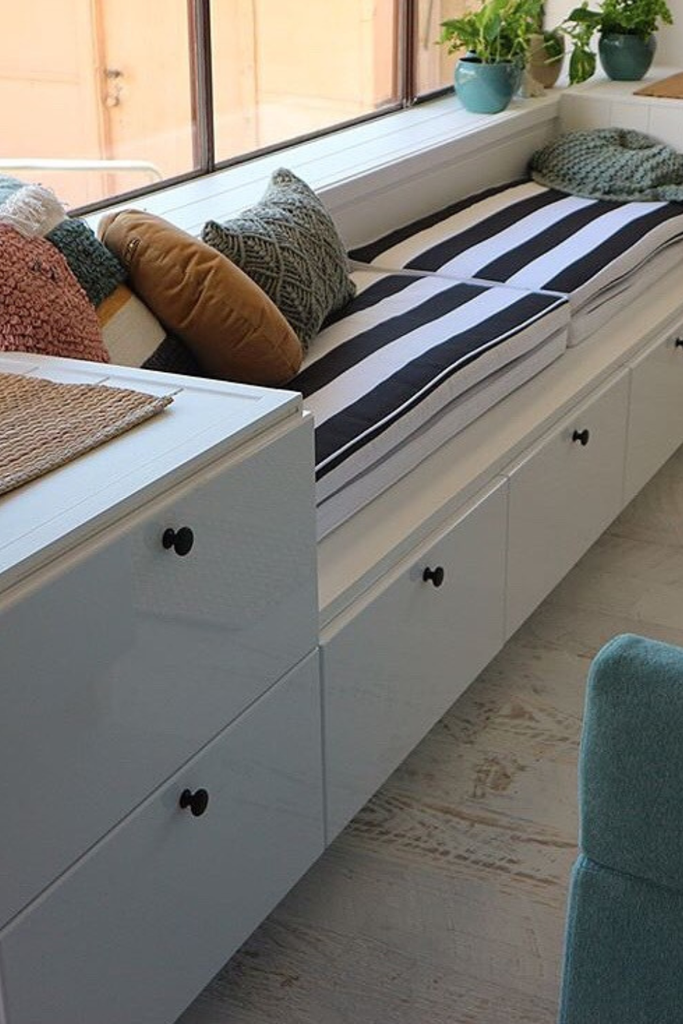
A long window wall gives me an opportunity to use several storage compartments instead of treating the space as one small seat.
Multiple drawers beneath a continuous cushion can provide substantial organized storage in a sunroom, bedroom, apartment, or family room. Each drawer can have its own purpose, which makes the long bench easier to maintain.
Ready-made cabinet boxes may simplify part of the installation, but I would plan the drawer widths and spacing before purchasing anything. The window, wall length, trim, and nearby doors can all affect the final arrangement.
Pro Tip: I find category-based drawers much easier to manage than one large mixed storage area. Separating throws, games, seasonal accessories, or craft supplies keeps a long bench from becoming a hidden junk drawer.
Open Log Storage

Open compartments give this style a more rustic and functional appearance. In a room designed around a suitable fireplace, an open section might be used for firewood, while baskets can handle blankets or other everyday belongings.
Firewood should not simply be placed beside or above a fireplace or heating appliance without considering the appliance design and manufacturer’s safety requirements. The same applies to other combustible materials.
For rooms without a fireplace, baskets provide a similar open-storage look without tying the bench to firewood storage. They also make it easier to change what is kept in the compartments.
Tall shelves around the window can add book and display storage while the lower open sections remain easy to reach.
Wood-Tone Drawers
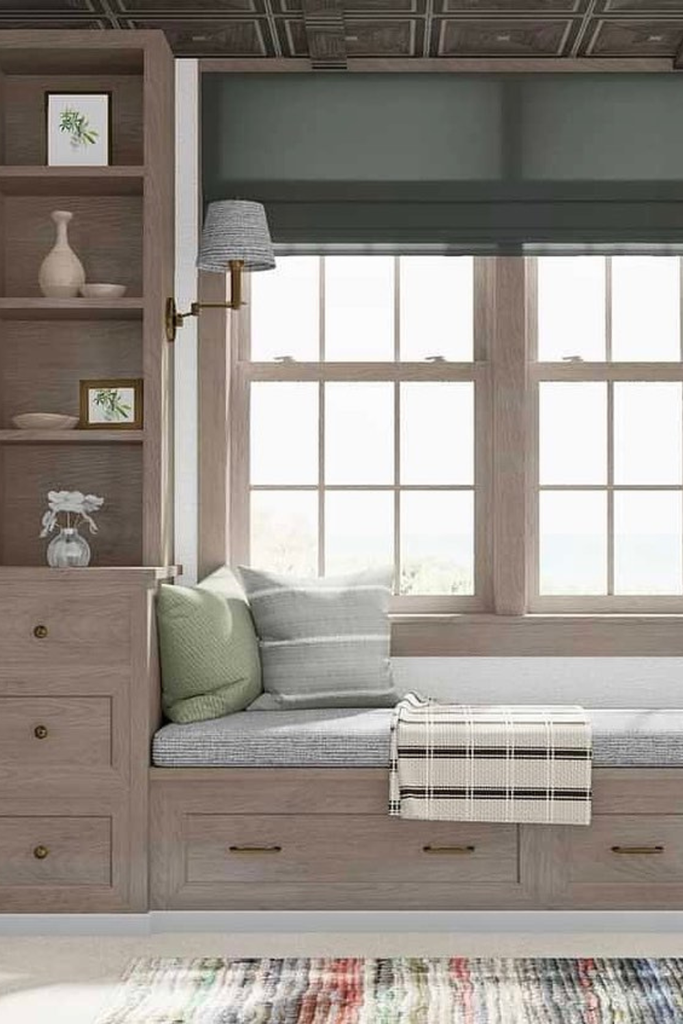
The main feature here is the combination of practical drawer storage with a natural wood finish. Long drawers beneath the seat can accommodate folded linens, clothing, spare accessories, or seasonal items.
I would divide the storage according to what actually belongs in the room instead of using the drawers as general-purpose catchalls. Internal organizers can also help prevent smaller belongings from becoming buried.
The wood finish should relate to the existing room rather than being selected in isolation. Coordinating it with flooring, furniture, trim, or other wood elements can make the storage feel more intentional.
This approach works particularly well in bedrooms and quiet sitting areas where I want the storage to feel warm without adding decorative clutter.
Minimal Panel Storage
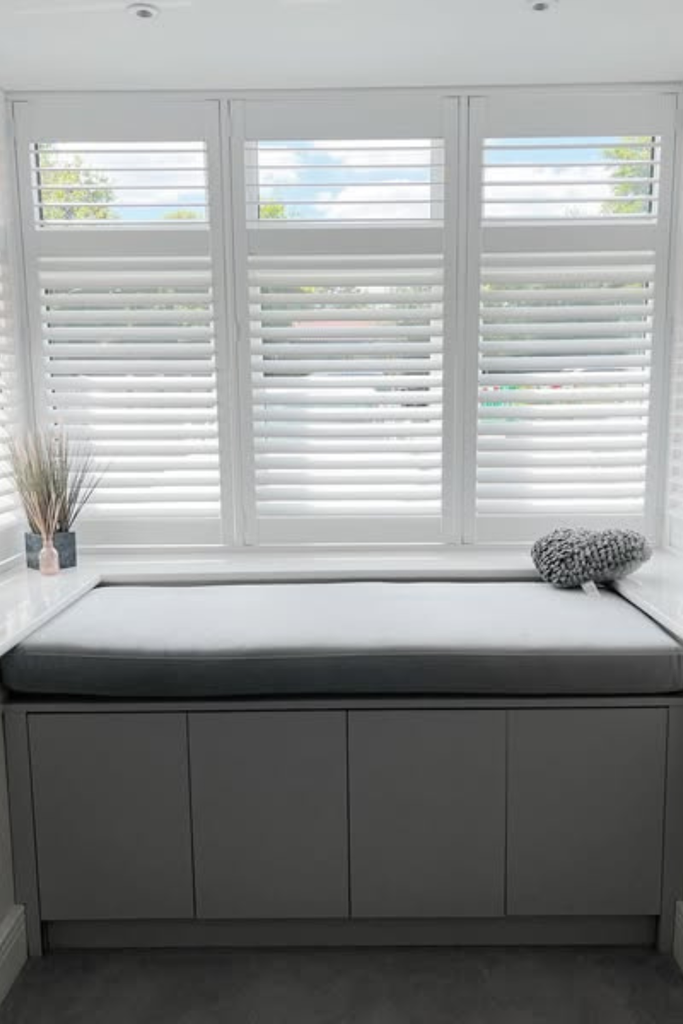
For a compact room, sometimes the best storage is the kind that visually disappears. Flat cabinet fronts beneath the window can conceal everyday clutter while keeping the overall design simple.
This approach works well in small apartments, bedrooms, breakfast areas, and other spaces where too many visible storage details can make the room feel crowded.
A tailored cushion adds softness without changing the clean lines of the cabinet base. Matching the cabinet finish with nearby walls or cabinetry can make the bench recede visually.
The focus here is simplicity rather than architectural detail. I would choose this style when the priority is keeping useful storage quiet and unobtrusive.
Also read: 17 Foyer Storage Ideas for Entryway 2026
Wall-to-Wall Library

This is the larger book-storage approach, where the window seat becomes part of an entire wall of shelving and cabinets.
Closed storage below the seat can hide blankets, games, office supplies, or other belongings, while tall open shelves on either side provide space for books and selected displays.
Unlike the smaller Library Corner Bench, this layout is intended to make the whole wall part of the storage system. It can work especially well in a home office, family room, or dedicated reading area.
Because books are heavy, shelves need suitable support for their intended load. Tall storage should also be installed in a way that provides appropriate stability for the unit and the wall construction.
A reading light or wall-mounted fixture can make the seat more functional without taking up space on the cushion.
Balanced Cabinet Wall

Symmetrical cabinetry can make a window wall look orderly, especially when there is enough room for matching storage on both sides.
The central bench can provide seating and lower storage, while matching side cabinets create a balanced arrangement for books, household items, or displays. Keeping the cabinet heights, widths, and finishes consistent helps the design feel intentional.
I would not assume that the two sides of the window are identical. In older homes especially, walls, trim, and openings can vary slightly.
Pro Tip: I measure each side of the window independently before ordering matching cabinets. A small difference in the wall or trim can matter when several cabinet sections need to line up.
DIY Frame Base
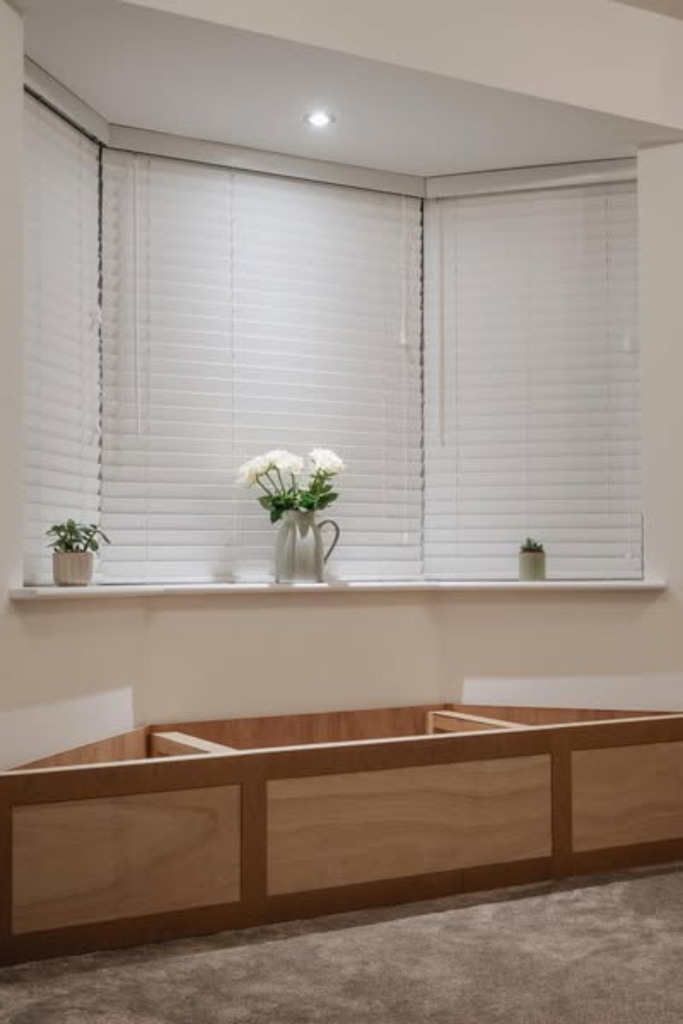
A framed base can be useful when an alcove has dimensions that do not work with standard furniture. The frame can be designed around the actual width and depth available, then finished with panels and a suitable storage arrangement.
Depending on the room, that could mean drawers, cabinet doors, or a hinged top. Internal dividers can make a large compartment easier to organize.
The important part is structural support. A bench needs to support the people who sit on it as well as anything stored inside, so I would not treat a basic box as automatically suitable for seating.
If the construction involves unusual loads, wall attachment, or modifications to existing structures, professional guidance may be appropriate. The goal is a custom fit, not a shortcut around safe construction.
Integrated Vent Bench
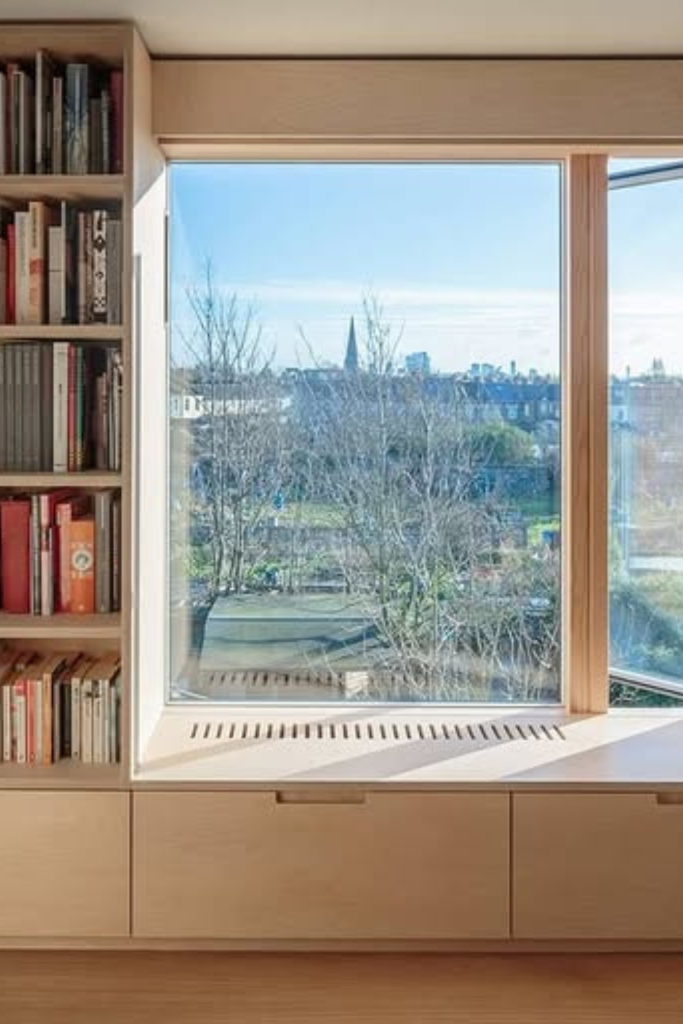
A radiator or heating vent beneath a window changes the storage plan. I would never enclose heating equipment with a solid cabinet simply because the dimensions appear to fit.
Heating systems need appropriate airflow, and the required arrangement varies by equipment. A properly designed grille, vented panel, or other opening may be needed, but the correct solution should follow the manufacturer’s instructions.
Clearance around the heating equipment also matters. A storage bench should not interfere with the way the system is intended to operate.
Heat-sensitive belongings deserve some thought as well. I would avoid storing items that could be damaged by sustained heat directly around a radiator or other heating source.
Pro Tip: When a proposed bench could change airflow around a heater, I check the manufacturer’s requirements first and seek advice from a qualified heating professional if anything is unclear. I would rather adjust the cabinet design than risk interfering with the heating system.
Cushion Drawer Combo

This arrangement is centered on everyday accessibility. The drawers sit directly below a comfortable cushion, so I can reach stored items without lifting the seat.
It works well for books, blankets, toys, craft materials, games, and other belongings that come in and out of storage regularly.
Full-extension drawer hardware can be useful where the cabinet design supports it because the drawer can open farther and make the contents easier to see. I would still choose hardware based on the cabinet construction and intended load rather than assuming every slide is interchangeable.
This idea differs from the Extended Drawer Bench because the main priority here is convenient access from a comfortable seat. It does not require a long wall or a large number of drawer sections.
Classic Panel Seat
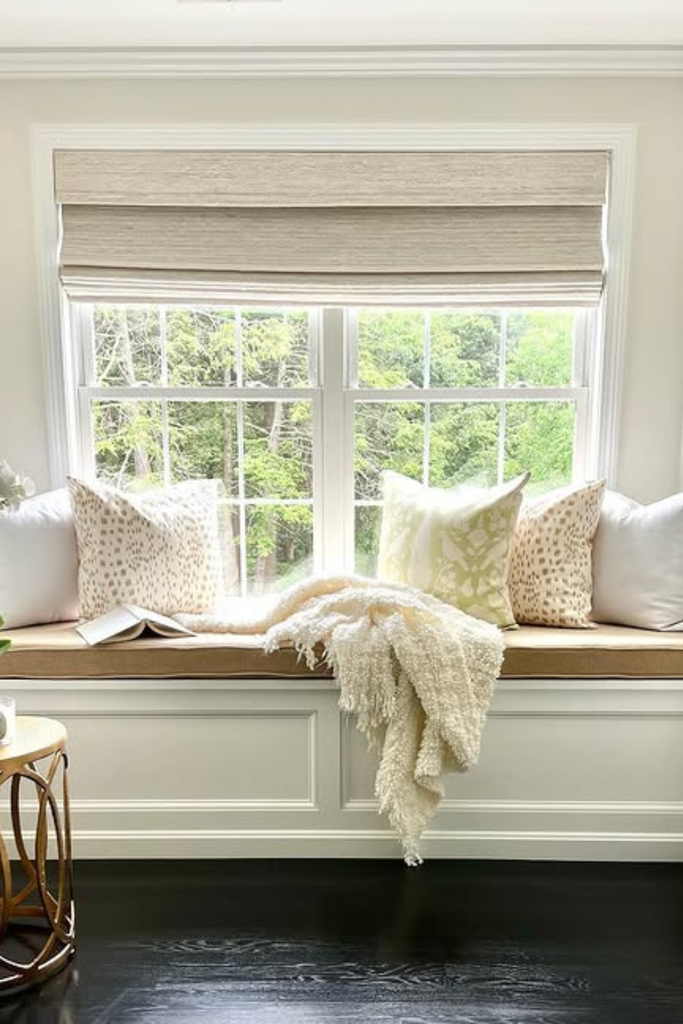
This style is more architectural than the Minimal Panel Storage approach. Wall paneling, molding, and coordinated trim can make the window seat look like it belongs to a traditional room or older home.
A concealed cabinet or drawer base provides the storage, while the surrounding trim ties the bench into the existing architecture.
I particularly like this approach when the room already has traditional molding or paneling. Matching the profile and proportions of the existing trim can help the new storage look less like an add-on.
The upholstered cushion then provides the comfortable seating without taking attention away from the architectural details.
Bay Wrap Storage

Bay windows create useful seating opportunities but also introduce angles that standard cabinets cannot always accommodate.
A wraparound bench follows the shape of the bay and can turn each section into storage. Depending on the available space, the compartments might use drawers, hinged lids, or a combination of both.
This can work well in a dining area where the bench provides additional seating, or in a family room where it can hold blankets, games, and cushions.
Pro Tip: I measure every section and angle of a bay window separately rather than assuming the sides match. I also check the existing trim because it can reduce the usable depth or change where the storage sections can meet.
Lit Display Nook
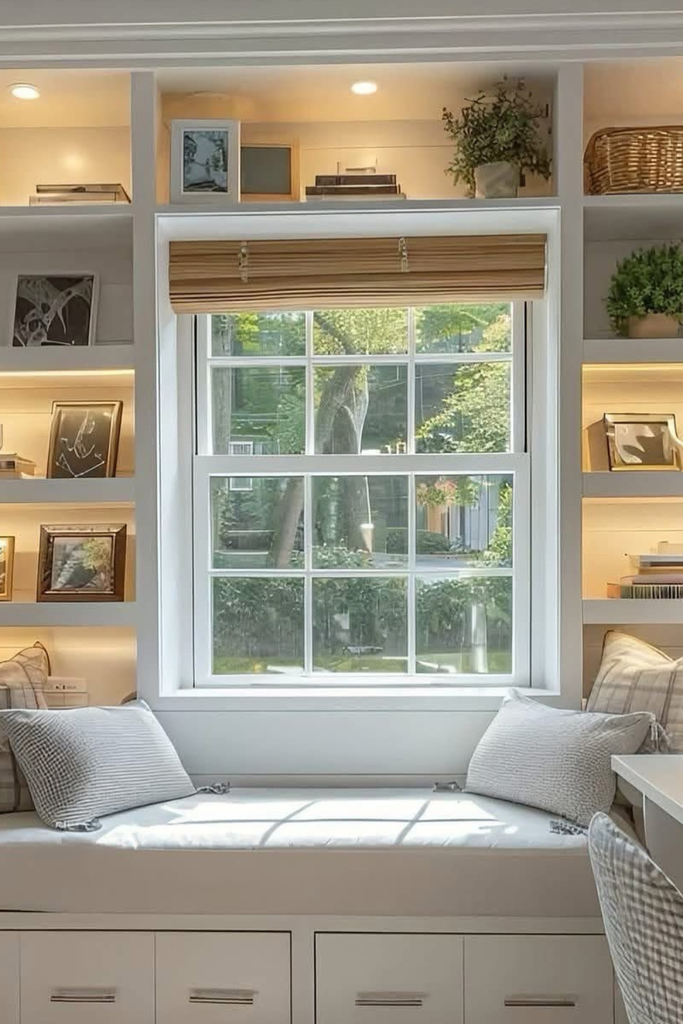
Lighting can make open shelving around a window seat more useful after dark while keeping the storage itself practical.
Drawers beneath the cushion can hide everyday belongings, while shelves on either side provide space for books, artwork, plants, or a few decorative items. LED strip lighting can highlight those shelves without requiring a floor lamp.
For a home office or reading area, I would choose lighting appropriate for the installation location and use a properly installed control or dimmer where compatible with the equipment.
Cords should be secured and routed so they do not hang loosely around the seat or become part of the walking path. I also avoid overcrowding the shelves because the purpose is still useful storage, not simply display.
FAQs
What should you store in a window seat?
I usually reserve window seat storage for items that are bulky, useful, or easy to organize. Blankets, spare pillows, books, board games, toys, clothing accessories, and seasonal textiles can all work well.
Drawers make sense for things I use frequently, while a lift-up compartment is useful for belongings that come out only occasionally.
I also consider the window environment. Direct sunlight, heat, and condensation can vary from one window to another, so I avoid storing belongings that are especially sensitive to those conditions in a poorly protected area.
Can you build one over a radiator?
Sometimes, but the heating equipment cannot simply be sealed inside a standard storage box.
The design needs to maintain the airflow and clearances required by the specific radiator or heating system. Depending on the equipment, a vented top or grille may be part of the solution.
I follow the manufacturer’s instructions and seek professional advice if the proposed enclosure could interfere with heating performance. Heat-sensitive belongings should also be kept away from areas that become hot.
How deep should a window seat be?
There is no single depth that works for every window seat. I consider the intended seating position, available room, nearby furniture, walking clearance, and how much storage depth is actually useful.
A deeper bench can hold more, but it may project farther into the room. In a narrow hallway or small bedroom, a shallower design may be the more practical choice.
Are drawers or lift-up storage better for a window seat?
I choose based on how often I need the contents. Drawers are convenient for everyday belongings because the cushion can remain in place while the drawer opens.
Lift-up storage is useful when I need one larger compartment for bulky or infrequently used items such as spare bedding or seasonal accessories.
A combination can work well when the room needs both types of storage.
Is a window seat a good storage solution for a small room?
It can be, provided the storage does not reduce the room’s usable walking space. A shallow bench with carefully planned drawers can add storage without requiring another piece of furniture.
When floor space is especially limited, I look at vertical storage beside the window rather than making the bench increasingly deep.
The goal is to gain useful storage without making the room harder to move through.
How do you keep window seat storage organized?
I divide the contents into practical categories rather than using the entire bench as one catchall area. Baskets, drawer dividers, and labeled compartments can help keep similar belongings together.
I also leave some space rather than packing every compartment completely full. Overfilled storage becomes harder to access and makes it more difficult to put things away consistently.
Read this next: 19 Jacket Storage Ideas for 2026
Conclusion
The best window seat storage solves a real storage problem without making the room harder to use. A simple drawer bench can work well in a small bedroom, while a larger library wall or bay-window arrangement can provide much more capacity.
Before building one, I focus on three things: how the seat will be used, what needs to be stored, and what is already installed around the window. Those answers usually tell me whether drawers, cabinets, open cubbies, shelving, or lift-up storage make the most sense.
Careful measuring also matters. Checking the window, trim, outlets, heating equipment, surrounding furniture, and walking space before construction can prevent many problems later.
For renters, the same thinking can be applied with freestanding benches, ready-made cabinets, baskets, and movable drawer units. Permanent built-ins, hardwired lighting, or major wall modifications may require landlord approval or professional installation.
With the right layout, the space beneath a window can become useful seating and practical storage at the same time. The best design is not necessarily the one with the most storage; it is the one that fits the room, the belongings, and the way the space is actually used.



2 Comments