
26 Vertical Storage Ideas for 2026
A small room can feel crowded even after I have sorted my belongings and cleared the floor. I find that the problem is often unused height rather than a lack of storage altogether. Empty walls, the space above wardrobes, and the backs of suitable doors can all provide room for everyday essentials without taking up more floor space.
The key is choosing vertical storage that fits the room and the things I need to store. Tall shelving, adjustable closet shelves, pull-out pantry units, and compact wall organizers can make a small home easier to manage when they are planned carefully.
These 26 vertical storage ideas show how I can use walls, cabinet interiors, closet height, and narrow gaps to organize a home more efficiently. Kitchen storage can benefit from full-height pantries, upright dish organizers, and cabinet risers. Closets can accommodate extra shelves and double hanging rods, while bathrooms can gain useful storage from wall shelves and above-toilet organizers.
Save this for later
Table of Contents
For laundry rooms, home offices, and craft areas, wall-mounted systems, stackable drawers, and compartmentalized shelving help keep supplies organized. Before choosing a solution, I consider measurements, item weight, installation requirements, moisture, and access. The goal is to make better use of available height without blocking walkways or making everyday belongings difficult to reach.
Key Takeaways
- Use overlooked height: Look above wardrobes, inside closets, along empty walls, and behind suitable doors before buying more furniture.
- Choose storage for the room: Kitchens need accessible food and cookware storage, while bathrooms and laundry areas need materials suited to their moisture conditions.
- Keep daily essentials within reach: Reserve higher shelves for lightweight items used occasionally and keep heavier belongings on lower, supported shelves.
- Measure before installing: Check height, width, depth, door swings, drawer extensions, and appliance clearances.
- Check stability and load limits: Use suitable mounting hardware and follow manufacturer instructions for shelves, rods, drawers, and tall furniture.
- Make storage easy to maintain: Clearly defined categories and appropriately sized containers help prevent clutter from returning.
Related article: 26 Narrow Storage Ideas for 2026
How I Choose Vertical Storage for Different Rooms
I start by measuring the available height, width, and depth, then consider the size and weight of the items I want to store. A shelf might fit against a wall but still be unsuitable if it blocks a door, interferes with an appliance, or leaves too little room to remove a basket.
The installation method matters just as much as the dimensions. Wall-mounted shelves need fixings suitable for the wall construction, while freestanding units need a stable base and appropriate anti-tip anchoring when required. Pull-out organizers need room to extend, and door-mounted racks must be compatible with the door, hinges, and frame clearance.
I also consider how frequently I use each item. Daily essentials should remain easy to reach, while lightweight seasonal belongings can go higher if I can retrieve them safely. Heavy objects belong on lower shelves with adequate support.
Different rooms need different solutions:
- Kitchens: I focus on accessible pantry shelves, stable cookware organizers, and storage that stays clear of heat, steam, and appliance movement.
- Closets: Adjustable shelves, hanging compartments, and additional rods help organize clothing without overloading the closet structure.
- Bathrooms: Moisture-resistant shelves and secure mounting help keep towels and toiletries organized without obstructing cleaning or movement.
- Laundry rooms: Wall-mounted storage keeps the floor available for baskets, while drawer units can make use of narrow gaps without blocking appliance ventilation or maintenance access.
- Home offices: Shelves and upright file holders keep books, stationery, and paperwork organized while leaving the desk usable.
- Craft areas: Compartmentalized bins and flexible shelving separate materials by size and type, with sharp tools and hazardous supplies stored safely.
For renters, removable or freestanding options may be more appropriate, but they still need to be stable and suitable for their intended load. My aim is to use available height efficiently without sacrificing safety, accessibility, or everyday convenience.
How Do I Maximize Vertical Storage in a Small Room?
I start by looking above wardrobes, along unused walls, and inside closets where there may be room for another shelf. The space behind a suitable door can also provide storage, provided the organizer does not interfere with the door’s movement.
Next, I sort belongings by how often I use them. Everyday essentials belong at comfortable reaching height, while lightweight seasonal decorations, spare linens, and occasional-use supplies can go higher. Heavy cookware, books, and dense containers should remain on lower shelves that can safely support their weight.
I also consider the room’s conditions before choosing materials. Bathrooms and laundry areas may need moisture-resistant finishes, while pantry storage should protect food from heat, dampness, and pests.
A well-planned arrangement makes the room easier to navigate and helps me find things without moving several other items first. I avoid filling every available space if doing so makes storage difficult to access or maintain.
Pro Tip: Measure the actual storage area, including the clearance needed for doors, drawers, baskets, and appliances. A solution that fits on paper may still be impractical if it blocks movement or makes everyday items awkward to retrieve.
1. Full-Height Pantry
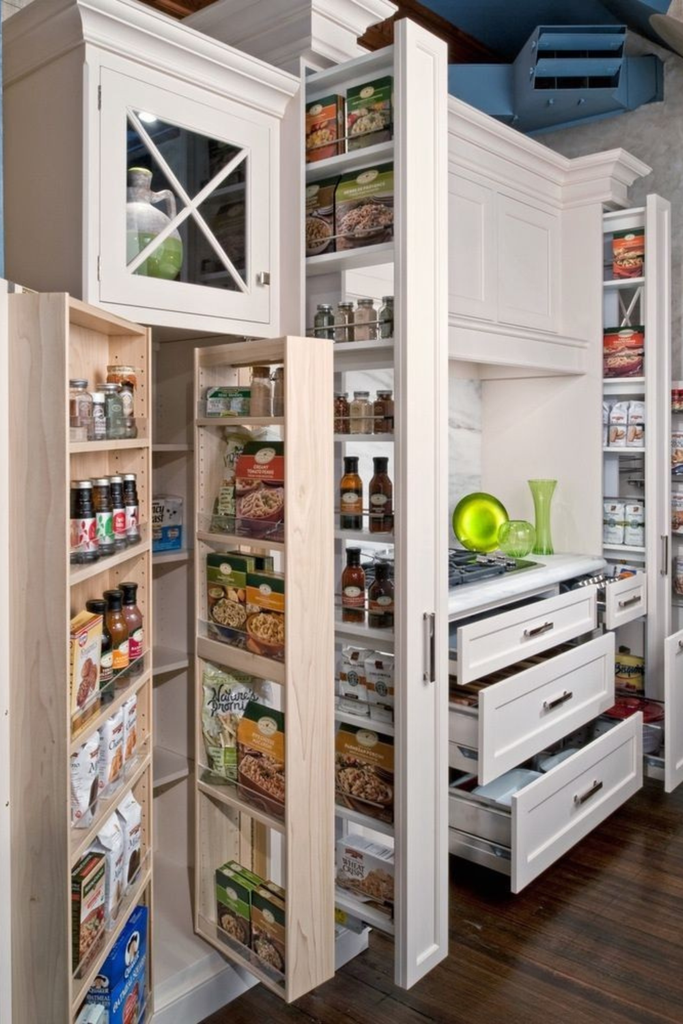
A full-height pantry makes use of an entire tall cabinet rather than leaving the upper portion empty. I find this arrangement useful for storing dry goods, canned food, baking ingredients, and backup supplies in one organized location.
Adjustable shelves allow me to accommodate packages of different heights. I group similar foods together, keep frequently used ingredients at a comfortable level, and reserve higher shelves for lightweight items I use less often. Heavier cans and bulk packages belong on lower shelves that can support their weight.
Before adding shelves or pull-out hardware, I measure the cabinet’s interior height, width, and depth. I also check shelf capacity and make sure containers can be removed without hitting the shelf above them.
Pro Tip: Measure your tallest regularly stored packages before adjusting shelf spacing. Leave enough clearance to lift containers out without tipping neighboring items.
2. Open Vertical Wall
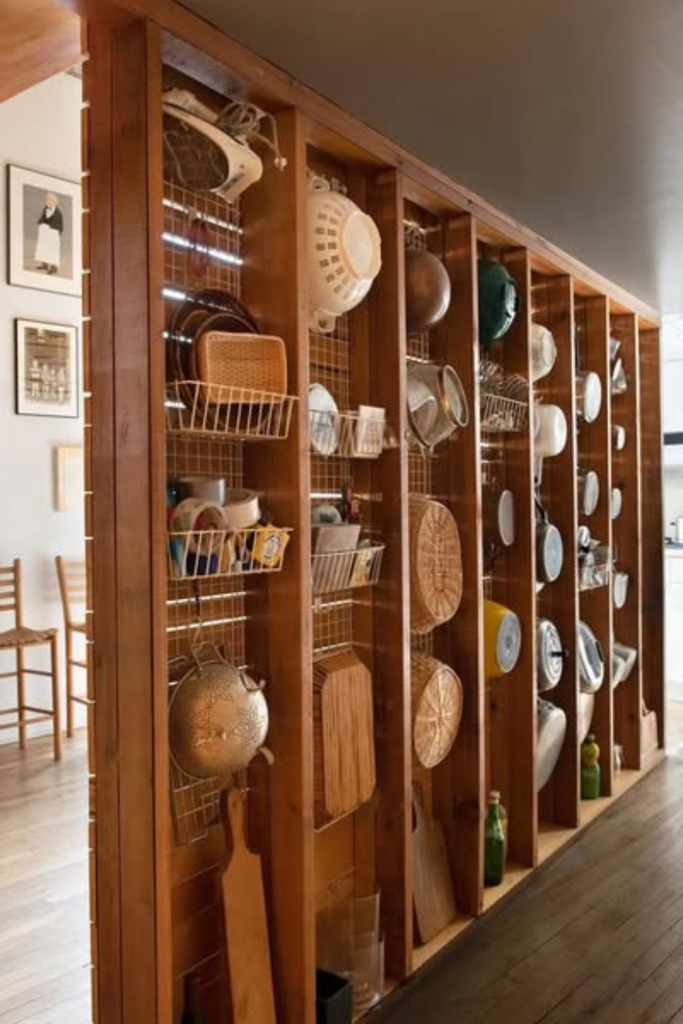
Wall-mounted shelving makes use of empty wall space without adding a floor-standing cabinet. In a kitchen or dining area, I can use it for dishes, serving pieces, cookbooks, or a few decorative objects that I want to keep accessible.
The placement of each shelf matters. I position everyday items where they are comfortable to reach and avoid putting heavy dishes above seating or working areas when a safer location is available. Spacing should suit the stored objects rather than following a uniform layout simply for appearance.
Before installation, I identify the wall construction and select appropriate brackets and fixings. I also check for concealed pipes and wiring before drilling and follow the manufacturer’s load recommendations.
Pro Tip: If the wall is narrow, a few carefully spaced shelves may be more useful than a continuous wall of storage. Leave enough room to remove items without bumping neighboring objects.
3. Tall Open Shelving
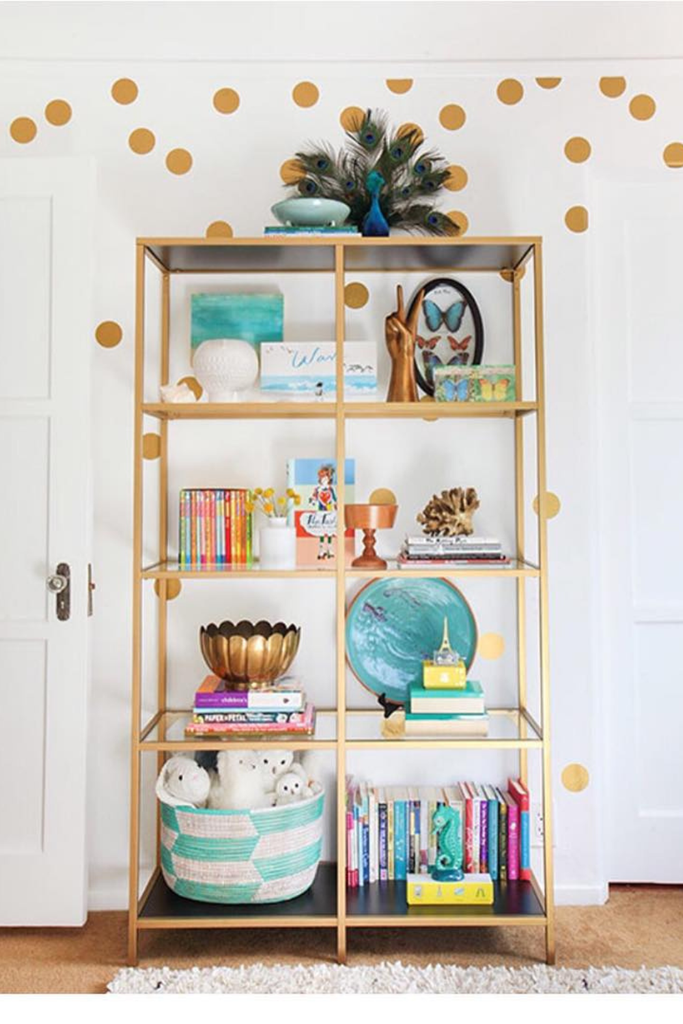
A tall freestanding shelving unit works well when I need one piece of furniture to hold several categories of belongings. In a bedroom, living room, or home office, it can accommodate books, baskets, folded textiles, and decorative objects without requiring separate storage furniture.
I choose shelf spacing based on the size of the items. Books need enough height to stand upright, while baskets require clearance to be lifted out. Adjustable shelves are particularly useful when my storage needs change.
Unlike wall-mounted shelves, a freestanding unit occupies some floor space, so I check its depth and position before buying it. A tall unit should have a stable base and be anchored according to the manufacturer’s instructions, particularly in homes with children or pets.
Pro Tip: Place heavier books and containers on lower shelves. Use upper levels for lightweight belongings, and avoid overloading any individual shelf.
4. Closet Shelf Stacks
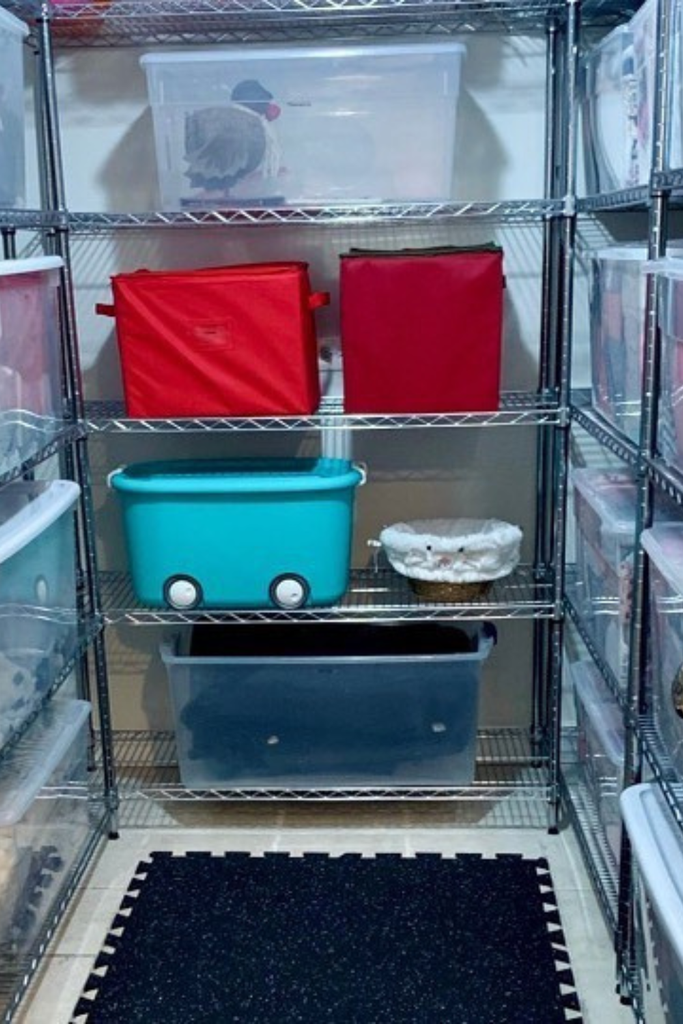
The upper part of a closet often provides room for extra shelving. I use this area for seasonal clothing, spare bedding, bags, and other belongings that do not need to be accessed every day.
Fixed or adjustable shelves can work well, depending on the closet’s construction. I check the shelf depth and support system before adding another level, especially when storing heavier items such as folded blankets. Labeled bins can keep smaller belongings together without allowing them to spread across the shelf.
High shelves are useful only when I can reach them safely. I keep frequently used clothing lower down and avoid standing on chairs, boxes, or the closet shelving itself to retrieve stored items.
Pro Tip: Reserve the highest shelf for lightweight, occasional-use belongings. If a step stool is necessary, use one designed for that purpose on a stable surface.
5. Upright Dish Storage
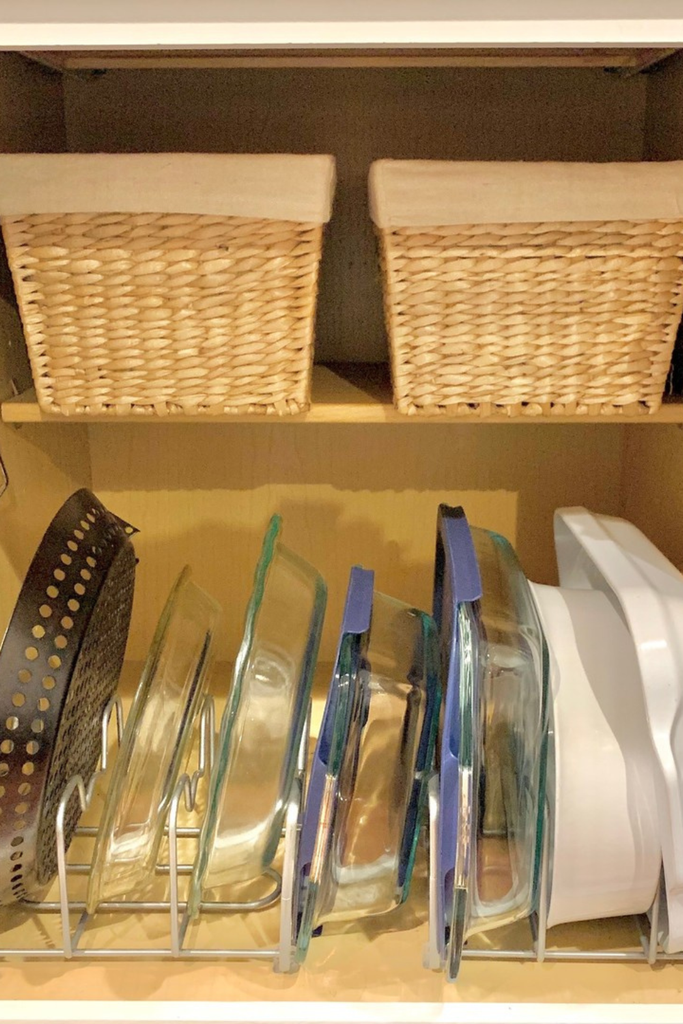
Baking trays, cutting boards, suitable pot lids, and serving platters can take up unnecessary room when stacked horizontally. I find that storing compatible items upright makes individual pieces easier to remove without lifting an entire pile.
A dish organizer or purpose-built rack can provide separate slots for these items. Before choosing one, I measure the largest tray and check the cabinet’s height and depth. The organizer should support each item securely without forcing it into a narrow opening.
This approach works best for sturdy items that can safely stand on their edges. Fragile dishes and glass lids need appropriate support, and the cabinet shelf must be strong enough to carry the combined weight.
Pro Tip: Keep frequently used trays toward the front of the cabinet. This makes it easier to retrieve them without disturbing heavier cookware stored behind them.
6. Slim Laundry Wall
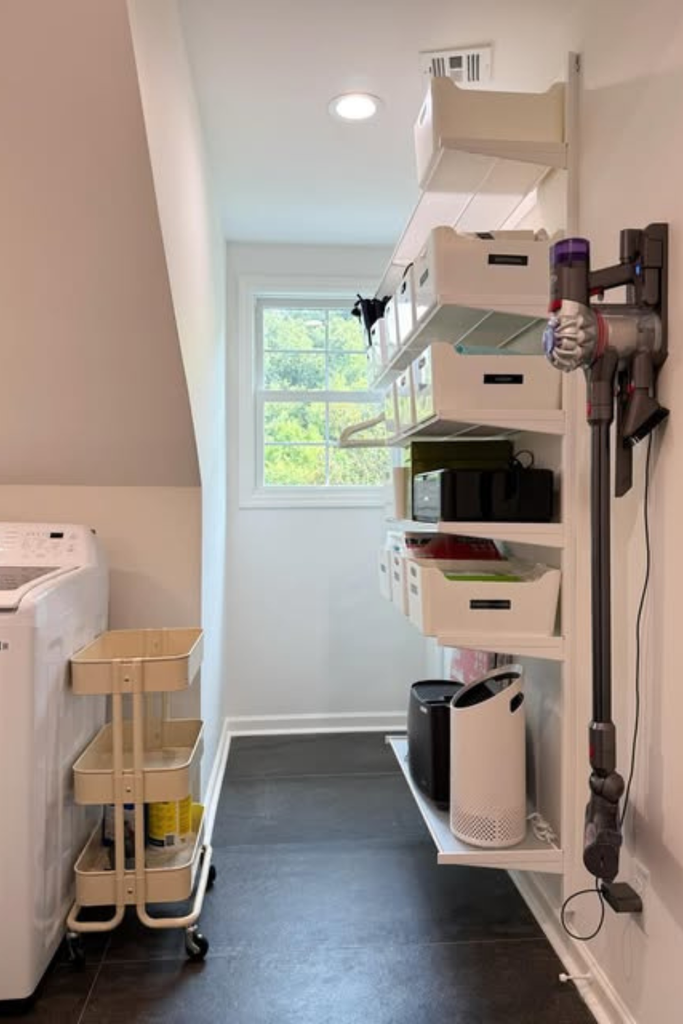
A narrow laundry room can benefit from wall-mounted rails and shelves that keep detergent, stain removers, laundry bags, and cleaning cloths off the floor. I like this approach because it preserves space for laundry baskets and makes it easier to move around the appliances.
Adjustable rails allow shelves and baskets to be repositioned as storage needs change. Before installing them, I measure the wall and check the location of appliance doors, hoses, electrical connections, vents, and maintenance access points.
Laundry products should remain in their original labeled containers when possible. I follow their storage instructions and keep them away from children and pets. Shelves must not obstruct appliance ventilation or create a hazard when loading or unloading laundry.
Pro Tip: Keep products used during every wash on an accessible shelf near the machine, but leave enough clearance to open appliance doors fully and service connections when necessary.
7. Hanging Closet Cubes
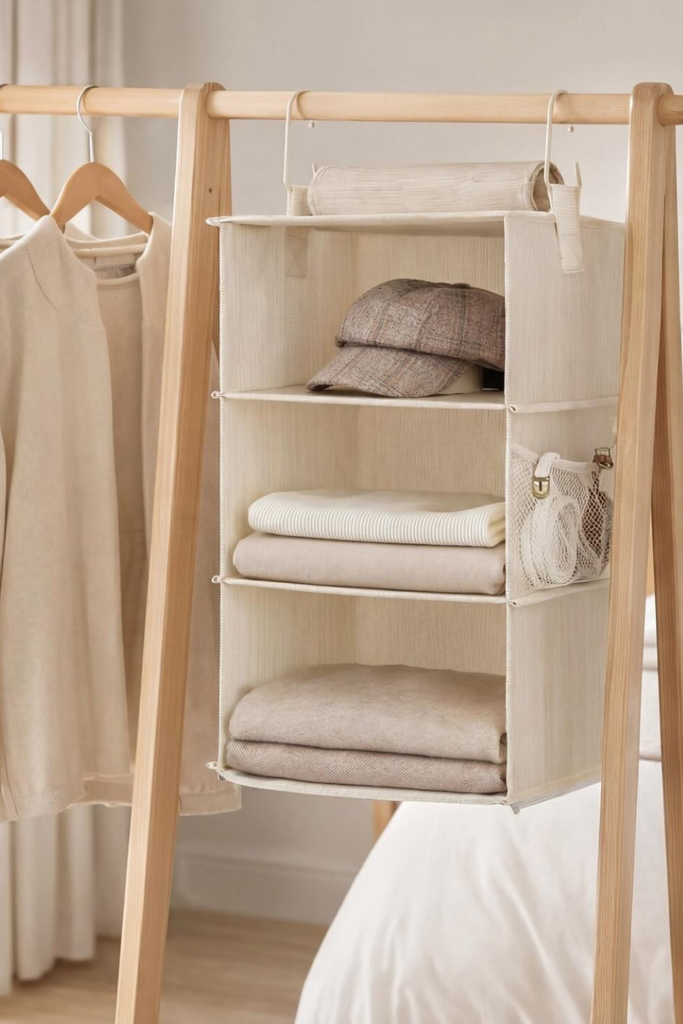
Hanging closet cubes provide compartments for folded shirts, scarves, hats, lightweight bags, and accessories. They are particularly useful when a closet has a hanging rod but very little built-in shelving.
I measure the available hanging height before choosing an organizer. Its compartments should not reach so low that they interfere with shoes or other storage, and its weight must remain within the closet rod’s capacity.
Fabric organizers are convenient for lightweight belongings, but they can sag when overloaded. Heavier items are better placed on supported shelves or in drawers rather than suspended in soft compartments.
Pro Tip: Use each compartment for a specific category of clothing or accessories. This keeps small belongings separated and makes it easier to put them away after use.
8. Stackable Laundry Drawers
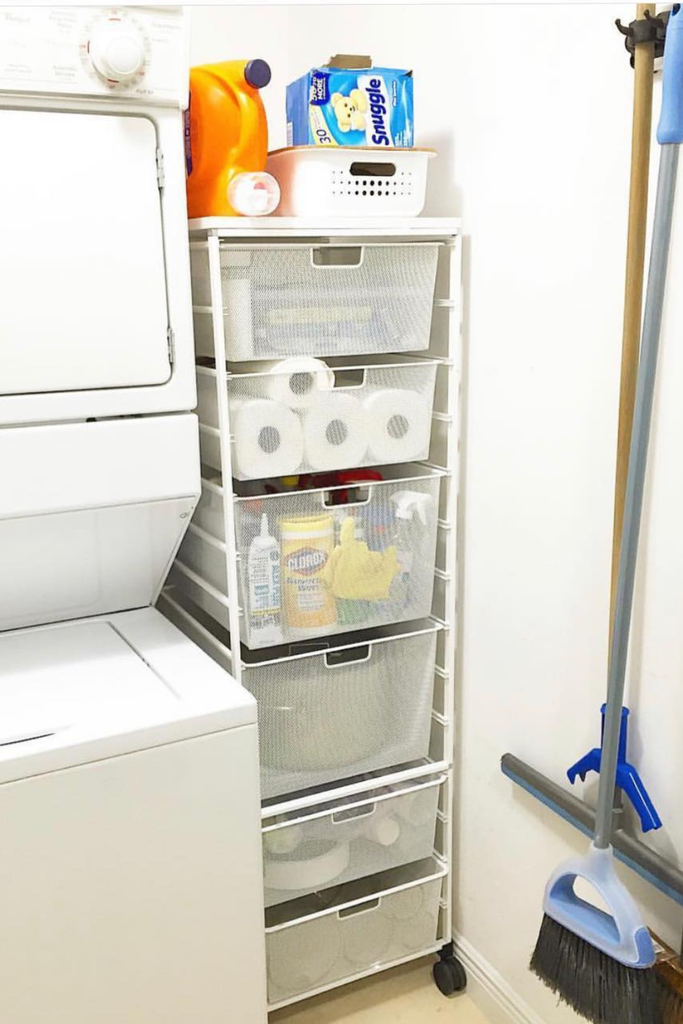
Stackable drawer units can make a narrow floor-level gap beside a washer, dryer, or cabinet useful for storing smaller laundry supplies. I use this type of arrangement for dryer accessories, cleaning cloths, spare sponges, and other items that do not need an entire shelf.
I measure the gap carefully and check how far the drawers extend when opened. A unit that fits between appliances may still obstruct a door or make it difficult to access hoses and connections.
The drawer tower needs a stable base, and any stackable components must be assembled according to the manufacturer’s instructions. I distribute weight sensibly, keeping heavier supplies low and avoiding excessive loads in upper drawers.
Pro Tip: Choose a drawer depth that allows you to remove supplies without moving the entire unit. Keep damp cloths separate from dry products and allow them to dry properly before storing them.
9. Door Spice Racks
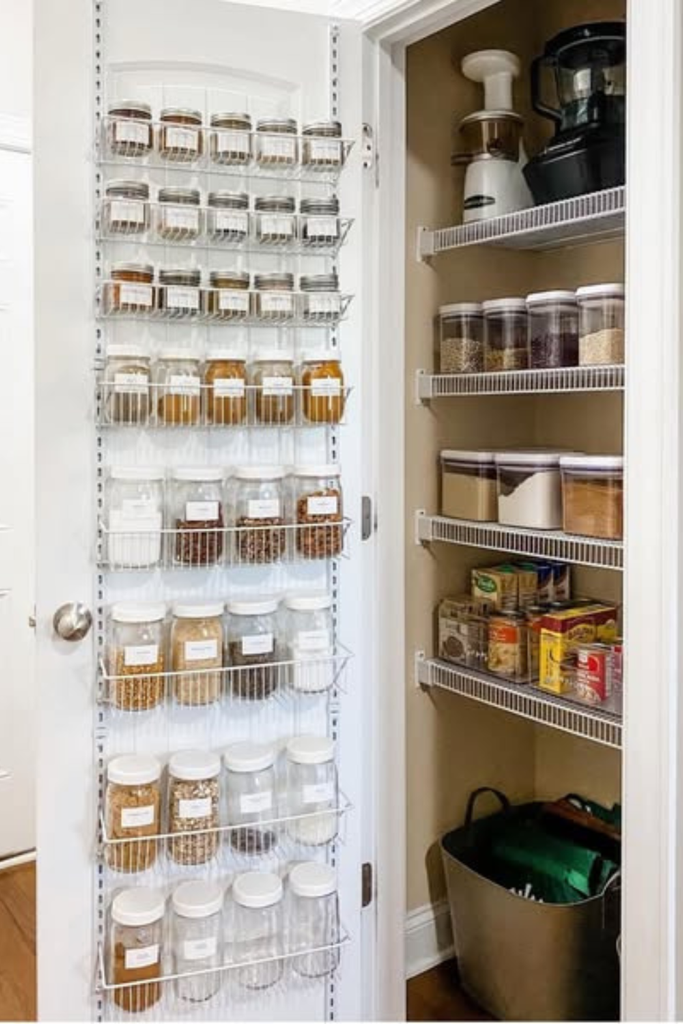
A suitable pantry door can hold a rack for lightweight spice jars and small seasoning containers. This arrangement frees shelf space and makes it easier to see the spices I already have.
Before choosing a rack, I check the door’s thickness, hinge capacity, frame clearance, and the space between the door and the pantry shelves. Containers must remain secure when the door opens and closes, and the organizer must not prevent the door from shutting properly.
I avoid placing spices near heat, steam, or direct sunlight because these conditions can affect their quality. The rack should also be easy to clean and positioned so labels remain visible.
Pro Tip: Use containers that fit securely within the rack rather than balancing jars on narrow ledges. Check the mounting hardware periodically and follow the stated load limit.
10. Vertical Towel Ladder
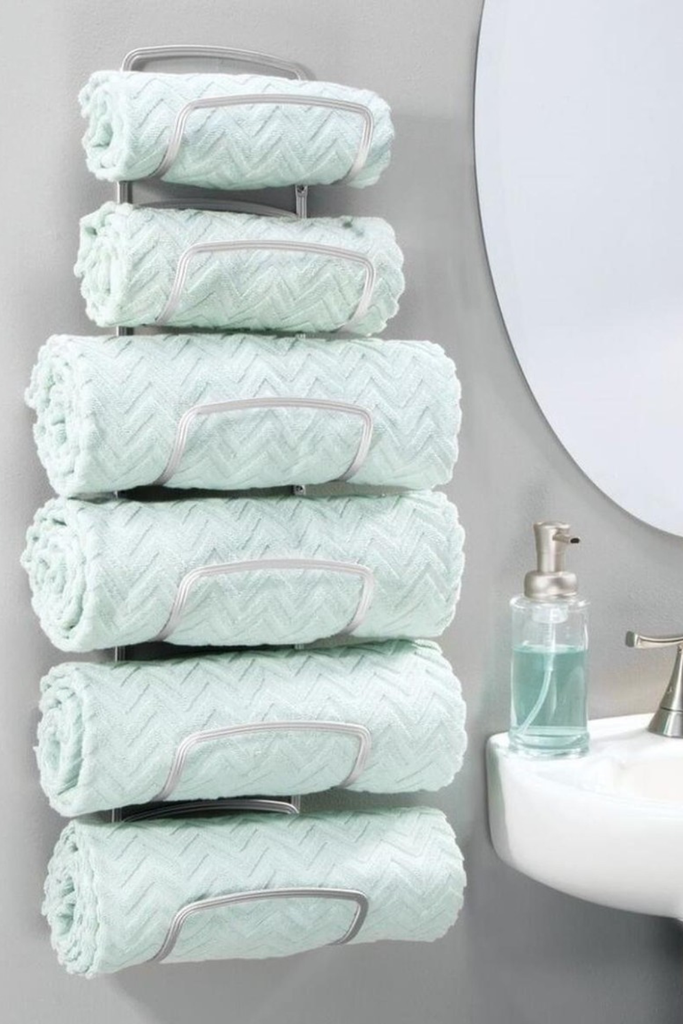
A towel ladder uses vertical space for bath towels, hand towels, and washcloths without requiring a wide cabinet. I consider it useful beside a vanity or in another bathroom location where a larger storage unit would interfere with movement.
I check the ladder’s height and width against the available space, including door swings and access to sinks or showers. A freestanding model needs a stable base, while a wall-mounted version must be installed with suitable hardware.
Towels also need enough space to dry between uses. If they overlap too much, air circulation becomes limited, especially in bathrooms that already have high humidity.
Pro Tip: Spread towels across separate rungs instead of folding several damp towels over one another. Keep the ladder away from places where it could be knocked over during normal use.
11. Floating Spice Shelves

Floating spice shelves provide a convenient home for seasonings near the food preparation area. Unlike door racks, these shelves attach to a wall and can be positioned to suit the available space and the way I cook.
I choose a shelf depth that holds containers securely without projecting too far into the kitchen. Mounting hardware must suit the wall material and the combined weight of the shelf and its contents. I also check for concealed pipes and wiring before drilling.
Spices are best kept away from direct heat, steam, and strong sunlight. I arrange containers so labels face outward and the seasonings I use most often remain easy to reach.
Pro Tip: If countertop space is limited, place the shelves on an unused section of wall near the preparation area, but not directly beside the stove where heat and steam may affect stored spices.
12. Bathroom Wall Shelves
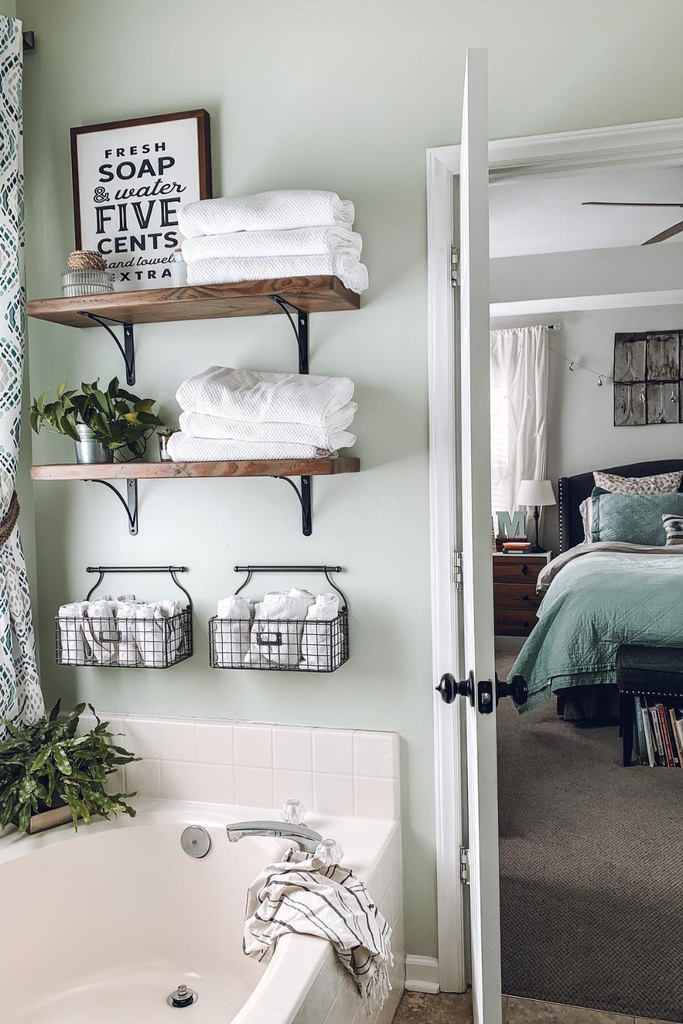
Wall shelves provide extra storage for folded towels, toiletries, spare toilet paper, and lightweight baskets. I use them when the bathroom has an empty wall but limited cabinet space.
The material and mounting method need to suit the bathroom’s moisture conditions. I measure the available wall area and consider how far the shelves will project into the room, especially near a narrow walkway or sink.
Before drilling, I check for pipes and wiring and use fixings appropriate for the wall. Items should be placed where they remain accessible and are unlikely to be knocked off during everyday use.
Pro Tip: Store spare towels and paper products away from direct splashes. Use baskets for small items that might otherwise slide toward the edge of an open shelf.
13. Ladder Cabinet Access
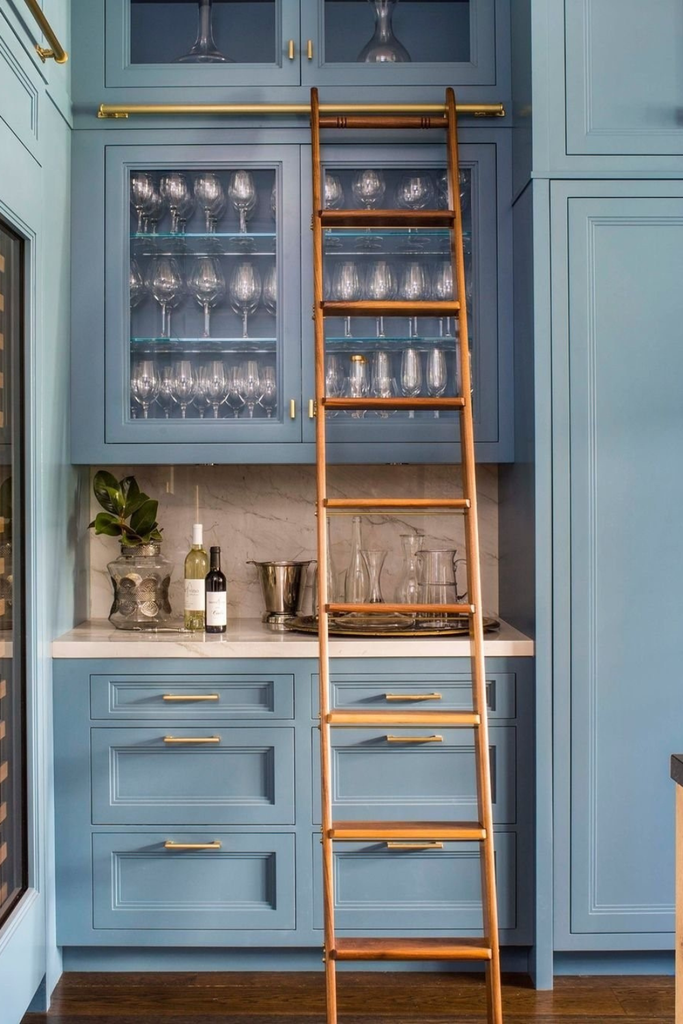
Tall cabinets can provide storage near the ceiling, but reaching those upper shelves safely requires planning. In kitchens with high cabinetry, a purpose-designed sliding ladder system may help when the layout has enough space for the ladder and its track.
I would assess the cabinet height, track requirements, available floor space, and the path the ladder must follow before considering this installation. The system needs suitable structural support and must be installed according to its manufacturer’s instructions.
Upper cabinets are best reserved for lightweight belongings that are not needed often. Heavy cookware, frequently used dishes, and everyday ingredients should remain at a comfortable height rather than requiring repeated climbs.
Pro Tip: If a ladder system is impractical, use a suitable step stool for occasional access and keep everyday items lower down. Never climb cabinet shelves or use an unsecured ladder arrangement.
Also read: 19 Jacket Storage Ideas for 2026
14. Vertical Desk Shelving
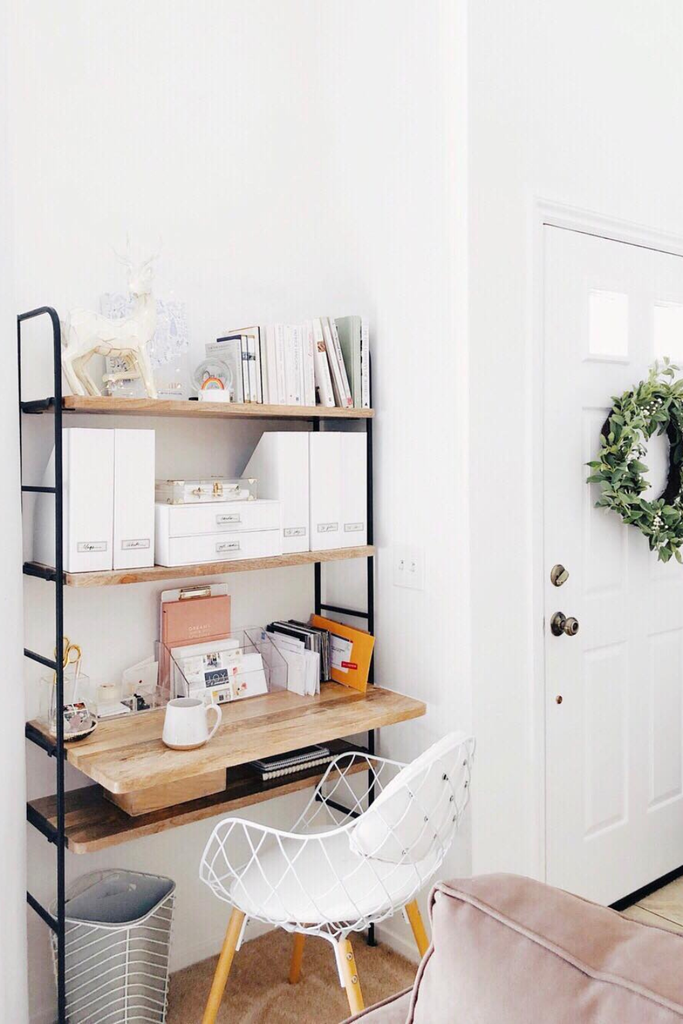
Vertical desk shelving helps organize books, stationery, reference materials, and small office equipment around a compact work area. I find it useful when the desk itself needs to remain clear for a computer, writing, or other daily tasks.
I choose shelf dimensions based on the items I need to store and the space available around the desk. Shelves should not obstruct the monitor, interfere with cables, or create awkward shadows over the working surface.
Heavy books and equipment need sturdy shelves with suitable support. I avoid placing heavy objects directly above my main seating position when a lower or safer location is available.
Pro Tip: Keep frequently consulted reference books and stationery on the nearest shelves. Move archived materials and occasional-use supplies to higher levels so the immediate work area stays practical.
15. Modular Wall System
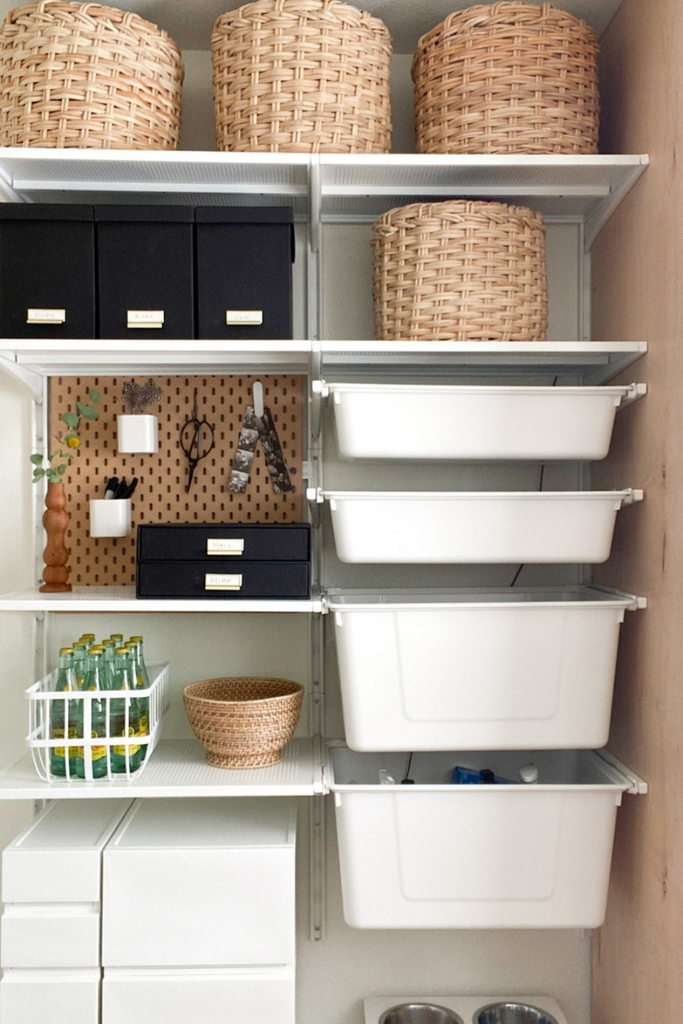
A modular wall system combines compatible rails, adjustable shelves, hooks, bins, and panels to create storage that can change over time. I find this useful in closets, utility rooms, offices, and other areas where the type of stored belongings may change.
Before selecting a system, I list the items it needs to hold and check that the components are compatible. The wall’s construction and the system’s rated capacity determine which items can be stored safely.
I can start with a few essential shelves and add components later rather than filling the wall immediately. This approach also makes it easier to adjust the layout when one category grows or a different storage need arises.
Pro Tip: Keep frequently used tools and supplies on accessible shelves or hooks. Reserve higher compartments for lightweight belongings, and avoid placing heavy items on components that are not rated to support them.
16. Pantry Shelf Zones
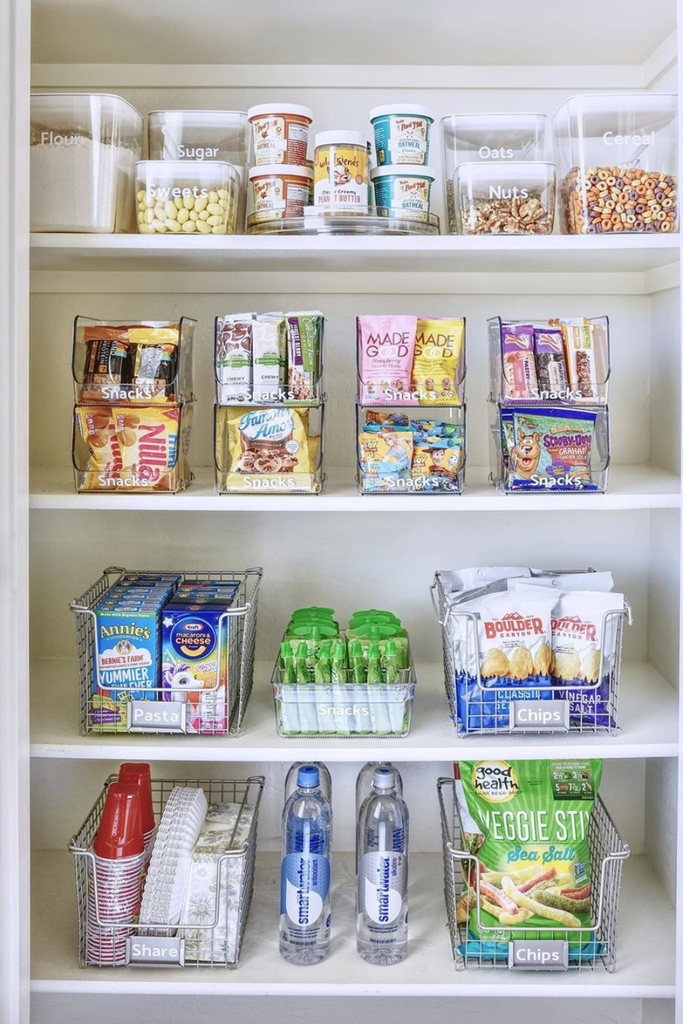
Pantry shelf zones help separate food by category and frequency of use. I organize ingredients so baking supplies, breakfast foods, canned goods, snacks, and backup packages each have a defined area.
The weight and storage requirements of each category influence where it belongs. Heavy cans and jars go on lower shelves with adequate support, while lightweight packages can occupy higher levels. I also follow food-label instructions and keep the pantry dry and clean.
Clear categories make it easier to see what needs replacing and reduce the chance of buying duplicate items. Older products can be placed toward the front when appropriate, with expiration dates checked regularly.
Pro Tip: Use a dedicated bin for small packets that tend to spread across shelves. Choose one that can be removed easily for cleaning and checking its contents.
17. Pull-Out Pantry Tower
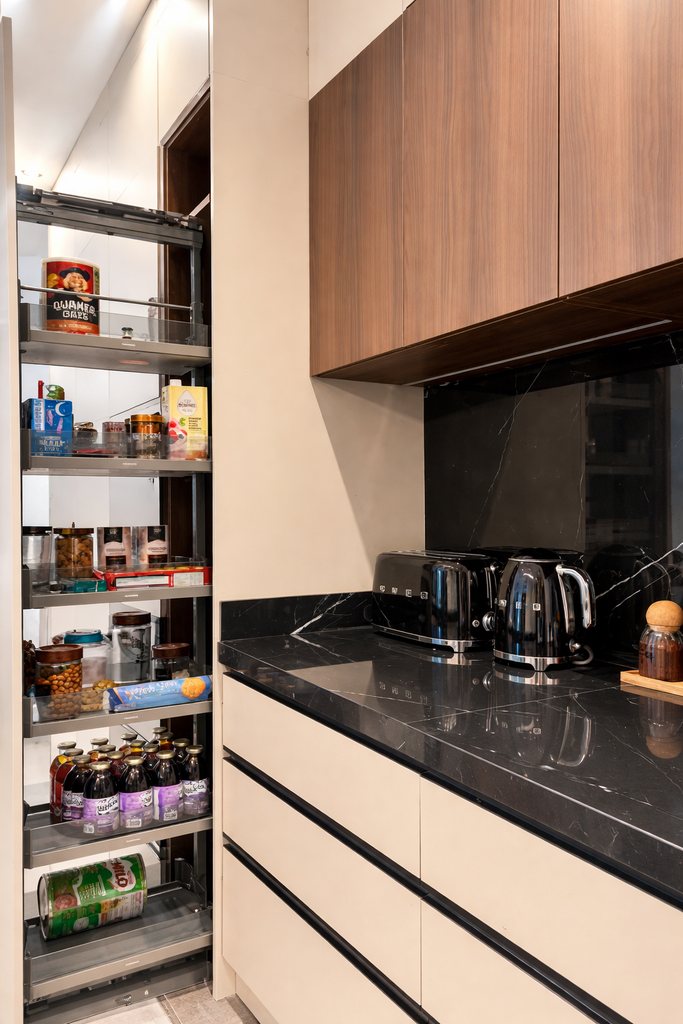
A pull-out pantry tower makes use of a narrow gap beside kitchen cabinetry when a conventional cupboard would be too wide or impractical. Its extending shelves bring stored items forward, which can make use of the gap easier than reaching into a deep space.
I measure the opening’s width, depth, and height, then check the dimensions of the required hardware. The tower needs enough room to extend fully without hitting cabinet handles, appliances, or nearby doors.
The installation must provide adequate support, and the unit should remain stable when extended. I follow the manufacturer’s load limits and avoid filling the narrow shelves with heavy containers that could affect the unit’s movement.
Pro Tip: Test the full extension path before installing a pull-out unit. Check that it can open completely and close without catching on nearby fixtures.
18. Vertical Cleaning Drawers
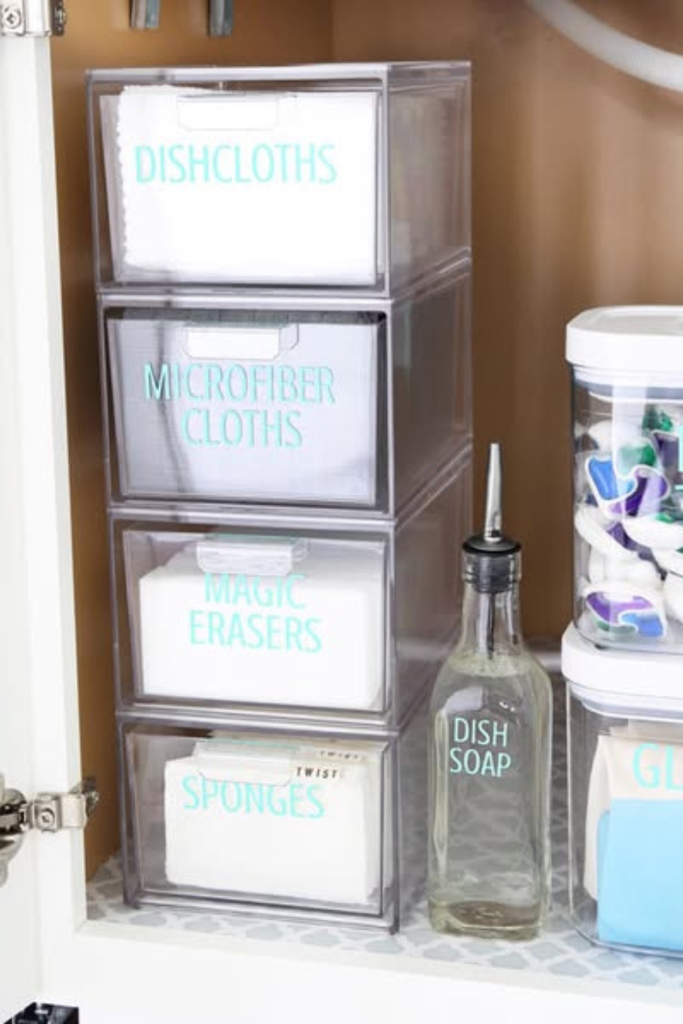
Under-sink cabinets can be difficult to organize because pipes and plumbing connections take up valuable room. Stackable clear drawers or narrow organizers can separate sponges, cleaning cloths, brushes, and suitable household supplies within the remaining space.
I measure around the plumbing before selecting a unit and leave access to shutoff valves and connections. Organizers should not press against pipes or make it difficult to inspect the cabinet for leaks.
Cleaning products should remain in their original labeled containers where possible, with storage instructions followed carefully. I keep products away from children and pets and never combine chemicals or transfer them into unmarked containers.
Pro Tip: Place suitable leak-prone supplies in a removable tray and inspect the cabinet periodically for moisture. If a leak occurs, the supplies can be moved quickly without dismantling the entire arrangement.
19. Vertical Cabinet Dividers
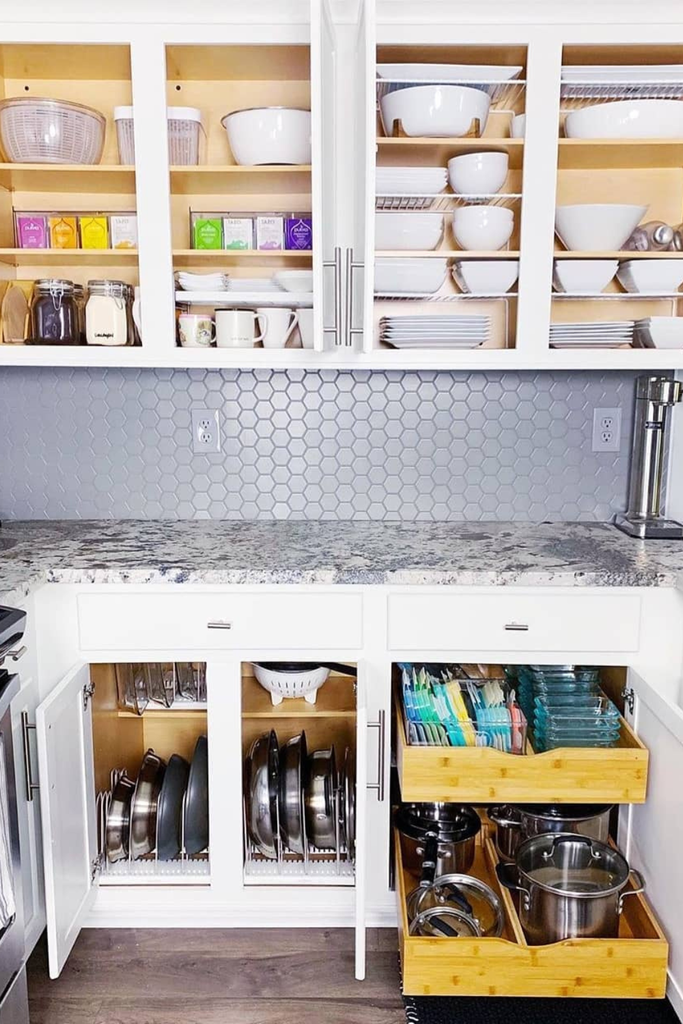
Vertical cabinet dividers create separate supported compartments for items that need to remain organized inside a cupboard. I find them useful for grouping baking sheets, chopping boards, serving trays, and other kitchen items by size or purpose.
Unlike a general dish rack, a divided cabinet layout gives each group a designated slot. I measure the cabinet interior and check the height and thickness of the stored items before choosing the divider system.
Each compartment must support its contents without allowing items to tip or become wedged together. Heavy pieces should rest on a suitable cabinet base, and the shelf must support the combined load.
Pro Tip: Group similar items in adjacent compartments so I can find the right tray or board without shifting the entire cabinet contents.
20. Cabinet Shelf Risers
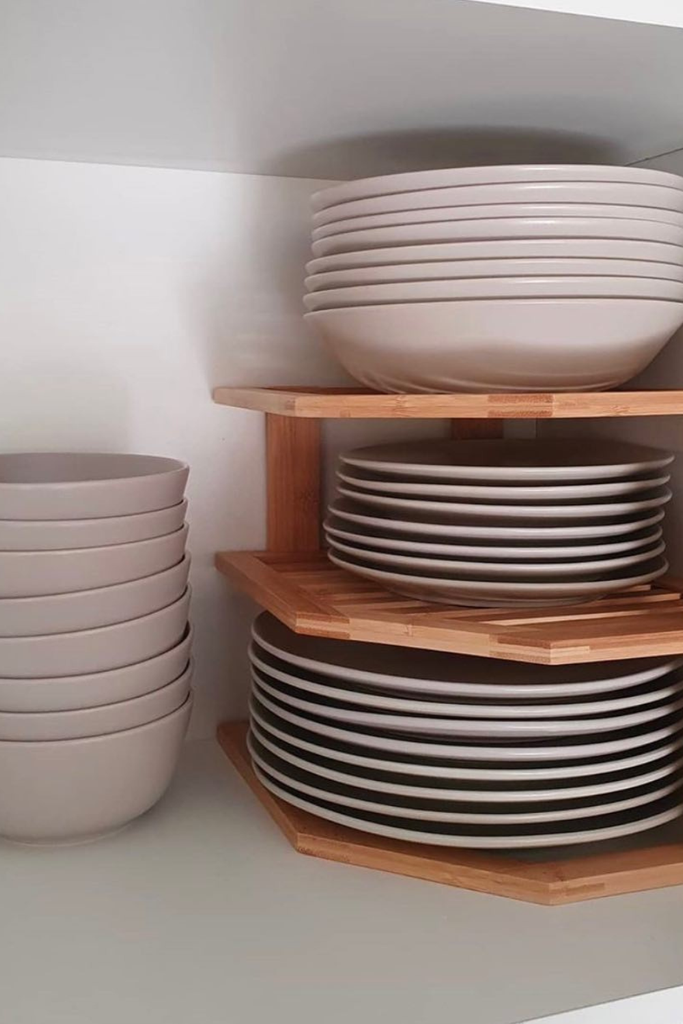
Shelf risers add a second horizontal storage level inside a cabinet where the existing shelf leaves unused vertical space. I find them useful for cups, bowls, small plates, and other dishes that can be arranged securely on separate levels.
Before choosing a riser, I measure the cabinet’s width, depth, and available height. I also check the riser’s stability and capacity, making sure it sits securely on the cabinet base and leaves enough room to remove dishes.
This solution differs from vertical dividers because it creates another level rather than separate slots for items standing on edge. I use risers only when the cabinet layout allows both levels to remain accessible.
Pro Tip: Keep heavier dishes on the lower level and avoid stacking items so high that they touch the shelf above. A riser is useful only if it makes the contents easier to reach.
21. Double Closet Rods
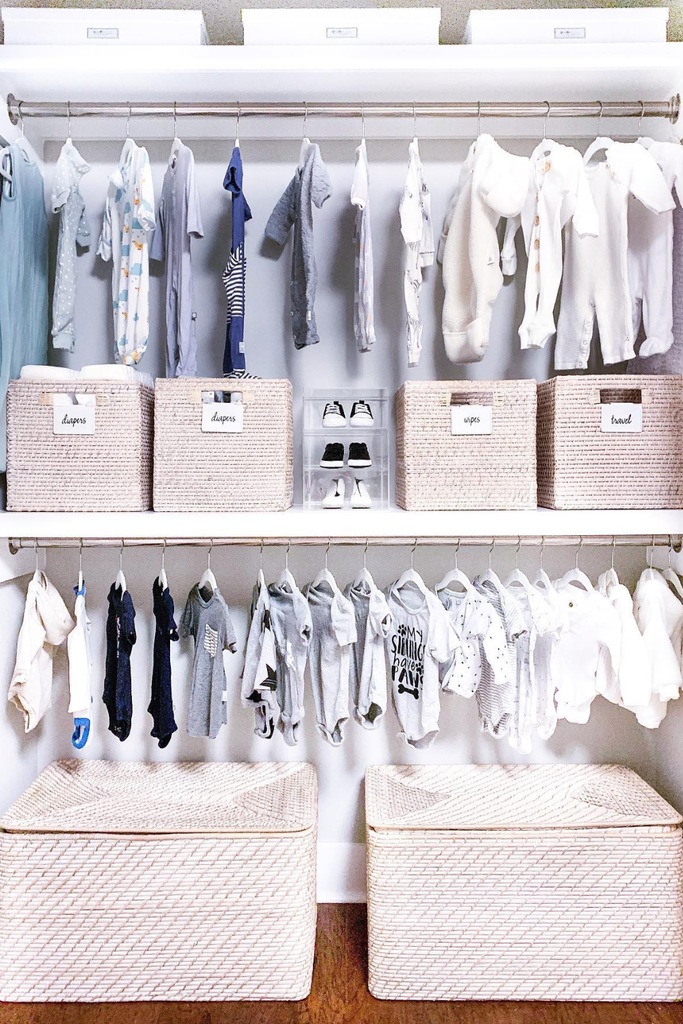
A second closet rod can increase hanging capacity when the closet contains many short garments. Shirts, folded trousers on hangers, children’s clothing, and similar items may fit on two levels where a single rod leaves unused space below.
I measure the length of the garments and the distance between the upper rod, lower rod, floor, and any shelves. Both levels need enough clearance for clothes to hang without dragging or becoming crushed.
The existing closet structure and both rods must support the combined weight of the garments. I avoid overloading brackets and leave long dresses, coats, and other full-length clothing in a separate section.
Pro Tip: Before installing a second rod, count the garments that need hanging space and check how far the hangers extend. A layout that fits the clothing but makes it difficult to slide hangers along the rod will not work well.
22. Vanity Shelf Stacking
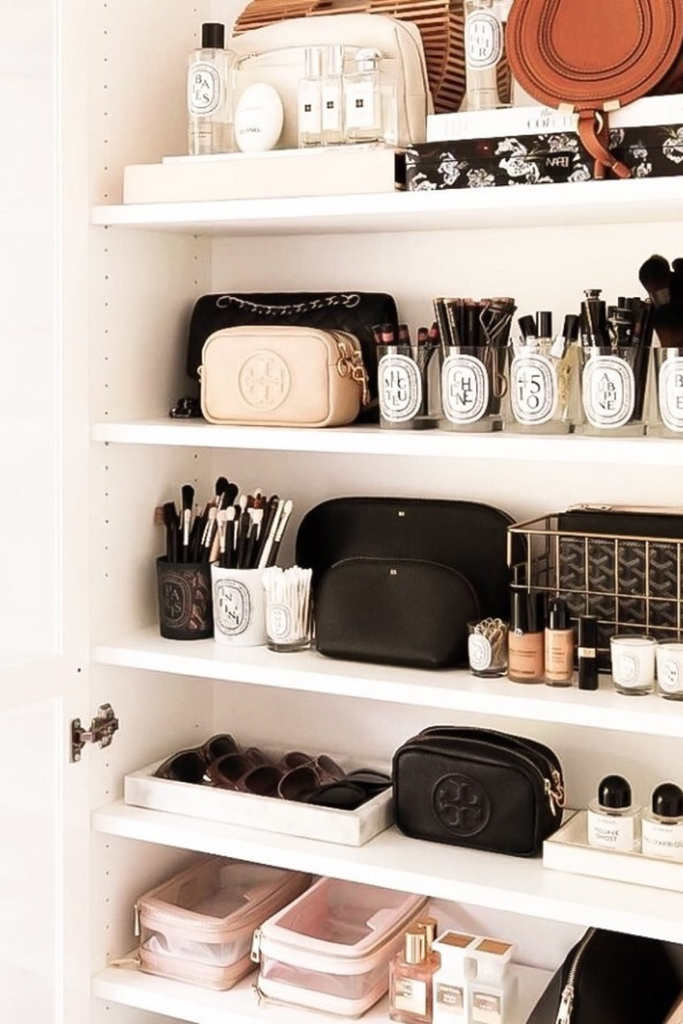
A vanity can become crowded with skincare products, cosmetics, hair accessories, and grooming tools. Stacked organizers or adjustable shelves provide separate levels for small containers without spreading everything across the countertop.
I measure the available space and check the height of taller bottles before choosing an organizer. Trays can hold frequently used products, while drawers or baskets keep backup supplies together.
Bathrooms and dressing areas may have different moisture and temperature conditions, so I follow the storage instructions on personal-care products. I also keep electrical grooming tools away from water and store them safely after use.
Pro Tip: Keep the products used every day on the easiest-to-reach level. Store backups elsewhere so the vanity remains useful for getting ready rather than becoming a crowded display shelf.
23. Above-Toilet Shelves
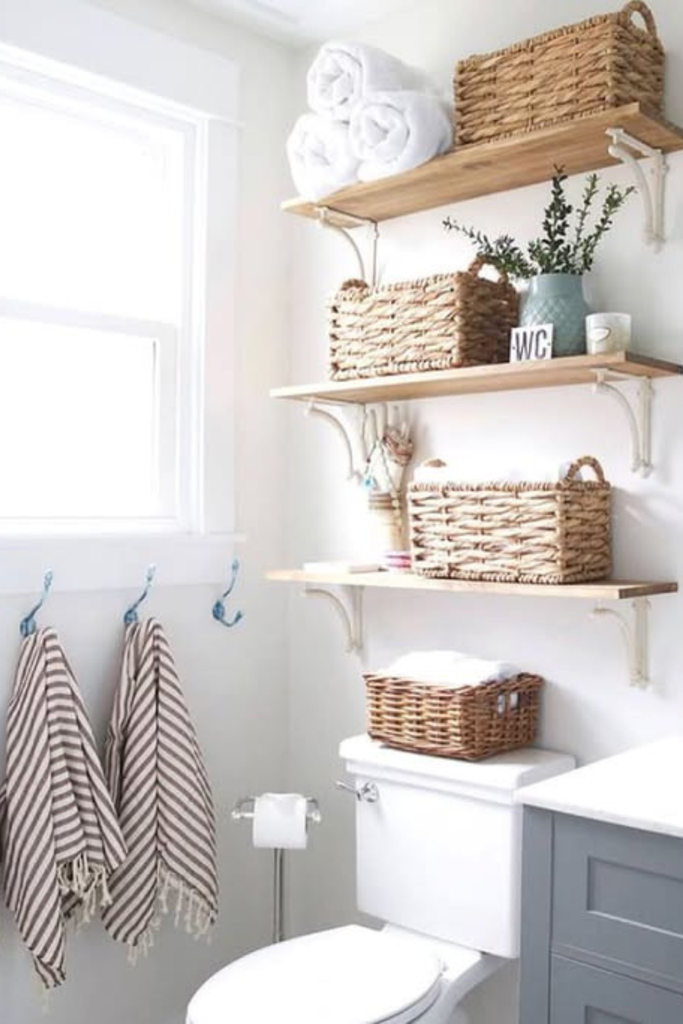
The wall above a toilet can provide storage for spare toilet paper, lightweight baskets, and bathroom essentials without taking up additional floor space. I consider this option when a separate cabinet would make a small bathroom feel cramped.
I measure the area above the toilet tank and account for the lid, nearby plumbing, and access needed for cleaning. Shelves must be securely mounted, with fixings suitable for the wall and the intended load.
I choose materials appropriate for bathroom moisture and avoid placing heavy or fragile items where they could fall onto someone. Paper products should also be kept away from direct splashes.
Pro Tip: Keep the shelf arrangement shallow enough to preserve comfortable movement and cleaning access. Store only items that can be secured safely in this location.
24. Craft Supply Columns
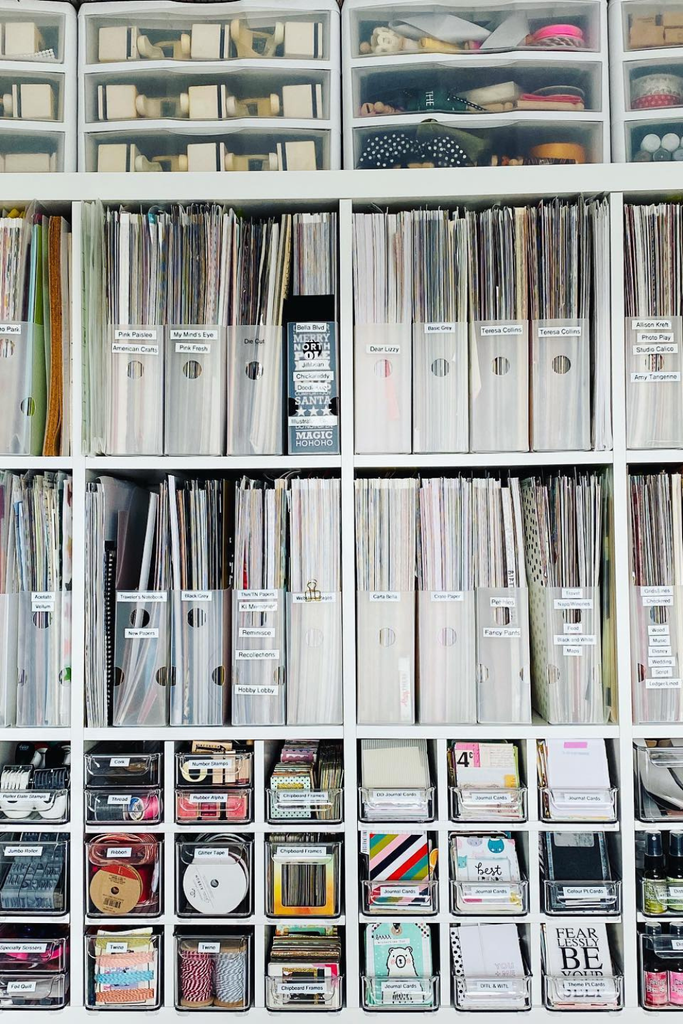
Tall compartment-based shelving helps organize paper, yarn, fabric, paints, ribbons, and small craft supplies by material or project type. I find this arrangement useful when a craft table needs to remain clear for cutting, assembling, and other activities.
I choose compartments according to the size of the supplies. Flat paper and card stock can go into upright files, while yarn and fabric scraps can be grouped in suitable bins. Paints and adhesives should be stored according to their labels and kept away from children and pets when necessary.
Sharp tools, small components, and materials with specific age restrictions need appropriate storage. I also maintain any ventilation required by the products I use and keep heavy supplies on lower, well-supported shelves.
Pro Tip: Keep the tools needed for a current project together in a removable container. This avoids spreading supplies across the work surface every time I start a new activity.
25. Door Shelf Stack
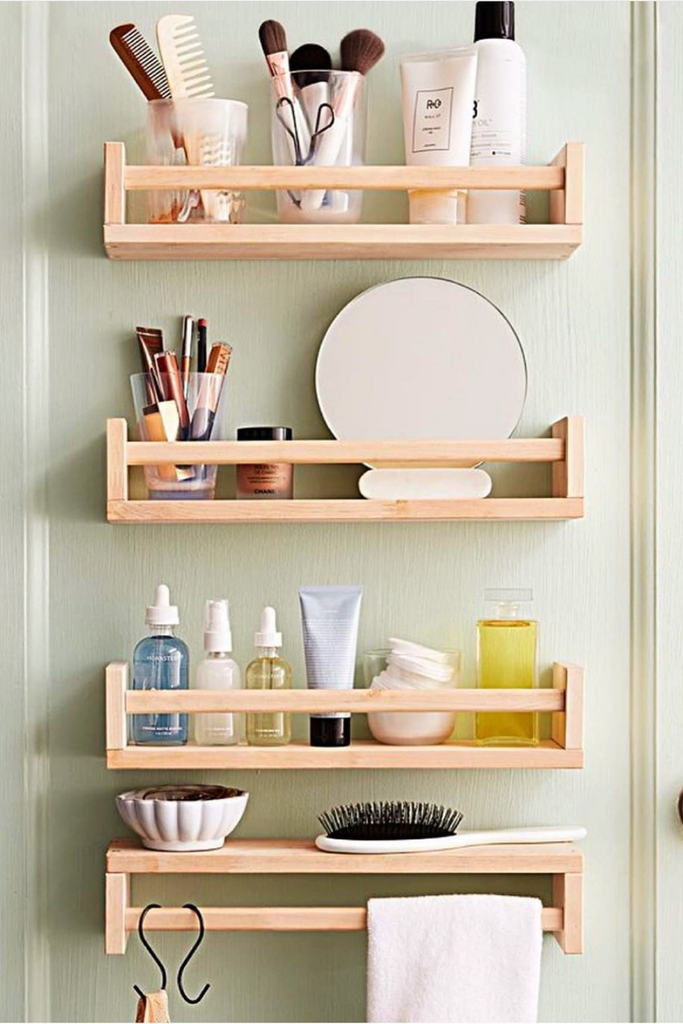
A door-mounted shelf organizer can hold lightweight toiletries, grooming supplies, cleaning cloths, accessories, and other small belongings. Unlike a spice rack, this arrangement is intended for general household items rather than food containers.
Before installing one, I check the door’s thickness, hinge capacity, frame clearance, and movement. The organizer must fit without preventing the door from closing or rubbing against nearby walls and furniture.
I follow the product’s load limits and avoid placing heavy items on a door unless the organizer and door are designed to support them. For renters, a removable over-the-door option may be useful, provided it is compatible with the door and does not damage its finish.
Pro Tip: Choose shallow compartments that keep small items secure when the door moves. Check the fittings regularly and remove anything that makes the organizer unstable or difficult to close.
26. Vertical Paper Files
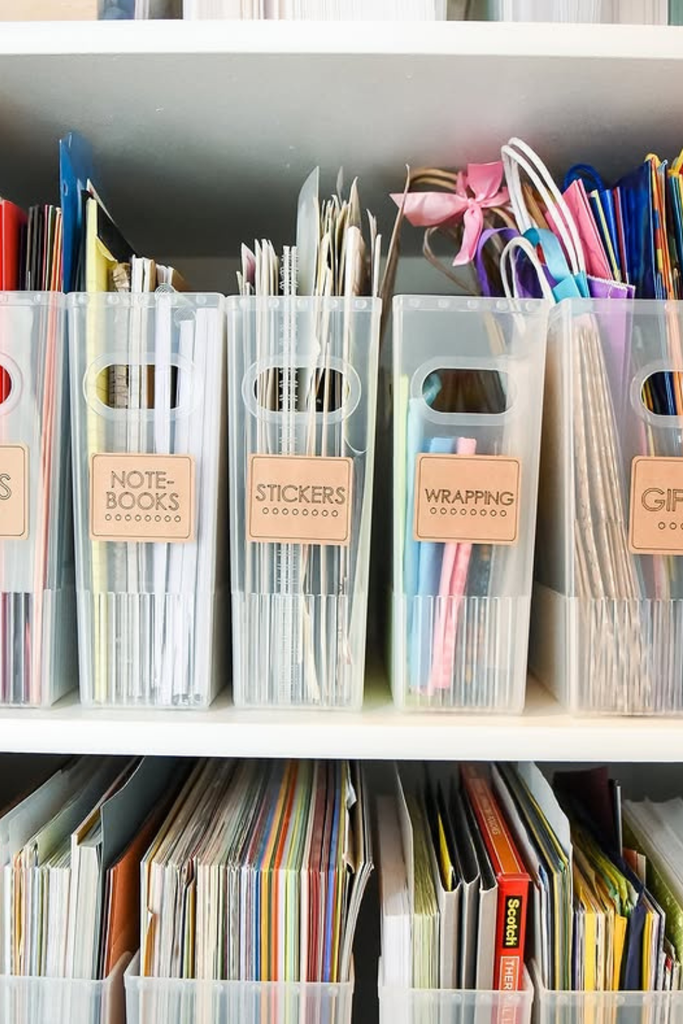
Vertical paper files keep folders, manuals, magazines, notebooks, and craft paper upright instead of allowing them to spread across a desk or shelf. I find this method useful when I need to separate several document categories in a small office or craft area.
I use individual holders for current paperwork, reference documents, household manuals, and craft materials. Labels help identify each category, while a simple filing routine keeps important papers from getting mixed with everyday notes.
Paper should be stored in a dry location away from direct sunlight and potential leaks. I check shelf capacity before loading files, since a row of heavy folders can place more weight on a shelf than it appears to at first.
Pro Tip: Keep frequently needed documents in an accessible holder and store archived paperwork separately. For important records, use an appropriate protected storage location rather than relying on an open shelf alone.
Vertical Storage FAQs
Can Renters Add Vertical Storage Safely?
Yes. Freestanding shelving, suitable over-the-door organizers, and removable storage products can help renters use vertical space without making permanent changes. The right choice depends on the room, the door or wall construction, and the weight of the stored items.
Adhesive hooks and tension systems have surface, installation, and load limitations. I follow the manufacturer’s instructions and avoid relying on them for heavy objects or in locations where failure could cause injury or damage.
Tall freestanding furniture may still need anti-tip anchoring. If anchoring is necessary, I check the rental agreement and discuss an approved solution with the landlord rather than leaving an unstable unit unsecured.
How Do I Stop Vertical Storage From Looking Messy?
I give each shelf or compartment a clear purpose and group similar belongings together. Suitable bins can contain small items, while labels make it easier to find things without opening every container.
Clear bins are useful when I need to see the contents, while opaque baskets can conceal supplies that do not need to be visible. I also keep everyday essentials at accessible heights and avoid filling shelves so tightly that items become difficult to remove.
A little unused space makes storage easier to maintain. I periodically return misplaced items to their assigned areas and remove belongings that no longer need to be stored there.
Read this next: 20 Glove Storage Ideas for 2026
Conclusion
The most useful vertical storage ideas are the ones that solve a real storage problem while keeping a room comfortable to use. Full-height pantry cabinets, closet shelf stacks, wall-mounted bathroom shelves, and upright paper files all serve different purposes, so I choose each solution according to the room and the belongings involved.
Before installing anything, I check measurements, load limits, wall construction, and the clearance needed for doors, drawers, and appliances. I also consider moisture, ventilation, and whether the items can be retrieved safely.
I do not need to fill every wall or buy an entire organizing system to make better use of a small space. Starting with one overlooked area and choosing a practical solution can make everyday storage easier to access, maintain, and live with.




3 Comments